News related to
venture

Trump Media & Technology Group, owner of the Truth Social platform, has submitted a Form S‑1 registration to the U.S. Securities and Exchange Commission for its proposed Truth Social Bitcoin ETF, aiming to list on NYSE Arca. The application states the fund will hold Bitcoin directly, with Crypto.com serving as custodian, prime execution agent and liquidity provider, and Yorkville America Digital listed as sponsor. NYSE Arca has separately filed a Form 19b‑4 to list the fund should it receive regulatory approval.

The filing highlights an unprecedented disclosure linking the fund’s prospects to President Trump’s crypto-related initiatives. For the first time in a crypto-ETF filing, the risk section cites creation of an SEC crypto task force in January and the March executive order establishing a Strategic Bitcoin Reserve. It warns that the impact of these policies on the sponsor, the fund, TMTG, Crypto.com or affiliates “is not possible to fully predict”. Bloomberg’s Eric Balchunas noted this is likely “the first time ever the advisor is in the risk section”.

If approved, the ETF would become part of a growing cohort of spot Bitcoin funds currently active in the U.S., including BlackRock’s iShares Bitcoin Trust, which has amassed over US $70 billion in assets, BlackRock having initially launched the product in January 2024. Other major asset managers—Fidelity, Bitwise—also offer similar instruments, making the market highly competitive.

TMTG’s proposed fund is closely tied to the broader ambitions of Trump’s crypto policy platform. The earlier executive order in March 2025 mandated creation of a Strategic Bitcoin Reserve using government-forfeited assets, effectively integrating Bitcoin into sovereign reserves. The order also created a U.S. Digital Asset Stockpile, requiring federal agencies to centralise digital asset holdings and obliging the Secretaries of Treasury and Commerce to evaluate further acquisitions at no cost to taxpayers.

The regulatory backdrop has shifted markedly. January’s executive directive established a Presidential Working Group on Digital Asset Markets and directed the SEC to create a crypto task force. Gary Gensler resigned as SEC chair on the eve of Trump’s inauguration and was succeeded by Paul Atkins, a noted crypto advocate. The SEC has since dropped several previous enforcement cases and eased accounting rules, paving the way for more crypto-product filings.

Trump Media’s broader strategy involves securing a substantial Bitcoin treasury. SEC filings indicate its Form S‑3 shelf registration allows issuance of up to 85 million shares tied to its $2.3 billion private placement, earmarked to purchase roughly 23,000 Bitcoin—potentially placing the company among the top public corporate holders. Custody of these assets is expected to be shared between Anchorage Digital and Crypto.com.

Yorkville America Digital’s dual role—as sponsor of the ETF and partner to TMTG—has raised questions of conflicts of interest. The risk disclosure notes Yorkville affiliates are also involved in Truth.Fi, an investing platform tied to Trump’s “America First” agenda, and have made up to $2.5 billion in equity commitments to TMTG. The same affiliate acted as co-placement agent for the $2.44 billion private placement.

Financial markets have responded with mixed signals. While Bitcoin briefly surpassed US $111,000 following Trump’s return to the executive and policy shifts, it has since retreated to the US $105,000–$101,000 range. TMTG’s own stock dropped around 8 per cent following public disputes between Trump and Elon Musk, and remains down roughly 56 per cent over the past 12 months.

Analysts say the fund faces significant challenges. Despite its high-profile branding and alignment with Trump’s policy agenda, it competes against established firms with deep institutional credibility. ETF expert Dave Nadig remarked that long-term asset gathering for this fund is “extraordinarily unlikely”. CoinCorner CEO Danny Scott expressed unease about Trump’s use of political influence in personal financial ventures.

The ETF’s structure also contains potentially problematic clauses. Cointelegraph reports that the S‑1 includes exclusive arrangements granting Crypto.com sole custodian and liquidity provision roles, and provisions that allow the sponsor to take positions ahead of the Trust—raising transparency concerns.

Still, proponents contend the fund could redefine retail and ideological investor access. Backers assert its America‑First branding might appeal to conservative retail investors seeking regulated Bitcoin exposure. Crypto.com’s reach—serving over 140 million users and holding approximately US $30 billion in assets—could alleviate institutional concerns about custody risk.

Approval hinges on SEC review of both S‑1 and 19b‑4 filings. With multiple spot Bitcoin ETFs already approved in the U.S., the regulatory framework exists—but TMTG’s political ties, interlocking financial relationships and novel disclosures may trigger heightened scrutiny.

Apple awarded top honours across its six categories at the 2025 Apple Design Awards, celebrating innovation, aesthetics and social impact across apps and games. Standout recipients included Balatro, Neva and DRE​​DGE, which secured wins in key categories and reflect the diversity and creativity of today’s digital creators. Balatro, developed by Canadian indie studio LocalThunk, claimed the “Delight and Fun” game category. This roguelike, poker-infused deck-builder has gained […]

Some 2,400 stem cell and regenerative medicine pioneers convene to chart new frontiers, resulting from bidding efforts of Hong Kong Convention Ambassadors of the Hong Kong Tourism Board HONG KONG SAR – Media OutReach Newswire – 11 June 2025 – Reputed to be a leading research and development (R&D) hub for medical sciences, Hong Kong hosts the world’s largest and most significant gathering of stem cell research […]

Mergers and acquisitions across the Middle East are poised to slow as escalating global trade tensions erupted following the Trump administration’s imposition of reciprocal tariffs on 2 April. A sweeping 20 percent tariff on EU goods, 10 percent on UK imports and 25 percent on automobiles rattled markets and shook corporate confidence, triggering what dealmakers describe as a “major escalation” in international trade friction. A recent global survey conducted by […]

Deyaar Development PJSC has officially launched Downtown Residences, a twin-tower residential project rising to a striking 445 metres in Dubai’s golden triangle where Sheikh Zayed Road meets Downtown Dubai and Business Bay. The development will house 522 units across one- to three-bedroom apartments, duplexes, penthouses and an exclusive Royal Palace perched at the summit, marking a new milestone in vertical luxury living.

Dubai is amid a surge of super‑tall skyscraper projects. Alongside Deyaar’s venture, Burj Azizi is planned to reach approximately 725 metres, while Burj Binghatti Jacob & Co is projected at around 557 metres. Downtown Residences, with more than 110 floors, will rank among the tallest residential towers in the emirate and is set for delivery in the fourth quarter of 2030.

Deyaar’s chief executive, Saeed Mohammed Al Qatami, described the project as a transformation of urban living, combining comfort, style and advanced amenities. He emphasised its potential to attract both residents and investors while enhancing the Dubai skyline. The company signals that the project is part of its strategy, expanding its 2025 pipeline beyond an earlier target of AED 8 billion through new launches.

Drawing inspiration from Maslow’s Hierarchy of Needs, the design concept organises the residential experience into five vertical zones, each catering to a different level of wellbeing and lifestyle aspiration. The lower zone—Dynamic Avenue—will include family areas such as children’s creative spaces, playrooms, and communal lounges, fostering social connection. The Sensory Oasis, positioned midway, will offer floating gardens, air yoga zones, AI-powered meditation pods and an “invisible spa” combined with fitness amenities.

At roughly 100 floors high, Summit Society will provide private dining venues, exclusive lounges, and a screening room. The Residents’ Club will include AI-enhanced workspaces, executive pods and networking hubs, while the Sky Pinnacle 360 zone culminating in the Sky Mansion and Royal Palace will represent the architectural pinnacle.

Architecture highlights include a dramatic central slit, vertical gardens woven through the structure, and podium-level urban oases. Outdoor terraces and community spaces such as The Collective and Serenity Haven aim to blend urban energy with serenity. Panoramic views of the Burj Khalifa, Arabian Gulf and Sheikh Zayed Road will feature prominently, underscoring the building’s centrality and visual impact. The site is also adjacent to the Business Bay metro station, emphasising convenience and connectivity.

In context, Downtown Residences forms part of a robust real estate market supported by government initiatives such as long‑term residency schemes and golden visa programmes, along with strong investor interest. Last year, Dubai recorded AED 761 billion in real estate deals, a 20 percent year-over-year increase, while unit prices rose nearly 19 percent. However, recent analysis from Fitch warns of a potential 15 percent price correction in the face of increasing supply as new units deliver in 2025 and 2026.

Within the current landscape, several super‑tall residential towers are either in planning or under construction. For instance, the 557‑metre Burj Binghatti Jacob & Co is expected to top out in 2027. Meanwhile, the 725‑metre Burj Azizi and a host of other vertical developments are progressing. Downtown Residences will complement these, contributing to a vertical growth strategy that increasingly defines Dubai’s urban identity.

Deyaar, with a 23‑year history in the UAE real estate sector, has previously completed numerous projects across Business Bay and downtown districts. The developer anticipates concluding the current series of launches with AED 4 billion in sales for 2025.

Compared with the tallest completed residential towers in Dubai, such as Marina 101 and Princess Tower, Downtown Residences will exceed these heights, adding further prestige to the skyline. In the under‑construction category, towers like Bayz 101 and Six Senses are among peers.

Dubbed a “vertical residential community”, Downtown Residences aims to offer more than luxury living; it’s intended as a lifestyle destination combining wellness, exclusivity and high‑end design. By aligning with evolving buyer preferences—especially among high‑net‑worth and remote‑worker demographics—the development emphasises contextually relevant amenities, location and architectural prominence.

As Dubai positions itself at the forefront of global luxury real estate, Deyaar’s Downtown Residences emerges as a test case in balancing scale, innovation and market demand. With units reportedly starting from AED 1.8 million, early indicators suggest strong investor interest in the lower‑priced tiers. Simultaneously, the Royal Palace and sky‑level offerings reflect ambitions to cater to ultra‑luxury buyers.

Deyaar’s vision, articulated by both Al Qatami and Patrick Bernard Rouse, frames Downtown Residences as more than just a building—it is a calibrated response to hierarchical human needs and emerging market dynamics. By integrating connectivity, wellbeing, community and status across vertical zones, the concept attempts to redefine high‑rise living.

KUALA LUMPUR, MALAYSIA – Media OutReach Newswire – 11 June 2025 – Bitcoin keeps reaching new ATHs (All-Time Highs) in 2025 and fosters bullish market sentiments, yet volatility remains significant. This ramps up the risks for crypto traders, who use traditional spot trading tools. Experts at Octa Broker explain how CFDs—Contracts for Difference—allow traders to decrease risk exposure while offering more trading opportunities. The majority of crypto […]

Harrison Street, a US-headquartered real assets investment firm with over $56 billion in assets under management, has formally expanded into the Middle East by establishing an office within the Abu Dhabi Global Market, after receiving regulatory approval from the Financial Services Regulatory Authority. The move is being viewed as a strategic step to tap into the region’s institutional capital base and aligns with Abu Dhabi’s ambitions to attract global investment managers.

The firm’s new office, located at ADGM’s Al Sila Tower, is expected to anchor its regional operations and serve as a platform for growth across the Gulf and wider MENA region. Harrison Street becomes the latest in a line of global asset managers to choose Abu Dhabi as a regional headquarters, following similar moves by BlackRock, Brevan Howard, and Apollo Global Management. The announcement underscores the appeal of ADGM as a regulated environment that offers tax benefits, legal certainty, and direct access to sovereign wealth and pension funds.

Christopher Merrill, co-founder and CEO of Harrison Street, described the expansion as a natural extension of the firm’s long-term growth strategy. He emphasised that the company is aiming to offer institutional investors across the Middle East access to thematic investment opportunities in alternative real assets, including student housing, senior living, healthcare infrastructure, and digital assets. Merrill said the firm sees “substantial appetite among Gulf-based investors for exposure to long-duration, inflation-protected assets with stable yield profiles.”

While Harrison Street has traditionally focused on North America and Europe, its new ADGM base signals an intention to deepen partnerships with investors in the Gulf region. The decision is also part of a broader effort to diversify funding sources and tailor strategies that align with regional priorities such as healthcare expansion, demographic shifts, and digital infrastructure.

The ADGM licence will enable Harrison Street to carry out regulated investment activities and offer tailored asset management services to qualified investors in the UAE and beyond. According to the firm’s regional head, who is set to be announced in the coming weeks, the Abu Dhabi office will focus on both capital raising and direct investment origination, particularly in sectors aligned with government-backed development goals across the Gulf.

Industry observers say Abu Dhabi’s financial centre has matured into a viable launchpad for international firms targeting sovereign and institutional capital. With assets under management in ADGM growing to over $1 trillion this year, the financial centre is increasingly positioning itself as a global hub for private equity, venture capital, and asset management. Harrison Street’s entry follows a regulatory trend where ADGM has been accelerating approvals for asset managers, family offices, and hedge funds in a bid to rival more established global centres.

Global interest in Middle East capital pools has surged, with firms across Europe and the US actively seeking to establish an on-the-ground presence. Harrison Street’s thematic investment strategy, focused on secular trends such as ageing populations and technological adoption, is seen to resonate well with Gulf investors pursuing diversification beyond traditional energy-linked assets.

Merrill indicated that the firm will look to build co-investment partnerships and joint ventures with local institutions, leveraging its experience in structuring real estate and infrastructure funds across developed markets. He also hinted at the possibility of localised strategies that may include greenfield development and operating partnerships in sectors like education and senior care, particularly in markets undergoing demographic transition such as Saudi Arabia and the UAE.

ADGM authorities welcomed the firm’s entry as further validation of Abu Dhabi’s rising influence in the global investment ecosystem. The financial centre has actively courted global asset managers through a mixture of regulatory reforms, dual licensing frameworks, and strategic partnerships with Abu Dhabi Investment Office and Mubadala.

Advertisements
Daily active users in the global cryptocurrency market have surged to 30.8 million, marking a 30-fold increase since early 2020 when the figure hovered around just one million. This extraordinary growth underscores a pivotal shift in digital finance adoption, driven by both mainstream institutional participation and decentralised finance innovations.

The five-year acceleration in user activity reflects a maturing market that has gradually moved from speculative volatility toward widespread utility and integrated applications. Analysts link this exponential climb not only to rising asset prices but also to expanding real-world use cases and adoption in emerging markets where crypto offers alternatives to unstable fiat currencies or limited banking access.

Between 2020 and 2021, crypto markets experienced a spike in retail investor interest as Bitcoin and Ethereum reached new price highs. But the subsequent years saw a more diversified set of contributors to active user growth. These included Layer-2 solutions that reduced transaction costs, central bank scrutiny that validated digital assets as long-term economic factors, and increased capital flows into decentralised applications that are now used for lending, trading, and payments.

The upswing has also been aided by a shift in demographics. Users between the ages of 18 and 35 continue to dominate, but there is a discernible rise in users over 50 participating in digital asset portfolios through robo-advisors and automated wealth apps. Fintech platforms have played a central role in onboarding new users, offering wallet services directly within traditional mobile banking interfaces, especially in Southeast Asia, Latin America, and Sub-Saharan Africa.

Regulatory tailwinds have also contributed to this surge. After years of ambiguity, several governments began laying out clearer frameworks for crypto usage and taxation. The European Union’s Markets in Crypto-Assets regulation, now in force, has created greater legal clarity for wallet providers and stablecoin issuers. Meanwhile, jurisdictions such as Singapore, the UAE, and Hong Kong have developed regulatory sandboxes that attract developers without compromising on compliance. The clarity around Know-Your-Customer norms and licensing requirements has encouraged institutional custodians and payment processors to enter the space, further legitimising its growth.

Daily active wallet addresses, which measure unique addresses interacting with blockchain networks, are now being driven by utility rather than speculation. Decentralised social media platforms, blockchain-based gaming, and metaverse transactions contribute heavily to user engagement. On-chain metrics show that average wallet-to-wallet transactions have grown in both frequency and diversity, indicating a broader shift from holding digital assets to actively using them.

Stablecoins remain a major catalyst. With daily transaction volumes frequently surpassing those of major card networks, these tokens are increasingly used for remittances, salaries, and cross-border commerce. Businesses in Argentina, Nigeria, and the Philippines now routinely accept stablecoins to hedge against inflation and currency volatility. Dollar-pegged tokens such as USDT and USDC remain dominant, but a new wave of regionally anchored stablecoins linked to the euro, yen, and dirham are gaining traction.

This growth has coincided with new product launches by global crypto service providers. Coinbase, Binance, and OKX have all introduced wallet products tailored for mobile-first users, while decentralised apps like MetaMask and Trust Wallet have streamlined onboarding by integrating fiat-to-crypto gateways and social recovery features. Wallet-as-a-service solutions have also proliferated, allowing e-commerce platforms and loyalty programmes to integrate tokenised rewards and payments.

However, the expansion hasn’t been without setbacks. Security breaches and phishing attacks continue to pose significant threats, especially on mobile wallets lacking robust encryption or biometric safeguards. In 2024 alone, more than $600 million was reportedly lost to wallet-targeted hacks. This has forced wallet providers to enhance security protocols and increase user education around seed phrase storage and recovery mechanisms.

The surge in user activity also raises questions about scalability and environmental impact. Ethereum’s successful shift to a proof-of-stake consensus has alleviated some concerns, reducing energy consumption by over 99 percent, but congestion on other chains like Solana and BNB Smart Chain persists during peak usage periods. Developers are now turning to zero-knowledge rollups and modular chain architectures to manage the growing demand without compromising on decentralisation or throughput.

Investment in wallet infrastructure has sharply increased, with venture funding in crypto wallet startups exceeding $2.5 billion over the past year. Several firms are focusing on embedded crypto solutions that operate invisibly behind e-commerce and payment interfaces, enabling crypto usage without requiring users to understand blockchain mechanics. This backend integration has become crucial to onboarding the next 100 million users, according to fintech consultants.

On the macroeconomic front, crypto wallets are increasingly being viewed as components of digital identity. National digital currency trials in countries like Brazil and India are exploring hybrid models that link sovereign wallets to decentralised ones, potentially enabling programmable money systems that maintain user agency while complying with monetary policy.

As blockchain integration deepens across sectors, from healthcare to real estate, wallet functionality is expanding beyond currency storage. New generations of wallets offer token-gated access, voting rights in decentralised autonomous organisations, and certification for digital credentials. These features are pushing crypto adoption beyond financial speculation into everyday life.

Saudi Arabia will export about 47 million barrels of crude to China in July, marking a modest decline of one million barrels compared with June allocations. Despite the slight reduction, this remains the third consecutive month of elevated shipments to the world’s largest crude importer, underscoring Riyadh’s resurgence in securing market share. This shift follows a decision by OPEC+—a coalition of the Organisation of the Petroleum Exporting […]

BANGKOK, THAILAND – Media OutReach Newswire – 10 June 2025 – Gother, a tourism service platform, operated by Search Engine Optimization, a joint venture between Beacon Venture Capital (venture arm of Kasikornbank) and Krungthai Ventures (venture arm of Krungthai Bank) is showing strong upward momentum following a 300% business growth in just seven months since launch in the past year. Aimed at upgrading its platform, Gother is […]

Etihad Airways and Ethiopian Airlines have launched a strategic codeshare partnership designed to broaden travel options and enhance connectivity across their global networks. This collaboration enables passengers to access a wider array of destinations with seamless transfer options, utilising the complementary routes of the two carriers. The agreement allows Etihad, based in Abu Dhabi, and Ethiopian Airlines, headquartered in Addis Ababa, to offer joint flight services where […]

Red Bull is staging a groundbreaking multiplayer gaming finale in Dubai this December, where elite competitors will face off in Tetris on a dramatic canvas: the 150‑metre Dubai Frame, illuminated by more than 2,000 drones. The spectacle promises to be the largest live playable Tetris game ever, combining digital skill with live drone artistry. Red Bull’s global tournament roll‑out kicked off on World Tetris Day, drawing an […]

Dubai’s FIX Dessert Chocolatier confirmed it will unveil a new chocolate bar at Mall of the Emirates this Friday, June 13, launching a three‑day pop-up from 10 AM until midnight through Sunday, June 15. The brand, already famed for its pistachio‑and‑knafeh‑filled “Dubai Chocolate” bars, has withheld details on the new variant, teasing only that it draws from “childhood memories”. Shoppers will also encounter interactive games, prize giveaways and brand‑curated surprises […]

UAE’s car market is undergoing a fundamental shift as lifestyle-driven mobility rises to prominence, reshaping consumer choices from metal to experience. A surge in preference for digitally enabled, subscription-based, and autonomous transportation is aligning with the emirates’ drive for sustainable, high-tech urban living. Automakers and transport authorities are adapting, marking a new era for mobility in the region.

At the forefront is the uptake of connected and autonomous vehicles. A 2024 Astute Analytica report found that the UAE invested US $500 million in autonomous and connected vehicle infrastructure, and government surveys show that nearly 60 per cent of residents are open to self-driving cars once available . Dubai aims for 25 per cent of its transport network to operate autonomously by 2030, while Abu Dhabi is piloting robotaxis under a combined Dubai Roads and Transport Authority and DP World initiative . Chinese mobility pioneer WeRide has commenced fully driverless robotaxi trials in Abu Dhabi and holds significant UAE licences, further cementing the country’s status as a regional testbed .

Parallel to autonomy, digital car buying and subscription services are gaining ground. A global study by Arthur D. Little reports that UAE has the highest percentage worldwide of buyers willing to complete vehicle purchases entirely online, with 53 per cent preferring full digital transactions . It also notes more than half of car buyers intend to purchase hybrid or electric models for their next car . Major brands such as Jaguar‑Land Rover, Audi and Volvo have launched subscription models allowing flexible short‑term access to vehicles, reflecting a deeper shift from ownership to access .

Luxury meets lifestyle in a market defined by adventure and affluence. The UAE’s love for off‑road capable SUVs—icons like Land Rover, Toyota Land Cruiser and Mercedes G‑Class—remains strong, supported by driving culture and desert heritage . At the same time, social media has amplified the aspirational value of high‑performance and bespoke vehicles, prompting services offering vehicle customisation and luxury rentals to expand .

Despite their prestige, sustainable mobility options are advancing steadily. Government plans aim for EVs to account for 10 per cent of all vehicles by 2030; Dubai Electricity and Water Authority intends to install 1,000 public charging points by 2025 . Financial incentives including free parking and toll exemptions support uptake. While less than 15 per cent of buyers currently prefer full battery‑electric vehicles , more than 50 per cent plan to choose hybrid or electric options next .

Shared mobility and micro‑mobility solutions are gaining traction among urban dwellers. The UAE’s ride‑hailing market grew to US $1.3 billion in 2023, and car‑sharing usage surged by 30 per cent to over 200,000 subscribers . Platforms like Careem, ekar and others expand convenient access while supporting sustainability goals .

Pre‑owned and rental markets also reflect shifting lifestyle demands. The luxury car rental segment caters to business travellers and experience‑seeking residents, accounting for over half of regional luxury rentals . Certified pre‑owned programmes and digital platforms make premium vehicles accessible and promote circular economy models .

Industry participants are racing to adapt. Six major dealers—including Al Futtaim Motors and Al Habtoor—control more than 62 per cent of the auto market by offering hybrid and electric models, digital sales funnels, and after‑sales personalisation services . Additionally, more than 80 per cent of UAE and KSA consumers now value in‑car digital services and are willing to share data for personalised experiences .

Strategic foreign investment continues to flow. In 2024, DP World handled a record 1.3 million vehicles, up 53 per cent year‑on‑year. China led automotive investments region‑wide, with 27 projects worth US $8 billion, generating 20,000 jobs . The UAE attracted 145 automotive projects valued at US $22 billion, solidifying its regional industry leadership .

Air mobility is emerging as a bold frontier. Authorities, including the General Civil Aviation Authority and Technology Innovation Institute, are mapping aerial corridors for air taxis and drones with a view to commercial roll‑out by 2026. Vertiports are under construction as Dubai aims to launch urban air taxi operations in early 2026 . Collaborations with global developers such as Volocopter and Joby Aviation underscore UAE’s intent to lead advanced mobility innovation.

Demographic and behavioural trends are shifting expectations. UAE’s younger, tech‑savvy population demands multimodal transport, sustainable choices, and flexible ownership. European research shows Gen Z and millennials prefer compact, shared, and electric vehicles, and lease options tied to services—mirroring emerging patterns in the Emirates . The convergence of digital retail, in‑car connectivity, autonomous capabilities and lifestyle choices is now the defining feature of the market.

That convergence gives rise to dynamic policy alignment and infrastructure development. Dubai’s Autonomous Transportation Strategy ambitions to ease congestion and strengthen economic diversification, while public‑private partnerships are building the ecosystem for AI‑enabled transport .

The transformation is clear: the UAE auto sector is evolving from a conventional showroom‑focused industry to an experiential mobility ecosystem. Consumers expect seamless digital transactions, autonomous options, flexible subscriptions, and elevated experiences. Governments and businesses are aligning investment and strategy to meet these expectations, fusing luxury with sustainability, and individual desire with urban resilience.

As the 2030 horizon approaches, next‑generation mobility is no longer an aspiration but a reality rolling on UAE roads, in the air, and on digital platforms—heralding a new age for the Gulf’s automotive narrative.

Debswana Diamond Company, Botswana’s premier diamond producer, has initiated a significant reduction in its mining operations, citing sustained global demand weakness and mounting economic pressures. The company, a 50-50 joint venture between the Botswana government and De Beers, announced a temporary halt in production at key sites, including the Jwaneng Cut-9 and Orapa mines, aligning output with the subdued market conditions. This strategic move follows a challenging […]

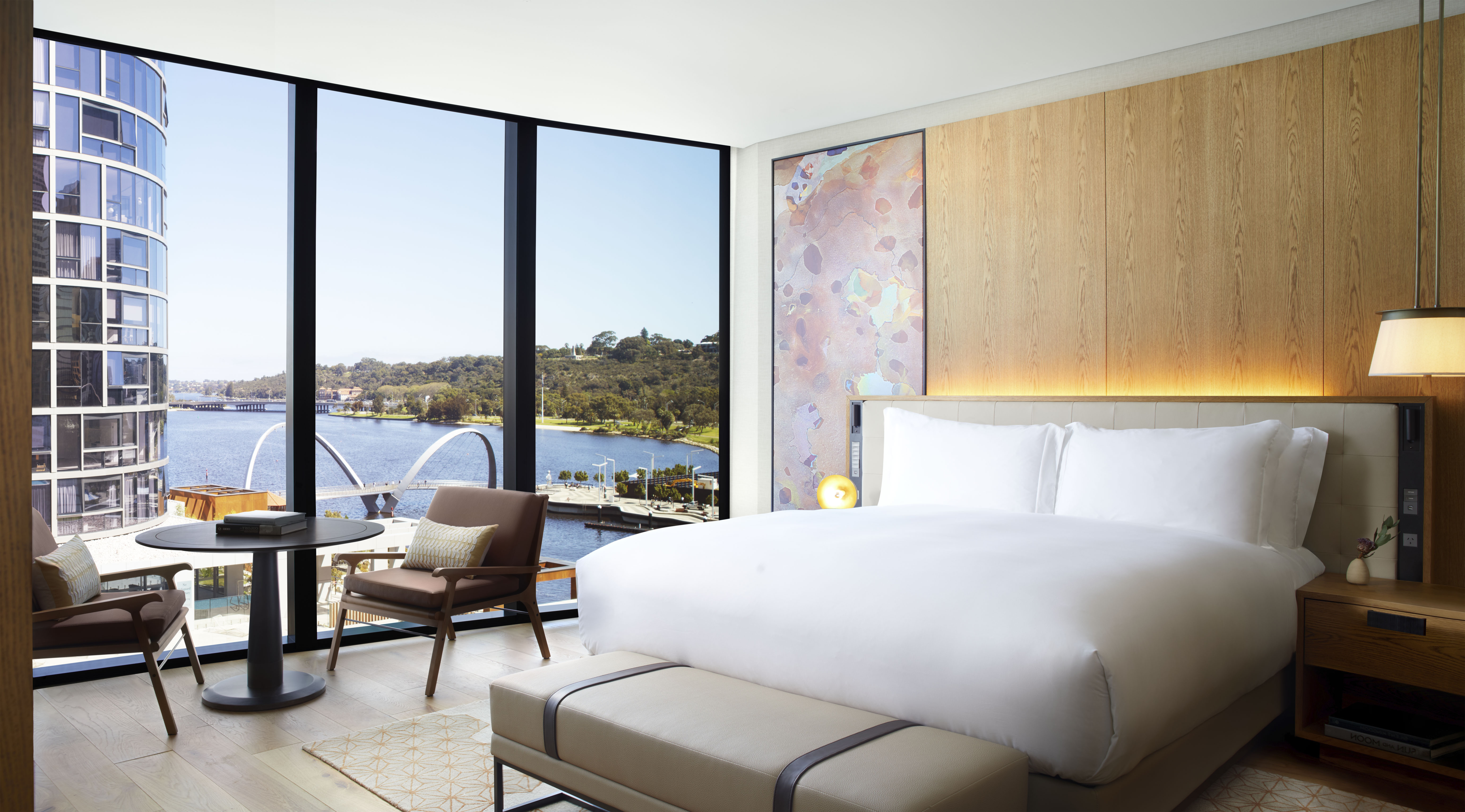
The Ritz-Carlton’s first Australian venture, situated in Perth’s Elizabeth Quay, has redefined luxury accommodation in the city since its inauguration on 15 November 2019. Occupying a prime waterfront location along the Swan River, the hotel offers panoramic views of the city skyline, river, and urban parks through its floor-to-ceiling windows. The 205 elegantly appointed guest rooms and suites are designed to provide a seamless blend of comfort and sophistication .

The hotel’s architecture and interior design pay homage to Western Australia’s natural beauty. Notably, the grand lobby features over 10,000 pieces of Kimberley sandstone, evoking the feeling of traversing the Karijini Gorges . Art installations, sculptures, and paintings by local artists adorn the public spaces, suites, and The Ritz-Carlton Club Lounge, reflecting the region’s rich cultural heritage .

Culinary experiences at The Ritz-Carlton, Perth are anchored by the Hearth Restaurant and Lounge, which showcases the best of Australia’s bounty through flame-grilled preparations. Menus are presented with a map detailing the sourcing of ingredients, offering guests an immersive dining experience . The Songbird Bar & Lounge, the hotel’s rooftop venue, provides an ideal setting to enjoy Western Australia’s stunning sunsets, complemented by a selection of avian-inspired cocktails .

Guest reviews consistently highlight the hotel’s exceptional service and amenities. The rooftop infinity pool and spa offer a tranquil retreat, while the gym and wellness facilities cater to fitness enthusiasts . The hotel’s central location in Elizabeth Quay ensures easy access to Perth’s attractions, making it a preferred choice for both business and leisure travelers .

Willem Blijdorp initially set his sights on a career in tourism. From 1970 to 1975, he studied at the Hotel Management School in Maastricht, the Netherlands. However, upon graduation, he chose an unexpected path. He decided to become the organizer of the now-legendary ‘Butterfahrten’. This marked the beginning of an entrepreneurial journey that continues to this day. The Butterfahrt Concept During a business trip to Germany, Blijdorp was […]

Startups across India are increasingly turning to non-dilutive funding options to secure capital while retaining full ownership and control. This shift is driven by a desire to avoid the equity dilution often associated with traditional venture capital, especially amid fluctuating valuations and heightened investor scrutiny. Non-dilutive funding encompasses various financial instruments, including venture debt, revenue-based financing, and government grants. These options provide startups with the necessary capital […]

SINGAPORE – Media OutReach Newswire – 6 June 2025 – The ultimate kids and family event of the year, K!DZ POP CON 2025, is set to take over Sands Expo & Convention Centre, Level 1, Halls A,B,C on 21–22 June 2025, and it’s bursting with exciting brand activations, workshops, live entertainment, and must-see experiences from some of the biggest names in kids’ entertainment! 21 – 22 June […]

GridFree AI has secured $5 million in funding to fast-track the deployment of modular artificial intelligence data centres, signalling a significant shift in how computational infrastructure will be developed and scaled worldwide. The funding round, led by Montauk Climate alongside other strategic investors, aims to support GridFree AI’s ambition to optimise the construction, operation, and scalability of AI data centres with a modular, climate-conscious approach. Emerging from […]

Over 80% of Employees Take Sick Leave Due to Sleep Deprivation; Mondays Are the Most Popular “Sickie” Days Economic downturn: 91% of respondents feel stressed from work and life 81% report frequent awakenings; 64% have trouble falling asleep – two distinct sleep problems, doctor explain 78% say stress impacts sleep quality 80% hope to resolve both types of sleep problems; 85% seek long-term sleep solutions Dual Action […]

Dubai’s Virtual Assets Regulatory Authority has entered into a strategic partnership with SuiHub MENA, the regional arm of the Sui blockchain ecosystem, to bolster the emirate’s position as a global hub for virtual assets. The collaboration aims to support emerging startups, nurture local talent, and provide regulatory guidance within the blockchain sector.

The agreement, formalised earlier this week, outlines a multifaceted approach to ecosystem development. Key initiatives include jointly hosted workshops to assist startups in navigating Dubai’s licensing regime, educational programs to cultivate local expertise in blockchain technology, and the establishment of advisory sessions to offer compliance support. These efforts are designed to streamline the path to market for new ventures and enhance the overall maturity of the virtual asset landscape in the region.

SuiHub MENA’s innovation centre in Dubai will serve as the focal point for these activities, with VARA providing strategic support through roundtables and engagements with government stakeholders. The partnership also encompasses collaborative research opportunities aimed at informing future virtual asset policies and contributing to the sustainable growth of the sector.

This alliance follows a similar memorandum of understanding signed between VARA and the Solana Foundation, reflecting Dubai’s commitment to fostering a conducive environment for blockchain innovation. By aligning regulatory clarity with technological advancement, these partnerships underscore the emirate’s proactive stance in embracing the potential of virtual assets while ensuring robust governance frameworks are in place.

K Wave Media Ltd., a Nasdaq-listed Korean entertainment conglomerate, has secured a $500 million equity financing agreement with Bitcoin Strategic Reserve KWM LLC. The capital infusion is earmarked for operating Bitcoin Lightning Network nodes and investing in Bitcoin infrastructure, signalling a significant strategic shift towards digital assets.

The Lightning Network, a second-layer solution built atop the Bitcoin blockchain, facilitates faster and more cost-effective transactions by enabling off-chain settlements through payment channels. This technology addresses Bitcoin’s scalability issues, allowing for a higher volume of transactions with reduced fees.

K Wave Media’s move aligns with a broader trend of corporations integrating Bitcoin into their financial strategies. Companies like LQWD Technologies have also been expanding their Bitcoin holdings and Lightning Network operations, aiming to generate yield through transaction fees and enhance payment efficiencies.

The $500 million financing will enable K Wave Media to establish and operate Lightning Network nodes, contributing to the network’s robustness and decentralization. Additionally, the investment will support the development of Bitcoin infrastructure, potentially fostering innovation in digital payment solutions and financial services.

This strategic pivot reflects K Wave Media’s commitment to embracing emerging technologies and adapting to the evolving financial landscape. By investing in Bitcoin infrastructure, the company positions itself at the forefront of digital asset integration within the entertainment industry.

The partnership with Bitcoin Strategic Reserve KWM LLC underscores the growing institutional interest in Bitcoin and its associated technologies. As more companies explore the potential of digital assets, investments in infrastructure like the Lightning Network are becoming increasingly prevalent.

K Wave Media’s initiative may also influence other entertainment and media companies to consider similar ventures into the digital asset space. The integration of Bitcoin infrastructure could lead to new business models, revenue streams, and enhanced engagement with tech-savvy audiences.

The United Arab Emirates and Kuwait have cemented a series of bilateral agreements designed to enhance collaboration across vital sectors such as health, energy, education, and defence. These agreements were formalised during an official visit by UAE Vice President Sheikh Mansour bin Zayed Al Nahyan at Bayan Palace, where Kuwaiti Prime Minister Sheikh Ahmad Abdullah Al-Ahmad Al-Sabah also presided over the signing ceremony.

This diplomatic engagement reflects a shared commitment to deepen economic and political cooperation amid a shifting geopolitical landscape in the Gulf region. Both nations seek to leverage their strategic partnership to accelerate development goals and bolster regional stability.

The agreements encompass a broad spectrum of cooperation frameworks. In healthcare, the MoUs aim to facilitate joint initiatives in medical research, health services, and pandemic preparedness. This builds upon existing efforts to enhance public health infrastructure and improve access to advanced medical technologies within both countries. The collaboration is expected to include exchanges of expertise and the establishment of joint health projects, reinforcing resilience against future health crises.

Energy cooperation constitutes a central pillar of the accord, reflecting the growing importance of sustainable development and energy diversification in Gulf policies. Both nations have expressed intent to collaborate on clean energy projects, including renewable energy deployment and energy efficiency programmes. This aligns with wider regional ambitions to reduce carbon footprints and accelerate the energy transition, tapping into solar, wind, and hydrogen potential. The partnership aims to foster knowledge-sharing, joint investments, and innovation in sustainable energy technologies, signalling a clear move away from traditional hydrocarbon dependency.

Education and innovation sectors also feature prominently in the agreements. Kuwait and the UAE plan to develop cooperative education programmes, facilitate student and academic exchanges, and promote joint research ventures. These initiatives target strengthening human capital and nurturing a knowledge-based economy, crucial for long-term competitiveness. Special focus is placed on artificial intelligence and digital transformation, areas recognised for their transformative potential across industries.

Defence collaboration marks another significant dimension of the bilateral ties, with both countries pledging closer coordination in security and military affairs. This includes enhanced training cooperation, intelligence sharing, and joint exercises aimed at improving operational readiness and countering emerging threats in a volatile regional security environment.

Investment and infrastructure development feature heavily within the broader strategic framework. The agreements envisage boosting trade flows, encouraging cross-border investments, and facilitating infrastructure projects. These measures are expected to unlock economic opportunities, create jobs, and support broader Gulf Cooperation Council integration efforts.

Social development has not been overlooked, with the accords setting the stage for cooperative efforts in social welfare, cultural exchange, and community development. This demonstrates a recognition that sustainable progress extends beyond economic growth to encompass social cohesion and quality of life improvements.

This series of MoUs signals a concerted effort by the UAE and Kuwait to consolidate their partnership amid evolving regional and global dynamics. Both nations are navigating complex challenges, including economic diversification pressures, climate change imperatives, and shifting geopolitical alliances. The agreements reflect a proactive strategy to leverage bilateral cooperation as a stabilising and growth-enhancing force.

The visit by Sheikh Mansour underscores the UAE’s broader diplomatic outreach in the Gulf, aimed at strengthening ties with neighbouring states while advancing shared priorities. Kuwait, meanwhile, views this enhanced partnership as vital for reinforcing its role in regional affairs and securing avenues for economic resilience.

Experts note that such collaborations between Gulf states are increasingly critical as they face mounting global competition and internal transformation demands. By pooling resources, expertise, and political will, the UAE and Kuwait position themselves to address mutual challenges more effectively and harness new opportunities.

This development follows a pattern of intensified Gulf collaboration that has gained momentum following shifts in regional geopolitics. Enhanced bilateral relations are viewed as key to ensuring collective security and economic prosperity, particularly amid external uncertainties and emerging global power dynamics.

The agreements also reflect a clear alignment with the strategic visions of both countries, which prioritise innovation, sustainability, and regional integration. As the Gulf states pursue diversification and modernisation agendas, such partnerships become essential tools for advancing these objectives.

While the full scope and impact of the signed agreements will unfold over time, the foundations laid in this visit mark a significant milestone. The emphasis on critical sectors such as healthcare, clean energy, education, and defence highlights the comprehensive nature of the partnership.

VISHNU RAJA
RYO YAMADA
HITORI GOTOH
IKUYO KITA