News related to
venture

Circular textiles at industrial scale: Looper Textile Co. collects, sorts and processes up to 150 million garments annually for reuse and recycling. Digital coordination by Rhenus 4PL: A customized 4PL Control Tower ensures full visibility and efficiency across the logistics chain. Strong partnership for sustainability: The joint venture by REMONDIS and H&M Group relies on innovative logistics within the Rethmann Group. SINGAPORE – Media OutReach Newswire – […]

Automobili Lamborghini has launched its Temerario model and its GT3 variant as limited-edition digital collectibles, paving the way for a blend of automotive prestige and Web3 innovation. Set to debut in Wilder World, a metaverse platform, the digital Temerarious will also be available via OpenSea and Lamborghini’s proprietary Fast ForWorld ecosystem, with minting beginning on 11 July at $300 each. The Italian marque’s venture comes amidst a […]

Drake & Scull International PJSC has secured two infrastructure contracts worth more than AED 1 billion in Dubai’s sprawling Arabian Hills development, marking its first foray as a real estate developer. The contracts cover infrastructure works in Area 10 and Area 05, including power installations, street lighting and a sewage treatment plant. The project is scheduled for delivery by the end of 2027, with expected profit margins of 8–10 per cent.

This shift reflects a strategic diversification. While DSI has traditionally focused on mechanical, electrical and plumbing contracting, the Arabian Hills initiative positions the company as a developer in its own right. The contracts will be funded through existing cash reserves and bank facilities, as confirmed in a filing to the Dubai Financial Market.

The Arabian Hills project spans an immense 224 million sq ft, featuring both residential and commercial zones. DSI’s roles entail foundational infrastructure—roads, utilities and public amenities—across two major precincts. Sun Valley will receive infrastructural services and power systems, while Park Vista will also benefit from a sewage treatment facility. Landowner Arabian Hills Investment and Real Estate Development describes the venture as a “transformative development” with a focus on innovation and sustainability.

DSI’s entry as a developer aligns with the broader regional real estate trend. Dubai’s market is experiencing a notable uptick, with developers diversifying amid stronger investor sentiment and rising demand. Industry sources suggest that entrants with established construction capabilities, like DSI, can leverage vertical integration to enhance margins and control over delivery schedules.

The timing of this move follows DSI’s high-profile financial turnaround. The company emerged from a court-approved restructuring process involving a 90 per­cent debt write-off and issuance of mandatory convertible sukuk for the remaining 10 percent. A capital increase exceeding AED 450 million underpinned the reforms, enabling DSI to resume trading on the Dubai Financial Market in late May 2024.

Restructuring milestones include:
Approval of a court-ordered plan involving debt write-off and sukuk conversion.
A AED 600 million capital hike and listing reinstatement, facilitating access to new contracts.
Clearance of AED 4.18 billion in historical debts, with share capital raised by AED 450 million.

Following restructuring, DSI rapidly bid and won significant contracts, including MEP projects and large-scale infrastructure builds. A notable contract includes the AED 180 million agreement to construct a 38‑storey residential tower in Jumeirah Village Circle for Reef Real Estate.

Industry analysts note that DSI’s revival is a landmark in UAE’s corporate restructuring landscape. Its process, executed under the onshore UAE bankruptcy law, sets a precedent for other distressed firms. The successful debt-to-equity and sukuk conversion arrangements are expected to influence future corporate reorganisations.

Financially, the Arabian Hills contracts are projected to be revenue-recognised on a percentage-of-completion basis. DSI forecasts 8–10% margins, signalling confidence in its integrated delivery model.

DSI’s CEO Muin El Saleh emphasised the contracts as a major milestone in the company’s growth and sustainability roadmap. He described the development as a reaffirmation of their “unique capabilities” and their standing as a strategic partner for sustainable urban developments. Arabian Hills MD Salem Al Muheiri welcomed DSI’s involvement, citing trust in its track record to meet high standards on time and within budget.

With DSI now embracing a developer’s role, the move brings vertical integration into sharper focus. Analysts warn that successful execution will be critical; infrastructure delivery and utilities construction carry significant logistical and regulatory complexity. However, DSI’s strengthened financials and reclaimed market position give it a sturdy platform from which to venture.

Tenstorrent has acquired Blue Cheetah Analog Design, integrating the startup’s expert team and chiplet interconnect IP into its in‑house capabilities, advancing its strategy for high‑performance AI hardware. The Canadian‑based AI chipmaker announced on 1 July 2025 that it has secured Blue Cheetah, a Sunnyvale‑headquartered innovator specialising in analog and mixed‑signal IP for chiplet designs. The move brings Blue Cheetah’s BlueLynx die‑to‑die interconnect subsystem—compatible with Open Compute Project’s […]

Global tourism is projected to reach 30 billion trips by 2034 and contribute $16 trillion to world GDP, growing 1.5 times faster than the global economy, according to the World Economic Forum’s latest report. Amid this surge, Saudi Arabia is emerging as a pivotal force, ranking the second fastest-growing tourism destination and leading global investments in innovation, infrastructure, and sustainability The WEF report, Travel and Tourism at a Turning […]

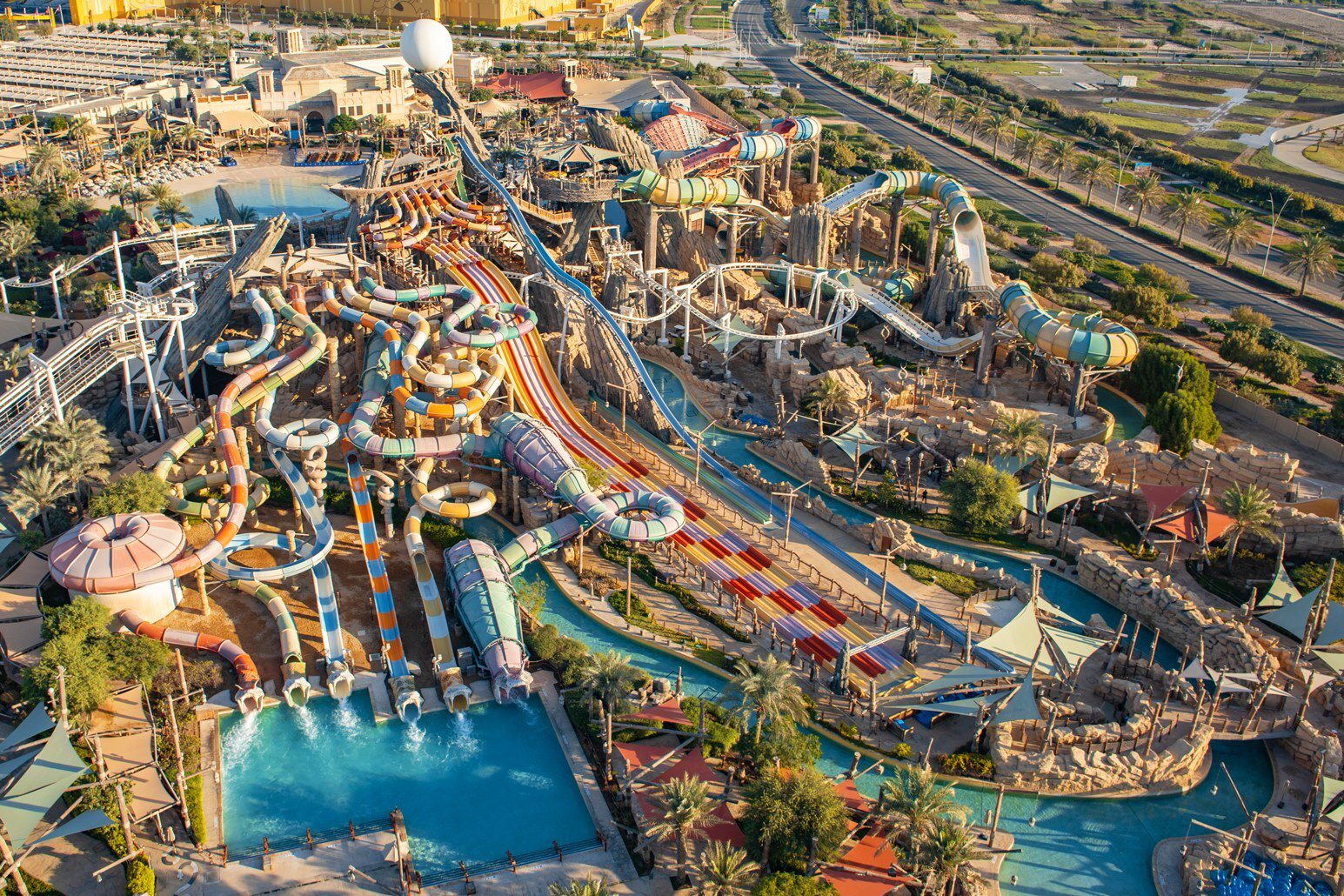
A dramatic expansion at Yas Waterworld has introduced Bandit’s Village, a new adventure zone featuring over 20 attractions, including a massive crocodile-themed slide and a reimagined storyline inspired by classic Arabian tales. The addition marks a significant enhancement to Abu Dhabi’s flagship water park, aiming to draw larger family crowds during the extended summer season.

Unveiled with theatrical flair, the centrepiece ride sends guests plunging through the jaws of a giant crocodile-like creature, a centrepiece built to evoke high drama and immersive storytelling. The new water attractions are framed within an interactive environment designed to transport visitors into the world of the Bandit, a long-standing character in the waterpark’s lore. Park officials confirmed that the development adds both visual spectacle and narrative continuity to the attraction, reinforcing the park’s position as a destination for experiential entertainment.

Spanning several zones and themed in intricate detail, Bandit’s Village includes multiple flume rides, splash pads, climbing features, and water tunnels, all constructed to appeal to children and adults alike. The area has been crafted to extend the duration of visitor engagement, providing more diverse experiences and encouraging longer dwell times. With extended operating hours throughout the peak travel months, the new zone is expected to contribute substantially to footfall and guest satisfaction.

The new expansion reflects Yas Island’s broader strategic emphasis on integrated family entertainment. With Abu Dhabi increasingly positioning itself as a regional leisure destination, the timing of the rollout aligns with efforts to boost tourism traffic, particularly among residents from the Gulf region and international travellers looking for curated family activities. This move is part of a wider pattern of competitive theming and investment by parks on Yas Island to match global leisure benchmarks.

Located within proximity to other major attractions such as Ferrari World and Warner Bros. World, Yas Waterworld has leveraged its thematic strength around Emirati culture and folklore to differentiate itself. The character of the Bandit has played a central role in the park’s storytelling framework since its inception, and the Village serves as an expanded narrative environment where guests can experience the backstory more fully through ride design, queue experiences, and environmental elements.

Guests can expect theatrical elements embedded into the ride sequences, with interactive lighting, sound effects, and character appearances throughout the zone. One of the signature features involves a multi-slide experience that mimics an escape from a bandit ambush, concluding in a dramatic plunge through the crocodilian mouth installation. Park designers have emphasised the attention given to architectural authenticity and atmosphere, using textured stonework, tribal motifs, and animated props to deepen immersion.

The opening of Bandit’s Village also responds to changing visitor expectations in the post-pandemic leisure economy. Analysts tracking theme park trends have noted a shift towards more story-driven and customisable experiences, as audiences seek environments that merge thrill with narrative depth. This aligns with Yas Waterworld’s long-term strategy of building on local cultural roots while embracing global design standards.

With Yas Waterworld already home to over 40 rides and attractions, the new zone increases its offering to more than 60, strengthening its profile as one of the Middle East’s largest water-based theme parks. Management teams behind the expansion have hinted at further phased developments within the Bandit storyline, suggesting that the current unveiling may be the first in a series of immersive expansions.

OpenAI will lease approximately 4.5 gigawatts of data centre power from Oracle under a $30 billion‑per‑year agreement set to begin delivering revenue in Oracle’s fiscal year 2028. This significant capacity boost forms part of the expansive “Stargate” initiative—an AI infrastructure venture launched in January aiming to deploy up to $500 billion globally. Oracle plans to construct and expand multiple U. S. data centres to support this deal, including enhancements to its […]

Advertisements

The U. S. House of Representatives will convene “Crypto Week” from 14–18 July to vote on three pivotal digital asset bills: the CLARITY Act, the Anti‑CBDC Surveillance State Act, and the GENIUS Act. This coordinated effort signals a major shift in federal crypto policy as lawmakers aim to clarify regulation, protect financial privacy, and foster blockchain innovation.

The CLARITY Act seeks to establish a definitive regulatory framework by delineating the roles of the SEC and CFTC, mandating the segregation of customer funds, and requiring enhanced retail disclosures. It has already passed through both the Financial Services and Agriculture Committees by decisive margins, reflecting bipartisan support and responding directly to industry demands for legal certainty.

The GENIUS Act, recently approved by the Senate in a strong 68–30 bipartisan vote, focuses on stablecoin regulation. It mandates that stablecoin reserves be held in high‑quality, liquid assets such as U. S. Treasuries, requires annual audits for issuers with over $50 billion in market cap, and clarifies regulatory oversight while allowing banks to issue their own tokens. The bill now awaits a House vote, with hopes of reaching the president’s desk by late July.

The Anti‑CBDC Surveillance State Act takes a definitive stance against a federally issued central bank digital currency, effectively prohibiting the Federal Reserve from developing or distributing a CBDC. Proponents frame it as a necessary measure to safeguard financial privacy and prevent potential government surveillance through digital currency systems.

Deputy Speaker Mike Johnson and committee chairs, including Financial Services Chair French Hill and Agriculture Chair GT Thompson, have emphasised that this legislative package aligns with former President Trump’s digital assets agenda — aiming to position the U. S. as a leader in crypto innovation. Johnson stated that the bills would deliver the full scope of that agenda, while Hill highlighted that the initiative would finally provide clarity for innovators, protecting both consumers and the broader digital economy.

Majority Leader Steve Scalise echoed the sentiment, saying the legislation would solidify the U. S.’s global leadership in digital assets. Minority voices have also weighed in: Majority Whip Tom Emmer described the moment as a “historic opportunity” to uphold “privacy, individual sovereignty, and free‑market competitiveness.” Senator Bill Hagerty voiced Senate support, noting the urgency of enacting these measures swiftly.

While the GENIUS Act has Senate backing, the CLARITY Act has faced scrutiny from Democrats and former regulators. Experts such as ex‑CFTC Chair Timothy Massad have warned that its provisions could be overly broad or convoluted, advocating instead for a collaborative regulatory approach between the SEC and CFTC. Concerns also persist among left‑leaning lawmakers that pairing the CLARITY Act with stablecoin regulation could stall progress, despite strong crypto industry support calling for their passage in tandem.

Lawmakers like Rep. Warren Davidson have promoted consolidating stablecoin, market‑structure, and CBDC ban measures into a single legislative package to ensure comprehensive reform. However, this strategy may encounter resistance in the Senate, potentially delaying the bills past the intended timeline.

The Senate’s passage of the GENIUS Act earlier this month reflected growing bipartisan agreement on stablecoin oversight but also revealed tensions over inclusion of Trump‑era cryptocurrency interests. Indeed, some critics have raised ethical questions about exempting the president’s family from the bill’s prohibitions on member profits, and the influence of Trump‑linked ventures that reportedly earned tens of millions from crypto operations.

Despite these controversies, House Republicans are pushing ahead with “Crypto Week” as a gateway to shaping U. S. cryptocurrency policy. The CLARITY Act furthers efforts made under the FIT21 digital asset law passed in May 2024, which established initial delineation of regulatory authority.

As 14 July approaches, industry stakeholders, advocacy groups, and congressional offices are bracing for intense debates. Passing these bills could redefine market structures, unlock stablecoin innovation, and reinforce constitutional privacy rights—or it may start a protracted legislative battle over oversight, accountability, and the future role of federal oversight in digital currencies.

Arabian Post Staff -Dubai French defence and technology group Thales is deepening its strategic footprint across the Gulf by advancing plans to build a radar production facility in Saudi Arabia and an AI research centre in the UAE. At the Paris Airshow, Pascale Sourisse, senior executive vice‑president of international development at Thales, confirmed discussions on expanding a joint venture with Saudi Arabian Military Industries beyond radar systems […]

Archer Aviation completed a successful test flight of its Midnight electric vertical take-off and landing aircraft at Al Bateen Executive Airport in Abu Dhabi, advancing its push to establish commercial air taxi operations in the UAE. The trial flight marked the first time the company has operated the Midnight aircraft under Middle Eastern environmental conditions, demonstrating its airworthiness and operational viability in one of the world’s most challenging climates.

The test flight was designed to evaluate the aircraft’s vertical lift and descent capabilities while enduring extreme heat, high humidity levels, and airborne dust — factors that are critical to address for obtaining certification in the UAE. The company said these environmental stressors, particularly in the summer season, present unique challenges not faced in temperate regions, and their successful navigation is essential for regional rollout.

With support from the UAE’s Smart and Autonomous Systems Council, Archer Aviation conducted the operation in the presence of officials from the General Civil Aviation Authority, the Abu Dhabi Investment Office, the Integrated Transport Centre, Abu Dhabi Airports, and Abu Dhabi Aviation. Several of Archer’s regional partners also attended, underscoring the strategic significance of the flight for the broader effort to integrate urban air mobility into the UAE’s transportation ecosystem.

This development is part of a broader expansion plan by Archer Aviation, which aims to commence commercial operations in the UAE within the next year. The company confirmed that more flight tests will follow in the coming months as it works toward regulatory approval. These tests will build on data gathered during the Al Bateen flight and are aimed at fine-tuning the aircraft’s performance and ensuring compliance with the UAE’s civil aviation standards.

Archer’s Midnight aircraft is a four-passenger, one-pilot eVTOL designed to reduce urban congestion by providing an environmentally sustainable alternative to short-haul ground transport. It operates entirely on electric power and has a claimed range of around 100 miles, though it is optimised for rapid trips of around 20 miles, enabling multiple short urban hops on a single charge. The company has highlighted its low noise profile and rapid recharge time as key advantages for integration into densely populated cities.

The Abu Dhabi test forms part of a larger strategic partnership between Archer and Abu Dhabi authorities, with the emirate positioning itself as a pioneer in urban air mobility. The Abu Dhabi Investment Office has previously announced financial and regulatory backing for companies involved in the advanced air mobility sector, aiming to transform the capital into a hub for emerging aerospace technologies. Archer’s work is also aligned with the UAE’s long-term vision to build a diversified, innovation-driven economy, especially in sectors like aerospace and smart mobility.

The involvement of multiple UAE transport and aviation stakeholders in the test flight indicates strong institutional interest in accelerating the commercialisation of eVTOL technologies. Abu Dhabi has been actively working to establish the regulatory, financial, and operational groundwork required to deploy air taxis, including digital airspace management systems and vertiport infrastructure. The city’s integrated approach, bringing together regulatory bodies, investors, and transport operators, is viewed by industry experts as a model for emerging air mobility ecosystems globally.

This milestone for Archer also arrives amid growing international competition in the eVTOL space. Companies such as Joby Aviation, Vertical Aerospace, and Lilium are developing similar platforms, with plans to launch air taxi services in urban centres worldwide. However, the harsh environmental conditions in the Gulf region offer a unique proving ground for aircraft performance, and successful operations in Abu Dhabi may serve as a powerful validation for the Midnight platform in other markets with extreme climates.

Archer has previously announced its intention to base a portion of its operations in the UAE, including flight testing, pilot training, and maintenance services. The company is also working on joint ventures and local partnerships to support these initiatives, suggesting a long-term commercial and logistical commitment to the region. Discussions are underway to align with regional airports and private operators to facilitate a network of air taxi routes, which could link major business hubs, residential zones, and tourist attractions across the UAE.

Launches Extended Round to Accelerate Climate Tech Innovation Across Indonesia SINGAPORE – Media OutReach Newswire – 3 July 2025 – GreenTeams, a rapidly growing climate technology company advancing data-driven environmental governance in Indonesia, has announced the successful close of its Series A funding round. The round was led by Oriza Greenwillow Technology Fund. Operating at the intersection of environmental intelligence, regulatory compliance, and industrial decarbonization, GreenTeams empowers […]

Bit Digital has raised a total of $162.9 million through an underwritten public share offering, signalling its strategic pivot from Bitcoin mining into building a substantial Ethereum treasury. Underwriters fully exercised their over‑allotment option on 1 July 2025, expanding the issuance to 86.25 million ordinary shares and boosting net proceeds to the disclosed sum.

The capital infusion positions the Nasdaq‑listed miner to sharply reduce its focus on Bitcoin operations and allocate the funds towards acquiring Ethereum—a shift that aligns with broader trends among institutional investors favouring Ether. The company already manages 24,434 ETH, valued at approximately $59.8 million, and plans to convert around 417.6 BTC—worth roughly $44.9 million—into ETH, further bolstering its holdings.

Bit Digital’s decision emerges at a pivotal moment for Ethereum, which continues to draw momentum from its network upgrades and growing appeal in decentralised finance and staking arenas. Industry analysts interpret this move as institutional endorsement of Ethereum’s utility and long‑term integrity.

The offering was executed under a shelf registration declared effective on 20 June 2025, with B. Riley Securities acting as sole bookrunner and Clear Street, Craig‑Hallum, and Northland Capital Markets serving as co‑managers.

This marked exit from Bitcoin mining investments reflects a growing recognition of proof‑of‑stake ecosystems, such as Ethereum’s, as lower‑carbon and increasingly profitable ventures relative to energy‑intensive Bitcoin operations. Bit Digital’s move mirrors strategic shifts by other firms seeking to diversify within the crypto landscape.

By converting a significant portion of its Bitcoin holdings into Ethereum, the company is betting on the upside potential of ETH staking rewards. Ethereum’s transition to proof‑of‑stake has positioned it as a credible alternative revenue stream for firms with digital asset treasuries, moving beyond merely holding and mining cryptocurrencies.

The structural implications for investors are multifaceted. While diluting existing shareholders through the share issuance, the company now holds a stronger, more liquid position in Ethereum. Analysts suggest that institutional confidence in Ether is rising, as evidenced by the flurry of allocations into ETH‑focused treasuries, staking projects, and exchange‑traded funds.

Investor reactions have been mixed. Some view the dilution as manageable given the scale of capital and the clear strategic direction. Others question how successfully Bit Digital will deploy its ETH assets, including whether it will stake holdings and manage risk across its newly acquired portfolio.

Industry observers emphasise that successful execution will require transparent operation of staking protocols, disciplined treasury management, and risk mitigation strategies to protect against Ether’s price volatility. Questions also remain over how quickly the BTC-to-ETH conversion will be completed and whether the Ethereum market can absorb such large inflows without destabilising prices.

Bit Digital’s acquisition comes on the heels of growing institutional inflows into Ethereum, including predictions of multi‑billion dollar inflows into ETH‑based ETFs in 2025, suggesting a wave of mainstream financial participation.

A specialised Indian geological team has been dispatched to Zambia to commence a three‑year survey of copper and cobalt within a 9,000 km² exploration zone. The initiative, authorised by the Zambian government earlier this year, aligns with New Delhi’s broader drive to shore up supplies of strategic minerals essential for its energy‑transition and technological ambitions. Zambia, a major exporter of copper—Africa’s second‑largest producer after the Democratic Republic of […]

Limitless, the leading prediction-market platform on Base, has closed a $4 million strategic funding round to bolster its forthcoming token generation event. The injection, led by Coinbase Ventures and featuring Arthur Hayes’s family office Maelstrom, elevates the total capital raised to $7 million. Hayes, co‑founder of BitMEX, also joins as an adviser, lending his market insight just as the platform unveils a new points system designed to reward active […]

Aldar Investment has sealed the acquisition of 17 high‑quality warehousing and light industrial units from Waha Capital for AED 530 million, immediately expanding its net leasable area by 182,500 sq m at Almarkaz Industrial Park in Al Dhafra, Abu Dhabi. The assets, now near full occupancy, welcome a mix of international, regional and government-related tenants, reinforcing Aldar’s logistics footprint across the UAE. The Almarkaz site spans six million sq m and operates under […]

PoliCloud has closed a €7.5 million seed funding round led by Global Ventures, with participation from MI8, OneRagtime, Inria and others, to accelerate its expansion of sovereign, decentralised cloud infrastructure aimed at European governments, enterprises and SMEs.

The Cannes‑based firm will deploy the capital to bolster its operational team, scale micro‑data centre deployment across Europe and target public sector clients that need secure, locally governed cloud services.

Founded in February 2025 by serial fintech entrepreneur David Gurlé, PoliCloud delivers containerised micro‑data centres housing proprietary hardware integrated with Hivenet’s distributed storage and computing software. Early traction includes four sold units and projected revenues in excess of €6 million by the end of 2025.

The firm’s micro‑data centres—equipped with up to 104 GPUs per unit and expected to scale beyond 1,000 GPUs by year‑end—are designed for high‑performance computing, AI processing and encrypted data storage, offering reduced dependency on US‑based cloud giants and enhanced compliance with European data sovereignty standards.

“PoliCloud is meeting a critical market demand for sovereign cloud infrastructure that is not only secure and abundant but also eco‑responsible,” Gurlé stated, underscoring an ambition to deliver affordable, decentralised compute infrastructure across the continent.

Global Ventures Senior Partner Simon Sharp explained the investment thesis, emphasising a need for visionary entrepreneurs offering solutions with clear market demand and global potential. The firm previously backed Hivenet in 2022 and views PoliCloud as a strategic addition to its portfolio.

OneRagtime CEO Stéphanie Hospital and Mi8 Managing Director Guillaume Dhamelincourt echoed the sentiment, citing the increasing demand for affordable, secure and sustainable computing power in Europe. Inria’s participation aligned with its strategic mission to support decentralised computing as a way to bolster France’s digital autonomy.

Industry analysts note that the cloud infrastructure sector in Europe has drawn significant venture investment, particularly in sovereign and AI-ready platforms. PoliCloud stands out for combining hardware innovation, distributed software architecture and environmental responsibility—promising 75% lower CO₂ emissions and zero‑water waste per unit.

PoliCloud’s edge compute strategy is being viewed as a potential game‑changer in the context of accelerating AI adoption. It offers municipalities, research institutions and regulated industries the flexibility to deploy GPU‑rich, GDPR‑compliant infrastructure locally, rather than relying on centralised hyperscalers.

Operating from Cannes, the company has so far sold four units within three months of its February launch at the World AI Cannes Festival. Hardware specifics remain under wraps, though insiders suggest each container may host more than 100 GPUs, with a roadmap targeting up to 10,000 GPUs by the end of 2026.

The €7.5 million lifeline will be used to recruit additional talent, fund technical development, scale production of micro‑data centres and initiate roll‑out across multiple European markets.

Dubai Holding has sealed a strategic agreement with Select Group and Emirates Strategic Investments Company to develop flagship residential and mixed‑use communities at Palm Jebel Ali and Dubai Design District. This marks Dubai Holding’s inaugural sale of strategic land at Palm Jebel Ali to an external developer, reflecting the emirate’s ambitious urban growth ambitions.

Select Group, in partnership with ESIC, will manage two major projects: a high‑end waterfront residential and hospitality enclave across seven islands and 16 fronds at Palm Jebel Ali, featuring over 90 km of beachfront spanning 13.4 km; and a dynamic, culture‑driven mixed‑use district in d3 designed to integrate innovation, creativity and modern urban living.

Khalid Al Malik, CEO of Dubai Holding Real Estate, emphasised that Palm Jebel Ali would “elevate Dubai’s global reputation as a premier waterfront destination,” and called the tie‑up with Select Group a critical step in aligning with the emirate’s broader vision under its 2040 Urban Master Plan and Economic Agenda D33. Rahail Aslam, Chairman of Select Group, described the deal as advancing the firm’s strategy to deliver “design‑forward, high‑impact” developments in key growth corridors.

Work on design and planning is underway for both locations, with further specifics on architecture, timelines and phasing due to be released in the coming months. Select Group brings experience from high‑end developments like Six Senses Residences at Palm and Dubai Marina, and Peninsula in Business Bay.

Palm Jebel Ali is being positioned as a new growth corridor in Jebel Ali and will combine luxury coastal living with pedestrian‑friendly, mixed‑use neighbourhoods, offering panoramic views of the Arabian Gulf. d3, recognised globally as part of Dubai’s UNESCO Creative City of Design network, will expand its creative ecosystem, offering residents skyline views including Burj Khalifa and further solidifying Dubai’s reputation as a hub for design and innovation.

The agreement reinforces Dubai Holding’s mission to unlock long‑term value from its master‑planned initiatives by collaborating with private developers and aligns with its goals of sustainable urban expansion. It also complements related infrastructure developments, such as the district cooling joint venture between Dubai Holding Investments and Tabreed at Palm Jebel Ali, initiated in March 2025, aimed at delivering efficient, sustainable cooling capacity expected to commence operations by 2027.

Select Group’s role in the development highlights a strategic evolution from project delivery to comprehensive neighbourhood creation. That approach reflects a growing trend among developers to craft holistic lifestyle destinations rather than standalone buildings. This shift speaks to evolving investor preferences for immersive, value‑oriented environments.

Naver Pay is spearheading an initiative to introduce a South Korean won–pegged stablecoin, with Dunamu—the operator behind Upbit—providing technical and operational support, launching a bold push into blockchain-based payments.

The payment platform officially disclosed its intent to enter the won stablecoin space on 26 June. Today, Dunamu confirmed its support for the project, emphasising that Naver Pay will lead, while Dunamu ensures robust backend assistance. Detailed structures and issuance responsibilities remain under review pending regulatory approval.

Stablecoins, digital tokens pegged 1:1 to the Korean won, promise minimal price volatility. Such stability makes them suited for everyday transactions and value storage. Naver Pay aims to cultivate an ecosystem that includes a consortium of financial institutions, tech partners, and regulatory consultation to ensure comprehensive infrastructure, covering issuance, redemption, reserves, wallet services, custody, and integration with existing payment rails.

This partnership coincides with broader momentum in the stablecoin arena. Eight major South Korean banks are collaborating through a joint venture to issue their own won-pegged token, targeting a launch by late 2025 or early 2026, contingent on regulatory clarity. Simultaneously, the Financial Supervisory Service supports these initiatives, signalling growing institutional endorsement.

On the legislative front, the National Assembly is considering the Framework Act on Digital Assets, which outlines provisions specific to KRW stablecoins. This follows advocacy within the Democratic Party for formal recognition of stablecoins as legitimate mediums of payment, underscoring their strategic importance in national finance.

Regulators like the Bank of Korea maintain a cautious stance toward non-bank stablecoin issuers, particularly fintech firms, reflecting concerns over financial stability and reserve transparency. At present, the central bank continues to advance its own CBDC project, but no formal decision has been made to integrate these private-sector stablecoins into national payment systems.

Naver Pay’s scale positions the platform as a potential game‑changer. With access to Naver’s vast user base—spanning search, e‑commerce, messaging, webtoons and fintech—the stablecoin could gain rapid consumer acceptance. Meanwhile, Dunamu brings its deep expertise in digital asset technology and compliance, as evidenced by Upbit’s leading position in South Korea’s exchange market.

International regulators are also focusing on stablecoin frameworks. In the US, the Senate passed the Genius Act on 17 June, indicating growing legislative momentum. Against this backdrop, South Korea’s regulators are keen to streamline stablecoin governance, striking a balance between innovation and consumer protection.

Binance now commands a staggering 87 per cent of global taker futures volume, overshadowing all other platforms combined. OKX, Deribit, BitMEX and Bybit together account for just 10 per cent, underscoring Binance’s extraordinary grip on the derivatives market.

Liquidity advantages explain this dominance. Binance routinely records 24‑hour futures volumes exceeding US$50 billion and open interest of similar scale, dwarfing competitors. Such vast trading depth appeals to institutional players and retail investors alike, reinforcing Binance’s centrality in price discovery and leverage trading.

Data from on‑chain analytics firm CryptoQuant notes that Binance alone accounts for 87 per cent of global taker buy volume. This metric tracks market‑order consumption of liquidity, a key indicator of exchange activity in fast‑moving markets. Analysts say this dominance not only reflects Binance’s scale but also amplifies its influence on global derivatives flows.

While Binance’s dominance is clear, other exchanges continue to carve out niche roles. Bybit holds steady as the second largest player in perpetuals, and OKX remains a major competitor for altcoin futures. Deribit continues its leadership in the Bitcoin options space, though its slice of futures volume remains small in comparison.

Regulatory scrutiny, however, poses threats to Binance’s hegemony. The exchange has confronted legal challenges across multiple jurisdictions, including high‑profile cases in the US, UK, Canada, Belgium and Nigeria. While a US plea agreement in late 2023 imposed a US$4‑billion fine and saw Changpeng Zhao step aside, Binance has since implemented compliance reforms and launched regional ventures to navigate regulatory barriers.

Despite regulatory headwinds, Binance’s infrastructure remains formidable. Its capacity to offer up to 125× leverage on Bitcoin futures, along with hundreds of perpetual and quarterly contracts, attracts traders seeking high‑speed, high‑stakes strategies. The exchange also sustains deep liquidity across both USDT‑margined and coin‑margined instruments, further cementing its appeal.

Market observers flag potential risks in concentrated market power. Binance’s outsized role means shifts in its taker behaviour can reverberate across crypto markets. A recent dip in Binance’s taker buy/sell ratio to below 1.0—while other platforms remained net buyers—sparked concern that Binance‑driven selling pressure could herald broader price corrections.

Still, Binance’s dominance exerts a self‑reinforcing effect. Traders aim to engage where order books are deepest and execution is fastest—creating a virtuous cycle that keeps Binance at the centre. For competitors, gaining even modest gains in market share requires overcoming Binance’s head start, deep pockets and global reach.

Looking ahead, industry watchers see Binance’s influence persisting as long as it maintains technical robustness, product innovation and competitive fees. Rival exchanges are stepping up with new offerings—such as OKX’s grid trading bots, Bybit’s aggressive funding strategies, and Deribit’s options liquidity—but their futures volume remains dwarfed.

Legendary Italian chef Umberto Bombana joins forces with the Executive Chefs of his Macau and Shanghai restaurants to celebrate the season of Australian Black Truffle and award-winning wine list at 8½ Otto e Mezzo BOMBANA at Galaxy Macau MACAU SAR – Media OutReach Newswire – 1 July 2025 – Galaxy Macau™, the world-class luxury integrated resort, stands as a premier culinary destination with its exquisite and diverse […]

Saudi Arabia’s Public Investment Fund posted a 60 per cent plunge in net profit for 2024, even as its assets surpassed the US $1 trillion mark, the fund disclosed on 30 June. The drop came amid persistent high interest rates, inflationary pressures, and a wave of impairments tied to escalated costs and shifting operational plans.

Net income dwindled to 25.8 billion riyals, down sharply from 64.4 billion riyals in the prior year. This contrast underscored the divergence between headline growth and bottom‑line volatility within Saudi Arabia’s principal engine for economic diversification.

Assets under management rose by 18 per cent to 4.321 trillion riyals, up from 3.664 trillion riyals in 2023. The surge came largely from fresh capital injections, including transfers from oil‑linked revenues, plus appreciation in existing holdings, particularly in domestic champions such as Saudi Aramco and Saudi National Bank.

Yet, comprehensive income—an accounting measure that factors in unrealised gains and asset revaluations—tipped into negative territory, registering a 140 billion riyals loss following a gain of 138.1 billion riyals the previous year. The swing reflected deep writedowns, tied to project revaluations across the PIF’s footprint.

Monica Malik, chief economist at Abu Dhabi Commercial Bank, attributed the downturn in part to recalibration of investment strategies. She highlighted how “prioritisation of some projects and the extension in the timelines of some giga projects could have been a factor for the impairments,” and pointed to rising costs as another pressure point.

Among these giga‑projects is NEOM, an ambitious urban megacity on Saudi’s Red Sea coast. Backed by hundreds of billions of dollars in PIF funding, NEOM remains central to the fund’s strategy, though its scale and timeline have been under increased scrutiny amid cost inflation and changing economic dynamics.

Cash reserves stood firm at 316 billion riyals, while group loans edged up to 570 billion riyals, signalling ongoing borrowing to propel expansions. This reflects PIF’s dual posture: aggressive investment on one hand, and debt financing on the other.

Historically, PIF has been pivotal to Saudi Arabia’s Vision 2030 programme—Crown Prince Mohammed bin Salman’s blueprint to reduce national dependence on oil by building world‑class tourism, tech and renewable sectors. Since 2015, the fund’s remit expanded from passive equity holdings to sovereign‑directed mega‑investments. By end‑2024, PIF had amassed over US $1 trillion in assets, bolstered by successive Aramco asset transfers.

Its investment portfolio spans global holdings—Uber, Boeing, Disney—and domestic ventures like Qiddiya, the Red Sea luxury resort and NEOM. The fund also pursued high‑profile investments, including planned stakes in Heathrow Airport and European hotel chains. Overseeing this expansion has drawn both political and governance scrutiny, reflecting complex trade‑offs under Saudi rules.

Despite today’s profit contraction, the growth in assets cements the fund’s scale and influence. Dividends from Aramco and SNB now fuel a substantial portion of PIF’s recurring income, augmenting returns from non‑oil investments.

The portfolio writedowns—particularly impairments linked to escalated project outlays—underline broader macroeconomic challenges. High global interest rates have upped the cost of capital for long‑gestating developments, while inflation has pushed construction, labour and materials costs upward. PIF’s balance sheet has borne both pressures.

Operating amid this headwind, the fund has begun recalibrating timelines and reprioritising capital deployment. Malik’s comments suggest PIF faces a complex balancing act: stewarding mega‑projects while preserving fiscal discipline. Illiquidity risk, rising debt and market exposure also feature in ongoing risk assessments.

In parallel, PIF is broadening its footprint via bond issuances and global partnerships. According to finance industry disclosures, it is preparing a seven‑year sukuk targeting US $1.25 billion in proceeds. Such moves signal evolving financing strategies that complement traditional government funding and cash reserves.

Central to this outlook is Vision 2030. Despite the profit slump, PIF retains its mandate to catalyse non‑oil economic sectors, from tourism to tech to renewable energy. Arab regional peers have pursued similar diversification, but few match PIF’s scale. The fund’s willingness to shoulder large‑scale writedowns may reflect long‑term thinking: strategic build‑out today, stabilised returns in future decades.

Global investors and markets will likely watch upcoming quarterly and full‑year data for signs of recovery or further calibrations. Rising global interest rates remain a wildcard. Additionally, cost overruns in mega‑projects may prompt sharper scrutiny and public debate about deliverables.

PIF’s holding company, chaired by the Crown Prince, retains political backing, but governance observers continue to emphasise improved transparency and oversight. The fund’s decisions now carry wider implications: not just for returns, but as a barometer for Saudi Arabia’s Long‑Term economic strategy.


Star Entertainment is confronting a fresh financial crisis as its partners in the Brisbane Queen’s Wharf development have formally sought to cancel the sale of the casino operator’s 50 per cent interest in the integrated precinct. This blow lands just days after shareholders approved a $300 million rescue package that was expected to stabilise the business. The termination notice, issued by Hong Kong-based Far East Consortium and Chow Tai Fook […]

Kazakhstan’s National Bank, under its chairman Timur Suleimenov, is taking steps to build a state-held cryptocurrency reserve managed by a subsidiary entity, following international sovereign fund practices. The proposal outlines funding sources that include confiscated crypto-assets and coins mined through ventures with state participation—measures aimed at enhancing governance and stability within the digital asset ecosystem.

The National Bank is developing a comprehensive framework for the reserve’s formation and administration, emphasising transparency and institutional safeguards. It plans to enshrine in law both the status of the reserve and the protocols for deposit and use, with draft legislation to be submitted to parliament for approval.

Suleimenov highlighted that the envisioned affiliate would follow global norms for sovereign funds, ensuring robust accounting, secure storage, and resilient governance structures. The legal amendments under discussion would affirm the reserve’s legal standing and empower authorities to handle crypto-assets seized under law as well as profits generated from state-linked mining operations.

The banking chief stressed the importance of centralised institutional oversight, noting the high volatility and vulnerability of crypto-assets. Centralisation, he said, is key to mitigating risks such as market fluctuations or cyber threats.

This effort is part of a wider regulatory overhaul targeting cryptocurrency flows. Under proposals by the Ministry of Digital Development, draft laws would impose criminal and administrative liability on grey‑market trades, require licences for investment advisers, and curb unlicensed exchanges and misleading crypto promoters—many of whom target younger investors.

Parliamentary deputies have endorsed the overarching concept. One lawmaker, Kuspekov, recommended creating a “national digital reserve” at the central bank to anchor confiscated digital assets and tighten financial controls. He also urged strengthened due diligence by banks, prohibition of unlicensed crypto platforms, and mandates for licensed investment coaches.

These developments follow a surge in legislative activity since May. The National Bank has proposed amendments defining legal status for digital assets, licensing for crypto exchanges outside the Astana International Financial Centre, and a regulatory sandbox for testing digital services. The objective is to restore confidence in Kazakhstan’s crypto sector after capital flight estimated at US$15 billion last year.

Timur Suleimenov, appointed as National Bank chair in September 2023 and former minister of national economy, has emphasised institutional integrity and macroeconomic resilience. He recently noted that international reserves reached US$104.7 billion at end-2024, bolstered by gains in gold and foreign-exchange holdings.

The crypto reserve initiative appears aligned with broader state efforts. Issuance of AIFC‑backed crypto payment cards was piloted in early June by major banks including Halyk Bank, Forte and Altyn Bank—allowing consumers to instantly convert digital assets into fiat currency for everyday purchases.

The Ministry of Digital Development has proposed the creation of a crypto reserve as a digital asset repository to support the national digital economy. This official endorsement underscores the government’s increasing interest in integrating digital assets within its fiscal infrastructure.

Central to this initiative are practical mechanisms that remain under review. The National Bank is working with law-enforcement agencies and other government bodies to outline operational procedures, compliance norms and asset custody arrangements.

Eight‑year‑old Gavin Batarse, CEO of Glove Wrap, secured a $50,000 investment from Mark Cuban and Michael Rubin on the US ‘Shark Tank’ stage for his ingenious sports glove accessory. The lightweight elastic band, costing just $3 to produce and retailing at $19.99, simplifies the process of breaking in baseball, softball or hockey gloves by holding a ball in place until a perfect pocket is formed. Gavin pitched […]

VISHNU RAJA
RYO YAMADA
HITORI GOTOH
IKUYO KITA
Just in:
Thailand’s Most Iconic New Year’s Celebration Returns: ICONSIAM Unveils “Amazing Thailand Countdown 2027” // NASA tests supersonic Mars rotors for heavier payloads // Dar Global unveils $700m Trump development in Qatar // Travel Insurance Was Built for the Few Who Claim. Ancileo’s Felt Coverage™ is for Everyone Else // 2026 Tropical Rainforest Ecosystem Partners Conference Kicks off in Hainan // AXS and PayerMax Advance Omnichannel Payment Acceptance for Merchants // Anthropic’s debut is lifting markets, but someone is still paying for it // Anthropic shares finish above offer price after Nasdaq debut // International Business Leaders Say Xi’s Speech Boosts Confidence in Asia-Pacific Cooperation // Airbus leadership visits Dubai South before 2027 facility launch // Alibaba shares slip despite 53% cloud revenue growth // Jaiedco and Golden Bridge Announce Strategic Collaboration for a New Dubai Islands Development // Malappuram hartal over Western Ghats // PicCollage extends photo editing platform to web browsers // Sharjah clears Kalba free zone plan for 400MW complex // Coinbase targets 2027 launch amid state gambling lawsuits // Promoting Common Human Development Through Exchanges and Mutual Learning Among Civilizations // Dubai Introduces SHARH, an AI-Powered Platform Helping Entrepreneurs Buy, Sell and Manage Businesses in the UAE // Russia permits retail cryptocurrency purchases under regulated framework // Dalilk Academy reaches 27 million, targets 100 million by 2030 //