News related to
venture

GITEX, the iconic technology and innovation expo, is broadening its footprint by expanding into Vietnam, heralding a new chapter for the Southeast Asian nation’s burgeoning digital economy. With the event’s successful history in the Middle East and Asia, this expansion signals a strong shift towards positioning Vietnam as a central player in the global digital arena. The launch aligns with Vietnam’s ambitious vision to develop a digital economy worth over $200 billion by 2030, driven by the country’s evolving tech ecosystem, government-backed initiatives, and an increasingly connected population.

GITEX Vietnam, set to take place in Hanoi, is expected to be a major catalyst for the nation’s digital transformation. The expo, known for showcasing the latest advancements in AI, cloud computing, cybersecurity, and smart technologies, will provide a platform for global tech giants and local startups to foster collaboration. This shift not only promises to boost local innovation but also offers international companies the opportunity to tap into Vietnam’s rapidly growing market. The country’s young, tech-savvy population and expanding digital infrastructure make it an ideal destination for the event, underscoring the symbiotic relationship between GITEX’s global platform and Vietnam’s digital future.

The expansion into Vietnam is a testament to GITEX’s strategic move to capture the rising tide of digitalisation across Southeast Asia. According to industry analysts, Vietnam’s digital economy is one of the fastest-growing in the region. With the government’s commitment to building a robust digital infrastructure, the country aims to integrate digital solutions across key sectors, including healthcare, education, logistics, and manufacturing. This government push is expected to further accelerate innovation in AI and blockchain technologies, sectors where Vietnam has begun to make notable strides.

One of the main drivers behind Vietnam’s digital economy ambitions is the government’s Digital Transformation Program, which aims to equip businesses and individuals with the tools to thrive in the new digital world. As part of this initiative, the Vietnamese government has pledged to support local startups and foster an environment conducive to technological advancements. Public-private partnerships are expected to play a pivotal role in bridging the gap between government policy and the commercial sector, ensuring that both infrastructure and innovation go hand in hand.

GITEX’s involvement in this transformation is poised to elevate Vietnam’s digital capabilities on the global stage. By offering a comprehensive view of the latest trends, technologies, and business solutions, the event will expose Vietnamese enterprises to the tools and insights needed to enhance productivity, efficiency, and innovation. As part of the expansion, Vietnam’s homegrown tech companies will also be able to showcase their capabilities, fostering collaboration with global leaders in digital technologies.

The 2025 edition of GITEX Vietnam will feature a broad spectrum of sectors, including digital health, fintech, artificial intelligence, and cybersecurity. These areas align closely with the country’s vision to modernise key industries and improve overall living standards through technology. AI, for instance, is expected to play a crucial role in enhancing Vietnam’s manufacturing sector, enabling greater automation and precision in production. Additionally, fintech’s rise in Vietnam promises to boost financial inclusion by offering innovative solutions to underserved populations, with digital payments and mobile banking expanding rapidly in urban and rural areas alike.

The growing momentum of GITEX in Southeast Asia is evident through its ongoing success in regions like the UAE, India, and Saudi Arabia, where it has served as a crucial platform for digital transformation discussions. The move into Vietnam further strengthens its position as a global tech hub, providing valuable opportunities for cross-border collaboration. Vietnamese companies, eager to expand their reach, will benefit immensely from the international exposure GITEX provides, potentially paving the way for future partnerships, investments, and technological breakthroughs.

Griffin Gaming Partners has acquired the mobile-publishing arm of Playdigious from Fragbite Group for €10.5 million, with Fragbite retaining rights to 90 per cent of net revenue from Playdigious’s PC titles. The transaction is structured on a cash-and-debt-free basis, according to company statements. The acquisition hands Griffin control over Playdigious’s mobile licensing and porting operations, while Fragbite maintains a financial stake in its PC-focused publishing arm, Playdigious […]

Demand for Regulated Forex Brokers Grows for UAE Investors Trade247, a broker firm based in Dubai and regulated by the UAE’s Securities and Commodities Authority as well as the Financial Services Commission of Mauritius, has introduced its technology geared towards what it calls “complete multi-asset trading,” which covers forex, equities, indices, commodities, precious metals, energy products, and digital currencies, in which they identify the current trend of […]

Wizz Air Hungary is reopening bookings for flights from Abu Dhabi to several European destinations, with services beginning in October and November 2025. Flight schedules show routes from Katowice and Krakow in Poland launching on 10 October. The carrier plans to resume Larnaca services from 15 November, operating four times weekly on Tuesdays, Thursdays, Saturdays and Sundays, and Sofia flights from 17 November on Mondays, Wednesdays and […]

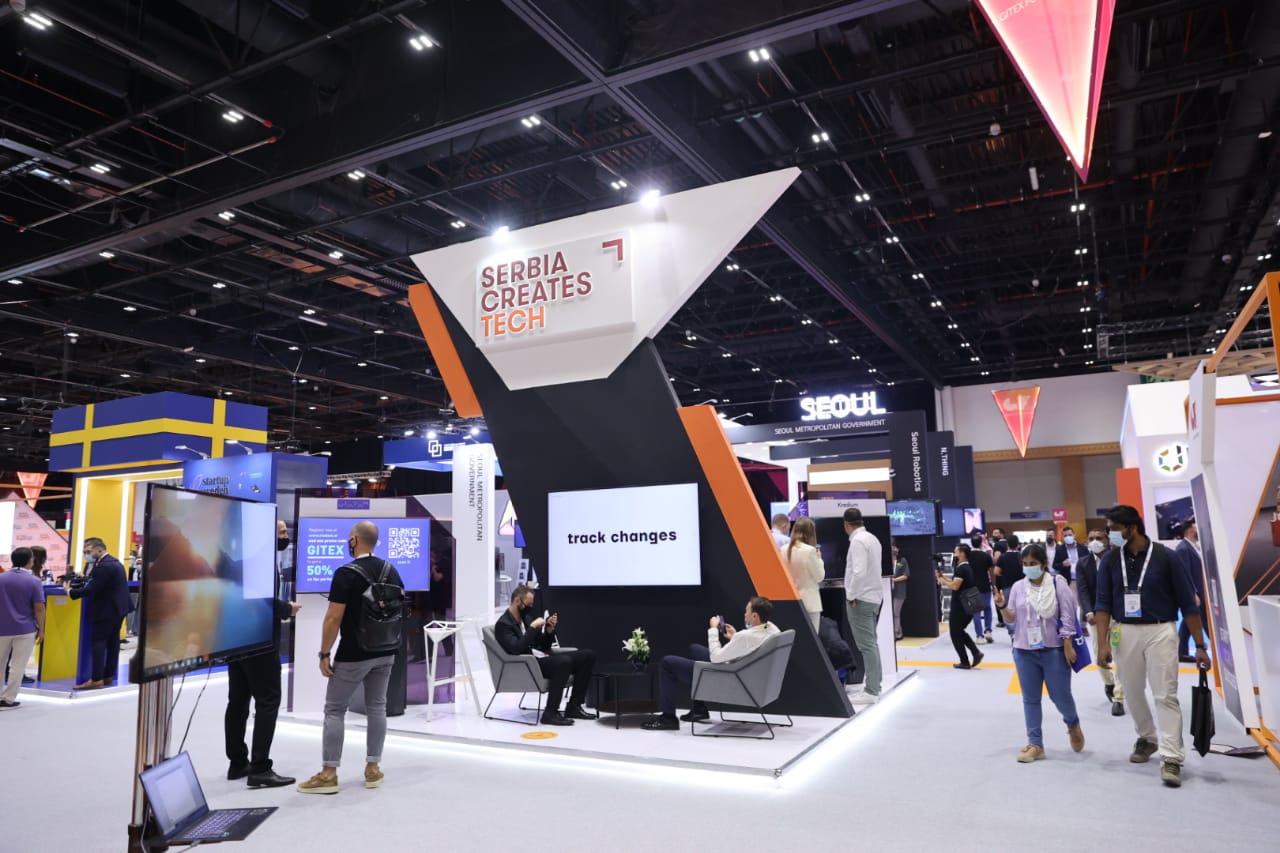
Serbia will serve as the Future Digital Economy Partner Country at GITEX Global 2025 in Dubai, becoming the first European nation accorded that role. The designation foregrounds Serbia’s ambitions to reposition itself from outsourcing hub to innovator in global tech markets.

Serbia’s IT exports crossed €3.5 billion in 2023, and the sector has maintained close to 20 percent year-on-year growth. The number of IT firms now exceeds 4,000, with many branching into domains such as fintech, health tech, AI and gaming. The Chamber of Commerce and Industry of Serbia, which leads the national delegation, views the GITEX platform as an opportunity to elevate the country’s narrative beyond cost-competitiveness to creative capacity.

Marko Čadež, president of CCIS, said Serbian firms are now pitching themselves as long-term transformation partners rather than simple vendors. He emphasised that enterprises increasingly expect strategic collaboration, not just software delivery. Meanwhile, analysts point to Serbia’s strong foundations—high math and engineering education standards, English proficiency, and relatively affordable costs—as a competitive edge in Eastern Europe.

Yet Serbia confronts headwinds. Talent retention is an ongoing challenge: many trained professionals migrate to Western Europe or the U. S. Infrastructure remains uneven, with rural areas lagging behind Belgrade in connectivity. In addition, venture capital inflows to the Balkans are smaller compared to Western Europe, constraining the ability of startups to scale aggressively.

Serbia is attempting to counterbalance those constraints through targeted programmes. The Chamber of Commerce has launched “Start 2,” a support scheme for scale-up firms, which includes mentoring and market access, and will be showcased at GITEX Europe in Berlin. The programme focuses on Serbian companies already achieving revenues above €250,000 and aims to open doors into German and EU markets.

At GITEX Global 2025, Serbia will present a showcase of startups and products under “North Star,” highlighting innovations in AI, e-commerce, predictive analytics, and diagnostics tools. Its delegation will also include outsourcing firms pitching upscaled offerings—product co-development, R&D support, and domain expertise in sectors such as telecom and healthcare.

GITEX organisers themselves have underscored Serbia’s place among rising tech nations: the 2025 edition includes 6,800 tech enterprises, 2,000 startups, and participant countries from 180 nations. Serbia joins Brazil and Pakistan as Country Partners this year—a reflection of the broader intention to diversify the event’s global footprint. The spotlight on AI, biotech, semiconductors, data infrastructure, and robotics offers Serbia a chance to align its exposure with the global themes defining tech agendas.

The mobile app-based Chronic Disease Management Programme (CDMP) provides expert coaching and personalised resources to encourage healthier lifestyle changes, complementing Healthier SG and expanding the insurer’s comprehensive suite of healthcare solutions SINGAPORE – Media OutReach Newswire – 8 October 2025 – AIA Singapore and Amplify Health today announced the launch of a Chronic Disease Management Programme (CDMP), which leverages technology and multi-disciplinary health expertise to help Singaporeans […]

MetaMask is rolling out a new on-chain rewards programme that will allocate more than $30 million worth of LINEA tokens during its first season, offering “special benefits” to long-time users and bridging the move with the launch of its own token.

The wallet’s parent, Consensys, confirmed over the weekend that this initiative is not merely a farming scheme but a dedicated rewards system aimed at recognising consistent user engagement. The rewards package will include referral bonuses, incentives denominated in mUSD, exclusive partner rewards, and early token access. MetaMask emphasised that the campaign is built to reward habitual on-chain activity, not speculative intervention.

LINEA, the native token of Consensys’ Layer 2 network, was launched in September via a token generation event distributing roughly 9.4 billion tokens. By tying the MetaMask rewards system to LINEA, the firm aims to channel wallet activity toward its own roll-up infrastructure. The rewards plan positions MetaMask not just as an interface but as an active participant in building the Layer 2 ecosystem.

Joseph Lubin, CEO of Consensys and co-founder of Ethereum, described the rewards drive as a step toward redefining the MetaMask experience. He stated that the programme is a “genuine method of regularly giving back to our community” and stressed that long-time users—whom the team terms “OGs”—will receive priority consideration. This linkage is also viewed as a precursor to the upcoming MetaMask token, tentatively known as MASK, which Lubin first publicly referenced in September.

The broader strategy links three core components: MetaMask’s wallet, the mUSD stablecoin, and the LINEA network. The mUSD token, issued by Bridge, reportedly has a circulating supply of nearly $88 million. Participation in the rewards scheme is expected to stimulate usage across these components: swapping, bridging, stakes, and portfolio activity within MetaMask.

While the announcement lays out the broad contours of the rewards campaign, it leaves critical details unspecified. MetaMask has not yet revealed eligibility criteria by jurisdiction, and no clear anti-Sybil or bot-prevention measures have been announced. The absence of such safeguards has drawn scrutiny from observers concerned about gaming of reward systems.

Community reaction on X has been mixed. Some users welcomed the move as a long-awaited monetisation of loyalty, while others questioned whether the structure might favour larger holders or those in jurisdictions with favourable access. Some pointed to past programs in the crypto space that allowed special participants to disproportionately benefit.

Advertisements

When Jane Goodall ventured into the forests of Tanzania in 1960, she carried no formal zoological degree, just a fierce curiosity and letters of introduction to Louis Leakey. She was 26 years old and stepping into what was then a largely uncharted world of primate behaviour. Over the next six and a half decades, she would not only reshape our understanding of chimpanzees, but also become one […]

A consortium led by Saudi Arabia’s Public Investment Fund, with Silver Lake and Jared Kushner’s Affinity Partners, has struck a deal to acquire Electronic Arts for approximately $55 billion, taking the iconic game publisher private. Under the agreement, EA’s shareholders will receive $210 per share, a 25 percent premium over the share price before the deal emerged, as the consortium combines fresh equity with a leveraged debt […]

The Labour Fund, Tamkeen, has confirmed it will organise the Kingdom of Bahrain’s pavilion at GITEX Global 2025 in Dubai, featuring 14 Bahraini technology start-ups and small and medium enterprises alongside the Economic Development Board and ARRAY Innovations.

The event, scheduled from 13 to 17 October 2025, promises to provide the participating firms with access to global investors, partners and industry networks. The pavilion’s aim is explicit: to boost the international visibility of Bahrain’s ICT ecosystem and facilitate business growth.

Tamkeen’s announcement places it firmly in a leadership role for the pavilion’s curation and operations. The decision aligns with its 2025 strategic priorities, which emphasise supporting enterprise growth, promoting digitalisation, strengthening private-sector competitiveness and fostering sustainability.

Officials from Tamkeen and the Economic Development Board have highlighted that the selection of the 14 entities spans multiple subsectors within ICT, including software, data analytics, cybersecurity, and emerging technologies. They say the mix is intended to reflect both Bahrain’s current strengths and its ambitions for diversification.

In past editions of GITEX, Bahrain’s pavilion drew attention from regional and international delegations. During GITEX Global 2024, the pavilion was credited with facilitating multiple memoranda and partnership discussions. Tamkeen’s continued involvement signals its belief that sustained pavilion presence is critical to maintaining momentum in Bahrain’s tech diplomacy.

Some observers note that Bahrain’s tech infrastructure and regulatory environment are increasingly seen as competitive in the Gulf region. Over the past few years, the kingdom has liberalised foreign ownership rules in certain sectors and introduced incentives for startups and innovation funds. This pavilion engagement is viewed by analysts as part of a broader soft-power strategy to position Bahrain as a hub for digital investment.

However, challenges remain. For many Bahraini startups, scaling beyond domestic markets continues to be difficult. Access to international capital, navigating cross-jurisdictional regulation, and building brand recognition are persistent hurdles. Critics caution that pavilion exposure does not always translate into long-term market entry, and that stronger post-exhibition support is needed to ensure sustained growth.

Tamkeen has stated that it plans to accompany pavilion exposure with mentorship, investor matchmaking and export facilitation services for participating firms. The hope is that a combination of showcase visibility and structural support will help convert leads into lasting collaborations.

Already, the pavilion has generated interest among regional stakeholders. Several Gulf regional delegations and venture capital firms have expressed intent to engage with Bahrain’s teams during the event. The EDB is reportedly coordinating bilateral sessions between Bahrain’s entrants and visiting foreign trade missions.

For the 2025 edition, organisers have introduced a more structured schedule for pitch sessions, one-on-one meetings and thematic forums. This signals learning from past editions, where informal networking sometimes overshadowed targeted client engagement. Tamkeen officials have emphasised tighter alignment of startup offerings with investor interest sectors like fintech, AI and cloud services.

Within Bahrain’s domestic ecosystem, private sector associations and incubators have welcomed the announcement. Some have pushed for better curation, arguing that selecting firms with proven traction or clear roadmaps increases the chance that pavilion participation yields concrete contracts or investment.

Organisers have confirmed that Future Blockchain Summit x Fintech Surge will take place at Dubai Harbour from 12 to 15 October 2025, positioning the event as a central nexus for blockchain, digital assets, and fintech innovation across the MENA region. The four-day gathering, held alongside Expand North Star and powered by GITEX GLOBAL, aims to attract regulators, investors, entrepreneurs and technologists to shape emerging frameworks for finance.

Attendance is expected to exceed 70,000, with over 1,200 investors and more than 225 speakers scheduled to participate, alongside 150 exhibitors showcasing new products and solutions. A feature highlight is the Digital Assets Forum, which brings regulators, banks, and innovators together for intensive discussions on topics such as CBDCs, stablecoins, tokenised capital markets, cross-border regulation and the role of AI in compliance.

Speakers confirmed include Jimmy Su, Lily Liu, Eric Piscini, Oliver Stauber, Helen Liu and Kevin Lee. The event also features the Supernova Challenge, a startup pitch competition offering equity-free prizes totalling US$214,000 to finalists presenting to global judges and investors. Corporations such as Ruya, OKX and DKK Partners anchor the sponsorship tiers, while YPAY backs the Digital Assets Forum.

Dubai has been steadily reinforcing its position in the digital asset ecosystem. Earlier this year, the DAMAC Group signed a $1 billion contract with blockchain platform MANTRA to tokenise its real-world assets, a move aligned with the UAE’s aspirations to become a global digital assets hub. The country has been actively implementing regulatory frameworks, particularly in free zones like ADGM and DMCC, to attract blockchain firms and promote tokenisation of assets.

Investment momentum in the broader crypto and fintech sphere in the UAE has been robust. In the first quarter of 2025, global venture capital funding into cryptotech startups reached $5.4 billion, its highest quarterly total since 2022. Dubai has hosted major conferences such as TOKEN2049, drawing tens of thousands of participants and signalling regional leadership, though industry sentiment currently balances optimism with caution amid regulatory uncertainty and macro-economic pressures.

Technology trends driving this year’s agenda include the convergence of AI and blockchain, regulatory clarity for digital assets, tokenised infrastructure, and embedded finance. A newly published academic framework proposes integrating blockchain with Zero Trust security models to improve protection against insider threats in fintech ecosystems — a demonstration of how research is intersecting with commercial deployment.

Organisers emphasise that the event’s format is more than a conference: it is designed to enable deal-making, pilot launches and real partnerships. One-to-one investor matchmaking, live product demonstrations, and structured labs are scheduled to convert ideas into actionable projects. Startups exhibiting at Expand North Star receive automatic inclusion in the Supernova Challenge, deepening integration between the startup and blockchain-fintech community.

Regulators from the MENA region and beyond are expected to engage at the forum. Discussions will centre on harmonising cross-border rules, interoperability of digital asset legislation, and pathways for institutional adoption of tokenised assets. Several central banks may share updates on central bank digital currency explorations.

Prinker, a South Korea–based self-expression technology firm, is launching its full suite of personalization solutions in the Middle East and North Africa region at GITEX GLOBAL 2025, seeking to penetrate a market showing robust growth in beauty and personal care.

At its Dubai showcase, Prinker will debut Prinker POP, a smart beauty kiosk that enables users to mix and preview custom makeup palettes via a touchscreen interface and AI-driven simulation. It will also bring its handheld devices—Prinker S and Prinker M—capable of applying temporary, skin-safe tattoos within seconds, as well as a standalone Prinker Tattoo Kiosk allowing users to self-apply designs in malls or entertainment venues without staff assistance.

The company aims to tap into accelerating demand for experiential retail and personalisation in beauty, positioning itself at the intersection of tech and aesthetics as regional consumers and retailers seek interactive, low-risk forms of self-expression.

The MENA beauty and personal care market is projected to expand sharply, with estimates placing its value at around USD 95.2 billion by 2030 and an annual growth rate of 9.0 %. Rising digital penetration, social media influence, and youthful demographics are driving demand for personalised and immersive beauty experiences.

Prinker’s approach reflects broader industry trends in tech-infused beauty. Beauty firms worldwide are increasingly adopting AR mirrors, AI skin diagnostics, and custom formulation platforms. Yet few have ventured into on-demand, skin-printing devices in public retail spaces. Prinker positions its handheld and kiosk systems as a bridge between digital and physical engagement.

Retailers and salon operators in the region may see appeal in integrating Prinker’s solutions as a customer acquisition tool. By offering interactive touchpoints, brands can boost dwell time and cross-sell products. Prinker’s machines also reduce staff overhead and allow consistent brand experiences across locations.

Prinker’s global track record includes deployments for brand activations and content creation campaigns in Asia and the United States. However, scaling into MENA requires navigating regulatory regimes for cosmetic safety, cultural sensibilities around appearance, and localisation of designs to reflect regional tastes.

Prinker faces competition from AR/VR beauty apps that let users visualise makeup digitally, as well as legacy cosmetic brands developing custom blends in stores. But none currently replicate live, direct-to-skin printing in physical venues. Prinker’s advantage lies in marrying hardware and software with a frictionless user experience.

Executives leading Prinker’s expansion emphasise strategic partnerships. They plan to collaborate with regional beauty chains, department stores and mall operators, integrating kiosks into high-footfall environments. They also intend to localise design libraries—such as Arabic calligraphy motifs and regionally relevant patterns—to enhance appeal.

Analysts note that success will depend on commercial viability: cost per use, durability, and consumer uptake. Prinker will need to balance affordability with perceptible novelty so that users perceive value in transient tattoos or customised palettes.

Dubai has issued Law No. of 2025 to regulate the professional practice of engineering consultancy firms, forbidding unlicensed operations and introducing a tiered classification system.

Under the law, no individual or office may conduct consultancy across fields such as architectural, civil, mechanical, electrical, chemical, geological or coastal engineering in the emirate without proper authorisation. Firms must hold a valid trade licence, register with Dubai Municipality, and submit detailed disclosures regarding their licensed scope, classification, and technical staff credentials.

A unified electronic platform, to be integrated with “Invest in Dubai,” will centralise firm registration, classification, issuance of competency certificates, and updates to consultancy qualifications.

A permanent “Committee for the Regulation and Development of Engineering Consultancy Activities” will be established under the law, chaired by a Dubai Municipality representative and comprising stakeholders from relevant authorities, tasked with overseeing implementation and resolving sectoral disputes.

The legislation classifies eligible firms into several categories: local Dubai-based companies; branches of UAE-based consultancies with at least three consecutive years of experience; branches of foreign consultancies with at least ten years of global experience; joint ventures between local and foreign players with at least a decade of consultancy track record; advisory offices led by registered engineers with a decade of experience; and engineering audit offices providing third-party evaluations.

Firms are barred from operating beyond their licence scope, hiring unregistered engineers or subcontracting to unlicensed entities. Violations can attract fines up to AED 100,000, stricter penalties for repeat breaches, suspension, downgrading classification, removal from the registry, licence cancellation, or revocation of professional certificates. Affected parties may file appeals within 30 days and decisions must be issued within 30 days, communicated within five working days.

Existing regulations under Local Order No. 89 of 1994 and its amendments will remain effective until new implementing regulations are issued, provided they do not conflict with the new law.

Consultancy firms and staff will have one year from the law’s effective date to regularise their status; extensions may be granted, and expired registrations can be renewed by committing to full compliance.

Dubai’s move mirrors the emirate’s broader legal recalibration of the infrastructure sector. In July 2025, Law No. 7 of 2025 was enacted to regulate contracting activities, consolidating prior laws and mandating registration, classification, subcontracting oversight and ethics codes across construction and engineering services. The new consultancy law can be seen as a complementary measure to ensure that consultancy services feeding into contracting projects meet defined quality and governance standards.

Industry stakeholders have expressed cautious optimism about the changes. Some consultancy firms believe the law will reduce unfair competition by eliminating unlicensed operators, thus raising standards overall. Others warn of compliance costs, especially for smaller local consultancies that may struggle to meet classification thresholds or hire adequately certified staff.

Regional and international firms see opportunity in the rule clarity and the potential to compete more transparently. Observers expect the new digital registry and classification framework to influence government procurement and tenders by favouring higher-ranked consultancies.

OpenAI chief executive Sam Altman is leading a high-stakes campaign across East Asia and the Middle East to secure investment and bolster chip supply for the company’s AI infrastructure push. He has held talks since late September in Taiwan, South Korea and Japan with leading hardware suppliers to prioritise OpenAI’s orders and expand capacity.

Altman has met with Taiwan Semiconductor Manufacturing Company and Foxconn, as well as Samsung and SK Hynix, pressing them to accelerate production and give OpenAI preferential access. In South Korea, Samsung and SK Hynix have signed letters of intent to supply memory chips for OpenAI’s data centres. Meanwhile, OpenAI plans further fundraising discussions in the United Arab Emirates.

The urgency of Altman’s mission reflects the intensifying global competition for advanced computing resources. OpenAI projects it will spend around US$16 billion this year on renting computing servers, with long-term forecasts stretching to US$400 billion by 2029 as AI models grow ever more complex.

Industry analysts note that the semiconductor supply chain remains highly constrained. TSMC dominates GPU chip production, and memory manufacturing is largely concentrated in East Asia, creating significant strategic leverage for the manufacturers approached by Altman.

As part of his tour, Altman is also pressing Japanese firms to contribute to infrastructure support. Hitachi has entered discussions to provide power transmission and distribution systems for OpenAI’s data centres, while sharing technical resources under joint development agreements.

Sources familiar with the process say Altman pushed for direct prioritisation in chip delivery schedules, asking that OpenAI receive top-tier production slots. In some cases, he proposed co-investment or co-development of next-generation AI hardware to bind partner incentives more closely.

In South Korea, early architecture proposals include planned data centres of 20 megawatts in collaboration with Samsung and SK Hynix. Altman is reportedly exploring “floating” data centre designs to manage land constraints and cooling demands.

The UAE leg of his mission is expected to involve negotiations with sovereign investment firms such as MGX and Mubadala, with the aim of funding both OpenAI’s expansion and joint infrastructure ventures in the region. In past rounds, UAE investors have already taken part in funding OpenAI operations.

Challenges remain significant. The sheer scale of chips and memory required for stacked AI model training is pushing the boundaries of global wafer fabrication capacity. Market watchers point to the high capital expenditure and long lead times in the semiconductor industry as obstacles to rapid scaling. Some of Altman’s proposals—for example, co-development of bespoke ASICs—are still in preliminary stages and face technical risk.

OpenAI’s valuation and investor backing give the company leverage. Earlier this year, it closed deals that valued it at about US$500 billion, with new capital injections from investors including SoftBank and UAE entities. Those moves have fortified its position in negotiating upstream deals with manufacturers.

A GoMining-commissioned survey of over 700 Bitcoin holders across North America and Europe reveals that 77 percent of respondents have never engaged with any BTCFi platform. Only around 8 percent say they actively use BTCFi services for lending, staking or yield generation.

The data exposes a striking contradiction: while the BTCFi sector is receiving strong investment and attention, its reach among actual Bitcoin holders remains minimal. Over 65 percent of those surveyed could not name a single BTCFi protocol, pointing to a significant awareness gap in the industry. Roughly 40 percent of respondents say they would allocate less than 20 percent of their Bitcoin to DeFi products—underscoring cautious attitudes steeped in mistrust or lack of comprehension.

GoMining CEO Mark Zalan argues the survey reflects a mismatch in product design: “There’s an enormous appetite for these opportunities, but the industry has built products for crypto natives, not for everyday Bitcoin holders.” He cautions that BTCFi platforms must prioritise simplicity, trust and education over technical sophistication if they are to attract a broader base.

Despite limited adoption, interest in BTCFi is not absent. Some 73 percent of respondents express a desire to earn yield on their Bitcoin through lending or staking, while 42 percent would like access to liquidity without selling. Yet for now those desires largely remain theoretical.

The survey publication coincides with a sharp rise in BTCFi venture capital activity. Data from industry trackers show that in the first half of 2025, funding to Bitcoin-related infrastructure, custody, and DeFi projects reached US$175 million, spread across 32 funding rounds—20 of which targeted consumer-facing applications. Total value locked in BTCFi has also climbed, hitting US$6.6 billion by mid-2025, up from modest levels just a year earlier.

Industry analysts see this as a pivotal moment. BTCFi is theoretically well-positioned: Bitcoin holders collectively control over US$1 trillion in assets, and unlocking even a small portion into yield markets would shift capital flows substantially. But bridging the adoption chasm requires more than protocol robustness—it demands user trust, transparent security models, and intuitive onboarding.

Several projects are experimenting with custodial BTCFi models that reduce user friction, essentially merging decentralised finance with familiar wallet experiences. These hybrids aim to lower the barrier to entry for mainstream holders who are wary of self-custody risks. Others are focusing on streamlined education and marketing campaigns to bring awareness of BTCFi’s value proposition to non-tech audiences, rather than relying exclusively on high-end technical features.

Skeptics argue the reliance on Ethereum’s DeFi archetype may be a poor fit for Bitcoin’s more conservative base. BTCFi protocols often demand bridging, wrapping or interacting with smart contracts—actions that alienate users comfortable with simpler vehicles like ETFs and custodial wallets. A portion of Bitcoin holders remain risk-averse by nature, preferring regulated, custodial holdings and avoiding experimental protocols.

Some in the industry suggest a phased approach: target early adopters first, establish trust metrics, then gradually roll out to mainstream holders. Others urge a revisit to design philosophy itself: ensuring BTCFi can deliver yield, liquidity and composability while behaving in a way Bitcoin users find intuitive and safe.

The Ai Everything Global Supernova Challenge concluded in Dubai with Pulsar. ml crowned champion among 30 startups from 15 nations vying for a USD 60,000 prize pool. The event drew over 150 global investors representing some USD 50 billion in assets under management, who watched founders pitch AI solutions across sectors including robotics, fintech, e-commerce and healthcare. Pulsar. ml, based in Canada and led by founder Mohamed […]

Ras Al Khaimah has greenlit Wynn Boulevard, a new infrastructure artery that will link the forthcoming Wynn Al Marjan Island integrated resort with the E311 and E611 highways—connecting it directly to Dubai and neighboring emirates. Authorities have allocated over AED 1 billion for the project, which was unveiled during the launch of the Marjan Beach development. Graham Hallett, chief development officer at Marjan, confirmed that contracts worth […]

The Bifrost subsea cable system has been certified as Ready for Service, paving the way for commercial data traffic between Singapore and the western United States.

Stretching more than 20,000 km, Bifrost charts a novel route via Indonesia—across the Java Sea and Celebes Sea—enabling the first direct subsea connection between Singapore and the U. S. West Coast. Its design supports over 260 Tbps of capacity, and the round-trip latency between Singapore and the U. S. is projected at under 165 milliseconds, approximately 10 ms faster than many alternative routes.

Keppel Ltd holds five of the total 12 fibre pairs in Bifrost, through a 40-60 joint venture with private fund co-investors. The cable system’s landing stations include Grover Beach, Winema, Guam, Singapore, and branching units to Jakarta, Manado, and Davao in the Philippines.

Manjot Singh Mann, CEO for Connectivity at Keppel, described Bifrost as a “landmark project” that will “bolster digital connectivity between Southeast Asia and the USA” and reinforce Singapore’s status as a regional digital hub. Alcatel Submarine Networks handled the cable’s construction; its CEO, Alain Biston, noted that reaching readiness reflects “the hard work of ASN teams working hand in hand with our client.”

In the Philippines, Converge ICT serves as the landing party at Davao. Dennis Anthony Uy, Converge’s CEO, said that the cable will “not only boost the company’s international bandwidth capacity, but for the Philippines, it will mean redundancy and diversity in network infrastructure.”

The significance of Bifrost lies not only in its raw capacity and speed but also in route diversification. By crossing via Indonesia, the cable offers an alternate path independent of existing transpacific systems, lowering the risk of congestion or outages on established corridors. Analysts view its timing as aligned with surging demand for bandwidth, driven by growth in AI workloads, real-time applications, cloud services, and digital transformation across Asia.

Bifrost enters a competitive environment of subsea infrastructure expansion. Projects such as Echo, Apricot, Hawaiki Nui, and others vie for roles in connecting Asia with the Americas and the Pacific islands. Echo is expected to link Singapore to Guam and onward to Eureka, California. Apricot, largely intra-Asia in scope, is ramping up deployments across Japan, Taiwan, the Philippines, and Indonesia.

Market commentators point out that Bifrost’s success will hinge on uptake from global cloud providers, telcos, and hyperscalers. Keppel’s stake reflects a confidence in long-term returns. Some financial analyses anticipate internal rates of return exceeding 30 percent, with projected revenue from operational and maintenance fees per fibre pair exceeding S$200 million over 25 years.

Because Keppel and its partners delayed the original launch schedule, the push to achieve RFS signals a resolve to catch up with escalating infrastructure demand.

Google Quantum AI has confirmed that the Atlantic Quantum team is joining its organisation—a move widely interpreted as an acquisition—bringing with it a modular superconducting hardware design aimed at accelerating progress toward error-corrected quantum computers. Atlantic Quantum, an MIT-origin spin-out focused on integrating qubits with cryogenic control electronics, will have its chip stack and engineering talent absorbed into Google’s quantum division. Google says this integration will streamline […]

Hub71, Abu Dhabi’s global technology ecosystem, has inked its first partnership in the US with the New Jersey Economic Development Authority, opening pathways for startups to scale across continents. The memorandum of understanding was signed at the Abu Dhabi Investment Forum in New York, signalling the start of reciprocal support between the two innovation hubs. The agreement enables joint programming, market visits and curated introductions to investors, […]

Abu Dhabi’s economy expanded 3.8 percent in the second quarter of 2025, with non-oil activity growing by 6.6 percent and, for the first time in a second quarter, making up 56.8 percent of total GDP, according to figures released by the Statistics Centre – Abu Dhabi. The emirate’s real gross domestic product reached AED 306.3 billion in Q2, rising from the corresponding period in 2024. The non-oil […]

Aluminium Products Company of Saudi Arabia and Hong Kong–based Asia Aluminum Group have inked a master framework agreement to build the largest integrated downstream aluminium industrial complex in the Kingdom, with planned investment reaching up to USD 500 million. The initiative centres on three joint ventures covering aluminium extrusion, modular housing, and solar panel frame manufacturing. The agreement was signed in Hong Kong by ALUPCO Chief Executive […]

World Liberty Financial, the crypto venture tied to Donald Trump’s family, has announced it will issue a debit card enabling users to spend digital assets as conventional currency, with a pilot slated next quarter and full deployment targeted by late 2025 or early 2026.

At Singapore’s TOKEN2049 conference, CEO Zach Witkoff stated that the underlying aim is to “bridge crypto assets with everyday spending,” forecasting that the card could go live in the fourth quarter or first quarter of 2026. Co-founder Donald Trump Jr. joined the presentation, underscoring the project’s ambition to integrate cryptocurrency more deeply into consumer payments.

Beyond payments, World Liberty is advancing a plan to tokenise real-world commodities, aiming to use blockchain infrastructure to trade assets like oil, gas, timber and cotton. Witkoff described these as “really interesting” domains for on-chain trading, pointing to what the company sees as excess transactional inefficiency in traditional markets. The firm also launched its governance token, WLFI, earlier this month, and has introduced USD1, a dollar-pegged stablecoin backed by U. S. Treasuries and other cash equivalents to cut dependency on conventional banking rails.

World Liberty has secured a high-profile institutional backer: the UAE-based Aqua 1 Foundation invested USD 100 million in WLFI tokens, becoming the venture’s largest public investor. The strategic pact aims to fuel World Liberty’s expansion in South America, Europe and Asia, and to jointly incubate blockchain initiatives.

The governance token WLFI currently is non-transferable, granting holders voting rights rather than direct tradeability; World Liberty has said it is “working behind the scenes” to make WLFI transferable in the future. A large portion of WLFI’s supply remains held by the Trump family and affiliated entities.

The stablecoin USD1 gained traction after a major crypto exchange deal: World Liberty was among the early adopters when the funds backed by an Abu Dhabi entity were routed through USD1 to a major crypto platform, helping to elevate USD1’s market position in the stablecoin ecosystem.

Regulatory and ethical concerns already shadow the venture. Critics argue the project blurs lines between private enterprise and public office, noting that much of the Trump family’s wealth could become entangled with policy outcomes. Donald Trump Jr. has dismissed conflict-of-interest allegations as “complete nonsense,” but scrutiny over the convergence of politics and crypto is intensifying.

WLFI has exhibited wide volatility since launch, riding speculative momentum across global exchanges. Meanwhile, competing crypto card offerings already exist, with established fintechs and digital-asset platforms offering crypto-linked cards in partnership with Visa and Mastercard. Witkoff contends World Liberty’s version will differentiate through tighter integration with its stablecoin and tokenisation strategy.

Saudi Arabia confronts mounting fiscal headwinds as oil revenues falter and large-scale investments under its Vision 2030 agenda intensify strain on the state’s budget, a fresh analysis by Fitch Ratings warns. Fiscal consolidation efforts are threatened by rising expenditures, volatile energy markets and valuation setbacks to flagship development projects.

Fitch anticipates the kingdom will record a fiscal deficit equivalent to 5.3 percent of GDP in 2025—more than double earlier forecasts of 2.3 percent—and projects a narrowing to 3.3 percent in 2026. That trajectory, the ratings agency argues, rests on fragile assumptions about revenue rebound and disciplined spending cuts. The downgrade in oil income, combined with persistent capital outlays, introduces high risk to Saudi’s consolidation plans.

The Public Investment Fund, corner-stone of Vision 2030, channels vast investment into infrastructure, technology, tourism and real estate. But it has also borne losses: in 2024, the PIF recognised an $8 billion writedown of its “gigaprojects,” including NEOM, reflecting cost overruns and market volatility. That impairment eroded some of the cushion these high-profile ventures were meant to provide.

Fitch treats PIF as a government-related entity, equating its credit profile with that of the sovereign given its central role in state economic strategy and the expectation of ongoing state support. However, Fitch cautions that heavy spending commitments in the pre-budget statement expose weaknesses in the consolidation path. The agency notes that worsening oil market dynamics and delays in translating megaprojects into stable returns heighten exposure.

Saudi Arabia’s finance ministry projects 2026 revenues of 1.14 trillion riyals against expenditures of 1.31 trillion, signalling an ambition to shrink deficit to 3.3 percent. The government anticipates revenue growth of 5.1 percent and spending reductions of 1.7 percent relative to 2025 projections. But achieving that will depend heavily on improved non-oil income and restrained capital outlays.

Crude price downturns have compounded pressure. With oil income constituting roughly 60 percent of Saudi’s state revenue, any softness in the energy market imposes acute stress. Analysts say the kingdom is caught in a bind: it must maintain investment momentum to stay on track with Vision 2030, yet it must also restrain spending lest debt and deficits spiral.

Investors and economists point to NEOM as a test case. Massive in scale and ambition, NEOM has come under scrutiny following the substantial writedown. Critics suggest that the project’s capacity to generate returns fast enough to justify its cost is increasingly in question. That, in turn, weakens one of the main pillars of the kingdom’s diversification rationale.

To mitigate risks, Saudi authorities are leaning on non-oil revenue sources, including taxes, fees and state levies, which remain robust. Public consumption and private sector growth also play supportive roles. But these revenue streams may not suffice to offset deep slippage in oil proceeds.

VISHNU RAJA
RYO YAMADA
HITORI GOTOH
IKUYO KITA