Just in:
Middle East governments assess Iran war after US vote // Fast Just Got Fastest: STING Energy Boost™ Celebrates Kimi Antonelli’s Formula 1® World Championship and the Fan Energy Behind It // U.S. Mid Term Result Is A Clear Verdict Against Trump’s Authoritarianism // SC to examine students’ exam plea today // Utilities pursue ₹1,992 cr in unpaid bills // Govt opposes Arlekar’s PSC action // Oil and chip shares retreat after Democratic victories // Dubai boat show confirms international shipyard line-up for November // Anthropic to prohibit persistent abuse of Claude chatbot // After Reaching 7 Million Users in the Philippines, Skyro Launches Transparent Cash Loans in Malaysia // AI trust gap reveals distinct retail priorities: Divergent paths to consumer growth in Hong Kong and the GBA // xCube Access Welcomes Entrust Capital Limited  Expanding Access to Professional Portfolio Management // APT29-linked campaign exploits outdated Apple and Android software // As AI Reshapes Education, Singapore Convenes Global Dialogue on the Future of Early Childhood Education // Cloudflare unveils Zero Wire vulnerability intelligence service // ADIA and partners establish $1.4 billion aviation venture // Democrats capture Senate majority with seven Republican seats // Cyberport Venture & Capital Forum 2026 Grand Opening // Asia Left Behind: Ten international companies have yet to report delivering on their cage-free egg pledges across the region // Hong Kong mandates crypto transaction disclosures to tax authorities //

News related to
work

A more ergonomic and biometric cooling accessory tailored to safety helmet 60% of Hong Kong’s 600,000 construction workers have suffered symptoms of heat stroke.[1] With 2024 predicted to be one of the hottest years on record, the first half of the year has already been unusually warm, with five of the six months experiencing higher temperatures than normal.[2] HONG KONG SAR – Media OutReach Newswire – 12 […]

Agentic Orchestration Platform transforms the way businesses work with ​​purpose-specific AI Agents that take action and orchestrate processes SINGAPORE – Media OutReach Newswire – 12 September 2024 – Workato®, the leading AI-driven enterprise orchestration platform, today announced Workato Agentic, the company’s low-code, no-code agentic orchestration platform with two key components: Workato Genie, a framework to rapidly build and manage purpose-specific AI Agents, called Genies, that retrieve relevant […]

JCI Queensway Drives Business and Social Progress Through Four Diverse Initiatives HONG KONG SAR – Media OutReach Newswire – 9 September 2024 – JCI Queensway Celebrates 40th Anniversary with the 4th Extraordinary Branding Awards —JCI Queensway, in its 40th anniversary year, has announced the winners of the 4th Extraordinary Branding Awards. The organization meticulously selected 19 winning companies and business leaders from 23 participating companies. For more […]

AMEA Power is set to establish Africa’s largest solar photovoltaic (PV) project, with plans to construct a 1,000 MW solar PV facility in Egypt’s Aswan Governorate. The project, complemented by a 500 MWh battery energy storage system (BESS), will form a critical component of Egypt’s ambitious renewable energy goals, as the country targets a substantial increase in clean energy capacity. This initiative aligns with Egypt’s vision to […]

SHENZHEN, CHINA – Media OutReach Newswire – 14 September 2024 – The fifth (2024) Private Entrepreneur Grand Conference (PEGC) convened on Sept 5 and 6 in Shenzhen, Guangdong province. Hosted by leading Chinese educational institution Bosum Institute of Management Science and the Bosum Association, this year’s conference brought together more than 8,000 private entrepreneurs from across China, with its livestream garnering over a million views. Under the […]

SINGAPORE – Media Outreach Newswire – 4 September 2024 – MDRT, The Premier Association of Financial Professionals®, has appointed Carol Kheng, ChFC, as the 99th President of the association’s Executive Committee. Kheng, a private wealth consultant with Prudential Assurance Company Singapore, will focus on strengthening the global network of MDRT professionals and celebrating member accomplishments as they continue to reach new heights of personal and professional success. […]

Iran and India are poised to enhance their tourism ties with a new Memorandum of Understanding (MoU) focused on boosting cooperation and increasing tourist exchanges. This agreement builds on Iran’s recent move to waive visa requirements for Indian travelers, a policy that has already led to a noticeable rise in visitor numbers.

The MoU, expected to be finalized shortly, aims to foster greater collaboration between the two nations in the tourism sector. It outlines several key areas for joint initiatives, including the promotion of cultural exchanges, development of tourism infrastructure, and coordinated marketing efforts to attract more tourists from both countries.

This strategic partnership comes in the wake of Iran’s decision to eliminate visa requirements for Indian tourists. The waiver, which was implemented to strengthen bilateral relations and promote tourism, has already yielded significant results. Since the policy’s introduction, Indian tourist arrivals in Iran have surged, highlighting the potential for further growth in visitor numbers.

Officials from both countries have expressed optimism about the impact of the MoU. The agreement is expected to streamline travel procedures, facilitate easier access to tourist destinations, and enhance overall visitor experiences. By simplifying the process for Indian tourists, Iran hopes to capitalize on its rich cultural heritage and diverse attractions, which have long been a draw for travelers.

On the Indian side, the MoU is anticipated to open new avenues for tourism-related businesses and stakeholders. The increased flow of visitors is expected to benefit local economies, particularly in regions that rely heavily on tourism revenue. Indian travel agencies and tour operators are gearing up to accommodate the anticipated rise in demand, offering tailored packages and services designed to cater to the interests of Iranian tourists.

Cultural diplomacy also plays a significant role in this burgeoning relationship. The MoU outlines provisions for cultural exchange programs, which aim to deepen mutual understanding and appreciation between the two nations. These initiatives may include art exhibitions, music festivals, and collaborative events that showcase the rich heritage and traditions of both countries.

In addition to enhancing tourism, the agreement is seen as a strategic move to strengthen broader diplomatic and economic ties between Iran and India. Both nations have historically enjoyed a relationship marked by cooperation in various fields, including trade, energy, and technology. The new tourism pact represents a continuation of this trend, with a specific focus on expanding people-to-people connections.

As the agreement progresses, both Iranian and Indian authorities are working to address logistical and operational details. This includes improving visa processing systems, enhancing connectivity between key tourist hubs, and ensuring that infrastructure developments align with the needs of international visitors.

Advertisements

The Maldives has publicly declared that it does not plan to seek financial assistance from the International Monetary Fund (IMF), despite mounting concerns over its economic stability. The archipelago, renowned for its luxury tourism industry, is grappling with significant financial challenges but maintains that these issues are temporary and manageable without external bailout support. The Maldivian government, facing growing pressure from economic analysts and international observers, has […]

Sheikh Abdullah bin Zayed, the UAE’s Deputy Prime Minister and Minister of Foreign Affairs, has emphasized the necessity for actionable steps beyond consensus for COP29. Addressing global leaders and stakeholders, Sheikh Abdullah underscored that while consensus is vital, it is the implementation of agreed-upon strategies that will determine the success of upcoming climate negotiations. In his speech, Sheikh Abdullah highlighted the UAE’s commitment to leading by example […]

HONG KONG SAR – Media OutReach Newswire – 13 September 2024 – Hong Kong Science and Technology Parks Corporation (HKSTP) brought its inaugural HKSTP Global Booster Programme to a successful conclusion, marking the end of a milestone event in which some of Hong Kong’s brightest startups made their name in Silicon Valley. Mr Albert Wong, Chief Executive Officer of HKSTP (fourth from right), Mr Derek Chim, Head […]

Google DeepMind has unveiled groundbreaking advancements in artificial intelligence with the introduction of two new AI systems designed to revolutionize robotics training. These sophisticated systems mark a significant leap forward in the field, integrating cutting-edge AI technology to enhance how robots are taught and perform various tasks. The newly launched AI systems are engineered to improve the training process for robots by utilizing enhanced machine learning algorithms. […]

Chinese appliance giant Midea Group is set to launch Hong Kong’s largest initial public offering (IPO) in more than three years, following its successful effort to raise approximately US$4 billion. The firm, known globally for its home appliances, priced its shares at HK$54.80 (US$7), marking the upper limit of its indicative range. Midea’s strategic decision to increase its share offering by 15% to a total of 566 […]

Russia and China have escalated their collaboration to counteract global monopolies, signaling a strategic pivot towards a more coordinated economic front. This move was solidified with the signing of a significant agreement aimed at developing the BRICS commodities exchange system, announced by the BRICS Competition Law and Policy Centre.

The agreement, formalized during a recent meeting, outlines an ambitious plan to enhance the cooperative mechanisms between the two nations, focusing on creating a robust platform for commodities trading under the BRICS framework. This initiative is expected to bolster the collective bargaining power of BRICS nations against global monopolies that dominate various sectors of the economy.

The BRICS Competition Law and Policy Centre, a prominent institution dedicated to fostering fair competition and economic cooperation among BRICS countries, will spearhead the development of this new exchange system. This effort aligns with broader objectives to diversify trade routes and reduce dependency on Western-dominated financial systems.

The signing of this document highlights a notable increase in economic alignment between Russia and China. Both countries have been actively seeking ways to strengthen their economic ties, and this agreement represents a significant leap in that direction. The planned commodities exchange system is envisioned as a tool to enhance transparency and fairness in global trade practices.

China’s involvement in this venture is particularly significant. The country has been expanding its influence in international trade and investment, and this agreement further consolidates its role as a key player in the global economic landscape. By partnering with Russia, China aims to counterbalance the influence of established market leaders and provide BRICS nations with a platform to assert their economic interests more effectively.

The BRICS nations—Brazil, Russia, India, China, and South Africa—have long advocated for reforms in international trade to address the disparities created by dominant global monopolies. This new commodities exchange system is set to become a critical component of their strategy to achieve a more equitable global trading environment.

Experts suggest that the establishment of this exchange system could have far-reaching implications for global trade. It is expected to offer an alternative to existing trading platforms that are often criticized for their lack of transparency and susceptibility to monopolistic practices. By providing a more competitive and open marketplace, the BRICS commodities exchange could potentially challenge the dominance of major global players and offer new opportunities for emerging economies.

The agreement also reflects a broader trend of increased economic cooperation between Russia and China. Both nations have been deepening their strategic partnership in various sectors, including energy, technology, and infrastructure. This latest development underscores their commitment to enhancing economic ties and reinforcing their positions in the global economy.

For Russia, the partnership with China represents a strategic move to diversify its economic relationships and reduce its reliance on Western markets. The country has been actively seeking to strengthen its ties with non-Western nations as part of its broader strategy to navigate the complexities of global geopolitics and economic sanctions.

China, on the other hand, is leveraging its growing economic power to shape global trade dynamics. The country’s participation in the BRICS commodities exchange system is part of its broader strategy to expand its influence and promote a multipolar world order. By collaborating with Russia and other BRICS members, China aims to establish a more balanced and inclusive global economic system.

The development of the BRICS commodities exchange system is expected to proceed with a phased approach. Initial efforts will focus on setting up the technical infrastructure and regulatory framework necessary to support the new platform. Subsequent phases will involve the integration of trading mechanisms and the establishment of market norms that align with BRICS’ objectives of fairness and transparency.

Google Gemini AI, Google’s generative artificial intelligence tool, offers a range of features designed to streamline work processes. As businesses increasingly incorporate AI into daily operations, Gemini stands out with its ability to assist in various tasks, from automating workflows to enhancing creativity. One of Gemini’s standout features is its ability to brainstorm ideas for projects. Whether users are working on marketing strategies or logistical plans, they […]

A major step toward fostering inclusive technological growth in Africa was taken as the United States and African nations jointly convened the 2024 Pan-African AI Conference in Lagos, Nigeria. This event, which drew delegates from over 30 African countries, saw tech leaders, policymakers, and entrepreneurs converge to address the challenges and opportunities posed by artificial intelligence (AI) on the continent. Held in one of Africa’s most dynamic tech hubs, the conference underscored the continent’s potential to play a critical role in the global AI landscape.

Nigeria’s Minister of Communications, Innovation, and Digital Economy, Bosun Tijani, opened the conference with a call for a human-centered approach to AI development, stressing the need for inclusivity and collaboration. His announcement of a $61,000 fund aimed at supporting local AI startups marked a strong commitment to advancing AI innovation within the country, with Lagos, often dubbed Africa’s “Silicon Valley,” providing the backdrop for these ambitious plans.

Central to the conference discussions was the need for an enabling framework to ensure that AI development is both safe and innovative. Dr. Seth Center, Acting Special Envoy for Critical and Emerging Technology from the United States, emphasized the dual challenge of establishing governance frameworks that inspire public confidence while simultaneously encouraging private sector investments in AI infrastructure across Africa. As Africa positions itself to harness the transformative power of AI, the continent’s collaboration with global partners like the United States remains crucial in navigating the complex technological future.

Engineers and architects are exploring an innovative solution to the world’s energy storage challenges through towering skyscrapers capable of holding vast amounts of power. These ambitious designs are being developed by Skidmore, Owings & Merrill (SOM), a global architecture and engineering firm, in collaboration with Energy Vault, a pioneering energy storage company. Together, they aim to integrate gravity-based energy storage systems into the design of skyscrapers, creating buildings that not only serve as urban landmarks but also contribute to renewable energy infrastructure.

SOM’s skyscrapers could reach heights up to 1,000 meters—nearly three times the height of London’s iconic Shard. The idea of combining energy storage with urban architecture marks a significant step forward in the push for sustainable development. This novel concept of using buildings as massive storage devices leverages gravity batteries, an emerging technology that promises to address the challenge of energy storage in an environmentally sustainable way.

Gravity batteries store energy by using the excess electricity generated from renewable sources like solar or wind to power a system that lifts heavy weights within the building. This energy is stored as gravitational potential energy, ready to be converted back into electricity when needed by lowering the weight. This technology is seen as an efficient and environmentally friendly alternative to conventional batteries, which rely on resource-intensive materials like lithium.

Bill Baker, an engineer at SOM and a leading figure in the development of the project, emphasized the potential of these skyscrapers to accelerate the carbon payback period of buildings, making them more environmentally sustainable over their lifespan. “These buildings could play a critical role in addressing two major challenges facing urban development: energy storage and carbon emissions,” Baker explained, noting that the inclusion of gravity-based energy storage systems can drastically reduce a building’s carbon footprint.

The partnership between SOM and Energy Vault was announced earlier this year, and the concept is gaining traction in both architectural and environmental circles. Energy Vault, known for its work in gravity energy storage, has already made waves in the energy sector with its innovative use of gravity to store renewable energy. By partnering with SOM, the firm is taking its vision to new heights—literally—by embedding its technology into urban architecture.

While the concept of gravity-based energy storage is still relatively new, it is viewed as a promising alternative to more conventional forms of energy storage like lithium-ion batteries. Unlike chemical-based batteries, gravity batteries have the advantage of being low-maintenance and long-lasting. They rely on basic physical principles, making them simpler to implement and scale. Moreover, they do not degrade over time like traditional batteries, which is a significant advantage in terms of long-term sustainability.

One of the most appealing aspects of this technology is its adaptability. Gravity batteries can be built into existing infrastructure, or in this case, integrated directly into new skyscraper designs. This means that cities can begin to incorporate energy storage solutions into their very fabric, rather than relying solely on grid-based energy storage systems that are often located outside urban areas. In dense, energy-hungry cities, this could provide a much-needed boost to renewable energy adoption by making energy storage more accessible.

SOM’s skyscraper designs are still in the prototype stage, but they have already sparked significant interest. The buildings are envisioned as both functional and visually striking, with the potential to become new symbols of sustainable urban development. At a time when cities around the world are grappling with how to reduce their carbon footprints and become more energy-efficient, these gravity-powered skyscrapers could provide a solution that meets both aesthetic and environmental needs.

However, challenges remain. The initial cost of constructing such skyscrapers, particularly with the integrated gravity battery system, is expected to be high. Developers will need to weigh the long-term environmental and economic benefits against the upfront financial investment. Nonetheless, proponents of the technology argue that the cost could be offset by the savings in energy and carbon emissions over the building’s lifespan.

Another issue is the scalability of the technology. While the concept works well in theory and small-scale trials, implementing it in skyscrapers across major cities will require extensive testing and refinement. Factors like building materials, weight distribution, and energy conversion efficiency need to be carefully considered. However, SOM and Energy Vault remain optimistic about the project’s future, pointing to the global shift towards renewable energy as a strong motivator for continued innovation.

The potential benefits extend beyond energy storage. These skyscrapers could also serve as models for a new generation of smart buildings that are self-sustaining and energy-efficient. By integrating renewable energy storage with modern architecture, cities could drastically reduce their dependence on fossil fuels, cutting emissions and promoting sustainable growth. This would not only improve the quality of life in urban areas but also set a global standard for sustainable development in the 21st century.

While the United Kingdom is one potential market for these towering energy storage solutions, other regions may be quicker to adopt the technology. Countries with large-scale urbanization projects and a strong focus on renewable energy, such as those in the Middle East or East Asia, could be more likely to invest in these energy-storing skyscrapers as they seek to diversify their energy portfolios and meet growing energy demands.


BuySellVouchers.com has introduced a service that lets users recharge their mobile phones using cryptocurrencies like Bitcoin, Ethereum, and USDT, marking a significant step in integrating digital assets with everyday transactions. This development comes at a time when digital currencies are gaining broader acceptance globally, and the demand for services that cater to crypto holders is rising. The platform, which was initially popular for enabling the buying and […]

A prestigious accolade in the realtors’ community, boasting 199 members in its inaugural year 27 top-tier Millionaire Members, 44 Elite Members, 128 Members from Singapore and Malaysia Year-long exclusive benefits to Club Members, from award presentations to exclusive event invitations SINGAPORE – Media OutReach Newswire – 14 September 2024 – In a landmark event, the real estate industry’s most distinguished professionals from Singapore and Malaysia gathered for […]

AMEA Power, a Dubai-based renewable energy developer, is making headlines with its ambitious plans to build Africa’s largest solar photovoltaic (PV) project in Egypt. The company has signed an agreement with the Egyptian government to develop a massive 1 gigawatt (GW) solar PV facility, which will also include a significant 600-megawatt-hour (MWh) battery energy storage system (BESS). The project marks a critical milestone for Egypt’s energy transition, aiming to significantly bolster its renewable energy capacity while reducing its dependence on fossil fuels.

As part of the deal, AMEA Power’s total capacity in Egypt is expected to rise to over 2,000 megawatts (MW), including both solar and wind power projects, positioning the country as a leader in renewable energy in the region. The Egyptian government, driven by its 2035 energy strategy, has been seeking to expand its renewable energy portfolio to meet growing domestic demand and reduce its environmental footprint.

This new project, which will be located in the Aswan Governorate, not only underscores Egypt’s commitment to green energy but also AMEA Power’s rapidly growing influence in the renewable sector. AMEA’s track record includes a portfolio of major projects across the Middle East and Africa, contributing significantly to the global shift toward clean energy. According to the company, the Aswan project will generate enough electricity to power over a million homes and mitigate millions of tons of CO2 emissions over its lifetime.

Egypt’s energy landscape is still dominated by fossil fuels, with more than 50 gigawatts of fossil fuel-based generation. However, this new development reflects the country’s strategic push towards increasing its renewable energy share. The International Energy Agency notes that solar PV, despite its modest role, is becoming an increasingly crucial part of Egypt’s energy mix, accounting for 28% of its renewable capacity. With the new 1GW solar project, the country is making significant progress toward achieving its ambitious goal of producing 42% of its energy from renewable sources by 2035.

The incorporation of the battery energy storage system is another critical feature of the project. The 600MWh BESS will ensure the solar power generated is stored and used efficiently, even when the sun isn’t shining. Battery energy storage is increasingly becoming a key component of large-scale renewable projects, allowing for more stable integration of solar and wind energy into national grids. This technology helps address the intermittent nature of renewable energy and supports grid stability, especially in a country like Egypt, which faces peak demand during the evening.

The project will be developed through a 25-year power purchase agreement (PPA) with the Egyptian government, further cementing Egypt’s focus on long-term renewable energy infrastructure. It will also create thousands of jobs in the construction and operational phases, contributing to the local economy. AMEA Power has underscored its commitment to sustainability and community development in all its projects, aligning with Egypt’s broader development goals.

This initiative is part of Egypt’s broader efforts to attract foreign investment into its energy sector. The country has already seen substantial interest from international players, especially after the success of the Benban Solar Park, one of the largest solar installations in the world. AMEA Power’s involvement in the Aswan project is seen as a natural extension of this momentum, with the company already holding stakes in various wind and solar ventures across the continent.

With this project, AMEA Power is poised to be a major player in Egypt’s renewable energy landscape. The firm has already established itself as one of the key developers in the region, with ongoing projects across Africa and the Middle East. This solar PV project will be among its largest to date, and the combination of solar power with battery storage will serve as a model for future renewable energy projects in emerging markets.

Egypt’s renewable energy ambitions have gained global attention, particularly as the country works to diversify its energy mix and reduce its reliance on imported energy sources. This is particularly crucial given the growing demand for electricity in the country, driven by a rising population and economic expansion. AMEA Power’s latest initiative is expected to play a pivotal role in helping Egypt meet its energy needs sustainably while attracting further investments into the sector.

BEIJING, CHINA – Media OutReach Newswire – 13 September 2024 – At the invitation of China International Fair for Trade in Services (CIFTIS) in Beijing, “(Daguan · Keweiwei) The 9th China Brand Value Top 100” and “(Daguan · Keweiwei) The World Brand Value Top 900” rankings are officially released at the CIFTIS on September 12, 2024. “(Daguan · Keweiwei) The 9th China Brand Value Top 100” and […]

Hong Kong is seeking to deepen its financial and trade ties with the Gulf, focusing on attracting investment from sovereign wealth funds in Saudi Arabia and the UAE. This push comes as Hong Kong strengthens its role as a financial bridge between China and the Middle East, particularly through initiatives like the Belt and Road Initiative, which has seen significant interest from Gulf nations.

Officials in Hong Kong, including the city’s chief executive John Lee, have been actively courting Gulf investment. His visit to the UAE and Saudi Arabia earlier this year marked a significant step towards securing deeper partnerships. During his meetings, Lee emphasized Hong Kong’s potential as a gateway for Gulf capital into broader Asian markets, particularly in sectors such as technology, infrastructure, and finance.

Hong Kong’s outreach to Gulf sovereign wealth funds coincides with broader shifts in global economic alignments. As ties between China and Western economies face challenges, Hong Kong’s strategy appears focused on positioning itself as a “super-connector” linking the growing economic powerhouses of the Gulf with China’s vast market. This connection is further bolstered by the existing Belt and Road partnerships, which have laid the groundwork for increased collaboration between China and the GCC.

Both the UAE and Saudi Arabia have demonstrated keen interest in leveraging Hong Kong’s financial infrastructure to diversify their investment portfolios, particularly as part of their long-term economic visions. The Saudi Vision 2030 and the UAE’s economic diversification plans align well with Hong Kong’s offerings in sectors like fintech, biotechnology, and artificial intelligence. Sovereign wealth funds from the region, including Saudi Arabia’s Public Investment Fund and Abu Dhabi’s Mubadala Investment Company, are seen as key players in this expanded relationship.

Trade between the UAE and Hong Kong has been growing steadily, with non-oil trade reaching $11.7 billion in 2022, a 40 percent increase over the past five years. This surge in trade is part of a larger trend that sees Hong Kong acting as a vital conduit for Gulf goods flowing into China. UAE exports to Hong Kong, for instance, now exceed those to mainland China, highlighting the city’s re-export role.

The strategic importance of these partnerships is further evidenced by ongoing discussions around free trade agreements. Both Hong Kong and the UAE have expressed interest in formalizing their economic ties through a bilateral free trade agreement, which analysts believe could serve as a model for similar agreements between Hong Kong and other Gulf states. Such a deal would facilitate smoother trade and investment flows, especially in sectors like technology and infrastructure, where Gulf nations are looking to invest heavily.

As part of its efforts to strengthen ties with the Gulf, Hong Kong is also offering incentives to Gulf companies. This includes government-backed investment funds and policies aimed at making Hong Kong a more attractive destination for Gulf capital. The city’s $4 billion technology fund is a particular draw, with officials hoping to attract innovation and technological collaboration from the Middle East.

Hong Kong’s outreach to the Gulf is part of a broader effort to realign its global economic strategy. With tensions rising between China and its traditional trade partners, particularly the U.S. and Japan, Hong Kong has increasingly looked to the Middle East for new opportunities. The growth in trade and investment between China and the Gulf provides a promising alternative, and Hong Kong’s unique position as an intermediary is seen as a crucial asset.

Analysts are optimistic about the future of Hong Kong-Gulf relations, noting that the city’s role as a global financial hub aligns well with the ambitions of Gulf sovereign wealth funds. The Belt and Road Initiative, in particular, has been a key factor in strengthening these ties, offering Gulf nations a way to tap into China’s expansive infrastructure and development projects.

In an increasingly digital world, online security and privacy have become paramount, especially in regions like the Middle East, where business, politics, and technology are booming. As more individuals and companies in the UAE and surrounding countries embrace digital tools, the demand for secure internet access has risen sharply. One solution that has gained popularity is the use of a free VPN (Virtual Private Network), offering users […]

Astera Labs, a leading provider of semiconductor-based connectivity solutions for AI and cloud infrastructure, has opened a new research and development center in Bengaluru, further strengthening its global presence. This strategic expansion marks a critical step in the company’s mission to accelerate the deployment of AI at cloud-scale. Dr. Shivananda Koteshwar, a renowned figure in the semiconductor industry, has been appointed Managing Director of the India operations, bringing over three decades of expertise to guide the company’s growth in the region.

The announcement comes as Astera Labs, headquartered in Santa Clara, California, is riding the momentum of a successful initial public offering (IPO) earlier this year. The company’s AI-driven Intelligent Connectivity Platform has been pivotal in advancing cloud-scale technologies, and the opening of the new R&D hub in Bengaluru aligns with the company’s trajectory towards becoming a key player in the global AI ecosystem. The Bengaluru facility is set to play a vital role in expanding product development operations and establishing a world-class engineering team.

Astera Labs has positioned itself as a significant player in the semiconductor industry, particularly in creating solutions that enable AI applications to function seamlessly across cloud infrastructures. The new office in Bengaluru is part of the company’s broader strategy to meet the growing global demand for AI solutions that require robust, high-speed data connectivity.

Dr. Shivananda Koteshwar, a native of Bengaluru, brings a wealth of experience to his new role. With an extensive career spanning leadership roles at major tech companies like Synopsys and MediaTek, Dr. Koteshwar is well-equipped to lead Astera Labs’ efforts in India. His deep understanding of the semiconductor industry and his expertise in building innovative teams make him a valuable addition to Astera Labs’ leadership team.

Before joining Astera Labs, Dr. Koteshwar was the Vice President of the EDA (Electronic Design Automation) Group in South Asia at Synopsys, a global leader in electronic design automation software. During his tenure at Synopsys, he led the company’s operations in the region, creating a highly efficient organizational structure and spearheading revenue growth initiatives. His leadership was instrumental in fostering partnerships and driving thought leadership within the semiconductor ecosystem.

At MediaTek, another major player in the semiconductor space, Dr. Koteshwar was responsible for setting up the Bengaluru site as Site Head and General Manager. His work at MediaTek involved defining growth strategies, fostering innovation capabilities, and building ecosystems that supported the company’s expansion into new markets. His successful track record in establishing and scaling operations at these tech giants has positioned him as the ideal leader to oversee Astera Labs’ R&D initiatives in Bengaluru.

The Bengaluru R&D hub is expected to drive the development of innovative connectivity solutions that will further Astera Labs’ mission of enabling AI at cloud-scale. The company’s Intelligent Connectivity Platform, which has garnered widespread attention for its role in unleashing the full potential of AI applications, will be a focal point of research and development at the new facility. By leveraging Bengaluru’s status as a global technology hub, Astera Labs is poised to tap into the region’s vast talent pool of engineers and innovators.

Astera Labs’ President and Chief Operating Officer, Sanjay Gajendra, expressed his confidence in Dr. Koteshwar’s leadership and the company’s growth prospects in India. “We are in a tremendous growth phase, and the company’s trajectory is accelerating since the successful IPO earlier this year. Our Intelligent Connectivity Platform has proven essential to unleashing AI at cloud-scale. I’m thrilled to welcome Dr. Koteshwar at this critical time as he brings vast operational leadership and semiconductor expertise to the company, which will be extremely valuable as we execute on our expansion in India,” Gajendra said.

The decision to establish a research and development center in Bengaluru reflects Astera Labs’ commitment to expanding its global footprint and responding to the growing demand for advanced AI and cloud infrastructure solutions. Bengaluru, often referred to as India’s “Silicon Valley,” has become a hotspot for tech innovation, particularly in the fields of AI, cloud computing, and semiconductor technologies. The city offers access to a highly skilled workforce, a well-established tech ecosystem, and a thriving innovation culture—key factors that influenced Astera Labs’ decision to invest in the region.

Astera Labs is also positioning itself to address the increasing complexity of AI workloads that require seamless data transfer and low-latency connections across cloud infrastructures. As AI applications continue to evolve, the demand for faster, more efficient data processing capabilities is growing. Astera Labs’ solutions, including its flagship AI-driven Intelligent Connectivity Platform, are designed to address these challenges, ensuring that AI applications can scale effectively in cloud environments.

The opening of the Bengaluru R&D hub signifies the company’s commitment to innovation and its confidence in the Indian market as a key contributor to its global growth. By establishing a strong presence in one of the world’s leading technology centers, Astera Labs is well-positioned to continue its leadership in the semiconductor industry, particularly in the realm of AI and cloud infrastructure.

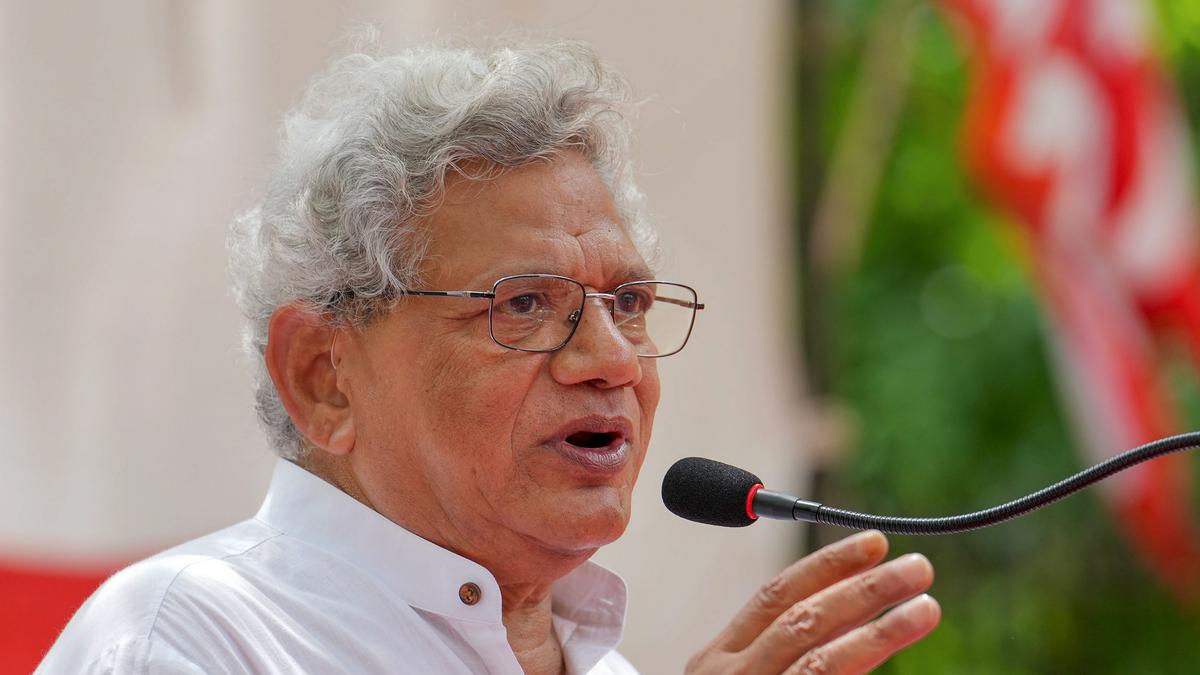
By Nitya Chakraborty The Communist Party of India (Marxist) general secretary Sitaram Yechury, who passed away on Thursday, September 12 after a fatal bout of respiratory illness at the age of 72, has left a deep void just not in the leadership of the CPI(M), but also in the functioning of the INDIA bloc, that […]

VISHNU RAJA
RYO YAMADA
HITORI GOTOH
IKUYO KITA