Just in:
Padmini follows Padmaja for ‘ghar vapsi’ // Sharjah clears Kalba free zone plan for 400MW complex // Workday targets Honeydew purchase to unify AI metrics // Anthropic shares finish above offer price after Nasdaq debut // Toward a Shared Future for Humanity: Rethinking Civilizational Exchange // Dar Global unveils $700m Trump development in Qatar // Saudi defences destroy three Houthi missiles targeting Riyadh // Crypto market loses $150 billion amid broad sell-off // Thailand’s Most Iconic New Year’s Celebration Returns: ICONSIAM Unveils “Amazing Thailand Countdown 2027” // Dalilk Academy reaches 27 million, targets 100 million by 2030 // Saudi Arabia schedules multinational top-up tax for 2027 // Sui activates Hashi Bitcoin lending across partner network // Dubai Introduces SHARH, an AI-Powered Platform Helping Entrepreneurs Buy, Sell and Manage Businesses in the UAE // Jaiedco and Golden Bridge Announce Strategic Collaboration for a New Dubai Islands Development // Phancy Announces Business Performance for the Nine Months Ended September 30, 2026 // Diabetes Malaysia And Alpro Pharmacy Set National Record With 11,007 Most Blood Glucose Screenings Conducted Across Malaysia In Just 48 Hours // Technology at Work, Heritage for All: The “Chinese Approach” to Safeguarding the Leshan Giant Buddha // European Commission takes systems offline after AI cyberattack // PayerMax and ShopeePay Strengthen Strategic Partnership to Advance Digital Payment Collaboration in Southeast Asia // 2026 Tropical Rainforest Ecosystem Partners Conference Kicks off in Hainan //

News related to
Electric

Saudi Arabia and Abu Dhabi are intensifying their efforts to transform their energy sectors, aiming to significantly increase renewable energy capacities by 2030 and 2035, respectively. These initiatives are central to their broader strategies for economic diversification and environmental sustainability. Saudi Arabia’s Vision 2030 outlines a target for renewables to constitute 50% of the nation’s energy mix by 2030, equating to approximately 130 gigawatts of renewable capacity. […]

New advanced solutions in climate control and energy management promise greater operational efficiency and reduced environmental impact for multiple applications Suzhou, China – Copeland, a global provider of sustainable climate solutions, announced today the expansion of its variable speed technology platform, integrating compressors, drives, and controllers for heating, cooling and refrigeration systems. This integrated solution drives enhanced efficiency, precise control, and sustainability across a wide range of […]

Asperitas, a Dutch thermal management company, has unveiled its DFCX series, a new line of modular Direct Forced Convection immersion cooling solutions designed to enhance performance, reliability, and energy efficiency across data centers of varying scales. This product line aims to cater to standalone edge facilities as well as hyperscale data centers, addressing the growing demand for sustainable and high-density computing environments. The DFCX series represents a […]

MG Motor has achieved a significant milestone in the Middle East automotive market, recording 70,033 vehicle sales in 2024. This figure represents a 10% increase compared to the previous year, underscoring the brand’s growing popularity in the region. The Kingdom of Saudi Arabia emerged as MG’s largest market, contributing over 30,000 units to the total sales. This robust performance solidifies MG’s position among the top car manufacturers […]

The American University of Sharjah’s College of Engineering has successfully renewed accreditation for its seven undergraduate programs through the Commission for Academic Accreditation of the UAE Ministry of Education. This achievement underscores the university’s commitment to maintaining high educational standards and providing quality engineering education in the region.

The accredited programs include Bachelor of Science degrees in Chemical Engineering, Civil Engineering, Computer Engineering, Electrical Engineering, Industrial Engineering, Mechanical Engineering, and Computer Science. This comprehensive accreditation ensures that each program meets rigorous academic and professional criteria, aligning with both national and international standards.

Dr. Susan Mumm, Chancellor of AUS, expressed pride in this accomplishment, stating that it reflects the university’s dedication to excellence in engineering education. She emphasized that such recognition not only enhances the institution’s reputation but also assures current and prospective students of the quality and relevance of their chosen programs.

The CAA serves as the UAE’s federal quality assurance agency for higher education, responsible for licensing institutions and accrediting academic programs. Its role is pivotal in ensuring that educational offerings in the country adhere to international best practices and equip graduates with the necessary skills and knowledge for their professional careers.

In addition to CAA accreditation, AUS’s engineering programs have also been reaccredited by the Accreditation Board for Engineering and Technology through September 30, 2030. ABET accreditation is a globally recognized endorsement that signifies a program’s adherence to quality standards essential for graduates entering the engineering profession.

Dr. Fadi Aloul, Dean of the College of Engineering, highlighted the significance of these accreditations, noting that they are a testament to the faculty’s dedication, the university’s robust curriculum, and the continuous efforts to align with industry advancements. He added that such achievements position AUS graduates competitively in the global job market.

The rigorous accreditation process involves comprehensive evaluations of program curricula, faculty qualifications, facilities, and institutional support. These assessments ensure that the programs not only meet academic standards but also effectively prepare students for the challenges of the engineering field.

Students and alumni have also expressed their satisfaction with the renewed accreditations. Many believe that graduating from accredited programs enhances their employment prospects and provides assurance to employers regarding the quality of education they have received.

Saudi Arabia has announced a significant investment of SR13.4 billion to expand the Qurayyah Independent Power Plant in the Eastern Province. This expansion aims to add 3.01 gigawatts of power generation capacity, addressing the Kingdom’s growing energy demands and supporting its economic development. The Saudi Power Procurement Company , the nation’s sole licensed electricity buyer, has signed a power purchase agreement with the Saudi Electricity Company and […]

Researchers from the University of California San Diego and CEA-Leti have unveiled a pioneering microactuator driving system that integrates energy storage with voltage conversion, setting a new benchmark for efficiency in small electromechanical devices. This advancement, presented at the International Solid-State Circuits Conference 2025, promises to significantly enhance the performance of microdrones and medical implants. The core innovation lies in the system’s ability to deliver high-voltage outputs […]

Advertisements
By Dr. Gyan Pathak BJP led government is now in power in the National Capital Territory Delhi, that has come with too many poll-promises to keep, and a very alert and strong opposition to challenge .It was obvious in the very first cabinet decision of the government led by Chief Minister Rekha Gupta, that officially […]

Nissan Motor Co. experienced an 11% surge in its share price on Friday following reports that a prominent Japanese consortium is formulating plans to attract investment from Tesla Inc. This development comes on the heels of Nissan’s unsuccessful merger discussions with Honda Motor Co., highlighting the automaker’s ongoing efforts to stabilize its financial standing. The initiative is spearheaded by Hiro Mizuno, a former Tesla board member, with […]

Dubai Taxi Company has announced plans to launch its first autonomous taxi service in the emirate by the first quarter of 2026, aligning with Dubai’s strategic vision for advanced mobility. Chief Executive Mansoor Alfalasi confirmed that the company is actively collaborating with partners to expedite the project’s development. In an interview, Alfalasi emphasized the importance of working closely with the Roads and Transport Authority to address all […]

Volvo has unveiled its latest electric luxury sedan, the ES90, which is set to redefine automotive computing power and safety standards. Equipped with a dual NVIDIA DRIVE AGX Orin supercomputer configuration, the ES90 boasts the capability to perform 508 trillion operations per second, positioning it as the most computationally advanced vehicle in Volvo’s lineup. This monumental processing capacity enhances the vehicle’s artificial intelligence-based safety features, sensor integration, […]

TrinaTracker, a subsidiary of Trinasolar Co. Ltd and a global leader in smart solar tracking solutions, has inaugurated a manufacturing facility in Saudi Arabia. Located in Jeddah’s 3rd Industrial City, the plant is slated to commence operations in the first quarter of 2025, specializing in the production of the Vanguard series of solar trackers and smart control systems. This development underscores TrinaTracker’s commitment to localization and enhancing […]

Canadian Retailer Expands to Six ‘Must-See’ Showrooms ALBERTA & ONTARIO, CANADA – Media OutReach Newswire – 20 February 2025 – In a joint agreement that completes today at 11:00 am MST, Barbecue Country, of 5682 75 Street NW, Edmonton, Alberta will officially join the proudly Canadian, Barbecues Galore family. Canadian homeowners have trusted Barbecues Galore since 1979 for expert advice and exceptional services related to luxury patio […]

Google Pay, a leading digital payment platform in India, has introduced a convenience fee for users settling utility bills via credit and debit cards. This development marks a significant shift from the platform’s previous policy of offering fee-free transactions for essential services such as electricity and gas.

The newly imposed charges range between 0.5% and 1% of the transaction amount, in addition to the applicable Goods and Services Tax . For instance, a user paying an electricity bill of ₹2,000 through a credit card may incur a convenience fee of up to ₹20, plus GST. These fees are applicable exclusively to payments made using credit and debit cards; transactions conducted directly through UPI-linked bank accounts remain exempt from such charges.

This move aligns with a broader trend in the digital payments industry, where platforms are exploring monetisation strategies to offset operational costs associated with payment processing. The National Payments Corporation of India had previously introduced an interchange fee of up to 1.1% on UPI transactions exceeding ₹2,000 when conducted through Prepaid Payment Instruments such as digital wallets. However, it’s important to note that this interchange fee is typically borne by merchants, and standard UPI transactions between bank accounts continue to be free for consumers.

The introduction of convenience fees by Google Pay may influence user behaviour, potentially prompting a shift towards alternative payment methods that do not attract additional charges. Users aiming to avoid these fees are encouraged to utilise UPI-linked bank account payments, which continue to offer a cost-free experience for bill settlements and other transactions.

Confidence within the energy sector regarding the attainment of global net-zero emissions by 2050 has markedly decreased. The Energy Industries Council reports that only 16% of industry leaders now believe these climate goals are achievable, a significant drop from 45% the previous year. This decline is attributed to policy instability, financial uncertainties, and protracted project approval processes. The EIC’s “Net Zero Jeopardy Report II” highlights that inconsistent […]

A significant shift in consumer preferences is poised to reshape the automotive industry, as over 64% of potential buyers express a strong inclination towards electric vehicles for their next purchase in 2025. This insight emerges from the Tata Consultancy Services Future-Ready eMobility Study 2025, unveiled at the Detroit Auto Show. The comprehensive study surveyed more than 1,300 respondents across North America, the United Kingdom and Ireland, Continental […]

Saudi Arabia’s ACWA Power has entered into a definitive agreement to acquire significant stakes in power generation and water desalination assets from French utility developer ENGIE. The transaction, valued at $693 million, marks ACWA Power’s strategic expansion into Kuwait and a bolstered presence in Bahrain.

The acquisition encompasses a combined capacity of 4.61 gigawatts in gas-fired power generation and 1.11 million cubic meters per day of water desalination. Additionally, the deal includes the associated operations and maintenance companies in both countries.

In Kuwait, ACWA Power will acquire an 18% stake in the Az Zour North Independent Water and Power Project . This facility, operational since 2016, boasts a 1,500 MW gas-fired combined cycle power plant and a desalination plant capable of producing 107 million imperial gallons of water daily. The plant operates under a 40-year Energy Conversion and Water Purchase Agreement with Kuwait’s Ministry of Electricity and Water.

In Bahrain, the acquisition involves several key assets:

– Al Ezzel Independent Power Plant : ACWA Power will obtain a 45% stake in this 940 MW facility, which has been a cornerstone of Bahrain’s power infrastructure.

– Al Dur IWPP: A 45% stake in this project will be transferred to ACWA Power. The facility has a power generation capacity of 1,234 MW and a desalination capacity of 218,000 cubic meters per day.

– Al Hidd IWPP: ACWA Power will acquire a 30% stake in this plant, which provides 1,000 MW of power and produces 410,000 cubic meters of desalinated water daily.

Marco Arcelli, CEO of ACWA Power, stated, “We consolidate our presence in Bahrain, where we are already a reliable supplier of power and water, and we enter Kuwait, where we recently submitted a bid for a large power and desalination plant.”

The transaction is subject to customary regulatory and stakeholder approvals. Upon completion, ACWA Power will assume responsibility for the operations and maintenance of the acquired assets, further solidifying its position as a leading provider of power and water solutions in the Middle East.

This strategic move aligns with ACWA Power’s broader objectives to expand its footprint in the Gulf region and enhance its portfolio of energy and water projects. By integrating these assets, the company aims to leverage operational synergies and contribute to the sustainable development of the region’s infrastructure.

ENGIE’s decision to divest its stakes in these assets is part of its strategic realignment to focus on achieving net-zero carbon emissions by 2045. The proceeds from the sale are expected to be reinvested into renewable energy projects and other sustainable initiatives.

The Az Zour North plant in Kuwait represents a significant milestone as the country’s first IWPP, developed under a public-private partnership framework. Its successful operation has paved the way for increased private sector participation in Kuwait’s utility sector.

ACWA Power has signed a power purchase agreement worth SAR 8.6 billion with the Egyptian Electricity Transmission Company to develop a 2-gigawatt wind power plant in South Hurghada, Egypt. The 25-year agreement was formalized on February 18, 2025, marking a significant milestone in Egypt’s renewable energy expansion.

The project encompasses the development, financing, construction, ownership, and operation of the wind energy facility. Financial closure is anticipated in 2026, following the completion of environmental studies expected by mid-2026. This initiative aligns with Egypt’s strategic objectives to diversify its energy mix and reduce reliance on fossil fuels.

Saudi Arabia’s Minister of Energy, Prince Abdulaziz bin Salman, announced the agreement during the Egypt Energy Show . He highlighted that this project is the largest of its kind in Egypt and is part of a broader collaboration between Saudi and Egyptian companies in the renewable energy sector. Collectively, these initiatives aim to add approximately 1.696 GW of renewable energy capacity to Egypt’s grid, with a total investment nearing SAR 6.2 billion.

In addition to the wind project, Saudi and Egyptian authorities are advancing the Saudi-Egypt Electricity Interconnection Project. Valued at SAR 6.7 billion, this project is designed to facilitate the exchange of up to 3,000 megawatts of electricity between the two nations upon completion of both phases. This interconnection is poised to enhance grid stability and energy security in the region.

Egypt has been actively pursuing renewable energy projects in collaboration with international partners. Notable developments include the Benban Solar Park in Aswan, which boasts an installed capacity of 1.8 GW and features contributions from multiple developers. Another significant venture is the 500 MW Gulf of Suez Wind Farm, developed in partnership with international stakeholders.

A collision between a Tesla Model Y and a Xiaomi SU7 in a Chinese tunnel has sparked widespread discussions about electric vehicle safety and build quality. The incident, which occurred when the Xiaomi SU7 rear-ended the Tesla Model Y, resulted in both vehicles sustaining damage, with the Xiaomi SU7’s front end severely crushed, while the Tesla Model Y exhibited comparatively minor rear-end damage. Photographs of the aftermath […]

Tesla Inc. has made a significant move towards entering the Indian market, as evidenced by a surge in job openings across key locations like Mumbai and Delhi. The company is currently seeking to fill 13 roles, spanning customer-facing and back-end positions, marking a clear commitment to establishing a foothold in India’s growing electric vehicle sector.

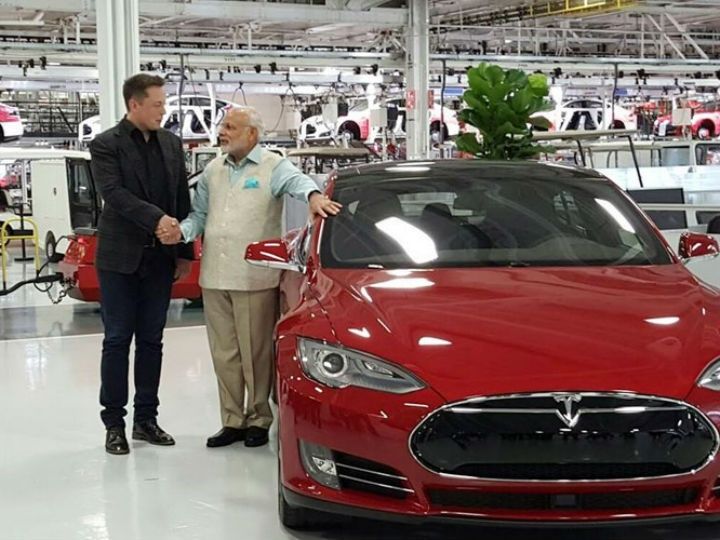
The announcement comes after Elon Musk’s high-profile meeting with Prime Minister Narendra Modi, a discussion that appears to have catalysed Tesla’s decision to pursue expansion in the region. The timing of this strategic move is especially relevant given the recent developments in India’s trade policies, with the government reducing import duties on luxury cars, a measure that could provide Tesla with a more favourable environment for operations.

India’s electric vehicle market, while still in its infancy compared to China’s, is poised for considerable growth. The country’s rapid urbanisation, increased government focus on sustainability, and rising interest in eco-friendly transportation solutions position it as a key player in the global EV landscape. Tesla, with its reputation for high-performance, premium EVs, stands to benefit from these trends.

Tesla’s recruitment efforts are seen as an indication of the company’s intention to tap into the vast potential of India’s automotive sector. The roles available span various areas, including technical support and operations, aimed at building the company’s infrastructure in the region. This is not the first time Tesla has shown interest in India; however, the recent policy changes have provided a more favourable environment for international companies looking to expand their operations.

Prime Minister Modi’s engagement with Elon Musk is likely to have been a pivotal factor in advancing Tesla’s plans for India. During the meeting, both parties discussed ways to enhance cooperation, particularly in sectors such as renewable energy and electric vehicles. Tesla’s entry into India aligns with the government’s push to reduce carbon emissions and transition towards sustainable energy solutions.

The reduction in import duties on luxury vehicles is a significant policy shift that could greatly benefit Tesla’s plans. Previously, India imposed high import duties on foreign-made vehicles, making it challenging for companies like Tesla to price their products competitively in the local market. The recent reduction, part of a broader effort to stimulate the EV sector, is seen as a move to attract global automakers. Tesla, which manufactures its vehicles primarily in the United States, is expected to benefit from these lower tariffs, potentially making its vehicles more affordable for Indian consumers.

India’s EV market, while smaller than China’s, is growing at a rapid pace. The country’s government has set ambitious targets for electric vehicle adoption, with a focus on reducing air pollution and decreasing dependence on imported oil. The Indian government has also introduced several incentives to promote the sale and manufacturing of electric vehicles, including subsidies for EV buyers and manufacturers, as well as tax exemptions for charging infrastructure.

Despite these encouraging trends, Tesla will face stiff competition in the Indian market. Homegrown automakers, such as Tata Motors and Mahindra & Mahindra, have already established themselves as key players in the EV sector, offering affordable electric cars that cater to Indian consumers’ needs. Additionally, the infrastructure for electric vehicles in India remains underdeveloped in many regions, with limited charging stations and a lack of widespread awareness among consumers about EV technology.

Nevertheless, Tesla’s brand recognition and technological expertise are expected to give it an edge in the Indian market. The company’s high-performance vehicles, coupled with its focus on sustainable energy solutions, could appeal to India’s growing middle and upper classes, who are increasingly concerned with environmental issues. Additionally, Tesla’s potential to create local manufacturing jobs and contribute to India’s green energy goals may help the company secure government support.

Tesla’s entry into India also signals the increasing importance of emerging markets in the global automotive industry. As more companies look to expand beyond their traditional markets in North America and Europe, countries like India and China are becoming central to the automotive industry’s future growth. India, with its large population, growing middle class, and rising environmental awareness, presents a significant opportunity for Tesla to expand its global footprint.

AM Green, a prominent producer of green hydrogen and ammonia, has entered into a strategic partnership with DP World, a global logistics leader, to establish a sustainable supply chain for green fuels and chemicals. This collaboration aims to position India as a central hub for the export of green ammonia and methanol, significantly contributing to global decarbonization efforts. Under the Memorandum of Understanding (MoU) signed in December, the […]

Dubai’s Roads and Transport Authority has unveiled its fourth-generation traditional abras, a key initiative aimed at modernising the city’s iconic water transport system. The new abras, which combine traditional design with innovative technology, are expected to enhance the overall passenger experience while maintaining the charm and heritage of Dubai’s waterways.

The new fleet marks a significant step in the evolution of Dubai’s abras, which have long been a cornerstone of the city’s transport network, offering both locals and tourists a scenic and practical way to cross the Dubai Creek. These traditional boats, often seen as a symbol of the emirate’s rich maritime history, will now feature advanced features including more eco-friendly propulsion systems, improved safety measures, and greater passenger comfort.

In an announcement made by the RTA, it was revealed that the new generation of abras will include enhanced materials for durability, better fuel efficiency, and a more comfortable ride. These innovations come as part of a broader push to modernise Dubai’s transport infrastructure, positioning the city as a global leader in integrating sustainable technologies with its cultural heritage.

The fourth-generation abras will include air-conditioning systems for passenger comfort, and a more streamlined design to reduce fuel consumption and emissions, aligning with Dubai’s environmental goals. This new fleet is also part of RTA’s efforts to boost Dubai’s tourism sector by providing an upgraded and attractive water transport option for visitors while ensuring the traditional spirit of the abras is retained.

“The launch of the fourth-generation abras is a major milestone in the evolution of public transport in Dubai,” said Mattar Al Tayer, Director-General and Chairman of the RTA. He highlighted that the initiative represents the authority’s ongoing commitment to enhancing mobility solutions that balance modernity with tradition. “This project exemplifies Dubai’s vision of fostering sustainable growth while embracing its rich cultural heritage.”

The new generation of abras will also feature state-of-the-art navigation systems, offering more efficient scheduling and tracking of the fleet. These improvements are designed to further enhance the operational efficiency of the boats, making travel along the Creek smoother for both commuters and tourists alike.

The decision to modernise the traditional abras aligns with the UAE’s long-term commitment to sustainability and technological integration. The nation has already made substantial investments in green technologies across various sectors, with a particular focus on reducing carbon emissions and promoting energy-efficient systems. The RTA’s new abras are expected to play a key role in helping the city achieve its ambitious sustainability targets, especially as the global focus on eco-friendly transportation intensifies.

In addition to their sustainability features, the new abras will incorporate advanced safety features, including GPS tracking and communication systems, which will allow for better coordination and faster response times in case of emergency. This is expected to reassure passengers and enhance the overall reliability of the service, especially in high-traffic areas of Dubai Creek.

The RTA’s initiative is expected to not only improve the experience for daily commuters but also attract more tourists to the waterway, which has long been a popular attraction in Dubai. The new abras, with their modern features and enhanced comfort, will likely offer an even more appealing way to explore the historic district of Bur Dubai, Deira, and other key areas along the Creek.

The traditional abras have been a feature of Dubai’s public transport network for decades, offering a scenic and affordable way to navigate the city’s waterways. However, the evolving needs of residents and visitors, alongside the city’s rapid growth, have necessitated changes to the system. The RTA’s decision to upgrade the abras aims to address these needs while ensuring the city’s water transport continues to serve as both a practical mode of transport and a cultural symbol.

RTA’s modernisation efforts are also seen as part of a broader trend across Dubai, where a mix of traditional values and modern technological advancements is shaping the city’s transport landscape. From driverless taxis to electric buses and sustainable metro services, the RTA has been at the forefront of integrating innovation into the city’s public transport network.

The new abras are also expected to be more inclusive, with design modifications that make the boats more accessible to people with disabilities. The RTA has stated that it is committed to ensuring all its public transport services meet the needs of the entire population, including those with mobility challenges. The new abras will have specially designed seating and ramps to accommodate passengers with physical disabilities, further enhancing the inclusivity of Dubai’s transport system.

As the global transportation industry increasingly turns towards sustainability, the RTA’s new abras demonstrate how cities like Dubai are seeking to preserve their cultural heritage while embracing new technologies. The launch of these boats highlights the emirate’s commitment to becoming a leader in sustainable urban development and reflects the growing importance of integrating green solutions into public transport systems worldwide.

Passengers on the new abras will also benefit from enhanced security features, with additional surveillance cameras and safety protocols in place. These measures are expected to ensure that Dubai’s water transport remains one of the safest and most reliable in the region, with a focus on passenger welfare at every stage of the journey.


Ducab Group has joined forces with the Mohammed Bin Rashid Housing Establishment in a strategic partnership aimed at enhancing Dubai’s large-scale residential developments with advanced cable solutions. This collaboration marks a significant step in promoting sustainability and advancing infrastructure within the emirate, as Ducab provides an array of high-quality products, including low-voltage power cables, wires, flexible cables, and Flam BICC2 fire-resistant cables.

The partnership comes in response to the UAE’s ambitious push for sustainable development, aligning with the country’s wider vision of creating environmentally responsible and energy-efficient housing. MBRHE, tasked with providing affordable homes to UAE nationals, is focused on modernising its housing projects, making this collaboration a key element in ensuring that their new developments adhere to the highest standards of safety, energy efficiency, and environmental sustainability.

The low-voltage power cables, central to the collaboration, are designed to meet the growing demand for reliable energy supply in urban areas. These cables are essential for transmitting electricity efficiently across residential complexes, enabling the seamless operation of essential services such as lighting, heating, and air conditioning. Flexible cables, which allow for easy installation in a variety of configurations, will also play a vital role in maintaining the safety and durability of the electrical systems within these residential areas.

The incorporation of Flam BICC2 fire-resistant cables adds an extra layer of safety, protecting the residents and properties from potential electrical fires. These fire-resistant cables, which meet stringent international standards, provide superior protection by preventing the spread of fire through the electrical infrastructure, crucial in high-rise buildings and densely populated areas. With fire safety becoming an increasing concern in residential construction, these cables will play an important role in mitigating risks and ensuring the well-being of Dubai’s growing population.

Ducab, a prominent manufacturer of cables and electrical products in the UAE, has a long-standing reputation for providing innovative and reliable solutions for various sectors, including construction, energy, and infrastructure. Its involvement in this partnership strengthens its position as a leading provider of electrical solutions for the UAE’s residential and commercial sectors. The company’s commitment to sustainable practices is evident in its product offerings, which not only meet international quality standards but also incorporate eco-friendly manufacturing processes.

The collaboration with MBRHE also signals Ducab’s continued efforts to support the UAE’s ambitious sustainability goals, including its drive to reduce carbon emissions and promote energy efficiency across all industries. By providing cutting-edge cable technology that adheres to the highest safety standards, Ducab is contributing to the UAE’s goal of building smart, sustainable cities that can meet the challenges of the future.

MBRHE’s role in the partnership is pivotal, as it oversees the construction and delivery of homes for UAE nationals. The establishment is responsible for implementing Dubai’s housing strategy, ensuring that projects are not only cost-effective but also meet the sustainability standards required for long-term success. The inclusion of Ducab’s advanced cable solutions is part of a broader initiative to elevate the quality of these homes, ensuring they are equipped with the latest technology and built to withstand the demands of modern living.

Dubai’s housing sector has seen significant transformation over the past few years, with an increasing focus on green building practices and energy-efficient solutions. This partnership between Ducab and MBRHE is a direct response to this shift, as developers and stakeholders strive to meet the growing demand for sustainable housing options. The project aligns with Dubai’s broader goals outlined in its Vision 2021 and other long-term urban planning strategies, which focus on sustainable development, energy efficiency, and the creation of smart cities.

As part of the collaboration, Ducab’s role extends beyond the supply of cables and wires. The company is also involved in providing technical support and expertise, ensuring that the installation and maintenance of these systems meet the highest standards of quality and safety. Ducab’s commitment to research and development ensures that its products continue to evolve in line with technological advancements and the shifting demands of the construction and energy sectors.

The move to integrate advanced cable solutions into Dubai’s residential projects also comes as the emirate ramps up efforts to bolster its position as a global hub for innovation and sustainability. With growing pressure on governments and industries to adopt more environmentally conscious practices, collaborations like the one between Ducab and MBRHE are essential in driving the change needed to support sustainable urban development.

In a strategic move to enhance sustainable energy access, Masdar, TotalEnergies, and EPointZero have entered into a framework agreement aimed at delivering clean energy solutions across Africa and Asia. This collaboration seeks to address energy deficits in underserved communities by leveraging the combined expertise of the three companies in renewable energy development. The partnership focuses on deploying secure and sustainable electricity to local neighborhoods in Africa, with […]

VISHNU RAJA
RYO YAMADA
HITORI GOTOH
IKUYO KITA
Just in:
Diabetes Malaysia And Alpro Pharmacy Set National Record With 11,007 Most Blood Glucose Screenings Conducted Across Malaysia In Just 48 Hours // Dubai Introduces SHARH, an AI-Powered Platform Helping Entrepreneurs Buy, Sell and Manage Businesses in the UAE // Balagopal challenges CM over tax revenue // Crypto market loses $150 billion amid broad sell-off // Dar Global unveils $700m Trump development in Qatar // Saudi defences destroy three Houthi missiles targeting Riyadh // Technology at Work, Heritage for All: The “Chinese Approach” to Safeguarding the Leshan Giant Buddha // Yeebo Announces Interim Results for FY26/27 Revenue Increases by 45.5% to HK$806.7 Million Profit Attributable to Owners Surges 87.6% to HK$2,284.7 Million // Travel Insurance Was Built for the Few Who Claim. Ancileo’s Felt Coverage™ is for Everyone Else // Oil futures rebound after Riyadh strikes and tanker alerts // Promoting Common Human Development Through Exchanges and Mutual Learning Among Civilizations // Coinbase targets 2027 launch amid state gambling lawsuits // Thailand’s Most Iconic New Year’s Celebration Returns: ICONSIAM Unveils “Amazing Thailand Countdown 2027” // Russia permits retail cryptocurrency purchases under regulated framework // 2026 Tropical Rainforest Ecosystem Partners Conference Kicks off in Hainan // PayerMax and ShopeePay Strengthen Strategic Partnership to Advance Digital Payment Collaboration in Southeast Asia // Sabarimala booking discrepancies prompt sabotage angle probe // Sharjah clears Kalba free zone plan for 400MW complex // LittleLives, Little Lab and SEGi College Sign MOU to Explore Early Childhood Education Collaboration Across ASEAN // Saudi Arabia schedules multinational top-up tax for 2027 //