Just in:
HC nullifies assets FIR against minister // Thailand’s Most Iconic New Year’s Celebration Returns: ICONSIAM Unveils “Amazing Thailand Countdown 2027” // Malappuram hartal over Western Ghats // Toward a Shared Future for Humanity: Rethinking Civilizational Exchange // NASA tests supersonic Mars rotors for heavier payloads // 2026 Tropical Rainforest Ecosystem Partners Conference Kicks off in Hainan // Sharjah clears Kalba free zone plan for 400MW complex // Oil futures rebound after Riyadh strikes and tanker alerts // Anthropic’s debut is lifting markets, but someone is still paying for it // Dalilk Academy reaches 27 million, targets 100 million by 2030 // LittleLives, Little Lab and SEGi College Sign MOU to Explore Early Childhood Education Collaboration Across ASEAN // Dubai Introduces SHARH, an AI-Powered Platform Helping Entrepreneurs Buy, Sell and Manage Businesses in the UAE // Hackers exploit public notes to distribute NodeLinkRAT malware // Jaiedco and Golden Bridge Announce Strategic Collaboration for a New Dubai Islands Development // PicCollage extends photo editing platform to web browsers // Yeebo Announces Interim Results for FY26/27 Revenue Increases by 45.5% to HK$806.7 Million Profit Attributable to Owners Surges 87.6% to HK$2,284.7 Million // Phancy Announces Business Performance for the Nine Months Ended September 30, 2026 // Alibaba shares slip despite 53% cloud revenue growth // Promoting Common Human Development Through Exchanges and Mutual Learning Among Civilizations // Workday targets Honeydew purchase to unify AI metrics //

News related to
Electric

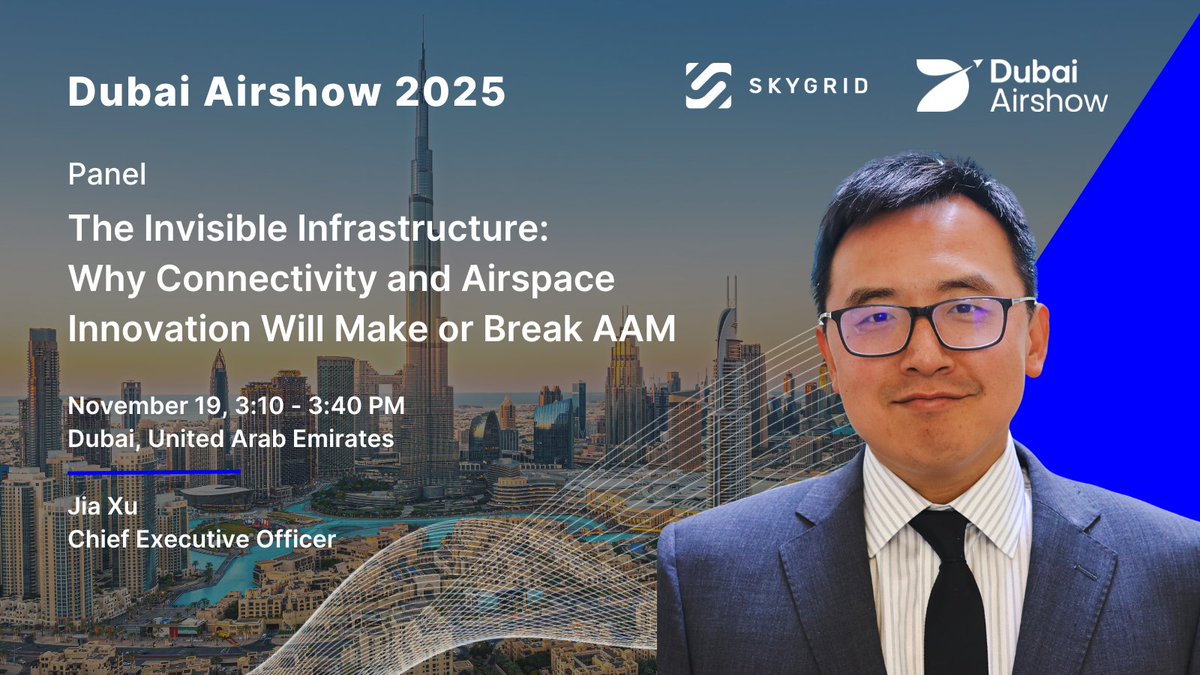
A pact between SkyGrid and High Lander has been signed at the Dubai Airshow 2025 to construct a framework for advanced air-mobility operations in the United Arab Emirates, focusing on integrating crewed and uncrewed aerial vehicles. The memorandum of understanding calls for development of airspace management ecosystems, digital operations for electric vertical take-off and landing aircraft and cargo drones, vertiport planning and cybersecurity protocols. SkyGrid, headquartered in Austin, Texas, acts as a third-party service provider for advanced air mobility operations, while High Lander offers unmanned traffic-management and drone-fleet-management solutions. The deal is part of the UAE’s ambition to position Abu Dhabi as a hub for next-generation aviation services.

Under the agreement the firms will jointly assess “Advanced Air Mobility Supporting Operational Environments” to develop technology road-maps and regulatory frameworks that facilitate scalable AAM operations. The collaboration targets areas including airspace integration, enabling vertiport infrastructure, securing digital operations and ensuring safe coexistence of crewed and uncrewed aircraft. SkyGrid chief executive Jia Xu said the alliance “represents a significant milestone in shaping the digital foundation of Advanced Air Mobility in the UAE and across the Middle East”. High Lander’s chief executive Alon Abelson commented that the environment in the UAE, supported by major aerospace players, constitutes “the perfect environment to demonstrate how automation, data-driven management and cross-industry collaboration can transform the future of air mobility”.

Analysis of this partnership places it amid a broader global push for uncrewed traffic-management systems and urban or regional air-mobility networks. Industry research shows that UTM ecosystems are considered vital for the safe scaling of commercial beyond-visual-line-of-sight drone operations. A 2024 readiness index issued by the Global UTM Association named both companies among participants in task forces shaping digital airspace adoption worldwide. That makes this UAE-based partnership a concrete step from theoretical planning to operational readiness.

The UAE’s Economic Vision 2030 describes diversification into technology, aerospace and transport as key pillars. The SkyGrid–High Lander partnership explicitly links with these goals, signalling industry-scale intentions rather than pilot programmes alone. By creating a unified operational blueprint, regulators and operators in the Gulf region may be asked to adapt their air-space classification, licensing and infrastructure regimes. Implementation will still depend on national aviation regulator approvals, air-traffic-management integrations, and standards alignment with international frameworks.

Despite the ambition, challenges remain. Data-sharing protocols across crewed and uncrewed systems must meet stringent safety and cybersecurity standards. Vertiport infrastructure—dedicated landing and take-off sites for eVTOL vehicles—is still nascent globally and will require investment and spatial planning, especially in congested urban zones. Moreover, global certification regimes for eVTOLs and unmanned systems are evolving; regulatory uncertainty may slow deployment. Analysts caution that while the Gulf region offers less airspace congestion than some metropolitan centres, integration of new aircraft types must still ensure separation from traditional air-traffic flows.

Beijing has initiated sweeping agricultural trade measures targeting the United States, Canada and the European Union as a means to counter duties imposed on Chinese electric vehicles. The move centres on sectors worth billions of dollars in export value and signals a new front in the global tariff standoff as Chinese factories ramp up global auto-sales ambitions.

According to official announcements and industry trackers, China imposed tariffs and import restrictions on major agricultural products including soybeans, pork, canola and cognac after Western governments raised tariffs on Chinese EV imports—some reaching 100 per cent in the US, and up to 35 per cent in the EU. Those duties stemmed from concerns about subsidised manufacturing, imports displacing domestic output and national-security implications tied to EV supply-chains.

One Chinese commercial diplomat told Canadian media that Ottawa’s export restraints on Chinese EVs directly triggered Beijing’s agriculture penalties. Canadian farmers in canola and pulses markets have already seen orders plummet and export corridors shut or taxed heavily. European spirits producers also face duties: cognac exports to China, valued at around $1.7 billion annually, have dropped by about 35 per cent since the levy took effect.

Analysts say the strategy is calculated. While China’s domestic market remains protected from full import competition, its international agriculture import volumes give Beijing leverage. An academic at Peking University noted that “a slight adjustment in China’s import preferences can ripple through farming regions and rural constituencies that carry significant political weight”. By focusing on sectors with concentrated politically-sensitive producers, China increases the pressure on Western governments to reconsider EV levies.

On the Western side, officials are signalling that they are unlikely to surrender their EV-tariff stance. A senior analyst at a Brussels-based think-tank said that the European Commission had “clearly shown that it was not willing to back down from the EV case”, citing China’s rapid auto-industry progress and state-support programmes. With climate targets and supply-chain security on the table, Western capitals view EV tariffs as integral to domestic industry viability.

Yet the backlash in agriculture could be deeper and more enduring than the EV duties themselves. A supply-chain expert explained that new contracts, logistics investments and alternative-buyer relationships developed in response to Chinese import suspensions may lock in shifts for years to come. In concrete terms, U. S. soybean farmers—who sold $12.6 billion worth to China in 2024—have seen export volumes fall to zero for key new-crop shipments, while Canadian producers of rapeseed and pea oil are facing a near-complete market closure under 100 per cent tariffs.

Observers point out that agriculture is an especially potent tool in trade diplomacy because it touches multiple layers of the economy: from regional employment to global commodity markets and corporate finances. By wielding farm-product bans or tariffs, Beijing can inflict political damage in sending countries while avoiding direct escalation of high-tech sectors where Western governments might respond more aggressively.

For Western farm sectors the choices are stark. Some firms are exploring alternative markets in Latin America, Africa or South-East Asia, while others are pressing their governments for compensation or trade-negotiation efforts. Meanwhile, Western trade officials are increasingly emphasising diversification of supply-chains away from China, which may dampen China’s leverage over time.

Malaysia’s national utility firm Tenaga Nasional Berhad recorded losses of about RM 4.57 billion stemming from illegal electricity usage linked to cryptocurrency-mining operations between 2020 and August 2025. The Ministry of Energy Transition and Water Transformation disclosed that 13,827 premises were identified for unauthorised power use in bitcoin-mining setups.

The scale of the issue has triggered coordinated action by TNB alongside law-enforcement agencies, the communications regulator and the anti-corruption commission to shut down illegal crypto-mining hubs and recover mining equipment. Monitoring and detection systems have been upgraded, including the deployment of smart meters and a database of suspect premises created to track owner-tenant information.

The ministry emphasised that tampering with electricity meters or bypassing supply connections remains a breach of the Electricity Supply Act, even though crypto-mining per se is not illegal in Malaysia provided it meets regulatory registration, environmental assessment and energy-efficiency requirements.

Experts note that large-scale crypto-mining demands heavy and continuous power consumption, making utilities vulnerable to theft and grid stress. Analysts warn that if unaddressed, rampant unauthorised mining can undermine revenue streams, force higher tariffs for compliant users and increase risk of transformer or grid overload. TNB has reported that illicit mining not only deprives the utility of revenue, but often leaves behind damaged equipment, fire hazards and voltage instability.

TNB’s response includes launching a pilot “Distribution Transformer Meter” project that monitors usage at the transformer level to detect anomalies, and rolling out smart-metering at substations for real-time tracking of energy flows. These technical steps complement legal and enforcement action, with the utility and authorities conducting raids, seizing mining machines, and pursuing criminal charges under offences related to meter interference.

Regulators say the problem is acute because of Malaysia’s relatively affordable electricity and benign regulatory regime for data-centres, making it an attractive venue for crypto-miners operating on razor-thin margins for global digital-asset mining operations. Observers say tighter regulation globally of crypto-mining, along with rising power costs, have driven more miners to jurisdictions with weaker enforcement or cheaper energy. This trend adds urgency for utilities worldwide to bolster monitoring and enforcement frameworks.

EVIQ, a leading electric vehicle technology firm, has entered into a Memorandum of Understanding with NAVA, a prominent player in electric mobility solutions, marking a significant step forward in the development of electric vehicles and related infrastructure. This strategic partnership aims to bolster the electric vehicle sector, focusing on the exchange of technical knowledge, talent development, and the expansion of advanced EV technologies across the country. The […]

Oil traders are expressing doubts over OPEC+’s ability to implement production cuts next year, despite forecasts predicting a looming global supply surplus that could push prices even lower. A recent survey conducted by Bloomberg News revealed that nearly two-thirds of 25 brokers and analysts expect the oil-producing bloc to refrain from reducing its output in 2026, despite the market’s increasing vulnerability to a glut in oil supply. […]

Abu Dhabi has taken a significant leap in transport innovation with the launch of a new category for modular smart vehicles. This category, developed by the Integrated Transport Centre, an affiliate of the Department of Municipalities and Transport, marks a global first. These vehicles are capable of reconfiguration, allowing their individual modules to connect or separate based on specific operational requirements. This development was revealed during the […]

Elon Musk has shared his bold vision for the future of Tesla’s humanoid robot, Optimus, claiming it has the potential to revolutionise the global economy by eradicating poverty and providing universal high incomes. Speaking at a recent event, Musk presented an ambitious outlook for the robot, which is being developed by Tesla to perform a variety of tasks, ranging from mundane chores to complex industrial processes. Optimus, […]

Advertisements

Saudi Arabia’s Public Investment Fund, one of the world’s largest sovereign wealth funds, has drastically reduced its holdings in a range of US-listed companies, including notable names like Pinterest Inc. and Linde Plc, marking a significant shift in its investment strategy. The move, which took place during the third quarter, reflects a broader recalibration of the fund’s international portfolio, as its stake in US equities dropped to its lowest level in nearly a year.

The PIF, valued at approximately $1 trillion, exited positions in nearly a dozen companies, signaling a shift away from some major US stocks. Alongside Pinterest and Linde, the fund also sold its entire stake in Prologis Inc. and Air Products and Chemicals Inc. This latter company is involved in the co-development of a green hydrogen plant in Neom, a major infrastructure project that is central to Saudi Arabia’s ambitious Vision 2030 goals.

The decision to divest from such high-profile firms raises questions about the long-term strategy of the PIF, which has been a key player in driving economic diversification and attracting international investment into the kingdom. The fund’s move comes as part of a broader effort to diversify its portfolio, reducing exposure to certain industries while increasing investments in sectors like technology, entertainment, and renewable energy, which align more closely with Saudi Arabia’s future growth ambitions.

Despite the sell-off, the PIF has maintained its commitment to expanding its investments in sectors aligned with its Vision 2030 objectives. The PIF has been a driving force behind many of Saudi Arabia’s high-profile investments, including backing for initiatives like the Red Sea Development Project, entertainment ventures, and tech giants. However, the recent pullback from US stocks suggests a possible shift towards domestic and regional investments, as well as a greater focus on emerging markets and future-facing industries.

The exit from Pinterest and Linde is noteworthy given the size and profile of these companies. Pinterest, a popular social media platform, has faced challenges in terms of user growth and profitability, while Linde, a leading industrial gas firm, has seen its stock fluctuate in line with broader economic trends. Prologis, a real estate investment trust focused on logistics, has benefitted from the global e-commerce boom but has been impacted by changing market dynamics in the logistics and real estate sectors. Meanwhile, Air Products’ involvement in green hydrogen is central to its long-term growth strategy, and the PIF’s decision to divest from this project could signal a rethinking of its commitment to certain green initiatives.

The PIF’s latest moves are part of a larger trend among sovereign wealth funds globally to recalibrate their investment portfolios in response to shifting economic conditions, including rising inflation, fluctuating commodity prices, and growing geopolitical uncertainty. These factors have made traditional investments in stocks and bonds more volatile, prompting funds like the PIF to seek greater diversification and look for opportunities in less conventional markets, including technology startups and renewable energy.

Saudi Arabia’s economic strategy under Vision 2030 has focused on reducing the country’s reliance on oil revenues and investing in new industries to create sustainable long-term growth. This vision has influenced the PIF’s approach, which has actively pursued investments in global tech companies, entertainment, and infrastructure projects. The fund has also sought to boost its international profile through high-profile investments in companies like Uber, Lucid Motors, and the Electric Vehicle market.

JAKARTA, INDONESIA – Media OutReach Newswire – 16 November 2025 – VinFast has signed a series of Memoranda of Understanding (MOUs) with Indonesia’s leading financial institutions to strengthen cooperation in promoting the country’s green mobility transition. The signings mark a significant milestone in VinFast’s market expansion strategy in Indonesia and reaffirm the Company’s strong commitment to enabling Southeast Asian consumers to switch to electric vehicles with ease […]

China’s dominance in the global rare earths market has been challenged by its recent move to curb exports of these crucial minerals. The decision has sent shockwaves through industries dependent on rare earths, which are essential for technologies ranging from electric vehicles to smartphones. In response, the United States and its allies are now looking for alternative sources, with Latin America, particularly Brazil, emerging as a potential […]

BELÉM, BRAZIL – Media OutReach Newswire – 14 November 2025 – On November 12, 2025, the 30th United Nations Climate Change Conference (COP30) officially convenes in Belém, Brazil. The COP30 Leaders’ Residence (Vila Líderes), located in the city’s strategic core area, has fully operationalized the high-efficiency, energy-saving air conditioning systems provided by Gree Electric. Specifically designed for attending global leaders and delegations, the residence is adjacent to […]

Cairo-based African Export‑Import Bank has outlined a bold agenda at the United Nations Climate Change Conference in Belém, Brazil, urging the continent to seize the dual opportunity of sustainable development and industrialisation through a just energy transition. Under its new president George Elombi, the institution emphasised the urgency of aligning Africa’s low-carbon ambitions with its economic growth pathways. Afreximbank is advocating for climate finance mechanisms that recognise […]

A delegation from Abu Dhabi’s infrastructure authority wrapped up discussions in Singapore with seven strategic memoranda of understanding aimed at accelerating urban development and smart-city infrastructure. The Abu Dhabi Projects and Infrastructure Centre signed accords with Singapore’s leading construction, engineering and architectural firms to bring advanced modular construction, digital twin technology and sustainable delivery models into a US$54 billion + project pipeline.

The agreements involved Singapore entities such as BCA International, Surbana Jurong, Meinhardt Group, Singapore Institute of Architects, CPG Corporation, Tech Onshore MEP Prefabricators and RSP Architects. Collectively they span built-environment excellence, urban master-planning, engineering consultancy, design collaboration, infrastructure solutions and prefabricated Mechanical, Electrical and Plumbing systems.

Representatives from the Abu Dhabi side included His Excellency Eng. Maysarah Mahmoud Salim Eid, Director General at ADPIC; His Excellency Jamal Abdullah AlSuwaidi, Ambassador to Singapore; Eng. Khulood Al Marzouqi, Acting Executive Director of Infrastructure Regulation & Support at the Abu Dhabi Department of Municipalities and Transport; and Eid Alobeidli, Director of Musataha & Public-Private Partnerships at the Abu Dhabi Investment Office. On the Singapore side, figures such as Kelvin Wong of BCA International and Tiah Nan Chyuan of the Singapore Institute of Architects joined the talks alongside over 400 industry-leaders.

The roadshow, branded under the Abu Dhabi Infrastructure Summit International Roadshow framework and hosted in partnership with Enterprise Singapore and the UAE-Singapore Business Council, showcased Abu Dhabi’s public-private-partnership frameworks, regulatory incentives and capital-project delivery models, while spotlighting Singapore’s global expertise in digitalised construction and sustainable design.

Among the key trends emerging is a strong emphasis on modular construction and design-for-manufacture-and-assembly methods. The Singaporean partners bring capabilities in integrated digital delivery and prefabricated MEP systems which Abu Dhabi is keen to deploy across large-scale urban districts, residential developments and mixed-use master-plans. Eng. Eid described Singapore as “the pinnacle of smart-city innovation and advanced construction methodologies” and said the step sets “concrete pathways for Singaporean expertise to contribute to Abu Dhabi’s ambitious infrastructure agenda”.

The pipeline includes more than US$54 billion in planned infrastructure across Abu Dhabi, signalling opportunities for joint ventures, co-investment and technology transfer. The partnership framework aims to elevate not only individual projects but to build an integrated ecosystem of digital-innovation, sustainability and efficient delivery models. Eid Alobeidli of ADIO emphasised that Abu Dhabi is “developing an integrated ecosystem that leverages world-class infrastructure, digital innovation and proven PPP delivery models to accelerate… transformation into a future-ready global capital.”

From the Singapore side, Heng Teck Thai of BCA International noted that the collaboration “reinforces Singapore’s commitment to global built-environment excellence” and underlined the use of the Green Mark framework as a basis for promoting sustainable and energy-efficient developments in Abu Dhabi and beyond.

The two-day event featured detailed presentations of Abu Dhabi’s major project opportunities, developers’ pipelines and open B2B networking sessions that connected Abu Dhabi stakeholders with Singaporean firms. Site-visits were also conducted, including a tour of Surbana Jurong’s campus and a modular-construction facility by Teambuild ICPH in Singapore, illustrating the hands-on dimension of the partnership potential.

With the formal agreements in place, attention now shifts to the operational phase of collaboration: how Singapore-based firms will transfer technology, how Abu Dhabi will adapt regulatory frameworks for fast-track project delivery and how both sides will structure co-investment and risk-sharing in major infrastructure programmes. Analysts note that successful execution will depend on aligning regulatory regimes, intellectual-property frameworks and local content strategies to maximise the benefits from global-local partnerships.

Observers point to the Gulf–ASEAN axis as gaining momentum in infrastructure cooperation, as the Abu Dhabi-Singapore tie-up could serve as a model for other Gulf states seeking to tap Singapore’s expertise in urban planning, sustainability and smart-technology integration. The signalling effect may help unlock further foreign-direct-investment flows into Gulf infrastructure markets and enhance cross-regional knowledge exchange.

HANOI, VIETNAM – Media OutReach Newswire – 12 November 2025 – VinFast continues to break records in the domestic automotive market by successfully delivering 20,380 electric cars of various models in October 2025, bringing the total number of VinFast vehicles delivered nationwide to 124,264 units in the first 10 months of the year. After becoming the first automaker in the history of the Vietnamese auto market to […]

Dubai Electricity and Water Authority has opened the door for qualified companies and consortiums to submit their proposals for the seventh phase of the Mohammed Bin Rashid Al-Maktoum Solar Park, one of the largest renewable energy projects in the world. This expansion is set to significantly enhance Dubai’s efforts to diversify its energy mix and meet its sustainability targets. The upcoming phase will incorporate 2,000 megawatts of […]

The Philippines and Norway have partnered to develop an electric hybrid propulsion ferry, marking a significant step towards advancing sustainable maritime transport in the Philippines. This collaboration aims to foster the growth of the electric ferry sector, with a focus on environmental impact and aligning with global sustainability goals.

This initiative was unveiled during the first Philippines-Norway Electric Ferries Conference, organised by the Royal Norwegian Embassy in Manila, the Philippine Ports Authority, and several key stakeholders, including Innovation Norway, the Philippines-Norway Business Council, and Maritime Cleantech. The event also garnered support from the European Union’s Horizon2020 programme, which backs innovation and sustainability projects across Europe.

The highlight of the conference was the signing of a Memorandum of Understanding between the Philippines Association of Coastal and Inland Water Ferries Inc., IMP Shipyard and Port Services Inc., and ZEM. The agreement formalises plans to create a prototype electric hybrid propulsion ferry, a significant milestone in the country’s maritime transition towards greener technologies.

One of the key goals of this project is to align with the United Nations’ Sustainable Development Goals, particularly in the areas of sustainable energy and climate action. Additionally, the project aims to enhance the European Union’s innovation, competitiveness, and economic growth by showcasing how electric ferries can reshape the maritime sector. Norway, a leader in electric ferry technology, is playing a central role in this effort, drawing on its successful track record in electrifying its ferry fleet.

Norwegian Ambassador to the Philippines, Christian Lyster, emphasised that the future of maritime transport will depend on a blend of alternative fuels, energy efficiency improvements, and shore power systems—especially when powered by renewable energy. He pointed to Norway’s success, where 111 ferry routes are currently operated with about 180 electric ferries. Lyster highlighted that the shift to electric ferries is both feasible and highly effective, demonstrating the viability of zero-emission technology on a large scale.

Norway’s pioneering role in electric ferry development is further underscored by its history of innovation in the sector. The first fully electric commuter ferry, MS Ampere, entered service in 2015, followed by the launch of the high-speed electric ferry MS Medstraum in 2022. These ferries have set a benchmark for electrification in maritime transport, showcasing the potential for sustainable alternatives in global shipping networks.

At the conference, various Norwegian companies shared insights into their contributions to the electric ferry industry. Hyke, for instance, is working on urban electric ferry designs, while Zinus focuses on developing innovative charging solutions. Zeabuz is advancing autonomous passenger ferry technology, and Kongsberg International is involved in integrated maritime solutions. Other contributors include Kongsberg Norcontrol, which provides digital solutions for safer maritime operations, and Maritime Robotics, which is advancing autonomous surface and subsea operations. ZEM, a key player in maritime electrification, is also involved in the initiative.

The collaboration between the Philippines and Norway presents an opportunity to transform the maritime industry in Southeast Asia, a region with vast inter-island ferry networks. The Philippine Inter-Island Shipping Association also participated in the discussions, offering insights into how electric ferries could be integrated into the country’s extensive network of island transport. The initiative is seen as an important step towards reducing carbon emissions from the Philippines’ ferry industry, which has long relied on diesel-powered vessels.

This development comes on the heels of the Department of Transportation’s recent launch of the first fully electric passenger ferry in the Philippines, M/B Dalaray. The ferry, which operates on the Pasig River, stops at 13 locations across Pasig, Makati, Mandaluyong, Manila, and Taguig. The project aims to showcase the potential for electric ferries in urban environments, paving the way for more sustainable public transport solutions in the country.

Abu Dhabi has made a significant stride in advancing its ambitions to be a global leader in smart and sustainable mobility with the launch of the first vertiport network in the emirate. This initiative, developed through a collaborative effort involving the Abu Dhabi Investment Office, the General Civil Aviation Authority, the Integrated Transport Centre, a division of the Department of Municipalities and Transport, and Abu Dhabi Airports, is aimed at laying the foundation for the integration of advanced air mobility technologies.

The launch of the vertiport network is a critical component of Abu Dhabi’s broader strategy to enhance its transport infrastructure, paving the way for the introduction of new, innovative transportation solutions. As part of the emirate’s push towards innovation and sustainability, the vertiports will serve as key hubs for electric vertical take-off and landing aircraft, which are expected to revolutionise both passenger and freight transport.

This move comes under the framework of the Smart and Autonomous Vehicle Industries cluster, a key element of the emirate’s economic diversification strategy. The SAVI cluster aims to foster innovation across a range of technologies, with a particular focus on creating a robust ecosystem for smart and autonomous transport solutions. The vertiport network is positioned as a crucial development within this ecosystem, enabling Abu Dhabi to become a testing ground for the integration of AAM technologies.

The first vertiport network will offer the necessary infrastructure to support the take-off, landing, and maintenance of advanced air mobility vehicles. These vehicles are anticipated to play an essential role in reducing congestion and providing environmentally friendly alternatives to traditional modes of transport. The network’s design ensures that it is adaptable to accommodate a wide range of eVTOL aircraft, which will play a pivotal role in the city’s future transport mix.

The initiative is aligned with Abu Dhabi’s long-term goals of transforming into a global hub for cutting-edge technologies and sustainable practices. As part of the Emirate’s sustainability drive, the focus on air mobility is not only about enhancing transport solutions but also about reducing the environmental footprint of traditional transportation. The eVTOL aircraft, with their zero-emissions technology, are an important step in aligning with the broader vision of sustainability and reducing reliance on fossil fuels.

Abu Dhabi’s commitment to leading the way in smart mobility is also reflected in its support for autonomous vehicles. As part of its efforts to integrate autonomous technology into its transport infrastructure, the emirate is working towards creating a fully connected and smart transport network. This includes the deployment of autonomous taxis and buses alongside the introduction of electric air vehicles.

The collaboration between ADIO, GCAA, DMT, and ADA exemplifies the strategic approach taken by Abu Dhabi’s leadership in bringing together public and private sector stakeholders to accelerate innovation. These partnerships are crucial in creating a seamless regulatory and infrastructural environment to enable the development and deployment of advanced transport technologies. The comprehensive regulatory framework being developed will ensure that the new air mobility solutions are safe, secure, and sustainable, providing a clear path forward for the industry.

The logistics solutions provider strengthens its setup in Southeast Asia as trade flows shift towards the region Investment into a network of strategic gateways in Southeast Asia ensures that Rhenus is better positioned to support global customers across all logistics solutions SINGAPORE – Media OutReach Newswire – 10 November 2025 – Leading global logistics provider Rhenus Group is steadily increasing its investments in Southeast Asia, as part […]

A powerful tornado has caused widespread destruction across southern Brazil, with Parana state bearing the brunt of the damage. The violent storm, which struck unexpectedly, left thousands of residents in peril, forcing local authorities to declare a state of emergency as recovery efforts began. The tornado touched down in multiple regions of Parana, particularly affecting towns and rural communities. High winds, reaching speeds of up to 180 […]

A landmark agreement has been signed by the UAE clean-energy firm Masdar and Austrian integrated energy company OMV to establish a joint venture for the financing, construction and operation of a 140 MW green-hydrogen electrolyser plant at Bruck an der Leitha, Austria. The plant is expected to commence operations in 2027, following the commencement of construction in September 2025. OMV will hold a 51 per cent majority […]

Shareholders of Tesla, Inc. approved a compensation package for Chief Executive Officer Elon Musk that could deliver up to US $1 trillion in stock over the next decade, with more than 75 per cent of votes cast in favour at the company’s annual meeting in Austin, Texas. The package, contingent on a string of ambitious performance targets, is described by the board and supporters as essential to retain Musk’s leadership and drive the firm’s pivot towards artificial intelligence and robotics.

The award hinges on milestones including delivering 20 million vehicles, deploying 1 million robotaxis, selling 1 million humanoid robots and reaching a market valuation of US $8.5 trillion. If all targets are met, Musk stands to earn shares representing up to 12 per cent of Tesla’s stock, though the net value is estimated at around US $878 billion after accounting for share price and vesting conditions. The package’s approval ends months of debate among institutional investors and proxy advisers who raised concerns about scope, governance and dilution.

The approval signals confidence among many investors in Musk’s capacity to steer Tesla into a future beyond electric vehicles, emphasising his role at the centre of the company’s strategy. Musk, who holds approximately 15 per cent of Tesla shares, made clear on stage that his focus is not merely on compensation but on maintaining influence over the company’s direction, particularly as Tesla deepens its involvement in robotics and chip manufacturing. “What we are about to embark upon is not merely a new chapter of the future of Tesla, but a whole new book,” he said following the vote.

Critics, however, warn that the structure grants Musk exceptional power and exposes shareholders to significant risk. Among those voting against the package was Norges Bank Investment Management, manager of the world’s largest sovereign wealth fund, which cited the award’s sheer size, potential dilution for other investors and the concentration of decision-making authority in a single individual as key objections. Proxy advisory firms such as Institutional Shareholder Services and Glass Lewis had also advised against the plan on similar grounds.

Tesla’s board chair Robyn Denholm had issued a letter urging shareholders to support the proposal, warning that rejection could risk losing Musk’s time, talent and vision at a pivotal moment for the firm. The board has defended the compensation plan as milestone-based and aligned with shareholder interests because the payout only occurs if Tesla meets rigorous performance thresholds. Supporters argue that Musk’s vision—extending Tesla’s footprint into autonomous mobility, humanoid robotics and AI infrastructure—requires long-term incentives that align his interests with the company’s breakthrough goals.

Even as investors backed the package, many emphasised that achieving the required targets remains a tall order. Tesla’s current market capitalisation sits well below the US $8.5 trillion target, and its robot- and self-driving ambitions face regulatory, technical and competitive headwinds. Some analysts regard the pledge to deliver millions of humanoid robots and robotaxis as speculative, pointing out that Tesla has yet to mass-produce such products. Others observe that Musk’s prior promises—including fully autonomous cars and rapid ramp-ups of production—have been met with delays and regulatory challenges, prompting scepticism among governance watchers.

The vote also underscores Musk’s increasingly prominent role across multiple business ventures including xAI and SpaceX, and the extent to which Tesla’s governance is intertwined with his broader ambitions. The compensation plan’s structure gives Musk additional voting control tied to his share stake, a move applauded by advocates who say it ensures continuity of leadership, and criticised by opponents who say it entangles corporate oversight and creates “key-person risk”.

The European Commission has introduced the “Small Cars Initiative,” a new strategy designed to make small electric vehicles more accessible to European consumers. This move, coming at a time when China’s dominance in the global electric vehicle market continues to rise, aims to ensure Europe’s competitive position in the EV sector. The initiative is part of Europe’s broader efforts to transition to greener technologies and reduce dependence […]

Shareholders of Tesla, Inc. approved a landmark compensation package for CEO Elon Musk that could ultimately be worth as much as $1 trillion, should the firm hit a series of ambitious milestones over the coming decade. Over 75 % of shares were cast in favour of the plan during the company’s annual meeting in Austin, Texas, signalling continued investor faith in Musk’s leadership. The package ties Musk’s […]

Greenlogue/AP A partnership between clean-energy pioneer Masdar and integrated fuels and chemicals company OMV will create a 140 megawatt green-hydrogen electrolyser plant in Bruck an der Leitha, Austria, with operations targeted for 2027. The binding agreement grants Masdar a 49 per cent stake while OMV retains 51 per cent and oversees day-to-day operations. The venture is projected to produce up to 23,000 tonnes of green hydrogen annually, […]

VISHNU RAJA
RYO YAMADA
HITORI GOTOH
IKUYO KITA
Just in: