Greenlogue/AP Beam Middle East and Masdar City Free Zone have signed a memorandum of understanding to explore the deployment of smart-energy and clean-mobility technologies across the Masdar City ecosystem in Abu Dhabi. The agreement will allow Beam Middle East to introduce and supply advanced energy systems for potential use within the sustainable urban district, including off-grid electric-vehicle charging infrastructure, solar-integrated e-bike systems and other clean-energy mobility technologies. […]
CANNES, FRANCE – Media OutReach Newswire – 21 September 2026 – MIRAVA, the smart boat technology company behind the M800 platform, has concluded its debut at the Cannes Yachting Festival 2026, marking an important step in its European market expansion.
Presented at Port Canto, the M800E attracted strong interest from boat owners, industry professionals, dealers and international media. During the show, MIRAVA received dozens of serious expressions of interest and prospective orders, providing early market feedback on its new approach to smart boating.
The M800 combines intelligent technology with a modular design focused on freedom and versatility on the water. Its intelligent system integrates functions including assisted navigation, automatic docking, position holding and safety features, while a wearable smart band allows users to interact with the boat and enables the vessel to follow them during activities such as swimming, paddleboarding or exploring with the detachable electric tender.
The platform is designed around different ways of enjoying time on the water. Its flip-up stern mechanism transforms the rear area for easier access and greater flexibility, while the bow can be equipped with a removable hammock and shelter, creating a dedicated space for relaxing, socialising or enjoying the surroundings.
The Cannes debut is only the beginning of MIRAVA’s European journey. The company will next present its products and technology at boot Düsseldorf in January 2027, followed by a European sea-trial tour beginning in May 2027 across Netherlands, Germany, Switzerland, Northern Italy, Austria, and Hungary.
The sea-trial program will give prospective customers, dealers and industry partners the opportunity to experience the M800 platform and its intelligent boating system directly on the water.
European electricity prices for the coming winter have risen to their highest levels since the 2022 energy crisis, with German January contracts trading above €180 a megawatt-hour as gas supply concerns and geopolitical disruption tighten the market across the continent now. The German benchmark on the European Energy Exchange is more than 60 per cent higher than a year ago, signalling growing concern over the cost of […]
JAKARTA, INDONESIA – Media OutReach Newswire – 20 September 2026 – Green SM, an all-electric ride-hailing platform, officially launches its 6-seat electric taxi service, Green Limo, in Indonesia, with 100% of its fleet featuring the spacious and well-equipped Limo Green, aiming to elevate the mobility experience in the premium electric taxi segment. On the occasion, the company also introduces a new vehicle rental program, “Rent a VinFast. Become a Green SM Driver. Be Your Own Boss,” offering a range of benefits for driver partners, including a low initial payment, access to brand-new VinFast vehicles, earnings of up to IDR 14 million per month, and revenue sharing of up to 92%.
Green SM hands over the first Limo Green vehicles to driver partners in Jakarta.
Green Limo is the third four-wheel service launched by Green SM in the market, following Green Car and Green Premium, providing a mobility option specifically designed for families, larger groups, business travelers, passengers carrying more luggage, and customers who value greater space, comfort and a smooth ride throughout their journeys.
Featuring a modern exterior design and a spacious three-row cabin, the Limo Green offers the “3 Nos” advantages of an electric vehicle: no emissions, no fuel odors and no engine noise. The vehicle is also equipped with features including a multi-purpose phone charging cable, automatic air conditioning, dedicated air vents for the two rear rows, and an air filtration and deodorizing system, helping maintain a fresh, clean and comfortable cabin environment.
From September 19 to 29, 2026, Green SM will officially hand over the first batch of 500 Limo Green vehicles in Jakarta to pioneering Green SM drivers at the Green SM Kemayoran Depot. In addition to vehicle handovers to pioneer driver partners, the event features test drives, program consultations and application intake, allowing prospective partners to experience VinFast’s modern electric vehicles firsthand, learn more about the new vehicle rental program and receive valuable gifts when placing a deposit.
To celebrate the launch of the new service, Green SM is offering a special promotion for customers using Green Limo for the first time, with 20% off the trip fare, up to IDR 50,000. The promotion is valid for 15 days from September 19 through October 3, 2026, giving customers an opportunity to experience the premium 6-seat electric taxi service at a special introductory fare.
On the same day, Green SM announces its new vehicle rental program, “Rent a VinFast. Become a Green SM Driver. Be Your Own Boss,” for driver partners. With an initial payment starting from just IDR 2 million and rental fees starting from IDR 254,000 per day, the program offers a range of VinFast vehicle options to suit individual needs, including Limo Green, VF e34/Nerio Green, VF 5/Herio Green and VF 6.
Notably, to give driver partners greater confidence as they get started with Green SM, the program provides guaranteed daily earnings of up to IDR 400,000 during the first two months, depending on the applicable conditions, along with revenue sharing of up to 92%. Driver partners can also benefit from a range of incentives, including a sign-up bonus of IDR 1,000,000 per month, a brand bonus of IDR 676,000 per month, and an operating bonus of up to IDR 1,340,000 per month. In addition, driver partners receive free charging at V-Green charging stations, helping reduce operating costs and improve business efficiency.
Mr. Pham Nhat Minh Hoang, Global CEO of Green SM, said: “Green Limo not only adds a new model to Green SM’s fleet, but also offers a suitable option for journeys where space and comfort are priorities. Alongside the Green Limo service, the new vehicle rental program with flexible options gives driver partners an easier way to earn stable income with modern, cost-efficient VinFast electric vehicles. We expect the combination of suitable products, practical policies and Green SM’s 5-star service standards to deliver meaningful value to both driver partners and customers, thereby helping raise the standard of transportation services in Indonesia.”
Throughout its global development journey, Green SM has completed approximately 850 million rides covering nearly 6 billion kilometers, helping reduce more than 800,000 tons of CO₂ emissions, equivalent to the amount of carbon absorbed by approximately 36 million trees. In Indonesia, Green SM continues to expand its all-electric mobility options, increase its coverage and enhance service quality, in line with its “5 Green Promises” commitment, contributing to greener transportation and creating positive value for local communities, the environment and the local economy./.
Hashtag: #GreenSM
The issuer is solely responsible for the content of this announcement.
NANNING, CHINA – Media OutReach Newswire – 20 September 2026 – On September 16, as an international science and technology exchange platform included in the list of cooperation initiatives for the series of leaders’ meetings on East Asia cooperation, the Fourth Forum on China-ASEAN Artificial Intelligence Cooperation was successfully held in Nanning, Guangxi. With the theme of “AI for Industries, Digitalization for Shared Future”, this forum was co-hosted by the China-ASEAN Technology Transfer Center, the China-ASEAN Innovation Cooperation Center for Artificial Intelligence, the Department of Science and Technology of Guangxi Zhuang Autonomous Region, and the Guangxi Institute of Industrial Technology. More than 700 government representatives, research scholars, tech entrepreneurs, and venture capital representatives from China and ASEAN countries gathered on site, focusing on three major directions, namely embodied intelligence, AI finance, and data circulation, discussing collaborative technological innovation, jointly pursuing industrial digital transformation, and comprehensively deepening pragmatic cooperation between China and ASEAN in the field of artificial intelligence.
Fourth Forum on China-ASEAN Artificial Intelligence Cooperation Successfully Held in Nanning, Drawing Over 700 Delegates
Coinciding with the historic milestone of the Pinglu Canal being completed and navigable, a canal opens up a physical trade corridor between China and ASEAN, opening a new chapter of digital economy collaboration. “Goods Flow Across Rivers and Seas, Digital Intelligence Connects ASEAN” has become the most distinctive symbol of the era at this forum. The forum closely follows the differentiated development path of “R&D in Beijing, Shanghai, and Guangzhou + Integration in Guangxi + Application in ASEAN”, solving problems through technological breakthroughs, gathering momentum through industry-finance linkage, and promoting effectiveness through scenario implementation, to deepen and solidify China-ASEAN AI cooperation.
Technology empowers the opening, creating a new paradigm of human-machine collaboration
The forum kicked off with Guangxi’s classic ethnic song “Folk Songs like the Spring River”, where human dancers, dancing robots, accompaniment robots, and a digital crowd performing the folk song collaborated across disciplines to perform group collaborations. Relying on millisecond-level cluster scheduling technology, ethnic culture and embodied intelligence were deeply integrated to create an immersive technological audiovisual feast. This forum innovatively adopted a three-party collaborative hosting model of “human host + digital human avatar + intelligent robot”. Yang Yanqing, Professor of ShanghaiTech University, coordinated with her digital human avatar and AGIBOT Lingxi X2 to jointly host the forum, empowering the forum scene through technology, which became a major highlight of the event.
Dr. Padapxay SAYAKHOT, Director-General, Institute of Information and Communication Technology, Ministry of Technology and Communications, Lao PDR, Sun Ruijun, Director-General, China-ASEAN Technology Transfer Center, Secretary of the Party Leadership Group and Director-General, Department of Science and Technology of Guangxi Zhuang Autonomous Region, Secretary of the Party Committee, Guangxi Institute of Industrial Technology, delivered speeches in succession. Both sides stated that they will use this forum as a link to deepen the connection of scientific research and innovation, the implementation of industrial scenarios, and the coordination of policies and mechanisms, gather synergy for digital and intelligent development, and serve the building of a closer China-ASEAN community with a shared future.
Industry authorities gather, anchoring regional AI development directions
The speakers at the forum combined international breadth and professional depth, bringing together industry experts, academic and cutting-edge research forces, industrial technology, and cross-border implementation capabilities from ASEAN countries, forming a core high ground for intellectual exchange and gathering top intellectuals for China-ASEAN AI innovation and development.
Industry experts from ASEAN countries: Dr. Wasan Pattara-atikom, Vice President, National Science and Technology Development Agency, Thailand; Li Haizhou, Fellow of the Academy of Engineering, Singapore (SAEng), Dean of the School of Artificial Intelligence, the Chinese University of Hong Kong, Shenzhen; YAP Hwa Jen, Professor of Universiti Malaya, Managing Director of the UPUM Sdn. Bhd.;
Academic and cutting-edge research forces: Yang Chao, Professor of Peking University, Founder and Chief Scientist of Beijing 1011 Technology Co., Ltd.; Cui Peng, Professor of Tsinghua University and Chief Scientist of Stable AI (Xiong’an) Technology Co., Ltd.; Wang Shisong, Professor of Guangzhou University, Co-founder of Abelian (a quantum-resistant blockchain infrastructure);
Industry technology and cross-border implementation forces: Li Nan, Founder, Chairman, and CEO of Maimai Technology Group; Yao Yuan, Vice President of the Middle East Asia-Pacific Region Division, AGIBOT Innovation (Shanghai) Technology Co., Ltd.; Lyu Jun, Chief Scientist of Shanghai Noematrix Technology Co., Ltd.; Liu Liqi, General Manager of Data Strategy Department, X Square Robot Technology (Shenzhen) Co., Ltd.
The guests focused on three major directions, namely embodied intelligence, AI finance, and data circulation, exploring feasible paths for technological breakthroughs, ecosystem co-construction, and joint innovation. They covered the key stages of artificial intelligence from source research and development and technology transfer to industrial implementation and cross-border cooperation, achieving a two-way dialogue between cutting-edge academic theories and practical industry needs, and providing diverse perspectives and action ideas to bridge the regional digital divide and unlock the inclusive value of AI.
Five achievements released, strengthening the solid foundation for digital intelligence cooperation
At the forum, five scientific and technological innovation achievements were released together, constructing an AI innovation supply system oriented toward ASEAN from multiple dimensions including technology products, platform carriers, talent systems, and decision-making support.
1. The China-ASEAN Cross-Border Industrial Large Language Model: It covers multilingual capabilities and industry knowledge graph for ASEAN, integrates six major agents to collaboratively analyze business scenarios, and serves as a professional intelligent partner for Chinese enterprises to expand into the ASEAN market.
2. Achievements in AI Talent Development for ASEAN: Relying on the Guangxi Academy of Artificial Intelligence, a talent training model of “a dual-mentor system, dual-integrated teaching, dual training tracks, and an integrated master-doctoral program” has been created, achieving an international education pattern of enrolling at one university, earning credits from multiple universities, gaining practical experience in multiple countries, and strengthening talent support for cross-border AI cooperation.
3. “Guikerong” Sci-Tech Finance Digital-Intelligent Foundation Platform: Developed under the guidance of the Department of Science and Technology of Guangxi Zhuang Autonomous Region, it uses data-driven technology credit evaluation to open the value transformation chain of “technology, industry, and finance”, supporting the innovative development of technology-based enterprises.
4. Lao-Language Large Language Model (LLM) for the Energy and Power Sector: China’s first AI overseas project in the power industry, implemented on Electricite du Laos, exploring a new model of “Retaining Computing Power in Guangxi, Exporting Services Globally” for compliant token going global, providing a practical example for cross-border services in the energy sector.
5. “2026 China-ASEAN Artificial Intelligence Industry Development Study Report”: A panoramic overview of regional industrial policy environment, market scale, and application patterns, analyzing core industry development trends, and providing decision-making references for China-ASEAN AI industry cooperation.
Exhibition and negotiation are working together to build a pragmatic platform for exchange and cooperation
The forum adheres to the principles of “promoting research through exhibitions, cooperation through meetings, and implementation through business matchmaking”, simultaneously hosting the Special Session on AI: Bank-Enterprise Matchmaking and the Industry Supply-Demand Matchmaking and Technology Achievement Exhibition, achieving precise coordination between exhibition displays and business negotiations, and building a cross-border cooperation ecosystem deeply integrating industry, academia, research, and application.
The Technology Achievement Exhibition showcased high-tech products such as the General Embodied Intelligent Robot, Fingertip 3D Force Sensors, Integrated Land-Sea-Air Inspection Equipment, Smart Wall-Climbing Industrial Robot, and AI + Embodied Intelligence Teaching and Experiment Platform, covering key tracks like humanoid robots, industrial intelligent equipment, and education and training, demonstrating the innovative strength of domestic AI technology adaptation to ASEAN scenarios.
The venue also set up an immersive AI experience zone, where interactive projects such as coffee-making robots, agile robotic arms, AI customized cultural products, and unmanned retail attracted attendees to stop and experience the vivid effects of AI empowering people’s services up close, highlighting the development philosophy of technology for good and digital intelligence benefiting the people.
Focusing on collaborative win-win cooperation to jointly build a new pattern of regional development
As an international platform for scientific and technological exchange aimed at ASEAN, the Forum on China-ASEAN Artificial Intelligence Cooperation has been held consecutively for four sessions, bringing together more than 4,300 guests from China, foreign government, industry, academia, and research, facilitating the connection of over a hundred industrial projects, and becoming an important platform for the exchange of ideas, interconnection of technologies, and mutual industrial support between China and ASEAN in the field of artificial intelligence.
Looking to the future, China and ASEAN will continue to deepen cross-border joint innovation, promote the orderly flow of AI innovation elements, cultivate a vibrant and inclusive regional digital innovation ecosystem, facilitate digital intelligence benefiting regional industrial upgrading and livelihood development, and jointly build a new mutually beneficial and win-win pattern of China-ASEAN digital economy.
This forum was supported by the Ministry of Technology and Communications of Laos and the ASEAN Secretariat, and co-hosted by Guangzhou University, Guangxi Beibu Gulf Bank, Guangxi Academy of Artificial Intelligence, and Computer Academy of Guangxi.
The issuer is solely responsible for the content of this announcement.
Waymo will launch a fully autonomous ride-hailing service in Singapore in 2028, making the city-state its first Southeast Asian market as the Alphabet-owned company accelerates its international expansion.
The company said an initial fleet of all-electric Jaguar I-PACE vehicles will arrive in Singapore over the coming months, with preparations beginning before a phased testing programme in 2027. Trained autonomous specialists will initially drive the vehicles manually while Waymo maps roads and adapts its self-driving system to local conditions.
The programme will expose the Waymo Driver to Singapore’s road geometry, dense traffic environment and monsoon weather patterns before the company seeks to move towards autonomous operation. Commercial rides are scheduled to be offered through the Waymo app in 2028, subject to regulatory approvals.
Initial operations are expected to focus on western Singapore, including the Labrador and HarbourFront area, before any broader passenger rollout is considered locally.
Singapore’s Land Transport Authority said Waymo would become the country’s newest autonomous vehicle operator, joining ComfortDelGro and Grab. The authority said it would work closely with the company to ensure deployments meet safety and regulatory requirements and help build public confidence in autonomous vehicles.
Waymo is entering a market where autonomous transport is already moving from trials towards limited passenger services. Public rides on autonomous shuttle services began in Punggol in April, while operators including Grab, WeRide, ComfortDelGro and Pony. ai are expanding deployments and testing additional routes.
Waymo’s arrival therefore adds a major US developer to a field that already includes regional and China-based autonomous driving companies. Singapore has sought to attract multiple operators as it develops a competitive autonomous mobility sector and evaluates how driverless vehicles could supplement existing public transport.
Transport Minister Jeffrey Siow said Waymo would bring technology and operational expertise while supporting Singapore’s goal of creating additional transport options. Authorities have also stressed that autonomous vehicle deployment will not be allowed to move faster than measures to retrain and support drivers whose jobs could be affected.
The government announced a manpower transition package in July aimed at helping drivers acquire new skills and, where appropriate, move into jobs created by the autonomous vehicle sector. The issue has become more prominent as testing expands from controlled trials towards services carrying members of the public.
Singapore’s regulatory framework requires autonomous vehicles to clear technical and operational assessments before carrying passengers and progressing towards driverless operation. The Land Transport Authority assesses performance on authorised routes, including whether vehicles can cover sufficient distance without intervention and handle a range of traffic situations within their approved operating areas.
The Ministry of Transport also opened a public consultation this year on a broader legislative framework covering autonomous vehicles, including responsibility, licensing, insurance, liability and enforcement. Existing rules already require authorisation for autonomous vehicle trials and use on public roads.
Waymo said its Singapore expansion would follow the phased approach it has used elsewhere. The company has completed more than 20 million fully autonomous passenger rides and more than 300 million autonomous kilometres, according to company figures, giving it one of the largest operating datasets among commercial robotaxi developers.
Its overseas push is gathering pace. Waymo is preparing for commercial autonomous services in Tokyo and has also announced plans involving London and Munich, as it seeks to extend technology developed largely on US roads to markets with different driving environments, regulations and weather conditions.
Singapore offers a compact but demanding testing ground. Heavy rainfall, complex urban traffic, motorcycles, cyclists and dense interactions around public transport infrastructure create operating conditions that differ from many of Waymo’s established US service areas.
The company says its vehicles use lidar, radar and cameras to maintain a 360-degree view of their surroundings. The Singapore fleet will initially use Jaguar I-PACE sport utility vehicles, although Waymo has not disclosed how many vehicles will be deployed at launch or the eventual size of its commercial fleet.
Westinghouse Electric is seeking a valuation above $50 billion for a planned US initial public offering, people familiar with the preparations said, as the nuclear technology group moves towards a potential public filing as early as October. The proposed valuation has not been announced by Westinghouse or its owners and could change as preparations advance. The number of shares to be sold, the price range and the […]
Bitcoin’s network hashrate is showing signs of recovery, prompting CryptoQuant analysts to flag a pattern that has historically coincided with stronger prices. The improvement comes as Bitcoin trades back near $80,000 after a volatile week, while estimates of the computing power securing the network have moved higher from early-September lows. Trackers placed hashrate around 900 to 930 exahashes per second on Friday, with estimates varying because the […]
More than 2,000 African business leaders, heads of state, investors and policymakers are set to gather in New York on September 20 and 21 for Unstoppable Africa 2026, with investment, trade and ownership of African value chains at the centre of the agenda. The fifth edition of the Global Africa Business Initiative’s flagship forum will be held at the New York Marriott Marquis during the opening of […]
Publicly listed Bitcoin miners fell below cash breakeven as a group in the second quarter, with their weighted average pre-tax production cost reaching about $75,500 per coin against Bitcoin’s quarter-end price of $58,400. The gap of roughly $17,100, or 29%, marked a sharp deterioration in industry economics during the three months to June, according to a new sector review by digital-asset investment group CoinShares. The report said […]
Protests over surging fuel costs widened across several countries on Wednesday as crude oil remained above $100 a barrel, pushing diesel and petrol prices higher and forcing governments to confront growing public anger over the economic fallout from the Middle East conflict. French fishermen blocked the Frontignan fuel depot near Sète, a day after a similar action at Fos-sur-Mer near Marseille, demanding relief from fuel costs and […]
Petrol pump dealers have asked the Centre to exempt fuel outlets entirely from merchant discount rate charges on UPI payments, arguing that even the concessional ₹5 levy planned for transactions above ₹2,000 would directly erode fixed dealer margins.
The All India Petroleum Dealers Association, led by president Ajay Bansal, made the request in a letter to Finance Minister Nirmala Sitharaman on Wednesday, seeking relief before the revised UPI merchant payment framework takes effect on October 15.
Under the new framework, person-to-merchant UPI payments above ₹2,000 will generally attract an MDR of 0.4 per cent, with the charge capped at ₹300 for transactions of ₹75,000 and above. Fuel, railways, telecommunications, insurance and agricultural inputs have been placed in a separate essential-sector category carrying a flat MDR of ₹5 on payments above ₹2,000.
The Finance Ministry has said person-to-person UPI transfers will remain free regardless of value, while merchant payments of up to ₹2,000 and qualifying small-merchant transactions will also continue without MDR. It estimates that about 96 per cent of merchant UPI transactions will remain unaffected by the change.
AIPDA, however, said petrol pump economics differ from businesses where earnings rise with the value of a sale. Dealer margins are determined by oil marketing companies under the petroleum ministry’s framework and are primarily fixed on a per-litre basis, leaving outlets unable to offset payment-processing costs through higher margins on larger transactions.
“Dealers therefore have no mechanism to increase their earnings in proportion to the value of a transaction,” the association said in its letter.
The dealers’ body said even a flat ₹5 charge could become material because fuel stations handle large transaction volumes every day. It argued that multiplying the fee across thousands of payments would create a recurring cost burden, while applying the general 0.4 per cent rate would be still more difficult for the sector to absorb.
AIPDA asked for an absolute exemption from MDR and associated transaction fees for all UPI payments at retail fuel outlets, irrespective of value. As an alternative, it urged the government to provide a specific exemption for petrol pumps from both percentage-based MDR and fixed per-transaction charges if the ₹2,000 threshold is retained.
The association also warned that imposing the fee could encourage some dealers to discourage or restrict UPI payments above the threshold to protect margins, a development it said would run against the government’s goal of expanding digital payments and improving transaction transparency.
The Finance Ministry, setting out the rationale for the framework, said MDR is not a tax and is not collected by the government or the National Payments Corporation of India. The fee will instead be distributed among banks, payment service providers and UPI application providers to support the operation and expansion of the payment network.
The ministry said the differentiated fee structure was designed to preserve free payments for individuals and small merchants while creating a sustainable revenue stream for the wider UPI ecosystem. The flat ₹5 rate for fuel and other essential services was intended to give businesses in thin-margin sectors greater cost certainty than a percentage-based charge.
Dealers contend that fuel retailing warrants stronger protection because the mode of payment does not change the underlying economics of a petrol or diesel sale. They also cited earlier concessions on card-payment costs as evidence that fuel transactions have previously received distinct treatment within the digital-payment system.
The association said its commissions had not received an upward revision since October 2017 even as expenses including electricity, wages and regulatory compliance had increased. It said discussions with oil marketing companies over dealer earnings had yet to resolve the pressure on operating margins.
The dispute comes as fuel retailers prepare for the October implementation of the revised UPI rules. Dealers’ groups from several states have also approached the finance and petroleum ministries, seeking relief from the new fee and warning that outlets could reconsider accepting higher-value UPI payments if they are required to absorb the charge.
HANOVER, GERMANY – Media OutReach Newswire – 16 September 2026 – JAC Motors is making its second appearance at IAA Transportation At Hall 12, Stand C08. The line-up is headlined by the European premiere of the electric van SUNRAY PRO. JAC Motors’ commercial vehicle business is moving beyond vehicle supply to become a partner in Europe’s green logistics ecosystem—supporting the electrification of European commercial fleets and delivering low-carbon, intelligent solutions for urban logistics in Europe.
Press Conference: For Greener Cities, NOW!
On Press Day, 14 September, JAC Motors held a press conference at its booth under the theme “For Greener Cities, NOW!,” presenting four electrified models to the European market. Partners, fleet operators, and trade media from Germany, France, Spain, Italy, Poland, and other countries attended.
At the press conference, Oscar Yu, General Manager of JAC International, stated that Europe is a key market in the company’s global expansion. JAC commercial vehicles are already present in Germany, Spain, France, Norway, Denmark, Sweden, and Switzerland, with a target of full European coverage by 2028. Since IAA Transportation 2024, JAC has established one subsidiary in Europe and built a localised marketing and service system covering 13 countries, including 8 regional strategic partners, over 50 authorised sales outlets, and more than 100 after-sales service outlets. In Spain, JAC holds a 41% market share in the medium-duty electric truck segment, ranking first. (Source: Spanish Directorate-General for Traffic (DGT) registration data, Jan–Jun 2026.)
The solutions JAC offers European customers go beyond the vehicles themselves. JAC’s subsidiary in Italy serves as a regional parts centre, covering warehousing, service and technical support, customer operations, and marketing. On financing, JAC has partnered with Santander and others to offer finance leasing, operating leasing, PCP (Personal Contract Purchase)/TCM (Trade Cycle Management), and flexible instalment plans, covering needs from fleets to individual users. On complete vehicle solutions, JAC works with bodybuilder partners such as Infore Environment to cover refrigerated transport, municipal sanitation, rescue, and other specialist applications.
The press conference also showcased JAC’s progress in Europe: JAC Motors Italy is now operational, the German dealer network is taking shape, and the parts logistics system already covers all of Germany. As JAC’s European business gradually moves from building its footprint to day-to-day operations, the atmosphere of conversations at this year’s booth has changed noticeably compared with 2024. Conversations at the booth now go straight to operations: Is the range enough? How long does charging take? Can this vehicle save the fleet money?
Looking ahead, JAC will continue to advance product introduction and channel expansion, targeting full coverage of the European market by 2028, participating in Europe’s urban green logistics transition with a complete electrified product portfolio and localised service capabilities.
Hashtag: #JACMOTORS
The issuer is solely responsible for the content of this announcement.
Response by KK Chiu, International Director, Chief Executive, Greater China, Cushman & Wakefield:
Optimising the Housing Ladder and Improving Living Conditions
We welcome the Government’s commitment to increase housing supply, shorten the Composite Waiting Time for public rental housing and further strengthen the housing ladder. The adoption of a long-term housing supply framework comprising 40% public rental housing, 30% subsidised sale housing and 30% private housing, together with the delivery of approximately 196,000 public housing units over the next five years, will provide a clearer housing and homeownership pathway for different income groups.
We believe that increasing the supply of subsidised sale housing and enhancing the housing ladder will help more public housing tenants progress towards homeownership, accelerate housing mobility and enable families with genuine housing needs to gain access to public housing more quickly.
We support the Government’s efforts to increase public housing supply, continue the Light Public Housing programme and implement the Basic Housing Units regime in an orderly manner to phase out substandard subdivided units. This approach is consistent with our long-held view that increasing housing supply is the fundamental solution to improving inadequate housing conditions. With the Government targeting the resolution of substandard subdivided units in domestic buildings by 2030, we expect living conditions for grassroots households to improve progressively.
Urban Renewal Incentives
We support the Government’s more flexible approach to urban renewal, including transferable plot ratio arrangements and measures to unlock redevelopment potential. These initiatives will help enhance market participation, accelerate renewal in areas with pressing redevelopment needs and contribute to overall housing supply growth. We recommend the Government provide clearer guidance on application requirements and further streamline cross-departmental approval procedures to facilitate implementation.
Advancing the Yacht Economy
We welcome the Government’s continued efforts to promote the yacht economy. Beyond increasing marina berth supply and enhancing supporting infrastructure, we believe it is equally important to further facilitate cross-boundary initiatives, allowing greater mobility of yachts within the Greater Bay Area and fostering regional collaboration.
As more superyachts and high-net-worth visitors arrive in Hong Kong, demand is expected to rise across luxury tourism, hospitality, food and beverage, retail, marine services and waterfront commercial facilities, helping unlock the economic potential of Hong Kong’s coastline and island resources. At the same time, Hong Kong has the potential to develop a more comprehensive marine industry ecosystem encompassing yacht repair and maintenance, refitting services and specialised professional services. The development of a holistic marine services value chain will further strengthen Hong Kong’s competitiveness as a regional and international yachting hub.
Response by John Siu, Managing Director, Hong Kong, Cushman & Wakefield:
Planning Ahead for AI and Data Centre Infrastructure
We welcome the Government’s commitment to accelerate the development of the Sandy Ridge Data Facility Cluster, which is expected to provide computing power equivalent to 36 times Hong Kong’s current capacity by 2032, alongside a HK$1 billion injection into the Artificial Intelligence Subsidy Scheme. These initiatives will provide important support for the development of Hong Kong’s artificial intelligence and data centre sectors, further strengthening the city’s position as a regional digital and innovation hub.
However, with rapid advancements in artificial intelligence, large language models and cloud computing, demand for computing power is expected to grow significantly in the coming years. We believe that, in addition to planning data centre sites, the Government should proactively review long-term requirements for power supply, electricity grid capacity and related infrastructure. As AI adoption becomes more widespread, access to reliable power and supporting infrastructure will be a key factor in maintaining Hong Kong’s competitiveness as a technology and data centre hub.
We support the Government’s stated direction of pursuing “high-efficiency computing power, stable electricity supply and low-carbon transition”. Looking ahead, we recommend that the Government regularly review future demand for land, power supply and supporting infrastructure arising from the growth of artificial intelligence and data centre activities, particularly within the Northern Metropolis and other strategic development areas. A coordinated approach to computing, energy and digital infrastructure planning will help attract more data centre operators and technology companies to Hong Kong, while supporting the city’s long-term development as a regional hub for data and artificial intelligence.
Response to the Budget 2026/2027 by Rosanna Tang,Deputy Managing Director, Head of Research, Hong Kong, Cushman & Wakefield:
Clear Industry Positioning for the University Towns
We welcome the Government’s efforts under Hong Kong’s First Five-Year Plan to further define the positioning of the three university towns in the Northern Metropolis University Town, and are encouraged by its strategy to promote synergy among the university towns, the San Tin Technopole and surrounding industry parks. As the only city in the world with five universities ranked among the global top 100, Hong Kong possesses a strong foundation in higher education and research. At the same time, the San Tin Technopole is set to become a key innovation and technology hub. The complementary strengths of these two pillars, both geographically and strategically, provide a solid foundation for building a globally competitive innovation ecosystem in Hong Kong.
We are particularly encouraged by the Government’s emphasis on integrated industry-academia-research collaboration. The university towns should not be viewed merely as educational developments, but as strategic platforms for research commercialisation, international talent attraction and the cultivation of emerging industries. Closer collaboration among universities, research institutes, innovation and technology enterprises and industry parks will help establish a complete innovation value chain covering talent development, scientific research, technology transfer and industrial implementation.
In addition, the Plan proposes approximately 300 hectares of educational facilities as the core of the university towns, connected with adjacent strategic industry areas, distinctive conservation areas, sports and cultural facilities, and surrounding communities, bringing the overall development footprint to more than 1,000 hectares. Such a large-scale integrated education and industry development model is rare in Hong Kong’s urban planning history and clearly demonstrates the Government’s long-term vision of creating a knowledge-based city cluster and an international education hub in the Northern Metropolis.
Attracting Signature Industry Projects and Anchor Institutions to Enhance the Northern Metropolis’ Global Appeal
We welcome the Government’s efforts to establish differentiated industry positioning through the three university towns, while integrating key development nodes such as the San Tin Technopole, the Hong Kong Park of the Hetao Shenzhen-Hong Kong Science and Technology Innovation Co-operation Zone, the Hung Shui Kiu Industry Park and Ta Kwu Ling. This provides a clearer direction for industrial development in the Northern Metropolis and helps address long-standing market concerns regarding overlapping functions and unclear district positioning.
As highlighted in our previous research, we believe the next critical stage for the Northern Metropolis will be its ability to attract influential anchor institutions and leading enterprises. By bringing together universities, research institutes and industry leaders, Hong Kong can foster the clustering of businesses, talent and capital, gradually forming industry clusters with scale and international competitiveness. Hong Kong should also capitalise on its common law system, international financial centre status, intellectual property protection framework and global talent network by focusing on high value-added segments such as research and testing, intellectual property management, fundraising and listing activities, and international accreditation services. This will help Hong Kong establish an irreplaceable role within the Greater Bay Area industrial value chain.
Beyond strategic industries, we believe the Northern Metropolis could also explore internationally recognised and iconic industry projects to further enhance its global profile and attractiveness. For example, the Government may consider developing initiatives around new energy vehicles, smart mobility and advanced technologies, while exploring the feasibility of internationally recognised racing events, testing facilities or technology R&D platforms, such as those associated with Formula One. By leveraging motorsport-related economic activities and innovation-led development, Hong Kong could attract international automotive manufacturers, mobility technology companies and research institutions to establish regional headquarters, R&D centres or testing facilities in the city. This would in turn support the growth of engineering, intelligent transport, advanced manufacturing, tourism, hospitality, retail and convention and exhibition industries, further enriching the Northern Metropolis industrial ecosystem.
Accelerating Land Supply While Advancing Industries and Infrastructure in Parallel
We note that Hong Kong’s First Five-Year Plan proposes a significant acceleration in land and housing supply within the Northern Metropolis. Residential completions are expected to increase substantially from approximately 11,000 units during 2021/22 to 2025/26 to around 70,000 units during 2026/27 to 2030/31. Over the same period, the supply of “spade-ready sites” will rise from approximately 120 hectares to around 900 hectares, representing an increase of around 7.5 times. These figures demonstrate that the Northern Metropolis is transitioning from a planning and land formation phase to a new stage characterised by large-scale development, industrial implementation and population intake.
However, we believe the success of the Northern Metropolis should not be measured solely by the volume of land or housing delivered. As substantial residential, innovation and technology, and industrial sites come on stream, the focus should gradually shift from land supply to city-building. The Government should ensure the coordinated delivery of railway and cross-boundary infrastructure networks, industry parks, commercial facilities, public services and community amenities, while accelerating the introduction of leading enterprises and strategic industries to create sufficient, high-quality employment opportunities and achieve a genuine jobs-housing balance.
In particular, we believe the Northern Metropolis should be driven by industry-led development, with the San Tin Technopole, the Hetao Shenzhen-Hong Kong Science and Technology Innovation Co-operation Zone, the university towns and major industry parks serving as key growth engines. This would create a virtuous cycle in which industry attracts population, population supports consumption, and consumption drives urban development. Only through the coordinated growth of industry, talent, infrastructure and communities can the Northern Metropolis evolve from a large-scale land development project into a modern metropolitan district integrating industry, education, living and international exchange.
Response by Tom Ko, Executive Director, Head of Capital Markets, Hong Kong of Cushman & Wakefield:
New Opportunities for Student Accommodation Market
We welcome the Government’s initiatives to deepen Hong Kong’s development as an international hub for post-secondary education through the “Hong Kong: Your World-class Campus” campaign, expanded global student recruitment efforts and the extension of the Immigration Arrangements for Non-local Graduates pilot arrangement to graduates from Greater Bay Area campuses of Hong Kong universities. These initiatives will further enhance Hong Kong’s attractiveness to overseas students and talent while reinforcing the “Study in Hong Kong” brand.
We are encouraged by the continued progress of the Hostels in the City Scheme. The scheme has already received 41 confirmed applications, providing approximately 10,800 bed spaces and demonstrating strong market confidence in the long-term growth of Hong Kong’s education sector.
The scheme has opened up a new supply channel for converting commercial buildings into student accommodation. At a time when hotel conversion opportunities are becoming more limited as tourism continues to recover, it provides an alternative pathway for investors while helping unlock the value of underutilised commercial assets and meet rising demand for student housing. As the Government prepares to tender the first dedicated student hostel site, we believe purpose-built student accommodation will gradually emerge as a distinct and scalable asset class within Hong Kong’s real estate market.
To further increase supply, we recommend that the Government continue reviewing and refining approval procedures for student hostel conversions. Greater flexibility and streamlined processes, while maintaining appropriate safety and operating standards, would encourage wider market participation and support Hong Kong’s ambition to become a leading international education destination.
The issuer is solely responsible for the content of this announcement.
About Cushman & Wakefield
Cushman & Wakefield (NYSE: CWK) is a leading global commercial real estate services firm for occupiers and investors with approximately 53,000 employees in over 350 offices and nearly 60 countries. In Greater China, a network of 23 offices serves local markets across the region. In 2025, the firm reported revenue of $10.3 billion across its core services of Valuation, Consulting, Project & Development Services, Capital Markets, Project & Occupier Services, Industrial & Logistics, Retail, and others. Built around the belief that Better never settles, the firm receives numerous industry and business accolades for its award-winning culture. For additional information, visit www.cushmanwakefield.com.hk or follow us on LinkedIn (www.linkedin.com/company/cushman-&-wakefield-greater-china).
US midterm elections are emerging as a fresh policy risk for artificial intelligence-linked stocks as President Donald Trump defends rapid AI development while candidates from both parties respond to widening voter resistance to data centres and calls for tighter safeguards. The political pressure intensified this week after Trump rejected demands for a slowdown in advanced AI development and argued that existing laws and enforcement powers were sufficient […]
Germany’s hospitals are accelerating preparations for a potential wartime surge of wounded patients, with military planners warning that a NATO conflict could send hundreds of casualties into the health system each day. The Bundeswehr has built scenarios involving 300 to 1,000 wounded service personnel arriving daily, a scale that would rapidly overwhelm Germany’s five military hospitals and require extensive use of civilian facilities. Military medical planners say […]
SUSE has enabled its enterprise real-time Linux platform for LF Energy’s SEAPATH architecture, giving electricity grid operators and equipment vendors a commercially supported operating system option for virtualised digital substations. The integration, developed with open-source engineering specialist Savoir-faire Linux, combines SUSE Linux Enterprise Real Time with Kernel-based Virtual Machine, or KVM, virtualisation and cluster support. SUSE said the work makes it the first enterprise Linux vendor to […]
Launched in H1 2026, Heavy Weight Express service saw a 16% increase in Weight per Day growth for the region (excluding China)
High-value, technology-related cargo, engineering & manufacturing, and automotive are the biggest drivers, making up two-thirds of the total weight of heavyweight segment
SINGAPORE – Media OutReach Newswire – 16 September 2026 – Following DHL Express’s introduction of Heavy Weight Express (HWX) this year, DHL Express recorded a 16% growth in its Time Definite International Weight per Day in Asia Pacific (excluding China) between January and July2026. This reflects how DHL’s Smart Industrial Growth Strategy is yielding positive outcomes as businesses are moving heavier, critical components, machinery, and industrial equipment across borders.
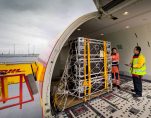
DHL Express heavy weight cargo
The heavyweight market has been gaining traction in recent years. Industry research shows that an estimated 10.2 million tons of heavyweight shipments¹ are being moved in Asia Pacific (excluding China) each year. Many companies have spent years reducing inventory and improving efficiency across their supply chains. However, companies today operate in a far less predictable environment marked by trade disruptions, manufacturing bottlenecks, and fluctuating demand. The rise in heavyweight shipment volumes mirrors a shift in how businesses are managing supply chain risks, as they increasingly turn to express logistics not only to handle sudden shifts in demand but also to have greater agility, certainty and control over timelines.
“Behind the numbers is a simple reality: Businesses are shipping heavy when timing matters and when it’s critical,” said Ken Lee, CEO for Asia Pacific, DHL Express. “As companies continue to navigate a complex landscape where uncertainty has become the norm, speed and reliability have also become part of the business decision. Customers are making deliberate decisions on what they ship through our network. Our Heavy Weight Express solution helps companies avoid downtime, protect working capital and keep operations moving when supply chains don’t go exactly as planned.”
Technology, Engineering & Manufacturing, and Automotive top Asia Pacific’s heavyweight contributors
Across the region, high-value, technology-related cargo, such as computer chips and semiconductors, accounts for the largest share of DHL Express’s heavyweight segment at over 34%, driven by rapid investment in data centers to support the growing demandfor computing capacity, data storage, cloud services, as well as artificial intelligence. This has fueled demand for technology-related shipments, from semiconductors and servers to cooling systems and electrical infrastructure. However, a data center crunch is creating supply chain bottlenecks as demand for semiconductor manufacturing outpaces infrastructure supply. As a result, express logistics services are urgently activated to move critical components quickly and efficiently, helping to keep projects on schedule.
The other main contributors to the heavyweight segment are businesses in engineering & manufacturing as well as the automotive industry.
Automotive is the fastest growing sector
HWX service is also gaining strong momentum in the automotive sector, with its shipment weight increasing at a rate of nearly 20%. As the leading export region for this sector, Asia Pacific is also seeing a surge in Asian automotive brands, particularly Electric Vehicle (EV) manufacturers from China and Southeast Asia. As these brands expand into new markets, they are also moving vehicle parts sourced from different suppliers and manufacturers across borders. This has created the appetite for expedited shipments to keep production running. In this sector, a single late or failed shipment could instantly cost automotive manufacturers millions of dollars.
Asia affirms role as a vital trading hub
In Asia Pacific (excluding China), the fastest growth in heavyweight shipments for the first seven months of the year came from India, the Philippines, Vietnam, Japan and Hong Kong. These markets reflect two of the region’s strongest trade corridors – Southeast Asia’s firm role as a manufacturing and sourcing base, and North Asia’s strategic position as a hub for high-value technology, industrial and automotive supply chains. Additionally, India, the Philippines, and Vietnam are also recognized as key markets of the geographic tailwinds initiative.
“As companies continue to manufacture out of Asia, balancing project timelines and building more resilient and agile supply chains become a priority. To maintain production continuity and ensure certainty, they are consolidating goods into heavier shipments. These non-negotiable conditions are also “urgency drivers” that put us at an advantage to help deliver our customers’ shipments at a definite time,” said Ken Lee, CEO for Asia Pacific, DHL Express.
In recent years, DHL Express has added several new infrastructures across the region, including an expanded global hub in Hong Kong, facilities near Cebu and Manila airports, gateway at Christchurch airport, Hanoi gateway near Noi Bai airport, as well as Delhi gateway, culminating in approximately 1,000 facilities in the Asia Pacific region. This is further supported by a robust aviation network of around 810 flights per day.
The issuer is solely responsible for the content of this announcement.
DHL – The logistics company for the world
DHL is the leading global brand in the logistics industry. Our DHL divisions offer an unrivaled portfolio of logistics services ranging from national and international parcel delivery, e-commerce shipping and fulfillment solutions, international express, road, air and ocean transport to industrial supply chain management. With approximately 389,000 employees in more than 220 countries and territories worldwide, DHL connects people and businesses securely and reliably, enabling global sustainable trade flows. With specialized solutions for growth markets and industries including technology, life sciences and healthcare, engineering, manufacturing & energy, auto-mobility and retail, DHL is decisively positioned as “The logistics company for the world”.
DHL is part of DHL Group. The Group generated revenues of approximately 82.9 billion euros in 2025. With sustainable business practices and a commitment to society and the environment, the Group makes a positive contribution to the world. DHL Group aims to achieve net-zero emissions logistics by 2050.
Arabian Post Staff -Dubai Emirates is expanding its A350 deployment and upgraded cabin footprint as strong winter bookings support additional capacity across its network following a better-than-expected summer. The Dubai-based airline said it had taken delivery of 18 aircraft since January, comprising 11 Airbus A350s and seven Boeing 777 freighters, with another six A350s scheduled to arrive before the end of December. Its A350s currently serve 30 […]
Arabian Post Staff -Dubai Saudi Arabia has identified about 114 million tonnes of mineralised ore containing rare earth elements and promising uranium concentrations at the Jabal Sayid project in Madinah, Energy Minister Prince Abdulaziz bin Salman has announced. Prince Abdulaziz disclosed the estimate on Monday during the 70th General Conference of the International Atomic Energy Agency in Vienna, placing the find at the centre of Riyadh’s drive […]
Zurich Airport has moved two autonomous electric shuttle buses to Level 4 operation without a driver or safety monitor on board, shifting human oversight entirely to a remote control centre after an 18-month testing programme. The airport said the first fully automated runs began in early September, marking the latest stage of a pilot launched with autonomous-driving technology company WeRide in March 2025. The two Robobus vehicles […]
Arabian Post Staff -Dubai New York-based software company Clay has raised $115 million in a Series D funding round led by Wellington Management, lifting its valuation to $7.1 billion as demand grows for artificial intelligence tools used by sales and marketing teams. The financing, announced on September 9, included participation from Sequoia Capital, StepStone Group, Andreessen Horowitz’s Perennial fund, Meritech Capital, DST Global, CapitalG, BoxGroup, Boldstart, Bloomberg […]
By R Suryamurthy The 2026 New Delhi Declaration arrives at a revealing moment for BRICS: two decades after the grouping emerged as a shorthand for the rising economic weight of the Global South, it is no longer merely demanding a larger seat at the table of global governance, but is beginning to construct the institutional […]
China’s state security minister Chen Yixin has warned that artificial intelligence poses six major risks to national security, ranging from political manipulation and cyberattacks to data leakage, social disruption and military transformation. Chen, who heads the Ministry of State Security, set out the risks in an article published on Sunday by China Cyberspace magazine, arguing that Beijing must build a stronger system for monitoring, regulating and responding […]










 www.cushmanwakefield.com.hk
 www.linkedin.com/company/cushman-&-wakefield-greater-china