News related to
Electric

Arabian Post Staff -Dubai Saudi Arabian Refineries Company has moved to deepen its clean energy ambitions by signing a non-binding memorandum of understanding with China’s Ally Hydrogen Energy to develop a green ammonia production plant in Jazan Industrial City. The agreement, signed on 15 May, places Jazan at the centre of another proposed low-carbon fuel project as Saudi Arabia seeks to build industrial capacity around hydrogen, ammonia […]

Arabian Post Staff -Dubai Tehran’s state broadcasting apparatus has drawn Gulf attention after a presenter fired at a target bearing the UAE flag during a televised firearms training segment, an on-air act that added a provocative media dimension to sharpening tensions between Iran and Abu Dhabi. The segment, aired on the state-run Ofogh TV network, showed a firearms instructor guiding the presenter through the handling of a […]

Arabian Post Staff -Dubai Abu Dhabi authorities contained a fire at an external electrical generator outside the inner perimeter of the Barakah Nuclear Power Plant in Al Dhafra after a drone-linked incident, with officials reporting no injuries, no radiological impact and no disruption to essential nuclear safety systems. The incident drew swift attention because Barakah is the Arab world’s first commercial nuclear power station and a central […]

Sixty-eight passengers were evacuated safely after a fire broke out in an air-conditioned coach of the Thiruvananthapuram–Hazrat Nizamuddin Rajdhani Express in Madhya Pradesh’s Ratlam district early on Sunday, triggering emergency action on one of the country’s busiest long-distance rail corridors.

No passenger casualties or injuries were reported after railway staff stopped the Delhi-bound train and moved passengers out of coach B-1, where flames and smoke were detected during the journey through the Kota division. The incident involved train number 12431, a premium Rajdhani service linking Kerala’s capital with Hazrat Nizamuddin in Delhi.

Railway officials said the fire was reported at about 5.15am while the train was travelling between Luni Richha and Vikramgarh Alot stations, a section falling under West Central Railway’s Kota division. The affected coach was carrying 68 passengers, all of whom were removed within minutes. Staff then separated the coach from the rest of the rake as a precaution while fire and emergency teams were alerted.

Passengers from the damaged coach were accommodated in other coaches so the train could continue its journey towards Kota. Railway authorities planned to attach an additional coach at Kota to restore seating capacity and reduce disruption for those travelling to the national capital. The train had left Thiruvananthapuram on Friday and was scheduled to arrive at Hazrat Nizamuddin on Sunday afternoon.

Initial response focused on preventing the blaze from spreading to adjoining coaches. The fire was brought under control after the affected portion of the train was isolated, while railway protection personnel, operating staff, divisional officials and local emergency teams coordinated evacuation and safety checks. The cause of the fire had not been established by Sunday afternoon, and a technical inquiry was ordered.

Movement on the Mumbai–Delhi route was affected as the emergency response unfolded. Several trains were delayed or regulated because the incident occurred on a busy trunk section used by long-distance passenger and freight traffic. Railway control rooms worked to restore operations while ensuring that the damaged coach, track section and overhead systems were inspected before normal movement resumed.

A separate emergency vehicle carrying railway personnel to the site met with an accident while responding to the incident, injuring several staff members. Their vehicle reportedly overturned while rushing towards the affected section. The injuries added another layer of concern to an incident that otherwise saw passengers escape harm.

Coach fires on long-distance trains draw close scrutiny because air-conditioned coaches have sealed windows, electrical fittings, bedding, luggage spaces and pantry-linked movement that can complicate evacuation. Rajdhani trains are among the highest-priority services in the passenger network, and safety drills require rapid coordination between onboard staff, train controllers, station teams and local responders.

Sunday’s evacuation appeared to have benefited from the early detection of smoke and quick action by train staff. Detaching the affected coach helped limit damage and prevented panic from escalating. Passengers were moved away from the coach before the fire could threaten adjoining sections, while the remaining rake was assessed before arrangements were made for onward travel.

The incident is expected to renew attention on electrical audits, onboard fire-detection systems, maintenance checks and emergency readiness on premium services. Rail safety officials have pushed for tighter inspection of wiring, battery systems, air-conditioning equipment and onboard power units after earlier fire incidents across the passenger network. Long-distance trains pose particular risks because they operate overnight, carry sleeping passengers and often pass through remote stretches where emergency access can be slower.

Washington’s defence establishment is confronting a sharper supply-chain warning after President Donald Trump left Beijing claiming major trade progress, while China kept key controls on materials vital to US weapons, aircraft, satellites and advanced electronics. Trump ended his two-day visit by declaring that he had reached “fantastic trade deals” with President Xi Jinping, saying the understandings would benefit both economies. The commercial package pointed to tariff discussions, […]

China’s market regulator has set 34 priorities for 2026 aimed at strengthening private sector growth, placing fair competition, legal safeguards and more efficient supervision at the centre of Beijing’s effort to restore business confidence.

State Administration for Market Regulation said the agenda would focus on removing market barriers, promoting a unified national market, improving law enforcement practices and curbing destructive price wars that have weighed on corporate margins. The measures form part of a broader policy push to reassure entrepreneurs after years of regulatory tightening, weak domestic demand, a property downturn and intense competition across technology, retail and manufacturing.

Private firms remain central to China’s economic model, accounting for more than half of tax revenue, over 60 per cent of economic output, about 70 per cent of technological innovation, more than 80 per cent of urban employment and the bulk of registered enterprises. Beijing’s latest move signals that policymakers see the sector as essential to stabilising growth, sustaining jobs and advancing innovation under the 2026–2030 development blueprint.

The 34-point programme places particular emphasis on equal treatment for private and state-backed enterprises. Regulators are expected to expand checks on local protectionism, discriminatory procurement rules, hidden entry restrictions and administrative practices that prevent companies from competing across provincial borders. The objective is to make China’s internal market function more like a single national marketplace rather than a patchwork of local systems shaped by regional preferences.

Fair competition has become a sharper policy concern as price wars spread across food delivery, electric vehicles, e-commerce and consumer services. Authorities have described extreme discounting and subsidy battles as “involution-style” competition, a term used in China to describe intense rivalry that consumes resources without producing sustainable gains. Regulators are now seeking to distinguish legitimate competition from practices that damage suppliers, workers and smaller rivals.

The plan also strengthens the legal dimension of private sector support. It follows the Private Economy Promotion Law, which came into force in May 2025 and formally placed protections for private business within the legal system. That law sought to address long-standing complaints over unequal access to finance, arbitrary penalties, delayed government payments, inconsistent enforcement and barriers to participation in infrastructure and public procurement.

Beijing is under pressure to show that those commitments can be enforced beyond policy slogans. Private entrepreneurs have frequently complained that local officials apply rules unevenly, with smaller companies facing heavier compliance burdens than larger state-linked groups. The latest regulatory agenda calls for more standardised enforcement, fewer unnecessary inspections and better coordination among agencies, reducing the risk that overlapping regulatory demands disrupt business operations.

The emphasis on efficient regulation also reflects a change in tone after the sweeping crackdowns that reshaped China’s platform economy from 2020 onwards. Internet groups, education providers, fintech companies and delivery platforms faced tighter controls, large fines and abrupt policy shifts, weakening investor sentiment. Although authorities continue to insist that capital must operate within defined boundaries, the current message is more focused on predictability, confidence and growth.

Financial support remains another pillar of the wider policy framework. China has encouraged banks and financial institutions to increase lending to private firms, particularly in advanced manufacturing, artificial intelligence, green technology, biotechnology and other strategic sectors. Large banks have announced multi-year financing pledges for the private economy, while policymakers have called for broader fundraising channels and lower financing costs for smaller enterprises.

The regulatory agenda fits into China’s 2026 economic strategy, which prioritises stable growth, stronger domestic demand, technological self-reliance and risk control. The government has set a growth target range of 4.5 to 5 per cent for 2026, lower than earlier expansion rates but still demanding at a time of weak household confidence, subdued inflation and pressure from external trade frictions.

Private firms are especially important in technology and advanced manufacturing, where China is seeking to reduce reliance on foreign supply chains. Companies such as Huawei, BYD, CATL, Tencent and Alibaba remain closely watched as indicators of the relationship between the state and enterprise sector. Beijing’s message to these firms is twofold: innovation is encouraged, but expansion must align with national priorities and regulatory boundaries.

Foreign investors will watch whether the new priorities translate into measurable changes. China has pledged to widen market access and improve the business environment, but concerns remain over data rules, cross-border flows, procurement access, security reviews and policy transparency. For multinational companies and domestic entrepreneurs alike, the credibility of the 34-point programme will depend on implementation by local authorities as much as central-level messaging.

The market regulator’s plan also gives Beijing a mechanism to address deflationary pressures caused by excessive competition. Food delivery platforms, online retailers and electric vehicle producers have all faced pressure from aggressive pricing campaigns. While consumers may benefit from lower prices, sustained discount battles can weaken profitability, reduce wages across supply chains and discourage investment in quality improvements.

Sri Lanka has imposed a temporary 50 per cent surcharge on customs import duty for imported vehicles, aiming to slow demand for foreign exchange as higher oil prices and Middle East tensions put pressure on the rupee.

The measure, effective from 16 May for three months, applies to selected motor vehicles including passenger cars, jeeps, vans, buses, goods transport vehicles, ambulances, electric vehicles and hybrids. Vehicles for which letters of credit were opened on or before 15 May are exempt, limiting the immediate disruption for importers who had already committed payments before the order took effect.

The surcharge is levied on the applicable customs import duty, rather than directly on the total value of a vehicle. For many private vehicles, the customs import duty had stood at 30 per cent, meaning the added surcharge raises that component to 45 per cent. Other taxes and levies, including excise duties, value-added tax and sector-specific charges, mean the final tax burden on imported cars can be far higher than the headline customs duty figure.

Deputy Finance Minister Anil Jayantha Fernando said the step was designed to encourage buyers to delay vehicle imports rather than halt the trade outright. He said the government was responding to a sharp rise in import expenditure and added pressure on foreign reserves. “Given the current pressure on foreign exchange, we want people to delay their imports by three months,” he told reporters in Colombo.

The decision marks a swift policy adjustment by President Anura Kumara Dissanayake’s administration as Sri Lanka attempts to balance consumer demand, revenue needs and currency stability after years of severe economic strain. Vehicle imports were heavily restricted after the island’s 2022 financial collapse, when the country ran short of foreign exchange and struggled to pay for fuel, food and medicines. The gradual reopening of imports was seen as a sign of economic normalisation, but it has also revived concerns about the pressure placed on the balance of payments.

Sri Lanka remains dependent on imported fuel, leaving the economy exposed to swings in global crude prices. Tensions across the Middle East have pushed energy costs higher, forcing authorities to reassess import priorities. Fuel prices have already climbed sharply this year, adding to the cost of transport, electricity generation and logistics. The government is trying to prevent higher oil bills from draining reserves at a time when the country remains under a $2.9 billion International Monetary Fund programme.

The rupee has weakened against the US dollar this year, with official figures showing a fall of about 4.5 per cent since January. Central Bank Governor Nandalal Weerasinghe has warned lawmakers that the currency could remain under pressure unless global oil prices ease or the country reduces energy imports. That warning sharpened the policy case for curbing non-essential import demand, particularly in high-value categories such as vehicles.

Vehicle importers and consumers are likely to face a tougher market over the next quarter. The surcharge may delay purchases, reduce showroom availability and raise prices for buyers who choose to proceed. Importers with confirmed letters of credit before the cut-off date may have a temporary advantage, while new buyers could defer orders until the surcharge expires, provided the government does not extend it.

The policy also carries revenue implications. Vehicle imports are a lucrative source of tax income, and Sri Lanka has relied on trade-related levies to support public finances during its recovery. A surcharge may increase tax collected on each imported vehicle, but lower import volumes could offset that gain if buyers hold back. The government’s calculation appears to prioritise currency defence and reserve management over short-term market expansion.

Advertisements

Arabian Post Staff -Dubai Money managers have lifted bullish copper wagers to their highest level in five months, reinforcing a powerful rally that has pushed New York futures to record territory and sharpened debate over whether the market is pricing a durable supply squeeze or a crowded speculative trade. Hedge funds and other large speculators raised their net-long position in Comex copper by 16 per cent to […]

Emirates Global Aluminium is pursuing a stake in Sohar Aluminium as the Gulf’s largest aluminium producer seeks a wider regional footprint and greater protection against shipping and production shocks caused by the Iran war. Talks over the Omani smelter have reached an advanced stage, with discussions centred on a possible acquisition of stakes held by existing shareholders. Sohar Aluminium is owned by OQ, Abu Dhabi National Energy […]

HANOI, VIETNAM – Media OutReach Newswire – 15 May 2026 – As part of the VinFast Global Business Conference held from May 4 to May 10, 2026, VinFast announced the signing of Memoranda of Understanding (MOUs) with 29 aftersales partners at the 2026 Global Business Conference. Organized by VinFast, the event marked the first time more than 200 investors and partners who have accompanied and will accompany VinFast across North America, Europe, the Middle East, India, Indonesia, the Philippines, and Kazakhstan have gathered together, representing another milestone in the company’s strategy to expand its global service network.

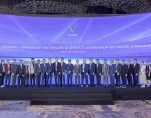
VinFast leaders and 29 after-sales partners at the Memorandum of Understanding signing ceremony held as part of the VinFast Global Business Conference.

Under the MOUs, international partners are expected to establish EV service workshops that meet VinFast’s global standards in their respective markets. VinFast will ensure uniform, high-quality service through globally-standardized technician training and certification programs, consistent operating procedures and quality control systems, as well as a parts supply network targeting delivery of common spare parts within 24 hours in key markets.

The new agreements are part of VinFast’s long-term strategy to develop a comprehensive EV ecosystem aligned with its international standards, covering aftersales services, charging infrastructure, and customer support. This expansion is expected to further accelerate the transition to electric mobility while ensuring VinFast customers receive support throughout the entire product lifecycle.

VinFast’s international strategy is built on the operational foundation and aftersales capabilities it has already proven in Vietnam. By the end of 2025, VinFast had developed nearly 400 service workshops nationwide, bringing its total global network to nearly 800 facilities.

Building on this foundation, VinFast aims to expand to more than 1,100 service workshops globally in 2026, spanning North America, Europe, the Middle East, and Asia. The network will be deployed through multiple models, including dealerships serving retail customers, fleet and transportation business clients, and third-party local service workshop partners.

At the same time, VinFast is implementing a range of customer support policies, including repair time commitments in Vietnam, replacement vehicle support in international markets, as well as battery inspection, software updates, and technical support throughout the ownership experience.

As part of the conference, international partners also visited VinFast’s manufacturing complex and the broader Vingroup ecosystem to gain deeper insights into VinFast’s production capabilities, operational scale, and global growth strategy.

Mr. Bui Viet Hung, Deputy CEO of Global Aftersales of VinFast, said: “Our goal is not simply to expand the network, but to build a customer-centric aftersales ecosystem that delivers an outstanding experience on a global scale. Through partnerships with experienced local operators and the application of VinFast’s global standards, we aim to provide aftersales services that are exceptional, responsive, and reliable. We also aspire to bring Vietnam’s five-star service culture and spirit of dedication to the world, creating a unique experience for international customers. That is VinFast’s long-term commitment to the transition to electric mobility.”

In addition to expanding its aftersales operations, VinFast continues to develop an integrated EV ecosystem that includes products, services, and charging infrastructure through partnerships with strategic partners such as V-Green and local charging infrastructure operators. Through this partner network, VinFast aims to develop a system of more than 1.5 million charging ports globally, helping expand access to charging infrastructure and deliver a seamless, convenient EV ownership experience for customers in international markets.

Hashtag: #VinFast

The issuer is solely responsible for the content of this announcement.

About VinFast

VinFast (NASDAQ: VFS), a subsidiary of Vingroup JSC, one of Vietnam’s largest conglomerates, is a pure-play electric vehicle manufacturer with the mission of making electric mobility more accessible to everyone. VinFast’s current product portfolio includes a wide range of electric SUVs, electric motorcycles, electric bicycles, and electric buses.

VinFast is entering its next phase of growth by rapidly expanding its global distribution and dealer network while strengthening manufacturing capabilities, with a focus on key markets in North America, Europe, the Middle East, and Asia.

Learn more at:

Cape Town to host continent’s largest energy gathering as focus shifts from aspiration to execution

CAPE TOWN, SOUTH AFRICA – EQS Newswire – 14 May 2026 – The Africa Energy Forum (https://apo-opa.co/4ugdl9y) returns from 16-19 June 2026, bringing together the companies, investors and governments driving Africa’s move from energy access to industrial-scale infrastructure.

The companies gathering in Cape Town are deploying capital into transmission infrastructure, building mining corridors that will define trade routes for decades, financing baseload capacity that can power heavy industry, and developing renewable projects that will anchor Africa’s manufacturing future. Forum Sponsor Sun Africa leads a group of sponsors whose projects and investments are already shaping how the continent builds its industrial base.

“I am looking forward to joining the conversation in Cape Town this June. What excites me about this year’s Summit is the calibre of capital and commitment in the room — companies that are financing baseload capacity for heavy industry, building mining corridors that will define trade routes for decades, and deploying renewable projects that will anchor Africa’s manufacturing future. That is the kind of long-term, structural thinking that Sun Africa has always believed this continent deserves, and it is exactly the conversation we need to be having.” Sun Africa, CEO, Adam Cortese.

ACWA Power, Infinity Power and AMEA Power are building gigawatt-scale renewable capacity across the continent. Globeleq and TotalEnergies are financing and operating projects that demonstrate how private capital can deliver industrial-grade infrastructure. British International Investment and IFC are structuring deals that blend concessional and commercial finance to unlock sovereign wealth fund participation. Nedbank CIB is providing the sustainable finance structures that allow projects to reach financial close.

“As Africa moves from aspiration to execution, this year’s agenda focuses on the hardware of industrialisation – the steel, concrete and transmission lines that will define Africa’s industrial future,” said Simon Gosling, Managing Director of EnergyNet.

The companies driving this shift face common challenges: structuring bankable projects where perceived risk exceeds actual performance, moving critical minerals from extraction to processing, building transmission corridors that serve both mines and cities, and deploying patient capital into long-term infrastructure.

Cape Town provides the right setting. South Africa is navigating private transmission investment, energy trading, mining-driven renewable deployment, and tensions between industrial growth and climate commitments – challenges the rest of the continent will face. The city’s reforms offer a live case study.

The agenda reflects where these companies are focusing their resources. Critical minerals receive a two-day dedicated stream exploring downstream processing, transport corridors and value capture from reserves representing over 30% of global supply. Sessions examine the Lobito Corridor, Liberty Corridor and Simandou infrastructure as models for large-scale project finance.

Transmission and baseload themes address grid expansion, private investment structures and 24/7 availability for data centres and manufacturing. Energy trading sessions explore how sponsors are transforming project finance through creditworthy off-take, whole technology discussions will cover AI for revenue protection, data centre supply chains and CBAM compliance.

More broadly, the forum structure supports deal-making. The speaker programme includes closed-door roundtables bringing together DFIs, sovereign wealth funds, Middle East ministers, utilities, regulators and the private sector for frank discussions on capital deployment.

This will bring together senior public and private sector leadership, with notable speakers including H.E. Honourable Dr. Kgosientsho Ramokgopa, Minister of Electricity & Energy, South Africa; H.E. Honourable Samantha Graham-Marè, Deputy Minister of Electricity & Energy, South Africa; Dan Marokane, GCE, Eskom, South Africa; H.E. Honourable Jeremiah Kpan Koung, Vice President, Liberia; H.E. Honourable Dr. Kgosientsho Ramokgopa, Minister of Electricity & Energy, South Africa; H.E. Honourable Lerato Mataboge, African Union Commissioner for Infrastructure and Energy; Precious Edward, Head, IPP Office, South Africa; Obaïd Amrane, CEO, Ithmar Capital, Morocco, Chair, Africa Sovereign Investors Forum (ASIF) & Chair, International Forum of Sovereign Wealth Funds (IFSWF); Mike Teke, Group CEO, Seriti Resources; and Jonathan Hoffman, CEO, Globeleq.

Regional fireside chats, meanwhile, will spotlight opportunities across North, East, South and West Africa. Day One features ministerial sessions with participation from Sierra Leone’s Ministry of Energy and The Gambia’s Ministry of Environment, Climate Change & Natural Resources.

Additional sponsors driving the programme include AKSA as Exhibitor Sponsor, with lead sponsor support from Synergy Consulting, ATIDI, Engie, European Investment Bank, Standard Bank, Red Rocket, USP&E Global and Sungrow.

On the final day, YES! (Youth Energy Summit) takes place as part of the aef stream under the theme ‘Empowering Today’s Entrepreneurs – Building Tomorrow’s Industrialists’. Here, impact leaders will present scalable initiatives creating entrepreneurship opportunities in Africa’s energy sector, while industry partners lead interactive workshops building practical skills for 600 young people in attendance.

Distributed by APO Group on behalf of EnergyNet Ltd..

Download Image: https://apo-opa.co/4do0YB1

Forpartnerships, please contact:
[email protected]

The issuer is solely responsible for the content of this announcement.

EVelution Energy has moved closer to anchoring a domestic US cobalt supply chain after signing a memorandum of understanding with Democratic Republic of Congo’s state cobalt buyer and Trafigura for long-term shipments of cobalt hydroxide to its planned Arizona refinery. The agreement brings together EVelution Energy, Entreprise Générale du Cobalt and Trafigura in a framework that could channel Congolese cobalt to the United States for processing into […]

BYD is exploring talks with Stellantis and other European carmakers over underused plants, marking a potentially significant step in the Chinese group’s push to localise electric vehicle production in one of the world’s most contested auto markets. The discussions, disclosed by BYD executive vice-president Stella Li, include possible deals for factories in countries such as Italy, where established manufacturers are grappling with weak demand, high production costs […]

Mubadala Investment Company has committed $325 million to Ørsted’s Hornsea 3 offshore wind project, deepening Abu Dhabi’s exposure to large-scale renewable infrastructure as institutional capital moves into one of Britain’s most important clean-energy developments. The investment places Mubadala alongside a consortium led by funds managed by Apollo Global Management, with Universities Superannuation Scheme and La Caisse also participating. The consortium is backing a 50 per cent stake […]

Arabian Post Staff -Dubai Saudi Arabia’s Knowledge Economic City narrowed its first-quarter net loss as higher revenue and stronger gross profit helped offset continuing finance and development costs at its flagship Madinah project. The Tadawul-listed developer reported a net loss attributable to shareholders of SAR15.43 million for the three months ended March 31, compared with SAR17.26 million a year earlier, a reduction of 10.6 per cent. The […]

Washington has widened the corporate stakes around President Donald Trump’s China visit by inviting Elon Musk and Apple chief executive Tim Cook to join a business delegation accompanying him to Beijing for talks with President Xi Jinping. The trip, scheduled around high-level meetings on May 14 and 15, is being shaped as a test of whether the world’s two largest economies can stabilise a relationship strained by […]

  • Innomotics wins several orders to provide motor and drive technology for eLNG projects, totaling a volume in the higher double-digit million EUR range
  • Innomotics advances electrification of LNG production with eLNG solutions based on electric drive systems
  • Significant operational, environmental, and financial benefits compared to conventional turbine-based LNG plants
  • Enables decarbonization and supports global transition to sustainable energy systems

NUREMBERG, GERMANY – Newsaktuell – 11 May 2026 – Innomotics, a globally leading supplier of electric motor and large drive systems, has won several major orders for electrified LNG projects in Europe, Canada, Middle East and Australia. The total volume for all orders is in the higher double-digit million EUR range.

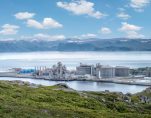
Innomotics powers the world's first all-electric eLNG plant in Hammerfest, Norway, for 19 years / Innomotics
Innomotics powers the world’s first all-electric eLNG plant in Hammerfest, Norway, for 19 years / Innomotics

Innomotics is driving the transformation of LNG production with its innovative eLNG solutions. By replacing conventional gas turbine-based liquefaction processes with electrified drive systems, LNG operators can significantly increase efficiency, reduce emissions, and lower operating costs.

As global demand for cleaner energy continues to grow, LNG remains a key component of the energy mix. However, traditional LNG production is energy-intensive and associated with high greenhouse gas emissions. eLNG addresses these challenges by using electricity – including renewable energy sources such as wind, solar, and hydropower – to liquefy natural gas, enabling a more sustainable and efficient production process.

The electrification of LNG plants is a key step in reducing reliance on fossil fuels and achieving decarbonization targets. Electric drive systems from Innomotics offer system efficiencies of up to 95%, significantly exceeding the performance of conventional gas turbines. At the same time, operators benefit from reduced maintenance requirements, with systems capable of running up to five years without scheduled shutdowns, and increased plant availability of up to 99.9%.

By integrating high-voltage motors and variable speed drives across the entire LNG value chain – from compression and refrigeration to storage and gas treatment – Innomotics enables a fully electrified production process. When powered by renewable energy, eLNG solutions can eliminate direct CO₂ emissions and reduce annual emissions by up to 500,000 tons, supporting operators in meeting regulatory requirements and sustainability goals.

“Electrification is the foundation for a sustainable future of LNG production. With our eLNG solutions, we enable operators to significantly improve efficiency, reduce emissions, and enhance reliability across the entire process. This not only strengthens competitiveness but also accelerates the transition towards net-zero operations,” says Michael Reichle, CEO of Innomotics.

He adds, “Operators are under increasing pressure to balance sustainability with profitability. Our electric drive systems deliver a compelling business case by lowering lifecycle costs, minimizing downtime, and ensuring maximum operational performance in demanding LNG environments.”

Recently awarded eLNG Projects

Pioneering eLNG success for Hammerfest in Norway:

Hammerfest is home to the world’s first all-electric LNG plant, operational since 2007. Equipped with two 65 MW refrigeration compressor drives, the facility has achieved over 15 years of successful operation with minimal maintenance and an exceptional availability rate of 99.88%. This project set a new standard for reliability and efficiency in the LNG sector, proving the long-term value of electric drive systems in demanding environments

Innovative floating LNG project in Canada:

This project represents the world’s first floating all-electric LNG facility. With four complete drive train systems of 35 MW each powering the main refrigeration compressors, the plant is designed to export three million tons of eLNG per year. The project demonstrates the scalability and flexibility of Innomotics technology, delivering high performance and low emissions in a unique offshore setting

Setting the global benchmark for an LNG plant in Qatar:

This LNG plant features multiple 60 MW and 45 MW trains, each with three refrigeration compressors. As the world’s LNG market leader, Qatar relies on Innomotics systems to deliver maximum availability and operational excellence. This large-scale deployment showcases our ability to support complex, high-capacity facilities with proven reliability and efficiency.

Lowest emissions through renewables at an LNG project in Canada:

The LNG plant is powered by renewable hydropower and features 50 MW LCI eLNG trains. The facility is designed to produce 2.1 million tons of LNG per year with the lowest emissions in the global LNG export industry. This reference highlights the environmental benefits of integrating electric drive technology with renewable energy sources.

Driving sustainability with carbon capture at a CCUS LNG project in Australia:

This project utilizes multiple medium voltage motors and drive systems totalling 297 MW for LNG production, combined with a carbon capture project. This installation demonstrates the compatibility of Innomotics solutions with advanced sustainability initiatives, enabling operators to reduce their carbon footprint while maintaining process efficiency

Additional eLNG materials:
Whitepaper on eLNG
Expert Video concerning electrified LNG
Reference projects and success stories
3D visualization in our virtual world: Innomotics Electrosphere

For more information, visit https://www.innomotics.com/hub/en/applications/electrified-lng

Follow us on LinkedIn: www.linkedin.com/company/innomotics

Hashtag: #Innomotics

The issuer is solely responsible for the content of this announcement.

Arabian Post Staff -Dubai Al-Futtaim Engineering has completed a major mechanical, electrical and plumbing package at Dubai Exhibition Centre, strengthening the venue’s readiness for larger global exhibitions at Expo City Dubai. The company, part of Al-Futtaim Contracting, delivered the MEP scope for the Dubai Exhibition Centre within a nine-month programme, taking the project from site access to final commissioning and operational readiness. The development has secured Building […]

Porsche AG will shut down its e-bike drive-system subsidiary as part of a wider restructuring that underscores a sharper turn back towards its core sports-car business after weaker sales, tariff pressure and a costly recalibration of its electrification plans. The decision affects Porsche eBike Performance GmbH, the unit set up to develop high-performance electric bicycle drive systems for global markets, and forms part of a package that […]

Fake DDR5 memory modules fitted with plastic dummy chips have surfaced in online hardware checks, raising fresh concern across PC component markets already strained by tight memory supply and rising prices. The counterfeit modules appear at first glance to resemble legitimate DDR5 sticks, carrying printed labels and layouts that imitate recognised brands. Closer inspection by hardware testers showed that the supposed DRAM packages were not functional silicon […]

Cinema star C. Joseph Vijay took office as Tamil Nadu Chief Minister on Sunday after his Tamilaga Vettri Kazhagam secured outside support from smaller parties, ending decades of dominance by the DMK and AIADMK in one of the country’s most industrialised states.

Vijay was sworn in by Governor Rajendra Vishwanath Arlekar in Chennai after TVK, which emerged as the single largest party in the 234-member assembly, crossed the majority threshold with backing from allies and smaller groups. The result marks a dramatic transition for a politician who launched his party only two years ago and built his campaign around welfare promises, anti-corruption messaging, youth mobilisation and a direct appeal to voters frustrated with entrenched Dravidian party structures.

TVK won 108 seats, short of the 118 needed for a simple majority, but support from Congress, Left parties, Viduthalai Chiruthaigal Katchi and the Indian Union Muslim League gave Vijay the numbers to stake claim to power. The Bharatiya Janata Party said it would neither support nor participate in government formation, leaving the new administration dependent on a coalition arrangement that will test Vijay’s ability to move from mass politics to legislative management.

The swearing-in has wider economic significance because Tamil Nadu is a key manufacturing base for automobiles, electronics, textiles, renewable energy components and iPhone assembly. The state hosts major production networks linked to Apple suppliers, including Foxconn near Chennai, Tata Electronics in Hosur and facilities connected with Pegatron’s operations. Its industrial corridors around Chennai, Sriperumbudur, Hosur, Coimbatore and Tiruchirappalli have made it central to efforts to expand high-value manufacturing supply chains outside China.

Vijay’s first orders signalled an effort to combine welfare politics with a law-and-order pitch. His early decisions included 200 units of free electricity for households, a dedicated anti-drug task force and a separate mechanism for women’s safety. He also moved to seek a white paper on the outgoing government’s finances, a step likely to shape the first phase of political confrontation with the DMK.

The new Chief Minister used his first speech to frame the victory as a social justice mandate, telling supporters that his government would represent ordinary people rather than political dynasties. His language echoed themes that powered TVK’s campaign: dignity for poorer households, jobs for young voters, clean administration and a break from the established rivalry between the DMK and AIADMK.

Tamil Nadu’s business community will be watching how the new government handles investment approvals, land acquisition, labour relations, power subsidies and infrastructure spending. The state has attracted large investments in electronics and electric vehicles while retaining a strong automobile base built over several decades. Any uncertainty in policy execution could affect expansion plans, but a stable administration could strengthen Tamil Nadu’s position as a production hub at a time when global manufacturers are diversifying supply chains.

Vijay’s cabinet includes a mix of TVK loyalists and figures brought in to manage administration, political outreach and coalition discipline. N. Anand, Aadhav Arjuna and other senior party functionaries are expected to play central roles in converting a campaign-driven organisation into a governing machine. The inclusion of experienced political hands will be closely scrutinised because TVK lacks the administrative depth of the DMK and AIADMK.

The DMK, led by M. K. Stalin, now faces a sharp reversal after years in office, while the AIADMK’s weakened position raises questions about the future of the opposition space. Vijay’s rise has disrupted the familiar structure of Tamil Nadu politics, where cinema and politics have long intersected but power has remained largely within parties rooted in the Dravidian movement. His victory shows that celebrity appeal, when tied to welfare messaging and anti-incumbency sentiment, can still reshape electoral arithmetic.

Coalition pressures may emerge quickly. Parties extending support to TVK will expect policy consultation, constituency-level influence and space in governance decisions. Welfare commitments, including subsidised power, will also place pressure on state finances unless matched by revenue growth and investment-led job creation.

As Gulf markets accelerate toward smart and sustainable mobility, VinFast is expanding its EV presence in the Middle East with technology-focused products, connected vehicle capabilities, and long-term ownership solutions.

DUBAI, UAE – Media OutReach Newswire – 8 May 2026 – The Middle East is increasingly emerging as one of the next major battlegrounds for global electric vehicle brands, particularly as younger consumers across Gulf countries show rising interest in smart, technology-focused mobility solutions that combine premium specifications with advanced software and digital experiences. That shift has opened the door for newer EV manufacturers to compete alongside more established automotive brands.

Photo (4).jpg

The opportunity reflects larger market dynamics already transforming the region. Asian EV brands have rapidly expanded their footprint across Gulf countries in recent years, supported by growing demand for feature-rich vehicles, manufacturing scale advantages, and increasingly competitive pricing.

Against that backdrop, VinFast is positioning itself as part of a broader transformation reshaping the automotive landscape across the region. As governments accelerate investments in renewable energy, charging infrastructure, and smart city development, the transition toward electric mobility is gaining momentum across the Gulf.

For VinFast, the Middle East represents a strategic growth market within its wider international expansion plan. The company has been strengthening its presence with the VF 8 electric SUV, targeting consumers seeking a combination of advanced technology, premium features, and long-term ownership value.

VinFast’s broader strategy aligns closely with those changing consumer expectations. Rather than operating solely as a conventional carmaker, the company is developing a vertically integrated EV ecosystem that combines intelligent software, connected services, and smart manufacturing capabilities.

Globally, VinFast has delivered more than 400,000 vehicles and accumulated several years of real-world driving data. That foundation has supported the development of Advanced Driver Assistance Systems, connected vehicle technologies, and over-the-air software capabilities designed to continuously improve the ownership experience.

In the Middle East market, the VF 8 is positioned around technology, comfort, and practicality for regional driving conditions. The all-electric SUV offers dual-motor all-wheel drive capability with up to 402 horsepower in the Plus variant and a driving range of up to 493 km on a full charge under the NEDC standard.

Developed in collaboration with Italian design house Pininfarina, the VF 8 combines a modern exterior design with a spacious cabin focused on digital integration and passenger comfort. Available features include a 15.6-inch infotainment display, ventilated seats, a panoramic sunroof, an air ionization-equipped climate control system, and multiple ADAS technologies, including Highway Assist, Adaptive Cruise Control, Blind Spot Detection, and 360-degree Surround View Monitoring.

VinFast is also emphasizing after-sales support and ownership assurance as key differentiators in the region. The company offers a 10-year vehicle warranty or 200,000 km, alongside a 10-year unlimited-kilometer battery warranty. Customers additionally receive access to mobile services, roadside assistance, DC fast charging networks, and over-the-air software updates.

As Gulf markets continue embracing electrification and smart mobility concepts, VinFast is seeking to establish itself as a long-term player in the region’s evolving automotive sector. By combining advanced technology, connected vehicle capabilities, and scalable EV solutions, the company is reinforcing its ambition to compete in one of the world’s fastest-changing mobility markets.

Hashtag: #VinFast

The issuer is solely responsible for the content of this announcement.
Rwanda has moved to strengthen its access to the Central Corridor through a standard gauge railway link intended to connect Kigali with Tanzania’s expanding rail network and, later, the border with the Democratic Republic of Congo. The planned Rwandan section will run for about 150 kilometres from Rusumo on the Tanzanian border to Kigali, forming the final domestic stretch of the long-discussed Isaka-Kigali railway. The project is […]

Anthropic has struck a major compute agreement with SpaceX that will give its Claude artificial intelligence platform access to more than 300 megawatts of capacity and over 220,000 Nvidia graphics processors, marking one of the largest infrastructure moves yet in the race to support commercial AI demand. The deal, announced on May 6, gives Anthropic use of all compute capacity at SpaceX’s Colossus 1 data centre within […]

VISHNU RAJA
RYO YAMADA
HITORI GOTOH
IKUYO KITA
Just in:
Sun World Ba Den Mountain marks Vietnam Culture Day, welcoming Cambodian visitors over Bon Om Touk // Yicura BioMed Advances Dual Capital and Industrial Strategy: Completes First Closing of Series B Financing Led by Gobi Partners // L’OCCITANE Celebrates 50 Years Of Provençal Craftsmanship With Holiday 2026 Collection // OpenAI unveils ChatGPT Wallet for agent-led purchases // TORRAS Launches Two New iPhone Duo Cases from Its Popular Ostand Series, Addressing Foldable Phone Users’ Concerns About Difficult Stand Positioning and Scratches // Crescent Enterprises venture arm funds Oyster Therapeutics development // Lego restores BrickLink marketplace after security investigation // The Honey Trap Is The Headline, The Chip Pipeline Is The Story // Messi affair SIT finds all-round violations // US authorities dismantle North Korean cryptocurrency deception infrastructure // Electoral register gains 2.17 lakh voters // Salik posts Dhs1.045bn profit despite lower toll traffic // Hackers falsify NVIDIA GPU readings to mask cryptomining // Rooftop solar planning gaps behind power shortages // Microsoft apologises as Outlook services recover after outage // Saudi fund assets forecast to cross $400 billion // IEA forecasts fourth-quarter oil surplus as Gulf shipments rebound // Microsoft outage leaves Outlook and Teams users disconnected // Fujairah highway pile-up leaves 14 dead and 30 injured // EBANX and Eneba strengthen partnership in Latin America with 138% YoY growth in payment volume //