Arabian Post Staff -Dubai Dubai has completed its first purpose-built station for electric vertical take-off and landing air taxis near Dubai International Airport, marking a tangible step in the emirate’s bid to introduce commercial aerial taxi services before the end of 2026. The four-storey facility, presented by Sheikh Hamdan bin Mohammed bin Rashid Al Maktoum, is designed as the main operational hub for a new urban air […]
Alarm over the Strait of Hormuz is spilling far beyond the Gulf, sharpening attention on the Malacca Strait near Singapore as traders, shipowners and Asian governments weigh what a prolonged disruption in West Asian energy flows could mean for the region’s busiest maritime corridor. The immediate military confrontation is centred on Hormuz, where Iran has tightened restrictions and the United States has imposed a blockade on Iranian […]
Greenlogue/AP The UAE Ministry of Investment has signed a memorandum of understanding with China’s Jereh Group to develop an integrated clean energy and industrial platform in the Emirates, in a move that aligns industrial expansion with lower-carbon power and deeper commercial ties between Abu Dhabi and Beijing. The agreement was signed by Mohammad Abdulrahman Alhawi, Undersecretary at the Ministry of Investment, and Li Weibin, Executive President of […]
Singapore has rejected a pair of United States trade investigations that question its manufacturing profile and its enforcement against goods linked to forced labour, arguing that Washington’s claims do not fit the data and risk distorting a long-established commercial relationship between the two economies. The pushback, filed with the Office of the United States Trade Representative, has now been reinforced by Singapore’s business community, which says the city-state’s export performance is tied to demand, capital intensity and supply-chain positioning rather than state-backed excess capacity or weak labour controls.
The dispute sits inside a broader U. S. tariff reset. In March, the USTR opened Section 301 investigations into structural excess capacity in manufacturing across 16 economies, including Singapore, and launched another set of probes into whether about 60 economies have failed to prohibit or effectively enforce bans on imports made with forced labour. Reuters reported that the Trump administration moved down this route after a Supreme Court ruling in February struck at the legal basis of a large part of its earlier tariff framework, prompting Washington to search for narrower but still forceful trade instruments. USTR said comments were due by April 15, with hearings on forced labour beginning on April 28 and on overcapacity from May 5.
Singapore’s central argument is that the U. S. portrayal of the bilateral trade balance is flawed. In its submission, the Ministry of Trade and Industry said the United States has run a consistent overall trade surplus with Singapore for more than two decades. Data cited by Singapore from U. S. agencies show America posted a goods trade surplus of US$1.9 billion and a services trade surplus of US$25.1 billion with Singapore in 2024, with those surpluses rising in 2025 to US$3.6 billion and US$29.6 billion respectively. Singapore also said the U. S. recorded sectoral surpluses in semiconductors and electrical equipment as well as petrochemicals, undercutting the suggestion that exports from Singapore into the American market are being fuelled by a broad pattern of manufacturing distortion.
That matters because Washington’s overcapacity inquiry is built around the idea that some trading partners maintain large or persistent surpluses, idle production or both, allowing them to push artificially cheap goods into world markets. Singapore’s reply does not deny that the U. S. is entitled to examine trade imbalances, but it says its own industrial base does not fit that template. Officials pointed to manufacturing-space occupancy holding around 90 per cent over the past five years, which they said is consistent with advanced-economy norms and inconsistent with the claim of large underused capacity. Singapore further argued that, given land scarcity, it would run against policy and economic logic for industrial land to be left substantially idle.
On the labour side, Singapore’s response is equally direct. The government said it does not condone forced labour in supply chains and has legal and enforcement mechanisms to address such practices. Channel NewsAsia reported that Singapore told U. S. investigators it has a comprehensive domestic framework against forced labour and against the importation of goods produced through it. That is an important distinction, because the U. S. probe is not confined to labour abuses inside a country’s own factories; it is also examining whether governments adequately prevent tainted goods from entering their markets and then moving through global trade channels.
The business implications extend beyond Singapore. The U. S. investigations cover major manufacturing and export economies across Asia and Europe, and any eventual remedies could include new duties or other restrictions before temporary tariffs expire in July, according to Reuters and trade-law analyses tracking the dockets. For companies, that raises the prospect of higher compliance costs, closer supply-chain screening and a wider blending of trade policy with labour-rights enforcement. Singapore’s case is being watched because it is a high-value manufacturing and logistics hub with deep exposure to electronics, pharmaceuticals, petrochemicals and re-export trade, sectors where even modest tariff changes can alter sourcing decisions.
Politically, the row is awkward for both sides. Singapore is not only a long-standing U. S. economic partner; its free-trade agreement with Washington remains America’s only such pact with a South-east Asian trading partner. Singapore has said bilateral trade and investment support around 350,000 jobs in the United States, while its direct investment stock there reached US$71.7 billion in 2025. That does not shield it from a more aggressive U. S. trade climate, but it does give Singapore a stronger basis than many others to argue that the relationship is balanced, rules-based and mutually beneficial.
Global growth prospects have darkened after the International Monetary Fund cut its forecasts and warned that the war involving the United States, Israel and Iran has delivered a fresh energy shock just as many economies were regaining stability. The Fund’s latest assessment points to weaker output, firmer inflation and mounting fiscal pressure as oil flows through the Gulf remain disrupted and governments weigh how to shield households […]
Slate Auto, the electric vehicle start-up backed by Jeff Bezos, has raised $650 million as it pushes towards launching an affordable electric pickup priced in the mid-$20,000 range, handing the company one of the bigger funding rounds in a US EV market that has turned markedly harsher for newcomers. The company said the money will support the rollout of its first vehicles later this year, with […]
Arabian Post Staff -Dubai Saudi Arabia’s Public Investment Fund has stepped up its backing of Lucid Group with a fresh $550 million investment through affiliate Ayar Third Investment Company, extending the sovereign wealth fund’s role as the electric vehicle maker’s financial anchor at a time when Lucid is trying to stabilise cash burn, repair operational strains and broaden its commercial reach. The commitment forms part of a […]
TURIN, ITALY – Media OutReach Newswire – 14 April 2026 – The traditional automotive model is obsolete. It is rigid, capital-heavy, and dependent on massive dealership inventories that drive up costs for the consumer. XEV is now challenging that legacy structure with the rollout of its Customer-to-Manufacturer (C2M) ecosystem. By launching the world’s first mass-customization project for micro electric vehicles, including the flagship XEV YOYO, the company allows European drivers to order personalized vehicles directly. This approach eliminates the inventory burden and introduces a “Battery-as-a-Service” model that removes the two biggest barriers to EV adoption. Those barriers are high upfront costs and residual value risk.
XEV
Decoupling the Battery from the Price Tag
For decades, the battery has been the most expensive single component of an electric car. It is also the component most likely to depreciate. XEV’s innovative business model fundamentally alters this equation by separating the vehicle (hardware) from the battery (service).
Customers purchase the car but lease the energy capacity. This strategy significantly lowers the initial purchase price. It makes premium urban mobility accessible to a broader demographic. This ranges from young professionals seeking their first vehicle to fleet operators managing tight margins.
“We are not just manufacturing cars. We are redefining vehicle ownership,” says the XEV leadership team. “Our goal is to make car production as flexible as smartphone manufacturing. We give users exactly what they need for city living without the financial weight of traditional ownership.”
3 Minutes to Full Power: Solving the Charging Crisis
Range anxiety remains a critical hurdle for European EVs. This is particularly true for drivers without private home charging infrastructure. XEV addresses this with its proprietary battery swapping network.
The XEV YOYO and the upcoming XEV XPRESSION are engineered with a modular battery system. Instead of waiting hours at a charging point, drivers pull into a dedicated station. They complete a fully automated battery replacement in approximately three minutes.
This “SWAPPING” technology does more than save time. It improves operational efficiency for commercial users and ensures the vehicle is immune to battery degradation. Since the driver does not own the battery, they never have to worry about the cell’s lifespan affecting the car’s resale value. This creates a “Zero Usage Anxiety” experience for the owner.
Data-Driven Customization: The End of “One Size Fits All”
The XEV lineup is purpose-built for the narrow streets and high congestion of European cities. With a compact footprint of roughly 2.5 meters, the YOYO navigates historic city centers with ease. However, small size does not mean limited options.
Unlike legacy automakers that push stock inventory, XEV utilizes a data-driven C2M model. Users configure their vehicles via an online platform. They select distinct exterior colors, interior materials, wheel designs, and specific features. This user input triggers a flexible production process that creates a customizable car tailored to specific tastes. XEV uses the massive data generated from these customization choices to refine future designs and forecast market trends with precision.
Commercial Application: Powering the Last-Mile Economy
The flexibility of the XEV platform extends well beyond personal commuting. It is designed to serve the booming last-mile economy. The platform supports last-mile delivery vehicles and shared mobility fleets.
XEV provides specialized enclosed cargo options for logistics companies. The vehicle can even be customized for small business applications, such as mobile coffee carts or retail trucks. For small business owners, the vehicle serves as a mobile asset that can be configured for specific trades, effectively lowering the barrier to entry for entrepreneurs.
XEV has already initiated pilot projects with major European logistics firms to prove the model’s viability for high-frequency urban commuting and commercial delivery. For car-sharing services, the high utilization rates and low maintenance needs of the YOYO make it an ideal asset for time-based rental fleets. The modular design further supports this eco-friendly lifecycle by facilitating easy repair and part upgrades. This extends the product lifespan and reduces waste compared to traditional vehicles that are often scrapped when a single major system fails.
A Strategic Supply Chain for a New Era
XEV achieves this level of flexibility through a strategic manufacturing model. The company adopts a capital-light approach that relies on deep collaboration with mature Asian automotive supply chains. This ensures rigorous quality control and cost efficiency without the bloating of traditional manufacturing.
Simultaneously, XEV is committed to European localization. The company is currently establishing assembly hubs and battery swapping networks across Europe to better serve local demand. This dual approach allows XEV to combine global manufacturing power with local market responsiveness. It ensures that while the technology is global, the support and infrastructure are local.
Availability
Sales and deliveries of the XEV YOYO have commenced in selected European markets, including Italy and Germany. The company continues to expand its infrastructure to support the growing network of users who demand a smarter and cleaner way to move through their cities.
The issuer is solely responsible for the content of this announcement.
About XEV
XEV is an innovative electric vehicle company committed to transforming the way cars are designed, built, and owned. Through its direct-to-consumer (DTC) online customization platform and a flexible production system, XEV integrates personalized user demand with modular smart manufacturing. The company’s mission is to make electric vehicles accessible and lifestyle-aligned for everyone. It drives the transition toward sustainable and personalized mobility. XEV positions itself not just as a manufacturer but as a global leader in urban electric mobility solutions.
China’s export growth lost momentum sharply in March, offering the clearest sign yet that the war centred on Iran is beginning to weigh on the world’s second-largest economy through higher energy costs, disrupted shipping patterns and weaker overseas demand. Official trade data showed exports rose 2.5 per cent from a year earlier, far below market expectations and down from the 21.8 per cent jump recorded in the combined January-February period.
The slowdown matters because overseas sales have been doing much of the heavy lifting for China while the property downturn and soft household spending continue to restrain growth at home. Economists surveyed by Reuters expect the economy to have expanded 4.8 per cent in the first quarter, up from 4.5 per cent in the previous three months, but they also see the outlook dimming as the Middle East conflict pushes up input costs and clouds demand in key markets.
March’s figures suggest that what had looked like a strong start to the year is becoming harder to sustain. Earlier gains had been supported by front-loaded shipments, strong demand for artificial intelligence-linked electronics and a rebound in some advanced manufacturing exports. That mix is now facing a harsher external backdrop. The conflict involving Iran has disturbed energy markets, with the Strait of Hormuz under severe strain and oil prices climbing towards the $100 a barrel mark, a level that raises transport, production and logistics costs across Asia and Europe.
Imports into China, by contrast, jumped 27.8 per cent in March, the strongest increase since late 2021. Part of that rise reflected demand tied to semiconductors, components and technology supply chains, but it also pointed to stockpiling and shifting trade flows as businesses prepared for a more volatile energy and freight environment. The divergence between softer export growth and surging imports may complicate Beijing’s effort to keep its large trade surplus intact through 2026.
Pressure from the Iran conflict is being transmitted through more than one channel. China remains heavily exposed to imported energy, and although it has reserves and a diversified supply base, higher crude and gas costs squeeze manufacturers’ margins and can erode the price competitiveness that has underpinned the country’s export machine. Reuters reported that March also brought the first rise in factory-gate prices in more than three years, indicating that cost pressures are building just as external demand becomes less predictable.
There are also direct trade effects. Reuters reported that crude and natural gas imports fell as the regional conflict disrupted flows. OPEC, in its first formal assessment of the war’s economic effect, cut its forecast for second-quarter global oil demand by 500,000 barrels a day, saying the conflict had become a meaningful drag on consumption and trade. For export-oriented economies such as China, that points to a tougher environment in which customers abroad may curb discretionary spending while producers face steeper energy bills.
Yet the picture is not uniformly bleak. China’s technology and clean-energy manufacturers still have areas of strength that could cushion the blow. Overseas demand for electric vehicles, batteries and solar equipment has been supported by the same oil shock that is hurting traditional exporters. Associated Press reported that Chinese new-energy vehicle exports continued to surge in March, while another AP analysis said the energy crisis was sharpening global interest in Chinese clean-tech supply chains. Those sectors are unlikely to offset every weakness, but they do show that the country’s export story is becoming more uneven rather than simply weaker across the board.
That unevenness is visible across product categories. Lower-value consumer goods such as clothing, furniture and other labour-intensive shipments were hit by seasonal factors and softer foreign demand, while higher-end electrical and AI-linked exports remained more resilient. South Korea’s sharp rise in exports to China, driven by chip demand, underlined the point that advanced technology supply chains are still expanding even as broader goods trade loses pace.
Beijing now faces a familiar policy dilemma made more acute by war. It wants to preserve growth without adding excessive leverage, support exporters without worsening trade tensions, and stabilise domestic demand while avoiding another debt-fuelled property cycle. Current forecasts still place full-year growth within the official 4.5 to 5 per cent target range, but many analysts now expect a weaker second quarter than they did before the Iran crisis deepened. Fiscal support, bond issuance and selective easing remain on the table, though officials appear cautious about deploying a large stimulus immediately.
China’s President Xi Jinping used talks in Beijing with Spain’s Prime Minister Pedro Sánchez on Tuesday to press for closer ties with Madrid, casting Spain as a useful partner at a time of what he described as a “crumbling” international order. The meeting placed Spain at the centre of China’s broader effort to keep channels open with Europe as trade frictions, security tensions and strategic rivalry with Washington continue to reshape diplomacy.
Sánchez, on his fourth trip to China in four years, arrived with a message that mixed engagement with caution. On the eve of meeting Xi, he told an audience at Tsinghua University that China should assume a larger role in tackling climate change, inequality, global health, responsible artificial intelligence and major conflicts, while also arguing that Europe must step up as the United States pulls back from several fronts. That language reflected Madrid’s attempt to deepen economic relations with Beijing without ignoring the strategic unease that still colours China’s ties with much of the West.
For Xi, Spain offers a politically valuable counterpart inside the European Union. Beijing has been looking for reliable European interlocutors as Brussels tries to defend industrial interests, scrutinise state-backed Chinese investment and manage disputes over electric vehicles and market access. Spain has often sounded less confrontational than some other European capitals. Sánchez has previously urged compromise over tariffs on Chinese-made electric vehicles and has continued to frame China as a strategic partner rather than only a rival. That posture does not place Madrid outside the EU mainstream, but it does make Spain one of the more open major economies for Chinese diplomacy.
Trade remains the hardest fact beneath the warmer language. Sánchez acknowledged in Beijing that China accounts for 74 per cent of Spain’s overall trade deficit, and Reuters reported that Spain’s deficit with China approached $50 billion in 2025 after more than doubling over four years. Madrid wants better access for agricultural and manufactured exports while preserving inward investment that could help its green transition and industrial base. Chinese capital has already been tied to projects in batteries, hydrogen and manufacturing in Spain, underlining why the government sees practical gains in staying engaged even as the imbalance in trade grows harder to ignore.
That commercial logic is colliding with a tougher geopolitical climate. Sánchez’s visit has drawn scrutiny because it comes as China seeks stronger European ties during a period of strain with Washington. Reuters reported before the trip that Sánchez’s independent line on China had already irritated U. S. President Donald Trump, while Spain also rejected sharp U. S. criticism of moves to expand trade with Beijing. Chinese officials, for their part, signalled before the visit that they wanted to use it to deepen strategic trust, cooperation and multilateral coordination. The result is a diplomatic balancing act in which Madrid is trying to protect its autonomy, retain access to both superpowers and avoid being forced into a binary choice.
The political symbolism runs beyond bilateral ties. Sánchez’s stop in Beijing follows a succession of other European leaders visiting China this year, suggesting that even governments wary of Beijing’s security posture and industrial policies still see a need for direct dialogue. China is encouraging that trend, presenting stable relations with Europe as proof that it is not isolated despite mounting tension elsewhere. Spain’s government has echoed part of that argument, with Sánchez saying in Beijing that Europe and China had prospered together before and could do so again. That sentiment fits neatly with Xi’s effort to frame China as a pillar of order against a backdrop of war, protectionism and institutional drift.
JAKARTA, INDONESIA/ MANILA, PHILIPPINES – Media OutReach Newswire – 13 April 2026 – Green and Smart Mobility Joint Stock Company (GSM) today announced the launch of its shared business platform, Green SM Platform, in Indonesia and the Philippines. This marks a strategic milestone following more than two years of international expansion, while opening up attractive livelihood opportunities for people across Southeast Asia’s urban centers.
From April 13, 2026, VinFast EV owners and renters in Indonesia and the Philippines can register to operate on the Green SM Platform.
Starting from April 13, 2026, owners and renters of VinFast electric vehicles in Indonesia and the Philippines can register to become service partners on the Green SM Platform. Developed within GSM’s fully electric mobility ecosystem, the platform is designed to expand driver and vehicle supply, while ensuring all operations are delivered under consistent, professional service standards.
Upon successful registration, driver partners will undergo structured training programs covering operational procedures and service standards to ensure a consistent and high-quality customer experience. The platform offers a competitive revenue-sharing model of up to 90%, along with performance-based incentive schemes, enabling driver partners to maintain stable income and pursue long-term development opportunities.
In parallel, Green SM Indonesia and Green GSM Philippines are introducing comprehensive support policies to help partners access vehicles more easily through VinFast electric vehicle purchase and rental programs. These initiatives reducebarriers to entry and accelerate the expansion of the driver network.
In Indonesia, partners can register for the program and quickly gain access to VinFast electric vehicle models such as VF 5, VF e34, VF 6, and Limo Green, enabling them to begin operation as soon as the required procedures . are completed. The model requires no loans or significant upfront investment, enabling drivers tobuild stable income streams.
In the Philippines, Green GSM is rolling out the program with VF 5 and Limo Green models, supported by comprehensivepolicies covering registration, insurance, and operations. This enables drivers to join the platform with ease and gradually build stable operations, with income potential aligned with local market conditions and business needs.
Notably, drivers operating VinFast electric vehicles will continue to benefit from free charging policies through March 31, 2029, significantly reducing operating costs and improving income efficiency.
Mr. Nguyen Van Thanh, Global CEO of GSM, said: “Green SM Platform is not only a step forward in service expansion, but also a solution to accelerate the transition to green mobility across Southeast Asia. By building an open platform with high service standards, we aim to rapidly increase the number of electric vehicles in operation, delivering a sustainable, modern, and reliable mobility experience for the community. This is a strategic move toward shaping a comprehensive green transportation ecosystem across the region.”
Amid growing demand for flexible employment in major cities, the Green SM Platform enables workers to quickly access vehicles, start earning, and generate stable income withoutlarge upfront investments or complex financing schemes. The platform rollout in Indonesia and the Philippines not only strengthens Green SM’s regional presence but also helps shape a sustainable urban mobility model, where technology, environmental responsibility, and livelihoods can grow in parallel.
Further information on the Green SM Platform, including partner registration and vehicle leasing programs, is available at:
Brussels is preparing to urge European Union governments to cut electricity taxes and trim power-grid charges, betting that cheaper power can both shield households and industry from the latest oil and gas shock and speed the shift towards cleaner technologies. The move comes as the European Commission tries to contain the economic fallout from surging fossil-fuel prices without abandoning the bloc’s longer-term decarbonisation plans. The recommendation would […]
Arabian Post Staff -Dubai Saudi Arabia has restored full pumping capacity on its East-West pipeline to about seven million barrels a day, reactivating a strategic export artery that has become central to global crude flows during the disruption of shipping through the Strait of Hormuz. The Ministry of Energy said operational and technical teams brought the line back to full strength within days of attacks that had […]
Service My Car and PlusX Electric have formed a partnership aimed at making life easier for households in the UAE that own both petrol-powered vehicles and electric cars, as mobility providers race to adapt to a market that is adding EVs faster than the after-sales ecosystem has traditionally been built to handle. The agreement links a mainstream digital servicing platform with an EV-focused charging and support business, […]
A prototype chip developed by engineers at the University of California San Diego has opened a possible new route to cutting energy waste inside data centres, by improving the way power is stepped down for graphics processors that handle artificial intelligence and other high-performance workloads. The team says the design converted 48 volts to 4.8 volts with peak efficiency of 96.2 per cent in laboratory tests, while […]
Arabian Post Staff -Dubai Abu Dhabi will bring back its flagship infrastructure gathering in a larger format next month, with organisers casting the 12-14 May event as a platform to push smart, sustainable and people-centred urban development at a time when the emirate is moving ahead with one of the region’s biggest public project pipelines. The Abu Dhabi Infrastructure Summit, hosted by the Abu Dhabi Projects and […]
By Nitya Chakraborty After getting political and diplomatic advantage from the latest US-Iran ceasefire, China has started its preparation for hosting the U.S. President Donald Trump in its crucial summit in Beijing on May 14 and 15 this year. Earlier the summit was scheduled for March 31 and April 1 but Trump postponed that after […]
Arabian Post Staff -Dubai Saudi supply lines face deeper strain Attacks on Saudi energy facilities have knocked about 600,000 barrels per day from the kingdom’s oil production capacity and cut throughput on the East-West Pipeline by roughly 700,000 bpd, according to Saudi state media citing an Energy Ministry official, in a blow to the world’s top oil exporter at a time when its western pipeline route has […]
Tesla is developing a smaller, lower-cost electric sport utility vehicle in a move that could reopen its path into the mass market after years of focusing investor attention on autonomy, robotics and premium technology bets. People familiar with the plan told Reuters the company has approached suppliers in the past few weeks to discuss a compact SUV that would sit below its current line-up on size and […]
Fresh academic work is pushing back against some of the louder claims surrounding quantum computers and Bitcoin, arguing that one feared route of attack — using a quantum machine to dominate mining — remains so physically demanding that it would require energy on an astronomical scale. A separate paper has cast doubt on headline-grabbing “quantum factoring breakthroughs”, arguing with deliberate sarcasm that many such claims can be […]
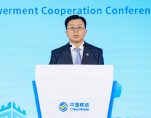
BEIJING, CHINA – Media OutReach Newswire – 8 April 2026 – On March 31, 2026, China Mobile hosted the 2026 China Mobile Digital Empowerment Cooperation Conference for Chinese Enterprises Going Global in Beijing. The conference focused on the needs for digital and intelligent development of Chinese enterprises going global, jointly exploring new trends in digital and intelligent empowerment for the global development of Chinese enterprises, and it was broadcast live simultaneously around the world. Zhang Feng, Secretary of the CPC Chinese Institute of Electronics Committee, and Guo Hao, President of the China Association of Communications Enterprises, attended the event, among others. Li Huidi, Executive Vice President of China Mobile attended the conference and delivered a speech.
Li Huidi pointed out that artificial intelligence is currently reshaping the ways of production and life with unprecedented speed and breadth, deeply restructuring the competitive landscape of global industries. AI is already the core engine driving the leap in social productivity and leading the transformation of the global industrial system. The overseas development of Chinese enterprises is undergoing a comprehensive upgrade from the traditional export of products and production capacity to the synergistic development of digital capabilities and industrial chains driven by AI.
Li Huidi stated that, in the face of a new round of technological revolution and industrial transformation, China Mobile is accelerating the transition from a “telecommunications operator” to a “technology services enterprise.” With the vision of building a world-class technology services enterprise, it comprehensively promotes the integrated innovation of communication technologies, information technologies, and AI technologies, in order to strengthen, optimize, and expand the three major businesses of “communications services, computing services, and AI services.” China Mobile will deeply integrate its AI capabilities into the entire chain of its three core businesses, paving a digital and intelligent highway for globalization, featuring the integration of networks and intelligence, safety and reliability, and universal access across all domains for Chinese enterprises going global:
First, China Mobile will strengthen communications services and empower “AI connectivity”, weaving a dense network of global intelligent interconnection. The scale of China Mobile’s international information infrastructure continues to grow. China Mobile have expanded the capacity of submarine and terrestrial cables, bringing total international transmission bandwidth to 406T and Points of Presence (PoPs) to 446. Notably, the eastern section of 2Africa, the largest submarine cable system in the world circling Africa, has been activated. The sections are expected to be completed and put into operation in the first half of this year. Spanning a total length of approximately 45,000 kilometers, this submarine cable is laid along the coastline of the African continent. It connects 33 countries and regions across the Middle East, Asia, and Europe, providing high-quality, low-latency international communication services for a population of roughly 3 billion along its route. This major information artery, which connects six continents and four oceans, provides safe and reliable guarantees for end-to-end connections. It supports the scheduling of transnational AI applications and the integration of global business for enterprises going global. Global roaming is now available in 268 destinations, and the total number of users for the JegoTrip app has exceeded 90 million. China Mobile’s international ecological cooperation continues to expand, and the “Hand-in-Hand Program” covers over 3 billion users worldwide. China Mobile have consecutively hosted events such as the Southeast Asia Cooperation Conference and the China Mobile Digital Empowerment Cooperation Conferences for Chinese Enterprises Going Global. These events have been widely praised and have strengthened China Mobile’s influence within the global ecosystem. In recent years, China Mobile’s revenue from international business has consistently maintained a trend of high-speed, double-digit growth.
Second, China Mobile will optimize computing services and drive “AI Computing”, building a globally integrated computing network across the world.As a builder of computing infrastructure, China Mobile will comprehensively increase its investment in Artificial Intelligence Data Centers (AIDC), accelerate the supply of computing, and enhance its operational capabilities for Tokens. China Mobile’s 100-megawatt-level Global Intelligent Center (GIC) in Hong Kong has officially opened, and China Mobile will deploy more nodes for AI computing along the “Belt and Road” initiative in the future. China Mobile have already established a cluster for AI computing with a capacity of 92.5 EFLOPS in China. By linking this with over 1,300 resources from self-owned and cooperative data centers overseas, China Mobile are constructing a global network for computing. China Mobile will promote Mobile Cloud to integrate high-quality global models and streamline the service chain where “Agents use Tokens, Tokens drive Computing, and Computing consumes Electricity.” This will forge a solid foundation of computing for Chinese enterprises going global.
Third, China Mobile will expand AI services and reshape digital services, stimulating new momentum across all domains for enterprises going global.As a promoter of applications for artificial intelligence, China Mobile continuously iterates the capabilities of its “Jiutian” large model. China Mobile have accumulated industrial data exceeding 20 trillion Tokens and independently developed more than 50 industrial large models. This promotes the deep integration of AI agents into the entire process of production and operations for enterprises. Overseas, China Mobile translate its leading domestic AI capabilities into a “smart engine” for Chinese enterprises expanding abroad. Targeting the pain points of enterprises going global, China Mobile have tailored a “1+8” system of products and solutions for all scenarios, which has already served tens of thousands of Chinese enterprises in their global layout. By combining the advantages of Chinese manufacturing and 5G solutions, China Mobile achieve deep integration with local ecosystems overseas. In regions including Europe, Latin America, and the Asia-Pacific, and have successfully established over a thousand benchmark cases of “AI+” digital and intelligent transformation, such as smart factories, smart ports, and smart IoV. This makes the fruits of China’s innovation in AI benefit the global market.
Looking toward the vast blue ocean of the AI era, Li Huidi proposed four initiatives: First, China Mobile will jointly build AI infrastructure to forge a solid “new foundation” for AI+ global development. China Mobile will join hands with global industry partners to accelerate the construction of global communication networks, computing networks, and intelligent networks. China Mobile will jointly optimize the layout of global submarine and terrestrial cables as well as hubs for computing, achieving mutually beneficial cooperation along the “Belt and Road” initiative and around the world. By building more high-standard Artificial Intelligence Data Centers, China Mobile will provide low-latency, highly reliable, high-performance, and widely covered infrastructure of computing networks for Chinese enterprises marching into the world. Second, China Mobile will jointly establish AI standards to build a “new consensus” on intelligence within the industry. China Mobile will continue to promote China’s full-stack AI technologies and standards to the world, covering the entire chain of computing foundations, large models, and industrial applications. This will contribute Chinese wisdom, Chinese solutions, and Chinese standards to the construction of an open, inclusive, and interoperable system of global rules for AI technology. Third, China Mobile will jointly expand AI scenarios to release “new quality productive forces” across thousands of industries. China Mobile will continuously open up China Mobile’s technological foundation and experience in various scenarios, collaborating with enterprises going global to unearth high-value industrial scenarios. By providing exclusive resources for AI computing and support for Tokens, China Mobile will empower the accelerated release of new quality productive forces through AI innovation. In key regions along the “Belt and Road” initiative, China Mobile will create more replicable and promotable benchmark projects of “AI+” digital and intelligent transformation for overseas development. Fourth, China Mobile will jointly cultivate a win-win AI ecosystem to expand the “new circle of friends” for global cooperation. China Mobile will continuously upgrade the cooperative ecological system of the “iSTAR Program. Relying on the three core pillars of “AI+ applications, cloud and AI computing, and connectivity,” China Mobile will unite the strengths of global industries, academia, research, and application. This will help build a more open, inclusive, and mutually beneficial globalized digital and intelligent ecosystem. China Mobile will jointly incubate “AI+” solutions for overseas development across more than 150 scenarios, providing intelligent escorts across the entire chain and full life cycle for Chinese enterprises going global.
At the conference, using full-stack digital and intelligent capabilities to escort Chinese enterprises going global, China Mobile released a series of “AI+” full-stack digital and intelligent infrastructure, products, and services. Together with its ecological partners, China Mobile jointly released the “White Paper on the Digital and Intelligent Ecosystem of the China Mobile International ‘iSTAR Program’ for Chinese Enterprises Going-Global,” collaboratively building a new ecosystem for AI services.
Hashtag: #ChinaMobile
The issuer is solely responsible for the content of this announcement.
SINGAPORE – Media OutReach Newswire – 8 April 2026 – A new documentary Building Icons: The Global Oneexplores the complexities of architecture and engineering, with the team behind The Global One – showcasing how one of Taiwan’s most earthquake-resistant residential complexes came to life. The documentary is set to premiere in Southeast Asia on the Discovery Channel on Friday, April 10 2026 at 7:10 PM SGT and on Discovery Asia on Sunday, April 12 at 9:00 PM SGT.
Set in the Nangang district in Taipei, the new documentary features a residential development designed to withstand major earthquakes, typhoons and extreme weather conditions. The project faced extraordinary engineering challenges due to its location on soft ground and vulnerability to earthquakes, conditions rarely encountered in urban environments.
The Global One is the realization of the vision of Nankang Rubber Tire Corporation’s late Chairman, Lin Hsueh‑Pu, and redefines the standards of safety in residential developments, with a goal to last a century and provide peace of mind to its residents. The documentary follows teams on the ground as they combine advanced engineering and rigorous testing, to enhance the building’s safety specifications, beyond other critical buildings in Taiwan.
Audiences will get insight into engineering practices and hear how The Global One is built for extreme disaster resilience and long‑term durability, with a structure that incorporates special shock absorbers into the walls to dampen the violent tremors, as well as specific electrical wiring and pipes, which were carefully selected to reduce fire risk and function during emergencies.
Catch Building Icons: The Global One in Southeast Asia on Discovery Channel, Friday, April 10 2026 at 7:10 PM SGT and on Discovery Asia on Sunday, April 12 at 9:00 PM SGT.
The issuer is solely responsible for the content of this announcement.
About Discovery Channel
Across every platform, Discovery Channel is dedicated to connecting audiences who have a passion for adventure and crave a connection to the world around them. Popular series including Deadliest Catch, Expedition Unknown and Gold Rush, along with Shark Week, the annual tentpole programming event, serve as trusted portals that transport viewers directly into thrilling, real, high stakes moments. Through smart, authentic characters whose stories inform and inspire, Discovery celebrates the men and women who will stop at nothing to explore new spaces and achieve their dreams. For more information, please visit www.discovery.com.
Greenlogue/AP VinFast has rolled out a vehicle rental programme for commercial drivers in Indonesia and the Philippines, expanding beyond outright sales as it tries to deepen its position in two fast-developing Southeast Asian electric vehicle markets. The company said the scheme will let service drivers lease Green-series vehicles through authorised dealers in Greater Jakarta and Metro Manila, with daily rates starting at 312,500 rupiah in Indonesia and […]
Afreximbank has been confirmed as a partner for African Energy Week 2026, due to run from October 12 to 16 in Cape Town, in a move that places one of the continent’s most active trade financiers at the centre of discussions over how African-led capital can support oil, gas, power and infrastructure projects. The partnership also signals how the event is seeking to position itself less as […]












 www.discovery.com.




