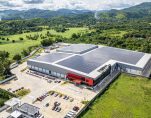
Dubai has unveiled plans to construct what officials describe as the world’s first villa assembled entirely by robots, marking a sharp acceleration in the city’s push to industrialise construction and reduce reliance on manual labour. The pilot project, scheduled to rise at Expo City Dubai, will test whether fully automated systems can deliver a complete residential unit from foundation to finish without on-site human builders. Authorities say […]
A policy signal aimed at accelerating investment in data centres and cloud infrastructure has placed long-horizon tax certainty at the centre of India’s digital strategy, with the government outlining a framework that would allow eligible technology companies operating in designated zones to enjoy tax neutrality aligned with the national Vision 2047 roadmap.
The move, articulated through a combination of policy statements, budget-linked clarifications and regulatory guidance, is intended to draw hyperscalers, artificial intelligence firms and data infrastructure investors into large-scale, long-duration projects. Officials have framed the approach as a way to anchor capital-intensive facilities whose payback periods stretch over decades, while supporting the ambition of building a multi-trillion-dollar digital economy by the country’s centenary year.
Rather than a blanket exemption across the economy, the proposal centres on sector- and location-specific incentives. These include extended tax holidays and concessional regimes within special economic zones, international financial services hubs and approved data centre parks, alongside customs-duty relief on equipment, accelerated depreciation and stable indirect tax treatment for power, cooling and network inputs. Policy planners argue that such assurances reduce regulatory risk and make India competitive with rival hubs in Southeast Asia and the Middle East.
Data centres have emerged as a focal point of the strategy. Explosive growth in cloud computing, streaming services, digital payments and generative AI has driven demand for hyperscale facilities, each requiring billions of dollars in upfront investment and long-term commitments to energy supply. Government assessments suggest that predictable taxation over a multi-decade horizon is as critical as land and power availability when investors choose locations.
Senior policymakers have linked the tax framework to broader reforms designed to ease market entry. These include streamlined approvals through single-window systems, clarity on cross-border data flows under evolving digital governance rules, and incentives for renewable energy integration to address the sector’s heavy electricity needs. State governments are also playing a role, offering land at concessional rates and rebates on electricity duties to attract marquee projects.
Industry executives have responded cautiously but positively. Large cloud providers and colocation operators have welcomed signals of long-term stability, noting that uncertainty over future tax treatment has historically complicated investment planning. At the same time, companies are seeking detailed rules on eligibility, duration and compliance obligations, wary of policy reversals or narrow interpretations that could dilute the promised benefits.
Economists see both opportunity and risk in the approach. Supporters argue that anchoring global technology players could generate spillover benefits, from skilled employment and local supplier networks to improved digital services for domestic firms. They also note that data infrastructure underpins sectors ranging from finance and healthcare to manufacturing and logistics, amplifying its economic impact beyond headline investment numbers.
Critics caution that extended tax concessions must be carefully calibrated to avoid eroding the revenue base without delivering commensurate gains. They point to the need for clear performance benchmarks, such as minimum investment thresholds, local employment commitments and sustainability standards, to ensure public value. Questions have also been raised about competitive neutrality, with domestic firms seeking assurance that incentives will not unduly favour a handful of global giants.
The policy push comes amid intensifying global competition for data and AI infrastructure. Governments worldwide are offering combinations of tax relief, energy subsidies and regulatory flexibility to attract projects seen as strategic assets. India’s pitch emphasises scale, market growth and democratic governance, positioning the country as a long-term partner rather than a short-term tax arbitrage destination.
Oil prices extended gains as OPEC+ signalled it would keep production levels unchanged, choosing caution over a pre-emptive response to higher prices driven by geopolitical tension linked to Iran and fragile demand signals from major economies. Benchmark Brent crude traded above the mid-$80s a barrel during the session, supported by concerns over potential supply disruption in the Middle East and tighter physical markets in parts of Asia. […]
Arabian Post Staff -Dubai Dubai Electricity and Water Authority has received five awards from the British Safety Council for 2025, reinforcing its standing in occupational health, environmental management and organisational wellbeing, according to official announcements from the utility and the London-based safety body. The awards include the Sword of Honour for Health and Safety, the Globe of Honour for Environmental Management and the Shield of Honour, […]
SpaceX is weighing internal consolidation across Elon Musk’s corporate universe as it prepares for what investors describe as one of the largest public listings ever attempted, with discussions touching on potential combinations involving Tesla or the artificial intelligence venture xAI, according to people familiar with the matter. The deliberations, still exploratory, reflect a broader strategy to position SpaceX as the backbone of a vertically integrated space, energy […]
Tesla chief executive Elon Musk has put fresh emphasis on the need for the electric vehicle and technology company to build and operate its own semiconductor fabrication facility, which he calls a “TeraFab”, to sustain the firm’s ambitions in artificial intelligence, autonomous driving and robotics. Musk outlined the plan on an earnings call this week, framing it as a strategic response to looming chip supply constraints that […]
Arabian Post Staff -Dubai PureLab and LODD have launched a pilot programme in Abu Dhabi to transport blood samples using drones, marking a step towards integrating unmanned aerial vehicles into routine medical logistics and emergency healthcare supply chains. The initiative is designed to cut transit times for critical diagnostic samples, reduce reliance on road transport, and strengthen the resilience of laboratory networks during peak demand or traffic […]
HANOI, VIETNAM & TEL AVIV, ISRAEL – Media OutReach Newswire – 27 January 2026 – VinFast and Autobrains, a leading AI innovator in the automotive industry, today announced a strategic partnership on developing autonomous driving technology L2++ and a new autonomous vehicle architecture capable of transforming virtually any car into a self-driving “robo-car.” The collaboration underscores its growing technological strength and reinforces the commitment to advancing autonomous solutions that deliver cutting-edge yet accessible vehicle technology for people everywhere.
The strategic collaboration focuses on the research and development of enhanced L2++ autonomous driving technologies for future VinFast electric vehicles.
The strategic collaboration focuses on the research and development of enhanced L2++ autonomous driving technologies for future VinFast electric vehicles. VinFast’s current EV passenger lineup is equipped with Level 2 driving assistance features, and the upgraded L2++ system is already undergoing pilot testing on the VF 8 and VF 9 models. This partnership establishes a strong foundation for VinFast to progressively integrate more advanced autonomous capabilities across its full product portfolio, underscoring the company’s commitment to delivering safer, smarter, and more intuitive mobility experiences for customers worldwide.
In addition, the partnership will explore and develop the “Robo-Car” system — a first-of-its-kind AI architecture that eliminates the need for costly LiDAR, radar arrays, or HD maps. Instead, the system leverages seven standard cameras and a compact, high-performance computing chip capable of processing approximately 20 trillion operations per second, enabling advanced autonomous functionality at a fraction of the cost and complexity of traditional systems.
The Robo-Car system is powered by Autobrains’ Agentic AI architecture, which adapts to real-time driving scenarios with humanlike precision while minimizing computational demand and removing the need for costly hardware. Combined with Autobrains’ Air-to-Road localization, a camera-based mapping technology that fuses real-time visual data with satellite imagery to eliminate HD map dependence, this foundation enables a scalable and affordable Level 4 autonomous solution for both emerging and advanced markets. VinFast and Autobrains are now testing the Robo-Car in controlled zones in Hanoi, with plans to expand trials to larger cities and international markets.
Prof.-Dr. Nguyen Van Duong, Global Deputy CEO of VinFast and Director of ADAS/AD Research Institute, said:”VinFast’s strategic partnership with Autobrains is helping shape a disruptive approach to affordable autonomous driving that fits our long-term vision for global mobility. We aim to move advanced driving technology from early adopters to everyday drivers. VinFast is committed to making autonomous mobility safe, affordable, and available to all.”
Mr. Igal Raichelgauz, CEO of Autobrains, said: “The Robo-Carwe’re developing with VinFast is performing autonomous driving in real traffic with confidence and precision. It marks meaningful progress toward a future where drivers everywhere can enjoy safety, comfort, and freedom through autonomy. It also reflects our shared mission of making advanced autonomous capability accessible to everyone.”
VinFast is accelerating its global growth by expanding production capacity, broadening its product portfolio, and strengthening its presence in key international markets. The company continues to build momentum by working with leading local and international partners to integrate advanced technologies, enhance service quality, and elevate the overall vehicle experience. These collaborations allow VinFast to combine global expertise with its own rapid innovation, supporting the company’s mission to deliver high-quality, intelligent, and accessible electric vehicles to customers worldwide.
Hashtag: #VinFast
The issuer is solely responsible for the content of this announcement.
About VinFast
VinFast (NASDAQ: VFS), a subsidiary of Vingroup JSC, one of Vietnam’s largest conglomerates, is a pure-play electric vehicle (“EV”) manufacturer with the mission of making EVs accessible to everyone. VinFast’s product lineup today includes a wide range of electric SUVs, e-scooters, and e-buses.
VinFast is currently embarking on its next growth phase through rapid expansion of its distribution and dealership network globally and increasing its manufacturing capacities with a focus on key markets across North America, Europe, the Middle East and Asia.
Autobrains is a leading AI company in the automotive industry. The company developed a paradigm-shifting AI technology called Agentic AI, backed by more than 300 patents addressing core autonomous driving challenges. Autobrains’ solutions for ADAS and autonomous driving offer advanced perception capability, low compute requirements, and sensor and SoC flexibility. The company is supported by strategic investors including Temasek, Knorr-Bremse AG, BMW i Ventures, Toyota Ventures, VinFast, Continental AG, and Autel.
Advancing R&D, talent development and the region’s energy transition
SINGAPORE – Media OutReach Newswire – 26 January 2026 – ST Telemedia Global Data Centres (STT GDC), one of the world’s fastest growing data centre colocation providers headquartered in Singapore, today announced two significant initiatives that strengthen Singapore’s position in the global digital and energy transition: the launch of the FutureGrid Accelerator, Southeast Asia’s first live High Voltage Direct Current (HVDC)-powered AI infrastructure testbed; and a suite of strategic Memoranda of Understanding (MOUs) with four Institutes of Higher Learning (IHLs) to advance skills development and expand internship and early career pathways for Singaporeans entering the workforce. These initiatives align with national efforts to support talent graduating into a challenging job market, while building the specialised capabilities required for next generation power and digital infrastructure.
Celebrating the official launch of the FutureGrid Accelerator; a new benchmark for HVDC-powered AI infrastructure in the region.
[Pictured from left to right] Lim Kian Tiong, Chief Financial Officer, LITEON; Bruno Lopez, President & Group Chief Executive Officer, ST Telemedia Global Data Centres; Minister Gan Siow Huang, Minister of State, Ministry of Foreign Affairs & Ministry of Trade and Industry; Professor Lam Khin Yong, Vice President (Industry), Nanyang Technology University Singapore; Brian Dow, Chief Executive Officer, Amperesand.
Officiated by Ms Gan Siow Huang, Minister of State for Foreign Affairs and Trade & Industry, the announcement underscores a national push to build capabilities not only for AI-ready data centres, but also for the wider energy ecosystem, as Singapore and the region pursue net-zero ambitions.
FutureGrid Accelerator: HVDC innovation for AI and the wider energy transition Located at the Nanyang Technological University, Singapore (NTU Singapore) Electrification and Power Grids Centre (EPGC) on Jurong Island, the FutureGrid Accelerator is a pioneering initiative jointly developed by STT GDC and LITEON, supported by the Energy Research Institute @ NTU (ERI@N) and NTU deep-tech spinoff Amperesand. It is the region’s first live testbed demonstrating HVDC integration with real AI workloads, addressing the high-density and high-resiliency requirements of next-generation AI computing.
While central to the future of AI data centre architecture, HVDC represents a broader opportunity: it is a foundational technology that supports more efficient, resilient and integrated power systems. This is critical for Singapore’s long-term energy strategy, its transition to low-carbon energy grids and the region’s increasing need for sustainable power delivery.
Why HVDC Matters: A scalable platform beyond the data centre As AI and high-performance computing workloads scale, traditional alternating current (AC) power systems face inherent limitations. HVDC overcomes these constraints and delivers several transformative benefits:
Up to 30% overall energy savings compared to conventional AC systems
A reduction of up to 400 tonnes of CO2 equivalent (CO2e) per megawatt per year
45% lower copper consumption and a 30–40% smaller power-infrastructure footprint
The ability to support ultra-high-density racks exceeding 1,000kW, with higher reliability and lower cost
Native compatibility with renewable power sources able to feed directly to the direct-current system, avoiding inefficient power conversions
“The FutureGrid Accelerator is a strategic investment in Singapore’s long-term digital leadership,” said Bruno Lopez, President and Group Chief Executive Officer, ST Telemedia Global Data Centres. “By bringing together global industry leaders like LITEON with local deep-tech talent such as Amperesand, we are building infrastructure that is ready for future AI workloads while pioneering sustainable practices and setting new benchmarks for energy efficiency and carbon-conscious innovation. This initiative reflects our commitment to future-ready technologies and reinforces Singapore’s position as a global Centre of Excellence for advanced sustainable digital infrastructure. It is a bold step forward in shaping the future of data centres and accelerating energy transition across the region.”
Ms Gan Siow Huang, Minister of State for Foreign Affairs & Trade and Industry, said: “The FutureGrid Accelerator demonstrates how industry and academia can work together to drive innovation and strengthen Singapore’s global leadership in cutting-edge technologies. I also welcome STT GDC’s partnerships with ITE and SP, which will add to the suite of training options for the rapidly growing areas of AI and energy-efficient systems.”
The FutureGrid Accelerator will validate HVDC system performance at power loads of at least 325kW, incorporating the latest AI servers. The environment incorporates LITEON’s data centre reference architecture with Amperesand’s Solid State Transformer (SST) technology—an enabling innovation for next-generation HVDC deployment. STT GDC plans to deploy this technology in future data centres in Singapore and progressively scale adoption across its global operations.
“LITEON is committed to advancing the frontier of power management efficiency, and our collaboration with STT GDC and Amperesand is key to establishing the next standard for sustainable AI infrastructure in Asia,” said Jason Tsao, Head of Direct Current Microgrid at LITEON. “By deploying an end-to-end data centre reference architecture and integrated power management system in a live environment with STT GDC and partners, we are validating a high-density, energy-saving solution ready to meet the extreme demands of global technology leaders.”
“The FutureGrid Accelerator underscores NTU’s role as a strategic partner in shaping the future of sustainable AI infrastructure”, said Prof Lam Khin Yong, NTU’s Vice President (Industry). “By integrating cutting-edge HVDC technologies with our research capabilities and the entrepreneurial drive of NTU spin-offs like Amperesand, we are advancing impactful solutions that can significantly enhance energy efficiency and grid resilience. This collaboration showcases how universities can drive transformative innovations at the intersection of energy, digitalisation and sustainability.”
“Amperesand is obsessed with revolutionising Medium Voltage to critical load power delivery for next-generation AI data centres, defence, and other essential electrified assets. We focus on first principles to achieve market leading power density, efficiency, and reliability,” said Brian Dow, CEO and Co-Founder of Amperesand. “In this era of AI data centre and other critical power systems becoming economic and national security interests for many countries, Amperesand’s MV SST Platform enables in-country cyber-secure controls and data, regionally available supply chains, and low CAPEX intensity local manufacturing. Our solution is an intelligent, universal Medium Voltage power source that works on-and-off grid to improve critical infrastructure resilience as new large electrical loads come online.”
Developing Energy-Ready Skills: Partnerships with ITE, SP, NTU and NUS STT GDC signed MOUs with the Institute of Technical Education (ITE), Singapore Polytechnic (SP), NTU Singapore and National University of Singapore (NUS). These partnerships will benefit more than 8,000 Singaporeans over five years through industry-aligned training in AI infrastructure and sustainable energy systems. This ensures the scaling of HVDC—and the broader energy transition—is matched by the transformation and availability of skills, jobs and talent development pathways.
Mr Lopez added, “Talent is the decisive enabler as we advance AI and sustainability infrastructure. These partnerships build a skilled workforce needed to strengthen Singapore as a global hub for advanced digital and energy systems.”
Key initiatives and impact:
Building a talent pipeline: STT GDC will provide internship placements across ITE, SP, NTU and NUS over the next five years, with support from Enterprise Singapore. The programme offers immersive, hands-on experience in data centre operations and corporate functions such as IT, sustainability, finance and marketing, supported by mentoring from industry professionals. In addition, STT GDC will offer 100 sponsorships for Data Centre Foundation Certificate (DCFC®) offered by EPI, a global certification body for data centre facilities, data centre operations and industry professionals, accelerating entry into the sector.
Developing industry-ready talent with ITE: The collaboration with ITE will benefit approximately 800 students annually — totalling 2,400 students over three years — from ITE’s engineering and information and communications technology (ICT)-related Higher Nitec and Work-Study Diploma courses. Key initiatives include co-developing industry-relevant curricula for full-time and Continuing Education & Training (CET) courses in data centre operations and sustainability; deploying a data centre virtual reality system at the ITE Extended Reality Centre for immersive training; supporting lecturer attachments and student internships; and enabling students to pursue the sponsored DCFC® course.
Sustainability leadership with SP: The partnership with SP develops expertise in environmental sustainability and green data centre solutions. Initiatives include joint exploration of green technologies and practices; industry seminars and events to promote sustainable solutions; and targeted programmes for training, mentorship, applied projects and internships.
Innovation and research leadership with NTU: The partnership with NTU combines cutting-edge joint R&D of solutions for AI data centres powered by direct current sources; training, curriculum and talent development for the AI data centre sector; industry and career talks; and internship opportunities across STT GDC’s group of companies.
Graduate pathways with NUS: STT GDC’s collaboration with NUS supports accessible entry points for graduates through internships, training opportunities and ongoing career and industry engagement to raise awareness of digital infrastructure pathways.
The issuer is solely responsible for the content of this announcement.
About ST Telemedia Global Data Centres
ST Telemedia Global Data Centres (STT GDC) is one of the fastest-growing data centre providers with a global platform serving as a cornerstone of the digital ecosystem that helps the world to connect. Powering a sustainable digital future, STT GDC operates across Singapore, the UK, Germany, Italy, India, Thailand, South Korea, Indonesia, Japan, the Philippines, Malaysia and Vietnam, providing businesses an exceptional foundation that is built for their growth anywhere. For more information, visit https://www.sttelemediagdc.com/
Appendix: Partner Quotes
Mr Peter Lam, Chief Executive Officer, Institute of Technical Education (ITE): “At ITE, our focus is on equipping our students with future-ready skills for Singapore’s evolving economy. Through the partnership with STT GDC, our students gain valuable real-world training and exposure to advanced tools in data centre operations. This strengthens our efforts to prepare career-ready students and develop talent for Singapore’s growing digital infrastructure sector.”
Mr Soh Wai Wah, Principal and CEO of SP: “Singapore Polytechnic is committed to developing a future-ready workforce that can support Singapore’s growing demand for sustainable and resilient data centre operations. This partnership with STT GDC brings together our strengths in training, applied learning and industry collaboration to nurture talent in environmental sustainability and green solutions for data centres. Through co-developed programmes, mentorship, student projects and internships, we will build deeper capabilities and broaden pathways for learners to contribute to this important sector. SP looks forward to advancing this effort with STT GDC to support Singapore’s long-term industry and sustainability goals.”
Professor Lam Khin Yong, Vice President (Industry), Nanyang Technological University: “STT GDC is a partner that shares our commitment to advancing impactful research and developing future-ready talent. Leveraging NTU’s strengths in artificial intelligence, energy-efficient systems and translational innovation, this partnership will accelerate the co-development of next-generation AI data centre technologies while providing our students and researchers with valuable real-world experience. Together, we are helping to build a robust pipeline of skilled professionals who will support Singapore’s ambitions in sustainable and AI-driven digital infrastructure.”
Ms Joan Tay, Senior Director, NUS Centre for Future-ready Graduates: “NUS’ partnership with STT GDC is timely, as demand grows for skilled professionals to manage complex, high-density AI infrastructure. Through internships, training, industry engagement and access to recognised certification, we bridge education and industry to equip students with the skills and experience needed to thrive in today’s fast-evolving digital infrastructure space.”
Power outages spread across large parts of the US East Coast on Sunday as a powerful winter storm pushed heavy snow, freezing rain and ice from the Mid-Atlantic to New England, disrupting daily life for millions, straining energy infrastructure and forcing widespread travel cancellations. Utilities warned that restoration efforts could take days in some areas as hazardous conditions slowed repair crews and fresh snowfall compounded earlier damage. […]
Arabian Post Staff -Dubai Ras Abu Fontas Power, the company behind one of Qatar’s key power and water infrastructure projects, has secured a financing agreement worth about $990 million with the Japan Bank for International Cooperation, strengthening the long-term funding base for the Facility E power and desalination project south of Doha. The JBIC funding represents part of a larger co-financing package totalling approximately $2.97 billion, assembled […]
By Nantoo Banerjee India’s transport sector, combining road, rail, air and water, is ready for a significant job boom, with the logistics industry alone projected to grow at a 10.7 percent compound annual growth rate (CAGR) through the current year. The national budget for 2026-27, which is scheduled to be placed in Parliament on February […]
Major powers are expanding sensor investment across land, air, sea, cyber and space as platforms grow faster, stealthier and more autonomous. Aerospace advances such as reusable launch vehicles, hypersonic flight and satellite mega-constellations depend on dense networks of precision sensors to operate safely and effectively. In military settings, those same tools are redefining early warning, targeting and defence. One of the most consequential shifts has been in […]
South Africa’s currency advanced to its strongest level in roughly three years as a softer US dollar, firm commodity prices and cautious optimism about domestic reforms combined to lift investor appetite for emerging-market assets. The rand strengthened through the week against the greenback and traded at levels last seen before the global tightening cycle gathered pace, reflecting both external tailwinds and renewed focus on policy signals from […]
BARCELONA, SPAIN – Media OutReach Newswire – 21 January 2026 – The 450 MHz spectrum is becoming a key driver in smart grids due to its unique advantages. Once seen as a traditional frequency band, it has seen revitalization for industrial digitalization.
At HUAWEI CONNECT 2025, Jason Li, President of Global Marketing & Solutions from Huawei’s Electric Power Digitalization Business Unit, gave a statement.
“In the power industry, there are three key trends on the distribution side. Firstly, a massive amount of new energy will be integrated into the grid. Taking China as an example, by 2030, the installed capacity of distributed PV will reach approximately 1,000 GW. Secondly, the adoption of electric vehicles (EVs) is expected to grow rapidly, with around 110 million EVs and approximately 55 million charging piles projected by 2030. This poses significant challenges for power distribution. Thirdly, digitalization is accelerating. AI has gone from a ‘nice-to-have’ to a ‘must-have.’ Power systems cannot achieve effective protection, automation, or digitization without high-quality data and reliable communication. In medium-voltage grids, we rely on private wireless networks to achieve reliable backhaul and support endpoint control. I believe 450 MHz is the optimal solution. As the lowest band within 3GPP standards, it offers wide coverage, supports vast amounts of connections, and provides highly reliable network performance, all at a low cost. Moreover, it benefits from a mature ecosystem. This makes it perhaps the best solution for power companies undergoing digital transformation.”
At Mobile World Congress 2026 in Barcelona, Huawei will showcase more success stories in private wireless networks and 450 MHz applications, along with innovative solutions for intelligent power distribution, substations, and power plant inspections. To explore successful digital transformation in the power sector, visit the Huawei booth at stand 1H50, Fira Gran Via Hall 1. For more information, please visit https://e.huawei.com/en/industries/grid.
HONG KONG SAR – Media OutReach Newswire – 22 January 2026 – This news release is made by Johnson Electric Holdings Limited (“Johnson Electric” or the “Company” and together with its subsidiaries, the “Group”) for the business operations and selected unaudited financial information of the Group for the nine months ended 31 December 2025.
The Group’s sales for the nine months ended 31 December 2025 were US$2,726 million compared to US$2,730 million for the same period in the previous financial year, a decrease of approximately US$4 million. Exchange rate movements had a favourable impact of US$40 million on the Group’s sales during the period.
Sales of Automotive Products Group (“APG”)
APG’s sales for the nine months ended 31 December 2025 were US$2,301 million, a decrease of US$14 million or 1% compared to the same period in financial year 24/25. Excluding currency effects, APG’s sales decreased by US$49 million or 2%.
The division’s sales changes by region, excluding currency effects, were as follows:
Nine months ended 31 December 2025
Asia-Pacific
6%
Decrease
Europe, the Middle East and Africa
1%
Decrease
Americas
1%
Increase
Total
2%
Decrease
In Asia-Pacific, sales decreased by 6%, driven by pricing adjustments implemented to remain competitive and weaker demand for non-domestic car brands in China, which has historically been a strong market for APG. This was partially offset by growth in sales to domestic car brands. Sales of products for thermal management, steering and closure applications, together with oil pumps decreased, partially offset by increased sales of products for braking, vision and transmission applications.
In Europe, the Middle East and Africa (“EMEA”), sales decreased by 1%. Sales of products for closure, vision and thermal management applications decreased, mitigated by increased sales of oil pumps, powder metal components and other products for transmission applications.
In the Americas, sales increased by 1%. Sales of powder metal components, oil pumps and products for thermal management applications increased, largely offset by decreased sales of products for braking and engine and fuel management applications due to the phasing out of certain programs.
Sales of Industry Products Group (“IPG”)
IPG’s sales for the nine months ended 31 December 2025 were US$425 million, an increase of US$10 million or 2% compared to the same period in the previous financial year. Excluding currency effects, IPG’s sales increased by US$5 million or 1%. The overall performance reflects a mixed regional picture, shaped by varying market and customer dynamics.
The division’s sales changes by region, excluding currency effects, were as follows:
Nine months ended 31 December 2025
Asia-Pacific
1%
Decrease
Europe, the Middle East and Africa
6%
Increase
Americas
2%
Decrease
Total
1%
Increase
In Asia-Pacific, sales decreased by 1%, primarily due to significant price competition affecting both IPG and some of its customers in certain product segments. Consequently, sales of products for food and beverage, floor care and printer applications decreased. This was largely offset by increased sales for lawn and garden, medical and data centre cooling applications.
In EMEA, sales increased by 6%, driven by a combination of inventory replenishment by certain customers following their consumption of previous inventory surpluses, as well as the launch of new products. This resulted in increased sales of products for lawn and garden, and heating applications and flexible printed circuits. This was partially offset by a decrease in sales of products for beverage applications.
In the Americas, sales decreased by 2% mainly due to the combined effects of reduced demand from certain customers and some programs reaching end of life. This resulted in decreased sales of products for ventilation and surgical applications. This was partially offset by stronger sales of piezo motors and piezo motion subsystems, which benefited from strong demand for high-precision equipment for semiconductor manufacturing and medical drug-dosing systems.
Chairman’s Comments on Sales Performance and Outlook
Commenting on the Group’s sales performance and near-term outlook, Dr. Patrick Shui-Chung Wang, Chairman and Chief Executive, said: “Johnson Electric’s sales for the financial year to date have remained stable, reflecting generally subdued macroeconomic conditions and high levels of uncertainty related to geopolitics and US trade policies. Based on current trading conditions and customer orders, full-year Group sales are expected to be broadly similar to the prior year. In this environment, Johnson Electric remains focused on executing its strategy to deliver long-term value through innovation, operational excellence, and a resilient global supply chain.”
Cautionary Statement
Shareholders and potential investors in the Company are reminded that the information provided in this news release, including information related to the expected outlook for the full year, is based on the Group’s unaudited internal records and management accounts. This information has not been reviewed or audited by the Company’s auditors.
Shareholders and potential investors should exercise caution when dealing or investing in the shares of the Company.
Hashtag: #JohnsonElectric
The issuer is solely responsible for the content of this announcement.
About Johnson Electric Group
The Johnson Electric Group is a global leader in electric motors, actuators, motion subsystems and related electro-mechanical components. It serves a broad range of industries including Automotive, Liquid Cooling, Robotic Joints, Smart Metering, Business Equipment, Ventilation, Home Automation, Large Appliances, Power Tools, Medical Devices and Lawn & Garden Equipment. The Group is headquartered in Hong Kong and employs over 30,000 individuals in over 20 countries worldwide. Johnson Electric Holdings Limited is listed on The Stock Exchange of Hong Kong Limited (Stock Code: 179). For further information, please visit: www.johnsonelectric.com.
Electric motorbike maker Matter has outlined a $150 million investment programme running through the 2028 calendar year, signalling a sharp acceleration in its manufacturing capacity, product development and market reach as competition intensifies in the electric two-wheeler segment. The company has set an annual sales target of between 1.50 lakh and 1.80 lakh electric motorbikes by 2028, positioning itself among the more aggressive growth players in the […]
MANILA, PHILIPPINES – Media OutReach Newswire – 21 January 2026 – The Jollibee Group has formally inaugurated its newest – and its largest commissary in Visayas and Mindanao province – in Danao City, on January 8, 2026, a state-of-the-art facility designed to power the company’s expanding manufacturing and logistics footprint across the rapidly growing VisMin region and the wider Philippines.
Jollibee Group officially inaugurates its largest, state-of-the-art commissary in Cebu, Philippines, strengthening its Visayas and Mindanao operations, supporting multiple brands, creating jobs, and advancing sustainable growth across the country.
The inauguration was attended by national and local government leaders, including Cristina Roque, Secretary of the Department of Trade and Industry; Pamela Baricuatro, Governor of Cebu Province; Ace Durano, Cebu Provincial Administrator; Nito Durano, Mayor of Danao City; and Carmen Durano, Vice Mayor of Danao City.
Milestone Facility for a High-Growth Region
The Danao facility is the fourth—and largest—Jollibee Group commissary in Cebu and its first multi-brand, state-of-the-art commissary in the Philippines. It comes at a time of accelerating economic momentum in VisMin, driven by a strong tourism rebound, the rise of BPO hubs, expanding agribusiness exports, and growing manufacturing clusters—factors that continue to drive employment, consumer spending, and demand across the region.
Outfitted with advanced automation and integrated systems, the commissary is designed to support increasing demand across multiple Jollibee Group brands while generating efficiencies by consolidating equipment and production capabilities. This allows the Group to scale responsibly while upholding its standards for food quality, consistency, and operational excellence.
Supporting Brand Expansion and Same-Store Growth
The Danao Commissary supplies key ingredients and products for the Group’s major brands, including Jollibee, Chowking, Mang Inasal, Greenwich, Red Ribbon, and Burger King. These brands continue to expand their store networks in VisMin while sustaining same-store sales growth.
The facility strengthens the Group’s supply chain by supporting distribution centers serving Cebu, Iloilo, Bacolod, Zamboanga, Cagayan de Oro, and Davao, as well as select areas in Luzon—ensuring reliability and scalability as the company accelerates its nationwide expansion.
Economic Impact
Speaking during the program, Department of Trade and Industry (DTI) Secretary Cristina Roque highlighted the broader economic impact of the investment.
“Every new commissary that the Jollibee Group opens represents more jobs, more security, and more growth for our local industries,” Roque said. “As we open more commissaries, we are also encouraging more investments in our country while strengthening our supply chain.”
Speaking at the inauguration, Joseph Tanbuntiong, Chief Executive Officer of Jollibee Group Philippines and Global Head of Jollibee Brand, underscored the strategic importance of the new facility to both the company’s domestic and global growth.
“The opening of the Danao Commissary is both a reflection of our journey and a new beginning,” Tanbuntiong said. “Accelerating our growth by building on the strong momentum in Visayas and Mindanao is critical to our Philippine business.”
The investment also highlights the Jollibee Group’s confidence in Cebu as a strategic hub for manufacturing and logistics.
“This commissary underscores our confidence in Cebu—its people, its capability, and its role in our growth today and in the long term,” he added.
Community Impact and Sustainability
Beyond strengthening operational capacity, the Danao Commissary is expected to deliver shared value for local communities, generating close to 500 jobs, with over 60% of the workforce coming from Danao City. At full capacity, the commissary will create 800 jobs.
Sustainability features were integrated into the facility’s design and operations in line with the Jollibee Group’s Joy for Tomorrow agenda. From Day 1 of commercial operation, the Danao Commissary operates on 99% renewable electricity from geothermal sources. It is also equipped with roof-mounted solar panels, rainwater-harvesting systems, energy-efficient equipment, and wastewater treatment systems—supporting responsible, future-ready growth.
Tanbuntiong said the inauguration marks the beginning of a shared journey among stakeholders involved in the project.
“The success of the Danao Commissary is a shared success—for Danao, for Cebu, and for the nation. Together, we are building a stronger, more inclusive, and more sustainable future.”
Hashtag: #Jollibee
The issuer is solely responsible for the content of this announcement.
About Jollibee Group
Jollibee Foods Corporation (PSE: JFC) (the “Company”) is one of the world’s fastest-growing restaurant companies, driven by its purpose of spreading joy through superior taste. It manages and operates a portfolio that includes 19 brands (the “Jollibee Group”) with over 10,000 stores and cafés across 33 countries.
The Jollibee Group’s portfolio includes nine (9) wholly-owned brands (Jollibee, Chowking, Greenwich, Red Ribbon, Mang Inasal, Yonghe King, Hong Zhuang Yuan, Smashburger and Tim Ho Wan), five (5) franchised brands (Burger King, Panda Express, Yoshinoya, Common Man Coffee Roasters, and Tiong Bahru Bakery in the Philippines), and ownership stakes in other key brands like The Coffee Bean and Tea Leaf (80%), Compose Coffee (70%), SuperFoods Group that operates Highlands Coffee (60%), and bubble tea brand Milksha (51%). The Company also has membership interests in Tortazo, LLC, along with Chef Rick Bayless, for Tortazo in the U.S. and in Botrista, a leader in beverage technology.
The Jollibee Group’s global sustainability agenda, Joy for Tomorrow, underscores its commitment to sustainable business practices across food safety, employee welfare, community support, good governance, and environmental responsibility, among others. These focus areas are aligned with the United Nations Sustainable Development Goals (UN SDGs).
The Company has been recognized as the Philippines’ Most Admired Company by the Asian Wall Street Journal, named one of Asia’s Fab 50 Companies, and listed among Forbes’ World’s Best Employers and Top Female-Friendly Companies. The Company is also a four-time Gallup Exceptional Workplace Award recipient and featured in TIME’s World’s Best Companies and Fortune’s Southeast Asia 500 List.
Arabian Post Staff -Dubai Ras Abu Fontas Power, a project company linked to one of Qatar’s largest power and water complexes, has signed a financing agreement of about $990 million with the Japan Bank for International Cooperation, marking one of the most substantial bilateral development-backed commitments to the Gulf’s utilities sector this year. The agreement underpins the long-term funding structure of the Ras Abu Fontas facility, a […]
BARCELONA, SPAIN – Media OutReach Newswire – 20 January 2026 – In 2025 alone, more than 10 major power outages disrupted electricity supplies worldwide, affecting over 1.2 billion people. Ensuring system stability has remained a top priority for global power companies.
Jason Li, President of Global Marketing & Solutions, Electric Power Digitalization BU, Huawei
Stability is not their only concern, however; the drive toward carbon neutrality is accelerating the adoption of renewable energy and electrification. Integrating large amounts of new energy sources and managing unpredictable new loads requires flexibility from power systems.
Jason Li, President of the Marketing & Solution Sales Dept of Huawei Electric Power Digitalization BU, explained that “In the past, we relied mostly on automation to address issues in power grids. In the future, however, power grids will transform from mere transmission systems into pivotal players in the energy transition. Digitalization and AI are shifting from optional upgrades to essential elements in core power generation. Together with automation, they form the key drivers for modernizing power grids.”
He added, “We believe that deeply integrating digital technologies into power scenarios and reshaping production and operations with telecommunications and AI will enable grids to achieve both ultimate stability and flexibility.”
Intelligent Electric Power Booth
The large-scale integration of distributed PV, energy storage, and charging piles into the grid, coupled with growing user interaction and potential load-side transactions, presents new challenges for maintaining the balance, stability, and security of distribution networks.
“The breakthrough for future power systems lies in the distribution network,” Jason noted. “And the key to addressing distribution challenges is transparency at the 400 V low-voltage level. To achieve this, Huawei and partners have jointly developed the intelligent distribution solution (IDS) for transparent low-voltage management.”
At Mobile World Congress 2026 in Barcelona, Huawei will showcase its latest AI applications in power digitalization, including innovative solutions for intelligent power distribution, substations, and power plant inspections. To explore successful digital transformation in the power sector, visit the Huawei booth at stand 1H50, Fira Gran Via Hall 1.
Hashtag: #Huawei
The issuer is solely responsible for the content of this announcement.
HONG KONG SAR – Media OutReach Newswire – 20 January 2026 – Shell Hong Kong Limited (Shell) and the Transport Office of The Chinese University of Hong Kong (CUHK) held the “CUHK x Shell Electric School Bus Charging Station Opening Ceremony” on 15 January 2026, marking a significant milestone in advancing sustainable campus transportation. With the dedicated support from Shell, CUHK has launched its first Shell Recharge electric school bus charging station on campus, equipped with two fast chargers delivering up to 120 kW of power to provide efficient charging support for the university’s phased introduction of new energy school buses. Together with this initiative, the Hong Kong Productivity Council (HKPC) has provided CUHK with the first hybrid school bus on a Hong Kong university campus, making the first adoption of a hybrid school bus as a low-carbon transportation solution in local university campuses.
Shell and CUHK held the “CUHK x Shell Electric School Bus Charging Station Opening Ceremony” (From left to right: Mr. Kenneth Chung, Network Development & E-Mobility Manager of Shell Hong Kong Limited,Mr. Donald Lee, Transport Manager, The Chinese University of Hong Kong, Mr. Simon Lee, Director of Security and Transport, The Chinese University of Hong Kong, Mr. Dick Chan, General Manager of Shell Commercial Fuels- Hong Kong and Macau, Mr Yonghai Du, Chief Innovation Officer, Hong Kong Productivity Council and General Manager, Centre of Advanced Power and Autonomous Systems (APAS), Mr Ralph Xu, Head of Green Transportation, Centre of Advanced Power and Autonomous Systems (APAS))
First Shell Recharge Electric School Bus Charging Station installed in CUHK
As one of the leading global energy companies, Shell continues to focus on its strategy to deliver more value with less emissions while working to become a net-zero emissions business by 2050, contributing to global decarbonisation. This year, Shell installed CUHK’s first Shell Recharge electric school bus charging station, featuring two fast chargers with a power output of 120 kW, ensuring rapid and efficient energy replenishment for CUHK’s electric school buses. At the same time, Shell consistently upholds high safety standards, with stringent controls in the design, installation, and operation of the charging station to ensure a safe and reliable electric vehicle charging experience.
Since 2018, Shell has supported CUHK’s sustainability initiatives by supplying Shell FuelSave Diesel B5 for the university’s fleet, helping reduce emissions and enhancing operational efficiency. The collaboration has expanded with the introduction of fast-charging facilities further modernises CUHK’s transportation system and accelerates the adoption of innovative low-carbon technologies. Looking ahead, Shell will continue to work with CUHK to lead the development of advanced mobility solutions and demonstrate leadership in campus sustainability.
Mr. Yew Chong Tan, General Manager of Shell Commercial Fuels East, commented, “At Shell, we are committed to working with customers and partners to provide holistic energy solutions that power progress together. The installation of this electric school bus charging station at The Chinese University of Hong Kong exemplifies our dedication to such collaboration as we navigate the energy transition.”
First Shell Recharge Electric School Bus Charging Station installed in CUHK (From left to right: Mr. Donald Lee, Transport Manager, The Chinese University of Hong Kong, Mr. Simon Lee, Director of Security and Transport, The Chinese University of Hong Kong, Mr Yew Chong Tan, General Manager of Shell Commercial Fuels East, Mr. Dick Chan, General Manager of Shell Commercial Fuels- Hong Kong and Macau)
First Hybrid School Bus to Begin Operates at CUHK
The Hong Kong Productivity Council (HKPC) has provided CUHK with the first hybrid school bus ever deployed on a Hong Kong campus, which helps reduce diesel consumption and lower exhaust emissions compared to regular diesel coaches. When utilizing fast charging directly, it can reach an 80% battery charge in as little as 25 minutes.
Mr. Yonghai Du, Chief Innovation Officer of HKPC and General Manager, Centre of Advanced Power and Autonomous Systems (APAS), added, “This 12-meter plug-in hybrid bus is the first green transport project designed, developed, and assembled in Hong Kong by APAS, funded by the Innovation and Technology Fund and supported by our industry partners. This collaboration exemplifies the shared commitment of academia and industry to social responsibility. HKPC will continue to pioneer diverse innovative solutions, foster collaboration among ‘Government, industry, academia, research, investment, and applications’, expand the application demonstration of new technologies, products, and scenarios, and drive the transition towards green transportation.”
CUHK Advances Low-Carbon Transportation
These two major initiatives not only highlight CUHK’s dedication to sustainable development but also set a new standard for environmentally conscious transformation in transportation across Hong Kong.
Mr. Simon Lee, Director of Security and Transport at The Chinese University of Hong Kong, stated, “CUHK is committed to promoting sustainable development and embedding environmental protection principles within daily campus operations. By installing the EV charging station and introducing the hybrid campus bus, we aim to offer convenient transportation for staff and students while reducing carbon emissions and achieving low-carbon mobility. I would like to express my heartfelt gratitude to Shell for its strong support of the charging station project and to the Hong Kong Productivity Council for its professional assistance in introducing the hybrid campus bus, enabling us to jointly drive campus transportation toward a new green milestone.”
Markets has begun offering around-the-clock, on-chain trading of a synthetic version of Tesla stock, a move that sharpens the debate over how far crypto platforms can go in replicating traditional equities without triggering the full weight of securities regulation. The product, described by Markets as a tokenised representation of Tesla, allows traders to take leveraged positions of up to 12 times and to buy or sell at […]
President Donald Trump has moved to reshape how the United States pays for the explosive growth in electricity demand driven by artificial intelligence, backing a plan to use 2026 capacity auctions in the PJM Interconnection to force large technology companies to shoulder a greater share of grid expansion costs. The proposal, framed as a way to protect households and small businesses from higher power bills, places AI […]
Vertiv has widened the scope of its MegaMod HDX modular platform, adding new configurations designed to handle the surging power density and thermal demands of artificial intelligence workloads as data centre operators accelerate capacity builds across North America, Europe and parts of Asia. Vertiv said the expanded MegaMod HDX range integrates higher-capacity power distribution, advanced liquid cooling options and prefabricated deployment models aimed at facilities supporting racks […]





 https://vinfastauto.com/