Arabian Post Staff -Dubai ADNOC Logistics and Services has ordered four next-generation liquefied natural gas carriers for about $900 million, expanding its shipping capacity as Abu Dhabi seeks a larger role in global gas supply and trading. The vessels, each capable of carrying 175,000 cubic metres of LNG, will be built at Jiangnan Shipyard in Shanghai and delivered in 2029. The contract raises the company’s LNG newbuild […]
Apple has sued OpenAI and two former employees, accusing them of stealing trade secrets to accelerate the ChatGPT maker’s push into consumer hardware. The lawsuit, filed on Friday in the US District Court for the Northern District of California, marks a sharp escalation in tensions between companies that began working together two years ago. Apple alleges that OpenAI systematically obtained confidential product, manufacturing and supplier information by […]
OpenAI and Google have supplied advanced artificial intelligence services to overseas subsidiaries of major Chinese technology companies identified by the Pentagon as having links to China’s military, exposing a gap in Washington’s technology controls. The services were provided through entities in Singapore connected to Alibaba, Baidu and Tencent. Transactions involving the subsidiaries were permitted under existing US rules, even though their parent groups appear on a Department […]
Arabian Post Staff -Dubai Emrill has opened a central warehouse in Dubai’s Ras Al Khor district, consolidating materials storage and distribution to improve response times across its facilities management contracts in the UAE. The strategically located facility is expected to cut travel time across the company’s Dubai operations by as much as 12 minutes per journey on average. Emrill said the reduction would accelerate deliveries to client […]
Bharat Sanchar Nigam Limited has widened access to its satellite communication service with a rugged handset priced at ₹1,34,166, targeting users who operate beyond the reach of conventional mobile networks.
The state-owned telecom company said the device can provide voice calls and text messaging in isolated regions, including mountainous terrain, forests, offshore locations, mining zones and areas affected by natural disasters. The quoted handset price includes taxes, while customers must separately subscribe to an approved Global Satellite Phone Service plan.
The phone is being positioned primarily for defence units, maritime operators, emergency agencies, mining companies, remote infrastructure teams and adventure travellers. Unlike ordinary mobile phones, it communicates directly with a satellite rather than depending on nearby ground towers, allowing connectivity across large areas where terrestrial coverage is unavailable or unreliable.
BSNL’s announcement represents an expansion of an established service rather than the introduction of satellite calling for the first time. The company has offered voice and SMS connectivity through its Global Satellite Phone Service to the public and private enterprises since January 1, 2018.
The renewed commercial push comes as satellite communication assumes greater importance in disaster management and strategic operations. Cyclones, floods, earthquakes and landslides can damage mobile towers, sever fibre links and disrupt electricity supplies. Satellite phones provide an alternative channel for coordinating rescue teams, sharing field information and maintaining contact with command centres.
The service can also support personnel stationed along remote borders and crews operating far offshore. Mining, energy and construction businesses may use the handset at project sites where installing mobile towers or fibre infrastructure is technically difficult or commercially unviable.
BSNL offers separate plans for government and commercial customers. Post-paid monthly charges begin at ₹3,500 for government users, with 16 minutes of voice usage or an equivalent number of SMS messages included. Another government plan costs ₹5,835 a month and includes 30 minutes or messages.
The commercial post-paid package costs ₹11,670 a month and provides 60 minutes of calls or SMS messages. Once the included allowance is exhausted, government users pay ₹18 per minute or message, while commercial subscribers pay ₹25. Taxes are charged separately on the service plans.
Pre-paid options are also available. Government customers can choose a ₹3,500 monthly package carrying 20 minutes or messages, or an annual plan costing ₹38,500 with an allowance of 240 minutes or SMS messages. Commercial packages cost ₹5,835 a month for 30 minutes or messages and ₹64,185 a year for 360.
Additional pre-paid top-ups are available in denominations ranging from ₹200 to ₹10,000. The pricing underlines the specialised nature of the service and is likely to limit widespread consumer adoption, particularly when compared with conventional mobile connections and emerging satellite messaging features on premium smartphones.
Satellite phone ownership and use remain subject to strict security requirements. Subscribers must undergo the prescribed customer verification process and disclose where the handset will be used, the period of intended operation and the purpose for which it is required. These conditions are designed to maintain traceability because satellite devices can function independently of domestic terrestrial networks.
The communication transmitted through the Global Satellite Phone Service is encrypted. However, the service currently supports only voice calls and SMS, not high-speed internet access or the broader applications available on modern smartphones.
Customers have been advised to approach the nearest BSNL office for purchasing and activation details. Availability may depend on documentation, regulatory clearance, service eligibility and the user’s stated operational needs. The company has not announced a mass-market retail network or consumer financing options for the handset.
The move is distinct from direct-to-device satellite technology, which seeks to connect ordinary mobile handsets to satellites without requiring a dedicated satellite phone. BSNL has also worked with US-based Viasat on trials of direct satellite connectivity, including messaging and emergency communication applications.
Competition is developing in the broader satellite communications market as global and domestic companies prepare broadband services for homes, enterprises and remote locations. Starlink, Eutelsat OneWeb, Jio Satellite Communications and other operators have pursued regulatory approvals and spectrum access, although satellite broadband requires different equipment, licensing and commercial models from BSNL’s voice-focused service.
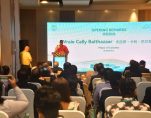
COLOMBO, SRI LANKA- Media OutReach Newswire – 9 July 2026 – On July 4, 2026, the cultural exchange event Encounter & Insight: Dialogue Between Ningbo, China and Colombo, Sri Lanka took place in Colombo.
On July 4, 2026, the cultural exchange event Encounter & Insight: Dialogue Between Ningbo, China and Colombo, Sri Lanka took place in Colombo.
Separated by thousands of miles, the two millennia-old port cities reconnected, leveraging their ports as a bond and cultural exchanges as a cohesive force to hold in-depth talks on integrated port-city development and bilateral economic and trade connectivity.
This cross-Indian Ocean dialogue echoes the ancient Maritime Silk Road while charting a brand-new outbound development path. As a pivotal starting port of the ancient Maritime Silk Road, Ningbo is building a new global trade landscape powered by smart manufacturing.
A thousand years ago, merchant vessels from Mingzhou Port set sail southward loaded with Yue Kiln celadon porcelain, passing through Ceylon to deliver Oriental crafts across the Indian Ocean coasts. Precious gemstones and spices traveled the same sea route back to regions south of the Yangtze River, laying the groundwork for the earliest cultural exchange between the two ports through trade. Today, the cargo carried by giant cargo ships has undergone a dramatic transformation. Beyond traditional daily necessities, intelligent equipment, digital home appliances and industrial robots now dominate shipments.
Official statistics show that Ningbo’s exports of intelligent equipment, including mechanical arms and industrial robots, hit 440 million yuan in 2025, surging more than 40% year-on-year. From January to May this year, Ningbo’s exports of mechanical and electrical products maintained steady growth, reaching 247 billion yuan, a 4.1% year-on-year increase and accounting for 58.0% of the city’s total export volume. The new energy foreign trade sector saw explosive growth, with exports of new energy vehicles, lithium batteries, and photovoltaic products jumping 138.4% year-on-year, with electric vehicle exports skyrocketing 215.9%. Smart manufactured goods are continuously expanding the scope of Ningbo’s foreign trade.
Complementing the Colombo forum, an exhibition highlights Ningbo’s outstanding going-global enterprises and their products, vividly illustrating the profound shift in Ningbo’s trade structure.
Alongside time-honored Maritime Silk Road staples such as celadon porcelain and silk, Ningbo’s smart manufactured products—including AI translation glasses, intelligent outdoor gear and digital small home appliances—occupy prominent display spaces across the venue. In Sri Lanka, Ningbo smart water meters are widely adopted nationwide, while handheld cooling fans and intelligent kitchen appliances have entered ordinary households.
Leveraging Colombo Port’s transshipment advantages, massive volumes of Ningbo smart manufactured goods are distributed onward to Europe, the Middle East and beyond. What Ningbo exports today is no longer mere commodities, but a complete outbound solution integrating technology, brand value and after-sales services.
Faced with mounting challenges including homogeneous global market competition and rising trade barriers, Ningbo’s manufacturing sector has abandoned the old model of low-cost OEM production, relying on intelligent transformation to consolidate its competitive edge in overseas markets.
Over more than a decade of digital transformation efforts, Ningbo has achieved full digital upgrading of all industrial enterprises above designated size. A large number of local factories have built unmanned black-light workshops and flexible production lines, escaping vicious price competition through continuous technological iteration. Represented by five specialized, sophisticated, distinctive and innovative enterprises dubbed Ningbo’s “Five Little Tigers”—famous for their core proprietary technologies, including highly sophisticated visual inspection equipment, heat-resistant materials, sun-proof coatings, puncture-proof materials and self-drilling fasteners—these niche manufacturers have developed differentiated technical routes and full-spectrum production capacity, cementing irreplaceable competitiveness for Ningbo smart manufacturing on global markets.
Beyond trade expansion, Ningbo has built a supporting cultural communication system to ensure “products go global, accompanied by local culture”.
The launch of Sri Lanka’s first “One-Meter Cultural Space” cultural station during the Colombo event marks a tangible milestone of Ningbo’s go-global initiative. Built on enterprises’ overseas outlets, these miniature cultural exhibition halls integrate intangible cultural heritage crafts, urban stories and smart products, enabling overseas clients to experience cutting-edge manufacturing while gaining insight into Ningbo’s profound cultural heritage.
During the twin-city story-sharing session, Ningbo entrepreneurs based in Sri Lanka and local designers blending Chinese and Sri Lankan aesthetics shared stories of bilateral exchanges. Economic and trade ties have evolved into a bond for people-to-people communication, bridging divides in cross-cultural trade.
From Tang-dynasty celadon porcelain sailing across the Indian Ocean to intelligent equipment shipping to every corner of the globe, Ningbo, the ancient Maritime Silk Road port, has preserved its enduring gene of openness. Where exchanges once relied purely on commodity trade, today smart manufacturing underpins a stable, diversified and high-value-added global trade network.
The Ningbo-Colombo dialogue stands as a vivid microcosm of this transformation: the port still links lands and seas, yet the core of its trade has undergone a full intelligent upgrade.
Rooted in its historical legacy as a key Maritime Silk Road hub, Ningbo has consolidated its industrial foundation through a decade of digital development, expanded global market reach via worldwide port networks, and softened trade cooperation through cultural exchanges. This brand-new outbound shipping route forged by smart manufacturing has not only reshaped the city’s foreign trade landscape, but also delivered a replicable port-city development model for Chinese manufacturing to go global.
ADNOC Distribution has agreed to buy Shell Downstream South Africa in a $1 billion deal that gives the Abu Dhabi fuel retailer control of one of South Africa’s largest petrol station networks and marks a decisive expansion of Gulf capital into Africa’s downstream energy market. The agreement covers 100 per cent of Shell Downstream South Africa from Shell South Africa Holdings, with the enterprise value subject to […]
Samsung Group and SK hynix have laid out investment plans worth about $174 billion for South Korea’s Chungcheong region, expanding the country’s drive to secure a stronger position in artificial intelligence chips, advanced packaging, displays and next-generation battery materials.
The commitments, unveiled at a government-backed industrial development event in Asan, place Chungcheong at the centre of a broader strategy to spread high-technology manufacturing beyond the Seoul metropolitan area and existing semiconductor clusters. President Lee Jae Myung praised the companies’ “bold decision” and called for faster execution of major industrial projects, warning that global competition in semiconductors and artificial intelligence will reward countries that move with speed on permits, power, water and land.
Samsung plans to invest 140 trillion won, or about $90 billion, across the central region. The programme covers display panels, high-bandwidth memory-related capacity, semiconductor packaging substrates, batteries and other core materials. The group’s plan is expected to reinforce manufacturing links between Samsung Electronics, Samsung Display, Samsung SDI and Samsung Electro-Mechanics, whose operations span chips, OLED screens, batteries and electronic components.
SK hynix said it would invest 100 trillion won, or about $64 billion to $72 billion depending on exchange-rate calculations, in Cheongju, North Chungcheong Province. The plan includes the M17 NAND flash memory fabrication plant and P&T7, an advanced packaging and test facility. M17 is scheduled to break ground in 2026 and begin operations in the first half of 2029, while P&T7 is targeted for completion by the end of 2027.
The Cheongju expansion is intended to strengthen SK hynix’s NAND business and add back-end capacity at a time when artificial intelligence systems are raising demand for both high-performance memory and storage. While high-bandwidth memory has received the strongest investor attention because of its role in AI accelerators, large-scale data centres also require more NAND-based storage as models, user data and enterprise workloads expand.
The Chungcheong plan follows a wider national push in which Samsung Electronics and SK hynix are expected to invest hundreds of billions of dollars in new chipmaking hubs over the next decade. The government has framed the initiative as a “triple axis” strategy built around semiconductors, physical AI and data centres, with the aim of building industrial strength outside the traditional capital-area manufacturing corridor.
For Samsung, the Chungcheong investment gives the group a regional base for several linked supply chains. OLED production in Asan and surrounding areas can support premium smartphones, tablets, monitors and automotive displays. Battery investment strengthens Samsung SDI’s role in electric mobility and energy storage, while semiconductor materials and packaging substrates address one of the key bottlenecks in AI hardware production.
For SK hynix, Cheongju already has semiconductor infrastructure, making it a faster route for expansion than a greenfield project. The company has been one of the largest beneficiaries of the AI memory boom, helped by demand for high-bandwidth memory used with Nvidia graphics processors. Its latest investment signals that the company is also preparing for broader memory demand, including NAND and advanced packaging.
The scale of the commitments underlines the strategic importance of memory chips to South Korea’s economy. Samsung Electronics and SK hynix are the world’s two largest memory chipmakers, with dominant positions in DRAM and a major presence in NAND. Their investment decisions affect global supply, pricing expectations and the pace at which cloud companies can build AI infrastructure.
The programme also carries risks. Semiconductor investment cycles have often produced periods of oversupply after large capacity expansions. Investors have shown caution over whether the current AI-driven boom can absorb the output planned by the industry, especially if data-centre spending slows or if memory pricing weakens before new factories reach full capacity.
Infrastructure remains another challenge. Advanced chip plants require stable electricity, ultra-pure water, skilled engineers and rapid permitting. Lee’s comments on execution reflect concern that delays could undermine the industrial strategy. Local governments are expected to face pressure to accelerate utility connections, transport links and land-use approvals while managing environmental and community concerns.
Regional development is a central political theme of the initiative. By placing more advanced manufacturing in Chungcheong and other areas outside Seoul’s orbit, the administration is seeking to reduce economic concentration and create high-value jobs in provincial cities. That ambition will depend on whether new factories attract suppliers, research teams and service industries rather than functioning as isolated production sites.
Greenlogue/AP Lhyfe has expanded one of Europe’s largest bulk green hydrogen logistics fleets, adding 10 new Hexagon Purus containers as it seeks to strengthen production, transport and storage capacity across a market still constrained by cost, infrastructure gaps and uneven demand. The Nantes-based producer now operates 84 Type IV tube trailers dedicated to hydrogen transport, a fleet serving its production sites, partner locations, storage facilities and transport […]
China has offered fresh channels for easing trade tensions with the European Union after Foreign Minister Wang Yi completed a four-country Nordic tour aimed at rebuilding confidence with some of Europe’s most security-conscious governments.
Wang’s 2-8 July visit to Denmark, Sweden, Finland and Norway came as Brussels and Beijing try to prevent a deepening dispute over industrial subsidies, electric vehicles, market access, export controls and critical minerals from turning into a broader trade confrontation. The trip placed trade, green technology, shipping, healthcare, tourism and scientific innovation at the centre of talks, while allowing Beijing to test whether northern Europe could support a less confrontational EU approach.
The diplomatic push followed high-level trade discussions in Brussels, where both sides agreed to establish a ministerial-level mechanism that would meet once or twice a year. Four negotiation tracks are expected to cover export controls, trade and investment balancing, market access, and supply-chain transparency, with October emerging as a key deadline for measurable progress.
The EU’s trade deficit with China stood at about €360 billion last year, driven by imports of electric vehicles, batteries, solar equipment, machinery and consumer goods. European officials have warned that subsidised Chinese production could put pressure on strategic industries, while Beijing argues that EU restrictions on technology exports and investment screening have politicised commerce.
Wang used the Nordic leg to frame China and Europe as partners rather than rivals. In Copenhagen, he urged Denmark to play a constructive role in stabilising EU-China relations and highlighted cooperation in green shipping, life sciences and tourism. Denmark holds political weight in Brussels through its support for open trade, but it has also backed a firmer European line on economic security and resilience.
The tour carried symbolic value. It was the first visit by a Chinese foreign minister to Denmark in 15 years and to Sweden in 22 years. Sweden is China’s largest trading partner in the Nordic region, but relations have faced strain over human rights, security policy and Europe’s concerns over dependence on Chinese technology. Wang met Prime Minister Ulf Kristersson and Foreign Minister Maria Malmer Stenergard in Stockholm, where the talks covered bilateral ties and the wider EU agenda.
Finland added a sharper security dimension to the visit. President Alexander Stubb and Foreign Minister Elina Valtonen have supported a more cautious European posture towards Beijing, particularly since Russia’s war in Ukraine reshaped the security debate across northern Europe. Finland’s accession to NATO has also altered the regional balance, placing Helsinki firmly inside the transatlantic security framework. Trade dialogue with Beijing therefore sits alongside hard questions over Russia, technology transfer and strategic infrastructure.
Norway, the final stop, offered Beijing a more pragmatic opening. Oslo is outside the EU but closely tied to the single market through the European Economic Area. Its energy, maritime and seafood industries give it economic links with China, while Norway’s diplomatic tradition allows space for dialogue even during periods of political tension. Wang’s meeting with Foreign Minister Espen Barth Eide was expected to focus on trade, green transition and international security.
Beijing’s message is that the EU should expand trade rather than restrict it. China has signalled willingness to increase imports from Europe and improve communication over trade frictions. It has also pressed Brussels to ease restrictions on high-tech exports and avoid measures that it views as protectionist. European negotiators, however, want more than general assurances. They are seeking concrete steps to narrow the trade gap, improve access for European firms, and curb state-backed overcapacity in sectors where Chinese exports have surged.
The most sensitive issue remains electric vehicles. The EU imposed duties on battery-powered cars made in China after concluding that state support had distorted competition. Chinese manufacturers have responded by looking more seriously at European production sites, including plants in Hungary and other markets, to maintain access to consumers while reducing tariff exposure. The dispute has become a test case for whether Brussels can defend industry without triggering retaliation that would hit exporters, luxury brands, agriculture and aviation.
Rare earths and critical inputs have become another pressure point. China dominates several stages of processing for materials used in clean energy, defence and advanced manufacturing. European officials are trying to reduce exposure without severing commercial links. Beijing retains leverage through licensing and supply-chain controls, while the EU is developing tools to diversify sourcing, screen investment and support domestic production.
Dubai’s plan to launch commercial air taxis has moved closer to operation after the UAE aviation regulator certified a purpose-built vertiport for electric vertical take-off and landing aircraft near Dubai International Airport. The facility, registered as VDX under the General Civil Aviation Authority’s certification process, is being positioned as the primary hub for the emirate’s first air taxi network. Skyports Infrastructure, which developed the site with Dubai’s […]
Temasek’s portfolio value climbed to a record S$518 billion, or about $400 billion, as the Singapore state investment company sharpened its push into artificial intelligence and reported stronger returns after two years of portfolio recalibration.
The latest figure, based on a mark-to-market valuation of listed and unlisted holdings, showed a S$49 billion rise for the financial year ended 31 March 2026. The increase reflected stronger performance from Singapore-based portfolio companies, gains from divestments and a broader recovery in public market valuations. The portfolio has doubled over the past decade, underlining the scale of Temasek’s role as one of Asia’s most influential investment groups.
Temasek invested S$51 billion during the year and divested S$31 billion, resulting in a net investment of S$20 billion. Its one-year shareholder return stood at 10.5 per cent in Singapore dollar terms, while its 10-year return was 7.1 per cent. The 20-year return was 6.8 per cent, a measure closely watched because Temasek is designed to generate long-term returns for Singapore rather than chase short-term market gains.
Artificial intelligence has become a central plank of the company’s next phase of growth. AI-related investments now account for about 6 per cent of its portfolio, with plans to raise that exposure to 10-15 per cent by 31 March 2031. Temasek has already taken positions linked to leading AI companies including OpenAI and Anthropic, while also targeting the wider infrastructure needed to support the technology.
The strategy is not limited to model developers. Temasek is looking across the AI value chain, including semiconductors, cloud service providers, data centres, energy systems, foundation models and software infrastructure. That wider approach reflects a belief that the economics of AI will not be captured only by consumer-facing platforms, but also by companies supplying chips, computing power, storage, power capacity and enterprise software.
Chief executive Dilhan Pillay has described AI adoption as a pivotal phase in the digitisation trend that Temasek has followed for more than a decade. The company’s approach is expected to combine direct investments, listed equities and private market exposure, with a preference for flexibility at a time when valuations across parts of the AI sector remain elevated.
The stronger annual performance also comes after Temasek moved to sharpen accountability within its investment structure. From April 2026, its portfolio has been organised into three broad segments: Singapore-based portfolio companies, global direct investments, and partnerships and funds. The change is intended to improve execution and give clearer visibility on how different parts of the portfolio contribute to returns.
Singapore-based companies remain an anchor of Temasek’s holdings. These include major stakes in groups tied to finance, telecommunications, transport, logistics, infrastructure and real estate. Their performance helped lift the portfolio during the year, even as Temasek continued to diversify beyond its home market.
The company has also increased attention on private credit, an asset class that has expanded as banks have retreated from some forms of lending and institutional investors have sought higher-yielding alternatives. Private credit currently accounts for about 2 per cent of Temasek’s portfolio, with a target of 5 per cent by 2031. The allocation is expected to provide recurring cash yield and a different risk profile from the predominantly equity-heavy portfolio.
Sustainable living remains another major investment theme. Temasek’s sustainable living portfolio rose to S$49 billion as of 31 March 2026, supported by commitments in renewable energy, power grids and transition technologies. Its portfolio emissions remained at about 21 million tonnes of carbon dioxide equivalent, around 30 per cent below 2020 levels, though the company has signalled that rising electricity demand, higher capital costs and exposure to emissions-intensive businesses may complicate its 2030 reduction target.
Temasek’s global exposure continues to reflect a balance between Asia and developed markets. Its earlier vulnerability to China-linked volatility had weighed on returns, prompting a more disciplined approach to capital allocation and risk management. The latest numbers suggest that portfolio adjustments, divestments and stronger listed-market performance have helped restore momentum.
CHANG ZHOU, CHINA – Media OutReach Newswire – 7 July 2026 – The global new energy vehicle market has seen rapid growth in recent years. With continued strong expectations for new energy vehicle exports, the global electric vehicle (EV) charging market is entering a new stage of rapid expansion. Recently, StarCharge, the global leading brand of EV Charging equipment and smart energy systems, held a major industry seminar in Hong Kong and released two new white papers at the event, exploring two major transformative trends in the industry that are worth paying attention to.
Charging stations are becoming a key connection of smart energy systems
According to the ‘Technical White Paper’ by StarCharge, for years, EV charging infrastructure has mainly been seen as support for vehicle sales expansion: building more chargers, expanding coverage, and speeding up charging.
However, this role is starting to change.
As electrification scales up, charging networks are becoming a part of the energy system itself. They are no longer just places for vehicles to top up; they are evolving into smart energy nodes connecting vehicles, the grid, distributed energy, storage, and digital management.
This shift from charging infrastructure to charging network systems shows that the industry is moving from basic access to integrated value: from charging services to energy services, from standalone stations to PV-storage-charging systems, from equipment deployment to scenario-based infrastructure.
StarCharge believes that the future charging network ecosystem will go through four major turning points.
Four Key Points Reshaping the Ecosystem
1. Charging Networks Are Becoming Energy Infrastructure
Charging infrastructure is going beyond its original role as just a support for EVs. As EV adoption grows, charging networks are becoming strategic energy infrastructure: they connect mobility demand with the grid, distributed energy, storage, digital platforms, and future energy services.
2. Defining the Scenarios for the Network
The future charging network won’t be shaped by hardware alone. Policies determine whether infrastructure should be built, technology determines the speed of construction, but real-world scenarios determine what the charging network actually needs to look like.
Urban commuting, highway trips, ride-hailing, logistics fleets, county and rural coverage, holiday peak demand, heavy trucks, mining areas, ports, airports, and autonomous driving all create different charging needs. Therefore, a mature charging network can’t be ‘one-size-fits-all’; it has to be designed around different vehicle types, operating hours, power requirements, reliability needs, and grid conditions.
3. Digital platforms turn charging networks into operable assets
A large charging network only truly has value when it can be scaled, optimized, and managed. This is exactly the core role of cloud platforms. They turn millions of charging points, users, stations, transactions, and energy flows into a measurable, controllable, and continuously optimized operating system.
StarCharge’s platform capabilities cover site selection, pricing, marketing, station operations, smart maintenance, charging safety, station robots, AI-based smart charging, fleet management, energy optimization, and ESG reporting. In other words, digital platforms are the key to transforming charging infrastructure from a heavy-asset network into smart, operable, and scalable assets.
4. Charging stations are becoming grid-friendly energy resources
The next-generation charging infrastructure won’t be defined by any single technology. It will be built on a complete tech stack, combining high-power charging, liquid cooling, integrated PV-storage-charging, DC bus architecture, V2G, automated charging, and AI-driven operations. In other words, future charging stations shouldn’t just be passive electricity consumers that add stress to the grid. Through energy storage, renewable energy integration, V2G, smart scheduling, and AI-based energy optimization, charging stations can become grid-friendly energy resources.
This means that aside from charging vehicles, a charging station can absorb renewable energy, buffer peak loads, respond to demand-side signals, support peak shaving and valley filling, regulate frequency, and provide carbon-neutral ESG data for fleet operators. Its business model will also go beyond charging fees, creating new value through energy services, data services, carbon-related benefits, and grid interaction capabilities.
Microgrids Have Emerged at the Right Time
At the same time, with the continuous development of distributed energy and photovoltaic energy, microgrids have emerged at the right time. They are not just a product, but a local energy system built around real-world scenarios.
In the latest “White Paper” on scenario-based microgrid technology, StarCharge points out that microgrids are moving from customized engineering projects toward scalable, replicable energy systems.
A microgrid is a scenario-based local energy system
According to StarCharge, a microgrid is not a single device, nor is it just an energy storage product. It’s a local energy system designed around the needs of a specific scenario, coordinating local generation, loads, storage, control, and operational strategies within a defined electrical boundary.
Moreover, depending on the scenario—such as data centers, individual charging stations, zero-carbon industrial parks, or green mines—the energy challenges are completely different. The right microgrid is defined by the scenario it serves.
The white paper also highlights four high-value paths: electricity-computing synergy, independent power supply, zero-carbon parks, and green mines. In areas with weak grids or limited grid access, microgrids ensure the operation of critical loads. In emerging load scenarios like data centers and industrial parks, microgrids support renewable energy integration, energy resilience, and cost optimization. In high-tech-demand scenarios like mines, microgrids become the foundation for ensuring production continuity, energy transition, and ESG competitiveness.
The three-stage evolution of microgrids
As power sources and loads become increasingly DC, microgrid architectures are evolving from AC-dominated systems to AC-DC hybrid systems, and eventually toward microgrids with a higher proportion of DC.
Microgrid 1.0 — dominated by AC architecture. It integrates renewable energy into the existing AC grid framework, but its control heavily relies on grid-following management and support from the external grid.
Microgrid 2.0 — the AC-DC hybrid stage. AC and DC buses coexist, allowing PV, storage, and DC loads to connect more directly. Bidirectional power hubs, solid-state transformers (SST), and energy routers become important bridges between AC and DC systems. This stage balances strong AC compatibility with higher DC efficiency and is expected to remain mainstream in the next 10-15 years.
Microgrid 3.0—it’s the era of DC microgrids. As solar PV, wind power, battery storage, data centers, LED lighting, and EV charging increasingly move toward DC, DC microgrids can reduce repeated AC-DC conversion losses, simplify control, and support millisecond-level responses.
This evolution is closely linked to the mission of microgrids: breaking through energy access bottlenecks, enabling sustainable development, connecting technology, industry, policy, market, and community needs, and unlocking the integrated value of local energy systems.
In the future, StarCharge will steadily expand into the growing global markets for new EVs and renewable energy, building on its smart energy systems that have been widely validated in the Chinese market.
Hashtag: #StarCharge
The issuer is solely responsible for the content of this announcement.
Formula E Season 12 accelerates global expansion and sustainability milestones as DHL delivers precision logistics behind one of the world’s most complex sporting championships
Battery logistics takes center stage off track as electrification drives new supply chain demands
SHANGHAI, CHINA – Media OutReach Newswire – 7 July 2026 – As the ABB FIA Formula E World Championship returns to Shanghai for the 2025/2026 Season, the world’s premier all-electric racing Championship accelerates into its most ambitious chapter yet with a record 17 races across 11 global cities, including new circuits in Madrid and Miami.
ABB FIA Formula E World Championship returns to Shanghai for the 2025/2026 Season
Underscoring its commitment to sustainability and transparency, Formula E has also recently become the first global sport to achieve B Corp Certification, a globally recognised designation awarded to companies that meet high standards of social and environmental performance, accountability, and transparency. “Achieving B Corp Certification is a defining milestone for Formula E and reinforces our mission to drive sustainable innovation both on and off the track,” said Barry Mortimer, Paddock and Logistics Director, Formula E. “It reflects our commitment to operating responsibly as we continue to push the boundaries of electric mobility and sustainable sport on a global stage.” DHL Powers the Global Movement of Formula E
Behind the high-speed action lies a complex global logistics operation. DHL, the Official Founding and Official Logistics Partner of the ABB FIA Formula E World Championship since 2013, plays a critical role in moving the Championship seamlessly across continents, ensuring that every race is delivered with precision, efficiency and sustainability.
Each race in this season requires the transport of approximately 400 metric tons of freight, including 21 electric race cars, charging infrastructure, broadcast equipment, and critical power systems, all orchestrated through tightly coordinated multimodal solutions spanning air, ocean, rail and road.
In the lead-up to the 2026 Shanghai E-Prix, DHL executed a three-day multimodal journey from Sanya, combining ferry and road transport. This required extensive planning and documentation to ensure full compliance across multiple transport regulations, highlighting the precision and intricate choreography required to meet unmovable race-day deadlines.
Battery Logistics at the Heart of Electrified Racing
Beyond motorsport, this partnership shines a spotlight on one of the fastest-growing and most complex areas of global trade: battery logistics. As electrification accelerates worldwide, the safe and compliant transport of lithium-ion batteries has become mission-critical and increasingly challenging.
Formula E offers a vivid real-world example. Each race involves transporting approximately 31 high-performance batteries, each weighing around 400kg—far exceeding typical consumer battery thresholds and classified as regulated dangerous goods. Their transport requires strict adherence to international regulations, including IATA and ICAO standards, covering specialized packaging, state-of-charge restrictions, certified handling procedures, and multiple layers of regulatory approvals from airlines and authorities.
The complexity is further amplified by varying customs requirements of different countries and cities, and stringent transport conditions across different modes. From certified aluminum containment units and non-stackable packaging to detailed documentation and risk classification requirements, every step demands precision and deep expertise.
“Every Formula E race may look seamless on track, but behind the scenes it is a highly complex logistics operation—especially when it comes to transporting lithium-ion batteries safely across borders,” said Federico Cavani, Head of Motorsports Italy, DHL Global Forwarding. “These are regulated dangerous goods that require meticulous planning, strict compliance with global standards, and specialized handling at every stage. Our partnership with Formula E showcases how advanced battery logistics can be executed safely at scale, and reflects the same challenges DHL customers face as electrification accelerates globally.” China: The Engine Driving Global Battery Supply Chains
China has emerged as the undisputed hub of the global battery ecosystem, underpinning the rapid growth of electrification worldwide. In 2025, global electric vehicle battery deployment reached 1.2 terawatt-hours (TWh), with China accounting for around 60% of the total, reinforcing its position as the largest and most dynamic market. Beyond demand, China also leads across the manufacturing value chain. The country produces over 70% of the world’s lithium-ion batteries, with some estimates placing its share at more than three-quarters of global output in 2025.
The ability to move batteries safely, compliantly, and efficiently—both within China and across international markets—has thus become a critical differentiator.
“DHL Global Forwarding China partners with several of the world’s leading battery manufacturers, providing end-to-end battery transportation solutions across the entire logistics value chain. The company also supports the rapidly growing energy storage logistics sector, helping customers better manage and optimize their energy storage supply chains. Each year, we handle more than 10,000 TEUs of batteries and battery-related materials exported from China, with shipments destined for major markets such as the United States and Europe,” said Stephen Zhang, Vice President, Ocean Freight, Greater China, DHL Global Forwarding.
As global supply chains evolve alongside the energy transition, DHL’s role extends far beyond the racetrack. From supporting EV and battery ecosystems to enabling resilient, compliant and sustainable logistics solutions, the company continues to power the shift toward a low-carbon future—one race, and one shipment at a time.
DHL Group has made significant investments in its New Energy capabilities under its Strategy 2030: Accelerating Sustainable Growth. Through DHL New Energy Logistics, a sector brand driving electrification and the energy transition, the company delivers end-to-end solutions across the full value chain, spanning wind, solar, EVs and batteries, BESS, charging, grid infrastructure, alternative fuels, and hydrogen. Leveraging a global network covering more than 220 countries and territories and supported by over 20 DHL EV Centers of Excellence and a dedicated team of trained dangerous goods specialists, DHL ensures high-sensitivity cargo moves safely, compliantly, and on time. Hashtag: #DHL
The issuer is solely responsible for the content of this announcement.
DHL – The logistics company for the world
DHL is the leading global brand in the logistics industry. Our DHL divisions offer an unrivalled portfolio of logistics services ranging from national and international parcel delivery, e-commerce shipping and fulfillment solutions, international express, road, air and ocean transport to industrial supply chain management. With approximately 389,000 employees in more than 220 countries and territories worldwide, DHL connects people and businesses securely and reliably, enabling global sustainable trade flows. With specialized solutions for growth markets and industries including technology, life sciences and healthcare, engineering, manufacturing & energy, auto-mobility and retail, DHL is decisively positioned as “The logistics company for the world”.
DHL is part of DHL Group. The Group generated revenues of approximately 82.9 billion euros in 2025. With sustainable business practices and a commitment to society and the environment, the Group makes a positive contribution to the world. DHL Group aims to achieve net-zero emissions logistics by 2050.
Arabian Post Staff -Dubai ADNOC Distribution has agreed to buy Shell Downstream South Africa from Shell South Africa Holdings in a transaction that values the business at about $1 billion, giving the Abu Dhabi-listed fuel retailer a large platform in one of Africa’s most developed downstream markets. The definitive agreement covers 100% of SDSA’s share capital, before adjustments for net debt and working capital. Completion is expected […]
Arabian Post Staff -Dubai The UAE has emerged as the GCC’s busiest confirmed construction market, with 700 execution-ready projects valued at $138 billion, underscoring the country’s shift from post-boom recovery to a broader phase of active development across real estate, energy, infrastructure and specialised industrial assets. Saudi Arabia ranks close behind by project count, with 628 confirmed schemes, though its pipeline is larger in value terms at […]
Arabian Post Staff -Dubai Oil prices have slipped back as a burst of supply, softer demand signals and easing disruption fears revive concern that the global market may be heading towards another glut. Brent crude has traded close to $72 a barrel, while US benchmark West Texas Intermediate has hovered below $70, pulling prices towards levels seen before the latest Middle East supply scare. The shift has […]
A newly identified cyber-espionage group has targeted government agencies and electricity-sector organisations in Russia, Brazil and Kazakhstan, using phishing emails to deploy a Windows information stealer designed to extract credentials, documents and browser data. The group, named Armored Likho and provisionally linked to a cluster known as Eagle Werewolf, has emerged as a notable threat because its operations combine espionage against institutions with financially motivated attacks against […]
HONG KONG SAR – Media OutReach Newswire – 4 July 2026 – At the Asian Excellence Awards 2026 ceremony held in Hong Kong, VinFast was recognized with three prestigious awards, including Best Investor Relations Company and two individual honors. The achievement underscores VinFast’s growing stature and capabilities as a global electric vehicle company listed on Nasdaq.
The Asian Excellence Awards is one of Asia’s most prestigious accolades in the fields of corporate governance, ESG, and investor relations. Organized annually by Corporate Governance Asia since 2011, the awards are recognized for their rigorous evaluation standards and stringent selection criteria.
This year, VinFast received recognition in three major categories: Best Investor Relations Company, Asia’s Best CFO awarded to Ms. Nguyen Thi Lan Anh, and Best Investor Relations Professional awarded to Ms. Amandae Baey.
VinFast was the only Vietnamese company recognized at the 2026 awards. Other recipients this year were leading corporations from several key Asian markets, including Hong Kong, Mainland China, Taiwan, Thailand, Malaysia, Indonesia, and the Philippines.
In the Best Investor Relations Company category, VinFast was highly regarded for its transparency in information disclosure, its ability to maintain regular engagement with investors and analysts, and the effectiveness of its communication and outreach initiatives with financial communities.
For the Asia’s Best CFO award, the organizers recognized the critical role of corporate finance leaders in maintaining strong financial foundations, developing effective capital-raising strategies, and navigating market volatility. The award honors CFOs who demonstrate exceptional leadership in guiding their companies toward stable and sustainable growth across varying economic conditions.
Ms. Nguyen Thi Lan Anh, Chief Financial Officer of VinFast, said: “This series of recognitions at the Asian Excellence Awards 2026 is a meaningful acknowledgment of VinFast’s journey in building a global enterprise founded on advanced and sustainable governance standards. VinFast will continue to strengthen governance capabilities, enhance transparency, and foster open dialogue with stakeholders to build long-term trust in international markets.”
Ms. Nguyen Thi Lan Anh has served as Chief Financial Officer (CFO) of VinFast Auto Ltd since 2024. Having joined Vingroup in 2020, she brings extensive knowledge of the Company’s operations through her leadership experience across multiple functions, including finance, manufacturing, and supply chain management. She is a Fellow Chartered Certified Accountant (FCCA) and a Certified Practising Accountant of CPA Australia.
Ms. Amandae Baey has served as Vice President of Investor Relations at VinFast since 2024, where she leads the Company’s global investor engagement, analyst relations, and capital markets positioning. She is a CFA charterholder.
The awards highlight VinFast’s increasing integration into global capital markets and reaffirm its commitment to adopting international governance standards, enhancing disclosure quality, and strengthening engagement with shareholders and investors through a professional, proactive, and sustainable approach.
Over the past year alone, VinFast has received dozens of prestigious international awards spanning investment and finance, corporate communications, electric mobility, technology, design, and sustainability. Notable recognitions include the “Outstanding Innovation in Sustainable Electric Mobility” and “Remarkable Contribution to Energy Independence” awards at the CNN Indonesia Awards; the “Best Value Car of the Year” award at the Autocar India Awards 2026; ranking 101st in TIME magazine’s “Asia-Pacific’s Best Companies of 2025” list; and six awards at the APAC Effie Awards.
The issuer is solely responsible for the content of this announcement.
About Corporate Governance Asia
Corporate Governance Asia is Asia’s leading publication covering corporate governance, ESG (Environmental, Social and Governance), investor relations, and sustainability. Since its launch in 2002, it has become a trusted source of insights and analysis for corporate leaders, investors, regulators, and financial professionals across the region.
The Asian Excellence Awards, organized annually by Corporate Governance Asia since 2011, recognize outstanding companies and business leaders across Asia for excellence in corporate governance, ESG practices, and investor relations.
Arabian Post Staff -Dubai Abu Dhabi’s e& Carrier & Wholesale Services has signed a strategic partnership with Lenovo Connect to deliver global connectivity for electric vehicles, connected cars and industrial IoT systems, strengthening its push into cross-border digital infrastructure as mobility platforms demand faster, safer and more compliant data services. The agreement brings together e&’s international network reach, 5G capabilities and regulatory experience with Lenovo Connect’s IoT […]
DUBAI, UAE – Media OutReach Newswire – 3 July 2026 – Today’s EV buyers are looking beyond range and horsepower. They want an ownership experience that is just as reassuring as the vehicle itself, and that is where the VinFast VF 8 makes a strong case.
Just a few years ago, conversations surrounding EV buying were dominated by battery size, driving range and acceleration. Those things still matter today, but they are no longer the whole story. As EVs move into the mainstream, buyer priorities are shifting toward practical, long-term considerations, including the post-purchase experience, charging convenience, straightforward servicing, and the enduring reliability of the brand. These factors increasingly shape purchasing decisions, and they also provide a useful lens through which to look at the VinFast VF 8, an all-electric mid-size SUV.
Designed by the legendary Italian design house Pininfarina, the all-electric D-segment SUV combines clean, modern styling with the practicality expected of a family vehicle. It delivers up to 493 km of NEDC driving range, produces up to 402 horsepower through a dual-motor AWD system, and comes equipped with Level 2 driver assistance technologies, a 15.6-inch infotainment display, and a spacious cabin designed for everyday comfort. In the UAE, buyers also benefit from a 10-year vehicle warranty, a 10-year unlimited-mileage battery warranty, alongside 24/7 roadside assistance and five years of free maintenance up to 100,000 km.
While the VF 8 already has plenty to offer on paper, the real challenge is making ownership feel effortless once the excitement of the purchase has passed. Recognizing that, VinFast has invested heavily in the ecosystem that supports its vehicles.
Earlier this year, the company signed agreements with 29 international aftersales partners as part of a broader plan to expand its global service network to more than 1,100 workshops across North America, Europe, the Middle East, and Asia during 2026. The company is also rolling out customer support initiatives such as software updates, battery inspections, and technical support throughout the ownership journey.
In the UAE specifically, VinFast works with Al Tayer Motors to provide local aftersales support while continuing to strengthen its regional service network through experienced local partners. In March, the company signed an MoU with PlusX Electric, a DEWA-approved charging provider, to extend support beyond the dealership network. The plan includes portable charging pods, on-demand mobile charging, and emergency roadside charging services. The goal is to reduce downtime and eliminate the awkward scenario of running low on charge far from a plug.
“VinFast is committed to building a long-term and comprehensive EV ecosystem in the UAE, one that gives customers confidence not only in the quality and performance of our electric vehicles, but also in the reliability and accessibility of the supporting infrastructure,” one executive of VinFast Middle East said in a press release.
The Middle East is entering an important stage of its EV journey, with governments investing in cleaner mobility and consumers enjoying more choices than ever before. As the market evolves, delivering a competitive vehicle is only part of the equation, while making ownership straightforward is becoming just as important. The VinFast VF 8 reflects that shift, pairing the features of a modern electric SUV with growing investments in charging, aftersales support, and customer service.
BitAuto Malaysia Automotive Forum 2026 has ended in Kuala Lumpur with automakers, dealers, digital platforms and content creators positioning online engagement, localisation and electrification as the next drivers of Malaysia’s automotive growth.
The forum, held on June 30 at Sheraton Imperial Kuala Lumpur, marked BitAuto Malaysia’s first large-scale industry showcase. Hosted by BitAuto Tengyi Malaysia Sdn Bhd, the event brought together GWM Malaysia, Chery Corporate Malaysia, Proton New Energy, SGMW, JoyStar Dealer Group, TQ Wuling Manufacturing, Beritarian and representatives from Zeekr, Leapmotor, BMW, Toyota and 212 Motors.
The central theme, integration and symbiosis, reflected a market in transition. Malaysia’s automotive sector is moving from a phase led largely by model launches and pricing competition towards a broader contest over digital visibility, dealer conversion, charging access, after-sales confidence and community-led trust.
Li Wei, vice-president of Tengyi Technology and director of BitAuto Malaysia, said the company had chosen Malaysia as its flagship overseas hub because of the country’s steady vehicle demand, faster electrification, low but expanding EV penetration and policy support. BitAuto has built a 26-year presence in China’s automotive internet market through vertical auto media, mobility advertising, new media operations and AI technology.
BitAuto Malaysia is promoting Bitauto. my as a full-funnel automotive platform covering awareness, content nurturing and conversion. The platform lists more than 85 marques, 550 vehicle models and 1,300 variants, offering high-definition galleries, 360-degree VR viewing, multi-model comparison tools, pricing information and promotional data from authorised dealers.
The company is also building a trilingual content operation in Bahasa Malaysia, Mandarin and English, supported by more than 30 creators across automotive, technology, lifestyle and travel segments. Its dealer tools include membership services, livestream customer acquisition, WhatsApp lead distribution, merchant back-end management and performance advertising workflows.
The forum’s commercial importance is underscored by Malaysia’s shifting vehicle market. Total industry volume reached a record 820,752 units in 2025, the second straight year above 800,000 units, but 2026 sales are expected to soften to around 790,000 units as affordability pressures, higher operating costs and the end of tax exemptions for fully imported EVs weigh on demand.
Electrification remains the clearest growth pocket. Battery electric vehicle registrations more than doubled to 30,848 units in 2025, while combined EV and hybrid sales rose to 69,363 units. Fully imported EVs have been subject to import duty, excise duty and sales tax from January 2026, though locally assembled EV incentives remain in place until the end of 2027.
Proton’s EV assembly plant in Perak has added weight to Malaysia’s ambitions as a regional electric mobility hub. The facility has an initial annual capacity of 20,000 cars, with scope to rise to 45,000 units. Prime Minister Anwar Ibrahim has urged Geely to use the auto hub not only for vehicle production but also as a centre for training and education.
Chinese automakers are also deepening their regional strategies. Xpeng has been in negotiations with EP Manufacturing Bhd to begin EV production in Malaysia in 2026, while BYD has announced plans for an assembly plant in Perak and Leapmotor is preparing local assembly at Stellantis’ plant in Gurun, Kedah. These moves point to Malaysia’s growing role in right-hand-drive markets across ASEAN.
Panel discussions at the forum focused heavily on localisation. Michael Chew of Chery Malaysia said long-term market presence required a full local ecosystem covering manufacturing, supply chains and talent, rather than a reliance on imported vehicles. Oscar Wang of JoyStar Dealer Group described Malaysia as a mature replacement market where trade-in buyers increasingly seek differentiated driving experiences.
Fuel subsidy changes and concerns over petrol costs were cited as factors lifting interest in plug-in hybrids and hybrids. Speakers also said charging infrastructure remained a “chicken-and-egg” issue requiring coordination among automakers, dealers and public authorities.
The second major discussion turned to content and community. Speakers said buyers were responding less to technical claims alone and more to authenticity, ownership experience and creator credibility. Short videos were described as useful for initial discovery, while long-form reviews and offline car communities were seen as stronger tools for building brand loyalty.
By K Raveendran The arithmetic of India’s fuel market has long been sold as market-driven, but the latest price movements expose a more selective discipline. When crude oil rises, the pass-through to consumers and businesses is quick, stern and explained as unavoidable. When the same crude oil retreats, the adjustment becomes cautious, partial and wrapped […]
Investors heading into the second half of 2026 face an uncomfortable reality: the global economy is changing faster than many portfolios are adapting to it. The forces reshaping markets today are structural. AI is triggering one of the largest capital investment booms in modern history. Digital assets have crossed into mainstream finance. Meanwhile, geopolitical conflict, sovereign debt and valuation risk continue to create significant uncertainty. As the […]













 https://me.vinfast.com/en




