Just in:
Airbus leadership visits Dubai South before 2027 facility launch // Thailand’s Most Iconic New Year’s Celebration Returns: ICONSIAM Unveils “Amazing Thailand Countdown 2027” // Dubai Introduces SHARH, an AI-Powered Platform Helping Entrepreneurs Buy, Sell and Manage Businesses in the UAE // NASA tests supersonic Mars rotors for heavier payloads // Workday targets Honeydew purchase to unify AI metrics // Dar Global unveils $700m Trump development in Qatar // Coinbase targets 2027 launch amid state gambling lawsuits // Sharjah clears Kalba free zone plan for 400MW complex // Antony’s wife called to police station with husband over complaint // Russia permits retail cryptocurrency purchases under regulated framework // Hackers exploit public notes to distribute NodeLinkRAT malware // Women held for plot to rob pilgrims // Travel Insurance Was Built for the Few Who Claim. Ancileo’s Felt Coverage™ is for Everyone Else // International Business Leaders Say Xi’s Speech Boosts Confidence in Asia-Pacific Cooperation // LittleLives, Little Lab and SEGi College Sign MOU to Explore Early Childhood Education Collaboration Across ASEAN // 2026 Tropical Rainforest Ecosystem Partners Conference Kicks off in Hainan // PicCollage extends photo editing platform to web browsers // Jaiedco and Golden Bridge Announce Strategic Collaboration for a New Dubai Islands Development // Oil futures rebound after Riyadh strikes and tanker alerts // Anthropic shares finish above offer price after Nasdaq debut //

News related to
Electric

MANILA, PHILIPPINES – Media OutReach Newswire – 25 March 2025 – VinFast and MGA.414 Corporation (which operates the JIGA auto service chain) have officially signed a Memorandum of Understanding (MOU) to expand the network of service centers for VinFast electric vehicles (EVs) in the Philippines, aiming to establish over 100 service workshops across the country by the end of this year. VinFast aims to establish over 100 […]

Ola Electric Technologies Pvt Ltd has settled outstanding dues totaling ₹26.75 crore with its former vehicle registration service provider, Rosmerta Group, leading to the withdrawal of insolvency proceedings initiated against the company.

The resolution comes after Rosmerta Digital Services filed an insolvency petition on March 16 under Section 9 of the Insolvency and Bankruptcy Code, alleging payment defaults by Ola Electric Technologies. The petition sought to initiate a corporate insolvency resolution process against the company. In response, Ola Electric confirmed that all outstanding payments have been cleared, and Rosmerta has subsequently filed for the withdrawal of the case from the National Company Law Tribunal in Bengaluru. The company emphasized that there are no further disputes between the parties and reiterated its commitment to maintaining strong business partnerships and resolving issues promptly.

The financial dispute had broader implications, particularly concerning the registration data of Ola Electric’s vehicles. In February, the company reported sales of over 25,000 electric two-wheelers, maintaining a 28% market share in the segment. However, discrepancies emerged between these figures and the data available on Vahan, the government database managed by the Ministry of Road Transport and Highways. Ola Electric attributed this mismatch to ongoing negotiations with its vehicle registration vendors, including Rosmerta. The company has since addressed the backlog resulting from this data discrepancy, although the government has requested further information on the matter.

The settlement has had a noticeable impact on Ola Electric’s stock performance. Following the announcement, the company’s shares experienced a 4% increase during Tuesday’s trading session. However, this surge was short-lived, as the stock later declined by 6.34% from its day’s high, reflecting the volatile nature of the market’s response to the news. Despite this fluctuation, the resolution of the dispute is seen as a positive development for the company, potentially stabilizing its market position.

This incident underscores the challenges faced by companies in the rapidly evolving electric vehicle sector, where operational issues can have significant financial and reputational repercussions. Ola Electric’s swift action to settle the dispute highlights the importance of maintaining robust relationships with service providers and addressing contractual obligations promptly to avoid legal entanglements that could disrupt business operations.

The EV industry in India is witnessing rapid growth, with companies like Ola Electric playing a pivotal role in promoting sustainable transportation solutions. However, as the industry expands, companies must navigate complex operational landscapes, including vendor relationships, regulatory compliance, and market competition. The recent dispute and its resolution serve as a reminder of the intricacies involved in scaling operations while ensuring that all aspects of the business are managed effectively.

Saudi Aramco is actively seeking to expand its investments in China, focusing on energy, chemicals, and technology sectors, as part of its global growth strategy. President and CEO Amin H. Nasser highlighted this commitment during his address at the China Development Forum in Beijing. Nasser emphasized that China remains a pivotal investment destination for Aramco, with ongoing projects in Fujian, Liaoning, Zhejiang, and Tianjin. He noted that […]

Royal Private Offices across the Gulf Cooperation Council nations have rapidly accumulated assets totaling approximately $500 billion, emerging as pivotal players in the region’s financial landscape. This substantial growth has been instrumental in the creation of new sovereign wealth funds , reshaping investment strategies and economic diversification efforts within the Gulf states.

A recent report by Deloitte highlights the significant influence of RPOs, noting their role in establishing additional or parallel entities in countries where sovereign funds already exist. This trend is particularly evident in the GCC, where new funds linked to specific individuals or extended families have emerged in recent years.

The GCC’s sovereign wealth funds currently manage assets estimated at $4.9 trillion, with projections suggesting this figure will surpass $5 trillion by early 2025 and could reach $7 trillion by 2030. The integration of RPOs into the financial ecosystem has not only expanded the asset base but also diversified investment portfolios, encompassing sectors such as technology, infrastructure, and renewable energy.

One notable development is the establishment of a $500 million family office in Hong Kong by Sheikh Ali Al Maktoum, a member of Dubai’s ruling family. This move underscores the strategic intent of Gulf royals to explore investment opportunities across Asia, focusing on sectors like artificial intelligence, construction, electric vehicles, tourism, and fintech.

The emergence of RPOs has also led to increased competition among GCC cities to attract global wealth managers. Both Dubai and Abu Dhabi are vying to become the region’s premier financial hubs, offering favorable business regulations, tax incentives, and access to substantial sovereign wealth. Abu Dhabi, for instance, is leveraging its sovereign wealth funds, which manage nearly $2 trillion, to boost non-oil growth and position itself alongside Dubai as a prominent financial center.

This competitive landscape has attracted numerous international finance and law firms to the Middle East. Prominent entities such as Marshall Wace, Rothschild, and Skadden have expanded their operations into the region, drawn by the burgeoning opportunities presented by RPOs and SWFs.

The strategic investments by RPOs are not confined to traditional sectors. Sheikh Tahnoun bin Zayed al Nahyan, the UAE’s national security adviser, controls an estimated $1.5 trillion in assets and is focusing on transforming Abu Dhabi into an artificial intelligence superpower. Through his control over tech conglomerate G42, Sheikh Tahnoun aims to position the UAE at the forefront of the global AI industry, reflecting the region’s ambition to lead in cutting-edge technologies.

The rise of RPOs has also influenced the asset management landscape. In 2024, major firms aggressively expanded in the Middle East to engage local investors, driven by sovereign wealth funds’ demand for local investment. This expansion reflects the growing appeal and strategic importance of the Middle East for global finance and legal entities.

Abu Dhabi-based renewable energy company Masdar is exploring the acquisition of a stake in TotalEnergies’ renewable energy assets in Portugal, according to sources familiar with the matter. This potential investment underscores Masdar’s strategic expansion into the European renewable energy market as it strives to achieve a global renewable energy capacity of 100 gigawatts by 2030.

The discussions involve Masdar potentially leveraging Saeta Yield, a green energy company it acquired from Brookfield Renewable for $1.4 billion in September 2024, to facilitate the deal. Saeta Yield’s portfolio includes 745 megawatts of operational wind assets and a 1.6 GW development pipeline across Spain and Portugal, positioning it as a significant player in the Iberian renewable energy sector.

TotalEnergies currently operates approximately 600 MW of installed renewable capacity in Portugal, predominantly in wind energy, with additional solar and hydroelectric assets. The valuation of wind assets per megawatt is currently higher than that of solar, making this an attractive investment opportunity for Masdar. TotalEnergies has not commented on the potential stake sale.

Masdar’s interest in TotalEnergies’ assets aligns with its broader strategy to expand its presence in the Iberian Peninsula. In addition to the Saeta Yield acquisition, Masdar secured a minority stake in a 2 GW solar portfolio controlled by Spanish utility Endesa. The company is also in negotiations with Endesa to further expand their partnership, reflecting its commitment to the European renewable energy market.

These strategic moves are part of Masdar’s ambitious plan to scale up its renewable energy capacity globally. The company’s goal of reaching 100 GW by 2030 is supported by investments in various markets, with a significant focus on Europe. The acquisition of stakes in established renewable assets, such as those owned by TotalEnergies and Endesa, provides Masdar with a robust platform to achieve its expansion objectives.

The potential deal with TotalEnergies would not only enhance Masdar’s asset base but also strengthen its operational capabilities in managing wind energy projects. This is particularly pertinent given the higher valuation and demand for wind assets in the current market. By integrating TotalEnergies’ Portuguese assets, Masdar could optimize its portfolio and enhance its competitive position in the European renewable energy sector.

Masdar’s strategic acquisitions and partnerships in the Iberian Peninsula reflect a calculated approach to establishing a strong foothold in a region with abundant renewable energy resources. The company’s investments are aligned with the European Union’s commitment to increasing renewable energy production, offering Masdar opportunities for growth and collaboration within the European market.

As the global energy landscape shifts towards sustainable sources, Masdar’s proactive expansion into established and emerging renewable energy markets positions it as a key player in the transition to clean energy. The company’s strategic investments in Europe, particularly in the Iberian Peninsula, demonstrate its commitment to contributing to global renewable energy targets and addressing climate change challenges.

Revitalised Industrial Building Transformed into State-of-the-Art Smart Headquarters Sets Industry Benchmark HONG KONG SAR – Media OutReach Neswire – 21 March 2025 – ATAL Engineering Group (“ATAL”), a leading provider in electrical and mechanical (E&M) engineering and information and communications technology (ICT) services for smart cities, today held the Opening Ceremony for ATAL Design, Research and Training Centre and its new headquarters, ATAL Tower. This milestone underscores […]

A major fire at an electrical substation in Hayes, west London, has led to the complete closure of Heathrow Airport, causing widespread disruption to global air travel. The blaze resulted in a significant power outage, prompting airport authorities to suspend all operations until midnight on 21 March. The incident began when a fire broke out at the North Hyde substation, approximately 1.5 miles from Heathrow. Emergency services, […]

Advertisements

Saudi Aramco, in collaboration with Siemens Energy, has inaugurated the kingdom’s inaugural direct air capture unit, a pilot facility designed to extract 12 tonnes of carbon dioxide annually from the atmosphere. This initiative represents a significant advancement in Saudi Arabia’s commitment to reducing greenhouse gas emissions and exploring sustainable technologies. The DAC unit, situated in Dhahran, serves as a testing platform for next-generation CO₂ capture materials tailored […]

JAKARTA, INDONESIA – Media OutReach Newswire – 21 March 2025 – VinFast has signed a Memorandum of Understanding (MoU) with PT Aribi Amartapura (Amarta), one of Indonesia’s leading vehicle distributors, to accelerate the expansion of its showroom network in the country. This partnership marks a significant milestone in VinFast’s global dealership strategy, enhancing brand visibility and bringing its electric vehicles closer to Indonesian customers. VinFast Asia CEO […]

Matein Khalid Starting in 2016, the US has morphed into the world’s largest LNG exporter, eclipsing Australia and Qatar. Trump is determined to achieve global energy dominance as he exploits the geopolitical leverage American LNG exports give him in his relations with Europe, Asia and the GCC. He has pledged to dramatically expand US natural gas production via his “drill baby drill” ethos, rescinded Biden’s environmental pause […]

Arabian Post Staff -Dubai Abu Dhabi’s sovereign wealth fund, ADQ, has entered into a strategic partnership with U.S.-based private equity firm Energy Capital Partners to invest over $25 billion in energy infrastructure projects across the United States. This 50-50 collaboration aims to develop 25 gigawatts of new power generation capacity, primarily to meet the escalating electricity demands of data centers and other energy-intensive industries. The joint venture […]

The acquisition strengthens TBS’s integrated environmental solutions portfolio in Southeast Asia, in line with its TBS2030 carbon neutrality target. TBS is getting closer to its vision of fully transitioning into a sustainability-focused and environmental solutions company. JAKARTA, INDONESIA – Media OutReach Neswire – 18 March 2025 – SPT TBS Energi Utama Tbk. (“TBS”) has completed its 100% acquisition of Sembcorp Environment Pte. Ltd. (“SembEnviro”) through its subsidiary, […]

Revenue Growth Supported by Multiple Pillars Steadily Enhancing Shareholder Returns HONG KONG SAR – Media OutReach Neswire – 17 March 2025 – The world’s largest telecommunications infrastructure service provider China Tower Corporation Limited (“China Tower” or the “Company”) (Stock Code: 0788.HK) is pleased to announce its annual results for the year ended 31 December 2024. Performance Highlights RMB Million 2024 2023 Change Operating revenue 97,772 94,009 4.0% […]

Renault has unveiled the 5 Turbo 3E, an electric homage to its iconic 1980s rally car, slated for a 2027 release. Priced between £130,000 and £200,000 , this limited-edition vehicle is generating significant interest among enthusiasts. The 5 Turbo 3E boasts a 70 kWh battery powering dual in-wheel rear motors, collectively delivering 540 horsepower. This configuration enables acceleration from 0 to 60 mph in under 3.5 seconds, […]

MoirAI Cloud, a Florida-based AI infrastructure startup, has secured $1 million in pre-seed funding to enhance energy efficiency in AI-driven data centres. The company’s innovative approach leverages AI to optimise power consumption and significantly reduce energy waste, with the potential to cut energy usage by up to 95%. The investment comes at a time when the global data centre market is under increasing pressure to adopt more […]

Tesla, once the unchallenged leader in the electric vehicle market, is experiencing significant headwinds as sales decline and competitors gain ground. In January 2025, Tesla’s European sales plummeted by 45% compared to the same month in 2024, with only 9,913 units sold, down from 18,121. Germany, a pivotal market for Tesla, witnessed a staggering 76% decrease in sales, with only 1,429 vehicles sold in February 2025. This […]

Aramco Ventures, the investment arm of Saudi Aramco, has invested in Berlin-based startup Ucaneo, aiming to accelerate the development of Germany’s largest Direct Air Capture demonstration plant. This strategic move underscores Aramco’s commitment to innovative carbon removal technologies in the global effort to combat climate change. Ucaneo, established in Berlin, is pioneering a biomimetic DAC technology that mimics the human lung’s natural ability to manage carbon dioxide […]

Abu Dhabi National Exhibitions Company Group has reported a record economic contribution of AED8.5 billion to the United Arab Emirates economy for the year 2024, surpassing the previous year’s figure of AED7.4 billion. This achievement underscores ADNEC’s pivotal role in advancing the nation’s strategic goal of fostering a diversified, knowledge-based economy. Humaid Matar Al Dhaheri, Managing Director and Group CEO of ADNEC Group, hailed 2024 as a […]

ADNEC Group has achieved a historic milestone by contributing AED8.5 billion to the UAE economy in 2024, surpassing the AED7.4 billion recorded in 2023. This achievement underscores the group’s expanding influence in bolstering economic growth and aligns with the UAE’s strategic goal of fostering a diversified, knowledge-based economy. Humaid Matar Al Dhaheri, Managing Director and Group CEO of ADNEC Group, remarked that 2024 has been a landmark […]

Dubai-based robotics manufacturer Micropolis Holding has successfully raised $15.5 million through its initial public offering on the NYSE American exchange. The company offered approximately 3.875 million ordinary shares at $4 per share, aligning with the lower end of the anticipated price range. Trading commenced on March 7, 2025, under the ticker symbol “MCRP”. Established in 2014 and headquartered in Dubai Production City, Micropolis specializes in developing autonomous […]

The United States has escalated its economic pressure on Iran by imposing sanctions on Iranian Oil Minister Mohsen Paknejad and a network of vessels, commonly referred to as the “shadow fleet,” accused of facilitating Tehran’s evasion of existing sanctions. This move is part of President Donald Trump’s “maximum pressure” campaign aimed at curtailing Iran’s oil exports and hindering its alleged nuclear ambitions.

The U.S. Treasury Department’s Office of Foreign Assets Control announced the sanctions, highlighting Paknejad’s role in overseeing the export of oil valued at tens of billions of dollars, with significant portions allocated to Iran’s armed forces. Treasury Secretary Scott Bessent emphasized that the Iranian regime exploits its oil wealth for its own interests rather than for the benefit of its people.

The sanctions also target a fleet of vessels accused of disguising Iranian oil shipments. Among them are the Hong Kong-flagged Peace Hill and the Iran-flagged Polaris 1, as well as others registered in Seychelles and Liberia. These ships are allegedly part of a sophisticated network designed to circumvent international sanctions by obscuring the origin of Iranian oil.

The concept of a “shadow fleet” refers to a collection of aging tankers that operate under various flags and ownership structures to evade detection. These vessels often engage in deceptive practices such as turning off their Automatic Identification Systems , conducting ship-to-ship transfers in international waters, and falsifying documentation to mask the origin of their cargo. Such tactics have been employed to maintain the flow of Iranian oil to international markets despite stringent sanctions.

The U.S. administration’s strategy includes not only sanctioning individuals and entities directly involved in Iran’s oil exports but also those facilitating these clandestine operations. By targeting the maritime infrastructure that supports Iran’s oil trade, the U.S. aims to disrupt the financial networks that fund Iran’s nuclear program and its support for militant groups.

In addition to these measures, the U.S. is considering more aggressive tactics to impede Iran’s oil exports. One proposal under review involves stopping and inspecting Iranian oil tankers at sea. This approach aims to delay crude deliveries and create uncertainty in the supply chains that are vital for Iran’s revenue. Such actions would further tighten the economic noose around Tehran, limiting its ability to generate income from oil sales.

The U.S. State Department has also announced a comprehensive review of all sanctions waivers that provide Iran with economic relief. This includes scrutinizing waivers that allow countries like Iraq to pay Iran for electricity, as well as those permitting other nations to import Iranian oil. The objective is to close any loopholes that might enable Iran to sustain its economy despite the sanctions.

Iran has sharply criticized the U.S. for its “hypocrisy” following the new sanctions on its oil minister, further straining U.S.-Iran relations. The Iranian government argues that these measures are part of a broader strategy to destabilize the country and undermine its sovereignty.

The international community remains divided over the U.S.’s approach. While some allies support the hardline stance against Iran’s nuclear program and regional activities, others express concern that escalating sanctions could lead to increased tensions in the Middle East. There are fears that such measures might provoke retaliatory actions from Iran, potentially disrupting global oil markets and leading to broader geopolitical instability.

The effectiveness of the “maximum pressure” campaign is a subject of ongoing debate. Proponents argue that the economic strain forces Iran to reconsider its nuclear ambitions and regional policies. Critics, however, contend that the sanctions disproportionately affect ordinary Iranians and may strengthen hardline factions within the country, reducing the prospects for diplomatic engagement.

As the U.S. continues to tighten its sanctions regime, the resilience of Iran’s strategies to circumvent these measures will be tested. The international community will closely monitor the situation to assess the impact on global oil markets, regional stability, and the broader geopolitical landscape.

By P. Sudhir The US President Donald Trump, in his first address to the US Congress following his election, has threatened to impose tariffs on countries that he considers are taking advantage of US trade policies. In his list is India, along with Canada, Mexico, China, Brazil and the European Union. Trump has repeatedly named […]

The United States has intensified its criticism of India’s trade policies, highlighting substantial tariffs imposed on American products. White House Press Secretary Karoline Leavitt underscored these concerns during a press briefing, emphasizing the challenges faced by U.S. exporters in penetrating the Indian market.

Leavitt pointed out that India levies a 150% tariff on American alcohol, significantly hindering the export of products like Kentucky bourbon. Additionally, she noted a 100% tariff on U.S. agricultural goods entering India. These steep tariffs, according to Leavitt, exemplify the broader issues of trade imbalances that the current administration aims to address.

The U.S. administration’s stance is rooted in a commitment to reciprocity and equitable trade practices. President Donald Trump has been vocal about the need for fair treatment of American businesses and workers, criticizing countries that impose disproportionately high tariffs on U.S. goods. In the same briefing, Leavitt also highlighted Canada’s nearly 300% tariff on American cheese and butter, further illustrating the administration’s concerns over global trade practices.

The issue of tariffs has been a recurring theme in U.S.-India trade relations. President Trump has previously labeled India as the “tariff king,” citing its average tariffs on imports as significantly higher compared to other nations. This characterization underscores the administration’s frustration with India’s protectionist measures, which are seen as barriers to U.S. exports.

In response to these concerns, Indian Prime Minister Narendra Modi has initiated steps to reduce tariffs on certain products. Ahead of his visit to Washington, India announced reductions in tariffs on items such as smartphone components and electric-vehicle batteries. These measures aim to strengthen bilateral ties and potentially avert punitive reciprocal tariffs from the U.S. However, many of these tariff reductions are offset by other taxes, and key imports from the U.S. continue to face relatively high tariffs.

The economic implications of these tariffs are significant. For instance, Citi Research estimates that India could lose $7 billion annually if the U.S. proceeds with its proposed reciprocal tariff measures. This potential loss underscores the high stakes involved in the ongoing trade negotiations between the two countries.

The U.S. administration’s concerns are not limited to India. President Trump has also criticized other nations, including Japan, for imposing high tariffs on specific U.S. products. For example, Japan’s tariffs on rice imports stand at 700%, further complicating the global trade landscape.

In an effort to address these disparities, President Trump has announced plans to implement reciprocal tariffs on countries with high value-added taxes or other trade barriers. This policy aims to counteract what the administration perceives as unfair advantages held by countries with high VAT systems, which can act as de facto tariffs on U.S. goods.

The proposed reciprocal tariffs are part of a broader strategy to create a more balanced trade environment for American companies. The administration’s goal is to ensure that U.S. businesses can compete on a level playing field in the global market. While specific details of the reciprocal tariff plan are still being finalized, the administration has indicated that implementation could begin in the coming weeks or months.

The U.S. has also expressed concerns about India’s high average applied Most Favored Nation tariff on agricultural goods, which stands at 39%, compared to the U.S. average of 5%. Additionally, India imposes a 100% tariff on U.S. motorcycles, while the U.S. charges only a 2.4% tariff on Indian motorcycles. These disparities further contribute to the administration’s push for more equitable trade practices.

The ongoing trade tensions have prompted high-level discussions between the two nations. Indian Commerce Minister Piyush Goyal recently visited Washington to negotiate a trade agreement following President Trump’s threat of reciprocal tariffs. These negotiations are part of a broader realignment in India’s trade strategy, as the country also seeks to restart trade talks with the UK and the European Union.

However, significant challenges remain. India’s protectionist stance, particularly in the agricultural sector, poses notable obstacles to reaching a comprehensive trade agreement. The Modi government faces political sensitivities in liberalizing sectors like agriculture, highlighted by past resistance to international trade agreements and farming reforms. Analysts foresee difficult negotiations, especially regarding U.S. demands for market access in agriculture and other sensitive areas.

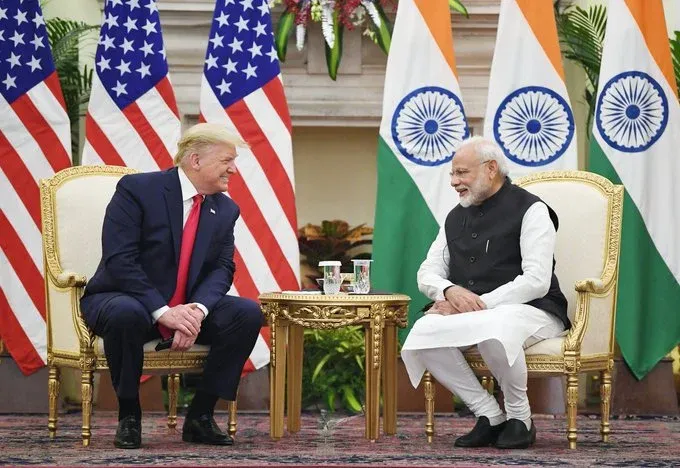
The personal rapport between President Trump and Prime Minister Modi could play a pivotal role in these negotiations. Both leaders have expressed a desire to strengthen bilateral ties and expand economic cooperation. However, balancing domestic political considerations with international trade demands will be crucial in determining the outcome of these discussions.

As the April 2 deadline for the implementation of U.S. reciprocal tariffs approaches, the urgency for a resolution intensifies. Both nations stand to gain from a mutually beneficial agreement that addresses tariff disparities and promotes fair trade practices. The coming weeks will be critical in shaping the future trajectory of U.S.-India trade relations.


HONG KONG SAR – Media OutReach Newswire – 11 March 2025 – Hong Kong Science and Technology Parks Corporation (HKSTP) today announced the strategic development of InnoCentre in Kowloon Tong as the leading green technology hub – “GreenTech Hub”. This initiative brings together more than 200 green technology companies in the ecosystem to drive R&D and demonstrate sustainable solutions, signifying HKSTP’s pivotal role in propelling Hong Kong […]

VISHNU RAJA
RYO YAMADA
HITORI GOTOH
IKUYO KITA