News related to
Electric

Shin-Etsu Chemical plans to build a new rare-earth refining facility in Fukui Prefecture as Japan accelerates efforts to protect critical mineral supply chains from disruption caused by China’s export controls.

The project marks the company’s first new rare-earth refining facility since 2008 and comes as demand for high-performance magnets rises across electric vehicles, hard disk drives, robotics, wind power systems, defence equipment and advanced electronics. The investment is expected to exceed ¥35 billion, with ¥17.5 billion to be covered by government subsidy support, although the final cost and production schedule have not yet been fixed.

The new facility is intended to reinforce supplies for Shin-Etsu’s rare-earth magnet business and strengthen access to raw materials used in neodymium-based magnets. Heavy rare earths such as dysprosium, terbium and yttrium are particularly important because they improve magnet performance in high-temperature and high-stress applications, including vehicle motors and precision industrial systems.

Shin-Etsu already operates rare-earth refining facilities in Japan and has long been one of the country’s most important producers in the sector. Its rare-earth operations are centred in Fukui Prefecture, where it smelts materials and manufactures magnets at its plant in Echizen. The company says it works from raw materials through production to provide stable quality and supply, while also pursuing recycling and resource diversification.

The planned expansion reflects a broader shift in Japan’s industrial policy after months of tightening access to critical minerals. Chinese shipments of several heavy rare earths and gallium to Japan have been severely restricted since late 2025, heightening concerns among manufacturers that depend on these materials for magnets, semiconductors and other precision components. China continues to dominate mining, separation and refining capacity across the rare-earth value chain, giving Beijing considerable leverage over downstream industries.

Japan remains the largest rare-earth magnet producer outside China, but its manufacturers are still exposed to bottlenecks in the supply of heavy rare earths. The country has built stockpiles, backed overseas projects and encouraged recycling since the 2010 rare-earth shock, when diplomatic tensions with China exposed the risk of overdependence on one supplier. Those measures have improved resilience, but they have not removed the vulnerability.

The latest project is significant because it targets refining and processing rather than simply raw-material procurement. Mining deposits alone do not solve the supply challenge; rare earths require complex separation, purification and alloy processing before they can be turned into magnets. China’s advantage lies not only in reserves but also in decades of accumulated processing capacity, cost efficiency and industrial integration.

Shin-Etsu’s move also fits into a wider network of partnerships being pursued by Japan with Australia, France and the United States. Tokyo has backed alternative producers, supported offtake arrangements and encouraged private-sector investment in midstream processing. Australia-based Lynas has become a key non-China supplier, but output of heavy rare earths remains far below the volumes needed to replace Chinese supply in full.

The pressure is not limited to Japan. Manufacturers in the United States and Europe have faced similar supply uncertainty as export licensing delays affect rare earths used in aerospace, defence, clean energy and electronics. Companies exposed to the restrictions are searching for alternative suppliers, but industry executives warn that rebuilding a fully independent supply chain will take years.

For Shin-Etsu, the business case rests on both security and demand. Permanent magnets are central to electrification and digital infrastructure. Electric vehicles require compact, powerful motors; data centres and hard disk drives depend on precision magnetic components; wind turbines need high-strength magnets to improve efficiency. Demand growth has made the magnet supply chain a strategic concern for governments as well as manufacturers.

The company’s project is unlikely to eliminate Japan’s reliance on imported feedstock, especially for heavy rare earths where global non-China supply remains thin. It could, however, give domestic manufacturers greater control over processing, quality assurance and emergency production planning. That matters for customers in sectors where delivery delays can disrupt production lines and where material specifications are tightly controlled.

The government subsidy underscores how rare earths have moved from a specialist materials issue to a national industrial priority. Public support reduces the financial burden on companies undertaking technically demanding projects with long payback periods. It also signals that Tokyo is prepared to use industrial policy to keep strategic capabilities onshore.

Abu Dhabi’s L’IMAD Holding has deepened its grip on TAQA after its subsidiary Abu Dhabi Power Corporation bought a further 8.09 per cent stake in the listed power and water utility, lifting its holding to 98.12 per cent. The transaction, disclosed on Wednesday, involved the acquisition of 9.1 billion TAQA shares from Two Point Zero Group. Based on TAQA’s closing share price that day, the stake was […]

Arabian Post Staff -Dubai Industrial and Commercial Bank of China Limited’s Dubai branch is marketing dual-currency green bonds, offering investors a dollar floating-rate tranche and a renminbi fixed-rate tranche as sustainable debt issuance continues to gain traction across Gulf capital markets. The proposed three-year dollar notes carry initial price guidance at the Secured Overnight Financing Rate plus 90 basis points, while the three-year offshore renminbi tranche is […]

Chinese investors shut out of SpaceX’s planned blockbuster share sale are turning to indirect routes, fuelling speculative demand for offshore vehicles, supplier stocks and domestic space-sector names as Elon Musk’s rocket company prepares for one of the largest market debuts on record. Underwriters handling the offering have been told not to accept orders from investors in mainland China and Hong Kong, with the restriction linked to US […]

Trad. Fi and W3 are preparing a $650 million private-credit programme aimed at moving equipment-financing loans for businesses onto public blockchain infrastructure, marking a fresh push to connect real-economy lending with automated capital workflows and tokenised settlement. The initiative targets a 48-month pipeline of lending assets tied to equipment purchases, with Trad. Fi originating credit and W3 providing artificial-intelligence agents to support risk assessment, due diligence and […]

16-18 June 2026, at Sands Expo & Convention Centre, Marina Bay Sands, Singapore

TOKYO, JAPAN – Media OutReach Newswire – 10 June 2026 – Tenchijin Inc., a space-tech innovator transforming sustainable water infrastructure management, is pleased to announce its participation in Singapore International Water Week 2026 (SIWW), one of the world’s premier platforms to share and co-create innovative water, coastal, and flood solutions to meet urban water and associated climate challenges.

Organized by Singapore International Water Week Pte Ltd, a subsidiary of PUB, Singapore’s National Water Agency, SIWW is Asia’s premier global platform for co-creating innovative water solutions. Held biennially, the event is expected to gather over 2,500 global leaders, experts, and practitioners from governments, utilities, academia, and industry to share best practices, showcase the latest technologies, and harness business opportunities.

As a cornerstone of the event, the SIWW2026 Water Expo serves as the pre-eminent marketplace for urban water technologies, innovations, and solutions tailored for municipal and industrial water users across Southeast Asia. Organized by Messe München in cooperation with IFAT, the Expo connects the full water value chain—from advanced treatment, reuse, and desalination to digital solutions and climate-resilient coastal protection. Taking place from 16–18 June 2026 at the Sands Expo & Convention Centre, Marina Bay Sands, Singapore, the Expo is expected to welcome over 24,000 trade visits, making it Asia’s leading business platform for sustainable water management.

Tenchijin will showcase “KnoWaterleak,” our water leakage assessment and management platform, at the exhibition booth. Additionally, Yohei Nishiyama, VP of Business Development, will speak as a guest panelist in the Technology Forum, sharing insights on sustainable water management solutions driven by AI and space technology.

Event Overview
■ Organizer: SIWW: Singapore International Water Week Pte Ltd/Water Expo: Messe München
■ Date: SIWW: 15–18 June 2026 / Water Expo: 16–18 June 2026
■ Venue: Sands Expo & Convention Centre Marina Bay Sands, Singapore
■ Event URL: https://www.siww.com.sg/

Tenchijin-SIWW Water Expo
■ Date: Water Expo: 16–18 June 2026

[Exhibition Booth]
■ Booth Number: B2-N08PIC

[Panel Discussion]
■ Tenchijin’s Panelist: Yohei Nishiyama, VP of Business Development
■ Date: 16 June, 1:00pm – 2:00pm (Technology Forum)
■ Venue: Hall E, Level B2
■ Discussion Theme: “Reactive to Predictive: AI Applications in Managing Aging Water Infrastructure”

With much of the world’s water infrastructure aging rapidly, the cost of reactive management is no longer sustainable. This panel examines real-world AI applications—from predictive leak detection to asset performance modeling—that help utilities anticipate failures, prioritize investments, and transition toward proactive, data-driven operations that improve efficiency and long-term infrastructure resilience.

Moderated by: Kim Demeyer, Science & Technology Counsellor, Flanders Investment & Trade

Panelists:
・Shanmugavel Subramaniam, Water and Wastewater Segment Leader, Schneider Electric
・Yohei Nishiyama, VP of Business Development, Tenchijin Inc.

https://siww2026-app.siww.com.sg/agenda/?agid=fe6fc21d07c8452c8e29

Hashtag: #Tenchijin #SIWW #KnoWaterleak #SatelliteTechnology #WaterLeakage #Sustainability #LeakageDetection #SpaceTech #Startup


The issuer is solely responsible for the content of this announcement.

Tenchijin Inc.

About Tenchijin KnoWaterleak
KnoWaterleak is an innovative platform that harnesses satellite data and AI to predict and prevent water infrastructure risks. The system analyzes space-derived data to identify potential leaks within 100-meter square zones, providing unprecedented insights through a 5-level risk evaluation system.

Through continuous AI learning and data collection, the platform demonstrates efficiency in sustainable water management. This technology has earned recognition from Japan’s Ministry of Health, Labour and Welfare at the 7th Infrastructure Maintenance Grand Prize.

About Tenchijin Inc.
Tenchijin Inc. is a space-tech innovator leveraging satellite data and AI to detect hidden water infrastructure risks, predict potential leaks, and drive more sustainable, efficient water management through space-derived insights. Our flagship product, KnoWaterleak, combines satellite technology with advanced AI algorithms to proactively identify and prevent costly infrastructure failures, enabling organizations to manage their water systems more sustainably.

Company Overview:

  • Company Name: Tenchijin Inc.
  • Address: 5F, Nihonbashi 1-chome Mitsui Building, 1-4-1 Nihonbashi, Chuo-ku, Tokyo, Japan
  • Representative: Yasuhito Sakuraba, CEO
  • Business Content: Land evaluation consulting using satellite data
  • Website: https://knowaterleak.space/

For inquiries regarding the expansion of Tenchijin COMPASS KnoWaterleak globally: Asia Business Development Representative: asia-t@tenchijin.co.jp

For media inquiries: Satomi, Kiki pr@tenchijin.co.jp

ADNOC is exploring investment opportunities in Canada’s upstream oil and liquefied natural gas sectors through XRG, its international energy investment arm, as Abu Dhabi intensifies its search for overseas assets aligned with long-term energy security and gas demand. Musabbeh Al Kaabi, ADNOC’s chief executive for upstream, said at the Global Energy Show in Calgary on Tuesday that the company was encouraged by Canada’s renewed emphasis on energy […]

Advertisements
New Delhi has tightened import controls on key silver categories, making prior authorisation from the Directorate General of Foreign Trade mandatory for specified products under Chapter 71 of the ITC 2022 schedule.

The amended rules, issued through Notification No. 19/2026-27 dated 2 June 2026, apply with immediate effect to silver powder, silver grains, silver of 99.9% purity or more, and other unwrought silver. The change adds a fresh approval layer to a trade channel that was already limited to nominated agencies, banks and qualified jewellers using authorised routes.

The affected ITC codes include 71061000 for silver powder, 71069110 for silver grains, 71069120 for silver containing 99.9% or more by weight of silver, and 71069190 for other unwrought silver. These categories fall within the broader heading for silver, including silver plated with gold or platinum, in unwrought, semi-manufactured or powder form.

Until the amendment, eligible imports could be routed through banks notified by the Reserve Bank of India, agencies notified by the DGFT, and qualified jewellers notified by the International Financial Services Centres Authority for imports through the India International Bullion Exchange. The new framework keeps those channels in place but requires a valid DGFT Import Authorisation before shipments can proceed.

The order marks a sharper shift in bullion management after curbs were placed in May on silver bars of 99.9% purity and other semi-manufactured forms. Together, the steps move a large portion of silver inflows away from a relatively open framework towards a case-by-case approval regime. The policy direction points to closer official monitoring of volumes, end-use and trade routing at a time when precious-metal purchases have added pressure to the external account.

Silver imports have climbed sharply, with the country’s import bill for the metal touching a record $12 billion in the financial year ended March 2026, compared with $4.8 billion a year earlier. April shipments rose 157% year on year to $411 million, underlining the scale of demand before the latest controls took effect.

The bullion market is likely to feel the immediate impact through slower approvals, tighter availability and wider domestic premiums if import authorisations do not keep pace with demand. Dealers have already been adjusting to a compliance-heavy environment, including the April publication of the list of banks authorised to import gold and silver until March 2029 after delays had held up consignments at customs.

The policy also comes after duties on gold and silver were raised to 15% from 6%, a move aimed at discouraging discretionary imports of precious metals. Higher tariffs and tighter licensing conditions together indicate a broader attempt to contain import demand, protect foreign exchange reserves and reduce pressure on the rupee at a time when oil and other commodity bills remain sensitive to global price swings.

Industrial users will be watching the authorisation process closely because silver is not only a bullion and jewellery metal. It is used in electronics, solar cells, conductive pastes, precision engineering, industrial chemicals and electrical components. Silver powder and grains are important inputs for manufacturers as well as refiners and jewellers, making clarity on approval timelines essential for supply planning.

Investment demand has become a larger part of the market’s momentum. Silver bars, coins and exchange-traded products have attracted interest from investors looking for exposure to precious metals, particularly when global uncertainty and currency volatility lift demand for hard assets. That trend has complicated policy choices because the same metal feeds both household savings and industrial supply chains.

The India International Bullion Exchange remains central to the formalisation of bullion trade through GIFT City, especially for qualified jewellers using the exchange route. By requiring DGFT authorisation even for eligible jewellers importing through IIBX, the amendment signals that institutional routing alone will no longer be treated as sufficient compliance for specified silver categories.

Silver dore imports by refineries continue under the existing licence framework with actual-user conditions where applicable, leaving the refining route distinct from the broader authorisation requirement for covered products. This distinction matters for refiners that process raw material into marketable silver, though they too are operating in a tighter policy environment.

Major supply sources for the country include the UAE, Britain and China, making the rule change relevant for global bullion flows as well as domestic trade. Suppliers may face slower shipment planning, while banks and nominated agencies will need to factor DGFT approvals into import schedules.

The immediate test for the new system will be administrative efficiency. A transparent and predictable authorisation process could help the government track sensitive inflows without disrupting legitimate industrial consumption. Delays, however, could push up local premiums, affect manufacturers dependent on imported feedstock and encourage buyers to shift procurement strategies.

China’s aluminium exports accelerated in May as overseas buyers turned to the world’s biggest producer to offset supply disruption triggered by the Middle East war, while crude oil imports dropped to their lowest level in eight years in a sign of strain across the country’s commodity flows.

Customs figures showed a sharp rise in outbound shipments of unwrought aluminium and aluminium products, extending the strong performance seen in April, when exports reached 598,000 metric tonnes. The increase underlined China’s role as the main buffer for a global market unsettled by production cuts, shipping delays and higher insurance costs linked to the conflict around the Gulf and the Strait of Hormuz.

The aluminium surge came as China’s wider trade machine gathered pace. Total exports rose 19.4 per cent from a year earlier in May, beating forecasts and widening the trade surplus to more than $105 billion. Imports also grew 27.4 per cent, but the headline gain masked a sharp fall in crude purchases, with volumes down about 29 per cent as refiners leaned more heavily on inventories and cut some buying amid elevated freight and geopolitical risks.

Aluminium has become one of the clearest channels through which the Middle East war is reshaping industrial supply chains. Producers in Gulf states account for a meaningful share of non-Chinese primary aluminium supply, and disruption to power-intensive smelting, port activity and shipping routes has tightened availability for consumers in Europe, Asia and North America. Prices in London climbed to a four-year high this month as traders priced in the risk of prolonged supply constraints.

Chinese exporters have benefited from the opening. Producers and traders have increased shipments of semi-finished products and other aluminium categories where overseas premiums have risen faster than domestic prices. The price gap has improved margins for exporters, even as Beijing continues to manage capacity growth in a sector long associated with heavy energy use and emissions.

The market shift is particularly important for manufacturers in transport, construction, packaging, power infrastructure and renewable energy. Aluminium is widely used in electric vehicles, aircraft parts, solar frames, building systems and high-voltage transmission equipment. A sustained shortage outside China could raise input costs for industries already dealing with expensive financing, disrupted shipping schedules and volatile energy markets.

China’s advantage rests on scale. The country dominates global aluminium production and has built deep processing capacity across provinces such as Shandong, Henan, Guangxi and Yunnan. Its producers can move quickly when export margins improve, though output remains constrained by power costs, environmental controls and the national ceiling on smelting capacity.

The export rise also carries political sensitivity. Western governments have long argued that China’s industrial policies create excess capacity and depress global prices. A fresh wave of metal exports, even if driven by war-related shortages, could sharpen trade friction at a time when the United States, Europe and other economies are expanding scrutiny of Chinese goods in sectors ranging from steel and batteries to solar components and electric vehicles.

Crude oil tells a different story. China remains the world’s largest crude importer, but May’s decline showed how refiners are adjusting to uncertainty in Gulf shipping. The Middle East supplied a large share of China’s crude last year, with Saudi Arabia, Iraq, the United Arab Emirates, Oman, Kuwait and Qatar among key reported suppliers, while Iranian barrels have continued to reach Chinese buyers through opaque trading channels.

Refiners have drawn on commercial and strategic inventories built during earlier periods of lower prices and heavy discounted buying. Weak domestic fuel margins have also reduced the incentive to import aggressively. Independent refiners in Shandong and state-run plants have faced pressure from high crude costs, capped fuel prices and softer demand growth as electric vehicles erode petrol consumption.

The fall in crude imports may help ease immediate pressure on global oil markets, but it also reflects the vulnerability of China’s energy security to maritime disruption. The Strait of Hormuz remains central to crude and liquefied natural gas flows, and any prolonged interruption would force Beijing to rely more on stockpiles, pipeline supplies from Russia and Central Asia, and alternative seaborne routes.

For commodity markets, May’s trade data showed a split picture. Metals exports are expanding where China can monetise overseas shortages, while energy imports are being managed more cautiously to reduce exposure to war-driven price spikes. Copper imports slipped from April, suggesting that parts of the manufacturing supply chain remain uneven despite the strong headline export performance.

Arabian Post Staff -Dubai Saudi Arabia has opened talks with Russia’s Sistema investment group in St Petersburg as Riyadh seeks to deepen industrial partnerships, localise advanced technologies and strengthen supply chains under its wider economic diversification programme. Minister of Industry and Mineral Resources Bandar Alkhorayef met senior Sistema executives during a visit to the Russian city, with discussions centred on cooperation in high-priority industrial sectors and the […]

Côte d’Ivoire is set to extend electricity access to more than 100,000 households after the African Development Bank Group approved €103.14 million in financing for a major grid-expansion programme aimed at strengthening the country’s power system and narrowing remaining access gaps. The financing, approved by the bank’s Board of Directors in Abidjan on 15 May 2026, will support the second phase of the Project to Strengthen the […]

Hola Browser’s Windows installer was compromised to deliver an undeclared cryptocurrency-mining executable to some users, exposing a supply-chain weakness in a product that had passed application certification checks before the anomaly was detected. The affected version, Hola Browser for Windows 1.251.91.0, wrote an unexpected file named me. exe to C:Program FilesHola on some systems. The executable was not part of the certified software footprint, was not digitally […]

Wing Kai New Energy X QIJI Energy X C&D Hi-Tech

HONG KONG SAR – Media OutReach Newswire – 5 June 2026 – The 19th (2026) International Photovoltaic Power Generation and Smart Energy Exhibition & Conference (SNEC 2026) was grandly held from June 3 to 5, 2026, at the National Exhibition and Convention Center (Shanghai). Attracting over 3,000 exhibitors from 95 countries worldwide, the event stands as the largest and most influential professional grand gathering for the photovoltaic and energy storage sectors across Asia and globally.

During the exhibition, Mr. Yiu Wang Lee, Chairman of the Board of Wing Lee Development Construction Holdings Limited (“Wing Lee” or the “Group”, stock code: 9639.HK); Mr. Cai Huihui, General Manager of Wing Kai New Energy Technology Co., Limited (“Wing Kai New Energy”); Mr. Wang Yi, Key Account Manager of QIJI Energy; Mr. Xu Jun, Overseas Energy Storage Commercial Director of Contemporary Amperex Technology Co., Limited (CATL); and Mr. You Yuxian, ASEAN Regional Energy Storage Sales Director of CATL, jointly visited the exhibition booth of C&D Hi-Tech. The delegation engaged in in-depth discussions with the team led by General Manager Mr. Zhan Shengli, focusing on battery swapping station projects in Hong Kong and Southeast Asia. By integrating multi-party resources, the teams successfully finalized and signed a Strategic Cooperation Agreement.

Through this signing, the three parties will join forces to address and resolve the industry pain points of overseas markets regarding regulatory compliance, engineering infrastructure, and supply chain coordination. The collaboration represents a deep integration of QIJI Energy’s cutting-edge battery swapping solutions, Wing Kai New Energy’s localized infrastructure and operational capabilities across Hong Kong and Shenzhen, and C&D Hi-Tech’s robust global resource allocation strengths. Moving from single-project development to an ecosystem of mutual win-win, this partnership will significantly enhance the delivery efficiency of green energy across Hong Kong, Macau, and the Southeast Asian region, setting a brand-new benchmark for regional zero-carbon smart transportation.

As a subsidiary of Wing Lee, Wing Kai New Energy has been rooted in Hong Kong since its inception while radiating its presence globally, deeply cultivating sustainable clean energy solutions. Addressing the acute pain points in the Greater Bay Area and Southeast Asian markets, where rapid fluctuations in energy prices have led to surging cost pressures for logistics distribution enterprises, Wing Kai New Energy will focus on urban distribution logistics battery swapping businesses in the future. The company plans to integrate site resources, infrastructure, and operations to fill the gap in regional infrastructure. We firmly believe that this cooperation will effectively bridge the cross-border green energy eco-link, accelerate the construction of a green energy service network, and contribute solidly to the realization of the “dual carbon” goals. Meanwhile, we sincerely invite more partners to join the Zero-Carbon Smart Alliance to jointly advance sustainable development.

Hashtag: #WingLee

The issuer is solely responsible for the content of this announcement.

About Wing Lee Development Construction Holdings Limited

Deeply rooted in Hong Kong, Wing Lee is an established contractor engaged in civil engineering, electrical and mechanical engineering, and new energy businesses, and has participated in various large-scale landmark projects in Hong Kong. The Group’s civil engineering business specialized in site formation waterworks as well as road and drainage works, while its electrical and mechanical engineering business specializes in power system-related projects and emergency maintenance works. In recent years, the Group has actively expanded into the new energy sector, undertaking solar photovoltaic projects, distributing various electric commercial vehicles and electric construction machinery, and engaging in the construction and subsequent maintenance of charging piles, battery swapping, recycling, and energy storage businesses. In 2025, Wing Lee Construction, together with SANY Group Co., Ltd. and CATL, among other industry giants, founded the “Zero-Carbon Smart Alliance” to develop full-industry-chain solutions for photovoltaics, energy storage, charging and battery swapping, and smart applications in green transportation.

Japan is preparing to replace as many as 14 ageing nuclear reactors by the 2050s, marking one of its clearest moves yet towards restoring atomic power as a central pillar of national energy security after more than a decade of post-Fukushima restraint.

The Ministry of Economy, Trade and Industry has set out a policy proposal calling for the rebuilding of between two and five reactors by the 2040s and up to 14 by the 2050s. The plan would add about 16 gigawatts of nuclear capacity, helping the country meet rising electricity demand from artificial intelligence, data centres, advanced manufacturing and wider electrification.

The proposal reflects a major shift in Japan’s energy strategy. After the Fukushima Daiichi disaster in March 2011, Japan shut all 54 operating reactors, leaving the world’s third-largest economy more dependent on imported liquefied natural gas, coal and oil. Only 15 of the 33 remaining operable reactors have returned to service, while many units face retirement pressure as they approach or exceed their permitted 60-year operating life.

Tokyo’s latest energy plan targets nuclear power at around 20 per cent of electricity generation by fiscal 2040, while renewables are expected to provide 40 to 50 per cent. Thermal power, which still accounts for a large share of supply, is expected to decline but remain important for grid stability and emergency backup. The policy removes earlier language about reducing reliance on nuclear power, replacing it with a call to maximise the use of both renewables and atomic energy.

The renewed push is driven by a combination of economic and geopolitical pressures. Japan imports most of its energy, leaving households and industry exposed to volatile fuel prices, shipping risks and currency swings. The war in Ukraine, instability in the Middle East and tighter global gas markets have strengthened the case within government for expanding domestic low-carbon baseload power.

Electricity demand, which had been broadly flat for years, is also expected to turn higher. The spread of AI computing, semiconductor plants, battery factories and digital infrastructure has increased concern that inadequate power supply could weaken Japan’s ability to attract investment. Officials view nuclear energy as a way to provide stable, large-scale electricity without increasing carbon emissions.

The plan is likely to benefit major utilities including Tokyo Electric Power, Kansai Electric Power, Kyushu Electric Power and Chubu Electric Power, although the sector still faces high regulatory, financial and social hurdles. Reactor replacement requires local consent, safety approval, heavy capital spending and long construction timelines. Japan has not built a new reactor since before Fukushima, and public trust remains fragile.

Safety concerns remain the central political obstacle. The Fukushima disaster, triggered by the March 2011 earthquake and tsunami, forced mass evacuations and left deep scepticism about official oversight of the nuclear industry. Questions over seismic risk, evacuation planning, spent fuel storage and operator transparency continue to shape public debate, particularly in communities near existing plants.

Controversies have added to the challenge. Chubu Electric has faced scrutiny over falsified seismic risk assessment data at the Hamaoka nuclear plant, a facility long viewed as sensitive because of its location in an earthquake-prone area. Incidents of that kind reinforce concerns among critics who argue that Japan should prioritise renewables, storage, grid upgrades and efficiency rather than committing to another generation of nuclear infrastructure.

Supporters counter that renewables alone will not meet Japan’s industrial needs quickly enough, given land constraints, permitting delays and the intermittency of solar and wind power. Offshore wind has long-term potential, while next-generation solar technologies such as perovskite cells are being promoted, but large-scale deployment will take time. Nuclear advocates argue that replacing old reactors with advanced designs could improve safety and reliability while supporting climate targets.

The government’s approach is to rebuild reactors at existing or decommissioned nuclear sites rather than open entirely new locations, a strategy designed to reduce political resistance and use established grid infrastructure. Next-generation reactors are expected to incorporate stronger passive safety systems and improved resilience against natural disasters, although costs and construction schedules remain uncertain.

Saudi Arabia has moved to reassure global energy markets that it will remain a dependable supplier as geopolitical shocks, shipping risks and divergent demand forecasts intensify pressure on producers and consumers. Minister of Energy Prince Abdulaziz bin Salman told the 29th St. Petersburg International Economic Forum that stability in the energy sector had become an urgent global requirement. “We are a resilient energy supplier; we have been […]

SHANGHAI, CHINA – Media OutReach Newswire – 5 June 2026 – SKYWORTH Solar has reinforced its commitment to Thailand’s growing clean energy sector following the opening of its Bangkok office and the signing of a 100MW commercial and industrial (C&I) solar project memorandum of understanding with local partner CapSolar.

Source: SKYWORTH

The announcement forms part of SKYWORTH Solar’s newly unveiled global growth strategy, revealed at the 2026 SNEC Exhibition and Global Customer Summit in Shanghai, where the company introduced its new positioning as a “Global Smart Energy Ecosystem Leader” and outlined plans to accelerate expansion across key international markets.

Thailand has emerged as one of SKYWORTH Solar’s strategic markets in Southeast Asia, driven by rising energy demand, increasing electricity costs for businesses, and growing momentum behind renewable energy adoption.

The opening of the company’s Thailand office at Empire Tower in Bangkok strengthens SKYWORTH Solar’s local presence. It enables the company to provide customers and partners with enhanced support across consultation, project execution, after-sales service, supply chain coordination and project delivery.

“Thailand represents a significant growth opportunity for SKYWORTH Solar as businesses increasingly seek reliable and cost-effective clean energy solutions,” said Wanfei Qu, Chief Investment Officer of SKYWORTH Group, CEO and Director of SKYWORTH Solar. “Our strategy is built on the principle of ‘Global Vision, Local Execution’, combining global expertise with strong local partnerships to support Thailand’s energy transition and long-term sustainability goals.”

As part of its expansion plans, SKYWORTH Solar signed a 100MW C&I solar project MOU with CapSolar, supporting the growing demand for rooftop solar solutions among commercial and industrial businesses.

The company is also strengthening its local ecosystem through investments in project development, financing partnerships and service capabilities. This includes a strategic banking collaboration with ICBC Thai and access to a US$500 million investment fund to support solar project development and deployment in Thailand and other international markets.

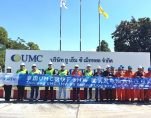
One example of SKYWORTH Solar’s growing footprint in Thailand is its 3MW rooftop solar project at UMC Steel Plant in Chonburi Province. The project is expected to generate approximately 4.4 million kWh of clean electricity in its first year, helping reduce energy costs while supporting the facility’s sustainability objectives.

The developments in Thailand were highlighted as part of SKYWORTH Solar’s broader global strategy unveiled at SNEC 2026. The company announced plans to expand its solar, energy storage, and integrated smart energy solutions across Europe, Southeast Asia, the Middle East, and Africa, in response to increasing global demand for renewable energy technologies.

As governments and businesses accelerate their decarbonisation efforts, SKYWORTH Solar aims to support customers through a combination of advanced technology, flexible business models and localised service capabilities.

For more information about SKYWORTH Solar and its clean energy solutions, please visit https://www.skyworth-pv.com.
Hashtag: #SKYWORTH

The issuer is solely responsible for the content of this announcement.

About SKYWORTH

SKYWORTH Solar, the cutting-edge PV brand under SKYWORTH Group, is a global leader in providing comprehensive one-stop solar solutions. Comprehensive end-to-end services are provided, encompassing consulting, design, and product O&M, all supported by a portfolio of self-developed solutions.

As a leading global renewable energy developer, service provider and energy solutions provider, SKYWORTH is actively shaping the future of energy. With a strong presence in EPC services and one-stop product solutions, SKYWORTH delivers high-quality, reliable, and innovative energy solutions. SKYWORTH ‘s commitment to originality and excellence has earned widespread recognition in international markets such as Germany, Italy, the UK, Brazil, and Senegal.

Thailand’s richest man Sarath Ratanavadi is preparing a 140 billion baht expansion through Gulf Development Pcl over five years, placing data centres, digital infrastructure and power supply at the centre of one of Southeast Asia’s most ambitious corporate bets on artificial intelligence demand.

The plan, worth about $4.3 billion, reflects a sharp turn by Gulf from its traditional base as a power producer into a broader infrastructure group linking electricity generation, telecommunications, cloud services and industrial logistics. The investment push comes as Thailand seeks to position itself as a regional data hub, helped by rising demand for cloud computing, artificial intelligence workloads and data-localisation capacity across Southeast Asia.

Gulf’s strategy is built around a simple commercial premise: AI facilities need vast, reliable and increasingly low-carbon electricity. Data centres are among the most power-intensive assets in the digital economy, and operators are under pressure to secure stable energy supply while meeting sustainability commitments from global technology clients. Gulf’s existing position in gas-fired power, renewable energy and utilities gives it an advantage that pure technology infrastructure firms may struggle to match.

Sarath, Gulf’s chief executive and controlling figure, has spent years reshaping the group from a conventional energy developer into a conglomerate with exposure to telecoms, satellites, digital platforms and cloud infrastructure. The merger of Gulf Energy Development and Intouch Holdings created a larger listed platform linked to Advanced Info Service, Thailand’s biggest mobile operator, and Thaicom, the satellite company. That structure gives Gulf access to telecom traffic, enterprise clients and digital distribution channels that can support its data-centre ambitions.

The investment programme is expected to support new data-centre capacity, related infrastructure and power projects needed to serve hyperscale and enterprise customers. Gulf has already moved into the sector through partnerships involving global technology names and regional operators, while its digital arm has explored cloud and AI services designed for corporate and government clients. The company’s first major data-centre project has become a reference point for its expansion into facilities that can host high-density computing workloads.

Thailand’s broader investment environment has also shifted in Gulf’s favour. Authorities have approved large-scale data infrastructure projects from global technology players, including server and data-processing investments across Bangkok, Samut Prakan and Chachoengsao. Google, Amazon Web Services, Microsoft and ByteDance-linked operations have all announced or pursued major commitments in the country, intensifying competition but also validating Thailand’s role in the regional digital economy.

For Gulf, the opportunity lies not only in renting data-centre capacity but also in selling bundled infrastructure: power, connectivity, cloud access and long-term operational reliability. That model could create recurring income and reduce dependence on regulated returns from power generation. It may also help Gulf deepen its relationship with large technology clients seeking local partners that understand land, energy approvals, grid constraints and domestic regulatory requirements.

The group’s financial position gives it room to move, though the scale of the programme will be closely watched by investors. Gulf reported strong first-quarter earnings for 2026, helped by its energy operations and profit contribution from Advanced Info Service. Revenue growth and core profit gains have strengthened confidence in its ability to finance new projects, but data centres require heavy upfront spending and returns can depend on utilisation rates, long-term contracts and energy costs.

The timing is also sensitive. Across Asia, governments are competing for data-centre investment while confronting pressure on power grids, water use and land availability. Singapore’s cautious approach to new data-centre capacity has encouraged developers to look at Malaysia, Thailand, Indonesia and Vietnam, but each market faces its own constraints. Thailand has industrial land, policy incentives and improving connectivity, yet grid readiness and clean-energy availability remain decisive issues for hyperscale clients.

Gulf’s renewable energy targets are likely to form part of its sales pitch. The company has set out plans to raise the share of renewables in its generation portfolio and reduce carbon intensity, while continuing to rely on gas as a stable baseload fuel. Its long-term LNG supply arrangements also point to a strategy that balances energy security with transition commitments, even as customers demand cleaner electricity for digital operations.

Sarath’s expansion plan underscores how AI is redrawing corporate strategy beyond Silicon Valley. Energy groups, telecom operators and infrastructure funds are increasingly competing for the physical assets behind the digital boom. Gulf’s bet is that Thailand’s AI economy will be shaped as much by power plants, fibre networks and industrial sites as by software models and cloud applications.

MIT and IBM researchers have opened a new front in multimodal artificial intelligence by releasing ChartNet, a large synthetic dataset designed to teach smaller vision-language models how to read, extract and reason from charts with greater accuracy than far larger commercial systems. The dataset, available through Hugging Face, contains 1.7 million richly annotated core chart samples and a broader collection running into millions of synthetic examples. Its […]

Greenlogue/AP   Dubai Electricity and Water Authority has raised clean energy’s share of its total production capacity to 21.5%, strengthening the emirate’s shift towards a lower-carbon electricity system as demand for power continues to rise across residential, commercial and industrial sectors. Saeed Mohammed Al Tayer, Managing Director and Chief Executive Officer of DEWA, said the increase reflects Dubai’s long-term strategy to align infrastructure growth with environmental sustainability, […]

Gas engine manufacturer Innio has raised $2.43 billion in a US initial public offering, pricing an upsized share sale at the top of its marketed range as investors continue to chase companies tied to the electricity demands of artificial intelligence. The Munich-based distributed energy group priced 90 million shares at $27 each, above the 75 million shares originally planned and at the upper end of the $24 […]

Bull and Hon Hai Technology Group, better known as Foxconn, will manufacture artificial intelligence and cloud infrastructure in Europe under a strategic partnership designed to strengthen the region’s computing supply chain and reduce dependence on external technology providers. The project will use Foxconn’s manufacturing base in Pardubice in the Czech Republic and Bull’s factory in Angers, France, to produce AI systems and related components for European AI […]

KUALA LUMPUR, MALAYSIA – Media OutReach Newswire – 3 June 2026 – MOKiN Malaysia, managed by Unipro Global Sdn Bhd, has launched its Safe Swap Programme, an initiative aimed at encouraging consumers to replace old or damaged charging accessories that may pose potential safety risks during daily use.

The programme is anchored by MOKiN’s TrueGround™ technology, a SIRIM-certified anti-leakage charging solution designed to help reduce electrical leakage risks during charging. As the world’s first Class-1 Anti-Leakage charger, MOKiN introduces an added layer of electrical safety protection that addresses a risk often overlooked in conventional charging products, which typically prioritise charging speed and power output.

The initiative comes amid growing concerns over electrical safety in Malaysian households. According to the Fire and Rescue Department, electrical-related issues accounted for 68% of building fire cases recorded between January and September 2024, with more than 3,000 residential fire incidents linked to electrical sources such as faulty wiring, damaged electrical equipment and overloaded circuits.

“Charging has become such a routine part of daily life that many people no longer pay attention to warning signs like overheating, exposed cables or tingling sensations during charging,” said Terry Lee Hup Boon, Founder of UNIPRO GLOBAL SDN BHD.

“Many consumers tend to focus on charging speed and convenience, but electrical safety is just as important. Our anti-leakage charging technology was developed to help address safety risks that are often overlooked in everyday charging, and through the Safe Swap Programme, we hope to encourage greater awareness of safer charging practices.”

Through the Safe Swap Programme, consumers can trade in old or damaged chargers from any brand and receive a complimentary MOKiN 20W charger, while stocks last.Consumers can participate in Safe Swap activations at the following events from 1 to 30 June 2026:

  • Switch World Event, Gurney Plaza, Penang (4-7 June 2026)
  • UR Festival Fair, Sunway Square, Selangor (11-14 June 2026)

In partnership with consumer electronics retailer Gajeto, MOKiN will also be running a free trade-in campaign at selected Gajeto outlets throughout the month of June, giving consumers additional opportunities to learn more about safer charging solutions and explore MOKiN’s range of anti-leakage charging products. Customers can bring any old charger, regardless of brand, and swap in for a brand-new MOKiN 20W charger at no cost, with no purchase required, while stocks last. Participating Gajeto locations include:

  • Gajeto IOI City Mall (6-7 June 2026)
  • Gajeto The Exchange 106 (13-14 June 2026)
  • Gajeto 1 Utama (20-21 June 2026)
  • Gajeto Setia City Mall (27-28 June 2026)

Consumers may also choose to upgrade to selected higher-watt charging models ranging from 33W to 140W at promotional prices throughout the campaign period.

The Safe Swap Programme reflects MOKiN’s ongoing effort to encourage safer charging habits and greater awareness around the condition of charging accessories used daily by consumers. Consumers are encouraged to bring in old, damaged or ageing chargers during the campaign period, particularly accessories showing signs such as overheating, exposed cables, loose connections or inconsistent charging performance. All traded-in chargers collected through the programme will be removed from circulation as part of the initiative.

Complimentary MOKiN 20W chargers are available on a first come, first served basis while stocks last. For more information, visit www.mokin.my.
Hashtag: #mokinmalaysia #trueground #mokin #mokinmy #safeswap


The issuer is solely responsible for the content of this announcement.

Unipro Global Sdn Bhd

Malaysia’s dedicated distributor for the world’s leading consumer electronics accessories brands such as MOKiN, AUKEY, ESR, and Nakamichi. Based in Kuala Lumpur. We bring premium tech accessories to Malaysian consumers. At Unipro Global Sdn Bhd, we believe that quality tech accessories should be accessible to every Malaysian. We work closely with our brand partners to ensure the right products reach the right customers — at the right price.

Greenlogue/AP Dairy processors can cut greenhouse gas emissions from liquid dairy lines by as much as 49% by modernising existing equipment rather than replacing entire production systems, a Tetra Pak assessment has found, pointing to a faster route for plants under pressure to lower costs, reduce waste and meet climate targets. The analysis, released from Lausanne, examined upgrades to chilled and ambient liquid dairy processing lines and […]

Kioxia Holdings has moved within striking distance of Toyota Motor’s market value, underscoring how the artificial intelligence boom is reshaping Japan’s corporate hierarchy and lifting a memory-chip maker that listed in Tokyo less than two years ago into the country’s market elite.

The Tokyo-based maker of NAND flash memory and solid-state drives has become one of the most closely watched stocks on the Tokyo Stock Exchange after a sharp rally tied to demand for data-centre storage, AI servers and high-performance memory systems. Its market capitalisation has climbed into the tens of trillions of yen, placing it near Toyota and behind SoftBank Group in a reshuffled ranking that would have seemed unlikely when Kioxia priced its initial public offering at 1,455 yen a share in December 2024.

The shift marks a wider challenge to the long-standing dominance of Japan’s manufacturing champions. Toyota, the global carmaker that symbolised the strength of Japan Inc. for decades, has been displaced from the top position by SoftBank during the latest AI-led surge, while Kioxia has risen rapidly from a former Toshiba memory unit backed by Bain Capital into a central player in the market’s technology rotation.

Kioxia’s climb reflects investor expectations that memory will remain a bottleneck in AI infrastructure. Generative AI systems require vast amounts of storage and high-speed data movement, pushing demand beyond the older cycle driven mainly by smartphones and personal computers. Data-centre operators, cloud companies and chip designers are competing for components needed to train and run large AI models, giving memory producers stronger pricing power after years of volatility.

The company’s earnings have strengthened sharply. Kioxia has projected operating profit of about 1.3 trillion yen for the April-June quarter, a figure that puts it among the most profitable listed companies in Japan. Its latest annual results showed strong momentum in revenue, margins and cash generation, helping ease earlier concerns about debt and cyclicality. Rating upgrades to investment grade have added to the perception that the balance sheet is improving at a time when investors are rewarding semiconductor exposure.

Kioxia’s origins give its rise broader industrial significance. The company traces its roots to Toshiba’s memory business, which was sold to a Bain-led consortium in 2018 after Toshiba’s financial crisis. The group was renamed Kioxia in 2019, drawing on the Japanese word for memory and the Greek word for value. Its public listing in 2024 valued it below 800 billion yen, after earlier IPO attempts were delayed by weak valuation conditions and pressure in the memory market.

That cautious debut contrasts sharply with its current status. Shares have multiplied as investors reassessed the role of NAND flash in AI systems, especially as large-scale data centres require higher storage density, faster access and more energy-efficient hardware. Kioxia has also been developing advanced BiCS FLASH technology and promoting next-generation SSDs for AI storage infrastructure.

The rally has also lifted questions over valuation risk. Memory chips remain one of the semiconductor industry’s most cyclical segments, with prices exposed to shifts in capital spending, inventory levels and customer demand. A sharp rise in market value leaves Kioxia vulnerable if hyperscaler investment slows, if competitors add capacity faster than expected, or if customers push back against higher pricing.

Competition is intense. Samsung Electronics, SK Hynix, Micron Technology and SanDisk remain key players across memory markets, with SK Hynix holding a dominant position in high-bandwidth memory used in AI accelerators. Kioxia’s strength is more closely tied to NAND flash and SSDs, where demand from AI infrastructure has broadened the market but does not eliminate the risk of oversupply once new capacity comes on stream.

Toyota’s relative decline in the rankings does not point to operational weakness alone. The carmaker remains one of the world’s largest manufacturers by sales and a major profit generator, but investors have been rotating away from traditional industrial leaders towards companies with direct AI exposure. Concerns over electric-vehicle competition, currency movements and the cost of future technologies have weighed on auto valuations, even as Toyota continues to command global scale in hybrid vehicles and supply-chain management.

SoftBank’s ascent has further highlighted the changing market narrative. Its exposure to Arm and AI-related investments has drawn investors seeking Japan-based access to global AI infrastructure. Together, SoftBank and Kioxia now represent a market story centred on chips, data centres, software platforms and computing capacity rather than the export-led industrial model that long defined Japan’s equity market.

Foreign investor flows have amplified the shift. Japan’s equity market has benefited from corporate-governance reforms, stronger capital returns and renewed interest in companies linked to the AI supply chain. The Nikkei 225 has reached record territory, though the rally has been uneven, with gains concentrated in a limited group of technology-linked names while broader market performance has been more mixed.

Kioxia’s next test will be whether it can convert favourable pricing and sold-out capacity into durable earnings. Investors will look for clearer shareholder-return plans, disciplined capital expenditure and evidence that AI storage demand can remain strong beyond the current investment wave. The company’s contemplated US share listing would widen access to global technology investors and could further raise its profile if market conditions remain supportive.

VISHNU RAJA
RYO YAMADA
HITORI GOTOH
IKUYO KITA