America’s four largest AI spenders are pushing capital outlays towards a record level this year, betting that demand for computing power will justify one of the most expensive investment cycles in corporate history. Microsoft, Amazon, Alphabet and Meta are preparing to spend roughly $680 billion to more than $700 billion on data centres, chips, servers, networking equipment and related infrastructure in 2026, after quarterly earnings showed […]
Global internet reliability came under sharper pressure in the first quarter of 2026 as shutdowns, war damage, power failures and cable incidents disrupted connectivity across several regions, exposing a widening risk for enterprises that depend on cloud platforms, cross-border data flows and always-on digital services. Cloudflare’s review of disruptions from January to March showed that the most damaging incidents were not dominated by software faults alone. Political […]
Australia’s data centre industry is moving from rapid expansion to sharper scrutiny as new forecasting shows a widening gap between announced projects and capacity likely to be delivered by 2030. A joint market intelligence initiative by Data Centres Australia and DC Byte has put operational IT capacity at about 1.4 gigawatts at the end of 2025, with the market projected to reach 3.1GW to 3.2GW by 2030. […]
By Nitya Chakraborty Just two weeks before the scheduled summit of U.S President Donald Trump with the Chinese President Xi Jinping in Beijing on May 14-15, the report of the World Intellectual Property Organisation (WIPO) on the status of AI related applications, has unnerved the U.S. administration as the latest Chinese supremacy in robot related […]
Hong Kong recorded its widest visible trade deficit since comparable records began in 1952, as imports outpaced a powerful export rebound driven by demand for artificial intelligence-related electronics and high-value technology goods.
The city’s merchandise trade gap widened to HK$89.1 billion in March 2026, equal to 12.6 per cent of the value of imports. Total exports rose 35.8 per cent year on year to HK$618.4 billion, while imports jumped 41.2 per cent to HK$707.5 billion, underscoring the unusual scale of the surge in cross-border goods flows through one of Asia’s main trading hubs.
The figures point to a mixed signal for Hong Kong’s externally oriented economy. Export growth was the strongest since early 2021, reflecting robust global demand for electronic components, telecommunications equipment, semiconductors and related supply-chain goods. Yet the sharper rise in imports left the city with a deficit larger than any monthly gap recorded over more than seven decades, highlighting the pressure created by front-loaded purchases, supply-chain repositioning and higher input costs.
For the first quarter of 2026, total exports climbed 32 per cent from a year earlier, while imports increased 37 per cent. The visible trade deficit for the quarter reached HK$168.4 billion, equivalent to 9.8 per cent of imports. On a seasonally adjusted basis, exports rose 18.4 per cent from the previous quarter, while imports advanced 20 per cent.
The most striking gains came from technology-linked categories. Exports of electrical machinery, apparatus, appliances and related parts rose by HK$99.8 billion, or 47.9 per cent, in March from a year earlier. Telecommunications and sound recording equipment exports increased by HK$40.2 billion, or 94.7 per cent, while non-ferrous metals shipments rose by HK$10.2 billion, or 175.9 per cent.
Imports showed a similar pattern, but with larger absolute increases in several categories. Purchases of electrical machinery and related parts grew by HK$106.2 billion, or 49.5 per cent. Telecommunications and sound recording equipment imports rose by HK$45.3 billion, or 93 per cent. Non-ferrous metals imports surged by HK$30.4 billion, a rise of more than 400 per cent, suggesting strong demand for materials used in electronics, data-centre infrastructure and advanced manufacturing supply chains.
The widening deficit also reflects Hong Kong’s role as a re-export centre rather than a conventional manufacturing economy. Goods imported into the city often move onwards to mainland China, Southeast Asia, the United States and Europe after financing, logistics, testing, repackaging or redistribution. During periods of strong global technology demand, import values can rise faster than exports if companies build inventories, reroute shipments or accelerate procurement to avoid transport delays.
Geopolitical tensions have added another layer of volatility. The war in the Middle East has pushed up energy prices, raised shipping risks and complicated trade routes linking Asia with Europe and the Gulf. Higher freight and insurance costs can lift the recorded value of imports, while uncertainty over maritime routes may encourage companies to bring forward shipments or diversify logistics channels. Hong Kong, with its deep financial links and dense regional supply-chain networks, is exposed to those shifts even when final demand originates elsewhere.
The export destination data showed broad-based strength across Asia and beyond. Shipments to Singapore more than doubled, while exports to Malaysia, Thailand, Taiwan and mainland China recorded strong gains. Exports to the United States also rose sharply, reflecting resilient demand for electronics and technology-linked goods despite continuing trade friction and tariff risks. Shipments to the United Kingdom declined, indicating uneven demand across advanced markets.
On the import side, increases were recorded from most major suppliers. Purchases from the United Kingdom, Korea, India, Vietnam, the United States and mainland China all rose substantially, underlining the geographically diverse nature of the procurement surge. Mainland China remained central to the city’s trade flows, both as a supplier and destination, while Southeast Asian economies continued to gain prominence in electronics and component supply chains.
The data suggest that Hong Kong is benefiting from the global investment race in artificial intelligence, cloud computing and advanced electronics, but the gains come with greater exposure to external shocks. Demand for AI servers, chips, networking equipment and related components has lifted trade volumes across Asia, while higher energy prices and shipping uncertainty are adding costs and complicating timing decisions for importers.
France has set deadlines to end the use of coal, oil and fossil gas for energy, placing itself among the first major economies to publish a full fossil-fuel exit timetable as governments debate how to turn climate pledges into enforceable national plans. The roadmap, presented at the international talks in Santa Marta, Colombia, commits France to phasing out coal by 2030, oil by 2045 and fossil gas […]
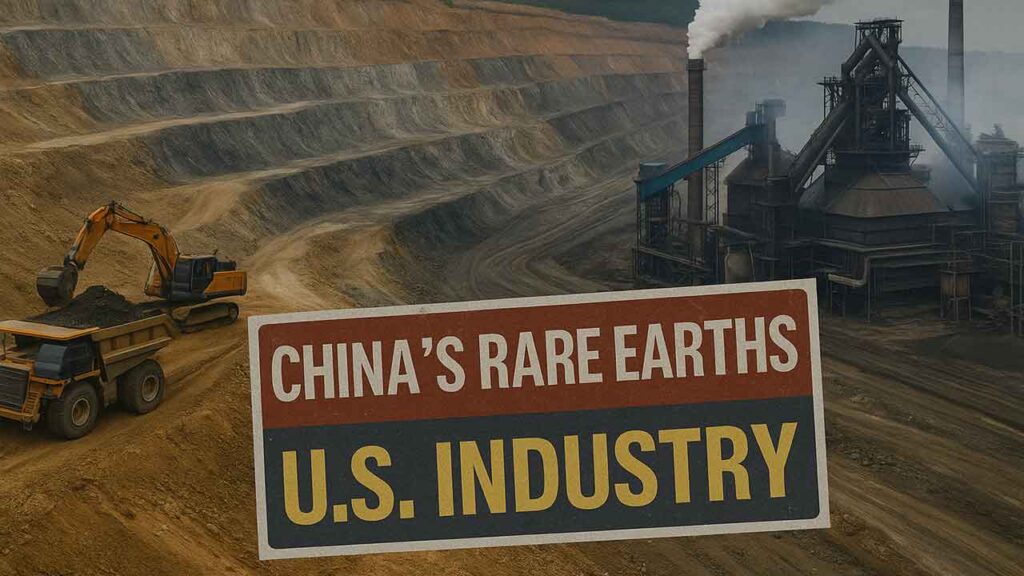
Beijing’s move to sharpen penalties for unauthorised rare earth production sent shares of major producers higher, as investors assessed a tougher enforcement regime that could curb illegal supply and reinforce China’s control over a sector central to clean energy, defence and advanced manufacturing.
China’s Ministry of Industry and Information Technology has opened public consultation on detailed penalty benchmarks under the Rare Earth Management Regulations, setting out how authorities should punish breaches involving mining, smelting, separation, product circulation and data reporting. The draft rules target companies and individuals that exceed state production quotas, operate without approval, process illicit raw materials, falsify traceability data or obstruct inspections.
The consultation runs until 28 May, adding another layer to a regulatory structure that took effect on 1 October 2024. The framework places rare earth mining, smelting and separation under a “total control” system, giving Beijing formal authority to set production limits and police flows across the supply chain. The new penalty table is designed to narrow discretion in enforcement by grading violations according to value, volume, frequency and consequences.
Rare earth-linked equities climbed in Shanghai and Shenzhen after the announcement. China Northern Rare Earth, China Rare Earth Resources and Technology, Huahong Technology and other names tied to mining, processing and permanent magnets moved sharply higher during Wednesday trading. The rare earth permanent magnet segment also advanced, helped by firmer prices for praseodymium-neodymium products and stronger first-quarter earnings from leading producers.
Investors read the draft as a supply-side signal. Stricter penalties could reduce unapproved output that has historically weighed on pricing during periods of weak demand. For larger quota-holding groups, tighter enforcement may support margins by giving compliant producers a stronger position in pricing and procurement. China Northern Rare Earth reported a first-quarter net profit of about 918 million yuan, more than double the level a year earlier, helped by higher average prices for core rare earth products. China Rare Earth Resources and Technology also posted a sharp rise in quarterly profit as prices for selected products improved.
The proposed penalties are substantial. Unauthorised smelting and separation, misuse of rare earth mineral products by recycling or comprehensive utilisation companies, and trading in illegal rare earth products can lead to confiscation of products, unlawful income and related equipment. Fines may reach five to 10 times unlawful gains, while cases with no gain or gains below defined thresholds can still attract penalties running into millions of yuan. Serious breaches can result in business licence revocation.
Traceability is a central element of the enforcement push. Companies that fail to record, upload or maintain data on product flows face fines and possible suspension if they refuse to rectify violations. The system is intended to make it harder for illegal ore, semi-processed products or recycled materials to enter formal supply chains undetected. It also strengthens the state’s ability to align domestic output with industrial policy, export controls and strategic stockpiling objectives.
Rare earths comprise 17 elements used in permanent magnets, electric vehicles, wind turbines, smartphones, robotics, missile guidance systems, radar, drones and precision equipment. China accounts for roughly 70 per cent of global rare earth mining and an even larger share of processing, refining and magnet manufacturing. That position gives Beijing significant influence over a supply chain that remains difficult and costly for other economies to replicate.
The policy shift comes against a backdrop of heightened competition over critical minerals. Export controls introduced in 2025 placed rare earth materials and related technologies at the centre of trade negotiations and industrial security planning. Licensing delays and tighter availability of high-performance magnets have already affected downstream manufacturers, particularly in automotive, electronics and defence-linked industries.
Western governments and companies are trying to build alternative supply chains, but progress remains uneven. Mining projects in the United States, Brazil, Australia, Greenland and parts of Africa have attracted capital, while magnet-making and separation capacity outside China remains limited. Processing is the central bottleneck, requiring specialised technology, environmental safeguards and long approval timelines. New ventures can take years to move from exploration to commercial output, leaving buyers exposed to Chinese policy decisions.
Environmental enforcement is also part of the equation. Illegal mining and poorly controlled processing have caused soil, water and radioactive waste concerns in several producing regions. Tougher penalties can be framed not only as an industrial strategy but also as an attempt to reduce pollution, consolidate smaller operators and push production towards state-backed or better-capitalised firms.
Abu Dhabi Investment Authority has taken part in a capital raise by TeraHop, a Singapore- and Thailand-based supplier of high-speed optical transceivers used in data centres, strengthening its exposure to one of the most critical layers of artificial intelligence infrastructure. The investment was made through a wholly owned ADIA subsidiary. The value of the Abu Dhabi investor’s participation was not disclosed. TeraHop, a subsidiary of Zhongji Innolight, […]
Sheikh Mohammed bin Rashid Al Maktoum has approved a new set of Cabinet decisions aimed at strengthening the UAE’s industrial base, led by the creation of a AED1 billion National Industrial Resilience Fund to localise critical industries, secure supply chains and accelerate the use of artificial intelligence in manufacturing. The Vice President, Prime Minister and Ruler of Dubai reviewed the measures during a Cabinet meeting that also […]
Arabian Post Staff -Dubai Gulf bourses posted modest gains on Sunday even as hopes of a diplomatic breakthrough in the US-Israeli conflict with Iran weakened, leaving investors to balance fragile ceasefire expectations against higher oil prices, inflation risks and slowing global growth. Trading was cautious across the region, with market moves reflecting selective buying rather than broad confidence. Saudi Arabia’s benchmark index rose 0.1 per cent, supported […]
VIENTIANE, LAOS – Media OutReach Newswire – 24 April 2026 – Green SM Laos and Star Fintech Sole Co., Ltd (Umoney) have announced the signing of a Payment System Integration Agreement to incorporate Umoney into the Green SM application, alongside a Strategic Cooperation Agreement to develop a comprehensive digital finance and smart mobility ecosystem in Laos.
Ms. Tran Hanh An – Director of Mobility Services Sales, GSM Vietnam & Laos (left), and Mr. Ha Chien Thang – Director of Star Fintech Sole Co., Ltd, at the partnership signing ceremony.
Under the agreement, Umoney will be integrated as a direct payment method within the Green SM app. The two parties will also implement an embedded integration model enabling Umoney users to seamlessly access Green SM’s mobility services directly within the Umoney platform.
For the first time in Laos, customers will experience a fully seamless ride-hailing journey with fares processed instantly via the Umoney e-wallet upon trip completion, replacing the previously common manual bank transfer method. Users simply link their Umoney wallet to the Green SM app for fast, convenient, and fully cashless transactions. Additionally, customers using partner banking applications can pay drivers through Umoney’s QR system, delivering a flexible, fast, and secure payment experience that enhances user convenience and broadens customer reach across both platforms.
As part of the collaboration, Green SM Laos will provide comprehensive mobility solutions for Umoney’s enterprise partners and individual customers, including Green SM Car electric ride-hailing, Green SM Limo, Green SM Airport transfer services, as well as corporate travel packages and flexible, customized mobility plans. Umoney, in turn, will collaborate with Green SM to develop digital financial and payment solutions tailored for drivers within the Green SM ecosystem, encompassing e-wallet services, direct income disbursement, operational expense payments, and cash flow management tools. This synergy is designed to optimize operational efficiency while enhancing the experience for businesses, drivers, and end-users alike.
Beyond mobility and payment solutions, both parties plan to expand their shared digital services ecosystem by integrating Umoney and Unitel’s telecommunications and digital utilities into the Green SM platform, including SIM card registration, mobile top-ups, data package purchases, and other digital services, thereby enhancing the value proposition for users across both platforms.
The two companies will also jointly roll out customer benefit programs targeting Umoney users in Laos, with a particular focus on airports, transaction points, and key high-traffic locations. Through integrated service offerings and incentives promoting electric mobility, Green SM and Umoney aim to foster environmentally responsible travel habits while delivering greater value to customers within their shared ecosystem.
Mr. Ha Chien Thang, Director of Star Fintech Sole Co., Ltd, shared:”Our partnership with Green SM marks a significant milestone in Umoney’s strategy to develop a comprehensive digital finance ecosystem in Laos. The integration of payment capabilities and digital services not only enhances user convenience but also contributes to the advancement of cashless payments and the broader digital transformation of the economy.”
Ms. Tran Hanh An, Director of Mobility Services Sales at Green SM Vietnam & Laos, stated: “The partnership between Umoney and Green SM reflects a shared commitment to connecting the essential infrastructures of modern urban life, from digital finance and telecommunications to a green mobility ecosystem. Through this collaboration, we aim to expand benefits for our customers and driver community while driving meaningful green transformation that is firmly grounded in everyday mobility and consumption needs.”
Furthermore, Green SM and Umoney will collaborate on multi-channel communications initiatives to strengthen brand awareness and expand their combined customer base. Planned activities include co-branded campaigns, promotional programs for new users, digital platform communications, and on-ground experiential activations in key markets.
The partnership between Green SM and Umoney marks a significant convergence of two leading ecosystems in green mobility and digital finance in Laos, united in their pursuit of integrated service solutions that meet the increasingly diverse demands of modern urban life. This collaboration also represents a pivotal step toward fostering innovation, elevating the user experience, and contributing to the sustainable growth of the digital economy in Laos.
Hashtag: #GreenSM
The issuer is solely responsible for the content of this announcement.
I remain strongly positive on AI. The pace of development, the scale of capital flowing into the sector, and the productivity upside it promises are all significant. Equity markets have responded accordingly, with leadership concentrated in semiconductors, cloud platforms, and software. The concentration reflects real earnings power and strong visibility. At the same time, the investment landscape around AI is broadening. The next phase is taking shape, […]
Arabian Post Staff -Dubai Masdar and Montenegro’s state power utility Elektroprivreda Crne Gore have agreed to create a 50-50 joint venture to develop large-scale renewable energy projects, giving the Adriatic country a fresh route to expand domestic generation, strengthen energy security and position itself as a supplier of cleaner electricity to neighbouring markets in the Balkans and southern Europe. The agreement was signed on 22 April […]
HONG KONG SAR – Media OutReach Newswire – 22 April 2026 – Cushman & Wakefield, a leading global real estate services firm, today released its annual Beyond the Carbon Blind Spot – Embodied Carbon and Scope 3 Emissions in the Commercial Property Sector on the Chinese Mainland, a landmark report highlighting the growing importance of whole-life carbon in shaping the future of real estate investment, development, and asset performance.
What is Embodied Carbon?
Scope 1, 2 and 3 Emissions in Commercial Real Estate
Shanghai – The Average Green Grade A Office Rental Compared to the Average Non-Green Grade A Office Rental (Q4 2015-Q1 2026)
Source: Cushman & Wakefield Research
The report finds that while operational energy efficiency has improved significantly across the sector, embodied carbon and Scope 3 emissions now represent the majority of total lifecycle emissions in many commercial buildings.
A Shift to Whole-Life Carbon Thinking
As building efficiency improves and electricity grids decarbonise, the relative importance of embodied carbon is increasing. The report highlights the “redevelopment paradox”: while new buildings are more energy efficient, demolition and reconstruction can generate such high upfront carbon that total lifecycle emissions may exceed those of retained and refurbished assets.
This shift is particularly relevant in rapidly evolving urban markets such as Shanghai, Beijing, Shenzhen, and Guangzhou, where redevelopment cycles are frequent and asset repositioning is common.
Scope 3 Becomes a Core Market Driver
Scope 3 emissions – covering embodied carbon, tenant energy use, and supply chain activities – are now the largest emissions category for most real estate portfolios.
The report shows that leased office space is increasingly a key Scope 3 exposure point for occupiers, especially multinational companies operating under global net-zero commitments. As a result, Scope 3 performance is now influencing:
Leasing decisions and tenant demand
Capital allocation and ESG investment screening
Access to green finance
Corporate disclosure and benchmarking frameworks
Carbon as a Financial Factor
Embodied carbon and Scope 3 emissions are no longer just sustainability metrics – they are collectively a financially material driver of asset value. The report demonstrates that differences in whole-life carbon performance can create meaningful divergence in asset outcomes through:
Rental performance and occupancy resilience
Operating costs and capital expenditure requirements
Exit yields and investor demand
A comparative analysis shows that carbon performance alone can drive a value differential of approximately 37% between otherwise identical assets.
From Risk to Opportunity
While regulatory frameworks continue to evolve, global capital and leading occupiers are already embedding whole-life carbon considerations into decision-making. The report highlights a clear opportunity for market participants who act early through:
Adaptive reuse and retrofit-first strategies
Low-carbon materials and construction innovation
Supply chain engagement and procurement reform
Green leasing and tenant collaboration
Improved carbon data and governance frameworks
Beyond the Carbon Blind Spot concludes that the Chinese mainland commercial real estate sector is entering a decisive new phase where whole-life carbon performance is becoming central to competitiveness, asset value, and investment strategy. Stakeholders who integrate embodied carbon and Scope 3 considerations into core decision-making today will be best positioned to enhance resilience, unlock capital, and deliver long-term value in a rapidly evolving market.
Alton Wong, Executive Director, Head of Sustainability Advisory Services, Head of Advisory Services, Valuation and Advisory Services, Greater China, said, “Embodied carbon and Scope 3 emissions are now firmly at the centre of the decarbonisation agenda for commercial real estate. As operational performance improves, the industry is being forced to confront the much larger, and more complex, emissions embedded across the full asset lifecycle. This is driving a fundamental shift in how buildings are designed, constructed and managed, with increasing emphasis on material choices, retrofit strategies, and supply chain engagement. What was once considered a technical sustainability issue is now a core strategic priority for investors and occupiers alike.”
Shaun Brodie, Head of Research Content, Greater China, said, “Our research shows that carbon is rapidly becoming a defining factor in commercial real estate performance on the Chinese mainland. The transition to whole-life carbon thinking is not just about reducing emissions – it is about understanding how sustainability directly impacts asset value, leasing dynamics, and investment outcomes. As occupiers and capital providers place greater weight on embodied carbon and Scope 3 emissions, assets that fail to adapt risk accelerated obsolescence, while those that lead on carbon performance stand to capture a clear competitive advantage.”
The issuer is solely responsible for the content of this announcement.
About Cushman & Wakefield
Cushman & Wakefield (NYSE: CWK) is a leading global commercial real estate services firm for property owners and occupiers with approximately 53,000 employees in nearly 350 offices and 60 countries. In Greater China, a network of 23 offices serves local markets across the region. In 2025, the firm reported revenue of $10.3 billion across its core services of Valuation, Consulting, Project & Development Services, Capital Markets, Project & Occupier Services, Industrial & Logistics, Retail, and others. Built around the belief that Better never settles, the firm receives numerous industry and business accolades for its award-winning culture. For additional information, visit www.cushmanwakefield.com.hk or follow us on LinkedIn (https://www.linkedin.com/company/cushman-&-wakefield-greater-china).
Blackstone-owned AirTrunk is preparing what could become a landmark financing for Asia-Pacific digital infrastructure, with the data-centre operator seeking to raise at least A$500 million through asset-backed bonds backed by its facilities, according to market reports and company disclosures on its broader funding platform. The move would mark a notable step in bringing securitised debt structures, long familiar in other asset classes, into the region’s fast-growing data-centre […]
Reabold Resources has moved to calm a political and environmental backlash after signalling that gas from its West Newton project in East Yorkshire could be used in an initial Bitcoin-mining trial, while insisting the wider field remains focused on domestic energy supply and future data-centre development. The London-listed company said the idea under review is a small-scale power generation facility using early gas flows from the site […]
Nvidia has delivered another blockbuster quarter, posting revenue of $68.1 billion and giving a next-quarter forecast of $78 billion, a result that underlined how aggressively the world’s largest technology groups are still spending on artificial intelligence infrastructure. Data centre sales reached $62.3 billion, up 75 per cent from a year earlier, showing that demand for high-end chips, networking gear and full AI systems remains strong despite growing […]
Scientists have developed a soil-powered fuel cell that uses naturally occurring microbes to generate enough electricity for low-power underground sensors, opening a possible route to battery-free monitoring systems in agriculture, wetlands and other outdoor settings. The device, created by a team led by Northwestern University, is designed to run sensors that track soil moisture or register touch while operating in both dry and waterlogged ground. The underlying […]
Greenlogue/AP Dahbashi Engineering has moved its headquarters in Dubai Industrial City onto on-grid solar power, marking a sustainability push by a company better known in the Gulf for heavy machinery spare parts, service operations and industrial battery solutions. The company said the installation is expected to meet about half of the site’s annual electricity demand and cut operating costs by roughly 30 per cent under Dubai’s Shams […]
Arabian Post Staff -Dubai Prestige One Developments has begun handing over Vista, a 140-home residential project in Dubai Sports City, marking a delivery milestone for the developer as it expands construction activity across the emirate. The handover comes as Prestige One says it has more than 20 active developments under way and about 2,500 residential units under construction, underscoring how mid-sized developers are trying to convert off-plan […]
Arabian Post Staff -Dubai The Integrated Transport Centre, an affiliate of Abu Dhabi’s Department of Municipalities and Transport, has held its annual ceremony to honour strategic partners, using the event to spotlight the role of public-private collaboration in shaping the emirate’s transport ambitions. The gathering in Abu Dhabi came as the transport authority continues to widen its work with technology firms, mobility operators and infrastructure partners […]
MANILA, PHILIPPINES – Media OutReach Newswire – 18 April 2026 – VinFast today announced the signing of Memoranda of Understanding (MoUs) on strategic cooperation with 14 e-scooter distributors in the Philippines. The agreements demonstrate VinFast’s ability to rapidly scale its retail network, while further affirming its long-term commitment to advancing green mobility and building a comprehensive electric mobility ecosystem in the Philippines.
VinFast continues to collaborate with leading motorcycle distributors in the Philippines in support of the upcoming June 2026 product launch.
To support its planned product launch in June 2026, VinFast has continued to partner with leading motorcycle distributors in the Philippines, including Wheeltek Motor Sales Corporation; Gentrade International Phils., Inc. (Transcycle); Superbikes Corporation; Motoxpress Sales Corporation; FMN Industrial Corp.; Eduhome Enterprise, Inc.; Keymotors Incorporated; Motorpro by Abenson Ventures Inc. and Aserco; Moto Atelier Inc.; Ciclo Suerte; HG Motorzone; HGC Main Marketing (Motorboy); BLC Cycle Parts Supply; and Auto Ten Trade & Services Corp. Similar to the partners signed in January 2026, these partners have extensive networks, demonstrate strong operational capabilities, and possess longstanding experience in the motorcycle business, alongside a clear orientation toward the green transition.
VinFast and its partners will collaborate to rapidly roll out a showroom network across the market, with many outlets expected to be launched in parallel at the time of product introduction, laying the foundation for accelerated expansion of nationwide sales and after-sales services. The showrooms will be developed in high-demand areas with strong potential for green transition such as Metro Manila, Metro Davao, Rizal, Laguna, Cavite, Batangas, Metro Cebu, Bulacan, and other major urban provinces, and will adhere to VinFast’s global standards for operations and brand identity.
In the initial phase, the network will distribute a portfolio of swappable-battery e-scooters, including Evo, Feliz II, Viper, and other models expected to be launched in the near future, alongside upcoming models that will be further adapted to local infrastructure conditions and consumer usage patterns in the Philippines.
The Philippines is one of Southeast Asia’s largest motorcycle markets, characterized by strong demand for personal mobility and rapid urbanization. Amid fuel price volatility and a growing shift toward sustainable solutions, e-scooters are emerging as a promising pathway, particularly when supported by an integrated ecosystem.
VinFast is pioneering the development of a comprehensive e-scooter ecosystem in the Philippines, encompassing dealer networks, after-sales services, financing solutions, and energy infrastructure. Notably, the company aims to deploy approximately 30,000 battery-swapping stations nationwide in the near term, in collaboration with infrastructure partners, to deliver a convenient and flexible user experience.
Earlier in 2026, VinFast announced plans to expand its e-scooter business across five key international markets, including the Philippines, Indonesia, India, Thailand, and Malaysia, as part of its global strategy to scale a green mobility ecosystem.
Ms. Vo Thi Cam Tu, Managing Director of VinFast E-Scooters Overseas Market, said: “Our partnerships with 14 major dealers in the Philippines mark an important step in rapidly establishing a strong distribution and service foundation from the outset. We are not only introducing products tailored to local needs, but also developing an integrated ecosystem, from battery-swapping infrastructure to after-sales services, enabling consumers to access and adopt e-scooters in a convenient, efficient, and sustainable manner.”
In recent years, VinFast has steadily built its presence across key Southeast Asian markets, including the Philippines, through a diverse electric vehicle portfolio and strategic partnerships in infrastructure and services. The expansion into e-scooters further completes its green mobility ecosystem in the market and the region, while providing consumers with more flexible options in the transition to sustainable transportation.
Hashtag: #VinFast
The issuer is solely responsible for the content of this announcement.
Bhutan has moved another 250 bitcoin worth about $18.5 million, extending a steady disposal of the digital asset that has cut the kingdom’s publicly tracked holdings to roughly 3,500 BTC and raised fresh questions over how long one of the world’s best-known sovereign crypto stockpiles can last. The transfer, flagged by Arkham Intelligence and widely followed across crypto markets, came as bitcoin traded near $77,000 on April […]
GUANGZHOU, CHINA – Media OutReach Newswire – 17 April 2026 – On April 15, the 139th China Import and Export Fair (hereinafter referred to as the “Canton Fair”) officially opened. As a leading enterprise in the manufacturing sector, Gree Electric made a grand appearance at Pavilion 4.2A under the theme “GREE, Making Better Electric Appliances,” presenting over a hundred innovative products in its largest exhibition area in Canton Fair history. Amid the global wave of green and intelligent manufacturing transformation, GREE is leveraging its hard-core independent innovation and full-industry-chain capabilities to show the world the confidence and resolve of China’s intelligent manufacturing to navigate industry cycles and lead the transformation.
GREE at the 139th China Import and Export Fair
Zhu Lei, CMO of Gree Electric, stated that Gree has participated in the Canton Fair for 31 consecutive years. This year, GREE brought 130 products to the event. Facing the global market, GREE strives to fully meet the practical needs of consumers from different regions worldwide. Notably, the majority of these products are originally manufactured in and exported from China, reflecting the dedication and ingenuity of GREE’s Chinese craftsmen.
It is reported that at this year’s Canton Fair, GREE has created a full-industry-chain exhibition space ranging from core components to scenario-based solutions. To date, buyers from over 50 countries and regions have scheduled visits and business negotiations, marking a 21% year-on-year increase.
Currently, the global home appliance industry is undergoing a dual transformation. On one hand, an energy efficiency revolution driven by the “Dual Carbon” goals makes the transition to eco-friendly refrigerants an urgent priority; on the other hand, an experience revolution spurred by consumption upgrades has made quietness, health, and smart features the core demands of users. GREE’s SilenzX series ultra-quiet air conditioners, showcased at the event, serve as a precise response to this trend. Equipped with a self-developed rotary four-cylinder compressor, the SilenzX series reduces the minimum sound pressure level of the outdoor unit to a mere 29 decibels—far below the industry average of 42 decibels. Backed by 137 invention patents, the product recently won a Gold Medal at the International Exhibition of Inventions Geneva, signaling that Chinese enterprises have shifted from being “followers” to “leaders” in the realm of comfort technology.
A deeper layer of competitiveness stems from GREE’s long-term bet on a green future. Among the products showcased at this Canton Fair, over 80% are equipped with AI, green energy-saving, and other advanced technologies. GREE has comprehensively implemented R290 eco-friendly refrigerant technology across its entire product matrix, including split units, window units, and water heaters. Furthermore, its world-first photovoltaic air conditioning system has achieved a systemic breakthrough of “zero carbon emissions, zero electricity bills, and zero waste.” The AI dynamic energy-saving technology also utilizes intelligent algorithm optimization to boost annual energy efficiency by 15.8% and reduce power consumption by 13.6%. Rather than isolated technological features, these represent comprehensive green solutions that cover the entire chain of energy production, transmission, and consumption, providing the industry with a leapfrog path from “low-carbon compliance” to “zero-carbon leadership.”
Behind this systemic innovation capability lies a full-industry-chain competitive moat forged through 35 years of independent R&D. At this Canton Fair, Gree introduced three major compressors—G-Boost, G-Storm, and G-Hyper—which have successfully overcome industry challenges such as ultra-high-temperature cooling and ultra-low-temperature heating. Its star product, the GMV 9 series, is capable of operating in an ultra-wide temperature range from -35°C to 60°C, marking GREE’s achievement of full-stack technological autonomy from core components to system integration.
Overseas buyers visit the booth of Gree
This strategic resolve is yielding substantial returns in GREE’s global layout. As one of the first Chinese home appliance companies to venture overseas, GREE has built a network covering more than 190 countries and regions. Independent brands now account for 70% of its total export volume, and this figure exceeds 85% in Belt and Road countries. This marks a highly successful, high-quality transformation from a traditional OEM (Original Equipment Manufacturer) model to an independent brand-led enterprise.
From core technological breakthroughs to a green and low-carbon transition, GREE remains rooted in technology and centered on quality. Its presence at the Canton Fair serves as a vivid microcosm of the transformation and upgrading of China’s manufacturing sector, demonstrating the powerful potential and dynamic momentum of “Made in China.” Hashtag: #GREE
The issuer is solely responsible for the content of this announcement.







 www.cushmanwakefield.com.hk
 https://www.linkedin.com/company/cushman-&-wakefield-greater-china