News related to
Meta

Matein Khalid The tragic images of the bloodbath in Iran, caused by the regime’s crackdown on protests have horrified the world and amplified the price surge in both oil and precious metal markets, with silver at $95 an ounce and tin up almost 30% in the first two weeks of 2026. Emerging markets will unquestionably be the dominant theme of 2026 now that the macro data suggests […]

Arabian Post Staff -Dubai   Abu Dhabi-based conglomerate International Holding Company and the United States’ Development Finance Corporation have agreed to jointly deploy capital across emerging and frontier markets, marking one of the most ambitious investment alignments yet between a Gulf corporate heavyweight and Washington’s global development finance arm. The agreement, announced by both parties, sets out a framework to invest at scale in sectors considered critical […]

A software flaw in Apple’s iOS 26 has caused photographs shared from Android devices to display with an unexpected red tint when viewed on iPhones, triggering complaints across user forums and social platforms and underscoring persistent friction between the two mobile ecosystems. Users began reporting that images sent from Android phones via common messaging and sharing methods appeared noticeably warmer or reddish on iPhones running iOS 26, […]

Instagram moved to contain concerns over account security after confirming it had corrected a password reset flaw that cybersecurity firm Malwarebytes described as a breach, signalling a swift response as scrutiny of social media safety intensifies. The platform, owned by Meta Platforms, said the issue affecting its password recovery process had been fixed after being flagged by researchers at Malwarebytes, who warned that the vulnerability could have […]

  Control over personal photo archives stored in Apple’s iCloud has taken on sharper relevance as users look for greater autonomy over their data, and a small open-source project has emerged as a practical response to that demand. icloudpd, a Python-based command-line utility, allows users to download and synchronise photos and videos from iCloud to local storage, offering an alternative to Apple’s tightly integrated ecosystem. Developed originally […]

Photon HQ has released an open-source iMessage Kit that allows developers to automate Apple’s messaging system on macOS, a move that broadens access to a platform long guarded by Apple’s tightly controlled ecosystem. The toolkit enables programmatic interaction with iMessage through local databases and system scripting, opening the door to AI-driven assistants, workflow automation and experimental messaging tools that previously sat beyond the reach of independent developers. […]

A large cache of personal information linked to 17.5 million Instagram accounts is being traded on dark web marketplaces, triggering renewed scrutiny of data protection practices at one of the world’s most widely used social media platforms. Cybersecurity researchers say the dataset, advertised by criminal brokers, contains usernames, email addresses, phone numbers and partial location details, information that could be exploited for identity theft, fraud and targeted […]

Advertisements

Meta has secured access to as much as 6.6 gigawatts of nuclear power through a cluster of agreements with established utilities and advanced reactor developers, underscoring how the energy demands of artificial intelligence are rewriting the investment playbook for Big Tech and the power sector alike. The arrangements, involving power supply and development pathways with Vistra, Constellation, TerraPower and Oklo, aim to underpin Meta’s expanding network of […]

Binance has moved deeper into the intersection of digital assets and traditional finance by introducing perpetual contracts linked to gold and silver, offering round-the-clock trading and USDT settlement as the exchange broadens its derivatives portfolio beyond cryptocurrencies. The launch positions the platform to tap demand from traders seeking continuous exposure to precious metals without the constraints of conventional market hours. The new products, described by the exchange […]

False social media posts masquerading as official council announcements have highlighted how generative artificial intelligence can be weaponised to mislead voters, placing new strain on public trust as political campaigning intensifies across the United Kingdom. The fabricated messages, which mimicked the tone, branding and urgency of genuine local authority notices, circulated widely before being taken down, prompting concern among regulators, councils and election specialists. Several of the […]

UGREEN has moved deeper into the artificial intelligence race for consumer storage with the unveiling of its NASync iDX 6011 and iDX 6011 Pro at CES 2026, positioning the devices as a rethink of how people search for and manage personal and small-business data. Rather than relying on folder structures, filenames or rigid metadata, the new network-attached storage systems introduce an AI-driven search layer designed to surface […]

SharpLink has moved $170 million worth of Ether into restaking arrangements on Linea, using Anchorage Digital as its custody and staking partner, signalling a calculated effort to extract yield from a growing corporate Ethereum treasury while leaning on regulated infrastructure to manage risk. The deployment represents a defined slice of SharpLink’s wider Ethereum holdings, which the company has disclosed at about $2.7 billion in value. By placing […]

Arabian Post Staff -Dubai Economic momentum across the UAE is building faster than earlier projections, with gross domestic product expected to expand by about 5% this year, outpacing the global average and reinforcing the country’s position as one of the strongest performers among emerging and developed markets alike. The revised outlook reflects resilient trade flows, deep banking liquidity and sustained expansion across non-oil sectors that have insulated […]

Google has extended its partnership with Xreal, elevating the China-founded augmented reality specialist to lead hardware collaborator for Android XR as the two companies work towards launching consumer AR glasses in 2026. The move signals a sharper push by Google to translate its advances in artificial intelligence and spatial computing into a mass-market wearable, while positioning Xreal at the centre of a growing Android-based ecosystem. The alliance […]

Meta’s plan to expand artificial intelligence across private messaging on Facebook, Instagram and WhatsApp has triggered a wave of privacy concerns, as users, civil society groups and regulators question how conversational data will be used and protected under the company’s 2026 policy framework. The update, disclosed as part of Meta’s broader AI roadmap, allows automated systems to analyse interactions in private chats to refine content recommendations and […]

Google has continued to expand the reach and capabilities of Copybara, its open-source tool designed to automate code migration and synchronisation across repositories, positioning it as a critical utility for organisations grappling with large, distributed codebases and complex development workflows. Originating from the company’s own need to manage code movement out of its vast internal monorepo, Copybara has evolved into a mature project used well beyond its […]

Smart speakers made by Apple, Amazon and Google are facing renewed scrutiny after accusations that the devices can listen to radio broadcasts in homes and use elements of that audio to refine advertising profiles and digital services, raising questions about consent, transparency and the limits of data collection inside private spaces. The allegations centre on claims that smart speakers equipped with always-on microphones are capable of detecting […]

Japan’s push to fold crypto-linked products into mainstream finance has gained political momentum, with senior government figures signalling support for digital assets trading on regulated exchanges as the country positions 2026 as a milestone year for its digital economy.

Speaking at a New Year gathering at the Tokyo Stock Exchange, Satsuki Katayama, a prominent member of the ruling Liberal Democratic Party known for her advocacy of financial innovation, outlined a vision in which tokenised assets and crypto-linked exchange-traded products operate alongside equities and commodities. While Katayama does not hold the finance minister portfolio, her remarks reflected broader policy debates underway in Tokyo over how far Japan should go in embracing digital finance within its tightly regulated markets.

The comments arrive as global asset managers press Asian regulators to open the door to crypto exchange-traded funds, following approvals in the United States and growing institutional interest in Europe. Japan has long taken a cautious stance after high-profile exchange failures earlier in the past decade, but officials now argue that clearer rules and stronger custody standards make broader participation possible without undermining investor protection.

Within government circles, 2026 is being framed as a symbolic inflection point. Lawmakers and regulators have increasingly referred to the year as a moment when legacy systems and digital infrastructure converge, particularly in capital markets settlement, identity verification and cross-border payments. Katayama described it as the start of a “digital era” for finance, a phrase that has been echoed in policy discussions tied to Japan’s broader digital transformation agenda.

Regulatory authority for any crypto-linked listings ultimately rests with the Financial Services Agency, which oversees exchanges and approves new financial products. The agency has already moved to modernise rules for security tokens and stablecoins, creating a framework that allows banks and trust companies to issue yen-backed digital currencies under strict supervision. Officials familiar with the discussions say the same principles—segregation of client assets, disclosure standards and market surveillance—would apply to crypto ETFs or similar instruments.

Market operators have begun preparing for that possibility. The Tokyo Stock Exchange’s parent group has invested heavily in trading and clearing systems capable of handling tokenised securities, while major brokerage houses are expanding digital asset teams to service institutional clients. Commodity exchanges have also explored how blockchain-based contracts could streamline settlement and reduce counterparty risk, particularly for energy and metals trading.

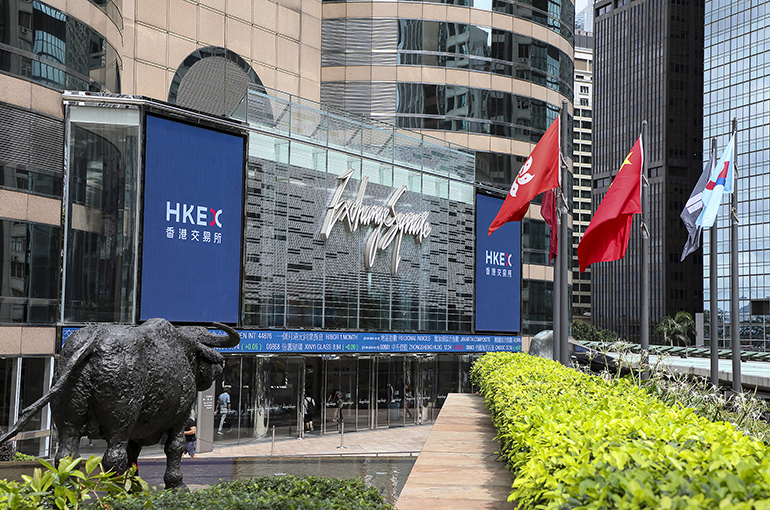
Japan’s interest in crypto-linked exchange products also reflects competitive pressure from regional peers. Hong Kong has positioned itself as a hub for virtual asset trading, approving spot crypto ETFs and encouraging global issuers to list in the city. Singapore, while more conservative on retail access, has built a reputation for regulatory clarity that attracts institutional capital. Policymakers in Tokyo are wary of ceding ground, especially as domestic pension funds and insurers look for diversified investment options in a low-yield environment.

Still, scepticism remains within Japan’s policy establishment. Some lawmakers and consumer groups warn that crypto markets remain volatile and vulnerable to manipulation, arguing that wider access through stock exchanges could expose unsophisticated investors to sharp losses. Regulators have responded by stressing that any approved products would likely be limited initially to professional investors, with strict marketing controls and suitability requirements.

Industry executives counter that regulated exchange-traded products may actually reduce risk by shifting activity away from offshore platforms toward transparent, supervised venues. They point to Japan’s experience with security tokens, where pilot issuances have proceeded without major incidents under a clear legal framework.

The debate has also revived questions about taxation and accounting. Crypto gains in Japan are currently taxed as miscellaneous income, a structure critics say discourages long-term investment and innovation. Government panels have been reviewing whether a shift toward capital gains treatment is warranted, particularly if digital assets become embedded in mainstream portfolios through ETFs and listed funds.


MiniMax is preparing to price its Hong Kong initial public offering at the top of the marketed range, signalling strong demand for artificial intelligence developers as investors seek exposure to homegrown technology firms with global ambitions, according to people familiar with the transaction.

The Shanghai-based company, best known for its large language models and consumer-facing AI applications, has accelerated its listing timetable amid a surge in interest for Chinese technology firms that are perceived to be less exposed to US trade and regulatory pressures. Bankers involved in the deal say early indications from institutional investors point to robust demand, particularly from Asia-based funds focused on long-term technology themes.

MiniMax, founded in 2021 by former SenseTime and Megvii researchers, has positioned itself as one of the country’s leading independent AI model developers. Its core products include general-purpose foundation models, AI companions and enterprise solutions used across gaming, education and content creation. The firm competes with larger players backed by internet conglomerates while marketing itself as more agile and research-driven.

People familiar with the IPO said the company is targeting a valuation that reflects the premium currently attached to AI-related listings in Hong Kong. While final pricing has not yet been approved, the expectation is that the offer will be set at the upper end of the range to capitalise on strong order books built during early marketing. The shares are expected to begin trading later this year, subject to market conditions and regulatory clearances.

The decision to push for top-range pricing comes as Hong Kong’s equity market shows signs of renewed momentum after a prolonged slowdown. Technology and healthcare deals have drawn increasing attention, supported by policy measures aimed at reviving capital markets and encouraging listings by innovative firms. Fund managers say AI remains one of the few sectors where investors are willing to pay up for growth, despite broader concerns over economic headwinds.

MiniMax’s IPO is also being closely watched as a test case for how investors value Chinese AI companies that operate largely outside the orbit of the country’s major internet platforms. Unlike peers that rely heavily on parent companies for distribution and funding, MiniMax has raised capital from a mix of venture investors and strategic backers, allowing it to retain greater operational independence. That positioning has resonated with some institutional investors seeking exposure to AI innovation without heavy platform risk.

The company has continued to expand its research capabilities, investing heavily in computing infrastructure and talent. Industry analysts note that MiniMax has been among the more visible Chinese developers releasing multilingual models and consumer applications that aim to compete with global offerings. Its emphasis on overseas markets, including Southeast Asia and parts of the Middle East, has helped broaden its revenue base and narrative ahead of the listing.

Still, the firm faces stiff competition. Domestic rivals supported by large technology groups benefit from vast user ecosystems and deep pockets, while international players continue to dominate cutting-edge model development. Pricing the IPO aggressively could raise expectations around execution and financial performance at a time when monetisation of AI remains uneven across the industry.

Market participants say Hong Kong has become a more attractive venue for such listings as regulatory scrutiny on technology firms has stabilised compared with earlier years. The city’s exchange has also updated listing rules to better accommodate companies with heavy research spending and limited near-term profitability, a profile that fits many AI developers.

Bankers involved in the transaction say MiniMax has highlighted its progress in commercialising products, including enterprise contracts and consumer subscriptions, to address investor concerns around sustainability. While the company is not yet profitable, it has signalled a clearer path to revenue growth than at earlier funding rounds, helped by rising demand for customised AI solutions among businesses.

Matein Khalid 2026 has started with a bullish bang for my Dr. Copper trade, even though a single trading session when half of Asia is still getting over its New Year’s Day hangover is hardly an optimal sample size. Yet as I see LME spot copper trade at $12500 a metric ton, I feel exhilarated as this is precisely the breakout I flagged for my friends and […]

Public schools across the UAE will operate under revised Friday hours from January 9 after authorities standardised the Friday sermon and congregational prayer at 12:45pm nationwide, a change designed to align school routines with worship while preserving teaching time. The Ministry of Education said the adjustment ensures students and staff can observe religious obligations without disrupting learning outcomes. Under the updated arrangement, schools will reorganise Friday timetables […]

Seven Canadians were among dozens of people injured after two trains collided head-on in Peru, authorities said, prompting emergency responses along a busy rail corridor and diplomatic outreach from Ottawa to assist those affected. Peru’s transport officials said the crash occurred when two trains travelling in opposite directions struck each other on the same line, causing multiple carriages to derail and trapping passengers inside. Emergency services, including […]

Dollar trading opened the new year on firmer ground on Friday, extending a modest rebound after a bruising twelve months that marked its weakest annual performance in eight years, as investors reassessed the outlook for United States interest rates and global growth.

The greenback edged higher against a basket of major peers in early European dealings, with the yen drifting back towards levels last seen in the spring and the euro slipping slightly after gains built up over the previous year. Market participants described the move as cautious rather than decisive, reflecting thin liquidity and lingering uncertainty over policy direction in Washington.

Currency strategists said the dollar’s fragile recovery followed heavy selling through much of last year, when expectations of rate cuts by the Federal Reserve and easing inflation undercut the yield advantage that had supported the currency in earlier cycles. At the same time, improving growth prospects outside the United States encouraged investors to rotate towards higher-yielding or undervalued alternatives.

Against the yen, the dollar climbed back towards the upper end of its trading range, hovering near a ten-month high. The Japanese currency has remained under pressure amid a persistent gap between domestic borrowing costs and those in the United States, even as Tokyo has signalled a gradual move away from ultra-loose policy. Traders noted that the yen’s slide was less abrupt than in past episodes, reflecting continued sensitivity to the risk of official intervention.

The euro eased after a strong performance last year, when slowing inflation and steady growth in parts of the euro zone boosted confidence in the region’s economic resilience. Analysts cautioned that the single currency’s trajectory would depend heavily on whether European policymakers deliver further easing or pause to assess wage pressures and fiscal spending plans.

Sterling traded in a narrow band, supported by signs of stabilising inflation but weighed by questions over the durability of domestic growth. Emerging market currencies showed mixed moves, with higher-yielding units holding up better as investors searched for carry opportunities, while those linked to commodities reacted to softer prices in energy and metals.

Market focus remains fixed on forthcoming United States data releases, including employment and inflation indicators that could shape expectations for policy adjustments later in the year. While inflation has moderated from its peak, officials have stressed that decisions will be driven by incoming data rather than preset timelines, a stance that has kept rate forecasts in flux.

Some investors argue that the dollar’s decline last year went too far, pointing to the size and liquidity of United States markets and the economy’s capacity to absorb tighter financial conditions. Others counter that structural forces, including a narrowing growth gap with other advanced economies and rising fiscal deficits, could cap any sustained rebound.

Central banks outside the United States are also recalibrating. In Japan, policymakers are weighing how quickly to normalise after years of stimulus without destabilising markets. In Europe, debates continue over balancing support for growth with the need to anchor inflation expectations. These cross-currents have injected volatility into foreign exchange markets, even as overall trading ranges remain narrower than during periods of crisis.

Commodity prices have added another layer of complexity. Oil has softened amid ample supply, trimming support for currencies of major exporters, while gold’s pullback has reduced its appeal as a hedge against currency weakness. Equity markets have started the year on a cautious note, reinforcing demand for safe and liquid assets.

President Donald Trump has put off a scheduled increase in tariffs on upholstered furniture, kitchen cabinets and bathroom vanities, a move that slows the pace of his trade levies as household price pressures remain a political concern. The postponement, announced by administration officials after consultations with manufacturers and retailers, affects a tranche of consumer goods largely sourced from overseas supply chains. The delay keeps existing duty rates […]

VISHNU RAJA
RYO YAMADA
HITORI GOTOH
IKUYO KITA