News related to
Part

Slovenia, nestled in the heart of Europe, is gaining recognition as a top-tier destination for hiking enthusiasts. The country’s diverse landscapes, ranging from towering alpine peaks to intricate underground cave systems, offer a plethora of trails that cater to both novice and seasoned hikers. Triglav National Park, Slovenia’s sole national park, stands as a testament to the nation’s commitment to preserving its natural beauty. Covering approximately 4% […]

Monoclonal antibodies have emerged as a promising approach in the fight against Alzheimer’s disease, offering hope for slowing its progression. These laboratory-produced molecules are designed to target specific proteins associated with the disease, particularly amyloid-beta, which accumulates abnormally in the brains of Alzheimer’s patients. Lecanemab, marketed as Leqembi, is one such antibody that has gained attention. Developed by Eisai and Biogen, it received accelerated approval from the […]

The idyllic Greek island of Santorini has been experiencing an unprecedented series of earthquakes, leaving both residents and experts searching for answers. Over the past two weeks, the University of Athens’ Seismic Laboratory has recorded approximately 11,700 tremors in the Aegean Sea, particularly between Santorini and Amorgos. Several of these quakes have exceeded a magnitude of 5, prompting widespread concern among locals and tourists alike.

In response to the escalating seismic activity, the Greek government has declared a state of emergency for Santorini and surrounding islands. This decision led to the evacuation of over 11,000 individuals, with many residents choosing to leave the island due to fears of a potential major earthquake. Schools have been closed, and businesses have shuttered as a precautionary measure.

The cause of this seismic swarm remains a topic of intense study. Geologists have identified the complex tectonic interactions between the African and Eurasian plates as a primary factor. The convergence of these plates creates significant geological stress in the region, leading to frequent seismic events. Notably, the area has a history of substantial earthquakes, such as the 1956 Amorgos earthquake, which registered a magnitude of 7.6 and resulted in widespread damage.

Despite the heightened seismic activity, experts have indicated that there is no immediate evidence linking these tremors to volcanic activity from Santorini’s renowned volcano. The current consensus attributes the quakes to tectonic movements rather than volcanic processes.

The persistent nature of these tremors has led to significant disruptions on the island. Streets that were once bustling with activity now stand deserted, and the usually vibrant tourism sector has come to a halt. The Panhellenic Federation of Hospitality and Tourism Workers has expressed concerns over the lack of clear safety measures, emphasizing the need for comprehensive guidelines to protect both residents and visitors.

Seismologists caution that while the majority of the recorded tremors have been minor, the possibility of a larger, more destructive earthquake cannot be ruled out. The region’s seismic history underscores the potential for significant seismic events, and continuous monitoring is essential.

Authorities have implemented several precautionary measures in response to the ongoing seismic activity. Residents have been advised to avoid large gatherings and to stay clear of certain areas deemed at higher risk. While there is no official travel ban, travelers are urged to review their insurance policies regarding cancellations due to natural disasters. Santorini’s airport remains operational, but caution is advised for those planning to visit.

Expected to open in late 2026, ASAI Cebu Oslob will introduce ASAI Hotels’ signature blend of modern design, local experiences, and vibrant communal spaces to one of the Philippines’ most scenic coastal destinations. BANGKOK, THAILAND – Media OutReach Newswire – 11 February 2025 – Dusit International, one of Thailand’s leading hotel and property development companies, and Grand Land Inc., a subsidiary of the Gaisano Grand Group of […]

India is poised to enhance its naval capabilities through a significant acquisition of 26 Rafale Marine jets from France. The French government has submitted its final price proposal to New Delhi, marking a pivotal step in the procurement process. This development coincides with National Security Advisor Ajit Doval’s scheduled visit to Paris, where the deal is expected to feature prominently in strategic discussions.

The Rafale Marine jets are intended for deployment on the INS Vikrant, India’s indigenous aircraft carrier, as well as at various naval bases. The inclusion of these advanced fighters is anticipated to significantly bolster the Indian Navy’s maritime strike capabilities. Defence sources indicate that the French side has offered a substantial price reduction following rigorous negotiations, underscoring the deepening defence collaboration between the two nations.

A French delegation recently visited New Delhi to finalise the terms of the agreement. The deal’s progression is expected to be a focal point during the India-France Strategic Dialogue, where NSA Doval will engage with his French counterparts. This dialogue aims to further solidify bilateral ties and address mutual security concerns.

India has approved specific modifications in the letter of request for the Rafale Marine jets, including the integration of the indigenous Uttam radar system. While this integration is projected to take approximately eight years and entails additional costs, it represents a significant step towards self-reliance in defence technology. Furthermore, India has requested the incorporation of homegrown weaponry, such as the Astra beyond-visual-range missiles and Rudram anti-radiation missiles, into the aircraft’s arsenal.

The pricing structure of the deal is informed by previous agreements, notably the procurement of 36 Rafale fighter jets for the Indian Air Force. Considerations include factors like inflation rates and the inclusion of specific requirements from the Indian Air Force, such as the provision of approximately 40 drop tanks and a limited number of workstations for the aircraft.

In addition to the Rafale Marine jets, India and France are finalising a deal for three additional Scorpene-class submarines. These submarines are slated to be constructed with French collaboration, further enhancing India’s underwater warfare capabilities. Both deals, collectively valued at nearly Rs 1 lakh crore, are anticipated to be concluded by the end of the current fiscal year, reflecting the robust and growing defence partnership between the two nations.

The acquisition of the Rafale Marine jets and Scorpene submarines aligns with India’s broader strategy to modernise its military assets and strengthen its defence posture in the Indo-Pacific region. As geopolitical dynamics evolve, such strategic partnerships and procurements are crucial for maintaining regional stability and safeguarding national interests.

The Rafale Marine, a naval variant of the Dassault Rafale, is renowned for its versatility and advanced combat capabilities. Equipped with state-of-the-art avionics and weapon systems, it is capable of carrying out a wide range of missions, including air superiority, ground attack, and reconnaissance. Its integration into the Indian Navy is expected to significantly enhance operational readiness and combat effectiveness.

The Scorpene-class submarines, developed by France’s Naval Group, are diesel-electric attack submarines known for their stealth and advanced sonar capabilities. The addition of three more Scorpene submarines will augment the Indian Navy’s underwater warfare strength, providing a strategic advantage in maritime operations.

Eurofiber, a prominent Dutch connectivity provider, has acquired Belgium-based Arcadiz, a leading supplier of critical connectivity solutions in the Benelux region. This strategic move aims to bolster Eurofiber’s position in delivering robust and scalable network solutions across Europe. Arcadiz, established in 1999 and headquartered in Leuven, has built a reputation for designing and implementing high-quality network infrastructures tailored for enterprises, governments, and public services. With a team […]

NEOM and DataVolt have entered into a landmark agreement, marking a significant step toward realizing Saudi Arabia’s vision for a sustainable, data-driven economy. This collaboration aims to establish advanced data centers within NEOM, the ambitious megacity under development in the kingdom’s northwest. The partnership focuses on creating state-of-the-art data infrastructure to support NEOM’s technological and environmental goals. DataVolt, recognized for its expertise in developing and operating data […]

Advertisements
By Nantoo Banerjee With Indian Rupee (INR) dwindling almost daily against US Dollar (USD), it is good the Union Budget for 2025-26 has stopped repeating on making the Indian economy a $5-trillion GDP to become the world’s third largest by the end of this year or anytime too soon. The budget also provides no indication […]

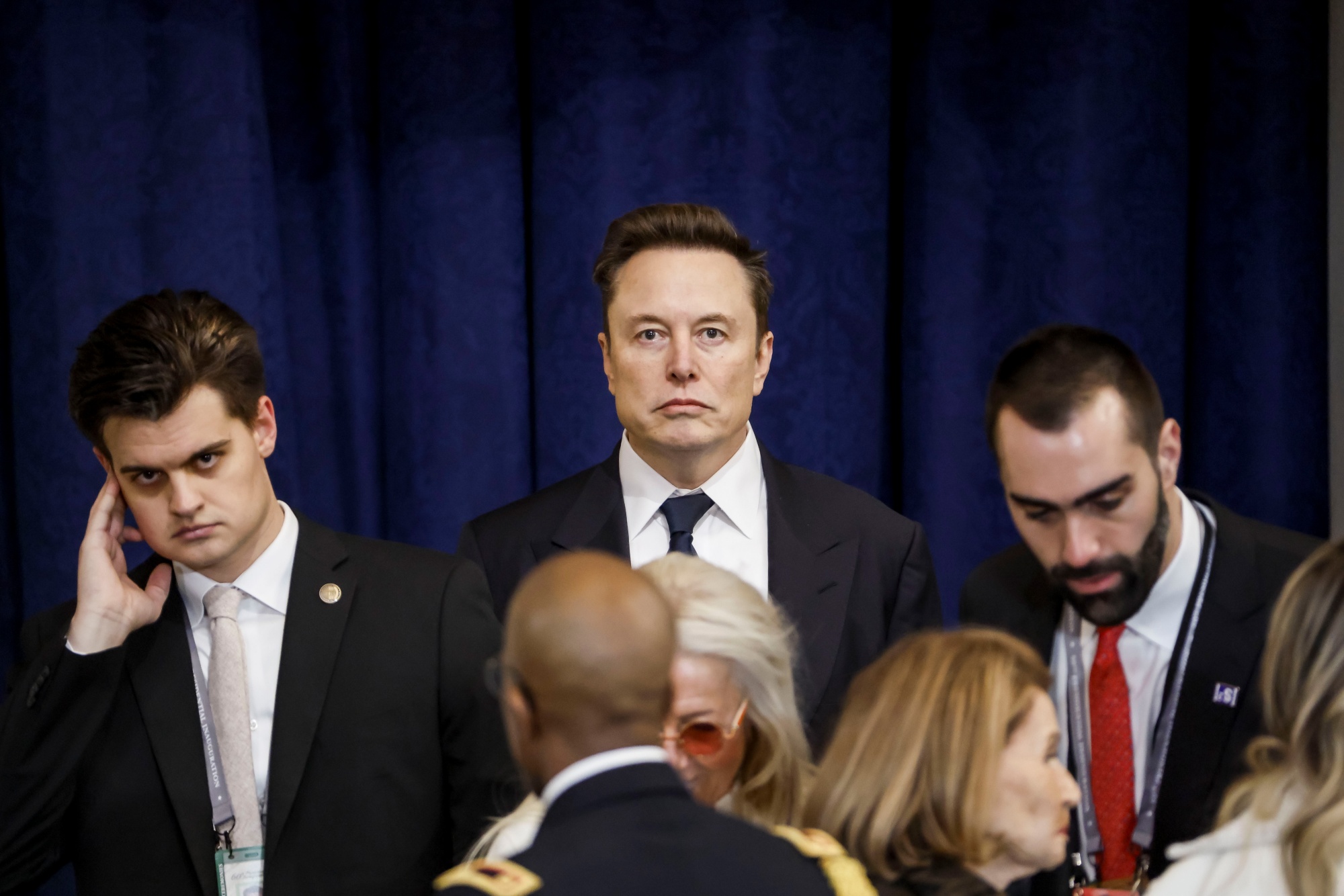
A consortium led by Elon Musk has made a $97.4 billion offer to acquire OpenAI, the artificial intelligence company known for developing ChatGPT. The bid, aimed at returning OpenAI to its original nonprofit status, was swiftly declined by CEO Sam Altman, who humorously suggested purchasing Twitter instead for $9.74 billion. This development intensifies the ongoing dispute between Musk and Altman, who co-founded OpenAI in 2015. Musk departed […]

Gold prices have surged to an all-time high, reflecting investor anxiety following President Donald Trump’s declaration of a 25% tariff on steel and aluminium imports. Spot gold advanced 1.1% to $2,939.80 per ounce, briefly touching $2,942.70, while U.S. gold futures climbed 1.1% to $2,966.00. This marks the eighth record high for gold this year, underscoring its role as a safe-haven asset amid escalating trade tensions and inflation […]

Research Challenges Hypnosis Misconceptions, Explores its Effectiveness for Stress in Fast-Paced Hong Kong HONG KONG SAR – Media OutReach Newswire – 11 February 2025 – According to the World Happiness Report 2024, Hong Kong ranks 86th in the global happiness index. In the Global Workplace Report, last year, Hong Kong’s stress index ranked fourth globally, reflecting the need for Hongkongers to pay more attention to their mental […]

Abu Dhabi-based Ittihad International Investment LLC has secured a $450 million sustainability-linked revolving credit facility with a consortium of local banks. The facility was arranged by Emirates NBD, Commercial Bank of Dubai, and First Abu Dhabi Bank, serving as mandated lead arrangers and bookrunners, as well as sustainability joint coordinators. Additionally, Abu Dhabi Commercial Bank, Abu Dhabi Islamic Bank, and Emirates Islamic acted as joint arrangers. The […]

The Gulf Cooperation Council is on track to see its debt capital market exceed $1 trillion in outstanding issuances by the end of 2025, driven by government initiatives aimed at market development, economic diversification, and the need to fund fiscal deficits and upcoming debt maturities. Fitch Ratings reports that the DCM in the GCC reached $940 billion by the close of the first quarter of 2024, marking a 7% year-on-year increase.

Saudi Arabia and the United Arab Emirates lead the region’s DCM, holding 43% and 30% of the market share, respectively. Approximately 40% of the GCC’s outstanding debt comprises sukuk, with the remainder in conventional bonds. Fitch Ratings, which assesses over 70% of the GCC’s US dollar-denominated sukuk, notes that 81% of these are investment-grade, with no defaults reported.

The anticipated growth in debt issuances is attributed to several factors, including projected declines in oil prices to $65–$70 per barrel in 2025 and 2026, which may prompt increased sovereign borrowing to cover budgetary shortfalls. Additionally, government-led initiatives to enhance debt capital markets and diversify funding sources are expected to play a significant role. Bashar Al Natoor, Global Head of Islamic Finance at Fitch Ratings, emphasizes that “most GCC countries have come a long way in developing their DCMs, with the bloc now accounting for almost a third of total emerging-market dollar issuance, excluding China.”

Despite these advancements, the GCC’s debt capital markets remain less mature compared to more developed regions and exhibit varying stages of development across member states. Saudi Arabia and the UAE possess the most advanced markets, while Qatar and Oman have seen contractions due to debt repayments. Kuwait’s absence of a debt law limits its funding options, and Bahrain continues to rely heavily on DCM access and support from other GCC nations amid persistent deficits.

In the banking sector, GCC banks are projected to issue over $30 billion in US dollar-denominated debt in 2025, a decrease from the record $42 billion issued in 2024. This decline is partly due to the maturation of approximately $23 billion in existing debt, with Qatari banks accounting for about a third of these maturities, and UAE and Saudi banks each representing around a quarter. Fitch Ratings anticipates that most additional Tier 1 instruments with first call dates in 2025 and 2026 will be called, given favorable financing conditions.

The US Federal Reserve is expected to reduce interest rates by 100 basis points in 2025, potentially leading to more favorable financing conditions for GCC banks. Strong credit growth, particularly in Saudi Arabia and the UAE, is also anticipated to support further issuances. In 2024, GCC banks’ US dollar debt issuance reached an unprecedented level, driven by high credit growth in Saudi Arabia, efforts to diversify funding bases, and substantial debt maturities.

Europe has unveiled OpenEuroLLM, a collaborative project designed to develop open-source large language models encompassing all official and prospective EU languages. This initiative seeks to bolster the continent’s digital sovereignty and competitiveness in artificial intelligence. The consortium comprises over 20 European research institutions, technology firms, and high-performance computing centers. Notable participants include Germany’s Aleph Alpha, Finland’s CSC, and France’s Lights On. The project is coordinated by Jan […]

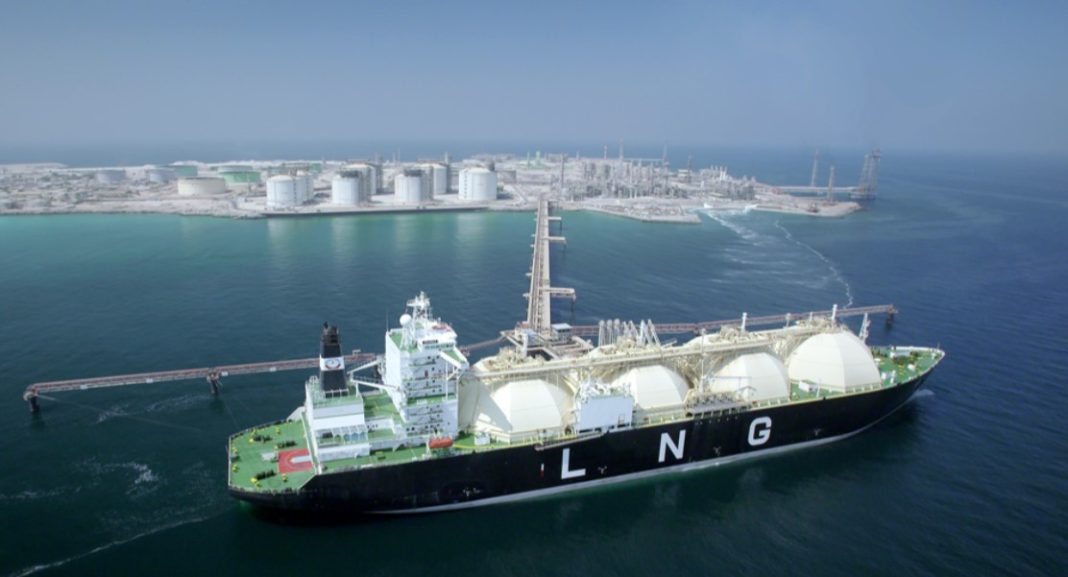
Abu Dhabi National Oil Company has entered into a five-year contract to supply 2.5 million tonnes of liquefied natural gas to Bharat Petroleum Corporation Limited , according to sources familiar with the matter. Under this agreement, BPCL is set to receive 40 LNG cargoes, with deliveries commencing in April. The initial two years will see a gradual increase in supply volumes.

The formal signing of the deal is scheduled during the four-day India Energy Week conference. This partnership underscores the strengthening energy ties between the United Arab Emirates and India, reflecting a mutual commitment to energy security and diversification.

Nirmata, a San Jose-based IT startup specializing in cloud-native security policy automation and governance solutions, has announced a $4 million pre-Series A funding round led by Z5 Capital. Additional participants include Uncorrelated Ventures, Samsung Next, Benhamou Global Ventures , and angel investors Saqib Syed and BV Jagadeesh. This investment aims to accelerate the development of Kyverno, Nirmata’s open-source Kubernetes native policy management tool. Kyverno, designed to streamline […]

DeepFest 2025, held from 9 to 12 February in Riyadh, has underscored Saudi Arabia’s burgeoning role in the global artificial intelligence arena. The event, co-located with the LEAP technology conference, attracted over 48,000 AI enthusiasts, including thought leaders, data scientists, and innovators from around the world. The Kingdom’s significant progress in AI was highlighted by its ascent to the 14th position globally in the 2024 Global AI […]

Lior Div, the Chief Executive Officer of cybersecurity firm Cybereason Inc., has filed a lawsuit against former U.S. Treasury Secretary Steven Mnuchin and the SoftBank Vision Fund, alleging that their financial maneuvers have jeopardized the company’s financial stability. The legal action centers on claims that the investment strategies employed by Mnuchin’s Liberty Strategic Capital and the SoftBank Vision Fund have placed Cybereason at risk of insolvency.

In 2021, Cybereason secured a $275 million investment led by Liberty Strategic Capital, Mnuchin’s private equity firm. This funding round was intended to bolster the company’s position in the cybersecurity market, with plans to expand its workforce and pursue acquisitions in the Extended Detection and Response and cloud security sectors. The investment was seen as a strategic move to enhance Cybereason’s capabilities in combating sophisticated cyber threats.

However, the lawsuit contends that the terms of the investment and subsequent financial decisions have adversely affected Cybereason’s financial health. Specific details of the alleged detrimental actions have not been disclosed publicly, but the legal filing suggests that the strategies implemented by Mnuchin and the SoftBank Vision Fund have led to significant financial strain on the company.

Cybereason, founded in 2012 by Lior Div, Yonatan Striem-Amit, and Yossi Naar, has been recognized for its innovative approach to cybersecurity, particularly in delivering proactive threat detection and response solutions. The company has previously attracted substantial investments, including a $59 million Series C funding round led by SoftBank in 2015, which facilitated its expansion into the Japanese market.

The involvement of high-profile investors such as Mnuchin and the SoftBank Vision Fund was initially perceived as a vote of confidence in Cybereason’s technology and market potential. Mnuchin, upon leading the 2021 investment, expressed enthusiasm about partnering with Cybereason to defend critical information networks against the growing danger of cyberattacks.

The current legal dispute raises questions about the dynamics between startup companies and their investors, particularly concerning the influence of investment terms on a company’s operational autonomy and financial well-being. The outcome of this lawsuit could have broader implications for the venture capital landscape, especially in the technology sector, where substantial investments are often accompanied by strategic control exerted by investors.

Financial educator and author Robert Kiyosaki has issued a stark warning about an impending market downturn, advising investors to consider assets like Bitcoin, gold, and silver as safeguards. Kiyosaki, renowned for his book *Rich Dad Poor Dad*, has a history of cautioning against economic vulnerabilities and promoting alternative investments.

In a recent communication, Kiyosaki emphasized that the anticipated market crash is now unfolding, affecting various sectors including stocks, bonds, real estate, and commodities such as gold, silver, and Bitcoin. He described the situation as a “brutal crash” and suggested that this period presents an opportunity for investors, as high-quality assets become more affordable. He stated, “The best assets in the world are going on sale.”

Kiyosaki has consistently expressed concerns about escalating global debt levels and the potential for widespread economic instability. He has been a vocal proponent of Bitcoin, viewing it as a hedge against traditional financial system risks. He has previously predicted that a significant market crash would lead to a surge in Bitcoin’s value, urging investors to “Get out of fake and into crypto, as well as gold and silver.”

The financial expert has also criticized traditional education systems for not adequately preparing individuals for financial independence. He argues that schools often train students to become employees rather than investors or entrepreneurs, leaving them ill-equipped to manage their finances during economic downturns. He stresses the importance of financial education, stating that those without it are likely to suffer the most in the event of a market collapse.

Kiyosaki’s investment strategy focuses on assets that he believes can withstand economic turbulence. He advocates for a diversified approach, including investments in physical gold and silver, as well as Bitcoin. He views these assets as protection against currency devaluation and market instability, advising investors to consider them as part of their portfolios.

While Kiyosaki’s predictions have been met with both support and skepticism, his warnings come at a time when global markets are experiencing significant volatility. Recent policy decisions, such as the introduction of new trade tariffs by the U.S. government on countries including Canada, Mexico, and China, have contributed to market instability. These developments have led to substantial losses in various asset classes, prompting investors to seek safer alternatives.

Dubai Electricity and Water Authority has announced a significant change in its water consumption measurement, transitioning from the imperial gallon to the cubic metre starting with the March 2025 billing cycle. This move aligns with Cabinet Resolution No. of 2023 and Ministerial Resolution No. of 2024, issued by the Ministry of Industry and Advanced Technology, which mandate the discontinuation of the imperial gallon unit in water meters across the UAE.

Saeed Mohammed Al Tayer, MD & CEO of DEWA, emphasized the importance of this transition, stating that adopting the cubic metre as a uniform and globally recognized measurement unit is a significant step towards enhancing alignment with international best practices. He noted that this change would facilitate benchmarking across sectors and support DEWA’s efforts to provide world-class services, ultimately benefiting customers and stakeholders.

To ensure a smooth transition, DEWA has confirmed that the current smart meters installed for customers are already compatible with the cubic metre measurement system, eliminating the need for any changes to customers’ meters. During the preparatory phase, DEWA will include both units in water bills and on the customer dashboard. The final adoption of the new unit will take effect with the March 2025 billing cycle. Customers will be informed of the change through official communication channels.

This initiative reflects DEWA’s commitment to adhering to local and international regulations to ensure services meet the highest standards of quality, efficiency, reliability, and availability. By aligning with international best practices, DEWA aims to enhance its leadership in innovation and sustainability.

The adoption of the cubic metre as the standard unit for measuring water consumption is expected to provide customers with a clearer understanding of their water usage, promoting more efficient consumption patterns. This change also aligns DEWA with other utilities in the UAE, fostering a unified approach to resource management across the nation.

In the lead-up to the March 2025 implementation, DEWA plans to engage in extensive customer outreach to ensure that all users are well-informed about the upcoming changes. This will include detailed explanations of the new billing units and guidance on interpreting water consumption data in cubic metres.

The shift from the imperial gallon to the cubic metre is part of a broader strategy to modernize utility services in Dubai. By standardizing measurement units, DEWA aims to improve transparency in billing and enhance customer satisfaction.

Salience Labs, a company specialising in photonic solutions for AI data centre connectivity, has secured $30 million in Series A funding. This investment aims to advance the development of their optical switches, designed to enhance large-scale AI infrastructure.

The funding round was led by Cambridge Innovation Capital and Oxford Science Enterprises, with participation from Oxford Investment Consultants, former Dialog Semiconductor CEO Jalal Bagherli, Silicon Catalyst, the Goh Family Office in Singapore, and Arm-backed Deeptech Labs.

Salience Labs, founded in 2021 as a spin-out from the University of Oxford and the University of Münster, is developing an ultra high-speed multi-chip processor that integrates a photonics chip with standard electronics. This technology is scalable, capable of stacking up to 64 vectors into a beam of light, delivering massively parallel processing performance within a given power envelope.

The company’s proprietary amplitude-based approach to photonics results in dense computing chips operating at tens of gigahertz. This, combined with massively parallel performance, aims to enable exascale computing in a wide array of AI processes and applications.

Salience Labs employs a multi-chip design, with the photonic processing mapping directly on top of the Static Random Access Memory . This novel ‘on-memory compute’ architecture is inherently faster and can be adapted to the application-specific requirements of different market verticals, making it suitable for AI use-cases in communications, robotics, vision systems, healthcare, and other data workloads.

The technology has been designed from first principles for volume manufacture and is currently being fabricated with production-level foundries using standard CMOS processes.

Ian Lane, Partner at Cambridge Innovation Capital, stated that Salience Labs brings together deep domain expertise in photonics, electronics, and CMOS manufacture. He noted that their unique approach to photonics delivers an exceedingly dense computing chip without having to scale the photonics chip to large sizes.

Alexis Zervoglos, Partner at Oxford Science Enterprises, commented that Salience Labs offers a pioneering yet pragmatic solution to the widening gap between AI processing demand and semiconductor industry supply. By leveraging photonics in a novel way, the company is set to make unprecedented advances in computing, transforming existing AI applications and opening up new addressable horizons.

Jalal Bagherli, investor and former CEO of Dialog Semiconductor, remarked that the team at Salience Labs is world-class, combining commercial and technical acumen with a disruptive market vision. He highlighted their unique ‘on-memory compute’ architecture as ground-breaking, with the potential for breakthrough performance and power capability beyond what the established CMOS roadmap offers.

Vaysh Kewada, CEO and co-founder of Salience Labs, emphasized the increasing demand for faster chips to grow AI capability, noting that the semiconductor industry cannot keep pace with this demand. She explained that their proprietary ‘on-memory compute’ architecture combines the ultra-fast speed of photonics, the flexibility of electronics, and the manufacturability of CMOS, ushering in a new era of processing where supercompute AI becomes ubiquitous.

Salience Labs is headquartered in Oxford, UK, and funded by a portfolio of investors including Cambridge Innovation Capital, Oxford Science Enterprises, Oxford Investment Consultants, Silicon Catalyst, Deeptech Labs, and leaders from the global semiconductor industry, including former Dialog Semiconductor CEO Jalal Bagherli and the Goh Family Office in Singapore.

The company’s mission is to build photonic switches for AI infrastructure, solving fundamental networking bottlenecks and enabling high bandwidth, low latency connectivity for improved AI model performance. Their optical circuit switch keeps the payload fully optical while directing data to where it needs to go, eliminating the need for expensive transceivers.

Salience Labs’ photonic switch enables all-optical, multi-hop large cluster connectivity, addressing the flexibility and control required in next-generation AI infrastructure. The switch allows for resizing and provisioning networks quickly and on the fly, with fast reconfiguration, novel flow routing, and synchronization technologies.

The company’s technology is the result of over 10 years of research into silicon photonics. Salience Labs’ switch is built for AI and focuses on compatibility, reliability, and manufacturability. The team comprises experts in photonics, electronics, embedded software, and machine learning, working together to shape the future of optical networking.

Salience Labs’ board and advisors include industry leaders such as Daniel Armbrust, Chairman; Dr. Bill Jeffrey, Board Member; Jack Edmondson, Board Member; Jalal Bagherli, Investor and Advisor; and Prof. Wolfram Pernice, Co-Founder and Advisor.


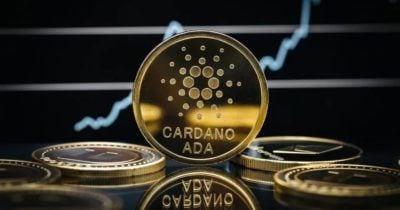
Grayscale Investments has filed an application with the U.S. Securities and Exchange Commission to list a Cardano exchange-traded fund on the New York Stock Exchange . This initiative marks Grayscale’s inaugural standalone ADA investment product, aiming to provide investors with regulated exposure to the Cardano blockchain’s native cryptocurrency.

The proposed ETF, designated to trade under the ticker symbol “GADA,” is structured to offer investors direct exposure to ADA without the need to hold the cryptocurrency directly. Each share of the trust would represent a proportional ownership of ADA, with pricing based on the CoinDesk Cardano Price Index . BNY Mellon Asset Servicing is slated to serve as the administrator, while Coinbase Custody Trust Company would act as the custodian for the assets.

Grayscale’s filing is part of a broader strategy to expand its cryptocurrency ETF offerings. In recent weeks, the firm has submitted applications for ETFs linked to other digital assets, including XRP, Solana , and Litecoin . These moves reflect a growing interest among asset managers to provide regulated investment vehicles that offer exposure to various cryptocurrencies.

The SEC’s stance on cryptocurrency ETFs has evolved, particularly under the current administration. The regulatory body’s recent openness to such products has encouraged firms like Grayscale to pursue ETF listings for a wider range of digital assets. However, it’s important to note that the SEC has previously classified certain cryptocurrencies, including ADA, as securities in past legal actions. This classification could present regulatory challenges for the approval of the proposed Cardano ETF.

President Donald Trump is set to meet Jordan’s King Abdullah II at the White House today to deliberate on the U.S. administration’s contentious plan concerning the Gaza Strip. The proposal involves relocating Gaza’s Palestinian population to neighboring countries and redeveloping the territory under U.S. oversight—a strategy that has ignited widespread criticism across the Middle East.

Trump has advocated for the evacuation of Gaza’s 2.2 million residents, suggesting their resettlement in nations such as Jordan and Egypt. He envisions transforming the war-torn enclave into a prosperous area, referring to it as the potential “Riviera of the Middle East.” In a recent interview, Trump stated that Palestinians would not have the right to return to Gaza, proposing instead to provide them with better housing in neighboring countries.

This proposal has been met with firm opposition from key regional players. King Abdullah has unequivocally rejected the idea, emphasizing that Jordan will not accept any forced displacement of Palestinians from their homeland. He has labeled such proposals as a “red line,” underscoring the potential threat they pose to regional stability.

Egypt has also dismissed the plan, with officials reiterating their refusal to compromise on the Palestinian right to self-determination and return. The Egyptian government has emphasized that any attempts to annex land and displace Palestinians are unacceptable.

The Palestinian Authority and Hamas have condemned the proposal, viewing it as an attempt at ethnic cleansing. Hamas spokespersons have asserted that Gaza is not for sale and remains an integral part of Palestinian land.

Within the U.S., the plan has encountered skepticism from several Republican lawmakers. Critics argue that forcibly relocating an entire population could lead to further instability in the Middle East and damage America’s standing in the region.

Despite the backlash, Trump has indicated that he may leverage U.S. aid to encourage compliance with his plan. He has suggested the possibility of withholding financial assistance from countries that refuse to accept Palestinian refugees, a move that could significantly impact nations like Jordan and Egypt, which are among the largest recipients of U.S. aid in the region.

The meeting between Trump and King Abdullah comes at a critical juncture, as a fragile ceasefire between Israel and Hamas hangs in the balance. Trump has issued an ultimatum to Hamas, demanding the release of all hostages by midday Saturday, threatening to propose the cancellation of the ceasefire if his demands are not met. He has warned that failure to comply would result in severe consequences, stating that “all hell is going to break out” if the hostages are not freed.

Analysts suggest that King Abdullah’s visit to Washington is pivotal. As the first Arab leader to meet with Trump since his return to office, Abdullah is expected to present practical Arab perspectives on the Gaza situation. He aims to balance Jordan’s national security interests and domestic concerns while maintaining its crucial relationship with the United States.

HONG KONG SAR – Media OutReach Newswire – 11 February 2025 – On January 23, 2025, 50 selected children and youth with disabilities from under-privileged families in Hong Kong will experience flying and embark on a three-day, two-night trip to Taiwan from February 21 to 23 in 2025. “Dreamer’s Journey 2025” allows 40 disabled children who have never flown before and their families, along with 10 disabled […]

VISHNU RAJA
RYO YAMADA
HITORI GOTOH
IKUYO KITA