News related to
Part

Wildfires have engulfed southeastern regions of South Korea, consuming over 14,694 hectares of woodland and prompting mass evacuations. The blazes, intensified by strong winds and dry conditions, have led to the deaths of at least four individuals, including firefighters, and injuries to 11 others. More than 5,400 residents have been displaced as the fires threaten homes and infrastructure.

The most severely affected areas include Sancheong County, Uiseong County, and the city of Ulsan. In Sancheong, two firefighters lost their lives while combating the flames, and another firefighter and a government worker remain missing. Despite the deployment of approximately 1,600 emergency workers, 35 helicopters, and numerous vehicles, containment efforts have been hampered by the region’s mountainous terrain and persistent winds.

In response to the escalating crisis, the South Korean government has designated the hardest-hit regions as special disaster zones to facilitate the concentration of resources and expedite recovery efforts. Acting President Han Duck-soo has prioritized swift disaster recovery and support measures, visiting affected areas to meet with residents and assess the situation firsthand.

The Korea Forest Service reports that the fires have consumed vast tracts of land, with the Sancheong wildfire alone burning over 500 hectares. Efforts to control the blazes are ongoing, with emergency workers striving to protect residential areas and critical infrastructure. The national government has mobilized additional resources, including firefighting personnel and equipment, to assist in containment operations.

Authorities have indicated that some fires may have been caused by human activities, such as grass clearing in tombs or welding sparks. Investigations are underway to determine the exact causes and to implement measures to prevent future occurrences. The government has urged the public to exercise caution, particularly given the prevailing dry conditions that heighten the risk of wildfires.

PHNOM PENH, CAMBODIA – Media OutReach Newswire – 25 March 2025 – Prince Foundation, the philanthropic arm of Prince Holding Group, celebrated the selection of 100 Cambodian students for Batch 4 of the Chen Zhi Scholarship at a ceremony held at Prince Holding Group Headquarters. His Excellency Dr. Hang Chuon Naron, Deputy Prime Minister and Minister of Education, Youth and Sport, attended as guest of honor alongside […]

Linux Kernel 6.14 has been officially released, bringing notable performance improvements and expanded hardware support for AMD, Intel, and RISC-V architectures. This update introduces several key enhancements aimed at optimizing system efficiency and broadening compatibility with emerging technologies. A significant addition in this release is the introduction of the AMDXDNA driver, which supports AMD’s Neural Processing Units . These NPUs, integrated into AMD client CPUs, are designed […]

Airlines across the globe are tightening regulations concerning the use and carriage of power banks on flights, following a series of incidents involving lithium-ion batteries. These measures aim to enhance passenger safety by mitigating the risks associated with battery malfunctions.

In January, an Air Busan aircraft in South Korea was engulfed in flames while preparing for departure. Investigations suggest that a power bank was the likely cause of the fire. In response, Air Busan revised its policies, now requiring passengers to carry power banks on their person rather than storing them in overhead compartments. By March 1, South Korean authorities mandated all national airlines to enforce stricter regulations, including prohibiting the charging of devices onboard.

Singapore Airlines and its budget subsidiary, Scoot, announced that from April 1, passengers would be prohibited from charging portable power banks via onboard USB ports or using them to charge personal devices during flights. The airline emphasized that safety remains its top priority and that in-flight procedures are regularly reviewed to ensure passenger well-being.

Kazakhstan’s Air Astana implemented similar measures on March 13, banning the charging or use of power banks during flights. The airline specified that lithium batteries, external batteries, and e-cigarettes must be kept in hand luggage and placed in the overhead bins.

Taiwanese carriers EVA Air and China Airlines introduced prohibitions starting March 1, disallowing the charging and use of power banks and spare lithium batteries during flights. Both airlines advised passengers to utilize the USB power outlets available at most seats for charging other devices.

Thai Airways followed suit on March 15, banning the use and charging of power banks and portable batteries during flights. The airline’s decision aligns with a broader industry trend aimed at reducing in-flight fire hazards associated with lithium-ion batteries.

Hong Kong’s Civil Aviation Department expressed significant concern over safety incidents involving passengers using lithium power banks during flights. Consequently, from April 7, passengers on Hong Kong-based airlines will be prohibited from using or charging power banks during flights and from storing them in overhead compartments. Instead, power banks should be kept under the seat or in the seat pocket in front of passengers.

These regulatory changes are in response to a rising number of incidents involving lithium-ion batteries. In 2024, the U.S. Federal Aviation Administration recorded three incidents of overheating lithium batteries on planes every two weeks, up from just under one per week in 2018. Such statistics underscore the growing concern within the aviation industry regarding the safety of these devices.

The Dogecoin Foundation’s corporate arm, House of Doge, has initiated the “Official Dogecoin Reserve” with an initial acquisition of 10 million Dogecoin , valued at approximately $1.8 million. This strategic move aims to bolster DOGE’s liquidity and facilitate its adoption as a mainstream payment currency.

House of Doge was established in February through a five-year partnership with the Dogecoin Foundation, designating it as the official commercialization partner for DOGE. The organization’s primary objective is to transition Dogecoin from its origins as a meme coin to a widely accepted medium for everyday transactions. By maintaining a substantial reserve, House of Doge intends to bridge the gap between transaction processing times and real-world usability, thereby enhancing the practicality of Dogecoin for daily purchases.

Michael Galloro, a member of the Board-Elect of House of Doge, emphasized the significance of this initiative, stating that by maintaining a reserve, they can bridge the gap between transaction processing times and real-world usability, making Dogecoin extremely practical for everyday purchases. This approach seeks to address one of the longstanding challenges in the cryptocurrency space: ensuring sufficient liquidity to support seamless transactions.

In addition to establishing the reserve, House of Doge plans to announce partnerships with various payment processors in the coming months. These collaborations are expected to further integrate Dogecoin into existing payment systems, making it more accessible for merchants and consumers alike. The organization’s efforts align with Dogecoin’s inflationary model, which ensures ongoing liquidity and supports its use as a true medium of exchange.

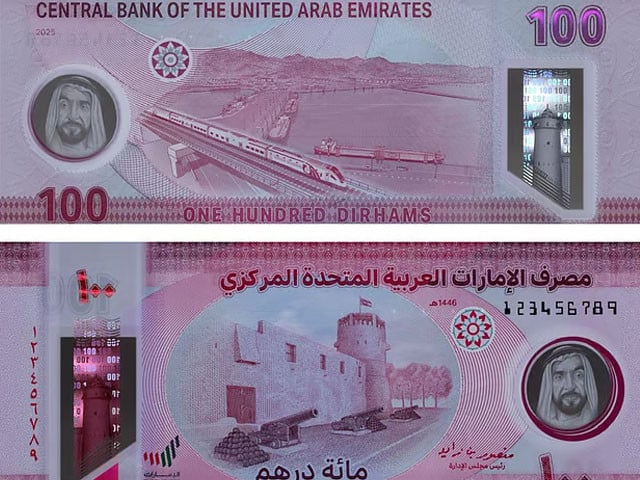
The Central Bank of the United Arab Emirates has issued a new Dh100 polymer banknote, marking a significant advancement in the nation’s currency design. This initiative aligns with the UAE’s commitment to sustainability and innovation within its financial sector.

The newly released banknote showcases the Umm Al Quwain National Fort on the front, symbolizing the UAE’s rich cultural heritage. The reverse side features the Port of Fujairah alongside an image of Etihad Rail, representing the country’s ongoing infrastructural development and future aspirations. The note retains the traditional red color scheme of the existing Dh100 note to ensure easy recognition among the public.

Constructed from durable polymer material, the banknote offers an extended lifespan compared to its paper counterparts, aligning with environmental sustainability goals. Polymer banknotes are known to last significantly longer than paper notes, resulting in a reduced environmental impact and lower costs associated with production and replacement.

Incorporating advanced security features, the new Dh100 note includes a multi-colored security chip known as KINEGRAM COLORS®. This feature enhances protection against counterfeiting and bolsters public confidence in the currency. Additionally, the note is designed with Braille symbols to assist visually impaired individuals in identifying its denomination, promoting inclusivity in financial transactions.

Khaled Mohamed Balama, Governor of the CBUAE, emphasized that the introduction of the new banknote reflects the UAE’s dedication to a sustainable future and its ambition to enhance financial competitiveness. He highlighted that the design embodies the nation’s aspirations for progress while honoring its historical and cultural roots.

Arabian Post Staff -Dubai Casio Computer Co., Ltd. has unveiled a new addition to its G-SHOCK line: a limited edition watch designed in collaboration with the iconic Barbie™ brand. This partnership brings together G-SHOCK’s renowned durability and Barbie’s signature style, resulting in a timepiece that celebrates both toughness and fashion. The new model, GMA-S110BE, is based on Casio’s GMA-S110 series, known for its combination analog-digital display and […]

Advertisements

The Washington Nationals have entered into a partnership with TicketOS, designating the company as their Official Corporate Ticket Management Partner. This collaboration aims to streamline the ticket management process for the Nationals’ Premium Partners, offering a more efficient and integrated experience. TicketOS specializes in providing advanced ticket management solutions tailored for corporate clients. By integrating with the Nationals’ existing ticketing platform and Tickets.com, TicketOS enables businesses to […]

Oracle Corporation has announced the general availability of its Exadata Database Service on Exascale Infrastructure within the Oracle Database@Azure platform. This development aims to provide customers with enhanced scalability, cost-efficiency, and performance for their database workloads. The Exascale deployment option introduces a multitenant, hyper-elastic intelligent data architecture that delivers the advantages of Oracle Exadata in a cloud environment. By eliminating the need for dedicated database and storage […]

DE-CIX, a prominent global operator of Internet Exchanges , has inaugurated two new IXs in Brazil—DE-CIX São Paulo and DE-CIX Rio de Janeiro—marking a significant enhancement to the country’s digital connectivity landscape.

The launch event took place at Villaggio JK in São Paulo, attended by industry representatives and organizations from Brazil and beyond. These IXs, operated by DE-CIX Brazil, a wholly-owned subsidiary of the DE-CIX Group, are both carrier and data center neutral, ensuring broad accessibility for various network operators.

Strategically distributed across multiple data centers, DE-CIX São Paulo is housed in Elea Data Centers SPO1, Ascenty SP4, and Equinix SP4, while DE-CIX Rio de Janeiro operates from Elea Data Centers RJO1 and Equinix RJ2. This multi-location approach enhances redundancy and resilience for Brazilian network operators, addressing a critical need in the nation’s digital infrastructure.

A notable feature of these IXs is their interconnection from the outset, a first for Brazil. This setup facilitates both local and remote peering, allowing seamless data exchange within and between the two cities. Furthermore, DE-CIX Brazil integrates into the company’s global IX ecosystem, connecting with exchanges in New York, Lisbon, Madrid, Frankfurt, and beyond. This integration leverages both north-south and south-south Atlantic connectivity corridors, providing Brazilian customers with direct access to thousands of networks worldwide.

Ivo Ivanov, CEO of DE-CIX, emphasized the importance of this development: “With DE-CIX São Paulo and DE-CIX Rio de Janeiro open for business, customers can now benefit from a more resilient and globally integrated digital interconnection ecosystem in Brazil.” He highlighted the company’s commitment to enhancing local interconnection, attracting international participants, and strengthening the country’s digital infrastructure by offering high-performance, secure, and scalable interconnection services.

Brazil, as the second-largest market globally by network count, stands to gain significantly from these advancements. The growing digital economy demands state-of-the-art connectivity to ensure efficient local data exchange. The presence of DE-CIX in São Paulo and Rio de Janeiro is poised to play a crucial role in driving efficiency, performance, and innovation within the country’s digital economy.

The establishment of these IXs is expected to attract international players to the Brazilian market, fostering a more vibrant and competitive digital ecosystem. By providing SLA-backed, enterprise-grade interconnection solutions, DE-CIX addresses the increasing demand for reliable, high-speed connectivity essential for cloud computing, artificial intelligence, and content localization.

DE-CIX’s expansion into Brazil aligns with its broader strategy of enhancing global interconnection services. With operations in nearly 60 locations across Europe, Africa, the Americas, the Middle East, and Asia, DE-CIX connects thousands of network operators, Internet service providers, content providers, and enterprise networks from over 100 countries. The company’s Frankfurt exchange is among the largest globally, handling almost 45 exabytes of data annually as of 2024, with close to 1,100 connected networks.

The collaboration with local data centers underscores DE-CIX’s commitment to strengthening Brazil’s digital backbone. By integrating into DE-CIX’s global ecosystem, Brazilian businesses gain direct access to a vast array of networks, enhancing their connectivity strategies and supporting digital transformation initiatives.

Aspire partners with global top tier VCs to launch a programme to empower early stage founders with the knowledge, resources and investor connections to fundraise with confidence. SINGAPORE – Media OutReach Neswire – 25 March 2025 – Aspire, the all-in-one finance platform for modern businesses, today announces the launch of Aspire Ignite, a programme designed to help early stage startup founders overcome one of the biggest challenges […]

GUANGYUAN, CHINA – Media OutReach Newswire – 24 March 2025 – On March 12, marking the 47th Arbor Day of China, the “Shu Road Cuiyun Corridor Ancient Cypress Conservation Handover Ceremony” was held in Jian’ge County, Guangyuan City, Sichuan Province. More than a hundred town and township cadres, forest rangers and villagers witnessed this special handover event, who gathered to witness the transfer of responsibility for the […]

KUALA LUMPUR, MALAYSIA – Media OutReach Newswire – 24 March 2025 – Premium travel lifestyle brand Cathay is strengthening its lifestyle presence in Southeast Asia through an exciting new partnership with Mitsui Mall Group in Kuala Lumpur. This collaboration opens up new ways for Cathay members to earn Asia Miles while shopping or dining at two popular retail hubs in Kuala Lumpur—Mitsui Outlet Park KLIA Sepang and […]

By Nitya Chakraborty Is the Bangladesh Army going to take over control of their politically turbulent country, either from front or behind, to precipitate the holding of early elections? This question is being raised by the seasoned political observers in Dhaka, as the whole of last week was dominated by highly controversial posts on Facebook, […]

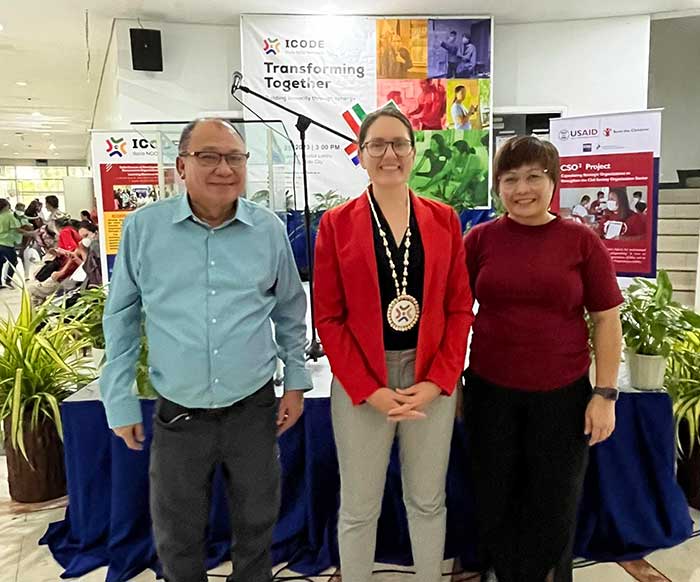
Set to Take Over ICONSIAM Mall, Get Ready for the Ultimate Group Workout Experience – Tickets Available March 24, at Eventpop BANGKOK, THAILAND – Media OutReach Newswire – 24 March 2025 – The Ultimate Fitness Force 2025 (TUFF 2025), Asia’s largest group fitness festival, is coming to TRUE ICON HALL, ICONSIAM, on June 7-8, 2025. Hosted by Fitness First Thailand in collaboration with ICONSIAM, and Les Mills […]

Managing a Linux system can be a complex endeavor, especially for those new to the platform. Linux-Assistant emerges as a comprehensive solution, designed to simplify and enhance the user experience by automating routine tasks and providing valuable insights into system performance. Linux-Assistant offers a suite of features aimed at both novice and seasoned users. It provides real-time monitoring of system resources, including CPU usage, memory consumption, and […]

President Donald J. Trump has initiated a significant overhaul of the United States Agency for International Development , rebranding it as the U.S. International Humanitarian Assistance and integrating blockchain technology into its operations. This restructuring places the agency under the direct authority of Secretary of State Marco Rubio, aiming to enhance transparency and efficiency in foreign aid distribution.

An internal memo circulating within the State Department outlines the administration’s plan to utilize blockchain technology to secure and trace aid disbursements. The objective is to improve the transparency, security, and efficiency of aid distribution by leveraging blockchain’s immutable ledger capabilities. However, the specifics of this integration—whether it involves the use of cryptocurrencies or solely blockchain ledgers—remain unclear. The administration emphasizes a shift towards outcomes-based funding, intending to ensure that aid programs deliver measurable results.

Despite these intentions, the proposed reorganization has encountered legal challenges. A federal judge recently ruled that the dismantling of USAID by the Department of Government Efficiency , led by Elon Musk, likely violates the Constitution. The court issued an indefinite injunction blocking further actions against USAID and mandated the reinstatement of email and computer access to affected employees. This ruling does not reverse all personnel changes or fully restore the agency but highlights concerns over the administration’s approach to restructuring.

Critics argue that while blockchain technology offers potential benefits, its application in humanitarian contexts may not be necessary or cost-effective. Some experts caution that such technological solutions could impose additional burdens on smaller non-governmental organizations and may not provide substantial advantages over existing systems. They suggest that the focus should remain on addressing the immediate needs of aid recipients rather than implementing complex technological frameworks.

The administration’s broader strategy includes reducing the size of the federal government and reallocating resources to align more closely with American geopolitical interests. This involves concentrating on areas such as global health, food security, and disaster response, while politically oriented programs may be redirected to other sections within the State Department. The restructuring plan also proposes the elimination of multiple regional bureaus, aiming to streamline operations and enhance efficiency.

Secretary of State Marco Rubio has indicated that the reorganization will proceed with input from Congress, underscoring the administration’s commitment to aligning foreign aid programs with the interests of U.S. taxpayers and strategic objectives. However, the legal setbacks and critiques from various stakeholders suggest that the path forward may be complex and contentious.

The U.S. Department of the Treasury has lifted sanctions against Tornado Cash, a cryptocurrency mixer previously accused of facilitating extensive money laundering activities, including transactions linked to North Korean cybercriminals. This decision follows a series of legal challenges questioning the Treasury’s authority to impose such sanctions on decentralized software protocols.

In August 2022, the Treasury’s Office of Foreign Assets Control sanctioned Tornado Cash, alleging its involvement in laundering over $7 billion since its inception in 2019. Notably, OFAC claimed that the North Korean hacking group Lazarus utilized the platform to launder more than $455 million. The sanctions marked a significant move by the U.S. government to regulate the use of cryptocurrency mixers, which are designed to obfuscate transaction trails on blockchain networks.

The sanctions faced immediate opposition from various quarters of the cryptocurrency community. Six users of Tornado Cash, with financial backing from the cryptocurrency exchange Coinbase, filed a lawsuit challenging OFAC’s action. They argued that sanctioning open-source, self-executing software exceeded the agency’s statutory authority under the International Emergency Economic Powers Act . The plaintiffs contended that the immutable smart contracts constituting Tornado Cash could not be considered property subject to sanctions.

In November 2024, the U.S. Court of Appeals for the Fifth Circuit ruled in favor of the plaintiffs, stating that OFAC had overstepped its authority. The court held that the smart contracts underlying Tornado Cash were not property and, therefore, not subject to sanctions under IEEPA. This ruling underscored the challenges regulators face when applying traditional legal frameworks to decentralized technologies.

Following the court’s decision, the Treasury conducted a review of the legal and policy issues surrounding the use of sanctions in the context of evolving technologies. On March 21, 2025, the Treasury announced the removal of Tornado Cash and associated Ethereum wallet addresses from the Specially Designated Nationals list. In a statement, Treasury Secretary Scott Bessent emphasized the department’s commitment to combating illicit activities in the digital asset space while acknowledging the need to adapt regulatory approaches to technological advancements.

Despite the delisting, the Treasury reiterated its concerns about North Korea’s state-sponsored hacking and money laundering campaigns. The department stressed the importance of securing the digital asset industry from abuse by illicit actors to maintain U.S. leadership in financial innovation and inclusion. The Treasury also indicated that it would continue to monitor transactions that could benefit malicious cyber actors or the North Korean regime.

The legal proceedings against individuals associated with Tornado Cash have also been noteworthy. In 2023, two co-founders of Tornado Cash were charged with facilitating over $1 billion in money laundering, including transactions linked to the Lazarus Group. One of the co-founders, Roman Storm, is awaiting trial and has denied any criminal activity. Additionally, in May 2024, developer Alexey Pertsev was sentenced to five years and four months in prison in the Netherlands for money laundering related to his involvement with Tornado Cash.

The removal of sanctions against Tornado Cash has elicited varied reactions from the cryptocurrency community and regulatory observers. Proponents of decentralized technologies view the court’s decision and subsequent delisting as a victory for open-source software development and financial privacy. They argue that sanctioning code rather than individuals or entities sets a concerning precedent for technological innovation.

Conversely, critics express apprehension that the delisting could embolden malicious actors to exploit similar platforms for illicit purposes. They emphasize the necessity for regulatory frameworks that effectively address the misuse of privacy-enhancing technologies without stifling innovation. The case of Tornado Cash highlights the complexities regulators face in balancing the promotion of technological advancement with the imperative to prevent criminal exploitation of emerging technologies.

The Treasury’s decision to lift sanctions against Tornado Cash underscores the dynamic nature of regulatory approaches to decentralized technologies. As the digital asset landscape continues to evolve, regulatory bodies worldwide are grappling with the challenge of applying existing legal frameworks to novel technological constructs. The outcome of the Tornado Cash case may serve as a reference point for future policy discussions on regulating decentralized platforms and the broader implications for financial privacy and security.

In the wake of the delisting, stakeholders in the cryptocurrency industry are closely monitoring potential regulatory responses and the development of new guidelines tailored to address the unique attributes of decentralized technologies. The balance between fostering innovation and ensuring robust safeguards against illicit activities remains a central theme in the ongoing discourse on cryptocurrency regulation.

SINGAPORE – Media OutReach Newswire – 24 March 2025 – The Work Project (TWP), the global luxury workspace provider, has marked its entry into the UK market with its first location to open at prime office tower, One Leadenhall, in the centre of the City of London. Leading APAC Flexible Workspace The Work Project to Open First UK Location Developed by Brookfield Properties, London’s new landmark skyscraper […]

Hong Kong’s tourism sector is actively seeking to attract high-net-worth travelers from the Middle East and Southeast Asia, implementing a series of strategic initiatives to diversify its visitor base and rejuvenate its economy. Recognizing the potential of affluent markets in the Gulf Cooperation Council countries and Southeast Asia, the Hong Kong government has allocated HK$1.2 billion in the 2025 budget to boost tourism. Finance Secretary Paul Chan […]

Abu Dhabi Future Energy Company, widely known as Masdar, has significantly bolstered its position in the global renewable energy sector by deploying approximately AED30 billion in equity investments and securing over AED16.5 billion in project financing across nine countries. These strategic moves underscore Masdar’s commitment to expanding its renewable energy portfolio and driving the global transition towards sustainable energy sources. Established in 2006, Masdar has been instrumental […]

The United Arab Emirates has announced an unprecedented commitment to invest $1.4 trillion in the United States over the next decade, marking a significant deepening of economic ties between the two nations. This ambitious investment framework aims to bolster key sectors of the U.S. economy, including artificial intelligence infrastructure, semiconductors, energy, and manufacturing. The announcement follows a series of high-level meetings in Washington, D.C., where UAE National […]

Ripple Labs has secured a significant legal victory as the U.S. Securities and Exchange Commission officially dropped its lawsuit against the company, concluding a four-year legal battle that has had profound implications for the cryptocurrency industry. Ripple’s CEO, Brad Garlinghouse, announced the development, marking a pivotal moment for both the company and the broader digital asset market.

The SEC initiated legal proceedings against Ripple in December 2020, alleging that the company’s sale of its native cryptocurrency, XRP, constituted an unregistered securities offering. This action cast a shadow over XRP and raised concerns about the regulatory status of similar digital assets. However, the SEC’s decision to dismiss the case signifies a notable shift in the regulatory landscape, potentially setting a precedent for how cryptocurrencies are classified and regulated in the United States.

In response to the news, XRP experienced a notable price surge. The cryptocurrency’s value increased by approximately 8%, reaching $2.56, as investors reacted positively to the resolution of the legal uncertainty that had long surrounded Ripple and its digital token. This price movement reflects renewed investor confidence and suggests a more favorable outlook for XRP’s future.

The conclusion of the lawsuit comes amid broader regulatory developments under President Donald Trump’s administration, which has adopted a more accommodating stance toward the cryptocurrency industry. The administration’s efforts to ease regulatory pressures have included the dismissal of multiple lawsuits against crypto companies and the establishment of a task force aimed at fostering innovation within the digital asset space. These measures underscore a strategic shift toward embracing the potential of cryptocurrencies and blockchain technology within the U.S. financial system.

President Trump’s engagement with the cryptocurrency sector was further highlighted by his recent address at the Digital Asset Summit 2025, where he acknowledged the growing importance of digital assets in the global economy. This marked the first time a sitting U.S. president has spoken at a cryptocurrency conference, signaling a significant endorsement of the industry’s legitimacy and potential. During his speech, President Trump emphasized his administration’s commitment to positioning the United States as a leader in the crypto space, advocating for legislative reforms to support the growth of crypto institutions and the broader adoption of digital assets.

The resolution of the Ripple lawsuit is expected to have far-reaching implications for the cryptocurrency market. By clarifying the regulatory status of XRP, the decision may influence how other digital assets are perceived and regulated, potentially paving the way for increased institutional investment and mainstream adoption. Market analysts suggest that this outcome could serve as a catalyst for further innovation and growth within the crypto industry, as regulatory clarity is often cited as a critical factor for broader acceptance and integration of digital assets into traditional financial systems.

Despite the positive developments, some analysts caution that the cryptocurrency market remains inherently volatile. While the dismissal of the SEC’s case against Ripple removes a significant overhang, investors are advised to remain vigilant and consider the inherent risks associated with digital asset investments. Market dynamics can be influenced by various factors, including regulatory changes, technological advancements, and macroeconomic trends, all of which can contribute to price fluctuations and investment risks.

Ripple’s legal victory also has implications for other cryptocurrency platforms and tokens facing regulatory scrutiny. The outcome of this case may serve as a reference point for future legal interpretations and enforcement actions by regulatory bodies, potentially influencing the development of more comprehensive and clear regulatory frameworks for the cryptocurrency industry. This could lead to a more predictable and stable environment for both crypto companies and investors, fostering greater confidence and participation in the digital asset market.

Royal Private Offices across the Gulf Cooperation Council nations have rapidly accumulated assets totaling approximately $500 billion, emerging as pivotal players in the region’s financial landscape. This substantial growth has been instrumental in the creation of new sovereign wealth funds , reshaping investment strategies and economic diversification efforts within the Gulf states.

A recent report by Deloitte highlights the significant influence of RPOs, noting their role in establishing additional or parallel entities in countries where sovereign funds already exist. This trend is particularly evident in the GCC, where new funds linked to specific individuals or extended families have emerged in recent years.

The GCC’s sovereign wealth funds currently manage assets estimated at $4.9 trillion, with projections suggesting this figure will surpass $5 trillion by early 2025 and could reach $7 trillion by 2030. The integration of RPOs into the financial ecosystem has not only expanded the asset base but also diversified investment portfolios, encompassing sectors such as technology, infrastructure, and renewable energy.

One notable development is the establishment of a $500 million family office in Hong Kong by Sheikh Ali Al Maktoum, a member of Dubai’s ruling family. This move underscores the strategic intent of Gulf royals to explore investment opportunities across Asia, focusing on sectors like artificial intelligence, construction, electric vehicles, tourism, and fintech.

The emergence of RPOs has also led to increased competition among GCC cities to attract global wealth managers. Both Dubai and Abu Dhabi are vying to become the region’s premier financial hubs, offering favorable business regulations, tax incentives, and access to substantial sovereign wealth. Abu Dhabi, for instance, is leveraging its sovereign wealth funds, which manage nearly $2 trillion, to boost non-oil growth and position itself alongside Dubai as a prominent financial center.

This competitive landscape has attracted numerous international finance and law firms to the Middle East. Prominent entities such as Marshall Wace, Rothschild, and Skadden have expanded their operations into the region, drawn by the burgeoning opportunities presented by RPOs and SWFs.

The strategic investments by RPOs are not confined to traditional sectors. Sheikh Tahnoun bin Zayed al Nahyan, the UAE’s national security adviser, controls an estimated $1.5 trillion in assets and is focusing on transforming Abu Dhabi into an artificial intelligence superpower. Through his control over tech conglomerate G42, Sheikh Tahnoun aims to position the UAE at the forefront of the global AI industry, reflecting the region’s ambition to lead in cutting-edge technologies.

The rise of RPOs has also influenced the asset management landscape. In 2024, major firms aggressively expanded in the Middle East to engage local investors, driven by sovereign wealth funds’ demand for local investment. This expansion reflects the growing appeal and strategic importance of the Middle East for global finance and legal entities.

VISHNU RAJA
RYO YAMADA
HITORI GOTOH
IKUYO KITA
Just in:
The Honey Trap Is The Headline, The Chip Pipeline Is The Story // 11 Boutique Xinjiang Wineries to Debut in Singapore // China Reconciled To U.S. Curbs On Chips Exports, Woos South Korea For Supply // Microsoft outage leaves Outlook and Teams users disconnected // TORRAS Launches Two New iPhone Duo Cases from Its Popular Ostand Series, Addressing Foldable Phone Users’ Concerns About Difficult Stand Positioning and Scratches // Inpex reaffirms Gulf oil strategy despite shipping constraints // Rooftop solar planning gaps behind power shortages // Nvidia appoints Colette Kress interim chief after Huang departure // Hackers falsify NVIDIA GPU readings to mask cryptomining // OpenAI unveils ChatGPT Wallet for agent-led purchases // L’OCCITANE Celebrates 50 Years Of Provençal Craftsmanship With Holiday 2026 Collection // Messi affair SIT finds all-round violations // Sun World Ba Den Mountain marks Vietnam Culture Day, welcoming Cambodian visitors over Bon Om Touk // US authorities dismantle North Korean cryptocurrency deception infrastructure // Saudi fund assets forecast to cross $400 billion // China’s Taiwan warning tests Washington’s defence commitments // From Dubai to the EU: how UAE-based crypto firms can expand under MiCA // Crescent Enterprises venture arm funds Oyster Therapeutics development // Yicura BioMed Advances Dual Capital and Industrial Strategy: Completes First Closing of Series B Financing Led by Gobi Partners // IEA forecasts fourth-quarter oil surplus as Gulf shipments rebound //