Iran’s World Cup players have been granted visas to enter the United States, easing a major logistical and diplomatic obstacle 10 days before their opening match against New Zealand in Los Angeles. A White House official said the players’ entry documents had been approved overnight after Iran’s ambassador to Mexico, Abolfazl Pasandideh, said the squad was still waiting for US visas. The clearance removes the most immediate […]
FIFA has barred supporters from bringing refillable water bottles into 2026 World Cup stadiums, turning fan safety and match-day costs into a flashpoint days before the tournament opens across the United States, Canada and Mexico. The governing body has revised its Stadium Code of Conduct to prohibit bottles, cups, jars and cans, including empty transparent reusable plastic bottles that had earlier been allowed. FIFA said the change […]
Microsoft’s unveiling of its Majorana 2 quantum chip has intensified debate over how quickly Bitcoin and other digital assets must prepare for a post-quantum security era. The chip, presented at the company’s Build conference in San Francisco, marks the next stage of Microsoft’s long-running push to develop a fault-tolerant quantum computer based on topological qubits. Microsoft says the new processor delivers a sharp improvement over Majorana 1, […]
ChangeNOW has been named Best Digital Assets Fintech at the BeInCrypto x Proof of Talk Institutional 100 Awards 2026, giving the non-custodial crypto platform fresh visibility as financial institutions deepen their involvement in blockchain-based services, tokenised payments and regulated digital asset infrastructure. The award was presented at a live ceremony at the Louvre Palace in Paris during Proof of Talk 2026, a two-day Web3 and digital finance […]
Premu has launched user-created leveraged prediction markets ahead of the 2026 FIFA World Cup, positioning the tournament as a major test for decentralised event-trading platforms seeking to turn fan forecasts into liquid, tradable markets. The Stockholm-linked platform is allowing participants to create markets tied to World Cup outcomes, make them available for trading and receive a share of fees generated by activity in those markets. The model […]
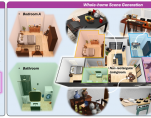
Kairos-HomeWorld is purpose built for embodied intelligence and represents the first unified framework capable of generating a complete, fully interactive home environment from a single text prompt. Extending indoor scene generation beyond individual rooms, it enables whole-home simulation in which every object is fully manipulable within an integrated simulation engine.
Kairos-HomeWorld employs a four-stage hierarchical architecture encompassing floorplan generation, 2D-to-3D lifting, recursive refinement, and manipulable object placement. This approach enables the production of globally coherent, physically accurate, and simulation-ready scenes. Each environment contains more than 15 manipulable objects and achieves a Footprint Object Density of 4.16, the highest among compared methods.
The accompanying open-source dataset is purpose-built for Chinese households, pairing 300,000 real residential floor plans with 5,000 fully furnished, simulation-ready homes and 50,000 physics-enabled interactive object assets. Already deployed in ACE ROBOTICS’ daily robot training, it significantly accelerates the simulation-to-reality transfer cycle.
SHANGHAI, CHINA – Media OutReach Newswire – 5 June 2026 – ACE ROBOTICS, in collaboration with the Multimedia Laboratory at The Chinese University of Hong Kong (CUHK) and Shenzhen Loop Area Institute, today announced the open-source release of Kairos-HomeWorld, the industry’s first unified World Model framework capable of generating full home-scale, object-level interactive 3D environments from a single text prompt. The solution addresses longstanding limitations in indoor scene generation, which has typically been restricted to single-room outputs with weak global consistency and limited interactivity. Kairos-HomeWorld overcomes these constraints by delivering structurally coherent, physically plausible, and functionally complete residential environments. These high-fidelity, large-scale simulations provide a robust foundation for advancing embodied intelligence applications and accelerating real-world robot training.
The long-term vision for embodied intelligence is the home environment. However, residential settings are inherently diverse and highly personalized, requiring robots to be trained across a broad range of realistic and differentiated scenarios before they can reliably operate in even a single household. High-fidelity simulation offers the most practical pathway to achieving this at scale, yet existing approaches typically involve a trade-off: synthetic environments lack realism, while scanned real-world scenes offer limited interactivity. Kairos-HomeWorld, together with its accompanying dataset, is designed to bridge this gap, delivering both realistic and interactive environments within a unified framework.
A four-stage architecture for whole-home, object-level generation Conventional approaches to indoor scene generation remain constrained to single-room outputs, often exhibiting weak global consistency, frequent physical inaccuracies, and limited or no interactivity. Kairos-HomeWorld takes a fundamentally different approach. It decomposes whole-home generation into a structured, four-stage process, redefining the underlying architectural paradigm from the ground up.
Stage 1 — Floor Plan Generation. A K-D tree-based approach translates real-world floor plans into a hierarchical text representation that can be efficiently processed by large language models (LLMs). This method mitigates common issues in conventional layout generation, including room overlaps and fragmented topologies, resulting in more coherent and structurally consistent spatial configurations.
Stage 2 — 2D-to-3D Lifting & Furniture Layout Generation. A “top-down global initialization combined with a first-person detail walkthrough” approach anchors the process to the 3D building shell generated in Stage 1. This methodology mitigates the geometric drift commonly associated with conventional 2D-to-3D lifting techniques, enabling more stable and spatially consistent scene generation.
Stage 3 — Recursive Refinement. A fine-tuned vision-language model performs iterative validation and correction, automatically identifying and resolving physical inconsistencies, such as obstructed doorways or object collisions. This recursive process materially reduces spatial errors, achieving among the lowest reported furniture-collision rates in the industry.
Stage 4 — Manipulable Object Placement. A surface-centric placement algorithm assigns each object detailed physical properties, including material composition, density, friction, and structural support relationships. Each generated scene incorporates an average of more than 15 manipulable objects and achieves a Footprint Object Density (FOD) of 4.16, a metric reflecting the concentration of items across furniture surfaces. All objects are natively compatible with simulation engines, enabling direct interaction for tasks such as grasping, movement, and stacking.
The resulting environments move beyond “viewable but not actionable” outputs. Their coherent spatial structure enables seamless, continuous navigation across multiple rooms, while objects embedded with realistic physical properties allow robots to simulate complex household tasks end-to-end. Taken together, this approach addresses key limitations in existing data pipelines, resolving the scarcity of high-quality 3D simulation data, the lack of realism in synthetic environments, and the limited interactivity of scanned scenes within a single unified framework.
The dataset: 300,000 real floor plans, 5,000 fully interactive homes, built for Chinese households ACE ROBOTICS and CUHK are open-sourcing a dataset of 300,000 structurally annotated residential floor plans, sourced from real-world listings and processed through a multi-stage automated pipeline. The pipeline vectorizes and labels key spatial elements, including door and window positions, room geometry, functional zoning, and connectivity. By comparison, widely used benchmarks such as RPLAN and ResPlan contain approximately 80,000 and 17,000 floor plans, respectively, underscoring the scale and comprehensiveness of the Kairos-HomeWorld dataset.
Building on this foundation, the dataset also includes 5,000 fully furnished residential environments, each featuring a complete furniture layout and an average of more than 15 physics-enabled, manipulable objects, powered by the PhysX-Omni model. All assets are sim-ready and can be directly imported into a simulation engine, enabling immediate use in interactive training scenarios.
Most existing open indoor-scene datasets are centered on North American and European residential formats, typically featuring open-plan kitchens, the absence of service balconies, and layouts and design elements that capture only a narrow segment of global housing. As a result, robots trained on these datasets often exhibit limited transferability when deployed in environments outside their scope. Kairos-HomeWorld ‘s dataset is purpose-built for Chinese households, with deliberate coverage of historically under-represented housing typologies. It spans a wide range of unit sizes, from approximately 30 m² (around 320 sq ft) studio apartments to residences exceeding 200 m² (approximately 2,150 sq ft). The dataset accurately reflects key architectural features common in these settings, including north-south cross-ventilated layouts, enclosed kitchens, dedicated service balconies, wet-and-dry-separated bathrooms, and entryway storage, as well as the irregular room configurations often found in older housing stock.
The dataset is being openly released to both academic and industry communities. Going forward, the team plans to expand its scope to include additional regions, interior styles, and interaction scenarios, further lowering barriers to real-world-ready training for embodied intelligence.
See it in action: one prompt to a fully interactive home Kairos-HomeWorld runs the full end-to-end pipeline, from initial text input to a fully interactive home environment, delivering global spatial consistency, physical realism, and seamless interactivity from a single prompt.
The system begins with a single-line prompt: “Generate a 90 m² (approximately 970 sq ft) two-bedroom apartment in neo-Chinese style.” Leveraging real floor plan data and its K-D tree representation, Kairos-HomeWorld first constructs an empty spatial layout aligned with real-world living patterns, incorporating cross-ventilation and well-defined functional zoning. Building on this foundation, a hierarchical “global layout plus first-person detail” approach furnishes the environment with stylistic coherence, while a PhysX-Omni rendering pass assigns full physical properties to all surfaces and objects, including articulated behavior, ensuring the scene is fully interactive and sim-ready.
A single natural-language instruction, “tidy the whole home”, is decomposed by the robot into a variety of discrete sub-tasks, executed sequentially along a complete navigation path spanning the living room, bedrooms, kitchen, bathroom, and dining area. The robot recognizes objects, plans efficient routes, and performs precise manipulation tasks, including articulated-object interactions for opening refrigerator and cabinet doors, fluid interactions for pouring laundry detergent, soft-body interactions for drawing curtains, irregular-object interactions for grasping apples, and gravity-based physical interactions for placing snacks.
Conventional simulation environments typically support navigation-focused training in isolation. By contrast, Kairos-HomeWorld integrates globally consistent spatial structures with objects that embody realistic physical properties. This enables robots to interact naturally with more than 15 object types, accurately modeling real-world dynamics such as collision, gravity, and friction, and to rehearse the full lifecycle of complex household tasks entirely within a virtual environment.
Across the industry, the same structural bottleneck, the scarcity of home-scale training data, is being addressed through multiple approaches. For example, Figure AI’s collaboration with Brookfield focuses on collecting human activity data across more than 100,000 residential units. Kairos-HomeWorld addresses this challenge through on-demand synthetic generation, delivering scalable training environments enhanced with object-level physical realism, capabilities that real-world data capture alone cannot fully provide.
In contrast, Kairos-HomeWorld delivers significantly lower costs and higher efficiency for household robot training. Powered by its world model, it can programmatically generate diverse Chinese home simulation scenes and physics-enabled interactive objects at scale.
Robots can complete a full range of household tasks training entirely within the virtual environment. New scene generation incurs near-zero marginal cost, eliminating substantial real-world testing expenses such as site operation and maintenance and furniture damage. Meanwhile, unconstrained by the limited stock of physical residential properties, it outperforms real-world data collection approaches in both training efficiency and scalable expansion.
Kairos-HomeWorld is already deployed in ACE ROBOTICS’ embodied intelligence training workflows, enabling full-pipeline simulation of long-horizon household tasks, including cross-room navigation and multi-room tidying. By allowing robots to rehearse complete task sequences in a virtual environment, the platform significantly shortens the simulation-to-reality transfer cycle. This approach lowers barriers to developing embodied intelligence systems and supports the accelerated, large-scale deployment of home robotics, particularly within the Chinese market. Kairos-HomeWorld is now available on GitHub.Hashtag: #ACEROBOTICS
The issuer is solely responsible for the content of this announcement.
About ACE ROBOTICS
Equipping robots with intelligent “brains” and engaging “souls”.
ACE ROBOTICS is a pioneering robotics company dedicated to advancing the field of embodied intelligence. Through breakthrough technological innovations and deep insights into embodied intelligence scenarios, we aim to empower robots with the ability to autonomously understand and explore the physical world, thereby accelerating their commercial implementation.
The company pioneered the ACE R&D paradigm and built a vision-based “environmental data engine, real-world cognition, embodied interaction generalization” technology chain. Using full spatiotemporal and multi-perspective environmental capture as its engine, along with Kairos 3.0 – China’s first open-source and commercially applicable world model – plus the Embodied Foundation Model as its technical backbone, ACE ROBOTICS addresses core industry challenges such as data scarcity, common sense gaps, poor generalization, and limited versatility. Simultaneously, the company unveiled its flagship A1 Embodied Super Brain Module, accelerating the large-scale commercial deployment of embodied intelligence across diverse scenarios.
ACE ROBOTICS is both a technology pioneer and an ecosystem builder. Through strategic cooperation with top hardware manufacturers, cloud service providers, and vertical scenario partners, we have broken through the “model-hardware-scenario” industrial deadlock, providing standardized and customized solutions that are driving the development of China’s embodied intelligence industry.
Arabian Post Staff -Dubai Dubai’s Emirates has promoted Hanan Mohammed Jawad and Bakhita Al Mheiri to captain rank, making them the first UAE national women to reach the command position at the airline and placing both on its Boeing 777 flight deck. The promotion gives the two pilots their fourth stripes after years of training, line flying and command preparation within one of the world’s largest long-haul […]
Dubai has launched SME in a Box, a digital platform intended to cut the time, cost and complexity faced by entrepreneurs setting up and operating small businesses in the emirate. The initiative, introduced by the Dubai Department of Economy and Tourism through the Mohammed Bin Rashid Establishment for Small and Medium Enterprises Development, gives founders a single entry point to access core services that are usually handled […]
Hackers are using large-scale online advertising campaigns to deliver FlutterShell, a newly identified macOS backdoor that marks a sharper turn in financially motivated malware operations targeting Apple users. The campaign, tracked as Operation FlutterBridge, is linked to a broader cybercrime cluster known as CL-CRI-1089, which has operated since at least 2023. The group has used paid advertisements, verified advertiser accounts and shell companies to place malicious promotions […]
Blockchain users searching for simpler wallet identities have pushed. bit into the wider debate over decentralised naming, digital ownership and cross-chain authentication, as Web3 developers look for alternatives to long alphanumeric addresses that remain difficult for mainstream users to manage.. bit is commonly called a “domain”, but its developers describe it more precisely as a decentralised identity and account system rather than a conventional internet domain. Unlike […]
Amazon MGM Studios and Amazon Games are set to take a larger role in future James Bond video games, shifting the franchise away from the self-publishing model used by IO Interactive for 007 First Light and placing the next stage of Bond’s gaming strategy more firmly under Amazon’s expanding entertainment empire. The move follows Amazon MGM Studios’ acquisition of creative control over the James Bond franchise in […]
Arabian Post Staff -Dubai Microsoft has tested a wearable AI badge for office workers as part of a wider effort to move artificial intelligence agents beyond laptops, phones and traditional software applications. The device was shown at Microsoft Build 2026 in San Francisco under Project Solara, a new chip-to-cloud platform designed for hardware that runs AI agents instead of conventional apps. The badge concept resembles a workplace […]
By K Raveendran Public anger has a strange way of finding symbols. Sometimes it gathers around a saintly figure in a white cap, sometimes around an unlikely political label that sounds almost like a joke until it begins to speak for a generation. The overwhelming response from Gen Z to the Cockroach party carries unmistakable […]
FIFA has confirmed the final squad lists for the 2026 World Cup, naming a record 1,248 players across 48 national teams for the expanded tournament in Canada, Mexico and the United States. The lists mark the last major administrative step before the competition opens on 11 June, with the final scheduled for 19 July after 104 matches across the three host countries. Each participating association has submitted […]
Cyber espionage operators are using a newly documented Windows backdoor called HazyBeacon to target government networks in Southeast Asia, turning legitimate Amazon Web Services infrastructure into a covert command-and-control channel that can blend into ordinary cloud traffic. The activity, tracked as CL-STA-1020, has been linked to intelligence-gathering operations focused on sensitive state information, including material tied to tariffs, trade disputes and government policy discussions. Security researchers have […]
Greenlogue/AP Dairy processors can cut greenhouse gas emissions from liquid dairy lines by as much as 49% by modernising existing equipment rather than replacing entire production systems, a Tetra Pak assessment has found, pointing to a faster route for plants under pressure to lower costs, reduce waste and meet climate targets. The analysis, released from Lausanne, examined upgrades to chilled and ambient liquid dairy processing lines and […]
Snowflake has placed Anthropic’s Claude at the centre of its enterprise artificial intelligence push, using Summit 26 to show rising customer uptake inside Cortex AI while a $6 billion infrastructure commitment to Amazon Web Services reshapes the economics behind its expansion. The data cloud company said enterprises are increasingly deploying Claude through Snowflake Cortex AI to run governed AI agents on business data without moving sensitive information […]
SINGAPORE – Media OutReach Newswire – 3 June 2026 – Handshake Finance, the Singapore-based fintech company building escrow-as-a-service infrastructure for high-trust service industries, has closed a S$500,000 pre-seed funding round. The capital will accelerate the company’s expansion across its beachhead renovation and interior design market in Singapore, with longer-term ambitions to extend its platform across other service industries where payment trust remains a structural problem.
Handshake Finance Founders Christopher Chan (Left) and Lee Jun Xian (Right)
Born From Personal Experience
Handshake Finance launched in September 2025, founded by Christopher Chan and Lee Jun Xian. Both had seen the trust gap up close.
Jun’s close friend lost S$80,000 in pre-payments to a renovation company that collapsed mid-project. At the same time, Christopher’s friend paid a deposit on a rental home she had never viewed, only to discover the listing was fraudulent. Both incidents pointed to the same structural failure: in service industries, someone always carries the risk, and when trust breaks down, there is little recourse on either side.
The two founders met as university classmates in London and returned to the problem with complementary backgrounds. Christopher Chan had spent his career in fintech, designing compliant payment flows on regulated infrastructure. Lee Jun Xian came from venture capital, with experience scaling early-stage companies from zero to one.
Trust as the foundation, not the feature
Handshake operates on bank-grade payment infrastructure provided by MAS-regulated partners. All payment flows are fully MAS regulated, and funds are held with DBS in segregated escrow accounts. For the founders, this is not a checkbox — it is the entire foundation of the business.
“We are trying to solve a structural trust gap in service industries. But before any of that, our users have to trust us,” said Christopher Chan, Co-Founder of Handshake Finance. “Making sure every fund flow is fully compliant, and that our users feel completely assured handing us money in what are often life-changing transactions, is our number one priority. Everything else is built on top of that.”
Closing the Trust Gap Across Service Industries
Every high-trust service transaction carries the same structural flaw: either the customer pays before work is done, or the provider works before getting paid. Someone always carries the risk. Across industries — from renovation and interior design to event planning, creative agencies, and professional services — that risk falls entirely on one side, and when trust breaks down, there is little recourse for either party.
Handshake Finance was built to close that gap. The platform holds customer funds in escrow and releases them to service providers against agreed milestones, giving buyers protection from pre-payment risk while giving service providers the confidence to deliver. The model is designed to work across any service industry where the payment trust problem exists.
Why Renovation and Interior Design Is Handshake’s Beachhead Market
Renovation was where the structural failure ran deepest. The industry operates with no mandatory licensing or regulatory framework. Anyone can set up as an interior designer with no accreditation required, leaving homeowners with no reliable way to assess accountability before signing a contract.
There is no standard payment framework either. Homeowners routinely pay up to 50% of the total project value upfront, with funds going directly to the interior designer before any work begins. If a project stalls or a firm shuts down, there is limited protection and recourse. At the other end of the project, interior designers face the opposite problem: the final handover payment, where homeowners hold most of the leverage, can be withheld over disputes that wipe out up to half a project’s margin.
Eight Months of Listening Before a Single Line of Code
Before writing any software, the Handshake team spent eight months speaking with more than 80 interior designers and homeowners across Singapore to understand the real frictions on both sides of the transaction. What they found reinforced the decision to start here: high transaction values, a broken payment norm, an unregulated supply side, and no existing platform that protected both parties.
That research shaped how the product was built. After a renovation contract is signed, Handshake’s AI automatically generates the transaction structure with line items, payment schedules, and sub-milestones set out clearly to remove ambiguity. Homeowners place funds into escrow rather than paying upfront directly to the interior designer.
Payment releases to the designer as work progresses against agreed milestones, with sub-milestone releases providing faster cashflow access without compromising homeowner protection. The platform also replaces the manual spreadsheet-based back-office admin most interior design firms still run, and offers complimentary mediation and independent assessments in the event of a dispute.
More than 40 Interior Design Companies Onboarded and 2 Major Partnerships Signed
Handshake now has more than 40 interior design companies onboarded. The company has signed partnerships with Renonation.sg and Network SG, two of Singapore’s most established renovation marketplaces, to drive awareness and adoption across the broader ecosystem.
“It is an incredible feeling to see this much support behind us, and we are excited about what is ahead,” said Lee Jun Xian, Co-Founder of Handshake Finance. “We are industry-agnostic by design, but we are laser-focused on fixing renovation first. The scams that are still everyday occurrences in this space need to go, and the transactional experience for everyone involved needs to be better before we turn our attention to the next industry or market.”
Homeowners and interior designers can learn more or request access athandshake.finance.
Hashtag: #HandshakeFinance
The issuer is solely responsible for the content of this announcement.
About Handshake Finance
Handshake Finance is a Singapore-based fintech building escrow-as-a-service infrastructure for high-trust service industries. The platform holds customer funds in segregated escrow accounts and releases them against agreed milestones, protecting buyers from pre-payment risk while giving service providers the confidence to deliver. All payment flows are fully MAS regulated. Funds are held with DBS. Handshake is currently focused on Singapore’s renovation and interior design market as its beachhead, with plans to expand across other service industries and Southeast Asia.
Sui’s mainnet disruptions over May 28 and May 29 have put renewed pressure on the Layer-1 blockchain’s engineering controls after three separate halts were traced to bugs connected with its v1.72 software release and the handling of gas payments, validator restarts and on-chain randomness. The network has since returned to operation, but the episode has sharpened scrutiny of Sui’s upgrade process because the outages occurred in close […]
Anthropic is expanding access to Claude Mythos Preview through Project Glasswing, widening a controlled cybersecurity programme at a time when North Korean-linked hackers are sharpening attacks against macOS users in the financial, venture capital, Web3 and cryptocurrency sectors. The San Francisco-based AI company plans to increase the number of Project Glasswing partners from about 50 to roughly 200 organisations across more than 15 countries, broadening access to […]
By T N Ashok The dust may have settled on the 2026 West Bengal Assembly election, but the political war has only intensified. Defeated former Chief Minister Mamata Banerjee has launched perhaps the most serious challenge yet to the legitimacy of the Bharatiya Janata Party’s sweeping victory, alleging that the saffron party manipulated electoral rolls, […]
Beijing’s new trade secret rules have taken effect, bringing data, algorithms, computer programs and source code explicitly within the country’s administrative protection system as China moves to curb technology leaks during a sharper contest with the United States over artificial intelligence, advanced computing and strategic know-how.
The Provisions on the Protection of Trade Secrets, issued by the State Administration for Market Regulation under Order No. 126, came into force on 1 June 2026 and replace rules first introduced in 1995. The overhaul gives regulators clearer authority to handle disputes involving digital assets that now sit at the centre of corporate value, from AI model architecture and training datasets to platform recommendation systems, software code and commercially valuable operational data.
The change marks a significant shift in China’s treatment of intangible technology assets. Earlier rules were drafted before cloud computing, AI systems and large-scale data operations became central to business competition. The new framework defines trade secrets as technical or business information that is not publicly known, has commercial value and has been subject to confidentiality measures by the rights holder. Technical information now expressly covers data, algorithms, computer programs and code, while business information can include management, sales, finance, planning, customer and operational data.
The timing gives the regulation wider strategic weight. China and the United States are locked in a prolonged technology rivalry involving semiconductor controls, restrictions on advanced computing hardware, limits on investment in sensitive sectors and scrutiny of cross-border technology transfers. Washington has tightened export controls on high-end chips and chipmaking equipment, while Beijing has expanded its own legal toolkit to protect critical technology, secure data flows and prevent overseas transfer of capabilities it regards as strategically important.
The new rules do not create a separate trade secret law, but provide more detailed administrative guidance under China’s Anti-Unfair Competition Law. They clarify how regulators should assess whether information is secret, whether it has commercial value, what counts as reasonable confidentiality measures and how infringement should be investigated. For companies, the central message is that protection will depend not only on the value of the information, but also on whether internal controls, access limits, confidentiality agreements, digital safeguards and evidence trails are in place.
The provisions also recognise that unsuccessful research can have commercial value. Stage-by-stage technical results, failed experimental data and development paths that save time or cost in future research may qualify for protection if they meet the legal conditions. That is especially relevant for AI labs, pharmaceutical developers, electric vehicle makers, chip design firms and advanced manufacturing groups, where failed trials can reveal important technical boundaries and prevent competitors from repeating expensive mistakes.
Regulators have been given practical enforcement tools, including powers to inspect business premises, question individuals, copy documents, examine electronic records and take action against materials linked to suspected infringement. Penalties can include orders to stop unlawful conduct, confiscation of illegal gains and fines that may reach CNY5 million in serious cases. The framework also covers improper acquisition, disclosure, use or permission to use trade secrets obtained through theft, bribery, fraud, coercion, electronic intrusion or breach of confidentiality obligations.
For multinational companies operating in China, the new rules create a mixed picture. Stronger protection could help firms defend proprietary data, software systems and industrial processes in a market where trade secret disputes have often been difficult to pursue. At the same time, wider protection for data and algorithms may increase compliance complexity, particularly in joint ventures, outsourced research, cloud services, employee mobility, cross-border collaboration and licensing arrangements.
Technology companies are likely to face tougher expectations over documentation. Firms seeking protection will need to show that the information was not easily accessible, carried economic value and was actively protected. Generic claims that an algorithm or dataset is confidential may not be enough. Companies will be expected to classify sensitive assets, restrict access by role, track downloads and transfers, maintain logs, use encryption or watermarking where appropriate, and ensure that employment and partnership contracts define confidentiality obligations with precision.
The rules also sit alongside China’s broader data and security regime, including laws on data security, personal information protection, cybersecurity and export control. That overlap could make enforcement more powerful but also more complicated. A dataset may be a trade secret, a regulated data asset and a cross-border transfer concern at the same time. Businesses handling AI training material, user behaviour data or industrial performance data will need to assess those obligations together rather than treating trade secret protection as a standalone issue.
NEW DELHI / BENGALURU, INDIA – Media OutReach Newswire – 2 June 2026 – Having recently won championships at Blackpool, Brigham Young University’s internationally acclaimed Ballroom Dance Company will bring its elegant and high-energy performances to India this June, with scheduled appearances in New Delhi on 4 June and 6 June 2026, and Bengaluru on 9 June 2026.
The award-winning dance company is one of the premier collegiate dance ensembles in the United States, renowned for its elite performance and vibrant stage presence. It has captivated audiences worldwide with its unique blend of standard ballroom and Latin dances, including the Waltz, Tango, Quickstep, Cha-cha and Samba.
BYU Ballroom Dance Company brings its elite performances to New Delhi and Bengaluru this June.
Audiences in India can look forward to an unforgettable evening of entertainment, featuring artistic moves with dazzling costumes. These appearances are part of the Company’s annual international tour, which seeks to foster cultural understanding and strengthen global friendships through the universal language of dance.
Last year, they had the privilege of performing for His Majesty King Maha Vajiralongkorn and Her Majesty Queen Suthida in Thailand; Her Royal Highness Preah Reach Botrey Samdech Norodom Arunrasmy in Cambodia; as well as other dignitaries and professionals in Vietnam, demonstrating their role as cultural ambassadors on the global stage.
“We feel deeply honored for the opportunity to travel to India and experience its remarkable culture and traditions firsthand,” said Curt Holman, the artistic director of the Company. “Ballroom dance has a unique ability to transcend language and culture, and through movement and music. Our students look forward not only to sharing their artistry, but also to learning from the people of India.”
By special invitation from the Indian Council for Cultural Relations, the 32 student dancers will, in addition to their performances, participate in cultural exchanges with local artists and engage in community service. These interactions reflect BYU’s broader commitment to education, cultural dialogue, and humanitarian outreach, creating meaningful connections beyond the stage.
Interested individuals may now reserve complimentary tickets through Eventbrite, while availability lasts. Tickets for the New Delhi shows have already been fully reserved.
Bengaluru:
9 June 2026
7:00–8:30 p.m.
MLR Convention Center (4th Cross Road, Kaveri Nagar, Whitefield, Bengaluru, KA 560048)
Johannesburg has become the opening stage for a European Union push to turn a pledged €12 billion investment package for South Africa into bankable projects, with about 200 companies joining the bloc’s first investment roadshow in the country as competition intensifies over critical minerals. The event, hosted at the Johannesburg Stock Exchange on Monday, marked the first major effort to mobilise private capital under the EU-South Africa […]







 https://pam.byu.edu/performance-groups/ballroom-dance-company/
 https://www.facebook.com/byuballroom
 https://www.instagram.com/byuballroom/
 https://www.youtube.com/@byuballroomdancecompany2994




