News related to
Technology

Organisers have confirmed that Future Blockchain Summit x Fintech Surge will take place at Dubai Harbour from 12 to 15 October 2025, positioning the event as a central nexus for blockchain, digital assets, and fintech innovation across the MENA region. The four-day gathering, held alongside Expand North Star and powered by GITEX GLOBAL, aims to attract regulators, investors, entrepreneurs and technologists to shape emerging frameworks for finance.

Attendance is expected to exceed 70,000, with over 1,200 investors and more than 225 speakers scheduled to participate, alongside 150 exhibitors showcasing new products and solutions. A feature highlight is the Digital Assets Forum, which brings regulators, banks, and innovators together for intensive discussions on topics such as CBDCs, stablecoins, tokenised capital markets, cross-border regulation and the role of AI in compliance.

Speakers confirmed include Jimmy Su, Lily Liu, Eric Piscini, Oliver Stauber, Helen Liu and Kevin Lee. The event also features the Supernova Challenge, a startup pitch competition offering equity-free prizes totalling US$214,000 to finalists presenting to global judges and investors. Corporations such as Ruya, OKX and DKK Partners anchor the sponsorship tiers, while YPAY backs the Digital Assets Forum.

Dubai has been steadily reinforcing its position in the digital asset ecosystem. Earlier this year, the DAMAC Group signed a $1 billion contract with blockchain platform MANTRA to tokenise its real-world assets, a move aligned with the UAE’s aspirations to become a global digital assets hub. The country has been actively implementing regulatory frameworks, particularly in free zones like ADGM and DMCC, to attract blockchain firms and promote tokenisation of assets.

Investment momentum in the broader crypto and fintech sphere in the UAE has been robust. In the first quarter of 2025, global venture capital funding into cryptotech startups reached $5.4 billion, its highest quarterly total since 2022. Dubai has hosted major conferences such as TOKEN2049, drawing tens of thousands of participants and signalling regional leadership, though industry sentiment currently balances optimism with caution amid regulatory uncertainty and macro-economic pressures.

Technology trends driving this year’s agenda include the convergence of AI and blockchain, regulatory clarity for digital assets, tokenised infrastructure, and embedded finance. A newly published academic framework proposes integrating blockchain with Zero Trust security models to improve protection against insider threats in fintech ecosystems — a demonstration of how research is intersecting with commercial deployment.

Organisers emphasise that the event’s format is more than a conference: it is designed to enable deal-making, pilot launches and real partnerships. One-to-one investor matchmaking, live product demonstrations, and structured labs are scheduled to convert ideas into actionable projects. Startups exhibiting at Expand North Star receive automatic inclusion in the Supernova Challenge, deepening integration between the startup and blockchain-fintech community.

Regulators from the MENA region and beyond are expected to engage at the forum. Discussions will centre on harmonising cross-border rules, interoperability of digital asset legislation, and pathways for institutional adoption of tokenised assets. Several central banks may share updates on central bank digital currency explorations.

HANOI, VIETNAM – Media OutReach Newswire – 6 October 2025 – Vingroup today announced the establishment of VinMetal Joint Stock Company for Manufacturing and Trading, officially entering the metallurgy industry and expanding its existing Industrials & Technology pillar. The new company aims to meet the internal material needs of Vingroup’s ecosystem while contributing to the development of Vietnam’s heavy industry. VinMetal is launching with an initial investment […]

Prinker, a South Korea–based self-expression technology firm, is launching its full suite of personalization solutions in the Middle East and North Africa region at GITEX GLOBAL 2025, seeking to penetrate a market showing robust growth in beauty and personal care.

At its Dubai showcase, Prinker will debut Prinker POP, a smart beauty kiosk that enables users to mix and preview custom makeup palettes via a touchscreen interface and AI-driven simulation. It will also bring its handheld devices—Prinker S and Prinker M—capable of applying temporary, skin-safe tattoos within seconds, as well as a standalone Prinker Tattoo Kiosk allowing users to self-apply designs in malls or entertainment venues without staff assistance.

The company aims to tap into accelerating demand for experiential retail and personalisation in beauty, positioning itself at the intersection of tech and aesthetics as regional consumers and retailers seek interactive, low-risk forms of self-expression.

The MENA beauty and personal care market is projected to expand sharply, with estimates placing its value at around USD 95.2 billion by 2030 and an annual growth rate of 9.0 %. Rising digital penetration, social media influence, and youthful demographics are driving demand for personalised and immersive beauty experiences.

Prinker’s approach reflects broader industry trends in tech-infused beauty. Beauty firms worldwide are increasingly adopting AR mirrors, AI skin diagnostics, and custom formulation platforms. Yet few have ventured into on-demand, skin-printing devices in public retail spaces. Prinker positions its handheld and kiosk systems as a bridge between digital and physical engagement.

Retailers and salon operators in the region may see appeal in integrating Prinker’s solutions as a customer acquisition tool. By offering interactive touchpoints, brands can boost dwell time and cross-sell products. Prinker’s machines also reduce staff overhead and allow consistent brand experiences across locations.

Prinker’s global track record includes deployments for brand activations and content creation campaigns in Asia and the United States. However, scaling into MENA requires navigating regulatory regimes for cosmetic safety, cultural sensibilities around appearance, and localisation of designs to reflect regional tastes.

Prinker faces competition from AR/VR beauty apps that let users visualise makeup digitally, as well as legacy cosmetic brands developing custom blends in stores. But none currently replicate live, direct-to-skin printing in physical venues. Prinker’s advantage lies in marrying hardware and software with a frictionless user experience.

Executives leading Prinker’s expansion emphasise strategic partnerships. They plan to collaborate with regional beauty chains, department stores and mall operators, integrating kiosks into high-footfall environments. They also intend to localise design libraries—such as Arabic calligraphy motifs and regionally relevant patterns—to enhance appeal.

Analysts note that success will depend on commercial viability: cost per use, durability, and consumer uptake. Prinker will need to balance affordability with perceptible novelty so that users perceive value in transient tattoos or customised palettes.

Lagos welcomed commissioners for Innovation, Science and Technology from states across Nigeria to a high-level roundtable held under the aegis of the GITEX Africa tech gathering. The objective: align digital agendas, forge inter-state partnerships, and drive inclusive growth in a rapidly evolving ICT landscape.

The meeting convened key figures including Senator Shuaib Afolabi Salisu, chairman of the Senate Committee on ICT and Cybersecurity, and Lagos Commissioner Olatunbosun Alake, together with commissioners from Enugu, Cross River, Jigawa, Katsina, Kaduna, Yobe, Nasarawa, Ogun, Niger, Plateau, Borno, Zamfara and Ondo. Lagos State’s Permanent Secretary for Innovation, Science and Technology, Ibilola Kasunmu, also participated in framing the discussions. Observers noted that the roundtable sought to embed state-level digital initiatives into Nigeria’s broader national strategy.

Alake emphasised Lagos’s ambition to serve as a model for digital infrastructure, talent development and regulatory innovation. He proposed that states engage in exchange programmes, technical cooperation, and peer learning in domains ranging from broadband deployment to digital skills training. Salisu urged the participants to tie ICT plans to each state’s development priorities—education, healthcare, finance—to ensure sustained political will and funding. He flagged work underway in the National Assembly on bills to strengthen cybersecurity, data protection, and innovation regulation.

The roundtable in Lagos marks a shift toward greater coordination among sub-national actors in Nigeria’s digital transition. Until now, many states have pursued ICT policies in isolation, often duplicating efforts or confronting resource gaps. This initiative signals more strategic collaboration.

Beyond the roundtable, Lagos reiterated its commitment to leading the digital transformation. The state has pledged to sustain investment in fibre networks, smart city systems, regulatory reform and innovation hubs. Officials announced that Lagos will increase support for start-ups through grants, incubators and mentorship programmes. The state also seeks to broker partnerships between academic institutions, the private sector and state governments to expand capacity in AI, cloud computing and cybersecurity.

Voices from attending states expressed cautious optimism. Cross River’s commissioner described the roundtable as “the first step toward removing silos” and noted plans to adopt digital identity and analytics platforms in her jurisdiction. Enugu’s commissioner underscored the need for shared platforms rather than bespoke solutions in each state, to reduce costs and foster interoperability.

Rania Gule Over the past few months, silver prices have witnessed a strong rally — not only as a safe-haven asset alongside gold, but also due to fundamental factors rooted in industrial supply and demand dynamics. As of early October 2025, silver is trading around $48.65 per ounce in spot market data, while ETFs such as iShares SLV show a slightly lower net asset value (NAV), reflecting […]

HONG KONG SAR – Media OutReach Newswire – 6 October 2025 – The anime IP “BUCKET MAN”, created by filmmaker Stephen Fung, has been awarded the Rising IP Award at DesignerCon 2025, held at AsiaWorld-Expo, in recognition of its outstanding potential in creativity, technology, and cultural development. “BUCKET MAN”, created by filmmaker Stephen Fung DesignerCon (DCon) first launched in California in 2005 as a gathering for toy […]

A major cross-border deal is underway as Abu Dhabi’s International Holding Company will invest about ₹8,850 crore to acquire a 43.5 per cent stake in Sammaan Capital, formerly Indiabulls Housing, making IHC the company’s key promoter and granting it control over board appointments. Sammaan Capital, a publicly listed non-bank financial company specialising in mortgage lending, will issue 330 million equity shares and 306.7 million convertible warrants to […]

Advertisements

Annual leadership business series by Canon Singapore equips business leaders with strategies and a resilience-ready toolkit to navigate global and economic shifts impacting Singapore SINGAPORE – Media OutReach Newswire – 6 October 2025 – Canon today announced the return of the highly-anticipated annual Think Big Leadership Business Series in Singapore, designed to help businesses tackle challenges in an era of global uncertainty and technological disruption. This year’s […]

SINGAPORE – Media OutReach Newswire – 6 October 2025 – Energea has introduced its Tangerine collection, a strategic mix of fresh innovations and popular products now enhanced with vibrant orange. Harmonizing with the iPhone 17 Pro and Pro Max’s new orange finish, this collection highlights the synergy between cutting-edge technology and thoughtful design. Introducing the latest collection in a bold orange shade, designed for a complete charging […]

 by Mahboob Subuhani, Regional Director, IT Solutions – MEA & APAC at Sigma Software Group Dubai stands as a global benchmark for government digitalisation. In 2025, 99.5% of its services are digitised (120+ gov apps), with over 173 million digital transactions processed across 1400+ services, serving 57 million beneficiaries.    Today, Dubai ranks 4th globally in the IMD Smart City Index 2025, and 1st in the GCC, […]

Singapore — Google will begin enforcing age-based download restrictions in Singapore from March 2026, disallowing users estimated to be under 18 from acquiring apps offering dating services or explicit sexual content via the Google Play Store. Under the planned measures, Google will use an “age assurance” system across its products to estimate a user’s age via algorithmic signals—such as search history and content consumption—to impose default filters […]

The Ai Everything Global Supernova Challenge concluded in Dubai with Pulsar. ml crowned champion among 30 startups from 15 nations vying for a USD 60,000 prize pool. The event drew over 150 global investors representing some USD 50 billion in assets under management, who watched founders pitch AI solutions across sectors including robotics, fintech, e-commerce and healthcare. Pulsar. ml, based in Canada and led by founder Mohamed […]

Strong demand and constrained inventory have pushed Dubai’s residential rents upward for several years. However, multiple indicators now suggest that 2026 will bring slower growth—perhaps even declines—in many segments of the market.

Headline figures already point to a deceleration. Yearly rental growth across residential properties in Dubai fell to about 8.5 percent by May 2025, down from 14.3 percent at the start of the year and 21.1 percent a year earlier. The long-term rental sector is under pressure as new supply enters the market: in the second quarter of 2025, long-term rental contracts fell 6.3 percent year on year, new contracts dropped nearly 8.9 percent, and overall rents declined 12.9 percent in quarterly comparison.

Analysts attribute the cooling largely to a surge in forthcoming housing supply. Some 150,000 new homes are expected to be completed between 2025 and 2027, representing a stock increase of nearly 20 percent in many parts of the market. Fitch Ratings projects residential property values could pull back by as much as 15 percent during late 2025 and into 2026, citing that the volume of handovers will likely outpace demand.

In the mid- and affordable segments, the impact may be most visible. Experts expect that communities with heavy handovers—such as Jumeirah Village Circle, Al Furjan, Dubai South, and surrounding areas—will experience downward pressure on asking rents. Nevertheless, prime areas like Downtown Dubai and Palm Jumeirah are forecast to continue seeing double-digit rent growth, buoyed by scarcity and sustained demand for luxury housing.

A tale of two markets is emerging. In central, premium sectors, landlords maintain leverage, while suburban and emergence zones will offer more negotiation room for tenants. Springfield Properties’ chief executive, Farooq Syed, observes that the large transaction volume and development pipeline into 2026 will provide tenants greater choice—especially in the apartment segment. Cushman & Wakefield Core’s head of research, Prathyusha Gurrapu, describes the trend as “clear signs of stabilisation,” especially outside the top-tier districts.

Beyond supply and demand dynamics, shifts are occurring in tenant preferences. Short-term and flexible lease arrangements continue to gain popularity, particularly among transient professionals and investors seeking yield. In Q2 2025, short-let occupancy remained strong—AirDXB, a key player in Dubai’s short-term rental market, achieved 90 percent occupancy compared to citywide averages around 63 percent. Technology trends are also creeping into real estate: blockchain-based platforms are being tested to automate rent payments and maintenance workflows.

On the investor side, yields remain attractive. Knight Frank reports residential yields are holding in the 5–7 percent range for apartments and 4.5–6 percent for villas and townhouses. But concerns are rising about overleveraged speculative investment, especially in lower-end segments. The Financial Times recently noted that many flippers—investors hoping to resell properties quickly for a profit—are already struggling to offload unfinished units as competition mounts.

Regulatory efforts may also temper volatility. Dubai’s Real Estate Regulatory Agency continues to push for transparency and consistent valuation practices, while the broader Dubai Land Department is moving toward digital registration and enhanced oversight. For tenants, the requirement to declare all occupants in Ejari contracts—an enforcement step introduced in 2025—tightens accountability in co-living arrangements.

Macro-economic fundamentals still support the market, albeit with caution. The emirate’s population passed 3.8 million in 2025, reflecting steady migration and growth—fuelling housing demand. Moreover, Dubai continues to attract global capital, drawn by tax benefits, infrastructure, economic diversification, and a relatively stable environment across the Gulf region.

Pressures are evident however. UBS’s 2025 index flagged Dubai at “bubble risk,” warning that rapid appreciation may not be sustainable without moderation. If large-scale oversupply hits the market at once, correction cycles may deepen in specific micro-markets.

Botswana has become the target for a bold new data infrastructure initiative after U. S. operator ChillMine and Netherlands-based AAAS Energy inked a memorandum of understanding to develop a solar-plus-storage data centre campus near Palapye. The proposed facility, intended to support AI workloads, hyperscale operations and energy-intensive computing, will be integrated into the Leupane Energy Hub and Industrial Park. The energy backbone of the hub is planned […]

Google Quantum AI has confirmed that the Atlantic Quantum team is joining its organisation—a move widely interpreted as an acquisition—bringing with it a modular superconducting hardware design aimed at accelerating progress toward error-corrected quantum computers. Atlantic Quantum, an MIT-origin spin-out focused on integrating qubits with cryogenic control electronics, will have its chip stack and engineering talent absorbed into Google’s quantum division. Google says this integration will streamline […]

Hub71, Abu Dhabi’s global technology ecosystem, has inked its first partnership in the US with the New Jersey Economic Development Authority, opening pathways for startups to scale across continents. The memorandum of understanding was signed at the Abu Dhabi Investment Forum in New York, signalling the start of reciprocal support between the two innovation hubs. The agreement enables joint programming, market visits and curated introductions to investors, […]

Baku, Azerbaijan — Cüzdan LLC has launched a nationwide payment orchestration platform built on the technology of PayTabs Group, aiming to streamline payments for merchants and consumers across Azerbaijan. The new infrastructure enables live pay-in and pay-out transactions and seeks to boost digital inclusion by offering enhanced speed, security and flexibility in payment processing.

The platform is designed to allow merchants to onboard quickly, route payments intelligently across multiple payment service providers, and offer consumers a broader choice of payment methods. Cüzdan says the system is live and integrated with the country’s major acquiring banks. The partnership combines Cüzdan’s local network in sectors such as retail, manufacturing and consumer finance with PayTabs’ proprietary orchestration backbone.

Mustafa Baltacı, Chief Executive Officer of Cüzdan, described the launch as a pivotal moment in Azerbaijan’s shift toward a digital economy. He said the platform “serves the full spectrum of our economy — from neighbourhood shopkeepers to growing SMEs to major enterprises — with modern, secure payment solutions that drive growth and financial inclusion.” PayTabs’ growth-and-development officer, Hany Soliman, added that the firm is “proud to power Cüzdan’s payments journey” by supplying the technological architecture underpinning the rollout.

This launch marks PayTabs’ entry into Azerbaijan, extending its operational footprint beyond the GCC, Levant, North Africa and Central Asia regions into the Caucasus. Abdulaziz Al Jouf, CEO and founder of PayTabs, affirmed that this “hallmark partnership” reinforces the group’s goal to support digital transaction infrastructure across wider geographies.

Industry observers see this move as timely. Azerbaijan’s economy is pushing to modernise its payments infrastructure, support small and medium enterprises in digital adoption, and reduce friction in cross-border and domestic e-commerce flows. The flexibility offered by orchestration platforms — which manage routing, fallback, reconciliation, fraud checks and settlement across multiple payment providers — is now viewed as essential in markets with fragmented banking and payments systems.

Yet challenges remain. Success will depend on how quickly local merchants adopt the platform, the reliability of the supporting payments infrastructure, and the alignment of regulatory oversight. Ensuring interoperability with regional and international payment rails will also be vital if Cüzdan aims to facilitate cross-border commerce.

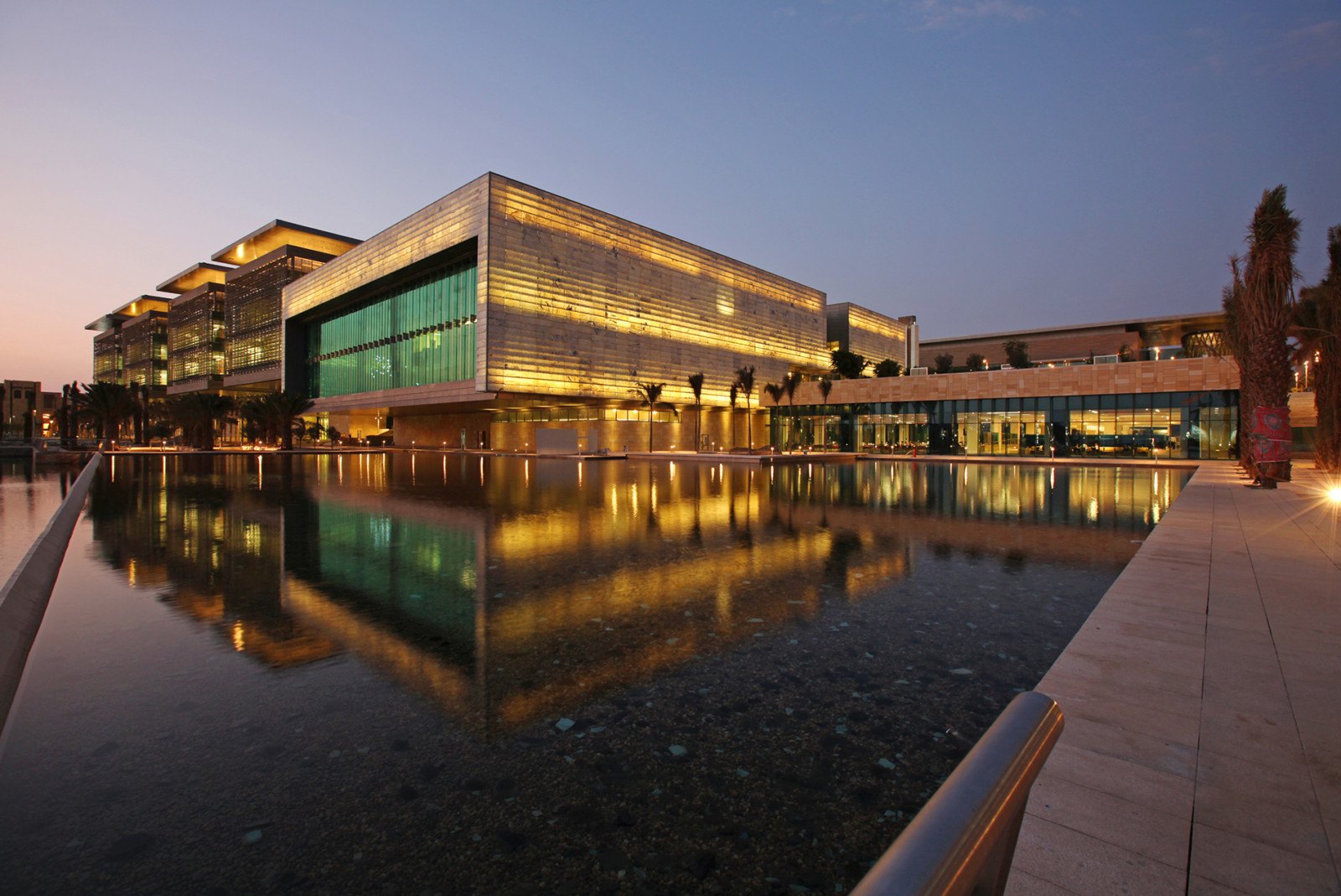
Jeddah — King Abdullah University of Science and Technology has initiated the KAUST Mathematics Competition, a national contest designed to identify and nurture top mathematics talent among students in Grades 8 through 11 across Saudi Arabia. The competition invites both Saudi nationals and residents studying in the Kingdom’s schools to test themselves on challenging topics such as algebra, number theory, combinatorics and geometry.

Phase One of KMC will take place as a two-hour elimination exam at eight regional centres. Students in the junior stream will face 24 multiple-choice questions, while those in the senior stream will tackle 30 multiple-choice items. From that round, the top 200—split evenly between junior and senior tracks—will advance to the final phase. That final round, conducted at KAUST over three days in April, will require written answers to six problems. KAUST will bear the costs of travel, lodging and meals for finalists. The participation fee is set at 100 Saudi riyals per student.

KAUST’s rationale for KMC aligns with its broader talent development mission: to foster advanced thinking skills and attract gifted students into STEM pathways. The competition also offers attractive incentives: cash awards, enrolment in KAUST Academy programmes, and a prize for first-place winners in each track — admission to a summer mathematics camp hosted jointly by KAUST and the University of Cambridge.

KAUST’s pre-university programmes, especially its Science Research School Initiative, already train middle and high school students for international Olympiads. SRSI’s mandate includes preparing students in mathematics, chemistry, physics, informatics and biology through intensive on-campus training. Students in grades 6 to 12 benefit from the training, and many go on to represent Saudi Arabia in global contests. KAUST also partners with other institutional programmes focused on gifted education.

The decision to launch KMC complements an existing competitive ecosystem. The KFUPM Mathematics Olympiad, for instance, has long been held for secondary school students at multiple centres across the country. That contest historically serves as a pipeline to select candidates for the International Mathematical Olympiad. Meanwhile, Saudi youth continue to perform strongly at regional contests: in the 29th Junior Balkan Mathematical Olympiad held in North Macedonia, six Saudi students won two gold, two silver and two bronze medals.

Abu Dhabi’s economy expanded 3.8 percent in the second quarter of 2025, with non-oil activity growing by 6.6 percent and, for the first time in a second quarter, making up 56.8 percent of total GDP, according to figures released by the Statistics Centre – Abu Dhabi. The emirate’s real gross domestic product reached AED 306.3 billion in Q2, rising from the corresponding period in 2024. The non-oil […]

Aluminium Products Company of Saudi Arabia and Hong Kong–based Asia Aluminum Group have inked a master framework agreement to build the largest integrated downstream aluminium industrial complex in the Kingdom, with planned investment reaching up to USD 500 million. The initiative centres on three joint ventures covering aluminium extrusion, modular housing, and solar panel frame manufacturing. The agreement was signed in Hong Kong by ALUPCO Chief Executive […]

Tesla has launched sales of its Cybertruck in Qatar, bolstering its Middle East expansion as the electric carmaker seeks growth beyond saturated U. S. and Chinese markets. The announcement was made via its social media channel on 3 October, following its earlier push into Saudi Arabia this year.

Underlining its Gulf ambitions, Tesla has already made the Cybertruck available in Saudi Arabia and the United Arab Emirates, and now Qatar joins as one of the first markets outside North America to offer the pickup. The company plans to support local sales with online ordering, pop-up showrooms, Supercharger stations, and service centres.

Tesla does not provide regional breakdowns for Cybertruck deliveries, but a U. S. recall filing notes that 46,096 units had been built between November 2023 and early 2025. Analysts say the Qatar move is timely, given Tesla faces weakening demand and intensifying rivalry in its core markets.

Qatar, meanwhile, has signalled ambition in building an EV framework. The country is working toward installing 1,000 public charging stations by 2025 and targeting 4,000 by 2035. A partnership between Tesla, the utility Kahramaa, and real estate projects like Doha Festival City aims to deploy Superchargers capable of delivering 250 kW charging, enabling about 200 miles of range in 15 minutes.

Tesla’s introduction in Qatar is part of a broader Gulf strategy that seeks to replicate its Saudi model—offering multiple variants of the Cybertruck tailored to regional conditions. For example, orders in Saudi Arabia include both All-Wheel Drive and Cyberbeast trims, with the Saudi AWD variant priced starting at around 434,990 Saudi Riyal.

However, Tesla is also reshaping its product line due to weak uptake. It has dropped the standalone rear-wheel-drive Cybertruck variant from its U. S. configurator, leaving only two higher-end models in the lineup. This shift signals that Tesla is consolidating its offerings to better match market demand.

Competition in the Gulf is mounting. Chinese manufacturers BYD and Zeekr are pushing aggressively into the region, and the U. S. EV maker Lucid—backed by Saudi Arabia’s sovereign wealth fund—poses a formidable local rival.

Tesla’s Q3 performance provided a temporary boost: the company reported record global deliveries, partly driven by a rush before the U. S. EV tax credit expired on 30 September. Yet analysts anticipate a steep drop in Q4 sales given the expiration of that incentive.

Tesla’s entry into Qatar underscores its strategic pivot toward markets where expansion potential remains, even as challenges loom in technology adaptation, climate conditions, and consumer uptake.

Saudi Arabia confronts mounting fiscal headwinds as oil revenues falter and large-scale investments under its Vision 2030 agenda intensify strain on the state’s budget, a fresh analysis by Fitch Ratings warns. Fiscal consolidation efforts are threatened by rising expenditures, volatile energy markets and valuation setbacks to flagship development projects.

Fitch anticipates the kingdom will record a fiscal deficit equivalent to 5.3 percent of GDP in 2025—more than double earlier forecasts of 2.3 percent—and projects a narrowing to 3.3 percent in 2026. That trajectory, the ratings agency argues, rests on fragile assumptions about revenue rebound and disciplined spending cuts. The downgrade in oil income, combined with persistent capital outlays, introduces high risk to Saudi’s consolidation plans.

The Public Investment Fund, corner-stone of Vision 2030, channels vast investment into infrastructure, technology, tourism and real estate. But it has also borne losses: in 2024, the PIF recognised an $8 billion writedown of its “gigaprojects,” including NEOM, reflecting cost overruns and market volatility. That impairment eroded some of the cushion these high-profile ventures were meant to provide.

Fitch treats PIF as a government-related entity, equating its credit profile with that of the sovereign given its central role in state economic strategy and the expectation of ongoing state support. However, Fitch cautions that heavy spending commitments in the pre-budget statement expose weaknesses in the consolidation path. The agency notes that worsening oil market dynamics and delays in translating megaprojects into stable returns heighten exposure.

Saudi Arabia’s finance ministry projects 2026 revenues of 1.14 trillion riyals against expenditures of 1.31 trillion, signalling an ambition to shrink deficit to 3.3 percent. The government anticipates revenue growth of 5.1 percent and spending reductions of 1.7 percent relative to 2025 projections. But achieving that will depend heavily on improved non-oil income and restrained capital outlays.

Crude price downturns have compounded pressure. With oil income constituting roughly 60 percent of Saudi’s state revenue, any softness in the energy market imposes acute stress. Analysts say the kingdom is caught in a bind: it must maintain investment momentum to stay on track with Vision 2030, yet it must also restrain spending lest debt and deficits spiral.

Investors and economists point to NEOM as a test case. Massive in scale and ambition, NEOM has come under scrutiny following the substantial writedown. Critics suggest that the project’s capacity to generate returns fast enough to justify its cost is increasingly in question. That, in turn, weakens one of the main pillars of the kingdom’s diversification rationale.

To mitigate risks, Saudi authorities are leaning on non-oil revenue sources, including taxes, fees and state levies, which remain robust. Public consumption and private sector growth also play supportive roles. But these revenue streams may not suffice to offset deep slippage in oil proceeds.

The non-oil private sector in the United Arab Emirates surged in September, with the S&P Global UAE Purchasing Managers’ Index climbing to 54.2, up from 53.3 in August. This marks the strongest expansion in seven months, as new business inflows rebounded sharply and domestic demand regained traction. Growth across new orders was the standout driver. The new orders sub-index jumped to 57.2 from 53.1, registering its fastest […]

Space42 has issued its Foresight Constellation Viewpoint, a strategic dossier that underscores how Synthetic Aperture Radar satellite systems, when paired with artificial intelligence, can reshape decision making for governments and industries. The viewpoint emphasises the capacity for persistent imaging, all-weather operation and near-instant analytics — capabilities that are becoming mission-critical in an era of intensifying climate, security and infrastructure challenges.

At the heart of the Viewpoint is GIQ, Space42’s AI engine that converts raw SAR data streams into decision-grade intelligence within minutes. The report argues that the combination of high-resolution persistent coverage and AI transforms Earth observation from static imagery into a dynamic intelligence layer for monitoring, planning and emergency response. Launching Foresight-1 in August 2024 and Foresight-2 in January 2025 has already bolstered the UAE’s Earth observation capability.

Space42 frames its approach as not just a technological upgrade, but a sovereign asset: reliance on third-party satellite data leaves states vulnerable to disruptions, but a domestic SAR-analytics ecosystem offers resilience and control. The global SAR market, currently estimated around $5.8 billion, is forecast to nearly double to $9.8 billion by 2030. According to the Viewpoint, deployment of integrated SAR systems can yield cost savings — for instance, reducing predictive maintenance expenses by up to 30 per cent while improving emergency response by as much as 90 per cent.

The technical backbone of this strategy depends on both the satellite constellation and ground systems. Space42 has entered into a joint venture with ICEYE to localise manufacturing of SAR satellites in the UAE, aiming to strengthen supply chains and transfer expertise. The joint venture builds on prior collaboration: ICEYE’s technology underpins the Foresight satellites, and cooperation is intended to deepen over coming years.

Foresight-2 was successfully deployed via a rideshare launch on 14 January 2025, expanding the constellation’s capabilities and reinforcing its ability to revisit areas multiple times per day. With Foresight-1 and 2 in orbit, the full constellation is expected by 2027. The satellites exploit SAR’s unique ability to image through clouds and in darkness — a significant advantage over optical systems, especially in disaster and high-latency environments.

The Viewpoint also positions its narrative with real-world scenarios. It cites the 2023 Turkey earthquake, in which optical systems were hindered by cloud cover, while SAR satellites continued functioning — enabling assessments of a major dam’s structural integrity in crisis conditions. That example supports the argument that SAR ecosystems must be treated not as supplements but as core infrastructure for resilience and security.

Space42 positions itself as a full-stack player: not merely a satellite operator but a systems integrator combining space services, geospatial analytics and AI. Its dual business units—Space Services and Smart Solutions—serve satellite operations and downstream intelligence markets respectively. Among its touted use cases are border surveillance, maritime monitoring, infrastructure health, mobility and disaster management.

Yet challenges remain. Building sovereign SAR ecosystems demands investment in ground infrastructure, antenna networks, data processing centres and skilled personnel. Market competition is increasing: global players—commercial and governmental—are accelerating developments in miniaturised SAR payloads, hybrid optical/SAR systems and edge AI processing. Moreover, the cost dynamics of deploying dense constellations must be managed against returns from clients in defence, environment and infrastructure sectors.

VISHNU RAJA
RYO YAMADA
HITORI GOTOH
IKUYO KITA