Dogecoin extended losses on Tuesday as liquidation pressure rippled through the meme-coin segment, reinforcing a market tone defined by selling into rallies rather than chasing rebounds. The token fell about 2% on the day, underperforming parts of the broader crypto complex as traders trimmed exposure amid persistent resistance overhead and thinning liquidity during intraday bounces. Price action showed repeated failures near a well-watched resistance band between $0.126 […]
By K Raveendran When the Supreme Court of India struck down the electoral bond scheme introduced under the government led by Narendra Modi, it did so on the realisation that the anonymity offered by the bonds, far from curing the malaise of black money, had institutionalised it. But the alternative of electoral trusts that the […]
BitGo set the price for its initial public offering at $18 a share, presenting itself to public-market investors as a steadier institutional infrastructure business rather than a bet on volatile crypto trading volumes. The pricing places the company at the lower end of expectations circulating among bankers and analysts, reflecting a cautious market for digital-asset listings even as broader equity indices show resilience. Founded in 2013, BitGo […]
Wall Street posted a powerful advance during the latest trading session, adding an estimated $700 billion to the combined value of listed companies as investors pushed major indices higher on a mix of easing inflation signals, resilient corporate earnings and renewed appetite for growth shares. The move underscored the scale at which US equity markets can reprice within hours when sentiment aligns across sectors. The benchmark S&P […]
HONG KONG SAR – Media OutReach Newswire – 21 January 2026 – Paul Chan, Financial Secretary of the Hong Kong Special Administrative Region (HKSAR), has joined about 3,000 world leaders attending the 56th Annual Meeting of the World Economic Forum (WEF) in Davos, Switzerland (January 19-23). During the WEF Annual Meeting 2026, themed “A Spirit of Dialogue”, Mr Chan attends, speaks and joins discussions at several keynote meetings, luncheons and dinners. He also meets with political, business and financial leaders to brief them on the latest situation in Hong Kong as well as the city’s new opportunities.
Mr Chan attended a breakfast reception hosted by virtual asset enterprise Animoca Brands, headquartered in Hong Kong, yesterday (January 20). Speaking at the meeting, Mr Chan said that Hong Kong adopts a proactive yet prudent approach to the development of digital assets guided by the principle of “same activity, same risk, same regulation” to promote responsible and sustainable market development. Since 2023, Hong Kong has issued licences to 11 virtual asset trading platforms, and a licensing regime for stablecoins is expected to be launched later this year. The Financial Secretary also noted the HKSAR Government’s leadership role in promoting tokenisation, including the issuance of three batches of tokenised green bonds amounting to around US$2.1 billion.
Mr Chan also engaged with a number of officials from different economies and regional organisations attending the WEF Annual Meeting, including Deputy Prime Minister and the Minister of Finance of Thailand, Mr Ekniti Nitithanprapas; the Secretary-General of the Cooperation Council for the Arab States of the Gulf, Mr Jasem Mohamed Albudaiwi; the Minister of Investment and Foreign Trade of Egypt, Mr Hassan El Khatib; and the State Secretary for International Finance at the Federal Department of Finance of Switzerland, Ms Daniela Stoffel. They exchanged views on the global political and economic landscape and issues of mutual concern, and explored opportunities to strengthen collaboration in areas such as trade, finance, industry development and digital transformation.
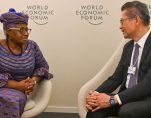
During a meeting with the Director-General of the World Trade Organization (WTO), Dr Ngozi Okonjo-Iweala, Mr Chan reiterated that Hong Kong, China firmly supports free trade and multilateralism, and expressed support for the WTO’s efforts to pursue reforms in response to current global challenges, with a view to enhancing its agility in addressing emerging issues in international trade.
HKSAR’s Financial Secretary Paul Chan (right) meets with the Director-General of the World Trade Organization, Dr Ngozi Okonjo-Iweala, in Davos, Switzerland
On arriving Davos (January 19), Mr Chan began his visit programme by meeting with the Minister of Economy of the Sultanate of Oman, H.E. Dr Said Mohammed Al-Saqri. During the meeting, the two sides discussed ways to deepen mutually beneficial cooperation in areas such as finance, trade, green transformation and industrial development.
Mr Chan said that Hong Kong’s advantages as a “super connector” could support Oman’s transitioning from an oil-driven growth model towards a more diversified economic structure. He said that Hong Kong could facilitate Chinese Mainland and Hong Kong enterprises to invest in Oman to support its infrastructure and industrial development. At the same time, Hong Kong’s status as an international financial centre in Asia could provide Omani enterprises with an ideal platform for fundraising and financing, as well as offshore Renminbi investment and risk management products.
Mr Chan will continue his programme in Davos, including participating at the 2026 Davos-Caixin CEO Luncheon and the “How to Finance Decarbonization?” session of the WEF Annual Meeting, before returning to Hong Kong on January 24 morning.
New York Stock Exchange plans to introduce continuous, 24-hour trading for United States equities through a newly designed on-chain, tokenised exchange, marking a structural shift in how shares could be issued, traded and settled across time zones. The proposal, disclosed by people familiar with the exchange’s roadmap and echoed in public briefings around digital market infrastructure, would extend trading beyond traditional hours while keeping securities within a […]
Greenlogue/AP Abu Dhabi’s flagship Al Dhafra Solar Photovoltaic Independent Power Plant has secured long-term refinancing through a major green bond issuance worth US$870.75 million, underscoring the emirate’s ambition to anchor clean energy financing in global capital markets. The transaction was announced during Abu Dhabi Sustainability Week 2026 by a consortium led by Abu Dhabi National Energy Company PJSC, working alongside Emirates Water and Electricity Company, Abu Dhabi […]
Copper prices slid in late morning trade on Tuesday as investors locked in profits after a strong run and renewed scrutiny fell on consumption prospects in China, the world’s largest user of the industrial metal. The pullback left the market near its lowest point in a week, underscoring how quickly sentiment can turn when demand signals soften. Benchmark three-month copper on the London Metal Exchange was down […]
HONG KONG SAR – Media OutReach Newswire – 15 January 2026 – HKU Business School unveiled the “Hong Kong Economic Policy Green Paper 2026” (“Green Paper”). This comprehensive document delves into various facets of Hong Kong’s economic domain, covering everything from trade finance and Hong Kong’s role in the Greater Bay Area (GBA) startup ecosystem to green finance, the IP economy, social and shareholder value for Hong Kong-listed companies, and pressing social issues such as housing affordability and overcrowding in emergency departments. Moreover, with the emergence of AI, the Green Paper examines the impact of AI on the labour market, cybersecurity, and the development of a Web 3.0 ecosystem.
This is the fifth edition of the Hong Kong Economic Policy Green Paper, released by HKU Business School, with the aim of providing recommendations on how Hong Kong can effectively tackle these challenges.
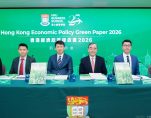
HKU Business School today unveils the Hong Kong Economic Policy Green Paper 2026. From left: Prof. Huiyin Ouyang, Associate Professor in Innovation and Information Management of HKU Business School, Prof. Dragon Tang, Professor in Finance in HKU Business School, Professor Hongbin CAI, Dean and Chair of Economics of HKU Business School, Prof. Richard Wong, Provost and Deputy Vice-Chancellor of The University of Hong Kong and Director, Hong Kong Institute of Economics and Business Strategy, Prof. Heiwai Tang, Associate Vice-President of The University of Hong Kong and Associate Dean of HKU Business School, and Dr. Tingting Fan, Principal Lecturer in Marketing of HKU Business School.
Prof. Richard Wong, Provost and Deputy Vice-Chancellor of The University of Hong Kong and Director, Hong Kong Institute of Economics and Business Strategy said, “This Green Paper was released after months of rigorous research by the scholars from HKU Business School. Grounded in an academic perspective and guided by a pragmatic, problem-solving approach, we have conducted objective analyses and in-depth investigations into core issues and real-world challenges currently facing Hong Kong’s development in political and economic operations, people’s livelihood, and industrial upgrading. Our aim is to provide the Government and relevant authorities with valuable insights and actionable policy recommendations.”
Professor Hongbin Cai, Dean and Chair of Economics of HKU Business School, said, “As a ‘super-connector’ bridging China and the world, Hong Kong’s unique role remains indispensable. Looking ahead, Hong Kong must deeply integrate into China’s national development plans, and also take a more prominent role on the international stage, with an in-depth understanding of the global market and active engagement with its international collaborators.
With campuses in Beijing, Shanghai, and Shenzhen, and an expanding presence in Vietnam and Europe, HKU Business School embodies our unique proposition: deeply rooted in Hong Kong, fully engaged with the Chinese Mainland, and truly international. This year’s Green Paper reflects our dedication to inspiring solutions based on rigorous research. As a world-class institute of higher education, we are committed to enabling Hong Kong to further unleash its core values and usher in a new era of high-quality development.”
Prof. Heiwai Tang, Associate Vice-President of The University of Hong Kong and Associate Dean of HKU Business School, added, “This Green Paper features research papers from ten teams of scholars with diverse backgrounds and varied expertise. Based on profound insights into Hong Kong’s development, they offer unique and targeted policy recommendations, building a rich and multifaceted framework of issues for the Green Paper. At the same time, behind these research achievements lies the scholars’ deep affection for and sense of responsibility toward Hong Kong.”
Regarding how digital technology can boost Hong Kong’s trade finance, he emphasised: “Both data and industry feedback clearly demonstrate the core value of trade finance. However, we need more synergy in the trade finance ecosystem and to catch up in digitisation. To address this, we must strengthen the governance and standard promotion of digital trade platforms and tools, deepen the cross-border interoperability of trade data, expand the functions of the Hong Kong Export Credit Insurance Corporation, focus on high-value-added trade enterprises, extend the coverage of Free Trade and Double Taxation Avoidance agreements, and promote responsible stablecoin adoption and Renminbi internationalisation.”
Prof. Dragon Tang, Professor in Finance at HKU Business School, stated, “Hong Kong is uniquely positioned to lead in the integration of blockchain technology within green finance, exemplified by our pioneering issuance of the world’s first tokenised green bonds, totalling HKD 6 billion in February 2024. With green finance representing a critical avenue for sustainable development, the global market is projected to grow significantly, emphasising the importance of transparency and trust. To capitalise on this opportunity, we must enhance our blockchain infrastructure, establish clear regulatory standards, and promote cross-border integration with initiatives like Core Climate. By leveraging blockchain’s capabilities, we can significantly reduce costs, improve transparency, and engage a broader investor base, ultimately driving our transition to a sustainable finance future.”
Prof. Huiyin Ouyang, Associate Professor in Innovation and Information Management, HKU Business School, commented on her study, saying, “Two weeks post-implementation of the hospital fee reform, the media reported no significant change in emergency department crowding, which aligns with what our analysis predicted. Overcrowding isn’t simply about patient behaviour – it’s a structural issue. Demographics are shifting, capacity is constrained, and alternative treatment options remain limited. What we now need is a careful, systematic evaluation of the fee changes. Where are vulnerable patients going for care? Are some patients delaying treatment? What unintended effects are emerging? Effective reform requires pairing fee adjustments with expanded primary care access. We can’t solve a capacity problem with pricing alone.”
Dr. Tingting Fan, Principal Lecturer in Marketing at HKU Business School, presented as well, spoke on her study and asked, “Why did Pop Mart go public in Hong Kong but register IP in Singapore? Or why was Molly ‘born’ in Hong Kong but did not go viral from Hong Kong? Why have local companies not managed to turn these homegrown IPs into major business triumphs? Learning from the past and looking forward, Hong Kong can leverage its financial market, legal system, as well as talents to build a comprehensive IP industry infrastructure and become an IP hub.”
The Green Paper includes ten articles; the key points are as follows:
Empowering Merchandise Trade Finance with Digital Technology in Hong Kong Author: Prof. Heiwai Tang, Associate Vice-President (Global), The University of Hong Kong; Associate Dean (External Relations), HKU Business School; Associate Director, Hong Kong Institute of Economics and Business Strategy; Victor and William Fung Professor in Economics
Trade is an essential lifeline for Hong Kong; its total merchandise trade was three times the city’s HKD3.2 trillion GDP in 2024. Trade finance is thus equally important, yet research shows that the total loans extended for trade finance have been declining.
As geopolitical and technological shifts reshape trade, Hong Kong must upgrade its trade finance services. With consumer-goods trade shifting to smaller, more frequent orders and shorter cycles, financial institutions need to streamline approvals and develop flexible products for e-commerce and logistics-driven cash cycles. Banks also need to digitise core processes in fund settlement. The article cautions that platforms directly connecting mainland manufacturers with overseas buyers disintermediate Hong Kong’s traditional hub-and-spoke role.
To address this, the article suggests the government leverage digital technologies to elevate the adoption of Hong Kong’s digital trade platforms through unifying core digital trade functions. Moreover, speeding up interoperability of trade data platforms with the Chinese Mainland and other economies will enable seamless data exchange.
Rebuilding Hong Kong as the Catalyst to the Greater Bay Area (GBA) Startup Ecosystem Prof. Alberto Moel, Professor of Practice in Finance, HKU Business School Prof. Joseph Chan, Associate Professor of Practice in Management and Strategy, HKU Business School; Associate Director, Centre for Innovation and Entrepreneurship
Offering a quantitative analysis of the evolution of Hong Kong’s startup landscape, the article found that post-2019 activity has slowed, mirroring global venture capital trends, with most failing to grow beyond 50 employees due to scarce late-stage capital despite early-stage availability. While fintech and logistics dominate and AI/blockchain grow quickly, deep tech lags—authors view this as temporary and highlight Hong Kong’s alignment in financial innovation, regtech, and GBA supply chains to attract investment and support corporate transformation.
To strengthen Hong Kong as the GBA’s premier startup hub and international financial centre, the article recommends nine policies—including fixing funding gaps, closing academia-market divides through industry-focused research for tech transfer, attracting/retaining talent, integrating Northern Metropolis with GBA supply chains, pivoting to high-value services, and drawing large tech platforms to incubate local startups.
The Applications of Blockchain in Green Finance: Hong Kong’s Experience and Opportunities Author: Prof. Dragon Tang, Professor in Finance, HKU Business School; Associate Director, Centre for Financial Innovation and Development
The green finance market has entered an important new phase. Hong Kong became the world’s first issuer of sovereign tokenised green bond when it priced an HKD800 million one-year note in February 2023. Despite this, Hong Kong faces several challenges in the practical implementation of using blockchain to advance green finance. This is due to the limited interoperability between blockchain platforms and existing financial infrastructure, which hinders cross-market transactions. Real-time settlement for tokenised assets is also difficult because of scalability constraints.
The article argues that the future success of blockchain development in green finance will depend on progress in three areas: standardisation, scalability, and security. Clear regulatory frameworks and common technical protocols are needed to provide legal certainty and interoperability across platforms. While collaboration among regulators, technology providers, and energy-market participants can align rules for tokenisation. Blockchain can also connect Hong Kong’s Core Climate platform with overseas counterparts, as cross-border integration is crucial to the inherently international nature of climate finance.
Can Hong Kong be an IP hub for Future Labubu? An Overview of Hong Kong’s IP Industry Dr. Tingting Fan, Principal Lecturer in Marketing, HKU Business School Prof. Heiwai Tang, Associate Vice-President (Global), The University of Hong Kong; Associate Dean (External Relations), HKU Business School; Associate Director, Hong Kong Institute of Economics and Business Strategy; Victor and William Fung Professor in Economics
As Labubu’s success turns the spotlight on the growing importance of the IP industry, the authors propose that this can inspire more creators and businesses to invest in branding, licensing, and cross-border collaborations. This can also attract policymakers’ attention to the emerging IP sector as a key driver of innovation and economic growth.
To position Hong Kong as a leading regional IP trading centre, the authors recommend that stakeholders—including IP developers, entrepreneurs, and government agencies—coordinate efforts across key areas. These include building a robust IP financing ecosystem, such as through government-issued IP bonds replicating the green finance model; enhancing infrastructure and platforms to support IP development; developing specialised talent and professional services in the IP sector; promoting IP initiatives throughout the Greater Bay Area; and strengthening IP protection alongside a solid legal framework.
Thematic Research: Maximisation of Social Value and Shareholder Value – Insights from Hong Kong-listed Companies Across Sectors Author: Prof. Sean Chang, Associate Professor of Practice in Finance, HKU Business School
Through a triangulation research approach, the article examines how social policies, international frameworks, and corporate social responsibility influence a company’s valuation and capital budgeting decisions. Using insights from major Hong Kong-listed companies across nine sectors—spanning transport, utilities, financials, banking, conglomerates, technology, real estate, consumer, and hotel servicing—the research highlights CSR’s role in enhancing long-term firm performance.
Key findings show that corporate risk assessment, company valuation, and stock performance are significantly influenced by CSR-linked socially responsible investing (SRI) factors. Hong Kong-specific social values, such as equality and sustainability, shape investor preferences, guiding finance managers to tailor solutions and adapt regulatory standards. While conventional metrics remain dominant, incorporating social value boosts long-term firm value by building shareholder trust and mitigating risks; companies can pursue CSR projects financed via SRI bonds to create dual economic and societal benefits.
The study recommends embedding core values like equality and sustainability into corporate strategies, aligning budgeting processes with social objectives to pinpoint investments yielding both returns and positive impacts, and urging Hong Kong-listed firms to sustain capital budgeting aligned with enduring societal values.
Housing Affordability and Homeownership in Hong Kong, 1985-2023 Mr. Allen W. Huang, Student Researcher, Hong Kong Future Economy Institute Mr. Alex Ngau, Research Associate, Hong Kong Future Economy Institute Prof. Michael B. Wong, Assistant Professor in Economics, Management and Strategy, HKU Business School
Hong Kong’s housing market has grown increasingly unaffordable, hindering upward mobility for younger generations. Main findings from the research reveal that since the 2002 suspension of the Home Ownership Scheme (HOS), homeownership has declined sharply, rendering private housing “impossibly unaffordable” for median-income households. A wide public-private rent gap drives young people to accept lower-paying or part-time jobs to qualify for public rental housing (PRH), distorting labour supply, stifling human capital investment, and fuelling a surge in adult co-living with parents; younger cohorts (born 1980-1999) face far lower access to public housing and ownership than prior generations at the same age.
Taking Hong Kong Island as an example, between 2003 and 2024, the rent-to-income ratio for a typical 400-sq-ft private unit jumped from 35% to 60% of median household income, peaking at 65% in 2015 and 2019—far exceeding the UN-Habitat and World Bank’s 30% affordability threshold. Public housing rents stayed dramatically lower at just 7%–11% of median household income from 1985 to 2024. For home purchases, it now takes 18.2 years of median income to buy a 500-sq-ft private unit (up from 7.4 years in 2003), placing it in the “impossibly unaffordable” zone per the Demographia International Housing Affordability report, where ≤3.0 years is considered affordable and 9.0+ years is impossibly unaffordable. After the 2002 Home Ownership Scheme suspension, even subsidised HOS units now require 15.8 years of income on Hong Kong Island (up from 7.4 years in 2007), shifting them from moderately unaffordable to severely or impossibly unaffordable in urban cores.
To reverse these trends, the authors recommend ramping up production of high-quality ownership units, easing resale and leasing restrictions on existing subsidised sale flats to boost residential mobility and enable “trading up” the housing ladder, setting housing price and affordability targets over mere supply goals, and adopting responsive mechanisms to balance demand and supply.
Beyond Crisis Management: Structural Reform for the Overcrowding in Hong Kong’s Emergency Departments Prof. Huiyin Ouyang, Associate Professor in Innovation and Information Management, HKU Business School Ms. Yiran Zhang, PhD student, HKU Business School
Hong Kong’s public emergency departments (EDs) handle over 2.14 million annual attendances. This crisis, exacerbated by an ageing population, results from a structural mismatch: the majority of the attendances are for non-emergency conditions, leading to staff burnout and compromised care.
The article proposes three comprehensive structural reforms. First, improving operational efficiency with accurate wait time information systems is crucial. Second, increasing the ED fee (categories III–V) aims to divert non-critical patients. Success for this hinges on assumptions about patient responses, particularly how varied population segments will react to the price signal. International evidence raises concerns, showing that higher ED fees can reduce overall utilisation, but with the decrease primarily occurring among price-sensitive groups who may risk delays in receiving serious care. Therefore, for this reform to succeed, the public must have genuine access to alternative care pathways that can accommodate acute but non-emergency needs outside regular business hours, with pricing acceptable to price-sensitive populations. Third, AI can augment the workforce and manage demand (e.g., through telemedicine).
Ultimately, sustainable reform demands robust evaluation, political courage, and a commitment to address root causes, not just symptoms.
Initial Efforts to Empirically Measure AI Activity and Its Impacts on Hong Kong’s Labour Market Prof. Alan Kwan, Associate Professor in Finance, HKU Business School Prof. Mingzhu Tai, Associate Professor in Finance, HKU Business School; Associate Director, Institute of Behavioural and Decision Science Mr. Zihan Wang, Master student, HKU Business School
In an effort to empirically measure the impact of AI on Hong Kong’s labour force, the researchers observe that firms with a higher adoption of AI experience lower headcount growth. However, the scale of impact appears small in the city, which could be due to several potential reasons. One of these is the different composition of Hong Kong’s labour force compared with other countries. For instance, Hong Kong has a high proportion of finance or managerial talent, which is harder to displace; the city also features older or more elite workers. On the other hand, much of the impact of AI, particularly generative AI, is on the less elite and younger populations.
As such, the authors recommend policymakers produce more labour market statistics that track the impact of AI, particularly by occupation. On the rate of AI adoption in Hong Kong through innovation, the authors find that the city is heavily skewed towards research, but not commercialisation. This means that the quality and quantity of academic research is not translating to commercial use. To address this decoupling, the authors propose that the government tweak its existing early-stage startup funding platforms to encourage streamlining and higher utilisation of existing government resources.
The Impact of Generative Artificial Intelligence on Cybersecurity in Hong Kong Author: Prof. Michael Chau, Professor in Innovation and Information Management, HKU Business School
As GenAI can produce human-like text, code, images, and audio, cybersecurity crimes have become easier and faster to perpetrate. Not only have data leaks and hacks into security systems led to significant financial losses in Hong Kong, but they also hurt confidence in the city’s digital infrastructure.
The article recommends using AI to fortify Hong Kong’s cyber defence, such as using biometric verification and deepfake detection technologies, especially in areas involving critical infrastructure and high financial stakes. It is also important to prevent data leakage and other threats in using GenAI.
Hong Kong’s Next Growth: Pioneering the Web 3.0 Ecosystem Prof. Yulin Fang, Professor in Innovation and Information Management, HKU Business School; Director, Institute of Digital Economy and Innovation Mr. Yangchen Mou, PhD student, HKU Business School
Given the inherent risks in Web 3.0 operational models—most notably within Decentralised Finance (DeFi) systems—striking a balance between fostering the development of the Web 3.0 ecosystem and implementing appropriate regulation to maintain financial stability is and should be a key priority for Hong Kong authorities. To support this, the article categorises the industry into three distinct systems—Centralised Finance (CeFi), the integration of Traditional Finance and Centralised Finance (TradFi-CeFi), and Decentralised Finance (DeFi)—and put forward targeted policy recommendations for each.
For the CeFi system, the authors recommend creating a more conducive environment for development by refining specialised auditing frameworks, promoting a local Web 3.0 talent certification system, and introducing global leading CeFi institutions to the local market. For the TradFi-CeFi system, they suggest upgrading audit standards for traditional firms holding digital assets and upskilling traditional finance professionals with Web 3.0 expertise. In contrast, for the DeFi system, which carries higher inherent risks and poses greater regulatory challenges, the authors advise authorities to adopt a prudent stance while keeping monitoring its latest technological developments.
The full version of the Green Paper can be accessed here. Hi-res photos are available here.
Hashtag: #HKUBS
The issuer is solely responsible for the content of this announcement.
About HKU Business School
Established in 2001, HKU Business School is one of the youngest and most dynamic members of The University of Hong Kong (HKU). The School strives to nurture first-class business leaders and foster academic and relevant research that serves the needs of Hong Kong, China and the rest of the world in the new Asia-led economy. As a top international business school, the School has established its place as a globally impactful institution that leads the way through timely thought leadership, pioneering research, and educational excellence. Deeply rooted in Hong Kong and fully engaged with China, the School’s world-class faculty equip students with global knowledge and perspectives.
HKU Business School offers business education across a full range of disciplines, while achieving remarkable growth in faculty strength and research capabilities. The School ranks Asia’s No.1 in Financial Times’ Aggregated Research Ranking for two consecutive years, 2024 and 2025, while the University of Hong Kong ranked 11th in the world and No. 1 in Asia according to the QS World University Rankings 2026. The School has strategic partnerships with world-renowned universities and corporate partners, providing market-oriented content, superior learning, and instrumental resources.
To better serve our students and alumni in various cities and regions, and to facilitate collaboration opportunities with business communities around the globe, HKU Business School has established a unique international network that extends to Beijing, Shanghai, Shenzhen and Ho Chi Minh City.
HKU Business School is fully accredited by the European Quality Improvement Systems (EQUIS) and the Association to Advance Collegiate Schools of Business (AACSB).
HONG KONG SAR – Media OutReach Newswire – 13 January 2026 – Today, KGI has released its 2026 Global Market Outlook, covering markets in the US, Mainland China, Hong Kong, Taiwan, and Singapore.
(From left) James Chu, Chairman at KGI Securities Investment Advisory; James Wey, Head of International Wealth Management at KGI; Cusson Leung, Chief Investment Officer at KGI
After a turbulent year of trade disruptions and policy uncertainty under President Trump, investors face new questions. China has unveiled its 15th Five-Year Plan, as policymakers aim to support domestic growth amid global challenges. The market outlook for 2026 is shaped by interest rate decisions, economic resilience, and shifting international dynamics.
Under this backdrop, we propose the “LEAD” strategy for 2026:
Liquidity Shift
Earnings Focused
Adding Credit
Diversified Assets
Cusson Leung, Chief Investment Officer at KGI, says: “Looking ahead to 2026, investors can adopt a LEAD strategy: L stands for Liquidity Shift, benefiting from a weakening US dollar and interest rate cuts, with funds expected to flow to non-US dollar and Asian currencies; E stands for Earnings Focused, focusing on earnings growth to support valuations and allocating to US, European, and Japanese stocks; A stands for Adding Credit, locking in the credit of leading companies and increasing holdings of A-rated investment grade bonds; and D stands for Diversified Assets, responding to the upward trend in both stocks and bonds by including alternative assets to optimize asset allocation.”
Macro & US Markets The US economy will experience a more pronounced downturn in 4Q25, which will extend into 1H26, and this will have a negative impact on consumption, slowing investment activity. Nevertheless, AI-driven productivity gains should provide some support, with US GDP growth in 2026 forecast at 2.2%. The eurozone will see moderate growth, with Germany benefiting significantly from fiscal expansion and economic improvement. Japan’s economy will strengthen on domestic demand, aided by additional fiscal stimulus. China has demonstrated resilience under trade protectionism in 2025. With inflation risks easing and labor market risks rising, the US Fed cut the interest rates in September 2025, with a total reduction of 75 bps in 2025, followed by an additional 50-75 bps in 2026.
Regarding US stocks, AI-driven productivity gains and cost reductions should sustain solid profitability, with S&P 500 earnings projected to grow by 13.55% year-on-year (YoY) in 2026. However, higher risk premiums may cap valuation upside, leading us to project a year-end target of 7,650 points. Market performance will reflect risk-driven declines in 1Q26, stabilize and recover in 2Q26, and rally significantly around the midterm elections in 4Q26. By sector, among AI-related themes we favor technology, semiconductors, utilities (on higher power demand), machinery for advanced manufacturing, and industrial REITs. Non-AI beneficiaries include aerospace and defense (on higher military spending), pharmaceuticals (on tariff benefits), and capital market segments (supported by active investment banking). As for fixed income, US economic weakness and Fed rate cuts will drive Treasury yields lower, with 10-year yields expected to fall to 3.5-3.7% by 2Q26. We recommend allocating to US Treasuries or high-rated investment-grade corporate bonds in 1H26, then rotating into high-yield bonds in 2H26 as policy rates and economic conditions reach a bottom.
James Chu, Chairman at KGI Securities Investment Advisory, says:“AI is triggering a new productivity revolution, supporting economic growth and strengthening corporate earnings. While the US economy is expected to slow, a recession remains unlikely, and the short-term impact of tariff policies should gradually fade by the first quarter of 2026. Although the Fed may shift from cutting rates at every meeting to cutting at alternating meetings, the overall environment remains a rate-cutting cycle. In a non-recession backdrop, lower interest rates should continue to support equity market performance.”
Mainland China and Hong Kong Markets In terms of the macroeconomy, with the conclusion of trade agreements among many countries, risks have subsided. However, due to external drag, China’s GDP growth is expected to slow slightly to 4.6% in 2026. In 2026, investors should focus on four key areas for Hong Kong and mainland China markets: (1) In the consumption sector, domestic demand continued to be the core growth driver, contributing more than half of GDP. As the “trade-in” effect diminishes, the central government is expected to implement the “15th Five-Year Plan” and economic conference plans, launching a new round of subsidies covering culture, entertainment, and sports to continuously boost consumer spending. (2) In the financial market, risk appetite has increased. Given the narrowing spread between bond yields and fixed deposit rates, large amounts of savings are flowing into the capital market seeking returns. The fundamentals of the banking and insurance industries have bottomed out, and the credit structure is accelerating its shift from real estate to supporting the real economy. (3) Regarding the issue of “anti-involution,” the PPI remains weak, and capacity reduction has become a focus. Compared to 2015, this round involves more downstream private enterprises and needs to consider employment, presenting greater challenges. While industry consolidation is expected to be lengthy, the impact is controllable and beneficial for long-term healthy development. (4) Regarding new quality productive forces, this will replace real estate and infrastructure as the main investment focus. Digital infrastructure supports AI and embodied intelligence, and humanoid robots are expected to see commercialization in 2026, “iPhone moment.” Leading companies with core technological autonomy in innovative drugs will enjoy higher valuation premiums.
Overall, we are optimistic on Hang Seng Index. We expect the Federal Reserve’s interest rate cuts to drive fund inflows to the Hong Kong and mainland stock markets. Based on an upward revision of the forward PE ratio to 13.5x and 8% earnings growth, we set a target of 30,000 points for the Hang Seng Index by the end of 2026, representing a potential upside of approximately 14%. As confidence recovers, the investment style is expected to shift from defensive to growth stocks. Recommended 12 stocks: XPeng Motors (9868), UBTECH (9880), Tencent Holdings (700), Alibaba (9988), China Hongqiao (1378), AIA Group (1299), Ping An Insurance (2318), China Merchants Bank (3968), Akeso Biopharma (9926), Pop Mart (9992), Tencent Music (1698), and Sino Land (83).
Cusson Leung, Chief Investment Officer at KGI, says: “2026 marks a crucial turning point for the Chinese economy. While the market anticipates GDP growth to slow to 4.6%, “new quality productive forces,” resembling humanoid robots, is taking over as a new growth engine. The most critical signal in the market is the “awakening” of idle cash—massive savings are flowing from low-interest fixed deposits to the capital market seeking returns. With risk appetite returning and policy support intensifying, now is the time to shift investment strategies from “defensive” to “growth.” Driven by both valuation repair and earnings growth, we are optimistic that the Hang Seng Index will reach 30,000 points, and the allocation value of Hong Kong and mainland China stocks has reappeared.”
Taiwan Market Compared to the dot-com era bull run, which lasted almost five years, the current AI frenzy has been around for about three years, suggesting that the uptrend is still in its middle phase and could extend through 2026.
AI plays are trading at high PEs, such valuations are backed by strong fundamentals. In fact, the PEG ratio of Taiwan’s AI supply chain has yet to surpass 1x. We estimate that aggregate earnings of AI plays will grow by 21% YoY in 2026, following impressive upticks of 35% in 2024 and 43% in 2025. AI stocks now account for more than 60% of TAIEX earnings, and with the ongoing AI arms race, overall TAIEX earnings growth is projected to accelerate from 14% in 2025F to 20% in 2026.
Although the AI frenzy should keep the bull market intact, volatility will rise in tandem due to: (1) substantial cumulative gains, and the fact that valuations are approaching historic highs; (2) policy and political uncertainty surrounding the US midterm elections; and (3) potential changes in the US Fed’s rate-cut pace. We expect the TAIEX to repeat a “smile-curve” pattern, featuring continued strength in 1Q26, followed by healthy corrections in 2Q-3Q26 before closing the year with a renewed upswing.
We think investors need to pay attention to two major themes. The first is a broad-based product spec upgrade trend across the AI supply chain, which will drive the industry into a new growth phase, with beneficiaries including foundries, GPU and ASIC designers, advanced packaging (such as CoWoS), and ODMs, as well as testing interfaces, memory, thermal solutions, CCL, ABF substrates, PCBs, switches, and power component suppliers amid strong AI computing demand and ongoing GPU platform upgrades. The second is diversification and defensive asset allocation. Innovations in consumer electronics, such as foldable iPhones and smart wearables, will provide growth opportunities, while companies with resilient domestic demand and stable high dividend yields offer a balanced strategy combining growth and income. Overall, investors should strike a balance between growth and resilience against volatility in their portfolios, in the face of market fluctuations.
James Chu, Chairman at KGI Securities Investment Advisory, says:“The solid earnings growth driven by AI and still reasonable valuations form a strong foundation for the ongoing bull market in Taiwanese equities. With AI adoption accelerating across enterprises and consumers, demand for computing power is rising rapidly. Yet supply remains constrained by chip and power bottlenecks, meaning hardware suppliers are likely to face continued shortages through 2026. Taiwan’s AI supply chain is set to remain a key beneficiary, particularly those tied to next-generation specification upgrades.”
Singapore Market In 9M25, the overall performance of Singapore’s economy was better than expected as the global trade tensions eased after the US pivoted on its reciprocal tariffs and reached deals with its major trading partners. The manufacturing, wholesale trade and finance & insurance sectors remained the growth pillars of the Singapore economy, and each sector delivered decent growth. In particular, manufacturing’s growth has been robust, driven by the electronics, transport engineering and biomedical manufacturing clusters. The full year outlook is upbeat, as the growth momentum shall continue till the end of the year.
Looking ahead, the global economic outlook for 2026 suggests slower GDP growth for most of Singapore’s key trading partners, including China and the Eurozone, largely due to the impact of US tariffs, which will temper demand for Southeast Asian exports, though US growth is expected to remain resilient from AI investment. Consequently, Singapore’s outward-oriented sectors, particularly manufacturing and trade-related services, are projected to expand at a slower pace than in 2025, although the electronics and related sectors will benefit from AI demand, while some precision engineering and biomedical output may moderate domestically, the construction sector is set to grow, but consumer-facing sectors are likely to remain subdued. However, the relatively low interest rates and continuous government support shall buffer the impact of the slowdown, and the capital market will still benefit from the upward re-rating catalysts.
Chen Guangzhi, Head of Research at KGI Singapore, says: “Thanks to trade de-escalation and the AI wave, Singapore experienced significant economic expansion in 2025. Proactive government initiatives turbo-charged the equity bull run, and this strong momentum is expected to deliver an optimistic economic outlook for 2026.” Hashtag: #KGI #MarketOutlook
The issuer is solely responsible for the content of this announcement.
KGI
KGI* has been a leading financial institution in Asia since 1997. Our scope of business encompasses wealth management, brokerage, fixed income, and asset management. We are committed to offering a comprehensive range of financial products and services to corporate, institutional, and individual clients throughout Asia. Backed by KGI Financial Group, we have a robust footprint in Asia, covering Taiwan, Hong Kong, Singapore, Indonesia, and Thailand^.
*KGI refers to KGI Asia Limited and its affiliates. ^an investee enterprise of KGI Securities, not a subsidiary.
DISCLAIMER
All the information contained in this document is not intended for use by persons or entities located in or residing in jurisdictions which restrict the distribution of this document by KGI Asia Limited (“KGI”), or any other affiliates of KGI. Such information shall not constitute investment advice, or an offer to sell, or an invitation, solicitation or recommendation to subscribe for or invest in any securities, insurance or other investment products or services nor a distribution of information for any such purpose in any jurisdiction. In particular, the information herein is not for distribution and does not constitute an offer to sell or the solicitation of any offer to buy any securities in the United States of America, or to or for the benefit of United States persons (being residents of the United States of America or partnerships or corporations organised under the laws of the United States of America or any state, territory or possession thereof). All the information contained in this document is for general information and reference purpose only without taking into account of any particular investor’s objectives, financial situation or needs and may not be redistributed, reproduced or published (in whole or in part) by any means or for any purpose without the prior written consent of KGI. Such information is not intended to provide any legal, financial, tax or other professional advice and should not be relied upon in that regard.
All investments involve risks. The prices of securities fluctuate, sometimes dramatically. The price of a security may move up or down, and may become valueless. It is as likely that losses will be incurred rather than profit made as a result of buying and selling securities.
Bond investment is NOT equivalent to a time deposit. It is NOT protected under the Hong Kong Deposit Protection Scheme. Bondholders are exposed to a variety of risks, including but not limited to: (i) Credit risk – The issuer is responsible for payment of interest and repayment of principal of bonds. If the issuer defaults, the holder of bonds may not be able to receive interest and get back the principal. It should also be noted that credit ratings assigned by credit rating agencies do not guarantee the creditworthiness of the issuer; (ii) Liquidity risk – some bonds may not have active secondary markets and it would be difficult or impossible for investors to sell the bond before its maturity; (iii) Interest rate risk – When the interest rate rises, the price of a fixed rate bond will normally drop, and vice versa. If you want to sell your bond before it matures, you may get less than your purchase price. Do not invest in bond unless you fully understand and are willing to assume the risks associated with it. Please seek independent advice if you are unsure.
You are advised to exercise caution and undertake your own independent review, and you should seek independent professional advice before making any investment decision. You should carefully consider whether investment is suitable in light of your own risk tolerance, financial situation, investment experience, investment objectives, investment horizon and investment knowledge.
No representation or warranty is given, whether express or implied, on the accuracy, adequacy or completeness of information provided herein. In all cases, anyone proposing to rely on or use the information contained herein should independently verify and check the accuracy, completeness, reliability and suitability of the information. Simulations, past and projected performance may not necessarily be indicative of future results.
Information including the figures stated herein may not necessarily have been independently verified, and such information should not be relied upon in making investment decisions. None of KGI, its affiliates or their respective directors, officers, employees and representatives will be liable for any loss or damage of any kind (whether direct, indirect or consequential losses or other economic loss of any kind) suffered or incurred by any person or entity due to any omission, error, inaccuracy, incompleteness or otherwise, or any reliance on such information. Furthermore, none of KGI, its affiliates or their respective directors, officers, employees and representatives shall be liable for the content of information provided by or quoted from third parties.
Members of the KGI group and their affiliates may provide services to any companies and affiliates of such companies mentioned herein. Members of the KGI group, their affiliates and their directors, officers, employees and representatives may from time to time have a position in any securities mentioned herein.
Arabian Post Staff -Dubai Emirates NBD Bank, the UAE’s second largest lender by assets, has taken a step towards expanding the domestic capital markets by mandating its debut dirham-denominated Regulation S three-year fixed-rate digitally native notes, marking a move that blends traditional funding with blockchain-enabled issuance infrastructure. The planned transaction signals growing confidence among regional issuers in digital settlement frameworks while maintaining alignment with established international clearing […]
Arabian Post Staff -Dubai Shares of Larsen & Toubro fell sharply in early trading on January 13, extending losses after reports indicated that Kuwait is weighing the cancellation of oil and gas project tenders with an estimated value of $8.7 billion, a development that unsettled investors exposed to the company’s hydrocarbons order book. The stock dropped close to 3 per cent during morning deals, touching a one-month […]
HO CHI MINH CITY, VIETNAM – Media OutReach Newswire – 12 January 2026 – Ho Chi Minh City Development Commercial Bank (HDBank, ticker symbol: HDB) has successfully issued a second tranche of international green bonds worth US$50 million to the Dutch Entrepreneurial Development Bank (FMO) and British International Investment (BII), the UK’s development finance institution and impact investor, completing its $100 million international green bond initiative in 2025.
HDBank’s international green bond programme strengthens funding diversification and supports sustainable, green and inclusive finance initiatives in Vietnam.
The announcement was made at “The USD100 Million Green Bond Issuance Disclosure Ceremony” recently held between HDBank and its green bond investors including FMO, BII and the International Finance Corporation (IFC) – a member of the World Bank Group in the presence of the Deputy Consul General of the Netherlands and representatives from the British Consulate General in Ho Chi Minh City.
The bonds included $30 million privately issued to FMO and $20 million to BII. The first tranche was issued to IFC, which facilitated the participation of FMO and BII in the second tranche.
The bonds have a three-year term, are non-convertible and unsecured and issued without warrants.
Nguyen Huu Dang, HDBank’s CEO, said: “Sustainable development goals lie at the heart of HDBank’s strategy, which is centred on delivering the best value for customers, partners and the community. This international green bond initiative marks an important stepping stone on our journey towards achieving those goals.”
The issuance help diversify HDBank’s funding sources, support its sustainable growth strategy and create a foundation for it to continue attracting additional international capital for green finance, sustainable development and inclusive finance initiatives in Vietnam.
This, in turn, helps customers access capital to deploy solar energy projects, electric vehicles, green buildings, and other energy-saving solutions.
Projects financed by the green bond proceeds must undergo rigorous screening, meet environmental and social risk management requirements, and comply with eligibility criteria under the Bank’s Sustainable Finance Framework. These projects are expected to reduce approximately 102,000 tons of CO₂ over 10 years, improve environmental quality and contribute to Vietnam’s Net Zero 2050 commitment.
Weichuan Xu, IFC’s lead for the Financial Institutions Group in Vietnam, Cambodia and Lao PDR, said the issuance marked a significant step in expanding HDBank’s climate finance portfolio and advancing Vietnam’s economic and social progress.
“The funds raised will support projects that foster sustainable industries, generate jobs and strengthen communities,” he added.
Representatives from FMO and BII also highlighted the transaction as a strong signal of the growing readiness and potential of Vietnam’s sustainable finance ecosystem, helping attract more capital for climate-responsible projects.
With this milestone, HDBank reinforces its commitment to sustainable finance and the long-term prosperity of its customers, partners and the community, while expanding its presence on the global financial map.
Hashtag: #HDBank
The issuer is solely responsible for the content of this announcement.
Chainlink’s token LINK is showing signs of technical strain as chart patterns point to a bearish pennant forming against a backdrop of fading institutional demand for exchange-traded crypto products tied to the oracle network. The setup has drawn attention across digital-asset desks at a time when broader crypto markets remain sensitive to shifts in liquidity, regulatory signals and risk appetite. LINK has spent several weeks consolidating after […]
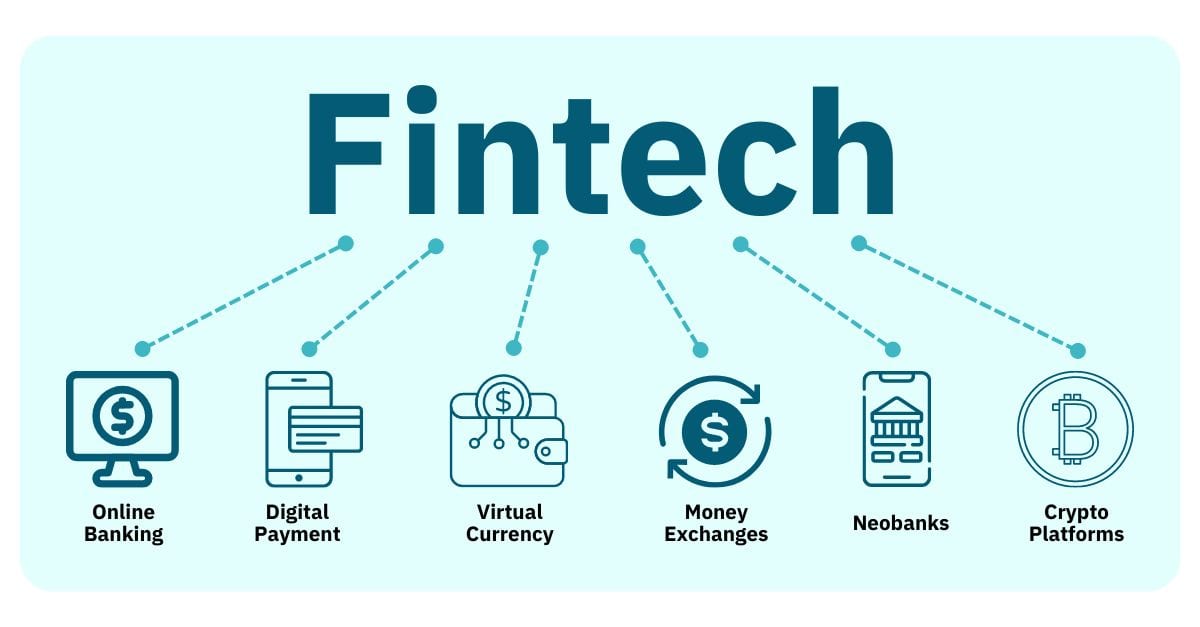
Bengaluru | Banking-as-a-Platform is moving from concept to commercial backbone across the country’s financial system, as lenders open their digital rails to fintech partners and reposition themselves as infrastructure providers rather than closed institutions. The model allows banks to expose core capabilities—accounts, payments, lending, compliance and data—through secure application programming interfaces, enabling third parties to build, distribute and monetise financial products at speed.
This shift has gathered momentum as regulatory digital public infrastructure, rising smartphone penetration and instant payments have converged. Unified Payments Interface volumes continue to expand across peer-to-peer and merchant transactions, while account aggregation frameworks allow consent-based data sharing that reduces onboarding friction and credit assessment time. Against this backdrop, platform-led banking is emerging as a scalable engine for fintech growth, changing how products are designed, priced and distributed.
Large lenders and new-age banks have invested heavily in API layers that sit atop legacy cores, separating product logic from distribution. This architectural change allows fintechs to “plug” into regulated balance sheets without becoming banks themselves, “play” by composing features such as KYC, payments or credit scoring, and “scale” nationally without building costly compliance stacks. For banks, the appeal lies in fee income, wider distribution and better utilisation of capital through co-lending and embedded finance.
Executives across the sector say the platform approach has shortened product launch cycles from months to weeks. Consumer lending, merchant credit, wealth distribution and cross-border remittances have been early beneficiaries, with embedded finance extending to ride-hailing, e-commerce, logistics and software-as-a-service platforms. Small enterprises, long constrained by paperwork and collateral requirements, are gaining access to working capital through cash-flow based underwriting that draws on real-time transaction data.
The commercial logic is reinforced by economics. API monetisation—charging per call, per transaction or via revenue sharing—creates annuity-like income streams for banks. Fintechs gain variable cost structures that align expenses with growth. Analysts note that platforms with high uptime, predictable latency and robust documentation are attracting repeat developers, creating network effects similar to cloud marketplaces.
Regulatory guardrails remain central to the model’s credibility. Data localisation rules, customer consent standards and outsourcing guidelines shape how banks expose systems and how partners handle information. Supervisors have emphasised accountability, making licensed entities responsible for customer outcomes even when services are delivered through partners. This has pushed banks to strengthen vendor risk management, audit trails and incident response, while fintechs have had to mature governance and security practices.
Competition among banks has intensified around developer experience. Dedicated sandbox environments, self-serve onboarding and standardised APIs are becoming differentiators. Some lenders have carved out platform subsidiaries to attract talent and ring-fence technology risk, while others have partnered with specialist middleware firms to accelerate rollout. Public sector banks, once seen as slow movers, are also modernising stacks to participate in ecosystem distribution rather than cede ground.
The platformisation trend is reshaping balance-sheet strategies. Co-lending arrangements allow banks and non-bank financiers to share risk, with fintechs originating and servicing loans using data-driven models. In payments, banks are focusing on high-volume, low-cost rails while fintechs compete on user experience and value-added services. Wealth platforms are distributing mutual funds, bonds and insurance through APIs that streamline compliance and reporting.
Challenges persist. Legacy core systems can constrain throughput, requiring phased migrations that test execution discipline. Cybersecurity threats rise with greater connectivity, demanding continuous monitoring and zero-trust architectures. Pricing APIs too aggressively risks discouraging innovation, while underpricing leaves money on the table. There is also the question of differentiation: as APIs commoditise, banks must decide where to invest for unique value, whether in data analytics, sector-specific products or risk pricing.
Talent remains a pressure point. Demand for engineers fluent in financial protocols, security and scalable systems outstrips supply, pushing up costs. Cultural change inside banks—shifting from project delivery to product thinking—has proven as important as technology. Successful platforms tend to empower cross-functional teams, publish clear roadmaps and treat external developers as customers.
Asset manager VanEck has outlined a long-range capital market assumptions model that positions bitcoin as a potential multi-million-dollar asset by 2050, citing structural adoption as a settlement currency and reserve asset as key drivers of value. Under the firm’s base-case scenario, which assumes a compound annual growth rate of around 15 per cent through to mid-century, one bitcoin could be worth approximately $2.9 million, a dramatic elevation […]
Polygon Labs has rolled out a new financial infrastructure initiative branded the Open Money Stack, positioning it as a foundational layer for what the company describes as the next stage in the evolution of Polygon’s blockchain ecosystem. Announced on January 8, the framework is designed to bring together payments, decentralised finance and tokenised assets into a unified, open system aimed at both developers and institutions seeking […]
Bank of New York Mellon has outlined plans to offer tokenised deposit accounts to institutional clients, marking a significant step by the world’s largest custodial bank into blockchain-based settlement infrastructure. The initiative is designed to mirror traditional deposit balances on a private blockchain, allowing large investors to move cash and securities with greater speed while remaining within the perimeter of regulated banking. BNY said the proposed structure […]
Arabian Post Staff -Dubai Aldar Properties PJSC has priced $1 billion of subordinated dated hybrid notes, securing long-term capital to support its expansion plans as demand for Gulf real estate assets continues to draw global investors. The Abu Dhabi-based developer said the transaction was met with strong interest from international institutional accounts, reflecting confidence in its balance sheet and strategy at a time when funding costs […]
Greenlogue/AP Dhafrah PV2 Energy Company, the Abu Dhabi-based owner of the Al Dhafrah PV2 solar photovoltaic plant, has priced an $870.75 million green bond with a final spread of 100 basis points over US Treasuries, tightening decisively from initial price thoughts in the T+130 bps area as demand built through the bookbuild. The Regulation S benchmark-sized, amortising Eurobond carries a coupon of 5.794%, re-offered at par, and […]
China’s consumer prices climbed at their fastest pace in nearly three years in December while factory-gate deflation eased, adding to evidence that price pressures are stabilising even as demand remains uneven across the economy.
China prices show firmer momentum
Data released by the National Bureau of Statistics showed annual consumer price inflation accelerating to its strongest level since early 2022, driven by higher food costs and a gradual recovery in some service categories. At the same time, producer prices fell at a slower pace, marking a further moderation in factory-gate deflation that has weighed on corporate margins for much of the past year.
The figures offer a nuanced picture for policymakers in Beijing. Households have faced prolonged price weakness amid a sluggish property sector and cautious consumer spending, while manufacturers have struggled with excess capacity and weak external demand. December’s readings suggest those deflationary forces may be losing intensity, though not disappearing altogether.
Food prices were a key driver of the headline consumer inflation increase. Pork prices rose on a low base after earlier declines, while seasonal demand pushed up costs for fresh vegetables and other staples. Core inflation, which strips out volatile food and energy components, also edged higher, pointing to tentative improvement in underlying demand rather than a one-off spike.
Economists noted that service prices, including travel and leisure, showed firmer momentum as domestic tourism and entertainment spending improved toward the year-end. However, discretionary retail categories remained mixed, reflecting ongoing household caution and the lingering impact of earlier job-market softness.
On the production side, the producer price index stayed in negative territory but posted a smaller year-on-year decline than in previous months. The easing was linked to stabilising commodity prices, modest improvement in industrial demand and policy efforts to curb destructive price competition in sectors facing overcapacity. Heavy industries such as steel and chemicals continued to face pressure, while technology manufacturing showed more resilience.
The data come as authorities seek to balance growth support with financial stability. The government has rolled out targeted fiscal measures, including infrastructure spending and tax relief for smaller firms, while encouraging banks to channel credit toward advanced manufacturing and green industries. Monetary policy has remained accommodative, with the central bank signalling readiness to fine-tune liquidity conditions if deflation risks persist.
Officials at the People’s Bank of China have repeatedly stressed the need to avoid both deflation and excessive stimulus that could inflate asset bubbles. The December inflation readings strengthen the argument that incremental measures are gaining traction, though the pace of recovery remains modest by historical standards.
Market reaction to the data was measured. Equity investors focused on the prospect of improving corporate pricing power, while bond yields remained anchored by expectations that policy support would continue. Currency markets showed little volatility, reflecting the broader view that China’s recovery will be gradual rather than abrupt.
Structural factors continue to shape the inflation outlook. Demographic changes, a high household savings rate and productivity gains have all contributed to subdued price growth over the past decade. Analysts argue that reversing entrenched deflationary expectations will require sustained income growth and clearer signals of confidence in the labour market.
At the same time, external factors could influence the trajectory. Global energy prices have been volatile, and geopolitical tensions have the potential to disrupt supply chains. Any renewed surge in commodity costs would feed into producer prices first, with a lagged effect on consumers.
Fireblocks has agreed to acquire crypto accounting and compliance specialist TRES Finance in a transaction valued at about $130 million, a move that brings together one of the industry’s largest digital-asset infrastructure providers with a fast-growing financial intelligence platform serving institutional investors. The deal, confirmed by people familiar with the matter, folds TRES Finance’s reporting and compliance tools into Fireblocks’ custody, settlement and tokenisation stack as competition […]
Bitcoin failed to sustain momentum above the $95,000 level as heavy selling pressure from exchange-traded funds weighed on prices, reinforcing concerns that institutional appetite has cooled after months of aggressive inflows. The world’s largest cryptocurrency slipped back after multiple attempts to break through the psychological resistance, with total spot bitcoin ETF outflows amounting to about $243 million over several trading sessions, according to market data compiled from […]
First Abu Dhabi Bank PJSC has priced a $750 million five-year senior unsecured Eurobond under Regulation S, drawing strong investor demand and tightening pricing well inside initial guidance as global credit markets show continued appetite for high-grade Gulf issuers. The fixed-rate bond carries a coupon and yield of 4.299%, with a re-offer price set at par. The notes were marketed with initial price thoughts at 95 basis […]



 By K Raveendran When the Supreme Court of India struck down the electoral bond scheme introduced under the government led by Narendra Modi, it did so on the realisation that the anonymity offered by the bonds, far from curing the malaise of black money, had institutionalised it. But the alternative of electoral trusts that the […]

 https://www.brandhk.gov.hk/
 https://www.linkedin.com/company/brand-hong-kong/
 https://x.com/Brand_HK/
 https://www.facebook.com/brandhk.isd
 https://www.instagram.com/brandhongkong









 Bengaluru | Banking-as-a-Platform is moving from concept to commercial backbone across the country’s financial system, as lenders open their digital rails to fintech partners and reposition themselves as infrastructure providers rather than closed institutions. The model allows banks to expose core capabilities—accounts, payments, lending, compliance and data—through secure application programming interfaces, enabling third parties to build, distribute and monetise financial products at speed.