News related to
bond

Matein Khalid The supply glut in crude oil, the fragile geopolitics of the Levant, the Gaza wars, the thinnest sovereign credit spreads since the summer of 2006 have not ended the scramble to pick up MENA credit when the issuer is not a serial borrower/distressed credit and the bonds issue reflects improving political/economic fundamentals. The year ago, Oman and Bahrain provided some amazing opportunities for capital gains […]

Gulf states are emerging as influential players in digital assets, with governments across the region intensifying efforts to regulate cryptocurrencies, tokenisation and Web3 innovations. A growing number of jurisdictions are introducing licensing frameworks for virtual asset service providers, stablecoin regimes and asset-tokenisation structures, signalling a shift in strategy from reactive oversight to proactive design.

The Central Bank of the United Arab Emirates has introduced a Payment Token Services Regulation that obliges issuers, distributors and custodians of payment tokens to maintain full reserve backing, undergo mandatory licensing and meet robust anti-money-laundering and cybersecurity standards, thereby positioning the UAE as a regulatory pioneer in the region. Across the region, countries such as Bahrain and Saudi Arabia have developed layered digital-asset frameworks, with Bahrain’s central bank among the earliest movers and Saudi launching fintech sandboxes and pilot token-asset schemes under its Vision 2030 plan.

Market data underline these developments. Analysis shows that between July 2023 and June 2024 the Middle East and North Africa region handled some US$338.7 billion in on-chain crypto value, accounting for approximately 7.5 per cent of global transaction volume. Institutional flows dominate: about 93 per cent of value transferred in the region came in amounts of US$10,000 or more.

Several regional platforms have obtained new licences under this regulatory push. The region’s first licensed crypto-asset service provider, Rain Financial Inc., has expanded its services under licence from both Bahrain’s regulator and Abu Dhabi’s ADGM-FSRA. In Bahrain, over 50 firms including nearly half focused on digital-assets are in discussions to establish operations under the Central Bank’s regime.

The tokenisation of real-world assets is gaining traction, with banks and global institutions exploring issuance of token-backed bonds, real estate and commodity-linked tokens. According to consultancy research, tokenisation could add as much as US$230 billion annually to MENA-region GDP. Major international exchanges and asset-managers are establishing footholds: for instance, the global exchange Binance uses the UAE as its regional base and has obtained a licence under Dubai’s Virtual Assets Regulatory Authority.

Despite this momentum, the region faces challenges. Implementation remains uneven: regulatory capacity across jurisdictions varies, local consumer-protection rules are still emerging and cybersecurity vulnerabilities in wallet providers and exchanges pose material risk. Energy-use and environmental impacts of crypto-mining have also drawn regulatory scrutiny: in one Gulf city, electricity consumption fell by over fifty per cent after enforcement of mining curbs.

Taxation and corporate-governance issues are also under development. In Saudi Arabia individuals currently pay no capital-gains tax on crypto, though businesses may face up to 15 per cent tax with corporate income taxed at 20 per cent plus a 2.5 per cent zakat levy. Given the youth-skewed demographics of Gulf markets and high smartphone penetration, regulators see digital-assets as both a diversification lever and a conduit to broader fintech innovation.

For global crypto and Web3 players the Gulf region offers a combination of clear regulation, large capital pools and government-driven ambition. However firms must navigate rigorous licensing conditions, reserve-backing rules, AML frameworks and evolving governance standards. The regulatory focus on stability and consumer protection underscores that the region expects digital-asset innovation to be embedded in mainstream finance rather than existing outside it.

Tokyo’s financial regulator is advancing a proposal that would permit domestic banks to directly invest in cryptocurrencies such as Bitcoin and operate crypto exchanges, marking a significant shift from earlier restrictions. The Financial Services Agency is set to present its plans to the Financial System Council—an advisory body to the prime minister—later this month.

Under the existing regime promulgated in 2020, Japanese banks have been effectively barred from acquiring and holding digital assets for investment purposes, owing to concerns about volatility and financial-stability risk. The new regulatory blueprint would align crypto asset holdings by banks with traditional financial instruments such as stocks and government bonds, while introducing capital and risk-management requirements tailored to the asset class.

According to data cited by the FSA, Japan’s crypto account holdings have climbed past 12 million as of February 2025—a roughly 3.5-fold increase over five years. The surge in retail interest is growing pressure on regulators to provide greater clarity and institutional-grade infrastructure. Amid this backdrop, the proposed reforms aim to usher in a more integrated digital-asset ecosystem under the purview of regulated financial institutions.

The FSA’s initiative encompasses three key pillars: Firstly, banks would be authorised to purchase and hold unbacked crypto assets for trading or investment, subject to strict internal controls and exposure limits.  Secondly, bank groups may register as licensed “cryptocurrency exchange operators,” effectively allowing them to offer trading and custody services in-house rather than relying solely on third-party platforms.  Thirdly, the FSA plans to shift oversight of digital assets from the current Payment Services Act regime into the Financial Instruments and Exchange Act framework, thereby affording crypto the same legal mould as securities.

Banking groups in Japan are already responding. Three of the country’s largest financial institutions—Mitsubishi UFJ Financial Group, Sumitomo Mitsui Financial Group and Mizuho Financial Group—have announced a joint plan to issue a yen-pegged stablecoin for corporate settlements, signalling a broader shift into digital assets.

Supporters of the reforms argue that allowing regulated banks to engage with crypto assets will bolster investor protections, improve custody and transactional infrastructure, and widen market access. “This reform will treat cryptocurrencies similar to other investible asset classes under bank supervision,” noted one industry analyst. However, sceptics caution that the volatility of cryptocurrencies remains elevated and that exposure must be managed carefully to prevent end-user or systemic risk.

Regulatory design will therefore place a heavy emphasis on limiting banks’ direct holdings of digital assets relative to their capital base, imposing heightened disclosure and governance mandates. One working-group paper recommends that banks maintain separate risk-allocations and stress-testing frameworks for crypto, akin to those used for foreign-exchange or commodity trading desks.

The tax and legal context are also evolving. Japan is preparing to introduce a flat 20 % capital-gains tax on crypto assets as part of its 2025 reforms, and certain tokens are slated to be reclassified as securities under the FIEA. These measures are designed to reduce uncertainty for institutional participants and global investors seeking regulated exposure to digital assets.

Market participants appear cautiously optimistic. Some regional banks are exploring pilot custody services for institutional clients, while fintech firms anticipate greater collaboration with mainstream banks as eligibility expands. On the flip side, legacy concerns persist: past hacks and exchange failures have left regulators and consumers wary of governance failures and inadequate transparency.

Gold surged past $4,300 per ounce this week, setting fresh records as investors turned decisively to safe-haven assets amid mounting geopolitical strain and expectations of forthcoming U. S. rate cuts. The run has intensified scrutiny over gold’s role in modern portfolios—and reopened questions about the value of what critics label a “sterile” asset. Spot gold climbed about 2.5 per cent to $4,316.99, while December futures peaked at […]

Abu Dhabi’s MDGH GMTN priced a one-billion dirham Reg S five-year bond at par, carrying a coupon of 4.20 per cent. The issuer tightened guidance from an initial 4.45 per cent, and book orders surpassed AED 4.7 billion, not counting joint lead manager interest, signalling strong investor demand.

The unsecured bond is guaranteed by Mamoura Diversified Global Holding, with settlement set for 23 October and a planned listing on the London Stock Exchange Main Market. Fitch is expected to assign an “AA” rating in line with Mamoura’s sovereign backing. The issuance was led by a syndicate including Abu Dhabi Commercial Bank, Bank of China, Citi, Emirates NBD Capital, First Abu Dhabi Bank, Goldman Sachs International, HSBC, Industrial and Commercial Bank of China, National Bank of Kuwait and Standard Chartered.

This city-currency issue follows a $750 million ten-year dollar bond issued less than ten days earlier by MDGH, priced at about 55 basis points over U. S. Treasuries under the same guarantee structure. That transaction underlined the group’s growing presence in global markets.

MDGH is wholly owned by Mubadala Investment Company and plays a central role in Abu Dhabi’s strategy to diversify its economic base. In its 2024 financials, the company reported revenues of AED 39,528 million and a net profit attributable to owners of AED 37,376 million, with total assets reaching AED 596,168 million.

Credit agencies currently align Mamoura’s rating with the sovereign, with Fitch affirming an “AA” rating and stable outlook in late 2023. Moody’s and S&P assign comparable ratings of Aa2 and AA respectively.

Analysts note that the new issue shows how Abu Dhabi-linked issuers are able to tap demand for high-grade Gulf debt amid tighter global credit markets. The bond’s tight pricing and oversubscription point to strong appetite among fixed-income investors for Gulf credits backed by sovereign guarantees.

BANGKOK, THAILAND – Media OutReach Newswire – 16 October 2025 – As the spicy aroma of Hunan cuisine wafts through the streets of Bangkok, a cross-border culinary dialogue quietly begins. Recently, the third season of Hunan TV’s Mango TV program “Go Where Flavors of Hunan Abound” concluded with the theme of “Hunan Cuisine Going Abroad.” Five champion chefs from Hunan traveled to Thailand, not only completing a […]

MAF Sukuk Ltd is launching a US$500 million, 10-year sukuk under Regulation S, with initial price thoughts set around US Treasuries plus 125 basis points. The securities will be backed by Majid Al Futtaim Properties as the obligor, while parent Majid Al Futtaim Holding offers a guarantee.

The offering adopts a wakala/murabaha structure and is expected to carry credit ratings of “BBB/BBB”, aligned with those of the guarantor. HSBC is acting as lead structuring bank, with the purpose of the funding geared towards expansion and refinancing of property development activities.

Majid Al Futtaim Holding, in its most recent credit review, retains its BBB rating and stable outlook, reflecting its scale of operations and diversified asset base. Fitch affirmed the rating in November 2024, citing growth across revenue and EBITDA. Majid Al Futtaim’s internal guidance confirms that capital allocation remains within the thresholds consistent with its BBB leverage metrics.

Investors familiar with corporate sukuk in the Gulf region view the 125 basis point spread as moderately tight for a 10-year tenor, particularly for a non-sovereign issuer in the real estate sector. The parent guarantee is crucial to bolster credit comfort, given that the issuer is a property development arm.

In recent years, Majid Al Futtaim has deployed Islamic capital markets for its financing needs. Its 2023 green bond issuance of US$500 million was aimed at refinancing an AED 800 million bond commitment, underlining a strategy to blend sustainability credentials with its capital structure. The group similarly has historically issued hybrid capital securities and sukuk in its debt portfolio.

The latest sukuk will be listed via MAF Sukuk Ltd, which already carries a BBB long-term rating. The listing via a special purpose issuer isolates the structure from direct group operations, while the parent guarantee transfers credit risk back to the overarching entity.

Major risks for the deal rest on cyclical pressures in real estate markets, tenant defaults, and development cost inflation. Majid Al Futtaim Properties has disclosed in its base prospectus the possibility of cost overruns, land title constraints, and tenant concentration as material risks. The group also faces competitive dynamics in its markets where some rivals are state-backed.

Mohamed Futtah, a regional fixed-income strategist, commented that “a 10-year sukuk at T+125bp for a BBB group guarantee is ambitious, but could succeed under strong demand, especially from Gulf and Asia Islamic investors seeking yield in a rate environment that is otherwise compressed.”

Advertisements

Breaking the long-standing assumption that intense deformation and mixing in metal processing fully randomize atomic arrangements, MIT scientists have demonstrated that metals retain subtle but stable atomic patterns—manifestations of hidden order that survive even the harsh conditions of industrial manufacture. This revelation marks a turning point in materials science and opens new vistas for engineering metals whose performance is tuned not just by composition, but by the […]

BlackRock chief executive Larry Fink asserted that cryptocurrencies carry a role akin to gold in investment portfolios, calling Bitcoin “a decent tool for diversification” while warning that it should not form a major slice of one’s holdings.

Speaking on 60 Minutes on CBS, Fink said: “There is a role for crypto in the same way there is a role for gold … For those looking to diversify, it is not a bad asset, but I don’t believe that it should be a large component of your portfolio.”

Fink’s remarks mark a notable shift from earlier positions. In the past, he dismissed Bitcoin as a facilitator of money laundering, stating that none of his clients expressed interest in crypto. The evolution of his thought underscores how digital assets have moved further into mainstream investment discourse.

His comments come amid rising institutional engagement with digital asset markets, with BlackRock among firms championing the development of spot Bitcoin ETFs. The firm has also begun pushing into tokenization, envisioning the conversion of traditional financial products such as equities, bonds or real estate into digital token formats. Fink described tokenization of all assets as “the next wave of opportunity” over the coming decades.

Analysts view Fink’s balanced tone—acknowledging both potential and restraint—as calibrated for the climate of heightened volatility and regulatory uncertainty in crypto markets. He is signalling openness without forfeiting caution.

Some investors welcomed the endorsement as validation from one of finance’s most influential figures, though sceptics note that Fink’s insistence on limiting crypto to a small portfolio slice reflects enduring reservations.

Crypto proponents point out that Bitcoin’s often low correlation with equities or bonds—and its non-sovereign character—make it attractive as a diversification instrument. BlackRock itself in earlier internal research has characterised Bitcoin as a “unique diversifier,” citing its tendency to behave differently from traditional assets during episodes of macro stress.

Yet the environment remains fraught. Price swings, regulatory fragmentation across jurisdictions, and infrastructure challenges continue to deter widespread adoption. For instance, debates persist around how to regulate digital assets, custody risks, taxation, and classification.

Sharjah’s government has successfully raised Rmb 2 billion by issuing a three-year panda bond in China’s onshore renminbi market. The issuance marks the emirate’s return to the panda bond space after its inaugural foray seven years ago. The pricing range for the bond was initially indicated in the 2.5 % to 3.2 % area. The transaction was arranged through a syndicate led by Bank of China, with […]

DP World has struck a joint venture with Tashkent Invest, a firm under the Tashkent City Administration, to build and manage a multimodal logistics terminal in the Yangi Avlod Special Industrial Zone in the Yangihayot district on the outskirts of Tashkent. Under the deal, DP World will own 85 percent of the venture and Tashkent Invest will contribute 15 percent. The overall investment across three phases is […]

Southern Africa’s most influential energy and investment leaders will gather at the Zimbabwe–Zambia Energy Projects Summit (ZimZam) on 26–28 November 2025, in Livingstone, Zambia LIVINGSTONE, ZAMBIA – EQS Newswire – 10 October 2025 – ZimZam 2025 (26–28 November) will gather governments, investors, and developers to accelerate Southern Africa’s energy future. With Copperbelt Energy Corporation (CEC) as Country Host, the summit will spotlight investment opportunities, renewable projects, and […]

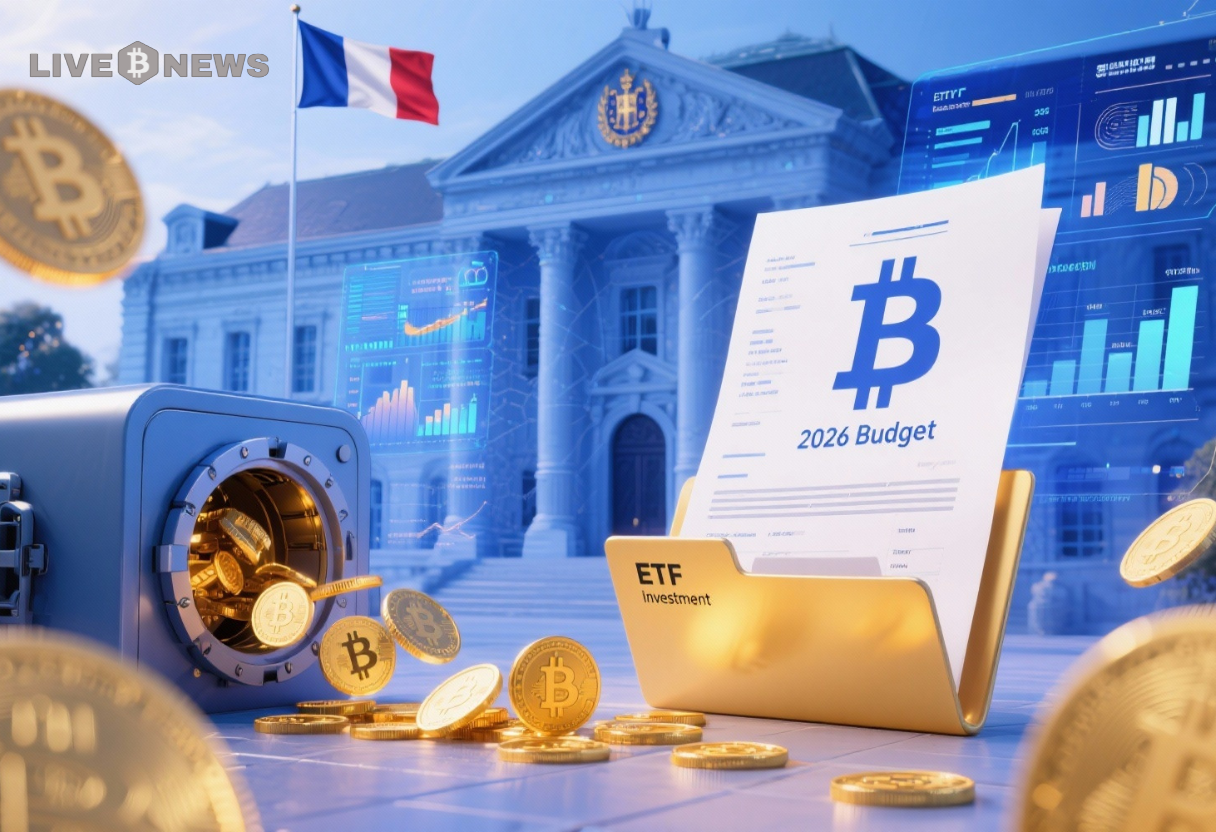
Luxembourg’s Intergenerational Sovereign Wealth Fund has placed 1 per cent of its assets into Bitcoin exchange-traded funds, making it the first sovereign fund in the Eurozone to adopt such exposure. The move was unveiled during the presentation of the 2026 national budget by Finance Minister Gilles Roth.

Under a new investment mandate approved in July 2025, the FSIL is authorised to allocate up to 15 per cent of its portfolio into alternative investments, including private equity, real estate, and digital assets. The 1 per cent allocation to Bitcoin ETFs reflects a cautious approach: the fund avoids direct crypto holdings to limit custody and operational risk.

At present, the fund’s total assets are estimated between €700–900 million, with the Bitcoin allocation amounting to about €7–9 million. Bob Kieffer, Director of the Treasury, described the sum as a symbolic yet measured step. He noted that given FSIL’s mission and structure, the 1 per cent level “strikes the right balance while sending a clear message about Bitcoin’s long-term potential.”

Advocates argue the allocation signals growing institutional acceptance of digital assets within sovereign portfolios. Critics caution that Bitcoin’s volatility may be ill-suited for public-sector funds. Some observers contend that 1 per cent is negligible in impact yet potent in signalling. The fund’s leadership anticipates that monitoring performance will shape future adjustments within the 15 per cent limit.

Luxembourg’s decision departs from the pattern of European states owning Bitcoin only through seizure or law-enforcement action; here, the allocation is proactive and policy-based. Analysts place the development in the context of Luxembourg’s ambition to serve as a crypto and fintech hub under the European Union’s Markets in Crypto-Assets regime. Already hosting numerous crypto firms, Luxembourg aims to reinforce credibility by integrating digital assets into sovereign investment strategy.

Other European institutions have taken indirect exposure paths. Norway’s sovereign fund has gained crypto-linked exposure through equities, while some central banks in Finland and the Czech Republic have expressed interest in digital assets. The Luxembourg move may prompt broader rethinking of asset allocation norms among state funds.

FSIL’s strategy places the Bitcoin position in ETFs rather than direct holdings, a choice intended to manage custody risk and improve regulatory oversight. The law permitting cryptocurrency exposure came amid internal policy debates, with critics warning of reputational and financial risk in volatile markets. Kieffer acknowledged that “some may argue that we’re committing too little too late; others will point to the volatility and speculative nature of the investment.”

Luxembourg’s financial regulator, the Commission de Surveillance du Secteur Financier, has adapted rules governing virtual assets and alternative funds, creating a regulatory backdrop conducive to this experiment. The fund will continue to invest primarily in bonds and equities, with the digital assets portion complementing a diversified portfolio.

Saudi Arabia’s sovereign wealth fund, the Public Investment Fund, has scaled back work on a number of planned share sales inside the kingdom, people with knowledge of the matter said, indicating shifting strategy amid weak valuations and soft investor appetite. Bloomberg first reported the development, and its reporting aligns with assessments in market commentary. Executives and advisers close to the red-sea fund say that a subdued climate […]

The Government of Sharjah, rated Ba1/BBB–/AAA by Moody’s, S&P and Lianhe respectively, has mandated several major banks to explore a new Panda Bond issuance in China’s onshore bond market. The Finance Department has appointed Bank of China as lead underwriter and bookrunner, with Crédit Agricole, JP Morgan Chase, ICBC, China Bohai Bank, Citic Securities, the Export-Import Bank of China, and Shenwan Hongyuan Securities acting as joint lead underwriters and bookrunners.

This initiative marks Sharjah’s second foray into the Panda Bond space; it first tapped the Chinese domestic bond market in February 2018 with a RMB 2 billion issue, becoming the Middle East’s first Panda issuer. That issuance carried a coupon rate of 5.8 per cent and matured in 2021.

Market participants say Sharjah’s renewed interest signals increasing appetite among Gulf issuers for renminbi funding, especially given the growing scale of China’s interbank bond market and its accessibility to international issuers. The Panda market is seen as a way to diversify funding sources away from traditional dollar or euro issuance, while deepening engagement with China’s capital markets.

Observers note that the list of joint bookrunners and underwriters—including both Chinese and Western entities—reflects a strategic bridging between global and Chinese investor bases. Bank of China’s role as lead suggests that Chinese financial institutions will play a key role in structuring and distributing the bonds to domestic accounts. The presence of Crédit Agricole and JP Morgan, meanwhile, may facilitate cross-border investor participation.

Industry sources expect the issuance to follow the standard procedure under China’s bond regulations governing overseas issuers. This includes registration with NAFMII, compliance with disclosure requirements, and pricing via roadshows to institutional investors in China. The timeline, tenor and final coupon structure have not yet been disclosed, but sources familiar with the matter suggest Sharjah is seeking favourable market conditions to launch.

Issuers of Panda Bonds have historically benefitted from lower yields relative to comparable offshore RMB options, thanks to the liquidity and depth of China’s domestic markets. That said, success depends heavily on investor confidence in the issuer’s credit profile, transparency in the bond documentation, and the relative attractiveness of coupon spreads over domestic benchmarks.

Sharjah’s credit ratings present both strengths and challenges. Its triple-A rating from Lianhe bolsters credibility in the Chinese market. However, its non-investment grade rating from Moody’s and S&P may weigh on perceptions among global investors. How Sharjah positions itself to bridge that gap will be critical, particularly in roadshow messaging and bond structuring.

This development arrives at a time when Panda bond issuance is gaining momentum. The Asian Infrastructure Investment Bank, for example, raised CNY 2 billion in its latest two-year Panda issuance, achieving oversubscription and attracting new investor accounts. The New Development Bank further expanded its onshore footprint earlier this year, issuing RMB 7 billion under its registered Panda Bond Programme.


Greenlogue/AP First Abu Dhabi Bank has launched its second blue bond, raising USD 20 million through a three-year issuance, to support marine conservation, wastewater recycling and renewable-powered desalination in Abu Dhabi and Al Ain. With this issuance, FAB’s cumulative blue bond volume reaches USD 70 million, following the bank’s inaugural blue bond in August. The funds are aligned with FAB’s 2023 Sustainable Finance Framework and governed by […]

Linh Tran The Dow Jones (US30) recorded its fourth consecutive decline, reflecting the growing caution across financial markets as the U.S. government remains partially shut down and a series of key economic data releases have been delayed. This disruption has made investors more defensive, as crucial reports such as Nonfarm Payrolls (NFP), CPI, and GDP have yet to be published. The absence of clear economic signals has […]

Rania Gule It seems that gold is going through a delicate phase, balancing between long-term bullish momentum and short-term profit-taking pressures, at a time when global markets are on edge ahead of upcoming U.S. sentiment data. As prices approach the $4,000 per ounce mark once again, the key question resurfaces: can gold still break its historical ceiling at $4,059, or will the current corrective wave extend temporarily […]

Apple has removed Eyes Up, an iPhone app that collected and archived videos of U. S. Immigration and Customs Enforcement arrests, marking the second platform the company has taken down after ICEBlock. The swift removal followed concerns from U. S. law enforcement that such apps pose risks to officers. Eyes Up’s functionality allowed users to upload videos, tag arrest locations, and view past incidents on an interactive […]

Celebrating Thai Culture and Soft Power on the Global Stage While Highlighting the Success of Korea’s Clean Energy Transformation BANGKOK, THAILAND – Media OutReach Newswire – 9 October 2025 – B.Grimm Power, a leading global energy producer, proudly announced its successful role as the main sponsor of the “Sawasdee Seoul Thai Festival 2025,” a vibrant celebration of Thai culture held in Seoul, South Korea. The festival highlighted […]

Arabian Post Staff -Dubai The Central Bank of the United Arab Emirates has boosted its gold reserves by about 32 percent in the first eight months of 2025, pushing the total value to AED 30.329 billion by end-August — a figure not seen before. The bank’s gold holdings stood at AED 22.981 billion at the close of December 2024. Between July and August alone, the value increased […]

The Central Bank of Kenya reduced its benchmark lending rate by 25 basis points today, bringing it down to 9.25 per cent, in its eighth consecutive cut as consumer inflation remains firmly within allowable limits. The move comes as Kenya’s inflation for September stood at 4.6 per cent year-on-year, slightly up from 4.5 per cent in August, but still well inside the central bank’s target band of […]

When Jane Goodall ventured into the forests of Tanzania in 1960, she carried no formal zoological degree, just a fierce curiosity and letters of introduction to Louis Leakey. She was 26 years old and stepping into what was then a largely uncharted world of primate behaviour. Over the next six and a half decades, she would not only reshape our understanding of chimpanzees, but also become one […]

Greenlogue/AP Saudi Arabia’s Public Investment Fund has mandated Crédit Agricole CIB, JPMorgan and Société Générale to arrange a dual-tranche, euro-denominated green bond issue in three- and seven-year maturities, sources close to the matter said. This marks the fund’s inaugural euro green bond issuance and appears set to be its only green debt deal of the year. By pursuing this move, the sovereign wealth fund signals a further […]

VISHNU RAJA
RYO YAMADA
HITORI GOTOH
IKUYO KITA