Abu Dhabi renewable energy company Masdar has priced its $600 million five-year blue bond at 115 basis points above the comparable US Treasury benchmark, narrowing the spread from initial guidance of around 130 basis points. The 15-basis-point tightening establishes the final borrowing margin on the dollar-denominated offering, which is structured as senior unsecured debt and is scheduled to mature on 29 October 2031. The securities carry a […]
By Dr. Gyan Pathak Denotification of Jantar Mantar as protest site on 12 October 2026 has given anti-CEC and anti-SIR protesters to decentralize and widen the scope and ambit of the movement. The call for the nationwide street protest on October 23 given by the umbrella organization People Against SIR is likely to create numerous […]
BNP Paribas Asset Management is increasing its exposure to long-dated Japanese government bonds, attracted by elevated yields, a steep yield curve and strengthening evidence that domestic institutional investors are returning to the market.
The investment strategy comes as Japan’s government bond market shows signs of recovering demand after months of volatility driven by inflation, fiscal uncertainty and expectations of further monetary tightening by the Bank of Japan.
Ryutaro Kimura, senior bond strategist at BNP Paribas Asset Management, has identified improving demand from domestic investors, particularly life insurance companies, as an important development supporting longer-maturity government securities.
The strongest indication emerged at Japan’s 20-year government bond auction on Tuesday, when demand reached a record level. The bid-to-cover ratio climbed to 5.84, compared with 4.01 at the previous auction and a 12-month average of 3.73.
The exceptionally strong bidding reflected renewed appetite for securities offering higher returns than those available during Japan’s prolonged period of exceptionally low interest rates.
Kimura attributed the favourable auction outcome to recovering domestic demand, supported by elevated interest rates and easing concerns about the government’s fiscal position.
Japanese life insurers have increased their net purchases of super-long government bonds since June, providing additional evidence that institutions with long-term liabilities are rebuilding their holdings of domestic fixed-income assets.
The auction results also showed an improvement in pricing conditions. The difference between the average accepted price and the lowest accepted price narrowed to 0.07 from 0.15 at September’s sale, indicating stronger bidding competition.
The yield on 20-year government bonds subsequently declined by as much as six basis points to 3.710%, reflecting the immediate market response to the auction.
Japan’s yield curve remains unusually steep, offering investors considerably higher returns on securities with longer maturities. That difference has encouraged asset managers to reassess the balance between income opportunities and the risks associated with holding longer-duration bonds.
Official yield data showed the benchmark 10-year government bond yielding approximately 2.93% on October 20, compared with 3.99% for the 30-year maturity. The difference exceeded one percentage point, highlighting the additional compensation available to investors extending their investment horizons.
Longer-duration bonds also carry greater sensitivity to changes in interest rates. Their prices can fall sharply when yields rise, making portfolio positioning particularly important while monetary policy expectations remain unsettled.
Japan’s central bank is expected to remain a significant influence on market conditions. Investors are awaiting its next policy meeting for indications about the pace of further interest rate increases and the outlook for inflation.
The Bank of Japan’s policy rate stood at 1.25% in October, following successive adjustments intended to address persistent inflationary pressures. Further tightening could influence borrowing costs across the maturity spectrum, although movements in longer-term yields also depend on government borrowing requirements and investor demand.
BNP Paribas Wealth Management’s October fixed-income outlook anticipates additional monetary tightening by the Japanese central bank, with approximately quarterly increases and a terminal policy rate around 2.5% in 2028. That projection represents the institution’s assessment rather than an announced central bank policy path.
Government financing requirements remain another consideration for investors. Prime Minister Sanae Takaichi’s administration faces scrutiny over fiscal proposals and their implications for future bond issuance, particularly as higher yields increase the cost of financing public debt.
Nevertheless, improved auction demand suggests that higher interest rates are attracting buyers who previously found Japanese government securities insufficiently rewarding.
The potential return of domestic capital is particularly significant because Japanese banks and insurers have substantial overseas bond investments. Rising domestic yields can encourage these institutions to reconsider foreign allocations, especially where currency hedging reduces the returns available from overseas securities.
Japanese investors sold foreign bonds for a fifth consecutive week through October 17, with cumulative net disposals reaching approximately ¥3.43 trillion over that period. The withdrawals provide further evidence of changing investment preferences as domestic fixed-income yields become more competitive.
The Ministry of Finance has also adjusted issuance arrangements for longer-maturity securities, an important consideration for investors assessing the relationship between government bond supply and institutional demand.
Market participants will continue examining auction results alongside investment plans from major insurers to assess the composition of demand. Japan’s Ministry of Finance conducted another liquidity-enhancement auction on October 22, following its 20-year government bond sale earlier in the week.
SoftBank Group shares fell sharply on Thursday, bringing the Japanese investment company’s market value close to half its June peak as investors questioned the cost of financing its expanding artificial intelligence commitments. The stock dropped more than 5% in Tokyo trading, extending a retreat that has accompanied broader selling across Asian technology markets. The decline has put renewed attention on SoftBank’s reliance on borrowing and the uncertain […]
Arabian Post Staff -Dubai BlackRock has launched a robotics-focused exchange-traded fund, widening its artificial intelligence investment range as investors become more selective about exposure to the technology. The iShares Future Robotics and Related Technologies Active ETF began trading on NYSE Arca on Wednesday, 21 October, under the ticker RBTX. The fund seeks investments across businesses developing, supplying and deploying intelligent machines that automate physical tasks, including operations […]
The world’s most powerful central banks are lining up to raise interest rates at the same time. History suggests this rarely ends quietly. The Federal Reserve is, I believe, likely to hold this month, then hike in December. Markets put the odds of a European Central Bank rise in December at 84%. Canada’s inflation has smashed through its target. British wage growth keeps running hot. Everywhere you […]
Sheikh Mohammed bin Rashid Al Maktoum, Vice President and Prime Minister of the UAE and Ruler of Dubai, has urged Gulf nations to strengthen cooperation and resist divisive social media campaigns that threaten their shared interests and longstanding relationships. His appeal, published on Monday in a message addressed to the people of the Gulf, emphasised that political differences, online disputes and narrow agendas should not undermine generations […]
Arabian Post Staff -Dubai Abu Dhabi National Energy Company (TAQA) has launched a dual-tranche US dollar bond offering, targeting international investors as the utility group seeks financing for eligible green projects and other corporate requirements. The transaction, launched on Monday, October 19, comprises a long five-year tranche and a 10-year tranche of senior unsecured notes. Initial pricing discussions placed the shorter maturity at approximately 130 basis points […]
Bitcoin and US stock futures climbed on Monday after China’s economy expanded faster than expected in the third quarter, while falling oil prices helped improve investor sentiment across global financial markets.
China’s gross domestic product grew 4.5% year on year during July to September, exceeding economists’ forecast of 4.4% and accelerating from 4.3% in the preceding quarter, according to the National Bureau of Statistics.
Bitcoin briefly climbed towards $82,500 as cryptocurrency traders responded to the stronger economic figures and improving conditions in traditional financial markets. Nasdaq futures also advanced, reflecting renewed demand for technology shares following a difficult period for companies associated with artificial intelligence.
The market recovery was uneven, however. South Korea’s Kospi faced selling pressure after an initial improvement, highlighting continuing concerns about technology valuations and the substantial financing requirements of artificial intelligence development.
US Nasdaq futures gained approximately 1% during Asian trading, while contracts tracking the broader S&P 500 advanced around 0.7%. Lower energy prices provided additional support as investors assessed their implications for inflation, corporate earnings and borrowing costs.
China’s economic figures offered a measure of reassurance about activity in the world’s second-largest economy. Quarterly output increased 1.2% from the preceding three months, exceeding expectations for a 1.1% expansion and improving from 0.9% growth during April to June.
The stronger performance was supported by exports and industrial production, although weaknesses in household consumption and property investment continued to complicate the economic outlook.
Official figures showed industrial production increasing 5.5% year on year in September, compared with 5.2% in August. Retail sales grew 1.1%, indicating modest improvement in consumer spending despite persistent pressure on household confidence.
China’s government has established an annual economic growth target of approximately 4.5% to 5%, making the third-quarter performance significant for policymakers considering whether further stimulus measures are necessary.
Growth during the first nine months reached 4.6%, according to official estimates, keeping the economy within reach of the government’s full-year objective.
Financial markets nevertheless remained sensitive to concerns that China’s expansion depends heavily on exports and industrial investment rather than sustained improvements in domestic demand.
The property sector remained a particular concern, with investment continuing to contract despite measures intended to support homebuyers and stabilise developers.
Oil markets supplied another important influence on trading. Brent crude futures declined approximately 1.7% to $107.95 a barrel, while US crude futures slipped 0.8% to $100.62.
The decline followed developments surrounding Washington’s sanctions policy towards Russia. President Donald Trump indicated that restrictions could be eased, potentially allowing additional Russian energy supplies into international markets, although the administration had not finalised its position.
US Secretary of State Marco Rubio indicated that the administration could take up to 60 days to assess the economic consequences of changing sanctions arrangements.
Lower crude prices helped ease immediate concerns about inflation, particularly because energy costs influence transport, manufacturing and household expenditure across major economies.
US government bonds strengthened as yields declined. The benchmark 10-year Treasury yield fell approximately four basis points to 5.0525%, providing some relief to financial markets concerned about elevated borrowing costs.
Expectations surrounding Federal Reserve policy remained important for cryptocurrency investors. Lower inflation could eventually create additional room for monetary easing, although policymakers face competing pressures from energy markets and economic activity.
The Federal Reserve’s benchmark interest rate currently stands between 4.75% and 5%, with financial markets expecting policymakers to leave borrowing costs unchanged at their next meeting.
Across Asian equities, the initial advance reflected bargain hunting following substantial losses in technology stocks. Japan’s Nikkei and South Korea’s Kospi both experienced volatile trading as investors reassessed exposure to semiconductor manufacturers.
Concerns about artificial intelligence spending remained prominent. Goldman Sachs estimates that five major technology companies could increase their combined capital expenditure to approximately $1.2 trillion next year, raising questions about investment returns.
China’s currency strengthened against the dollar, with the yuan reaching approximately 6.6828, its strongest level since July 2022.
Gold traded around $4,181 an ounce, supported by declining bond yields, while the dollar remained under pressure against several currencies.
Elsewhere, European equity futures weakened amid political uncertainty in France, demonstrating the differing regional influences on international investment flows.
Chinese blue-chip shares edged lower after initially benefiting from the economic figures, with investors continuing to assess whether stronger industrial activity would translate into a sustained improvement in domestic consumption.
India’s software stocks have recorded their strongest weekly rally in 18 years, sharply outperforming global semiconductor shares as investors reassess artificial intelligence valuations and respond to improving earnings from major technology services companies.
The Nifty IT index climbed 11.7% during the week ended Friday, October 16, its biggest weekly advance since 2008. Meanwhile, an MSCI index tracking global semiconductor companies had fallen approximately 7.4% during the week, putting software exporters on course for their widest relative outperformance since 2004.
The divergence reflects a significant change in investor sentiment towards technology businesses. Semiconductor manufacturers, previously among the biggest beneficiaries of enthusiasm surrounding artificial intelligence, have faced selling pressure amid concerns about infrastructure spending, financing costs and the sustainability of earnings growth.
Software services companies, meanwhile, have attracted renewed interest following quarterly results that suggested corporate technology expenditure was stabilising. Investors have also responded to comparatively modest valuations after a prolonged period of weakness in the sector.
HCL Technologies helped initiate the recovery after reporting stronger quarterly performance and raising its full-year revenue growth guidance. Its shares surged 8.4% on Tuesday, their biggest single-session advance in more than six years, while the broader technology index gained 5.2%.
The company reported quarterly net profit of approximately Rs51.32 billion, representing growth of 10.9%. Revenue increased 2.3% sequentially to Rs356.2 billion, supported partly by demand for engineering and research services.
HCL Technologies also disclosed advanced artificial intelligence revenue of $219 million, indicating that established outsourcing companies are beginning to generate identifiable income from technology that investors had previously viewed principally as a competitive threat.
Tech Mahindra reinforced the positive sentiment with quarterly revenue growth of 2.4%, reaching approximately Rs161.8 billion. Net profit rose 8.3% to Rs16.1 billion, supported by improvements in its communications business.
Wipro shares also advanced after the company reported quarterly revenue of Rs247.53 billion, exceeding market expectations. However, its deal bookings declined 45% from a year earlier to $2.6 billion, highlighting continued uncertainty surrounding demand for outsourcing contracts.
Wipro projected constant-currency revenue growth ranging from a decline of 1.5% to an increase of 0.5% for the following quarter. Management indicated that two delayed large contracts could be finalised, although their completion remains uncertain.
The contrasting figures illustrate why analysts remain cautious about treating the market recovery as evidence of a sustained improvement across the entire technology services industry.
Investors have nevertheless become increasingly sensitive to the valuation differences between software exporters and semiconductor manufacturers. Shares linked to artificial intelligence infrastructure had commanded substantial premiums based on expectations of expanding demand for processors, memory and computing capacity.
Those assumptions have come under pressure as investors question whether technology companies can generate sufficient returns from enormous commitments to data centres and related infrastructure.
Higher bond yields have compounded those concerns by increasing financing costs for capital-intensive businesses. Inflation pressures in the United States have also revived expectations that monetary policy could remain restrictive, reducing enthusiasm for highly valued growth stocks.
Semiconductor companies including Nvidia, Broadcom and Advanced Micro Devices have faced broader selling pressure, alongside memory manufacturers and businesses supplying artificial intelligence infrastructure.
However, the reversal does not necessarily indicate deteriorating demand for computing hardware. Analysts distinguish between concerns about share valuations and the underlying commercial requirements for advanced processors.
Software exporters face different challenges. Generative artificial intelligence could automate programming, testing and customer support functions, potentially reducing the labour-intensive contracts underpinning traditional outsourcing revenues.
At the same time, businesses adopting artificial intelligence require integration, cybersecurity, cloud management and technology consulting services, creating opportunities for established providers.
The balance between these competing forces remains important for revenue forecasts and profitability expectations.
Friday’s trading demonstrated the strength of the rotation. The Nifty IT index rose 3.9% to close around 31,924 points, while the broader Nifty 50 gained approximately 0.7% to 23,146.
The Sensex finished at 74,729, contributing to the benchmark indices’ strongest weekly performance in six months.
Despite the rebound, technology shares remain below their earlier peaks. Wipro had lost nearly 32% during the year before Friday’s close, compared with a decline of approximately 17% for the broader technology index before the week’s recovery.
Arabian Post Staff -Dubai Governments and state-backed borrowers are increasingly exploring bonds denominated in currencies other than the US dollar as competition for capital drives up financing costs, a senior Citigroup banker said on Thursday. Stephanie von Friedeburg, Citi’s global head of the public sector group, said demand for financing from governments and private companies was placing pressure on available investment capital, with artificial intelligence infrastructure attracting […]
Asia-Pacific economic growth is expected to slow over the next two years despite a powerful boost from artificial intelligence investment, the International Monetary Fund warned on Thursday.
The IMF forecast regional expansion of 4.8 per cent in 2026, compared with 5 per cent last year, followed by a further slowdown to 4.4 per cent in 2027. Its latest estimate for this year nevertheless represents a substantial upgrade from the 4.4 per cent projected in April.
The revised outlook reflects sharply contrasting pressures across Asia. Demand for semiconductors, data centres and other technology equipment has strengthened exports and investment, while higher energy costs linked to the Middle East conflict have squeezed economies dependent on imported fuel.
The fund warned that a reversal in AI investment or technology share valuations could undermine growth disproportionately because Asian manufacturers occupy central positions in global electronics supply chains. Higher sovereign borrowing costs and prolonged disruption to energy supplies present additional threats.
Emerging and developing Asian economies are projected to grow 5.1 per cent this year, down from 5.6 per cent in 2025, before slowing to 4.9 per cent next year. Advanced regional economies are expected to expand 3.2 per cent in 2026, compared with 2.5 per cent last year, then moderate to 2 per cent in 2027.
The IMF upgraded forecasts for South Korea, Taiwan and Hong Kong, where demand linked to AI infrastructure has lifted manufacturing and exports. China and India also received upward revisions, although countries facing higher inflation without equivalent technology gains have experienced weaker growth projections.
Krishna Srinivasan, director of the IMF’s Asia and Pacific Department, said at the fund’s annual meetings in Bangkok that technology exports had accelerated sharply during the first half of 2026. Demand for chips and investment in data centres were important contributors, alongside stronger trade within the region.
He said economies had responded to energy disruptions by diversifying fuel suppliers, reducing consumption, increasing alternative energy use and drawing down inventories. Governments had also introduced measures intended to contain inflation, protect incomes and prevent supply shortages.
Those adjustments have not eliminated the unequal effects of the energy shock. Bangladesh, Cambodia and Laos are among the fuel-importing economies with limited direct exposure to the AI investment boom and comparatively restricted financial resources to absorb further pressure.
The IMF urged monetary authorities to maintain price stability as expensive energy threatens to push inflation expectations higher. It cautioned that central banks could face difficult decisions if weaker growth coincides with persistent price pressures, particularly where currencies and capital flows respond to changes in global interest rates.
Fiscal policy should focus on vulnerable households and businesses rather than costly blanket subsidies, the fund indicated. Elevated public debt and higher bond yields reduce governments’ ability to sustain broad support programmes without increasing financial risks.
The regional assessment comes as investors reassess the durability of spending on AI infrastructure. Asian technology shares suffered steep losses on Thursday, with South Korea’s benchmark stock index falling nearly 8 per cent and Japan’s Nikkei dropping about 5 per cent amid concerns over US inflation and borrowing costs.
The fund also identified concentrated stock market valuations and increased investor leverage as potential sources of instability. A sharp repricing could affect financing conditions and confidence even in economies where orders for technology products remain comparatively strong.
Separately, the IMF expects China’s growth to slow from 5 per cent in 2025 to 4.5 per cent this year and 4 per cent in 2027. It has called for stronger domestic demand and fiscal measures to counter deflationary pressures, rather than continued reliance on external sales.
Beyond financial markets, the fund highlighted employment challenges associated with technological change. Srinivasan said its research found employer demand for jobs more exposed to AI had declined by 10 per cent, although that effect appeared to have stabilised as employers sought workers with relevant skills.
The IMF recommended addressing youth unemployment and skills mismatches, strengthening social protection and improving energy security through diversification and renewable supplies. It also supported deeper regional trade integration as governments seek to preserve access to markets despite tariff barriers.
The regional outlook additionally identified a severe El Niño episode as a potential disruption to agriculture, fisheries and hydropower generation, with possible consequences for food and electricity prices across vulnerable economies, particularly in countries heavily reliant on imported energy.
US Treasury bonds fell sharply on Wednesday after stronger than expected inflation figures drove yields higher and prompted traders to increase bets on further Federal Reserve interest rate rises. The sell-off followed government data showing consumer prices rose 3.7% in September from a year earlier, accelerating from 3.4% in August and exceeding economists’ expectations of 3.6%. The figures complicated the Federal Reserve’s assessment of whether additional monetary […]
Legal & General is protecting its government bond purchases against another global debt selloff, using futures contracts to limit losses even as higher yields create buying opportunities. The British asset manager, which oversees approximately £1.2 trillion, has been purchasing sovereign debt while taking offsetting positions in bond futures, according to Chris Jeffery, its head of macro strategy. The approach reflects growing concern that government borrowing pressures and […]
By Nigel Green The single greatest danger to wealth anywhere in the world right now is the colossal pile of money governments have borrowed. Bond markets are flashing warnings last seen during the eurozone crisis, and they’re getting louder by the week. The IMF’s own figures are staggering. Global public debt reached 93.9% of GDP last year and is on course for 100% by 2029, beyond anything […]
Arabian Post Staff -Dubai RISE Summit 2026 will open at Dubai World Trade Centre on Wednesday, bringing sovereign wealth funds, institutional investors, government officials and developers together to examine shifts in international investment and the financing of major projects. The one-day gathering on 14 October, organised around the theme Recharging Momentum in Global Economies, will consider how geopolitical tensions, borrowing costs and technological change are influencing decisions […]
Arabian Post Staff -Dubai Wall Street is confronting a fresh source of pressure on US government bonds as the extra compensation investors demand for holding longer-term debt climbs to its highest level in more than a decade. The so-called term premium on 10-year Treasury securities has risen by roughly 40 basis points since mid-September to about 0.98%, according to a model maintained by the Federal Reserve Bank […]
Arabian Post Staff -Dubai SoftBank Group chief executive Masayoshi Son is seeking up to $100 billion from Gulf investors for a proposed fund that would acquire businesses and transform their operations using artificial intelligence. The fundraising discussions are at an early stage, with senior figures in the United Arab Emirates among those approached. No commitments or final agreements have been announced, and there is no assurance that […]
Gold prices climbed to a one-week high on Friday as declining oil prices eased inflation concerns and pressure on US Treasury yields, encouraging investors to return to bullion despite uncertainty over further Federal Reserve interest rate increases. Spot gold advanced 1.4% to $4,190.49 an ounce during US trading, extending gains for a second consecutive session. The metal was heading towards a weekly increase of approximately 1.2%, recovering […]
Rated AAA on the China national scale by Lianhe and recently ranked 398th on Forbes Global 2000, up from 1007th in 2022 · Milestone marked by a gong ceremony at the Connect Hall, Hong Kong Stock Exchange, on 30 June 2026
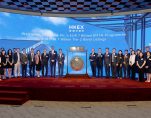
BUDAPEST, HUNGARY and HONG KONG SAR – Media OutReach Newswire – 30 June 2026 – OTP Bank Plc. (“OTP Bank” or “OTP”), the leading banking group in Central and Eastern Europe (CEE), today marked the establishment of its EUR 7 billion Euro Medium Term Note (EMTN) programme on the Stock Exchange of Hong Kong Limited (the “Hong Kong Stock Exchange” or “HKEX”) with a commemorative gong ceremony at the Connect Hall, Hong Kong Stock Exchange. OTP is the first European Union financial institution to open an EMTN programme on the exchange.
Official OTP Bank Gong Ceremony
The EUR 7 billion programme was established on the Hong Kong Stock Exchange on 28 May 2026, following approval of its base prospectus by Luxembourg’s Commission de Surveillance du Secteur Financier (CSSF) on 27 May 2026, allowing the issuer to raise debt in multiple tranches, currencies, structures and maturities over time. For OTP – which holds an AAA issuer rating on the China national scale from Lianhe Ratings, the highest available – it establishes a permanent platform for trading with certain OTP bonds, and later for raising capital from Asian institutional investors.
On 16 June 2026, OTP priced the programme’s inaugural issuance: a EUR 1 billion Tier 2 note, listed in Hong Kong and Luxembourg. It is OTP’s largest-ever bond transaction and, as at the issue date, the largest euro-denominated Tier 2 note issued by a bank in the CEE and wider CEMEA region. The offering drew a peak order book of EUR 4.1 billion – the largest in OTP’s history – and priced at a coupon of 4.625%.
The listing builds on OTP’s growing presence in Asian capital markets. In 2025 OTP issued its first Dim Sum green bond, raising CNH 900 million and becoming the first Hungarian institution to issue a public offshore renminbi green bond, following a CNY 300 million bond in 2024. The Bank has operated a representative office in Beijing since 2017, became a full member of the Asian Financial Cooperation Association (AFCA) in 2024, and maintains a strategic partnership with the Industrial and Commercial Bank of China (ICBC).
Sándor Pataki, Director of Investor Relations and Capital Markets Operations of OTP Bank, said: “Listing our EMTN programme in Hong Kong is a clear demonstration of OTP Bank’s long-term vision and strategic commitment to international capital markets. Hong Kong excels itself as one of the world’s leading international financial centres, serving as a vital bridge between East and West. For OTP Bank, this is not only an opportunity to access liquidity, but also to deepen relationships and build lasting trust with investors in this dynamic region. The demand we have seen for OTP’s credit, including the record order book for our inaugural issue off the programme, reflects the growing interest in high-quality European issuers.”
As Asian investors increasingly look to Europe to diversify their portfolios, Central and Eastern Europe offers a distinctive proposition: emerging-market growth rates combined with the low-risk profile of the European Union. The region’s attractiveness is reinforced by its convergence towards the eurozone. Three of the five countries in which OTP is the market leader sit at the heart of Europe’s euro-convergence story – Bulgaria, which adopted the euro on 1 January 2026, Slovenia, which adopted the euro years ago, and Hungary, OTP’s flagship market, where the recently elected government aims to create the conditions for euro adoption around 2030.
OTP combines what rarely comes together in European banking: high growth, strong profitability and an ultraconservative balance sheet built for resilience. OTP Group is one of the largest and fastest-growing banking groups in the region, recently ranked 398th on the Forbes Global 2000 list, up from 1007th place in 2022. It pairs an annual organic loan growth of around 15% with a disciplined acquisition record and high profitability – a 2025 return on equity of 21.6% – and with an ultraconservative balance sheet: a leverage ratio well above its European peers, strong capital and liquidity, and one of the most resilient outcomes in the European Banking Authority’s latest stress test. In 2023, OTP became the first European bank to enter Uzbekistan, bringing the total population across OTP’s markets to 110 million.
Sándor Pataki, Director of Investor Relations and Capital Markets Operations of OTP Bank, added: “We believe the combination of growth, profitability and stability is what makes OTP an attractive name for fixed-income investors. This is also reflected in our recent ranking among the world’s top 500 companies by Forbes.These achievements are the result of a consistent strategy: prudent growth, diversified funding sources, and a strong focus on long-term partnerships. Over the decades, OTP Bank has built a solid track record in international debt capital markets, and today’s milestones further strengthen that foundation. Looking ahead, we see significant opportunities to deepen our engagement with Asian investors and institutions. We are confident that this listing will serve as a cornerstone for long-term cooperation, mutual growth, and shared success.” Hashtag: #OTPBank #Banking #Finance #HongKong #Hungary
The issuer is solely responsible for the content of this announcement.
OTP Bank
OTP Group provides universal financial services to 17.5 million customers across 11 countries in Central and Eastern Europe and Central Asia, with 40,000 employees and total assets of USD 138 billion. OTP has ranked No. 1 in Central and Eastern Europe by Tier 1 capital in The Banker’s Top 100 CEE Banks for three consecutive years (2023-2025); it was named the second best-performing bank in Europe by S&P Global Market Intelligence and the Best Bank in Central and Eastern Europe by Global Finance. The Group has risen to 398th on the Forbes Global 2000 in 2026 (from 1007th in 2022). OTP Bank has been listed on the Budapest Stock Exchange since 1995. The Bank holds an AAA issuer rating on the China national scale from Lianhe and is rated BBB by S&P.
Arabian Post Staff -Dubai Senior Emirati women leaders have gathered in Dubai for a Women Board of Directors and PwC Middle East forum focused on leadership, resilience and expanding women’s influence across the UAE’s public and private sectors. The “Reaffirmation” gathering, held on September 28 at PwC Middle East’s Emaar Square offices, brought together Huda Buhumaid, Raja Al Mazrouei, Aarefa Al Falahi and Maha Al Hosani with […]
We’re heading into earnings season again in Corporate America, and S&P 500 earnings are forecast to climb 27% in the third quarter, and for the first time since 2021, every single sector is expected to grow its profits. For two years sceptics have argued the AI boom is a narrow bet on a handful of technology companies. These numbers point to an investment wave now feeding profits […]
Arabian Post Staff -Dubai Deutsche Bank has made three key appointments in its Dubai office as the German lender broadens investment banking coverage across the Middle East and seeks to capture growing capital-markets and institutional-client business. Ilya Korobov has relocated from London to Dubai as a director of debt capital markets for Central and Eastern Europe, the Middle East and Africa. He joined Deutsche Bank in November […]
US$10 Billion in Venture Capital Convenes to Meet Hong Kong Start-ups; Government, Business and Young Professionals Explore Opportunities in the New Economy
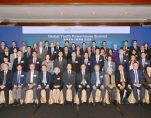
HONG KONG SAR – Media OutReach Newswire – 7 October 2026 – The Global Youth Powerhouse Summit 2026, organised by Hong Kong Youth Professional Global Advocacy, was held on 5 October at the Conrad Hong Kong. Now in its third edition, the Summit coincides with the release of the Hong Kong Special Administrative Region’s First Five-Year Plan for Economic and Social Development (2026–2030) and the latest Policy Address, which together set a clear blueprint for the city’s future. Anchored on these core themes and conducted entirely in English, the full-day programme focused on artificial intelligence, geopolitics, Hong Kong as an education hub, capital markets, life and health technology, and start-up financing. Government and business leaders, corporate representatives and young professionals were invited to examine Hong Kong’s strategic opportunities in the new economic landscape.
The Global Youth Powerhouse Summit 2026 brings together more than 600 young professionals, government and business leaders and corporate representatives
The Summit aims to connect young professionals with international resources, enabling participants to engage directly with industry leaders, grasp developments at the frontier of industry, and look ahead to the opportunities and challenges arising from artificial intelligence and Greater Bay Area integration. Previous editions have drawn a strong response. Across three editions, the Summit has attracted more than thousands of in-person participants and about 17,000 online participants from over 30 countries and regions, with social media reach exceeding 50 million.
This year’s Summit was the largest yet, bringing together more than 600 young professionals, government and business leaders and corporate representatives. Participants from over 60 countries and regions joined online. More than 30 distinguished speakers and moderators were invited, including officials of the Hong Kong Special Administrative Region Government and representatives of leading local and international organisations such as Huawei, the Alibaba Hong Kong Entrepreneurs Fund, Hong Kong Exchanges and Clearing Limited, Bullish and Endowus. In addition, consular representatives from up to 20 countries attended the Summit.
The Chief Executive of the Hong Kong Special Administrative Region, Mr John Lee, GBM, SBS, PDSM, PMSM, delivered a pre-recorded video speech, encouraging young professionals to seize the opportunities of the times and inject fresh momentum into Hong Kong’s high-quality development. He said: “For our young people, I firmly believe that your opportunities ahead outweigh the difficulties. The HKSAR Government will join hands with all sectors to build platforms for you to thrive in Hong Kong, in our country, and in the global arena.”
The Deputy Secretary for Justice of the Hong Kong Special Administrative Region, Dr Cheung Kwok-kwan, SBS, JP, delivered an opening keynote entitled “Opportunities for the Professional Development of Young People”, and stressed: “As the saying goes, ‘Change is the only constant’—or as our Cantopop classic famously put it, ‘變幻原是永恆’. Today, we no longer measure change in years or decades, but in months and days. For our young professionals, this fast-paced era unlocks unprecedented career horizons. By accelerating Greater Bay Area integration through our new GBA Task Force and empowering you to act as the ultimate ‘super-connectors’ and ‘super value-adders’ helping Mainland enterprises go global, we are turning rapid change into your greatest professional advantage.”
Dr Kevin Lau, MH, Founding Convenor of Hong Kong Youth Professional Global Advocacy, said: “This is more than a high-level forum. It marks a milestone in the maturing of our network of young professionals. This afternoon, venture funds managing an estimated US$10 billion in assets gathered in the room — and what they are looking at is Hong Kong’s next generation. In life and health technology, our core belief is clear: artificial intelligence can assist imaging and diagnosis, but a physician’s care, and the warmth of a human hand, can never be replaced by technology.”
Other distinguished guests included Mr Kevin Choi, JP, Permanent Secretary for Innovation, Technology and Industry; Professor Frederick Ma, GBS, JP, Chairman of the Hong Kong Trade Development Council; Ms Bonnie Y Chan, JP, Chief Executive Officer of Hong Kong Exchanges and Clearing Limited; and Mr James Chau, President of the China-United States Exchange Foundation and World Health Organization Goodwill Ambassador for Sustainable Development Goals. Mr Bryan Che, Chief Strategy Officer of Huawei, and Ms Cindy Chow, Executive Director and Chief Executive Officer of the Alibaba Hong Kong Entrepreneurs Fund, also attended in person to exchange views with young professionals.
Panel discussions
Artificial intelligence: from first-time users to advanced users The opening session began with remarks by Mr Kevin Choi, JP, Permanent Secretary for Innovation, Technology and Industry, and was moderated by Ms Stephaine Chan, Director of the Office of the Vice Chairman of Esquel Group. Panellists included Ms Ilaria Chan, Chair of the Tech For Good Institute; Mr Bryan Che, Chief Strategy Officer of Huawei; and Ms Cindy Chow, Executive Director and Chief Executive Officer of the Alibaba Hong Kong Entrepreneurs Fund. The discussion focused on whether small and medium-sized enterprises, non-governmental organisations and schools can genuinely put artificial intelligence to use, and on the talent, trust and practical-application issues Hong Kong faces in driving “AI for all”.
Mr Kevin Choi, JP mentioned: “Every major technology shift brings uncertainty. Our theme today from entry-level shock to AI-powered users building the next talent leader.”
Ms Stephaine Chan said: “Every AI conversation ends in the same place, right? More investment, better people, better models and stronger policy.”
Ms Ilaria Chan said: “These days, Al is so powerful that they can scan the Internet and social media and find vulnerable young people or old people. They can find it instantly and have a very sophisticated way to trick them and fraud them from scamming.”
Mr Bryan Che: “One of the opportunities of Al is because the interface is much more natural for most people to interact with. On one sense, it’s a lot easier for everyone to get started.”
Ms Cindy Chow said: “So I guess some of the most damaging thing is not allowing people to use or not, you know, really have the attitude to embrace all this new technology, what this new technology has to bring to you.”
Geopolitics: the super-connector This session was moderated by Mr James Chau, President of the China-United States Exchange Foundation and World Health Organization Goodwill Ambassador for Sustainable Development Goals. Speakers included Ms Ilaria Chan, Chair of the Tech For Good Institute; Ms Ellana Lee, Senior Vice President, Managing Editor, Asia Pacific, and Global Head of Productions at CNN; and Professor Frederick Ma, GBS, JP, Chairman of the Hong Kong Trade Development Council.
Mr James Chau said: “Against this backdrop, we often hear Hong Kong described as a super connector, typically framed in terms of trade volumes, capital markets and logistics but I think that these connections that we’re speaking of really only become very valuable and we understand and recognize the human bonds that pin these together.”
Professor Frederick Ma , GBS, JP said: “We are part of China. And yet we are under one country 2 systems connected to the rest of the world. That is the power of Hong Kong.”
Ms Ellana Lee said: “We made a very strategic decision when the times were tough to stay and remain in Hong Kong. I think that has and you know, we make these decisions not just out of a whim, but we are very calculative on why we need to stay. I have 8 cities across Asia Pacific. Hong Kong happens to be the hub for Asia Pacific. And there’s it boils down to four major reasons.”
Ms IIaria Chan: “Simple of how tech is helping people, there is an organization, WHO care for children that was founded 20 years ago that helps orphans in developing China back then Vietnam, Thailand now in Africa, Middle East to find loving permanent homes. But their bottleneck is how they train social workers and governments on how to take care of orphan welfare. Now this year we’ve actually been launching an online product that is able to scale these bottlenecks, especially in areas that are underfunded. This is a great example of Al tech.”
Education: Hong Kong as Asia’s education hub This session was co-moderated by Mrs Jennifer Yu Cheng, JP, Founder of the Future Leaders Foundation, and Ms Jennifer Ma, Founder of JM Edu Consulting. Speakers included Ms Maggie Chau, School Partnership Advisor at the Academy for Educational Development and Innovation of The Education University of Hong Kong; Mr Dion CHEN, MH, Vice-Chairman of the Hong Kong Direct Subsidy Scheme Schools Council; and Professor Charles Ng Wang-Wai, Vice-President for Institutional Advancement of The Hong Kong University of Science and Technology.
Mrs Jennifer Yu Cheng, JP said: “An education hub is more than a place with excellent institutions. It is a place that students and families choose, where young people flourish, and connects education with research, innovation, careers and a wider community.”
Professor Charles Ng said: “With our national policy. And I think we should do better to support this great initiatives and thinking back actually 2023 and home government already in in the government policy in October, if I remember correctly to start to increase the local student quota from 20% to 40%.”
Ms Jennifer Ma said: “As a consultant we need demand to meet supply and we are definitely seeing the demand for Hong Kong education at K12 level…….The advocacy for Hong Kong to be the gateway for China Resources and talents to leave China and go into international arenas. But at the same time, we also see a lot of international people interested in what’s happening in mainland, and therefore Hong Kong is a great gateway. So, with that global education, global education philosophy, that means they really appreciate Hong Kong trilingual education by cultural mindset.”
Mr Dion CHEN, MH mentioned: “In 2026, a lot of DSS schools will work very hard to try to welcome and also promote welcome to Hong Kong and also promote Hong Kong’s education to the students in different countries.”
Ms Maggie Chau said: “Maggie: I can see that all the universities are actually implementing AI in their curriculum. Talking about teacher education, the programs we offer, I mean, not just The Education University of Hong Kong, the programs we offer in all universities implement Al in the curriculum in a way that we draw attention to the use of Al is it has to be ethical.”
Capital markets: AI listings, asset tokenisation and the new economy This session was moderated by Ms Emily CHAN Tan, a former CNBC anchor. Speakers included Ms Bonnie Y Chan, JP; Ms Clara CHAN Ka Chai, Chief Executive Officer of the Hong Kong Investment Corporation Limited; Mr Michael Lau, Senior Vice President and Head of Group Business Development at Bullish and Chairman of Consensus; and Mr Samuel RHEE, Co-founder, Chairman and Group Chief Investment Officer of Endowus.
Ms Clara CHAN Ka Chai said: “We always say that from zero to 1 is the most challenging part. So, the patients in terms of having staying power is the core, but it has to go in hand with other qualities like being proactive, being professional.”
Mr Michael Lau said: “I think it’s an interesting proposition to consider that these types of companies that are so capital. I would start looking beyond the current horizon of where we are to see where it could go next. And so I do think that there is a demand looking to that future where this idea of a tokenized capital market could be quite interesting.”
Mr Samuel RHEE mentioned: “First of all, maybe we just take a step back and just try to understand all of the capital markets, not just equities.”
Ms Bonnie Y Chan, JP said: “I want to point out one thing. I mean, we are operating a stock exchange and I think capital markets at the end of the day, the basic function is to match capital with opportunity. So what I’m very focused on is that I’m not just focused on technology or AI.”
Ms Emily CHAN Tan said: “We are not just witnessing a cyclical recovery, but also some would call this the threshold of a capital markets renaissance.”
Life and health technology: building a health-industry hub This session was moderated by Professor Lo Yuk-lam, BBS, Founding President of the Hong Kong Biotechnology Organisation. Speakers included Professor LI King-Chuen, Founding Dean of the School of Medicine at The Hong Kong University of Science and Technology; Dr Sarah SALVILLA, Director of Health and Strategic Partnerships at FWD Group; and Professor Anthony Wu Ting-yuk, GBS, JP, former Chairman of the Hospital Authority and Non-executive Chairman of Trinity Medical Group. The discussion focused on how AI in healthcare can strengthen the competitiveness of Hong Kong’s health industry.
Professor Lo Yuk-lam, BBS said: “Building HK’s holistic wellness hub, this year marks a defining moment for HK. With the release of our first ever five year plan and their chief executive policy address just a few weeks ago, our city’s road map for healthcare and biotechnology knowledge has never been clearer or more ambitious.”
Professor Anthony Wu Ting-yuk, GBS, JP said: “Every country every city is trying to recruit more talent and I think Hong Kong is an ideal position to attract talents.”
Professor LI King-Chuen said: “Our education system will be individualized. And we will do the factual knowledge transfer through mostly self-directed learning. So we guide them, we build an AI system with prescribed information.”
Dr Sarah SALVILLA said: “Prevention for sure in terms of how do we educate people to be much more proactive in their everyday lives, yes you know, kind of the lifestyle things.”
Start-up pitching: connecting with capital The closing session was moderated by business journalist Ms Elaine Yu, with Mr LU Chin Yung, Senior Vice President (Start-ups) of the Sector Specialist Group at Invest Hong Kong. Representatives of 11 venture funds were present, including the Alibaba Hong Kong Entrepreneurs Fund, Clee Capital, Click Ventures, GT Healthcare Capital Partners, Gobi Partners GBA, HKSTP Ventures, MindWorks Capital, Ryoden Medical Holdings, Seveno Capital, Verge HealthTech Fund and W2 Venture Partners. Together, the funds manage an estimated US$10 billion, have invested in more than 600 start-ups across more than 30 economies, and have backed at least nine unicorns, including Airwallex, Animoca Brands, Prenetics and GoGoX. Start-ups taking part in the pitching session included CELLmeric, Entoptica, PointFit, Syngular, Kodifly, AilsynBio, EveryBaby, A-grade, Orimmune Biotech, Nordia Biotech, Oncolmmu Nostics Limited, The Harbour School (THS), VisionBridge, Eden’s Garden, and CARE CONNECT.
Ms Elaine Yu said: “We have 15 startups and I think a group of students as well, very precocious students WHO are already thinking of ideas, real businesses with commercial viability at the cutting edge of science, research, healthcare and so forth. So, this should be a fun dynamic session.”
Mr LU Chin Yung pointed out: “Hong Kong is great in a lot of rankings in the world and this is not given, this is hard earned by your parents, by some of you sitting here. But as a young founder in Hong Kong, if you come to Hong Kong, you get to enjoy all this very safe environment. You have efficiency and then you also have a very clean government. This one I can say for sure. Yeah. And and all this, it helps the the founders to focus on your business, focus on grow, growing instead of you have to deal with many, many things.”
The Summit closed amid lively exchange. Hong Kong Youth Professional Global Advocacy said it will continue to build the Summit into a platform for dialogue between young professionals and leading figures in government and business, helping Hong Kong’s young talent seize the opportunities of the new economy.
Vice-Chairman, Hong Kong Direct Subsidy Scheme Schools Council
Mrs Carrie Cheng, JP
Founder, Future Leaders Foundation
Dr Cheung Kwok-kwan, SBS, JP
Deputy Secretary for Justice, Hong Kong Special Administrative Region
Mr Kevin Choi, JP
Permanent Secretary for Innovation, Technology and Industry
Ms Cindy Chow
Executive Director and Chief Executive Officer, Alibaba Hong Kong Entrepreneurs Fund
Dr Kevin Lau, MH
Founding Convenor, Hong Kong Youth Professional Global Advocacy
Mr Lau Tak-ho
Senior Vice President and Head of Group Business Development, Bullish, and Chairman, Consensus
Ms Ellana Lee
Senior Vice President, Managing Editor, Asia Pacific, and Global Head of Productions, CNN
Professor King Li
Founding Dean, School of Medicine, The Hong Kong University of Science and Technology
Professor Lo Yuk-lam, BBS
Founding President, Hong Kong Biotechnology Organisation
Mr Raymond Lui
Senior Vice President (Start-ups), Sector Specialist Group, Invest Hong Kong
Ms Michelle Ma
Founder, JM Edu Consulting
Professor Frederick Ma, GBS, JP
Chairman, Hong Kong Trade Development Council
Professor Charles Ng
Vice-President for Institutional Advancement, The Hong Kong University of Science and Technology
Mr Samuel Rhee
Co-founder, Chairman and Group Chief Investment Officer, Endowus
Dr Sit Wai-nga
Director, Health and Strategic Partnerships, FWD Group
Professor Anthony Wu, GBS, JP
Former Chairman, Hospital Authority, and Non-executive Chairman, 全仁醫療集團
Ms Elaine Yu
Business Journalist
Ms Jeanne Cheng, JP
District Officer (Central and Western)
Dr Elsie Leung, GBM, JP
Former Secretary for Justice, Hong Kong Special Administrative Region
Professor Teresa Cheng, GBM, GBS, SC, JP
Secretary-General, International Organization for Mediation, and former Secretary for Justice
The Hon Tommy Cheung, GBM, GBS, JP
Non-official Member, Executive Council
The Hon Dr Lam Ching-choi, GBS, JP
Non-official Member, Executive Council
The Hon Chan Hoi-fung, BBS, MH, JP
Legislative Council Member
The Hon Chan Kin-por, GBM, GBS, JP
Non-official Member, Executive Council
The Hon Nixie Lam
Legislative Council Member
Mr Andrew Yao, SBS, JP
Hong Kong Deputy to the 14th National People’s Congress
Professor Herman Hu, GBS, JP
Hong Kong Deputy to the 14th National People’s Congress
Mr Gordon Lam
Hong Kong Deputy to the 14th National People’s Congress
Mr Chan Chung-ni, SBS, JP
Hong Kong Deputy to the 14th National People’s Congress
Mr Ho Hon-kuen, BBS, MH
Hong Kong Member, 14th National Committee of the Chinese People’s Political Consultative Conference
Mr Tu Haiming, BBS
Hong Kong Member, 14th National Committee of the Chinese People’s Political Consultative Conference
Mr Kung Wing-tak
Hong Kong Member, 14th National Committee of the Chinese People’s Political Consultative Conference
Dr Lo Kam-wing, BBS, JP
Hong Kong Member, 14th National Committee of the Chinese People’s Political Consultative Conference, and President, The Chinese Manufacturers’ Association of Hong Kong
Mr Li Tai-chong, SBS, OM, JP
Member, National Committee of the Chinese People’s Political Consultative Conference
The Hon Lam Wai-chuen
Legislative Council Member
The Hon Lau Man-kwan, JP
Legislative Council Member
The Hon Chong Ho-fung
Legislative Council Member
The Hon Lee Kwong-yu, MH
Legislative Council Member
The Hon Leung Tsz-wing, MH
Legislative Council Member
Mr Ng Yuk-yeung
Hong Kong Member, 14th National Committee of the Chinese People’s Political Consultative Conference
The Hon Fong Kwok-shan
Legislative Council Member
The Hon Lau Ka-keung, BBS, MH, JP
Legislative Council Member
The Hon Revd Canon Peter Koon, SBS, JP
Legislative Council Member
Mr Pablo Macedo Riba
Consul General of Mexico in Hong Kong
Dr Esteban Ramírez González
Consul General of Mexico in Hong Kong
Mr Alberto Martínez
Representative, Consulate General of Spain in Hong Kong
Ms Silvia Civera
Representative, Consulate General of Spain in Hong Kong
Mr Javier Sampedro
Commercial Representative, Consulate General of Spain in Hong Kong
Mr Juha Niemi
Consul General of Finland in Hong Kong and Macao
Mr O’Brien Ernesto Guerra Córdova
Consul General of Venezuela in Hong Kong
Mr Ammala Saenchonghack
Consul General of the Lao People’s Democratic Republic in Hong Kong
Mr Riaz Ahmed Shaikh
Consul General of Pakistan in Hong Kong
Mr Yos Sokhemrin
Consul General of Cambodia in Hong Kong
Mr Maurits Ter Kulve
Consul General of the Netherlands in Hong Kong
Ms Lim Kim Suan
Consul General of Brunei Darussalam in Hong Kong
Mr Hassan Doutaghi
Consul General of Iran in Hong Kong
Mr Ali Abdulla Al-Hitmi
Deputy Consul General of Qatar in Hong Kong
Ms Helen Silvester
British Council
Mr Wilhelm Brauner
Belgium-Luxembourg Chamber of Commerce
Professor Sin Kuen-fung, MH
Co-Executive Director, Academy for Educational Development and Innovation, The Education University of Hong Kong
Mr Lam Siu-hong, JP
Commissioner for Youth, Home and Youth Affairs Bureau
Mr Arnold Lau
Assistant Director-General, Invest Hong Kong
Professor James Dai
Associate Dean of Students, The Hong Kong Polytechnic University
Dr Chan Pui-yin
Vice-President, Hong Kong Medical Association
Ms Cecilia Ho
Chief Executive, Lee Hysan Foundation
Mr Quentin Merour
Consulate General of France in Hong Kong
Ms Christine Ma Lau
Founder and Principal, JEMS Character Academy
Ms Agnes Chan, BBS
Senior Advisor, Office of the Chairman, Greater China, EY
Ms Melissa Pang, BBS, MH, JP
Former President, The Law Society of Hong Kong, and Member, National Committee of the Chinese People’s Political Consultative Conference
Mr Patrick Yeung
Chief Executive Officer, Hong Kong General Chamber of Commerce
Ms Kimberly Kwok
Founder, Mighty Oaks
Mr Larry Chiang
Founder and Chief Executive Officer, International Finance Capital Group Limited
Ms Sophia Kao, GBS, JP
Former Chairperson, Women’s Commission, and founding Chairperson, Financial Reporting Council
Ms Marie Mercy
Consulate General of France in Hong Kong
Mr Peter Shum
Deputy Chairman of Federation of Hong Kong Industries
Mr Daryl Lin
JCI Hong Kong
Mr Jacky Chung
Hong Kong Trade Development Council (represented by Mr Andrew Chui)
Mr Silas Chu
Hong Kong Trade Development Council
Mr Lot Chan
Assistant Director of Health (Preparatory Office for Centre for Medical Products Regulation)
Dr Jeff Lee
Head of the Health Informatics and Technology Office
The issuer is solely responsible for the content of this announcement.
Hong Kong Youth Professional Global Advocacy
Hong Kong Youth Professional Global Advocacy is a community organisation founded in 2023 by young professionals in Hong Kong. It seeks to serve as a bridge between Hong Kong and the world, uniting Hong Kong young people globally through a range of exchange activities and cultivating an overseas youth network that supports “Hong Kong opportunities”. The organisation brings together more than 120 young professionals across finance, real estate, building surveying, manufacturing, environmental protection, healthcare, law, accounting and technology, and works closely with professional bodies, industry associations and the media. Through monthly salons and online exchanges with the Greater Bay Area, Southeast Asia and countries along the Belt and Road, it promotes understanding of the development of the Hong Kong Special Administrative Region and the Chinese Mainland, explores opportunities for collaboration, and ultimately aims to build a stronger network of professional youth and deepen exchange and cooperation with young people around the world.






 https://www.otpbank.hu/portal/en/retail
 https://www.linkedin.com/company/otp-group/?originalSubdomain=hu
 https://www.facebook.com/otpbank.hu/
 https://www.instagram.com/otp_bank_magyarorszag?igsh=MXRhZmF3MHE3ZTJzaw%3D%3D