News related to
execution

Kubernetes maintainers have confirmed that Ingress NGINX, a cornerstone of many cloud-native infrastructures, will be retired by March 2026. This decision marks a significant change for developers and organisations relying on the popular ingress controller for managing internal and external traffic in Kubernetes clusters. Ingress controllers are essential components in cloud-native environments, facilitating the routing of traffic between external users and Kubernetes-based applications. Ingress NGINX, specifically, has […]

A delegation from Abu Dhabi’s infrastructure authority wrapped up discussions in Singapore with seven strategic memoranda of understanding aimed at accelerating urban development and smart-city infrastructure. The Abu Dhabi Projects and Infrastructure Centre signed accords with Singapore’s leading construction, engineering and architectural firms to bring advanced modular construction, digital twin technology and sustainable delivery models into a US$54 billion + project pipeline.

The agreements involved Singapore entities such as BCA International, Surbana Jurong, Meinhardt Group, Singapore Institute of Architects, CPG Corporation, Tech Onshore MEP Prefabricators and RSP Architects. Collectively they span built-environment excellence, urban master-planning, engineering consultancy, design collaboration, infrastructure solutions and prefabricated Mechanical, Electrical and Plumbing systems.

Representatives from the Abu Dhabi side included His Excellency Eng. Maysarah Mahmoud Salim Eid, Director General at ADPIC; His Excellency Jamal Abdullah AlSuwaidi, Ambassador to Singapore; Eng. Khulood Al Marzouqi, Acting Executive Director of Infrastructure Regulation & Support at the Abu Dhabi Department of Municipalities and Transport; and Eid Alobeidli, Director of Musataha & Public-Private Partnerships at the Abu Dhabi Investment Office. On the Singapore side, figures such as Kelvin Wong of BCA International and Tiah Nan Chyuan of the Singapore Institute of Architects joined the talks alongside over 400 industry-leaders.

The roadshow, branded under the Abu Dhabi Infrastructure Summit International Roadshow framework and hosted in partnership with Enterprise Singapore and the UAE-Singapore Business Council, showcased Abu Dhabi’s public-private-partnership frameworks, regulatory incentives and capital-project delivery models, while spotlighting Singapore’s global expertise in digitalised construction and sustainable design.

Among the key trends emerging is a strong emphasis on modular construction and design-for-manufacture-and-assembly methods. The Singaporean partners bring capabilities in integrated digital delivery and prefabricated MEP systems which Abu Dhabi is keen to deploy across large-scale urban districts, residential developments and mixed-use master-plans. Eng. Eid described Singapore as “the pinnacle of smart-city innovation and advanced construction methodologies” and said the step sets “concrete pathways for Singaporean expertise to contribute to Abu Dhabi’s ambitious infrastructure agenda”.

The pipeline includes more than US$54 billion in planned infrastructure across Abu Dhabi, signalling opportunities for joint ventures, co-investment and technology transfer. The partnership framework aims to elevate not only individual projects but to build an integrated ecosystem of digital-innovation, sustainability and efficient delivery models. Eid Alobeidli of ADIO emphasised that Abu Dhabi is “developing an integrated ecosystem that leverages world-class infrastructure, digital innovation and proven PPP delivery models to accelerate… transformation into a future-ready global capital.”

From the Singapore side, Heng Teck Thai of BCA International noted that the collaboration “reinforces Singapore’s commitment to global built-environment excellence” and underlined the use of the Green Mark framework as a basis for promoting sustainable and energy-efficient developments in Abu Dhabi and beyond.

The two-day event featured detailed presentations of Abu Dhabi’s major project opportunities, developers’ pipelines and open B2B networking sessions that connected Abu Dhabi stakeholders with Singaporean firms. Site-visits were also conducted, including a tour of Surbana Jurong’s campus and a modular-construction facility by Teambuild ICPH in Singapore, illustrating the hands-on dimension of the partnership potential.

With the formal agreements in place, attention now shifts to the operational phase of collaboration: how Singapore-based firms will transfer technology, how Abu Dhabi will adapt regulatory frameworks for fast-track project delivery and how both sides will structure co-investment and risk-sharing in major infrastructure programmes. Analysts note that successful execution will depend on aligning regulatory regimes, intellectual-property frameworks and local content strategies to maximise the benefits from global-local partnerships.

Observers point to the Gulf–ASEAN axis as gaining momentum in infrastructure cooperation, as the Abu Dhabi-Singapore tie-up could serve as a model for other Gulf states seeking to tap Singapore’s expertise in urban planning, sustainability and smart-technology integration. The signalling effect may help unlock further foreign-direct-investment flows into Gulf infrastructure markets and enhance cross-regional knowledge exchange.


Every bull market has its blind spots. There comes a point in every economic cycle when optimism feels effortless, when valuations stretch, and when extraordinary developments start to look normal. Only later, with the benefit of hindsight, do we realise which signals were genuine warnings. Today, investors are once again wrestling with that question. Global equities are trading near record highs, liquidity is returning as US interest […]

By K Raveendran President Donald Trump has declared that a ‘fair trade deal’ with India is forthcoming, asserting that once concluded, India will once again ‘love’ America. He framed it as a departure from past arrangements that, in his view, had been ‘pretty unfair,’ and suggested both countries were ‘pretty close’ to a deal that […]

The article Trump’s Fair Deal Promise Sounds More Realistic Than Before appeared first on Latest India news, analysis and reports on Newspack by India Press Agency).

International Holding Company, a prominent Abu Dhabi-based conglomerate, has posted significant financial results for the first nine months of 2025, driven by operational efficiency and a diversified investment portfolio. The company reported a 32.3 per cent increase in revenue, which reached Dhs84.6 billion, compared to the same period last year. The impressive growth in revenue was accompanied by an 8.3 per cent rise in net profit, which […]

DeAgentAI has surged by an astounding 722% in price, captivating the attention of the cryptocurrency market and piquing the interest of investors and traders alike. The token, built within the Sui ecosystem, is designed to power autonomous on-chain agents, a feature crucial for the next-generation automation in Web3. This explosive price rally comes despite an overall downturn in the crypto sector, highlighting the unique drivers behind AIA’s success.

The rally began with an announcement of a strategic partnership with Pieverse, a move that has sent ripples through both the AI and blockchain communities. The Pieverse collaboration promises to extend the utility of AIA beyond its initial Web3 integration, offering new opportunities for developers and businesses alike to leverage autonomous agents for smart contract execution and decentralized applications. Pieverse’s backing adds a significant layer of credibility and exposure to the project, attracting both institutional and retail investors looking to capitalise on the convergence of AI and blockchain technologies.

A key component in AIA’s rapid growth has been its technical breakout, surpassing significant Fibonacci retracement levels. These price levels, commonly used in technical analysis to predict potential areas of support and resistance, indicated a strong bullish momentum for AIA. The breakout above these levels signified to market participants that the token was primed for further price gains, encouraging both short-term traders and long-term investors to buy into the upward movement.

The growing interest in AI technologies has played a critical role in driving demand for DeAgentAI. As artificial intelligence becomes increasingly embedded in various sectors, from finance to healthcare, the crypto market has been eager to incorporate AI capabilities into blockchain networks. AIA’s offering of autonomous agents that operate on the blockchain fits neatly into this emerging trend. Investors are keen to position themselves in projects that aim to bridge the gap between AI advancements and decentralized systems, with DeAgentAI being one of the most prominent players at the intersection of these two fields.

Despite the sharp upward movement in AIA’s price, some analysts have raised questions about the sustainability of the rally. With the broader cryptocurrency market experiencing a dip, many are cautious about the potential for a price correction. The recent surge in AIA’s value, although impressive, has prompted concerns that the rapid increase may have been driven by speculative interest rather than long-term fundamentals. As is often the case with explosive price movements, questions about the stability and longevity of such rallies remain a focal point for both traders and analysts.

The market’s focus on DeAgentAI, however, reflects a growing interest in the broader Sui ecosystem, which has seen increased activity as more projects develop on its platform. Sui’s architecture, designed to scale quickly and efficiently, is drawing attention from developers looking for a robust foundation to build decentralized applications. As the ecosystem grows, projects like DeAgentAI are well-positioned to benefit from the network’s increasing user base and infrastructure.

Investors have also noted that the rise of DeAgentAI is indicative of a broader trend where tokens associated with new and innovative technologies, particularly in AI and Web3, are attracting significant capital. As the blockchain space continues to evolve, more investors are looking to identify the next wave of groundbreaking projects. DeAgentAI’s dramatic price increase positions it as one of the key players in this space, sparking conversations about its future potential and the broader implications for the AI-focused crypto market.

Shareholders of Tesla, Inc. approved a landmark compensation package for CEO Elon Musk that could ultimately be worth as much as $1 trillion, should the firm hit a series of ambitious milestones over the coming decade. Over 75 % of shares were cast in favour of the plan during the company’s annual meeting in Austin, Texas, signalling continued investor faith in Musk’s leadership. The package ties Musk’s […]

Advertisements

Greenlogue/AP A partnership between clean-energy pioneer Masdar and integrated fuels and chemicals company OMV will create a 140 megawatt green-hydrogen electrolyser plant in Bruck an der Leitha, Austria, with operations targeted for 2027. The binding agreement grants Masdar a 49 per cent stake while OMV retains 51 per cent and oversees day-to-day operations. The venture is projected to produce up to 23,000 tonnes of green hydrogen annually, […]

Saudi Arabia’s two leading technology infrastructure firms, HUMAIN and DataVolt, have entered a strategic partnership aimed at creating a multi-gigawatt-scale data-centre pipeline designed to support high-intensity artificial-intelligence workloads within the Kingdom. The alliance seeks to mobilise capacity on a scale rarely seen in the Middle East and forms a significant step in the country’s broader ambition to become a global AI hub. HUMAIN, a state-backed AI company […]

The island administration of Tenerife has begun negotiations to sell 97 units of Bitcoin originally acquired by the research institute Institute of Technology and Renewable Energies in 2012 for €10,000. The potential sale—valued at around US$10 million—would represent a gain of nearly 1,000-times the procurement cost.

Under the oversight of councillor Juan José Martínez, ITER had purchased the bitcoins as part of an exploratory project to understand blockchain system dynamics rather than as a speculative investment. He emphasised that the holding “was one of the many investigations carried out … to experiment with different technological systems”.

Despite the modest initial outlay, the Council’s ability to monetise the asset has been complicated by regulatory and logistical hurdles. Martínez confirmed that discussions are ongoing with a Spanish financial institution authorised by the Bank of Spain and the National Securities Market Commission to ensure the sale meets regulatory compliance.

The delay in disposal stems in part from the nature of cryptocurrencies in public-sector portfolios. The Council attempted earlier sales but encountered banks unwilling to engage due to volatility risk and regulatory uncertainty. ITER officials were also unable to access the wallet for eight years owing to administrative inertia.

Market estimates suggest the 97 bitcoins are valued at approximately €10–11 million based on current trading prices, implying a gain of around 99,900 per cent relative to the original investment.

The Council plans to reinvest any proceeds into its research and innovation agenda, aligning with ITER’s evolving focus on quantum technologies and other advanced systems. Martínez said the logical next step is to channel the enhanced value into the institute’s core mission.

Observers note that while the transaction is small in global cryptocurrency terms, it signals growing institutionalisation of digital-asset holdings outside the private sector. Analyst Fernando Molina of Blockworks remarked that the sale could draw attention to the potential for public-administration bitcoin portfolios and the regulatory barriers they face.

The operational path to execution remains complex. The buyer remains undisclosed and must satisfy both Spanish financial-sector licensing and anti-money-laundering requirements. Because banks in Spain rarely accept bitcoin deposits, entities that facilitate the transaction must possess the requisite licences. The Council is navigating Spanish administrative processes that govern public-sector asset sales and digital-asset compliance.

Sector experts caution that while the gain is remarkable, cryptocurrencies held by public institutions carry unique risks. Price volatility, custody challenges, and regulatory oversight create additional burdens for an asset class still considered nascent. The Council’s case offers a rare example of such holdings being monetised by a sub-national government.

The Public Investment Fund and Jones Lang LaSalle Saudi Arabia Company Limited announced a memorandum of understanding to deepen collaboration in Saudi Arabia’s real-estate sector. The agreement, inked during the Future Investment Initiative in Riyadh, lays out a strategic partnership aimed at leveraging PIF’s infrastructure ambitions and JLL’s global real-estate expertise.

Under the MoU, PIF and JLL intend to focus on critical areas such as market-insight generation, valuation services, project-management frameworks and talent development within the real-estate industry. The goal is to increase private-sector participation, accelerate technology adoption in property development and support the transformation of Saudi Arabia’s built environment.

PIF’s local real-estate strategy positions the fund as a driver of urban innovation, economic diversification and quality-of-life enhancements in line with Vision 2030. As head of PIF’s Local Real Estate Investment Division, Saad Alkroud signed the agreement alongside Sue Aspre y Price, EMEA CEO and global head of Portfolio Services, Work Dynamics at JLL.

Real-estate activity in Saudi Arabia has come under the spotlight as the economy looks beyond oil and prioritises new sectors such as urban development, tourism and infrastructure. Data from real-estate-consultant estimates show that rents and purchase-prices have surged in major urban areas, prompting policymakers to explore responsive measures. Once largely dominated by public-sector investment, the market is shifting toward private-sector engagement — a key objective in the MoU. The agreement signals JLL’s commitment to the Kingdom, where the firm already has operations and plans to expand offerings in valuations, asset management and advisory services.

Execution will be critical. While the MoU is non-binding, it lays the foundation for joint initiatives to build local capacity, deploy digital and prop-tech solutions and drive more efficient project delivery. For JLL the partnership offers a fast-growing real-estate market with the backing of a sovereign investor. For PIF it opens global know-how and operational discipline in property-sector value chains. Analysts observe that the real-estate sector must contend with affordability pressures, consumer-demand dynamics and a need for asset-liability management frameworks in a transitional economy.

The collaboration also supports the broader push for sustainability in built-environment projects. As PIF steers giga-projects and landmark initiatives, JLL’s experience in global sustainability standards and ESG frameworks may be applied to help the Kingdom meet international benchmarks and investor expectations. According to the official statement, acceleration of new-technology adoption and fostering of local talent were emphasised as pillars of growth.

Industry watchers point out that the significance lies not just in the signing but in implementation. The proof will be in how swiftly joint programmes roll out, how private-sector engagement increases and how efficiently project pipelines convert into deliverables. The agreement comes at a time when Saudi policymakers are intensifying efforts to unlock private capital for real-estate, logistic and urban-development assets, with PIF central to that agenda.

With Saudi Arabia targeting a home-ownership rate of 70 per cent and major urban developments underway, the PIF-JLL alliance could become a cornerstone of the real-estate-ecosystem overhaul. Effective governance, transparency and strong monitoring mechanisms will be needed to ensure the partnership delivers the intended economic and social outcomes.

Kyoto-based gaming giant Nintendo has raised its sales projection for the Switch 2 console to 19 million units for the fiscal year ending March 2026, up from a previous estimate of 15 million. The upward revision reflects stronger-than-expectations demand since the hardware’s launch in June. The company reported that as of the end of September, 10.3 million Switch 2 units had been sold globally. Sales momentum has […]

Dubai’s fuel-retail market marked a shift this week as Emirates Petroleum Company opened its 158th service station, the “Al Buhaira” site in Barsha South, incorporating what the company describes as the GCC’s first dedicated Electric Vehicle Service Centre. This move underscores Emarat’s response to evolving mobility trends as electric vehicles gain traction across the region. Located in Dubai’s New Dubai zone, the Al Buhaira station not only […]

HANOI/ ABU DHABI, VIETNAM – Media OutReach Newswire – 4 November 2025 – The Vietnam Exposition Center (VEC) and dmg events have announced a strategic partnership and launch their first collaborative initiative – a global energy congress and exhibition. Operated under an exclusive brand model, this global event is expected to become a new international platform connecting the renewable energy, power, hydrocarbons, energy storage, hydrogen, low-carbon technology, […]

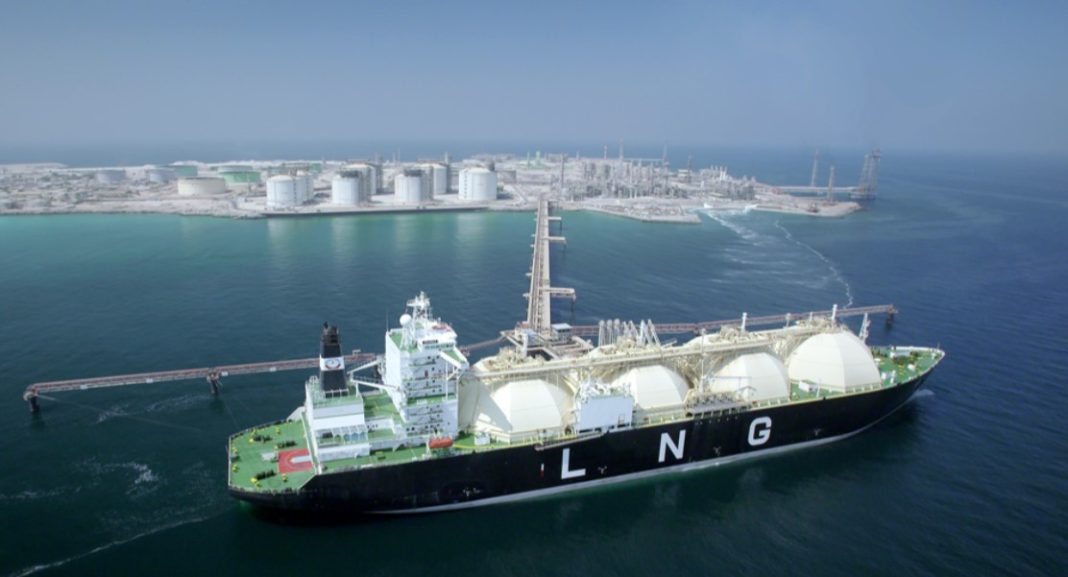
Abu Dhabi’s state energy company signed a 15-year sales and purchase agreement with a unit of British energy major for the delivery of up to 1 million tonnes per annum of liquefied natural gas. The contract represents the first long-term LNG sales deal between the company and Shell and marks the eighth offtake agreement secured for its new export facility.

The LNG will be supplied from the Ruwais LNG project in Al Ruwais Industrial City, Abu Dhabi, which is under development and is set to become the first LNG export plant in the Middle East and Africa region to operate on clean power. Shell holds a 10 per cent equity stake in the project. The agreement converts a previous heads of agreement into a definitive contract and accelerates the project’s commercial timeline.

By securing this deal, more than 8 mtpa of the facility’s planned 9.6 mtpa capacity has already been contracted across Asia and Europe, just 16 months after the project’s final investment decision in July 2024. The project comprises two liquefaction trains of 4.8 mtpa each and is designed to more than double the company’s existing LNG production capacity to around 15 mtpa.

The deal is timed to global gas-market conditions where demand is picking up and energy security is a key concern for buyers. By locking in long-term supply, the exporting company seeks to position itself as a “reliable global supplier of lower-carbon LNG”, while the buyer views the contract as a strategic commitment to expanding its LNG portfolio and securing long-term supplies.

For the seller, the rapid pace at which contract commitments have been won is significant. The chief executive of the gas-division described the achievement of contracting more than 80 per cent of the plant’s capacity within roughly a year of FID as “a new benchmark” for large-scale LNG projects globally, and noted that construction, contractor mobilisation and site works remain on track for commissioning by the end of 2028. The buyer emphasised its long-standing partnership of more than fifty years with the Abu Dhabi exporter and said the agreement supports its global LNG-expansion strategy.

Analysts note that the project’s clean-power design, advanced technology deployment, and rapid contracting distinguish it in the LNG market. That said, while the exporting company releases its ambition to expand its LNG portfolio, competitors in the region are also pursuing aggressive growth, raising competitive risk. Moreover, delivering commercial operations at a low-carbon intensity adds complexity and cost — achieving the projected timeline and performance will require careful execution.

On the demand side, the contract underscores how buyers are increasingly seeking longer-term and lower-emissions supply arrangements in the transition-era gas market. For the buyer, the deal adds to its diversified portfolio of LNG suppliers as it faces intensified competition for cargoes from traditionally dominant exporters. The seller’s ability to secure multiple offtake agreements rapidly helps de-risk the project and supports financing and construction momentum.

One key theme emerging is the alignment of LNG expansion with sustainability credentials. The Ruwais facility’s design to run on clean grid-powered operations, along with claims of being among the lowest-carbon intensity LNG plants globally, reflects a shift in gas-project metrics: projects are now evaluated not solely on cost and capacity but also on carbon footprint and technology sophistication. This trends suggests that access to lower-carbon LNG could become a differentiator among suppliers and a value driver for buyers.

However, achieving this low-carbon ambition may face challenges such as securing clean-power infrastructure, managing capital-cost escalation, and meeting stringent environmental and regulatory expectations across export markets. The broader LNG market is also subject to volatility in feed-gas supply, shipping capacity constraints, and fluctuating demand growth in key markets such as Asia and Europe.

Microsoft has announced a commitment to invest approximately $15.2 billion in the United Arab Emirates by the end of 2029, while securing U. S. export licences to ship advanced AI chips to the Gulf state. The investment is centred on building and expanding cloud infrastructure, artificial-intelligence data centres and talent development in partnership with local entities.

The majority of this sum will flow into the construction and operation of AI-enabled data-centre campuses, with Microsoft Vice-Chair and President Brad Smith describing the growth of those facilities as “by far” the largest element of the investment. The U. S. export licences permit shipment of tens of thousands of the latest-generation Nvidia GB300 Grace Blackwell GPUs to the UAE, enabling Microsoft to deploy higher-end compute capacity in its regional centres.

The investment timeline outlines that Microsoft had invested just over $7.3 billion between 2023 and the end of the present year and plans to spend more than $7.9 billion from 2026 to 2029. Of the latter, over $5.5 billion is earmarked for capital expenditure on data-centres and cloud systems, with the remainder directed at local operating expenses and workforce development. The export licence approvals follow a strategic arrangement between Washington and Abu Dhabi, reflecting shifting U. S. policy on high-end chip exports and technology partnerships with Gulf states.

By leveraging the licences, Microsoft gains the ability to scale AI infrastructure in the UAE under its own operation and in concert with regional firms. The firm emphasizes talent and ecosystem-building alongside infrastructure, noting its launch of a Global Engineering Development Centre in Abu Dhabi, and targeting wide-scale skilling of AI talent across the region. Local partner G42-based in Abu Dhabi plays a key role, with Microsoft having invested $1.5 billion for a minority stake and a board seat for Smith. G42’s board participation and Microsoft’s alignment reinforce the strategy of blending global tech capability with regional execution.

Beyond the financials, the deeper strategic purpose illuminates broader geopolitical dynamics. The U. S. decision to grant chip-export licences to the UAE signals a recalibration of export controls in favour of trusted partners, even as Washington manoeuvres to counter Chinese influence in the global AI supply-chain. The UAE’s ambition to become a global AI hub, and to host one of the world’s largest data-centre complexes in Abu Dhabi, aligns with Microsoft’s drive to diffuse AI at scale. The chip-export approvals are bound by stringent cyber-security and physical-security conditions; Smith emphasised that Microsoft became “the first company” under this administration to obtain such licences for the Gulf region.

Concerns remain, however. Some U. S. lawmakers have flagged that the UAE’s past technology ties with China raise questions about enforcement of export-control safeguards and potential technology diversion. The export licences carry conditional compliance obligations; any lapses may provoke regulatory scrutiny. For Microsoft and the UAE, execution risk spans multiple fronts: timely deployment of infrastructure, talent acquisition and retention, regulatory alignment, and ensuring that capital investment yields operational returns in a cloud and AI market set to intensify.

For the UAE, the benefits are manifold: access to cutting-edge AI hardware, alignment with global technology leaders, and bolstered credentials as a regional innovation hub. For Microsoft, the Gulf expansion offers a new growth frontier outside its traditional markets, delivering cloud-services scale and AI-model hosting in a region keen to adopt generative-AI applications at high per-capita levels. According to Microsoft’s own AI diffusion data, the UAE leads global per-capita use of generative AI, with 59.4 per cent of its population reported to be active users, ahead of second-placed Singapore at 58.6 per cent.

Abu Dhabi-based energy major Abu Dhabi National Oil Company has sealed three new agreements with US-based robotics specialist Gecko Robotics aimed at embedding artificial intelligence and robotics into its operations while accelerating the development of local skills for nationals. The accords were signed at the ENACT Majlis forum in Abu Dhabi and span a multi-year deployment for ADNOC Gas, a collaboration with the group’s training arm ADNOC […]

Dubai-listed developer Emaar Properties is sharpening its global expansion strategy by placing a stronger emphasis on India while exercising caution over entry into China’s troubled housing market, according to chief executive and founder Mohamed Alabbar.

Alabbar told the Future Investment Initiative conference in Riyadh that India would be “our next big step,” citing two decades of operations in the country and significant growth potential. He emphasised that, while Emaar remains “very interested in China,” it is holding off until the market shows clear signs of recovery, noting that “it is a different world. Let them recover.”

The directive comes after Emaar posted strong financial results: net profit jumped 25 per cent to AED 18.9 billion last year and rose a further 34 per cent in the first half of 2025, conditions that Alabbar says position the firm to target large market acquisitions rather than start-ups abroad. Emaar’s land-bank footprint already spans more than 1.87 billion sq ft globally, including a 122 million sq ft stake in India and around 175 million sq ft outside the UAE.

In India the driver is rising urbanisation, youthful demographics and a housing deficit that Emaar believes it is well placed to address. Alabbar signalled that the company is pursuing joint-venture partnerships with local groups rather than divesting its Indian operations, dismissing reports of a sale to one of the country’s major conglomerates. By contrast, China presents multiple headwinds including a pronounced housing market slump: new-home prices in 63 out of 70 major Chinese cities fell in September, reflecting a 0.4 per cent month-on-month drop and a 2.2 per cent year-on-year fall.

Analysts say Emaar’s bifurcated strategy makes sense in the context of broader market dynamics. India’s economy is forecast to grow about 6.7 per cent in fiscal 2025-26, according to a Reuters poll, while China is projected to expand by roughly 4.8 per cent amid real-estate weakness. Alabbar noted that the company sees China’s environment as “still suffering with their housing problem, but they’ll come up with it,” stating that Emaar wants to be ready rather than reactive.

Emaar’s preferred mode of overseas expansion appears to be acquiring significant stakes in existing developers, upgrading business models and rolling out its integrated real-estate offering rather than green-field launches. “Maybe you go and buy a majority stake in a developer and then change the way they do business … or maybe they already do good business and we learn from them,” Alabbar explained. That approach aligns with Emaar’s low net debt, elevated cash position and willingness to invest in large markets such as the US, Europe and China.

Critics caution that while India holds promise, foreign developers often face regulatory, land-title and partner-alignment risks. Emaar’s long-standing Indian venture, launched in 2005, endured partner disputes and execution delays, a history that Alabbar acknowledged when he said “we’ve been there 20 years. That’s big for us.” He further noted that successful growth in India depends on selecting the proper location and product mix. Meanwhile, China’s structural property problems are deep-rooted: unsold inventory and falling valuations continue to impair home­buyer confidence, raising questions about the timing of any major developer expansion into the market.

Greenlogue/AP Abu Dhabi Future Energy Company PJSC – Masdar has secured two large-scale solar photovoltaic projects in Saudi Arabia, with a combined capacity of 2 gigawatts, under the country’s sixth round of the National Renewable Energy Programme. One facility, located in Najran Province, will deliver 1,400 megawatts, and the other, in Jizan Province, will provide 600 MW. Both projects will operate on a build-own-operate basis and are […]

Thrifty Car Rental UAE has introduced the region’s first self-service digital car rental kiosk, a move aimed at transforming how vehicles are rented across the Emirates. The kiosk, unveiled at the lobby of Novotel and Ibis Deira Creekside Dubai, allows customers to browse available vehicles, complete identity verification and make payment entirely digitally — the car can then be delivered within one to three hours. The launch signals a clear shift toward technology-led mobility solutions in the car rental industry.

The kiosk offering is part of Thrifty’s broader strategy to engage customers seeking convenience, speed and flexibility. At the Arabian Travel Market 2025 the firm outlined its ambition to expand this self-service model across high-traffic zones, including residential areas, shopping centres and transit hubs. The head of retail at Thrifty, Chand Soni, said the company was “building more than a rental network; we’re building a connected experience.”

Industry data suggest that the regional car rental market is undergoing a fundamental digital transformation, driven by customer demand for contactless service and the tourism sector’s push for smarter mobility. A market research report covering Oman values the digitisation of car rental — including self-service kiosks and app-based models — at US$150 million and growing, citing rising smartphone penetration and government digital-economy initiatives.

Thrifty’s kiosk system employs a touchscreen interface, secure identity verification and live payment integration. Users select vehicle type, rental duration and location via the kiosk, triggering delivery logistics in what the company promises as “minutes, not hours”. The vehicle is dropped off at a location of the renter’s choice. The system is designed to address both leisure travellers and residents who may need a flexible vehicle-rental alternative without the usual counter-based rental process.

The shift comes as car rental players in the region face increased competition not just from traditional rivals but from app-based mobility services and subscription models. For example, Thrifty itself is rolling out flexible rental plans — including monthly specials and lease-to-own options — to attract customers who prefer longer-term flexibility over ownership. The kiosk adds another layer of convenience for shorter-term rentals or spontaneous plans.

The move may also help Thrifty scale more efficiently. By deploying kiosks in multiple locations, the company can reduce staffing and branch-infrastructure costs, optimise fleet utilisation and meet spontaneous demand without needing multiple full‐service outlets. Soni noted the goal of doubling the network of touchpoints in the period ahead.

However, executing this strategy will bring challenges. The initial investment in digital kiosks and supporting IT infrastructure is substantial, and the process requires robust identity verification, payment security and logistics coordination. According to regional research, smaller operators may struggle to deploy such tech due to cost constraints and customer inertia — in some markets a majority of users remain more comfortable engaging via staffed counters.

Another risk lies in customer adoption. While younger and tech-savvy users may welcome the kiosk format, others may prefer the human interaction offered by traditional rental counters. Thrifty will need to ensure service reliability, vehicle availability and customer support — especially if rentals are completed entirely digitally and delivery timelines become core customer expectations.

Regional mobility trends underscore the importance of innovation. With the UAE emphasising tourism growth, smart infrastructure and digital transformation, the launch aligns with broader national strategies. Thrifty’s positioning at the intersection of mobility, digital convenience and customer experience may help meet evolving consumer behaviour, but sustaining value will depend on execution across logistics, fleet management and customer service.

For business travel, hotel partnerships and leisure rentals, the kiosk offers a compelling convenience proposition. At the same time, Thrifty must manage fleet availability, delivery logistics and system uptime to avoid service disruptions. Monitoring how customers adopt the kiosks, how much rental behaviour changes and how much cost or revenue upside emerges will be key to assessing whether this innovation delivers long-term competitive advantage.

Dubai hosted a high-level ministerial roundtable alongside the UAE‑Africa Tourism Investment Summit 2025, assembling officials from more than 20 African nations and the United Arab Emirates to outline an investment mapping totalling about USD 6 billion aimed at boosting tourism, aviation, transport, infrastructure and digital transformation across Africa. The joint ministerial statement forecasts creation of some 70,000 jobs across participating countries. At the meeting, Abdulla bin Touq […]

Data-resilience specialist Veeam Software has struck a definitive agreement to acquire Securiti AI for approximately US$1.725 billion in cash and stock, marking a significant expansion of its capabilities into data security posture management, privacy, governance and AI-trust technologies. The transaction is expected to close in the fourth quarter of 2025, pending regulatory and customary approvals. Veeam’s move aims to fuse its established strength in backup, recovery and […]

US-based data-centre specialist Crusoe Energy Systems LLC has secured approximately $1.38 billion in a Series E funding round, raising its valuation to more than $10 billion underlining the intensity of demand for artificial-intelligence infrastructure. The equity fundraising was co-led by Mubadala Capital and Valor Equity Partners, and attracted backing from major investors including Nvidia Corporation, Fidelity Management & Research Company and Founders Fund. Crusoe, founded in 2018, […]

A partnership between the investment firm Orion Resource Partners, the U. S. International Development Finance Corporation and sovereign investor ADQ has launched a major critical-minerals fund, mobilising an initial $1.8 billion in capital with a target of up to $5 billion to support supply-chain development of essential raw materials. The initiative, known as the Orion Critical Mineral Consortium, aims to invest in and scale near-term producing assets for minerals such as copper, cobalt and rare earths, in line with partner-government industrial and security goals. The DFC has confirmed its cornerstone commitment, matched by funds managed by Orion and ADQ, creating the foundation of the expanding pool of capital.

The fund emerges amid heightened concern in Washington over the concentration of critical-minerals processing in rival economies and the lag in Western investment, with deferred permitting, falling ore grades and decelerating mine-development pipelines cited as systemic pressures. Orion, which manages around $8 billion in assets and has global mining-finance experience, brings its platform into the consortium, while ADQ’s prior joint venture with Orion—announced earlier this year for $1.2 billion—provides a blueprint for the strategic partnership. The fresh consortium will prioritise assets capable of delivering supply within a shorter timeframe rather than frontier exploration, signalling a shift towards faster-payback, lower-development-risk opportunities.

The strategic calculus ties directly into U. S. national-security and industrial-policy ambitions. “Securing critical minerals is a paramount matter of U. S. strategic interest and economic prosperity,” said DFC CEO Ben Black. Orion founder and CEO Oskar Lewnowski described the consortium as a “bridge” between emerging-market production jurisdictions and advanced-manufacturing demand in the U. S. and among allies. The fund will focus on eligible jurisdictions for DFC investment and will integrate production, processing and offtake structures.

The $1.8 billion commitment represents the current scale of the vehicle, with Orion CMC envisaged to grow further as aligned investors join. Observers note that while the headline target is $5 billion, execution will depend on securing suitable assets, navigating permitting and securing host-nation partnerships. The model mirrors the earlier ADQ-Orion joint venture launched in January, which committed to deploy $1.2 billion over its first four years across metals-and-mining investments in Africa, Asia and Latin America.

For Orion and ADQ, this represents an expansion of their earlier alliance: the Abu Dhabi-based JV served both to secure long-term resource links and to align with ADQ’s infrastructure-and-critical-minerals cluster. For the U. S., the consortium marks one of the largest private-sector-linked initiatives in the critical-minerals domain, aligning DFC’s mandate of mobilising private capital abroad with the administration’s aim to reduce strategic vulnerabilities in supply chains.

Challenges remain. Mining projects are long-horizon endeavours, and merely committing funds does not guarantee results. Host-country regulatory regimes, permitting timelines, environmental and social governance constraints and market-price volatility all play roles in investment outcomes. Industry analysts caution that while the push for supply-chain resilience is timely, the gap between intent and delivery is sizeable. Even with $5 billion in capital, global demand for some critical minerals is projected to outstrip supply capacity.

Operationally, the consortium’s emphasis on “existing or near-term producing assets” rather than early-stage exploration is intended to accelerate results and mitigate development risk. That strategy reflects frustration in industry circles with projects that take a decade or more to bring into production. The presence of sovereign-wealth capital, allied-government backing and private-sector mining-finance expertise may create a differentiated pathway for this fund compared with earlier, traditional mining-investment funds.

VISHNU RAJA
RYO YAMADA
HITORI GOTOH
IKUYO KITA