Iran has floated a proposal that could allow ships to use the Omani side of the Strait of Hormuz without facing attack, according to a person briefed on Tehran’s negotiating position, offering a possible path to ease one of the biggest shocks to global energy trade in modern times if talks with the United States produce a wider settlement. The idea has emerged as the U. […]
Arabian Post Staff -Dubai Qatar’s finance minister has warned that the world economy faces a far sharper hit from the Middle East conflict than markets have yet absorbed, saying the oil-price surge seen so far is only an early sign of wider damage that could spread through energy, food and industrial supply chains by May or June. Speaking at the IMF and World Bank spring meetings […]
Splunk has disclosed a high-severity security flaw that can allow remote code execution in affected Splunk Enterprise and Splunk Cloud Platform deployments, raising concern for organisations that rely on the software to collect, search and analyse machine data for cyber defence, compliance and operations. The issue, tracked as CVE-2026-20204, was published on April 15 and carries a CVSS score of 7.1. Splunk said the weakness affects Splunk […]
Comcast customers notified about the company’s 2023 Xfinity data breach are being offered cash payments, reimbursement for documented losses and identity-protection services under a proposed $117.5 million class-action settlement, opening what could become one of the largest consumer redress exercises tied to a telecom cyber incident in the United States. The settlement applies to people in the United States and its territories who were sent individual notice […]
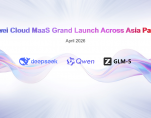
JAKARTA, INDONESIA – Media OutReach Newswire – 15 April 2026 – Huawei Cloud AI Boost Day, themed “Agentic AI Practice”, was successfully held in Jakarta. At the event, Huawei Cloud announced the official launch of its MaaS service in Asia Pacific.
Huawei Cloud MaaS grand launch across Asia Pacific
Following the rollout of AI Compute Service in Hong Kong (China), Thailand, Indonesia, and Singapore in 2025, Huawei Cloud MaaS (Model-as-a-Service) is now available, leveraging Huawei’s in-house acceleration engine to support mainstream models and provide customers with stable and high-quality token services.
Huawei Cloud continues to strengthen its collaboration with high-quality open-source models in the industry. Six models from three categories—GLM, DeepSeek, and Qwen—are the first to be supported by MaaS. These models are designed for two major application scenarios: intelligent Q&A and AI coding. They offer one-click access and out-of-the-box model hosting services, covering the entire lifecycle of model management from deployment to inference, fine-tuning, and evaluation. With elastic compute and pay-per-use billing, enterprises and developers can quickly integrate AI capabilities into their service systems without having to worry about the underlying infrastructure. This makes AI accessible to everyone.
Notably, this release includes support for the latest GLM-5 model. GLM-5 has attained state-of-the-art (SOTA) performance in coding and agent capabilities, making it an ideal general-purpose agent foundation for complex system engineering and long-text agent tasks in enterprise environments.
Huawei Cloud’s long-term strategic investment in AI has resulted in a comprehensive suite of AI solutions, including CloudMatrix AI Infra, MaaS, ModelArts (a model training and inference platform), CodeArts (a coding agent), AgentArts (an agent platform), and DataArts (a data agent).
CodeArts and AgentArts will be launched outside the Chinese mainland in the second half of 2026.
Huawei Cloud has established an optimized cloud infrastructure network in the Asia Pacific region. This network comprises five Regions and 18 availability zones (AZs) located in Singapore, Thailand, Hong Kong (China), Indonesia, and the Philippines, ensuring a 50 ms access latency. Additionally, in Malaysia, Huawei Cloud and partners have jointly built a local cloud.
Huawei Cloud AI Compute Service have helped many Asia Pacific customers elevate their cloud journey from simply migrating to the cloud to using AI well. They have benefited from improved productivity and better adaptation to changing environments.
iFLYTEK, a leading intelligent voice and AI company, selected Singapore as the first destination for its global expansion strategy in 2023, naturally extending its collaboration with Huawei Cloud from China to a global scale. Huawei Cloud AI Compute Service helped iFLYTEK quickly deploy their large language model training resources within two weeks. The training remained stable for 60 days without interruption, ensuring zero faults during the release of major versions.
In Vietnam, Green and Smart Mobility (GSM), an emerging green mobility platform, migrated its core operations platform to Huawei Cloud to reduce costs, enhance efficiency, and achieve multi-cloud flexibility. GSM has developed a comprehensive fleet management platform using AI and IoT. By utilizing Huawei Cloud IoTDA and ModelArts AI technologies, GSM analyzes violations and generates risk alerts to ensure driver and passenger safety, thereby fulfilling its mission of promoting green and safe transportation.
Huawei Cloud will continue to invest in AI innovation and provide a secure, stable, and intelligent cloud foundation to help enterprises in Asia Pacific achieve sustainable business growth in the AI era.
The issuer is solely responsible for the content of this announcement.
About Huawei
Founded in 1987, Huawei is a leading global provider of information and communications technology (ICT) infrastructure and smart devices. We have 207,000 employees and we operate in more than 170 countries and regions, serving more than three billion people around the world.
Our vision and mission is to bring digital to every person, home and organisation for a fully connected, intelligent world. To this end, we will work towards ubiquitous connectivity and inclusive network access, laying the foundation for an intelligent world; providing diversified computing power where you need it, when you need it, to bring cloud and intelligence to all four corners of the earth; build digital platforms to help all industries and organisations become more agile, efficient, and dynamic; and redefine user experience with AI, making it smarter and more personalised for people in all aspects of their life, whether they’re at home, on the go, in the office, having fun, or working out. For more information, please visit Huawei online at www.huawei.com
Cardano is drawing fresh attention after a burst of on-chain activity revived debate over whether stronger network usage can translate into a rebound for ADA, the blockchain’s native token, after a prolonged spell of weak price action. The trigger for the discussion was commentary tied to staking infrastructure provider Everstake, which said daily active addresses and transaction counts had risen sharply over the past three months, feeding […]
Mercedes-Benz is recalling 24,092 vehicles in the United States after safety regulators said a defect in the drive shaft universal joint could lead to a sudden loss of propulsion and raise the risk of a crash. The action covers selected 2018 to 2020 model-year E-Class and S-Class vehicles with 4MATIC all-wheel drive, including some coupe, cabriolet and Maybach variants. Owners are due to be notified by June […]
Microsoft’s games division is facing fresh pressure over the cost of Xbox Game Pass after reports said Microsoft Gaming chief Asha Sharma told staff the service had “become too expensive for players”, signalling a possible rethink of one of the company’s most important consumer bets. Sharma’s appointment as executive vice-president and chief executive of Microsoft Gaming was announced by Microsoft on 20 February, giving added weight to […]
Attackers are exploiting a critical flaw in nginx-ui, an open-source web interface used to manage Nginx servers, exposing organisations to unauthorised server control through a weakness in the product’s Model Context Protocol integration. The bug, tracked as CVE-2026-33032, carries a CVSS severity score of 9.8 and allows an unauthenticated attacker on the network to invoke privileged functions that can rewrite configuration files, reload services and alter how […]
Australia’s unemployment rate held at 4.3% in March, defying a widening energy shock from the US-Israeli war on Iran and underscoring the resilience of a labour market that has so far remained tighter than many economists expected. Official figures showed employment rose by about 18,000 over the month, led by a sharp lift in full-time work, even as participation edged lower and policymakers faced a more complicated […]
OpenAI has launched GPT-5.4-Cyber, a new version of its frontier model tailored for defensive cybersecurity work, moving quickly to answer growing concern that ever more capable AI systems could help both defenders and attackers in a widening digital arms race. The release came a week after Anthropic disclosed Claude Mythos Preview under its tightly controlled Project Glasswing programme, setting up a new contest over who can best […]
A digitally signed software operation tied to Dragon Boss Solutions LLC has been linked to the disabling of antivirus protections on more than 23,000 endpoints worldwide, raising concerns that what had been treated as aggressive adware was operating much closer to a supply-chain style threat. Security researchers said infected machines were found checking in from 124 countries, with affected systems present in education, government, utilities, healthcare […]
Europe’s cybersecurity agency has moved to strengthen its influence over the global system used to identify and catalogue software flaws, with ENISA no longer merely seeking a bigger role in the Common Vulnerabilities and Exposures programme but already holding Root status in a shift that gives the EU a stronger hand in how vulnerabilities are coordinated across borders. The development matters because the CVE system remains a […]
SINGAPORE – Media OutReach Newswire – 16 April 2026 – EduCareerSG has enhanced its Experiential Career Accelerator (ECA) programme through the integration of AI-enabled monitoring and support tools designed to strengthen trainees’ emotional readiness as they transition into the workforce.
The integration reflects EduCareerSG’s long-held belief that emotional management is not separate from employability, but a critical component of it. By embedding AI capabilities into its existing systems and modules, EduCareerSG is able to detect potential stress signals earlier, enabling faster intervention and more personalised support from its human welfare team.
“Technical skills and qualifications may get someone through the door, but emotional management determines whether they stay, grow, and cope when things get difficult,” said Mike Teo, Founder of EduCareerSG. “We have seen trainees who are capable on paper, but overwhelmed in practice. By integrating AI into our system, we are able to spot early warning signs and intervene sooner. Career readiness isn’t just about competence, it’s about resilience.”
Through structured weekly check-ins and ongoing engagement within the ECA ecosystem, the system helps surface early signs of workplace stress, adjustment challenges, or emotional strain commonly faced by young people entering live work environments. When potential concerns are identified, alerts are routed to EduCareerSG’s welfare team, where trained staff step in to provide direct guidance and counselling support.
Importantly, the AI functions as an assistive layer rather than a replacement for human oversight. The organisation maintains a human-first approach, with welfare officers taking over whenever emotional risk indicators arise.
The enhancement comes at a time when employers increasingly expect “day-one productivity”, while many young workers struggle with the emotional realities of adapting from classroom settings to workplace environments.
Recent Singapore reports have highlighted rising stress levels among employees and early-career professionals, alongside broader conversations around resilience and sustainable employability. Against this backdrop, EduCareerSG’s approach seeks to address not only skills gaps, but the emotional preparedness required to sustain performance in real-world settings.
Initially implemented within EduCareerSG’s ECA trainees in Singapore, the enhanced system forms part of a broader roadmap to continually upgrade the organisation’s training, welfare, and productivity frameworks. EduCareerSG will review performance and feedback over the coming months before assessing potential regional expansion.
By combining sponsored academic pathways, structured workplace immersion, and technology-enabled emotional support, EduCareerSG continues to refine a holistic workforce preparation model, one that recognises productivity, wellbeing, and long-term employability as interconnected pillars of success. Hashtag: #EduCareerSG
The issuer is solely responsible for the content of this announcement.
About EduCareerSG
EduCareerSG is a Singapore-based career development organisation that bridges the gap between academic qualifications and real-world employability through its Experiential Career Accelerator (ECA) programme. By combining sponsored education pathways, structured workplace traineeships, soft skills development, and continuous welfare support, EduCareerSG prepares trainees to enter the workforce with practical experience and professional resilience. Learn more at https://educareersg.com/
Google has issued an emergency-style security update for Chrome after disclosing 31 vulnerabilities in the desktop browser, including five rated critical, in a release that underlines how quickly memory-safety flaws in widely used software can become a serious risk for consumers, businesses and public institutions. The stable desktop channel moved on April 15 to version 147.0.7727.101/102 for Windows and Mac, and 147.0.7727.101 for Linux, with the rollout […]
Arabian Post Staff -Dubai Marine fuel sales at Fujairah fell to a record low in March as the US-Iran conflict upended shipping patterns, strained fuel supply chains and pushed vessels to avoid one of the Gulf’s most important refuelling hubs. Data cited by traders and market reports showed sales at the port dropped to 158,852 cubic metres, down more than 70 per cent from February and from […]
Asian equities pushed higher on Thursday as hopes of a diplomatic opening in the US-Iran conflict combined with solid corporate earnings to lift sentiment across the region, extending a rebound that has carried global benchmarks back towards, and in some cases beyond, their pre-war highs. MSCI’s broadest index of Asia-Pacific shares outside Japan rose about 0.9 per cent, while Japan’s Nikkei jumped 2.2 per cent to a fresh record, tracking Wall Street gains after the S&P 500 and Nasdaq ended at all-time closing highs on 15 April.
The rally reflected a market view that the worst-case economic fallout from the conflict may yet be avoided if negotiations regain momentum. Investors were encouraged by signs that talks between Washington and Tehran could resume after earlier efforts faltered, easing some fears over energy supply disruptions and allowing attention to swing back to earnings, economic data and the resilience of household demand in the United States and Asia. That shift in mood helped lift US stock futures and underpinned broader gains from Tokyo to Mumbai.
Japan led the advance, with exporters and technology names benefiting from stronger risk appetite and the market’s belief that any easing in Middle East tensions could reduce pressure on fuel costs and shipping. The Nikkei’s record level also reflected investor confidence that large Japanese companies remain well placed to benefit from global demand for semiconductors, automation and artificial intelligence infrastructure. Elsewhere, South Korean and Hong Kong shares also moved higher, while mainland Chinese markets were supported by data showing the economy expanded by 5.0 per cent in the first quarter, beating expectations and offering some reassurance that domestic activity has retained momentum despite the geopolitical shock.
Wall Street’s lead mattered. The S&P 500 closed at 7,022.95 on Wednesday, a record that marked a full recovery from losses triggered after the conflict began in late February, while the Nasdaq posted another record finish and extended a powerful winning streak. Strong results from major banks, including Bank of America and Morgan Stanley, reinforced the idea that corporate America is entering the earnings season on firmer footing than many investors had feared when oil prices spiked and risk assets sold off. Reuters reported that 84 per cent of companies that had reported by then had beaten expectations, helping to steady nerves about margins and consumer activity.
The earnings story is now sharing the stage with geopolitics. Markets are effectively pricing a narrower range of negative outcomes than they were only weeks ago, but that optimism remains conditional. Oil prices, while off their most alarming levels, are still elevated by historical standards, and every diplomatic headline continues to carry outsized weight because the Strait of Hormuz remains central to global crude flows. Reports that Iran may allow shipping through the waterway helped calm traders, though supply risks have not disappeared, especially with refinery disruptions in Australia and the threat of fresh sanctions or military miscalculation still present.
That tension between relief and caution is visible across asset classes. The dollar was broadly steady, the euro stayed firm, gold edged up and cryptocurrencies drifted lower, all signs that investors have not fully abandoned hedges even as they add exposure to equities. In India, shares opened higher as lower oil prices and hopes of renewed dialogue supported all major sectors, with the Nifty 50 and Sensex building on gains from the previous session. For economies that import large volumes of energy, any sustained cooling in crude would ease inflation pressure, support currencies and give central banks more room to focus on domestic growth rather than external shocks.
Technology remains a central pillar of the market’s confidence. Taiwan Semiconductor Manufacturing Co. was in focus ahead of results that investors expected to show a sharp profit jump, driven by demand tied to artificial intelligence chips. That anticipation has fed into a broader belief that the AI investment cycle can continue to offset weakness elsewhere in the global economy. Yet the strength of that narrative also creates a vulnerability: richly valued technology shares leave little room for disappointment, and any sign of slowing orders or tighter capital spending could quickly change the market tone.
New Delhi is treating the fallout from the Iran war as more than a passing oil shock, with the strain spreading from shipping lanes and fertiliser markets to trade flows and inflation risks. The concern inside government and industry is that even if fighting eases, higher freight, insurance and input costs could leave a long tail for an economy that still depends heavily on imported energy and exposed maritime routes.
Pressure on the economy is already visible in trade and commodity data. Merchandise trade with the Middle East has been hit by shipping disruption linked to the conflict, even as stronger exports to the United States helped keep March’s overall trade deficit lower than expected. At the same time, the fertiliser bill has jumped sharply: urea import offers to Indian Potash Ltd clustered near $1,000 a tonne this week, roughly double the level seen two months ago, raising the prospect of a larger subsidy burden just as the kharif cycle approaches. For policymakers, that combination matters because it hits both external accounts and domestic costs, especially in food production.
Energy remains the central fault line. The Strait of Hormuz handles about a fifth of global oil and gas shipments, and for India it is a vital corridor for roughly half of crude and LPG imports. That vulnerability has been laid bare by delays to vessel movements and the stranding of India-flagged ships in the Gulf. Iran’s envoy in New Delhi has denied any toll demand on tankers, and India has also said no such payments were made, but the broader message from the episode is that the route can no longer be treated as a routine artery for commerce when conflict risk is this high.
Oil traders have taken some comfort from ceasefire diplomacy and indirect talks between Washington and Tehran, yet prices remain elevated because markets do not believe a durable fix is close. Brent crude was still around $95 a barrel on April 16, and analysts say disruptions to flows through Hormuz remain severe. That leaves New Delhi facing a familiar but uncomfortable calculation: protect households from a fuel shock and risk wider fiscal stress, or let higher import costs work their way through the system and accept stronger inflation. The International Monetary Fund and World Bank have both warned that the conflict could scar global growth, raise prices and impose lasting damage even if the battlefield quietens.
Those warnings matter because the shock is broader than petrol and diesel. Wholesale prices are already climbing, and manufacturers are absorbing costlier freight, energy and feedstock. Fertiliser is a particular worry. If elevated urea prices persist, the state may have to spend more to shield farmers, while any squeeze on supply would carry risks for sowing costs and food inflation later in the year. Economists have argued for targeted support rather than broad subsidies, but that is easier said than done in a country where energy and fertiliser costs have immediate political as well as economic consequences.
There are, however, offsets that could soften the blow. March trade numbers showed that stronger shipments to the United States helped compensate for weaker business with the Middle East, and India continues to diversify its energy basket through Russian supplies and other alternatives where pricing works in its favour. A sanctioned LNG cargo from Russia is heading to Dahej, underlining the government’s willingness to prioritise supply security and consumer interests over diplomatic noise around purchasing patterns. That flexibility has given India more room than many pure importers, though it does not erase the strategic dependence on Gulf routes.
Arabian Post Staff -Dubai UAE investors are moving faster than their peers almost anywhere in the world to bring artificial intelligence into investment decision-making, with a new global study by wealth-tech firm BridgeWise placing the country second overall in its AI optimism rankings and first on “momentum”, a measure of how strongly investors intend to replace traditional research methods with AI tools over the next year. The […]
A newly circulating render of Dubai’s future skyline has pushed Burj Azizi back into view, drawing fresh attention to a tower that developers say will rise about 725 metres on Sheikh Zayed Road and rank behind only Burj Khalifa when complete. The project, positioned in the Dubai World Trade Centre corridor, has become one of the emirate’s most closely watched construction bets because it combines sheer height […]
By Nitya Chakraborty President Donald Trump as usual has been talking in conflicting voices on his immediate stand on Iran war. The U.S. President ordered naval blockade of Iranian ports after the failure of the Islamabad peace talks on Sunday but on Tuesday, he indicated that another round of talks would be held in the […]
Saudi Arabia has pledged an additional $3 billion in support for Pakistan and agreed to extend a $5 billion deposit for a longer period, giving Islamabad fresh breathing space as it works to manage external financing pressures and a looming $3.5 billion repayment obligation to the United Arab Emirates this month. Pakistan’s finance minister, Muhammad Aurangzeb, disclosed the support in Washington, and the arrangement was confirmed by […]
The International Monetary Fund, World Bank and International Energy Agency are moving towards scheduled calls every two weeks as they deepen coordination over the economic and energy fallout from the war in the Middle East, with officials warning that prolonged disruption could sharpen inflation, weaken growth and hit poorer energy-importing countries hardest. The three bodies first set up a joint coordination group at the start of April […]
Arabian Post Staff -Dubai Gold prices steadied on Wednesday after touching a one-month high earlier in the session, with traders weighing the pull of geopolitical risk against tentative signs that Washington and Tehran could return to the negotiating table within days. The metal’s pause came as broader markets turned cautious, reflecting uncertainty over whether diplomacy will gain traction or merely offer a brief respite in a […]



 https://www.huaweicloud.com
 https://www.linkedin.com/company/huaweicloudapac
 https://x.com/huaweicloudapac
 https://www.facebook.com/HuaweiCloudAPAC