Just in:
Dubai boat show confirms international shipyard line-up for November // OpenAI abandons secrecy agreements for future data centres // Millions Of Indians May Soon Be Deprived Of Government Assistance // Motorola introduces Signature 27 flagship priced at $1,599 // Hong Kong mandates crypto transaction disclosures to tax authorities // e-Crime Bureau Signs Cybersecurity Partnership With Smart Africa, Reinforcing Its Global Expansion // Ousted top Kochi cop gets IG post // Geely’s i-HEV Intelligent Hybrid Technology Offers a New Direction for Gasoline-Powered Vehicles // Ningbo Consensus on Collaborative Development released at 2026 Global Mayors Dialogue · Ningbo // Meraas showcases five residential zones at Dubai Design Week // Oil and chip shares retreat after Democratic victories // CR Longdation Aethereal Cybersecurity × Global Cybersecurity Alliance (GCSA) Join Hands to Establish the “AI and Cybersecurity Research Centre” // Geely’s i-HEV Intelligent Hybrid Technology Offers a New Direction Vision for Gasoline-Powered Vehicles // Dubai details five-year visa benefits for returning visitors // Trump’s Iran War Has A Share Of Contribution To His Midterm Debacle // Private varsities bill all set to face the axe // UK air traffic outage inflicted £33m financial losses // Beyond the exhibition floor: How robots, AI and networks are moving into the real world // Oil advances towards $100 as tanker attacks persist // Emaar approves Development buyout ahead of planned delisting //

News related to
work

Hyundai Motor Group has committed to placing more than 25,000 Atlas humanoid robots across Hyundai Motor and Kia factories, setting up a major test of industrial automation as its South Korea labour union warns that no deployment can proceed without a formal labour-management agreement. The plan, outlined to investors this week, marks one of the most ambitious humanoid robot rollouts yet proposed by a global carmaker. The […]

Seychelles and Bangladesh have moved to accelerate bilateral cooperation, with pending agreements and memoranda of understanding now expected to take clearer shape this year after talks in Victoria between Bangladesh High Commissioner Dr Zokey Ahad and Seychelles Foreign Affairs and Diaspora Minister Barry Faure. The meeting, held on 21 May at Maison Quéau de Quinssy, centred on formalising cooperation frameworks that have been under discussion since Dr […]

Dubai motorists will pay 5 per cent value-added tax on public parking and Salik toll services from June 1, 2026, in a shift that will raise daily transport costs while accelerating the emirate’s move towards digital payments. Parkin Company PJSC, Dubai’s main paid parking operator, will apply VAT across its services, including on-street parking, off-street parking, seasonal cards, permits and reservation services. Salik Company PJSC will apply […]

Google and Blackstone have agreed to create a $5 billion TPU-powered cloud company, widening the battle for artificial intelligence infrastructure as enterprises seek alternatives to graphics processing units that dominate AI training and inference. The US-based venture will offer data centre capacity, operations, networking and Google Cloud’s Tensor Processing Units through a compute-as-a-service model. Blackstone is making the initial equity commitment, with the first 500 megawatts of […]

BANGKOK, THAILAND – Media OutReach Newswire – 22 May 2026 – Thai Cement Manufacturers Association (TCMA) marked a significant national milestone in advancing the decarbonization of Thailand’s cement and concrete industry toward Net Zero 2050. This progress is driven by strong collaboration among government agencies, industry players, and international partners under the “Decarbonization of the Cement and Concrete Sectors in Thailand” project, while accelerating the adoption of technology, innovation, and green investment to enhance competitiveness and support long-term economic growth.

Z81_1564-2.jpg

Dr. Chana Poomee, Honourary Chairman of TCMA and President of ASEAN Federation of Cement Manufacturers (AFCM), stated that today’s “National Milestone” reflects the power of collaboration at both national and international levels. The initiative is led by the United Nations Industrial Development Organization (UNIDO), in partnership with TCMA and key Thai government agencies, including the Department of Climate Change and Environment and the Department of Industrial Works, with financial support of CAD 8 million from the Government of Canada through Environment and Climate Change Canada (ECCC), to accelerate tangible greenhouse gas reductions in the cement and concrete sector.

TCMA, as the industry representative, serves as a central platform connecting stakeholders across the entire value chain, driving the implementation of the “Thailand 2050 Net Zero Cement and Concrete Roadmap.” This aligns with Thailand’s NDC 3.0 targets, strengthening industrial competitiveness, attracting green investment, and fostering sustainable economic growth.

“Decarbonization is not only a pressing challenge but also a strategic opportunity to enhance national competitiveness. The progress achieved under this project spans policy development, innovation, technology deployment, standards, and capacity building-key enablers that will accelerate the industry’s transition toward Net Zero”, Dr. Chana said.

A key technological advancement under the project is the introduction of the Mobile Carbon Capture Unit (MCCU) from CETRI, Canada. This advanced and flexible technology is designed for real-world industrial operations and will be piloted starting in June, rotating across cement plants of TCMA members in the SARABURI SANDBOX. The pilot aims to validate performance under diverse operational conditions and pave the way for large-scale industrial application.

“The deployment of MCCU in Thailand highlights the strength of international collaboration in bringing advanced technologies into real-world application. It accelerates learning-by-doing, validates technological performance, strengthens local technical capabilities, and reduces investment risks-laying a strong foundation for future scale-up”,
Dr. Chana added.

From an investment perspective, the development of technology-ready and standards-aligned projects enhances investor confidence, increases the attractiveness of green investment, and improves access to sustainable finance-key drivers in accelerating the industry’s transition to Net Zero.

TCMA continues to advance the industry under a “Collaborative Mindset-Action-Value,” promoting the systematic adoption of low carbon technologies, including low carbon cement innovations such as Limestone Calcined Clay Cement (LC3), Carbon Capture, Utilization and Storage (CCUS). These solutions not only reduce emissions but also improve efficiency, lower long-term costs, and strengthen global competitiveness.

At the regional level, TCMA is expanding its role through AFCM by fostering collaboration and advancing the AFCM Decarbonization Roadmap, which serves as a shared framework to reduce carbon emissions across ASEAN’s cement industry while enhancing regional technology, standards, and competitiveness.

“As President of the AFCM, TCMA is committed to driving ASEAN toward becoming a low carbon region by leveraging collaboration as a key mechanism to accelerate technology transfer, strengthen the industry capabilities, and unlock new regional economic opportunities”,
Dr. Chana said.

TCMA reaffirmed its commitment to strengthening collaboration and welcoming international support in both technology and finance to accelerate the transition toward a low carbon industry, while enhancing Thailand’s competitiveness on the global stage.

Hashtag: #TCMA #CementActionToNetZero #NetZero2050 #Decarbonization

The issuer is solely responsible for the content of this announcement.

Young people across India have turned an insult into a digital badge of defiance, transforming the cockroach from a symbol of contempt into the emblem of a fast-spreading satirical protest movement.

The Cockroach Janta Party, a social media-driven collective built around humour, mock manifestos and political parody, has surged across Instagram, X and short-video platforms within days of its launch. What began as an online response to courtroom remarks by Chief Justice of India Surya Kant has become a wider expression of frustration over jobs, living costs, institutional distrust and the limited space many young citizens feel they have in public debate.

The phrase took off after remarks during a Supreme Court hearing on May 15, when the bench was dealing with a petition linked to the designation of a lawyer as Senior Advocate. Comments referring to some unemployed young people, social media users, media figures and RTI activists as “cockroaches” and “parasites” triggered anger online. Justice Surya Kant later said he had been misquoted and clarified that his criticism was directed at people using fake or bogus degrees to enter professions, not at the youth of the country.

By then, the phrase had already escaped the courtroom. Memes, posters, mock campaign material and parody slogans began circulating at high speed. The Cockroach Janta Party, widely abbreviated as CJP, framed itself as the “voice of the lazy and unemployed”, turning a disparaging label into a collective identity. Its creator, Abhijeet Dipke, a 30-year-old based in Boston, positioned the project as peaceful, satirical and democracy-oriented rather than a conventional political outfit.

The scale of the online response has been striking. The group’s Instagram presence crossed the 10 million mark and was later reported to be nearing 15 million followers, temporarily putting it ahead of several established political accounts in visibility. More than 400,000 people were said to have signed up through its online channels, with a large share of participants falling in the 19–25 age group. The numbers also triggered scepticism, with claims that overseas users or bots had inflated the following. Dipke rejected the allegations, saying the overwhelming majority of followers were from India.

The movement’s appeal lies partly in its absurdity. A creature usually associated with dirt, survival and infestation has been reimagined as a metaphor for resilience. Supporters have used the cockroach to signal that a generation facing unstable work, high rents, exam pressure and limited upward mobility is refusing to disappear. The image has proved adaptable: it works as a meme, a protest costume, a party logo and a joke that can carry political weight without sounding like a formal campaign speech.

That flexibility has helped the trend move beyond online humour. Young volunteers in Delhi dressed as cockroaches while taking part in a Yamuna clean-up activity near Kalindi Kunj, linking the meme to civic action. Satirical spin-offs, including rival parody groups, appeared almost immediately. The trend also crossed borders, with users in Pakistan and Bangladesh adapting similar cockroach-themed political humour to their own domestic frustrations.

The timing has sharpened its resonance. Youth unemployment in the 15–29 age group stood at 9.9 per cent in 2025, with the urban youth rate higher at 13.6 per cent. A formal decline from the previous year has not erased anxiety among graduates and first-time job seekers, many of whom say the labour market offers either low salaries, insecure contracts or intense competition for public-sector posts. Inflation in housing, education and transport has added to the strain.

Gen Z’s political language in India is also changing. Earlier protest cultures relied heavily on student unions, party fronts, street marches and television visibility. The new pattern begins on reels, memes and comment threads, where humour lowers the cost of participation and helps users test political ideas before attaching their real identities to them. The Cockroach Janta Party sits within that shift: it is not a registered party with electoral machinery, but it has generated a recognisable symbol, a support base and a vocabulary of dissent.

Companies are pushing vulnerable software into production even as artificial intelligence expands the speed, volume and complexity of application development across global supply chains. New industry findings show 75% of organisations often or sometimes deploy code they already know contains security weaknesses, underscoring a persistent gap between software delivery targets and risk controls. The figure marks only a limited improvement from last year’s 81%, suggesting that boards […]

Advertisements
India’s rapid AI adoption is exposing weak points in software supply chain security, with enterprises expanding automated development faster than their ability to detect compromised packages, unsafe containers and unverified AI components.

A 2026 software supply chain security assessment shows that about 65 per cent of organisations in India cannot detect malicious packages, while 71 per cent do not use container security tools. The findings underline a widening gap between the speed of AI-led software development and the controls needed to secure code, dependencies, models and deployment pipelines before they reach production systems.

Security teams are facing a more complex threat environment as AI coding assistants, model registries, agent frameworks and machine-learning libraries become embedded in day-to-day software engineering. AI is no longer confined to application features or analytics layers. It is becoming part of the software supply chain itself, influencing how code is written, tested, packaged and deployed.

Enterprises in India have been quick to adopt AI tools to improve developer productivity, reduce repetitive work and accelerate product releases. Yet the same shift has increased reliance on open-source packages, pre-trained models, plug-ins and automated build systems. Each of these components can introduce hidden risks if provenance, integrity and behaviour are not continuously verified.

Global software repositories are now attracting sustained attacks because they provide a direct route into enterprise development environments. Malicious npm packages rose by 451 per cent during 2025, while more than 48,000 new Common Vulnerabilities and Exposures were disclosed worldwide, a rise of about 20 per cent from the previous year.

The pressure on security teams is being amplified by the volume of AI-generated code. Developers in India are spending about 51 per cent of their time reviewing, validating and hardening code produced by AI tools. About 53 per cent treat such output only as a starting point and review every line before use, while 11 per cent rewrite AI-generated fixes from scratch.

This shift has altered the economics of software engineering. AI may reduce the time needed to draft code, but it can also transfer effort to verification, testing and security review. Weaknesses such as cross-site scripting, SQL injection and missing authorisation checks can still be reproduced by automated tools, particularly when developers rely on generated code without adequate scrutiny.

Governance is emerging as another area of concern. Nearly 97 per cent of organisations surveyed said they had certified AI model governance programmes, but only 59 per cent claimed full provenance visibility across production environments. About 48 per cent still needed a week or longer to produce audit-ready compliance evidence.

That gap points to a difference between policy and enforceable control. Many enterprises have AI governance frameworks on paper, but fewer can prove where every model, library, container image and software artefact came from, how it changed, who approved it and whether it complies with internal policy.

CERT-In has also warned that software supply chain compromises are increasingly targeting developer tools and trusted repositories. Its April 2026 activity note referred to attacks affecting npm, PyPI, GitHub Actions and container registries, including incidents involving Checkmarx, Trivy, LiteLLM, Axios, Telnyx and npm packages linked to the CanisterWorm campaign. The payloads observed in these attacks included credential harvesting, data exfiltration, remote execution and persistence within developer systems.

Model registries have added another layer to the risk. Around 1.4 million new AI artefacts were published on Hugging Face during 2025, representing 58 per cent of all new software packages tracked in one assessment. Researchers identified 495 malicious AI models in public repositories with active payloads capable of credential theft, command execution and reverse-shell activity, along with 969 malicious AI-agent skills designed to exploit developer environments and automation workflows.

For enterprises in India, the challenge is sharpened by the country’s role as a major software engineering and global capability centre hub. Bengaluru, Hyderabad, Pune, Chennai and Gurugram host large engineering teams serving banking, retail, telecoms, manufacturing and cloud services. These centres are increasingly responsible not only for maintenance work but also for product development, AI integration and security-sensitive digital platforms.

Regulatory and customer expectations are also tightening. Buyers are asking for software bills of materials, vulnerability disclosure processes, provenance records and proof that build pipelines are protected. CERT-In’s technical guidance on SBOM, QBOM, CBOM, AIBOM and HBOM has emphasised regular updates, vulnerability exploitability exchange documents and staff training around software supply chain visibility.

Security leaders are therefore moving towards stronger controls across development pipelines. These include automated malicious package detection, container image scanning, secrets detection, signed artefacts, dependency pinning, model provenance checks, policy enforcement in CI/CD systems and continuous monitoring of developer environments.

The investment case is becoming harder to ignore. Software supply chain attacks can bypass perimeter defences because they enter through trusted development channels. Once inside, malicious packages can steal credentials, alter builds, move into cloud environments or compromise downstream customers. AI raises the stakes because it can accelerate both legitimate development and attacker experimentation.


Hyperliquid’s HYPE token has pushed beyond its former record, turning a sharp 24-hour rally into one of the most closely watched moves in the digital-asset market as trading volumes, exchange activity and listed-product demand converge around the decentralised derivatives platform. HYPE traded above $62 after gaining strongly through the week, surpassing the previous peak near $59 set in September 2025. The move lifted the token into the […]

Arabian Post Staff -Dubai Flydubai and Cyprus Airways have launched an interline partnership that gives passengers from Larnaca wider one-stop access to destinations across the Gulf, Asia, Africa and the Indian Ocean through Dubai International. The agreement allows customers to book travel on a single itinerary, with coordinated baggage handling and smoother transfers at DXB. For Cyprus Airways passengers, the arrangement opens connections beyond Dubai to flydubai […]

Cybercriminals are expanding phishing infrastructure built around the 2026 FIFA World Cup, with threat researchers mapping 222 malicious or suspicious domains to 203 unique IP addresses as fraud campaigns target fans, sponsors, travel operators and online shoppers before the tournament opens on 11 June. The findings point to a much broader operation than the first wave of 79 lookalike domains that impersonated FIFA and ticketing-related services. The […]

AMD has committed more than $10 billion to Taiwan’s semiconductor ecosystem, targeting advanced packaging and manufacturing capacity as demand for artificial intelligence infrastructure intensifies across global data centres.

The investment is designed to strengthen the chipmaker’s partnerships with foundries, packaging houses, substrate suppliers and server manufacturers that are central to its next generation of AI systems. The programme places Taiwan at the centre of AMD’s effort to scale production of high-performance processors, accelerators and rack-level systems built for increasingly complex AI workloads.

A major focus will be Elevated Fanout Bridge, or EFB, a 2.5D packaging technology intended to improve the speed and efficiency of connections between chip components. AMD plans to use the technology in its sixth-generation EPYC central processing units, codenamed “Venice”, which are being positioned for AI, cloud and high-performance computing deployments.

The move comes as AI infrastructure spending shifts from individual chips towards complete systems that combine CPUs, graphics processors, high-bandwidth memory, networking and software. Advanced packaging has become a critical bottleneck because AI workloads require large volumes of data to move quickly between processors while keeping power consumption and heat within manageable limits.

AMD Chair and Chief Executive Lisa Su said customers were rapidly expanding AI infrastructure to meet rising compute demand. The company is seeking to combine its high-performance computing portfolio with Taiwan’s manufacturing and packaging capabilities to support integrated, rack-scale AI systems.

AMD is working with partners including ASE, SPIL, Powertech Technology, Wiwynn, Wistron, Inventec, Unimicron, AIC, Nan Ya PCB and Kinsus. These companies cover key parts of the supply chain, from advanced packaging and substrates to server assembly and mechanical architecture. Sanmina is also involved in manufacturing support for the company’s Helios platform.

The investment will support both wafer-based and panel-based EFB interconnect development. AMD and Powertech Technology have qualified what they describe as the industry’s first 2.5D panel-based EFB interconnect, a step aimed at improving scalability and production economics for high-volume AI processors.

The technology is expected to help the “Venice” EPYC processors deliver higher interconnect bandwidth and better power efficiency. That matters because data centre operators are increasingly constrained by electricity availability, cooling capacity and rack density, not only by chip performance.

AMD has also begun ramping production of “Venice” CPUs using Taiwan Semiconductor Manufacturing Company’s 2-nanometre process technology in Taiwan. Future production is planned at TSMC’s Arizona facility, extending the supply chain beyond Taiwan while preserving the company’s close reliance on TSMC’s leading-edge manufacturing.

The “Venice” chips will be a central element of AMD’s Helios rack-scale platform, which also includes AMD Instinct MI450X graphics processors, advanced networking and the ROCm open software stack. The platform is scheduled for deployments beginning in the second half of 2026, with AMD describing the opportunity in terms of multi-gigawatt AI infrastructure rollouts.

The strategy puts AMD in a more direct contest with Nvidia, which dominates AI accelerator sales and has built a strong lead through its GPUs, networking, software ecosystem and full-rack systems. AMD’s challenge is not only to deliver competitive silicon but also to prove that it can scale complete AI infrastructure with dependable supply, efficient packaging and broad software support.

AMD’s data centre business has become the company’s main growth engine. First-quarter 2026 data centre revenue reached $5.8 billion, up 57 per cent from a year earlier, driven by demand for EPYC processors and the ramp-up of Instinct GPU shipments. That performance has strengthened investor expectations that AMD can capture a larger share of AI and cloud infrastructure spending.

Taiwan remains critical to that effort because of its concentration of semiconductor expertise. TSMC anchors the foundry side, while packaging, substrate and system-assembly partners provide the manufacturing depth needed to turn chip designs into deployable infrastructure. The concentration also creates geopolitical and supply-chain risks, particularly as governments and companies seek greater resilience across strategic technologies.

Russian state-backed cyber groups are broadening their entry points into targeted networks, using remote access services, stolen credentials, compromised suppliers and tailored social engineering to penetrate government, critical infrastructure and commercial systems. The pattern marks a shift from single-vector intrusions towards layered access operations designed to look like ordinary business activity. Remote Desktop Protocol, virtual private network accounts, cloud identities, internet-facing routers, edge devices and third-party service […]

Binance has launched a SpaceX-linked pre-IPO perpetual futures contract, giving crypto traders synthetic exposure to one of the world’s most closely watched private companies before any public share sale is completed. The product began trading on May 21 under the SPCXUSDT ticker, marking Binance’s first move into a new class of pre-listing derivatives tied to private-market valuations. The contract is settled in USDT and tracks Space Exploration […]

By Dr. Gyan Pathak Annoyed by the voice of the voiceless cockroaches on Social Media platform X, the Union Government of India led by PM Narendra Modi got their account banned in the country. Thanks to the Chief Justice of India Surya Kant’s one of the comments on May 15, 2026, that had triggered the […]

The article Modi Government Banned The Voice Of The Voiceless Cockroaches On X appeared first on Latest India news, analysis and reports on Newspack by India Press Agency).

  • Significant reductions in energy consumption, CO₂ emissions, and operating costs for energy-intensive industries
  • Growing demand highlights strong market potential for sustainable heating technologies

NUREMBERG, GERMANY – Newsaktuell – 21 April 2026 – Innomotics, a globally leading supplier of electric motors and large drive systems, is advancing the decarbonization of industrial heat processes with its solutions for industrial heat pumps. By electrifying the heat process, companies can significantly improve energy efficiency, reduce emissions, and lower long-term operating costs.

ENECOReference_DSC8435.jpg

Industrial heating is one of the largest contributors to global energy consumption, with more than 70 percent of process heat still generated from fossil fuels. Industrial heat pumps offer a highly efficient alternative by upgrading ambient and waste heat to usable temperature levels of up to 150°C. This makes them a key technology for reducing CO₂ emissions and achieving global climate targets.

The electrification of heat processes is a critical step in industrial transformation. Heat pumps deliver thermal output several times higher than the electrical energy input, making them one of the most efficient technologies for converting electricity into heat. When powered by renewable energy, CO₂ emissions can be virtually eliminated.

Innomotics provides a comprehensive portfolio of high- and low-voltage motors as well as medium-voltage drives to ensure reliable and efficient operation of heat pump compressors. The systems are designed for maximum availability, enabling operation for up to five years without scheduled shutdowns, and can be seamlessly integrated into existing industrial processes.

In addition to environmental benefits, operators gain from significantly lower operating costs, reduced maintenance requirements, and system availability of up to 99.9 percent. Industrial heat pumps also enable new opportunities for waste heat recovery and integration into district heating networks.

A flagship example is the largest heat pump system in the Netherlands, where heat is recovered daily from 65 million liters of treated wastewater. With Innomotics solutions, the system supplies district heating to around 20,000 households, covers approximately 15 percent of regional heat demand, and reduces CO₂ emissions by about 30,000 tons annually.

“Industrial heat pumps are a key technology for the energy transition and energy addition. They enable efficient use of existing heat sources while significantly reducing emissions. With our drive solutions, we provide the foundation for a sustainable and economically viable heat supply in industry,” says Michael Reichle, CEO of Innomotics.

He adds, “Operators are under pressure to make their processes both more efficient and more sustainable. Our technologies offer a scalable and economically a very attractive solution that supports the transition to electrified, low-carbon industrial operations.”

Recently awarded industrial heat pumps projects

Innomotics supplies key drive technology for world’s largest industrial heat pump at BASF, Germany:
Innomotics GmbH has received a major order from Piller Blowers & Compressors GmbH to deliver 11 water-cooled HV M high-voltage motors and GH180HC medium-voltage converters. The systems will be deployed in the world’s most powerful industrial heat pump at BASF in Ludwigshafen.

Designed specifically for the requirements of PILLER and BASF, the Innomotics solutions combine compact design, high efficiency, and long-term reliability. The heat pump system will generate up to 500,000 tons of steam per year, while the water-cooled drive technology ensures low noise emissions and efficient, continuous operation.

Largest heat pump system in the Netherlands supplies 20k households with sustainable district heat
The Dutch energy company Eneco is pursuing climate neutrality by leveraging aquathermal energy from wastewater to supply district heating networks in Utrecht and Nieuwegein. At the core of the Netherlands’ largest heat pump system, advanced motor and drive solutions from Innomotics enable the recovery of heat from around 65 million liters of treated wastewater per day. This results in a highly efficient and sustainable solution: approximately 30,000 tons of CO₂ emissions are saved annually, around 20,000 households are supplied with district heating, about 15 percent of Utrecht’s heat demand is covered, and 27 MW of thermal energy is generated.

Innomotics powers wastewater-based district heating in Amiens, France:
With high-performance motor and drive solutions from Innomotics, Amiens Énergies is transforming treated wastewater into sustainable district heating. At the core of the system, 24 compact SD motors drive six large ammonia heat pumps, generating 18 MW of clean heat and supplying around 26,800 households.

By recovering thermal energy from 8.5 million m³ of wastewater annually, the solution reduces CO₂ emissions by approximately 41,000 tons per year while enabling a renewable energy share of over 70 percent. The robust and efficient Innomotics motors ensure reliable continuous operation under demanding industrial conditions, making the project a benchmark for climate-neutral urban heating.

Innomotics enables efficient industrial heat pump operation in Finland:
At a major industrial heat pump installation in Finland, Innomotics supplied advanced drive technology to increase overall plant efficiency in a connected paper mill.

Innomotics delivered a variable frequency drive for a centrifugal compressor, supporting a 6.1 MW motor (6.6 kV, 2-pole). The system recovers process heat and feeds it back into operations, improving efficiency while reducing energy consumption and emissions.

Additional Industrial Heat Pumps materials:
Our benefits and solutions for industrial heat pump technology
Explore the 3D visualization in our virtual world: Innomotics Electrosphere

For more information, visit https://www.innomotics.com/hub/en/applications/industrial-heat-pumps
Follow us on LinkedIn: www.linkedin.com/company/innomotics

For more information, visit www.innomotics.com.

Hashtag: #Innomotics

The issuer is solely responsible for the content of this announcement.

HONG KONG SAR – Media OutReach Newswire – 22 May 2026 – At the International Hydrogen Development Symposium 2026 today (May 18), nine pioneering companies from Korea, the Chinese Mainland, France, and Hong Kong – including Hyundai Motor Group – signed a landmark Memorandum of Understanding (MOU) on hydrogen ecosystem building, marking a major step toward advancing the city’s green economy.

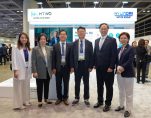
At the International Hydrogen Development Symposium 2026 today (May 18), nine pioneering companies from Korea, the Chinese Mainland, France, and Hong Kong - including Hyundai Motor Group - signed a landmark Memorandum of Understanding on hydrogen ecosystem building, marking a major step toward advancing the city's green economy. Photo shows (from left) Senior Vice President (Sustainability) for Technology, Innovation and Entrepreneurship of Invest Hong Kong (InvestHK), Ms Olivia To; the Director-General of Investment Promotion of InvestHK, Ms Alpha Lau; Executive Vice President and Head of Energy & Hydrogen Policy Sub-Division at Hyundai Motor Group, Mr Seung Kyu-shin; Deputy Minister for Territorial and Urban Policy at Ministry of Land, Infrastructure and Transport of the Republic of Korea, Mr Jeong Eui-kyung; the Global Head of Financial Services, Fintech & Sustainability of InvestHK, Mr King Leung; and Senior Vice President, Transport, Logistics and Industrials of InvestHK, Ms Bonnie Ho, at the symposium.
At the International Hydrogen Development Symposium 2026 today (May 18), nine pioneering companies from Korea, the Chinese Mainland, France, and Hong Kong – including Hyundai Motor Group – signed a landmark Memorandum of Understanding on hydrogen ecosystem building, marking a major step toward advancing the city’s green economy. Photo shows (from left) Senior Vice President (Sustainability) for Technology, Innovation and Entrepreneurship of Invest Hong Kong (InvestHK), Ms Olivia To; the Director-General of Investment Promotion of InvestHK, Ms Alpha Lau; Executive Vice President and Head of Energy & Hydrogen Policy Sub-Division at Hyundai Motor Group, Mr Seung Kyu-shin; Deputy Minister for Territorial and Urban Policy at Ministry of Land, Infrastructure and Transport of the Republic of Korea, Mr Jeong Eui-kyung; the Global Head of Financial Services, Fintech & Sustainability of InvestHK, Mr King Leung; and Senior Vice President, Transport, Logistics and Industrials of InvestHK, Ms Bonnie Ho, at the symposium.

This multi-party signing was officiated by Deputy Minister for Territorial and Urban Policy at Ministry of Land, Infrastructure and Transport of the Republic of Korea, Mr Jeong Eui-kyung; the Acting Secretary for Environment and Ecology, Miss Diane Wong; the Director of Electrical and Mechanical Services, Mr Poon Kwok-ying; and the Director-General of Investment Promotion of Invest Hong Kong (InvestHK), Ms Alpha Lau.

At the International Hydrogen Development Symposium 2026 today (May 18), nine pioneering companies from Korea, the Chinese Mainland, France, and Hong Kong - including Hyundai Motor Group - signed a landmark Memorandum of Understanding on hydrogen ecosystem building, marking a major step toward advancing the city's green economy. Photo shows the Director-General of Investment Promotion of Invest Hong Kong, Ms Alpha Lau, delivering a speech.
At the International Hydrogen Development Symposium 2026 today (May 18), nine pioneering companies from Korea, the Chinese Mainland, France, and Hong Kong – including Hyundai Motor Group – signed a landmark Memorandum of Understanding on hydrogen ecosystem building, marking a major step toward advancing the city’s green economy. Photo shows the Director-General of Investment Promotion of Invest Hong Kong, Ms Alpha Lau, delivering a speech.

Spearheaded by Hyundai Motor Group, the MOU establishes a collaborative framework to build a comprehensive, self-sustaining hydrogen ecosystem in Hong Kong, targeted to be fully operational by the end of 2030. The collaboration will prioritise the development of waste-to-hydrogen technologies to convert landfill gas into clean energy, along with an immediate focus on piloting a liquefied hydrogen refuelling infrastructure. To enable full value chain integration, it also targets the deployment of customised hydrogen fuel cell commercial vehicles, including tour and airport shuttle buses.

Through facilitating public-private partnerships and inter-governmental collaboration, InvestHK is supporting Hyundai Motor Group and its partners to implement go-to-market strategies aligned with the shared vision for hydrogen ecosystem building.

This partnership will also position Hong Kong as a strategic base for Hyundai Motor Group’s hydrogen business expansion across the Asia-Pacific region.

Miss Wong said, “This collaboration marks a significant milestone in developing tangible, on-the-ground hydrogen applications to accelerate the green transition towards carbon neutrality. By combining Korea’s world-class technological capabilities with Hong Kong’s strategic urban context, Hong Kong could serve as an exceptional international demonstration platform for showcasing green and low-carbon technologies. If these cutting-edge innovations could be applied and scaled up successfully here, it will serve as a positive model and provide highly viable options for reference by modern cities worldwide.”

Ms Lau said, “Today’s multi-party signing is both a landmark moment for Hong Kong’s green economy and a clear signal that the city’s hydrogen ecosystem is gaining real traction. Over the past three years, InvestHK has helped leading hydrogen enterprises establish themselves in Hong Kong, several of which have since listed on the Hong Kong Stock Exchange, raising over $2.5 billion in total. For businesses with global green ambitions, Hong Kong is where business growth takes shape.”

At the International Hydrogen Development Symposium 2026 today (May 18), nine pioneering companies from Korea, the Chinese Mainland, France, and Hong Kong - including Hyundai Motor Group - signed a landmark Memorandum of Understanding on hydrogen ecosystem building, marking a major step toward advancing the city's green economy. Photo shows the Acting Secretary for Environment and Ecology, Miss Diane Wong, delivering a speech.
At the International Hydrogen Development Symposium 2026 today (May 18), nine pioneering companies from Korea, the Chinese Mainland, France, and Hong Kong – including Hyundai Motor Group – signed a landmark Memorandum of Understanding on hydrogen ecosystem building, marking a major step toward advancing the city’s green economy. Photo shows the Acting Secretary for Environment and Ecology, Miss Diane Wong, delivering a speech.

Executive Vice President and Head of Energy & Hydrogen Policy Sub-Division at Hyundai Motor Group, Mr Seung Kyu-shin, said, “This MOU was signed as Hyundai Motor Group’s commitment to advancing Hong Kong’s proactive hydrogen policies and driving the acceleration of its hydrogen ecosystem utilising the Group’s hydrogen business capability and experience. Starting with Hong Kong, we look forward to expanding our collaboration and business opportunities across the broader Asia-Pacific hydrogen market.”

At the International Hydrogen Development Symposium 2026 today (May 18), nine pioneering companies from Korea, the Chinese Mainland, France, and Hong Kong - including Hyundai Motor Group - signed a landmark Memorandum of Understanding on hydrogen ecosystem building, marking a major step toward advancing the city's green economy. Photo shows Deputy Minister for Territorial and Urban Policy at Ministry of Land, Infrastructure and Transport of the Republic of Korea, Mr Jeong Eui-kyung (back row, second right); the Acting Secretary for Environment and Ecology, Miss Diane Wong (back row, second left); the Director of Electrical and Mechanical Services, Mr Poon Kwok-ying (back row, first left); and the Director-General of Investment Promotion of Invest Hong Kong, Ms Alpha Lau (back row, first right), witnessing the signing.
At the International Hydrogen Development Symposium 2026 today (May 18), nine pioneering companies from Korea, the Chinese Mainland, France, and Hong Kong – including Hyundai Motor Group – signed a landmark Memorandum of Understanding on hydrogen ecosystem building, marking a major step toward advancing the city’s green economy. Photo shows Deputy Minister for Territorial and Urban Policy at Ministry of Land, Infrastructure and Transport of the Republic of Korea, Mr Jeong Eui-kyung (back row, second right); the Acting Secretary for Environment and Ecology, Miss Diane Wong (back row, second left); the Director of Electrical and Mechanical Services, Mr Poon Kwok-ying (back row, first left); and the Director-General of Investment Promotion of Invest Hong Kong, Ms Alpha Lau (back row, first right), witnessing the signing.

Partners entering into this MOU include Hyundai Motor Company and Hyundai Engineering & Construction from Hyundai Motor Group, China Inspection Co Ltd, Chun Wo Bus Services Limited, Chun Wo Construction & Engineering Company Limited, Jiangsu Guofu Hydrogen Energy Equipment Co Ltd, JEA ENG, Templewater Limited, the Hong Kong and China Gas Company Limited, and Veolia Hong Kong Holding Limited.

This multi-party, long-term collaboration is set to establish a robust, end-to-end hydrogen industry chain – spanning production, storage, transportation, refuelling and utilisation.

New energy is vital to Hong Kong’s Climate Action Plan 2050 and the national dual-carbon goals. As set out in the Chief Executive’s 2025 Policy Address, Hong Kong will establish public hydrogen filling facilities on Hong Kong Island and in Kowloon, press ahead with more hydrogen trial projects, and develop the GBA Hydrogen Corridor in collaboration with Guangdong Province. The Hong Kong Special Administrative Region Government is actively advancing hydrogen development through technological innovation, talent cultivation, ecosystem building, and regional co-ordination. To date, over 30 hydrogen trial projects have been greenlit, paving the way not only for decarbonisation targets, but also for unlocking new quality productive forces for green economic growth.
Hashtag: #InvestHK

The issuer is solely responsible for the content of this announcement.

About InvestHK

Invest Hong Kong (InvestHK) is the investment promotion agency of the Government of the Hong Kong Special Administrative Region (HKSAR).

Variational has raised about $50 million in a Series A round led by Dragonfly, giving the peer-to-peer derivatives startup fresh capital to expand perpetual futures tied to real-world assets including oil, gold, silver and copper. The funding marks a sharper push by decentralised finance firms into traditional market instruments at a time when traders are seeking broader access to commodities, indices, foreign exchange and equities through blockchain-based […]

Washington’s derivatives regulator and the National Hockey League have signed a memorandum of understanding to share information and co-ordinate oversight of prediction markets tied to professional hockey, extending federal scrutiny over a fast-growing sector that sits between financial derivatives, sports data and gambling regulation. The agreement, signed by Commodity Futures Trading Commission Chairman Michael S. Selig and NHL Commissioner Gary Bettman on 21 May 2026, creates regular […]

SINGAPORE – Media OutReach Newswire – 22 May 2026 – Kaleida Studio, an arts and craft studio located in Tai Seng, has announced plans to introduce a DIY jewellery workshop, a guided crafting experience where participants can design and create their own gemstone necklace or bracelet.

Kaleida Studio's Workshop

The upcoming workshop is designed to give beginners a simple introduction to jewellery making within a supportive studio environment. Designed for teenagers and adults, the sessions aim to make the craft accessible to beginners by combining creative exploration with an introduction to basic jewellery-making techniques.

During the workshop, participants will work with a curated selection of gemstone beads, charms, and jewellery components to design an accessory that reflects their personal style. At the end of each session, participants will complete and take home a handcrafted necklace or bracelet that they have assembled themselves.

Helping Beginners Feel More Confident About Jewellery Making

Interest in handmade crafts and personalised accessories has grown in recent years, yet many people hesitate to try jewellery making for the first time. Uncertainty about creative ideas, along with unfamiliarity with specialised tools and techniques, can make the process feel daunting for beginners.

Kaleida Studio developed the workshop to make the craft more approachable. Through step-by-step instruction and access to the appropriate tools and materials, participants can explore jewellery making in a structured environment without prior experience.

The session introduces basic tools and techniques while allowing participants to experiment with different combinations of gemstone beads and charms. This approach gives beginners the confidence to learn the process while enjoying the experience of creating a handcrafted piece that reflects their own design choices.

A Personalised Jewellery-Making Experience

A defining feature of the DIY jewellery workshop is its emphasis on personal design. Rather than following a fixed template, participants are encouraged to create pieces that reflect their own aesthetic preferences.

The studio provides a selection of gemstone beads, charms, and jewellery-making tools, allowing participants to experiment with different colours, textures, and arrangements. Basic assembly techniques are introduced to help ensure that each piece is securely constructed.

“At Kaleida Studio, we believe creativity should be something people can explore in their own way,” said Cherry, founder of Kaleida Studio. “This workshop grew from our own interest in jewellery making and our desire to share that experience with others. By walking participants through the process, we hope to show that anyone can create something meaningful and unique with their own hands.”

Encouraging Creative Exploration in a Studio Setting

Kaleida Studio seeks to provide a welcoming space where individuals can explore creative expression at their own pace. In addition to the jewellery workshop, the studio offers art classes for adults, giving participants opportunities to experiment with different artistic media in a relaxed and supportive environment.

The studio also hosts group sessions, such as a corporate workshop, where teams can take part in guided crafting activities designed to encourage collaboration and creative thinking.

For those looking for a more open-ended experience, Kaleida Studio offers a setting similar to an art jam studio, where participants can spend time exploring materials, ideas, and techniques in a flexible and supportive studio environment.

Availability and Booking

The DIY jewellery workshop is scheduled to launch in mid-2026. Once available, sessions can be booked through Kaleida Studio’s website. Enquiries are also welcome by email, phone, or WhatsApp.

Further details on workshop schedules and registration will be announced through Kaleida Studio’s official channels, including its Instagram page.

Future Plans

Kaleida Studio plans to further develop its jewellery workshop by introducing a wider range of materials and exploring additional types of handcrafted jewellery. These future additions aim to expand the creative possibilities available to participants while continuing to support the studio’s focus on encouraging artistic expression through hands-on crafting experiences.

Hashtag: #KaleidaStudio


The issuer is solely responsible for the content of this announcement.

About Kaleida Studio

Kaleida Studio is a cosy located in Tai Seng, Singapore. Created as a welcoming space for creative exploration, the studio encourages individuals of all skill levels to experiment with different materials and rediscover the satisfaction of making things by hand.

Through hands-on workshops, DIY kits, and a curated selection of crafting materials, Kaleida Studio provides opportunities for people to explore a variety of artistic mediums in a relaxed and supportive environment. The studio aims to inspire creativity, encourage personal expression, and make the experience of creating accessible to everyone.

For more details, visit.

Polymarket has appointed a representative in Japan and is preparing to press policymakers for a route to authorise prediction markets, marking a significant step in its effort to turn a crypto-native trading platform into a regulated global financial venue.

The New York-founded company, led by Shayne Coplan, is seeking to open discussions around whether event-based contracts can be permitted under Japan’s financial and digital-asset framework rather than treated purely as gambling. The move comes as prediction markets draw heavier institutional interest, stronger trading volumes and sharper scrutiny from regulators over consumer protection, market integrity and the legal boundary between betting and derivatives.

People familiar with the matter said the company’s Japan strategy is at an early stage and would require engagement with officials, lawmakers and industry participants before any formal market entry. Japan does not have a dedicated framework for cash-based prediction markets, leaving platforms that allow users to trade on political, economic, sports or cultural outcomes exposed to uncertainty under gambling and financial laws.

Polymarket allows users to buy and sell contracts tied to the outcome of real-world events, with prices reflecting market-implied probabilities. Its markets have covered elections, central bank decisions, geopolitical events, sports, entertainment and cryptocurrency milestones. The platform gained global visibility during the 2024 US presidential election cycle, when trading volumes surged and its odds were widely cited as an alternative gauge of political sentiment.

Japan would offer Polymarket a large, sophisticated retail market with deep participation in equities, foreign exchange and digital assets. The country has also built one of the world’s more structured crypto regulatory regimes, requiring registration for crypto-asset exchange service providers and imposing rules on custody, anti-money laundering controls and customer protection. That framework may give the company a potential route for engagement, although prediction markets remain a separate and more politically sensitive category.

The company’s global push has accelerated after a period of regulatory pressure in the United States. Polymarket settled a case with the Commodity Futures Trading Commission in 2022 after being accused of offering off-exchange event-based binary options without proper registration. It blocked US users for several years before moving to rebuild a domestic regulatory path through acquisitions and licensing efforts. Its purchase of a derivatives exchange and clearinghouse gave it a route to pursue compliant US operations.

Institutional backing has also strengthened its position. Intercontinental Exchange, the parent of the New York Stock Exchange, agreed to invest up to $2 billion in Polymarket in a deal that valued the business at about $8 billion before the transaction. The partnership gave Polymarket a powerful market infrastructure ally and signalled that event-driven data may have value beyond retail speculation, particularly for investors seeking real-time sentiment around political, economic and corporate developments.

Competition is intensifying. Kalshi, a regulated US prediction market operator, has expanded rapidly by framing event contracts as financial instruments under commodities law. Its growth has triggered legal disputes with state regulators, some of whom argue that sports and election-linked contracts resemble gambling products. That debate is likely to influence Japan’s assessment of whether prediction markets can be supervised as finance, gaming, information markets or a hybrid category.

Polymarket’s Japan plan faces several obstacles. Gambling is tightly restricted, with permitted activity largely confined to state-authorised sectors such as horse racing, bicycle racing, motorboat racing, lotteries and pachinko-linked structures. Online betting carries heightened enforcement risks, and any product involving wagers on uncertain outcomes would need careful legal classification. A crypto-funded model could add further complexity because regulators would need to examine custody, settlement, identity checks, sanctions screening and investor suitability.

Supporters of prediction markets argue that they create useful public signals by aggregating dispersed information into tradable prices. Traders who believe a market is mispriced can buy or sell contracts, pushing prices closer to collective expectations. That model has appealed to political analysts, hedge funds, economists and technology investors seeking faster indicators than polls, surveys or conventional research.

Critics counter that thin liquidity, anonymous participation, insider access and coordinated trading can distort outcomes. Questions have intensified around markets linked to sensitive events, where participants may possess non-public information or where the existence of a market could create troubling incentives. Japan’s regulators are likely to examine whether surveillance systems, position limits, disclosure rules and dispute-resolution mechanisms are strong enough to reduce those risks.

Arabian Post Staff -Dubai OHO Sunshine has launched GlobeEar smart glasses as competition intensifies in AI-enabled eyewear, combining real-time translation, Bluetooth audio and everyday lens protection in a single lightweight frame aimed at travellers, commuters and multilingual users. The Cheyenne, Wyoming-based smart eyewear brand is positioning GlobeEar as a daily-use device rather than a specialist gadget. The glasses combine Bluetooth 5.2 open-ear audio, hands-free calling, an AI […]

Britain’s jobs market weakened in April as employers cut back on permanent recruitment while turning to temporary staff to manage uncertainty, rising business costs and disruption linked to the Iran conflict. Permanent staff placements fell at the sharpest pace since January, reversing part of the improvement seen earlier in the year. The permanent placements index dropped to 47.5 in April from 49.2 in March, staying below the […]

Arabian Post Staff -Dubai Abu Dhabi has moved to expand its pool of UAE National educators through a first-of-its-kind partnership between the Abu Dhabi Department of Education and Knowledge and Aldar, setting a formal public-private route for Emiratisation across private school teaching and leadership roles. The agreement, signed on 20 May 2026, establishes a structured talent development roadmap designed to increase UAE National representation ninefold across key […]

VISHNU RAJA
RYO YAMADA
HITORI GOTOH
IKUYO KITA
Just in:
Motorola introduces Signature 27 flagship priced at $1,599 // Millions Of Indians May Soon Be Deprived Of Government Assistance // CR Longdation Aethereal Cybersecurity × Global Cybersecurity Alliance (GCSA) Join Hands to Establish the “AI and Cybersecurity Research Centre” // OpenAI introduces GPT-6 Cyber with restricted security access // Emaar approves Development buyout ahead of planned delisting // Miss Universe Hong Kong Jen Zhou Departs for Puerto Rico to Compete in the 75th Miss Universe World Final // OpenAI abandons secrecy agreements for future data centres // Dubai boat show confirms international shipyard line-up for November // Ningbo Consensus on Collaborative Development released at 2026 Global Mayors Dialogue · Ningbo // Dubai details five-year visa benefits for returning visitors // Hong Kong mandates crypto transaction disclosures to tax authorities // TVM –Mangaluru Vande Bharat claims top spot // Trump’s Iran War Has A Share Of Contribution To His Midterm Debacle // e-Crime Bureau Signs Cybersecurity Partnership With Smart Africa, Reinforcing Its Global Expansion // Technology shares plunge as Nasdaq enters correction // Oil advances towards $100 as tanker attacks persist // Geely’s i-HEV Intelligent Hybrid Technology Offers a New Direction Vision for Gasoline-Powered Vehicles // Oil and chip shares retreat after Democratic victories // Ousted top Kochi cop gets IG post // Geely’s i-HEV Intelligent Hybrid Technology Offers a New Direction for Gasoline-Powered Vehicles //