News related to
Arabia

Ika’s latest mainnet upgrade has widened its native cross-chain capabilities to cover Solana, Zcash, Cardano, Stellar, Near and several other ecosystems that depend on EdDSA signatures, marking a significant step in efforts to streamline secure multi-chain interoperability. The network, which positions itself as a high-performance parallel MPC infrastructure, said the development enables decentralised wallets on its platform to generate EdDSA signatures directly, removing a key barrier for users aiming to execute transactions across diverse blockchain environments without intermediaries.

Executives described the rollout as a fulfilment of a core commitment to allow seamless control of digital assets across multiple chains through native authentication mechanisms. Analysts tracking the sector noted that Ika’s move arrives at a moment when blockchain networks are intensifying competition to offer deeper interoperability, improved security guarantees and lower latency for institutional and retail users transacting across a dispersed ecosystem. The company’s upgrade introduces direct support for chains with distinct cryptographic architectures, giving developers a more unified environment for building decentralised applications that interact across networks with minimal friction.

EdDSA, a signature scheme valued for speed and resistance to certain attack vectors, has become a standard across several major chains. By integrating native support for it, Ika has aligned itself with a widening group of protocols that rely on this cryptographic approach. Engineers familiar with cross-chain bridging mechanisms said the enhancement reduces the need for external validators or proprietary signing modules, both of which have historically created vulnerabilities that attackers have exploited. The company’s emphasis on decentralised key generation and distributed signing is aimed at addressing those concerns, with the upgrade designed to ensure that no single node gains access to full private key material during any point of the transaction process.

Developers working on multi-chain tools have highlighted that Solana and Zcash pose demanding requirements given their divergent architectures, throughput characteristics and privacy frameworks. Solana’s focus on parallel transaction processing and Zcash’s shielded transaction system require precise signature handling. Ika’s engineers said the upgrade underwent extensive compatibility tests to ensure that signature validity, network confirmation times and verification methods aligned with native standards on each chain. Market observers added that Cardano’s adoption of Ed25519, Stellar’s reliance on simple yet robust distributed consensus, and Near’s sharded architecture also required tailored integration approaches that maintain performance targets while preserving decentralisation.

The extended coverage is expected to attract developers seeking infrastructure capable of delivering verifiable computations and secure multi-party controls without depending on centralised custodial layers. Industry analysts have reported a growing appetite for MPC-based solutions as institutional participants demand cryptographic guarantees that reduce counterparty risk and strengthen operational security. Ika’s parallel design allows multiple signing operations and computations to run simultaneously, a feature the company argues positions it for high-volume environments such as decentralised exchanges, cross-chain liquidity networks and tokenisation platforms.

Executives said the upgrade also lays groundwork for supporting additional ecosystems that may adopt or transition to EdDSA-based cryptography. While the company has not disclosed timelines for further integrations, the MPC network’s architecture is designed to accommodate expanded signature schemes without major reconfiguration. That adaptability has become an important differentiator for infrastructure providers aiming to keep pace with evolving cryptographic standards and the emergence of new blockchain protocols built around enhanced privacy or throughput.

Blockchain security specialists noted that the industry continues to grapple with vulnerabilities in cross-chain bridges, some of which have seen major exploits over the past two years due to weaknesses in multi-signature setups and validator coordination. Ika’s MPC-driven approach seeks to mitigate these risks by distributing trust and eliminating single-point signing authority. By enabling native EdDSA signatures within its distributed wallet environment, the company aims to reduce exposure to the types of exploits linked to compromised custodial keys or flawed verification mechanisms.
A raccoon that broke into a closed liquor store in Ashland, Virginia made off with a stash of whisky and scotch overnight — only to be found passed out in the employee bathroom by morning. Staff arriving at the Virginia ABC store on Saturday discovered broken bottles strewn across the floor, a collapsed ceiling tile, and puddles of spilled alcohol. The intruder turned out to be a […]

VTB — Russia’s second-largest bank by assets — has announced plans to allow its clients to directly buy, sell and hold cryptocurrencies through its brokerage accounts starting in 2026. The move was disclosed by the head of its brokerage services at an investment conference in Moscow, signalling a shift from derivatives-based crypto exposure toward full asset-level trading.

At present, VTB already offers clients access to cryptocurrency derivatives. The planned service would enable investors to acquire digital assets such as Bitcoin through regular investment or brokerage accounts once regulatory approval is secured. The bank is canvassing regulators and expects authorisation to come through within months.

This development comes against a broader backdrop of rapid evolution in Russia’s digital-asset infrastructure. The Moscow Exchange has recently launched ruble-settled Bitcoin futures and other crypto-linked instruments for institutional investors — part of a broader effort to open new investment channels under carefully structured legal regimes.

Under the current regulatory framework, only “specially qualified” investors — those with high net worth or significant annual income — can directly engage in cryptocurrencies. VTB’s new offering may broaden participation beyond derivatives and institutional-only vehicles, assuming the financial regulator approves the shift.

For VTB, the initiative represents a diversification of its services at a time when Russian banks face mounting pressures. The bank is grappling with new capital requirements imposed by the Central Bank of Russia, which its chief has described as a major challenge going forward.

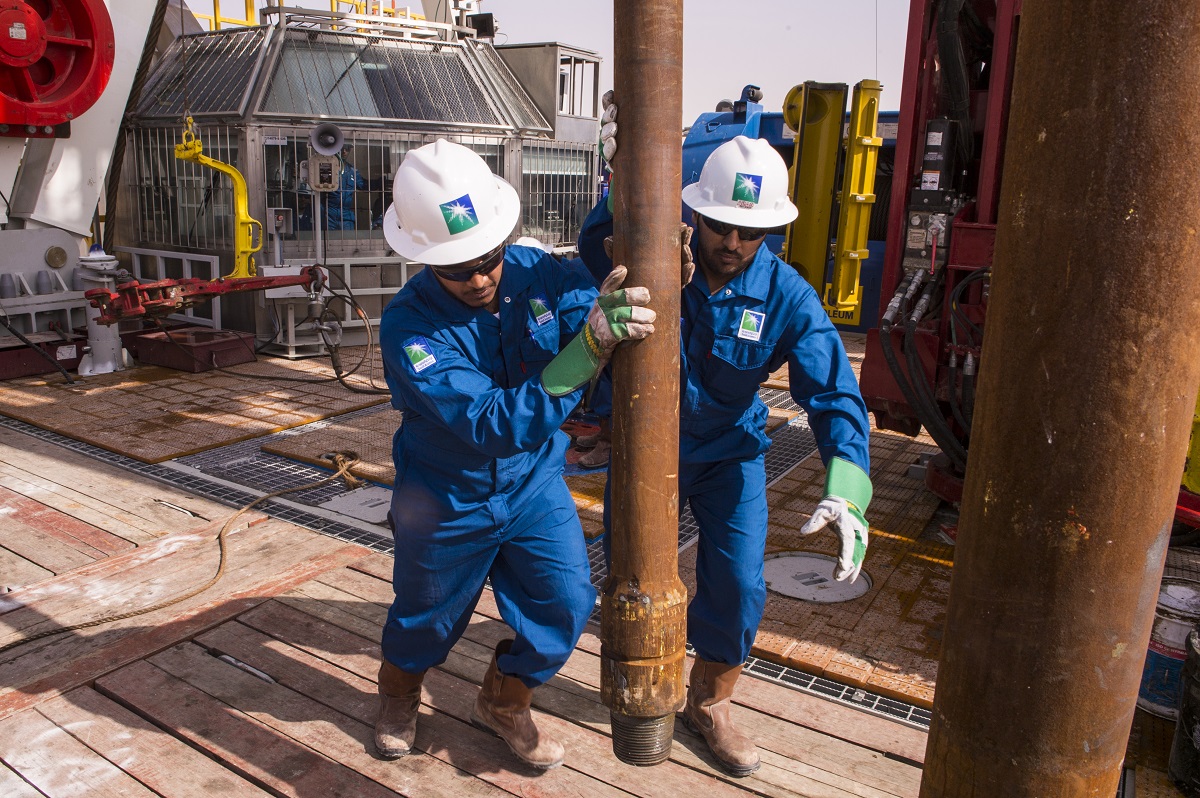
Saudi energy giant Saudi Aramco has begun output from the first phase of its vast Jafurah gas field, signalling a major milestone in the Kingdom’s shift toward natural gas. The project, valued at around $100 billion, has an initial production capacity of 450 million cubic feet per day, according to the Saudi Finance Ministry’s 2026 budget statement.

The field holds an estimated 229 trillion standard cubic feet of raw gas along with 75 billion stock tank barrels of condensate—making Jafurah the largest non-associated gas development in Saudi Arabia and among the largest shale-gas plays outside the United States.

Completion of the first development phase allows Aramco to begin supplying sales gas domestically. The company plans to ramp production gradually and aims to reach a sustainable output of 2 billion cubic feet per day by 2030.

To support its gas-processing infrastructure, Aramco earlier sealed an $11 billion lease-and-leaseback agreement with a consortium led by Global Infrastructure Partners, part of BlackRock. Under the deal, a newly formed subsidiary, Jafurah Midstream Gas Company, will lease the processing and fractionation facilities — which Aramco will then lease back for a 20-year period. Aramco retains majority ownership with a 51% stake, while the investor group holds 49%. The transaction is designed to inject capital without constraining production volumes.

Aramco’s move reflects a broader strategic shift. By ramping up gas production, the company aims to reduce domestic reliance on crude oil for power generation — thereby freeing more crude for export. Gas from Jafurah is expected not only to meet domestic power and utility needs but also to provide feedstock for petrochemicals, hydrogen, and potentially emerging sectors such as AI data-centres.

Analysts view Jafurah as a potential game-changer for both Saudi Arabia and global gas markets. With reserves comparable to major U. S. shale plays and a projected daily output of 2 bcf by 2030, the project could make Saudi Arabia a more prominent natural-gas exporter or LNG player — a significant rebalancing from its traditional role as an oil-dominated supplier.

Through this transformation, Aramco underlines its long-term aim of reinventing its energy portfolio — aligning with efforts to diversify the country’s economy and meet shifting global demand patterns.

The government of Saudi Arabia expects its borrowing to increase next year, driven by ongoing financing needs and a broad backdrop of monetary easing, according to a projection by CI Capital. The analysis suggests that softer interest rates and tightening liquidity could compel Riyadh to tap debt markets once again to meet fiscal and development commitments. Total government spending in the approved 2026 budget stands at 1.31 […]

Brooge Petroleum and Gas Investment Company, a subsidiary of shipping and logistics firm Gulf Navigation, has finalised an agreement to launch front-end engineering design for a new refinery in Fujairah aimed at producing Euro 5-grade gasoline from naphtha. The first phase of the project is expected to yield around 15,000 barrels per day. Under the agreement, BPGIC will work with PEG to steer the FEED stage — […]

The Connecticut Department of Consumer Protection has ordered Kalshi, Robinhood and Crypto. com to stop offering sports-event contracts to state residents and to allow withdrawal of all funds held on their platforms. The move puts Connecticut among a growing number of states rejecting the argument that such contracts constitute federally regulated derivatives rather than gambling.

The cease-and-desist letters cite multiple violations: the trio lacked a Connecticut sports betting licence, were offering wagers to individuals under the state’s minimum age of 21, and were targeting individuals on the state’s self-exclusion list and college campuses. Regulators flagged these practices as unfair and potentially open to insider trading, given the platforms’ broader access to events with widely known outcomes. The state warned of civil or criminal action if platforms did not comply.

The action in Connecticut comes after a series of legal defeats for Kalshi in several states. In Nevada, a federal judge ruled that Kalshi is subject to state gaming laws, rejecting its claim that only the federal Commodity Futures Trading Commission has jurisdiction over its contracts. That decision freed state regulators to enforce gaming rules against the firm. Previously, regulators in Arizona, Maryland, Illinois, Montana, Ohio and New Jersey had also issued similar orders, some of which led to ongoing litigation.

In Nevada, following the judge’s ruling, Robinhood suspended new sports-event contracts effective December 1, with Crypto. com taking a similar step. Kalshi, however, opted to appeal rather than shut down — underscoring a broader conflict over whether state gambling laws or federal derivatives regulation should govern this space.

Advertisements

Arabian Post Staff -Dubai The Abu Dhabi Securities Exchange Group has launched a new index — the FTSE ADX Dividend Stars Index — aimed at giving investors exposure to companies listed on ADX with strong dividend records. The index, now live, initially comprises 17 constituent companies selected for their consistent dividend performance and diversified operations across multiple sectors of Abu Dhabi’s economy. Those 17 constituents accounted for […]

Finding the best conference room in Abu Dhabi is essential for hosting productive meetings, impactful presentations, and memorable corporate events. As the emirate continues to grow as a global business hub, its meeting and event spaces have evolved to match world class standards.  Whether you are planning a board meeting, training session, investor presentation, or full scale corporate gathering, Abu Dhabi offers state of the art venues […]

Millions of Americans are heading into 2026 facing sharply higher health-insurance costs. Employer-based insurance premiums are projected to rise by nearly 9 percent, marking the steepest increase in fifteen years. For families paying for their own coverage through public marketplaces created under the Affordable Care Act, the shock will likely be greater. Premiums on those plans are expected to jump by roughly 26 percent, and enhanced subsidies […]

Emirates NBD has sealed a strategic partnership with the Dubai International Financial Centre aimed at offering enhanced wealth governance, succession planning and legacy-preservation services to ultra-high-net-worth families and family-owned enterprises. The collaboration will channel the capabilities of Emirates NBD Private Banking and the infrastructure of DIFC’s Family Wealth Centre to meet the complex needs of family businesses within the jurisdiction.

Under the agreement, Emirates NBD will provide tailored governance frameworks, succession-planning blueprints, tax structuring, and bespoke advisory services designed for clients with significant wealth or business holdings. The bank intends to complement these offerings with educational workshops, governance-best-practice programmes and family-office structuring support — all delivered through DIFC’s institutional facilities.

The move reflects growing demand in the Middle East for professionalised wealth-transfer and legacy-management solutions as substantial assets stand to pass to younger generations. Regional trends indicate about one trillion US dollars in assets are expected to be transferred within wealthy families by 2030, underscoring the urgency for robust governance structures.

United Kingdom legislation now formally recognises digital assets such as cryptocurrencies and stablecoins as personal property, offering holders protections under established property law. The Property Act 2025 — previously a bill — received royal assent, confirming that digital tokens may be treated as a third category of personal property alongside traditional “things in possession” and “things in action.” This marks a decisive shift from earlier reliance on case-by-case rulings by courts.

Legal recognition ensures that crypto-owners gain enforceable rights in instances of theft, fraud or insolvency, and enables digital assets to be included in estates or bankruptcy proceedings under the same protections afforded to conventional property. The Act does not itself define which digital assets qualify — courts will decide those details over time.

Judicial developments had already begun to lay the groundwork for this change. As early as 2019, the UK Jurisdiction Taskforce concluded that crypto-assets met criteria for property under English law: they could be defined, identified, transferred and treated as assets capable of value retention. A key case, AA v Persons Unknown, saw the High Court of England and Wales recognise Bitcoin provided as ransom in a cyber-attack as property, granting the insurer a proprietary injunction.

Advocates of the law hailed it as providing clarity long sought by individuals and businesses holding crypto-assets. CryptoUK, a leading trade body for digital assets, noted that while courts had already treated crypto as property in some cases, codifying the principle into statute removes uncertainty and streamlines legal protections across theft, insolvency and estate-related scenarios.

Legal experts say the Act reflects the recommendations laid out by the Law Commission in a 2023 report, which urged reform to ensure the law could accommodate emerging digital assets under a flexible yet robust framework. The Commission argued that existing categories of personal property under law were too rigid to account for assets that lacked physical form or contractual rights.

This statutory change arrives as UK regulators concurrently refine the broader regime for crypto-assets. Draft legislation published earlier this year already seeks to amend the Financial Services and Markets Act 2000 to designate certain “qualifying cryptoassets” and “qualifying stablecoins” as regulated investments, bringing market-level rules for trading, custody and compliance under formal oversight.

While the law does not render cryptocurrency a legal tender — meaning it still cannot be used to settle debts in substitute for currency — its classification as property gives holders legal certainty over ownership and enforceable rights. Taxation and regulatory treatment will continue to follow established frameworks, though this legal milestone reduces ambiguity over the status of crypto-assets in private law contexts.

Judges, lawyers and market participants anticipate that the Act will lead to a more stable and predictable legal environment for crypto-asset ownership, enabling individuals and institutions to treat tokens with the same legal respect accorded to traditional assets. As the courts start applying the new law in real cases, the boundaries of which digital assets qualify will grow clearer — and the UK’s position as a regulatory pioneer in digital asset law will be reaffirmed.

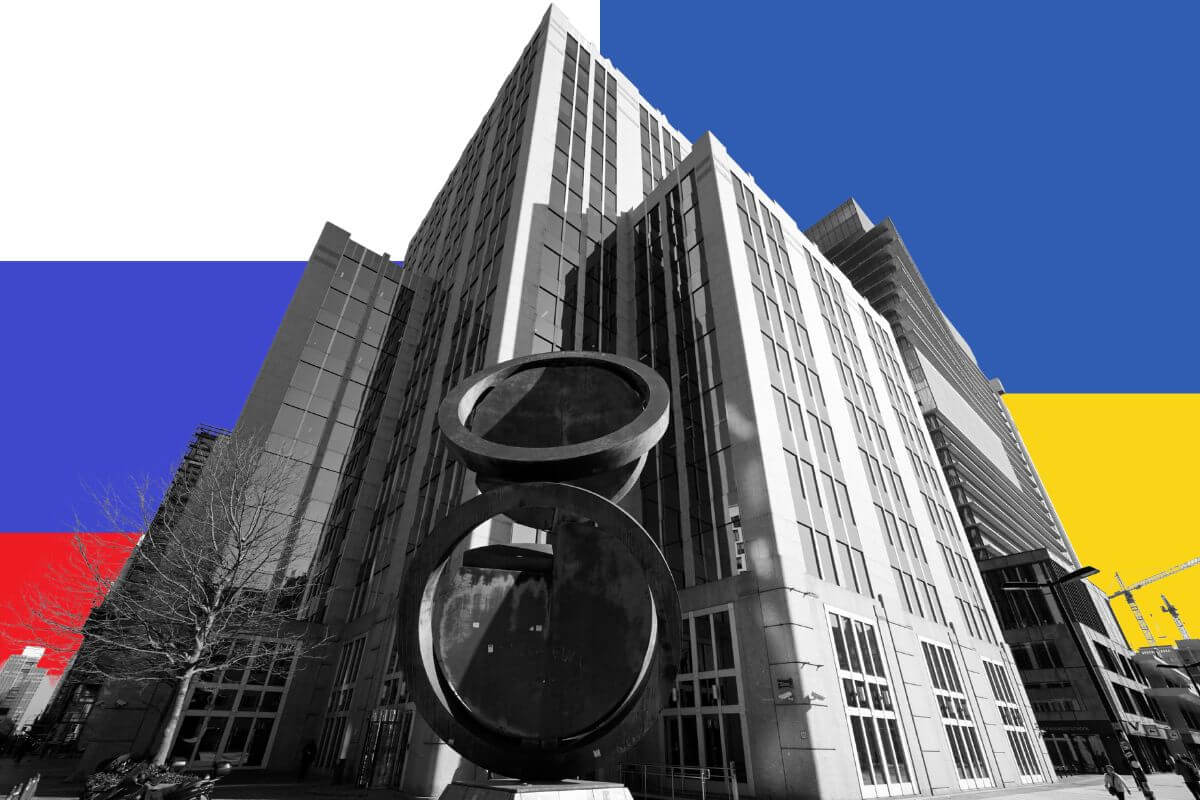
Belgium has rejected a proposal by the European Union to channel frozen Russian assets toward a major financial aid package for Ukraine, dealing a blow to efforts aimed at sustaining Kyiv’s war-time finances. The plan envisioned a €140 billion “reparations loan,” backed by immobilised Russian central-bank reserves held largely in Belgium’s Euroclear, but Belgian leaders argued the risks are too high—legal, financial and reputational.

The opposition centres on statements from Bart De Wever, Belgium’s prime minister, who described the plan as “fundamentally flawed”. He warned that using the frozen assets at this stage could trigger lawsuits, force Belgium to shoulder massive liabilities, and destabilise confidence in the euro. De Wever rejected broad incentives offered by the European Commission and demanded legally binding guarantees from other EU member states before any commitment.

Backing Ukraine with frozen Russian funds had gained traction as European leaders scrambled to meet Kyiv’s projected needs through 2026–2027. Analysts estimate that Ukraine faces a budget shortfall of more than €135 billion over the next two years, with defence expenditures alone ballooning. The EU had considered not just using interest on the frozen assets — which has supported a G7-backed aid programme so far — but deploying the assets themselves as collateral to unlock large-scale funding.

Yet the European Central Bank has refused to provide emergency liquidity for the proposed loan, citing its mandate forbidding direct monetary financing to governments under EU treaties. The refusal undermines the viability of the scheme, especially since liquidity back-stops were meant to reassure markets and protect institutions like Euroclear from sudden liability.

Some EU member states and financial experts contended that employing frozen assets would free up taxpayer money and symbolically re-affirm Europe’s stance that Russia must pay for its aggression. Academics have pointed out how using immobilised reserves could offer Ukraine immediate relief without expanding EU sovereign debt. The Commission is reportedly exploring fallback options, such as joint borrowing backed by the EU budget or bilateral loans, but those alternatives are expected to carry higher costs and slower disbursement timelines.

Opposing countries argue the plan violates property rights, jeopardises investor confidence and could provoke Russian retaliation, both legally and economically. Euroclear itself has warned of potential lawsuits and damage to its reputation as a global securities depository if assets are re-purposed in this way.

With less than three weeks remaining before a planned EU summit, Belgium’s refusal complicates efforts to finalise a unified approach. Brussels appears unlikely to shift position without assurances that risks will be shared evenly — a prospect many member states view as tantamount to signing a blank cheque.

A petition invoking the Sam Altman for living sainthood as “Patron Saint of Subsidised Layoffs” has gained traction across social-media networks, framing his stewardship of OpenAI as a kind of moral crusade against job displacement. The campaign draws on claims that OpenAI is enduring heavy financial losses—allegedly burning $2.25 for every dollar earned—while investors such as Microsoft underwrite costs that critics say pave the way for companies […]

ServiceNow has reached agreement to acquire Veza, a cloud-native identity-security startup, for more than $1 billion. The deal brings under ServiceNow’s umbrella Veza’s “Access Graph”, a technology designed to map and manage permissions across human users, machines and AI agents — giving enterprises clearer visibility over who can access what data and perform what actions. ServiceNow said the acquisition will fold Veza’s identity management features into its […]

Germany’s competition watchdog has launched a market test to assess whether modifications proposed by Apple to its App Tracking Transparency framework sufficiently address concerns that the policy gives Apple’s own apps an unfair advantage over competitors. The test will collect input from app publishers, media organisations and data-protection authorities to evaluate whether the revised consent prompts and user flows create a level playing field for all developers. […]

Scientists have reported a marked extension of lifespan and physical resilience in extremely old male mice after administering a two-drug combination that targets fundamental mechanisms of ageing. The findings outline a shift in longevity research, showing that even late-life intervention can trigger substantial recovery in biological systems typically regarded as irreversibly deteriorated. Researchers observed that administering oxytocin together with an Alk5 inhibitor led to a pronounced improvement […]

The government of Mozambique has committed to invest 12 million US dollars to rehabilitate technical and vocational education and training institutions countrywide, a move aimed at expanding capacity and better aligning training with labour market needs. The investment, slated to kick off in 2026, forms part of a broader reform supported by partner organisations. The Secretary of State for Technical and Vocational Education, Leo Jamal, announced the […]

The grip of Chromium on the global browser ecosystem has grown so wide that many users now assume every modern browser is built on Google’s open-source architecture. That perception has taken root partly because major names such as Microsoft Edge, Opera, Brave, Vivaldi and Arc all rely on Chromium’s Blink rendering engine, creating a sense that browsing itself has become synonymous with Google-aligned foundations. The dominance is […]

Concerns over Oracle Corporation’s massive borrowing to fund its artificial-intelligence ambitions have pushed its debt instruments into territory unseen since the 2008 financial crisis. The company’s bonds have sold off, yields on maturing notes have climbed, and its credit default swap spreads have surged — signalling growing investor anxiety about the sustainability of its heavy spending on cloud and AI infrastructure. The sell-off follows disclosure that Oracle […]

Greenlogue/AP New Murabba, the massive urban redevelopment project in Riyadh, has formalised a partnership with the US Green Building Council to embed global sustainability standards into its design, construction and operations. The memorandum of understanding signed between the two organisations establishes a framework to explore how international systems such as LEED — including its latest LEED v5 as well as LEED for Communities — can be applied […]

Solana has formed a double-bottom reversal pattern around the $125 support level, setting up bulls for a possible surge past the $145 resistance zone.

Price data shows that SOL is trading near $143, with technical indicators on daily charts signalling a strong buy: moving averages across 5-, 10-, 20- and 50-day periods align bullish, while MACD, CCI and other oscillators support renewed upward momentum.

Longer-term studies point to a bullish swing if SOL clears $145, a level viewed by many as a crucial barrier to resetting next-leg targets. One prominent analysis suggests that if SOL flips this resistance to support, upside zones near $165 and $179 could come into play — levels that previously acted as consolidation thresholds.

Support near $125 has been repeatedly defended following a dip from higher levels. That makes the double-bottom pattern more credible: the chart shows two distinct troughs at roughly the same price, followed by a rebound — a textbook technical reversal signal.

Traders are watching on-chain metrics as well. The blockchain’s ecosystem remains active with strong total value locked and steady stablecoin and DEX activity, providing some fundamental stability alongside the technical setup.

Qatar and the United States have moved to cement their military cooperation with high-level commitments that signal a recalibration of regional security dynamics. The Qatari Prime Minister and Foreign Minister, Sheikh Mohammed bin Abdulrahman bin Jassim Al-Thani, met with the Commander of the US Central Command, Admiral Charles Bradford Cooper, to discuss expanding bilateral defence cooperation. The talks pointed to broad agreement on enhancing joint military readiness, intelligence sharing and coordination on regional security challenges.

The defence discussions follow a backdrop of heightened tensions after an airstrike on Qatari territory by Israel targeting Hamas political leaders. The strike led to strong condemnation across Gulf states and sparked a broader reassessment of the security framework anchoring US presence in the Gulf. The United States responded by reaffirming its commitment to Qatar’s sovereignty.

An executive order signed by US leadership has committed Washington to defending Qatari territory and infrastructure if subjected to external attack, including by military means if necessary. This formal guarantee elevates Qatar’s strategic importance in the US security architecture.

Concurrently, Washington and Doha have arranged deeper integration of military infrastructure. An agreement has been finalised to build a facility at a US Air Force base in Idaho to host a contingent of Qatari F-15QA fighter jets and associated personnel. The facility aims to enhance combined training, preparedness and interoperability under US command — though ownership and command remain US-controlled, eliminating concerns about a permanent foreign base on US soil.

These developments follow multiple engagements aimed at strengthening mutual defence ties. The November meeting between the Qatari Prime Minister and CENTCOM’s commander underscored mutual interest in “support and strengthen” shared strategic goals in defence domains.

Observers interpret this phase as part of a broader US strategy to reinforce alliances in a volatile Middle East. The enhanced cooperation offers Qatar increased security assurances and greater leverage in regional diplomacy, while offering the US a more secure and integrated network of partnerships to project influence and stability. Critics, however, warn that such deepening military ties may further entangle Gulf states in US-led strategic rivalry and increase regional polarization.

Arabian Post Staff -Dubai Saudi Arabia approved its 2026 state budget, confirming total government expenditure at 1.31 trillion riyals and setting revenues at approximately 1.15 trillion riyals, signalling a planned deficit of 165 billion riyals—equivalent to 3.3 percent of gross domestic product. The projected spending level is only marginally lower than the 2025 outlay, reflecting a continued commitment to funding national priorities and long-term economic diversification. Forecasts […]

VISHNU RAJA
RYO YAMADA
HITORI GOTOH
IKUYO KITA