News related to
Arabia

Dubai-based AMIS Development has received the opening tranche of Dh5 billion from Singapore’s First APAC Fund VCC, following a memorandum signed in November 2024 to invest the full amount over time. The capital injection will be used to accelerate AMIS’s land acquisitions, expand its project pipeline, and progress ongoing luxury residential developments across Dubai.

Founder and CEO Neeraj Mishra confirmed that the funds are earmarked for strategic purchases in key areas such as Meydan and Dubai Islands, as well as advancing flagship projects already underway. He described the investment as a vote of confidence in AMIS’s vision and execution. Darrell Lim, founding shareholder and director at First APAC Fund, said this initial disbursement marks a milestone in their collaboration and pledged continued support tied to performance.

AMIS is working on multiple high-end residential projects including Woodland Terraces and the recently announced Woodland Crest, scheduled for handover in the second quarter of 2027. The developer previously sold out its Woodland Residences development, valued at Dh425 million, with delivery expected in April 2026. The new funding is set to support these and future projects, giving AMIS greater flexibility to accelerate timelines and expand its footprint.

The First APAC Fund is managed by Pilgrim Partners Asia, licensed under Singapore’s regulatory framework. For the AMIS deal, PPA has appointed Greenback Capital Limited, a Dubai-based firm, as the sub-investment manager to oversee transaction structuring and monitoring. Funds will be deployed in tranches, subject to milestones in AMIS’s project execution.


U. S. securities regulators have delivered a rare favourable response to a crypto infrastructure startup, granting a “no-action” letter to DoubleZero that clears its 2Z token from immediate enforcement risk under securities laws. The Division of Corporation Finance stated that, based on the facts presented, it would not recommend enforcement action and that the 2Z token need not be registered as a class of equity securities.

The letter, dated 29 September 2025, indicates that the Division accepted the argument that DoubleZero’s programmatic transfers of 2Z tokens—automatic distributions tied to network contribution—fall outside the classic securities framework if conducted as specified. The Division emphasised that its position is fact-sensitive: any deviation from the described token model could alter the assessment.

SEC Chief Counsel Michael Seaman signed the response, and the Division’s stance affirms that, under the conditions laid out by DoubleZero and its counsel, compliance with Sections 5 and 12 of U. S. securities law is not required for this token model. The decision does not amount to a general opt-out for all tokens, but offers a regulatory precedent for projects structured similarly.

Commissioner Hester Peirce, in a public statement accompanying the action, framed the move as a model for how the SEC might engage with innovation without expanding its reach beyond mandates set by Congress. She observed that Decentralized Physical Infrastructure Network projects like DoubleZero differ fundamentally from capital-raising schemes: tokens issued in DePIN networks are intended to incentivise contributors rather than to deliver profits derived from managerial efforts. Peirce argued that applying securities laws to such tokens risks stifling infrastructure growth rather than protecting investors.

DoubleZero’s model reconstructs how blockchain systems interact with underutilised physical fibre infrastructure. Contributors supplying fibre bandwidth or network connectivity can earn 2Z tokens as compensation. The company asserts that these tokens function primarily as utility instruments—facilitating access and rewarding service—not as speculative investments. The SEC’s letter affirms that under its described assumptions, Howey-style securities analysis does not capture this design.

Market response was muted. Tokens in the DePIN ecosystem dipped by around 2 % in the 24 hours following the announcement—suggesting that while the regulatory clarity is a positive signal for builders, traders may be cautious about immediate upside.

Industry stakeholders view this as a potentially transformative moment. Legal and crypto analysts argue that the DoubleZero relief may embolden other infrastructure-oriented projects to seek direct regulatory engagement, rather than assuming hostile enforcement. The letter gives craftable guardrails for teams to align token economic models with functional incentives.

Nevertheless, the relief comes with caveats. The Division reserves the right to reconsider if conditions change. As critics note, this decision does not immunise DePIN tokens universally—each must be evaluated on whether token distribution is truly non-speculative, decentralised, and aligned with service contribution. Projects must maintain transparent, algorithmic issuance plans and avoid marketing that emphasises profits or speculation.

Saudi Arabia’s Public Investment Fund is driving a landmark $55 billion leveraged buyout of Electronic Arts, committing more fresh capital than private equity heavyweight Silver Lake and Jared Kushner’s Affinity Partners, according to people familiar with the deal. The transaction calls for EA shareholders to receive $210 per share in cash, equating to a 25 percent premium over the stock’s unaffected closing price on September 25. PIF, […]

Abu Dhabi — The Federal Authority for Identity, Citizenship, Customs and Port Security has introduced sweeping changes to the UAE’s visa regime, adding four new visit-visa categories tailored to specialists in artificial intelligence, entertainment, events, and cruise or leisure-boat tourism, while also rolling out humanitarian and widow/divorcee residence permits.

Under the new framework, the AI Specialist Visit Visa allows single or multiple entries, provided applicants submit a sponsorship letter from a recognised technology or AI institution. The Entertainment Visit Visa is intended for individuals engaging in licensed entertainment or gaming activities, while the Event Visit Visa covers attendance at festivals, exhibitions, conferences, sports, or cultural events, sponsored by public or private hosts. The Cruise & Leisure-Boat Visit Visa offers multiple-entry permits for travellers arriving via marine routes, on condition of submitting a detailed itinerary and engaging a licensed host in the tourism industry.

Alongside these targeted visit visas, the ICP now issues a Humanitarian Residence Permit, valid for one year, with possible extension under certain conditions. This permit is designed to assist individuals from countries experiencing conflict, natural disasters, or severe unrest. Notably, it can be granted without a guarantor or host, though it may be cancelled or voided if the holder departs the UAE. In exceptional cases involving relatives or in-laws, the authority may waive requirements like financial solvency or degree of kinship.

The revisions also extend protections to foreign widows and divorcees. A one-year renewable residence permit is available to foreign women whose UAE-based husband died or divorced, provided applications are submitted within six months. If the husband was a non-UAE national, eligibility depends on whether the woman held residency at the time, whether she has custody of children, and whether she was previously sponsored. Provisions for adequate housing and financial stability apply, and custody disputes will be adjudicated by a designated committee.

Revised rules for sponsoring friends or relatives now incorporate income thresholds: sponsors must earn at least AED 4,000 per month to sponsor first-degree relatives, AED 8,000 for second- or third-degree relatives, and AED 15,000 to sponsor friends. The updated system also introduces a structured schedule defining visit-visa durations and extension rules.

Other key visa reforms include tightening the Business Exploration Visa criteria and easing Truck Driver Visas—allowing single or multiple entries provided drivers are sponsored by licensed freight or transport companies and meet health, fee, and financial guarantee conditions.

In a statement, Major General Suhail Saeed Al Khaili, Director General of ICP, said the reforms emerge from “careful studies and forward-looking assessments” that considered global residency trends, client feedback, and the UAE’s strategic demands. He described the changes as intended to “meet the needs of customers while considering humanitarian and economic circumstances” and to drive technology, tourism, and economic diversification.

The Central Bank of the UAE and Dubai Finance today formalised an agreement to deepen collaboration in the development of the country’s capital markets, enabling Dubai to draw on the central bank’s infrastructure to issue dirham-denominated government bonds.

Khaled Mohamed Balama, Governor of the CBUAE, and Abdulrahman Saleh Al Saleh, Director-General of Dubai’s Department of Finance, signed the Memorandum of Understanding in Abu Dhabi before senior officials and assistant governors.

Under the pact, Dubai Finance gains access to the central bank’s systems and platforms to support bond issuance, while both parties commit to joint efforts in fintech, payment systems, and digital currency development. The agreement further encompasses capacity building, knowledge exchange and coordination in regulatory and infrastructural domains.

Balama described the partnership as “an important step toward advancing the country’s financial markets, supporting their growth, and ensuring their readiness to adapt to future changes.” He affirmed that the nation’s leadership is focused on promoting innovation and digitisation in financial services to boost private-sector participation and investor confidence.

Al Saleh said the MoU would help diversify the UAE’s investment tools and align capital market expansion with the vision of the country’s leadership. He emphasised the importance of collaboration with regulatory bodies at both federal and local levels to elevate the nation’s reputation as an investment hub.

The MoU aligns with broader moves by the central bank in strengthening financial infrastructure and market regulation. The central bank has recently advanced its “Financial Infrastructure Transformation” programme, which includes the rollout of the domestic card scheme Jaywan and development of a Central Bank Digital Currency, known as the Digital Dirham. The institution also introduced regulations on Open Finance platforms and has conducted stress tests affirming resilience in the banking sector under diverse macroeconomic pressures.

The UAE’s push to build robust capital markets fits into a regional trend of using debt instruments to broaden funding sources beyond oil and real estate. In December 2024, the CBUAE signed an MoU with the Hong Kong Monetary Authority to enhance cross-border debt issuance and settlement between the UAE and Asia, aiming to foster deeper connectivity between debt markets.

Analysts see the newly inked agreement as a mechanism to centralise the infrastructure layer of government debt issuance under one roof, avoiding fragmentation across emirates. Doing so could lower costs, standardise procedures, and deepen liquidity in domestic markets. It may also foster greater issuance activity from state and municipal entities.

Calibre version 8.11.1 now includes an “Ask AI” tab inside its e-book viewer, enabling users to highlight text and query artificial intelligence models for summaries, context or explanations of the selected passage. The feature remains entirely optional — no AI modules are loaded unless a user configures a provider. The new capability supports a broad spectrum of AI models, including cloud services and locally hosted models via […]

A compact secondary display called WebScreen is being promoted as a hacker-friendly add-on for gaming and creator setups, with crowdfunding underway. It is designed to perch atop a primary monitor and display notifications, stats or reminders without distracting the user from full-screen work. WebScreen emerges from HW Media Lab, conceived by Pedro Martin and Eleo Basili. It features a 1.9–2.1 inch AMOLED panel at 240×536 resolution, powered […]

Advertisements

Anthropic has unveiled Claude Sonnet 4.5, a new version of its AI model that, according to the company, successfully executed over 30 hours of continuous, autonomous coding in a client test. Claude Sonnet 4.5 is positioned as a more capable modeling tier aimed at developers and enterprise users. In internal trials, it outperformed its predecessor’s seven-hour autonomous coding limit, building production-grade software modules over extended durations. The […]

A UAE unveiling today brought BYD’s Megawatt Flash Charging system to public attention in partnership with Al-Futtaim, promising a vehicle charging speed that aims to rival petrol refuelling. The pilot is expected to add up to 400 km of range in five minutes under ideal conditions, with the infrastructure rollout to begin across selected locations in the Emirates. The technology is part of BYD’s Super e-Platform, leveraging […]

Arabian Post Staff -Dubai Tokyo — Casio Computer Co. has introduced its first mechanical timepiece within its EDIFICE family, unveiling the EFK-100 series that incorporates a forged-carbon dial in one variant and combines motorsport aesthetics with traditional watch engineering. The flagship model, EFK-100CD-1A, features a dial made of forged carbon—never before used in an EDIFICE timepiece—and is powered by an automatic movement visible through a display case […]

Law enforcement agencies are now deploying drones equipped with automated licence plate reader systems, enabling vehicles’ registration data to be captured from the air. The Electronic Frontier Foundation reports that firms such as Flock Safety are marketing drones with built-in ALPR capability to police forces seeking to scale up surveillance. These airborne ALPR units combine optical character recognition technology with the mobility of drones. In presentations to […]

Washington’s plan to sharply raise the cost of H-1B visas—the key route for skilled overseas professionals into the United States—has consequences far beyond immigration policy. It signals a potential reallocation of talent, capital and innovation that could redefine where the next wave of technology growth takes place. If the US prices out the world’s top engineers, data scientists and entrepreneurs, those individuals will gravitate toward regions offering […]

Bitcoin miners now hold approximately 1.8 million BTC, down from about 2.5 million in 2019—a shift that signals diminishing influence over the market and illustrates their evolving role in the ecosystem.

At their peak influence, miners were among the few entities controlling large pools of newly minted coins. Over time, however, many mining operators have adopted a business-like approach: periodically selling part of their mined yield to cover operational expenses, upgrade hardware, and manage liquidity. Those sales dilute their concentrated sway over supply movements.

On-chain data indicates miner outflows have shrunk sharply. CryptoQuant reports daily outflows dropped from 23,000 BTC in early 2025 to about 6,000 BTC in the most recent windows, with no extreme outflow days since February. Transfers from miner addresses to exchanges remain subdued, reinforcing the trend.

Despite dips in miner revenue—for example, daily earnings fell to about US$34 million in June—there is no evidence of forced liquidations. Instead, many miners are accumulating reserves while selectively monetising operations.

Publicly listed mining firms are increasingly decoupling their revenue streams from pure blockchain activity. CleanSpark, for instance, expanded a $100 million crypto-backed credit facility tied to its Coinbase holdings, with plans to fund growth across energy infrastructure and compute assets. Meanwhile, Cipher Mining struck a 10-year colocation deal with AI‐cloud provider Fluidstack, which could generate up to $3 billion in revenue over time and repurposes its infrastructure toward high-performance computing.

These developments reflect a broader industry evolution. With Paul’s halving in April 2024 slashing block rewards in half, miners now balance hash power growth against diminishing direct coin yield. To survive and scale, many operators are diversifying into hosting, AI, carbon credits, and “mining-as-a-service” models.

Smaller miners are under intense pressure. Rising energy costs, grid constraints, and compliance burdens marginalise those without scale or access to cheap power. Major operations are increasingly concentrated in jurisdictions with deregulated energy markets or surplus renewable capacity.

From a market impact perspective, miners’ strategic behaviour brings both stability and constraints. On one hand, their reduced dominance helps prevent supply shocks triggered by sudden bulk sales. On the other, their periodic selling still exerts friction on price rallies. Analysts suggest that sophisticated off-exchange OTC arrangements increasingly cloak miner sales, making their impact less visible but persistent.

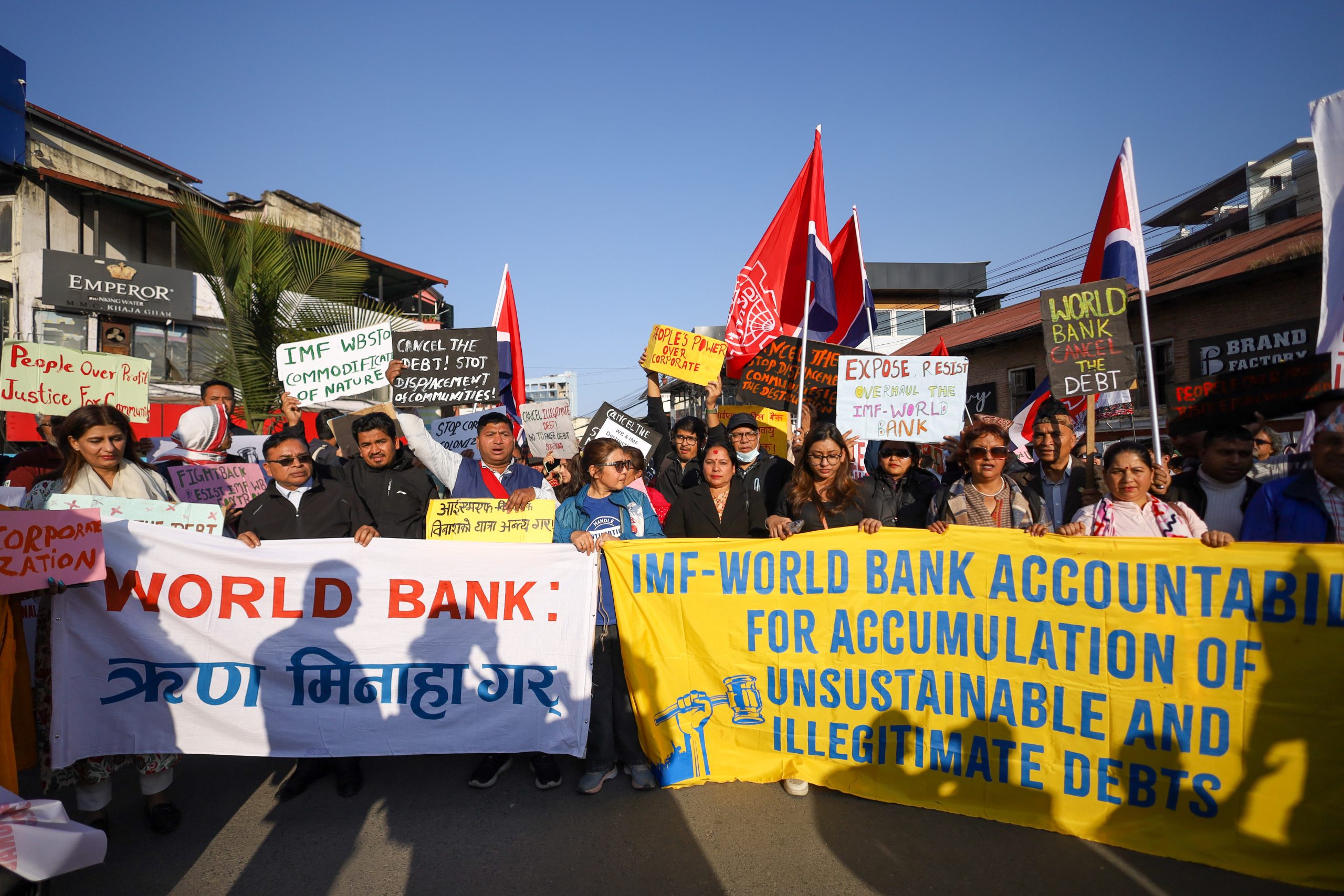
By Nitya Chakraborty In Nepal, following the tumultuous developments on September 8, 9 and 10 as a result of Generation Z uprising, the 2.9 crore nation is crawling back to normalcy . Under the leadership of interim Prime Minister Sushila Karki, the new administration is making sincere efforts to ensure law and order to prepare […]
The article Nepal’s Political Course Till March 5 Elections Gripped In Uncertainties appeared first on Latest India news, analysis and reports on Newspack by India Press Agency).

UAE e-invoicing is becoming a cornerstone of digital transformation in the United Arab Emirates. With the Federal Tax Authority rolling out EmaraTax, businesses must adapt their invoicing processes to meet new compliance requirements. For many organizations relying on ERP systems, this poses a challenge — traditional ERPs are not built to handle complex, fast-changing tax regulations. Infinite GIP provides a smarter alternative, ensuring seamless UAE eInvoicing compliance, […]

OPEC+ is poised to approve another lift in oil output of at least 137,000 barrels per day when its core members convene on 5 October to finalise November quotas, according to three individuals familiar with the discussions. The decision is part of the alliance’s broader push to reclaim lost market share amid surging crude prices. Since April, the group has reversed earlier production cuts, having already raised […]

Sheikh Mohammed bin Zayed Al Nahyan received Sam Altman, chief executive of OpenAI, in Abu Dhabi on Saturday, where they engaged in talks designed to deepen AI collaboration between UAE institutions and OpenAI. The meeting concentrated on intensifying research cooperation, advancing practical AI applications, and aligning strategies to bolster the UAE’s integrated AI ecosystem. The UAE’s state media noted the partnership “aligns with the UAE’s ambition to […]

A shareholder meeting of Kuwait Airways authorised an accounting manoeuvre to eliminate 300 million dinars in accumulated losses by reducing its paid-up capital, the official gazette confirmed. The extraordinary general assembly, convened on 2 September, approved a cut in paid-up capital from 977.7 million dinars to 683.7 million dinars, and a 6 million dinar diminution of its legal reserve. Simultaneously, issued capital will be increased by 300 […]

QNB Group has shifted its US dollar corporate payment operations in Qatar onto JPMorgan’s blockchain-based platform, enabling business clients to execute dollar payments within minutes, around the clock. The move marks a notable milestone in the uptake of decentralised ledger technology in mainstream banking.

The Doha-based lender will use JPMorgan’s Kinexys Digital Payments system to facilitate 24/7 USD transfers for its corporate clientele. Traditional banking rails, by contrast, typically operate during business days and may take several days to complete a transfer. The QNB–JPMorgan tie-up underscores the intensifying push by major financial institutions to modernise payment infrastructure.

Kinexys, previously known as JPMorgan’s payments and tokenisation arm, has seen growing traction across the Middle East and North Africa. QNB became one of the first banks in the region to adopt the system, following Saudi National Bank’s earlier deployment. The platform allows programmable payments, enabling banks to embed automated rules or compliance checks directly into settlement flows.

Under its new arrangement, QNB clients in Qatar will now enjoy significantly improved settlement speed and liquidity management. Instead of waiting for traditional cut-off windows, funds flow without interruption, reducing operational risk and improving cash-flow efficiency. Internally, the system allows QNB to manage its USD liquidity more dynamically across its branches and treasury operations.

JPMorgan’s wider strategy with Kinexys spans tokenised deposit accounts, cross-border settlements, and programmable payment capability. Earlier this year, the firm announced a GBP-denominated blockchain deposit offering, complementing its USD tokenisation efforts. JPMorgan has also piloted USD deposit tokens built on its Base blockchain in collaboration with institutional clients.

Across the MENA region, several leading banks have gone live on Kinexys. Commercial Bank of Dubai, First Abu Dhabi Bank and Bank ABC are among the adopters. Saudi National Bank currently uses the system for its U. S. dollar-denominated flows and plans to extend the infrastructure to large corporates in its domestic market.

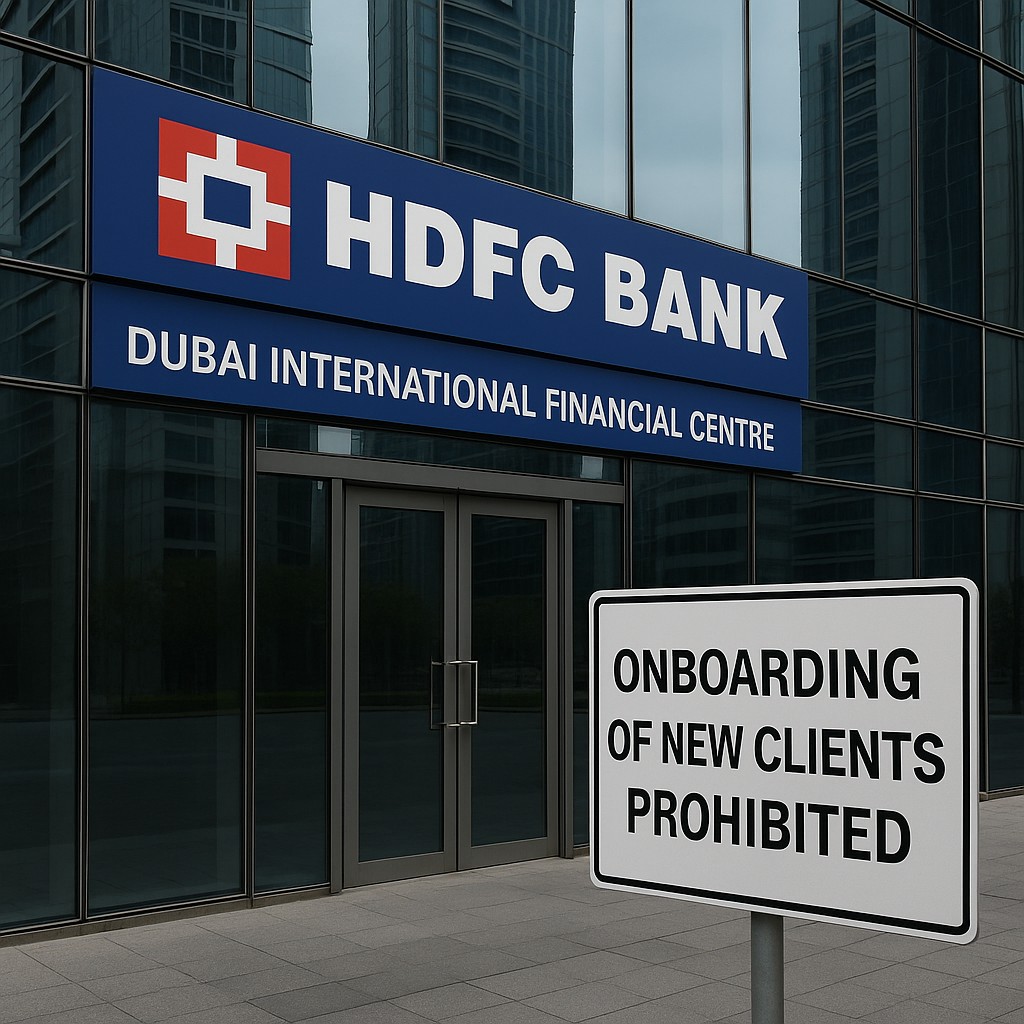
Dubai’s financial regulator has barred HDFC Bank’s Dubai International Financial Centre branch from soliciting, onboarding or servicing new clients, citing compliance lapses.

The order, issued by the Dubai Financial Services Authority and effective from 26 September, remains in force “until otherwise amended or revoked,” the bank stated. HDFC said it is taking steps to comply with the directive while engaging with the DFSA to address concerns.

HDFC clarified that the restriction does not apply to existing clients of the DIFC branch, nor to those who had already been offered services prior to the notice. As of 23 September, the branch had 1,489 customers, including joint holders.

According to HDFC, the bank does not expect this to materially affect its overall operations or financial position, noting that the Dubai branch’s business is not significant relative to its global activities.

The DFSA’s decision notice accuses the branch of servicing clients who were not properly onboarded, deficiencies in client onboarding processes, and other unspecified compliance shortcomings. The prohibition extends to advising on financial products, arranging deals, extending credit, custodial services, and financial promotions for new clients.

Analysts point to a backdrop of scrutiny over HDFC’s role in selling risky instruments—particularly Credit Suisse additional tier-1 bonds—to retail investors in the UAE. Those clients accused the bank of misclassification and inadequate risk disclosures. Investor accounts allege that KYC records were manipulated to designate them as “professional clients,” a requirement under DIFC rules for high-risk products.

Some UAE-based investors welcomed the DFSA’s move but urged stronger action, stating the suspension of new client intake is a limited measure given potential damage already done.

HDFC has a broader international presence including representative offices in Abu Dhabi, Kenya, London and Singapore, and branches in Bahrain and Hong Kong. The bank faces parallel scrutiny in India regarding related sales practices, prompting investigations by Indian enforcement agencies.

As the DFSA and HDFC engage in remediation talks, markets will closely watch whether the regulator escalates sanctions or lifts the ban after compliance is demonstrated.

Dubai police have announced an extensive set of security measures and entry restrictions for spectators attending the Asia Cup 2025 final between India and Pakistan at the Dubai International Cricket Stadium. Violations of the rules could trigger fines of up to Dh30,000 and imprisonment under federal law governing sports venues.

Every seat for Sunday’s showdown has been sold, with organisers confirming a full capacity of 28,000 spectators. With the historic match being the first final between these arch-rivals in Asia Cup history, expectations of heightened emotions have driven authorities to step up security preparations.

The police directive mandates that attendees arrive at least three hours before the start and that each ticket admits a single entry—re-entry will not be allowed. All spectators must enter through gates assigned by organisers, follow instructions from stewards and security staff, and park only in specified areas. Any departure from the stadium during the match will forfeit re-entry.

The list of prohibited items is comprehensive. Fireworks, flares, laser pointers, and any flammable or hazardous materials are banned outright. Sharp objects, weapons, toxic substances, remote-controlled devices, large umbrellas, camera rigs, tripods, selfie sticks, and unauthorised photographic equipment are also barred. Flags, banners, or placards without official approval, pets, bicycles, skateboards, scooters, glass items, and outside food or drink are disallowed. Smoking or carrying any item that could endanger public safety will attract penalties.

Under the Federal Law on the Security of Sports Facilities and Events, the penalties range from Dh5,000 to Dh30,000 for breaches such as entering the pitch, carrying banned items or misbehaving. More severe violations — including throwing objects, abusive or racist language — may lead to fines in the Dh10,000 to Dh30,000 range or imprisonment for up to three months.

Multiple specialised police units and surveillance teams will be deployed around the stadium. Authorities have urged full cooperation from fans to allow the match to proceed without incident. The Events Security Committee is jointly monitoring crowd movement, traffic, and stadium access.

On the transport front, traffic congestion is expected to peak along Al Khail Road, Sheikh Mohammed bin Zayed Road, Hessa Street, Umm Al Suqeim Street, and via routes through Al Barsha, Dubai Motor City and surrounding neighbourhoods. Alternate routes such as Umm Al Suqeim Street or Al Fay Road via Sheikh Mohammed bin Zayed Road are being recommended, especially for motorists approaching from the south.

Parking zones P1 to P4 at the stadium are allocated, and overflow areas in Dubai Motor City and Dubai Studio City will provide shuttle services. Some park-and-ride facilities near Mall of the Emirates and First Abu Dhabi Bank Metro stations will function, connecting visitors to the venue via feeder services and taxis.

Dubai police have also issued multilingual advisories to reach a broader cross-section of fans. Authorities emphasise that the cooperation of spectators will be crucial to preserving a safe environment and ensuring that the focus remains on the cricketing spectacle.

A new study argues that the prevalence of autism in human populations may reflect an evolutionary trade-off embedded within our genetic heritage. Researchers say that rapid changes in certain brain neuron types and shifts in autism-linked genes likely promoted advanced cognition at the cost of increased neurodiversity. The analysis, published in Molecular Biology and Evolution, focuses on a class of outer-layer neurons called L2/3 intratelencephalic cells, which […]

Air raid sirens blared across Ukraine before dawn on 28 September as waves of Russian drones and missiles struck Kyiv and multiple regions, leaving fatalities and dozens of injuries while the assault continued into the morning, according to officials. Authorities in the capital reported deaths and widespread damage across more than 20 sites, including homes, a medical facility and a kindergarten; emergency services worked through debris as […]

Harrods has informed certain customers that their names and contact details were exposed after a system belonging to one of its third-party service providers was compromised, though account passwords and payment information remain unaffected. The luxury retailer emphasised the breach was isolated and has been contained, reiterating that Harrods’ core internal systems remained untouched. The compromised data is said to be limited to basic identifiers. The company […]

VISHNU RAJA
RYO YAMADA
HITORI GOTOH
IKUYO KITA