News related to
Arabia

Abu Dhabi-based developer Object 1 is accelerating its expansion into the capital, using the platform of the International Real Estate & Investment Show at ADNEC to roll out its latest developments and strategic vision. Head of Business Development, Ismail Gasanov, will speak on panels addressing investment prospects for foreign nationals, sustainability, and intentional design.

The company is opening its first sales gallery in Abu Dhabi to serve investors, brokers, and homebuyers. Sales figures for Abu Dhabi’s wider real-estate sector demonstrate strong performance: Abu Dhabi Real Estate Centre reported Dh25.3 billion worth of transactions in the first quarter of 2025, a year-over-year increase of 34.5 %, with demand shifting toward lifestyle, waterfront, and premium residences.

Object 1’s growth in Abu Dhabi builds on its rapid ascendance in Dubai. With over 17 active projects, the developer has become a top-ten player in Dubai’s development landscape within just a few years. The company claims sales value jumped 188 % in the first half of 2025 compared to the same period in 2024, while transaction volume rose 157 %. Its development pipeline now exceeds 4.5 million square feet, including ALTA V1EW, its newest tower slated to rank among the tallest in Jumeirah Village Circle.

At IREIS 2025, with more than 35 exhibitors and over 2,000 investors expected, Object 1 joins Gold Sponsors such as Reportage Properties, Danube Properties, and Dugasta Properties. The show features an Investment Conference that will examine foreign investment, property law reforms, new ownership models, and how proptech, smart cities, and sustainability are reshaping the market.

Tatiana Tonu, CEO of Object 1, said that Abu Dhabi’s stable economy, high-quality infrastructure, and affluent communities continue to draw discerning investors seeking both capital growth and lifestyle excellence. The expansion into the capital reflects the firm’s long-term confidence in Abu Dhabi as a hub for design-led, sustainable developments that combine community living and investment value.

Abu Dhabi’s active development pipeline is considerable. A report by BNC Network puts the total value of active projects at about US$758.79 billion, with the urban construction component contributing some US$221.56 billion. Residential supply is increasing, with around 2,400 units already delivered in Abu Dhabi city this year; by year end, about 10,400 units are projected, and 11,000 more scheduled for delivery in 2026.


By D. Raja The coming to power of the BJP with an absolute majority in the 2014 general elections was not merely a routine transfer of power from one democratically elected government to another. It marked a qualitative shift in the very nature of our polity. The BJP is the political arm of the Rashtriya […]

Why CRM Matters in Dubai’s Real Estate The UAE has emerged as one of the world’s leading destinations for real estate investment, drawing interest from international buyers, institutional investors, and local clients. With intense competition, high transaction volumes, and multi-stakeholder deals, developers face unique operational challenges: Managing relationships with hundreds of brokers and agencies simultaneously. Coordinating international buyers who expect fast, transparent communication. Handling complex contracts, payments, […]

The role of artificial intelligence in reshaping the global economy has never been more critical. According to the latest projections, AI is poised to add a staggering $15.7 trillion to global GDP by 2030. This growth is expected to revolutionise various sectors and create new economic paradigms as nations and industries race to harness the transformative potential of AI. The growth trajectory of AI is being driven […]

A molecule produced by gut bacteria, called D-lactate, has been identified as a significant contributor to elevated blood sugar, insulin resistance, fatty liver inflammation and fibrosis in obesity, according to new research. Scientists in Canada report that trapping D-lactate in the gut reduces these metabolic dysfunctions in mice. Researchers from McMaster University, Université Laval and the University of Ottawa found that obese mice and humans with obesity […]

Namibia is stepping up sulphuric acid production to support surging output in uranium, copper and manganese mining, as two major industry players commit to scaling local supply. Green Metals Refining will build a new plant in Walvis Bay, and Vedanta aims to restart its dormant sulphuric acid facility at the Skorpion zinc operations. London-based Green Metals Refining plans an investment of US$59 million for the first phase […]

South African bank FirstRand has reported a 10 percent increase in full-year net income, reaching 41.82 billion rand for the fiscal year ended 30 June, despite absorbing a 2.7 billion rand pre-tax provision tied to a UK motor finance claim. The provision stems from fallout over a UK Supreme Court ruling and proposed redress scheme by Britain’s Financial Conduct Authority, aimed at motorists who allege they were […]

Advertisements

Greenlogue/AP African leaders have set a target of mobilising US$50 billion annually to fund a new continental climate solutions initiative unveiled at the second Africa Climate Summit in Addis Ababa. The initiative, led by Prime Minister Abiy Ahmed of Ethiopia, aims to deliver 1,000 climate innovations by 2030 through mechanisms such as the Africa Climate Innovation Compact and the African Climate Facility. The funding goal forms part […]

ReNew Energy Global Plc is negotiating with several international banks to secure a loan of about $815 million aimed at refinancing its debt, according to sources familiar with the matter. The funds would help the renewable energy firm restructure existing liabilities and improve its financial flexibility.

The discussions involve major global lenders, though the identities of those banks have not been confirmed. The loan is expected to offer terms that reflect both ReNew’s large asset base in wind, solar and hydroelectric power, and the current pressure in credit markets driven by rising interest rates.

ReNew, founded by Sumant Sinha with operations largely in India, has been expanding aggressively across clean energy segments. The company has more than 150 projects across ten states and is developing a supply-chain business through its solar cells and modules units. The refinancing exercise appears linked to balancing growth investments while managing existing financial obligations.

Financial analysts see this move as part of ReNew’s broader strategy to optimise its debt servicing costs. Earlier fundraising rounds for ReNew include a sizeable investment by British International Investment into its solar manufacturing arm, which underscores the company’s aim to develop internal manufacturing capabilities. Cost of debt and maturity profiles of its outstanding instruments have been flagged by market watchers as challenges in the current high-rate environment.

Porsche’s engineers faced unexpected damage to the rear diffuser of a Taycan prototype while pursuing a record-setting electric vehicle lap around the Nürburgring. The component was partly torn off after the car bottomed out on one of the circuit’s many turns. The prototype—believed to be a GT4 RS variant—made two attempts at pushing past current benchmarks, with factory driver Lars Kern at the wheel for at least […]

The OpenSearch Software Foundation has appointed Bianca Lewis as its new Executive Director, tasking her with guiding the foundation’s strategy, growing its community engagement, and maintaining vendor-neutral development. She takes on the post as the foundation marks its first year under the Linux Foundation banner. Lewis arrives with more than two decades of experience in technology, entrepreneurship, and business strategy, having held leadership roles at firms such […]

An Israeli airstrike in Doha targeting Hamas leaders and a large drone incursion by Russian forces into Poland have severely challenged the United States’ standing among allies and adversaries alike. These events have intensified debates over Washington’s influence and reliability in preserving international norms and regional security. The Doha attack struck a compound used by senior Hamas political figures, including some negotiating with Qatar over a proposed […]

Singapore is gearing up to reveal a comprehensive “value unlock” package by the end of the year aimed at reviving the nation’s stock market, regulators said. Key initiatives will likely build on the Equity Market Development Programme, stronger listing incentives, streamlined regulations and enhanced shareholder rights, intended to improve liquidity, listings and investor confidence.

The EQDP, a S$5 billion programme announced earlier in the year, will see its first tranche of S$1.1 billion allocated to three asset managers—Avanda Investment Management, JP Morgan Asset Management and Fullerton Fund Management—to invest in Singapore-listed equities. These selections were made partly based on alignment with objectives to broaden participation beyond large-cap stocks and strengthen asset-management capabilities.

Alongside co-investment funding, tax incentives are being offered for primary and secondary listings. A 20 per cent corporate income tax rebate applies for qualifying new primary listings, and a 10 per cent rebate for secondary ones. There is also pressure to ease regulatory requirements around prospectus disclosures, shorten IPO-approval timelines, and allow earlier investor outreach in IPOs.

Regulatory reforms under consideration include reducing the profit requirement for Mainboard listings, aligning secondary listing rules with international disclosure standards, and possibly removing the financial watch-list mechanism for loss-making firms while increasing the role of disclosure over prescriptive reporting.

Market analysts welcome the measures but caution that they may not address deeper structural weaknesses. Singapore’s exchange has seen more delistings than IPOs in many months, a low number of growth-stage listings, a prevalence of companies with weak profitability, and low free floats among many issued shares. These factors have limited trading depth and made it harder for mid-caps to attract institutional investors.

Insolvency reform is also part of the picture. Proposed changes to Singapore’s Companies Act would broaden the so-called cross-class “cram-down” powers, letting restructuring plans be imposed even over dissenting shareholders in certain cases. The proposals include streamlining processes for issuing new shares or disposing of assets during restructuring, and revising compensation frameworks for restructuring managers.

Regulatory agencies such as the Monetary Authority of Singapore, Singapore Exchange Regulation, and the Equities Market Review Group are all involved in shaping the yet-to-be-announced package. Public consultations on many proposals have taken place or are underway, especially around IPO rules, listing thresholds, and listing admission criteria.

Via Transportation raised US$492.9 million through its initial public offering, with the shares priced notably higher than expected. The transit-tech company sold 10.7 million Class A common shares at US$46 apiece, above its marketed range of US$40 to US$44. The valuation implied by this pricing is around US$3.65 billion. Founded in 2012 and headquartered in New York, Via specialises in software and technology solutions that optimise public […]

Pi Network is poised for a high-profile showing at TOKEN2049 in Singapore on 1–2 October, where co-founder Dr Chengdiao Fan will present the project’s vision amid concerns over price decline, token unlocks, and technological progress. As a Gold Sponsor of the event, Pi is seeking to use the platform to address major challenges to its growth and credibility.

Dr Fan’s speech is expected to centre on blockchain’s capacity for real-world societal utility, tackling Web3 obstacles such as governance, decentralisation, and adoption in under-served regions. The Pi Core Team says she will offer updates on how Pi plans to translate its mobile-mining community into meaningful applications and ecosystem engagement. The announcement confirms both the speaking engagement and the sponsorship role.

The project confronts several critical headwinds. The native token PI has lost substantial value in recent months, dropping from highs to levels around US$0.34, placing it near a psychological resistance zone. Market watchers note that upcoming token unlocks—scheduled for late September—may significantly increase supply, potentially weighing further on price. Liquidity concerns and limited exchange listings continue to cast doubt on how quickly Pi can scale beyond its existing user base.

Even so, community sentiment has perked up. Many Pioneers believe TOKEN2049 could act as a catalyst for a short-term breakout, with expectations of new roadmap disclosures, technological upgrades or partnerships. Some analysts caution that past events—such as previous conference appearances—have triggered spikes followed by sell-pressure, a pattern called “sell-the-news.”

Another issue for Pi Network is how it balances hype with substance. Technical progress, including support for Linux nodes, decentralized KYC procedures, and scalability upgrades, is viewed as crucial if the network is to build trust with developers, regulators and investors. On governance, Dr Fan’s academic background in social computing and anthropology has raised expectations that she will address how Pi plans to foster community-led consensus and trust.

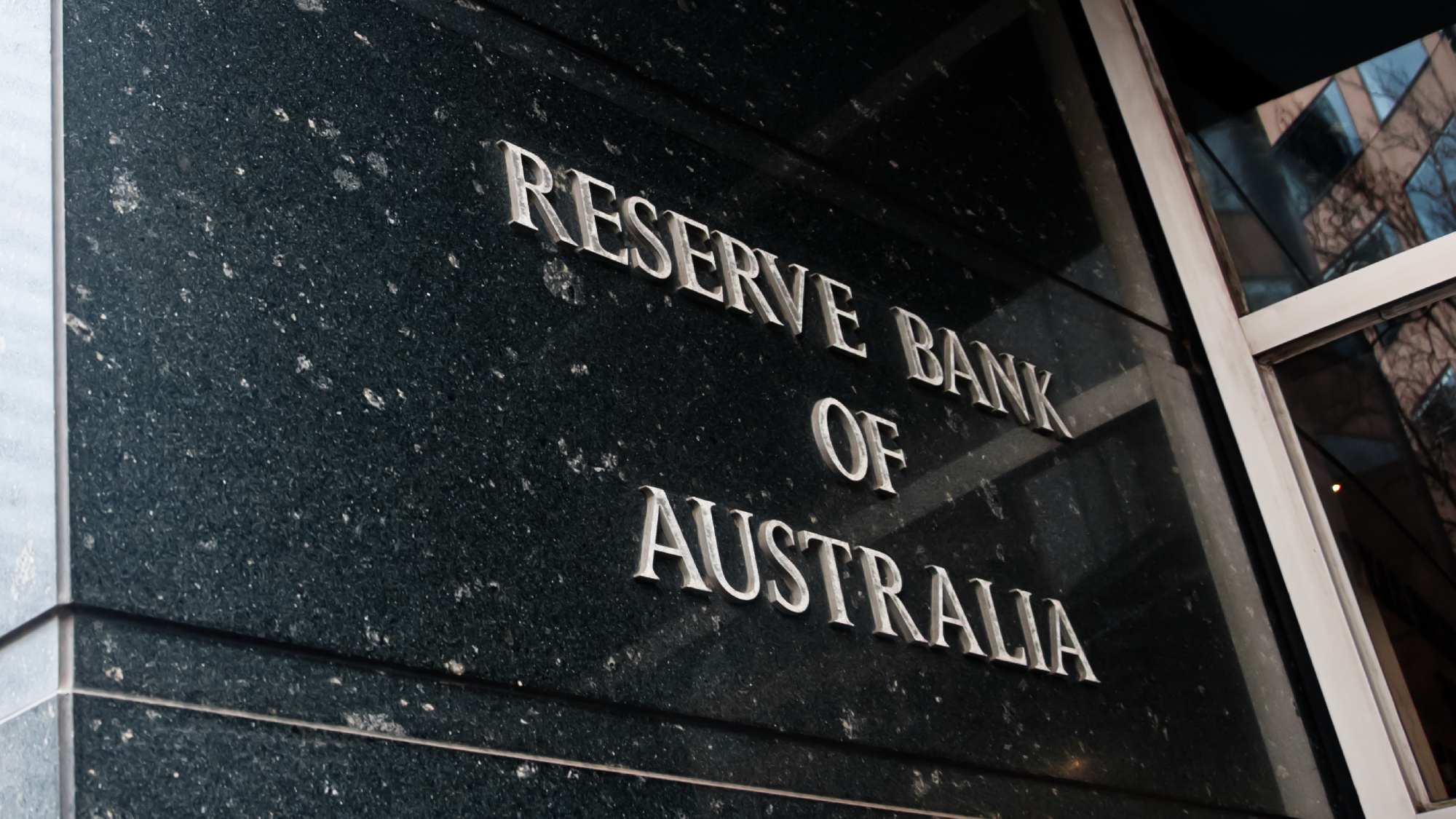
Australia’s Reserve Bank, through Assistant Governor Brad Jones, has warned that the era of stability and integration following the Cold War has given way to a more contested strategic environment that carries elevated risk for governments, financial institutions, and markets. At a FINSIA event in Sydney on 12 September, Jones declared that “the era of the peace dividend is over,” citing geopolitical, technological and operational disruptions reshaping the global financial order.

Jones described the international security and economic system as undergoing “seismic adjustment — on a scale and speed unseen in eight decades.” He flagged multiple forces contributing to instability: rising strategic rivalry, weakening tenets of the rules-based order, frictions in globalisation, and increasing emphasis on self-insurance by nations and firms against a broader set of possible harms.

Technological advances form one front of the risk profile. Jones spoke of an expanding surface for cyber-attacks driven by digitalisation, concerns over concentration risk in cloud services, and quantum computing’s looming threat to encryption systems. Artificial intelligence, while promising productivity gains, poses risks of misinformation, fraud, and systemic instability due to herding behaviour.

Critical infrastructure exposures were cited as especially vulnerable: telecommunications networks, the electrical grid, payment systems, and market infrastructure. Jones referenced a recent example in Europe, where cascading power outages in the Iberian Peninsula disrupted both households and economic activity, pointing out that such disruptions would be far more dangerous if key financial infrastructure were affected.

To respond, the RBA is pressing for what it calls an “anti-fragile” financial system—one not simply capable of withstanding shocks but able to adapt and improve because of them. Innovation, competition, and efficiency are being positioned not as opposing goals to resilience but as complementary. Initiatives under way include work with industry to bolster payments resilience, frameworks to ensure that future payments systems embed reliability and recoverability, migration to quantum-safe encryption standards, and reforms aimed at enabling new entrants in financial market infrastructure to reduce concentration risk.

These concerns build on earlier warnings in the RBA’s Financial Stability Review, which noted that heightened geopolitical tensions, trade uncertainty, and technological vulnerabilities could interact with existing financial system risks. The review flagged operational risks from interconnectedness and dependency on third parties for infrastructure and services.

The shift has implications for monetary policy, regulatory oversight, and business strategy. Regulators are likely to place greater emphasis on risk scenarios involving geopolitics, cyber-threats and supply-chain disruptions; financial institutions will need to review and stress-test against non-traditional threats while ensuring agility; and policy frameworks may need to evolve to address threats outside standard macroeconomic shocks.

Microsoft has revealed Visual Studio 2026 Insiders, a major update to its flagship integrated development environment that weaves artificial intelligence into core workflows, boosts performance, and delivers a modernised user interface. The rollout introduces new features and channels aimed at enhancing developer productivity and addressing long-standing feedback. Visual Studio 2026 integrates GitHub Copilot across the IDE to understand the coding context, make suggestions, and automate repetitive tasks. […]

Saudi Arabia is set to increase its crude oil exports by roughly 500,000 barrels per day this month, driven by heightened production and weaker domestic oil consumption. These shifts are intensifying concerns that the global oil market may swing into oversupply later this year. Aramco and Saudi authorities have scaled back domestic crude burn for power generation, particularly as cooling demand following the summer peak reduces the […]

A senior Tesla engineer has resigned, accusing Chief Executive Elon Musk of leading with what he describes as “seriously compromised” leadership. He claims the company’s mission and integrity are being undermined, citing concerns about dishonesty, manipulation of public discourse and support for climate change denial. Giorgio Balestrieri, who had spent eight years at Tesla and worked on the company’s European energy trading algorithms—specifically the Autobidder platform that […]

Shares of Orascom Construction leapt sharply when the company began trading on the Abu Dhabi Securities Exchange, underscoring investor appetite for infrastructure-linked growth in the Gulf. The stock closed its first session up about 27 per cent at AED 38.10, having opened near AED 30.15, valuing the company at approximately AED 4.2 billion. Orascom Construction shifted its primary listing from Nasdaq Dubai, while maintaining its secondary listing […]

Dubai’s Roads and Transport Authority has opened a newly widened section of Sheikh Zayed Road near the Umm Al Sheif Street exit, expanding one direction from six lanes to seven over a 700-metre stretch. The upgrade increases capacity by about 16 per cent, allowing up to 14,000 vehicles per hour through that section. The work focuses on traffic flowing from Abu Dhabi towards central Dubai, a corridor […]

Infosys Ltd cleared a share buyback plan worth ₹18,000 crore, its biggest to date, offering ₹1,800 per share under a tender‐route offer. The price represents a 19% premium over closing levels on the BSE and NSE.

The company intends to repurchase roughly 10 crore shares, amounting to about 2.41% of its equity. Approval came through a board resolution disclosed in regulatory filings.

Infosys’s share price had been under pressure, falling more than 1% on the day prior. The buyback announcement triggered mixed reactions: U. S.‐listed ADS shares edged up marginally, while shares in Mumbai closed lower, reflecting investor caution.

Company financials show free cash flow at ₹7,533 crore for the quarter ending 30 June, down about 17.7% year-on-year, though still exceeding net profit by a small margin. The firm held cash and investments totalling ₹45,204 crore at that date.

Analysts view the buyback as a signal of confidence in long-term cash flows, but also warn that slowing revenue growth in some verticals could weigh on future performance. The move follows pressure from investors for IT companies to not just return capital but also step up investments in cloud, AI, and product development.

Taraf, the real-estate arm of Yas Holding, has entered a joint venture with Masdar City to build a residential community covering 1.4 million square metres within Masdar City, Abu Dhabi’s flagship sustainable innovation hub. The development will offer over 1,000 homes, including two- to six-bedroom villas and townhouses, with freehold ownership options.

Designed around a neighbourhood cluster model, the community emphasises human-centred amenities: shaded walkways, cycling routes linked to Al Masar Park, numerous parks, and extensive open spaces for wellbeing and active lifestyles. The layout will also include family-friendly infrastructure: dedicated clubs, safe environments for children, and walkable areas throughout.

Low Ping, Group CEO of Yas Holding, said that this project reflects Taraf’s strategy of building “design-led communities that inspire modern living where sustainability and innovation come together,” and that it aligns with Abu Dhabi’s Falcon Economy Vision for dynamic, connected growth. Ahmed Baghoum, CEO of Masdar City, emphasised the intention for the development to combine Taraf’s design focus with Masdar’s sustainability framework, creating a place “where people can live, work, learn, and innovate” under low-carbon principles.

This project represents a growing trend in the UAE towards full-community developments built on sustainable, low-carbon design and green infrastructure. Masdar City has already established itself as a leader in eco-innovation, hosting many businesses, research centres and incubation hubs under strict environmental standards. The inclusion of freehold ownership is relatively rare in developments of this nature in Masdar City, potentially making the homes attractive to investors and owners seeking long-term assets.

Investors and urban planners are likely to monitor how the community balances high design and sustainable living with affordability and infrastructure delivery. Ensuring that walkable, shaded and bike-friendly pathways are effectively integrated, as well as ensuring accessibility of services such as schools, healthcare and public transport, will be critical to the success of the development.

Regulatory and market conditions in Abu Dhabi have been increasingly favourable to sustainable urban development, with government policy pushing for low-carbon goals, renewable energy adoption, and integrated infrastructure. Abu Dhabi’s Falcon Economy Vision is central to this, aiming for economic diversification and environmental sustainability together.

Discussions between Washington and New Delhi are said to have reached a critical stage, with US officials making India’s cessation of buying Russian oil a central condition for sealing a bilateral trade agreement. Ambassador-nominee Sergio Gor, during his Senate Foreign Relations Committee hearing, stated that the two sides are “not that far apart” and are now negotiating “the nitty-gritty” of deal terms. He added that ending oil purchases from Russia is one of the Trump administration’s highest priorities. Those talks are expected to involve India’s trade and commerce ministers in Washington next week.

Commerce Secretary Howard Lutnick echoed Gor’s position in an interview, saying the US will resolve trade barriers with India once India stops purchasing Russian oil. The US has imposed a 50% tariff on certain Indian goods, partly as a penalty tied to India’s energy imports from Russia, while insisting that market openness and reciprocal concessions are essential.

India’s leadership has defended its energy procurement strategy as aligned with national interests, citing economic factors and global market conditions. Finance Minister Nirmala Sitharaman reaffirmed that New Delhi intends to continue buying Russian crude, describing it as a practical choice given price and supply stability. She referenced the high import dependency for energy and refined fuels and argued that decisions about suppliers are driven by utility and cost.

Diplomatic signals suggest that the trade impasse stems from more than tariffs and oil. Gor characterised previous delays as “hiccups” and praised the personal rapport between President Donald Trump and Prime Minister Narendra Modi as playing a pivotal role in reopening the dialogue. He noted shared strategic goals, including countering Chinese influence, enhancing regional stability, and expanding cooperation in defence and infrastructure.

Analysts warn that making the Russian oil condition a non-negotiable requirement may limit India’s flexibility. New Delhi has maintained that certain sectors — agriculture, dairy, small producers — cannot absorb full opening of its markets without harming domestic stakeholders. As US pressure mounts through tariffs and public statements, India seeks assurances about trade access, particularly for its exports, while preserving sovereign control over energy policy.

VISHNU RAJA
RYO YAMADA
HITORI GOTOH
IKUYO KITA