News related to
Arabia

The International Monetary Fund has lifted its projection for the United Arab Emirates’ economic expansion to 4.8 per cent in 2025 and sees 5.0 per cent growth in 2026, citing accelerating non-hydrocarbon activity and a rebound in oil output.

Stronger-than-expected performance in tourism, construction, trade and financial services is underpinning the upward revision. The IMF attributes resilience to the country’s diversified strategy and structural reforms such as enhanced trade agreements and sustained investment in infrastructure.

Analysts say the revision contrasts sharply with broader regional downgrades. The IMF now expects growth across the Middle East and North Africa to expand by only 2.6 per cent in 2025, constrained by policy uncertainty, volatile energy markets and geopolitical tensions.

Within the UAE, central bank data reinforce the narrative of dual expansion. The non-hydrocarbon sector is forecast to grow by around 4.5 per cent annually in both 2025 and 2026, while the hydrocarbon segment is expected to rebound more sharply—by 5.8 per cent in 2025 and 6.5 per cent in 2026—on increased output as OPEC+ quotas are relaxed.

When IMF staff visited the UAE in January 2025, they noted that domestic demand remained robust amid modest oil production, forecasting real GDP growth at about 4 per cent for the year. They projected that fiscal and external surpluses would remain comfortable, helped by elevated non-oil revenues and cautious fiscal management.

Still, risks linger. The UAE’s banking sector, while well capitalised, faces exposure to real estate, and high house prices pose concerns for asset quality. In mid-2025, exposure to property in banks’ portfolios stood at around 18 to 19 per cent of risk-weighted assets. A sudden shift in investor sentiment or capital flows could test the stability of credit markets.

On the external front, the current account surplus is projected at about 7.5 per cent of GDP, supported by stronger non-oil exports and moderating import growth. Liquidity buffers remain healthy, with international reserves covering more than eight months of imports.

Greenlogue/AP The global green hydrogen market, valued at roughly USD 7.98 billion in 2024, is on track to grow to about USD 60.6 billion by 2030, propelled by steep declines in renewable energy costs, advances in electrolysis technologies and intensifying decarbonisation efforts across industry and transport. Projections indicate a compound annual growth rate of approximately 38.5 percent through 2030. This forecast assumes that many announced projects will […]

Abidjan — The World Food Programme has secured a US$9.3 million grant from the Korea International Cooperation Agency to support a five-year school meals and resilience programme across northern Côte d’Ivoire. The initiative will target 200 primary schools and 50,000 pupils from 2025 to 2029, backed by support for local farmers and community health efforts.

Under the partnership, WFP will channel the Korean funding into locally sourced, nutritious meals intended to enhance students’ concentration, health and retention. Alongside direct school feeding, 100 farmer groups will receive training and technical assistance to improve crop quality and yield, while forging supply links with school kitchens — aiming to stimulate rural markets and buttress food systems. The programme also includes capacity-building in hygiene and nutrition education, investment in hand-washing stations, and multisectoral coordination with national ministries of education, health and agriculture.

Olivia Hantz, WFP’s Representative and Country Director in Côte d’Ivoire, described the cooperation as “an investment in the country’s future”, noting that bolstering national systems and empowering local producers helps advance both nutrition and resilience. Kim Sangjun, the KOICA Country Director in Côte d’Ivoire, emphasized that linking schools with nearby farmers ensures the programme’s sustainability and reflects Korea’s own experience in leveraging school meals to support development.

Government agencies in Côte d’Ivoire will play a leading role in implementation. The Ministries of National Education and Literacy, Agriculture and Food Production, and Health and Public Hygiene will work through departmental directorates such as the Directorate of School Canteens to integrate this project with national plans. WFP already operates school feeding across 733 schools nationwide, reaching over 166,000 pupils, and this new injection will focus on underserved northern regions.

The strategy centres on what is often called a “home-grown school feeding” model: meals are locally procured, thereby linking educational support with rural livelihoods. This approach is intended not only to support children, but to stimulate smallholder agriculture, strengthen supply chains and reduce dependency on external imports.

Côte d’Ivoire faces persistent inequalities in food access. In rural and northern areas, food insecurity and chronic malnutrition remain major challenges. According to WFP’s internal data, more than 30% of children in those regions suffer from stunting, and households face high post-harvest losses, limited access to credit or inputs, and exposure to climate stresses. WFP’s country briefing from mid-2025 highlights programmes aiming to strengthen climate resilience among women and youth in zones such as Poro by promoting sustainable agricultural practices.

WFP’s school feeding and resilience operations in Côte d’Ivoire are embedded in a broader strategy. The agency seeks to scale national social protection systems, enhance disaster preparedness, and support agriculture-led recovery. The KOICA-funded project aligns with both Côte d’Ivoire’s national development plan, which emphasises human capital and inclusive growth, and with global objectives on nutrition, education and resilience.

Analysts view the agreement as part of a broader trend of South–South development cooperation. Korea has expanded its development financing across Africa in recent years, often emphasising education, agriculture and infrastructure. The model adopted here reflects that emphasis: combining direct welfare support with investment in domestic capacity. For WFP, the strategy offers a way to reduce long-term dependency on donor aid by anchoring programmes in national institutions and markets.

European Commission officials are poised to grant approval to Abu Dhabi’s state oil company for its €14.7 billion acquisition of Germany’s Covestro, conditional on minor adjustments to compliance measures, according to sources familiar with the process. The decision could mark one of the most significant Gulf-to-EU corporate takeovers to date.

Brussels opened a detailed investigation into the deal earlier this year under its Foreign Subsidies Regulation, citing concerns that the United Arab Emirates might have leveraged state-backed advantages—such as an unlimited state guarantee and pledged capital injections—to win the bid. The Commission’s probe, initially suspended in September pending additional information, has now resumed as ADNOC submits remedial proposals.

In its revised remedy package, ADNOC has committed to removing language referencing the unlimited guarantee from Covestro’s articles of association and to preserving Covestro’s intellectual property within Europe. Sources suggest the Commission may insist on further tweaks before final clearance, but no major restructuring is expected.

ADNOC’s international investment arm, XRG, has framed the concessions as reflective of its long-term investor stance and asserted confidence that the proposals are “robust and proportionate.” The supreme size of the deal amplifies scrutiny—a deal described by analysts as ADNOC’s largest ever and among the biggest foreign acquisitions of a European company by a Gulf state.

Opponents and industry peers have raised flags about the competitive effects of the transaction. Critics argue that ADNOC’s state backing might have deterred rival bidders, distorting the playing field in Europe’s chemicals sector. Regulators collected feedback from market participants as part of the remedy review, a standard stage in EU merger oversight.

In September, the EU paused its review, citing gaps in the information submitted by the parties. ADNOC responded by accusing the Commission of issuing “disproportionate and invasive” demands. It warned such tactics jeopardised the deal’s viability. Brussels has indicated it will reset its decision deadline after receiving all necessary material. Its previous deadline had been 2 December.

Analysts suggest that the minimal expected adjustments reflect the Commission’s confidence that the core concerns have been addressed. Some believe that failure to clear the deal now would signal strained investment relations between EU institutions and sovereign-backed acquirers. Others caution that even small remedial changes—especially on governance rights or intellectual property handling—could materially alter deal returns.

Covestro, a leader in polymer materials, chemicals, coatings and adhesives, stands to bolster its growth potential under ADNOC’s ownership. The acquisition aligns with ADNOC’s drive to diversify beyond hydrocarbons toward higher-value downstream chemical operations. Yet the deal also pits strategic ambition against regulatory sensitivity—a balancing act now unfolding in the corridors of Brussels.

Dubai’s government has unveiled plans for a radical upgrade to its “Invest in Dubai” digital platform, enabling business licences to be granted in as little as 17 seconds. The platform’s new version, featuring Agentic AI capabilities, was introduced at GITEX Global 2025 and is expected to go live by the end of 2026. Ahmad Khalifa AlQaizi AlFalasi, CEO of Dubai Business Registration and Licensing Corporation, explained that […]

Organisers have confirmed that Bengaluru will host India’s inaugural UbuCon conference on 15–16 November at the Indian Institute of Science. The event is expected to bring together developers, contributors and Ubuntu enthusiasts from across the country to engage on topics spanning cloud, IoT, documentation and AI. The Ubuntu India LoCo group leads the organisation, emphasising the grassroots, volunteer-driven nature of UbuCon events. Unlike many conferences dominated by […]

A compact, hackable AI assistant designed for privacy-conscious users is now drawing attention as the latest challenger to Big Tech’s voice assistants. Built around the Raspberry Pi, Ubo Pod aims to give users full control over their data, local compute, and software customization. Ubo Pod’s lead designer, Mehrdad Majzoobi, positions it as a protest against closed-box “smart” assistants whose voice and camera data typically funnel through cloud […]

Advertisements

Kigali has become the launchpad for the Rwanda chapter of the Africa Trade Gateway, a comprehensive digital trade ecosystem developed by the African Export-Import Bank in partnership with the African Continental Free Trade Area Secretariat. The rollout aims to accelerate uptake of the platform across the nation and integrate Rwandan firms more closely into Africa’s digital trade networks. The ATG combines five integrated modules—including PAPSS, MANSA, ATEX, […]

Tether has agreed to pay $299.5 million to the Celsius Network bankruptcy estate, resolving long-standing disputes over Bitcoin collateral transfers tied to Celsius’s collapse in 2022. The deal was announced by the Blockchain Recovery Investment Consortium, a joint venture between GXD Labs and VanEck, acting as litigation administrator and asset recovery manager for Celsius’s creditors.

The settlement brings closure to adversary claims filed in August 2024 in the U. S. Bankruptcy Court for the Southern District of New York. Celsius had contended that Tether improperly liquidated Bitcoin collateral backing loans denominated in USDT, executing sales when Bitcoin’s market value closely matched Celsius’s debt — thereby undermining the lender’s position. Under the agreement, those claims will be dismissed, though the broader wind-down of Celsius remains ongoing.

BRIC was appointed by Celsius’s debtors and the unsecured creditors committee in January 2024 to steer recovery efforts of illiquid assets and litigation claims. According to BRIC’s announcement, the payment reflects a negotiated resolution consistent with maximizing returns for creditors. David Proman of GXD Labs remarked on the “timeliness” of the settlement and the objective of concluding contentious matters against Tether.

While $299.5 million is a substantial sum, it accounts for a relatively small fraction of the total claims Celsius had pursued—estimated at approximately $4 billion. Tether’s side had resisted full liability, positioning its role as merely transactional rather than one bearing responsibility for downstream collateral use, a stance it has maintained in past legal challenges. Some observers interpret the settlement as signalling heightened legal risks for stablecoin issuers in future insolvency contexts, where courts may scrutinize the proximity of collateral actions to debtor collapse.

The settlement does not necessarily foreclose other claims linked to the Celsius wind-down. BRIC remains responsible for managing a portfolio of residual litigation and illiquid digital assets, with the aim of continuing creditor recovery. The deal, in effect, removes one major legal obstacle in a broader restructuring process that has spanned years.

Market reaction has been muted. Crypto stakeholders and legal analysts are now closely watching whether regulators or courts will treat this settlement as a template—potentially influencing how stablecoin issuers are held to account in distressed scenarios. Some argue that issuers will face increased pressure to adopt stronger governance and compliance frameworks to mitigate similar exposures. Others caution against overinterpreting the settlement as an admission of liability.

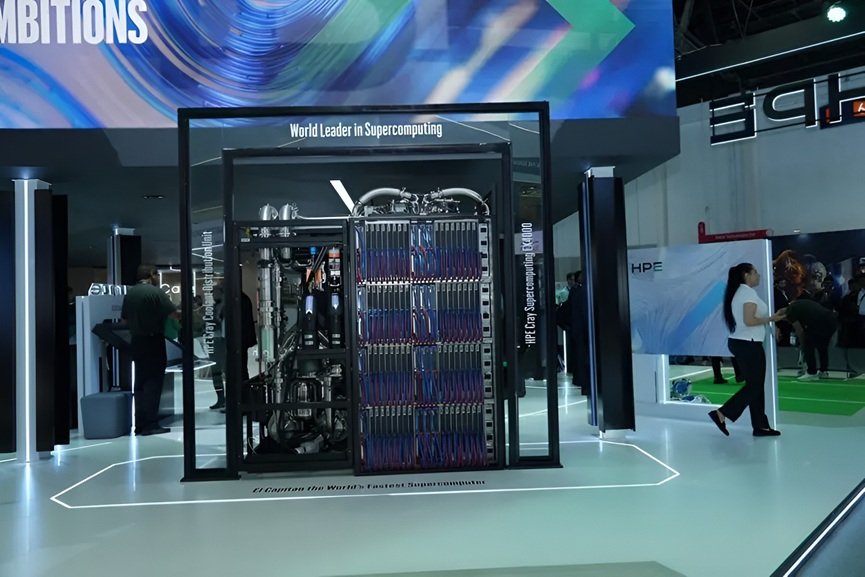
Commvault has entered a Memorandum of Understanding with HPE to scale joint cybersecurity, backup and recovery services across the Gulf and wider Middle East, unveiling the pact at GITEX Global in Dubai.

The agreement mandates co-development of integrated solutions and joint market initiatives combining HPE’s infrastructure platforms — such as GreenLake, Alletra Storage MP, Zerto, StoreOnce — with Commvault’s cyber-resilience and data protection capabilities. It aims to drive enterprise adoption of hybrid cloud backup, ransomware mitigation and cross-region redundancy.

HPE previously announced a broader strategic expansion of its alliance with Commvault aimed at neutralising advanced cyberthreats, spotlighting tighter integration across cloud, storage and policy automation. The local MoU is intended to bring those capabilities closer to enterprises operating in the Gulf and MENA markets.

HPE’s Zerto platform will feed into Commvault Cloud offerings to enable near-zero recovery time and point objectives, while snapshot immutability, geographic replication, and anomaly detection powered by AI are planned as central joint features. Running side by side, HPE’s storage and infrastructure fabric supports Commvault’s orchestration layer for unified policy enforcement across hybrid deployments.

Regional leadership within both firms emphasised the growing urgency of resilience as data volumes and threat sophistication rise. Yacob Ahli, HPE’s Commercial Director for UAE, said that the Gulf’s data-centric growth narrative demands infrastructure foundations that safeguard continuity. Havier Haddad, heading Commvault’s EMEA emerging markets distribution, framed the MoU as a strategic move to reinforce customer confidence in mission-critical operations across the region.

Analysts say the new alliance helps bridge a gap many enterprises in the Middle East face: lacking in-region partner support for complex, integrated cyber resilience stacks. By localising go-to-market strategies, certification and training, the partnership may reduce friction in adoption. Still, adoption also depends on regulatory compliance, cross-border data governance, and interoperability with incumbent systems.

Commvault has also introduced new additions to its HyperScale portfolio — HyperScale Edge and HyperScale Flex — designed to support remote and edge data protection workloads, broadening its partner ecosystem to include HPE, Dell, Lenovo and others. These tools complement its flagship HyperScale X offering.

Russia and China have endorsed an ambitious joint action plan to expand shipping via the Northern Sea Route, setting freight targets and launching collaborative projects that signal a deepening strategic partnership in the Arctic domain. At a meeting of the bilateral NSR sub-commission in Harbin, officials agreed on a roadmap aimed at scaling cargo traffic to 20 million tonnes by 2030, while pursuing development in shipbuilding, logistics, […]

By Nitya Chakraborty On October 10, the Nobel Prize Committee awarded the Peace prize for the year 2025 to the Venezuelan right wing politician Maria Corina Machado who has been working for the last few years for the removal of the President Nicholas Maduro from his office. The White House initially reacted that the Nobel […]

The article Trump Has Not Got Nobel Peace Prize But The Winner Machado Is His Acolyte In Latin America appeared first on Latest India news, analysis and reports on Newspack by India Press Agency).

What first inspired you to pursue your current industry or professional path? Was there a defining moment or influence that shaped your direction? My journey into financial technology began during my early days at Banque Misr, Egypt’s second-largest bank, where I witnessed firsthand the inefficiencies of traditional paperbased banking systems. The defining moment came when I was tasked with spearheading the digital transformation initiative, converting traditional transactions […]

The Bank of North Dakota and payments firm Fiserv have unveiled plans for a dollar-backed digital token dubbed “Roughrider,” to be deployed among banks and credit unions in 2026 as a new instrument for interbank settlement. The token, restricted initially to participating financial institutions, aims to accelerate and modernise bank-to-bank transactions within the state.

Under the agreement, Roughrider will be built on Fiserv’s digital asset infrastructure, leveraging the platform’s framework to interoperate with other stablecoins. The Bank of North Dakota becomes the first U. S. state bank to issue a stablecoin on Fiserv’s platform. The initiative targets enhanced liquidity, streamlined payments, and potential expansion into merchant adoption.

Governor Kelly Armstrong cast the move as bold institutional innovation, positioning the state as a testing ground for blockchain-enabled finance. “We’re entering a new era,” he said, emphasising that North Dakota financial institutions must embrace evolving money-movement tools. Fiserv’s COO Takis Georgakopoulos described Roughrider as merging the stability of traditional banking with the agility of distributed ledger technology.

State officials say the Industrial Commission, which oversees the bank, must approve the pilot plan. Once greenlit, the rollout will begin with a small cohort of local institutions. BND President and CEO Don Morgan noted that any costs from development will rest on the bank’s balance sheet rather than state taxpayer funding. The legal team of Troutman Pepper Locke has advised the bank in structuring the deal.

The federal legislative environment played a crucial role: in July, Congress passed the GENIUS Act, providing stablecoin issuers with a national regulatory framework requiring full backing by high-quality assets, transparency rules, and audit requirements. North Dakota’s scheme is built to align with those standards.

While Wyoming’s Frontier Stable Token launched in August and is available for public use, North Dakota’s strategy is more conservative. Roughrider will begin as a wholesale instrument; public or consumer-facing use is not part of the first phase. Some stakeholders view it as a deliberate step to mitigate operational and financial risks before broader deployment.

Analysts say North Dakota offers a lower-complexity environment for experimentation. With BND being the only state-owned bank in the U. S., the state provides a more controlled setting to work through technical, legal, and compliance challenges. If successful, the model could be scaled beyond North Dakota’s borders or adopted by others.

Banks and credit unions participating in the pilot stand to benefit from faster settlement, reduced settlement costs, and simpler liquidity management. But industry voices warn of potential downsides: deposit flight is a concern if stablecoins siphon off customer balances, and state regulators may need more capacity to oversee digital assets.

Fiserv, which serves roughly 10,000 financial institutions and 6 million merchants globally, sees this as an opportunity to embed stablecoin rails within its ecosystem. It launched its own white-label stablecoin platform earlier this year, with FIUSD as its internal token, and views Roughrider as a use case within that infrastructure.

Addis Ababa — Ethiopia’s Ministry of Finance and Italy’s development cooperation agency have inaugurated a two-year, €1.7 million project aimed at strengthening community resilience and restoring heritage in the Wukro–Gheralta belt of the Tigray region. The “Supporting Community Resilience through Community-Based Tourism and Heritage Conservation” programme is designed to generate livelihoods, preserve cultural identity and foster post-conflict reconciliation. Semereta Sewasew, Ethiopia’s State Minister of Finance, signed the […]

Alphabet’s Google will commit $10 billion to develop a 1-gigawatt data centre and artificial intelligence infrastructure in Visakhapatnam, Andhra Pradesh, marking its largest investment in India to date, state officials have confirmed. A formal MoU is to be signed today to solidify the partnership.

The data centre campus across three sites — Tarluvada, Adavivaram and Rambilli — will form a hyperscale cluster integrated with AI computing capacity, robust fibre-optic links and dedicated power supply, including renewable energy sources. The initiative is central to Andhra Pradesh’s ambition to scale its data centre capacity to 6 GW over the coming years.

Ahead of the MoU signing, Chief Minister N. Chandrababu Naidu and Union ministers are expected to attend, reinforcing confidence in the project’s strategic significance. IT minister Nara Lokesh described data as “the new oil” underscoring the state’s drive to anchor itself in the global AI infrastructure map.

The Google investment taps into intensifying competition among global cloud and tech firms racing to establish AI infrastructure in India. Over the past months, tech majors have escalated commitments toward data centres, seeking to capitalise on surging demand for cloud and generative AI services.

Development of supportive infrastructure is underway in tandem. The state plans to enhance grid capacity, ensure uninterrupted power, and establish multiple cable landing stations to facilitate connectivity across Asia. The Hyderabad–Vizag corridor is poised to evolve as a subsea cable and data junction.

However, land acquisition hurdles pose a risk. Authorities have earmarked about 200 acres in Tarluvada, but litigation filed by claimants — some reportedly on behalf of proxy or deceased farmers — has slowed progress. The government has increased compensation to approximately ₹50 lakh per acre, and pledged jobs, shop spaces and housing plots to mitigate resistance. Chief Minister Naidu has directed efforts to fast-track resolution and suppress obstruction by alleged benami interests.

Political friction is surfacing. Local legislators from opposition parties accuse rivals of stalling the project to protect illicit land holdings. The TDP’s Palla Srinivasa Rao claimed that the ruling party is attempting to block acquisitions under the guise of safeguarding farmers’ rights, citing instances of forged or ghost claims. The government rejects these accusations and says it will uphold legitimate legal processes while pushing ahead.

Economic projections for the project are ambitious: estimates suggest the cluster could generate over 180,000 direct and indirect jobs between 2028 and 2032 and significantly boost Andhra Pradesh’s gross state domestic product. Analysts see the facility acting as a catalyst for ancillary sectors such as data-fabric supply chains, clean energy, construction and telecom.

This deal follows prior reports that Google had earlier signalled a $6 billion investment in Andhra Pradesh’s data infrastructure; that figure is now superseded by the $10 billion commitment, reflecting the expanded scale and inclusion of AI ambitions. The project’s success will depend on timely approvals, legal clearances, and seamless coordination between state, union and private stakeholders.

Visakhapatnam’s emerging status as a data centre hub is further supported by parallel developments: Sify is launching an AI edge data centre and submarine cable landing station; Meta is participating in undersea cable projects. With Google anchoring a flagship investment, Andhra Pradesh expects to draw further technology firms to its eastern corridor.

Crude futures are signaling a shift towards contango as market participants brace for an oversupply wave in 2026, driven by aggressive production from OPEC+ and non-OPEC players and uncertain demand growth. U. S. oil futures are showing the narrowest backwardation since early 2024, with the November 2025 WTI contract trading at a slim premium over May 2026—a structure ill-suited to limits on physical demand. This flattening of […]

Dubai—Dell Technologies asserts it commands more than 24 per cent of the UAE’s data centre server market, signalling a strong foothold in a region where demand for digital infrastructure is surging. Samer Al Jayyusi, Specialty AI & GenAI Regional Lead for Central & Eastern Europe, Middle East and Africa at Dell, made the disclosure at GITEX Global 2025, emphasising that national institutions have shown growing confidence in […]

Dubai’s 45th edition of GITEX GLOBAL opened on 13 October at the Dubai World Trade Centre, attracting what organisers call unprecedented global participation. The event hosts more than 6,800 exhibitors, 2,000 startups and 1,200 investors from over 180 countries. Sheikh Mohammed bin Rashid Al Maktoum inaugurated the event, underscoring the UAE’s ambition to lead in AI-driven economies. Dubai’s leadership has signalled this edition will be the last […]

Mohammed Bin Rashid Housing Establishment is spotlighting a suite of digital housing solutions at GITEX Global 2025, announcing strategic tie-ups aimed at advancing smart infrastructure and inclusive living. The initiative underscores Dubai’s push to fuse technology with urban development amid intensifying global competition in digital transformation.

MBRHE is presenting new digital services engineered to optimise housing operations, energy efficiency and resident experience. At GITEX, the entity finalised a partnership with Emirates Islamic Bank to develop financing and digital payment tools tailored for homeowners, and earlier inked an agreement with AI Smart to retrofit housing units with assistive technologies for People of Determination. The latter includes deploying smart systems in five identified residences to enhance mobility and independence. These deals complement an existing MoU with Emirates Gas to supply next-generation LPG composite cylinders across MBRHE communities, complete with annual maintenance services.

As part of Dubai’s government ecosystem at GITEX, MBRHE is listed among Gold Partners in the Digital Dubai pavilion, joining over 50 public and private entities promoting the emirate’s City-as-a-Service model. This placement gives MBRHE visibility amid hundreds of technology players from more than 180 countries. The pavilion is intended to demonstrate cross-sector digital synergies across health, energy, mobility and governance spheres.

MBRHE officials emphasise a multipronged strategy. The partnership with Emirates Islamic is geared toward embedding embedded financial tools into housing services. The AI Smart alliance is positioned as a step toward inclusive smart homes. Meanwhile, the collaboration with Emirates Gas addresses energy reliability and safety in residential zones under MBRHE’s purview. In announcing the AI Smart engagement, MBRHE described it as aligning with UAE leadership’s agenda to empower all segments of society, especially People of Determination.

The move follows MBRHE’s earlier commitment with GFS Developments to launch the Smart Housing Forum 2025, a platform to convene global experts on sustainable housing innovation. That partnership, formalised in late September, frames GITEX as a conduit for showcasing outcomes and inviting further collaboration.

Industry analysts say MBRHE’s integration of housing, finance, energy and assistive technology is representative of a wider trend in the Gulf: public agencies are no longer viewing infrastructure in isolation but as an integrated service ecosystem. State-linked housing bodies are increasingly collaborating with fintech, cleantech, proptech and social inclusion tech firms to convert static assets into responsive, data-enabled platforms.

Critics caution that the true test lies in execution, particularly in integrating legacy systems, ensuring cybersecurity across interconnected modules, and managing equitable access across lower-income beneficiary groups. For instance, retrofitting older housing stock with IoT or assistive systems often requires structural upgrades, which carry cost and logistical burdens.

At GITEX, MBRHE is expected to demonstrate live pilot models of smart home systems, energy monitoring dashboards, and resident apps that tie into real estate finance. These demos will act as proof points to entice further private sector engagement and scaling. MBRHE’s role as both regulator and operator gives it leverage but also raises accountability for outcomes.

Amin H. Nasser, President & CEO of Aramco, told delegates at the Energy Intelligence Forum in London that the company will pursue “energy addition” to cope with intensifying global demand, underlining its steadfast ambition to maintain dominance in oil. He argued that conventional energy sources will remain critical even as the energy transition narrative evolves.

Nasser projected that global oil demand will grow by 1.1–1.3 million barrels per day this year and by 1.2–1.4 million bpd in 2026. He added that Aramco, having kept extraction costs at about $2 per barrel of oil equivalent for oil and $1 for gas, is well-positioned to meet the incremental demand. Speaking to a gathering of energy executives, he said the company can sustain maximum crude output of 12 million bpd for a full year without incurring extra cost.

He stressed that while many promises of the energy transition have fallen short, three shifts are now underway. First, he said the market is conceding that underinvestment in supply has risks. Second, cost pressures on alternative technologies are forcing a reevaluation of pace. Third, energy security is reclaiming a central role in policy-making. “Much of the promised progress has not been delivered, with many unintended consequences. Thankfully, it is finally shifting the narrative in three key ways,” Nasser said.

Behind the rhetoric lies a more cautious reality: Aramco has pared back its previous ambition to reach 13 million bpd, reverting instead to a 12 million bpd sustainable ceiling. That policy shift reportedly followed directives from Saudi energy authorities in early 2024.

In his remarks, Nasser also affirmed Aramco’s push into downstream and petrochemicals. He cited the company’s recent majority acquisition of Petro Rabigh, a 10 percent stake in China’s Rongsheng Petrochemical, and a joint $11 billion ethylene complex with TotalEnergies that is slated to come online by 2027. These moves, he said, diversify revenue streams beyond crude.

His stance echoes his commentary at earlier industry events. At CERAWeek in Houston, Nasser had cast doubt on the viability of green hydrogen and questioned the assumption that renewables alone can displace fossil fuels. He then quipped that there was “more chance of Elvis speaking” than seeing the current transition plans succeed.

Analysts say that Aramco’s optimism hinges on its low-carbon upstream intensity and vast reserves, which give it flexibility against higher-cost producers. The International Energy Agency’s estimates place Saudi spare capacity at about 2.43 million bpd, part of OPEC+’s total idle capacity of around 4.05 million bpd.

Still, external pressures persist. Governments worldwide face competing goals of emissions reduction, energy access, and geopolitical security. In many markets, renewables and storage technologies remain maturing, requiring heavy capital and regulatory support before they can scale. Critics argue that overreliance on fossil fuels could lock in carbon-intensive infrastructure and slow the path to net zero.

At the London forum, however, Nasser signalled that Aramco sees its role as not merely supplying more oil but shaping the discourse. “We are determined to remain dominant in oil thanks to a massive resource base, low costs, and one of the lowest upstream carbon intensities across the industry,” he said. He urged policymakers and financiers to support broad energy investment rather than prematurely dismiss conventional sources.

Emirates NBD is in advanced negotiations to acquire up to a 25 percent stake in Mumbai-based RBL Bank through a preferential allotment of equity and warrants, two people familiar with the matter told Reuters. The proposal would mark a major move by the Dubai-based lender into India’s private banking sector.

The Dubai bank is evaluating the terms of the deal, including pricing and structure, though both parties have yet to confirm the arrangement publicly. One of the sources indicated that the deal may be announced once approvals are in place.

On the Indian equities front, news of the talks propelled RBL’s shares higher: the stock climbed over 3 percent on 14 October, reaching its highest level since January 2024, and became one of the top gainers among private banks. Investor optimism stemmed from expectations that a reputable foreign investor might bolster transparency, governance and capital strength at RBL Bank.

Under Indian banking regulations, strategic foreign investors are generally restricted to a 15 percent stake, although exceptions have been made in high-profile cases. The Reserve Bank of India earlier permitted Sumitomo Mitsui Banking Corporation to hold 20 percent in Yes Bank, setting a precedent for flexibility in exceptional circumstances. Simultaneously, India is exploring adjustments to foreign ownership rules to enhance capital inflows into its banking sector.

Emirates NBD already holds regulatory approval in principle to convert its branches in India into a wholly owned subsidiary, positioning itself to operate on par with domestic Indian banks. That architecture would facilitate compliance with local regulations and provide greater autonomy to its Indian operations.

RBL Bank maintains a dispersed shareholding structure, with retail investors, mutual funds and small institutional holders driving most of its capital. It has no traditional promoter group. In June 2024, the bank had announced plans to raise ₹65 billion through a mix of institutional share issuance and debt instruments to support growth plans.

Previous media reports spanning earlier in 2025 suggested Emirates NBD’s interest in acquiring a minority stake in RBL, via a preferential allotment route, as part of its Asian expansion push. Those earlier discussions laid the groundwork for the current advanced negotiations.

The deal—if consummated—would align with Emirates NBD’s broader strategy of deepening its footprint in India, a market it already serves through branches in Mumbai, Chennai and Gurugram, and via its approved subsidiary structure. The bank has posted robust growth: in the first quarter of 2025, it exceeded profit expectations, buoyed by strong loan expansion and net interest income.

Still, multiple hurdles remain. Key among them are regulatory approvals from the RBI and possibly the finance ministry, clearances from capital markets regulators, and acceptance by RBL Bank’s board. Moreover, the valuation will be closely scrutinised, since acquiring a wedge of 25 percent may require pricing the equity at a premium to prevailing market values.

On the regulator’s side, officials have been deliberating over changes to banking ownership norms to attract foreign capital, particularly in systems where capital demand is rising rapidly. Some observers view case-by-case relaxation of limits as a likely path forward.

Institutional analysts have viewed Emirates NBD’s possible entry as a positive for RBL. One equity research note from ICICI Direct argued that the presence of a well-capitalised global investor could strengthen governance practices and investor confidence.

By K Raveendran Sushil Kutty, who passed away on Sunday night, lived and wrote like a man apart — a loner in every sense, and yet deeply connected to the world through the force of his words. A regular columnist for the India Press Agency for the last ten years, Sushil was that rare journalist whose writing transcended political lines, winning admiration from across the ideological spectrum. […]

By Nantoo Banerjee There is little to be excited about the recent inauguration of predominantly mountainous Arunachal Pradesh’s first commercial coal mine at Namchik-Namphuk in the Changlang district jointly by Union Coal & Mines Minister G Kishan Reddy and Arunachal Chief Minister Pema Khandu, marking the state’s first coal mine project. With an officially estimated […]

The article India Must Cut Down Coal Consumption appeared first on Latest India news, analysis and reports on Newspack by India Press Agency).

VISHNU RAJA
RYO YAMADA
HITORI GOTOH
IKUYO KITA