News related to
Arabia

IceWhale’s ZimaOS has rolled out version 1.5 with a new “Plus” edition behind a one-time $29 licence, while retaining a free Community edition with limited allowances. The upgrade also introduces expanded hardware support, mobile access improvements, and a freshly integrated backup app. The Plus edition removes caps on users, disks, and apps, whereas the CE edition continues to offer core features but restricts usage to 10 apps, […]

Three companies—The Littlestone Company, Alpha Ledger Technologies and Celadon Capital Markets—have launched a joint initiative to convert up to $1 billion of essential housing projects into blockchain-based tokens on the Solana network. The programme aims to democratise real estate investment by enabling fractional ownership, automated income flows and secondary market trading.

At the core of the effort, Littlestone brings decades of housing development experience, particularly in underserved communities. Alpha Ledger will supply the tokenisation infrastructure, mapping property ownership rights into programmable digital assets. Celadon will manage legal structuring, compliance and investor onboarding. Their first focus is on multifamily housing in Texas, with plans to scale thereafter.

Littlestone’s CEO, Peter Wasserman, frames the collaboration as a way to “accelerate delivery of sustainable, high-quality communities for workforce families and active adults 55+,” stressing that tokenisation can reduce capital constraints while broadening investor participation. Celadon’s Armand Pastine says the partnership targets the so-called “Missing Middle”—teachers, nurses and seniors underserved by conventional housing finance—and intends to unlock that segment through blockchain.

Solana’s mechanics—fast settlement, low fees and built-in tooling for real-world assets—make it a natural fit for such endeavours. The network already supports token extensions, permissioned environments and “transfer hooks” to embed KYC/AML rules directly into on-chain logic. Solana itself promotes the concept of real-world assets onchain, arguing that its architecture enables instant, cross-border settlement and programmable compliance at scale.

This project is not an outlier. The asset tokenisation sector has seen explosive growth in 2025, with estimates for real-world asset capital on chain rising from under $10 billion at the year’s start to over $60 billion by mid-year. The rise reflects growing institutional and retail demand, as well as regulatory openings. Meanwhile, major players like Securitize are expanding their issuance and trading platforms for tokenised securities, and firms such as Tokeny, ADDX and Ondo are becoming increasingly active in the tokenisation ecosystem.

Still, the initiative faces structural challenges. Regulatory uncertainty over securities laws, valuation complexities, liquidity concerns and investor protection remain key hurdles. The need to map off-chain legal claims into on-chain expression requires careful design, often involving special purpose vehicles or trust structures. Token liquidity may rely on secondary markets that are still nascent.

Kuwait Petroleum International and payments provider WEX have launched a joint fuel card in Italy, called CartissimaQ8-WEX, offering business customers access to a network of more than 3,400 service stations, including Q8, Q8easy, and authorised partners.

Under the partnership, WEX cardholders will be able to refuel across Italy’s Q8 network and partner sites, gaining visibility over fuel consumption and simplified billing. KPI said the initiative is part of its strategy to deepen its footprint in the Italian market by introducing a new sales channel in collaboration with a payments specialist.

The agreement provides WEX customers access to a broad distribution system spanning Q8, Q8easy and authorised stations across Italy. KPI’s network in the country already includes several hundred stations, and this card linkage aims to consolidate its reach by leveraging WEX’s fleet and payments infrastructure.

WEX has been actively expanding its European fuel network via partnerships in countries such as France and the Netherlands, tying up with Carrefour and Sakko to broaden its acceptance footprint. That expansion effort dovetails with this new agreement, enabling cross-market leverage.

While KPI is the local operating arm of Kuwait Petroleum Corporation, WEX is a US-based payments and fleet services firm. The alliance represents a fusion of upstream fuel retailing and downstream payments infrastructure. It also reflects a broader trend in the energy sector: fuel retailers seeking to strengthen customer retention through integrated payment and fleet management services.

Stakeholders in the Italian fuel and mobility markets view the move as a response to intensifying competition from independent fleet card providers and mobility fintechs. By embedding payments into its fuel ecosystem, KPI hopes to capture a larger share of corporate fleet spend and lock in recurring usage.

Industry analysts note that acceptance scale is key to fleet card uptake; the more stations that accept a given card, the more attractive it becomes for fleet operators. With 3,400 stations accessible under CartissimaQ8-WEX, the offering is immediately competitive.

Ethereum co-founder Jeffrey Wilcke has moved 1,500 ETH into the Kraken exchange, sparking debate over whether he plans further liquidations as the market faces renewed pressure. The transfer coincided with Ether’s slide below the $4,000 threshold.

Wilcke’s latest deposit comes less than a month after he offloaded ETH worth approximately $9 million, according to on-chain analytics. His known holdings still exceed 90,000 ETH, translating to a valuation above $350 million at current market rates.

Moving cryptocurrency into exchange wallets often suggests intent to sell, but it doesn’t guarantee action. Observers note this transaction fits Wilcke’s pattern of prior transfers, including earlier large deposits of 105,737 ETH and 9,840 ETH to Kraken. He has also reshuffled holdings across multiple wallets in the past — a tactic that clouds the true motive.

Ether’s price has lost ground recently, breaking technical support at $4,000. That drop has intensified concerns about downward momentum, amid warnings that failure to reclaim $4,841 could trigger a deeper pullback toward $2,750.

Yet the broader market tells a mixed story. Over the past two days, at least 15 whale wallets have acquired more than 406,000 ETH, sourcing tokens from major platforms including Kraken, Galaxy Digital, BitGo, and FalconX. That level of accumulation suggests some large holders see current prices as a buying opportunity.

The timing of Wilcke’s transfer coincided with Kraken’s own developments: the exchange announced a $500 million funding round, valuing it at $15 billion and laying groundwork for a prospective 2026 IPO. Some analysts have argued that Wilcke’s move could be a strategic internal adjustment ahead of market shifts rather than a direct sale.

Wilcke’s role in the Ethereum project dates back to its earliest years, notably in the development of Geth, the Go-based client now central to the network’s operations. Although he stepped back from core Ethereum development in 2018, he later founded Grid Games, a venture into online gaming. His pattern of wallet activity in recent years has drawn attention — transfers of tens or hundreds of thousands of ETH have periodically triggered speculation.

BNB has hovered near the $1,000 mark as validators on BNB Chain propose slashing gas fees by 50 per cent and accelerating block confirmation times to strengthen the network’s competitive edge.

The validator community’s draft proposal recommends reducing the minimum gas price from 0.1 Gwei to 0.05 Gwei and cutting block intervals from 750 ms to 450 ms, a change that could bring average transaction costs down to roughly $0.005. The plan reflects an effort to match or outpace low-cost rivals such as Solana and Base, which have been gaining traction in the DeFi and trading sectors.

Trading activity now accounts for about 67 per cent of all BNB Chain transactions — a sharp rise from around 20 per cent earlier in 2025 — underscoring the importance of cost and speed for users and developers. The proposal includes a guiding principle: “as long as staking APY stays above 0.5 per cent, BNB Chain should strive for the lowest possible gas fees.”

Validator groups argue that the network still has significant unused capacity, operating at under 30 per cent utilisation, leaving room for traffic growth without risking congestion. They claim the infrastructure can handle up to three times the current load.

Critics, however, warn that cutting fee revenue so sharply could weaken validator economics, potentially undermining incentives for security and stability. Some community voices stress the need for a careful balance: dramatic cost cuts must not come at the expense of decentralisation or long-term resilience.

This proposal builds on prior gas reductions. In April 2024, gas was cut from 3 Gwei to 1 Gwei, and in May 2025, it was further reduced to 0.1 Gwei. Those moves contributed to a roughly 75 per cent drop in median transaction fees and a jump of 140 per cent in daily transaction volume.

Beyond fees and speed, the proposal is intended to enhance BNB Chain’s positioning in a crowded landscape. As rival chains push for lower latency and micro-costs, BNB’s validator-led initiative signals an attempt to reclaim appeal among traders and protocol builders.

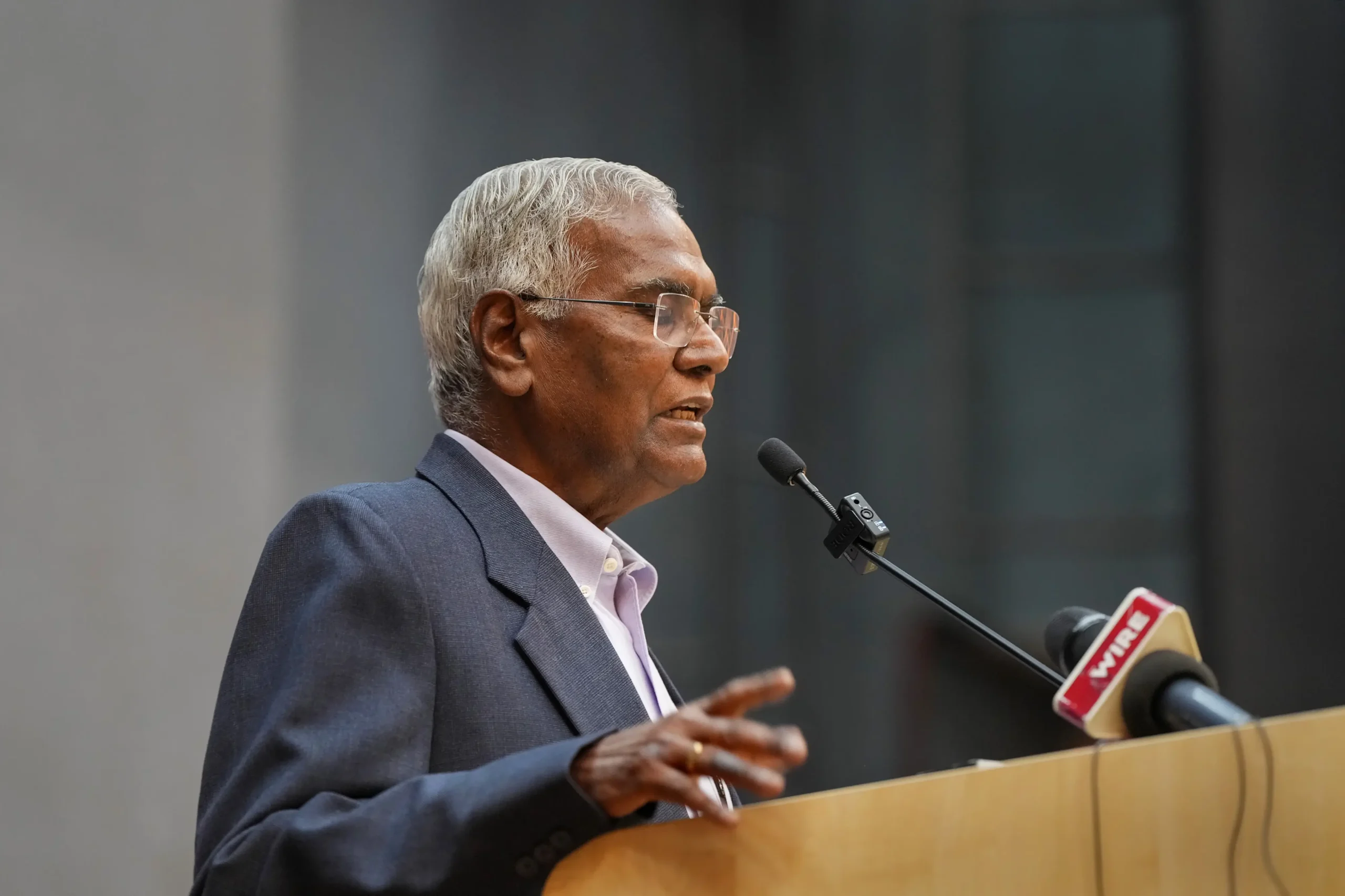
By Nitya Chakraborty CPI general secretary D Raja who has been granted his third term at the recently concluded 25th congress of CPI in Chandigarh faces a stupendous task in rejuvenating the stagnating party organisation and steer it with dynamism and vision to play a proper role in building a Left Democratic Alternative to fight […]

The article Third Term CPI General Secretary D Raja Faces Main Task Of Rejuvenating The Party appeared first on Latest India news, analysis and reports on Newspack by India Press Agency).

Abu Dhabi-based XRG P. J. S. C. has finalised its acquisition of an 11.7 percent equity interest in Phase 1 of the Rio Grande LNG project in Brownsville, Texas, marking the company’s first natural gas investment in the United States. The purchase was made through a joint-venture structure involving Global Infrastructure Partners, an investment vehicle affiliated with BlackRock. Phase 1 of Rio Grande LNG is one of […]

Advertisements

Nasdaq Dubai has admitted a US$450 million Sukuk issued by Arada Developments LLC under Arada Sukuk 2 Limited’s US$1 billion trust certificate programme. The securities carry a maturity in 2030 and were priced at a profit rate of 7.150 percent. The offering drew orders in excess of US$2 billion, representing over four times oversubscription. The listing increases Arada’s cumulative Sukuk outstanding on the exchange to US$1.5 billion […]

Arabian Post Staff -Dubai Dubai-based lifestyle and hospitality conglomerate FIVE Holdings has secured a $460 million revolving credit facility that will be used to repay its $350 million green bond ahead of schedule and free up capital for further growth. The facility, arranged with Commercial Bank of Dubai, AAIB and Santander, enables the group to retire its green bond three years before it matures, leaving it with […]

The UAE Ministry of Finance, acting as issuer with the Central Bank of the UAE as issuing and payment agent, has completed the September 2025 auction for dirham-denominated Islamic Treasury Sukuk, issuing AED1.1 billion in two tranches.

Investor appetite proved robust: total bids reached AED5.1 billion, representing an oversubscription rate of 4.6 times. The two tranches mature in August 2028 and May 2030. Yields to maturity were set at 3.64 percent for the 2028 tranche and 3.72 percent for the 2030 tranche, with spreads of up to 5 basis points over comparable US Treasuries. The new Sukuk are now listed under the UAE Treasury Islamic Sukuk Programme on Nasdaq Dubai, bolstering their tradability in secondary markets.

This issuance is part of the 2025 T-Sukuk programme designed to deepen the UAE’s domestic Islamic capital market and to help establish a dirham yield curve. Authorities view it as a tool for liquidity management and as a mechanism to broaden investment options for both regional and international investors participating in the UAE’s fixed-income markets.

Market observers note that the oversubscription signals confidence in the UAE’s fiscal credentials and its commitment to injecting dynamism into its debt capital markets. The tight pricing relative to US Treasuries is seen as competitive and attractive for institutional players seeking yield in the Gulf region.

In recent months, the UAE has steadily pursued domestic sovereign Islamic issuances as a complement to conventional instruments, seeking to accommodate demand from Islamic financial institutions as well as conventional banks’ Shariah-compliant units. The coordination between the Ministry of Finance and the Central Bank ensures that these issuances are integrated into broader monetary and financial stability objectives.

Across the Gulf, sovereign issuers have increasingly leaned into domestic currency Islamic instruments to reduce dependence on external funding, develop local capital markets, and provide alternative yield playbooks for investors. Within that context, the UAE’s T-Sukuk programme is gaining traction as a benchmark vehicle.

Primary dealers participating in the auction included eight banks, all mandated under the program to support both primary and secondary market activity. Their participation is key to maintaining liquidity and encouraging wider investor participation beyond the initial subscription.

Abu Dhabi — The Strategic Directions Committee of the UAE Research Programme for Rain Enhancement Science has completed a midterm site visit to Mohamed bin Zayed University of Artificial Intelligence, assessing progress on its Cycle 5 project “Identification of Clouds’ Microphysical Seedability in an Actionable Manner.” Led by Prof. Daniel Rosenfeld of the Hebrew University of Jerusalem, the initiative is executed in partnership with the National Centre […]

The Export-Import Bank of the United States has authorised over $100 million in financing guarantees to support two flagship digital infrastructure projects in Côte d’Ivoire. The package includes a $66 million guarantee for a national data centre and $47 million for technology exports intended to digitalise the Ministry of Commerce and Industry. The deals, approved in August under EXIM’s China and Transformational Exports Program, were formally unveiled […]

President Duma Boko has declared that his government intends to secure a controlling share in De Beers by the end of October, pushing Botswana to renegotiate its position in the global diamond supply chain. The move comes as Anglo American, the majority owner of De Beers, appears ready to divest its 85 percent stake. Botswana currently holds 15 percent of De Beers and jointly operates the mining […]

Dubai’s Roads and Transport Authority has unveiled a new strategic focus for the 5th Dubai World Challenge for Self-Driving Transport, scheduled for 2027: smart integrated infrastructure. Mattar Al Tayer, Director-General and Chairman of the Board of Executive Directors of the RTA, said the competition will pivot to challenges that bind sensing, connectivity and analytics to urban infrastructure across Dubai.

At the closing of the Dubai World Congress for Self-Driving Transport held at the Dubai World Trade Centre, RTA inked four key agreements with Emaar Properties, Al Futtaim Group, and the winners of the 2025 challenge—WeRide and Deutsche Bahn consortium, together with Zelos Technology—to deploy and test autonomous systems in Festival City, Creek Harbour and other strategic urban zones. Al Tayer affirmed that the move aligns with Dubai’s ambition to serve as a global testbed for mobility innovation.

This year’s theme shifts from discrete vehicle-centric competition to a systems-level mandate: entrants will be judged on how well their solutions embed into city-wide networks of sensors, roads, communication links and data platforms. The RTA framework calls for designs that anticipate traffic dynamics, weather variations and public transit interaction, while maintaining safety, resilience and sustainability.

Over 3,000 participants and more than 80 expert speakers participated in the Congress, spanning government, academia and industry. The gathering marked the formal launch of the 2027 edition. The Congress also highlighted Dubai’s strategic goal that by 2030, one quarter of all journeys within the emirate will be autonomous or smart-enabled—an ambition already embedded in the RTA’s transport roadmap.

Stakeholders see this shift as an essential maturation of the challenge format. Rather than focusing only on individual vehicle prototypes, the next competition will test ecosystem coherence and scalability across urban modules. According to industry analysts, the new direction presses participants to align with evolving demands in mobility, where digital and physical layers must fuse.

Dubai’s prior edition in 2025 carried the theme “Dubai Autonomous Transport Zone,” pushing contestants to integrate multiple autonomous mobility modes in defined neighbourhoods. That foundation now gives way to a broader remit, with RTA officials stressing that smart infrastructure is the backbone for reliability and public acceptance of self-driving systems.

The agreements struck with developers and past challenge winners will see pilots in zones like Festival City and Creek Harbour, where road layouts, sensor grids and vehicle operations will be tested side by side. RTA counts on these field deployments to validate technical performance, operational cost and citizen experience before full-scale adoption.

Critics caution that the complexity of integrating diverse systems—communications, edge computing, failsafe control layers—could raise cost, regulatory and interoperability risks. Some stakeholders argue the success of the 2027 challenge will depend on whether entrants can navigate not only technical but institutional challenges across urban agencies and telecommunications providers.

For technology firms and research groups, the new emphasis offers both opportunity and challenge. It rewards proposals able to harmonise hardware, software, data and governance. Observers expect to see consortia spanning telecom operators, municipal agencies, AI firms, and road infrastructure specialists.


The European Commission plans to issue a formal charge sheet to Meta Platforms, accusing the company of failing to adequately police illegal content on Facebook and Instagram, a move that could trigger fines of up to 6 per cent of Meta’s global annual turnover. The charge stems from findings that Meta lacks an effective “notice-and-action” mechanism allowing users to flag illegal posts, as required under the Digital […]

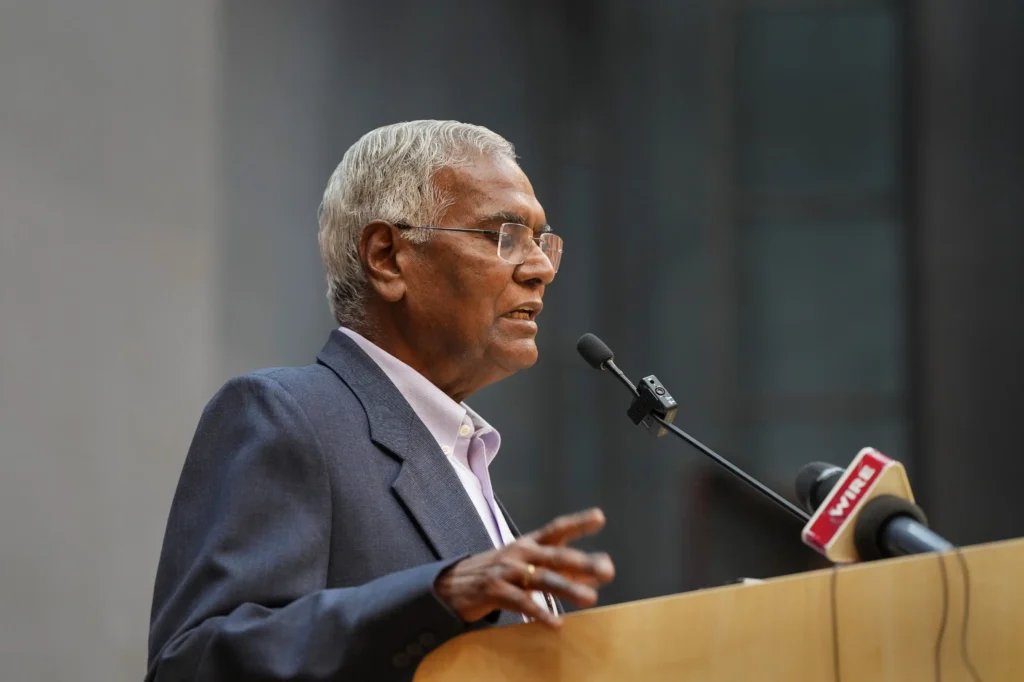
By Satyaki Chakraborty The Communist Party of India(CPI) concluded its five day Party Congress at Chandigarh on September 25 reelecting D. Raja as the general secretary of the CPI for another three year term. Raja is the first dalit leader to head the CPI in 2019 after the then party secretary S Sudhakar Reddy sought […]


The article CPI’s 25th Party Congress Elects D Raja As The General Secretary For The Third Time appeared first on Latest India news, analysis and reports on Newspack by India Press Agency).

Abu Dhabi is marketing a three-year and a 10-year US dollar Reg S/144A bond offering, aiming to capitalise on robust investor demand and reinforce its global funding outlook. The three-year tranche is pitched at approximately 40 basis points over US Treasuries, while the longer 10-year issue is offered at around 55 bps.

By mid-morning in Dubai, books had swelled past $10 billion, excluding joint lead manager interest, with slight tilt toward the 10-year line. The bonds will be senior, unsecured and rated AA/AA by S&P and Fitch, matching the issuer’s prevailing Aa2/AA/AA credit standing. Listings are planned in both London and Abu Dhabi.

Investors see this transaction as a test of global appetite for Gulf sovereign credits amid a cautious backdrop of moderate US interest rates and evolving geopolitical risk. Despite volatility in energy prices and external debt markets, Abu Dhabi’s strong fiscal and balance sheet metrics underpin confidence in its sovereign name. The credit ratings assigned reflect the emirate’s resilient fiscal policy, substantial hydrocarbon reserves, and large sovereign wealth fund buffers.

Structurally, the Reg S/144A setup allows the issuer to access both non-US and US institutional investor pools. Regulation S permits offers outside the United States, while Rule 144A enables sales to qualified institutional buyers within the US, offering dual reach while maintaining issuance flexibility. The base offering circular explicitly restricts transfers and resales to be compliant with those regimes.

Observers note that the pricing levels—40 bps for three years and 55 bps for 10 years over Treasuries—are ambitious but not unprecedented within Gulf sovereign borrowing. Prior precedent includes a multi-tranche Abu Dhabi sovereign bond of $5 billion in April 2024, which achieved strong oversubscriptions and favourable pricing benchmarks. That deal underlined investor appetite for Gulf issuers with strong credit credentials.

Market participants closely monitor skew and order distribution between tenors. That the books are marginally skewed toward the 10-year suggests appetite for duration, perhaps reflecting yield scarcity in core markets. Should the order book widen further, the issuer may flex uncertainty concessions or tighten spreads modestly before final pricing. Co-ordinating banks are likely adjusting intermediate guidance as allocations firm.

Analysts flag that appetite for Gulf sovereign issuance is tempered by global headwinds: tighter US credit spreads, sticky inflation, and competition from other supranational and sovereign issuers. Some international investors may demand additional premium for regional or geopolitical exposures. Yet Abu Dhabi’s entry with a dual-tranche issuance signals intent to extend its credit curve, deepen investor relationships, and enhance liquidity in its sovereign bonds.

The listings in London and Abu Dhabi are intended to enhance secondary market trading, improve visibility to European and global investors, and cement Abu Dhabi’s status in global bond markets. The London listing, especially, provides access to a deep pool of international fixed income investors and a regulatory framework well understood by global asset managers.

The decentralized finance space is undergoing a critical transformation in 2025, ushering in what many observers call “DeFi 3.0.” While the earlier waves of DeFi focused on decentralized exchanges and liquidity incentives, the next generation is centered on permissionless lending, composability, capital efficiency, and real-time adaptation. As platforms such as Euler, Morpho and Hyperliquid gain traction, the shifts promise to reshape how capital moves, how risk is […]

Dubai is gearing up to host the third edition of the Invest Web3 Forum, powered by bepay money, assembling over $500 billion in assets under management and more than 80 institutional investors. The one-day gathering, slated for 15 October at Dubai Knowledge Park, seeks to advance institutional adoption of blockchain through capital allocation, policy dialogue and startup investing. Market watchers point to the forum as a bellwether […]

A critical security flaw in NVIDIA’s Merlin Transformers4Rec framework allows threat actors to execute code remotely with root-level access, raising alarm across the AI ecosystem. The vulnerability, tracked as CVE-2025-23298, stems from unsafe deserialization in the model checkpoint loading routine. Attackers exploiting this flaw can submit crafted model files that, when deserialized via Python’s built-in mechanisms, trigger arbitrary command execution within the process’s context. Given that AI […]

A high-profile gathering scheduled for 29 September in Singapore will convene health professionals, AI innovators and medtech entrepreneurs to examine the evolving intersection of artificial intelligence and clinical care. Titled CliniConnect: AI X Healthcare SG Edition, the event aims to catalyse collaboration across disciplines and continents.

Organisers say the agenda will include interactive panels, pitch sessions, and roundtable debates focused on real-world adoption of AI in diagnostics, hospital systems, and patient care. They expect participation from clinicians, researchers, startup founders and regulatory stakeholders alike. The event is expected to coincide with TOKEN2049, a major AI & blockchain gathering, offering cross-domain exposure and synergy.

CliniConnect has hosted several prior editions in Singapore and other regional hubs, with past speakers including Dr Adam Chee, founding lead of Singapore’s Centre for AI-Enabled Health. These gatherings have emphasised bridging the gap between algorithm development and clinical deployment, with attention to ethics, data governance and system integration.

One central topic will be how hospitals and health systems can scale AI solutions beyond pilot phase. Many institutions struggle to integrate point-solutions into legacy electronic health records or workflows. Executives and innovation leads at the event will share strategies for deploying AI at scale without fragmenting operations.

Another critical strand will explore trust, explainability and regulatory oversight. While AI is making strides in pathology, radiology and triage, clinicians often resist “black-box” models. Some speakers plan to advocate hybrid approaches combining model outputs with human oversight or modular interpretability frameworks.

Regulatory perspectives are expected to feature heavily. Several jurisdictions are updating medical device rules to account for adaptive algorithms. Singapore’s Health Sciences Authority has begun consultations on AI frameworks, and regional alignment across ASEAN markets remains a challenge. CliniConnect hopes to provide a forum for convergence on standards, data privacy and cross-border validation.

On the entrepreneurship front, medtech startups will pitch innovations aimed at workflow automation, predisposition risk modeling, remote patient monitoring, and imaging augmentation. Organisers have indicated that venture capital and hospital innovation arms will be present, seeking collaborations or early investments.

The event also intends to showcase case studies from institutions that have begun deploying AI in clinical settings. Narratives are expected from hospitals in Singapore, South Korea, India and Dubai on how they piloted decision-support tools, performance-monitoring systems or diagnostic assistants, and the bottlenecks they encountered in scaling. These stories will help attendees assess trade-offs, resource requirements and institutional readiness.

Observers note CliniConnect’s growing ambition: it now brands itself not just as a regional meetup but as a bridge between Asia’s health tech communities and global AI networks. By aligning with TOKEN2049 and leveraging cross-sector partnerships, it hopes to attract more international participants and raise its influence in defining health AI standards.

Luma Protocol, incubated by PopChain and Nivex, officially entered the market on 20 September 2025, positioning itself as a new architecture in decentralized finance that anchors value in computing power rather than speculative token mechanics. At midday UTC+8 the project launched its pre-sale and, within hours, issued the first mining rewards — signalling a shift from purely token-based incentives toward infrastructure-backed models.

The project’s core proposition is that “Hash Power” — the computational capacity underlying blockchains — becomes a tangible, tradeable asset integrated into DeFi systems. Luma’s model seeks to counterbalance what its promoters describe as the unsustainable cycles of token subsidies that have affected prior generations of DeFi protocols. Underpinning the system, Luma plans to merge capital, computational resource markets, and application layers in a closed-loop infrastructure.

PopChain contributes its identity and settlement capabilities, while Nivex offers liquidity, exchange infrastructure, and compliance support. This strategic alignment aims to deliver an ecosystem where value issuance, transaction execution, and mining resource distribution interlock. According to the announcement, the first mining rewards were disbursed at midnight UTC+8, immediately after launching the pre-sale.

Market reaction to the LUMA token has been volatile. On the MEXC exchange, LUMA traded with a 24-hour jump of 26 per cent, reflecting speculative interest. Yet the token’s 7-day price variance is extremely steep, plunging nearly 99.97 per cent over the week, pointing to high risk and low liquidity stability. The circulating supply and full market capitalisation currently remain opaque.

Critics caution that the concept of tokenizing hash power is not without inherent risk. In the realm of blockchain security, high concentration of mining capacity has historically exposed smaller networks to attacks. The accessibility of mining power through services like NiceHash demonstrates how hash power can be rented and concentrated, creating vulnerability, especially for new entrants. At the same time, mainstream DeFi research underscores systemic risks emerging from leverage, protocol interdependence, and opacity in governance.

Luma’s governance architecture is not fully detailed in public documentation, but the model will need to grapple with decentralised decision-making, hardware centralisation, and incentives for fair participation. Without sufficient safeguards, the protocol may face the same challenges of centralisation, collusion, or exploitability that have troubled other DeFi platforms.

For its part, Nivex has been scaling its ecosystem prior to Luma’s debut. It recently launched a Web3 wallet integrated with PopChain, with plans to embed users into a flow from wallet to liquidity operations to settlement. This vertical integration may benefit Luma by driving demand for the infrastructure stack. Nivex also recently listed the POP/USDT trading pair, anchoring the POP ecosystem that underlies PopChain’s social finance ambitions.

On the supply side, the broader mining industry’s economics are under strain. Electricity, hardware depreciation, and operational costs continue to restrict profitable deployment of hash power. The Cambridge Digital Mining Report underscores that energy cost variance across geographies is a major barrier for expansion. Projects that seek to monetise compute power must navigate this cost differential.

Abu Dhabi’s real-estate sector recorded its most powerful half-year showing to date, with transaction values climbing sharply to AED 54 billion. The newly published inaugural market report by the Abu Dhabi Real Estate Centre signals a turning point in transparency and market discipline in the emirate. The ADREC report shows residential unit sales reached AED 25 billion in the first six months, marking a 38 per cent […]

VFS Global has priced a seven-year USD tranche of $1,010 million at 250 basis points over SOFR, marking a 50bps tightening from its previous guidance. The loan forms part of a dual-currency raise, with an equivalent euro tranche also in play as part of a broader funding package totalling approximately $2 billion. The dollar portion, priced at 2.50% over SOFR, signals strong investor appetite and confidence in […]

VISHNU RAJA
RYO YAMADA
HITORI GOTOH
IKUYO KITA