Just in:
Technology shares plunge as Nasdaq enters correction // OpenAI abandons secrecy agreements for future data centres // Trump’s Iran War Has A Share Of Contribution To His Midterm Debacle // ADNOC secures decade-long LNG supply pact with Gujarat Energy // Miss Universe Hong Kong Jen Zhou Departs for Puerto Rico to Compete in the 75th Miss Universe World Final // Emaar approves Development buyout ahead of planned delisting // India Under Pressure To Join RCEP On The Eve Of ASEAN Summit In Manila On Nov 15-17 // HKUST President Prof. Nancy IP Receives UNESCO–Equatorial Guinea International Prize for Research in Life Sciences // Geely’s i-HEV Intelligent Hybrid Technology Offers a New Direction for Gasoline-Powered Vehicles // Beyond the exhibition floor: How robots, AI and networks are moving into the real world // Dubai Future District Fund and Buimerc formalise cooperation // Oil advances towards $100 as tanker attacks persist // Kochi police detain two actors over bid to honey trap doctor // Excise chief shunted out in bar licence dispute // OpenAI introduces GPT-6 Cyber with restricted security access // Ningbo Consensus on Collaborative Development released at 2026 Global Mayors Dialogue · Ningbo // Battle Uttar Pradesh Will Be Tougher For Yogi Than Expected // ADIA subsidiary seeks $7.5 billion private investment financing // Microfinance case trouble for Vellappally // Geely’s i-HEV Intelligent Hybrid Technology Offers a New Direction Vision for Gasoline-Powered Vehicles //

News related to
Arabia

Digital asset treasury firms, which raise capital to accumulate crypto assets on their balance sheets, are being reimagined by market analysts as possible long-term powerhouses akin to Berkshire Hathaway. Ryan Watkins, co-founder of Syncracy Capital, argues that the more successful of these firms—currently seen by many as speculative vehicles—could evolve into permanent capital engines that deploy resources, build operating businesses, and influence ecosystem governance.

These treasury firms already collectively manage over $105 billion in crypto holdings, across assets such as Bitcoin, Ethereum and others. Watkins emphasises that the largest winners will be those that transition from mere accumulation into diversified operations across staking, lending, infrastructure and enterprise investment.

The model diverges from traditional crypto “hoard and hope” strategies. Rather than simply acting as passive holders, Watkins projects that top-tier treasury companies will adopt a hybrid role: asset manager, growth investor, and operational builder. In his view, they may eventually resemble conglomerates that deploy capital into promising ventures, fund ecosystem projects, and re-invest profits strategically.

Some firms already reflect parts of this shift. MicroStrategy remains a benchmark, having raised capital through equity and convertible debt to purchase Bitcoin. As of mid-2025, dozens of public and private entities have announced intentions to create treasury arms or adopt treasury strategies. Firms are expanding beyond Bitcoin into Ethereum, Solana and other networks, seeking yield diversification.

A newly announced example is AVAX One, backed by Anthony Scaramucci and Hivemind Capital, which aims to raise $550 million to acquire AVAX tokens and expand into fintech and insurance acquisitions on the Avalanche network. This signals growing appetite for treasury firms to enter adjacent sectors and integrate vertically.

At the same time, regulatory and ethical challenges loom. Critics warn that some treasury firms may disguise self-dealing as capital deployment, favouring projects in which insiders hold undue influence. Without rigorous governance, the line between strategic investment and insider enrichment can blur.

Regulatory scrutiny is also emerging: authorities like the U. S. Securities and Exchange Commission and FINRA have initiated probes into suspicious trading around announcements by publicly traded firms adopting crypto treasury plans, seeking to determine whether some investors benefitted from non-public disclosures. Meanwhile, treasury entities face pressure to provide transparency in reserves and audit practices, especially as they reassure investors about balance sheet integrity.

A widespread veil of fog has prompted the National Centre of Meteorology to raise red and yellow alerts across several emirates, with parts of Abu Dhabi reporting visibility under 1,000 metres and road users urged to exercise extreme caution.

Fog enveloped numerous regions across the UAE, including Al Dhafra, Ghiyathi, Yaw Al Nadhrah, Baynounah and Um Al Ashtan, as well as parts of Dubai, resulting in variable speed limits on key highways and frequent warnings from traffic authorities. In Abu Dhabi, electronic signboards are being used to dynamically adjust permissible speeds in response to shifting visibility. Authorities also issued repeated reminders to follow traffic signals and stay alert to sudden changes in road conditions.

The NCM forecast clear to partly cloudy skies for the day, but cautioned that humidity levels would rise overnight, which may cause fog formation to persist into early Monday morning in inland and coastal areas. Winds are expected to be light to moderate, occasionally gusting to 40 km/h over sea areas. Sea conditions are likely to remain slight to moderate in the Arabian Gulf, becoming rough toward the western zones, while the Gulf of Oman is expected to stay relatively moderate.

Temperature highs for the day are projected to reach around 40 °C in Abu Dhabi and Dubai, while overnight lows may dip to between 25 °C and 31 °C, further elevating the risk of condensation and mist formation by dawn. Humidity is set to reach levels as high as 90–95 percent, especially in coastal zones.

Abu Dhabi Police, in a public advisory, urged motorists to keep lights on, maintain safe following distances and heed variable speed signs. They reiterated that foggy patches may develop unpredictably along inter-emirate and rural routes. Traffic safety officers are being stationed at vulnerable corridors to assist drivers and manage flow.

By K Raveendran The global oil market is once again caught between geopolitics and fundamentals, as a new set of developments forces traders, producers, and consumers to recalibrate expectations. With the United States and the European Union signalling a hardening of positions on Russian oil, and with the Middle East simmering in heightened tensions, Brent […]

The article World Oil Flows At A Critical Juncture As India, US Try To Hammer Out A Deal appeared first on Latest India news, analysis and reports on Newspack by India Press Agency).

Bitcoin nudged higher overnight, trading around $109,448, as markets showed signs of stabilisation following a wave of forced liquidations across crypto derivatives.

Stock market information for Bitcoin
Bitcoin is a crypto in the CRYPTO market.
The price is 109448.0 USD currently with a change of 30.00 USD from the previous close.
The intraday high is 110305.0 USD and the intraday low is 108741.0 USD.

Ethereum outperformed, crossing the $4,000 threshold, while broader sentiment remains under strain amid macro uncertainty.

Crypto markets endured brutal deleveraging earlier in the week, with more than $1.5 billion in long positions wiped from derivatives across major tokens. Analysts report that Ether accounted for a significant share of that, prompting cascade liquidations in leveraged positions. Some firms with heavy Bitcoin exposure have seen their stock valuations collapse below the value of token holdings.

Investors tagged this as the sharpest deleveraging event of 2025, emphasising how excess leverage built up in recent months is being violently unwound. That same vulnerability leaves markets sensitive to any surprise in macro data or central bank commentary.

The immediate bounce in Bitcoin and Ether is viewed as corrective rather than structural—several traders suggest the market may trade sideways or drift lower unless fresh catalysts emerge. The rebound succeeded in erasing some losses, but resistance above $110,000 for Bitcoin and around $4,200 for Ether remained challenging.

The U. S. personal consumption expenditures index for August showed year-on-year inflation of 2.7%, broadly in line with expectations. That alignment suggests policymakers are threading a narrow path between supporting growth and avoiding inflation surprises. Some strategists believe the muted inflation reading reduces pressure on central banks to delay easing; others caution that sticky core inflation still leaves room for hawkish surprises.

Crypto sentiment has weakened sharply. The Fear & Greed Index plunged to levels last seen in mid-April, underscoring elevated trader anxiety. According to strategists, over $3 billion of leveraged long positions have been liquidated in the past few sessions, pushing the long-to-short ratio in many tokens toward one-to-nine. That extreme positioning could set the stage for short squeezes—but not without attendant risk.

On-chain flows hint at institutional accumulation, a counterpoint to retail panic. Ethereum has seen meaningful inflows tied to existing ETH ETFs, while some large wallets have made ETH-to-BTC swaps. That movement could reflect growing conviction in Ethereum as a structural play for DeFi and smart contract demand, rather than a pure speculative asset. But challenges remain: Ethereum’s fee-based economics have softened, and alternative chains are gaining traction in niche sectors.

Seasonal models bolster optimism toward the year-end. Historically, Bitcoin has delivered an average return of over 80 per cent in the final quarter, with November being the strongest month on record. Ether, though more volatile, also has a track record of strong Q4 performance. These patterns are not guarantees, but they influence positioning among quantitative funds.

The Dubai Financial Services Authority has issued a decision notice barring HDFC Bank’s Dubai International Financial Centre branch from onboarding or engaging new clients, citing deficiencies in its onboarding procedures and promotional practices.

Under the DFSA’s directive dated 25 September 2025, the branch is prohibited from soliciting or conducting any business with clients who had not already completed the onboarding process by that date. The restrictions span across a range of financial services: advising on financial products, arranging investment deals, arranging or advising credit, custody services, and engaging in financial promotions.

HDFC Bank has confirmed the measure, stating the branch’s Dubai operations are not “material to [the] overall business or financial position.” It said it has initiated steps to engage with the DFSA and address the regulator’s concerns.

Existing customers of the DIFC branch remain unaffected by the decision, and clients who had already been offered services may still be served.

The DFSA’s public register confirms the restrictions imposed on HDFC DIFC under Article 75 of the Regulatory Law 2004.

Concern over HDFC’s UAE operations has been mounting since investigations linked to the mis-selling of Credit Suisse Additional Tier-1 bonds surfaced. High-net-worth non-resident Indian investors alleged that HDFC’s UAE arms had pushed leveraged exposure to these risky instruments without adequate disclosure. When Credit Suisse’s AT1 bonds were written down in 2023, several clients in the Middle East faced losses and margin calls.

Regulatory scrutiny has coalesced around whether the branch’s client onboarding systems sufficiently aligned with the stricter DIFC regime for assessing and classifying “professional clients.”

Observers note that the regulatory move at HDFC’s DIFC arm fits a broader trend in the UAE: ensuring that financial institutions operating in its free zones adhere to rigorous compliance standards. While the central bank has in recent months fined other banks and suspended new customer intake over Sharia or anti-money laundering violations, this is a rare case targeting the onboarding practices of a foreign bank’s offshore branch.

Market analysts suggest the restriction could dampen HDFC’s ambitions in the Gulf region. The DIFC branch caters largely to high-net-worth and institutional clients, a growing segment across the Middle East.

Analysts also note that, though the branch is currently a limited part of HDFC’s global footprint, reputational damage and extended regulatory enforcement could constrict cross-border investment programmes tied to its UAE hub.

HDFC’s next steps include formal remediation under DFSA oversight, and the bank will need to demonstrate that its compliance and client due diligence processes meet the regulator’s expectations. Meanwhile, the directive will remain active until the DFSA issues a written amendment or revocation.

By Salah Uddin Shoaib Choudhury Bangladesh is entering one of the most dangerous phases of its history. At the centre of this looming crisis is the unelected regime of Muhammad Yunus, which is presenting itself abroad as democratic and reformist while systematically dismantling the country’s defence and intelligence structure. Behind the veneer of Nobel fame and global endorsements lies a far darker reality: Yunus’ growing alignment with […]

A stylised throwback to its 1998 branding greeted millions of users today as Google celebrated its 27th birthday, reviving its very first logo in a specially designed doodle. The artwork, published on Google’s official doodle site, reintroduces the original wordmark as a nod to its early days, while signalling the company’s ambition to balance heritage with future ambitions. Although Google was officially incorporated on 4 September 1998, […]

Advertisements

Beacon Media, the entertainment venture co-founded by wellness advocate Dr Deepak Chopra, has joined forces with MovieVerse Studios — the mainstream content arm of IN10 Media Network — to launch a content alliance aimed at elevating storytellers across the Global South. The partnership seeks to establish a “borderless content ecosystem” connecting Hollywood, India, the Middle East, Africa and Latin America — with a prospective audience reach exceeding […]

Abu Dhabi raised $1 billion from a three-year bond sale at 3.625 per cent, about 10 basis points over U. S. Treasuries, and simultaneously issued $2 billion in a 10-year tranche at 4.25 per cent, 18 basis points over Treasuries, drawing a combined order book of over $16 billion. The Reg S senior unsecured bonds will be rated AA by S&P and Fitch, matching the issuer’s credit […]

Emergent today announced it has secured a total of USD 30 million in funding, led by a USD 23 million Series A round from Lightspeed, marking a strategic push into the Middle East and North Africa region. The Bengaluru-based startup, founded in 2025, is already claiming USD 15 million in annual recurring revenue within 90 days of launch, underlining strong investor confidence in its rapid growth model. […]

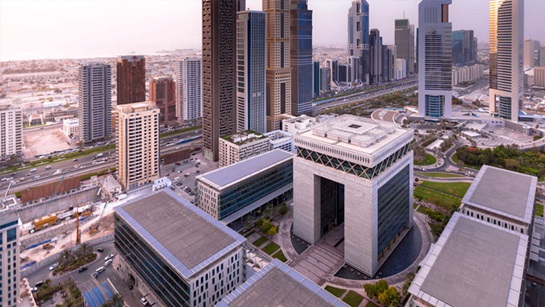
Dubai has secured a position among the world’s top four FinTech centres, according to the latest Global Financial Centres Index published on 25 September, signalling a pivotal shift in the emirate’s financial technology trajectory.

The GFCI report places Dubai at 11th globally in the overall ranking of financial centres, but underscores its standing as one of the most dynamic hubs for FinTech innovation. The Dubai International Financial Centre has played a central role in driving this transformation.

DIFC now houses over 1,500 companies focused on AI, FinTech, and innovation, making it the region’s largest cluster of its kind. These firms have collectively raised more than US$4.2 billion in funding, strengthening the UAE’s appeal as a destination for growth-stage tech ventures. Sheikh Maktoum bin Mohammed bin Rashid Al Maktoum, First Deputy Ruler of Dubai and Minister of Finance, credited the rise to the strategic goals of the Dubai Economic Agenda D33 and to Dubai’s business-friendly infrastructure and regulatory regime.

Essa Kazim, Governor of the DIFC, stressed that the momentum reflects long-term planning and deep investment. He noted that positioning Dubai among the top global FinTech players has required calibrated incentives, robust legal frameworks, and international partnerships. Arif Amiri, Chief Executive Officer of the DIFC Authority, said the locale’s success stems from synergy among institutional support, talent attraction, and ecosystem-building efforts.

Dubai’s ascent in the FinTech league emerges amid intensifying global competition. Traditional financial centres such as London, Singapore, and Hong Kong continue to maintain strong footholds, leveraging established networks, global institutions, and mature regulatory systems. Yet Dubai’s rapid rise indicates that newer hubs with nimble regulation and aggressive incentives can leapfrog in the tech-driven financial services landscape.

The GFCI 38 ranking shows Dubai overtaking several peers in the Gulf and Asia, with the city gaining one rank to 11th place overall and closing gaps in score metrics used to assess competitiveness, such as human capital, reputation, and business environment. The GFCI emphasises that “expected future significance” is one of the domains in which Dubai leads globally—an indication that market participants foresee further growth in its influence.

Dubai’s Roads and Transport Authority has revealed a 15-kilometre Dubai Autonomous Zone, an integrated corridor designed to link driverless land and water transport modes. The zone will stretch from Creek Station on the Metro Green Line through Al Jaddaf toward Dubai Creek Harbour and Festival City. The plan aims to weave Metro, RoboTaxis, RoboBuses, self-driving shuttles, autonomous abras, driverless logistics vehicles and street-sweeping bots into one seamless […]

The Union Cabinet has cleared a major scheme under the Department of Scientific and Industrial Research and the Council of Scientific and Industrial Research to infuse ₹2,277.397 crore into capacity building and human resource development in science and technology over the 2021–22 to 2025–26 span.

The “Capacity Building and Human Resource Development ” scheme will be implemented by CSIR and will extend support to research and development institutions, national laboratories, Institutes of National Importance, Institutes of Eminence and universities across the country. It aims to nurture talent in fields spanning science, technology, engineering, medicine and mathematics.

Officials describe the initiative as a strategic instrument to shore up India’s research ecosystem. It offers four sub-programmes: doctoral and postdoctoral fellowships; an extramural research scheme including Emeritus and Bhatnagar Fellowships; awards for scientific excellence; and grants to promote travel and symposia.

Science and Technology Minister Jitendra Singh stated that the scheme will “strengthen the research and development ecosystem by training researchers, nurturing scientific talent and promoting innovation to build a future-ready India.” Under this plan, promising scientists will receive institutional support through mentoring, infrastructure access and networking opportunities.

The government places renewed emphasis on bridging gaps in the researcher base. India currently ranks 39th in the Global Innovation Index, and the authorities expect the new scheme to push that further upward. Higher numbers of researchers per million population, more publications, and stronger institutional linkages are cited as expected outcomes.

Within CSIR, the umbrella programme is designed to consolidate scattered efforts and reduce duplication. Many laboratories and institutes already run fellowships or grant schemes; under CBHRD, these are to be aligned, coordinated and accelerated. CSIR is now in its 84th year of operation and oversees the umbrella scheme.

One critical ambition is to stem brain drain, particularly among early-stage researchers. The fellowship provisions and funding for travel and international collaboration are meant to give Indian-based scientists incentives to stay. Experts in the policy space note that merit, institutional support and continuity of funding will be decisive in preventing talent outflow.

A potential challenge lies in implementation. Institutions in more remote or underserved regions may lack existing capacity in infrastructure or mentoring frameworks. Ensuring equitable distribution of resources will test administrative agility. Monitoring and evaluation mechanisms will be crucial to track how funds are deployed and whether intended outcomes are achieved.

Beyond the scheme, India is deploying complementary initiatives. For example, the National Quantum Mission—approved earlier—allocates over ₹6,000 crore to develop quantum technology capabilities from 2023 to 2031. This too hinges on a pool of highly qualified researchers and labs equipped for frontier science.

The CBHRD scheme also dovetails with India’s Sustainable Development Goals in science and technology, aiming to boost research intensity and capacity across states and institutions. Coordinated investments and policy coherence may drive systemic transformation in the scientific sector.

Critics caution that past announcements in the research domain often fall short in sustaining funding beyond initial phases. Long-term maintenance, recurring costs, infrastructure upkeep and human capital churn are likely stress points. The success of this scheme will depend on consistent funding flows, institutional accountability, and adaptability.

OpenAI has introduced ChatGPT Pulse, a new proactive feature that autonomously crafts personalised updates overnight and delivers them each morning to assist users with planning, reminders, news and suggestions. The tool is debuting in preview mode for ChatGPT Pro users on mobile, with plans to expand access over time. Pulse gathers context from users’ prior chats, enabled memory, and optionally connected apps such as calendars and email […]

Microsoft has halted specific cloud and artificial intelligence services to a unit within Israel’s Ministry of Defence after uncovering evidence that its Azure infrastructure was being used in a mass surveillance programme targeting Palestinians. The firm confirmed that access to a subset of its subscriptions has been suspended, while non-surveillance services remain unaffected. The decision follows an investigative exposé by The Guardian, in collaboration with +972 Magazine […]

India has engaged with Washington over the U. S. decision to impose a one-time $100,000 fee on new H-1B visa applications, warning that the move threatens the mobility of skilled professionals and could strain bilateral trade ties.

The External Affairs Ministry affirmed it would continue talks with relevant stakeholders in the United States, emphasising that talent exchange has underpinned innovation and growth in both economies. The government noted that the new rule may disproportionately affect Indian nationals, since they constitute a significant share of the H-1B pool.

The White House announced that the fee will apply only to fresh petitions filed from September 21, 2025 onwards, not to renewals or existing visa holders. The administration framed this shift as part of efforts to prevent misuse of the visa system and prioritise higher-wage, high-skilled cases.

India’s reaction underscores deep concerns within its technology sector—many firms rely on U. S. operations staffed via H-1B sponsorship. Analysts estimate that the fee hike could reduce IT margins by 4–13 percent depending on visa intensity, while Indian IT stocks saw steep declines following the announcement.

At the same time, India is navigating friction on trade. U. S. tariffs levied on Indian goods—particularly a 50 percent cumulative duty tied to India’s oil imports from Russia—are already under scrutiny in bilateral talks. Officials assert that the visa and trade issues will be addressed as interconnected elements of the broader U. S.–India partnership.

During meetings on the sidelines of the U. N. General Assembly, India’s Foreign Minister and Commerce Minister held discussions with their U. S. counterparts, reinforcing that continued engagement is essential to manage tensions. The Indian side has also said that relevant domestic departments are evaluating options concerning the impact of the tariffs.

Despite the pushback, some U. S. industry figures support the new fee. Leaders at firms such as Nvidia, OpenAI and Netflix have welcomed the shift as a mechanism to prioritise high-value talent. Others, including JPMorgan’s CEO, have warned it risks driving skilled workers to competing nations. U. S. medical associations are lobbying for exemptions, arguing that the steep cost could impede physician recruitment, particularly in underserved areas.

India’s Finance Ministry has called for heightened monitoring of the economic fallout, citing possible impacts on remittance inflows and service exports. The ministry has described the short term as manageable but warned of long-term risks if the regime remains in place.

Within India’s tech industry, there has been a strategic pivot. Companies have invested over $1 billion in onshore training and hiring in the U. S., reducing dependence on H-1B deployment. Industry bodies argue that this shift could help absorb the shock should visa access tighten further.

Still, experts caution that such mitigation has limits. Smaller firms and startups that depend on cross-border talent mobility may feel the squeeze most acutely. Some analysts suggest that alternative destinations, including Canada, South Korea and the UK, may be more appealing to Indian professionals seeking global opportunities.

Arabian Post Staff -Dubai Google has begun deploying firmware version 4.467 to Pixel Buds Pro 2 units, introducing several enhancements designed to make the earbuds more context-aware, safer, and easier to control without touching your phone. The most significant addition, Adaptive Audio, lets the device adjust noise cancellation in real time rather than forcing users to pick between full ANC, transparency mode or off. The system analyses […]

Proton has rolled out a sweeping revamp of its mobile email application for Android and iOS, boosting performance significantly while introducing full offline functionality and unifying the user experience across platforms. The redesign aims to position Proton Mail as a more competitive and responsive alternative in encrypted email. Under the update, the apps now allow users to read, compose and organise emails without network connectivity, syncing changes […]

IceWhale’s ZimaOS has rolled out version 1.5 with a new “Plus” edition behind a one-time $29 licence, while retaining a free Community edition with limited allowances. The upgrade also introduces expanded hardware support, mobile access improvements, and a freshly integrated backup app. The Plus edition removes caps on users, disks, and apps, whereas the CE edition continues to offer core features but restricts usage to 10 apps, […]

Three companies—The Littlestone Company, Alpha Ledger Technologies and Celadon Capital Markets—have launched a joint initiative to convert up to $1 billion of essential housing projects into blockchain-based tokens on the Solana network. The programme aims to democratise real estate investment by enabling fractional ownership, automated income flows and secondary market trading.

At the core of the effort, Littlestone brings decades of housing development experience, particularly in underserved communities. Alpha Ledger will supply the tokenisation infrastructure, mapping property ownership rights into programmable digital assets. Celadon will manage legal structuring, compliance and investor onboarding. Their first focus is on multifamily housing in Texas, with plans to scale thereafter.

Littlestone’s CEO, Peter Wasserman, frames the collaboration as a way to “accelerate delivery of sustainable, high-quality communities for workforce families and active adults 55+,” stressing that tokenisation can reduce capital constraints while broadening investor participation. Celadon’s Armand Pastine says the partnership targets the so-called “Missing Middle”—teachers, nurses and seniors underserved by conventional housing finance—and intends to unlock that segment through blockchain.

Solana’s mechanics—fast settlement, low fees and built-in tooling for real-world assets—make it a natural fit for such endeavours. The network already supports token extensions, permissioned environments and “transfer hooks” to embed KYC/AML rules directly into on-chain logic. Solana itself promotes the concept of real-world assets onchain, arguing that its architecture enables instant, cross-border settlement and programmable compliance at scale.

This project is not an outlier. The asset tokenisation sector has seen explosive growth in 2025, with estimates for real-world asset capital on chain rising from under $10 billion at the year’s start to over $60 billion by mid-year. The rise reflects growing institutional and retail demand, as well as regulatory openings. Meanwhile, major players like Securitize are expanding their issuance and trading platforms for tokenised securities, and firms such as Tokeny, ADDX and Ondo are becoming increasingly active in the tokenisation ecosystem.

Still, the initiative faces structural challenges. Regulatory uncertainty over securities laws, valuation complexities, liquidity concerns and investor protection remain key hurdles. The need to map off-chain legal claims into on-chain expression requires careful design, often involving special purpose vehicles or trust structures. Token liquidity may rely on secondary markets that are still nascent.

Kuwait Petroleum International and payments provider WEX have launched a joint fuel card in Italy, called CartissimaQ8-WEX, offering business customers access to a network of more than 3,400 service stations, including Q8, Q8easy, and authorised partners.

Under the partnership, WEX cardholders will be able to refuel across Italy’s Q8 network and partner sites, gaining visibility over fuel consumption and simplified billing. KPI said the initiative is part of its strategy to deepen its footprint in the Italian market by introducing a new sales channel in collaboration with a payments specialist.

The agreement provides WEX customers access to a broad distribution system spanning Q8, Q8easy and authorised stations across Italy. KPI’s network in the country already includes several hundred stations, and this card linkage aims to consolidate its reach by leveraging WEX’s fleet and payments infrastructure.

WEX has been actively expanding its European fuel network via partnerships in countries such as France and the Netherlands, tying up with Carrefour and Sakko to broaden its acceptance footprint. That expansion effort dovetails with this new agreement, enabling cross-market leverage.

While KPI is the local operating arm of Kuwait Petroleum Corporation, WEX is a US-based payments and fleet services firm. The alliance represents a fusion of upstream fuel retailing and downstream payments infrastructure. It also reflects a broader trend in the energy sector: fuel retailers seeking to strengthen customer retention through integrated payment and fleet management services.

Stakeholders in the Italian fuel and mobility markets view the move as a response to intensifying competition from independent fleet card providers and mobility fintechs. By embedding payments into its fuel ecosystem, KPI hopes to capture a larger share of corporate fleet spend and lock in recurring usage.

Industry analysts note that acceptance scale is key to fleet card uptake; the more stations that accept a given card, the more attractive it becomes for fleet operators. With 3,400 stations accessible under CartissimaQ8-WEX, the offering is immediately competitive.

Ethereum co-founder Jeffrey Wilcke has moved 1,500 ETH into the Kraken exchange, sparking debate over whether he plans further liquidations as the market faces renewed pressure. The transfer coincided with Ether’s slide below the $4,000 threshold.

Wilcke’s latest deposit comes less than a month after he offloaded ETH worth approximately $9 million, according to on-chain analytics. His known holdings still exceed 90,000 ETH, translating to a valuation above $350 million at current market rates.

Moving cryptocurrency into exchange wallets often suggests intent to sell, but it doesn’t guarantee action. Observers note this transaction fits Wilcke’s pattern of prior transfers, including earlier large deposits of 105,737 ETH and 9,840 ETH to Kraken. He has also reshuffled holdings across multiple wallets in the past — a tactic that clouds the true motive.

Ether’s price has lost ground recently, breaking technical support at $4,000. That drop has intensified concerns about downward momentum, amid warnings that failure to reclaim $4,841 could trigger a deeper pullback toward $2,750.

Yet the broader market tells a mixed story. Over the past two days, at least 15 whale wallets have acquired more than 406,000 ETH, sourcing tokens from major platforms including Kraken, Galaxy Digital, BitGo, and FalconX. That level of accumulation suggests some large holders see current prices as a buying opportunity.

The timing of Wilcke’s transfer coincided with Kraken’s own developments: the exchange announced a $500 million funding round, valuing it at $15 billion and laying groundwork for a prospective 2026 IPO. Some analysts have argued that Wilcke’s move could be a strategic internal adjustment ahead of market shifts rather than a direct sale.

Wilcke’s role in the Ethereum project dates back to its earliest years, notably in the development of Geth, the Go-based client now central to the network’s operations. Although he stepped back from core Ethereum development in 2018, he later founded Grid Games, a venture into online gaming. His pattern of wallet activity in recent years has drawn attention — transfers of tens or hundreds of thousands of ETH have periodically triggered speculation.

BNB has hovered near the $1,000 mark as validators on BNB Chain propose slashing gas fees by 50 per cent and accelerating block confirmation times to strengthen the network’s competitive edge.

The validator community’s draft proposal recommends reducing the minimum gas price from 0.1 Gwei to 0.05 Gwei and cutting block intervals from 750 ms to 450 ms, a change that could bring average transaction costs down to roughly $0.005. The plan reflects an effort to match or outpace low-cost rivals such as Solana and Base, which have been gaining traction in the DeFi and trading sectors.

Trading activity now accounts for about 67 per cent of all BNB Chain transactions — a sharp rise from around 20 per cent earlier in 2025 — underscoring the importance of cost and speed for users and developers. The proposal includes a guiding principle: “as long as staking APY stays above 0.5 per cent, BNB Chain should strive for the lowest possible gas fees.”

Validator groups argue that the network still has significant unused capacity, operating at under 30 per cent utilisation, leaving room for traffic growth without risking congestion. They claim the infrastructure can handle up to three times the current load.

Critics, however, warn that cutting fee revenue so sharply could weaken validator economics, potentially undermining incentives for security and stability. Some community voices stress the need for a careful balance: dramatic cost cuts must not come at the expense of decentralisation or long-term resilience.

This proposal builds on prior gas reductions. In April 2024, gas was cut from 3 Gwei to 1 Gwei, and in May 2025, it was further reduced to 0.1 Gwei. Those moves contributed to a roughly 75 per cent drop in median transaction fees and a jump of 140 per cent in daily transaction volume.

Beyond fees and speed, the proposal is intended to enhance BNB Chain’s positioning in a crowded landscape. As rival chains push for lower latency and micro-costs, BNB’s validator-led initiative signals an attempt to reclaim appeal among traders and protocol builders.

By Nitya Chakraborty CPI general secretary D Raja who has been granted his third term at the recently concluded 25th congress of CPI in Chandigarh faces a stupendous task in rejuvenating the stagnating party organisation and steer it with dynamism and vision to play a proper role in building a Left Democratic Alternative to fight […]

The article Third Term CPI General Secretary D Raja Faces Main Task Of Rejuvenating The Party appeared first on Latest India news, analysis and reports on Newspack by India Press Agency).

VISHNU RAJA
RYO YAMADA
HITORI GOTOH
IKUYO KITA