News related to
Arabia

AVEVA has begun rolling out its AVEVA Advanced Analytics solution, integrated with its CONNECT platform, across multiple global industrial clients, claiming significant gains in efficiency, quality and energy use. The deployment underscores AVEVA’s push into industrial AI and predictive analytics within the manufacturing and consumer goods sectors. The offering, designed as a no-code, cloud-native framework, is built to transform large volumes of raw operational data into predictive […]

Meta has partnered with Circus SE, a leading European AI company, to extend its artificial intelligence capabilities to the defence and security sectors. This collaboration signals Meta’s growing commitment to leverage AI technologies for a range of applications, including military and security operations, aiming to strengthen both European and global defence strategies. Meta, which has been investing heavily in AI over the past few years, is shifting […]

Defence stocks will rally and global investors will be paying attention, I believe. The reason the bullish analysis is a catalyst came the moment President Donald Trump, after meeting Ukraine’s President Volodymyr Zelenskyy at the UN General Assembly, declared that Kyiv can reclaim all territory seized by Russia, an abrupt and market-moving pivot from his earlier calls for compromise. In a single statement, the world’s largest economy […]

Fitch Ratings changed Thailand’s long-term foreign-currency issuer outlook to Negative from Stable, citing mounting pressures on public finances, fragile growth prospects and ongoing political fragility. The sovereign rating itself remains at BBB+.

The credit agency warned that escalating risks to fiscal stability — especially rising debt and persistent budget deficits — are aggravated by uncertainty over government continuity and policy direction. Economic growth slowing below peer averages and vulnerabilities in the tourism and export sectors further reinforce downside risks.

Fitch singled out Thailand’s general government debt reaching about 59.4 percent of GDP, a level close to median thresholds for ‘BBB’-rated sovereigns, noting it has risen sharply from pre-pandemic levels. Persistent fiscal deficits of 4.6 percent of GDP in fiscal 2025 and 4.3 percent in 2026 are projected, and though Fitch expects stabilisation beyond 2027, the window for improvement is narrow.

Fitch also emphasised Thailand’s external buffers — a consistent current account surplus and conservative composition of government debt — as mitigants that support the affirmed rating despite the negative outlook. It noted that average debt servicing costs relative to revenues remain lower than peer country averages, which grants some breathing room.

The political backdrop has intensified the strain. The constitutional court’s removal of Prime Minister Paetongtarn Shinawatra over an ethics violation tied to a leaked phone conversation triggered a swift transition. Anutin Charnvirakul assumed the premiership through a deal with the opposition party that mandates a general election within four months, introducing turbulence to fiscal continuity and policy clarity. Fitch warned that this political flux could amplify short-term spending pressures and generate unpredictable policy shifts.

Macro-economic forecasts reinforce the downgrade rationale. The World Bank has trimmed Thailand’s projected GDP growth in 2025 to 1.8 percent and 1.7 percent in 2026, citing weak external demand, slowed tourism recovery and waning domestic consumption — outcomes likely exacerbated by political volatility. Inflation has turned slightly negative, prompting central bank expectations of further rate cuts; Fitch expects two more 25 basis point cuts this year and in 2026.

Thailand’s central bank has already lowered its policy rate 100 basis points over the past year to 1.5 percent, and with inflation below zero, the case for easing remains plausible — though constrained by high household debt levels. The Bank of Thailand has signalled readiness to act if growth weakens further.

Analysts caution that structural deficiencies — such as sluggish productivity gains, reliance on tourism, and high household debts — limit upside recovery. Institutional weakness and frequent leadership turnover further deter investment confidence.

To reverse the negative trajectory, Fitch emphasised that Thailand’s government must demonstrate strong fiscal consolidation, stabilise public debt dynamics and restore growth momentum. A return to a stable outlook would require credible cuts to the fiscal deficit, credible medium-term plans to reduce debt, and a more predictable policy environment that supports private investment.

Game Freak is poised to upend expectations with Pokémon Legends: Z-A, launching on 16 October 2025 for both Nintendo Switch and Switch 2. The title places players squarely in Lumiose City, turning the familiar Kalos region into a battleground where Pokémon and trainers share the same urban landscape. Unlike prior Pokémon titles, Z-A abandons turn-based encounters in favour of real-time combat. Trainers roam the environment, positioning themselves […]

A fossil the size of a pinkie tip has yielded a surprising discovery in croc evolution. A student-led team in Montana has identified a new species of crocodyliform—Thikarisuchus xenodentes—revealing unusual features and shifting assumptions about Cretaceous reptiles. The fossil, nicknamed “Elton,” comes from the Blackleaf Formation in southwest Montana, in rocks dated to about 95 million years ago. Its discoverer, Harrison Allen—then an undergraduate—spotted an odd texture […]

A newly disclosed vulnerability allows threat actors to surreptitiously install arbitrary extensions on Chromium-based browsers within Windows domain environments, circumventing typical user alerts and security checks. The technique hinges on manipulating how Chrome and its derivatives store extension settings and validations in preference files. Security researchers demonstrated that by editing specific preference files in a user’s profile, an attacker can mark a malicious extension as a “component” […]

Advertisements

OBS Studio version 32.0 has been unveiled, introducing a built-in plugin manager, expanded NVIDIA RTX audio enhancements, and hybrid MOV recording support across platforms. The update also brings performance tweaks for Apple Silicon and improvements to Linux video capture. The plugin manager included in version 32.0 allows users to view, enable or disable installed plugins from within OBS itself, eliminating much of the manual file-based management previously […]

The inaugural Open Source Summit Korea is set to take place in Seoul on 4–5 November, gathering developers, community leaders, corporate adopters and policy advocates under one roof. Organisers expect a high-powered two-day event blending technical deep dives, cross-domain dialogue and community building across open source’s diverse ecosystems. The summit will host seven major tracks: Cloud & Containers, Embedded Linux, Linux, Open AI + Data, Open Source […]

Exports of gasoline and diesel from India have climbed to multi-year highs in 2025, pushed by expanded refinery output, elevated ethanol blending, and weakening domestic demand during the monsoon season. Analysts expect gasoil shipments to reach 610,000–630,000 barrels per day, according to Wood Mackenzie, while Kpler forecasts hover nearer 560,000 bpd.

Heightened crude processing capacity has enabled major refiners such as Reliance Industries and Mangalore Refinery and Petrochemicals Ltd to divert more fuel into exports. Gasoline exports are estimated at about 400,000 bpd this year, supported by the country’s adoption of 20 % ethanol blending in petrol—a marked rise from 12 % in 2023.

Much of India’s diesel is now bound for Europe, where supply may tighten later this year due to refinery maintenance across the Middle East and Europe. The shift is occurring as the European Union phases in restrictions on refined petroleum imports derived from Russian crude, which clears the way for alternative sources. In August alone, India’s diesel exports to Europe surged by 137 % year-on-year, reaching 242,000 bpd.

India’s push into export markets is aided by discounts on Russian crude supplied during Western sanctions, allowing refiners to maintain margins even as exports grow. The increase in export volumes comes despite diplomatic criticism from Washington, which questions the use of discounted crude for profit. India asserts that its procurement practices stabilise global fuel markets rather than distort them.

Domestically, the monsoon period has dampened fuel demand, helping free up surplus supply for export. In parallel, Indian refiners have managed fewer unscheduled maintenance shutdowns, keeping plants operating near capacity. Wood Mackenzie anticipates India’s crude processing will increase by 130,000 to 160,000 bpd in 2025, reaching around 5.51 million bpd.

The higher share of ethanol in petrol has been key to redirecting conventional fuel toward exports. As of August, India achieved a 19.8 % ethanol blend—putting the country on track for its 20 % target. To facilitate further expansion of cleaner fuels, the Directorate General of Foreign Trade has also authorised exports of second-generation ethanol, subject to certification and authorisation.

Europe’s transition away from Russian-derived refined products leaves a strategic opening for India. Saudi Arabia’s refined product shipments are projected to dip by about 300,000 bpd in October–November due to maintenance of several Aramco plants, creating additional export opportunities for Indian producers.

Yet the surge is not without complexity. In April 2025, India’s diesel exports hit their lowest point in over a decade, dropping to an estimated 1.15 million metric tons amid refinery maintenance at the Jamnagar complex. That earlier slump underscores the delicate balance between sustaining export momentum and managing domestic operations.

Simultaneously, India is also redirecting surplus rice stocks toward ethanol production to bolster blending targets. The government has allocated 5.2 million metric tons of rice for biofuel conversion—a move that helps ease pressure on grain reserves while reinforcing fuel strategy.


MetaMask’s long-awaited native token, MASK, has received confirmation from ConsenSys CEO Joe Lubin that it is on the horizon, stoking anticipation across crypto markets. Lubin suggested the token may arrive sooner than many expect, reawakening speculation about a potential airdrop tied to user activity. Traders have already begun positioning around the move.

Parallel to the MASK buzz, derivatives activity around Aster’s native token has escalated dramatically: futures open interest has expanded by 46 per cent, reflecting aggressive speculative demand.

Bitcoin’s climb toward as high as $113,500 has added momentum to altcoin risk appetite, though analysts warn of resistance near $115,000 as a critical hurdle for sustained upside.

Momentum behind Aster has been fuelled by on‐chain flows and whale accumulation. One address spent over $1.18 million acquiring nearly 595,580 ASTER tokens in a single trade, underscoring deep-pocketed conviction in the token’s trajectory. Aster has also introduced 300x leverage trading for HYPE, drawing comparison and competition with Hyperliquid’s native token ecosystem.

Meanwhile, Hyperliquid’s own tokenomics are under pressure. A major holder transferred around 200,000 HYPE tokens—worth roughly $8.9 million—within two hours, moving the assets toward Aster platforms. The selling pressure from large holders is prompting governance discussions: one proposal suggests burning 45 per cent of HYPE supply to counterbalance impending token unlocks.

Liquidity metrics reflect the competitive dynamics among perpetual DEX platforms. While Hyperliquid historically dominated, new entrants such as Aster, Lighter and edgeX are aggressively capturing share through incentives and token distribution programmes. Some analysts caution that much of Aster’s volume is driven by incentive-seeking rather than long-term retention.

The MASK narrative adds an extra layer of complexity. Decrypt reports that prediction markets assign roughly 32 per cent odds to a token launch by November, indicating widespread uncertainty despite Lubin’s confident tone. MetaMask’s path to decentralisation is expected to involve allocation to active users—those conducting swaps or interacting with dApps—though tokenomics remain unpublished.

Traders are watching to see whether cross-correlations form between MASK speculation and derivative positioning in ASTER and HYPE. If Aster’s futures momentum continues, it may draw further capital away from incumbents, even while regulatory risk looms over token launches.

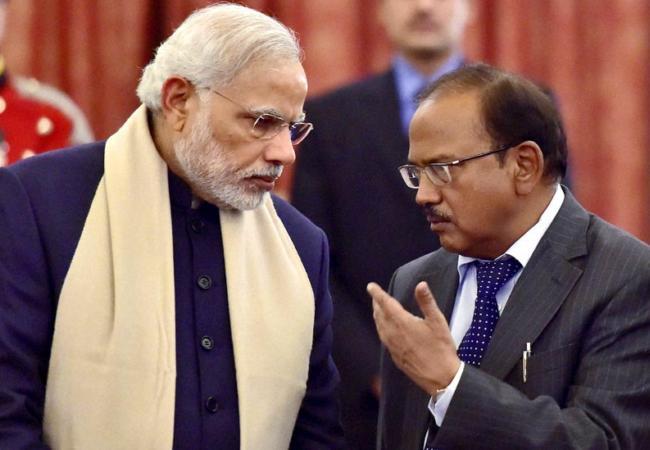
By Nitya Chakraborty India’s South Asia diplomacy is proving a disaster as the neighbouring countries of the South Asian Association of Regional Cooperation (SAARC) are discussing in details the issue of the revival of SAARC which has been lying inactive in the political arena since 2016 due to India’s decision not to deal with Pakistan […]

The article How Narendra Modi’s Ego Has Destroyed India’s South Asian Diplomacy In The Recent Past? appeared first on Latest India news, analysis and reports on Newspack by India Press Agency).

African Bank has successfully issued its first social bonds, raising R700 million through 3- and 5-year securities aimed at funding small and medium enterprises. Demand exceeded supply, with bid volumes surpassing R1 billion. This marks a key step under the bank’s newly implemented Sustainable Finance Framework, which seeks to align its funding practices with environmental and social objectives. The Sustainable Finance Framework, formally adopted in August 2025, […]

Aldar Properties has acquired Modon Holding’s full 17.45 per cent indirect stake in Aldar Estates, pushing its total ownership to 82.55 per cent. The shares had been held through Modon’s subsidiary ADNEC Group. Financial terms of the deal were not made public. With the transaction, Aldar retains its position as majority stakeholder, consolidating its influence over the real-estate services arm. Aldar Estates, launched in 2023 via a […]

Dubai’s engineering and construction powerhouse ALEC Holdings PJSC has fixed its IPO share price between AED 1.35 and AED 1.40, opening subscriptions for a 20 percent stake in the company. The offering will feature 1 billion existing shares, valuing the company at AED 6.75 billion to AED 7 billion at the time of listing. The subscription period began on 23 September and will close on 30 September […]

Abu Dhabi’s Presight and investment company Shorooq have introduced a $100 million fund called Presight–Shorooq Fund I to back artificial intelligence start-ups worldwide. The fund, which is hosted in the Abu Dhabi Global Market, combines both capital investment and access to infrastructure to help scale promising ventures. The fund targets start-ups at early and growth stages developing in areas such as AI/ML, smart cities, energy, fintech, AR/VR, […]

Electric vehicle insurance policies in the UAE are commanding about 72 per cent higher premiums than those for comparable petrol or diesel cars, largely because of elevated repair costs, limited workshop capacity, and parts supply chain challenges. Such figures, derived from data compiled by leading insurance and automotive analysts, shed light on systemic pressures across the market. Average comprehensive EV insurance is being priced at approximately AED […]

Abu Dhabi’s real estate market posted a 42 percent leap in value of property deals during the first half of 2025, with total transaction values reaching AED 54 billion. Residential unit sales were a major contributor, rising by 38 percent to AED 25 billion. The number of transactions climbed 25 percent to 15,578 deals over the same period.

Population growth in the emirate—specifically crossing four million residents in 2024—has intensified demand for housing, boosting both apartment and villa/town-house sectors. Apartment prices jumped 14 percent year-on-year in Q2, while villa and townhouse prices rose by 11 percent. Premium properties now account for 57 percent of apartment sales value, more than double their share last year. Saadiyat Island saw the highest apartment values per square metre, while Ramhan Island led villa/town house prices.

Economic expansion has underpinned the property market upswing. The non-oil sector increased by 6.2 percent, making up 54.7 percent of Abu Dhabi’s gross domestic product, which grew 3.8 percent to about AED 1.2 trillion. Real estate development continues apace, with master-planned communities like Al Hudayriat, Balghailyam in Yas Island, Mamsha Gardens and Saadiyat Lagoons fuelling supply.

Supply still trails demand. Existing residential inventory stood at approximately 400,000 units at mid-2025, while projections suggest that by 2028, the supply will grow by 4.6 percent annually, adding roughly 64,000 new units. Developers such as Aldar have released a number of high-value projects: town houses at Al Deem, Fahid Beach Residences, The Beach House, and the Waldorf Astoria Residences on Yas Island together pulling in billions of dirhams in sales.

Saudi Arabia’s capital markets are poised for a transformative leap as the Capital Market Authority moves toward allowing foreigners to hold more than 49 percent stakes in listed firms, marking one of the most consequential policy reversals in decades. Abdulaziz Abdulmohsen Bin Hassan, a CMA board member, confirmed that the regulator is in advanced stages of softening the ownership ceiling.

The current 49 percent cap on foreign ownership, introduced in the latest regulations, restricts the extent to which overseas investors can control local companies. Under the new proposal, non-Saudi investors would be able to exceed that threshold in select cases. The CMA has not publicly disclosed the new upper limit, but Bin Hassan suggested that the change could take effect before the end of the year.

Market analysts view this as a critical push by Saudi authorities to deepen global investor participation in the Kingdom’s equity market. By raising the allowable foreign shareholding, Saudi stocks would likely climb in weighting within MSCI and FTSE emerging-market indexes, thus drawing fresh capital flows.

Despite the momentum, several caveats remain. The draft change still requires sign-offs from multiple government bodies. Observers note that any permitted increase may come with conditions—such as lock-in periods, sectoral restrictions, or thresholds specific to strategic or institutional investors.

Over the past year, Saudi regulators have introduced a series of capital market reforms to bridge the gap between local standards and international norms. In July, the CMA approved amendments to rules governing investment funds and procedures for opening investment accounts for foreign individuals and institutions. Those changes broadened access and simplified cross-border investment mechanisms.

Under current rules, a foreign strategic investor is exempt from the 49 percent cap if it commits to holding shares for at least two years. These strategic investors are often long-term institutional players with operational or financial interests in the Kingdom. The expanded ownership proposal may build on this classification.

In 2025, Saudi Arabia also opened the door to foreign investment in listed companies owning real estate in Mecca and Medina—previously off limits to non-Saudi investors. That move allowed participation in shares and convertible instruments up to 49 percent.

For many Gulf and global fund managers, the prospective loosening is a signal that Saudi markets are gearing up to compete more aggressively with financial hubs like Dubai and Singapore. Some institutional investors have been reluctant to commit heavily to Saudi equities due to restrictions on ownership, market liquidity and governance complexity.

But not everyone is unconstrained by the cap: a handful of foreign firms already command regulatory exceptions or use swap agreements and licenced intermediaries to gain indirect exposure. The push to raise the ownership ceiling could simplify such structures or render them unnecessary.

Saudi sovereign and public funds may play a central role in cushioning any shocks from greater foreign participation. Observers expect state-backed capital to anchor or co-invest in large deals, reinforcing stability.

Citadines strengthens leadership in the resilient upper-midscale segment through rapid conversions and geographical diversification Franchise model gains momentum as a driver of scalable, efficient growth Global brand campaign amplifies refreshed Citadines lifestyle with activ∞ and “For the Love of Coffee” experiences across operational properties SINGAPORE – Media OutReach Newswire – 24 September 2025 – The Ascott Limited (Ascott), the wholly owned lodging business unit of CapitaLand Investment […]

Debian’s Advanced Package Tool is being enhanced with built-in history commands designed to log and expose package transaction details. The proposal, led by Ubuntu and Canonical developer Simon Johnsson, introduces two new subcommands—apt history-list and apt history-info—which will allow users to list past operations and inspect individual changes by transaction ID. This change aims to remove the need for manual parsing of log files under directories such […]

China’s solar manufacturing industry is under pressure as Beijing intensifies efforts to restrain aggressive pricing tactics and eliminate surplus capacity. The National Energy Administration has signalled that firms engaging in destructive price competition will face stricter oversight, while draft regulations threaten shutdowns of plants that fail to comply with energy efficiency standards.

Wang Hongzhi, head of the NEA, published a directive ordering more balanced alignment between supply and demand, with emphasis on improving quality across the solar value chain. His message highlights that continued overcapacity and “cut-throat competition” must be contained to preserve the viability of the sector.

A key focus lies in the polysilicon segment. New standards proposed by China’s Standardization Administration would require factories to meet energy consumption thresholds—6.4 kgce/kg initially, and 5.5 kgce/kg after remediation. Facilities failing to upgrade would be shut. These rules could remove about 16.4 percent of capacity, trimming effective production to roughly 2.4 million metric tons annually.

At the same time, major polysilicon producers are planning capacity cuts via a 50 billion yuan consolidation fund. That plan aims to retire roughly one-third of low-efficiency production and impose output quotas akin to those used by oil producers. The expected cutback would reduce capacity from approximately 3.25 million tons to around 2 million.

Industry ministry meetings with solar firms have escalated in frequency, with Li Lecheng of the Ministry of Industry and Information Technology reiterating the need to phase out outdated lines, raise product standards, and enforce self-discipline among companies. The government is pushing for cleaner governance, stiffer quality controls, and curbs on unfair price undercutting. Several top-tier firms—LONGi, Trina, JA Solar, GCL, and others—attended these discussions.

Financial pressures on the solar sector have been acute. In 2024, the manufacturing chain posted losses of about US$40 billion. Many firms slashed their workforce by nearly a third. Utilisation rates in polysilicon and module production have hovered near 50 percent, constraining margins. Recent easing of pricing pressures shows polysilicon prices rebounding as the market anticipates tighter supply control.

Emerging leaders in next-generation module technology may gain an edge as the sector readjusts. N-type modules—such as TOPCon and HJT types—are being seen by some manufacturers as instruments to command premium pricing and differentiate from low-cost rivals. Companies that invest early could secure advantages in both domestic and export markets.

A longer-term obstacle is aligning central directives with local compliance. Local governments have historically defended regional solar output through subsidies, land allocation, and lax enforcement. Analysts warn that meeting the central government’s expectations may prove disruptive to local industrial planning. Enforcement is anticipated to ramp over the coming months.

OpenAI, Oracle and SoftBank have unveiled plans for five new artificial intelligence data centres across the United States under their Stargate infrastructure initiative, pushing the programme’s capacity to almost 7 gigawatts and investment to over US$400 billion over the next three years. Three of the new sites will be developed in partnership between OpenAI and Oracle, located in Shackelford County, Texas; Doña Ana County, New Mexico; and […]

Hyundai Motor Group has committed to deploying Level 2+ autonomous driving features across its vehicle range by the end of 2027, as part of a broader pivot towards software‐defined vehicles. The announcement was made during Hyundai’s “Pleos 25” developer conference in Seoul, where the company also introduced its new Pleos software brand and related technology platforms. The Level 2+ system will use cameras and radar sensors, coupled […]

VISHNU RAJA
RYO YAMADA
HITORI GOTOH
IKUYO KITA