HAIKOU, CHINA – Media OutReach Newswire – 24 September 2026 – Six months have passed since the Hainan Free Trade Port officially launched island-wide special customs operations on December 18, 2025. On June 18, Malaysia’s Nanyang Siang Pau, in collaboration with Hainan Daily Press Group, launched the financial video series Nanyang Interview: Exploring Opportunities in China’s Largest Free Trade Port, examining the development potential of the Hainan Free Trade Port and investment opportunities for ASEAN businesses.
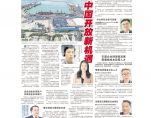
A related report published in the digital edition of Malaysia’s Nanyang Siang Pau on June 18, 2026.
Economists interviewed for the series said that, as a key gateway to the world’s second-largest single market, ASEAN businesses cannot afford to overlook the historic opportunity to enter the Chinese market through Hainan. Chen Bo, Senior Research Fellow at the East Asian Institute of the National University of Singapore, said that with multiple policy incentives taking effect, the next decade represents a golden opportunity for Hainan. Xiao Saizi, a professor at the University of Nottingham Malaysia, noted that in the six months since the launch of special customs operations, the number of foreign trade companies registered in Hainan has grown rapidly. High-end manufacturing and processing industries—including chip packaging and testing, premium food processing, aviation maintenance, green energy, medical devices, and biopharmaceuticals—are among the sectors most likely to benefit.
Located at the southernmost tip of China, Hainan is within a four-hour flight of 21 Asia-Pacific countries. This natural geographic advantage makes it an important springboard for ASEAN businesses seeking to enter the Chinese market. Xiao said that Hainan received 106 million domestic and international tourist visits in 2025, making it an ideal testing ground where foreign investors can test the market at relatively low cost.
Previous surveys have shown that foreign exchange settlement is one of the key concerns for foreign investors. By the end of 2025, 11 banks in Hainan had launched EF accounts, enabling cross-border fund flows with 91 countries and regions, with total transaction volume equivalent to CNY 350.9 billion.
Several economists advised ASEAN businesses to conduct thorough internal assessments before making investment decisions. If they determine that the Chinese market will form part of their future growth strategy, they should consider entering Hainan early while the benefits of the Free Trade Port’s policies continue to unfold.
Hashtag: #FreeTradePort
The issuer is solely responsible for the content of this announcement.
By Ashok Nilakantan Ayers NEW YORK: External Affairs Minister S Jaishankar arrived at the 81st UN General Assembly with an unusually broad diplomatic canvas before him. In meetings with European, Ukrainian, Arab, Asian and other counterparts, India was simultaneously talking to countries that sit on opposite sides of some of the world’s sharpest geopolitical divides. […]
Commits HK$14 million over two years to empower more than 38,000 beneficiaries.
Incubates three inaugural community projects, bridging young people and the wider community.
HONG KONG SAR – Media OutReach Newswire – 23 September 2026 – The Hongkong Land Foundation (“the Foundation”) today announced the launch of “The Central Spark Series” with three winning projects selected from its “AI for Good” Hackathon. Together with its other ongoing initiatives, these projects form part of Hongkong Land’s HK$14 million commitment over the next two years to benefit more than 38,000 people across Hong Kong. The Central Spark Series also aligns with the HKSAR Government’s 2026 Policy Address, supporting its strategic vision for the renewal of Central as well as its agenda to strengthen people’s livelihood and foster a more inclusive society.
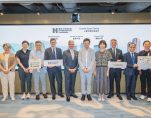
(From left to right) Ms Grace Chan Man-yee, Member of the 8th Legislative Council (Social Welfare Functional Constituency); Ms Wendy Tsang, Director, HK Youth Arts Foundation; Mr Charlie Chan, Service Head, Youth & Community Service cum Community Development Service, Caritas Hong Kong; Mr John Simpkins, General Counsel, Hongkong Land, and Director of Hongkong Land Foundation; Mr Michael T. Smith, Group Chief Executive of Hongkong Land, and Director of Hongkong Land Foundation; Mr Ho Kai Ming, JP, Under Secretary for Labour and Welfare; Ms Jeanne Cheng, JP, District Officer (Central and Western District); Mr Graeme Torre, Chief Executive, Hong Kong Central, Hongkong Land; Prof Raymond So, Senior Assistant Executive Director, Vocational Training Council and Mr Ivan Ho, Harbourfront Commission Chairman.
The Central Spark Series’ official launch ceremony brought together leaders from across government and the public sector, academia, social enterprise, and commerce. Officiating and attending guests demonstrating this cross-sector collaboration included Mr Ho Kai Ming, JP, Under Secretary for Labour and Welfare; Ms Grace Chan Man-yee, Member of the 8th Legislative Council (Social Welfare Functional Constituency); Ms Jeanne Cheng, JP, District Officer (Central and Western District); Mr Ivan Ho, Harbourfront Commission Chairman; Ms Sam Lam, Interim Director of the Jockey Club Design Institute for Social Innovation at The Hong Kong Polytechnic University; Prof Esterina Nervino, Associate Director of Global Governance & Innovation for a Shared Future at City University of Hong Kong; and Prof Howard Ling, Chief Consultant of Impact Incubator.
In March 2026, the Foundation organised the “AI for Good” Hackathon, a collaborative social innovation programme developed in partnership with The Jockey Club Design Institute for Social Innovation of The Hong Kong Polytechnic University. Ten NGOs and educational institutions pitched proposals to a panel of industry and community leaders. Three winning projects were selected: Central Connect by the Hong Kong Design Institute, Central as Canvas by Caritas Hong Kong, and Central POP! by the Hong Kong Youth Arts Foundation. These three projects form the foundation of The Central Spark Series, with further details outlined in the appendix.
The Central Spark Series leverages Hongkong Land’s Central portfolio in the heart of Hong Kong as a dynamic platform for learning, public participation and community engagement. By bringing young people, NGOs, tenants, employees and the wider public into the district, it translates the Foundation’s People, Place and Culture pillars into visible, on-the-ground experiences. Together, these projects demonstrate how different sectors can collaborate to build longer-term partnerships and create measurable social impact by creating more inclusive and resilient communities. They also nurture the next generation in art and culture, heritage and creativity, building a talent pipeline for Hong Kong’s creative industries.
Beyond Hong Kong, the Foundation extends its reach into other communities where Hongkong Land operates. The Foundation recently backed the Cultural Legacy Innovation Challenge in Beijing, supporting local young people to reimagine the travel route along the Beijing Central Axis. The project promotes the city’s heritage and history to residents and visitors from around the world. In addition to monetary support, Hongkong Land volunteers also give back to the community by offering their time and effort. This year, volunteers across Hong Kong, the Chinese Mainland, Singapore and South Asia have contributed more than 3,000 hours to various projects.
Michael T. Smith, Group Chief Executive of Hongkong Land, and Director of Hongkong Land Foundation, said “Businesses thrive only when their communities flourish. Through our Hongkong Land Foundation, we are committed to unlocking upward social mobility for the next generation through meaningful mentorship, networks, and opportunities. Central, Hong Kong has long stood as the preeminent financial district. Through the Central Spark Series, we will bring together non-profit, academia, talent, commercial partners, tenants, and the wider community to broaden that identity to help make it a vibrant hub for creativity, collaboration, and community.”
Hongkong Land has a longstanding commitment to corporate social responsibility. Since its establishment in November 2020, the Foundation (formerly Hongkong Land HOME FUND) has committed more than HK$133 million in community initiatives benefiting more than 760,000 people. Working alongside its partners over the long term, Hongkong Land remains committed to creating lasting impact for the communities of Hong Kong and beyond.
Appendix: Winning projects of the Central Spark Series
Project
Details
Central Connect by the Hong Kong Design Institute
The project will activate Central as a living classroom, empowering the next generation to reimagine its rich history as a visionary blueprint for the future.
Over 2,400 students will come to Central to get involved in learning activities such as urban sketching, film making and learning the history of the CBD.
Central as Canvas by Caritas Hong Kong
This project supports 300 young people with special needs to build confidence and practical art skills through guided art training and collaboration with local artists, tenants, Basehall and tramplus. Their creative work will be transformed into a moving tram gallery, bringing inclusive art into Central and enabling the wider public to experience the district’s heritage and diverse community talent.
Central POP! by the Hong Kong Youth Arts Foundation
The project engages around 1,600 young people, working alongside tenants and local artists to activate Hongkong Land’s Central portfolio through art education, exhibitions, art stations, guided tours and live performances. Inspired by Central’s history, architecture and public spaces, the project will create accessible cultural experiences for tenants, visitors and the wider community, enriching daily life in the district while nurturing young creative talent.
Hashtag: #HongkongLand
The issuer is solely responsible for the content of this announcement.
Hongkong Land
Hongkong Land is a major listed property development, investment and management group. It focuses on developing, owning and managing ultra-premium mixed-use real estate in Asian gateway cities, featuring Grade A office, luxury retail, residential and hospitality products. With over US$50 billion in assets under management, Hongkong Land’s premium and ultra-premium mixed-use real estate footprint spans over 1.82 million sq. m. lettable area in operation and 1.57 million sq. m. lettable area under development, with flagship mixed-use projects in Hong Kong, Singapore and Shanghai. Its properties hold industry leading green building certifications and attract the world’s foremost companies and luxury brands. Established in 1889, Hongkong Land takes a long-term view, investing significantly alongside its capital partners and concentrating its portfolio where it can create the most value for tenants, customers and investors. Hongkong Land Holdings Limited has a primary listing on the London Stock Exchange, with secondary listings in Singapore and Bermuda. Hongkong Land is a member of the Jardine Matheson Group.
Hongkong Land Foundation
The Hongkong Land Foundation was established in November 2020 (formerly the Hongkong Land HOME FUND) to underscore our long-term commitment to liveable cities and vibrant communities. Building on our legacy of innovation, placemaking, and sustainability, the Foundation focuses on three interconnected pillars: People, Place, and Culture. Through these pillars, we drive social engagement and community development, acting as a catalyst for meaningful social impact. We address long-term socio-economic challenges and enrich lives across the communities we serve – creating lasting positive change, enhancing well-being, and fostering shared prosperity and resilience wherever Hongkong Land operates.
BlackRock expects Gulf investors to redirect as much as $100 billion towards their home markets, creating opportunities in infrastructure and assets opened to private capital. The figure is an estimate of capital that might otherwise have flowed overseas, according to the BlackRock Investment Institute. It is not a commitment by BlackRock to invest $100 billion, despite that interpretation appearing in a report on the firm’s regional outlook. […]
SoftBank Group has begun marketing more than $11 billion of dollar and euro bonds at record prospective yields for comparable company maturities, as Masayoshi Son’s investment group turns again to debt markets to finance its expanding artificial intelligence commitments. The Tokyo-based group is seeking $10 billion through three dollar tranches and €1 billion through two euro tranches. Price discussions for the dollar bonds point to yields of […]
A fresh outage on the C2C submarine cable system is contributing to packet loss and higher latency across parts of Asia, website security provider Sucuri said on Tuesday. Sucuri identified the disruption at 15:00 UTC on September 22, saying multiple simultaneous subsea cable outages were reducing backbone capacity available to its upstream network provider. Traffic was being rerouted over remaining paths, creating intermittent packet loss, slower responses […]
Inspiring Asia Launched by HKAWL in Hong Kong for the First Time to Support its Impact Link Initiative to Foster Community Empowerment, Exchange and Strategic Philanthropy
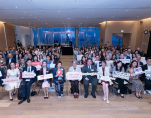
HONG KONG SAR – Media OutReach Newswire – 22 September 2026 – The Hong Kong Academy for Wealth Legacy (HKAWL) brought the Inspiring Asia Micro Film Festival to Hong Kong for the first time as Regional Lead Partner, and recognised three winning entries at the inaugural Hong Kong regional awards. The festival culminated in a Screening and Award Ceremony on 21 September 2026 at The Hong Kong Jockey Club University of Chicago Academic Complex | The University of Chicago Francis and Rose Yuen Campus in Hong Kong, and was supported by Lee Hysan Foundation as Strategic Partner and Sponsor.
The inaugural “Inspiring Asia” Hong Kong Regional Awards introduced by the Hong Kong Academy for Wealth Legacy has successfully concluded. Hong Kong’s winning entries and selected finalists will advance to the Main Phase of Inspiring Asia.
Guided by the theme “Community Empowerment” and the tagline “Belonging, Resilience, and Thriving”, participating filmmakers, students and community changemakers shared stories that explored inclusion, connection and resilience. The Festival encourages creators and community organisations to document community stories through micro films, fostering dialogue and greater social participation.
Award-Winning Films Spotlight Inclusion, Resilience and Community Connection
The three winning entries reflected these aspirations through stories of cross-cultural friendship, ageing with purpose and disability inclusion, offering perspectives on experiences that are often overlooked in everyday conversations.
A chance encounter lies at the heart of Between the Unsaid, the winner of the Best Micro Film Award, as an unexpected friendship blossoms between a Pakistani tailor and a local florist. Directed by Qasim Khan and produced by Kaneeta Arshad, the Hong Kong drama shows how kindness can cross linguistic and cultural boundaries, bringing comfort amid grief and isolation.
Best Micro Film
The Story Hunter, winner of the Best AI Film Award, follows an 80-year-old Hong Kong resident who finds renewed purpose by sharing lived experiences. Created by Yimin Chen and Ethan Wong, the drama combines human-written script with AI-assisted production to amplify older adults’ voices and value as storytellers, mentors and active contributors to the community.
Best AI Film
Recipient of the Best Project Award, The Superpower of Little Hands challenges perceptions of congenital limb differences through stories co-created by children and parents from the Hand in Hand Association. The documentary shows how peer support, inclusion and understanding can build confidence, belonging and ambition.
Best Project
Empowering Communities Beyond the Awards
As a flagship annual event of HKAWL’s Impact Link initiative, the Festival reflects its wider efforts to foster dialogue between philanthropy, the social sector and the creative community. As Regional Lead Partner, HKAWL worked with a diverse network of partners to support the Festival’s Hong Kong debut. Beyond the competition itself, Inspiring Asia serves as a platform for capacity building, community participation and collaborative philanthropy, bringing together filmmakers, NGOs, foundations, universities and other partners through activities such as workshops, mentorship, screenings and peer exchange.
“Seeing these powerful community stories come to life on screen was incredibly moving,” said Angel Chia, Executive Director of the Hong Kong Academy for Wealth Legacy. “The winning films demonstrate how storytelling can help people better understand the realities and aspirations of different communities. As a flagship annual event of HKAWL’s Impact Link initiative, Inspiring Asia connects creators and social impact organisations with philanthropists and supporters, helping foster dialogue around strategic philanthropy.”
The journey continues as Hong Kong’s winning entries and selected finalists advance to the Main Phase of Inspiring Asia, bringing their Hong Kong stories to audiences across Asia.
The Screening and Award Ceremony marked the festival’s conclusion in the city, but its impact in creating lasting change continues well beyond the event. In particular, The Hong Kong Jockey Club Programme on Social Innovation (HKJCPSI), operated by The University of Chicago Booth School of Business, will provide capacity-building resources to the Best Project Award winner and shortlisted project teams, helping them strengthen their organisational capabilities and advance the community initiatives featured in their films.
Extending the impact further, the stories will continue to resonate across wider audiences through community screenings from October to December 2026, enabling more people to learn about the experiences and issues they bring to light. Screening details will be announced through HKAWL’s official channels.
Appendix: Hong Kong Regional Competition Award Winners
Award Category
Film Title
Director / Producer
Film Synopsis
Best Micro Film
Between the Unsaid
Qasim Khan, Kaneeta Arshad
The film features Saira, a Pakistani shopkeeper in Hong Kong who is isolated by loneliness, homesickness, and a language barrier. After the sudden loss of her mother, an unexpected friendship with local florist Kim brings comfort, showing how kindness and empathy can bridge cultural and linguistic divides to create strong communities.
Best AI Film
The Story Hunter
Yimin Chen, Ethan Wong
The film follows Granny Fa, an 80-year-old widow living alone like an isolated island — until Story Hunters knocked on her door and walked with her through storytelling training. She brought her real-life experiences to university stages, and the warm applause from the younger generation rekindled her passion for life. In the end, she becomes a Story Hunter herself, knocking on the next closed door.
Best Project
The Superpower of Little Hands
Hand in Hand Association
Produced by Hand in Hand Association, Hong Kong’s first patient self-help organisation for congenital hand differences, this joyful documentary moves beyond traditional narratives of pity. It highlights four vibrant children with hand differences, celebrating their unique talents, creativity, and zest for life. By showcasing a strong peer-support network of families empowering one another, the film demonstrates how love, confidence, and supportive community allow every special hand to shine without limits.
Hashtag: #HKAWL
The issuer is solely responsible for the content of this announcement.
About The Hong Kong Academy for Wealth Legacy (HKAWL)
The Hong Kong Academy for Wealth Legacy (HKAWL) is committed to invigorating a vibrant ecosystem for family offices worldwide by fostering knowledge sharing, capacity building, peer connection, and collaboration. It equips business and wealth owners and inheritors with knowledge in building enduring family legacies, while mobilising family capital to drive measurable social impact and facilitating a strategic philanthropy platform via its Impact Link initiative. By bridging wealth with purpose, HKAWL reinforces Hong Kong’s status as a principal centre for managing family wealth legacies.
Established in 2015, Under Production Ltd. (UP) is a dynamic social enterprise dedicated to empowering aspiring creative talents. By bridging the gap between youth and the creative industries, UP equips creators with production expertise and social awareness to transform complex issues into compelling narratives. UP’s expertise spans three core pillars: Film & Video Production, Multi-platform Publishing, and Integrated Campaign Management. Notable projects include social films Constellation and May It Rain, which have gained recognition for their intimate storytelling on social themes. Over the years, UP has built a sustainable creative ecosystem with NGO partners and community collaborators, consistently delivering innovative solutions that create lasting community impact.
About Lee Hysan Foundation (LHF)
Lee Hysan Foundation (LHF) is a private foundation incorporated in 1973 by the Lee Hysan Family to institutionalise the philanthropic work which the family had been doing for many decades. It currently operates as an endowment fund in perpetuity and does not fundraise. LHF’s mission is to advance the well-being of Hong Kong by catalysing policy and systemic change and scaling evidence-based models to transform Education, Social Welfare, Health, Arts and Culture, and the Environment. Through this work, LHF seeks to enable under-resourced people from diverse backgrounds to flourish.
*Although established by the same family, Hysan Development Company Limited is operated separately from LHF and has its own independent management and board of directors.
Arabian Post Staff -Dubai New World Development Co. and Abu Dhabi Investment Authority are in talks with Singapore’s UOL Group Ltd. over a potential sale of the Hyatt Regency Hong Kong, Tsim Sha Tsui, in a transaction that could value the hotel at about HK$3 billion. New World is discussing the disposal of its 50% interest in the property, while Abu Dhabi Investment Authority, or ADIA, is […]
Gold edged higher on Tuesday as falling crude prices eased inflation concerns and reduced expectations that the US Federal Reserve would need to deliver repeated interest-rate increases. Spot bullion traded around $4,360 an ounce during Asian hours, recovering from Monday’s decline, when prices posted their biggest fall in a week. The move followed a sharp retreat in oil, which steadied after losing more than 9 per cent […]
The yen weakened against the dollar on Monday as traders remained alert to possible intervention by Japan after sharp currency swings late last week, while the US currency held firm following a run of interest-rate increases and hawkish signals from major central banks.
The dollar rose about 0.2 per cent against the yen to around 157.20, with trading conditions thinner because Japanese markets were closed for a three-day holiday. The limited liquidity kept attention on whether authorities in Tokyo might act if volatility intensified.
The yen had come under pressure despite the Bank of Japan raising its policy rate on Friday to 1.25 per cent, the highest level in 31 years. Two policymakers dissented from the decision and the central bank stopped short of delivering the stronger guidance some investors had expected on the pace of further tightening.
The currency fell sharply after the decision before recovering part of its losses when Japanese officials were reported to have conducted rate checks with market participants. Such checks are closely watched because they can signal that authorities are assessing market conditions ahead of possible intervention.
Lee Hardman, senior currency analyst at MUFG, said the rate check should help restrain expectations over how far the yen might be allowed to weaken in the near term. Traders nevertheless continued to test the currency as they weighed the Bank of Japan’s policy stance against a comparatively hawkish Federal Reserve.
The dollar index, which measures the US currency against six major peers, was broadly steady at about 100.23 after gaining more than 1 per cent last week. The advance followed the Federal Reserve’s latest rate increase and indications that additional tightening could be needed if inflation pressures remain persistent.
Market pricing showed investors assigning about a 55 per cent probability to another Federal Reserve rate rise at its October meeting, compared with roughly 43 per cent a week earlier. The shift underscored how expectations for US monetary policy continued to support the dollar despite tightening moves elsewhere.
The European Central Bank has also raised rates this month and signalled that further action may be required to contain inflation pressures. Those moves, combined with the Federal Reserve’s stance, have reinforced expectations that borrowing costs in major economies may remain elevated for longer than investors had anticipated.
Against the euro, the dollar was little changed, with the single currency near $1.149. Sterling was also broadly flat at around $1.339, leaving the yen as the main focus in otherwise subdued foreign-exchange trading.
The yen had strengthened to a seven-month high earlier in September as investors positioned for faster Bank of Japan tightening and signs that Japanese investors were repatriating funds. Some of those gains have since unwound as traders reassessed how aggressively the central bank is prepared to raise rates.
US regulatory positioning data showed speculative net-long yen positions had climbed to about $9.7 billion in the week to September 15, the largest such exposure since July 2025. The build-up left the currency vulnerable to a sharper reversal when the Bank of Japan’s message failed to match the most hawkish market expectations.
Fred Neumann, chief Asia economist at HSBC, said the central bank faced a high bar in convincing investors that its policy stance had become decisively hawkish, particularly after the Federal Reserve delivered a unanimous rate increase.
Thomas Mathews, head of markets for Asia-Pacific at Capital Economics, said traders continued to regard the Federal Reserve as more hawkish than the Bank of Japan. He added that the yen might have to weaken further before intervention again became an immediate consideration.
Japan has already shown its willingness to enter currency markets when moves become disorderly. The yen fell to 163.99 per dollar in July, its weakest level in four decades, before coordinated action by Tokyo and Washington helped lift the currency.
Meta has announced Petal, a new transatlantic undersea cable linking the United States and France that is designed to carry 1 petabit of data per second when it enters service in 2029. The roughly 7,000-kilometre system will be the first transoceanic subsea cable built for petabit-class capacity and the first to deploy multi-core fibre technology at scale, according to Meta. The company said the system would carry […]
Drivers aged 8–17 build real race experience through qualifying, attack, defense and overtaking
HONG KONG / GUANGZHOU, CHINA – Media OutReach Newswire – 21 September 2026 — For a young racing driver, there is far more to learn from a kart race than simply setting the fastest lap. Organised by China Hong Kong Motorsports Centre (CHKMC) with the support of IAME Series Asia and HKAA, the opening round of the HK Youth Karting Championship 2026 was recently completed at Guangzhou Conghua International Circuit.
Over two days of practice, qualifying and competitive racing, young drivers from Hong Kong put their training into action, testing their speed, race craft and decision-making under genuine race conditions.
The championship features two categories — Cadet for drivers aged 8–12 using 60cc karts and Junior for drivers aged 12–17 using 125cc karts — competing on the approximately 1.2-kilometre, 14-corner circuit.
From lap time to real race craft
The weekend began with practice, allowing drivers to refine braking points, racing lines and corner-exit speed with support from coaches and mechanics.
Qualifying then challenged competitors to produce a competitive lap within a limited time on track to secure the best possible starting position.
However, once the racing began, outright speed was only part of the challenge.
With multiple karts fighting for position at the very first corner, drivers had to assess the traffic around them, choose attacking or defensive lines and decide when to overtake or hold position.
Over the two days of racing, the young drivers chased each other through various corners, with moments of side-by-side cornering, defending positions, and looking for overtaking opportunities. For young drivers, managing traffic on the track, race pressure, and split-second decision-making are experiences that are difficult to fully simulate in routine solo practice.
These situations help young drivers develop genuine race craft, which is an important step for a driver to learn, progress and grow in motorsports.
One Make Karting unifies kart and engine specification, putting the focus on the driver
The championship adopts a One Make Karting / Arrive & Drive format, with race karts and competition equipment arranged to a unified specification, together with designated practice and race tyres.
By reducing equipment differences, the format places greater emphasis on driving technique, consistency, decision-making and race strategy.
It also gives young racers stepping into competitive racing for the first time the opportunity to experience a complete race weekend, from practice and qualifying to race starts, on-track battles and post-session analysis.
The value of the first race is not measured by podium positions
In youth motorsport, results are important, but racing experience often has to be built up race by race.
A position gained or lost at the start, choosing the right moment to overtake, or learning how to recover after a mistake can become valuable lessons for the next race.
CHKMC Head Coach Chester Lam said, “Training can teach a driver racing lines, braking points and kart control, but a real race involves other drivers, starts, attack and defense, and pressure. It is a completely different situation.”
“Young drivers need real racing to gradually learn how to read a race. Every time they complete a race, they should be equipped with more experience than they had before.”
Karting has long been one of the first forms of competitive motorsport experienced by many professional racing drivers. CHKMC hopes to create more opportunities for young people in Hong Kong to develop from fundamental training to track driving and, ultimately, real racing.
From Hong Kong to a wider Asian racing stage
The aim of the HK Youth Karting Championship is not for every participant to become a front-running racer immediately, but to provide a platform where young drivers can compete, make mistakes, learn and gradually build their racing experience.
From lining up on the starting grid to attempting an overtake, defending a position or understanding tyres and changing track conditions, every race adds another layer to a young driver’s development.
The championship also connects young racers with the wider Asian karting scene.
Strong performers in the Cadet and Junior categories may have the opportunity to progress towards the IAME Asia Final 2026 in Macau, competing alongside drivers from across the region.
Round 1 complete, attention turns to the next challenge
Following the opening round, drivers and coaching teams started reviewing lap times, racing lines and overall performance as they prepare for the next race.
The HK Youth Karting Championship 2026 will continue with its next round at Guangzhou Conghua International Circuit on 10 – 11 October 2026, giving young racers another opportunity to apply what they learned and continue building valuable race experience.
For a young driver, the chequered flag at the end of one race is not the end of the journey.
Microsoft has formally launched its India South Central cloud region in Hyderabad, expanding its domestic cloud footprint to four regions and positioning the new facility for large-scale artificial intelligence and mission-critical workloads.
The Hyderabad region operates across three availability zones and is designed to provide resilience for organisations running critical applications. Microsoft said the architecture is aligned with applicable regulatory and seismic requirements in India, while giving customers additional options for data residency, continuity and governance.
The company said the region is now live with a broad set of Azure services, with more cloud and AI capabilities scheduled to be added over the coming months. It is also intended to support Microsoft Foundry and other advanced AI services as capacity expands.
Puneet Chandok, president of Microsoft India and South Asia, said at the Microsoft AI Infrastructure Summit in New Delhi that the Hyderabad facility was built for advanced AI workloads and would serve as a strategic hub for Asia and the Global South. Microsoft also said its data centre regions across the country are now AI-enabled, combining specialised hardware, cooling systems and the platform infrastructure needed to run advanced models.
India South Central joins Microsoft’s Central India region in Pune, South India region in Chennai and West India region in Mumbai. Microsoft’s Azure region list identifies Hyderabad as India South Central and shows Central India as its paired region for disaster-recovery planning.
The Hyderabad expansion forms part of Microsoft’s $20.5 billion investment commitment to India, comprising a $3 billion investment announced in January 2025 and a further $17.5 billion commitment announced in December 2025. The company has linked that spending to cloud capacity, AI infrastructure and skills development.
The launch comes as data-centre investment accelerates across the country alongside demand for computing capacity needed to train and run AI systems. A Boston Consulting Group study cited by Microsoft estimates that India’s data-centre build-out could generate $140 billion to $200 billion in economic output through 2030. Microsoft said its infrastructure is intended to serve enterprises, start-ups and public-sector organisations.
Microsoft said Adani Group, Bajaj Finserv, HDFC Bank and PB Pay have signed up to use the new region. The company said local capacity would allow eligible cloud and AI workloads to be deployed closer to users and operations while supporting security, compliance and sovereignty requirements.
The region expands Microsoft’s Sovereign Public Cloud foundation in India. The company said its cloud regions provide capabilities aligned with Ministry of Electronics and Information Technology guidelines and are designed to help customers address requirements under the Digital Personal Data Protection framework, as well as sector-specific expectations from the Reserve Bank of India and CERT-In. Microsoft stressed that customers remain responsible for determining which rules apply to their workloads.
Capabilities expected to become available as services are rolled out include Azure confidential computing, Customer Lockbox and Azure Key Vault. These are intended to give organisations additional controls over data protection, encryption keys and Microsoft’s operational access, particularly for sensitive workloads.
Microsoft also highlighted the cooling design of the Hyderabad region, saying high-efficiency mechanical systems enable effectively zero water use for cooling. The company has tied the design to its broader 2030 sustainability goals, which include becoming carbon negative, water positive and zero waste.
Alongside the infrastructure launch, Microsoft said its AI-skilling programmes have reached more than 10 million people in India, halfway towards a target of 20 million by 2030. It also operates a 600-hour data centre training programme with Young India Skills University in Telangana aimed at preparing students for infrastructure and operations roles.
Jitin Prasada, Minister of State for Commerce and Industry and Electronics and Information Technology, said the new region would strengthen the digital infrastructure required to support the IndiaAI Mission and expand the capacity available to developers, enterprises and public institutions.
Asian share markets advanced on Monday as technology stocks rallied on continuing demand for artificial intelligence infrastructure, while crude oil prices fell as traders assessed stronger-than-expected energy flows from the Middle East.
South Korea and Taiwan led the regional gains, reflecting renewed buying in semiconductor companies tied to expanding demand for data centres, memory chips and advanced computing. South Korea’s Kospi rose about 1.4%, while Taiwan’s benchmark gained around 1% and reached a three-month high. MSCI’s broadest index of Asia-Pacific shares outside Japan added roughly 0.9%.
Chinese blue-chip shares were also firmer, rising about 0.2%, while Japan’s cash market was closed for the Silver Week holiday. Nikkei futures nevertheless edged 0.2% higher. Trading across parts of the region was thinner than usual because Japanese markets will remain shut through Wednesday.
The strength in Asian technology shares followed continued investor focus on the capital spending required to support generative AI and cloud computing. Samsung Electronics rose sharply in Seoul, while Taiwan Semiconductor Manufacturing Co gained in Taipei, reinforcing the technology-heavy tone across major regional bourses.
US equity futures also pointed higher during Asian trading. S&P 500 futures gained about 0.4% and Nasdaq futures rose 0.6%, while European futures indicated a firmer opening, with EUROSTOXX 50 and German DAX contracts advancing.
Oil prices moved in the opposite direction. Brent crude fell about 1.7% to just above $102 a barrel, while US West Texas Intermediate dropped close to 2% to around $98.50. Both benchmarks had already weakened at the end of last week.
The decline reflected signs that more crude and other energy cargoes were moving through the Gulf despite continuing disruption linked to the conflict in the region. Data from Kpler showed Saudi Arabian crude exports recovering to just above 4 million barrels per day so far in September after dropping to about 2.4 million barrels per day in August.
Saudi shipments through the Strait of Hormuz have increased after disruption to the East-West pipeline and reduced flows through the Red Sea export hub of Yanbu. JPMorgan analysts estimated that total Middle East oil flows averaged 17.1 million barrels per day over the previous 10 days, suggesting that physical supply had proved more resilient than traders initially feared.
Energy markets were also monitoring the possibility of diplomatic engagement this week, which helped reduce part of the geopolitical risk premium built into crude prices. However, tensions remained high after further attacks involving Saudi targets, leaving traders cautious about assuming that supply risks had disappeared.
Bond markets remained another constraint on risk appetite. The US two-year Treasury yield was around 4.76%, after rising sharply over the previous two weeks. Futures markets were pricing a greater-than-even chance of another Federal Reserve rate increase in October following the central bank’s hawkish guidance last week.
Higher borrowing costs have complicated the outlook for equities even as technology stocks continue to attract capital. Investors are balancing the earnings potential created by AI-related investment against the prospect that restrictive monetary policy could persist as central banks attempt to contain inflation.
The US 10-year Treasury yield was close to 5%, keeping pressure on rate-sensitive assets and supporting the dollar. The currency was little changed around 157 yen, with investors alert to the possibility of intervention by Japan’s authorities during the holiday-thinned session.
The yen had strengthened sharply on Friday after Japanese authorities conducted rate checks in the foreign-exchange market. The euro was broadly steady near $1.148 after losing ground against the dollar over the previous week.
Gold prices were little changed to slightly lower as higher bond yields offset safe-haven demand generated by Middle East tensions. Copper, meanwhile, remained supported by signs of stronger demand from China and constrained inventories.
Australia’s S&P/ASX 200 was broadly flat, lagging the technology-led advances elsewhere in the region. India’s benchmark Sensex traded higher during the session, while Hong Kong shares also advanced as investors continued to favour large technology and internet companies.
SINGAPORE – Media OutReach Newswire – 21 September 2026 – Aolani, a Singapore-founded AI Cloud powering AI growth, today announced the signing of a strategic compute collaboration with NVIDIA.
A first of its scale for a Southeast Asian-founded company, the collaboration marks a major milestone that will significantly boost Southeast Asia’s profile in the global AI ecosystem. By combining Aolani’s capabilities and NVIDIA’s technology, the strategic collaboration will unlock financing that will further accelerate and democratise access to AI compute in Asia for global AI natives, sovereigns, and local enterprises and SMEs.
This collaboration brings Aolani’s total AI factory capacity to more than 100 megawatts (MW). 22,000 GPUs are expected to be deployed across two AI factories in Malaysia and the Philippines in early 2027. This will bring Aolani’s total deployment to over 48,000 GPUs.
An NVIDIA Cloud Partner since 2023, Aolani will be deploying NVIDIA Blackwell Ultra GPUs, a leading AI system designed to help organisations build and scale advanced AI workloads today.
Aolani will deliver NVIDIA-powered cloud services to AI-native companies, enterprises, startups, developers and institutions across Southeast Asia. A revenue-sharing and credit-support model will align infrastructure deployment with customer demand, helping broaden access to large-scale accelerated computing while giving Aolani a capital-efficient path to scale its AI factories across the region.
Driving Southeast Asia as a leading global powerhouse for AI innovation
Southeast Asia is one of the most robust AI markets in the world, with AI adoption rates among companies demonstrating stronger momentum than global average[1]. With more than US$50 billion invested by global hyperscalers in AI-ready data centres and cloud infrastructure[2], the region’s growth is driven by its emerging position as a global arena for cloud and AI innovation.
While Malaysia has established itself as one of Asia’s premier AI factory hubs, the Philippines represents a high-potential emerging market for AI infrastructure. Aolani’s deployment in the Philippines is expected to be among the first large-scale AI infrastructure platforms in the country, broadening access to advanced AI compute and supporting the buildout of essential AI infrastructure in Asia.
Nicholas Chia, Chief Executive Officer at Aolani said: “This collaboration with NVIDIA marks a defining moment in Aolani’s mission to deliver world-class AI compute at the speed that matches the pace of AI development, and on infrastructure that is compliant, accountable, and trusted to perform. Southeast Asia is rapidly emerging as a key global node for the next wave of global AI buildout, and we are well-positioned to lead this. We are excited to work with new partners and customers to build the Southeast Asian AI ecosystem and cement the region’s central role in the global AI landscape.”
[1] McKinsey & Company, “AI in Southeast Asia: An Era of Opportunity,” 2024, https://www.mckinsey.com/featured-insights/future-of-asia/ai-in-southeast-asia-an-era-of-opportunity
[2] Singapore Economic Development Board, “AI in Southeast Asia: An Era of Opportunity,” https://www.edb.gov.sg/en/business-insights/market-and-industry-reports/ai-in-southeast-asia-an-era-of-opportunity.html
The issuer is solely responsible for the content of this announcement.
About Aolani
Where AI gets built in Asia. Headquartered in Singapore and founded in 2023, Aolani is backed by compliant and purpose-built infrastructure to deliver the performance capabilities for next-generation AI. Aolani’s AI factories enable organisations to build with confidence, scale ambitiously, and move at hyper-speed in the world’s fastest-growing AI market.
Gold prices were little changed on Monday, holding close to a one-week high as investors balanced persistent Middle East tensions against expectations that US interest rates could remain elevated for longer. Spot gold was almost flat at about $4,379.74 an ounce in early trade, while US gold futures for December delivery slipped 0.1 per cent to $4,419.40. The metal had climbed to a one-week high on Friday […]
European electricity prices for the coming winter have risen to their highest levels since the 2022 energy crisis, with German January contracts trading above €180 a megawatt-hour as gas supply concerns and geopolitical disruption tighten the market across the continent now. The German benchmark on the European Energy Exchange is more than 60 per cent higher than a year ago, signalling growing concern over the cost of […]
NANNING, CHINA – Media OutReach Newswire – 20 September 2026 – On September 16, as an international science and technology exchange platform included in the list of cooperation initiatives for the series of leaders’ meetings on East Asia cooperation, the Fourth Forum on China-ASEAN Artificial Intelligence Cooperation was successfully held in Nanning, Guangxi. With the theme of “AI for Industries, Digitalization for Shared Future”, this forum was co-hosted by the China-ASEAN Technology Transfer Center, the China-ASEAN Innovation Cooperation Center for Artificial Intelligence, the Department of Science and Technology of Guangxi Zhuang Autonomous Region, and the Guangxi Institute of Industrial Technology. More than 700 government representatives, research scholars, tech entrepreneurs, and venture capital representatives from China and ASEAN countries gathered on site, focusing on three major directions, namely embodied intelligence, AI finance, and data circulation, discussing collaborative technological innovation, jointly pursuing industrial digital transformation, and comprehensively deepening pragmatic cooperation between China and ASEAN in the field of artificial intelligence.
Fourth Forum on China-ASEAN Artificial Intelligence Cooperation Successfully Held in Nanning, Drawing Over 700 Delegates
Coinciding with the historic milestone of the Pinglu Canal being completed and navigable, a canal opens up a physical trade corridor between China and ASEAN, opening a new chapter of digital economy collaboration. “Goods Flow Across Rivers and Seas, Digital Intelligence Connects ASEAN” has become the most distinctive symbol of the era at this forum. The forum closely follows the differentiated development path of “R&D in Beijing, Shanghai, and Guangzhou + Integration in Guangxi + Application in ASEAN”, solving problems through technological breakthroughs, gathering momentum through industry-finance linkage, and promoting effectiveness through scenario implementation, to deepen and solidify China-ASEAN AI cooperation.
Technology empowers the opening, creating a new paradigm of human-machine collaboration
The forum kicked off with Guangxi’s classic ethnic song “Folk Songs like the Spring River”, where human dancers, dancing robots, accompaniment robots, and a digital crowd performing the folk song collaborated across disciplines to perform group collaborations. Relying on millisecond-level cluster scheduling technology, ethnic culture and embodied intelligence were deeply integrated to create an immersive technological audiovisual feast. This forum innovatively adopted a three-party collaborative hosting model of “human host + digital human avatar + intelligent robot”. Yang Yanqing, Professor of ShanghaiTech University, coordinated with her digital human avatar and AGIBOT Lingxi X2 to jointly host the forum, empowering the forum scene through technology, which became a major highlight of the event.
Dr. Padapxay SAYAKHOT, Director-General, Institute of Information and Communication Technology, Ministry of Technology and Communications, Lao PDR, Sun Ruijun, Director-General, China-ASEAN Technology Transfer Center, Secretary of the Party Leadership Group and Director-General, Department of Science and Technology of Guangxi Zhuang Autonomous Region, Secretary of the Party Committee, Guangxi Institute of Industrial Technology, delivered speeches in succession. Both sides stated that they will use this forum as a link to deepen the connection of scientific research and innovation, the implementation of industrial scenarios, and the coordination of policies and mechanisms, gather synergy for digital and intelligent development, and serve the building of a closer China-ASEAN community with a shared future.
Industry authorities gather, anchoring regional AI development directions
The speakers at the forum combined international breadth and professional depth, bringing together industry experts, academic and cutting-edge research forces, industrial technology, and cross-border implementation capabilities from ASEAN countries, forming a core high ground for intellectual exchange and gathering top intellectuals for China-ASEAN AI innovation and development.
Industry experts from ASEAN countries: Dr. Wasan Pattara-atikom, Vice President, National Science and Technology Development Agency, Thailand; Li Haizhou, Fellow of the Academy of Engineering, Singapore (SAEng), Dean of the School of Artificial Intelligence, the Chinese University of Hong Kong, Shenzhen; YAP Hwa Jen, Professor of Universiti Malaya, Managing Director of the UPUM Sdn. Bhd.;
Academic and cutting-edge research forces: Yang Chao, Professor of Peking University, Founder and Chief Scientist of Beijing 1011 Technology Co., Ltd.; Cui Peng, Professor of Tsinghua University and Chief Scientist of Stable AI (Xiong’an) Technology Co., Ltd.; Wang Shisong, Professor of Guangzhou University, Co-founder of Abelian (a quantum-resistant blockchain infrastructure);
Industry technology and cross-border implementation forces: Li Nan, Founder, Chairman, and CEO of Maimai Technology Group; Yao Yuan, Vice President of the Middle East Asia-Pacific Region Division, AGIBOT Innovation (Shanghai) Technology Co., Ltd.; Lyu Jun, Chief Scientist of Shanghai Noematrix Technology Co., Ltd.; Liu Liqi, General Manager of Data Strategy Department, X Square Robot Technology (Shenzhen) Co., Ltd.
The guests focused on three major directions, namely embodied intelligence, AI finance, and data circulation, exploring feasible paths for technological breakthroughs, ecosystem co-construction, and joint innovation. They covered the key stages of artificial intelligence from source research and development and technology transfer to industrial implementation and cross-border cooperation, achieving a two-way dialogue between cutting-edge academic theories and practical industry needs, and providing diverse perspectives and action ideas to bridge the regional digital divide and unlock the inclusive value of AI.
Five achievements released, strengthening the solid foundation for digital intelligence cooperation
At the forum, five scientific and technological innovation achievements were released together, constructing an AI innovation supply system oriented toward ASEAN from multiple dimensions including technology products, platform carriers, talent systems, and decision-making support.
1. The China-ASEAN Cross-Border Industrial Large Language Model: It covers multilingual capabilities and industry knowledge graph for ASEAN, integrates six major agents to collaboratively analyze business scenarios, and serves as a professional intelligent partner for Chinese enterprises to expand into the ASEAN market.
2. Achievements in AI Talent Development for ASEAN: Relying on the Guangxi Academy of Artificial Intelligence, a talent training model of “a dual-mentor system, dual-integrated teaching, dual training tracks, and an integrated master-doctoral program” has been created, achieving an international education pattern of enrolling at one university, earning credits from multiple universities, gaining practical experience in multiple countries, and strengthening talent support for cross-border AI cooperation.
3. “Guikerong” Sci-Tech Finance Digital-Intelligent Foundation Platform: Developed under the guidance of the Department of Science and Technology of Guangxi Zhuang Autonomous Region, it uses data-driven technology credit evaluation to open the value transformation chain of “technology, industry, and finance”, supporting the innovative development of technology-based enterprises.
4. Lao-Language Large Language Model (LLM) for the Energy and Power Sector: China’s first AI overseas project in the power industry, implemented on Electricite du Laos, exploring a new model of “Retaining Computing Power in Guangxi, Exporting Services Globally” for compliant token going global, providing a practical example for cross-border services in the energy sector.
5. “2026 China-ASEAN Artificial Intelligence Industry Development Study Report”: A panoramic overview of regional industrial policy environment, market scale, and application patterns, analyzing core industry development trends, and providing decision-making references for China-ASEAN AI industry cooperation.
Exhibition and negotiation are working together to build a pragmatic platform for exchange and cooperation
The forum adheres to the principles of “promoting research through exhibitions, cooperation through meetings, and implementation through business matchmaking”, simultaneously hosting the Special Session on AI: Bank-Enterprise Matchmaking and the Industry Supply-Demand Matchmaking and Technology Achievement Exhibition, achieving precise coordination between exhibition displays and business negotiations, and building a cross-border cooperation ecosystem deeply integrating industry, academia, research, and application.
The Technology Achievement Exhibition showcased high-tech products such as the General Embodied Intelligent Robot, Fingertip 3D Force Sensors, Integrated Land-Sea-Air Inspection Equipment, Smart Wall-Climbing Industrial Robot, and AI + Embodied Intelligence Teaching and Experiment Platform, covering key tracks like humanoid robots, industrial intelligent equipment, and education and training, demonstrating the innovative strength of domestic AI technology adaptation to ASEAN scenarios.
The venue also set up an immersive AI experience zone, where interactive projects such as coffee-making robots, agile robotic arms, AI customized cultural products, and unmanned retail attracted attendees to stop and experience the vivid effects of AI empowering people’s services up close, highlighting the development philosophy of technology for good and digital intelligence benefiting the people.
Focusing on collaborative win-win cooperation to jointly build a new pattern of regional development
As an international platform for scientific and technological exchange aimed at ASEAN, the Forum on China-ASEAN Artificial Intelligence Cooperation has been held consecutively for four sessions, bringing together more than 4,300 guests from China, foreign government, industry, academia, and research, facilitating the connection of over a hundred industrial projects, and becoming an important platform for the exchange of ideas, interconnection of technologies, and mutual industrial support between China and ASEAN in the field of artificial intelligence.
Looking to the future, China and ASEAN will continue to deepen cross-border joint innovation, promote the orderly flow of AI innovation elements, cultivate a vibrant and inclusive regional digital innovation ecosystem, facilitate digital intelligence benefiting regional industrial upgrading and livelihood development, and jointly build a new mutually beneficial and win-win pattern of China-ASEAN digital economy.
This forum was supported by the Ministry of Technology and Communications of Laos and the ASEAN Secretariat, and co-hosted by Guangzhou University, Guangxi Beibu Gulf Bank, Guangxi Academy of Artificial Intelligence, and Computer Academy of Guangxi.
The issuer is solely responsible for the content of this announcement.
BANGKOK, THAIALND – Media OutReach Newswire – 20 September 2026 – ANGEL has been honored with the Sustainable Tech – Food & Beverage award at the Asian Technology Excellence Awards 2026. The award recognizes ANGEL’s nationwide commercial water purification deployment for KFC Indonesia, which delivers localized, sustainable water treatment solutions across the archipelago’s complex and diverse water conditions.
The Asian Technology Excellence Awards recognise groundbreaking technological projects and innovations across Asia. Presented by Asian Business Review, the programme selects one winner per technology category and industry in each market, with entries judged on uniqueness and innovation, effectiveness and impact, and dynamism.
For ANGEL, the KFC Indonesia project demonstrates a capability that matters across the food and beverage sector. The company begins with on-site water quality testing and assessment, then designs the configuration around actual inlet conditions. That approach is backed by a commercial portfolio that includes microfiltration and UV sterilization, and by local delivery and service teams. It is this combination—not a standard product alone—that allows ANGEL to serve restaurant chains operating across diverse markets.
Sustainability is built into that model in practical ways. ANGEL integrates with existing pre-filtration systems, reducing the need for equipment replacement, water supply modifications and installation waste. Treatment is selected according to actual water quality, so sites receive the configuration they need. The modular design also limits maintenance complexity and supports long-term operating efficiency. For KFC Indonesia, this meant upgrading water quality without interrupting daily operations, while keeping existing infrastructure in service.
The deployment itself follows the same logic. Restaurants with more complex water conditions receive the C11 Microfiltration System together with UV sterilization, while sites with relatively stable inlet water can use UV sterilization alone. This scenario-based approach helps KFC Indonesia maintain consistent water quality across different cities and islands, and reflects how ANGEL works with food and beverage customers more broadly.
Accepting the award, ANGEL’s Assistant Vice President Annie Guo said, “This award recognizes the work of our teams and local partners in turning technology into practical value for customers. It reinforces our approach to international growth: understand local needs, deliver the right solution, and support it properly over time. For ANGEL, the responsibility continues after installation.”
The KFC project reflects ANGEL’s broader commercial strategy. For its global food and beverage business, the project shows that water purification can move beyond a functional utility to become a strategic asset for operators. ANGEL has built a commercial portfolio spanning microfiltration, ultrafiltration, and reverse osmosis, enabling tailored solutions for local conditions and customer needs. In markets where complex water conditions could otherwise constrain expansion, these capabilities support safer operations, greater resource efficiency, and more sustainable growth.
Hashtag: #ANGELGroup
The issuer is solely responsible for the content of this announcement.
About ANGEL
Founded in 1987, ANGEL has become a global leader in water purification. For nearly four decades, the company has dedicated itself to improving drinking water quality through innovation, delivering safe, healthy, and stylish water solutions. ANGEL has earned 11 internationally recognized certifications, including NSF, UL, TUV, SGS, CSA, and HALAL, ensuring compliance with high standards of quality, safety, and environmental responsibility.
HONG KONG SAR – Media OutReach Newswire – 19 September 2026 – Hong Kong’s Chief Executive John Lee rolled out various measures to develop Hong Kong’s key economic centres when he unveiled the First Five-Year Plan for Economic and Social Development of the Hong Kong Special Administrative Region (HKSAR) (2026-2030) and his fifth Policy Address on September 16.
Under Hong Kong’s First Five-Year Plan, Hong Kong will focus on strengthening the four centres, developing the hub for high-calibre talent, consolidating and enhancing its competitive edge as an international city.
Hong Kong’s status as world-renowned international financial, maritime and trade centres as well as an international aviation hub underpin the city’s high-quality development and provide a firm foundation for the city’s long-term stability and prosperity.
“We will consolidate and enhance Hong Kong’s status as an international financial centre, and stay committed to our global positioning,” Mr Lee said. “Hong Kong will deepen the development of its global offshore Renminbi business and capital market, develop an international asset and wealth management centre and international risk management centre, enhance the securities market and expand fixed income and commodity trading.”
Hong Kong has become the world’s largest cross‑boundary wealth management centre this year, and the HKSAR Government will continue to develop a more attractive asset and wealth management ecosystem, Mr Lee said.
Hong Kong will develop a commodity trading ecosystem with gold as an entry point by driving the development of the clearing system, storage, supply, and infrastructure related to gold trading. The city’s central clearing and settlement system for gold will be officially launched in the first quarter of 2027.
“The significance of the First Five-Year Plan for Hong Kong lies in a mindset shift; we must plan Hong Kong’s financial development with a longer-term vision and broader perspective to adapt with flexibility and diversity,” said Christopher Hui, Hong Kong’s Secretary for Financial Services and the Treasury. “Each of our initiatives centres around one objective, which is to elevate Hong Kong from a ‘corridor of capital’ to a ‘destination of choice’.”
Hong Kong was ranked the world’s fifth‑largest entity in merchandise trade in 2025. The HKSAR Government announced plans to consolidate and enhance Hong Kong’s status as an international trade centre, playing a greater role in the high‑level opening up of the Chinese Mainland.
Since the Task Force on Supporting Mainland Enterprises in Going Global was established last October, it has provided assistance, including listing and raising capital in Hong Kong, aligning with overseas standards, acquiring industry certifications and fulfilling compliance requirements for more than 340 Mainland enterprises.
The Task Force will strengthen collaboration with professional organisations to train talent for the GoGlobal initiative and enhance professional services, among other areas.
“In alignment with the National 15th Five-Year Plan’s call to advocate and practise true multilateralism, the First Five-Year Plan proposes to continue expanding international economic and trade network,” said Algernon Yau, Hong Kong’s Secretary for Commerce and Economic Development.
“We will actively forge free trade agreements and investment agreements with economies that are of development potential or strategic locations. Meanwhile, we will expand our network of overseas offices, and leverage the combined networks of our overseas Economic and Trade Offices, InvestHK, and the Hong Kong Trade Development Council offices globally to deepen overseas ties and step up trade and investment promotion.”
As an international maritime centre, Hong Kong has ranked fourth globally in maritime comprehensive strength for seven consecutive years. The Five-Year Plan will drive a “volume to value” transformation of the Hong Kong Port, capitalising on its strengths in high value‑added maritime services, to develop Hong Kong into a “Global Maritime Capital”.
To promote high value-added services, the industry will develop “Finance + Shipping”.
Taking advantage of the city’s well‑established maritime finance, insurance and maritime arbitration under common law, Hong Kong will build an integrated ecosystem under which Hong Kong‑invested enterprises adopt Hong Kong law, take out Hong Kong insurance and choose for arbitration to be seated in Hong Kong.
Regarding aviation, Hong Kong’s passenger throughput recorded a year‑on‑year increase of 15% last year, to 61 million, with flights to over 220 destinations. The city’s air cargo throughput reached 5.07 million tonnes, making its airport the world’s busiest cargo airport for the 15th year since 2010.
To strengthen development as international aviation hub, Hong Kong will expand its aviation network, and diversify business opportunities.
The HKSAR Government will continue to take the initiative to visit South America, Africa, Central Asia, the Middle East and the Caucasus to expedite the conclusion of new air services agreements and the expansion of traffic rights, thereby assisting the industry in exploring new passenger and cargo sources.
As for building Hong Kong as an international innovation and technology centre, the HKSAR Government will step up its efforts to promote artificial intelligence (AI) applications across various trades, and continue to strike a balance between encouraging innovation and protecting security, thereby enhancing Hong Kong’s international competitiveness in AI development.
In alignment with the national strategic technology areas, Hong Kong will focus on core technologies such as life and health, AI and robotics, microelectronics, new energy, advanced manufacturing and new materials. It will also continue to raise the ratio of Total Domestic Expenditure on Innovation Activities to Gross Domestic Product, striving to reach 3% after 2030.
Waymo will launch a fully autonomous ride-hailing service in Singapore in 2028, making the city-state its first Southeast Asian market as the Alphabet-owned company accelerates its international expansion.
The company said an initial fleet of all-electric Jaguar I-PACE vehicles will arrive in Singapore over the coming months, with preparations beginning before a phased testing programme in 2027. Trained autonomous specialists will initially drive the vehicles manually while Waymo maps roads and adapts its self-driving system to local conditions.
The programme will expose the Waymo Driver to Singapore’s road geometry, dense traffic environment and monsoon weather patterns before the company seeks to move towards autonomous operation. Commercial rides are scheduled to be offered through the Waymo app in 2028, subject to regulatory approvals.
Initial operations are expected to focus on western Singapore, including the Labrador and HarbourFront area, before any broader passenger rollout is considered locally.
Singapore’s Land Transport Authority said Waymo would become the country’s newest autonomous vehicle operator, joining ComfortDelGro and Grab. The authority said it would work closely with the company to ensure deployments meet safety and regulatory requirements and help build public confidence in autonomous vehicles.
Waymo is entering a market where autonomous transport is already moving from trials towards limited passenger services. Public rides on autonomous shuttle services began in Punggol in April, while operators including Grab, WeRide, ComfortDelGro and Pony. ai are expanding deployments and testing additional routes.
Waymo’s arrival therefore adds a major US developer to a field that already includes regional and China-based autonomous driving companies. Singapore has sought to attract multiple operators as it develops a competitive autonomous mobility sector and evaluates how driverless vehicles could supplement existing public transport.
Transport Minister Jeffrey Siow said Waymo would bring technology and operational expertise while supporting Singapore’s goal of creating additional transport options. Authorities have also stressed that autonomous vehicle deployment will not be allowed to move faster than measures to retrain and support drivers whose jobs could be affected.
The government announced a manpower transition package in July aimed at helping drivers acquire new skills and, where appropriate, move into jobs created by the autonomous vehicle sector. The issue has become more prominent as testing expands from controlled trials towards services carrying members of the public.
Singapore’s regulatory framework requires autonomous vehicles to clear technical and operational assessments before carrying passengers and progressing towards driverless operation. The Land Transport Authority assesses performance on authorised routes, including whether vehicles can cover sufficient distance without intervention and handle a range of traffic situations within their approved operating areas.
The Ministry of Transport also opened a public consultation this year on a broader legislative framework covering autonomous vehicles, including responsibility, licensing, insurance, liability and enforcement. Existing rules already require authorisation for autonomous vehicle trials and use on public roads.
Waymo said its Singapore expansion would follow the phased approach it has used elsewhere. The company has completed more than 20 million fully autonomous passenger rides and more than 300 million autonomous kilometres, according to company figures, giving it one of the largest operating datasets among commercial robotaxi developers.
Its overseas push is gathering pace. Waymo is preparing for commercial autonomous services in Tokyo and has also announced plans involving London and Munich, as it seeks to extend technology developed largely on US roads to markets with different driving environments, regulations and weather conditions.
Singapore offers a compact but demanding testing ground. Heavy rainfall, complex urban traffic, motorcycles, cyclists and dense interactions around public transport infrastructure create operating conditions that differ from many of Waymo’s established US service areas.
The company says its vehicles use lidar, radar and cameras to maintain a 360-degree view of their surroundings. The Singapore fleet will initially use Jaguar I-PACE sport utility vehicles, although Waymo has not disclosed how many vehicles will be deployed at launch or the eventual size of its commercial fleet.
Arabian Post Staff -Dubai Cross-border investment in commercial property rose 56 per cent to $71.8 billion in the first half of 2026, with stronger activity in Asia and Europe helping international deals outpace the broader recovery in global real estate transactions. Data from property consultancy JLL showed overseas investment into Asian property quadrupled to $19.3 billion, while cross-border investment in Europe increased 31 per cent to $39.9 […]
China-aligned threat actors are using Chinese-language casino and adult websites to conceal PeckBirdy command-and-control infrastructure, with Infoblox telemetry showing the framework touching networks across a broad range of enterprise customers. Infoblox Threat Intelligence said just over 3% of its enterprise customers resolved at least one domain associated with PeckBirdy, indicating that traffic linked to the campaign is appearing well beyond the narrow set of organisations previously connected […]
Saudi Arabia has sold about 60 million barrels of crude for loading in September and October from Ras Tanura, with cargoes crossing the Strait of Hormuz before being transferred ship-to-ship off Oman’s Sohar port, according to multiple trade sources. The sales are lifting Saudi Aramco’s crude exports from Gulf terminals back to an average of about 1 million to 1.5 million barrels a day, around or slightly […]









 website
 LinkedIn
 Instagram













 https://x.com/Brand_HK/
 https://www.facebook.com/brandhk.isd




