Arabian Post Staff -Dubai Dubai-based ENOC Group has extended its aviation technical services agreement with Indonesia’s PT Pertamina Patra Niaga for another three years, maintaining cooperation on aircraft refuelling safety, fuel quality and operational standards at Indonesian aviation facilities. The renewed agreement, announced on Tuesday, covers annual inspections, technical guidance, operational assistance and specialised training. It builds on a three-year arrangement established in 2023 and a commercial […]
HONG KONG SAR – Media OutReach Newswire – 28 October 2026 – Prudential plc (“Prudential”), a leading insurer and asset manager in Asia and Africa, brought together senior leaders from key banking and strategic partnerships for its inaugural Prudential Partnership Summit in Chengdu, China. Held under the theme “Catalyst for the Next Wave”, the two-day event gathered over 150 participants, including economists, banking and fintech leaders, and Prudential executives, to strengthen collaboration, expand capabilities and accelerate innovation.
The Summit explored the trends reshaping customer expectations and the future of financial services. Discussions focused on rising wealth, increasing cross-border mobility, and the growing convergence of data, artificial intelligence and human expertise. Participants exchanged perspectives on how deeper partnerships can enhance customer outcomes and unlock new opportunities for the next phase of growth.
Chengdu’s history provided a fitting backdrop for the Summit. More than a thousand years ago, the city pioneered “jiaozi”, widely regarded as the world’s first paper money. Its success depended on trust in the promise behind it, a principle that remains equally important in successful partnerships today.
Dennis Tan, Regional CEO, Thailand, Vietnam, Cambodia, Myanmar; Group Partnership Distribution, Prudential plc, said: “Keeping promises sits at the heart of every partnership for Prudential. Founded on trust and strengthened through collaboration, these relationships help us meet customers’ increasingly interconnected health, protection and wealth needs.
“The Summit demonstrated the strength of Prudential’s partnership ecosystem and the opportunities ahead. By bringing together distribution expertise, digital capabilities and market insights, we are working to create better customer experiences and drive long-term, sustainable growth with our partners.”
The programme also featured guest speaker Pierluigi Collina, FIFA’s Chief Refereeing Officer and referee of the 2002 FIFA World Cup Final. Drawing on his experience at the highest level of international football, he shared perspectives on leadership, accountability and sound decision-making in complex and rapidly changing environments.
Partnership distribution at Prudential
Prudential harnesses the strength of its partnership ecosystem to translate shared priorities into action, helping more customers achieve greater financial security and confidence for the future.
Partnership distribution has long been central to Prudential’s growth strategy. Since establishing its first strategic bancassurance partnership in 1998, Prudential has built one of Asia’s largest bancassurance franchises, comprising more than 180 banking partnerships across markets. In the first half of 2026, the bancassurance channel delivered US$586 million in new business profit, up 13 per cent on a constant exchange rate basis from US$505 million in the same period last year.
Hashtag: #Prudentialplc
The issuer is solely responsible for the content of this announcement.
About Prudential plc
Prudential provides life and health insurance and asset management in Greater China, ASEAN, India and Africa. Prudential’s mission is to be the most trusted partner and protector for this generation and generations to come, by providing simple and accessible financial and health solutions. The business has dual primary listings on the Stock Exchange of Hong Kong (HKEX: 2378) and the London Stock Exchange (LSE: PRU). It also has a secondary listing on the Singapore Stock Exchange (SGX: K6S) and a listing on the New York Stock Exchange (NYSE: PUK) in the form of American Depositary Receipts. It is a constituent of the Hang Seng Composite Index and is also included for trading in the Shenzhen-Hong Kong Stock Connect programme and the Shanghai-Hong Kong Stock Connect programme.
Prudential is not affiliated in any manner with Prudential Financial, Inc. a company whose principal place of business is in the United States of America, nor with The Prudential Assurance Company Limited, a subsidiary of M&G plc, a company incorporated in the United Kingdom.
Transit cargo shipments through Russia’s Northern Sea Route are expected to exceed seven million tonnes in 2026, nearly doubling last year’s volume, according to a forecast by state nuclear corporation Rosatom. Vladimir Panov, Rosatom’s head of Arctic development, said the increase would establish a new record for cargo travelling through the Arctic corridor rather than originating from projects within the region. He also expects total freight movements […]
Mumbai’s benchmark stock indices declined on Tuesday as selling in information technology shares and elevated crude oil prices weighed on investor sentiment ahead of the US Federal Reserve’s monetary policy decision.
The 30-share BSE Sensex fell 0.16 per cent to 73,497.28, while the NSE Nifty 50 slipped 0.06 per cent to 22,738.55 during Tuesday’s trading. Losses were concentrated in technology stocks, although gains in several consumer and industrial companies helped contain the decline.
The Nifty IT index dropped approximately 1.8 per cent, making technology one of the weakest sectors. Infosys shares declined 2.8 per cent after the company lowered its revenue growth guidance for the financial year ending March 2027, prompting investors to reassess earnings expectations.
Other major technology companies also faced selling pressure. Tata Consultancy Services and HCL Technologies traded lower as investors examined the implications of weaker growth expectations for outsourcing companies dependent on overseas corporate spending.
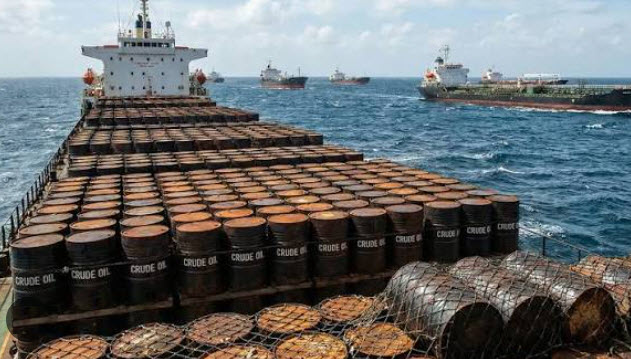
Crude oil prices remained another concern. Brent crude hovered near $115 a barrel, close to its highest level in six months, following attacks on Saudi Arabia that intensified concerns about energy supplies and geopolitical tensions across West Asia.
Elevated petroleum prices present significant challenges for India’s economy because the country depends heavily on imported crude. Sustained increases can raise transportation and manufacturing costs, complicate inflation management and weaken profit margins for companies unable to pass additional expenses to customers.
Oil-sensitive businesses, including airlines, paint manufacturers, tyre producers and petroleum marketing companies, face particular exposure to changes in energy prices. Investors are monitoring whether higher input costs will affect corporate earnings during the current reporting season.
Attention has also shifted towards the Federal Reserve’s two-day policy meeting, which begins on Tuesday and concludes on Wednesday. Financial markets broadly expect the central bank to maintain its benchmark interest rate at 3.75 to 4 per cent.
The accompanying policy statement and remarks from Federal Reserve Chairman Kevin Warsh will be examined for indications of future interest rate adjustments, particularly whether persistent inflation could require additional monetary tightening.
Higher US interest rates can influence investment flows towards dollar-denominated assets, potentially reducing foreign portfolio investment in emerging markets. Changes in American Treasury yields and the dollar’s exchange rate therefore remain important considerations for domestic equities.
Ponmudi R, chief executive of Enrich Money, has identified elevated crude prices, geopolitical uncertainty and the Federal Reserve’s policy outlook as major influences on market sentiment. He has cautioned that tighter American monetary conditions could constrain foreign investment flows.
Tuesday’s weakness followed a recovery in the previous session, when the Sensex advanced 482.92 points to close at 73,606.75 and the Nifty gained 153.20 points to finish at 22,753.20.
Monday’s advance ended four consecutive sessions of losses, during which the Sensex had declined 2.15 per cent and the Nifty 2.36 per cent. The rebound reflected renewed buying in selected companies after the earlier market correction.
Despite Tuesday’s benchmark declines, broader market performance remained comparatively resilient. Small-cap shares gained approximately 1.7 per cent, while mid-cap stocks advanced around 0.5 per cent, indicating that selling pressure was not uniformly distributed.
Company-specific earnings developments also generated substantial movements. Tata Consumer Products rose approximately 5.9 per cent after reporting quarterly profits that exceeded market expectations, attracting buying interest despite the weakness in benchmark indices.
Automotive components manufacturer Sona BLW Precision Forgings advanced around 6.3 per cent following improvements in quarterly revenue and earnings. The gains demonstrated continued investor interest in companies delivering stronger operating results.
Astec Lifesciences, meanwhile, declined approximately 2.5 per cent after reporting lower quarterly profits, reflecting the market’s selective response to corporate financial disclosures.
Institutional investment patterns remained under scrutiny. Exchange data showed foreign portfolio investors sold shares worth approximately Rs 1,462.49 crore on Monday, while domestic institutional investors purchased equities valued at Rs 2,609.57 crore.
Domestic institutional buying helped support Monday’s recovery, although foreign investment decisions remain sensitive to international interest rates, currency movements and geopolitical developments.
Market participants are also awaiting September industrial production figures, scheduled for Wednesday, alongside further quarterly earnings announcements from major listed companies.
The October monthly expiry of Nifty derivatives contracts falls on Tuesday, adding another trading consideration as investors adjust outstanding positions before settlement.
New capital positions the robotics and industrial automation group to expand hardware automation across KitchenBASE sites in Hong Kong, Singapore, Taiwan, Japan, Korea, and Australia
HONG KONG SAR – Media OutReach Newswire – 27 October 2026 – Six markets across Asia-Pacific stand to gain from a $1.7 billion investment into Atoms, the robotics and industrial automation group founded by Uber co-founder Travis Kalanick. Andreessen Horowitz (a16z) led the round, joined by Uber, Bain Capital, Fifth Wall, and other institutional investors. The result strengthens a group that includes KitchenBASE, a commercial kitchen network spanning six of the most active food markets in the region.
New Capital, New Capability
The a16z-led round also adds Ben Horowitz, co-founder of the firm, to the Atoms board. This positions the group to push harder into robotics across food, mining, and transport. Within Atoms Food, KitchenBASE sits alongside hardware projects such as automated bowl-builders and order conveyance robots built to cut labour friction inside commercial kitchens. Fresh capital gives these projects more room to develop, with knock-on gains for the KitchenBASE network across Hong Kong, Singapore, Taiwan, Japan, Korea, and Australia.
A Boost for Regional Operators
For operators across Asia-Pacific, the benefits are practical. KitchenBASE facilities come licensed and ready-to-fit, and this lets food businesses move in under flexible contracts without the capital outlay of a traditional lease.
Brands that want to test a single market or push into several at once find a foothold in high-demand delivery zones across all six markets. New investment from Atoms in hardware automation and physical workflow management is expected to further sharpen efficiency and reliability, giving KitchenBASE operators a faster path to scale.
Hashtag: #ATOMS
The issuer is solely responsible for the content of this announcement.
About Atoms
Atoms is an industrial automation and robotics company founded by Travis Kalanick. Atoms Food includes KitchenBASE alongside food-tech hardware projects. Autonomous haulage and machine systems sit under Atoms Mining. Robotic wheelbases and autonomous movement systems for heavy industry fall under Atoms Transport.
About KitchenBASE
KitchenBASE is the food infrastructure arm behind six brands trading across Asia-Pacific. Formally known as Freshlane in Hong Kong, Smart City Kitchens in Singapore, KitchenNow in Taiwan, KitchenBASE in Japan, Kitchen Valley in Korea, and Chef Collective in Australia. Each brand equips food businesses with licensed kitchen space built for speed to market, so operators can rely on a steady base to launch, test, and expand.
Arabian Post Staff -Dubai Global Islamic finance assets are projected to exceed $10.5 trillion by 2030, driven by expanding banking operations, record sukuk issuance and growing adoption across emerging markets, according to a new industry assessment. The 2026 Islamic Finance Development Report, released by London Stock Exchange Group (LSEG) and the Islamic Corporation for the Development of the Private Sector (ICD), estimates that industry assets reached $6.5 […]
The Mosprom Export Support Center arranged a series of meetings between Moscow industrial companies and potential clients in Manama. The parties to the talks discussed joint projects in construction, IT and telecoms, as well as supplies of sweet goods to the local market. This was reported by Maksim Liksutov, Deputy Mayor of Moscow for Transport and Industry. “The capital is a confident leader among Russian regions in […]
Joint study shows emerging markets will generate 60% of new online spending over the next decade — most of it from consumers without a credit card
SINGAPORE – Media OutReach Newswire – 21 October 2026 – Asia is projected to add 702 million middle-class adults between 2026 and 2036, three-quarters of all middle-class growth in emerging markets, according to a new study from World Data Lab (WDL) and EBANX, a global technology company specializing in payment services for emerging markets.
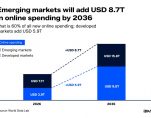
Emerging markets will add USD 8.7T in online spending by 2036
But this new consumer class will not shop the same way developed-market consumers do: by 2036, only 20% of adults in emerging markets will hold a credit card, against 66% in developed markets.
Global online spending is projected to grow from USD 11 trillion in 2026 to USD 25.6 trillion in 2036. Emerging markets add USD 8.7 trillion of that increase (60% of all new online spending), with China (USD +4.7 trillion) and India (USD +1.3 trillion) leading this growth. Indonesia (USD +243 billion), Brazil (USD +249 billion) and Mexico (USD +191 billion) form the next tier.
The categories matter as much as the markets. Online gaming spending in emerging markets grows 14% a year over the decade, the fastest of any category, and SaaS nearly 10%. Emerging markets will generate 76% of global growth in social media spending and 64% in SaaS.
The demographic picture challenges a common assumption. Consumers aged 45 and over account for 51% of emerging markets’ online spending growth through 2036, and spending by those aged 65 and over grows 12% a year, faster than any other age group.
The outlook was discussed during “Navigating Payments: How innovation and fragmentation are changing the game for e-commerce,” a webinar co-hosted by World Data Lab (WDL) and EBANX.
“Over the next ten years, people aged 45 and over will add USD 4.4 trillion in online spending in emerging markets, half of all the growth. Some of them already shop on their phones and will keep doing so as they get older. Others will buy online for the first time in their fifties or sixties. Merchants who build their checkout only for a 25-year-old will miss both groups,” explained Wolfgang Fengler, CEO of WDL.
The study models consumer spending, demographics, and financial access across 184 countries to 2036, drawing on the World Bank’s Global Findex and WDL’s consumer models, combined with EBANX’s experience processing payments for global merchants in emerging markets since 2012.
“If your checkout only takes credit cards, you are competing for one in five adults in emerging markets and conceding the other four”, said Marie-Elise Droga, Chief Revenue Officer of EBANX. “The merchants growing fastest with us didn’t wait for cards to arrive: they added the payment rails their customers already use, and they’re taking new buyers, bigger baskets and recurring revenue that card-only competitors can’t even see.”
834 million new online buyers, 281 million new credit cards
Between 2026 and 2036, the global economy will add 834 million online buyers but only 281 million credit card holders—a ratio of nearly three to one. In emerging markets, two in three new online buyers (67%) will arrive without a credit card. Adults without it already account for 55% of online spending in emerging markets, a share that rises to 90% in India and 93% in Sub-Saharan Africa. Credit cardless adults also represent 52% to 59% of spending in every digital category, from gaming and SaaS to streaming and travel.
Digital payment use is also running ahead of online shopping. Of the 2.6 billion emerging-market adults spending between USD 6 and USD 25 a day, 70% already pay merchants digitally while only 33% buy online, leaving at least 957 million digitally active consumers who are not yet online buyers. Many hold a bank account or mobile wallet but no card that works at an international checkout.
“This is closely tied to the innovation that came out of the financial industry in emerging markets, which developed solutions for an increasingly mobile economy and for the habits of local consumers. Today, we call them local payment methods, or LPMs, and they allowed e-commerce growth to decouple from the credit card, which still has very low penetration in these countries,” said Estelita Hass, head of Market Intelligence at EBANX.
Subscriptions are the next frontier — and India shows why
Recurring categories such as streaming, SaaS and online education will reach USD 2.1 trillion a year in emerging markets by 2036, with USD 1.1 trillion coming from adults without a credit card. In India, 82% of recurring online spending will be cardless. Account-based recurring rails are beginning to close that gap: a global SaaS company saw a 20% uplift in new subscribers after adding UPI at checkout in India, and cybersecurity company Nord Security now generates 28% of its revenue in Brazil through Pix Automático, Brazil’s recurring instant payment, six months after launching it with EBANX.
The issuer is solely responsible for the content of this announcement.
ABOUT EBANX
EBANX is the leading technology platform connecting global businesses to the world’s fastest-growing digital markets. Founded in 2012 in Brazil, EBANX was built with a mission to expand access to international digital commerce. Leveraging proprietary technology, deep market expertise, and robust infrastructure, the platform enables global businesses to offer hundreds of local payment methods and streamline cross-border payments across Latin America, Africa, and Asia. With a global footprint, it established a technology and regulatory headquarters in Singapore in 2026. More than just payments, EBANX drives growth, enhances sales, and delivers seamless purchase experiences for businesses and end users alike.
Overnight AI challenge saw 60 participants tackle a series of challenges using OpenAI Codex, with Kay Hng Quek taking the top prize
SINGAPORE – Media OutReach Newswire – 26 October 2026 – Coupang, a Seattle-based technology company that serves customers in 190 countries and territories, co-hosted an overnight AI hackathon, AI Grand Prix Singapore 2026 (“AI Grand Prix“) with OpenAI. It was presented by Elev8, with Carousell Group as venue partner.
Held from 24 to 25 October 2026 at Carousell Campus, the overnight AI Grand Prix brought together 60 participants, selected from a pool of 150 applicants, to tackle a series of challenges that tested their technical skills, creativity and ability to solve problems under pressure. All participants competed in individual challenges and formed 14 teams for the group challenge. Engagement remained strong through the night, with participants continuing to work on their solutions into the early hours.
From Challenge to Working Solution
Unlike a traditional hackathon centred on a single problem statement, the AI Grand Prix was a multi-challenge competition, requiring them to adapt their approach as the competition progressed. Using OpenAI Codex, participants were tasked with three distinct challenges: Game Hack, which focused on developing creative AI-powered games; Spot the Mismatch, a technical challenge to identify discrepancies in AI-generated product descriptions, images and prices; and Group Hack, in which 14 teams developed AI-powered shopping experiences and solutions. Performance across the challenges was assessed collectively to determine the overall rankings.
Taking the top spot was Kay Hng Quek, who demonstrated strong, consistent problem-solving skills across different technical challenges. He received the Champion’s Builder Kit, a special first-place award comprising a Mac mini, DJI Mic 3 and Elgato Stream Deck Plus, designed to support continued experimentation and creation as an AI builder.
A total of US$13,000 in OpenAI API credits was shared among the winners and OpenAI subscription benefits were also provided to all participants, alongside unlimited Codex usage resets during the event to encourage experimentation with different ideas and approaches. The top 10 participants are scheduled to attend an exclusive networking dinner on 26 October with leadership and technical representatives from Coupang and OpenAI, offering an opportunity to exchange ideas and experiences in building with AI.
Xin Fu, VP of Engineering at Coupang (left), and winner Kay Hng Quek (right)
“AI Grand Prix was an incredible opportunity to push myself beyond my comfort zone and explore what’s possible with AI. The variety of challenges encouraged us to think creatively, adapt quickly and approach problems from different perspectives. What made the experience even more rewarding was being surrounded by talented, passionate builders who shared ideas and inspired one another. I’m grateful to have been part of such an exciting community, and especially for Jerel, my cofounder, who brings out the best in me,” said Kay Hng Quek, overall champion of AI Grand Prix Singapore 2026.
“Technology and innovation are at the heart of how we create better experiences for our customers, and we see tremendous potential for AI to further transform the future of commerce. Singapore is home to an exciting community of engineers and researchers, and we are thrilled to co-host this event with OpenAI to provide a platform for them to come together, experiment and innovate with AI,” said Xin Fu, VP of Engineering at Coupang.
Derrick Choi, Head of Applied AI, Codex (APAC) at OpenAI, said, “AI is changing how software is built, giving developers new ways to accelerate the journey from concept to product. The AI Grand Prix highlighted the breadth of Singapore’s developer community. It was a great opportunity to give builders a chance to try different approaches with Codex and explore how they could use it to tackle real-world problems.”
The AI Grand Prix marks Coupang’s first event with OpenAI and underscores its continued investment in building the future of commerce with AI, while leveraging Singapore’s position at the heart of Southeast Asia’s technology ecosystem.
Hashtag: #Coupang
The issuer is solely responsible for the content of this announcement.
About Coupang
Coupang is a technology and Fortune 150 company listed on the New York Stock Exchange (NYSE: CPNG) that provides retail, restaurant delivery, video streaming and fintech services to customers around the world under brands that include Coupang, Eats, Play, Rocket Now and Farfetch. It operates in over 190 countries and territories around the world.
Arabian Post Staff -Dubai Singapore and Saudi Arabia have agreed to pursue underground crude oil storage on Jurong Island from the second half of 2027, strengthening supply safeguards amid disruptions caused by the war involving Iran. The two governments announced the proposed arrangement on Monday as Saudi Aramco exchanged a memorandum of understanding with Singapore’s Energy Market Authority and industrial infrastructure agency JTC Corporation during Singapore International […]
Arabian Post Staff The Saudi-led military coalition said on Monday it had destroyed two ballistic missile launchers in Yemen’s Houthi-controlled capital, Sanaa, following an attempted missile strike against Riyadh. Major General Turki Al-Maliki, spokesman for the Coalition to Restore Legitimacy in Yemen, said one of the destroyed launchers had been used to fire the ballistic missile towards the Saudi capital earlier in the morning. Saudi air defences […]
By K Raveendran Escalating tensions between the United States and Iran are threatening to push global oil markets into another period of turbulence, but India has found an unexpected measure of protection in President Donald Trump’s decision to ease sanctions on Russian energy. The policy reversal, driven partly by Washington’s own need for Russian diesel, […]
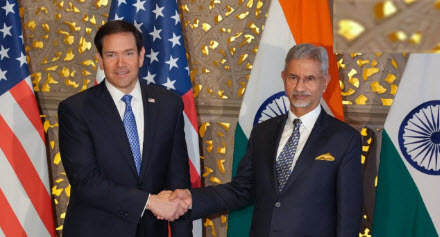
By T N Ashok NEW YORK: The latest diplomatic signals from Washington and New Delhi suggest that a prolonged India–US trade confrontation may finally be approaching a settlement. US President Donald Trump says a deal is close. Secretary of State Marco Rubio, after meeting External Affairs Minister S. Jaishankar in Mumbai on October 20, has […]
BANGKOK, THAILAND – Media OutReach Newswire – 24 October 2026 – Makers of the capacitors, magnets and battery materials inside AI servers and electric vehicles (EVs) are lining up to invest in Thailand. Since 2023, they have filed 35 advanced materials projects worth about $690 million (23.5 billion baht) with the Thailand Board of Investment (BOI), the government’s investment promotion agency. Surging demand for AI, EVs, and clean energy is pushing global suppliers to build upstream capacity in the country.
Mr. Narit Therdsteerasukdi, Secretary General of the Thailand Board of Investment (BOI)
The projects, filed through the first half of 2026, cover multilayer ceramic capacitors (MLCCs), thermal graphite films, high-performance ceramics, battery and fuel-cell materials, neodymium magnets, glass and quartz fabrics for printed circuit boards, and nanomaterials for precision manufacturing. Together they mark a shift for one of Southeast Asia’s largest economies from downstream assembly toward the high-value materials on which future industries are built.
In AI computing and clean energy, lighter, more heat-resistant and more conductive materials determine how well devices perform. MLCCs are essential components in products from smartphones to AI servers, and a single high-end server can use up to 30,000 of them.
“The world is moving toward products that are smaller and lighter, yet stronger and more efficient,” said Mr. Narit Therdsteerasukdi, Secretary General of the Thailand Board of Investment. “Producing advanced materials in Thailand is key to building sustainable industrial capacity, reducing reliance on imports, and opening the door for Thai companies to join higher-value supply chains.”
Thailand is already a production base for leading component makers, including Japan’s Murata Electronics, which holds more than 35 percent of the global MLCC market, and Kyocera AVX Components, the world’s top tantalum capacitor maker. Among the new projects, Taiwan’s Fultech Fiber Glass makes glass fabric for printed circuit boards, including high-performance grades for AI servers. Jones Tech produces synthetic and natural graphite films that carry heat away from electronic devices.
Beyond electronics, the projects strengthen supply chains for electric vehicles, batteries, and clean energy, from BGN Thai’s coated foils for lithium-ion batteries and Phinis Well’s neodymium magnets for EV motors to Xinyuan Graphite’s bipolar plates for hydrogen fuel cells.
CoorsTek Advanced Materials, a subsidiary of US-based CoorsTek — a global leader in engineered ceramics for the semiconductor and aerospace industries — has invested in producing ceramics for automotive pressure sensors and silicon nitride balls for hybrid bearings in EVs and wind turbines. Golden Egret Cemented Carbide is making tungsten carbide powders for precision cutting tools, reinforcing Thailand’s base for high-precision manufacturing.
“The advanced materials industry taking root in Thailand today is the foundation of tomorrow’s supply chains in electronics, EVs, batteries, and clean energy,” Mr. Narit said. “The BOI will keep building this investment base, strengthening upstream materials and components, and supporting R&D, technology, and workforce development, to move Thailand from downstream to upstream production and make it the region’s advanced materials hub.”
Note: USD conversions are based on the Bank of Thailand’s average selling rate of approximately 33.76 baht per USD.
The issuer is solely responsible for the content of this announcement.
Thailand Board of Investment (BOI)
Established in 1966, the Thailand Board of Investment (BOI) has spent six decades promoting high-value investment from both foreign and Thai investors, strengthening the country’s competitiveness and driving its transition toward a sustainable, balanced new economy.
Investment Services Center — PR Section, Office of the Board of Investment (BOI)
New report sets out a method the industry can use to put a financial value on climate resilience
The Westbund Central case study shows that its resilience measures are expected to keep storm-surge and rainfall-flood losses in 2050 below the losses an unprotected building would face today
HONG KONG SAR – Media OutReach Newswire – 23 October 2026 – Hongkong Land Holdings Limited (“Hongkong Land”) today published Building Value That Lasts: Quantifying the Return on Climate Resilience in Real Estate. The report developed with Marsh puts a financial value on designing buildings for a changing climate. Its case study is Westbund Central, Hongkong Land’s mixed-use waterfront development of approximately 1.7 million sq. m. on Shanghai’s Huangpu River.
(From left to right) From left: Michael Long, Head of Group Sustainability, Hongkong Land; Stuart Grant, Chief Executive of Westbund Central, Hongkong Land; Swenja Surminski, Managing Director of Climate and Sustainability, Marsh; and Michael Li, Chairman and President, Marsh Risk China.
The report finds that the development’s resilience measures cut expected storm-surge losses by 84% and rainfall-flood losses by 88% under today’s conditions. Westbund Central’s resilience measures are expected to keep storm-surge and rainfall-flood losses in 2050 below the losses an unprotected building would face today.
Closing the resilience valuation gap
Climate risk now shapes how real estate is assessed, financed and insured. Almost every climate related disclosure acknowledges the need for adaptation, yet fewer than one in ten puts a number on it. Hongkong Land and Marsh set out to close that gap together by treating resilience as an investment with a measurable return, not a cost to be absorbed.
Resilience pays, and the reductions are large
Working with global leading insurance broker and risk advisor Marsh, Hongkong Land modelled the average annual loss (AAL) at Westbund Central from storm surge, rainfall flooding and wind. AAL is the expected yearly cost of physical damage. The modelling compared climate risks today and in 2050 for buildings with and without resilience measures beyond those required by building codes. It assumed a future in which global greenhouse-gas emissions remain high.
Without the development’s enhanced resilience measures, expected storm-surge losses would more than double and wind losses would more than triple by 2050. The measures reduce expected losses as follows:
storm-surge losses fall by 84%, both today and in 2050
rainfall-flood losses fall by 88% today and 79% in 2050
wind losses fall by 36% today and 31% in 2050
Built for the climate of 2050
Westbund Central was engineered for projected climate conditions in 2050, rather than historical conditions. These measures significantly reduce the impact of increasing climate risk:
Storm surge: with Westbund Central’s resilience measures in place, average annual losses in 2050 are projected at 0.12%, compared with 0.38% for a building without these measures today.
Rainfall flooding: with the resilience measures in place, average annual losses in 2050 are projected at 0.05%, compared with 0.19% for a building without these measures today.
Insurers are raising premiums, tightening terms and withdrawing cover from exposed locations. In that market, a lower and more stable loss profile matters.
Westbund Centrals resilience features include:
23% more drainage capacity, protecting against a 1-in-100-year rainfall event
Grade 1 waterproofed basements and the elevation of critical equipment
A “Sponge City” network of more than 12 features designed to capture and store stormwater, with capacity exceeding 2,000 m³
The figures are conservative. They count physical damage only and exclude extreme heat, the fastest-growing hazard at the site, which the development manages through design and operations.
Michael T. Smith, Group Chief Executive of Hongkong Land, said: “Climate change is a significant force reshaping real estate. At Westbund Central, climate resilience is core to all that we do because we believe resilience and commercial performance reinforce each other. This report shows the return on that investment can be measured today, with tools that already exist. The industry no longer has any excuse not to.”
Stuart Grant, Chief Executive of Westbund Central, said: “A premium destination is a seamless one. Much of the resilience work at Westbund Central is deliberately invisible to the tenants and visitors who use it every day. Its value shows in the disruption that never reaches them. Keeping the precinct open, comfortable and trading regardless of weather conditions is how resilience facilitates commercial performance.”
Michael Li, Chairman and President of Marsh Risk China, said: “Climate risk is now a balance-sheet risk. Westbund Central shows that adaptation pays back through lower loss exposure and stronger access to capital. As a risk orchestrator, Marsh matches protection needs to capital flows, helping clients quantify resilience and close the valuation gap.”
A method for the industry
The report is offered as a method others can apply, not just as an account of one development. It traces how climate risk can be assessed from site selection through to operations and linked to financial outcomes. It calls on the industry to:
quantify early, at site selection and design, when action is most cost-effective
bring insurers and lenders in from the start
build a shared standard so resilience can be benchmarked across assets, as carbon already is
For further details, please see the full report which is available for download [here].
Hashtag: #HongkongLand
The issuer is solely responsible for the content of this announcement.
Westbund Central
Hongkong Land’s Westbund Central is the Group’s largest-ever single investment. Scheduled to complete in phases up until 2028, it is an US$8 billion development encompassing approximately more than 1.7 million sq. m. of prime mixed-use property strategically located at Shanghai’s Xuhui Waterfront. It is a flagship development of Hongkong Land’s prime commercial properties’ CENTRAL Series. The ultra-premium integrated commercial property includes 240,000 sq. m of retail space, 650,000 sq. m. of premium Grade A offices, 160,000 sq. m. of high-end waterfront luxury residences, two hotels (55,000 sq. m.) and over 50,000 sq. m. of cultural and art venues.
Hongkong Land
Hongkong Land is a major listed property development, investment and management group. It focuses on developing, owning and managing premium and ultra-premium mixed-use real estate in Asian gateway cities, featuring Grade A office, luxury retail, residential and hospitality products. With over US$50 billion in assets under management, Hongkong Land’s ultra-premium mixed-use real estate footprint spans over 1.97 million sq. m. lettable area in operation and 1.43 million sq. m. lettable area under development, with flagship mixed-use projects in Hong Kong, Singapore and Shanghai. Its properties hold industry leading green building certifications and attract the world’s foremost companies and luxury brands. Established in 1889, Hongkong Land takes a long-term view, investing significantly alongside its capital partners and concentrating its portfolio where it can create the most value for tenants, customers and investors. Hongkong Land Holdings Limited has a primary listing on the London Stock Exchange, with secondary listings in Singapore and Bermuda. Hongkong Land is a member of the Jardine Matheson Group.
Marsh Marsh (NYSE: MRSH) is a global leader in risk, reinsurance and capital, people and investments, and management consulting, advising clients in 130 countries. With more than 95,000 colleagues, Marsh helps build the confidence to thrive through the power of perspective. For more information, visit marsh.com, or follow us on LinkedIn and X.
Cybersecurity researchers have uncovered a campaign targeting diplomatic organisations in three Central Asian countries with BlackX, a bootkit capable of circumventing Windows Secure Boot protections even on updated computers. Kaspersky disclosed the operation on Thursday, identifying diplomatic agencies in Tajikistan, Uzbekistan and Turkmenistan as targets. Its Global Research and Analysis Team linked the activity to APT41, a hacking group associated with China, but assigned only medium confidence […]
The partnership pairs LeapThought’s own AI with Google Cloud’s Gemini models and sovereign Cloud offering, giving infrastructure owners control of their data and connected intelligence across the full project and asset lifecycle.
SINGAPORE – Media OutReach Newswire – 23 October 2026 – LeapThought and Google Cloud today announced a strategic partnership to bring sovereign, domain-native AI to the owners and operators of critical building infrastructure, giving them control of their data and sharper decision-making across the full value chain, from delivery through operations.
Ratnakar Garikipati, Founder, Chair, and CEO of LeapThought, alongside Rahul Sharma, Google Cloud Managing Director, APAC Public Sector. The partnership combines LeapThought’s specialized AI with Google Cloud’s Gemini models and sovereign infrastructure to deliver secure data control and end-to-end intelligence for infrastructure assets.
The partnership has two priorities. The first is value chain integration, which connects everyone involved in delivering and running an asset — owners, operators, developers, consultants, contractors, and suppliers — on one governed platform. The second is security and sovereignty: owners can keep control of their data, within compliant, standardized frameworks that can be repeated from one program to the next.
FULCRUMHQ, LeapThought’s globally recognized Integrated Digital Delivery (IDD) platform, gives infrastructure owners the option to run on Google Cloud, including Google’s sovereign, air-gapped solutions for defense, public sector, and private sector environments requiring high security. At its core is GENIEHQ, LeapThought’s own Industrial AI, embedded directly into the platform and built to reason over the structured and unstructured data that defines a capital program — BIM models, GIS and geospatial data, ERP financials, schedules, contracts, reality capture, telemetry, and data from field robotics and sensors. The partnership pairs GENIEHQ with Google Cloud’s Gemini models, giving owners and their delivery teams natural-language access to that data across a project and a portfolio.
The partnership delivers on these two priorities as follows:
1. Value Chain Integration: One Governed Record, Natural-Language Insight
Major capital and building infrastructure programs span owners, operators, developers, consultants, contractors, and suppliers — each typically working in separate systems, with design, construction, and operational data fragmented across handovers. LeapThought’s FULCRUMHQ platform brings this information together into a single governed record that follows an asset from design through operation, giving owners a consistent view across their portfolio, not just a single project.
By running FULCRUMHQ — and the GENIEHQ Industrial AI embedded within it — on Google Cloud, and integrating LeapThought’s proprietary data architecture with Google’s Gemini models, the partnership enables:
Interactive Model and Portfolio Querying: Combining GENIEHQ’s deep understanding of project and portfolio data with the multimodal capabilities of Gemini, owners, engineers, project managers, and field teams can ask complex, plain-language questions directly against BIM models and portfolio data — instead of manually clicking through complex 3D CAD/BIM model trees or running predefined filter scripts — such as identifying clash detections, extracting exact material quantities, verifying regulatory code compliance, or surfacing risk trends across a program (e.g., “Show me all fire-rated doors on Level 3 that don’t match the latest spec,” or “Which contractors across our portfolio have the highest rate of non- conforming work this quarter”).
Global Scale and Reliability: Google Cloud provides the high-performance compute and elastic scalability needed to process compute-intense multi-gigabyte 3D models and point-cloud datasets, across a single project or an entire portfolio, in real time.
2. Security and Sovereignty: Full Control on Google Cloud’s Sovereign Solutions
For critical civil assets, defense installations, public sector agencies, and private sector owners where data cannot traverse the public cloud, LeapThought gives owners the choice to deploy on Google Cloud’s data residency solutions, including Google Cloud Data Boundary, Google Cloud Dedicated, and Google Distributed Cloud. In these environments, GENIEHQ, LeapThought’s Industrial AI embedded within FULCRUMHQ, runs alongside Gemini locally, within the owner’s chosen security boundary, ensuring zero cross-boundary exposure or unauthorized external telemetry.
“The value of an asset now lies as much in the intelligence around it as in its physical form. That intelligence belongs to the owner, and it must be secure, sovereign, and shared across the whole value chain. Demand for this is growing quickly, in Asia and around the world, and that is what brought us and Google Cloud together. We’re starting from Singapore and building toward a standard for critical infrastructure everywhere,” said Ratnakar Garikipati, Founder, Chairman, and CEO of LeapThought.
“Public sector and critical infrastructure agencies manage some of the most intricate engineering and regulatory datasets in the world. The partnership between Google Cloud and LeapThought enables project teams and portfolio owners to quickly surface actionable insights directly from complex BIM models and program data using everyday language. Combined with Google’s sovereign, air-gapped solutions, we’re providing agencies with the option to modernize project workflows while maintaining strict data governance, residency, and operational sovereignty,” said Rahul Sharma, Managing Director, APAC Public Sector, Google Cloud.
Hashtag: #LeapThought
The issuer is solely responsible for the content of this announcement.
About LeapThought
LeapThought is a US technology company that builds software connecting people, data, and AI across the infrastructure lifecycle. It is headquartered in Bellevue, Washington, has its Asia headquarters in Singapore, and operates across the United States, Brazil, Singapore, and New Zealand. Its FULCRUMHQ platform and embedded GENIEHQ Industrial AI serve public agencies, developers, consultants, contractors, and universities and institutes of higher learning. Clients include Singapore’s Land Transport Authority, Building and Construction Authority, and JTC. The company was founded and led by Ratnakar Garikipati.
Arabian Post Staff -Dubai The United Arab Emirates and Greece announced 18 agreements and commercial partnerships worth €12.75 billion ($14.3 billion) on Thursday, alongside plans for another €15 billion of UAE investment in Greece. The announcements came at the UAE-Greece Strategic Forum in Athens, attended by Abu Dhabi Crown Prince Sheikh Khaled bin Mohamed bin Zayed Al Nahyan and Greek Prime Minister Kyriakos Mitsotakis. The package covers […]
Gold prices fell on Friday and headed for their sharpest weekly decline in more than four months as rising energy costs reinforced expectations that the US Federal Reserve will keep interest rates elevated. Spot bullion traded around $4,021 an ounce, extending its weekly loss to approximately 3.6 per cent. US gold futures dropped 0.6 per cent to about $4,035, bringing the psychologically important $4,000 threshold into sharper […]
As younger travellers reshape travel across Asia Pacific, familiar payment options are becoming part of a smoother journey from search to booking.
SINGAPORE – Media OutReach Newswire – 23 October 2026 – Finding a suitable flight is only one part of booking a trip. For travellers comparing regional journeys online, the final decision can also depend on what happens at checkout, from the currency displayed to whether their preferred way to pay is available.
The payment options available at checkout can influence where consumers choose to complete a purchase. According to the 2025 Global Digital Shopping Index: Singapore Edition, 68% of Singapore consumers said access to their preferred payment option influences where they shop, while 41% described it as highly influential. Credit cards, debit cards and digital wallets also ranked among consumers’ preferred payment methods for online purchases.
For travellers, this creates a simple expectation: even when the destination is overseas, checkout should not feel unfamiliar.
For travel platforms, this means convenience needs to extend beyond search and comparison to the final step of booking. Airpaz, a travel booking platform founded in 2011, adapts its booking experience to the market where the traveller is booking, supporting more than 100 payment methods, 61 currencies and 38 languages. In Singapore, available options include PayNow, alongside major credit and debit cards, PayPal, Google Pay and other payment methods.
“Travellers may be heading to the same destination, but how they prefer to complete a booking can differ significantly from one market to another,” said Wesley Wijaya, Chief of Partnership at Airpaz. “Making familiar payment options available helps keep the final step of booking as straightforward as the search itself.”
The importance of that convenience becomes even clearer as travel habits change. The Pacific Asia Travel Association‘s September 2026 Tourism in Focus report, produced with Euromonitor International, found that 11% of Gen Z travellers in APAC take day trips weekly, while 25% cite value for money as their primary trip criterion.
With Gen Z now representing nearly a quarter of total travel spending, these findings highlight the growing commercial importance of younger travellers and the emphasis they place on value when making travel decisions. For this group, the ability to compare a broad range of flights and complete payment using a familiar method can help make the overall booking journey more convenient and easier to repeat.
This is where breadth of choice also becomes important. Airpaz provides access to more than 450 airlines and over 600,000 routes worldwide, giving travellers options across short regional getaways as well as longer international journeys. Popular regional routes available through the platform include Singapore–Kuala Lumpur and Singapore–Bangkok.
“Convenience is about more than comparing fares,” Wesley added. “It is also about how well a platform supports travellers throughout the booking journey, from evaluating their options to completing a transaction. Access to 24/7 live chat and travel protection options can provide an added layer of reassurance, particularly when plans change or travellers need support along the way.”
Whether it is a short regional getaway or a longer holiday, payment flexibility gives travellers another layer of choice once they have found the fare, schedule and route that suit their plans. Airpaz also offers reschedule and refund add-ons, with 24/7 live chat available to support travellers when plans change after booking.
Travellers can compare available flight and booking options through Airpaz.
The issuer is solely responsible for the content of this announcement.
About Airpaz
Airpaz is a Jakarta-headquartered travel booking platform founded in 2011. The company offers flight bookings, hotel and accommodation reservations, and activity bookings. Its mobile apps for iOS and Android support multiple currencies and languages, helping travellers plan and book in a more localised way. Airpaz partners with airlines and accommodation providers worldwide and aims to make travel planning simple, affordable and seamless from search to booking. Visit Airpaz to explore available travel options.
QashierGM works from each merchant’s own sales, payouts and menu, and gets routine work done with the owner’s approval. With Crew, Qashier’s new team chat, anyone on the team can tag @GM to get things done, and QashierGM acts only within each person’s role.
SINGAPORE – Media OutReach Newswire – 23 October 2026 – Qashier, the unified merchant operating system serving more than 25,000 businesses across Southeast Asia, today launched QashierGM, an AI general manager that works with a merchant’s whole team. Available at no additional cost to all Qashier merchants in Singapore, QashierGM lives in QashierHQ, the web and mobile app (Android and iOS) merchants use to manage their sales, payouts, products and staff. Owners can ask it about sales, payouts and products in plain language. Merchants on the Qashier plan also get Crew, a new team chat where staff can bring QashierGM into any conversation by tagging @GM. Malaysia, Thailand and the Philippines follow in November.
Because QashierGM works directly from each merchant’s own transactions and settlements, it can do what a general-purpose chatbot cannot: explain, line by line, why a payout is lower than the day’s sales, or show which outlet is underperforming this week. Owners get answers grounded in their actual operations, without piecing together reports.
“Most small business owners can’t afford a general manager, so they become one after closing, going through reports at midnight,” said Christopher Choo, Co-Founder and CEO of Qashier. “QashierGM is the manager they never had. It already knows the business, takes on the routine work and never makes a change without asking. With Crew, it now works alongside the whole team, not just the owner.”
The launch follows an open beta that began in September with merchants ranging from single-outlet cafés and shops to multi-outlet chains, with F&B operators the most active. Their most common questions were about sales trends, best sellers and payouts, and with the year-end festive season approaching, many are asking QashierGM to suggest festive promotions built around their most popular items.
Jun Rong, Operations Manager of Coexist Coffee Co., likens using QashierGM to talking to his store managers, only faster. “Running a café means wearing every hat, and the numbers usually wait until after closing. QashierGM already knows our sales, payouts and menu, so I just ask. When we plan a promotion, it suggests ideas based on what our customers actually buy, and nothing changes until I confirm. It feels like having a general manager who’s been with us from day one.”
QashierGM also takes routine admin off the owner’s plate. An owner can ask it to update a price, mark an item as sold out or add a new product, and QashierGM shows a card with exactly what will change and where. Nothing goes live until the owner taps confirm. Multi-outlet operators can compare stores, spot the one underperforming and push a change to every store in one request. Store managers see and change only their own store. Owners can also set alerts in their own words, such as “alert me on any unusual refunds” or “tell me when the first staff clocks in”, and QashierGM tells them when it matters.
Crew: the whole team, with QashierGM in the conversation
Crew, included in the Qashier plan and Enterprise plans, gives a merchant’s team a work chat of its own, separate from personal messaging groups where messages get lost and former staff keep the history. Owners, managers, kitchen and floor staff get private direct messages, group chats by team or department, and announcements with read receipts. Anyone can tag @GM to check a number, update an item or send a customer an invoice with a payment link. QashierGM acts only with the permissions of the person who tagged it, sends bigger changes to whoever can approve them right in the chat, and posts an update when an invoice is paid. It only sees the conversations it is tagged into.
On a typical day, a floor staff member can mark a dish sold out, a manager can approve a price change from her phone, and an owner can send an event deposit invoice and see it paid, all in the same app. Crew and QashierGM work in all major languages used across the region, including English, Mandarin Chinese, Malay and Thai.
Connectors to third party apps such as Gmail and Google Business Profile arrive in November, extending QashierGM beyond Qashier to supplier emails, customer enquiries and Google reviews. “A good general manager handles the work wherever it lands, not just inside one system,” added Choo. “This is the first step.”
Qashier processes more than US$1 billion in annualised payment volume for over 25,000 merchants across Singapore, Malaysia, Thailand and the Philippines. The company has been profitable since December 2025 and raised US$6.125 million in Series A+ financing in June 2026. QashierGM is available now to all Qashier merchants in Singapore through QashierHQ on web, Android and iOS, at no additional cost. Crew is included in the Qashier plan and Enterprise plans. Both launch in Malaysia, Thailand and the Philippines in November. To learn more, visit https://qashier.com/sg/.
The issuer is solely responsible for the content of this announcement.
Qashier Pte. Ltd.
Qashier is a unified merchant operating system that brings together payments, business software, embedded financial services and customer engagement tools on one platform. Operating across Singapore, Malaysia, Thailand and the Philippines, Qashier supports more than 25,000 SMEs with an integrated ecosystem built for Southeast Asia’s digital economy. Qashier is licensed by the Monetary Authority of Singapore as a Major Payment Institution. Founded in Singapore in 2019, Qashier gives merchants an AI general manager, QashierGM, and a team chat, Crew, through QashierHQ.
JAKARTA, INDONESIA – Media OutReach Newswire – 22 October 2026 – The New Asia Forum (NAF) 2026 aims to mobilize US$30 billion in investment across the New Asia region by strengthening strategic partnerships and accelerating investment execution. Held under the patronage of President Prabowo Subianto, with Danantara Indonesia as a founding partner, the forum will take place on 3–4 December 2026 in Bali, Indonesia.
NAF 2026 is designed as an action-oriented platform connecting global investors, industry leaders, and policymakers to advance investment opportunities across strategic sectors. Moving beyond conventional economic dialogue, the forum seeks to translate investment interest into concrete commitments, financing structures, and measurable outcomes.
Pahala Nugraha Mansury, Managing Director of Global Relations & Communications at Danantara Indonesia, emphasized Asia’s growing potential to attract long-term global capital amid shifting economic and geopolitical dynamics.
“Our focus is on encouraging long-term capital to recognize the many investment opportunities across Asian countries, because this is precisely where the center of gravity for growth lies. This will enable growth at scale, anchored by ASEAN and driven by Indonesia as the largest country in ASEAN,” said Pahala.
The Asia-Pacific region currently accounts for nearly 60% of global economic growth. However, long-term international capital allocation to the region remains below its potential, presenting significant opportunities for greater investment collaboration.
NAF 2026 expects to convene more than 1,000 global leaders, feature over 100 speakers, and host more than 40 sessions involving sovereign wealth funds, institutional investors, development finance institutions, multinational corporations, and government representatives. Notable speakers include President Prabowo Subianto of Indonesia; Masayoshi Son, Chairman and CEO of SoftBank Group; Tshering Tobgay, Prime Minister of Bhutan; Kathleen Quirk, Chief Executive Officer of Freeport-McMoRan; Matteo Renzi, former Prime Minister of Italy; and Israfil Mammadov, Chief Executive Officer of the State Oil Fund of the Republic of Azerbaijan.
The forum will follow a two-day structure: Discovery & Diligence on 3 December, focusing on investment opportunities, feasibility, and transaction structures; and Action & Execution on 4 December, advancing capital commitments, strategic partnerships, and implementation milestones.
Eight priority sectors will anchor the discussions: strategic resources and downstreaming; energy and power; advanced mobility and manufacturing; digital infrastructure and AI; food and agribusiness; trade and connectivity; tourism and creative economy; and education and human capital.
As a founding partner, Danantara Indonesia will participate as a co-investor alongside global partners, supporting investment in strategic sectors and reinforcing Indonesia’s role in regional economic transformation.
Through its transaction-focused approach, NAF 2026 aims to deliver preliminary investment agreements, bankable financing structures, and clearly defined implementation milestones. Investment commitments and progress will be tracked across subsequent editions to promote accountability, continuity, and tangible economic impact for Indonesia and the wider region.
Hashtag: #NewAsiaForum2026
The issuer is solely responsible for the content of this announcement.
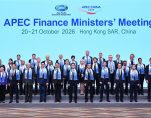
HONG KONG SAR – Media OutReach Newswire – 22 October 2026 – Finance leaders and representatives of international organisations attended the APEC (Asia-Pacific Economic Cooperation) Finance Ministers’ Meeting (FMM) 2026, successfully held in Hong Kong for the first time (October 20-21). Participants engaged in in-depth exchanges on issues concerning regional financial and economic development.
Yesterday (October 21), the FMM issued the 2026 APEC Finance Ministers’ Joint Statement, reaffirming the commitment to building an open, dynamic, resilient, and peaceful Asia-Pacific community by 2040 for the prosperity of all our people and future generations.
Representatives of the participating APEC member economies and international organisations during the meeting.
Minister of Finance and chair of the 2026 FMM, Lan Fo’an, said that all parties should firmly implement the consensus reached at the APEC Economic Leaders’ Meeting, uphold multilateralism, and deepen practical co-operation in fiscal and financial affairs, with a view to contributing to regional economic and financial stability and long-term sustainable growth.
Earlier, John Lee, Chief Executive of the Hong Kong Special Administrative Region (HKSAR) Government, welcomed participants to the FMM.
“This is a historic occasion for Hong Kong. The APEC Finance Ministers’ Meeting – part of APEC China 2026 – is taking place in our city for the very first time. We are honoured to support this significant international event, which brings together the member economies of the Asia-Pacific Economic Cooperation, representing some three billion people and accounting for over 60 per cent of global GDP,” Mr Lee said.
“Under the unique ‘one country, two systems’ principle, Hong Kong enjoys both the China advantage and the global advantage. We are the only common law jurisdiction in China, our country, and have a legal and regulatory regime similar to most of the world’s top financial hubs.”
Speaking during the discussion sessions, Paul Chan, Financial Secretary of the HKSAR, said that amid geopolitical tensions and uncertainties over trade policies, Asia-Pacific economies should strengthen co-operation to maintain the smooth flow of trade and investment, while guarding against financial risks and nurturing long-term growth drivers.
He said that Hong Kong would leverage its unique advantages under the “one country, two systems” principle, and make full use of its diverse financing channels and professional services as an international financial centre to serve as a “super connector” and “super value-adder”.
“Regionally, we need open channels for trade and investment, not new barriers. Connected markets allow capital to reach productive uses and technologies be adopted across borders,” Mr Chan said during a plenary session on Global and Regional Economic and Financial Outlook (October 20).
“Our collective task is to safeguard stability while strengthening the foundations for lasting prosperity. Hong Kong, China stands ready to work with fellow economies to seize opportunities, manage risks and support more resilient, sustainable and inclusive growth across the Asia Pacific.”
The Hong Kong Monetary Authority and the APEC Business Advisory Council (ABAC) held two thematic seminars (October 20) on “Fostering a digitalised, inclusive and sustainable supply chain ecosystem through finance” and “Mobilising capital for nature: scaling finance and regional cooperation across APEC” respectively.
In his welcoming remarks at the seminars, Christopher Hui, Secretary for Financial Services and the Treasury of the HKSAR, said: “In an era of profound economic transformation and evolving global challenges, prosperity will not be secured by any economy acting alone. It will be built through partnership, innovation and resilience. I am therefore delighted that this seminar brings together regulators, business leaders and experts from across the Asia-Pacific region for meaningful exchanges on how we can unlock new opportunities, strengthen financial resilience, and drive sustainable growth for all.”
Following the conclusion of the FMM, Mr Lee and other officials met Mr Lan at Government House to exchange views on economic and financial development of the Chinese Mainland and Hong Kong. Mr Lee expressed his heartfelt gratitude to the country for its trust in and support for Hong Kong, as well as its strong affirmation of Hong Kong’s status as an international financial centre.
During the FMM, a diverse range of tours and visits were arranged for members of delegations from participating economies and international organisations to enjoy the city’s cultural heritage and unique charm as an international metropolis.
The itineraries included visits to the Peak, Hong Kong Museum of Art, Hong Kong Palace Museum, Xiqu Centre, Chinese Culinary Institute and Ocean Park as well as a boat tour to enjoy the renowned views of Victoria Harbour.
HA NOI, VIETNAM – Media OutReach Newswire – 22 October 2026 – Vietnam Airlines has become the first Asian airline to receive the World’s Best Culinary Airline 2026 award at the World Culinary Awards, earning recognition ahead of leading international carriers including Emirates, Qatar Airways, Singapore Airlines, Air France, Cathay Pacific and Turkish Airlines.
The accolade recognises Vietnam Airlines’ continued investment in its inflight dining experience as part of its ambition to achieve five star standards by 2030.
An annual global awards programme affiliated with the World Travel Awards, the World Culinary Awards celebrates excellence and innovation across the culinary industry.
The accolade recognises Vietnam Airlines’ continued investment in its inflight dining experience as part of its ambition to achieve five star service standards by 2030. Drawing on Vietnam’s rich culinary heritage and locally sourced ingredients, the airline’s menus bring together regional specialities, contemporary cooking techniques and thoughtful presentation. Dishes are tailored to individual routes and cabin classes, taking into account passenger preferences and the unique demands of dining at altitude.
From Pho and Hue style beef noodle soup to Quang style noodles and Banh Mi Hoi An, iconic Vietnamese dishes feature prominently on Vietnam Airlines’ menus. Each dish is carefully crafted to retain its authentic flavours, taking into account how changes in taste perception at altitude can affect the inflight dining experience. Vietnam Airlines also works closely with its catering partners and cabin crew to ensure consistent food quality, serving temperatures and presentation across its flights.
Beyond its signature dishes, Vietnam Airlines showcases the country’s agricultural diversity through locally grown produce. Seasonal ingredients include strawberries and plums from Son La, lychees from Luc Ngan, egg lychees and longan from Hung Yen, macadamia nuts from Dien Bien, cashews from Dong Nai, and dragon fruit and melons from Lam Dong. The selection varies according to seasonal availability and inflight catering requirements.
In the first nine months of 2026, Vietnam Airlines and its affiliated catering companies used a total of 2,260 tonnes of domestically grown fruits and vegetables, supporting local producers and bringing the flavours of Vietnam to passengers on board.
The airline also works with local authorities to share the stories behind these ingredients and the communities that produce them. Through Heritage magazine, inflight entertainment and other communication channels, passengers can discover the origins of the food served on board and the regional traditions behind each speciality.
Dang Anh Tuan, Executive Vice President of Vietnam Airlines, said: “This award is a proud milestone for Vietnam Airlines and a testament to our commitment to delivering an exceptional inflight dining experience. It also underscores the international appeal of Vietnamese cuisine and its potential to connect travellers with our country’s cultural identity. As Vietnam’s national flag carrier, we see every journey as an opportunity to share the richness of our culinary heritage, the diversity of our regional produce and the warmth of Vietnamese hospitality. As we work towards achieving five-star service standards by 2030, we remain focused on meeting the highest international standards while preserving the distinctive Vietnamese character that sets our service apart. Ultimately, we want every meal on board to be a memorable part of the journey and a reason for passengers to fly with us again.”
Beyond inflight dining, Vietnam Airlines incorporates Vietnamese cultural elements throughout the passenger journey, from airport services and Lotus lounges to its onboard products and services. The golden lotus in its brand identity, flight attendants’ traditional ao dai uniforms and the Lac bird motif on its aircraft all reflect the country’s heritage. Vietnamese cuisine adds another dimension to this cultural experience, introducing international passengers to the country’s regional flavours and culinary traditions.
Through these efforts, Vietnam Airlines continues to promote Vietnam’s cultural heritage and share its distinctive identity with the world as the country’s national flag carrier.




 www.prudentialplc.com


 Travis Kalanick



















 https://www.facebook.com/Qashier
 https://www.instagram.com/qashier.sg/
 https://www.tiktok.com/@qashier.sg




 https://x.com/Brand_HK/