
News related to
Deployment

CHANG ZHOU, CHINA – Media OutReach Newswire – 7 July 2026 – The global new energy vehicle market has seen rapid growth in recent years. With continued strong expectations for new energy vehicle exports, the global electric vehicle (EV) charging market is entering a new stage of rapid expansion. Recently, StarCharge, the global leading brand of EV Charging equipment and smart energy systems, held a major industry seminar in Hong Kong and released two new white papers at the event, exploring two major transformative trends in the industry that are worth paying attention to.

7c9329ee95c1e5aa7c6fcc27fedf37a2.jpg

Charging stations are becoming a key connection of smart energy systems

According to the ‘Technical White Paper’ by StarCharge, for years, EV charging infrastructure has mainly been seen as support for vehicle sales expansion: building more chargers, expanding coverage, and speeding up charging.

However, this role is starting to change.

As electrification scales up, charging networks are becoming a part of the energy system itself. They are no longer just places for vehicles to top up; they are evolving into smart energy nodes connecting vehicles, the grid, distributed energy, storage, and digital management.

This shift from charging infrastructure to charging network systems shows that the industry is moving from basic access to integrated value: from charging services to energy services, from standalone stations to PV-storage-charging systems, from equipment deployment to scenario-based infrastructure.

StarCharge believes that the future charging network ecosystem will go through four major turning points.

Four Key Points Reshaping the Ecosystem

1. Charging Networks Are Becoming Energy Infrastructure

Charging infrastructure is going beyond its original role as just a support for EVs. As EV adoption grows, charging networks are becoming strategic energy infrastructure: they connect mobility demand with the grid, distributed energy, storage, digital platforms, and future energy services.

2. Defining the Scenarios for the Network

The future charging network won’t be shaped by hardware alone. Policies determine whether infrastructure should be built, technology determines the speed of construction, but real-world scenarios determine what the charging network actually needs to look like.

Urban commuting, highway trips, ride-hailing, logistics fleets, county and rural coverage, holiday peak demand, heavy trucks, mining areas, ports, airports, and autonomous driving all create different charging needs. Therefore, a mature charging network can’t be ‘one-size-fits-all’; it has to be designed around different vehicle types, operating hours, power requirements, reliability needs, and grid conditions.

3. Digital platforms turn charging networks into operable assets

A large charging network only truly has value when it can be scaled, optimized, and managed. This is exactly the core role of cloud platforms. They turn millions of charging points, users, stations, transactions, and energy flows into a measurable, controllable, and continuously optimized operating system.

StarCharge’s platform capabilities cover site selection, pricing, marketing, station operations, smart maintenance, charging safety, station robots, AI-based smart charging, fleet management, energy optimization, and ESG reporting. In other words, digital platforms are the key to transforming charging infrastructure from a heavy-asset network into smart, operable, and scalable assets.

4. Charging stations are becoming grid-friendly energy resources

The next-generation charging infrastructure won’t be defined by any single technology. It will be built on a complete tech stack, combining high-power charging, liquid cooling, integrated PV-storage-charging, DC bus architecture, V2G, automated charging, and AI-driven operations. In other words, future charging stations shouldn’t just be passive electricity consumers that add stress to the grid. Through energy storage, renewable energy integration, V2G, smart scheduling, and AI-based energy optimization, charging stations can become grid-friendly energy resources.

This means that aside from charging vehicles, a charging station can absorb renewable energy, buffer peak loads, respond to demand-side signals, support peak shaving and valley filling, regulate frequency, and provide carbon-neutral ESG data for fleet operators. Its business model will also go beyond charging fees, creating new value through energy services, data services, carbon-related benefits, and grid interaction capabilities.

Microgrids Have Emerged at the Right Time

At the same time, with the continuous development of distributed energy and photovoltaic energy, microgrids have emerged at the right time. They are not just a product, but a local energy system built around real-world scenarios.

In the latest “White Paper” on scenario-based microgrid technology, StarCharge points out that microgrids are moving from customized engineering projects toward scalable, replicable energy systems.

ccbf02df9240f8cc4939b451e3f48568.jpg

A microgrid is a scenario-based local energy system

According to StarCharge, a microgrid is not a single device, nor is it just an energy storage product. It’s a local energy system designed around the needs of a specific scenario, coordinating local generation, loads, storage, control, and operational strategies within a defined electrical boundary.

Moreover, depending on the scenario—such as data centers, individual charging stations, zero-carbon industrial parks, or green mines—the energy challenges are completely different. The right microgrid is defined by the scenario it serves.

The white paper also highlights four high-value paths: electricity-computing synergy, independent power supply, zero-carbon parks, and green mines. In areas with weak grids or limited grid access, microgrids ensure the operation of critical loads. In emerging load scenarios like data centers and industrial parks, microgrids support renewable energy integration, energy resilience, and cost optimization. In high-tech-demand scenarios like mines, microgrids become the foundation for ensuring production continuity, energy transition, and ESG competitiveness.

The three-stage evolution of microgrids

As power sources and loads become increasingly DC, microgrid architectures are evolving from AC-dominated systems to AC-DC hybrid systems, and eventually toward microgrids with a higher proportion of DC.

Microgrid 1.0 — dominated by AC architecture. It integrates renewable energy into the existing AC grid framework, but its control heavily relies on grid-following management and support from the external grid.

Microgrid 2.0 — the AC-DC hybrid stage. AC and DC buses coexist, allowing PV, storage, and DC loads to connect more directly. Bidirectional power hubs, solid-state transformers (SST), and energy routers become important bridges between AC and DC systems. This stage balances strong AC compatibility with higher DC efficiency and is expected to remain mainstream in the next 10-15 years.

Microgrid 3.0—it’s the era of DC microgrids. As solar PV, wind power, battery storage, data centers, LED lighting, and EV charging increasingly move toward DC, DC microgrids can reduce repeated AC-DC conversion losses, simplify control, and support millisecond-level responses.

This evolution is closely linked to the mission of microgrids: breaking through energy access bottlenecks, enabling sustainable development, connecting technology, industry, policy, market, and community needs, and unlocking the integrated value of local energy systems.

In the future, StarCharge will steadily expand into the growing global markets for new EVs and renewable energy, building on its smart energy systems that have been widely validated in the Chinese market.

Hashtag: #StarCharge

The issuer is solely responsible for the content of this announcement.

  • Formula E Season 12 accelerates global expansion and sustainability milestones as DHL delivers precision logistics behind one of the world’s most complex sporting championships
  • Battery logistics takes center stage off track as electrification drives new supply chain demands

SHANGHAI, CHINA – Media OutReach Newswire – 7 July 2026 – As the ABB FIA Formula E World Championship returns to Shanghai for the 2025/2026 Season, the world’s premier all-electric racing Championship accelerates into its most ambitious chapter yet with a record 17 races across 11 global cities, including new circuits in Madrid and Miami.

ABB FIA Formula E World Championship returns to Shanghai for the 2025/2026 Season

Underscoring its commitment to sustainability and transparency, Formula E has also recently become the first global sport to achieve B Corp Certification, a globally recognised designation awarded to companies that meet high standards of social and environmental performance, accountability, and transparency. “Achieving B Corp Certification is a defining milestone for Formula E and reinforces our mission to drive sustainable innovation both on and off the track,” said Barry Mortimer, Paddock and Logistics Director, Formula E. “It reflects our commitment to operating responsibly as we continue to push the boundaries of electric mobility and sustainable sport on a global stage.”

DHL Powers the Global Movement of Formula E

Behind the high-speed action lies a complex global logistics operation. DHL, the Official Founding and Official Logistics Partner of the ABB FIA Formula E World Championship since 2013, plays a critical role in moving the Championship seamlessly across continents, ensuring that every race is delivered with precision, efficiency and sustainability.

Each race in this season requires the transport of approximately 400 metric tons of freight, including 21 electric race cars, charging infrastructure, broadcast equipment, and critical power systems, all orchestrated through tightly coordinated multimodal solutions spanning air, ocean, rail and road.

In the lead-up to the 2026 Shanghai E-Prix, DHL executed a three-day multimodal journey from Sanya, combining ferry and road transport. This required extensive planning and documentation to ensure full compliance across multiple transport regulations, highlighting the precision and intricate choreography required to meet unmovable race-day deadlines.

Battery Logistics at the Heart of Electrified Racing

Beyond motorsport, this partnership shines a spotlight on one of the fastest-growing and most complex areas of global trade: battery logistics. As electrification accelerates worldwide, the safe and compliant transport of lithium-ion batteries has become mission-critical and increasingly challenging.

Formula E offers a vivid real-world example. Each race involves transporting approximately 31 high-performance batteries, each weighing around 400kg—far exceeding typical consumer battery thresholds and classified as regulated dangerous goods. Their transport requires strict adherence to international regulations, including IATA and ICAO standards, covering specialized packaging, state-of-charge restrictions, certified handling procedures, and multiple layers of regulatory approvals from airlines and authorities.

The complexity is further amplified by varying customs requirements of different countries and cities, and stringent transport conditions across different modes. From certified aluminum containment units and non-stackable packaging to detailed documentation and risk classification requirements, every step demands precision and deep expertise.

“Every Formula E race may look seamless on track, but behind the scenes it is a highly complex logistics operation—especially when it comes to transporting lithium-ion batteries safely across borders,” said Federico Cavani, Head of Motorsports Italy, DHL Global Forwarding. “These are regulated dangerous goods that require meticulous planning, strict compliance with global standards, and specialized handling at every stage. Our partnership with Formula E showcases how advanced battery logistics can be executed safely at scale, and reflects the same challenges DHL customers face as electrification accelerates globally.”

China: The Engine Driving Global Battery Supply Chains

China has emerged as the undisputed hub of the global battery ecosystem, underpinning the rapid growth of electrification worldwide. In 2025, global electric vehicle battery deployment reached 1.2 terawatt-hours (TWh), with China accounting for around 60% of the total, reinforcing its position as the largest and most dynamic market. Beyond demand, China also leads across the manufacturing value chain. The country produces over 70% of the world’s lithium-ion batteries, with some estimates placing its share at more than three-quarters of global output in 2025.

The ability to move batteries safely, compliantly, and efficiently—both within China and across international markets—has thus become a critical differentiator.

“DHL Global Forwarding China partners with several of the world’s leading battery manufacturers, providing end-to-end battery transportation solutions across the entire logistics value chain. The company also supports the rapidly growing energy storage logistics sector, helping customers better manage and optimize their energy storage supply chains. Each year, we handle more than 10,000 TEUs of batteries and battery-related materials exported from China, with shipments destined for major markets such as the United States and Europe,” said Stephen Zhang, Vice President, Ocean Freight, Greater China, DHL Global Forwarding.

As global supply chains evolve alongside the energy transition, DHL’s role extends far beyond the racetrack. From supporting EV and battery ecosystems to enabling resilient, compliant and sustainable logistics solutions, the company continues to power the shift toward a low-carbon future—one race, and one shipment at a time.

DHL Group has made significant investments in its New Energy capabilities under its Strategy 2030: Accelerating Sustainable Growth. Through DHL New Energy Logistics, a sector brand driving electrification and the energy transition, the company delivers end-to-end solutions across the full value chain, spanning wind, solar, EVs and batteries, BESS, charging, grid infrastructure, alternative fuels, and hydrogen. Leveraging a global network covering more than 220 countries and territories and supported by over 20 DHL EV Centers of Excellence and a dedicated team of trained dangerous goods specialists, DHL ensures high-sensitivity cargo moves safely, compliantly, and on time.
Hashtag: #DHL

The issuer is solely responsible for the content of this announcement.

DHL – The logistics company for the world


DHL
is the leading global brand in the logistics industry. Our DHL divisions offer an unrivalled portfolio of logistics services ranging from national and international parcel delivery, e-commerce shipping and fulfillment solutions, international express, road, air and ocean transport to industrial supply chain management. With approximately 389,000 employees in more than 220 countries and territories worldwide, DHL connects people and businesses securely and reliably, enabling global sustainable trade flows. With specialized solutions for growth markets and industries including technology, life sciences and healthcare, engineering, manufacturing & energy, auto-mobility and retail, DHL is decisively positioned as “The logistics company for the world”.

DHL is part of DHL Group. The Group generated revenues of approximately 82.9 billion euros in 2025. With sustainable business practices and a commitment to society and the environment, the Group makes a positive contribution to the world. DHL Group aims to achieve net-zero emissions logistics by 2050.

G42 and Microsoft have deepened their artificial intelligence alliance through a new collaboration linking Inception42’s Catalyst agentic AI platform with Microsoft Copilot, a move designed to shift AI agents from limited trials into day-to-day government and enterprise operations. The agreement, announced on Monday, allows organisations to build, govern and monitor AI agents on Catalyst while making them available through Microsoft 365 applications including Teams, Outlook and Word. […]

Arabian Post Staff -Dubai DMCC has launched a dedicated cybersecurity vertical as part of a wider restructuring of its technology ecosystem, bringing more than 4,000 technology companies under the newly formalised DMCC Tech platform. The new unit, DMCC Cyber, is designed to support businesses working across cyber resilience, digital trust, data protection, identity management, and governance, risk and compliance. It will sit alongside the DMCC AI Centre, […]

Tehran opened weeklong funeral ceremonies for Ayatollah Ali Khamenei on Saturday, turning public mourning for the slain former supreme leader into a carefully staged display of endurance after months of war, political uncertainty and pressure on the Islamic Republic’s ruling establishment. The body of Khamenei, killed on 28 February during US and Israeli strikes at the start of the war, was placed at the Imam Khomeini Grand […]

BlueFive Capital has co-led a near $3 billion funding round for Kling AI, marking one of the largest capital injections into a generative video company and giving the Abu Dhabi-based investment platform a prominent position in China’s fast-growing artificial intelligence race. The financing values Kling AI at about $18 billion after investment and brings together a heavyweight group of backers including CPE, Guofang Investment, Tencent and CITIC […]

Arabian Post Staff -Dubai Reports that Washington may scale back its troop presence in Saudi Arabia have sharpened scrutiny of a defence relationship that has long underpinned Gulf security, after Riyadh resisted the use of its bases and airspace for operations tied to the Strait of Hormuz during heightened confrontation with Iran. The episode has exposed a difficult shift in one of the region’s most consequential partnerships. […]

Advertisements

by Alexandra Govorukha Between 70% and 95% of digital transformation efforts fail. That’s not a technology problem. Boston Consulting Group research reveals roughly 70% of challenges in AI projects stem from people and process issues, not technical ones. Yet most organisations continue to treat transformation as a deployment challenge, not a communications one. My Executive Master’s in Digital Transformation and Innovation Leadership from IE Business School gave me […]

China widened its export-control campaign against Japan by placing 40 more entities under restrictions, intensifying a political and security feud with Prime Minister Sanae Takaichi’s government over defence policy, Taiwan and the use of critical dual-use technologies. The measures announced on Monday add 20 entities to a restricted export list and place another 20 on a watch list, tightening Beijing’s scrutiny of Chinese-origin goods, software and technology […]

Greenlogue/AP Masdar has broken ground on a 1GW wind farm in Kazakhstan’s Zhambyl region, marking its first renewable energy development in the country and a major step in Abu Dhabi’s push to build round-the-clock clean power platforms across Central Asia. The $1.4 billion project combines utility-scale wind generation with a 600MWh battery energy storage system designed to support grid stability in southern Kazakhstan. The development is being […]

Alibaba Cloud has been named a Leader in Omdia’s Market Radar for Agentic AI Cloud Titans in Asia & Oceania, 2026, strengthening its position in a fast-expanding field where cloud providers are racing to turn generative AI into autonomous enterprise systems.

The ranking places Alibaba Cloud among the region’s most advanced providers of agentic AI infrastructure and development platforms. The company achieved the highest scores across six of nine evaluation dimensions, with its full-stack agentic AI approach highlighted as a key differentiator. That framework spans infrastructure, foundation models, model services, enterprise development tools and deployment systems designed to help companies build AI agents capable of planning, reasoning and executing tasks across business workflows.

The recognition comes as agentic AI shifts from experimental pilots to enterprise adoption. The Asia and Oceania market for agentic AI software is projected to grow from $782 million in 2025 to $11.2 billion by 2030, implying a compound annual growth rate of about 94 per cent. The surge reflects demand from banks, retailers, logistics companies, manufacturers and public-sector organisations seeking systems that can automate multi-step work rather than merely generate text, code or images.

Alibaba Cloud’s pitch rests on a vertically integrated stack. Its Qwen foundation models underpin a growing range of cloud services, while Model Studio gives developers access to Qwen-Max, Qwen-Plus, Qwen-Turbo, Qwen-VL, Wan and other model families. The company has also been expanding Platform for AI, Lingjun infrastructure and agent-building toolkits intended to make AI deployment easier for enterprises that lack large in-house research teams.

The company’s Singapore push has become central to its international AI strategy. At its first international Qwen Conference in Singapore in May, Alibaba Cloud introduced Qwen3.7-Max through Model Studio in the Singapore region, unveiled Qwen Cloud as an AI-native platform, and launched agent products aimed at helping companies build and manage autonomous systems. The Skills portal converts capabilities across more than 60 cloud products into agent-callable functions, allowing AI agents to interact with databases, security tools, big-data services and operations systems.

Alibaba Cloud’s commercial momentum has also improved. Cloud Intelligence Group revenue rose 38 per cent year on year to RMB41.63 billion in the January-March quarter, while external cloud revenue grew 40 per cent. AI-related products accounted for about 30 per cent of external cloud revenue and delivered triple-digit growth for the eleventh consecutive quarter. Annualised AI-related product revenue surpassed RMB35.8 billion, indicating that enterprise demand has moved beyond proof-of-concept budgets.

The company is investing heavily to defend that position. Alibaba has indicated that spending on AI and cloud infrastructure will exceed its earlier three-year plan of up to RMB380 billion, as executives prioritise market share and capacity expansion over near-term margins. That strategy carries risks. The group’s earnings have been pressured by high capital expenditure, competition in commerce and infrastructure costs linked to advanced computing demand.

The broader market remains intensely contested. Regional and global cloud providers are building agentic AI platforms that combine foundation models, orchestration layers, retrieval systems, governance tools and specialised compute. Amazon Web Services, Microsoft Azure, Google Cloud, Huawei Cloud, Tencent Cloud and Baidu AI Cloud are all competing for enterprise workloads tied to automation, coding agents, customer-service agents and industry-specific decision systems.

Alibaba Cloud’s advantage in Asia rests partly on its ability to link AI models with commerce, logistics, finance, cloud and developer ecosystems. Its Qwen family has gained traction among developers because of open-source releases and multilingual capabilities, while its enterprise services are being positioned for customers that need lower latency, data-residency options and region-specific compliance controls. The company also benefits from its leadership in Asia-Pacific infrastructure-as-a-service revenue, where it held a 22.5 per cent regional share in 2025.

The agentic AI market, however, faces unresolved issues around reliability, accountability and security. Autonomous agents can call tools, access corporate data and act across software systems, raising concerns over permission controls, audit trails, hallucinated actions and exposure of sensitive information. Enterprise buyers are increasingly looking for guardrails, monitoring, role-based access and human approval mechanisms before allowing agents to handle financial, legal or operational decisions.

OpenAI has begun a tightly controlled preview of GPT-5.6 Sol, a new flagship artificial intelligence model with stronger cybersecurity, coding and scientific capabilities, restricting access to vetted partners while it works with US authorities on safeguards for frontier systems. The rollout covers three models under the GPT-5.6 family: Sol, the most advanced tier; Terra, a lower-cost model designed for everyday work; and Luna, a faster and cheaper […]

A Telegram-controlled remote access trojan called Millenium RAT has compromised more than 62,000 Windows devices across over 160 countries, exposing how low-cost malware subscriptions are widening access to intrusive cyber tools once limited to more skilled operators. The campaign has accelerated sharply this year, with about 39,700 infections recorded during the first quarter of 2026 alone. The scale points to an expanding malware-as-a-service operation in which attackers […]

Anthropic has restored limited access to Claude Mythos 5 for selected U. S. organisations involved in protecting critical infrastructure, easing a two-week suspension that had disrupted cybersecurity work across major companies and public-sector partners. The decision allows more than 100 vetted organisations to resume use of the company’s most advanced cyber-focused artificial intelligence model. The approved users are understood to include major enterprises, government-linked agencies and institutions […]

Arabian Post Staff -Dubai The UAE has moved to deepen technology cooperation with the United States and allied economies through the second Pax Silica Summit in Washington, DC, placing secure artificial intelligence supply chains, advanced infrastructure and trusted cross-border deployment at the centre of its expanding AI diplomacy. The delegation, led by Saeed Al Hajeri, Minister of State, joined officials from dozens of partner economies and senior […]

Dubai Holding is weighing an investment in Hscale, the Bain Capital-backed data centre builder, as the Dubai investment group looks to expand its European portfolio at a time when artificial intelligence and cloud computing are reshaping demand for digital infrastructure. The group is working with a financial adviser on a possible transaction, while Bain Capital seeks additional capital to accelerate Hscale’s build-out across Europe, the Middle East […]

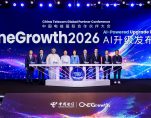
SHANGHAI, CHINA – Media OutReach Newswire – 26 June 2026 – On June 25, 2026, the China Telecom Global Partner Conference convened in Shanghai. Centered on the theme of “OneGrowth 2026: Shared AI Token Era Ahead,” the event brought together leading global telcos, key ecosystem partners, and prominent clients from both domestic and international markets. During the event, the upgraded “OneGrowth Global Cooperation Initiative” was officially launched, and the AI Token Global Service Ecosystem Alliance was inaugurated.

e9d3722a-1b0e-48ba-8c94-ed2ed79e6932.jpg

Global Industry Leaders Convene, Charting a New Chapter for the Intelligent Era

Liu Ying, Executive Vice President of China Telecom, stated in her speech that China Telecom closely align with the high-quality joint construction of the Belt and Road Initiative, promoting the deep integration of mature domestic technological capabilities with global cloud and network resources, and steadily enhancing its international operational strength. Through continuous cultivation, China Telecom has built an AI Token international operation capability system, consolidating the foundation for expanding the global market and deepening ecosystem cooperation. Based on the new stage of the AI Token era, China Telecom is committed to leveraging Token operations as a bond to share the new global computing network, co-create a new paradigm of AI services, jointly govern the new cross-border compliance order, and collectively embrace the new value of the digital intelligence wave.

John Hoffman, CEO of the GSMA, delivered a speech highly recognizing the outstanding contributions made by China Telecom in the collaborative growth of the global digital industry. He stated that, relying on its forward-looking deployment of globalized computing power infrastructure, China Telecom has set a practical benchmark for the intelligent digital transformation of the entire industry. GSMA looks forward to continuously deepening its long-term collaboration with China Telecom, uniting all parties to build unified and general Token service industry standards, enabling advanced AI technologies to land in markets globally.

OneGrowth 2026, Upgraded, Annual Milestones Revisited

At the conference, China Telecom Global (CTG) officially launched the AI-powered and upgraded OneGrowth 2026 Global Cooperation Initiative. This upgrade centers on the three core dimensions of capabilities, applications, and cooperation. Leveraging on the AI Token empowerment system, it accelerates the standardization, commercialization, and global promotion of core AI capabilities.

Looking back at the past year, the key cooperation achievements of the China Telecom OneGrowth blueprint have gradually been put into practice. The “main artery” of the computing power network is smoother, the “2+5+X” global AIDC layout is accelerating, the ALC international submarine cable successfully landed in Hong Kong, and international submarine and terrestrial cables have increased to 185, with a capacity exceeding 304T. The “new engine” of platform capabilities is fully activated; the all-scenario Vision Network platform “OmanEye” officially commenced commercial trial provisioning, the International Seelink Vison Network Platform successfully put into service, and the global traffic platform operation has cumulatively served millions of customers. Four lightweight quantum products, including eSurfing Quantum Secret, took the lead in landing in the Asia-Pacific region. The “experimental field” of industry applications landed at scale; the Satellite Direct-to-PhoneService successfully landed in Hong Kong and Laos, and the global Internet of Vehicles (IoV) “One Card” capability covers more than 230 countries and regions. The “ecosystem” of cloud-intelligence integration continues to prosper, connecting to over 300 mainstream large models via more than 230 global cloud nodes.

United Through Tokens, Cultivared the AI Ecosystem

China Telecom comprehensively implementing the corporate strategy “Cloudification, Digital Transformation, and AI for good” and actively promotes Token-based operations, sincerely inviting global partners to activate the infinite potential of AI Tokens jointly defining a brand-new map for the intelligent era with OneGrowth initiative.

1. Capabilities Fully Upgraded, Building a “Five-in-One” Token Operation System

China Telecom deepens the “Five-in-One” Intelligent Cloud System, builds an “L-shaped” capability layout, and continuously enhances capabilities in compute, platforms, data, models, and applications, externally launching a one-stop comprehensive Token service platform—XINGCHEN TokenHub.

The Xingchen Super Intelligent Agent TeleAgent enables one-click access to mainstream global large models, creating a lightweight and highly efficient AI Token experience for various customers. The platform provides large model access and public cloud cooperation for leading customers in the industry, and providing standard and customized packages for SME customers in subdivided industries, achieving full-chain value management of “Production—Orchestration & Distribution—Application.”

2. Layout of Four AI Sectors, Building a Token Value Community

Building on the comprehensive layout of four core AI business sectors, and simultaneously opening up all platform resources of XINGCHEN TokenHub, differentiated cooperation schemes are launched for each track, joining hands with global partners to build a Token value community.

AI+ New Connectivity:

With cloud-network integration and computing-network unity as its foundation, and relying on intelligent dedicated lines, it achieves one-point cloud access, proximate high-speed connection, and ubiquitous coverage, providing low-latency, highly stable compute-network support for the high-speed flow of Tokens. It can provide partners with full-process services from technology to deployment, realizing intelligent connections that are manageable, controllable, and security-compliant.

AI+ Vision Network:

Jointly building an open and collaborative vision network platform with 30+ global partners. The international visual platform has deployed across multiple sites in Oman, the UAE, and the Asia-Pacific region, boasting over 10 landing scenarios. Driven by the twin engines of “platform + terminal” and “standards + operations”, creating a Token operation gateway to support overseas operators in achieving breakthrough growth and value-driven operations.

AI+ IoT:

Empowered by mature eSIM technology and an AI+ unified management platform, the business covers 230+ countries and regions, accumulating overseas service cases from 30+ leading automotive enterprises. The cooperation model has upgraded to a joint-operation framework, providing DMP platform customization, joint laboratory R&D, AIoT operation upgrades, and automotive industry eco-partnerships to enhance global user experience.

AI+ Digital Life:

Building the core AI entrance for families based on “one all-optical network, one intelligent cloud, and one Better Home.” It empowers externally by leveraging mature domestic experiences of 290 million users of Xiao Yi Guan Jia (Wing Butler) and 580 million ubiquitous smart terminal connections. Centering on overseas market demands, it opens up international cooperation for core products such as the eSurfing Smart Screen and eSurfing Cloud Drive, together with partners explore brand-new business models and empower global smart families.

Alliance Inaugurated, Consolidating the Foundation for Intelligent Upgrades

During the conference, the AI Token Global Service Ecosystem Alliance was officially inaugurated. Co-initiated by leading enterprises in domestic and overseas computing power supply, large model R&D, and vertical industry applications, the alliance is dedicated to unblocking the full-link synergy of AI Tokens from production and scheduling to application and monetization, jointly building an open, interoperable, and value-sharing globalized AI comprehensive service network to provide a solid foundation for the intelligent upgrade of global industries.

Outstanding Partners Honored, Embarking on a New Journey Together

The conference concluded with an awards ceremony. China Telecom presented the OneGrowth Best Innovative Carrier Partner, OneGrowth Best Product Innovative Partner, OneGrowth Best Strategic Partner, and OneGrowth Best Benchmark Partnership to partners who have shown outstanding performance in global cooperation. This accolades recognize partners walking alongside China Telecom, synergizing deeply in industrial layout planning, tackling cutting-edge technologies, and expanding overseas markets, thereby gathering industrial synergy to consolidate the foundation for digital industry development and jointly boosting the global digital intelligent transformation process.

This conference marks the strategic progression of the OneGrowth Global Cooperation Initiative from ecosystem construction to deep cultivation of sub-tracks. China Telecom will continue to leverage its unique advantages of cloud-network integration and broad cross-border coverage, upholding the core cooperation philosophy of “Co-Creation, Sharing, Co-Governance, and Win-Win.” By building a computing power foundation, expanding the cloud-network backbone, innovating the intelligent core, and gathering ecological synergy, it will make AI Tokens the universal value carrier connecting the global intelligent ecosystem, continuously contributing China Telecom’s strength to building a smarter, safer, and more inclusive global digital industry ecosystem.

Hashtag: #ChinaTelecom

The issuer is solely responsible for the content of this announcement.

HANOI, VIETNAM – Media OutReach Newswire – 26 June 2026 – VinEnergo, a member of Vingroup’s green ecosystem, and SunAsia Energy Inc., a pioneer in the Philippine solar energy sector, have announced a strategic partnership to develop a portfolio of large-scale renewable energy projects utilizing the Solar on Stilts model. With expected lifetime revenues exceeding USD 1.5B, the projects will drive job creation, catalyze infrastructure investment, and strengthen the Philippines’ energy security.

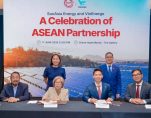
Ms. Tetchi Capellan, Chief Executive Officer and Chairperson of SunAsia Energy (second from left), and Mr. Nguyen Anh Khoa, CEO of VinEnergo (second from right), sign the agreement between the two companies in the presence of Ms. Sharon Garin, Secretary of Energy of the Philippines, and Mr. Lai Thai Binh, Ambassador of Vietnam to the Philippines.

Between 2027 and 2028, VinEnergo and SunAsia Energy plan to bring three flagship projects into operation, with a combined installed capacity of 422MWp. These are projects located in Macabebe, Pampanga (181 MWp), Sagay (126 MWp) and Silay (115MWp), both in Negros Occidental Province.

The partnership aims to deliver reliable renewable energy to the national grid, while supporting the Philippines’ goals of strengthening energy security, reducing carbon emissions, and promoting local economic development. Once operational, the projects are expected to supply electricity to approximately 278,000 households and reduce carbon emissions by more than 460,000 tons annually, equivalent to planting around 21 million trees.

Over the next 18 months, VinEnergo will work closely with SunAsia Energy on engineering design and project implementation. This phase will include the selection of engineers, technology providers, and contractors to install nearly 700,000 solar panels mounted on pile structures, as well as approximately 62 kilometers of new transmission lines across Negros and Pampanga.

The project portfolio will utilize the Solar on Stilts technology, in which solar panels are mounted on pile-supported structures above the water surface, enabling the integration of clean power generation with aquaculture activities. This approach effectively leverages the Philippines’ strong potential for combining renewable energy development with agriculture and fisheries, while serving as a model for future sustainable energy projects. It also aligns with VinEnergo’s strategy of advancing the Food-Energy-Water Nexus to optimize resource use and create long-term value for communities.

ING and SGV & Co. acted as exclusive M&A advisors to VinEnergo and SunAsia, respectively.

Mr. Nguyen Anh Khoa, Chief Executive Officer of VinEnergo, said: “Our partnership with SunAsia Energy on this strategic project portfolio is a clear demonstration of VinEnergo’s regional growth ambitions. We are proud to bring forward solutions that combine sustainable energy development with responsible resource utilization. Floating solar not only contributes to addressing energy security challenges, but also provides a valuable opportunity to share Vietnam’s development experience in protecting local livelihoods and fostering the parallel growth of the energy and agricultural sectors.”

Ms. Tetchi Capellan, Chief Executive Officer and Chairperson of SunAsia Energy Inc., said: “This partnership is driven by the shared commitment of SunAsia Energy and VinEnergo to strengthen energy security, support economic growth, improve people’s lives, and help protect the planet. Through the Floating Solar model, we are not only developing renewable energy infrastructure but also creating a framework where food production and clean energy generation can thrive together.”

The announcement of this strategic partnership comes as the Philippines hosts the ASEAN Summit, underscoring VinEnergo’s role in advancing cross-border collaboration to address energy and climate challenges. It also marks an important milestone in VinEnergo’s international expansion strategy, while highlighting the capabilities of Vietnamese enterprises in developing pioneering renewable energy models that contribute to ASEAN’s and the world’s sustainable energy transition goals.

Hashtag: #VinEnergo #SunAsiaEnergy #SolarOnWater

The issuer is solely responsible for the content of this announcement.

About VinEnergo

VinEnergo is a leading Vietnamese energy developer focused on investing in and developing large-scale energy projects to accelerate the sustainable energy transition in Vietnam and across the region. With innovation at the core of its strategy, VinEnergo develops projects that deliver positive socio-economic impact while leading the deployment of integrated solutions that combine renewable energy, baseload power, and battery energy storage systems (BESS) to build a greener, more stable, and more reliable energy system.

About SunAsia Energy Inc.

SunAsia Energy Inc. is a Philippine renewable energy developer focused on innovative clean energy and solar solutions, including floating solar, Solar on Water, and other renewable energy projects that support the country’s clean energy transition.

HONG KONG SAR – Media OutReach Newswire – 25 June 2026 – Recently, SCNet.AI (www.scnet.ai) headquartered in Hong Kong has officially launched as a global AI&HPC computing service platform. With an e-commerce-style operational model, the platform redefines how AI for Science (AI4S) computing resources are accessed, enabling researchers worldwide to access AI, supercomputing applications and diverse compute resources as seamlessly as online shopping.

Putting Scientific Research Agents Within Reach — SCNet.AI Accelerates AI4S Innovation Powered by AI & HPC

Simplifying Innovation: From Bioinformatics to Industrial Simulation

SCNet.AI is positioned to bridge supply and demand for computing resources and unify an ecosystem of research software, delivering user-friendly research computing and scientific large model innovation environments for global research institutes, enterprises and independent developers.

SCNet.AI covers three core research scenarios:

  • Life Science & Bioinformatics: Tailored for biopharma firms and universities;
  • Industrial Manufacturing: CFD fluid simulation and FEA finite element analysis for automotive and semiconductor sectors;
  • Physical & Chemical Research: Molecular dynamics simulation for researchers in materials and new energy sectors.

Built around the integrated development philosophy of “data, computing power, models and applications”,SCNet.AI addresses pain points of open-source large models including difficult deployment, high usage costs and complicated adaptation, and provides end-to-end technical support from environment deployment to task tuning, substantially lowering the operational barrier for researchers to access AI4S computing resources.

E-commerce-style Operational Model: Instant Access & Elastic Scheduling

SCNet.AI’s standout innovation lies in its proprietary AI4S application marketplace model. Much like mainstream e-commerce platforms that connect physical goods buyers and sellers, SCNet.AI matches computing power, datasets, research models and industry applications with researchers.

This model delivers three distinct competitive advantages:

  • Instant on-demand access. All software is delivered via SaaS, while research AI agents are deployed under MaaS. Users can run tools online after subscription without local downloading, installation or maintenance.
  • Elastic scaling. Computing resources can be precisely allocated on demand for workloads ranging from simulation calculations to large model training.
  • Unified innovation ecosystem. Beyond being a computing power trading hub, SCNet.AI serves as a global collaborative platform for scientific research and innovation.

Currently, hundreds of premium applications, datasets and model products have already been listed on the platform. Users can select research applications on demand just like browsing an e-commerce site, eliminating the need to build in-house computing clusters or hire dedicated operation and maintenance staff. Simple registration unlocks full access, drastically cutting the overall hidden AI4S cost.

To lower entry barriers for researchers worldwide, SCNet.AI offers a complimentary resource kit for all newly registered users, including 10M Tokens, 100 GPU Hours (AI Inference) and 100 CPU Core Hours (HPC). These resources can support dozens of inference runs for mainstream foundation models, lightweight model fine-tuning, or complete end-to-end CFD and molecular dynamics simulation experiments.

This promotion is valid from June 23 to July 23, 2026 and open exclusively to first-time registrants. Each new account entity is entitled to claim the resource kit only once. All redeemed resources expire 90 days after collection. Quantities are limited and will be distributed on a first-come, first-served basis until exhausted.

For full information, please visit our official website at www.scnet.ai.

Hashtag: #SCNet.AI

The issuer is solely responsible for the content of this announcement.
HONG KONG SAR – Media OutReach Newswire – 25 June 2026 – The Hong Kong Research Institute of Textiles and Apparel (HKRITA) yesterday officially signed a landmark Memorandum of Understanding (MoU) with two key global partners, Jeanologia and Looptworks, to establish the Green Machine Circular Textile Ecosystem – a first-of-its-kind collaboration to accelerate the large-scale recycling of blended textiles.

Mr Jake Koh, CEO of HKRITA (middle), Ms Begoña García, Jeanologia Global Director of Sustainable Innovation, (left) and Mr Scott Hamlin, Founder and CEO of Looptworks, (right) have signed the MoU for this landmark tripartite initiative, advancing a complete and actionable circular textile ecosystem.

Bringing together cutting-edge innovation, industrial machinery expertise, and real-world adoption, this tripartite initiative unites HKRITA with Jeanologia as the first official machinery partner and Looptworks as a prospective adopter. The partnership signals a decisive shift from research-driven innovation to practical, scalable deployment with industry support, creating a complete and actionable pathway for circular transformation.

At the centre of this ecosystem is HKRITA’s latest Green Machine 4.0, the newest iteration of its pioneering hydrothermal recycling technology. This advanced version recovers polyester at 98% or higher purity from cotton-polyester textiles without harmful processes. Through this collaboration, Jeanologia contributes by delivering industry-ready machinery engineered to European standards that meets the CE high-pressure requirement, enabling seamless integration and streamlined logistics. Meanwhile, Looptworks, a Certified B-Corp recycling specialist, transforms diverse pre- and post-consumer textiles into high-quality GRS-certified fibres. This cross-industry collaboration supports expandable industrial implementation across diverse settings, enabling the industry to execute circular solutions at scale.

By integrating scientific innovation, engineering excellence, and operational deployment, the Green Machine ecosystem provides a viable pathway for circular transformation. This initiative empowers textile recyclers to process previously unrecyclable materials and unlock new revenue streams, while enabling fashion brands to incorporate recycled fibres into their supply chains in commercial volumes. It also supports manufacturers in adopting more sustainable production models, helping all stakeholders close the loop on textile waste and reduce dependence on virgin resources.

Mr Jake Koh, Chief Executive Officer of HKRITA, said, “The circular economy is no longer a distant goal—it is here. With the Green Machine 4.0 now proven adoption-ready and scalable, this partnership marks a decisive shift from research to commercialisation. True innovation is defined by real-world impact, and today we are making it a reality.”

Mr Enrique Silla, CEO and Founder of Jeanologia, said, “For the last 25 years, we have transformed the denim industry through technology, innovation and collaboration. Today, we are bringing that same experience to one of the industry’s greatest challenges: textile-to-textile recycling. At Jeanologia, we believe recycling must become part of the industry’s pre-competitive space, where companies work together to create solutions that no single organisation can achieve alone. By combining HKRITA’s innovation, Jeanologia’s industrial engineering and textile bleaching expertise, and Looptworks’ operational deployment, we are creating a model that can help make circularity a reality at industrial scale.”

Mr Scott Hamlin, Founder and CEO of Looptworks, said, “Looptworks has had a relationship with HKRITA for over a decade. We are proud to have worked together with the research and management teams at HKRITA to further develop textile circularity innovations at scale. The Green Machine represents a shining example of what is possible for textile recycling. Blended materials have long been a major barrier to circularity, and this technology enables us to effectively realise their value at scale. By reintroducing recovered fibres into the supply chain, we are proving that circular solutions are both environmentally practical and economically viable.”

Aiming to ensure ecologically sound circularity in the industry, HKRITA invites textile recyclers, fashion brands, and manufacturing partners to join the ecosystem and explore opportunities for collaboration, adoption, and expansion.

Hashtag: #HKRITA

The issuer is solely responsible for the content of this announcement.

About The Hong Kong Research Institute of Textiles and Apparel (HKRITA)

Established in 2006, HKRITA is funded by the Innovation and Technology Commission of the HKSAR Government and is hosted by The Hong Kong Polytechnic University. Celebrating its 20th anniversary in 2026, HKRITA continues to contribute to the competitiveness of the textile and apparel industry by providing one-stop services in applied research, technology transfer and commercialisation. HKRITA also plays a vital and expanding role in driving sustainable improvements in the industry and thus bringing benefits to society as a whole.

About Jeanologia

Jeanologia is a Spanish technology company with more than 30 years of experience transforming the textile industry through innovation. Today, more than 40% of the world’s jeans are produced using Jeanologia technologies.

The company pioneered technologies such as laser, G2 ozone and water recycling systems, helping brands and manufacturers eliminate harmful processes, reduce water and chemical consumption, and improve productivity.

As part of its Mission Zero vision, Jeanologia is now extending its expertise beyond garment finishing to accelerate textile circularity, developing industrial solutions for water reuse, textile recycling and the transition towards a waste-free industry.

About Looptworks

Looptworks is a Certified B-Corp textile-to-textile recycling specialist offering innovative, scalable solutions for brands and organisations world-wide. Based in Gresham, Oregon, Looptworks is the first and only GRS certified, recycling company in the United States equipped with a circular system capable of processing multiple types of materials into a range of finished spinning and nonwoven fibre products. The Looptworks facility is fully operational, and features a unique technology that transforms pre-and post-consumer textiles into high-quality recycled fibres.

Our process starts where others end.

MUNICH, GERMANY – Media OutReach Newswire – 25 June 2026 – EVB successfully concluded its June 23–25 exhibition at Power2Drive Europe 2026 at Messe München, where it connected with global industry professionals and highlighted its latest EV charging, energy storage, and power management solutions for cleaner, smarter, and more efficient energy systems.

Power2Drive Europe is a leading international exhibition for charging infrastructure and e-mobility. It brings together global players in EV charging and sustainable mobility, making it a key platform for industry exchange and innovation.

Showcasing Advanced Charging Technologies

Highlighting its PTB-certified technologies, EVB presented charging solutions for residential, commercial, fleet, and public applications.

  1. Floor-mounted AC EV Charger: Featuring a 21-inch LCD touch screen, POS payment, and ISO 15118-2 certification, it combines EV charging and digital advertising for retail, parking, and urban charging hubs.
  2. Liquid-Cooled DC Charger: With up to 480 kW output and a modular design that supports independent operation, it is built for high-demand public and commercial charging scenarios, delivering reliable performance with easier operation and maintenance.
  3. Split MW DC Charger: A 2 MW high-power charging solution for electric trucks, logistics fleets, ports, and industrial applications, supporting MCS/CCS interfaces, smart power sharing, and expandable DC outputs.

EVB also showcased its award-winning BUDC Ultra Fast Charger 150 kW, an ultra-thin dual-gun charger honored with Red Dot and iF Design Awards. Featuring a 75 kW liquid-cooled module and a slim 100 mm body, it delivers reliable, low-noise fast charging for space-limited scenarios.

Integrated PV, Storage and Charging Solutions

Beyond EV charging products, EVB showcased integrated PV, energy storage, and charging solutions for diverse application scenarios. By combining solar power, energy storage, and charging infrastructure, EVB helps customers improve energy efficiency, optimize power use, and reduce operating costs.

Strengthening Global Partnerships

The exhibition enabled EVB to strengthen partnerships and explore new collaborations, with discussions focused on fleet electrification, commercial deployment, and integrated energy infrastructure.
Hashtag: #ZhejiangBenyiNewEnergyCo

The issuer is solely responsible for the content of this announcement.

About EVB

EVB is a global provider of smart EV charging solutions.Backed by over 100 patents and international certifications, EVB has a presence in nearly 70 countries and has delivered more than 25,000 projects worldwide, providing reliable, high-speed, and eco-friendly charging infrastructure to support the clean energy transition.

For more information, please visit www.evb.com or contact [email protected].

Video:

Held in support of Go Green SG 2026, the 27 June to 4 July exhibition spotlights creative reuse and cleaner event power at Raffles City Shopping Centre

SINGAPORE – Media OutReach Newswire – 25 June 2026 – Trashure Hunt 2026 will open its award ceremony and public exhibition this Saturday, 27 June, at Raffles City Shopping Centre, inviting Singaporeans to see how discarded materials can be transformed into artworks that spark practical conversations on waste, recycling and climate action.

Organised by Adsan Law LLC and Ode To Art in support of Go Green SG 2026, Trashure Hunt arrives as Singapore continues to push for stronger everyday sustainability habits. While national conversations around climate action often focus on large-scale infrastructure or policy, the exhibition brings the issue closer to the public by showing how creativity can change the way people see the materials they throw away.

The exhibition is part of the fourth edition of Go Green SG, the national sustainability movement led by the Ministry of Sustainability and the Environment. This year’s edition runs from 11 May to 28 June 2026 and features more than 1,000 sustainability-focused activities by around 500 partners across Singapore, with a focus on climate adaptation. Against that backdrop, Trashure Hunt brings the message into a familiar public space: a shopping mall, where everyday consumption and environmental responsibility naturally meet.

Following the close of submissions on 20 June, selected artworks created from clean recyclable or discarded materials will be showcased at Raffles City Shopping Centre from 27 June to 4 July 2026. Entries are assessed on creativity, use of materials, sustainability message, craftsmanship and overall impact. Winners will receive a share of a SGD 9,000 prize pool, with first prize at SGD 5,000, second prize at SGD 3,000 and third prize at SGD 1,000.

As the Green Energy Partner for Trashure Hunt 2026, GoRentalSG supported the event’s vision of turning waste into wonder by demonstrating how sustainability can be activated not only through art, but also through the way events are powered. For this event, GoRentalSG provided 216kWh of clean energy and helped avoid an estimated 583kg of emissions, proving that every gathering, exhibition and public experience has the potential to become part of a cleaner energy future.

“People often think sustainability begins with big infrastructure, but an exhibition like Trashure Hunt makes it visible and immediate,” said Colin Peh, Founder and Managing Director of GoRental SG. “A discarded item can become something worth pausing for, and an event can run on cleaner power instead of defaulting to diesel. These practical shifts are what make sustainability easier for more people to understand and adopt.”

The award ceremony will be held on Saturday, 27 June 2026, 11:30am, at Ode To Art, 252 North Bridge Road, #01-36E/F, Raffles City Shopping Centre. Mr Melvyn Ong, Permanent Secretary at the Ministry of Sustainability and the Environment, will attend as Guest of Honour. The award ceremony is for invited guests and media only, while the exhibition will be open to the public from 27 June to 4 July.

Hashtag: #GoRentalGlobal #GoRentalSG #PowertoEmpower #GoImpact #GoGreenSG2026


The issuer is solely responsible for the content of this announcement.
About GoRentalSG

GoRentalSG is a Singapore-based clean energy solutions provider powering the transition towards cleaner, quieter and more sustainable operations across events, worksites, businesses and urban spaces. By replacing conventional diesel generator dependency with intelligent, mobile battery energy systems, GoRentalSG enables organisations to reduce emissions without compromising reliability, scalability or performance. Through practical deployment, data-driven energy planning and future-ready battery solutions, GoRentalSG continues to help Singapore’s events and industries move towards a more resilient, low-carbon tomorrow. Learn more at.

Cornell University undergraduates have won the grand prize at The Farm Robotics Challenge with an autonomous robot that kills weeds using targeted electric shocks, strengthening investor interest in farm automation as growers look for alternatives to herbicides, fuel-heavy machinery and costly manual labour. The winning project, developed by Rootline Robotics, beat 95 other teams in the 2026 competition, which drew entries from 13 countries and spanned schools, […]

Singapore’s push to embed artificial intelligence across business is moving from operational efficiency to the boardroom, forcing companies to confront a harder question: how far can machines assist corporate leadership before accountability becomes blurred?

The debate has sharpened as enterprises test AI systems for strategy modelling, risk alerts, market forecasting, compliance reviews and scenario planning. These tools promise faster decisions and broader analysis, but they also raise questions over directors’ duties, audit trails and responsibility when algorithmic advice shapes corporate choices.

Singapore has positioned itself as one of Asia’s most active AI governance centres, combining public investment, industry adoption programmes and voluntary frameworks rather than sweeping legislation. The approach is designed to encourage innovation while keeping human accountability at the centre of AI deployment. That balance is now being tested as companies examine whether AI can move beyond back-office functions and become a structured part of board deliberations.

The issue has gained urgency because AI systems are no longer limited to producing summaries or automating routine workflows. Newer agentic AI tools can plan tasks, reason across data, trigger actions and interact with software systems with limited human intervention. For corporate boards, such capability creates both opportunity and exposure. A system that can flag liquidity pressure, supply-chain disruption or reputational risk may improve oversight. A system that gives flawed recommendations based on incomplete data, hidden bias or weak assumptions may deepen governance failures.

Singapore’s corporate law framework continues to place responsibility on human directors. Directors are expected to act honestly, use reasonable diligence and discharge their duties in the company’s interests. That obligation does not shift to software vendors, consultants or internal AI teams merely because a board relied on machine-generated analysis. If directors accept AI output without challenge, the legal and reputational risk remains with the board.

Regulators have therefore focused on controls rather than replacement. Financial institutions already face sharper expectations because AI is being used in credit, insurance, fraud detection, wealth management and customer engagement. The fairness, ethics, accountability and transparency principles promoted for data-driven finance have helped shape how firms assess AI systems, particularly where customer outcomes may be affected. Proposed AI risk-management guidance for the sector points towards stronger board oversight, model governance, validation, monitoring and escalation procedures.

For non-financial companies, the same discipline is becoming harder to avoid. Listed companies must show that boards oversee strategy, risk and management performance. As AI begins to influence capital allocation, workforce planning, cyber-risk management and mergers, directors may need to demonstrate that they understand what the tools can and cannot do. Board papers generated by AI may require clear labelling, version control and records of the human judgement applied before decisions are approved.

The government’s wider AI strategy has added momentum. Singapore has refreshed national AI priorities, expanded support for enterprises and set out plans to help thousands of businesses adopt AI meaningfully. Public investment in AI research, computing capacity and talent is intended to strengthen national competitiveness, while partnerships with major technology firms are drawing more AI activity into the city-state.

Corporate leaders are watching these moves closely. Singapore’s appeal as a trusted business hub depends partly on whether it can offer companies a stable governance environment for AI adoption. The city-state has avoided a heavily prescriptive regime, preferring practical frameworks, testing tools and assurance mechanisms. That has helped businesses experiment, but it also means boards cannot simply wait for detailed rules before acting.

A growing concern is explainability. Board decisions often involve judgement under uncertainty, but directors must still be able to justify their reasoning. AI tools can generate polished recommendations without revealing how conclusions were reached or which data points carried the most weight. That creates problems for audit committees, external auditors and regulators when a decision later comes under scrutiny.

Another risk is over-reliance. Directors may treat AI output as neutral because it appears data-driven, even when the underlying model reflects skewed training data, weak prompts or commercial assumptions built by vendors. Smaller enterprises face an added challenge because they may lack internal expertise to test systems independently. For them, AI adoption can depend heavily on third-party products whose limitations are not always clear.

Singapore’s emerging answer is likely to rest on disclosure, assurance and accountability. AI “nutrition labels” under discussion would help users understand intended uses and limitations of AI products. Testing frameworks and accredited evaluation bodies could make it easier for companies to compare tools and identify risks before deployment. These measures would not remove directors’ obligations, but they could give boards a clearer basis for responsible adoption.

VISHNU RAJA
RYO YAMADA
HITORI GOTOH
IKUYO KITA