A China-nexus hacking group maintained covert access to a segregated critical-infrastructure network for nearly a decade by tampering with Linux authentication tools that administrators rely on to control access. The operation, tracked as Velvet Ant and labelled Operation Highland by investigators, exposed a high-risk tactic in cyber espionage: rather than relying only on conventional malware, the intruders replaced trusted OpenSSH binaries and Pluggable Authentication Modules with altered […]
Rise vGPU + ModelHub Power China’s AI into the Heterogeneous Orchestration Era
HONG KONG SAR – Media OutReach Newswire – 15 June 2026 – Frost & Sullivan, a globally renowned growth consulting firm, has released its “2026 AI Infrastructure Orchestration Platform White Paper”. The report recognizes Phancy Group’s Rise vGPU as a Tier 1 Leading Platform, the highest maturity tier in heterogeneous GPU orchestration. Phancy’s ModelHub also achieved the highest Overall Score in the enterprise-grade model management platform evaluation. This marks a significant endorsement of Phancy’s technological capability in heterogeneous AI infrastructure.
According to the white paper, as large model applications scale rapidly, China’s AI industry is facing structural challenges stemming from multi-chip coexistence. These include hardware heterogeneity, fragmented software stacks, persistently low GPU utilization (generally below 30%), and rising model adaptation complexity — all of which have become major bottlenecks for enterprise-scale AI deployment.
The report highlights a fundamental shift in AI infrastructure competitiveness – moving away from “single-chip performance” toward “cluster-scale system coordination.” At this critical juncture, Phancy has positioned itself as a leader in advanced orchestration through its full-stack AI infrastructure platform, offering a proven solution to heterogeneous compute challenges and helping drive China’s AI industry from “compute accumulation” into a new era of “compute orchestration.”
Phancy Rise vGPU: Tier 1 Leading Platform
In its assessment of mainstream AI infrastructure platforms, Frost & Sullivan defined Tier 1 criteria across three core dimensions: heterogeneous support, fine-grained control, and production-grade execution. Phancy Rise vGPU meets all three standards and has been recognized as a Tier 1 Leading Platform.
Rise vGPU transforms AI infrastructure from fragmented, low-efficiency device-level management to a unified software-defined control plane. Its key technology breakthroughs include:
Comprehensive Heterogeneous Management: Unified onboarding and management across more than 10 mainstream GPU/NPU vendors, including NVIDIA, Ascend, Cambricon, Hygon, and others.
Significant Utilization Improvement: Through safe oversubscription and time/space multiplexing, GPU utilization is increased from industry averages below 30% to 70%-90%.
Intelligent Precision Scheduling: Multi-dimensional scheduling algorithms based on priority, topology, load, and resource awareness to achieve optimal compute allocation.
Production-Grade SLA Assurance: The Deterministic Execution Layer delivers committed and auditable SLA guarantees for critical inference workloads.
Full Lifecycle Operability: Comprehensive monitoring, metering, and cost allocation capabilities that turn GPU resources into truly operable digital assets.
Model Hub: Highest Overall Score in Model Management Platform Evaluation
Beyond compute orchestration, the report underscores the strategic importance of enterprise-grade model management platforms. As a powerful complement to Rise vGPU, Phancy ModelHub enables enterprises to build a complete full-stack AI infrastructure — from compute to models and from resource scheduling to business delivery.
The white paper notes that Phancy ModelHub delivers leading performance in key areas such as Model & Chip Compatibility, Execution Stability & Performance, and Model-GPU Coordination & Scheduling, achieving the highest Overall Score. Through its unified model management and execution platform, ModelHub creates a seamless closed-loop process covering model onboarding, deployment optimization, inference services, and version governance — significantly lowering the barrier to model deployment and accelerating AI innovation.
Dr. Dai Wenyuan, Founder & CEO of Phancy, said: “The Frost & Sullivan white paper accurately captures the inflection point in AI infrastructure development. The recognition of Rise vGPU as a Tier 1 Leading Platform and ModelHub’s top Overall Score provide important authoritative validation of Phancy’s technology strategy and product strength. As a full-stack AI cloud service platform, Phancy believes the next wave of competitiveness in the AI industry will come from systematic improvements in compute orchestration efficiency. We will continue to focus on heterogeneous compute unified scheduling and model ecosystem operations, working closely with customers and industry partners to advance China’s AI industry from ‘compute accumulation’ to a true ‘compute orchestration’ era.”
Hashtag: #PhancyGroup
The issuer is solely responsible for the content of this announcement.
About Phancy Group
Phancy Group (6682.HK) is a leading full-stack AI cloud services platform, providing comprehensive solutions for the AI 2.0 era. Our offerings include Rise vGPU, ModelHub and SageAIOS, delivering efficient and scalable AI infrastructure with end-to-end capabilities. We provide a complete solution from heterogeneous compute resource management and optimization to the deployment of intelligent agent models. These solutions empower digital transformation across a wide range of industries, supporting our vision of building a large-scale and efficient “Token Factory.”
Guided by the mission of “AI for Everyone” and positioned as the “Navigator of AI,” Phancy Group is committed to becoming a global leader in Artificial General Intelligence.
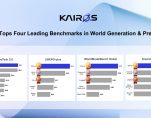
SHANGHAI, CHINA – Media OutReach Newswire – 15 June 2026 – ACE ROBOTICS today announced that its open-source Kairos world model has achieved leading results across four global embodied-intelligence benchmarks: RoboTwin 2.0, LIBERO-Plus, WorldModelBench Robot and DreamGen. Kairos ranked first among evaluated world models and vision-language-action (VLA) systems on these benchmarks’ public leaderboards as of 12 June 2026, leading across the core capabilities of embodied intelligence, including complex robotic manipulation, scene-level generalization, physical-world modeling and zero-shot transfer. The project is openly available on GitHub, Hugging Face and ModelScope, giving researchers and developers a public reference point for the model, benchmark results and technical materials.
Tops Four Leading Benchmarks in World Generation & Prediction
Embodied intelligence faces a fundamental challenge: generalization. A robot must operate reliably in environments it has never seen, adapting to new lighting, layouts, objects, embodiments and noisy real-world conditions. While VLA models have become a prevailing approach by directly mapping perception and language inputs to robot actions, ACE ROBOTICS believes world models offer a more scalable path by explicitly learning the underlying dynamics of the physical world and predicting how environments evolve. Kairos is designed to validate that approach.
Leading scene-level generalization on LIBERO-Plus
One of Kairos’ most significant results comes from LIBERO-Plus, a scene-level generalization benchmark proposed by the Shanghai Innovation Institute with Fudan University, Tongji University and the National University of Singapore. It evaluates robustness under seven real-world variables: camera angle, robot embodiment, language instruction, lighting, background, sensor noise and spatial layout.
Kairos achieved an overall score of 89.0, ranking first among all evaluated world models and VLA systems. It surpassed leading VLA models including ACoT-VLA (88.0), Pi 0.5 (85.7) and ProGAL-VLA (85.5), as well as the Being-H0.7 world model (84.8). It also showed strong environmental robustness, with near-ceiling performance on lighting (97.7), noise (96.8) and background (95.8), and ranked highly on camera angle and language instruction.
According to ACE ROBOTICS, this marks the first time a world-model approach has outperformed leading VLA systems on LIBERO-Plus for scene-level generalization, pointing to a path where robots adapt to homes, factories, retail spaces and other environments with far less environment-specific retraining.
A compact model with strong physical modeling efficiency
On WorldModelBench Robot, a physical-modeling benchmark proposed by researchers from UC Berkeley, UC San Diego, NVIDIA and MIT, Kairos-4B achieved an overall score of 9.30, ranking first on the benchmark. With only 4 billion parameters, it outperformed larger systems including 28-billion-parameter Lingbot, 16-billion-parameter Cosmos 3, 14-billion-parameter Abot-PhysWorld and 5-billion-parameter Wan 2.2, setting a new record for parameter efficiency in embodied world models.
Kairos matched the top instruction-following score (2.36) of the 16-billion-parameter Cosmos 3 with about one quarter of the parameters, a fourfold efficiency gain. It scored 4.96 on physics adherence, with perfect marks on Newtonian mechanics and gravity, and a perfect score on temporal quality, reflecting strong temporal consistency and visual continuity over long horizons.
A unified architecture, not a modular pipeline
ACE ROBOTICS attributes Kairos’ performance to its native unified “multi-modal understanding-generation-prediction” architecture. Unlike modular approaches that stitch together separate components for world understanding, generation and prediction, Kairos integrates these within a single backbone that shares one global world state, reducing the information loss and coordination latency between modules for more consistent physical modeling, stronger long-horizon prediction and more reliable action planning.
ACE ROBOTICS first introduced this architecture in December 2025, and the broader industry is now converging on a similar path: NVIDIA’s Cosmos 3.0, introduced in 2026, adopts a comparable single-system design that brings vision reasoning, world generation and action prediction into one architecture. Built on this foundation, Kairos-4B is, in ACE ROBOTICS’ description, the first embodied world model able to drive a physical robot directly on-device, closing the perception-to-action loop without intermediate translation latency.
Leading on synthetic data transfer and complex robot manipulation
Kairos also ranked first on DreamGen Bench, a benchmark led by NVIDIA with the University of Washington, UC Berkeley and UCLA that measures how well synthetic data generated by world models transfers to unseen objects, behaviors and environments, a key predictor of downstream robot-training value. Kairos ranked first on both average physics adherence (AVG_PA 0.538) and overall average score (AVG_Score 0.618), and led globally on new-behavior execution and new-environment adaptation.
On RoboTwin 2.0, a demanding dual-arm manipulation benchmark proposed by Shanghai Jiao Tong University and the University of Hong Kong with Shanghai AI Laboratory, Kairos scored 96.1% — a state-of-the-art result on the benchmark’s public leaderboard as of 12 June 2026. Across the benchmark’s 50 complex two-arm tasks it scored 96.9% in clean scenarios and 95.2% in randomized scenarios, ahead of VLA models such as G0.5 (93.2) and starVLA (88.3) and world models including AIM (93.1), Fast-WAM (91.8) and MotuBrain (96.0).
From benchmark leadership to commercial deployment
Together, these results validate Kairos’ technical direction across the core dimensions of embodied intelligence, from physical-rule understanding and zero-shot generalization to environmental robustness and fine-grained dual-arm manipulation, supporting ACE ROBOTICS’ aim to move robots beyond task imitation toward physical-world understanding, long-horizon reasoning and real-world execution.
The results come as ACE ROBOTICS accelerates commercialization. The company says it has raised several hundred million U.S. dollars across financing rounds in the first half of 2026, including a recent Angel+ round backed by investors such as Geely Capital, Dachen Caizhi, Shenzhen Capital Group and the Shanghai Sci-Tech Innovation Fund, with existing shareholder SenseTime’s Guoxiang Capital increasing its stake. The proceeds will support continued world-model research and integrated hardware-software solutions for sectors including smart retail, security and inspection, tourism and hospitality.
“Embodied intelligence is the next era of AI, and a world model is the key to unlocking it,” said Wang Xiaogang, Chairman of ACE ROBOTICS. “Our mission is to give every robot a capable brain.”
The issuer is solely responsible for the content of this announcement.
About ACE ROBOTICS – Equipping robots with intelligent “brains” and engaging “souls”
ACE ROBOTICS is a pioneering robotics company dedicated to advancing the field of embodied intelligence. Through breakthrough technological innovations and deep insights into embodied intelligence scenarios, we aim to empower robots with the ability to autonomously understand and explore the physical world, thereby accelerating their commercial implementation.
The company pioneered the ACE R&D paradigm and built a vision-based “environmental data engine, real-world cognition, embodied interaction generalization” technology chain. Using full spatiotemporal and multi-perspective environmental capture as its engine, along with Kairos 3.0 – China’s first open-source and commercially applicable world model – plus the Embodied Foundation Model as its technical backbone, ACE ROBOTICS addresses core industry challenges such as data scarcity, common sense gaps, poor generalization, and limited versatility. Simultaneously, the company unveiled its flagship A1 Embodied Super Brain Module, accelerating the large-scale commercial deployment of embodied intelligence across diverse scenarios.
ACE ROBOTICS is both a technology pioneer and an ecosystem builder. Through strategic cooperation with top hardware manufacturers, cloud service providers, and vertical scenario partners, we have broken through the “model-hardware-scenario” industrial deadlock, providing standardized and customized solutions that are driving the development of China’s embodied intelligence industry.
Arabian Post Staff -Dubai Dubai has created a federal authority to steer artificial intelligence, public data and digital government policy under one national framework, marking a new phase in the country’s plan to embed autonomous systems across state services. HH Sheikh Mohammed bin Rashid Al Maktoum, Vice President, Prime Minister of the UAE and Ruler of Dubai, approved the establishment of the Artificial Intelligence and Data Authority […]
The Linux Foundation has launched OpenSharing, a vendor-neutral protocol aimed at standardising how companies exchange AI agents, models and data across platforms, marking a fresh attempt to curb fragmentation as enterprises move from pilot projects to production-scale agentic AI. The project, contributed by Databricks and now hosted under Linux Foundation governance, extends the Delta Sharing protocol beyond structured data into AI-era assets such as agent skills, machine-learning […]
Securitize has expanded its tokenised AAA CLO fund to Solana, adding a major blockchain venue to a product built with BNY for institutional structured-credit exposure. The Securitize Tokenized AAA CLO Fund, known as STAC, will now be available to eligible investors through Solana, with Ethena Labs planning a $250 million allocation. The commitment ranks among the largest planned deployments into tokenised structured credit on the Solana ecosystem […]
Mistral AI is in talks to raise about €3 billion at a valuation of roughly €20 billion, a potential deal that would sharply lift the Paris-based artificial intelligence company’s standing among Europe’s most valuable private technology groups. The discussions remain fluid and may still change in size, timing or investor composition. If completed near the terms being discussed, the financing would mark another significant jump for a […]
Launches VocSageX Agent Development Platform to Accelerate Commercial Adoption of Trustworthy AI
HONG KONG SAR – Media OutReach Newswire – 12 June 2026 – Voicecomm Technology Co., Ltd. (“Voicecomm Technology” or the “Company“, Stock Code: 2495.HK), a core technology provider and ecosystem operator of trustworthy conversational AI in China, announces that it has officially signed an ecosystem cooperation agreement with Huawei Cloud during the 2026 Huawei Cloud INSPIRE. The two parties will engage in in-depth collaboration across trustworthy artificial intelligence, industry AI agents, cloud computing infrastructure, and ecosystem development, with the shared goal of accelerating the large-scale deployment of enterprise AI applications.
At the conference, Voicecomm Technology also officially unveiled its next-generation enterprise AI product, the VocSageX Agent Development Platform, further strengthening the Company’s product portfolio in the trustworthy interactive intelligence sector.
Deepening Collaboration with Huawei Cloud to Build a Trustworthy AI Ecosystem Under the agreement, both parties will leverage their respective strengths in artificial intelligence technologies, industry applications, and cloud infrastructure to jointly drive innovation in enterprise AI solutions. Together, they will explore integrated solutions centered on large language models (LLMs), the VocSageX Agent Platform, and the Company’s proprietary “Intelligent Graph” system across both domestic and international markets.
Going forward, the two companies will continue to deepen cooperation in technology, computing power, market expansion, and ecosystem development. The partnership will accelerate the nationwide rollout and overseas deployment of mature solutions in areas such as smart cities and digital government, while fostering business growth for both organizations.
This collaboration marks a natural progression of an already established relationship built on long-term mutual trust. In January 2026, Voicecomm’s self-developed “Intelligent Graph” system officially passed the technical certification of Huawei’s Ascend AI basic software and hardware platform, completing preliminary validation in platform compatibility and algorithm integration.
Launch of VocSageX: A Trustworthy Foundation for Enterprise AI Speaking at the conference, Mr. Zheng Bo, Vice General Manager of Voicecomm Technology, noted that enterprises commonly face several challenges when deploying AI, including insufficient trustworthiness, high deployment costs, fragmented systems, and hallucination issues associated with large language models.
To address these challenges, Voicecomm launched the VocSageX Agent Development Platform, a comprehensive lifecycle management system covering agent design, training, deployment, orchestration, operations, maintenance, and asset management. The platform is built around five core capabilities: Trustworthy, Dedicated, Controllable, Collaborative, and Evolvable. It enables enterprises to rapidly develop customized industry-specific AI agents and realize multi-agent collaboration at scale.
Mr. Zheng added: “VocSageX is more than a development tool—it is a comprehensive AI agent operations platform designed for medium and large enterprises. Trustworthy AI that everyone can use is the true driver of productivity.”
Demonstrating Industry AI Applications Across Multiple Sectors In addition to the platform launch, Voicecomm showcased a range of industry AI agent applications at the conference, covering smart government services, smart elderly care, intelligent manufacturing, customer service, and enterprise digital transformation.
To date, the Company’s trustworthy AI agents have been widely deployed across sectors including city management and administration, automotive and transportation, telecommunications, finance, healthcare, and energy management.
Dr. Tang Jinghua, Chairman of Voicecomm Technology, said: “The AI industry is transitioning from the era of large language models to the era of AI agents. Enterprise demand for trustworthy, secure, and sustainable AI capabilities will continue to grow. Leveraging our proprietary trustworthy intelligence technology framework and strategic partnerships with leading ecosystem players such as Huawei Cloud, Voicecomm Technology is well positioned to capture the opportunities emerging in the enterprise AI market and accelerate the commercialization and value creation of AI technologies across a broader range of industries.”Hashtag: #VoicecommTechnology
The issuer is solely responsible for the content of this announcement.
About Voicecomm Technology Co., Ltd.
Founded in 2005 and headquartered in Wuhan, Voicecomm Technology is one of the leading core technology providers and ecosystem operators of trustworthy conversational AI listed on the Main Board of the Hong Kong Stock Exchange, and obtained the qualification as National-level SRDI, Technology Little Giant and High-Tech Enterprise. Leveraging its proprietary trustworthy Agent,the Company overcomes pain points in the commercialization of large language models, such as hallucinations and compliance issues, ensuring AI is usable, manageable, and controllable in enterprise environments. For enterprise-level customers, the Company provides AI services covering the entire process of “communication –decision – execution”. Its trustworthy Agent solutions have been widely deployed across multiple scenarios, including City management and administration, Automotive and transportation, Telecommunications, Finance, Healthcare, and Energy management, and it is dedicated to empowering the intelligent transformation of diverse industries.
General Motors has moved deeper into the power business by enabling vehicle-to-grid functions for some electric-vehicle customers, positioning its bidirectional EV fleet as a distributed energy resource while pursuing sodium-ion batteries for grid-scale storage. The announcement, made at GM Empower 2026 in San Francisco, centres on a software update that expands the capability of GM’s vehicle-to-home energy system. The update allows eligible users to send electricity from […]
Advanced Micro Devices is extending its x86 challenge beyond data centres and personal computers, using its Ryzen AI Embedded processor portfolio to target cars, robots, medical systems and industrial machines as edge devices demand more local artificial intelligence computing. The move puts AMD more directly against Arm-based suppliers that have built strong positions in embedded and automotive systems through power-efficient designs, licensing flexibility and broad developer ecosystems. […]
GitHub has moved security scanning closer to the developer’s keyboard with a new Copilot CLI command that reviews code changes before they are committed, expanding the role of generative AI from code assistance into early-stage vulnerability detection. The /security-review slash command, introduced as an experimental public preview for GitHub Copilot CLI, allows developers to run an AI-driven security check inside the terminal. The feature is designed to […]
AI coding agents can be manipulated into running attacker-chosen code through ordinary-looking bug reports, exposing a fresh security gap in the fast-expanding market for autonomous software development tools. Tenet Security researchers have described a technique they call “agentjacking”, in which a hostile actor plants malicious instructions inside a fake software error report and waits for a coding agent to read it during routine debugging. The attack does […]
SpaceX plans to begin testing artificial intelligence data centres in orbit by late 2027, accelerating Elon Musk’s push to turn the company’s satellite and launch network into a new layer of global computing infrastructure. The programme would move part of the AI computing race beyond land-based data centres, where power shortages, grid constraints, cooling costs and local opposition have become major obstacles for technology companies. The first […]
Egypt’s Suez Canal recorded its strongest monthly revenue since early 2024 as oil tankers turned increasingly to the Red Sea route after the effective shutdown of the Strait of Hormuz disrupted Gulf energy flows. Revenue from the waterway reached about $419 million in April, up 27 per cent from a year earlier, supported by a sharp rise in tanker crossings and higher net tonnage. The canal handled […]
phpBB administrators have been urged to upgrade immediately after researchers disclosed two authentication weaknesses that could allow attackers to impersonate forum users, including administrators, on vulnerable bulletin boards. The flaws affect versions before phpBB 3.3.17, released on June 6 as a maintenance and security update for the 3.3. x branch. One issue exposes default installations using database authentication, while the other affects boards where administrators have enabled […]
Intel has used Computex 2026 to present a broader artificial intelligence strategy built around rack-scale systems, new Xeon data-centre processors and industry partnerships aimed at the fast-expanding market for inference and agentic AI workloads. The announcements in Taipei marked a deliberate shift in emphasis for the company, from selling individual chips to supplying integrated platforms that combine processors, accelerators, networking and software. Intel’s pitch rests on the […]
Trad. Fi and W3 are preparing a $650 million private-credit programme aimed at moving equipment-financing loans for businesses onto public blockchain infrastructure, marking a fresh push to connect real-economy lending with automated capital workflows and tokenised settlement. The initiative targets a 48-month pipeline of lending assets tied to equipment purchases, with Trad. Fi originating credit and W3 providing artificial-intelligence agents to support risk assessment, due diligence and […]
Arabian Post Staff -Dubai Washington carried out overnight strikes on Iranian military sites near the Strait of Hormuz after President Donald Trump said Tehran had shot down a US Army Apache helicopter patrolling the strategic waterway. US Central Command said the operation was launched on Trump’s orders and described the action as self-defence. The strikes targeted air defence systems, ground control stations and surveillance radar sites positioned […]
Nvidia has signed a wide set of artificial intelligence and data centre agreements with major South Korean companies, placing the country at the centre of its next phase of AI infrastructure expansion across Asia.
The agreements involve SK Telecom, SK Hynix, Naver, Doosan Group, LG Group, Hyundai Motor Group and continued discussions with Samsung Electronics, linking Nvidia’s graphics processors, AI factory architecture and robotics platforms with South Korea’s strengths in memory chips, telecoms, manufacturing, cloud services and industrial automation.
The deals were unveiled during Nvidia chief executive Jensen Huang’s Seoul visit, which has underlined how South Korea is moving from being a supplier of critical memory chips to a broader AI infrastructure hub. The push comes as governments and large companies seek sovereign computing capacity, tighter control over data, and dedicated facilities capable of training and running advanced AI models.
SK Telecom plans to build a gigawatt-scale AI cloud in South Korea using Nvidia’s DSX platform, with the first AI factory expected to come online in 2027. The infrastructure is designed to support enterprise AI, robotics, industrial automation and agentic AI services, using SK Telecom’s network, data centre and corporate technology base.
Naver, one of South Korea’s leading internet and cloud companies, is expanding its sovereign AI infrastructure with Nvidia, starting with 55 megawatts of capacity and a plan to move towards gigawatt scale. The collaboration is aimed at serving businesses, public-sector users and industries seeking locally controlled AI platforms.
SK Hynix, already a key supplier of high-bandwidth memory for Nvidia’s AI accelerators, has entered a multi-year technology partnership to develop next-generation memory for global AI data centres. The agreement strengthens the role of high-bandwidth memory as one of the most important bottlenecks in the AI hardware supply chain, with demand rising sharply as large models require faster data movement between processors and memory.
Samsung Electronics remains part of the wider conversation around next-generation foundry and memory cooperation. Its semiconductor leadership held talks with Nvidia on advanced chip manufacturing and future high-bandwidth memory, including technologies beyond the current HBM4 generation. Samsung is also involved in manufacturing AI accelerator chips for other customers, keeping it central to Nvidia’s broader supply chain calculations even as SK Hynix maintains a strong position in premium memory.
Doosan Group’s cooperation with Nvidia extends the agreements beyond data centres into physical AI. Doosan Robotics is working with Nvidia’s simulation, robotics and on-device AI platforms to develop an agentic robot operating system, while Doosan Enerbility is expected to support power infrastructure for AI factories. Doosan Corporation’s electronics materials unit is also positioned to support next-generation data centre hardware through advanced materials used in AI accelerators.
LG Group is working with Nvidia on an AI factory focused on physical AI, mobility and data centre technologies. The partnership is expected to support LG’s work in robotics, autonomous driving, smart manufacturing and GPU cloud services, giving the conglomerate a platform for applying AI across consumer electronics, industrial systems and vehicle technologies.
Hyundai Motor Group’s cooperation with Nvidia is centred on mobility, manufacturing and robotics, including support for Hyundai’s AI Valley project in Saemangeum. The group’s ownership of Boston Dynamics gives it a strong position in humanoid and industrial robotics, while Nvidia’s platforms can support simulation, model training and factory deployment.
South Korea’s national AI strategy gives the corporate agreements wider significance. The country had already announced plans to secure more than 260,000 Nvidia GPUs, with more than 50,000 intended for public AI infrastructure and the rest allocated to major companies including Samsung, SK Group, Hyundai Motor Group and Naver. The latest agreements suggest that those commitments are moving into more defined industrial projects.
The expansion also reflects a shift in Nvidia’s business model. The company is no longer selling chips only as components; it is promoting full-stack AI factories that combine processors, networking, software, reference architecture and operations. That approach gives Nvidia deeper influence over how data centres are designed and operated, while offering partners faster deployment at a time when AI capacity remains constrained.
South Korea’s Science and ICT Ministry is also seeking priority access to Nvidia’s Vera Rubin GPUs, amid expectations that next-generation chip supply could face delays. The effort shows how advanced AI processors have become strategic assets for countries competing in model development, cloud infrastructure and industrial automation.
The agreements carry risks as well as opportunity. AI factories require vast power supplies, expensive cooling systems and long-term commitments from corporate customers. Heavy dependence on one US chip supplier may also raise questions over supply security and bargaining power, even for a country with world-class semiconductor companies.
For Nvidia, the South Korean partnerships strengthen memory access, broaden its AI factory customer base and create new demand in robotics, cloud services and industrial AI. For South Korean companies, the deals offer a faster route into high-value AI infrastructure at a time when global competition is shifting from model development to the computing systems needed to run them at scale.
The competition drew over 40 global submissions to decarbonise beef and dairy supply chains, with winning solution set to scale across one of Asia’s leading retail networks
HONG KONG SAR- Media OutReach Newswire – 9 June 2026 – DFI Retail Group (DFI or the Group), a leading Asian retailer, and The Mills Fabrica, a global collaborative hub propelling sustainability-focused innovations in the techstyle and agrifood sectors, named Number 8 Bio as the winner of the DFI Sustainability Innovation Challenge 2026. This announcement follows the Final Pitching event, which was held on 5 June, World Environment Day. The Australia-based innovator was recognised for BetterFeed™, a range of proprietary feed additives that cut enteric methane from grazing cattle and sheep while improving the productivity of every animal that uses it. The team takes home a HK$120,000 grant and the opportunity to partner with DFI to scale its solution across the Group’s regional beef and dairy supply chains.
Representatives of DFI Retail Group, The Mills Fabrica, and the judging panel jointly presented the award to Thomas Williams, CEO and Co-Founder of Number 8 Bio, who was named the winner of the Challenge.
Scott Price, Group Chief Executive, DFI Retail Group said: “Tackling Scope 3 emissions requires collaboration across the value chain, and we are pleased that the Challenge has created opportunities for innovators to test and scale practical solutions within real operating environments. We look forward to seeing how they support our progress towards more sustainable and resilient food systems.”
Meet the Winner: From Pitch to Pilot Across Asia’s Supply Chains
Number 8 Bio has built a feed additive that does two jobs at once. BetterFeed™, a family of proprietary organic small molecules, free of bromoform, reduces enteric methane from grazing cattle and sheep, which is responsible for both the majority of livestock emissions and a 12% loss of nutritional energy from every pasture. By stopping that methane from forming, BetterFeed™ redirects the recovered energy straight back into animal growth and production, a genuine win for farmers’ bottom lines as much as for the climate. Winning the DFI Sustainability Innovation Challenge opens a pilot pathway across DFI’s beef and dairy supply chains, including with Mengniu Dairy and Charoen Pokphand Foods Public Company Limited (CPF).
Thomas Williams, CEO and Co-Founder of Number 8 Bio said, “We are grateful for the exposure to such a high-calibre ecosystem, from fellow innovators addressing the same problem from different angles to the investors and industry players. The conversations alone have accelerated our thinking in ways that months of independent work could not.”
A Global Search Anchored in Asia: Addressing the Region’s Beef and Dairy Decarbonisation Challenge
Across Asia, rising incomes and urbanisation continue to drive demand for meat and dairy products. Supporting the transition to lower-emission production will be key to ensuring the long-term resilience of food systems while meeting evolving consumer expectations.
Launched in December 2025, the DFI Sustainability Innovation Challenge was designed to bridge innovation and implementation by connecting global innovators directly with DFI’s extensive supply-chain network.
Through The Mills Fabrica’s global scouting network across 30 countries, including university research institutions, venture capital and startup-incubator networks, the Challenge attracted over 40 submissions from five continents. These solutions ranged from novel feed, feed additives and biomanufacturing to AI and SaaS data platforms, processing innovations and energy management systems. Nearly half were at commercial-ready maturity, reflecting a strong pipeline of scalable solutions rather than early-stage concepts.
Cintia Nunes, General Manager, Head of Asia, The Mills Fabrica said, “The next phase of climate innovation is not just about discovering new technologies but helping them scale in ways that create tangible change. DFI is an industry leader willing to put real supply-chain access and pilot pathways behind climate-tech innovators. We are committed to deepening this partnership with DFI and to working with more forward-looking partners, so that the most promising innovators get the partnerships, capital and pilots they need to translate their work to commercial impact.”
The Finalists: A Global Cohort Tackling Beef and Dairy’s Hardest Climate Problems
The finalists represent leading approaches to reducing ruminant emissions, including novel feed additives, synthetic biology, AI-enabled monitoring, genetic optimisation, and waste-to-renewable resources:
Provectus Algae (Australia): Creator of Surf’N’Turf®, a scalable seaweed-based feed supplement designed to reduce ruminant livestock methane emissions. Powered by Provectus Algae’s proprietary Precision Photosynthesis® and AI-enabled biomanufacturing platform, Surf’N’Turf® has demonstrated enteric methane reductions of up to 98% while improving feed efficiency and supporting lower-emission livestock systems.
AbacusBio (New Zealand): A genetics consultancy working in over 30 countries. Its Methane Sire Selection Tool is an app that generates a selection index to help select breeding sires for genetic methane reduction, balancing total and intensity emissions cuts with on-farm profitability metrics.
eVerse.AI (India): Their dual-track platform is revolutionising dairy sustainability and productivity, leveraging cutting-edge innovation. GreenCow harnesses methane measurement tech and eco-friendly interventions to generate verified carbon credits, empowering farmers to monetise their sustainable practices. ConnectedCow, a SaaS platform, integrates biometric ID with AI-driven insights to optimise milk yield, fertility, and herd health, providing a unified dashboard for monitoring productivity, breeding, and methane.
Kinava (South Korea): G2E Company (Green Waste to Energy) applies Hybrid Hydrothermal Carbonization to convert organic waste — livestock manure, food waste, wood waste, and sewage sludge — into odorless biofertilizer, biocoal, biocokes, biochar, and biogas in under three hours, using 70% less energy than conventional drying. Kinava’s first commercial plant has processed 100T/d pig manure since 2024, with a cassava-to-biocoal pilot plant also installed in Thailand in 2025.
Finalists pitched to a panel of leading academics and industry experts in ruminant nutrition, environmental science, agri-food sustainability, and corporate decarbonisation strategy. The pitching day brought together the DFI Management Committee, leading regional beef and dairy suppliers, academic experts, and ecosystem partners, enabling direct engagement between solution innovators and industry stakeholders.
In addition to formal pitches, all finalists presented their solutions through a dedicated Product and Technology Showcase, facilitating deeper discussions on pilot and deployment opportunities.
Erica Chan, Group Chief Legal, Sustainability and Corporate Affairs Officer, DFI Retail Group added: “We are pleased that this partnership with The Mills Fabrica has identified technologies with real commercial potential. Their global network and deep expertise in sustainability innovation helped us connect with a very strong cohort of climate-tech innovators. What impressed us most was the commercial readiness of the solutions. These are practical technologies with the potential to reduce emissions, strengthen supply chain resilience, and support more sustainable food systems.”
DFI Retail Group and The Mills Fabrica will continue to provide ongoing mentorship, ecosystem connections, and access to its global network, both to the winner and to the wider finalist cohort.
The issuer is solely responsible for the content of this announcement.
DFI Retail Group
DFI Retail Group is a leading Asian retailer driven by its purpose to “Sustainably Serve Asia for Generations with Everyday Moments”. At 31 December 2025, the Group and Maxim’s operated 7,580 outlets and employed more than 79,000 people across 12 markets. The Group is committed to delivering quality, value and service to consumers across the region through trusted brands, strong local market positions, and a broad retail ecosystem supported by extensive store networks, digital capabilities and efficient supply chains. The Group operates a portfolio of well-known brands across five key divisions: health and beauty, convenience, food, home furnishings and restaurants under Maxim’s.
OpenAI has widened access to ChatGPT Lockdown Mode, extending an advanced security setting beyond enterprise deployments to eligible personal accounts and self-serve Business users as concern grows over prompt injection attacks and data leakage risks in web-connected artificial intelligence tools. Eligible users on Free, Go, Plus and Pro plans, along with self-serve ChatGPT Business accounts, are being given access to the feature through the Security section of […]
A fast-moving malware campaign tied to Shai-Hulud has expanded its attack on software developers through newly weaponised Python Package Index artefacts, raising concern that poisoned open-source dependencies are being used to steal credentials, compromise build systems and spread across trusted code repositories. The latest wave adds 23 malicious PyPI package-version artefacts to an operation already linked to Mini Shai-Hulud, Miasma and Hades activity. The broader campaign now […]
Apache HTTP Server 2.4.68 has been released with fixes for 13 security vulnerabilities affecting core functions and widely used modules, prompting administrators to prioritise upgrades across internet-facing systems that rely on the open-source web server. The update, released on 8 June 2026, addresses flaws spanning memory corruption, privilege escalation, denial of service, cross-site scripting and unsafe handling of backend responses. The affected versions stretch across much of […]
Open-source maintainers and software manufacturers are heading towards the European Union’s first Cyber Resilience Act enforcement milestone with deep gaps in awareness, preparedness and legal clarity, after new OpenSSF research found that about two-thirds of practitioners remain unready or unaware of the compliance timetable. The finding has sharpened concern across the software supply chain because the CRA’s vulnerability and incident reporting duties begin on 11 September 2026, […]




 https://www.linkedin.com/company/acerobotics/posts/?feedView=all&viewAsMember=true%EF%BD%9C
 https://x.com/ace_robotics