News related to
Expo

A major data incident at TransUnion has exposed the personal details of over 4.4 million customers after a third‑party application used within the firm’s U. S. consumer support operations was infiltrated. TransUnion has asserted that no credit reports or core credit information were accessed during the breach. The breach occurred on 28 July 2025 and was detected two days later, according to a filing with the state […]

A surge of enthusiasm from the United Arab Emirates’ retail investors is bolstering domestic stock markets, signalling growing public confidence in the country’s economic trajectory. Data from the latest edition of the UAE Retail Investor Beat, conducted between 10 and 21 July 2025, shows that 85 per cent of people taking investment decisions are now allocated to UAE-listed equities, with 39 per cent invested in Abu Dhabi shares, 28 per cent in Dubai, and 18 per cent holding positions in both platforms.

Investor confidence appears grounded. Currently, 63 per cent report being “very confident” in the UAE’s economic performance, while a further 29 per cent describe themselves as “somewhat confident.” When looking ahead, 59 per cent express strong confidence in the long-term performance of locally listed stocks, with an additional 32 per cent somewhat confident. Investors remain optimistic about the near future: 48 per cent anticipate substantial gains over the next 12 months, while 34 per cent expect steady growth. On a regional scale, 58 per cent believe the Middle East will generate the highest returns over the next five years, ahead of the United States at 50 per cent.

Sectoral preferences reveal clear priorities. Real estate leads with 55 per cent of investors expressing confidence, followed by technology at 48 per cent, and both financial services and energy at 37 per cent each.

George Naddaf, managing director of eToro MENA, framed these findings in the context of market performance: the Dubai Financial Market and Abu Dhabi Securities Exchange are among the top-performing exchanges globally, outperforming the S&P 500 by a wide margin. He credits sustained earnings, robust macroeconomic conditions, and supportive government measures for underpinning investor sentiment and reinforcing preference for local opportunities.

Despite this supportive sentiment, geopolitical risks remain front of mind. Nine‑tenths of respondents expect tariffs and trade disputes to exert meaningful pressure on their portfolios over the next six months, and 89 per cent have either adjusted or intend to adjust investment strategies in response. More than half—53 per cent—are tilting further towards UAE equities, while 51 per cent are increasing exposure to commodities. Gold and precious metals are viewed as the most resilient asset class by 49 per cent of investors; cryptocurrency ranks second at 45 per cent and is already the most held class, with 54 per cent ownership.

Naddaf described this as a “disciplined, dual-track approach,” combining reinforcement in domestic equities with defensive hedges in commodities.

Capital commitment remains strong. Sixty‑five per cent of UAE retail investors have already stepped up contributions in past months, while 76 per cent anticipate further increases in the coming three months.

Berkshire Hathaway’s National Indemnity Company has lifted its stake in Mitsubishi Corporation to 10.23 %, up from 9.74 % earlier, signalling a reinforced commitment to Japan’s leading trading house. The investment follows similar moves in March across other sogo shosha, including Mitsui & Co.

The decision reflects Warren Buffett’s enduring confidence in Japanese megatraders, whose disciplined capital allocation, governance reforms, and investor-friendly policies align strongly with Berkshire’s investment philosophy. As Buffett admired in his annual letters, these firms’ governance improvements, such as stronger board oversight and enhanced transparency, have elevated their attractiveness globally.

Markets responded with optimism. Mitsubishi shares advanced approximately 1.8 %, while Mitsui and its peers—including Sumitomo, Itochu, and Marubeni—also rose, lifting the Nikkei 225. Notably, Berkshire’s growing yen‑denominated dividend income, estimated at $812 million, substantially exceeds its $135 million in interest costs—from its debt exposure—further underscoring the financial logic behind the move.

Buffett first entered these companies around 2019, building stakes across five major trading houses. At that time, the positions were modest—roughly 5 % each—and have been gradually expanded as corporate reform deepened. Last year, ownership in these firms reached as high as 9.8 %. At the annual shareholder meeting in Omaha, Buffett stressed his intention to hold these stakes “for many decades,” a sentiment shared by vice‑chairman Greg Abel.

Several strategic and structural factors underpin this move. Japanese trading houses are diversifying rapidly—expanding into renewable energy, logistics, tech, and sustainable infrastructure—which offers resilience against inflation and trade volatility. Their shareholder returns via dividends and share buybacks, combined with conservative executive pay, align with Berkshire’s preference for capital‑efficient businesses.

Buffett’s growing exposure coincides with Japan’s corporate governance revolution. Since former Prime Minister Abe’s reforms and the stewardship code, sogo shosha have improved transparency, board independence, and capital discipline—making them far more attractive to foreign investors.

Berkshire’s strategic calculation is also macro‑driven. In a year when the iShares MSCI Japan ETF has gained around 17 %, outperforming the S&P 500, the broader market trend reinforces the allure of Japanese equities.

A comprehensive analysis has revealed that prenatal exposure to acetaminophen—more commonly known as paracetamol—might elevate the likelihood of children developing neurodevelopmental disorders such as autism spectrum disorder and attention‑deficit/hyperactivity disorder. The findings arise from a landmark review led by the Icahn School of Medicine at Mount Sinai in conjunction with other prestigious institutions, including Harvard T. H. Chan School of Public Health, and draw upon data from […]

Asian equity markets wavered sharply as Nvidia’s impressive financial performance clashed with deepening concerns over its operations in China, exposing investor nerves across the region. Nvidia delivered a commanding second‑quarter performance, posting a 56 per cent year‑on‑year revenue surge to approximately $46.7 billion and a 59 per cent rise in net income to around $26.4 billion. Despite exceeding expectations and charting strong growth, its shares slid about 3 per cent in after‑hours trading, as the forecast for […]

ADNOC has sealed a 15‑year Sales and Purchase Agreement with Indian Oil Corporation Ltd for the annual supply of 1 million tonnes of liquefied natural gas, marking a definitive move from the previous memorandum. The cargoes will be eligible for delivery to any port across India, reinforcing ADNOC’s position as a dependable supplier to meet India’s expanding energy needs and energy security demands. ADNOC’s Ruwais LNG project, […]

MOSCOW, RUSSIA – Media OutReach Newswire – 28 August 2025 – SIBUR has produced the first test batch of hexene – a key component in the production of premium grades of polyethylene – at the first hexene facility in Russia and the CIS. The company plans to supply the product both to the domestic market and for export to the CIS and Asian countries, including China and […]

Advertisements

Saudi Arabia’s non‑oil private sector sustained strong expansion in July, although growth eased compared with June. The Purchasing Managers’ Index, compiled by S&P Global for Riyad Bank, slipped to 56.3 from June’s 57.2, yet remained well above the 50‑point mark that separates expansion from contraction.

Domestic demand continued to underpin business activity, prompting firms to recruit aggressively. Employment surged again in July, marking another historic increase following June’s 14‑year high. Chief Economist Naif Al‑Ghaith commented that “the non‑oil economy remained on a solid growth track in July, supported by higher output, new business, and continued job creation”.

Despite this resilience, output growth moderated, registering its slowest pace since January 2022. Firms pointed to rising competition and reduced customer visits as key factors behind the slowdown. One of the more notable concerns was the first decline in new export orders in nine months, highlighting challenges in attracting foreign clients.

Cost pressures, while still elevated, showed a slight easing. Input price inflation decelerated marginally, though labour expenses remained steep amid efforts to retain staff through bonuses. Nevertheless, firms passed on some of this pressure to consumers, with output prices rising for a second consecutive month.

Looking back to June, the sector had posted particularly robust growth. The PMI rose to 57.2, driven by strong domestic demand, new project starts, and intensified marketing efforts. New orders reached a four‑month high, while hiring surged at its fastest pace since May 2011. Input costs rose sharply and were reflected in higher output prices, even as confidence among firms reached a two‑year high.

This strong performance aligns with broader economic diversification goals by boosting sectors beyond oil. In March, S&P upgraded Saudi Arabia’s sovereign credit rating to ‘A+’ from ‘A’, citing sustained progress under Vision 2030 and confidence in rising activity in construction, manufacturing, logistics, and mining. While the International Monetary Fund earlier revised down the country’s GDP forecast for 2025 to 3 percent, it acknowledged continued resilience in the non‑oil sector.

Regionally, the trends contributed to relative stability in the stock market. While shares in Saudi Arabia ended largely flat amid sectoral shifts, healthcare and energy gained traction, even as real estate, finance, and materials lagged behind. Firms operating across the region reported softer non‑oil demand signals, reinforcing cautious optimism among investors.

As Saudi Arabia navigates through post‑oil economic structures, the non‑oil sector stands out for its adaptability. Businesses continue to expand teams and absorb input challenges, yet face mounting pressure from market competition and weakened foreign demand. While optimism about future activity remains, it has notably softened to the lowest level since July 2024.


A surge in travellers tracing the on‑screen footsteps of K‑dramas is reshaping tourism across unexpected global landscapes. From lakeside Swiss villages to tranquil Japanese islets and coastal Korean towns, the ‘K‑Wave’ is turning fictional settings into real‑world destinations.

Fans of Crash Landing On You have placed the Swiss lakeside village of Iseltwald on the map. A modest community of 406 residents now sees approximately 1,000 visitors daily at the dock featured in the series. Access fees have yielded nearly 245,000 Swiss francs in 2024, with public toilet revenues adding a further 58,000 francs. Local authorities emphasise that funds are channelled into essential services, including waste management, restroom upkeep and additional staffing, rather than generating profit. Authorities also responded to the influx by installing signage and creating an informational website to encourage respectful tourist behaviour.

In Asia, Korea’s own locales continue to benefit from film‑induced tourism. Following the broadcast of Winter Sonata, visits to Nami Island soared, rising from 250,000 to over 650,000 — the iconic kissing‑spot statue now a pilgrimage for fans. Similarly, Hometown Cha‑Cha‑Cha elevated Pohang’s tourism profile, revitalising its commercial district, while Yangju’s Chang Ucchin Museum of Art attracted enquiries after featuring in episode twelve, prompting VR‑based fan tours leveraging immersive content.

This pattern extends beyond Korea. Swiss sites exemplify how global K‑drama audiences are contributing to local economies, especially in destinations outside traditional tourism circuits. The case of Iseltwald illustrates both the economic boost and the logistical strains of sudden fame. On the other hand, domestic examples underline how coordinated efforts—with content, tourism boards and local authorities collaborating—can shape sustained visitor interest.

Tourism experts note a broader shift: entertainment has become a powerful impetus for travel, transcending conventional marketing. The emotional investment viewers feel with characters and storylines often precedes a desire to experience the settings firsthand. In South Korea, advertisers and tourism agencies have capitalised on this trend. Data from 2025 shows searches for Seoul increased by 30 per cent in the first half of the year, while Busan’s surged by 50 per cent, fuelled by exposure in K‑dramas and social media travel content. Over 32 per cent of young global travellers cited K‑pop or K‑dramas as their primary reason for visiting, with 60 per cent motivated by food and cultural experiences.

Meanwhile, the broader economic ripple effect is apparent. A recent report highlights that the Korean Wave is driving increases in tourist spending across multiple regions and sectors—far beyond traditional attractions. Cultural soft power, rooted in entertainment, fashion, cuisine and beauty, is proving a more enduring and profitable tourism strategy.

This phenomenon underscores the dual nature of film-induced tourism. On one hand, it delivers tangible economic dividends—reviving rural towns, funding infrastructure, generating income for small businesses. On the other hand, communities face challenges: overburdened infrastructure, privacy concerns, and maintaining authenticity amid influxes of enthusiastic visitors.

The contrast between organic growth in Korean towns and the spontaneous boom in European villages like Iseltwald highlights critical factors. Locally coordinated strategies, preparedness and managed growth tend to yield more sustainable outcomes. Yet even unplanned surges can be harnessed—if responded to with planning, investment and community engagement.

Global stock markets are basking in record highs, but the mood beneath the surface is far from confident. This isn’t a calm, sustainable rally. It’s one built on fragile assumptions, stretched valuations, and dangerous complacency. The higher equities climb, the more brutal the eventual reckoning could be. This summer has rewarded investors handsomely. The S&P 500 and FTSE 100 broke into new territory just over a week […]

By K Raveendran The oil market has by now mastered the skill to absorb shocks, even when they appear designed to disrupt trade flows and destabilise long-term patterns. Rather than creating turbulence, as many initially feared, the global oil market has taken the imposition of punitive tariffs by the United States on India’s Russian oil […]

O Gold has enabled users of botim, Astra Tech’s AI-powered fintech and communication platform, to invest in digital gold starting from just 0.1 grams, marking the first time such a service is available directly within a UAE fintech application. The feature, accessible through the botim Invest section, allows users to buy, sell and manage gold seamlessly within the app. The partnership traces back to an agreement signed […]

A surge in U. S. import duties has swiftly altered the economic landscape, with substantive implications for oil markets, trade dynamics and strategic alliances. U. S. President Donald Trump has enacted additional tariffs of up to 50 percent on imports from India in response to New Delhi’s continued purchases of discounted Russian crude. The escalation, applied in two stages and bringing tariffs from 25 percent to 50 percent, took effect on Wednesday, disrupting both markets and diplomatic ties.

Oil prices slipped as traders absorbed the news, with crude extending its decline as markets weighed the ripple effects of the heightened tariffs. The move is expected to erode India’s export earnings while simultaneously undermining the financial benefit of cheaper Russian oil.

Analysts calculate that India has saved around $17 billion by ramping up imports of Russian crude since early 2022. Now, with the tariffs in place, export revenues could shrink by more than $37 billion this fiscal year—nearly halving the gains previously made in energy procurement. The most vulnerable sectors include labour-intensive industries such as textiles, gems, jewellery, seafood and organic chemicals, where job losses may be significant.

New Delhi has resisted external pressure to cease its oil trade with Russia, citing national interest and energy security. Refiners and government officials have indicated that the message from the centre is clear: strategic autonomy takes precedence over commercial coercion. At the same time, discussions are in progress through virtual channels, encompassing trade, energy and critical mineral collaboration.

The tariffs are not only triggering economic recalibration but also intensify diplomatic friction. Experts warn this could become the most serious crisis in U. S.–India relations in decades. The uneven application—targeting India while China remains largely exempt—has heightened perceptions of hypocrisy and could push India closer to alternative partners such as Russia or China.

Domestic responses are underway. Authorities are exploring measures to cushion the blow, such as reducing tax burdens, providing credit support to exporters, and diversifying trade destinations towards Latin America, Africa, Southeast Asia and the EU. On the U. S. side, certain sectors—including pharmaceuticals and electronics—remain exempt from the higher tariffs, partly shielding U. S. companies such as Apple which have investments in Indian manufacturing.

Currency markets and investor sentiment reacted sharply, with Indian stock indices tumbling as concerns mounted over export disruption and broader economic repercussions.

SINGAPORE – Media OutReach Newswire – 27 August 2025 – Genius Mind, one of Singapore’s trusted names in home-based education matching, has announced the expansion of its offerings to include coding, financial literacy, and artificial intelligence (AI) skills. With this move, the agency aims to go beyond traditional academics, equipping children with future-ready skills that are both practical and essential in today’s digital-first world. Catering to this […]

Djebba, a city in northwestern Tunisia, is in the spotlight as it hosts the annual Fig Festival, a vibrant celebration of the region’s agricultural heritage. This year’s festival, held in the Beja Governorate, has once again drawn large crowds, with visitors from across Tunisia and abroad eager to partake in the festivities. Djebba has earned its reputation as the agricultural heart of Tunisia, particularly for its fig […]

Greenlogue/AP Dubai’s Madinat Jumeirah is set to welcome the climate and sustainability community on 26 and 27 November 2025 as it hosts the MENA edition of CARE—Climate Action & Renewable Energy Expo. The B2B summit offers a platform for governments, tech innovators, financiers and corporate leaders to converge around actionable decarbonisation and renewable energy strategies. Under the global initiative of CARE, organised by Trescon, this two-day event […]

UAE-based Space42 has entered into a five-year memorandum of understanding with Microsoft and Esri to create the most comprehensive digital base map across Africa, aiming to serve more than 1.4 billion people and catalyse economic and infrastructural development. The “Map Africa Initiative” seeks to transform fragmented and outdated geospatial data into timely, accurate intelligence for governments, businesses and communities.

Under the agreement, Space42 will coordinate fundraising and project management, supply satellite data via its sovereign and commercial networks, devise AI-driven digital-twin models, and lead research and automation of map-production processes. Esri will handle the creation of the base maps using GeoAI and remote-sensing technologies while training regional teams to ensure long-term sustainability. Microsoft will provide Azure cloud infrastructure and AI capabilities to enable large-scale processing and secure data sharing.

Africa faces persistent challenges of unreliable and inaccessible mapping information, constraining infrastructure planning, investment decisions and service delivery. The Map Africa Initiative aims to address these by offering a uniform, high-resolution mapping platform, licensed to governments and updated locally by national mapping agencies. This platform is expected to foster a new commercial ecosystem, with African startups benefiting from access to essential geospatial intelligence. Data will be hosted in data centres managed by G42 and Microsoft across the continent.

The mapped data promises significant impact across multiple sectors. In logistics and ports, enhanced terrain mapping can facilitate route optimisation and reduce bottlenecks. Energy developers will gain more precise site-selection tools for solar and wind infrastructure. Governments will benefit from improved border monitoring, disaster preparedness and resource management. Urban planners and smart-city developers will gain foundational geospatial data critical for designing efficient public services and digital economies.

For Space42, the agreement deepens strategic partnerships with Microsoft and Esri, enlarges its African footprint, and opens pathways in analytics, licensing, and infrastructure. It positions Space42 as a trusted partner to governments in delivering scalable geospatial solutions. Peng Xiao, Chief Executive Officer of G42, stressed the broader goal: to close the “intelligence gap” by delivering AI-powered insights that enable smarter planning, sustainable development and inclusive innovation across the Global South.

Hasan Al Hosani, CEO of Smart Solutions at Space42, stated that partnership is integral to the UAE’s approach; this collaboration signals a strategic, not merely technical, advance. Jack Dangermond, President of Esri, emphasised the technical rigour required to convert satellite imagery into detailed, accurate base maps—a capability Esri brings to the initiative.

The initiative aligns closely with the broader UAE strategy. In 2024, the UAE was Africa’s largest investor, deploying around US $44 billion, nearly matching investment levels from the UK and China combined. Space42, as the UAE’s national space entity, serves as both a conduit for exporting data-driven development solutions and a facilitator of knowledge transfer between the UAE and Africa.

By Nitya Chakraborty Prime Minister Narendra Modi will be facing his major test in diplomacy at the coming summit of the Shanghai Cooperation Organisation (SCO) to be held in Tianjin in China on August 31 and September 1 this year. The SCO meet will be hosted by Chinese President Xi Jinping and will be attended […]

Gaining Unparalleled Industry Insights to Shape the Future of Wealth Management HONG KONG SAR – Media OutReach Newswire – 26 August 2025 – Citi Hong Kong recently partnered with the FinTech Association of Hong Kong (FTAHK) and Shenzhen FinTech Association (SZFTA) to organize a specialized field trip to Shenzhen for its talented Wealth Summer Interns, providing participants with exposure to the dynamic and rapidly evolving fintech landscape […]

Metaplanet, a rising star in the global financial landscape, has secured a spot on the FTSE Japan Index as part of the index provider’s upcoming September 2025 Semi-Annual review. This milestone marks a significant achievement for the company, reflecting its growing influence and the wider surge of interest in Bitcoin, of which Metaplanet is a notable accumulator.

The inclusion in the FTSE Japan Index is a noteworthy development for Metaplanet, a firm that has increasingly drawn attention for its strategic investments, particularly in cryptocurrency. By being added to such a prestigious index, the company solidifies its position as a key player in both the financial and digital asset sectors. This move aligns with the broader trend where digital currencies, including Bitcoin, are gradually being embraced by traditional financial markets, despite the volatility and regulatory challenges they often face.

This development also highlights the importance of cryptocurrency in the modern investment ecosystem. Bitcoin, the largest and most well-known cryptocurrency, has continued to capture the imagination of investors globally, with its price trajectory remaining a focal point of market analysts and institutional investors alike. Metaplanet, which has been accumulating Bitcoin in substantial amounts, stands to benefit significantly from this alignment with the FTSE Japan Index, as it opens up new avenues for investment and institutional partnerships.

For Metaplanet, this index inclusion is more than just a symbol of growth—it signals the company’s readiness to compete at a higher level in the global financial arena. The FTSE Japan Index is a barometer of leading Japanese stocks, and Metaplanet’s acceptance onto this index brings it into the fold of internationally recognized entities. This could potentially lead to more widespread institutional adoption of its business model, which is centred on the integration of cryptocurrency into mainstream investment strategies.

Experts suggest that this inclusion is likely to accelerate Metaplanet’s efforts to gain greater market exposure, especially within the highly competitive cryptocurrency sector. With major institutional investors showing increasing interest in Bitcoin as a store of value and a hedge against inflation, Metaplanet’s move to the FTSE Japan Index could drive its market valuation further, benefiting from an influx of both retail and institutional investors who view its role in the crypto market as promising.

While Bitcoin’s price has faced fluctuations, its long-term trajectory continues to be shaped by institutional interest. The broader cryptocurrency market, once considered a speculative investment class, is gaining momentum as a key asset class, with more traditional financial institutions moving towards crypto assets. For Metaplanet, this move is a calculated step in line with these market trends, positioning itself as a leader in the digital asset investment space.

The decision by FTSE to include Metaplanet in its Japan Index signals a shift in the broader financial market’s view of cryptocurrencies. As more companies within the cryptocurrency space are achieving mainstream recognition, it is becoming increasingly clear that digital currencies are not only a passing trend but a growing component of the future financial landscape.

While Metaplanet’s entry into the FTSE Japan Index is a significant milestone, the company’s focus remains squarely on its long-term investment strategy. With a growing portfolio of Bitcoin assets, the company is poised to leverage its inclusion in one of the world’s most prestigious indices to further its ambitions in both traditional financial markets and the digital currency world.

The inclusion could pave the way for Metaplanet to attract further attention from international investors seeking exposure to Bitcoin’s potential growth. As regulatory frameworks for cryptocurrencies continue to evolve, companies like Metaplanet are positioning themselves to navigate these challenges and capitalise on the growing integration of digital currencies into the global financial system.

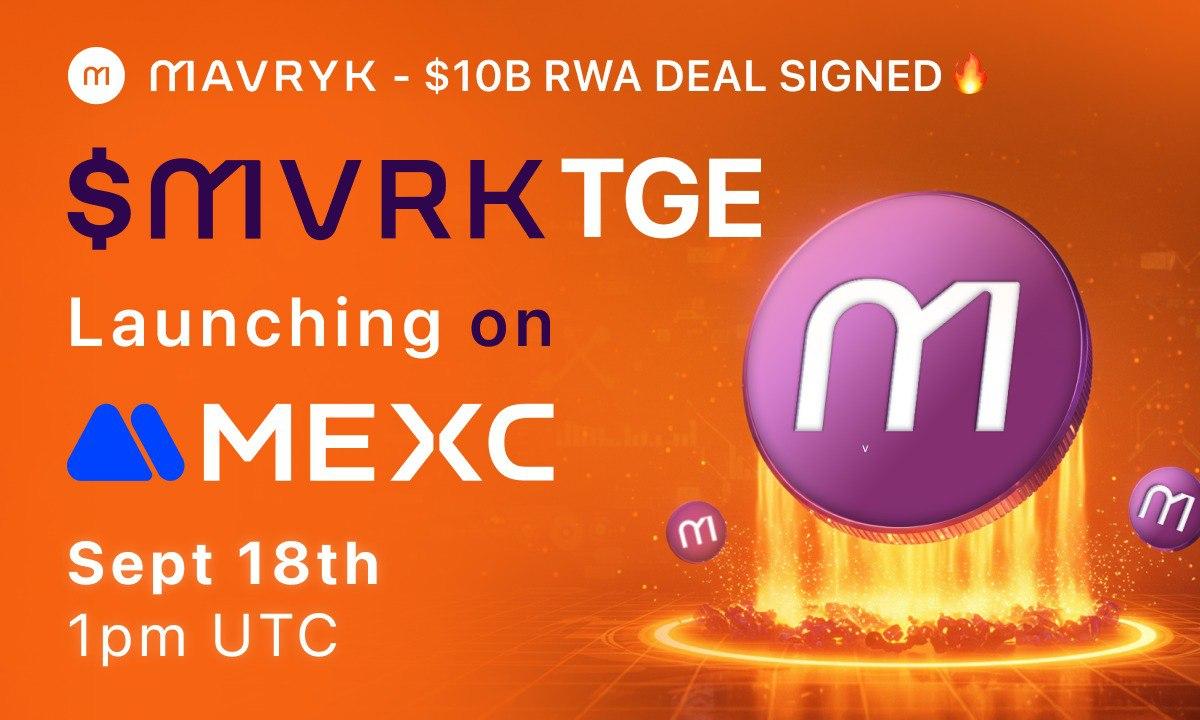
Mavryk Network, a layer-1 blockchain platform that has been pivotal in the tokenization of over $10 billion in real-world assets, is gearing up for the official launch of its mainnet token. The project’s native token, $MVRK, will soon be available for trading on MEXC, a leading global cryptocurrency exchange. This launch marks a significant milestone for the network, which aims to revolutionise the way assets are digitised and managed in the decentralized finance space.

The $MVRK token is integral to the Mavryk ecosystem, designed to support various on-chain operations, including transactions, staking, and governance. This launch will provide liquidity to the token, offering users an opportunity to engage with the network’s growing ecosystem, which has steadily gained traction in the blockchain space. By listing on MEXC, Mavryk will expand its reach, tapping into a wider pool of potential investors and developers.

The Mavryk Network focuses on creating a robust framework for tokenizing RWAs, enabling the seamless integration of assets such as real estate, commodities, and other traditional financial instruments into the blockchain. This approach aims to provide users with the ability to access a broader array of investments, offering a new avenue for both institutional and retail participants.

A key feature of Mavryk’s blockchain is its scalability and efficiency. With the ability to process high transaction volumes at a low cost, the platform addresses a significant pain point in the blockchain industry – transaction speed and cost-efficiency. The network’s architecture is designed to facilitate the fast and secure transfer of assets, making it an appealing option for businesses and individuals seeking to leverage blockchain technology for asset management.

Industry experts have expressed optimism about the potential of Mavryk, particularly in light of the increasing interest in RWAs. Tokenizing these assets could unlock liquidity in traditionally illiquid markets, such as real estate and commodities, providing more flexibility for investors. The growing trend of tokenisation is seen as a critical development in the broader blockchain space, with numerous projects exploring the possibilities of converting physical assets into digital tokens.

Mavryk’s focus on RWAs is not the only aspect drawing attention. The platform has also made significant strides in establishing partnerships and collaborations across different sectors. By building strategic alliances with major financial institutions, developers, and technology providers, Mavryk is positioning itself to become a key player in the rapidly evolving blockchain ecosystem. These partnerships are expected to enhance the adoption of the platform, further solidifying its standing in the DeFi space.

The upcoming launch on MEXC will be closely watched by investors and blockchain enthusiasts alike. MEXC’s reputation as a trusted exchange, combined with its extensive user base, could drive considerable interest in the $MVRK token. As one of the top exchanges by trading volume, MEXC provides a platform with significant exposure, which could lead to an influx of liquidity for Mavryk’s ecosystem.

Looking ahead, Mavryk is also exploring the integration of more advanced features to enhance user experience and platform functionality. Among the features in development are enhanced staking mechanisms, cross-chain interoperability, and increased decentralization. These features are expected to complement the core mission of enabling seamless, efficient, and secure blockchain-based asset management.

HONG KONG SAR – Media OutReach Newswire – 25 August 2025 – On August 25, 2025, Lens Technology (300433.SZ, 06613.HK) released its 2025 half-year financial report, highlighting robust growth driven by advancements in AI terminals, smart vehicles, humanoid robots, and an accelerated global expansion strategy. Through continuous innovation and expanded production capabilities, the company is well-positioned to seize opportunities in emerging markets while delivering sustained value to […]

By Nantoo Banerjee Notwithstanding India’s current trade tariff spat with the United States, India should apply caution to further open up imports from China with which it already suffers from massive trade deficits – nearly $100 billion last year when China had severely cut down imports from India. The latter should also avoid the Chinese […]

Dubai’s education sector is set for a substantial transformation as the city prepares to welcome six new schools, 16 early childhood centres, and three prestigious international universities in the 2025–26 academic year. This growth is part of the emirate’s ongoing commitment to becoming a global hub for top-tier education and family-friendly living, making it an increasingly attractive destination for expatriates and local families alike. The new institutions […]

VISHNU RAJA
RYO YAMADA
HITORI GOTOH
IKUYO KITA