Just in:
Yeebo Announces Interim Results for FY26/27 Revenue Increases by 45.5% to HK$806.7 Million Profit Attributable to Owners Surges 87.6% to HK$2,284.7 Million // LittleLives, Little Lab and SEGi College Sign MOU to Explore Early Childhood Education Collaboration Across ASEAN // AXS and PayerMax Advance Omnichannel Payment Acceptance for Merchants // Coinbase targets 2027 launch amid state gambling lawsuits // Workday targets Honeydew purchase to unify AI metrics // Travel Insurance Was Built for the Few Who Claim. Ancileo’s Felt Coverage™ is for Everyone Else // Sharjah clears Kalba free zone plan for 400MW complex // Thailand’s Most Iconic New Year’s Celebration Returns: ICONSIAM Unveils “Amazing Thailand Countdown 2027” // PicCollage extends photo editing platform to web browsers // Women held for plot to rob pilgrims // Dubai Introduces SHARH, an AI-Powered Platform Helping Entrepreneurs Buy, Sell and Manage Businesses in the UAE // Dar Global unveils $700m Trump development in Qatar // HC nullifies assets FIR against minister // Promoting Common Human Development Through Exchanges and Mutual Learning Among Civilizations // Malappuram hartal over Western Ghats // Jaiedco and Golden Bridge Announce Strategic Collaboration for a New Dubai Islands Development // Phancy Announces Business Performance for the Nine Months Ended September 30, 2026 // Oil futures rebound after Riyadh strikes and tanker alerts // Anthropic shares finish above offer price after Nasdaq debut // Anthropic’s debut is lifting markets, but someone is still paying for it //

News related to
Expo

Nvidia is set to begin production of a new, lower‑spec Blackwell‑architecture AI chip for the Chinese market as early as June, aimed at complying with US export controls while maintaining its presence in the nation’s booming data centre sector. Priced between $6,500 and $8,000—significantly cheaper than the $10,000–$12,000 H20—the chip trades performance for accessibility under current regulatory constraints.

The streamlined variant is based on the RTX Pro 6000D, utilising conventional GDDR7 memory instead of high‑bandwidth memory and eschewing TSMC’s advanced CoWoS packaging to stay within US‑mandated memory bandwidth limits of 1.7–1.8 TB/s. Industry analysts note this is markedly below the 4 TB/s capability of the H20.

Yet Nvidia is not stopping there. As part of a dual‑chip strategy, it is reportedly developing a second Blackwell model scheduled to enter production by September. The specifications remain undisclosed but are expected to similarly align with US export regulations.

China accounts for around 13 per cent of Nvidia’s revenue, a slice that has shrunk sharply from a pre‑2022 peak due to export restrictions, which caused market share to decline from roughly 95 per cent to near 50 per cent today. A ban on the H20 in April prompted the company to write off about $5.5 billion in inventory and forgo an estimated $15 billion in sales.

CEO Jensen Huang has acknowledged the company’s “limited” options, stating that until a compliant design is approved by US authorities, Nvidia remains locked out of China’s $50 billion data centre market. Without it, his comments suggest many customers may migrate to domestic alternatives like Huawei’s Ascend 910B.

Domestic competition in China has intensified. Huawei’s Ascend 910B and others have gained momentum, closing the gap to Nvidia’s downgraded models within one to two years, according to semiconductor analysts. Nvidia counters this with its CUDA programming ecosystem — a key competitive advantage. With CUDA deeply integrated into AI development workflows globally, it may anchor developer loyalty even as hardware capabilities shift.

Further complicating the picture are whispers of a third chip internally known as “B30” or “B40”, which appears designed to operate in clusters and align with new export rules by focusing restrictions on individual chip rather than entire systems. Reports indicate interest from China’s leading tech companies—ByteDance, Alibaba and Tencent—with ambitions to produce more than 1 million units this year. Nvidia has not directly confirmed the chip, and one Chinese supplier, ZJK Industrial, briefly announced production ramp‑up for the B40 before retracting the statement, triggering increased market speculation.

US officials have shown concern that widespread availability of such chips—even within controlled clusters—could bolster China’s capabilities in foundational model training and inference tasks. Commerce Department Under‑Secretary Jeffrey Kessler recently told lawmakers that AI chip smuggling “is happening”, echoing longstanding export fears. Nvidia’s Huang maintains there is “no evidence” of diversion, but a consistent black‑market narrative continues to shadow the sector.

Chinese firms have outlined plans to deploy thousands of H100 and H200 chips in new data centres, particularly in western provinces such as Xinjiang and Qinghai, where abundant renewable power and cool climates offer logistical advantages. Target installations indicate upwards of 115,000 such processors in aggregated plans—most of which remain aspirational due to export prohibitions and logistical challenges.

Analysts suggest that while Nvidia’s tiered Blackwell chips may temporarily appease China’s AI infrastructure demands, the deeper impact will depend on regulatory outcomes and the strength of the CUDA ecosystem. If export restrictions ease, Nvidia stands to regain momentum; if they tighten, domestic chipmakers like Huawei will likely secure a larger foothold.

This unfolding scenario underscores a shift in semiconductor geopolitics: global tech leaders are adapting designs to fragmented access zones while local players race to fill the vacuum. The episode illustrates how export policy, market demand and strategic software assets intersect in shaping tomorrow’s AI hardware landscape.


Monday stress is more than a passing feeling—it leaves a measurable imprint on the body, according to a large-scale longitudinal study that has identified elevated cortisol levels in people experiencing anticipatory anxiety at the start of the week. The research, which tracked hair cortisol concentrations over extended periods, offers compelling evidence that societal rhythms and ingrained weekly schedules may biologically reinforce anxiety patterns linked to the beginning […]

HONG KONG SAR – Media OutReach Newswire – 9 July 2025 – On July 9, DL Holdings Group (HKEX:1709) announced via the Hong Kong Stock Exchange that its Real-World Asset (RWA) tokenization project in collaboration with leading fintech company Asseto Fintech Limited (Asseto) has achieved substantial progress. Following the signing of a Strategic Memorandum of Understanding (MOU) on June 30, DL Holdings is poised to become Hong […]

In recent years, Dubai’s real estate market has become one of the most attractive investment destinations globally. With its strategic location, tax-free benefits, and luxury developments, investing in real estate through platforms like Megapolis.ae offers both stability and high potential returns. Why Dubai? Dubai is more than a city — it’s a symbol of modern prosperity, innovation, and luxury living. Thanks to the UAE’s investor-friendly policies, world-class […]

By Saifur Rahman Abu Dhabi Chamber of Commerce and Industry (ADCCI), which represents the private sector of the region’s economic powerhouse Abu Dhabi, said, its new three-year strategy announced in 2024 has started to bear fruits as its membership grew 4.9 per cent to 157,207 between September 2024 and June 2025. Since September 2024, ADCCI has hosted 69 business events with government bodies, welcomed 70 trade and […]

SINGAPORE – Media OutReach Newswire – 9 July 2025 – PROPEL with Singlife, the one-stop shared services hub for financial advisory firms, has been named the winner of the highly coveted Insurtech Initiative of the Year – Singapore award at the 10th Insurance Asia Awards, in recognition of its contributions to the insurance industry in Singapore. This accolade – a first for PROPEL since its official launch […]

U. S. President Donald Trump has announced a sweeping 50 % tariff on copper imports, jolting commodity markets and triggering sharp moves across financial sectors. Copper futures in the United States surged to record highs, while international benchmarks in London and Shanghai retreated under mounting uncertainty surrounding shipment logistics and timing. At a Cabinet meeting, Trump confirmed the unprecedented levy, citing national security and a desire to bolster […]

Advertisements

Continues to see strong growth in traditional powerhouse sectors such as automotive, technology and e-commerce Sees new opportunities in Malaysia for growth in life sciences and healthcare as well as new energy DHL is well-positioned to support Malaysia’s trade and logistics ambitions with expanded investments and capabilities KUALA LUMPUR, MALAYSIA – Media OutReach Newswire – 9 July 2025 – DHL, the world’s leading logistics provider, has reaffirmed […]

European luxury houses are experiencing a marked shift, with faltering Chinese demand prompting a strategic pivot toward alternative markets and refined brand positioning. According to Bain & Co, global personal luxury goods sales are projected to contract by 2–5 per cent in 2025, following a €364 billion market in 2024, suggesting prolonged headwinds in China and weakened consumer confidence across key economies. Concurrently, LVMH reported a 5 per cent decline in fashion and leather goods, while Kering’s Gucci saw a 24 per cent slump in Q3 2024—underscoring the drag from Chinese spending.

Amid this slowdown, brands are accelerating efforts to broaden geographic reach. McKinsey projects that the US luxury market will grow by 4–6 per cent annually through 2027—outpacing China and Europe—and emerging regions such as the Middle East, Latin America and Southeast Asia are gaining traction as bright spots. Evidence of reorientation is visible: LVMH is expanding its US production capacity, and Kering, Hermès and Prada are intensifying investment in North America.

Not all brands are equally affected. Brunello Cucinelli, less exposed to Chinese consumption, disclosed robust sales forecasts—upgrading its annual growth outlook to 11–12 per cent based on strong European demand and continued traction among ultra-high-net-worth clients. Hermès, too, has weathered the storm, maintaining sales growth while peers grapple with revenue declines.

The luxury slowdown in China is rooted in multiple structural challenges. Economic growth has softened below 5 per cent, real estate woes persist, and shifting demographic trends have eroded consumer sentiment. Simon‑Kucher reports that many Chinese consumers are becoming cost-conscious, displaying a polarization between aspirational and high-end luxury buyers, and embracing domestic brands as alternatives. Particularly, cultural shifts—such as “luxury shame”—have fuelled a move toward discretion and frugality in visible consumption.

Although major international houses such as Chanel and Dior continue to engage Chinese consumers through culturally attuned storytelling—launching region‑specific collections and targeted local campaigns—some smaller brands have shuttered stores in mainland China, acknowledging a recalibration of in‑market commitment.

Domestic luxury players are also benefitting from this transition. Laopu Gold, a jewellery brand rooted in traditional Chinese symbolism, has doubled same‑store sales and quadrupled online revenue this year, with a market valuation exceeding HK$170 billion, thereby challenging European incumbents—though its international footprint remains limited.

Global brands recalibrating their China approach are employing a range of strategic pivots: tighter inventory control to avoid discounting and preserve brand equity; stimulant-focused aspirational campaigns; and product diversification into understated luxury or second-hand luxury to resonate with new consumer segments. The second‑hand luxury market in China alone has grown at an annual rate exceeding 30 per cent since 2020.

Europe itself remains central to the luxury ecosystem, as evidenced by European markets holding nearly half of Armani’s revenues in 2024—an increase relative to Asia Pacific’s diminished share—while the group strategically channels investment into flagship stores and digital-commerce. Cost control, brand consistency, and quality-focused messaging have become priorities as demand becomes more selective.

Globally, brand strategies are evolving with renewed emphasis on sustainability, resilience and storytelling. Price hikes once driven by so‑called “greedflation” are now tempered, with average increases forecast at 3.5 per cent in 2025—lower than peak levels—and justified by genuine craftsmanship and material innovation. Product lines are being refined: leather goods, jewellery and beauty segments are poised for stronger performance, while deeper integration of sustainability and consumer‑centric narratives is prioritised.

Brands are also investing in localisation in other markets and exploring omnichannel retail strategies. Digital-owned channels, experiential stores, and culturally sensitive campaigns are being deployed to engage consumers in tier‑2 and tier‑3 urban centres, particularly in Asia outside China.

European luxury houses are at a strategic inflection point: with the decline in Chinese demand now measurable, success hinges on geographic rebalancing, product portfolio refinement, inventory discipline and culturally resonant marketing. The winners will be those able to preserve brand prestige while adapting to economic reality and evolving consumer psychology across diverse global markets.

Iran has achieved its highest energy output in nearly half a century, as crude production and exports continue expanding despite escalating tensions and Western sanctions. In 2024, total oil output—including crude and gas liquids—reached approximately 5.1 million barrels per day, marking levels unseen since before 1978. Indicators from the first half of 2025 signal further growth, reinforcing Tehran’s stance that its energy sector remains resilient even under pressure.

China remains the principal destination for Iranian crude. According to Vortexa and Kpler data, Beijing imported an average of 1.4 million bpd of Iranian crude and condensate during the first half of 2025. In June alone, Chinese imports surged to a record 1.8 million bpd, exploiting floating storage reserves accumulated previously.

Despite U. S. legal restrictions, these volumes endure through intricate shipping methods and discounts. As of June, Iranian crude was being sold to China at discounts of $3.30–$3.50 per barrel below Brent—the widest spread since 2023—partly triggered by weak demand from independent Chinese “teapot” refineries and additional U. S. sanctions on mid-tier processing firms in Shandong province. Refineries such as these have cut utilisation rates to around 51 per cent, down from 64 per cent last year.

Iran’s export capacity has been safeguarded by infrastructural alternatives designed to bypass the Strait of Hormuz. The Goreh‑Jask pipeline and Jask terminal—capable of exporting around 300,000 bpd—offer strategic flexibility, although actual utilisation fell to under 70,000 bpd in late 2024. Elsewhere, Saudi Arabia and the UAE have also enhanced their own bypass routes through the Strait to mitigate risk.

Nonetheless, current events pose fresh challenges. Israeli strikes in June damaged parts of oil infrastructure near Tehran and affected the South Pars gas field—responsible for up to 700,000 bpd of condensate. Exports from key terminals such as Kharg Island briefly dropped below 120,000 bpd from a weekly average of 1.7 million bpd. However, Iran manages significant stockpiles—approximately 27.5 million barrels afloat—that can sustain exports for weeks.

Domestic dynamics complicate this energy story further. Iran’s gasoline consumption has outpaced refining capacity by nearly 15–20 per cent since late 2024, triggering reliance on reserves and imports to fill shortfalls. Peak summer demand reached unprecedented levels, surpassing 143 million litres in a single day. Panic-buying followed some military strikes, exposing strains in planning and supply.

Iran’s global energy standing aligns with broader market projections. The International Energy Agency forecasts that global oil supply will exceed demand in 2025 by around 1.8 million bpd, a backdrop that may soften impacts from Iranian output. At the same time, discussions in Washington about lifting U. S. sanctions have raised concerns in Beijing, particularly for its fragmented independent refining sector. Analysts warn that a sudden lifting of sanctions could flood global markets—with an additional 500,000 bpd of Iranian oil—and undercut smaller Chinese players by crushing their margins.

Iran’s energy strategy shows calculated resilience. While nuclear tensions invite military risks, the oil ministry appears intent on diversifying markets, expanding infrastructure, and leveraging geopolitical leverage. Iran Daily reported that production comprised 4.3 million bpd of crude plus around 0.7 million bpd of other liquids in 2024. Analysts advocate that increased domestic use, ageing facilities, and investment gaps could temper the pace of future gains unless Tehran secures long-term funding and technical partnerships.

Observers note the inherent paradox: Iran continues ramping production even as global energy security faces renewed uncertainty. Control over chokepoints such as the Strait of Hormuz remains central. Although no full closure has occurred—the Iranian parliament proposed closure in late June pending council approval—the symbolic threat alone underlines Tehran’s strategic positioning. Global markets, buoyed by inventories and diversified routes, have so far absorbed the shock. Yet any escalation could rapidly unsettle thresholds.

Sterling’s recent rally has little to do with the UK economy suddenly outperforming expectations. It has everything to do with the dollar falling out of favour. When the pound hit $1.365 this week—its strongest level since early 2022—it was a flashing red signal that international investors are losing faith in the greenback. Let’s not pretend this is about interest rates. The Federal Reserve is still holding firm, […]

TikTok is preparing a standalone version of its app for U. S. users, slated for launch on 5 September 2025, as part of its strategy to comply with the U. S. law mandating a sale or ban of its American operations. The current app will remain functional until March 2026, although officials say this date is subject to change. Under the Protecting Americans from Foreign Adversary Controlled […]

Dubai Land Department has formalised an agreement with global cryptocurrency firm Crypto. com to establish a blockchain‑driven ecosystem enabling property purchases and sales using digital currencies. The memorandum of cooperation, signed on 6 July, aims to streamline investor verification, custody and settlement processes while advancing real estate tokenisation—supporting the emirate’s Real Estate Strategy 2033 and its AED 1 trillion transaction goal. At the heart of the partnership is the […]

KUALA LUMPUR, MALAYSIA – Media OutReach Newswire – 7 July 2025 – For many traders, one of the main concerns when choosing a financial broker is the risk of falling victim to various shady tricks. The experts at Octa, a globally regulated and trusted broker since 2011, explain some of the questionable practices that traders must look out for when planning their journey in the markets. Trading […]

Heads of government gathered in Rio de Janeiro for the 17th BRICS summit on 6–7 July 2025, yet Iran’s President Masoud Pezeshkian will not attend in person, opting to join virtually amid escalating regional tensions. This marks a notable shift in IRGC diplomatic strategy and signals Tehran’s cautious engagement with the global bloc. Brazilian host Lula da Silva extended formal invitations to all member nations, including Iran. […]

Lyon’s municipal government has begun phasing out Microsoft Office, Windows and SQL in favour of open-source alternatives, marking one of Europe’s most significant moves away from US proprietary software. The third‑largest city in France, which employs around 10,000 public servants and serves over a million residents, will adopt OnlyOffice for productivity tasks, Linux as the operating system and PostgreSQL for database management. City officials emphasised that this […]

Primrose Capital Management has obtained in‑principle approval from the Financial Services Regulatory Authority of Abu Dhabi Global Market, positioning itself for full licencing and regional expansion. The firm plans to recruit portfolio‑engineering and client‑coverage specialists in Abu Dhabi and aims to launch MENA‑domiciled feeder funds in the latter part of 2025. With the Gulf family office sector estimated at approximately $500 billion, Primrose’s data‑driven, machine‑learning strategies in global […]

Imran Khalid In a global economic environment that remains shaky and uneven, China’s ability to attract foreign direct investment (FDI) is more than just a bright spot – it’s a quiet vindication of long-term planning, policy stability, and a commitment to innovation-led growth. Contrary to Western narratives of economic decoupling or investor flight, the latest data paints a far more grounded picture: foreign capital is not just […]

Bitcoin is a crypto in the CRYPTO market.
The price is 107761.0 USD currently with a change of -1627.00 USD from the previous close.
The intraday high is 110000.0 USD and the intraday low is 107741.0 USD.

Whale Exodus, Institutional Surge Define Bitcoin Landscape

A profound shift in Bitcoin ownership is underway as early large holders—or “whales”—have offloaded more than 500,000 BTC over the past year, while institutions such as spot ETFs, corporate treasuries and asset managers have collectively swooped up nearly 900,000 BTC. That haul now places institutional ownership at roughly 4.8 million BTC, equivalent to 25% of the total ~20 million supply.

This reshaping of ownership has already led to a marked decrease in price volatility. Deribit’s 30-day BTC Volatility Index sits at its lowest point in around two years, a trend noted by industry figures such as DRW’s Rob Strebel and Arca’s Jeff Dorman, who have characterised Bitcoin’s market as transitioning from a speculative instrument to “slow‑burn” portfolio allocation. As a result, analysts are revising expectations downward, now forecasting restrained annual returns in the region of 10–20%, rather than expecting sharp bull‑run surges.

The price has stabilised around US $110,000, reflecting the dampening effect of institutional inflows against whale outflows. However, experts caution that this equilibrium may be fragile: if whales continue to sell and institutional inflows cool, Bitcoin could become vulnerable to abrupt corrections, echoing past events when relatively modest outflows of 2% in 2018 and 9% in 2022 triggered collapses of 74% and 64% respectively.

The implications of this structural change extend beyond price mechanics. When whales use institutional venues as an exit route—via ETF conversions or corporate treasuries—they secure liquidity that can facilitate large-scale unwinds without triggering immediate volatility. Critics like Hilary Allen argue this may leave smaller stakeholders exposed in the event of a broader downturn.

Regulatory evolution has played a pivotal role. The introduction of U. S. spot BTC ETFs in January 2024 and subsequent inflows have legitimised institutional participation, with major asset managers—BlackRock, Fidelity and MicroStrategy among them—establishing significant positions, enhancing market depth and resilience.

Interlinked macroeconomic conditions have further shaped trends. A weaker U. S. dollar, increased money supply, rising equity markets and higher mining costs—due to energy pricing—have slowed new issuance, tilting supply‑demand dynamics in Bitcoin’s favour and reinforcing institutional demand.

Nonetheless, the transformation is not without nuance. The repricing of Bitcoin—as volatility subsides—could dampen the appeal among short‑term traders and retail participants who previously thrived on speculative swings. Meanwhile, institutional models of “faster money” mean that large‑scale monthly or quarterly rebalancing could trigger intermittent volatility spikes.

Market observers are now closely monitoring whale behavioural patterns and ETF flow data to gauge whether institutional appetite will sustain. Markus Thielen from 10x Research suggests this transition could define Bitcoin’s identity for years, positioning it for steady, long‑term growth at 10–20% annually—but warns that the absence of new inflows may precipitate sharp market corrections.

JD. com and Ant Group have formally submitted proposals to the People’s Bank of China seeking approval for yuan-pegged stablecoin issuance, marking a key step in Beijing’s efforts to internationalise its currency. Ant Group is also preparing licence applications in Hong Kong and Singapore to deploy offshore renminbi stablecoins beyond mainland China.

The push comes after the Hong Kong legislature enacted a stablecoin licensing framework on 21 May 2025, with regulations taking effect from August. Under the new rules, issuers of Hong Kong dollar–referenced digital tokens must secure authorisation from the Hong Kong Monetary Authority. JD. com has suggested beginning issuance in Hong Kong before piloting operations in Chinese free-trade zones—a phased approach that has been met with encouraging feedback from regulators.

The strategic backdrop for this development includes a decline in the yuan’s share of global payments to 2.89% in May—the lowest in nearly two years—while dollar-pegged stablecoins control approximately 99% of the market. Former Bank of China deputy head Wang Yongli cautioned that unless yuan-based solutions gain traction, China could risk lagging behind if cross-border payments remain less efficient than dollar-denominated cryptocurrency options.

Ant Group’s global strategy is already in motion. Ant International aims to apply for licences under the new Hong Kong regime from 1 August, and then proceed to Singapore and Luxembourg. Meanwhile, JD. com intends to seek approvals in multiple major currency jurisdictions, citing ambitions to reduce cross-border settlement costs by up to 90% and speed up transaction times to under 10 seconds.

Hong Kong’s stablecoin ordinance emphasizes reserve management, redemptions and robust risk controls, operating on the principle of “same activity, same risks, same regulation”. The region’s new LEAP framework is designed to nurture asset tokenisation and stablecoin issuance, compelling global players to participate.

Remaining constraints on audience trust and onshore–offshore integration persist. China’s strict capital controls may hinder scalable adoption of offshore yuan stablecoins, and questions remain over transparency in reserve backing, redemption mechanisms, and potential surveillance—echoing critiques levelled against e‑CNY, China’s domestic central bank digital currency.

Nonetheless, analysts argue that successfully launching an offshore yuan stablecoin could enhance digital renminbi’s global footprint without conflicting with mainland crypto restrictions. It would offer exporters an alternative to dollar-linked tokens and deepen the yuan’s digital payment infrastructure.

President Trump’s support for dollar-pegged stablecoin regulation in the United States has accelerated momentum overseas. China’s tech giants appear intent on ensuring the yuan remains a competitive currency in the next-generation digital economy.

Key stakeholders, including Morgan Stanley and Crypto HK, suggest that Hong Kong could function as a vital testbed, providing a bridge between mainland policy and the global crypto market.

With licence windows opening this August and multi-jurisdictional applications in progress, the ball is now in the court of global financial regulators. Approval of these proposals could mark a significant shift in digital finance, elevating the yuan’s status in the evolving ecosystem of global trade and finance.

Court filings in the Chapter 11 case for collapsed exchange FTX suggest that users in 49 jurisdictions may see their claims disputed or denied over local crypto restrictions. A filing submitted on 2 July to the Delaware bankruptcy court outlines a new “hold‑and‑review” process, halting distributions to users in areas with bans on crypto trading or restrictions on offshore platforms.

FTX’s trustee, along with legal counsel, will evaluate whether paying out creditors in these jurisdictions violates local laws. Notices will then be issued to affected users, granting them at least 45 days to challenge their classification. Absent a timely response, claims and any accrued interest will be forfeited to the estate.

Although users in these 49 jurisdictions represent just 5% of approved claims, the financial exposure is heavily weighted. Over 82% of that total value originates from mainland China. China accounts for the vast majority of claims in what FTX labels “potentially restricted jurisdictions”. Advocates warn that most Chinese claimants may not recover any funds.

FTX’s court motion says it will seek legal opinions for each jurisdiction before approving any payout. If counsel concludes local law prohibits the disbursement, those claims will be formally challenged. The legal framework treats such claims as “disputed,” pending approval or denial of their status. Distributions will be suspended until those claims are resolved.

Affected users must submit sworn statements confirming acceptance of US court jurisdiction to pursue objections. Upon objection, the trustee will petition the court to determine if exclusion is justified. Lack of objection will result in automatic forfeiture.

The list of 49 jurisdictions includes not only China, but also countries such as Nigeria, Russia, Egypt, Saudi Arabia, Andorra, Fiji and Zimbabwe. That breadth reflects the wide global footprint of FTX prior to its collapse.

Chinese users have responded with alarm, exploring legal avenues in the US. One affected claimant, identified as “Will,” told media that though the crypto ban in mainland China prevents trading, holdings remain legal and ownership rights should entitle them to fiat reimbursement in US dollars. He has engaged a New York attorney to counter FTX’s position on wire transfers and jurisdictional exclusion.

Some creditors are studying whether to transfer or sell their claims through entities in compliant jurisdictions, though it remains unclear whether such mechanisms will resolve legal barriers.

FTX Recovery Trust reported an overall decline in disputed claims—from US $6.5 billion to US $4.6 billion—after approving $1.8 billion in claims and expecting another $2.7 billion to be cleared. Approved claim distributions have reached approximately $8.3 billion. This new policy specifically targets the subset linked to restricted jurs, leaving billions in limbo.

Legal experts suggest the court’s decision could set precedent for how bankruptcy courts manage cross‑border crypto claims when local compliance is at risk. FTX is therefore seeking judicial approval to formalise this tailored procedure.

Critics argue the move undermines proportional equity. Victims from major markets like China, Nigeria and Egypt, who collectively hold substantial unrationalised stakes, now face potential complete exclusion. These developments raise concerns about transparency and fairness in the global recovery process.

FTX’s reorganisation plan approved in October 2024 allows repayment of up to US $16.5 billion to customers. It prioritises accounts holding US $50,000 or less under the terms of the Chapter 11 order, but regional legal hurdles may override the general scheme.

Trustee Sunil Kavuri summarised that each claim will proceed only with a supportive local legal opinion. If the opinion concludes a payout contravenes domestic laws, the claim will be formally disputed and may be permanently disallowed.

United States authorities have implemented a sweeping array of sanctions targeting companies, vessels and networks that facilitate clandestine oil exports from Iran. The Treasury’s Office of Foreign Assets Control moved to freeze assets and prohibit transactions by an Iraqi-led smuggling group and its associated Iranian “shadow fleet.” Simultaneously, the State Department added further designations aimed at restricting Tehran’s access to critical oil revenues. The Treasury identified a […]

Matein Khalid Both Israel and the US were careful not to target Iran’s oil export terminal at Kharg Island, a major reason why Brent crude trades at 68 and not 100. It is ironic that Iran’s oil output is now 5.1-MBD (this figure includes condensates and gas to liquids), its exact amount in 1978, the last year the Shah ruled from his Peacock Throne. There is no […]

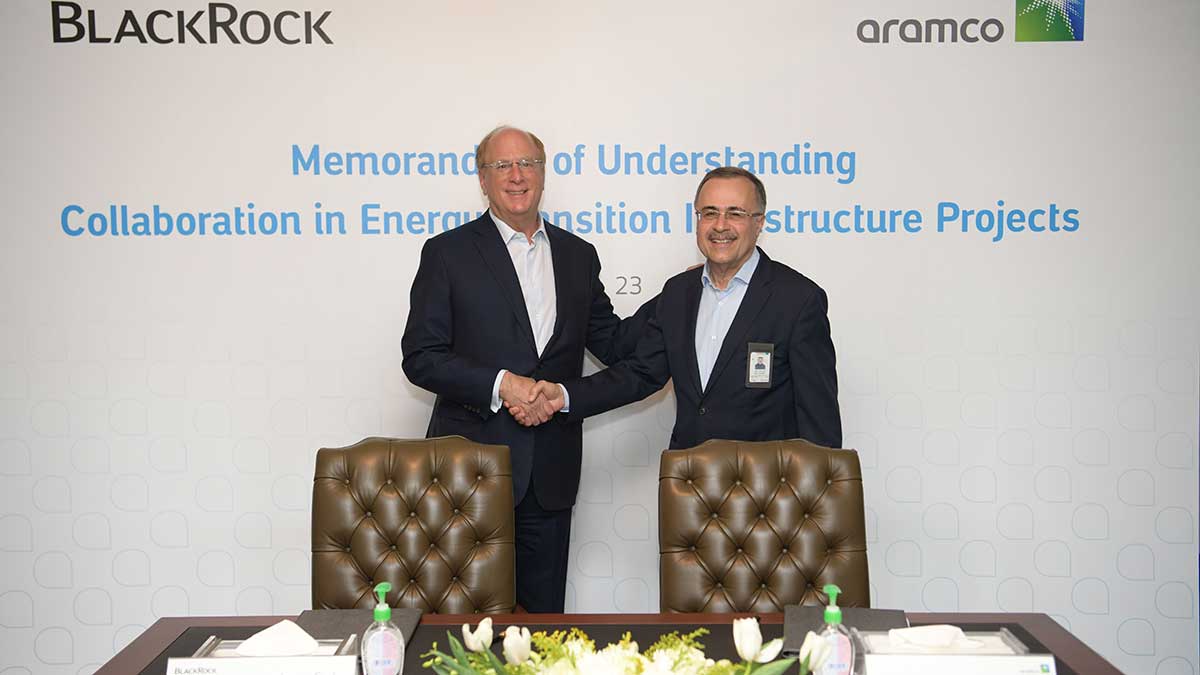
BlackRock Inc is reportedly engaged in discussions with Saudi Aramco over the future ownership of its stake in the leasing rights of a major natural gas pipeline network. The asset manager, which entered the arrangement in 2021, acquired the rights as part of a $15.5 billion lease-and-leaseback agreement. Sources close to the matter indicate BlackRock now values its position at several billion dollars and is considering divesting the stake back to the state oil major.

In 2021, BlackRock joined a consortium to purchase a 49 per cent interest in an entity known as Aramco Gas Pipelines Co under a lease-and-leaseback deal, financing the project with bridge loans and later issuing bonds to refinance the structure. The network comprises critical infrastructure integral to Saudi Arabia’s petroleum operations, serving both domestic consumption and export logistics.

Financial analysts highlight that BlackRock’s move represents a shift in strategy for pipeline investments. As bond markets recover from turbulence and the global energy transition reshapes demand, investors are recalibrating their exposure to long-cycle fossil fuel assets. One advisor noted that BlackRock will “weigh other options if discussions don’t lead to agreement,” indicating the firm might pursue third‑party sales or stake dilution.

Saudi Aramco’s interest in regaining full control aligns with its broader strategy of asset consolidation. Reacquiring the lease rights would enhance its operational sovereignty and reduce dependency on external partners in a sector that underpins national energy security. Aramco’s share in regional indices has already seen modest gains, supported by optimism over non-oil growth; the company itself has been trading up by around 0.9 per cent in recent sessions.

The bonds issued by the consortium in 2024—worth $3 billion across tranches due in 2036 and 2042—were aimed at refinancing initial acquisition debts. Demand for those bonds was robust, with subscription levels significantly exceeding issuance. BlackRock’s majority ownership of Greensaif Pipelines Bidco grants it leverage in shaping any transaction, whether through direct sale or restructuring of lease terms.

Market observers note that BlackRock’s pivot may be driven as much by strategic repositioning as by financial calculation. With global pressure building on climate policy and energy transition commitments, large institutional investors are under increasing scrutiny over holdings tied to fossil fuel extraction and transport. Divesting from pipeline leases allows BlackRock to reallocate capital to renewable infrastructure or alternative energy real estate, while still preserving long-term client relationships.

However, the sale would mark a significant return on investment. The original acquisition and bond refinancing positioned BlackRock to gain from stable, long-duration lease revenues pegged to volume throughput. Exiting now at a multi-billion-dollar valuation ensures a profitable wind-down of exposure while the asset remains robust. Some of the stakeholders in the consortium may view this as a precedent for handling similar assets in other jurisdictions.

Observers anticipate a negotiation process extending into the next quarter, with both parties likely to focus on valuation frameworks, lease renewal terms, and host‑country regulatory approvals. Any agreement may set a template for future transactions between global asset managers and sovereign energy entities, particularly in the Gulf region. While details of the discussions are confidential, the size and strategic nature of the pipeline network suggest that a deal could shift later this year.

Investment flows in the Middle East have showed renewed strength. Saudi and Emirati stock markets climbed this week, powered by stronger service-sector indices and easing of global trade tensions. Against this backdrop, Aramco’s potential repurchase aligns with sovereign objectives to consolidate energy assets in the hands of national champions.

Should talks falter, analysts predict BlackRock may explore secondary-market sales to other infrastructure investors, or retain partial control under renegotiated terms. A phased exit or continued minority stake is also plausible, contingent on pricing, return targets, and geopolitical sensitivities.

VISHNU RAJA
RYO YAMADA
HITORI GOTOH
IKUYO KITA
Just in:
International Business Leaders Say Xi’s Speech Boosts Confidence in Asia-Pacific Cooperation // Phancy Announces Business Performance for the Nine Months Ended September 30, 2026 // Thailand’s Most Iconic New Year’s Celebration Returns: ICONSIAM Unveils “Amazing Thailand Countdown 2027” // Workday targets Honeydew purchase to unify AI metrics // Women held for plot to rob pilgrims // Dar Global unveils $700m Trump development in Qatar // Anthropic’s debut is lifting markets, but someone is still paying for it // Travel Insurance Was Built for the Few Who Claim. Ancileo’s Felt Coverage™ is for Everyone Else // 2026 Tropical Rainforest Ecosystem Partners Conference Kicks off in Hainan // Malappuram hartal over Western Ghats // Promoting Common Human Development Through Exchanges and Mutual Learning Among Civilizations // AXS and PayerMax Advance Omnichannel Payment Acceptance for Merchants // Antony’s wife called to police station with husband over complaint // LittleLives, Little Lab and SEGi College Sign MOU to Explore Early Childhood Education Collaboration Across ASEAN // Hackers exploit public notes to distribute NodeLinkRAT malware // NASA tests supersonic Mars rotors for heavier payloads // Oil futures rebound after Riyadh strikes and tanker alerts // Dubai Introduces SHARH, an AI-Powered Platform Helping Entrepreneurs Buy, Sell and Manage Businesses in the UAE // Russia permits retail cryptocurrency purchases under regulated framework // Dalilk Academy reaches 27 million, targets 100 million by 2030 //