News related to
Investment

Long-term operating lease to expand Center 66’s retail area by nearly 40% HONG KONG AND SHANGHAI – Media OutReach Newswire – 9 December 2025 – Hang Lung Properties Limited (SEHK Stock Code: 00101) (“Hang Lung” or the “Company”) today announced a partnership with Wuxi Liangxi City Development Group Co., Ltd.* to secure a long-term operating lease for a landmark commercial redevelopment project in central Wuxi. Expected to […]

Strong momentum around sustainability and policy alignment set the tone as Automechanika Dubai opened its three-day run at the Dubai World Trade Centre, drawing widespread attention to how manufacturers, regulators, and technology providers are coordinating strategies to future-proof the region’s automotive aftermarket. Organisers underscored that the exhibition, recognised as the Middle East’s largest platform for aftermarket products and services, has become a focal point for dialogue on efficiency standards, emissions reduction, and supply-chain innovation across Gulf markets.

Delegates arriving for the opening day reported a clear emphasis on accelerating collaboration between public agencies and private-sector operators, an approach that exhibitors said is critical as the sector adapts to shifts in fuel technologies, mobility patterns, and environmental expectations. The message was reinforced by senior officials highlighting ongoing government programmes supporting advanced manufacturing, electric-vehicle servicing capabilities, and circular-economy models designed to reduce waste in parts and materials. Industry leaders noted that the presence of policy representatives at the show indicated growing institutional commitment to standardising quality benchmarks for components traded across regional markets.

The exhibition floor featured a broad cross-section of global and regional suppliers, including established parts manufacturers, diagnostics specialists, and emerging technology firms developing AI-enabled maintenance platforms. Several company executives pointed to the UAE’s long-term industrial strategy and its targets for cleaner transport as a source of demand for new product lines, especially in electric-vehicle battery servicing, thermal-management systems, and lightweight components. Some suppliers said the regulatory clarity provided by ongoing transport-sector initiatives has encouraged them to scale up investment in test facilities and distribution hubs across the Gulf.

A surge in visitor numbers compared with earlier editions reflected strong commercial interest from trading companies, fleet operators, and workshop networks seeking to position themselves for the next phase of regional mobility growth. Market analysts attending the exhibition commented that the Gulf’s rising vehicle parc, coupled with rapid urbanisation, continues to underpin demand for quality replacement parts and advanced repair technologies. They added that Dubai’s role as a re-export centre gives Automechanika Dubai outsized influence in shaping product pipelines bound for Africa, South Asia, and parts of Europe.

Exhibitors specialising in sustainability solutions drew particular attention on the opening day. Firms showcasing refurbished components, remanufactured engines, and eco-friendly consumables signalled that demand for lower-impact products is gaining traction across workshop networks. Several companies highlighted investments in closed-loop systems that reduce the environmental footprint of tyres, lubricants, and metal parts. Executives from diagnostics and telematics providers described how predictive-maintenance tools are helping fleet operators extend vehicle life cycles, improving both cost efficiency and emissions outcomes.

Government participation reinforced the event’s focus on regulatory evolution. Transport and industrial-development officials presented updates on national frameworks aimed at improving automotive-aftermarket oversight, including certification programmes, workshop accreditation standards, and traceability requirements to curb counterfeit parts. Trade-facilitation agencies outlined digital-customs initiatives designed to streamline the movement of genuine components through regional ports, an issue flagged repeatedly by manufacturers seeking more secure and transparent supply chains.

Technology demonstrations formed another prominent attraction. Autonomous-inspection systems, connected workshop tools, and advanced calibration equipment drew steady crowds as exhibitors explained how digital solutions can address labour shortages and support skills development. Training centres affiliated with several global brands used the event to highlight upskilling programmes for technicians preparing to service electric and hybrid vehicles. Senior trainers said the shift towards high-voltage systems requires updated curricula and investments in safety infrastructure, emphasising that workforce readiness remains a central pillar of regional mobility planning.

Executives from multinational suppliers said the show’s first day underscored the strategic importance of Dubai as a testing ground for new automotive-aftermarket models. They noted that regulatory predictability, strong logistics infrastructure, and sustained government interest in industrial diversification have combined to create favourable conditions for technology adoption. Some pointed to collaborations with Gulf-based research institutions developing materials science, battery-repair techniques, and advanced fluid technologies, suggesting that locally rooted innovation has begun to influence global supply chains.

Fleet-management firms attending the event highlighted the operational impact of sustainability mandates, stressing that cleaner fleets are no longer viewed solely through an environmental lens but as a commercial imperative shaped by fuel-efficiency metrics and customer expectations. Executives said digital-fleet platforms now integrate emissions tracking, automated maintenance scheduling, and component-health monitoring, trends that align with broader mobility transformations occurring across the Gulf.


Shares of Twenty One Capital, the newly public Bitcoin-native company, plunged sharply as trading began on the New York Stock Exchange under ticker “XXI”. The decline, amounting to roughly 24-26%, underscores investor unease even as the firm debuts with substantial holdings — over 43,500 bitcoins, valued at nearly US$4 billion, making it one of the largest corporate Bitcoin treasuries globally.

The decline came just as the firm completed a merger with special-purpose acquisition company Cantor Equity Partners, a process that had secured shareholder approval earlier this month. The combined entity began trading today, marking the formal public debut of Twenty One Capital.

The backers behind Twenty One include stablecoin issuer Tether, trading platform Bitfinex, and investment-holding conglomerate SoftBank Group — with the SPAC sponsored by global financial firm Cantor Fitzgerald.

Leadership under co-founder and CEO Jack Mallers has portrayed Twenty One as more than a treasury — the firm aims to build Bitcoin-centric financial services, capital markets advisory, lending and education operations. The business model seeks to marry a large Bitcoin reserve with recurring-revenue operations, offering investors both exposure to crypto and conventional business growth potential.

Despite the ambitious roadmap and deep institutional backing, investor sentiment appears cautious. The dip in share price comes amid a broader downturn in cryptocurrency valuations; bitcoin itself has fallen more than 28% since hitting a peak in October. That decline has put pressure on companies with large digital-asset treasuries.

Market watchers note that the stumble highlights the risks inherent in combining a speculative asset like bitcoin with public equity. Treasury-centric crypto firms have gained attention in recent months for treating bitcoin as a corporate reserve asset — yet, as volatility returns, their valuations are bearing the brunt. Some analysts argue the drop may force such firms to rethink reliance solely on crypto-treasury value, especially if markets remain turbulent.

For now, Twenty One’s challenge is to reassure shareholders that the business side will grow fast enough to absorb volatility in bitcoin prices. Its future will depend on execution: whether it can build a sustainable loan, advisory or media business around Bitcoin — and whether that strategy can hold up even if crypto markets remain unpredictable.

YouTube has moved to strengthen its presence in the UAE’s digital health landscape by developing programmes that place licensed medical professionals at the forefront of its educational content, signalling a determined push to make verified advice more accessible across the platform. The company’s strategy targets growing demand for trustworthy health information online, as concerns over misinformation continue to shape global discussions around digital media governance.

Executives overseeing the initiative said the platform aims to build a space where users can reliably distinguish expert-led guidance from unverified commentary, a challenge amplified by the scale and diversity of YouTube’s audience. The expansion forms part of a wider effort to elevate authoritative creators working in fields where accuracy is critical, particularly as the Gulf region deepens its investment in digital transformation of public services, including healthcare, teleconsultation and patient education tools.

YouTube’s managing teams have pointed to the UAE as a priority market due to its strong uptake of digital services, rapid population growth and the increasing role of online platforms in shaping consumer behaviour. Company representatives noted that the health programme supports licensed doctors and specialists in producing explanatory content on topics ranging from chronic disease management to preventative care, with a focus on clarity and cultural relevance. The aim is to ensure that users searching for guidance on everyday health queries encounter information grounded in established medical understanding.

The regional rollout also follows the platform’s broader global commitment to responsible content curation, which includes labelling health sources, collaborating with regulatory bodies and strengthening partnerships with hospitals and academic institutions. Executives highlighted that user trust depends not only on removing harmful material but also on amplifying credible voices. This shift reflects wider trends across major technology firms, which are under increasing pressure to address misinformation while supporting creators who offer value through expertise.

During discussions about the programme, YouTube’s leadership emphasised that the future of digital platforms lies in empowering diverse creator communities. A senior executive cited the example of a Dutch knitting creator whose channel grew from a small personal project into a global community hub, illustrating how storytelling and authenticity can generate engagement across borders. The reference underscored the platform’s belief that healthcare content, too, should be driven by relatable human narratives, not only clinical explanations.

Doctors participating in the UAE initiative have described the programme as a chance to reach audiences who might hesitate to seek medical advice through traditional channels. Specialists working in fields such as cardiology, paediatrics and mental health say that video content enables them to clarify misconceptions, guide viewers toward evidence-based treatment options and encourage early intervention. Several practitioners have noted that the platform provides a unique opportunity to communicate complex issues in a visually engaging format, which can support better understanding among younger users.

Market analysts observing YouTube’s strategy say the platform’s focus aligns with the UAE’s national priorities, particularly its long-term digital health agenda. Authorities across the Gulf have invested in AI-enabled diagnostics, electronic health records and telemedicine infrastructure, creating a parallel demand for trusted educational material that helps residents navigate an evolving healthcare environment. Analysts also point to the competitive landscape, where global platforms are working to differentiate themselves through credible content partnerships.

The company’s decision to bring more clinical professionals onto the platform reflects research showing that users often rely on video explanations when confronted with health queries. Executives acknowledge that this behaviour carries both opportunities and risks, as misinformation can spread rapidly when content appears authoritative. To address this, YouTube has been refining its ranking systems to elevate licensed practitioners and institutions, ensuring visibility for creators whose credentials and communication standards have been verified.

Creators involved in the new initiative have stressed the responsibility that accompanies such visibility. Several participants noted that working on the platform requires balancing accessibility with professional rigour, avoiding oversimplification while keeping content digestible for general audiences. These doctors have described the process as an extension of public health education, albeit through a digital medium that demands nuanced storytelling and sensitivity to cultural context.

Amazon’s efforts to scale its Prime Air drone service have come under intensified scrutiny after a delivery aircraft struck a cable in Texas earlier this year, prompting renewed questions over the programme’s operational readiness, regulatory compliance, and ability to challenge competitors that have gained ground in autonomous logistics. The incident, which damaged the drone and forced safety investigations, underscored the complexities of expanding unmanned aerial deliveries in […]

Abu Dhabi’s ascent as a core pillar of Alan Howard’s hedge fund strategy gained fresh momentum as the billionaire founder detailed how the emirate has rapidly become one of his firm’s most influential trading and investment hubs. The expansion, initiated when Howard established a permanent base in the city in 2023, has evolved into a defining feature of the firm’s global footprint, positioning Abu Dhabi alongside London […]

Alpha Dhabi Holding moved to reassure investors with confirmation of a new three-year dividend framework and a parallel plan to repurchase a portion of its shares, signalling a strategic effort to sustain value creation across its portfolio. The Abu Dhabi-listed conglomerate said the policy is designed to provide predictable returns while supporting the group’s long-term expansion. The company said the proposed framework targets annual dividends of AED […]

Advertisements

Abu Dhabi has unveiled a $16.3 billion plan to expand Abu Dhabi Global Market ’s footprint on Al Maryah Island and its adjacent land, aiming to nearly double the availability of Grade-A office space while adding residential, retail and hospitality infrastructure. The expansion is being driven by a surge of international hedge funds and asset managers making fresh commitments to the emirate. Among the latest arrivals, Man […]

Abu Dhabi’s transformation into a leading centre for digital asset regulation is gathering global recognition, with legal and financial experts pointing to its advanced regulatory framework and investor-friendly environment as key drivers for growing crypto-sector confidence.

At the sidelines of Abu Dhabi Finance Week, compliance specialist Magdalena Boškić of Swiss firm Kellerhals Carrard declared that the UAE has firmly established itself as a global hub for digital-asset businesses, drawing major international players thanks to robust legislation and transparent licensing regimes. She highlighted the role of regulatory bodies such as the Financial Services Regulatory Authority at Abu Dhabi Global Market, the Virtual Assets Regulatory Authority in Dubai, the Dubai Financial Services Authority, and the Central Bank of the UAE, describing their collective efforts as among the most advanced globally.

Under the UAE’s multi-jurisdictional model, companies involved in trading, custody, asset-management or tokenisation can select the regulatory framework that matches their business model, offering flexibility without sacrificing oversight. The regime is built on principles like technology neutrality, activity-based licensing and strict compliance with investor-protection standards — features that offer legal clarity and attract institutional as well as retail participation. Boškić noted that this environment has led several prominent Swiss digital-asset banks such as Sygnum and AMINA to expand their presence in the Emirates.

A 2025 ranking by the Global Finance & Technology Network, in collaboration with consultancy Arthur D. Little, placed the UAE alongside jurisdictions such as Switzerland and Singapore among the most advanced globally for crypto regulation. The report credited the UAE for its comprehensive approach to tokenised assets, stablecoins, virtual-asset service providers and other fintech innovations — moving the country from ambition into execution.

Institutional adoption has risen sharply. Data on inflows between mid-2023 and mid-2024 show digital-asset investments of more than US$30 billion — roughly 10 percent of the Middle East and North Africa region’s total — with institutional-sized transfers jumping about 55 percent year-on-year. Simultaneously, retail participation has surged; the number of daily active crypto traders in the UAE has reportedly crossed 500,000, underscoring broad public engagement with digital-asset markets.

Fiscal incentives have added to the appeal. The absence of personal income tax or capital-gains tax, combined with exemptions on value-added tax for trading and conversion of virtual assets, offers one of the most favourable tax regimes globally. These conditions, combined with regulatory clarity, help explain the influx of both specialized crypto firms and traditional financial institutions adapting to digital-asset offerings.

The expansion also includes the tokenisation of real-world assets — such as real estate, aviation and even sovereign bonds — indicating that the UAE’s digital-asset market is evolving beyond speculative cryptocurrency trading into structured financial instruments. This opens pathways for sophisticated investors and enterprises seeking to integrate blockchain-based financing or asset-tokenisation into mainstream operations.

Still, rapid growth is not without risks. Observers caution that heightened crypto activity brings exposure to money laundering, unregulated peer-to-peer trading, cybersecurity threats and uneven investor protection. Regulators must balance fostering innovation with safeguarding financial integrity.

A milestone for regulatory trust came this week when Binance secured a global licence under the ADGM framework granted by the FSRA. The approval of the world’s largest crypto exchange underlines the UAE’s drive to cement its status as a credible, regulated base for digital-asset operations.

Trailblazed Hong Kong-EU opportunities across AI, life and health, and smart city technologies HONG KONG SAR – Media OutReach Newswire – 8 December 2025 – Hong Kong Science and Technology Parks Corporation (HKSTP) showcased a dynamic presence at the “Think Business, Think Hong Kong” (TBTHK) symposium organised by the Hong Kong Trade Development Council (HKTDC) held in Milan on 27 November 2025, spotlighting Hong Kong’s strategic role […]

HONG KONG SAR – Media OutReach Newswire – 8 December 2025 – Abax Global Capital (Hong Kong) Limited is proud to announce its selection by the Hong Kong Investment Corporation (HKIC) as an asset manager for the 2025 batch of capital (“2025 Capital Batch”) of the Investment Portfolio (“CIES IP”) under the New Capital Investment Entrant Scheme (“New CIES”). “We are honored by the HKIC’s confidence in […]

Man Group Plc has moved to secure a regulatory licence to establish an Abu Dhabi office next year, signalling a deeper shift among global asset managers toward the Gulf as the region accelerates its ambitions to become a leading centre for alternative investments. The London-listed hedge fund confirmed the application, underscoring its intention to broaden its footprint in a market that has drawn some of the world’s […]

Abu Dhabi’s biggest sovereign investors —Abu Dhabi Investment Authority, Mubadala Investment Company and ADQ— have significantly increased their global footprint in finance, energy and artificial-intelligence infrastructure, edging the emirate ever closer to a central role in global capital flows and technology investment. ADIA has expanded its exposure to public and alternative asset managers, allocating roughly $40 billion to hedge funds in 2025, part of a long-term strategy […]

Qatar Airways has installed Hamad Ali Al-Khater as its new Group Chief Executive Officer, effective 7 December 2025, replacing Badr Mohammed Al-Meer. The handover was confirmed in a brief statement by the airline today.

Al-Khater comes to the top position from his previous role as Chief Operating Officer at Hamad International Airport. His prior career also includes senior positions at QatarEnergy, where he led major deals and strategic initiatives, signalling a strong background in both aviation operations and energy-sector business development.

The announcement by Qatar Airways Group’s Board, chaired by Saad Sherida Al-Kaabi, expressed gratitude for Al-Meer’s service and emphasised the intention to build on the airline’s existing global network, experience, and commitment to innovation under the new leadership.

Al-Meer had assumed leadership of the carrier in November 2023, succeeding long-time CEO Akbar Al Baker, who stepped down after 27 years. Under Al-Meer’s tenure, Qatar Airways pursued expansion in fleet connectivity and network reach, including increased flights to the Kingdom of Saudi Arabia and other growth initiatives.

Observers note the move reflects a pattern of high-level leadership transitions at the airline — with two CEO changes within a span of around two years — underscoring possible strategic shifts at the top of the state-owned carrier.

Al-Khater’s operational experience at HIA, where he led efforts to ensure safety, reliability, infrastructure expansion and enhancement of passenger experience, suggests a potential focus on reinforcing operational efficiency and leveraging synergies between the airport and airline operations. His deep connections with QatarEnergy add a dimension of financial and strategic oversight which could influence future fleet and investment decisions.

While no public explanation was offered for Al-Meer’s exit, industry insiders describe the change as swift and unexpectedly quiet. Some analysts speculate the reshuffle may reflect evolving priorities for Qatar Airways as it navigates changing global aviation dynamics, competitive pressures, and ambition for expansion.

Arabian Post Staff -Dubai Asia Pacific borrowers have significantly increased euro-denominated bond issuance this year, signalling a notable shift away from reliance on the US dollar as a financing standard. According to data compiled this year, euro-denominated issuance accounted for a record 23 per cent of all hard-currency bonds from Asia Pacific borrowers — up six percentage points compared with 2024. The total volume of euro-note sales […]

SINGAPORE – Media OutReach Newswire – 7 December 2025 – As Singaporean families plan for higher education, tuition costs often dominate the conversation. However, the more critical consideration lies in understanding the relationship between cost and value. This article provides an in-depth understanding of the financial implications of pursuing studies at local public universities, private institutions such as SIM, and overseas universities, while highlighting SIM’s distinctive proposition […]

By Nitya Chakraborty The India-Russia joint statement issued on December 5 after two days of talks between President Vladimir Putin and the Indian Prime Minister Narendra Modi is more a vindication of India’s renewed exercise of its geopolitical status defying the pressure from the USA and the other western powers rather than a document on […]

The article Modi-Putin Summit Reinforces India’s Geopolitical Identity Amidst Headwinds appeared first on Latest India news, analysis and reports on Newspack by India Press Agency).

Abu Dhabi’s Mubadala Capital and Aldar have moved to establish a dedicated real estate investment platform that will pursue large-scale opportunities across the UAE and the wider GCC, marking a significant expansion of institutional-grade assets available to global investors. The new entity, Aldar Capital, is being positioned as a vehicle that will attract long-term institutional capital at a time when demand for diversified real asset exposure has […]

Greenlogue/AP Backed by British International Investment, Egypt’s first utility-scale hybrid solar and battery development has taken a decisive step forward as the country works to accelerate its transition towards a more resilient renewable power system. The 1.1-gigawatt Obelisk project, led by Norway’s Scatec, is positioned to become one of the largest integrated solar and battery energy storage schemes in Africa, strengthening prospects for grid stability and long-term […]

Arabian Post Staff -Dubai A substantial move by Investcorp Capital to strengthen its presence in the US industrial real estate market has taken shape through the acquisition of a diversified portfolio valued at $400 million. The Abu Dhabi-listed alternative investment firm confirmed the purchase of a 35-building portfolio covering 2.6 million square feet across key coastal markets, reflecting an accelerated shift toward logistics-led strategies and income-generating assets […]

Chairman Mr. Francis Lui Urges Public to Turn Compassion into Action and Vote 7 December HONG KONG SAR – Media OutReach Newswire – 6 December 2025 – K. Wah Group (“the Group”) continues to stand in solidarity with the Tai Po community in the aftermath of the recent fire, offering timely support to affected residents and post-disaster recovery efforts. Following an earlier donation of HK$10 million from […]

Step into Galaxy Macau to enjoy magical precinct-wide experiences this Winter, unwrapping dazzling seasonal shopping rewards and lucky draws, tasty dining and glittering entertainment as the season of self-reward and gifting comes to life at Asia’s award-winning luxury resort. MACAU SAR – Media OutReach Newswire – 5 December 2025 – Galaxy Macau Integrated Resort proudly unveils its spectacular “Gift Yourself Extraordinary” Winter extravaganza, ushering in a season […]

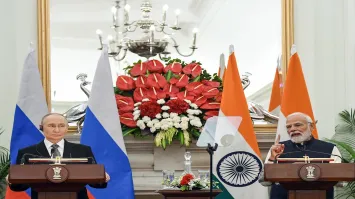
Crowds and cameras gathered at the Delhi airport as Vladimir Putin stepped off his aircraft and was received by Narendra Modi with a firm embrace that signalled the weight both leaders attach to a relationship tested by shifting global alignments. The state visit, framed by Moscow and New Delhi as an effort to reinforce political and economic cooperation, comes at a moment when both sides are seeking predictable partners amid geopolitical uncertainty.

Putin’s arrival on Thursday marked his first trip to the country in more than a year, timed to draw attention to long-standing strategic ties that have endured pressure from global sanctions on Russia and growing competition among major powers for influence in Asia. Modi’s greeting, captured widely by broadcasters, highlighted the government’s intention to maintain a working partnership with Moscow even as it deepens cooperation with Western governments on defence, technology and energy.

The two leaders are expected to focus on trade flows, defence equipment support, energy security arrangements and joint manufacturing proposals that have gained momentum since early 2024. Officials familiar with the agenda have pointed to Moscow’s push for expanded settlements in national currencies, aiming to mitigate complications arising from sanctions that have disrupted traditional payment channels. New Delhi has been looking for greater clarity on oil supply commitments, pricing transparency and long-term contracts, following fluctuations in global markets that prompted domestic refiners to diversify purchases.

Defence cooperation remains central to the partnership, though the balance has shifted over the past decade as New Delhi has widened procurement from the United States, France and other suppliers. Russia continues to service and upgrade a significant share of the armed forces’ equipment, and ongoing discussions cover spare-parts support, maintenance of legacy systems and joint development pathways that may offer greater flexibility than standalone purchases. Analysts tracking the talks say Moscow is keen to retain its foothold in the defence market while showcasing its willingness to adapt to collaborative production models.

Energy will feature prominently during the discussions as Russia seeks greater investment in its upstream projects and hopes to secure broader participation from New Delhi in pipeline and liquefied natural gas initiatives. Indian refiners have emerged as important buyers of Russian crude despite logistical and payment challenges, and both sides are expected to address delivery mechanisms that would reduce delays and improve predictability. Officials have also been reviewing possibilities for expanding cooperation in nuclear energy, where previous agreements have laid the groundwork for additional reactor units at existing sites.

Bilateral trade has risen sharply over the past two years, driven largely by energy imports, but New Delhi has expressed concerns about the wide imbalance, with exports to Russia trailing significantly. Commerce officials have been pushing for easier access for pharmaceuticals, agricultural goods and engineering products, arguing that a more balanced structure would strengthen the sustainability of the economic relationship. Russian representatives arriving with the delegation have proposed expanded use of logistics corridors passing through Central Asia, which they say would ease transport costs for exporters on both sides.

Regional security dynamics form another layer of the discussions, particularly Moscow’s role in Eurasia and its ties with Beijing. Diplomats note that New Delhi continues to walk a delicate line, maintaining cooperation with Russia while strengthening its partnerships across the Indo-Pacific. Strategic analysts caution that both sides must navigate sensitive points, including Moscow’s position on territorial disputes and broader alignments that could shape regional balances over the coming decade.

Putin’s schedule includes a ceremonial welcome, delegation-level talks and a review of key agreements under negotiation. Officials have indicated that deliverables may include frameworks on energy cooperation, updated defence industrial collaboration and initiatives supporting educational exchanges and technological research. Cultural diplomacy also features prominently, with both governments emphasising people-to-people connections that have historically underpinned the relationship.

The optics of the visit carry domestic significance for both leaders. Modi’s government seeks to project continuity in foreign policy through engagement with all major powers, underscoring its commitment to strategic autonomy. For Putin, the reception in New Delhi offers an opportunity to demonstrate that Russia retains influential partners beyond Europe and North America, reinforcing narratives about its engagement with Asia’s leading economies.

Analysts observing the visit note that the personal rapport between the two leaders has helped maintain channels of communication through periods of global stress. Their discussions routinely touch on multi-year strategic frameworks covering defence, energy, industrial cooperation and regional diplomacy, areas where incremental progress continues despite broader geopolitical complications.

Rwanga Foundation extends rural electrification effort as survivors call for long-term support A Kurdish village attacked with chemical weapons in 1987 now has a continuous electricity supply after a new solar project funded by the Rwanga Foundation began operating this month. Sheikh Wasan, where 211 residents were killed in the attack carried out by Iraqi forces during the Anfal campaign, has received 72 solar systems containing 432 […]

VISHNU RAJA
RYO YAMADA
HITORI GOTOH
IKUYO KITA