News related to
President

By Saifur Rahman The Emirates Group, which operates the world’s largest airline Emirates and its ground handling and ticketing arm Dnata, reported a 7 percent growth to record $6.6 billion (Dh24.4 billion) profit before tax in its 2025-26 financial year ending March 31, 2026, despite a disruption of flight operations during the US-led attach on Iran and its fall-out on the regional aviation industry from February 28, […]

HONG KONG SAR – Media OutReach Newswire – 7 May 2026 – The Chinese University of Hong Kong (CUHK) has achieved outstanding results in the QS World University Rankings by Subject 2026, released on 25 March, further cementing its position as a global leader in research and academic excellence. Ten CUHK subjects have secured the top position in Hong Kong, and 21 subjects rank among the top 50 worldwide. These outstanding results reflect CUHK’s sustained commitment to research impact and the calibre of its scholars, whose work continues to advance the collective understanding of the world’s most pressing challenges.

CUHK latest QS World University Rankings by Subject 2026 is released.

CUHK’s Academic Excellence and Global Research Impact

Ranked among the world’s top 50 universities, CUHK ascended to 32nd place globally in the QS World University Rankings 2026, marking a four-place rise that reinforces its role as a hub for rigorous inquiry, and a dynamic environment where students are empowered to pursue meaningful research and knowledge exchange. This trajectory is supported by 17 CUHK researchers recognised on the Highly Cited Researchers 2025 list by Clarivate Analytics, and 431 academics listed among the world’s top 2% scientists by Stanford University. Among them, 47 scholars were ranked within the global top 100 in their respective fields. Notably, three scholars, including Vice-Chancellor and President Professor Dennis Lo Yuk-ming, have earned positions within the global top 10, a distinction that highlights the remarkable depth and excellence of CUHK’s research community.

CUHK’s The Nethersole School of Nursing: Nurturing Research Innovation and Global Talent in Nursing

Among CUHK’s strongest performers in this year’s rankings, the Nethersole School of Nursing has been ranked #1 in Hong Kong and Asia, and #6 worldwide. Reflecting on the academic environment, Pham Nhat Vi DO, a Vietnamese PhD student in Nursing, shared: “My PhD journey at CUHK has transformed my research abilities, critical thinking, and leadership skills. Through CUHK’s outstanding faculty support, I have accessed diverse academic resources and gained invaluable hands-on experience, building a strong foundation for my future career.”

Vi’s research focuses on colorectal cancer survivorship using cutting-edge technology. As the first Vietnamese researcher adopting this approach, her work reflects CUHK’s strength in empowering students to break new ground.

CUHK’s Geography and Resource Management: Advancing Student Research on Pressing Climate Challenges

CUHK’s Department of Geography and Resource Management has also earned notable recognition in this year’s ranking, placing #4 in Asia and #21 worldwide. Arati POUDEL, a Nepali PhD student, highlighted the University’s research ecosystem as a key defining aspect of her experience. “CUHK exceeds expectations through outstanding research facilities, supportive faculty, and comprehensive professional development opportunities. The prestigious Belt and Road Scholarship has also enriched my research journey in this beautiful campus environment.”

Supported by CUHK, Arati’s research investigates how adaptation to climate extremes—particularly water scarcity and excess—are being addressed, and the pivotal role played by communities and civil society in leading these responses.

Through the QS World University Rankings by Subject 2026, CUHK continues to demonstrate the impact of its research and scholarship. These achievements underscore the University’s growing influence on the global academic stage and its steadfast commitment to addressing complex global challenges through innovation, insight, and collaboration.
Hashtag: #CUHK

The issuer is solely responsible for the content of this announcement.

About CUHK

The Chinese University of Hong Kong (CUHK) is a leading higher education institution dedicated to nurturing and empowering students to become responsible and compassionate global citizens. With a rich heritage and a forward-looking vision, CUHK strives to blend tradition with innovation, fostering academic excellence, research breakthroughs, and meaningful societal impact.

Arabian Post Staff -Dubai   US President Donald Trump has temporarily halted Washington’s ship-escort operation through the Strait of Hormuz, saying talks with Tehran have made “great progress” toward a wider settlement after weeks of disruption to one of the world’s most critical energy corridors. The pause, announced on Tuesday, came only hours after Secretary of State Marco Rubio detailed a US effort that began on Monday […]

A war that threatens the flow of one-fifth of the world’s oil supply should be dominating market pricing. It isn’t. President Donald Trump has pushed the US deeper into confrontation with Iran, locking policy into a narrow and dangerous path. The Strait of Hormuz remains under constant threat, energy flows are disrupted, and, as a result, oil has surged above $110 a barrel at points in recent […]

Lebanese soldiers entered Beirut’s southern suburbs and detained suspected gunmen after celebratory fire and rocket-propelled grenades were discharged during a Hezbollah funeral, an unusual assertion of state authority inside one of the group’s most sensitive urban strongholds. The operation in Kafaat followed gunfire during a procession for Hezbollah supporters killed in Israeli strikes, with residents reporting panic as bullets rang out across densely populated neighbourhoods. Army units […]

SEMICON Southeast Asia 2026 opened in Kuala Lumpur on Tuesday, putting Malaysia at the centre of a regional push to capture a larger share of the global semiconductor value chain as chipmakers rethink production networks, sourcing risks and capacity plans.

The three-day industry gathering at the Malaysia International Trade and Exhibition Centre runs from 5 to 7 May and is expected to draw more than 20,000 policymakers, manufacturers, suppliers, investors, researchers and technology specialists. Held under the theme “Transform Tomorrow”, the event is being staged in strategic partnership with Malaysia’s Ministry of Investment, Trade and Industry and the Malaysian Investment Development Authority.

The launch ceremony was officiated by Datuk Seri Johari Abdul Ghani, Malaysia’s Minister of Investment, Trade and Industry, with senior SEMI executives, MIDA leadership and global semiconductor company representatives in attendance. The programme places manufacturing scale-up, advanced packaging, intelligent manufacturing, sustainability and workforce development at the centre of discussions, reflecting the industry’s shift from pure capacity expansion to more resilient and geographically diversified ecosystems.

Malaysia enters the event with a strong base in electrical and electronics manufacturing, particularly assembly, testing and packaging. The country has long been a critical node for chip back-end operations, with Penang and Kulim playing key roles in outsourced semiconductor assembly and test activity. The policy focus is now moving further up the value chain into chip design, advanced packaging, automation, materials, equipment support and higher-value manufacturing services.

Datuk Sikh Shamsul Ibrahim Sikh Abdul Majid, chief executive officer of MIDA, said Malaysia was no longer positioning itself as a passive beneficiary of industry shifts. “The semiconductor industry is at an inflection point, and Malaysia intends to be at the centre of what comes next,” he said, pointing to the MADANI Economy Framework and the New Industrial Master Plan 2030 as policy anchors for a broader industrial upgrade.

The E&E sector secured RM28.5 billion in approved investments in 2025, underlining continued investor interest despite a more fragmented global trade environment. Malaysia’s broader semiconductor strategy is focused on supply-chain integration, stronger domestic enterprise capability and talent development, as the country seeks to build a deeper industrial base around its existing production strengths.

Ajit Manocha, president and chief executive officer of SEMI, said closer coordination across design, manufacturing, materials and supply chains had become essential as artificial intelligence, high-performance computing and advanced electronics reshape demand. He said SEMICON Southeast Asia was designed not only as a technology showcase but as a platform for partnerships that can support long-term industry growth and resilience.

The timing of the Kuala Lumpur event is significant. Global semiconductor sales are on course to approach $1 trillion in 2026, driven largely by demand for AI accelerators, memory, advanced logic, data-centre infrastructure, automotive electronics and edge devices. Monthly industry sales crossed $99 billion in March 2026, while first-quarter sales were sharply higher than the previous quarter, showing the scale of the current upcycle.

Capital expenditure is also accelerating. Spending on 300mm fab equipment is projected to rise to about $133 billion in 2026 and $151 billion in 2027, as chipmakers expand capacity for advanced logic and memory while governments push for more localised semiconductor supply chains. Yet Southeast Asia remains under-represented in new front-end fabrication plans compared with China, Taiwan, South Korea, Japan and the United States, leaving room for Malaysia, Singapore, Vietnam, Thailand and the Philippines to compete more aggressively for future investment.

SEMICON Southeast Asia 2026 features the Executive Leadership Summit, the MIDA Strategic Semiconductor Forum and Seminar, the Sustainability and Energy Summit, TechZoomers Challenge and TalentCONNECT. These sessions are designed to connect policy, capital, manufacturing capability and workforce planning, rather than treating the exhibition as a conventional trade fair.

The emphasis on talent is especially important. Semiconductor expansion is being constrained not only by investment cycles and export controls but also by shortages of engineers, technicians, automation specialists and materials experts. Malaysia’s challenge is to match global investor confidence with a skilled workforce capable of supporting advanced packaging, precision manufacturing and design-linked activity.

Bullish has agreed to acquire Equiniti from Siris Capital in a $4.2 billion transaction that marks one of the largest moves yet by a crypto exchange into mainstream capital markets infrastructure. The deal gives Bullish control of a regulated transfer agent serving nearly 3,000 issuer clients, 15,000 corporate clients and more than 20 million shareholders. Equiniti processes about $500 billion in annual payments, making it a significant […]

Advertisements

By T N Ashok The verdict from India’s sprawling five-state assembly elections of 2026 has redrawn the country’s political map with a force few had anticipated. What began as a routine electoral cycle across West Bengal, Tamil Nadu, Kerala, Assam and Puducherry has culminated in something far more consequential: a consolidation of power for the […]

The article Fall Of Two Regional Pillars Mamata And Stalin Weakens Fight For Federal India appeared first on Latest India news, analysis and reports on Newspack by India Press Agency).

The official ceremony underscores Southeast Asia’s growing role in the global semiconductor value chain through collaboration, innovation and ecosystem-wide partnerships

KUALA LUMPUR, MALAYSIA – Media OutReach Newswire – 5 May 2026 – SEMICON Southeast Asia (SEMICON SEA) 2026 was officially launched today at the Malaysia International Trade and Exhibition Centre (MITEC), bringing together policymakers, manufacturers, suppliers, researchers, investors and emerging talent from across the global semiconductor ecosystem for three days of industry dialogue, technology showcases and business engagement.

The opening ceremony was officiated by YB Datuk Seri Johari Abdul Ghani, Minister of Investment, Trade and Industry (MITI), and attended by SEMI leadership, the Malaysian Investment Development Authority (MIDA) led by the Chief Executive Officer Datuk Sikh Shamsul Ibrahim Sikh Abdul Majid, and senior executives from global semiconductor companies.

Held under the theme ‘Transform Tomorrow’ in strategic partnership with MITI and MIDA, SEMICON Southeast Asia 2026 is expected to welcome more than 20,000 innovators, policymakers and technology experts. The three-day event focuses on key industry priorities including manufacturing scale-up, advanced packaging, intelligent manufacturing and workforce development, as companies respond to demand driven by artificial intelligence, high-performance computing and advanced electronics.

Datuk Sikh Shamsul Ibrahim Sikh Abdul Majid, Chief Executive Officer of MIDA, said Malaysia is approaching the next phase of semiconductor growth as an active builder rather than a beneficiary of global trends.

“The semiconductor industry is at an inflection point, and Malaysia intends to be at the centre of what comes next. Under the MADANI Economy Framework and the New Industrial Master Plan 2030, we are not simply maintaining our position in the global semiconductor supply chain, we are deliberately reshaping it. The NIMP 2030 sets a clear direction for the E&E sector to move beyond assembly and test into design, advanced packaging and innovation-driven manufacturing, and MIDA is here to make that transition real. The RM28.5 billion secured by the E&E sector in 2025 is proof that global confidence in Malaysia has not wavered. What we are now building is the ecosystem to match that confidence, through supply chain integration, local capability development and the kind of high-value partnerships that platforms like SEMICON Southeast Asia are uniquely placed to catalyse,” said Datuk Sikh Shamsul Ibrahim.

“SEMI’s role has always been to bring together the global semiconductor ecosystem, and that responsibility becomes even more important as the industry grows in scale and complexity. Today, innovation is no longer confined to a single segment. It requires closer alignment across design, manufacturing, materials and supply chains. SEMICON Southeast Asia provides a platform to bridge these different parts of the ecosystem, enabling stakeholders to engage in more meaningful collaboration and move from discussion to execution,” said Ajit Manocha, President and CEO of SEMI.

“As demand continues to be driven by artificial intelligence, high-performance computing and advanced electronics, the ability to coordinate across regions and capabilities will be critical. SEMICON Southeast Asia 2026 is not only about showcasing technology, but about strengthening the partnerships needed to support long-term industry growth and resilience.”

The event features key leadership programmes including the Executive Leadership Summit, MIDA Strategic Semiconductor Forum and Seminar, Sustainability and Energy Summit, TechZoomers Challenge and TalentCONNECT, reflecting SEMICON Southeast Asia’s role not only as an exhibition platform, but as a convening point for leadership, capability and execution across the region’s semiconductor ecosystem.

Marking over a decade of strategic collaboration, MIDA and SEMI today reinforce 12 years of a transformative partnership dedicated to elevating Malaysia’s standing in the global semiconductor value chain. This enduring alliance remains anchored on three core pillars designed to future-proof the nation’s industrial landscape:

  • Ecosystem Integration: Harmonising domestic and international supply chains to ensure seamless operational synergy.
  • Enterprise Capability: Empowering local businesses to scale their technical expertise and compete on a global stage.
  • Talent Advancement: Cultivating a high-skilled workforce as the essential bedrock of Malaysia’s long-term economic resilience and competitive edge.

SEMICON Southeast Asia 2026 runs from 5–7 May 2026 at MITEC, Kuala Lumpur, with participation from companies and organisations across Asia, the United States and Europe.

The issuer is solely responsible for the content of this announcement.

About MIDA

MIDA is the government’s principal investment promotion and development agency under the Ministry of Investment, Trade and Industry (MITI) to oversee and drive investments into the manufacturing and services sectors in Malaysia. Headquartered in Kuala Lumpur Sentral, MIDA has 12 regional and 20 overseas offices. MIDA partners with investors at every stage of their journey, supporting sustainable growth and long-term value creation for Malaysia. For more information, please visit and follow MIDA on X, Instagram, Facebook, LinkedIn, TikTok and YouTube.

About SEMI

SEMI® is the global industry association connecting over 4,000-member companies and 1.5 million professionals worldwide across the semiconductor and electronics design and manufacturing supply chain. We accelerate member collaboration on solutions to top industry challenges through Advocacy, Workforce Development, Sustainability, Supply Chain Management and other programs. Our SEMICON® expositions and events, technology communities, standards and market intelligence help advance our members’ business growth and innovations in design, devices, equipment, materials, services and software, enabling smarter, faster, more secure electronics. Visit , contact a regional office, and connect with SEMI on and to learn more.

Kenya is moving to keep more value from its minerals at home, signalling a sharper shift from raw exports towards processing, refining and manufacturing as global competition for critical minerals intensifies. President William Ruto set out the policy direction while opening the 2026 Kenya Mining Investment Conference and Expo in Nairobi, telling investors and government delegations that Kenya no longer wants to serve mainly as a supplier […]

Dubai has moved a new cluster of mega projects from ambition to execution, tying transport, aviation, finance, mobility and artificial intelligence into a single development push aimed at reshaping how the emirate lives, works and competes. The programme is anchored by the Dubai Metro Blue Line, the expansion of Al Maktoum International Airport, future mobility systems, a major widening of Dubai International Financial Centre and an AI-powered […]

Google has begun construction of a $15 billion artificial intelligence hub in Visakhapatnam, placing Andhra Pradesh at the centre of one of the largest digital infrastructure investments planned in India and sharpening the country’s bid to host high-intensity AI computing at global scale.

The Google Cloud India AI Hub, being developed with AdaniConneX and Nxtra by Airtel, is designed as a gigawatt-scale private cloud and data centre network across three campuses near the port city. The investment is planned over 2026-2030 and marks Google’s biggest infrastructure commitment in the country, combining hyperscale computing, subsea cable connectivity and clean-energy-linked operations.

Andhra Pradesh Chief Minister N. Chandrababu Naidu laid the foundation stone for the project on April 28, 2026, alongside Union electronics and IT minister Ashwini Vaishnaw, state IT and HRD minister Nara Lokesh, Google global infrastructure vice-president Bikash Koley and senior representatives of Adani and Bharti Airtel. The project follows Google’s October 2025 announcement that Visakhapatnam would host its first gigawatt-scale AI hub in the country.

The development is expected to occupy about 600 acres across locations including Tarluvada, Rambilli and Adavivaram. State officials have projected the facility’s operational launch around September 2028, though large data centre campuses of this scale typically move through phased commissioning as power, cooling, network and security systems are completed.

Google’s plan goes beyond a conventional cloud facility. The hub is intended to support AI workloads for services such as enterprise cloud computing, consumer applications, advanced model deployment and data-intensive digital platforms. Its location on the east coast gives Visakhapatnam a strategic role in subsea connectivity, with plans for international cable landings that can improve bandwidth, reduce latency and strengthen links between India, Southeast Asia and global cloud regions.

AdaniConneX, the joint venture between Adani Enterprises and EdgeConneX, is expected to lead major elements of data centre construction and power-linked infrastructure. Nxtra by Airtel will support data centre development, fibre connectivity and cable landing infrastructure. Airtel’s existing telecom backbone and Adani’s energy and infrastructure capabilities give the project domestic execution partners at a time when AI infrastructure is becoming capital-intensive and geopolitically sensitive.

The project also fits into a wider policy push to reduce dependence on overseas compute capacity. Demand for AI infrastructure has expanded rapidly as startups, banks, telecom operators, public agencies and manufacturing groups test generative AI, automation and data analytics. Large language models and AI inference services require dependable access to graphics processing units, high-density power systems, liquid cooling, resilient connectivity and local data storage.

Visakhapatnam’s selection reflects Andhra Pradesh’s attempt to position itself as a technology and logistics corridor after years of competition from established hubs such as Bengaluru, Hyderabad, Chennai, Pune and the National Capital Region. The port city already has an industrial base, naval presence, road and rail connectivity and a coastline suited to cable infrastructure. The state government is banking on the Google project to attract hardware suppliers, energy providers, construction contractors, cloud specialists and AI startups.

Employment claims around the project have been ambitious, with state leaders citing the possibility of hundreds of thousands of direct and indirect jobs through construction, operations, supply chains and associated services. The more immediate employment impact is likely to come from civil works, electrical systems, fibre deployment, facility management, security and engineering support. Higher-skilled roles in cloud architecture, AI operations and chip-level systems may depend on how quickly local training pipelines are aligned with industry needs.

Power and water use will be closely watched. Gigawatt-scale data centres require enormous electricity supply and sophisticated cooling systems, making renewable energy procurement, grid stability and water stewardship critical. Google has said the project will be tied to a long-term clean energy strategy and community programmes covering water, skills, maritime trade modernisation and women-led businesses. Delivering on those commitments will be essential for public acceptance, especially as data centres worldwide face scrutiny over their environmental footprint.

Arabian Post Staff -Dubai OPAQUE has acquired cryptographic AI technologies developed in Abu Dhabi, expanding its confidential AI platform into model training, agentic workflows and post-quantum protection for enterprises handling highly sensitive data. The deal links OPAQUE, a San Francisco-headquartered confidential AI company founded by researchers from UC Berkeley’s RISELab, with the Technology Innovation Institute, the applied research arm of Abu Dhabi’s Advanced Technology Research Council. The […]

NEW DELHI, INDIA – Media OutReach Newswire – 3 May 2026 – The Indo-Pacific region continues to be the focal point of global growth dynamics and strategic competition, and relations between Vietnam and India are facing new opportunities to develop in a deeper, more substantive, and more sustainable manner. Building on the Comprehensive Strategic Partnership established in 2016, cooperation in the fields of economy, science and technology, and environment has increasingly been identified by both sides as key pillars.

In 2024, the two sides adopted an Action Plan to implement the Comprehensive Strategic Partnership for the 2024-2028 period. This document not only consolidates traditional areas of cooperation but also expands into new domains such as science and technology, innovation, digital transformation, energy and sustainable development.

Economy continues to be a bright spot in bilateral cooperation

Over the past decade, Vietnam-India economic cooperation has recorded significant positive developments. Bilateral trade turnover has maintained steady growth, increasing from over USD 14 billion in 2023 to nearly USD 16.5 billion in 2025, reflecting the increasingly close integration between the two dynamic Asian economies.

The structure of two-way trade has increasingly demonstrated complementarity. Vietnam has strengthened its exports of electronics, machinery, processed agricultural products, wood, and seafood, while India serves as an important supplier of steel, pharmaceuticals, chemicals, and textiles to Vietnam.

Amid the ongoing restructuring of global supply chains, both Vietnam and India are intensifying efforts to diversify their partners and reduce dependency risks. This creates significant room for the two countries to promote supply chain linkages in areas such as processing and manufacturing industries, supporting industries, logistics, and high-tech agriculture. Vietnam, with its strategic location in Southeast Asia, can serve as a gateway for Indian enterprises to expand their presence deeper into ASEAN, while India represents a vast market with rapidly increasing consumer demand.

Science and technology: a new driver for deeper cooperation

Scientific and technological cooperation has seen remarkable development recently, gradually shifting from exchanges to more substantive collaboration, tied to specific products and developmental needs. Priority areas of cooperation include information technology, biotechnology, clean energy, and digital transformation.

Several representative projects, such as the Satellite Data Receiving Station and Satellite Image Processing Center, the Vietnam-India Nuclear Science Center (Da Lat), the Army Software Park (Nha Trang), and the Center of Excellence in Software Development and Training (CESDT), have been contributing to enhancing Vietnam’s technological capacity. Notably, the Indian Technical and Economic Cooperation (ITEC) program continues to be an effective channel for human resource training, helping Vietnamese officials and experts access modern management knowledge and experience.

Against the backdrop of the vigorous Fourth Industrial Revolution, the potential for cooperation between the two countries remains vast. The two sides can expand their cooperation into emerging areas such as Artificial Intelligence, semiconductors, cybersecurity, fintech, and biotechnology, aiming for the goals of co-development and co-innovation. ­

Environmental cooperation and sustainable development are gradually expanding

In the context of increasingly complex climate change, environmental cooperation between Vietnam and India is becoming an important component of the bilateral agenda. Areas such as renewable energy, water resource management, circular economy, and disaster-resilient infrastructure are receiving growing attention and promotion from both sides.

Cooperation agreements in marine science, along with Quick Impact Projects (QIPs) supporting communities, such as clean water supply, drought mitigation, and saline intrusion prevention in the Mekong Delta, have delivered practical results. Vietnam’s participation in the Coalition for Disaster Resilient Infrastructure (CDRI), initiated by India, also opens up opportunities to strengthen cooperation in sustainable infrastructure and climate change adaptation.

In the coming period, areas encompassing solar energy, energy storage, waste management, marine pollution monitoring, and early warning systems for natural disasters are considered promising directions for cooperation.

Prospects for cooperation

The prospects for cooperation in the coming period are assessed as positive. With the economic and scientific-technological complementarity, along with strong political will from both sides, Vietnam-India relations have many favorable conditions to grow more strongly, particularly in areas such as the digital economy, green economy, innovation.

Orientations for promoting cooperation in the coming period

With a foundation of excellent relations and significant room for cooperation, the two countries have the basis to elevate the Comprehensive Strategic Partnership to a new height, making it increasingly substantive and effective in the new phase, particularly in the context of the two countries heading towards new high-level engagements with the state visit of General Secretary and President To Lam to India in May 2026.

To effectively capitalize on opportunities, both sides need to continue maintaining high-level exchanges, intergovernmental mechanisms and specialized dialogues, and further translate strategic commitments into cooperation programs and projects with clear roadmaps and resources.

In the economic field, efforts should be intensified to remove trade barriers, improve logistics connectivity, and promote the review and upgrading of the ASEAN – India Trade in Goods Agreement (AITIGA); strengthen the development of large-scale investment projects in priority areas such as pharmaceuticals, the marine economy, renewable energy, and supporting industries.

In the field of science and technology, establishing joint research cooperation mechanisms, strengthening linkages between research institutes, universities, enterprises, as well as promoting expert exchanges, technology transfer, and human resource training will play an important role.

In the environmental field, efforts should be directed toward building a comprehensive green cooperation framework, focusing on water management, marine science, plastic pollution reduction, clean energy, and disaster-resilient infrastructure, while also effectively leveraging regional initiatives such as the CDRI.

Hashtag: #MAE

The issuer is solely responsible for the content of this announcement.

Matein Khalid As the world’s leading trading power, China’s vast export engine fuelled a $1.2 trillion current account surplus in 2025. At the same time, it is the largest importer of crude oil globally, with around 40 percent sourced from the Middle East. This exposure gives Beijing a clear stake in Gulf stability – prioritising secure maritime transit through energy chokepoints and uninterrupted access to the GCC’s trillion-dollar development […]

Oil at $80 would once have been considered elevated. Now it would be interpreted as stability, and that shift alone reveals how fundamentally the market has changed. Brent crude moving beyond $120 this week is widely being described as a spike driven by geopolitical tension. That interpretation is too narrow. Price action reflects something deeper and more consequential: a structural reset in how energy is priced, traded, […]

Global internet reliability came under sharper pressure in the first quarter of 2026 as shutdowns, war damage, power failures and cable incidents disrupted connectivity across several regions, exposing a widening risk for enterprises that depend on cloud platforms, cross-border data flows and always-on digital services. Cloudflare’s review of disruptions from January to March showed that the most damaging incidents were not dominated by software faults alone. Political […]

Arabian Post Staff -Dubai US President Donald Trump urged Iran to “get smart soon” and agree to a deal as Washington weighed a longer blockade of Iranian ports, raising the stakes in a confrontation that has already unsettled energy markets, shipping routes and diplomacy across the Gulf. Trump’s message on Truth Social followed several days of stalled contacts aimed at ending the conflict and securing restrictions on […]

SANYA, CHINA – Media OutReach Newswire – 30 April 2026 – The ninth day of competition marked the conclusion of the sixth Asian Beach Games in Sanya, bringing the multi-sport event to a close. Gathering over 1,600 athletes from 45 countries and regions across Asia, the Games not only delivered high-level competition but also offered a window into the new phase of openness following the island-wide special customs operations of the Hainan Free Trade Port (Hainan FTP).

The 6th Asian Beach Games was held in Sanya, Hainan, China from April 22 to 30, 2026.

The smooth staging of the Games demonstrated Sanya’s capacity to host major international events. From competition venues stretching across 22 kilometers of coastline, to 22 designated hotels accommodating domestic and international guests, and the support of 4,680 volunteers, as well as touristic and cultural engagement activities, the host city’s organization and services received broad recognition. Abdulaziz Baeshen, Secretary General and CEO at the Saudi Olympic & Paralympic Committee, said, “The organization of this Asian Beach Games has been of a very high standard, once again demonstrating China’s outstanding capability in hosting major international sporting events.”

The success of the Games was underpinned by the policies of the Hainan FTP. Benefiting from visa-free access for citizens of 86 countries and event-specific facilitation measures, cross-border travel was efficient and seamless. Qatari athlete Ahmed Elmeniawy said, “The entry procedures were extremely convenient. It took less than two minutes to complete all arrival formalities — a truly excellent experience.” An official from the Saudi Olympic Committee also noted that the FTP policies and visa-free arrangements facilitated participation by delegations and promoted bilateral sports exchanges.

During the Games, Sanya launched a series of cultural tourism activities and consumer incentive packages centered on a “spectating plus vacation” model, boosting the integration of sports and tourism consumption. At the same time, the Asian Beach Games served as a platform for exchanges among Asian countries. During his visit to Hainan, Thomas Bach, Honorary President of the International Olympic Committee, said he felt “the unity of Asia.” Raja Randhir Singh, President of the Olympic Council of Asia, noted that despite differences in language and traditions, a shared passion for sport brings people together.

Although the Games have concluded, openness and cooperation continue. The event has provided valuable experience for the Hainan FTP in hosting major international events and demonstrated China’s continued efforts to expand high-level opening-up. The FTP will continue to deepen international exchanges and cooperation with an open and inclusive approach.

Hashtag: #6thAsianBeachGame #Sanya #China

The issuer is solely responsible for the content of this announcement.

SINGAPORE – Media OutReach Newswire – 30 April 2026 – AI for Global Civilization: China-Singapore Dialogue was held in Singapore on April 28. The event gathered around 100 participants, including experts, scholars, and representatives from Chinese and Singaporean academic institutions, cultural organizations, as well as technology and cultural enterprises. Participants engaged in in-depth discussions on China-Singapore digital industry cooperation and how digital and intelligent technologies empower inter-civilizational mutual learning. They also jointly showcased innovative achievements and frontier practices of both sides in the integrated field of culture and technology.

Event Highlights
Event Highlights

Opening remarks were delivered by Yuan Lin, Executive Assistant to the President of the Academy of Contemporary China and World Studies, and Wang Donghai, Associate Director of NUS Enterprise. Keynote speeches were delivered by Cai Yiyu, Professor at Nanyang Technological University; Director of the Computer-Aided Engineering Labs and The Strategic Research Program on Virtual Reality; Co-President of Association of Global Technomics Education and Exchange; Cui Kai, Director of the Digital Culture Promotion Department, Center for International Cultural Communication, China International Communications Group (CICG); and Yang Jianwei, Visiting Professor at the National University of Singapore.

Yuan Lin stated that the rapid development of artificial intelligence technology has injected new momentum into China-Singapore cultural exchanges. He stressed the importance of innovating cultural expression forms empowered by digital intelligence, upholding a correct value orientation in technological application, deepening people-to-people exchanges enabled by smart technologies, and actively exploring the profound value of intelligent technologies in advancing cross-cultural understanding.

Wang Donghai pointed out that it is essential to prioritize the integration of technological applications with social needs. Leveraging cutting-edge technologies such as artificial intelligence to build bridges for civilizational exchange helps enhance cross-cultural understanding, enabling technology to better serve humanity and drive social progress.

Cai Yiyu noted that Singapore is forging ahead in cutting-edge fields including semiconductors, aerospace and artificial intelligence, opening up broad prospects for bilateral cooperation between China and Singapore. He emphasized that digital and intelligent technologies can be harnessed to revitalize and inherit traditional culture via youthful, trendy formats, thereby further deepening scientific, technological and people-to-people exchanges between the two countries.

Cui Kai stated that intelligent imaging technology is profoundly reshaping the logic of cross-cultural narrative. Digital content creation is not merely about keeping pace with technological advancement; more importantly, it should take emotional resonance as the bond to break down cultural barriers, foster in-depth empathy, mutual learning and appreciation among global civilizations, and enable more outstanding civilizational achievements to be seen, understood and respected worldwide.

Yang Jianwei noted that artificial intelligence is becoming an important vehicle for inter-civilizational mutual learning, while cultural differences remain a core obstacle to cross-cultural communication. He advocated for the innovative and rational use of artificial intelligence in the future to eliminate prejudices and enhance civilizational understanding through technological power.

In the Case Sharing Session, guest speakers included Lisa Meng, Head of Singapore of Tencent Cloud International; Koh Chin Yee, Managing Director of Singapore Eye; Bai Yu, Director and Partner of LAiPIC; Hu Chengchen, Founder & CEO of ClariPpi (Singapore); Jane Zhao, SVP and Head of Global Business at Mininglamp Technology; and Jerry Tuo, AI Technology Director of Red Fun Planet. They delivered insightful presentations on the application prospects of artificial intelligence in content production as well as inter-civilizational mutual learning and exchange.

The participating guests agreed that artificial intelligence has brought revolutionary changes to the intelligent production, targeted communication and immersive presentation of cultural content. China and Singapore boast strong complementarity in digital infrastructure and cultural resources. Going forward, the two sides may deepen cooperation in joint research and development and scenario-based application, develop benchmark cultural-technology products and integrated solutions tailored for Southeast Asia, and jointly advance the high-quality development of the digital cultural industry.

This event was jointly hosted by the Academy of Contemporary China and World Studies and the Center for International Cultural Communication,CICG, with Nanyang Technological University and other cultural and business exchange institutions participating as supporting partners.

Hashtag: #ACCWS

The issuer is solely responsible for the content of this announcement.

By Nitya Chakraborty Just two weeks before the scheduled summit of U.S President Donald Trump with the Chinese President Xi Jinping in Beijing on May 14-15, the report of the World Intellectual Property Organisation (WIPO) on the status of AI related applications, has unnerved the U.S. administration as the latest Chinese supremacy in robot related […]

The article China’s Lead Over U.S. In AI Patent Applications Casts Its Shadow Over Trump-Xi Summit appeared first on Latest India news, analysis and reports on Newspack by India Press Agency).

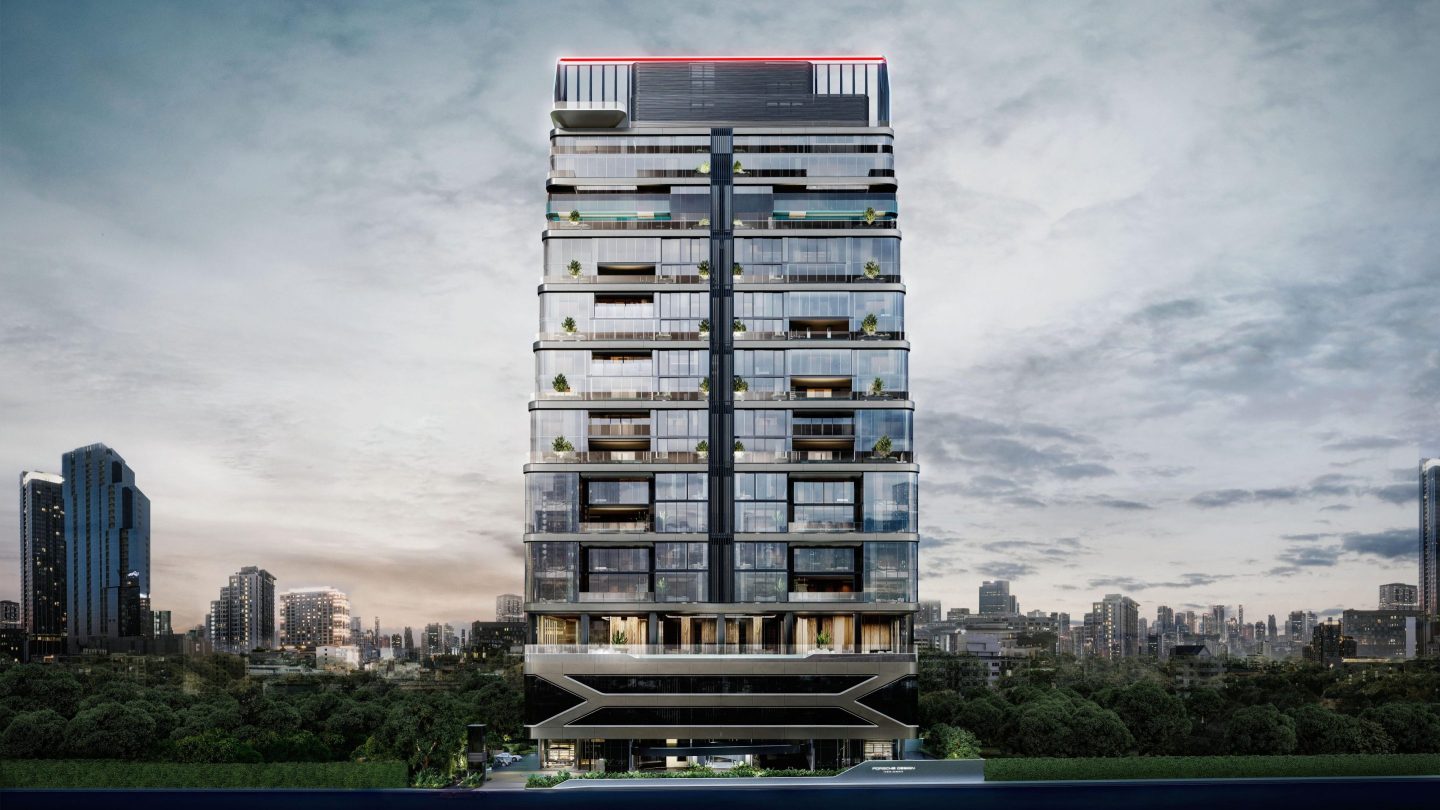
Porsche Design Tower Bangkok has intensified competition in Southeast Asia’s branded residence market after being presented to global yacht collectors at the Singapore Yachting Festival 2026 as a limited-edition property aimed at ultra-high-net-worth buyers seeking design pedigree, privacy and collectible real estate.

The 21-storey tower, rising 95 metres on Sukhumvit 38 in Bangkok’s Thonglor district, is being developed through a collaboration between Porsche Design and Ananda Development. It is the first Porsche Design Tower in Asia and the third worldwide after projects linked to Miami and Stuttgart, placing Bangkok within a small group of cities being used by luxury lifestyle brands to extend their reach beyond products and into residential property.

The project will comprise only 22 duplex and quadplex Sky Villas, with residences ranging from about 525 to 1,135 square metres. Prices have been positioned from about $15 million to $40 million, making the development one of the most expensive residential offerings in Thailand’s capital. Construction is scheduled to begin before completion targeted for the end of 2028, while the show suite in Bangkok is available by private appointment.

The presentation in Singapore marked a sharper effort to reach buyers whose interests overlap with luxury mobility, yachting, design and private collections. Rather than selling the tower as a conventional condominium, the marketing places it in the category of a scarce lifestyle asset. That approach reflects a wider shift in luxury property, where affluent buyers are increasingly drawn to homes that combine brand identity, service standards, security and membership-like exclusivity.

A defining feature of the Bangkok tower is the “Passion Space” concept, a private garage and display area attached to each residence. These spaces are designed for car collections, private gatherings or personal pursuits, and are accessed through a central spiral car ramp known as “The Loop”. The arrangement gives the building its most distinctive automotive link, turning the owner’s vehicle collection into part of the residential experience rather than a separate amenity.

The tower’s design also draws on Porsche cues. Its automated terrace system is inspired by the movement of the Porsche 911 Targa roof, while the exposed “X-Frame” structure takes references from the Mission R concept car. A lit crown at the top of the building is intended to create a night-time signature on Bangkok’s skyline. The interior proposition includes private lifts, large entertainment areas, wellness zones, pools and high-end kitchen and bathroom fittings.

Chanond Ruangkritya, president and chief executive of Ananda Development, has positioned the tower as a project that embeds Porsche’s design language into the structure rather than merely attaching a name to a luxury address. The developer is betting that a small pool of regional and international buyers will pay a premium for scarcity, brand association and the ability to personalise large-scale residences in a prime district.

Bangkok provides a strong setting for that strategy. Thonglor remains one of the capital’s most established luxury neighbourhoods, with restaurants, retail, wellness services and transport links that appeal to wealthy local residents, expatriates and regional buyers. The city has also become an important hub for branded residences, helped by tourism, medical services, international schools and its role as a base for high-net-worth families across Asia.

The project arrives as Thailand’s luxury property market shows a split trend. Mass-market condominium developers have faced weaker purchasing power, tighter lending and slower absorption, while the highest end of the market has remained more resilient because buyers are less dependent on mortgages. Limited freehold land in central Bangkok, rising construction costs and demand for larger, service-rich homes have supported pricing in prime locations.

The ultra-luxury segment, however, is not without risk. A 22-unit tower reduces supply pressure but also narrows the buyer base sharply. Sales depend on a small number of wealthy purchasers who must accept not only high upfront prices but also long-term maintenance costs associated with specialised amenities, private garages and brand-level service expectations. Foreign ownership limits for condominiums in Thailand also restrict the share available to non-Thai buyers.

US President Donald Trump has urged Iran to “get smart soon” and sign a deal, sharpening pressure on Tehran as efforts to end the conflict remain stalled and Washington weighs keeping a naval blockade of Iranian ports in place for months. Trump used a Truth Social post on Wednesday to accuse Iran of failing to reach what he called a “non-nuclear deal”, saying Tehran “couldn’t get its […]

STUTTGART, GERMANY / BANGKOK, THAILAND – Media OutReach Newswire – 29 April 2026 -Porsche Design Tower Bangkok and Christie’s co-hosted The Collector’s Evening, an exclusive invitation-only event held at The Peak, Gaysorn Tower, Bangkok. The private gathering brought together rare highlights from Christie’s forthcoming Hong Kong and Geneva auctions before a distinguished audience of collectors, investors, and wealth intermediaries, marking one of the most distinguished gatherings of collectors Bangkok has seen this year.

Melissa Chollasap (4th from left), Managing Director of Porsche Design Tower Bangkok, and Prapavadee Sophonpanich (5th from left), Senior Vice President, Managing Director of Christie's Thailand, Cambodia, Laos, Myanmar and Vietnam, co-hosted The Collector's Evening, a private preview of rare highlights from Christie's forthcoming Hong Kong and Geneva auctions, in Bangkok.
Melissa Chollasap (4th from left), Managing Director of Porsche Design Tower Bangkok, and Prapavadee Sophonpanich (5th from left), Senior Vice President, Managing Director of Christie’s Thailand, Cambodia, Laos, Myanmar and Vietnam, co-hosted The Collector’s Evening, a private preview of rare highlights from Christie’s forthcoming Hong Kong and Geneva auctions, in Bangkok.

The auction preview brought together a rare timepiece, a significant work of jewelry art, and a highly limited collectible — each with a provenance and a place in the collector market that extends well beyond its auction estimate. The evening was led by Vickie Sek, Deputy Chairman and Asia Pacific Chairman of Christie’s, and Alexandre Bigler, Senior Vice President and Head of Watches for Asia Pacific, whose attendance of the event in Bangkok reflects the growing weight of the city’s collector community on the regional stage. This year marks Christie’s 40th year of presence in Asia.

Porsche Design Tower Bangkok served as co-host — an adequate setting that reflects the exclusivity of the objects on display. Born from the collaboration between Porsche Design and Ananda Development PCL, the tower is guided by Professor F. A. Porsche’s founding principle of optimising function while uncompromisingly reducing form to the essentials. The result is ‘Sky Villa’ residences — distinguished by design, exclusive in the truest sense, and coveted by those who understand the true meaning and value of architectural excellence. With just 22 residences, Porsche Design Tower Bangkok underscores its profound exclusivity but unequivocally establishes it as an unparalleled, coveted address. Beyond the preview, the evening served as an intimate occasion for Porsche Design Tower Bangkok to host its clients and prospective owners within a setting that reflected the project’s own collector values.

Central to that distinction is the ‘Passion Space’ — a private collector’s garage directly connected to each residence by private lift. Whatever its owner chooses to place within it, the ‘Passion Space’ was designed with the same conviction that defined the evening: that what individuals surround themselves with is never incidental.

Porsche Design Tower Bangkok emerges as one of merely two Porsche Design residential towers globally, drawing a parallel only with its prestigious Miami counterpart.

For those who value the extraordinary, Porsche Design Tower Bangkok welcomes private viewings by appointment at pdtowerbangkok.com.

Hashtag: #PorscheDesign

The issuer is solely responsible for the content of this announcement.

About Porsche Design:

In 1963, Professor Ferdinand Alexander Porsche created one of the most iconic design objects in contemporary history: the Porsche 911. Following his vision to take the principles and myth of Porsche beyond the automotive world, he created the exclusive lifestyle brand Porsche Design in 1972. His philosophy and design language can still be seen in all Porsche Design products today. Every Porsche Design product stands for extraordinary precision and perfection, boasts a high level of technological innovation and seamlessly combines intelligent functionality and puristic design. Created by Studio F. A. Porsche in Austria, our products are sold worldwide in Porsche Design stores, high-end department stores, exclusive specialist retailers and the official online store ().

VISHNU RAJA
RYO YAMADA
HITORI GOTOH
IKUYO KITA