News related to
President

BANGKOK, THAILAND – Media OutReach Newswire – 15 October 2025 – Proud Real Estate Public Company Limited (PROUD) announces the launch of The Residences at InterContinental Phuket Resort, a prestigious development with an investment exceeding THB 2.5 billion (around $77 million USD). This is the company’s second Branded Residences project in Thailand under the globally renowned InterContinental brand, introducing a transformative concept of residential living themed ‘Live […]

By Nitya Chakraborty On October 10, the Nobel Prize Committee awarded the Peace prize for the year 2025 to the Venezuelan right wing politician Maria Corina Machado who has been working for the last few years for the removal of the President Nicholas Maduro from his office. The White House initially reacted that the Nobel […]

The article Trump Has Not Got Nobel Peace Prize But The Winner Machado Is His Acolyte In Latin America appeared first on Latest India news, analysis and reports on Newspack by India Press Agency).

The Bank of North Dakota and payments firm Fiserv have unveiled plans for a dollar-backed digital token dubbed “Roughrider,” to be deployed among banks and credit unions in 2026 as a new instrument for interbank settlement. The token, restricted initially to participating financial institutions, aims to accelerate and modernise bank-to-bank transactions within the state.

Under the agreement, Roughrider will be built on Fiserv’s digital asset infrastructure, leveraging the platform’s framework to interoperate with other stablecoins. The Bank of North Dakota becomes the first U. S. state bank to issue a stablecoin on Fiserv’s platform. The initiative targets enhanced liquidity, streamlined payments, and potential expansion into merchant adoption.

Governor Kelly Armstrong cast the move as bold institutional innovation, positioning the state as a testing ground for blockchain-enabled finance. “We’re entering a new era,” he said, emphasising that North Dakota financial institutions must embrace evolving money-movement tools. Fiserv’s COO Takis Georgakopoulos described Roughrider as merging the stability of traditional banking with the agility of distributed ledger technology.

State officials say the Industrial Commission, which oversees the bank, must approve the pilot plan. Once greenlit, the rollout will begin with a small cohort of local institutions. BND President and CEO Don Morgan noted that any costs from development will rest on the bank’s balance sheet rather than state taxpayer funding. The legal team of Troutman Pepper Locke has advised the bank in structuring the deal.

The federal legislative environment played a crucial role: in July, Congress passed the GENIUS Act, providing stablecoin issuers with a national regulatory framework requiring full backing by high-quality assets, transparency rules, and audit requirements. North Dakota’s scheme is built to align with those standards.

While Wyoming’s Frontier Stable Token launched in August and is available for public use, North Dakota’s strategy is more conservative. Roughrider will begin as a wholesale instrument; public or consumer-facing use is not part of the first phase. Some stakeholders view it as a deliberate step to mitigate operational and financial risks before broader deployment.

Analysts say North Dakota offers a lower-complexity environment for experimentation. With BND being the only state-owned bank in the U. S., the state provides a more controlled setting to work through technical, legal, and compliance challenges. If successful, the model could be scaled beyond North Dakota’s borders or adopted by others.

Banks and credit unions participating in the pilot stand to benefit from faster settlement, reduced settlement costs, and simpler liquidity management. But industry voices warn of potential downsides: deposit flight is a concern if stablecoins siphon off customer balances, and state regulators may need more capacity to oversee digital assets.

Fiserv, which serves roughly 10,000 financial institutions and 6 million merchants globally, sees this as an opportunity to embed stablecoin rails within its ecosystem. It launched its own white-label stablecoin platform earlier this year, with FIUSD as its internal token, and views Roughrider as a use case within that infrastructure.

BERLIN, GERMANY – Newsaktuell – 14 October 2025 – Global leaders reaffirmed their commitment to health as a political priority and a cornerstone of peace and resilience on day 2 of the World Health Summit, the leading platform for global health. Against the backdrop of geopolitical crises, global leaders called for shared responsibility in shaping a healthier, more resilient world on the World Health Summit stage. World […]

Amin H. Nasser, President & CEO of Aramco, told delegates at the Energy Intelligence Forum in London that the company will pursue “energy addition” to cope with intensifying global demand, underlining its steadfast ambition to maintain dominance in oil. He argued that conventional energy sources will remain critical even as the energy transition narrative evolves.

Nasser projected that global oil demand will grow by 1.1–1.3 million barrels per day this year and by 1.2–1.4 million bpd in 2026. He added that Aramco, having kept extraction costs at about $2 per barrel of oil equivalent for oil and $1 for gas, is well-positioned to meet the incremental demand. Speaking to a gathering of energy executives, he said the company can sustain maximum crude output of 12 million bpd for a full year without incurring extra cost.

He stressed that while many promises of the energy transition have fallen short, three shifts are now underway. First, he said the market is conceding that underinvestment in supply has risks. Second, cost pressures on alternative technologies are forcing a reevaluation of pace. Third, energy security is reclaiming a central role in policy-making. “Much of the promised progress has not been delivered, with many unintended consequences. Thankfully, it is finally shifting the narrative in three key ways,” Nasser said.

Behind the rhetoric lies a more cautious reality: Aramco has pared back its previous ambition to reach 13 million bpd, reverting instead to a 12 million bpd sustainable ceiling. That policy shift reportedly followed directives from Saudi energy authorities in early 2024.

In his remarks, Nasser also affirmed Aramco’s push into downstream and petrochemicals. He cited the company’s recent majority acquisition of Petro Rabigh, a 10 percent stake in China’s Rongsheng Petrochemical, and a joint $11 billion ethylene complex with TotalEnergies that is slated to come online by 2027. These moves, he said, diversify revenue streams beyond crude.

His stance echoes his commentary at earlier industry events. At CERAWeek in Houston, Nasser had cast doubt on the viability of green hydrogen and questioned the assumption that renewables alone can displace fossil fuels. He then quipped that there was “more chance of Elvis speaking” than seeing the current transition plans succeed.

Analysts say that Aramco’s optimism hinges on its low-carbon upstream intensity and vast reserves, which give it flexibility against higher-cost producers. The International Energy Agency’s estimates place Saudi spare capacity at about 2.43 million bpd, part of OPEC+’s total idle capacity of around 4.05 million bpd.

Still, external pressures persist. Governments worldwide face competing goals of emissions reduction, energy access, and geopolitical security. In many markets, renewables and storage technologies remain maturing, requiring heavy capital and regulatory support before they can scale. Critics argue that overreliance on fossil fuels could lock in carbon-intensive infrastructure and slow the path to net zero.

At the London forum, however, Nasser signalled that Aramco sees its role as not merely supplying more oil but shaping the discourse. “We are determined to remain dominant in oil thanks to a massive resource base, low costs, and one of the lowest upstream carbon intensities across the industry,” he said. He urged policymakers and financiers to support broad energy investment rather than prematurely dismiss conventional sources.

Larsen & Toubro’s hydrocarbon onshore unit, in partnership with Greek firm Consolidated Contractors Group, has booked an ultra-mega contract valued at over ₹150 billion to build a natural gas liquids plant and associated processing facilities in the Middle East. The engineering, procurement, construction, installation and commissioning scope will cover the handling of rich associated gas, integration of utilities, and interfacing with existing infrastructure. L&T will lead engineering […]

Hamas has handed over seven Israeli hostages to the International Committee of the Red Cross, fulfilling the first phase of a broad ceasefire and prisoner­exchange accord with Israel. The hostages are now in Israeli custody, and more releases are expected in the coming hours.

The released individuals—identified as Matan Angrest, Guy Gilboa Dalal, Alon Ohel, Gali Berman, Ziv Berman, Eitan Mor and Omri Miran—were transferred through Gaza to a reception point near the border, where they reunited with family members and began medical assessments. Under the terms of the deal, they will be swiftly transported to Israeli hospitals for further care.

Alongside the handover, Hamas published the names of all 20 Israeli captives slated for release in the deal’s first stage. Among the names are Bar Abraham Kupershtein, Evyatar David, Yosef-Chaim Ohana, Segev Kalfon and Avinatan Or—adding to the list previously released to the media. Israel has warned Hamas that any mistreatment or propaganda stunts during the transfer would provoke retaliation.

The agreement accompanying the hostages’ release calls for Israel to free more than 1,900 Palestinian prisoners. That includes women, children and individuals serving long sentences. As per the deal, Israel must also return the bodies of 28 deceased captives. Hamas has acknowledged some uncertainty about certain remains, citing burial under debris and loss of access to previous guard posts.

The exchange is part of a U. S.-brokered “21-point” plan, mediated by Egypt, Qatar and other parties. Provisions include a phased withdrawal of Israeli forces from key areas in Gaza, the reopening of humanitarian corridors, and reconstruction efforts under an international framework. As part of the agreement, President Donald Trump and regional leaders are convening in Egypt to formalise implementation.

Hamas’ Gaza chief, Khalil Al-Hayya, said the group has secured guarantees from U. S. mediators and Arab sponsors that the conflict is “ended,” highlighting that the release of 20 living hostages would occur within 72 hours of the agreement taking effect. Hamas insists it will “faithfully uphold” its terms, while reserving the right to resume fighting if Israel fails to meet its commitments.

Israeli officials emphasised that the ceasefire and release process are conditional and subject to strict oversight. The Israeli cabinet has approved the deal, though several ministers from the far-right bloc opposed it. Prime Minister Benjamin Netanyahu’s office warned that any violation by Hamas would void the agreement and trigger military responses.

Public reaction in Israel has been emotional. Tens of thousands gathered in Tel Aviv’s Hostages Square to watch televised feeds of the transfers. Families expressed cautious optimism over the hostages’ return. In Gaza, displaced residents and aid agencies are gearing up to facilitate relief efforts under the newfound calm.

Advertisements

The French presidency announced that President Emmanuel Macron has reappointed Sébastien Lecornu as prime minister, tasking him with forming a viable government and shepherding a 2026 budget through a fragmented parliament. The move follows the abrupt collapse of Lecornu’s earlier cabinet, which lasted scarcely hours. Lecornu’s renewed mandate comes after he resigned on 6 October, mere hours after unveiling a cabinet, citing opposition across ideological lines to […]

Washington pressed Beijing to adopt a more conciliatory stance in an intensifying trade dispute over rare earths, as Vice President JD Vance asserted that President Donald Trump holds superior leverage in any escalating confrontation. Speaking on Fox News’s Sunday Morning Futures, Vance warned that China’s reaction will largely decide whether the standoff becomes a full-blown trade war or returns to negotiation. China responded with defiance. Its Ministry […]

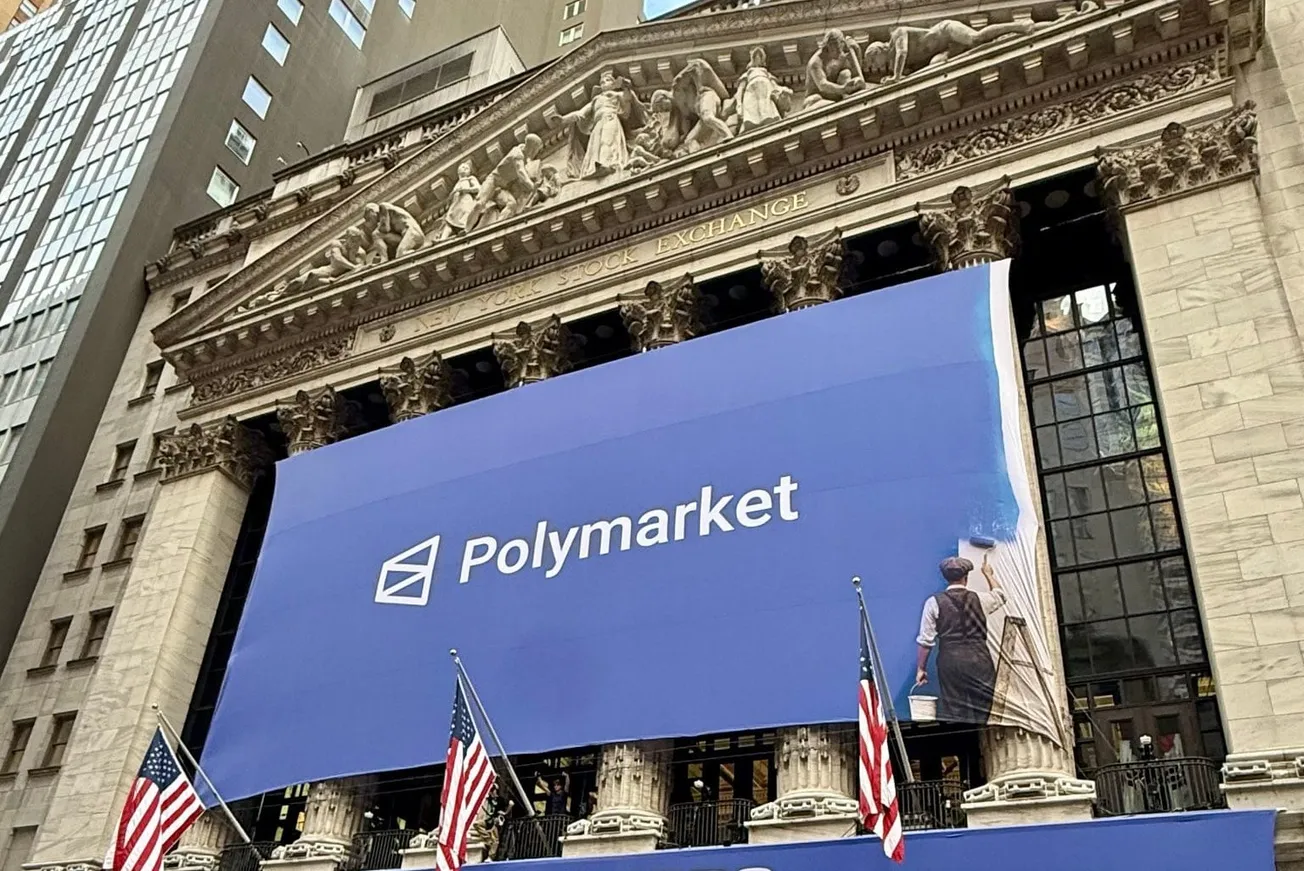
Intercontinental Exchange, which owns the New York Stock Exchange, is committing up to $2 billion in Polymarket, valuing the event-prediction platform at about $8 billion before the investment. ICE will serve as a global distributor of Polymarket’s event-driven data and will collaborate on tokenisation and related infrastructure.

Polymarket is gearing up for its return to U. S. markets following a multi-year regulatory hiatus. The firm acquired QCEX, a derivatives exchange and clearinghouse with CFTC licensure, for $112 million, enabling it to operate under U. S. regulation. The Commodity Futures Trading Commission has granted a no-action letter for event contracts, clearing a path for U. S. users to trade again.

Born in 2020 under the leadership of CEO Shayne Coplan, Polymarket permits users to wager on outcomes by purchasing “Yes” or “No” tokens. The market price implies a probability. Winning tokens settle at $1, while losing ones expire worthless. All trades occur via peer-to-peer smart contracts built on the Polygon blockchain.

Polymarket saw a surge in profile during the 2024 U. S. presidential campaign, when trading volume on election markets surpassed $3 billion. Its probability signals have since been picked up by mainstream outlets and financial analysts as indicators of public sentiment and forecasting.

ICE’s strategic investment reflects growing institutional interest in prediction markets. With control over NYSE infrastructure and deep data capabilities, ICE aims to monetise sentiment analytics and integrate such signals alongside traditional financial indicators. ICE has maintained that the investment will not materially affect its 2025 financials.

Coplan has acknowledged the significance of the tie-up, saying the partnership “marks a major step in bringing prediction markets into the financial mainstream.” Jeffrey Sprecher, ICE’s CEO, praised the union as an alignment between legacy market infrastructure and next-generation decentralised finance innovation.

Observers suggest that navigating regulatory risk is central to Polymarket’s success. Its three-year exit from U. S. users followed a 2022 settlement with the CFTC over unregistered derivatives operations. That settlement barred U. S. users from accessing the platform, and investigations into U. S. usage had been a cloud over the company. With the regulatory clearance and ICE backing, Polymarket is now executing a comeback in the U. S. domain.

Polymarket also attracted backing from 1789 Capital, a venture fund backed by Donald Trump Jr., which joined its advisory board earlier this year. Kalshi, a peer prediction market, won a favorable court ruling against the CFTC last year, setting precedents that influence Polymarket’s legal and operational landscape. The broader industry is watching closely, as the success or failure of this bet by ICE may signal whether prediction markets can transition from niche crypto tools to mainstream financial instruments.

Shayne Coplan, born in 1998 and a former dropout from New York University, is now recognised as the youngest self-made billionaire under the Bloomberg index following the deal. His trajectory illustrates the accelerating nexus among finance, tech and speculative market platforms.

BEIJING, CHINA – Media OutReach Newswire – 11 October 2025 – An article published by CGTN highlights China’s upcoming Global Leaders’ Meeting on Women in Beijing, marking 30 years since the 1995 Beijing Declaration. It reviews China’s progress in women’s empowerment under Xi Jinping’s leadership and its global contributions to gender equality, while noting persistent worldwide challenges to achieving women’s full advancement. Thirty years ago, the Beijing […]

By Nitya Chakraborty There is a big possibility of renewal of India-US bilateral ties impacting the ongoing trade talks following the proposed one on one meeting between the Indian Prime Minister Narendra Modi and the U.S. President Donald Trump during their presence in Kuala Lumpur to attend the summit of ASEAN members on October 26 […]

The article Trump-Modi Meet At ASEAN Summit In Malaysia Can Remove Irritants In Indo-US Ties appeared first on Latest India news, analysis and reports on Newspack by India Press Agency).

Massachusetts Institute of Technology has outright rejected a federal proposal from the Trump administration that would grant preferential funding to universities in exchange for adopting ideological and policy constraints. The university’s leadership argues the offer undermines academic freedom and institutional autonomy. MIT President Sally Kornbluth issued a letter addressed to Education Secretary Linda McMahon in which she affirmed the institution’s commitment to merit-based scientific funding and independent […]

China’s expanded export controls on rare-earth materials have jolted global semiconductor supply chains, with firms scrambling to assess vulnerabilities while the United States countered by threatening a sweeping 100 % tariff and new software export curbs. The Chinese Ministry of Commerce broadened restrictions to 12 elements and extended licensing requirements to include mining, refining and recycling equipment—pressing that any dual-use or defence-tied requests will be denied. Foreign […]

Cryptocurrency markets endured a historic collapse as leveraged positions were liquidated en masse – over 1.6 million traders wiped out $19.13 billion in bets within 24 hours, data from Coinglass shows.

The crash accelerated sharply after U. S. President Donald Trump announced an additional 100 per cent tariff on Chinese imports and threatened export controls on critical software, heightening fears of a full-blown trade war. Bitcoin plunged more than 12 per cent from its recent highs, briefly sliding below $102,000 before rebounding above $113,000.

Before the sell-off, Bitcoin had breached a new all-time peak above $125,000, buoyed by institutional inflows into crypto exchange-traded funds. Governments and institutional investors had viewed digital assets as a hedge amid macroeconomic uncertainty.

Today’s market rout, however, exposed the fragility of overleveraged positions in a thinly capitalised market. In a single hour on Friday, more than $7 billion of liquidations occurred. The top losses were seen among long positions, particularly in Bitcoin and Ethereum derivatives, which accounted for a substantial share of the forced unwinds.

Institutional players and high-net-worth traders were swept up in the cascade. Market watchers noted that order books lacked the depth to absorb such a severe shock, triggering knock-on effects through futures and perpetual swap markets.

Beyond crypto, equity indices faltered under the weight of renewed global risk aversion. The S&P 500 dropped 2.7 percent, while tech stocks, sensitive to trade tensions, bore steep losses.

Some analysts likened the event to a “black swan” moment for crypto markets — a sudden shock revealing systemic vulnerabilities in a still nascent asset class. Traders operating with high leverage, little hedging, and aggressive margin policies found themselves particularly exposed.

Efforts to assess contagion effects to traditional finance are underway. Banks offering crypto derivatives and prime brokers are now scrutinising counterparty risks. Regulators in several jurisdictions may use today’s crash to justify stricter margin and leverage rules for crypto trading.

Reviewing policy implications, the tariff escalation marks a sharp pivot in U. S.–China trade strategy. Trump framed the measures as retaliation for China’s export curbs on rare earth metals, which are critical for tech manufacturing. The move signals willingness to escalate economic confrontation, with markets already pricing in broader disruption to global supply chains.

Despite the volatility, some investors are still betting on long-term resilience of digital assets. The week before the crash saw a record $5.95 billion flow into global crypto ETFs, led by U. S. allocations, suggesting that capital rotation into crypto remains strong over medium timeframes.

Liquidity providers and market makers face fresh trials. Some have temporarily withdrawn from funding markets or widened spreads to mitigate risk exposure. In highly volatile hours, arbitrage desks and algorithmic liquidity engines contributed to exaggerated price swings.

Wider sentiment has turned cautious: on-chain analytics show a rise in stablecoin inflows to exchanges, possibly reflecting flight from risk. Options markets registered growing demand for deep out-of-the-money puts, as traders brace for further downside.


Abu Dhabi — EDGE entity FADA has completed a week-long “Space Roadshow” across six Emirati educational institutions, aiming to galvanise youth interest in space sciences and strengthen the UAE’s space ecosystem. The roadshow, conducted in collaboration with the UAE Space Agency and Space42, carried the theme “Living in Space” and comprised workshops, interactive sessions, and networking opportunities touching on Earth observation, satellite communications, CubeSat technologies and astronaut […]

Saudia’s inaugural direct passenger flight from Riyadh to Moscow landed on Friday at Sheremetyevo airport, signalling a new chapter in Saudi–Russian air connectivity. The airline plans to operate three weekly round-trip services, integrating tourism, business and diplomatic traffic between the two capitals.

The launch positions Saudia alongside Flynas, which commenced direct operations between Riyadh and Moscow’s Vnukovo airport in August with three weekly flights. Flynas is also slated to begin a Jeddah–Moscow route come December. The twin developments reflect a concerted push by both states to deepen bilateral ties through aviation links.

The Riyadh–Moscow air bridge is underpinned by the Saudi Tourism Authority and the Air Connectivity Program, designed to promote cross-border mobility and support Saudi Vision 2030. Saudia officials say ticketing and scheduling are aligned to accommodate business travellers, diplomats and leisure tourists. The route’s launch was celebrated in both capitals, where it was honoured with a water cannon salute at Sheremetyevo and a gala in Moscow attended by diplomatic representatives and aviation executives.

Russia has experienced a surge in travellers from Saudi Arabia. In 2024, over 52,400 Saudis visited Russia, a leap from just 9,300 the previous year, following Moscow’s August 2023 e-visa reform that enabled Saudis easier access. Likewise, Russian visitors to the Kingdom have grown steadily, aided by anticipatory visa liberalisation and reciprocal travel facilitation efforts.

Russian Foreign Minister Sergey Lavrov, during talks with his Saudi counterpart, described the launch as an enabler of “tourist exchanges and business contacts,” citing that growing demand warranted direct air links. On the ground, Sheremetyevo’s scheduling system already lists flights to Riyadh beginning mid-October, operating up to five times weekly.

The timing dovetails with a broader recalibration in Saudi foreign policy and energy diplomacy. The personal rapport between Crown Prince Mohammed bin Salman and President Vladimir Putin has been instrumental in facilitating cooperation within the OPEC+ framework. Cooperation in trade, energy and security has steadily flourished in recent years, and aviation ties now offer a tangible bridge between economies.

Saudia’s fleet expansion and network strategy underscore that the Moscow link is more than symbolic. The airline now serves over 100 destinations across four continents, with plans to expand to 145 destinations by 2030. Performance figures underscore ambition: in the first half of 2025, Saudia carried 17.5 million passengers and operated 100,000 flights.

The route is expected to spur ancillary sectors. Saudi tour operators are preparing Russia-focused packages including Moscow, St Petersburg, and beyond, while Russian travel agencies are packaging Saudi cities and pilgrimage circuits. Pilgrim traffic is especially significant: the Moscow launch could funnel more Russian pilgrims directly to Mecca or Medina via Riyadh.

Ethiopia’s central bank has held its benchmark rate at 15 per cent while expanding the cap on credit growth to 24 per cent for the 2025/26 fiscal year, balancing a cautious monetary stance with support for economic expansion. The move coincided with the country’s inaugural export shipments under the African Continental Free Trade Area, marking a defining moment in Ethiopia’s trade and financial policy strategy. The National […]

Dubai — Hytera Communications unveiled a slate of artificial intelligence-driven communication tools designed specifically for public safety, law enforcement and defence sectors in the Gulf region, ahead of its showcase at GITEX Global 2025.

At the heart of Hytera’s push is a vision of integrated, mission-critical communications that fuse voice, video, and data streams with AI analytics to improve situational awareness, incident response speed and evidence handling.

The company will debut the P60 Smart PoC Radio, a compact device marrying push-to-talk over cellular capability with 3GPP-aligned mission-critical services. This enables frontline users to stream video, send data, and communicate via voice over a single radio interface. Also on display will be the SC700 LTE Body Camera, built for continuous field operation with extended battery life, high-definition video capture and advanced noise reduction in audio. The SC700 is integrated with Hytera’s upgraded Digital Evidence Management system, which automates evidence ingestion, classification and secure sharing while preserving a chain of custody.

Hytera also plans to demonstrate its Intelligent Mobile Enforcement Solution, an ecosystem combining body cameras, in-vehicle video units and AI models for real-time analytics such as facial recognition and licence plate detection. From command centres, data from multiple sensors can be aggregated and visualised to support dispatch decisions and resource allocation.

According to Stanley Song, Vice President at Hytera, the Middle East market represents one of the fastest growing regions for professional communication technologies. He emphasised that public safety systems must go beyond simple coverage — they must protect the integrity of data, location privacy, and resilience against cyber threats. Given the rising challenges of urban security, cross-border crime and regional instability, Song argued that interoperable, secure, AI-augmented communications can help authorities maintain continuity under stress.

Hytera’s roadmap reflects broader shifts in the mission-critical communications sector. Competing firms are also embedding AI capabilities and federated data architectures so that frontline devices act as sensors, not just radios. In parallel, regional governments in Gulf Cooperation Council states are investing heavily in smart city, surveillance and emergency response infrastructures, creating receptive demand for advanced solutions.

Matein Khalid Gold is in its most spectacular bull run since 1976-1980, when prices rocketed from $91 to over $800 an ounce. The current cycle found its floor near $1,800 in late 2022, as the Powell Fed’s rate-hike campaign peaked and Washington froze $300 billion in Russian reserves in response to the invasion of Ukraine. “Dr Auric” now trades at just over $4,000 an ounce – a perfect vindication of […]

Rania Gule It seems that gold is going through a delicate phase, balancing between long-term bullish momentum and short-term profit-taking pressures, at a time when global markets are on edge ahead of upcoming U.S. sentiment data. As prices approach the $4,000 per ounce mark once again, the key question resurfaces: can gold still break its historical ceiling at $4,059, or will the current corrective wave extend temporarily […]

By Nitya Chakraborty The Israel-Hamas peace deal announced by the US President Donald Trump on Wednesday night in Washington is a welcome development, however limited it be at the moment as the agreement between the two warring parties is only for the first phase of Trump sponsored deal involving the release of all hostages by […]

The article Israel-Hamas Ceasefire Deal Is Welcome But The Follow Up Is Crucial For Enduring Peace appeared first on Latest India news, analysis and reports on Newspack by India Press Agency).

Celebrating Thai Culture and Soft Power on the Global Stage While Highlighting the Success of Korea’s Clean Energy Transformation BANGKOK, THAILAND – Media OutReach Newswire – 9 October 2025 – B.Grimm Power, a leading global energy producer, proudly announced its successful role as the main sponsor of the “Sawasdee Seoul Thai Festival 2025,” a vibrant celebration of Thai culture held in Seoul, South Korea. The festival highlighted […]

JAKARTA, INDONESIA – Media OutReach Newswire – 9 October 2025 – PT Bank Amar Indonesia Tbk. (“Amar Bank”, IDX: AMAR), a pioneer in digital banking serving the retail and MSME segments, today announces that SBI Holdings, Inc. (“SBI Holdings”, TYO:8473), a leading Japanese financial services conglomerate, has taken a stake in Amar Bank. Following this transaction, SBI Holdings now holds more than 5% of Amar Bank’s shares, […]

VISHNU RAJA
RYO YAMADA
HITORI GOTOH
IKUYO KITA