News related to
Since

Dubai authorities have imposed fines of Dh50,000 on 159 companies for violating telemarketing regulations, intensifying efforts to protect consumer privacy and enhance business practices. The Dubai Corporation for Consumer Protection and Fair Trade , operating under the Dubai Department of Economy and Tourism , announced these penalties following the enforcement of Cabinet Decision No. 56 of 2024, which came into effect in August 2024.

The DCCPFT initially issued warnings to 174 companies, urging compliance with the new telemarketing rules. Despite these warnings, 159 companies failed to adhere to the guidelines, resulting in substantial fines. These regulations are part of a broader initiative to reduce intrusive telemarketing calls, ensuring consumer comfort and privacy.

Key provisions of the telemarketing regulations include prohibiting calls to consumers listed on the ‘Do Not Call Registry’ managed by the Telecommunications and Digital Government Regulatory Authority , restricting marketing calls to between 9 am and 6 pm, and requiring telemarketers to inform consumers at the outset if the call is being recorded. Additionally, the regulations forbid the disclosure of personal data without explicit consent and the trading of such data for marketing purposes.

These rules apply to all licensed companies in the UAE, including those operating within free zones. The DCCPFT emphasised that the implementation of these regulations aims to foster a business-friendly environment, bolster consumer trust, and create a fair competitive landscape that enhances economic stability.

The introduction of these stringent measures aligns with Dubai’s D33 economic agenda, launched in 2023, which aspires to position the city among the top three global destinations over the next decade and double the size of its economy by 2033. In the first nine months of 2024, Dubai’s economy experienced a growth of 3.1%, reaching Dh339.4 billion, driven by expansions in sectors such as transport and financial services.

The DCCPFT’s decisive actions reflect a commitment to upholding consumer rights and ensuring that businesses engage in ethical marketing practices. By enforcing these regulations, Dubai aims to minimise market-disruptive practices and promote a positive business climate conducive to sustainable economic growth.

In addition to financial penalties, the TDRA has taken measures against individuals using personal numbers for marketing purposes, detecting over 2,000 violations since the regulations were implemented. Penalties for first-time offenders include a Dh5,000 fine and suspension of all phone numbers registered under the individual’s name until payment is made. Repeat offenders face escalating fines and extended suspensions, with third-time violators being prohibited from obtaining any telecommunications services in the UAE for 12 months.

These comprehensive efforts underscore Dubai’s dedication to protecting consumers from unwanted solicitations and ensuring that telemarketing activities are conducted within the bounds of respect and legality. As the city continues to evolve as a global business hub, maintaining stringent consumer protection standards remains a pivotal aspect of its economic strategy.
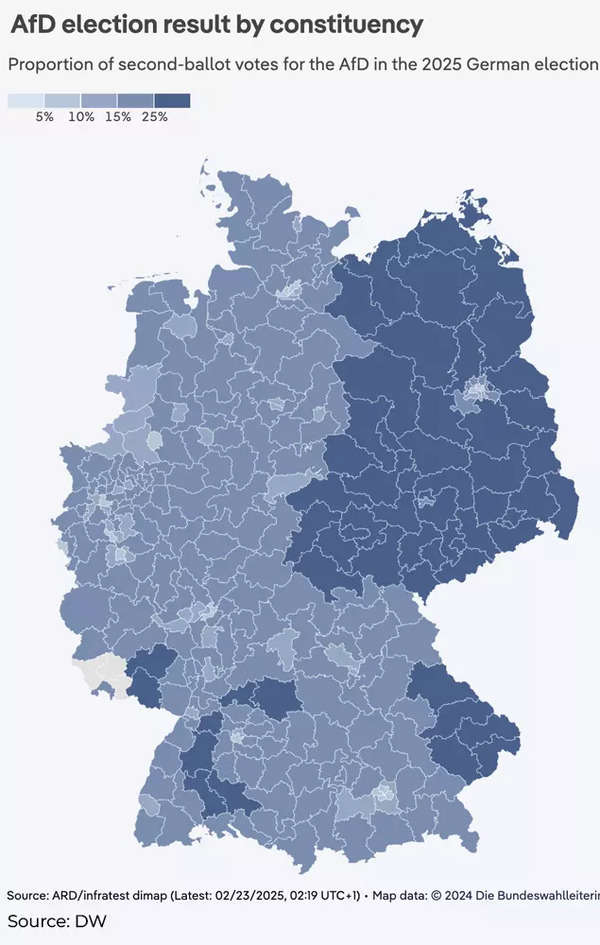

By Nitya Chakraborty The final results of Germany’s national elections held on February 23 are being debated intensively in the global media, especially in the European media about the upsurge of the far right party AFD which virtually doubled its voting percentage in the 2025 elections compared to the 2021 national elections. The ruling Social […]

The Healthy with KidSTART initiative has expanded significantly, growing from supporting 120 families in 2020 to more than 3,100 families in 2024 SINGAPORE – Media OutReach Newswire – 25 February 2025 – On 22 February 2025, over 600 KidSTART parents and children gathered for a day of fun at the What’s for Lunch? A Farm Adventure food expo organised by Prudential Singapore (“Prudential’) and KidSTART Singapore (“KidSTART”). […]

KUALA LUMPUR, MALAYSIA – Media OutReach Newswire – 25 February 2025 – France has over 100 different apple varieties thanks to its unique climate and fertile soil. Recently, climate change has significantly impacted global agriculture, particularly affecting fruit cultivation. Following a challenging harvest in 2023, Europe’s apple production faces its second-lowest level of the century, primarily due to severe frost conditions in Eastern Europe, which results in […]

El Salvador has resumed its Bitcoin acquisition strategy, purchasing an additional 7 BTC on February 25, 2025, after a week-long hiatus. This brings the nation’s total holdings to approximately 6,088 BTC, currently valued at around $572 million. The recent pause in daily purchases coincided with the country’s negotiation of a $1.4 billion loan agreement with the International Monetary Fund , which required El Salvador to scale back its Bitcoin initiatives, including making acceptance of the cryptocurrency voluntary for businesses.

The government’s decision to continue accumulating Bitcoin, despite the IMF’s stipulations, underscores President Nayib Bukele’s commitment to integrating the cryptocurrency into the nation’s financial framework. Since adopting Bitcoin as legal tender in September 2021, El Salvador has consistently increased its holdings, with purchases varying in size. Notably, on February 4, 2025, the government acquired 11 BTC in a single transaction, deviating from its usual daily acquisition strategy.

In March 2024, President Bukele transferred approximately 5,600 BTC to a cold wallet, referred to as “El Salvador’s first Bitcoin piggy bank,” marking the first public disclosure of the nation’s Bitcoin wallet address. This move aimed to enhance transparency and security in managing the country’s digital assets.

The IMF loan agreement, structured over 40 months under the Extended Fund Facility, follows four years of negotiations. As part of the deal, El Salvador committed to modifying its Bitcoin policies, including making its acceptance voluntary for private sector businesses. Despite these conditions, the government has continued its Bitcoin purchases, reflecting a nuanced approach to balancing international financial obligations with its cryptocurrency ambitions.

Gamescom Asia and the Thailand Game Show have united to create a new, expanded event, Gamescom Asia x Thailand Game Show. This merger marks a significant shift in the region’s gaming landscape, bringing together two of the most influential gaming events in Southeast Asia. The collaboration aims to enhance the gaming experience for both attendees and exhibitors, offering a larger platform for developers, enthusiasts, and industry leaders.

This newly formed partnership aims to create a dynamic fusion of gaming culture, technology, and entertainment, combining the strengths of both events. Gamescom Asia, an offshoot of the iconic Gamescom held in Germany, has been a staple in Asia since its inception in 2020, while the Thailand Game Show has built a legacy of over a decade as one of the largest gaming conventions in the region. By merging, the organisers hope to combine the best elements of both shows and deliver an unmatched experience for the gaming community.

The newly branded Gamescom Asia x Thailand Game Show is poised to offer an expansive space for game developers, tech companies, and content creators. With exhibitors from around the globe, the event will showcase the latest innovations in gaming, technology, and interactive media. The merger signals a stronger focus on international collaborations, while still maintaining the region’s unique cultural identity.

The event’s organisers have promised a more comprehensive range of activities, including more engaging stages, improved networking opportunities, and expanded partnerships with key industry players. According to industry experts, this collaboration will significantly increase the event’s reach, attracting a wider audience and providing companies with access to a larger pool of potential clients and partners.

By combining resources, Gamescom Asia x Thailand Game Show is set to deliver new content, activities, and experiences for all involved. Gaming tournaments, developer talks, product showcases, and influencer-led panels will be part of the expanded programme. This year’s event is expected to have an even greater emphasis on eSports, a growing sector in Southeast Asia, with competitive gaming being a key focal point of the show.

The decision to merge was also driven by the growing demand for gaming conventions across Southeast Asia. With an increasing number of game developers and tech companies looking to tap into the region’s lucrative market, organisers recognised the need for a bigger, more inclusive event. The collaboration of Gamescom Asia and Thailand Game Show represents a direct response to this demand, positioning the event as the premier gaming exhibition in the region.

Despite the merger, both brands will retain their distinct identities. While Gamescom Asia x Thailand Game Show will serve as the unified event name, both Gamescom and Thailand Game Show will continue to be used in marketing and branding efforts. This approach aims to preserve the unique characteristics of each event while also blending their strengths.

The expansion of the event comes at a time when Southeast Asia has emerged as one of the fastest-growing gaming markets globally. A recent report shows that the region’s gaming industry has experienced double-digit growth in recent years, driven by rising internet penetration, mobile gaming popularity, and an expanding youth population. By uniting, the two events are set to capitalise on these trends and bring together the brightest minds in the gaming world.

The partnership is also seen as a step forward in the region’s broader push to become a global hub for gaming and eSports. With multiple countries in Southeast Asia making significant investments in gaming infrastructure, eSports arenas, and game development, the merger of these two conventions helps to solidify the region’s growing importance in the global gaming industry. The influx of international companies to Southeast Asia, combined with the growing enthusiasm for local game development, has set the stage for Gamescom Asia x Thailand Game Show to become a must-attend event on the global calendar.

For attendees, the merger represents an exciting opportunity to witness a more diverse range of content, from AAA game reveals to indie game showcases. The show’s new scale also offers more opportunities for hands-on experiences with the latest gaming hardware and software. Additionally, with an increased number of exhibitors, the show is expected to become a hotspot for networking, fostering collaboration between developers, investors, and other stakeholders in the industry.

Asperitas, a Dutch thermal management company, has unveiled its DFCX series, a new line of modular Direct Forced Convection immersion cooling solutions designed to enhance performance, reliability, and energy efficiency across data centers of varying scales. This product line aims to cater to standalone edge facilities as well as hyperscale data centers, addressing the growing demand for sustainable and high-density computing environments. The DFCX series represents a […]

Advertisements
By Satyaki Chakraborty The polarization in German politics widened after national elections on Sunday, February 23 in which the conservative CDU/CSU with 28.5 per cent votes topped among the political parties followed by the far right AFD at 20.7 per cent and the centre-left SPD at 16.5 per cent. The remarkable feature was the resurgence […]

TAIPEI, TAIWAN – Media OutReach Newswire – 25 February 2025 – The Asian Hardware Online Exhibition 2025 (AsianHardware 2025) is set to redefine the hardware products industry with its innovative hybrid format, seamlessly blending virtual and physical elements. Scheduled to run from February 25, 2025, to May 31, 2025, the exhibition provides an unparalleled opportunity for Asian suppliers, importers, and exporters to connect, collaborate, and showcase their […]

KUALA LUMPUR, MALAYSIA – Media OutReach Newswire – 25 February 2025 – Over the past few years, the strategic endorsements, enigmatic tweets, and business manoeuvres of Elon Musk have caused shock waves in the cryptocurrency market with wild price fluctuations. Today, he is creating a native cryptocurrency on the X platform under the temporary name, X Money. Source: Shutterstock When and if it happens, the project can […]

Bupa introduces a prestigious VHIS plan with enhanced protection, personalised health concierge services, and dedicated health expertise for those who seek the best HONG KONG SAR – Media OutReach Newswire – 24 February 2025 – For people in Hong Kong who want to safeguard what matters most with a plan that goes beyond, Bupa is now welcoming a new Voluntary Health Insurance Scheme (VHIS) plan into its […]

Ukrainian soldiers, entrenched in a protracted battle against Russian forces, have expressed strong skepticism toward U.S. President Donald Trump’s assertions that he can swiftly broker peace with Russia. These remarks come as Trump initiates negotiations with Russian President Vladimir Putin, notably excluding Ukrainian representatives from the discussions. Captain Serhii Filimonov, a battalion commander who has been on the front lines since 2014, voiced his distrust of the […]

SINGAPORE – Media OutReach Newswire – 24 February 2025 – The Institute of Singapore Chartered Accountants (ISCA) has signed a Memorandum of Understanding (MOU) with Xi’an Jiaotong-Liverpool University (XJTLU) in Suzhou, China, to establish pathways for students in China to pursue the Singapore Chartered Accountant Qualification (SCAQ). The newly-formed partnership marks the first collaboration with a university in China for ISCA, since the launch of its first […]

By Nantoo Banerjee India, the world’s second most preferred destination of illegal migrants, has a lot to learn from the United States about how the latter has been handling the situation in recent years. Although US President Donald Trump is lately hogging the limelight for forcing illegal immigrants out of the country, such deportations are […]

An explosion occurred early Monday at the Russian Consulate General in Marseille, France, coinciding with the third anniversary of Russia’s invasion of Ukraine. The blast, which Russian authorities have denounced as a “terrorist attack,” has prompted demands for a comprehensive investigation by French officials. The incident took place within the consulate premises in Marseille, a major port city in southern France. Stanislav Oranskiy, the Russian Consul General […]

Arabian Post Staff -Dubai Visa has unveiled its Tap-to-Add Card service in Jordan, enabling cardholders to incorporate their Visa contactless cards into digital wallets by simply tapping them on their mobile devices. This initiative aims to enhance the security and convenience of digital wallet provisioning, eliminating the need for manual data entry—a process often prone to errors and potential security vulnerabilities. Mario Makary, Vice President and Cluster […]

Elon Musk’s Starlink, the pioneering satellite internet service, is encountering escalating competition from China’s state-backed SpaceSail and Amazon’s Project Kuiper. SpaceSail, headquartered in Shanghai, has embarked on an ambitious expansion, aiming to deploy up to 15,000 low-Earth orbit satellites by 2030. This initiative seeks to challenge Starlink’s current dominance in the high-speed satellite internet sector. Since its inception in 2020, Starlink has launched approximately 7,000 LEO satellites, […]

Germany’s conservative bloc, led by Friedrich Merz, has secured a narrow victory in the federal election, positioning Merz to potentially become the nation’s next chancellor. The Christian Democratic Union and its Bavarian sister party, the Christian Social Union , garnered approximately 28.5% of the vote, according to official results. This outcome, while a win, reflects the CDU/CSU’s second-worst performance in post-war history, underscoring the fragmented nature of […]

Japan’s digital trade deficit reached an unprecedented ¥6.65 trillion in 2024, highlighting the increasing reliance on foreign digital services, particularly from dominant U.S. technology firms. This figure has more than tripled since 2014, when comparable data first became available, according to a recent government report.

The surge in the digital trade deficit is primarily attributed to Japanese companies’ growing dependence on services provided by American tech giants such as Amazon, Microsoft, and Google. These services encompass cloud computing, online advertising, and licensing fees, which have become integral to enhancing operational efficiency across various sectors in Japan. The lack of competitive domestic alternatives has further entrenched the position of these foreign providers in the Japanese market.

In 2024, Japan’s imports of digital-related services outpaced exports, leading to the record deficit. This trend reflects the broader global dominance of U.S. information technology companies, whose advanced services have become indispensable to businesses worldwide. The Finance Ministry’s preliminary balance of payments report indicates that while Japan enjoyed a record current account surplus of ¥29.26 trillion in 2024, bolstered by higher dividend and interest receipts from abroad, the goods and services trade deficit stood at ¥6.51 trillion, heavily influenced by the digital trade imbalance.

Experts suggest that bridging this digital divide requires significant investment in domestic technological development. Kengo Wataya, a researcher at the Mitsubishi Research Institute, points out that despite efforts to develop homegrown cloud services, there remains a substantial gap in capabilities between Japanese and American companies. Wataya emphasizes the necessity for Japan to leverage digital technologies to generate revenue in other sectors, thereby mitigating the burgeoning deficit.

The government’s data also reveals that Japan’s digital trade deficit has been on a consistent upward trajectory over the past decade. In 2014, the deficit was recorded at ¥2.02 trillion, underscoring a more than threefold increase by 2024. This escalation is indicative of the rapid digital transformation globally and Japan’s escalating consumption of foreign digital services.

The digital trade balance encompasses various services, including payments for cloud infrastructure, online advertising, and licensing fees for digital content such as music and video. As both individuals and enterprises in Japan continue to digitize their operations and lifestyles, the demand for sophisticated digital services has surged. However, the domestic market’s inability to supply comparable services has resulted in increased reliance on imports, thereby widening the trade deficit.

While the overall current account surplus suggests a positive economic outlook, the underlying figures present a complex narrative. The substantial income from overseas investments has been a significant contributor to the surplus. However, the persistent and growing trade deficit, particularly in the digital sector, raises concerns about the sustainability of this economic model. Analysts warn that an overreliance on foreign digital services could expose Japan to external economic fluctuations and undermine the competitiveness of its domestic tech industry.

In response to these challenges, there have been calls for strategic policy interventions aimed at fostering innovation within Japan’s tech sector. Proposals include increased funding for research and development, incentives for startups, and collaborations between academia and industry to cultivate a robust digital ecosystem. By enhancing domestic capabilities, Japan could reduce its dependence on foreign services and improve its trade balance in the digital domain.

Addressing the digital trade deficit is not solely an economic imperative but also a matter of national security. Reliance on foreign digital infrastructure and services may pose risks related to data sovereignty and cybersecurity. Therefore, developing indigenous technologies and services is crucial for safeguarding sensitive information and maintaining technological autonomy.

Dubai’s property market is projected to stabilise or experience a slight decline in prices over the next 12 to 18 months, according to a recent report by Moody’s Ratings. This forecast comes as developers confront escalating construction costs and potential project delays, challenges that could reshape the emirate’s real estate landscape. The anticipated stabilisation follows a period of significant growth, with property prices in Dubai increasing by […]

Dubai-based cryptocurrency exchange Bybit has successfully replenished its Ethereum reserves following a massive security breach that resulted in the theft of approximately $1.5 billion worth of Ether . CEO Ben Zhou announced that the exchange has “fully closed the ETH gap,” ensuring all client assets are backed 1:1.

The unprecedented hack occurred during a routine transfer from Bybit’s cold wallet to a warm wallet. Hackers exploited vulnerabilities in the process, gaining control of the cold wallet and siphoning 401,000 ETH to an unknown address. This incident is considered the largest cryptocurrency theft to date, surpassing previous records.

In response to the breach, Bybit took immediate action to secure its platform and reassure its users. The company collaborated with blockchain forensic experts to trace the stolen funds and launched a recovery bounty program, offering up to 10% of the recovered amount to ethical hackers assisting in the retrieval efforts. Despite the scale of the theft, Zhou emphasized that Bybit remains solvent, with unaffected wallets and withdrawals operating normally.

To address the shortfall caused by the hack, Bybit obtained approximately 446,870 ETH through a combination of loans, large investor deposits, and direct purchases. Notably, the exchange acquired 157,660 ETH from crypto investment firms Galaxy Digital, FalconX, and Wintermute via over-the-counter transactions. An additional $304 million in ETH was purchased through centralized and decentralized exchanges.

Bybit plans to publish a new audited proof-of-reserves report to verify that client assets are fully backed on a 1:1 basis. This move aims to restore user confidence and demonstrate the exchange’s commitment to transparency and security.

The hack has raised concerns within the cryptocurrency community, particularly regarding the potential involvement of North Korea’s Lazarus Group, a state-backed hacking organization known for previous cyberattacks on financial institutions. While blockchain analytics firms Arkham Intelligence and Elliptic have traced the hack to the Lazarus Group, official confirmation is still pending.

Following the incident, Bybit experienced a surge in withdrawal requests, processing over 350,000 transactions as users reacted to the news. The exchange assured customers that all assets are safe and that it has the necessary reserves to cover the losses.

This event highlights the ongoing security challenges faced by cryptocurrency exchanges. In 2024 alone, over $2.2 billion was stolen from crypto platforms, underscoring the need for robust security measures and industry-wide cooperation to combat cyber threats.

Bybit’s swift response and proactive measures to address the breach demonstrate its resilience and commitment to user security. As the exchange continues to enhance its security infrastructure, it remains focused on maintaining trust within the cryptocurrency community.

The broader market impact of the hack has been relatively contained. Ethereum’s price experienced a temporary decline of approximately 4% following the news but has since shown signs of recovery. Analysts attribute this resilience to the prompt actions taken by Bybit and the overall maturity of the cryptocurrency market.

As investigations continue, the incident serves as a stark reminder of the importance of security in the rapidly evolving digital asset landscape. Exchanges and users alike are urged to remain vigilant and adopt best practices to safeguard against potential threats.

Bybit’s efforts to restore its reserves and enhance security protocols are steps toward reinforcing trust and stability in the cryptocurrency ecosystem. The exchange’s commitment to transparency and user protection will be closely monitored by industry stakeholders in the coming months.

In the aftermath of the hack, Bybit has also engaged with international law enforcement agencies to aid in the investigation and potential recovery of the stolen funds. The collaboration aims to bring the perpetrators to justice and deter future attacks on cryptocurrency platforms.

While the incident has undoubtedly posed significant challenges, Bybit’s decisive actions reflect a broader industry trend toward strengthening security measures and fostering a culture of accountability. As the cryptocurrency sector continues to grow, such incidents underscore the critical need for continuous improvement in safeguarding digital assets.

Bybit’s experience serves as a case study for other exchanges, highlighting both the vulnerabilities inherent in digital asset management and the effective strategies that can be employed to mitigate risks and protect user interests.

By K Raveendran The term disruption has undergone a significant transformation in meaning over the years. Traditionally, it carried a negative connotation, indicating disorder or interruption. However, in the contemporary technological setting, disruption is celebrated as a driver of innovation, progress, and problem-solving. Companies like Uber, Airbnb, and Tesla have all disrupted their respective industries, […]

Pump.fun, a rapidly growing platform for launching and trading meme tokens, is developing its own automated market maker . This strategic move aims to shift liquidity from Raydium’s pools to Pump.fun’s proprietary system, potentially increasing revenue and offering enhanced rewards to token holders.

Since its inception in January 2024, Pump.fun has enabled users to create and trade meme tokens on the Solana blockchain with minimal initial liquidity. The platform’s user-friendly interface and low entry barriers have attracted a substantial user base, leading to significant daily trading volumes. Currently, external market transactions on Pump.fun rely on Raydium’s liquidity pools, incurring a 0.25% transaction fee per trade. Of this fee, 0.22% is allocated to Raydium’s liquidity providers, and 0.03% supports $RAY token buybacks and ecosystem development. For instance, with a daily trading volume of $100 million, approximately $5 million is routed through Raydium, resulting in daily fees of $12,500 paid by Pump.fun to Raydium, amounting to about $4.56 million annually.

By establishing its own AMM, Pump.fun seeks to internalize these fees, thereby enhancing its revenue stream. Assuming the same trading volume and fee structure, the platform could retain the entire $12,500 daily, or $4.56 million annually, without distributing a portion to external liquidity providers. This development not only promises financial benefits but also grants Pump.fun greater control over its ecosystem, enabling the introduction of additional decentralized finance products such as perpetual contracts and lending protocols. This strategic shift aims to create a self-sustaining on-chain meme DeFi ecosystem, reducing dependence on external platforms.

The announcement of Pump.fun’s AMM initiative has already impacted the market. Raydium’s native token, $RAY, experienced a sharp decline, with a daily drop of 20%, reflecting investor concerns over potential liquidity migration and reduced fee income for Raydium. Conversely, Crack, a meme token used to test Pump.fun’s new liquidity pool, saw its market capitalization surge to $4 million, indicating positive reception from the community.

However, this transition presents challenges. Migrating liquidity from Raydium to Pump.fun’s AMM requires careful coordination to ensure stability and user trust. Additionally, operating an independent AMM necessitates robust infrastructure and security measures to prevent vulnerabilities and maintain seamless trading experiences.

Elon Musk, at the helm of the Department of Government Efficiency , has initiated a series of aggressive reforms targeting federal agencies, igniting debates over the balance between technological innovation and governmental oversight. Appointed by President Donald Trump, Musk’s mandate is to streamline government operations, a mission he has approached with characteristic boldness.

In a striking display at the Conservative Political Action Conference, Musk brandished a chainsaw, symbolizing his intent to cut through bureaucratic inefficiencies. This theatrical gesture underscores his commitment to employing advanced technologies, particularly artificial intelligence, to overhaul traditional governmental processes. However, critics argue that such methods may lead to indiscriminate reductions, potentially undermining essential public services.

Central to Musk’s strategy is a directive requiring federal employees to substantiate their weekly contributions. An email circulated mandates that staff enumerate five specific achievements each week, with non-compliance interpreted as voluntary resignation. This policy aligns with President Trump’s broader agenda to downsize the federal workforce, including proposed cuts to the Defense Department and incentives for remote employees to accept buyouts. Proponents assert that these measures will enhance accountability and fiscal responsibility, while detractors view them as draconian and demoralizing.

The composition of DOGE’s leadership has also drawn attention. Notably, Edward Coristine, a 19-year-old with a background in cybersecurity, has emerged as a key figure within the department. His rapid ascent and the unconventional approaches of the team have raised questions about the experience and methods driving these significant governmental changes.

Musk’s influence extends to regulatory frameworks affecting his business interests. Following substantial campaign contributions from the tech sector, including a $300 million donation from Musk, the administration has rolled back several regulations and dismissed major lawsuits against companies like SpaceX and Coinbase. This deregulatory trend has sparked discussions about potential conflicts of interest and the ethical implications of intertwining public policy with private enterprise.

Despite these advancements, DOGE has encountered legal challenges. A federal judge recently denied a motion to restrict DOGE’s access to sensitive Treasury data, a decision that has intensified debates over data privacy and the extent of DOGE’s authority. The Department of Justice has since agreed to limit DOGE’s access to personal taxpayer information, reflecting ongoing concerns about the scope and oversight of Musk’s initiatives.

VISHNU RAJA
RYO YAMADA
HITORI GOTOH
IKUYO KITA