News related to
Since

Dubai’s tech and creative sectors are booming, and local startups and agencies are keen on tools that save time and cut costs. On one hand, Make (formerly Integromat) is a no‑code automation platform that lets non-technical teams link apps and automate workflows visually. On the other hand, Replit is an AI‑powered cloud IDE for building and deploying software, aimed at developers. Both promise “do more with less,” […]

The Kenanga Alternative Series: Global Real Assets Fund offers investors exposure primarily to global real estate, precious metals, and commodities by employing proprietary investment models and advanced algorithms. KUALA LUMPUR, MALAYSIA – Media OutReach Newswire – 3 June 2025 – Kenanga Investors Berhad (“Kenanga Investors“) has announced the launch of the Kenanga Alternative Series: Global Real Assets Fund (“KASGRAF“), a new addition to its Kenanga Alternative Series […]

Matein Khalid My macro crystal ball begins to vibrate ominously whenever a perma-bull talking head joins the Squawk Box on CNBC, my spiritual, philosophical and financial lodestar in life and La Dolce Vita of the mercati monetari globali. After all, our beautiful business began as a money lender’s bench in Renaissance Florence 600 years ago and if we ever ran out of cash, they ruptured our banco […]

By Nantoo Banerjee Gaza’s Hamas militants face an unmitigated disaster as Israel is all set to take full control over Gaza strip after a gap of almost 20 years. Simultaneously, Israel seems to be gearing up to annex a substantial portion (Area C) of West Bank ignoring protests from France, the United Kingdom and Sweden […]

Purchasing a franchise appeals to many investors. You’re getting the name recognition that comes with the brand. This saves you the trouble of having to generate interest in a completely new company and coming up with your brand identity. The customer base is already in place. You must think about things like online payment processing, franchise owners, not to mention finding a suitable location for your brick-and-mortar […]

Zimbabwe’s ambitious land reform initiative, aimed at issuing title deeds to farmers, has come under intense parliamentary scrutiny, with legislators questioning the legal and financial viability of the new tenure documents. During a heated session in the National Assembly, Lands and Agriculture Minister Anxious Masuka faced a barrage of inquiries concerning the bankability and constitutional grounding of the title deeds being distributed to A1 and A2 farmers. […]

PureHealth, the Middle East’s largest healthcare group, has announced that its total investment in locally sourced goods and services has reached AED 2.25 billion, reinforcing its commitment to the UAE’s National In-Country Value Programme. This milestone was highlighted during the 2025 edition of the “Make it in the Emirates” initiative, underscoring the group’s dedication to enhancing the nation’s industrial and healthcare sectors.

In 2024 alone, PureHealth channelled AED 1 billion into the national economy, marking a 38% increase compared to the previous year. This significant uptick aligns with the UAE’s strategic objectives to localise supply chains, promote national enterprises, and accelerate economic diversification.

Since joining the Ministry of Industry and Advanced Technology’s ICV Programme in 2022, PureHealth has set an ambitious target to allocate AED 13 billion towards local procurement by 2032. The group’s efforts are in tandem with the UAE’s broader industrial strategy, which aims to elevate the industrial sector’s GDP contribution to AED 300 billion by 2031.

Shaista Asif, Group Chief Executive Officer of PureHealth, emphasised the long-term vision behind this investment, stating, “By advancing our In-Country Value goals, we are localising critical supply chains, supporting homegrown innovation, and enabling the development of advanced healthcare manufacturing capabilities. This is not just about meeting today’s needs, but building a sustainable, self-sufficient healthcare system that serves UAE communities for generations to come while supporting the nation’s economic and industrial ambitions.”

The group’s commitment is evident in the strong ICV performance across its subsidiaries. Abu Dhabi Health Services Company holds the highest ICV score in the UAE healthcare sector at 81.13%, while Daman, the leading health insurer, ranks second in the UAE insurance sector with a score of 71.86%. Additionally, PureLab and The Medical Office have secured their ICV certifications, and Sheikh Shakhbout Medical City is expected to receive its certification later this year, moving the group closer to full compliance.

Leya Al Damani, Chief Sustainability Officer at PureHealth, highlighted the synergy between sustainability and localisation, noting, “Through partnerships with UAE-based suppliers that share our environmental and quality standards, we are creating long-term value that benefits both our healthcare system and the national economy. The National In-Country Value Programme gives us a powerful framework to scale this impact measurably and responsibly, while also fostering a supportive environment for the growth of small and medium-sized enterprises across the country.”

Advertisements

Bitcoin reserves on centralized exchanges have declined to approximately 2.5 million BTC, marking the lowest level since 2018, according to data from CryptoQuant. This significant reduction indicates a growing trend of long-term holding, as investors increasingly transfer their assets to cold storage solutions.

Over the past month, more than 51,000 BTC have been withdrawn from major exchanges, reflecting a shift towards self-custody among both retail and institutional investors. This movement suggests a strategic approach to asset management, with a focus on long-term value preservation.

Institutional interest has surged, particularly with the advent of spot Bitcoin exchange-traded funds . These ETFs have been accumulating Bitcoin at a rate significantly outpacing new mining output, contributing to the depletion of exchange reserves. Analysts note that this trend could lead to a supply shock, potentially driving prices higher if demand continues to rise.

The United States has further influenced the market by establishing a Strategic Bitcoin Reserve, capitalized with over 200,000 BTC seized by federal agencies. This move underscores the growing recognition of Bitcoin’s role in national financial strategies.

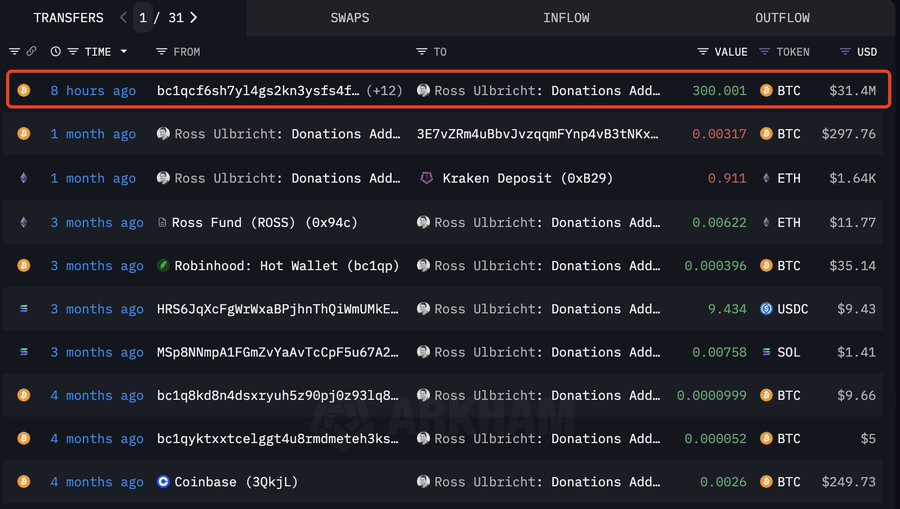
Ross Ulbricht, the founder of the Silk Road darknet marketplace, has received an anonymous donation of 300 Bitcoin, valued at approximately $31.4 million, sent to his official Bitcoin address. This substantial contribution follows his release from prison after a full pardon by former U.S. President Donald Trump in January 2025.

The donation was made to the Bitcoin address listed on freeross.org, a website dedicated to supporting Ulbricht. The identity of the donor remains unknown, and there has been no public acknowledgment from Ulbricht or his representatives regarding the transaction.

In addition to this significant donation, an auction of Ulbricht’s personal belongings has reportedly raised nearly $1.3 million in Bitcoin. The auction, organized to support Ulbricht’s reintegration into society, featured items such as personal writings, artwork, and other memorabilia.

Ulbricht’s financial situation has been a topic of interest since his release. Coinbase executive Conor Grogan identified approximately 430 BTC, worth around $47 million, in wallets associated with Ulbricht that had remained untouched for over 13 years. However, it remains unclear whether Ulbricht has access to the private keys required to control these funds.

The cryptocurrency community has shown considerable support for Ulbricht since his release. Crypto exchange Kraken donated $111,111 in Bitcoin to assist with his transition back into society. Additionally, various fundraising efforts, including merchandise sales, have contributed to a growing fund aimed at supporting Ulbricht’s post-incarceration life.

Ulbricht was arrested in 2013 and later sentenced to double life imprisonment plus 40 years without the possibility of parole for his role in operating the Silk Road marketplace. The platform facilitated the trade of illegal goods and services, primarily using Bitcoin for transactions. His sentence was commuted by President Trump, who cited support from the Libertarian movement and concerns over the severity of the punishment.

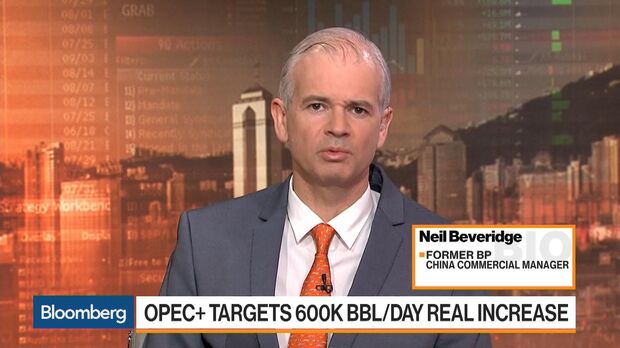
Prince Abdulaziz bin Salman’s tenure as Saudi Arabia’s energy minister has marked a decisive shift in OPEC+ dynamics, culminating in a significant production decision that underscores Riyadh’s growing influence within the cartel. The latest OPEC+ meeting saw Saudi Arabia successfully advocate for a third consecutive super-sized monthly output increase, a move that has reshaped the alliance’s approach to oil supply management despite opposition from key players such as Russia.

Since assuming office six years ago, Prince Abdulaziz has positioned Saudi Arabia as a firm leader within OPEC+, emphasising discipline and adherence to agreed production quotas. This approach contrasts with the historically more conciliatory stance the kingdom sometimes took within the cartel. The current strategy reflects a broader ambition to reclaim market share lost to non-compliant members and emerging producers outside the alliance’s remit.

The decision to boost output again—by approximately 500,000 barrels per day—signals a willingness to absorb short-term price volatility in favour of longer-term market dominance. Riyadh’s strategy appears geared towards punishing those within OPEC+ who have routinely exceeded their quotas, thereby undermining the cartel’s collective efforts to control supply and sustain prices. Saudi Arabia’s emphasis on stringent compliance aims to reinforce OPEC+ cohesion, even at the risk of dampening crude prices temporarily.

Russia’s resistance to the output increase highlighted fissures within OPEC+ as Moscow has consistently advocated a more cautious production approach, citing concerns over oversupply and the fragility of global demand recovery. Russia’s stance reflects a balancing act between maximising revenue and preserving the alliance’s unity. However, Saudi Arabia’s assertiveness in pushing the hike through demonstrates Riyadh’s readiness to leverage its dominant production capacity and market position to set the cartel’s agenda.

Global oil markets responded to the output hike by seeing a downward adjustment in prices, reflecting the increased supply entering the market. This shift contrasts with the supply restraint policies of previous years, which had been instrumental in stabilising prices amid fluctuating demand and geopolitical uncertainty. Market analysts note that the Saudi-led increase could signal a new phase in OPEC+ policy, one in which Riyadh is prioritising market share recovery over price support.

The broader context of this development involves multiple factors. The energy transition and climate policies worldwide have added pressure on oil producers, particularly those heavily reliant on hydrocarbons. Saudi Arabia’s move suggests a pragmatic response to these challenges, aiming to maximise current revenues while investing in diversification strategies such as renewable energy and petrochemicals.

The kingdom’s position as the de facto swing producer within OPEC+ gives it substantial leverage. Saudi Arabia can modulate output to influence global prices, a power that has been increasingly evident under Prince Abdulaziz’s stewardship. The kingdom’s vast spare capacity and low production costs enable it to sustain output increases that smaller or higher-cost producers cannot match.

The decision also reflects Saudi Arabia’s geopolitical considerations. Energy policy remains a critical tool of regional influence and international diplomacy. By asserting control over OPEC+ production decisions, Riyadh reinforces its leadership role not only within the cartel but also in broader energy markets, which remain pivotal to global economic stability.

The internal dynamics of OPEC+ have evolved since the alliance’s formation in 2016. Initially established to coordinate between OPEC members and major non-OPEC producers like Russia, the group has faced ongoing challenges balancing competing national interests. Saudi Arabia’s push for discipline and market share signals a new era where Riyadh asserts a more centralised command, even if that risks tensions with key allies.

The output increase also responds to market signals, including stronger oil demand forecasts and inventory levels that have stabilised. By expanding supply, Saudi Arabia aims to pre-empt supply shortages that could push prices beyond levels palatable to consuming nations and industries. This approach seeks to sustain demand growth by ensuring adequate supply and avoiding disruptive price spikes.

Critics argue that the output hike risks destabilising markets by flooding them with excess supply amid uncertainties in global economic growth, inflation, and energy transition timelines. They caution that prolonged lower prices could undermine investment in the oil sector, affecting long-term supply security. However, proponents view Saudi Arabia’s move as a necessary recalibration to reinforce market order and assert control over a fragmented supply landscape.

The ripple effects of the Saudi-led decision extend beyond OPEC+ members. Non-OPEC producers, including the United States shale industry, watch closely as changes in cartel policy impact global price signals and investment decisions. The output hike could influence the pace and scale of shale production, which remains a significant factor in global supply dynamics.

As the alliance navigates these complexities, Saudi Arabia’s approach under Prince Abdulaziz bin Salman sets a clear tone of leadership and strategic resolve. The kingdom’s readiness to push through output increases despite opposition illustrates its confidence in wielding its production capacity as a geopolitical and economic tool.

This assertive posture aligns with Saudi Arabia’s broader economic vision, including the ambitious Vision 2030 plan to diversify its economy and reduce dependence on oil revenues. Managing oil production to balance market share and price stability forms a critical part of this strategy, enabling the kingdom to finance diversification projects and maintain fiscal stability.


First Abu Dhabi Bank , the largest lender in the United Arab Emirates by assets, is set to raise approximately $480 million through a secondary share offering. The transaction involves the sale of around 113 million shares at a fixed price of 15.5 dirhams per share, representing a 3.7% discount to the bank’s closing price of 16.1 dirhams on the Abu Dhabi Securities Exchange. Citi, acting as the bookrunner, confirmed that the offering was fully subscribed, with demand surpassing the number of shares available.

The identity of the selling shareholder remains undisclosed. FAB’s largest stakeholder is Mubadala Investment Company, Abu Dhabi’s sovereign wealth fund, which manages assets exceeding $330 billion. As of the end of March, FAB reported total assets of 1.31 trillion dirhams, underscoring its dominant position in the region’s banking sector.

The oversubscription of the share sale indicates robust investor confidence in FAB’s financial health and strategic direction. The bank has been actively pursuing growth opportunities beyond the Gulf region. Two years ago, FAB explored a potential acquisition of London-listed Standard Chartered, signaling its ambition to expand its international footprint.

Under the leadership of Group CEO Hana Al Rostamani since 2021, FAB has undergone significant restructuring to enhance operational efficiency and shareholder returns. The bank reorganized its operations into four new divisions and appointed Linos Lekkas, a veteran from Citi, as the head of its investment banking division. This strategic realignment aims to strengthen FAB’s position in the Gulf and support its expansion plans.

FAB’s strong financial performance further bolsters investor sentiment. In the first quarter, the bank reported a 23% increase in net profit, driven by growth in non-interest income from fees and commissions. This performance exceeded analysts’ expectations and reflects the bank’s diversified revenue streams and effective cost management.

KUALA LUMPUR, MALAYSIA – Media OutReach Newswire – 2 June 2025 – June 2025 is shaping up to be one of the most eventful months of the year for global markets. For traders, this means opportunity—but also volatility. The economic calendar is packed with macroeconomic data releases and central bank meetings, while geopolitical risks remain close to the surface. Beyond the usual inflation prints and interest rate […]

WASHINGTON D.C, USA – Media OutReach Newswire – 1 June 2025 – Vietnam’s Minister of Agriculture and Environment Do Duc Duy plans to lead a delegation with nearly 50 agencies, agribusinesses and associations to explore opportunities to promote trade and import agrifood and timber from the United States during June 1-7, 2025. The delegation expects to participate in business dialogues in Iowa, Ohio, and Washington D.C. Vietnamese […]

MUNICH, GERMANY – Media OutReach Newswire – 1 June 2025 – The 2024/25 UEFA Champions League season reached its spectacular conclusion on 31 May at Munich Football Arena. As the Official Smartphone Product Partner of the prestigious competition for the third consecutive year, OPPO celebrated the event with a series of football-related CSR programs and cultural activations around the final as well as reaffirming its commitment to […]

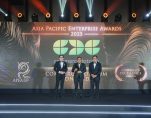
Commerce Dot Com Sdn Bhd honoured with Corporate Excellence Award at APEA 2025 for driving ethical, inclusive, and impactful digital transformation in Malaysia’s public procurement sector. PETALING JAYA, MALAYSIA – Media OutReach Newswire – 31 May 2025 – In an era where digital transformation often prioritises scale and speed, Commerce Dot Com Sdn. Bhd. (CDC) is proving that integrity, inclusion, and impact can and should guide innovation. […]

By K Raveendran Brent crude oil futures continue to hover around the $65 per barrel mark, a level that reflects the push and pull of market forces clouded by a cocktail of geopolitical tensions, environmental disruptions, and strategic production decisions. As prices hold steady, the broader sentiment among traders and analysts leans toward caution, with […]


KUALA LUMPUR, MALAYSIA – Media OutReach Newswire – 30 May 2025 – Traders and investors alike are unnerved by the recent turbulence in the bond markets. After Moody’s—a major rating agency—downgraded U.S. government debt on 16 May, and Japanese long-term bond yields soared to multi-decade highs, some market participants started to fear that the world may be on the verge of a major debt crisis. Meanwhile, the […]

A sweeping crackdown on international students under President Donald Trump’s administration has triggered a global realignment in higher education, as universities across Europe and Asia move swiftly to attract displaced talent and research funding. The United States, long considered the premier destination for international scholars, is witnessing a sharp decline in its appeal. A survey by the Keystone Education Group indicates that 42% of prospective international students […]

Huatai Securities has continuously expanded its international presence since its H-share listing a decade ago. Over the past ten years, Huatai Securities has facilitated nearly 600 domestic and international financing deals for enterprises globally, with a total fundraising volume of approximately USD 280 billion. HONG KONG SAR – Media OutReach Newswire – 30 May 2025 – As Huatai Securities approaches the 10th anniversary of its H-share listing, […]

By Nitya Chakraborty West Bengal Chief Minister and Trinamool Congress supremo Mamata Banerjee was right when she said on Thursday replying to the Prime Minister’s vicious attacks against her and her government that Narendra Modi was making use of the Operation Sindoor to achieve cheap political gains for the BJP in the coming assembly polls […]

AVIS sets a safety precedent, becoming Singapore’s sole car rental firm certified to ISO 45001, meeting global standards. SINGAPORE – Media OutReach Newswire – 30 May 2025 – AVIS Singapore is the only car rental company in the country to have achieved ISO 45001 certification in December 2024, an international standard equivalent to Singapore’s bizSAFE Star, demonstrating its commitment to the highest levels of occupational health and […]

HONG KONG SAR – Media OutReach Newswire – 30 May 2025 – The Chinese University of Hong Kong’s Faculty of Law (CUHK LAW) continues to strengthen its position as a leading international legal education institution, offering innovative programmes and conducting impactful research that shapes the future of legal practice across Asia and beyond. Distinguished Academic Excellence Since its establishment in 2004, CUHK LAW has emerged as a […]

OPEC and its allies, collectively known as OPEC+, have reaffirmed their existing oil production targets through 2026, opting to maintain current supply restraints despite ongoing market volatility and internal disagreements over future quotas.

During a virtual ministerial meeting on Wednesday, the 22-member alliance confirmed that the group-wide production cuts, initially set in 2022, will remain in place. These cuts include a 2 million barrels per day reduction agreed upon in November 2022, along with additional voluntary cuts totaling 3.85 million bpd by eight key producers—Saudi Arabia, Russia, the United Arab Emirates, Kuwait, Iraq, Algeria, Oman, and Kazakhstan. The voluntary cuts are structured in two layers: a 1.65 million bpd reduction extended through the end of 2026 and a 2.2 million bpd cut scheduled to expire in March 2025.

The alliance’s decision to uphold these targets comes amid a backdrop of fluctuating oil prices and concerns over global demand. Brent crude futures have hovered around $65 per barrel, a significant drop from earlier highs, influenced by factors such as increased production from non-OPEC countries and economic uncertainties stemming from global trade tensions.

A more contentious discussion is set to take place on Saturday, when the eight core OPEC+ members implementing voluntary cuts will convene to decide on July production levels. These countries have been gradually unwinding the 2.2 million bpd cut since April, with increases of 411,000 bpd implemented in both May and June. The group is expected to consider a similar hike for July, potentially accelerating the rollback of cuts and impacting global oil supply dynamics.

Over 100 AI+ Game Changers Share Cutting-Edge AI Trends—Register for Free to Unlock New Opportunities. HONG KONG SAR- Media OutReach Newswire – 29 May 2025 – Artificial Intelligence (AI) is the game-changing key! Presented by BUSINESS GOVirtual (BGOV), AI+ Power 2025, Hong Kong’s premier AI application exhibition, will take place on June 5-6, 2025, at the Hong Kong Convention and Exhibition Centre. Showcasing local and Greater Bay […]

VISHNU RAJA
RYO YAMADA
HITORI GOTOH
IKUYO KITA