News related to
Since

The Tor Project has marked a significant milestone in its multi-year effort to reengineer its core software by advancing Arti, the Rust-based implementation of the anonymity network, with the launch of version 1.8.0. The update introduces enhanced circuit isolation to reduce fingerprinting risks and new tools designed to streamline the migration of critical onion service keys from the legacy C codebase — part of a broader shift […]

Matein Khalid Oracle’s Q2 earnings vindicated my call to stay short Microsoft and SoftBank as public market proxies for OpenAI, whose $500 billion valuation should realistically be marked down by 50% to reflect current ground realities which will get much worse. I was aghast to see Oracle slump by another 11% on Nasdaq but not at all surprised when Microsoft shed $18 in last night’s session/after market. […]

OpenAI has appointed Denise Dresser, the chief executive of Slack, as its first-ever chief revenue officer, a decisive move aimed at accelerating the artificial intelligence giant’s commercial push and enterprise expansion. Dresser, a veteran of more than a decade at Salesforce and head of Slack since 2023, will oversee OpenAI’s global revenue strategy, encompassing enterprise sales and customer success as the company navigates mounting competition and seeks […]

Dubai once again became a hub for celebrating business excellence as industry leaders gathered at W Dubai – The Palm for the Entrepreneur Middle East Leadership Awards 2025. Among the standout honorees was Faruh Kurbanov, Co-Founder of DIA Holding, who received the Real Estate Leader of the Year award — a recognition of his growing influence on the region’s development landscape.  The annual awards highlight executives who […]

By Nitya Chakraborty For rich European nations, especially the troika Germany, France and Britain, the geopolitical situation that is unfolding in the year 2026 has enough elements of an existential crisis as a result of the announcement of the US policy on global security which marginalizes the role of European nations and NATO in the […]

The article Where Is Europe Placed In The Emerging Global Geopolitics? appeared first on Latest India news, analysis and reports on Newspack by India Press Agency).

CHONGQING, CHINA – Media OutReach Newswire – 10 December 2025 – China Changan Automobile Group today celebrated a historic achievement as its 30 millionth vehicle—an AVATR 12 Quad-Laser Edition—rolled off the line at the AVATR Digital Intelligence Factory. The milestone signals Changan’s evolution into a global intelligent mobility technology company. “Changan remains committed to delivering smarter, greener, and more fulfilling mobility, meeting the aspirations of global users […]

Lucid Group has inaugurated a new retail studio in Al Khobar on December 5, extending its operational footprint across the Kingdom by adding a facility in the Eastern Province. This marks Lucid’s third studio in Saudi Arabia, joining its existing sites in Riyadh and Jeddah — a move the company says reflects growing demand and commitment to the region.

The Al Khobar studio offers prospective customers the opportunity to view the company’s flagship models, including the Lucid Air sedan and Lucid Gravity SUV, alongside services such as product consultations, vehicle customisation and after-sales support.

According to the company’s Middle East president, the new facility brings Lucid closer to buyers in what is considered one of the Kingdom’s most affluent markets. Lucid described the Eastern Province as its third-largest market, underscoring the importance of establishing a direct presence there.

The expansion comes amid broader efforts by Lucid to localise electric vehicle production. Since 2023, the company has operated a manufacturing facility at King Abdullah Economic City, which began with semi-knocked down assembly of its vehicles and is being upgraded to full build capability. The factory is expected to reach a production capacity of up to 150,000 vehicles annually once completely operational.

This localisation aligns with Saudi Arabia’s drive to transform its economy under Vision 2030, by promoting advanced manufacturing, reducing reliance on oil, and supporting sustainable mobility. In January 2025, Lucid became the first global automaker to join the country’s “Made in Saudi” programme, reinforcing its long-term industrial and strategic role in the Kingdom.

Industry analysts highlight the creation of a nascent Saudi EV ecosystem, with Lucid among the pioneers shaping domestic market demands, infrastructure build-out and consumer adoption of electric vehicles.

Advertisements

Amazon has pledged to invest more than $35 billion in India by 2030, targeting a significant expansion of its technology, logistics, and export operations across the country. The announcement, delivered on 10 December at the Amazon Smbhav Summit in New Delhi, follows previous investments totalling about $40 billion since 2010 — including a $26 billion commitment in 2023.

The funding will be channelled along three strategic pillars identified by Amazon: AI-driven digitisation, export growth and job creation. The company intends to leverage artificial intelligence to reshape its marketplace operations and support small and medium-sized enterprises.

Amazon aims to boost cumulative exports from Indian sellers — which hit over $20 billion — to $80 billion by 2030. That step would represent a four-fold increase in volume while providing an impetus to local manufacturing, packaging, logistics and supply-chain networks.

As part of this push, the firm expects to generate at least 1 million new employment opportunities across direct, indirect and seasonal roles by the end of the decade. These would be distributed across technology, operations, logistics, fulfilment and customer support functions.

The announcement by Amazon aligns with similar large-scale commitments from other global tech players. A day earlier, Microsoft committed $17.5 billion for cloud and AI infrastructure in India, while Google has floated plans to inject about $15 billion over five years towards AI data-centre development in the country.

Amazon’s renewed commitment comes against a backdrop of intensifying competition in India’s e-commerce and delivery space. Firms such as Flipkart, along with app-based delivery services like Blinkit, Swiggy-led Instamart and Zepto, have rapidly expanded consumer-facing logistics, creating pressure on legacy players to scale up technological and operational capabilities.

According to a report by consultancy Keystone Strategy, Amazon’s past investments helped digitise over 12 million small businesses, enabled more than $20 billion in exports and supported around 2.8 million jobs as of 2024. The upcoming investment aims to deepen that impact by extending digital infrastructure, training, fulfilment and AI-powered tools to more businesses.

Figma chief executive Dylan Field admitted he struggled as a manager during the company’s formative years but has since used those shortcomings to forge a leadership style rooted in clarity, feedback and self-improvement — a transformation that comes at a critical time as the company navigates public markets, AI-led expansion and investor scrutiny. Field told the “First Time Founders” podcast that when he launched Figma with co-founder […]

Matein Khalid When the rats scramble to escape a sinking ship as hungry sharks circle the blood red water, the end is near. 100 insider Johnnies sold $6.5 billion in OpenAI shares in a recent employee tender. Why bailout now at $500 billion if OpenAI is a slam dunk for a trillion dollar IPO next year? Simp​le. The 100 newly minted decamillionaires know that OpenAI can no […]

Empowering Enterprises with AI-Driven, Built-In Security and Unmatched Flexibility HONG KONG SAR – Media OutReach Newswire – 10 December 2025 – As digitalization accelerates, Hong Kong enterprises of all sizes are confronting an increasingly challenging cyberattack landscape, where system vulnerabilities, phishing, and ransomware are becoming more prevalent, jeopardizing operational continuity and corporate cybersecurity. Addressing these challenges, HGC Global Communications (“HGC”), a fully-fledged ICT service provider and network […]

Shares of Twenty One Capital, the newly public Bitcoin-native company, plunged sharply as trading began on the New York Stock Exchange under ticker “XXI”. The decline, amounting to roughly 24-26%, underscores investor unease even as the firm debuts with substantial holdings — over 43,500 bitcoins, valued at nearly US$4 billion, making it one of the largest corporate Bitcoin treasuries globally.

The decline came just as the firm completed a merger with special-purpose acquisition company Cantor Equity Partners, a process that had secured shareholder approval earlier this month. The combined entity began trading today, marking the formal public debut of Twenty One Capital.

The backers behind Twenty One include stablecoin issuer Tether, trading platform Bitfinex, and investment-holding conglomerate SoftBank Group — with the SPAC sponsored by global financial firm Cantor Fitzgerald.

Leadership under co-founder and CEO Jack Mallers has portrayed Twenty One as more than a treasury — the firm aims to build Bitcoin-centric financial services, capital markets advisory, lending and education operations. The business model seeks to marry a large Bitcoin reserve with recurring-revenue operations, offering investors both exposure to crypto and conventional business growth potential.

Despite the ambitious roadmap and deep institutional backing, investor sentiment appears cautious. The dip in share price comes amid a broader downturn in cryptocurrency valuations; bitcoin itself has fallen more than 28% since hitting a peak in October. That decline has put pressure on companies with large digital-asset treasuries.

Market watchers note that the stumble highlights the risks inherent in combining a speculative asset like bitcoin with public equity. Treasury-centric crypto firms have gained attention in recent months for treating bitcoin as a corporate reserve asset — yet, as volatility returns, their valuations are bearing the brunt. Some analysts argue the drop may force such firms to rethink reliance solely on crypto-treasury value, especially if markets remain turbulent.

For now, Twenty One’s challenge is to reassure shareholders that the business side will grow fast enough to absorb volatility in bitcoin prices. Its future will depend on execution: whether it can build a sustainable loan, advisory or media business around Bitcoin — and whether that strategy can hold up even if crypto markets remain unpredictable.

Global corporate crypto holdings took a dramatic leap as Strategy disclosed acquiring 10,624 more bitcoins between 1 and 7 December 2025, at an average price of $90,615 per coin. That purchase—amounting to about $962.7 million—raises the firm’s total holdings to 660,624 BTC, equivalent to roughly 3 % of the entire Bitcoin supply. The acquisition was funded primarily through the company’s at-the-market equity programme. According to the company’s […]

By Satyaki Chakraborty After a gap of 80 years since the fall of fascism in 1945, Germany is once again agog with the militarization of the society in the name of fighting against the possible aggression by Russia. The ground has been laid by the continuing war in Ukraine. German Chancellor Merz along with other […]

The article German Coalition Led By Friedrich Merz Arouses War Mentality Once Again appeared first on Latest India news, analysis and reports on Newspack by India Press Agency).

Alpha Dhabi Holding moved to reassure investors with confirmation of a new three-year dividend framework and a parallel plan to repurchase a portion of its shares, signalling a strategic effort to sustain value creation across its portfolio. The Abu Dhabi-listed conglomerate said the policy is designed to provide predictable returns while supporting the group’s long-term expansion. The company said the proposed framework targets annual dividends of AED […]

Abu Dhabi has unveiled a $16.3 billion plan to expand Abu Dhabi Global Market ’s footprint on Al Maryah Island and its adjacent land, aiming to nearly double the availability of Grade-A office space while adding residential, retail and hospitality infrastructure. The expansion is being driven by a surge of international hedge funds and asset managers making fresh commitments to the emirate. Among the latest arrivals, Man […]

A dramatic shift in digital asset markets unfolded as one of the year’s fastest-rising crypto trades, which surged more than 2,600% at its peak, unravelled with an 86% wipeout, shaking confidence across a sector already grappling with volatility, liquidity strains, and shifting regulatory expectations. The abrupt reversal, mirrored in the steep fall of smaller token clusters linked to speculative momentum strategies, highlighted how rapidly sentiment can turn in an ecosystem vulnerable to leverage-driven cycles.

Market data from major exchanges showed that the trade, centred on a group of micro-capitalisation tokens propelled by algorithmic buying, began losing momentum after a wave of profit-taking by early entrants. Traders close to proprietary desks reported that liquidation cascades—triggered as automated systems unwound positions—accelerated the decline. The severe downturn echoed patterns seen during previous speculative surges, where liquidity gaps magnified losses within hours.

Analysts tracking blockchain activity noted that the rally’s ascent had attracted retail inflows, partly due to social-media-driven narratives framing the tokens as high-growth opportunities. As prices climbed, leverage amplified exposure, drawing in traders seeking outsized returns. Once selling pressure gained traction, that leverage turned into a critical vulnerability, forcing positions to unwind just as liquidity thinned. Several independent market researchers observed that the velocity of the downturn suggested a structural fragility, rather than a simple correction.

The collapse also revived discussion about the role of automated strategies in amplifying market instability. Many of the instruments involved were linked to quant-driven flows, where bots responded to volatility triggers rather than underlying fundamentals. As one portfolio strategist explained, these systems can cause price swings that move far beyond what traditional finance would consider tolerable, adding that crypto lacks the circuit-breaker mechanisms that help stabilise other asset classes. This dynamic, according to several fund managers, remains one of the most persistent challenges for institutions considering deeper exposure to decentralised markets.

Regulatory uncertainty added to the unease. Authorities in key jurisdictions have been scrutinising high-risk digital asset structures, and policymakers have signalled the possibility of tighter oversight for tokens driven by momentum rather than intrinsic value. Market observers said that while there is no direct link between regulatory commentary and the downturn, the broader environment has weighed on risk appetite. Investor caution intensified as questions resurfaced about transparency in the trading strategies behind the surge.

The downturn also exposed liquidity fragmentation across exchanges. Some platforms reported delays in order execution as volumes spiked, and spreads widened sharply during peak selling. Professional traders said this fragmentation remains a major impediment to maturing the sector, as it complicates price discovery and heightens vulnerability to abrupt swings. Several firms specialising in market-making suggested that the episode would likely prompt renewed calls for better liquidity management frameworks within decentralised ecosystems.

Amid the turmoil, major digital assets such as Bitcoin and Ether showed relative resilience, though both experienced elevated intraday volatility. Their ability to avoid the extreme swings seen in smaller tokens prompted commentary that the market may be entering a phase where speculative micro-caps detach from more established assets. Still, derivatives positions linked to broader sentiment recorded notable adjustments, indicating that traders remain sensitive to signs of systemic stress.

Industry insiders highlighted that the steep crash follows a pattern of momentum-driven phases that have punctuated crypto cycles since the first wave of retail adoption. A veteran analyst noted that while earlier episodes centred on initial coin offerings or meme-driven tokens, the current one underscores how algorithmic and social-media amplification have merged, producing sharper and faster boom-and-bust phases. The analyst added that such swings complicate long-term valuation models, as fundamental metrics often become secondary to speculative flows.

Venture-backed projects tied to the affected tokens faced heightened scrutiny as investors assessed whether the price collapse would impair broader ecosystem development. Some founders sought to reassure stakeholders by highlighting active user bases and ongoing technical upgrades, although several funds acknowledged that valuation resets were unavoidable. Market participants stressed that while token prices do not always reflect underlying project viability, extreme volatility can hinder funding conversations and stall adoption.

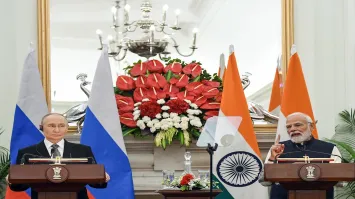
By Nitya Chakraborty The India-Russia joint statement issued on December 5 after two days of talks between President Vladimir Putin and the Indian Prime Minister Narendra Modi is more a vindication of India’s renewed exercise of its geopolitical status defying the pressure from the USA and the other western powers rather than a document on […]

The article Modi-Putin Summit Reinforces India’s Geopolitical Identity Amidst Headwinds appeared first on Latest India news, analysis and reports on Newspack by India Press Agency).

Gulf Cooperation Council sovereigns and corporates issued a record-breaking $226 billion in debt by November 11, 2025 — the highest single-year total this decade — boosted by surging investor demand and tight spreads across the region.

Issuance of bonds and sukuk vastly outpaced equity capital-market activity, which saw the weakest IPO fundraising since 2020.

Regional governments and major companies returned to debt markets, capitalising on favourable financing conditions. Notable sovereign issuance came from all six GCC states — Saudi Arabia, United Arab Emirates, Kuwait, Qatar, Bahrain and Oman. Corporations also joined, including heavyweight names such as Saudi Aramco and Abu Dhabi National Oil Company.

The rebound in debt issuance reflects a shift in financing strategies. Many issuers had stayed out of markets earlier this year, waiting for better conditions. As spreads tightened sharply, they re-entered. As HSBC’s head of MENA debt capital markets, Nour Safa, put it: the tightening spreads “convinced them to return to the market.”

By the third quarter of 2025, total outstanding debt on GCC debt capital markets reached $1.1 trillion — a 12.7 per cent increase year-on-year. Sukuk issuances led the growth, rising nearly 22 per cent and now accounting for more than 40 per cent of overall debt issuance volume.

The strength emanates largely from the two biggest markets: Saudi Arabia and the UAE. As per recent analysis, these two nations comprise 46 per cent and 30 per cent respectively of total outstanding GCC debt.

Meanwhile, IPO funding has stalled. Across the GCC, 2025 saw a dramatic slump in equity issuance: a total of only 40 IPOs raised about $5.8 billion, down markedly from 2024’s 52 listings which raised $12.9 billion — the lowest fundraising level since 2020.

In the first half of 2025, IPO activity had shown modest resilience: 27 listings raised $4.10 billion, up from $3.57 billion a year earlier. But the second half slowdown reversed much of that progress.

Analysts say the divergence between bond and equity markets has several drivers. Doubts over global macroeconomic stability and trade-policy uncertainty have suppressed investor appetite for riskier equity. At the same time, Gulf issuers found debt markets more attractive: high-quality issuers, deep dollar-denominated bond markets, and relatively higher yields compared with many emerging-market alternatives.

Banks across the region added to the surge: by mid-2025 they had issued over $60 billion of debt — surpassing 2024 levels — much of it Tier-2 or hybrid debt aimed at bolstering capital under evolving regulations and funding growth tied to national development plans.

Chairman Mr. Francis Lui Urges Public to Turn Compassion into Action and Vote 7 December HONG KONG SAR – Media OutReach Newswire – 6 December 2025 – K. Wah Group (“the Group”) continues to stand in solidarity with the Tai Po community in the aftermath of the recent fire, offering timely support to affected residents and post-disaster recovery efforts. Following an earlier donation of HK$10 million from […]

By T N Ashok NEW DELHI: Russian President Vladimir Putin arrived in India Thursday evening for a two-day state visit that has become a diplomatic flashpoint, testing New Delhi’s ability to maintain strategic independence amid mounting pressure from Washington and European capitals. The arrival marks Putin’s first trip to India since the Ukraine war began […]

The article Putin’s India Visit: A Stress Test Of Strategic Autonomy Amid Global Pressure appeared first on Latest India news, analysis and reports on Newspack by India Press Agency).

Crowds and cameras gathered at the Delhi airport as Vladimir Putin stepped off his aircraft and was received by Narendra Modi with a firm embrace that signalled the weight both leaders attach to a relationship tested by shifting global alignments. The state visit, framed by Moscow and New Delhi as an effort to reinforce political and economic cooperation, comes at a moment when both sides are seeking predictable partners amid geopolitical uncertainty.

Putin’s arrival on Thursday marked his first trip to the country in more than a year, timed to draw attention to long-standing strategic ties that have endured pressure from global sanctions on Russia and growing competition among major powers for influence in Asia. Modi’s greeting, captured widely by broadcasters, highlighted the government’s intention to maintain a working partnership with Moscow even as it deepens cooperation with Western governments on defence, technology and energy.

The two leaders are expected to focus on trade flows, defence equipment support, energy security arrangements and joint manufacturing proposals that have gained momentum since early 2024. Officials familiar with the agenda have pointed to Moscow’s push for expanded settlements in national currencies, aiming to mitigate complications arising from sanctions that have disrupted traditional payment channels. New Delhi has been looking for greater clarity on oil supply commitments, pricing transparency and long-term contracts, following fluctuations in global markets that prompted domestic refiners to diversify purchases.

Defence cooperation remains central to the partnership, though the balance has shifted over the past decade as New Delhi has widened procurement from the United States, France and other suppliers. Russia continues to service and upgrade a significant share of the armed forces’ equipment, and ongoing discussions cover spare-parts support, maintenance of legacy systems and joint development pathways that may offer greater flexibility than standalone purchases. Analysts tracking the talks say Moscow is keen to retain its foothold in the defence market while showcasing its willingness to adapt to collaborative production models.

Energy will feature prominently during the discussions as Russia seeks greater investment in its upstream projects and hopes to secure broader participation from New Delhi in pipeline and liquefied natural gas initiatives. Indian refiners have emerged as important buyers of Russian crude despite logistical and payment challenges, and both sides are expected to address delivery mechanisms that would reduce delays and improve predictability. Officials have also been reviewing possibilities for expanding cooperation in nuclear energy, where previous agreements have laid the groundwork for additional reactor units at existing sites.

Bilateral trade has risen sharply over the past two years, driven largely by energy imports, but New Delhi has expressed concerns about the wide imbalance, with exports to Russia trailing significantly. Commerce officials have been pushing for easier access for pharmaceuticals, agricultural goods and engineering products, arguing that a more balanced structure would strengthen the sustainability of the economic relationship. Russian representatives arriving with the delegation have proposed expanded use of logistics corridors passing through Central Asia, which they say would ease transport costs for exporters on both sides.

Regional security dynamics form another layer of the discussions, particularly Moscow’s role in Eurasia and its ties with Beijing. Diplomats note that New Delhi continues to walk a delicate line, maintaining cooperation with Russia while strengthening its partnerships across the Indo-Pacific. Strategic analysts caution that both sides must navigate sensitive points, including Moscow’s position on territorial disputes and broader alignments that could shape regional balances over the coming decade.

Putin’s schedule includes a ceremonial welcome, delegation-level talks and a review of key agreements under negotiation. Officials have indicated that deliverables may include frameworks on energy cooperation, updated defence industrial collaboration and initiatives supporting educational exchanges and technological research. Cultural diplomacy also features prominently, with both governments emphasising people-to-people connections that have historically underpinned the relationship.

The optics of the visit carry domestic significance for both leaders. Modi’s government seeks to project continuity in foreign policy through engagement with all major powers, underscoring its commitment to strategic autonomy. For Putin, the reception in New Delhi offers an opportunity to demonstrate that Russia retains influential partners beyond Europe and North America, reinforcing narratives about its engagement with Asia’s leading economies.

Analysts observing the visit note that the personal rapport between the two leaders has helped maintain channels of communication through periods of global stress. Their discussions routinely touch on multi-year strategic frameworks covering defence, energy, industrial cooperation and regional diplomacy, areas where incremental progress continues despite broader geopolitical complications.


Rwanga Foundation extends rural electrification effort as survivors call for long-term support A Kurdish village attacked with chemical weapons in 1987 now has a continuous electricity supply after a new solar project funded by the Rwanga Foundation began operating this month. Sheikh Wasan, where 211 residents were killed in the attack carried out by Iraqi forces during the Anfal campaign, has received 72 solar systems containing 432 […]

Russia has blocked access to Apple’s FaceTime and messaging service Snapchat, escalating a sweeping campaign to curb foreign communication platforms across the country. The decision by the state regulator Roskomnadzor marks a significant shift from throttling public social media sites to restricting private and encrypted communication tools. Roskomnadzor said the two services were being used “to organise and carry out terrorist acts within the country” and for […]

VISHNU RAJA
RYO YAMADA
HITORI GOTOH
IKUYO KITA