News related to
Since

Bilateral non-oil trade between the UAE and India surged past US $37.6 billion in the first half of 2025, marking a 33.9 per cent increase compared with the same period in the previous year. The UAE’s Foreign Trade Minister, Dr Thani bin Ahmed Al Zeyoudi, highlighted during his Mumbai visit the pivotal role of the Comprehensive Economic Partnership Agreement in propelling this growth. Discussions focused on expanding cooperation across pharmaceuticals, food and logistics, alongside Bharat Mart, a 2.7 million sq ft trade complex in Jebel Ali Free Zone designed for Indian exporters to reach markets across the Middle East, Africa and Europe.

Trade figures underscore that CEPA has significantly deepened economic ties. In 2024, non-oil trade between the two nations topped US $65 billion, reflecting a 19.7 per cent increase from 2023 and more than doubling the 2020 tally of US $27.9 billion. UAE investments in India reached around US $17 billion by late 2023, while Indian investments in the UAE climbed to approximately US $8 billion—total mutual investment topping US $25 billion, with the UAE accounting for 70 per cent of that figure.

This dynamic was further backed by the UAE-India CEPA Council’s Start-up Series, which has drawn more than 10,000 applications from Indian entrepreneurs since its launch in June 2025. The initiative, showcased in New Delhi by Ahmed Aljneibi, has made stops at leading institutions including Banaras Hindu University and the Master’s Union School of Business, offering mentorship, regulatory guidance and pathways for cross-border scale-up.

The strategic focus on innovation also extends beyond startups. Sheraa, Sharjah’s entrepreneurship centre, and Startup Middle East signed a memorandum to establish an India Startup Hub in Sharjah, aimed at facilitating the entry of Indian ventures into the UAE market and strengthening regional innovation ecosystems.

Policy measures in the UAE are evolving to match this economic outreach. Amendments to more than 40 laws, most notably the Commercial Companies Law enabling 100 per cent foreign ownership, are part of a broader strategy to double the non-oil economy—from US $381 billion to US $762 billion—by 2030. Foreign trade is viewed as central to achieving that ambition, with the UAE’s connectivity, infrastructure and logistics network seen as vital assets for Indian businesses seeking wider regional access.

CEPA’s architecture underscores its comprehensive approach: since its implementation in May 2022, tariffs on more than 80 per cent of Indian exports to the UAE have been reduced or eliminated immediately, benefiting sectors from gems and jewellery to pharmaceuticals and automobiles. Additional gains accrue from streamlined customs protocols, regulatory harmonisation and a joint committee addressing market-access and technical barriers.

Experts point to CEPA as transformative for both economies. Indian gems and jewellery exports more than doubled from US $4.9 billion to US $8 billion in fiscal year 2024, aided by duty removals. Labour-intensive industries such as textiles, leather, footwear, sports goods, plastics, furniture, engineering goods, agricultural produce and food items have also gained momentum, while regulatory alignment has accelerated entry of generic drugs and medical devices, boosting health-sector cooperation and supply-chain resilience.

Further integration is visible in emerging fintech and logistics initiatives. Bharat Mart reinforces logistical synergy, while the nascent Virtual Trade Corridor, fintech sandboxes and experiments such as India’s MagRail pilot demonstrate growing interoperability in digital trade and compliance systems.

At the political level, the CEPA enters its third year this February. Al Zeyoudi noted that India remains the UAE’s second-largest non-oil export destination, accounting for 13.5 per cent of total non-oil exports in 2024—a 75.2 per cent rise year-on-year. Conversely, the UAE is India’s third-largest trading partner and a major investor, illustrating the strategic depth CEPA has added to bilateral ties.

Nigeria’s energy shortfall continues to constrict economic potential, affecting millions of homes and businesses, prompting a call from Ronald Adams—Chairman of the off‑grid impact fund All On and Managing Director of Shell Nigeria Exploration and Production Company —for substantial private investment to close the gap. Addressing business leaders at the Lagos Chamber of Commerce and Industry’s 2025 International Business Conference & Expo, Adams highlighted that over 80 million Nigerians lack […]

Fenerbahce have parted ways with José Mourinho, bringing to an end his tenure as head coach of the Turkish giants just two days after the team failed to advance past Benfica in the Champions League play‑off. The club confirmed the decision, describing it as mutual, and extended their appreciation for his contributions to the first team since the 2024–25 season. Mourinho’s dismissal underscores the significance Fenerbahce placed […]

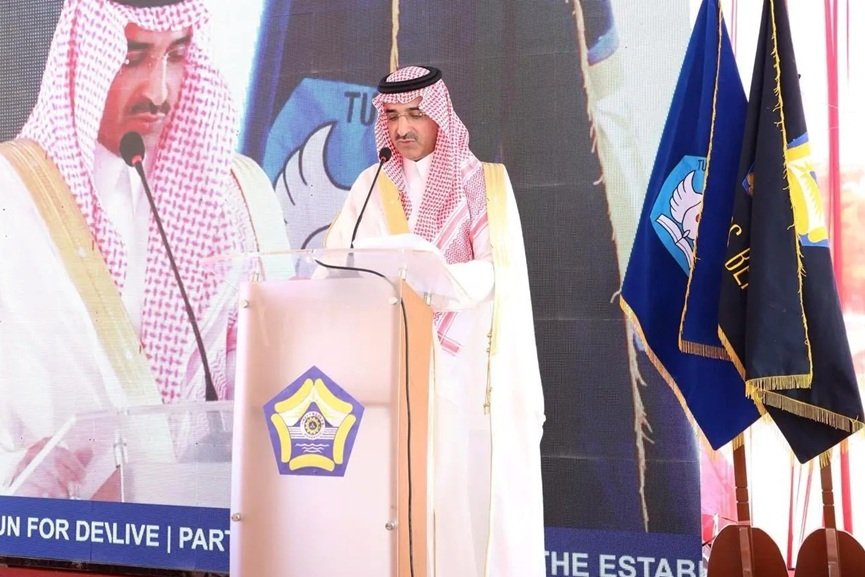
A new teaching and research hospital at the University of Bengkulu opened its doors this week, backed by a $22 million concessional loan from the Saudi Fund for Development. The facility is expected to bolster healthcare delivery and medical training in the region, reinforcing nearly five decades of strategic collaboration between SFD and Indonesia.

Sultan bin Abdulrahman Al-Marshad, Chief Executive Officer of SFD, presided over the inauguration on Friday, joined by Dr Retno Agustina Ekaputri, Rector of the University of Bengkulu, and Ir H Mian, Vice-Governor of Bengkulu Province. The hospital promises expanded healthcare access for local communities while serving as an academic hub for medical students and professionals.

At the ceremony, Al-Marshad emphasised that the facility represents “an important milestone in strengthening healthcare services for the people of Bengkulu and beyond,” highlighting the nearly 49-year trajectory of cooperation between SFD and Indonesia and affirming their mutual commitment to advancing the Sustainable Development Goals.

Functioning as both a medical facility and a teaching and research institution, the hospital is poised to enhance the region’s health system resilience, improve community health outcomes, and deliver hands-on training for new generations of medical staff.

Since its initial engagement in Indonesia in 1976, SFD has financed 12 development projects through over $396 million in loans, spanning healthcare, education, infrastructure and other vital sectors.

These initiatives illustrate a model of long-term development partnerships, tailored to local priorities while reinforcing broader global development objectives.

Al-Marshad’s visit also recalls a prior milestone when he laid the foundation stone for the hospital as part of a cluster of projects, including educational campuses in Jakarta and East Java, during his 2022 trip—an early indicator of the project’s eventual realisation. That plan had projected serving over 328,000 beneficiaries annually across Indonesia.

WhatsApp has rolled out an urgent update for its iOS and macOS apps after detecting a zero‑click exploit—one that required no user interaction—to deliver spyware to a small number of targeted users. The vulnerability allowed attackers to bypass authorisation checks when processing linked-device synchronization messages—specifically in WhatsApp for iOS before version 2.25.21.73, WhatsApp Business for iOS before version 2.25.21.78, and WhatsApp for Mac before version 2.25.21.78. This flaw was chained […]

By Nitya Chakraborty The tariff war declared by the United States President Donald Trump against India by imposing a total duty of 50 per cent on Indian exports to the USA effective August 27 this year, is having its impact on the economic relations between the two powerful economies of Asia , China and India. […]

Greenlogue/AP Veolia has moved to acquire the remaining 30 per cent stake in its Water Technologies and Solutions subsidiary from CDPQ, in a deal valued at around US$1.75 billion, positioning the company for greater strategic agility and cost-efficiency. The transaction is expected to bring about €90 million in run‑rate cost synergies by 2027, simplification of the group’s structure, and added value through streamlined decision‑making and integration. The move forms […]

Advertisements

The Amadea, a striking 106‑metre superyacht once valued at around $325 million, is slated for a sealed‑bid auction in the United States on 10 September 2025, yet mounting litigation and financial burdens cloud its prospects. Built by renowned German shipyard Lürssen and completed in 2017, the six‑deck vessel offers unparalleled opulence: spa, gym, helipad, swimming pool, cinema and marble‑clad interiors by François Zuretti, plus accommodation for 16 guests […]

South African President Cyril Ramaphosa unveiled a G20 taskforce led by Nobel Prize‑winning economist Joseph Stiglitz, aimed at scrutinising global wealth inequality and its consequences for economic growth, poverty and cooperation among nations. This pioneering effort marks the first time the G20 has deployed such a specialised group of independent experts, with findings due to be presented at the Johannesburg summit in November 2025. The six‑member panel […]

DocumentDB is now officially hosted by the Linux Foundation, transitioning to a vendor-neutral model that promises to shape the future of document-based NoSQL technologies. Microsoft‑developed and built on PostgreSQL, the database has garnered substantial interest, earning nearly 2,000 GitHub stars and drawing contributions from a broad developer community since its debut in early 2025. The Linux Foundation’s governance will secure open‑source stewardship and foster collaboration across the […]

Global logistics investor GLP will receive up to $1.5 billion from a wholly owned subsidiary of the Abu Dhabi Investment Authority, signalling the sovereign wealth fund’s first move from limited partner to direct stakeholder in the firm. The initial capital deployment of $500 million is earmarked for expanding GLP’s operations in logistics, digital infrastructure, and renewable energy, with further investment to follow in coming months.

The capital infusion aligns with growing global demand across sectors driven by e‑commerce growth, artificial intelligence and cloud adoption, and the green energy transition. GLP’s data‑centre division is notably thriving: its annual revenue surged 43 percent year‑on‑year to US $193 million.

GLP oversees approximately US $80 billion in assets through its management arm, GLP Capital Partners. This move marks a strategic shift for ADIA—long an investor in GLP’s funds—into becoming a direct shareholder in the global investment group.

In a statement, GLP co‑founder and chief executive Ming Z Mei emphasised that the enhanced capital base and strategic partnership will enable the company to “accelerate growth” and capitalise on the “secular expansion of new economy sectors in which we operate.” Mohamed Al Qubaisi, executive director of ADIA’s real estate department, noted that the transaction deepens their longstanding relationship with GLP and supports its next growth phase while scaling exposure to new economy segments.

The investment supports GLP’s diversified global platform. The firm has operations across Brazil, China, Europe, India, Japan, the US, and Vietnam, spanning logistics real estate, data centres and renewables. Moreover, the investments come amid escalating interest in digital infrastructure, particularly data centres, which are seen as pivotal to AI and cloud services growth.

GLP’s momentum is further underlined by recent capital inflows from regional partners. In China, the company secured 2.5 billion yuan from Zhejiang government‑backed investors to boost its data‑centre operations. Earlier in the year, GLP completed the sale of its ex‑China funds management business to Ares Management for US $3.7 billion, in a deal partly financed with cash and equity. The company also retains stakes in those funds and has backed Ares’s first Japanese data‑centre fund, which completed a US $2.4 billion final closing in June.

GLP’s evolution over the past decade provides further context for this development. Founded in 2009 by Ming Z Mei and Jeffrey H Schwartz, the firm originated as Global Logistic Properties. It went public in 2010 in what was at the time Singapore’s largest IPO. It was taken private in 2018, following a leveraged buyout led by a private‑equity consortium. The company has since transformed into a multi‑sector platform across logistics, digital infrastructure and renewable energy.

On the other side, ADIA stands as one of the world’s largest sovereign wealth funds, managing a diversified global portfolio across asset classes including real estate, private equity and data‑centre platforms. This leap into a direct stake in GLP underscores the fund’s strategy of pursuing active positions in entities driving structural sectoral growth.

By T N Ashok NEW YORK: Trump’s 50% tariffs on Indian exports took effect from Wednesday as there has been no resolution to the dispute over Russian oil buys in by India. In a move that has stunned global markets and rattled one of America’s most strategically important partnerships, President Donald Trump on Wednesday imposed […]


Dubai’s population has exceeded four million residents in 2025, marking one of its most rapid growth phases. Analysts from DXBinteract report that over the past year, the city welcomed more than 231,000 new residents—achieving a 6.13 per cent increase—underscoring the emirate’s position among the globe’s fastest-expanding urban centres.

The city’s demographic growth trajectory reflects a profound transformation. In 2008 Dubai was home to some 1.6 million people; today that figure has surged to over four million. This expansion has occurred alongside a widening appeal as a global hub for commerce, real estate investment and multicultural living.

The implications for infrastructure and property markets are immediate. DXBinteract data indicates that Dubai now hosts more than 2,000 developers, nearly 29,400 real estate agents and close to 8,800 brokerages—highlighting a highly competitive market environment. AI-backed forecasts anticipate the emirate’s population reaching five million by 2029–2030, a scenario that would require construction of at least 300,000 additional housing units.

Key factors behind the demographic surge include robust economic diversification, progressive residency policies and enhanced global connectivity. Visa reforms such as the Golden Visa, the allowance of 100 per cent foreign ownership in designated zones, and development of specialized free zones are drawing entrepreneurs, professionals, and high-net-worth individuals to the city.

Natural population growth also plays a role, coupled with sustained net migration. DXBinteract notes that over the span of 14 years—from 2011 to today—Dubai’s population has effectively doubled, moving from around 1.93 million to more than four million inhabitants.

Parallel figures from Gulf News further underpin this narrative: by 25 August, the population stood at an estimated 3,999,247, reflecting an increase of 3.5 per cent—or over 134,000 people—since the beginning of the year. Local citizens’ numbers also rose, reaching nearly 300,000 Emiratis, the highest local population recorded to date.

These demographic patterns are stretching the city’s infrastructure. Housing markets are responding with rapid development across residential zones—both to meet rental demand and home-purchase interest. Expanded transport networks, public services and retail facilities are also under strain.

Looking ahead, AI-driven projections suggest a growth-to-consolidation shift rather than unchecked expansion. Larger real estate firms and tech-oriented platforms are expected to gain greater market share in response to evolving supply dynamics.

Dubai’s expanding population deepens its role on the global stage as a crossover centre for trade, tourism and investment. But with accelerated urban growth comes a renewed emphasis on sustainability, quality of life and long-term planning to ensure that infrastructure and housing keep pace with demographic ambitions.

Baby Boomers wish they started planning 12 years earlier SINGAPORE – Media OutReach Newswire – 28 August 2025 – As Singapore celebrates 60 years of independence, Gen Zs (aged 16-28) are optimistic about their financial future in the next 60 years ahead. Half (51 per cent) of them are confident they will be able to retire well and pay for their daily necessities, healthcare and other expenses. […]

HONG KONG SAR / SINGAPORE – Media OutReach Newswire – 28 August 2025 – Regent Hong Kong has been crowned the Best Hotel in Hong Kong 2025, earning the prestigious Best Brand Hotel title at this year’s Virtuoso Travel Week in Las Vegas. This global recognition by Virtuoso’s network of elite travel agencies, advisors, and partners underscores Regent’s reputation for unparalleled service, refined design, and a timeless […]

Berkshire Hathaway’s National Indemnity Company has lifted its stake in Mitsubishi Corporation to 10.23 %, up from 9.74 % earlier, signalling a reinforced commitment to Japan’s leading trading house. The investment follows similar moves in March across other sogo shosha, including Mitsui & Co.

The decision reflects Warren Buffett’s enduring confidence in Japanese megatraders, whose disciplined capital allocation, governance reforms, and investor-friendly policies align strongly with Berkshire’s investment philosophy. As Buffett admired in his annual letters, these firms’ governance improvements, such as stronger board oversight and enhanced transparency, have elevated their attractiveness globally.

Markets responded with optimism. Mitsubishi shares advanced approximately 1.8 %, while Mitsui and its peers—including Sumitomo, Itochu, and Marubeni—also rose, lifting the Nikkei 225. Notably, Berkshire’s growing yen‑denominated dividend income, estimated at $812 million, substantially exceeds its $135 million in interest costs—from its debt exposure—further underscoring the financial logic behind the move.

Buffett first entered these companies around 2019, building stakes across five major trading houses. At that time, the positions were modest—roughly 5 % each—and have been gradually expanded as corporate reform deepened. Last year, ownership in these firms reached as high as 9.8 %. At the annual shareholder meeting in Omaha, Buffett stressed his intention to hold these stakes “for many decades,” a sentiment shared by vice‑chairman Greg Abel.

Several strategic and structural factors underpin this move. Japanese trading houses are diversifying rapidly—expanding into renewable energy, logistics, tech, and sustainable infrastructure—which offers resilience against inflation and trade volatility. Their shareholder returns via dividends and share buybacks, combined with conservative executive pay, align with Berkshire’s preference for capital‑efficient businesses.

Buffett’s growing exposure coincides with Japan’s corporate governance revolution. Since former Prime Minister Abe’s reforms and the stewardship code, sogo shosha have improved transparency, board independence, and capital discipline—making them far more attractive to foreign investors.

Berkshire’s strategic calculation is also macro‑driven. In a year when the iShares MSCI Japan ETF has gained around 17 %, outperforming the S&P 500, the broader market trend reinforces the allure of Japanese equities.

McLaren Racing has confirmed that Mastercard will assume the role of Official Naming Partner of its Formula 1 team from the 2026 season, transforming the outfit’s identity to the McLaren Mastercard Formula 1 Team.

The agreement introduces Team Priceless, a global initiative designed to place fans at the heart of the action. Selected supporters will have exclusive access to distinctive behind-the-scenes experiences—from hot laps to meet‑and‑greets with drivers, alongside immersive cultural highlights during race weekends.

McLaren CEO Zak Brown expressed enthusiasm for the elevated partnership, reaffirming the commitment to prioritise the fan community—referred to affectionately as the “Papaya Family”—and deliver memorable shared experiences. Raja Rajamannar, Mastercard’s Chief Marketing and Communications Officer, echoed this alignment, noting that the collaboration reflects shared values of innovation, precision and performance.

This naming deal, reportedly valued at USD 100 million per season, represents the most lucrative in McLaren’s history and marks the team’s first title sponsorship since the Vodafone era ended in 2013.

For launch activities, Mastercard hosted a live fan event in Amsterdam on 27 August, ahead of the Dutch Grand Prix. The gathering featured appearances from drivers Lando Norris and Oscar Piastri, along with live music and interactive activations.

The deal positions McLaren at the centre of Formula 1’s expanding commercial landscape where finance and technology brands increasingly seek title sponsorships to amplify global brand visibility. Comparable moves include Oracle’s agreement with Red Bull and Haas’s partnership with MoneyGram—spotlighting the intensifying competition for branding prominence on the Grid.

Mastercard’s heightened involvement underlines an experiential marketing push that uses Team Priceless not just as an ambassadorial gesture, but as an integrated platform for fan engagement. It mirrors broader trends in sport where such partnerships emphasize interactive outreach to build loyalty and market share.

The timing dovetails with the introduction of sweeping technical rule changes in 2026, a pivotal shift anticipated to reshuffle the competitive rankings. McLaren will enter that season with a refreshed brand presence and a fortified commercial foundation.

With Mercedes power units already secured through 2030, the team now bolsters its off‑track stability via strategic sponsorships. Alongside longstanding partners—such as Google and Gulf Oil—this naming partnership with Mastercard elevates McLaren’s alignment at the intersection of technology, performance and global outreach.

As Formula 1 gears up for its next era, McLaren and Mastercard’s collaboration signals a convergence of high-performance sport and immersive brand storytelling, aiming to redefine how fans engage with the team throughout the season.

Bitcoin remains anchored just above the $113,000 mark and Ethereum hovers near $4,600, as markets digest fresh signals from the Federal Reserve and institutional interest.

Bitcoin has regained footing near $113,000 following a textbook flash crash over the weekend triggered by a whale’s sell‑off of 24,000 BTC, which sparked over $800 million in forced liquidations across crypto markets. Market behaviour since suggests cautious optimism, with support holding firm at around $110,000—analysts now eye this level as a critical foundation for recovery.

On chart terms, traders are watching a breakout above the $115,000 resistance zone. A sustained move beyond $115K could see Bitcoin rally toward $120,000, buoyed by renewed ETF inflows and reduced leverage. Conversely, failure to hold above $110,000 risks a slide toward $108,000 or even $105,000.

Ethereum stands out, gaining about 4 % to trade at approximately $4,589—just shy of its all‑time high—on robust demand and ETF inflows. Meanwhile, the broader crypto market cap has rebounded, edging closer to the $4 trillion mark as 90 of the top 100 coins turn green.

Federal Reserve developments continue to underpin sentiment. A dovish tone from Federal Reserve Chair Jerome Powell at the Jackson Hole symposium earlier this week spurred a surge, lifting Bitcoin to over $124,000—even as markets reeled from that upward spike and a swift correction. Powell’s comment that rate cuts could be on the table by next month reignited risk appetite, adding tailwind to cryptocurrencies and related equity names.

Amid the tumult, technical indicators signal mixed outlooks. Bitcoin’s MACD remains below neutral—suggesting recovery would require improving sentiment —while certain charts hint at a potential bull trap, as the latest price peak was not confirmed by a rise in RSI, pointing to possible fading buying momentum.

Institutional engagement stays strong, underlined by steady ETF inflows. On a single day, Bitcoin and Ethereum ETFs recorded inflows of $88.2 million and $455 million respectively—action that reinforces the plausibility of a rally toward $120,000 should momentum endure.

However, geopolitical and policy risks are never far off. Pressure on the Federal Reserve—particularly from U. S. political manoeuvres—could destabilise markets. Some analysts warn that if Bitcoin fails to reclaim the $111K–$112K zone, further decline toward $100K cannot be ruled out.

A wave of innovations powered by artificial intelligence, wearable devices and data analytics is accelerating change in South Africa’s healthcare landscape. AI‑enabled mobile X‑ray units are now detecting tuberculosis signs—even in asymptomatic individuals—within high‑risk communities, enabling earlier diagnoses and reducing transmission. Controllers also report that healthcare providers are integrating AI more deeply than the global average, using it not only for in-hospital patient monitoring but also for […]

Saudi Arabia’s non‑oil private sector sustained strong expansion in July, although growth eased compared with June. The Purchasing Managers’ Index, compiled by S&P Global for Riyad Bank, slipped to 56.3 from June’s 57.2, yet remained well above the 50‑point mark that separates expansion from contraction.

Domestic demand continued to underpin business activity, prompting firms to recruit aggressively. Employment surged again in July, marking another historic increase following June’s 14‑year high. Chief Economist Naif Al‑Ghaith commented that “the non‑oil economy remained on a solid growth track in July, supported by higher output, new business, and continued job creation”.

Despite this resilience, output growth moderated, registering its slowest pace since January 2022. Firms pointed to rising competition and reduced customer visits as key factors behind the slowdown. One of the more notable concerns was the first decline in new export orders in nine months, highlighting challenges in attracting foreign clients.

Cost pressures, while still elevated, showed a slight easing. Input price inflation decelerated marginally, though labour expenses remained steep amid efforts to retain staff through bonuses. Nevertheless, firms passed on some of this pressure to consumers, with output prices rising for a second consecutive month.

Looking back to June, the sector had posted particularly robust growth. The PMI rose to 57.2, driven by strong domestic demand, new project starts, and intensified marketing efforts. New orders reached a four‑month high, while hiring surged at its fastest pace since May 2011. Input costs rose sharply and were reflected in higher output prices, even as confidence among firms reached a two‑year high.

This strong performance aligns with broader economic diversification goals by boosting sectors beyond oil. In March, S&P upgraded Saudi Arabia’s sovereign credit rating to ‘A+’ from ‘A’, citing sustained progress under Vision 2030 and confidence in rising activity in construction, manufacturing, logistics, and mining. While the International Monetary Fund earlier revised down the country’s GDP forecast for 2025 to 3 percent, it acknowledged continued resilience in the non‑oil sector.

Regionally, the trends contributed to relative stability in the stock market. While shares in Saudi Arabia ended largely flat amid sectoral shifts, healthcare and energy gained traction, even as real estate, finance, and materials lagged behind. Firms operating across the region reported softer non‑oil demand signals, reinforcing cautious optimism among investors.

As Saudi Arabia navigates through post‑oil economic structures, the non‑oil sector stands out for its adaptability. Businesses continue to expand teams and absorb input challenges, yet face mounting pressure from market competition and weakened foreign demand. While optimism about future activity remains, it has notably softened to the lowest level since July 2024.

Major players and startups are racing to establish dominance in India’s quick‑commerce landscape, where urban consumers now expect deliveries within minutes. Blinkit, Zepto, Instamart, Amazon Now, BigBasket Now and others are expanding rapidly, focusing both on speed and diversification beyond groceries, even as questions mount over sustainability.

Blinkit, the q‑commerce arm of Eternal, delivered a sharp uplift in adjusted revenue for the first quarter of 2025, reaching ₹71.67 billion—a year‑on‑year increase of more than 70 per cent. However, soaring expenses, largely driven by aggressive discounting and the rapid build‑out of “dark stores,” pulled net profit down by nearly 90 per cent to ₹250 million. Blinkit continues to lead in the segment, delivering groceries and essentials within 10 minutes across more than 30 cities.

Zepto, founded in 2021 by Aadit Palicha and Kaivalya Vohra, has built a dense network of dark stores across ten metropolitan areas and operates over 250 stores as of 2024. Its valuation has surged past $5 billion, underpinned by a leap in FY24 revenue to ₹4,454 crore.

Swiggy’s Instamart continues recalibrating its business, shifting from its origins in restaurant delivery to prioritising ultra-fast delivery of grocery and everyday items in a broader consumer market.

Global giants are also aggressively entering the fray. Amazon’s “Now” 10‑minute delivery service, first piloted in Bengaluru, has now rolled out across select New Delhi pin codes. Flipkart, backed by Walmart, has likewise deployed its rapid‑delivery offering in the country. Competition has intensified, with both global and domestic players vying to own consumer mindshare.

Market projections suggest explosive growth: quick‑commerce has scaled from about $300 million in 2022 to $7.1 billion in 2025, with forecasts projecting a staggering $40 billion by 2030. Growth is being fuelled not only by metro usage, but also by demand in tier‑2 and tier‑3 cities, which have accounted for 60 per cent of new e‑retail customers since 2020.

To support this infrastructure leap, commercial property heights are shifting downwards—hyperlocal warehousing is surging in both major metros and smaller cities. Platforms are converting underused urban spaces—like basements and small plots—into rapid fulfilment hubs to meet expectations of 10‑ to 15‑minute deliveries.

Still, financial caution flags are being raised. Gopal Srinivasan, chairman of TVS Capital Funds, has warned that India’s quick‑commerce boom may be a “passing fad,” sustained mainly by private equity and venture capital rather than sustainable economics. Industry observers point to sharp increases in customer acquisition costs, shrinking margins, and low consumer loyalty if discounts and free delivery models are scaled back.

The origins of the model lie in a consumer demand for ultra‑fast replenishment, transforming smartphones into virtual marketplaces not just for staples, but festive goods, personal care items, apparel and electronics—especially during cultural festivals like Raksha Bandhan.

A financial corridor is emerging beneath the digital storefronts: hyperlocal logistics operators such as Xpressbees, already present in over 4,500 service centres and 250 hubs by March 2025, are becoming critical partners to power the last‑mile challenge.

Traditional players are also adapting. BigBasket, owned by Tata Digital, has introduced a 10‑minute food delivery service in Bengaluru, including offerings from Tata Starbucks and IHCL’s Qmin platform.

Smarter experiences, automatically. Stay equipped with the latest AI-driven features. SINGAPORE – Media OutReach Newswire – 28 August 2025 – Arlo Technologies, Inc. (NYSE: ARLO), a leading innovator in smart home security, is thrilled to announce Arlo Secure 6, the next generation of Arlo’s industry-leading home security subscription service. Arlo Secure 6 has introduced several new AI-driven enhancements – Event Captions and Video Search – designed to […]

BingX AI has surpassed the milestone of two million active users and handled more than twenty million queries since launching in May, marking a significant leap for its AI-driven trading platform. The achievement underscores the rapid uptake of AI tools in digital asset trading and signals BingX’s growing influence in the Web3 sector.

BingX AI offers a suite of AI-powered avatars—The Analyst, Strategist, Recommender, Protector and Monitor—that support users at distinct phases of their trading journey. From decoding market charts and suggesting tokens to forecasting trends and simulating risk outcomes, the platform delivers a streamlined, real‑time trading experience. This multi‑modal intelligence relies on a combination of advanced AI engines and extensive trading data sets, designed to support traders across experience levels.

Vivien Lin, Chief Product Officer at BingX, emphasised that the platform is aimed at augmenting rather than replacing human decision‑making: “AI is redefining what’s possible in digital asset trading… offering users context, clarity and confidence in one unified platform.” Lin added that hitting two million users is just a step forward and flagged upcoming AI enhancements that promise to elevate the tool’s capabilities further.

This milestone aligns with BingX’s broader AI Evolution Strategy, a US$300 million initiative to embed AI across its trading ecosystem. The strategy aims to consolidate previously fragmented tools into a seamless, intelligent environment that empowers traders—from novices to professionals—to make better-informed decisions and trade with greater assurance.

Founded in 2018, BingX has grown into a significant player in the crypto and Web3 space, supporting over 20 million users globally across services such as derivatives, spot trading, copy trading and AI tools. Notably, the firm became the official crypto exchange partner of Chelsea Football Club in 2024, expanding its presence beyond fintech into sports sponsorship.

The rising appetite for AI-assisted trading reflects a broader trend of digital transformation within the crypto ecosystem, where users increasingly seek sophisticated yet accessible tools to navigate volatile markets. BingX’s success with AI avatars may well become a template for how AI interfaces can enrich the trading experience without sidelining user autonomy.

In the rapidly evolving world of finance, it is essential to have a partner you can trust by your side. Nexium Markets is not just a broker — it is a team of professionals who support clients at every stage of their investment journey. We work to provide traders with access to global markets while empowering them with knowledge, technology, and a reliable infrastructure. Nexium Markets is […]

VISHNU RAJA
RYO YAMADA
HITORI GOTOH
IKUYO KITA