News related to
Since

European authorities’ push to regulate stablecoins under the Markets in Crypto‑Assets Regulation has brought order to a previously opaque market, but analysts warn it might also be sowing the seeds of a fresh risk for financial stability. The regulation mandates that issuers of e-money tokens and asset-referenced tokens must hold matching reserves, provide transparency on custody and investment of assets, and submit to governance and wind-down planning. […]

Tech entrepreneur Elon Musk said his social media platform X has rebuilt its messaging system and will launch a standalone app, branded as “X Chat”, which uses peer-to-peer encryption architecture “similar to Bitcoin”. He stated that the system will eschew advertising hooks and treat security not as a binary but in “degrees of insecurity”, aiming to make X Chat the “least insecure” messaging system. According to Musk, […]

Seventeen years after the publication of the nine-page document titled “Bitcoin: A Peer-to-Peer Electronic Cash System,” authored under the pseudonym Satoshi Nakamoto on 31 October 2008, the digital asset known as Bitcoin has evolved from an experimental peer-to-peer payment proposal into a multi-trillion-dollar fixture of global finance.

At its launch, the paper proposed a decentralised network free of financial-institution intermediaries, aiming to avoid double-spending through a proof-of-work mechanism. Over the years the network has grown into a dominant cryptocurrency, and observers say that Bitcoin’s role in financial markets has shifted markedly. A study examining institutional adoption found that Bitcoin’s correlation with major equity indices — once low — rose to as high as 0.87 in 2024, signalling growing integration with mainstream markets.

Institutional interest forms a central pillar of this transformation. Following the approval of spot Bitcoin exchange-traded funds in the United States in January 2024, which drew in more than $50 billion in inflows, traditional asset managers such as BlackRock and Fidelity Investments gained routes for mainstream investors to access Bitcoin. Some corporations have adopted Bitcoin as part of corporate treasury strategy: around 80 companies now hold approximately 3.4 per cent of total Bitcoin supply.

Despite this ascent, some early proponents of Bitcoin’s original vision — that of a decentralised digital cash usable for everyday transactions — argue that the current model leans more toward its status as “digital gold” than as peer-to-peer money. Payment-system advances like the Lightning Network seek to restore that vision, enabling faster and cheaper transactions on-chain. Meanwhile, critics highlight that energy consumption and regulatory uncertainty continue to pose risks to Bitcoin’s wider adoption.

Regulatory momentum also remains uneven. While the United States moves closer to clearer rules through legislation such as the proposed Clarity Act — which analysts estimate has an 80 per cent chance of passing by early 2026 — global approaches vary significantly. Some jurisdictions have embraced crypto frameworks, while others maintain prohibitive stances. The potential for banks and custodial institutions to operate more directly with digital assets is gaining attention.

Technologically, Bitcoin remains foundational. The original protocol, unchanged at its core since its launch, still underpins a thriving ecosystem of wallets, exchanges and blockchain analytics. That continuity has contributed to its brand as the ‘first mover’ in the cryptocurrency space. At the same time, ecosystem participants are attending to scalability challenges, security risks tied to quantum computing and ecosystem fragmentation through forks.

On the macro-economic front, Bitcoin is increasingly viewed as a hedge or alternative asset, though its extreme price volatility continues to limit its suitability for everyday payments for most users. A survey found 63 per cent of Americans did not feel confident investing in or using cryptoassets, and among adults aged 50 or over that figure rose to 71 per cent. At the same time, the asset’s market cap has situationally breached the $2 trillion mark, reflecting its material scale within finance.

The evolution of Bitcoin also reflects a broader shift in financial architecture: decentralised networks and tokenised assets are increasingly challenging traditional models of money, payment and settlement. Analysts argue that the next phase of Bitcoin’s maturation will hinge on regulatory clarity, technological scalability and an enhanced role in everyday commerce, rather than only institutional accumulation.

Dubai is preparing to host one of the region’s largest music festivals when the event runs from 6–9 November at the sprawling Dubai Parks and Resorts complex. Organisers expect over 250,000 attendees and plan more than 100 global artists performing across five stages designed to cover genres from EDM and techno to hip-hop and world music. The move to Dubai Parks and Resorts marks a major expansion […]

HONG KONG SAR – Media OutReach Newswire – 31 October 2025 – The local online pharmacy platform “FastMed HK” is actively advancing smart healthcare development in Hong Kong. Through its innovative online consultation and dispensing model, it provides the public with convenient and professional medical services. The platform integrates a comprehensive electronic distribution system to deliver a seamless medication experience: “online consultation, same-day medication delivery.” Professional Consultations: […]

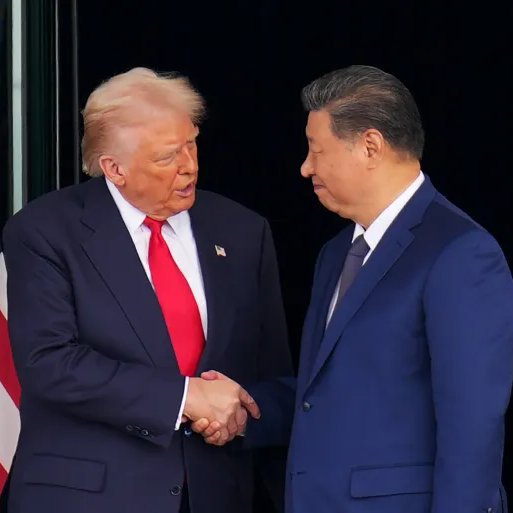
By Nitya Chakraborty In the last 24 hours since the holding of the historic summit between President Donald Trump and Chinese President Xi Jinping, a large number of commentaries in the American media as also in other western papers have been written. While in US, the assessment of the outcome of talks is on expected […]

The article Trump-Xi Summit At Busan Is A Game Changer Within China’s Us Policy appeared first on Latest India news, analysis and reports on Newspack by India Press Agency).

BEIJING, CHINA- Media OutReach Newswire – 31 October 2025 – The Annual Conference of Financial Street Forum 2025 was held in Beijing from October 27 to 30. During the four-day agenda, over 400 financial leaders, policymakers and industry experts from more than 30 countries and regions around the world gathered in Beijing’s Financial Street. The core area of Beijing’s Financial Street, covering an area of 2.59 square […]

Advertisements

The DFA Design for Asia Awards 2025 has opened its submission window for entries, signalling a heightened push to elevate Asian-led design onto the global stage. Organised by the Hong Kong Design Centre in partnership with the Cultural and Creative Industries Development Agency of the Hong Kong Special Administrative Region, the awards target projects that demonstrate innovation, social impact and cross-border relevance. The entry period runs from 1 April to 7 July 2025, allowing participants to apply across six design disciplines and 30 diverse categories.

The competition spans Communication Design, Digital & Motion Design, Fashion & Accessory Design, Product & Industrial Design, Service & Experience Design, and Spatial Design. Eligibility is specified for projects launched in one or more Asian markets between 1 January 2023 and 31 May 2025, signalling a forward-looking emphasis on design influenced by the region’s evolving markets. A 50 per cent early-bird discount on the entry fee is offered for submissions by 30 April, roughly halving the cost to HKD 1,100 from the standard HKD 2,200 per entry.

The competition’s organising body emphasises that submitted projects should go beyond aesthetic appeal to reflect cultural values, social responsibility and human-centred innovation. The awards platform is positioned as a launchpad for designers and companies to gain international recognition, network globally and exhibit work in both online and physical showcases. The judging panel comprises design professionals from across the world, applying rigorous assessment criteria including creativity, usability, sustainability, aesthetic quality, and impact in Asia.

Key strategic shifts in this edition include an extended submission deadline and an expanded suite of benefits for winners, which include trophies, certificates, inclusion in an awards publication, eligibility for exhibitions and an online gallery, as well as invitations to high-profile events such as the Business of Design Week. This broadening of value-added rewards underscores the awards’ intent to deepen its role not merely as a recognition mechanism but as an accelerator of design careers and commercial opportunities.

Emerging design hubs across Asia stand to gain elevated visibility through this platform. Analysts observe that as demand grows for design solutions rooted in local culture yet globally scalable, events like these help bridge creativity with market viability. One jury member from a previous edition noted that a winning spatial design in Hong Kong “interprets what a library should be architecturally” and “brings the outdoor space indoor,” illustrating how design can engage both aesthetic and functional concerns.

Challenges persist for participants, particularly in meeting the criteria of “impact in Asia” while maintaining global relevance. Designers must navigate a competitive field: in the 2024 edition, 215 awardees were recognised across Grand, Gold, Silver, Bronze and Merit levels. The ability to demonstrate both commercial success and societal benefit is increasingly important, underscoring the awards’ focus on real-world outcomes rather than purely conceptual achievements.

Corporate and design-studio entrants will need to align submissions with multiple review dimensions: geographical market launch, human-centred innovation, sustainability credentials, and cultural resonance. A deeper trend is evident in how the awards reflect the evolving design ecosystem in Asia: beyond Hong Kong and major capitals, secondary cities and cross-border design collaborations are gaining traction. The judging criteria explicitly reward cross-market impact and innovation that resonates beyond local boundaries.

For the design industry, participation offers strategic advantages. Winning projects receive global exposure through awards publications and exhibitions, enabling both established studios and emerging talent to secure business leads and partnerships. The inclusion of the online showcase platform ensures that award-winning work reaches a wider audience beyond the physical event footprint. Observers suggest that for design firms seeking to expand internationally, a credential from this awards programme adds credibility in a crowded market.

Financially, the fee structure and early-bird promotion lower barriers to entry, but entrants must commit to a publication and promotion fee if selected as winners. This consideration means designers must evaluate the return on investment in terms of exposure and business potential. The awards’ transparency around deliverables and eligibility criteria signals a mature stage in its evolution since its launch in 2003.

Organisers have emphasised that the awards welcome designs with “deep Asian cultural roots” yet global aspirations, underscoring a dual objective of cultural preservation and market expansion. As the platform attracts entries from across the Asia-Pacific region, this edition could reveal emerging trends in spatial design, sustainable product systems, inclusive services and motion design. The overarching theme is that design is not simply aesthetic but a tool for transformation—economically, socially and culturally. Entrants are therefore expected to present work that balances form and function, local context and global relevance.


The Washington-based media outlet Radio Free Asia announced that it will suspend all editorial content production from Friday, citing critical funding shortfalls triggered by the federal government shutdown and delays in appropriations. The decision marks the first full shutdown of its news services since the broadcaster’s founding in 1996.

Chief Executive Bay Fang explained that the organisation is “forced to suspend all remaining news content production … for the first time in its 29 years of existence” and that operations in several overseas bureaus across Asia will close while staff are formally laid off and severance paid. The organisation reported that many employees have been on unpaid leave since March owing to previous funding cuts.

Analysts say the board’s move underscores a precarious moment for U. S.-backed international broadcasting. Radio Free Asia, which has delivered news in Mandarin, Burmese, Khmer, Korean, Vietnamese and Uyghur since the mid-1990s, has come under mounting pressure from a combination of political directives and fiscal constraints. In March the United States Agency for Global Media terminated its grant under a presidential executive order, prompting legal challenges. Over the following months the service slashed language operations, placed staff on extended leave and shrank its footprint.

The trigger for the complete pause is the failure of Congress to pass a full-year funding resolution, resulting in the federal shutdown beginning October 1 and the impasse over the 2026 fiscal year budget. The shutdown left USAGM unable to disburse new funding, forcing Radio Free Asia to exhaust reserves. The suspension leaves fewer than 30 employees in place, according to internal documents.

Supporters of the broadcaster warn that the shutdown of its services will leave a significant information gap in parts of Asia where independent media are scarce and press freedom is under threat. The outlet has been credited with investigative reporting on China’s Uyghur population, coverage of North Korean defectors and analysis of the 2021 Myanmar coup. Its multilingual services have made it one of the few external voices operating inside closed societies.

Critics of U. S. international broadcasting say that the funding model, which ties outlets to federal grants, is inherently unstable when funding is politicised. They argue that the reliance on appropriations makes such organisations vulnerable to shifts in administration priorities and partisan standoffs. The halt in operations at Radio Free Asia has already been welcomed by governments it has criticised, including Cambodia and China, which view the move as a blow to U. S. soft-power broadcasting efforts.

Industry observers note that other USAGM-funded broadcasters are also under strain. The Radio Free Europe/Radio Liberty has retained legal protection via a court injunction but still faces cash-flow challenges. The broader trend suggests that U. S. international media assets may have thoroughly entered a phase of retreat just as global information competition—particularly from China and Russia—is intensifying.

The implications of the suspension extend beyond media-industry metrics. Some Asian governments that had viewed the broadcaster’s presence as adversarial are already reclaiming influence. Beijing had added state-run radio frequencies in regions formerly served by Radio Free Asia’s Mandarin service, and Phnom Penh’s leadership publicly thanked Washington in March for the cuts, calling them “a major contribution to eliminating fake news” in the region.

By Nitya Chakraborty   The much-awaited meeting between US President Donald Trump and the Chinese President Xi Jinping ended on Thursday morning at Busan in South Korea with both expressing high optimism at the outcome of the talks. Trump described the talks as “amazing” saying that their dispute over the supply of rare earths had […]

The article Is Xi Jinping Working For A Bipolar World Along With Donald Trump? appeared first on Latest India news, analysis and reports on Newspack by India Press Agency).

HONG KONG SAR – Media OutReach Newswire – 30 October 2025 – Hotel Artz Fair is proud to announce the artist and program highlights for its much-anticipated second edition, taking place from 21–23 November 2025 at Conrad Hong Kong. This boutique Fair offers a uniquely intimate experience, transforming hotel rooms into warm, homelike art spaces where works by over 40 artists from 12 countries and regions will […]

Matein Khalid Critical minerals have become a national security priority for GCC states as China has weaponised its dominance over supply chains, refining capacity and magnet production. These materials, including lithium, nickel, cobalt, tin, tungsten, vanadium and germanium, are essential for defence systems such as Lockheed’s F-35 stealth fighters, Raytheon’s hypersonic missiles and General Dynamics’ Virginia-class submarines, as well as civilian applications in advanced semiconductors, electric vehicles, […]

Shareholders of the Zurich-listed skincare company Galderma Group AG have secured approximately SFr 2.6 billion through a sale of an 8.4 per cent stake via accelerated book-building, making it the largest secondary share placement since the firm’s IPO. The sale by the consortium led by the private-equity house EQT AB along with the Abu Dhabi Investment Authority and Auba Investment Pte. Ltd. comes after the Swiss dermatology […]

Most central banks in the Gulf Cooperation Council moved swiftly to lower key interest rates after the Federal Reserve trimmed its policy rate by 25 basis points, reinforcing the strong alignment between Gulf monetary policy and that of the United States. The decision saw the Central Bank of the UAE reduce its overnight deposit facility base rate to 3.90 per cent from 4.15 per cent, while the Saudi Central Bank trimmed its repo rate to 4.50 per cent and reverse-repo rate to 4.00 per cent.

This round of cuts marks the second such move by the Federal Reserve this year and comes amid a backdrop of moderating inflation globally and a focus on supporting non-oil growth across the region. Two Fed policymakers dissented in the decision, and Chair Jerome Powell cautioned that a December rate cut was not assured.

The Gulf region’s strong inclination to follow U. S. monetary policy stems from the fact that five of the six GCC currencies, including the Saudi riyal, UAE dirham and Qatari riyal, are pegged to the U. S. dollar. Only the Kuwaiti dinar is linked to a pegged basket of currencies of which the dollar is the dominant component, giving Kuwait greater policy flexibility.

Beyond the peg dynamics, the rate cuts serve a broader strategic goal: to reduce borrowing costs and stimulate investment in sectors aligned with the region’s diversification agenda, such as real-estate, manufacturing and tourism. According to analysis by CFI, inflation in the Gulf is projected to hover around 1.9 per cent in 2025, with GDP growth estimated at 4.0 per cent on average, meaning there is space to ease monetary policy without immediate inflation risk.

While the broad pattern across the region is one of alignment with Washington, there are subtle distinctions. Kuwait opted to hold its rates unchanged, signalling that local conditions rather than external alignment would guide its stance. Analysts say that Kuwait’s stronger inflation headwinds and different economic profile justify such a deviation.

Market watchers note that the rate cuts may deliver stimulus to credit growth, though some risks remain. Lower interest rates could dampen returns on traditional savings vehicles and simultaneously sharpen competition among banks. For governments and businesses in Gulf economies, cheaper financing may bolster infrastructure projects and non-oil activities. A weaker US dollar, another by-product of U. S. policy easing, could lend further support to oil prices—helping export-based economies—but it also carries the risk of higher import costs.

In the UAE, the central bank’s move to 3.90 per cent marks the lowest policy rate since 2022. This step is expected to make loans and mortgages more affordable, offering a boost to the non-oil sector and domestic demand. In Saudi Arabia, the rate adjustment is directly aligned with the broader reform agenda under its Vision 2030, which hinges on greater private-sector participation and attraction of foreign investment requiring cheaper capital.

Some central bankers caution that while rate cuts provide stimulus, they cannot fully offset structural headwinds such as global energy demand shifts, supply chain disruptions and geopolitical uncertainty. The Federal Reserve’s cautious tone — emphasising that further cuts are not guaranteed — adds an extra layer of uncertainty for regional banks that shadow U. S. policy.

In this context, Gulf monetary authorities appear to be striking a careful balance between maintaining currency stability, supporting growth and safeguarding financial stability. As their economies strive to scale non-hydrocarbon sectors, the timing and scale of rate cuts are being calibrated not only to external headwinds but also to domestic structural priorities.

Ethereum’s trajectory is showing signs of strengthening as institutional demand, staking growth and protocol upgrades converge to position the network for a possible lead in the upcoming crypto cycle. The asset has been trading in a holding pattern around the $4,000–$4,300 range while market watchers debate whether this consolidation presages a breakout or a renewed test of support. According to exchange-data and on-chain indicators, Ethereum’s fundamentals are increasingly robust as it faces critical technical levels.

Institutional flows into Ethereum-related products have doubled since early 2025, with fund holdings reaching an estimated 6.5 million ETH and staking totals climbing to a record near 36.1 million. These developments reflect rising confidence in the network’s long-term value proposition as more traditional investors enter the space. On-chain records show that major whale wallets and “smart money” participants are accumulating, while staking reduces circulating supply and enhances scarcity dynamics.

Ethereum’s dominance in the decentralised finance and stable-coin settlement sectors amplifies that structural momentum. The network remains the foundational layer for smart-contract use-cases, layer-2 roll-ups and tokenised assets, lending greater weight to its ecosystem compared with more speculative cryptocurrencies. Developer-activity metrics place Ethereum ahead in creating new builds, deploying upgrades and supporting applications, reinforcing its role as a critical infrastructure asset rather than simply a trading vehicle.

On the technical front, key resistance near $4,250–$4,300 has become a focal point for analysts. A sustained breakout beyond that zone could unlock targets in the $5,000–$6,000 range and potentially much higher over the next year or two. Conversely, failure to clear that barrier could invite a re-test of support zones around $3,900–$4,000, a scenario flagged by bearish analysts. Macro-conditions such as global interest-rate policy, liquidity flows and risk-appetite remain wild cards, keeping short-term momentum fragile even as the long-term case strengthens.

Competition from alternative layer-1 blockchains and regulatory uncertainties remain headwinds. While Ethereum remains the ecosystem leader, other chains are gaining traction with lower fees and faster speeds; the extent to which Ethereum preserves its dominance will depend on its ability to scale and manage cost pressures. Moreover, regulatory scrutiny of crypto assets and staking vehicles may alter the institutional adoption timeline, requiring cautious interpretation of bullish narratives.

Emerging upgrades to the network architecture provide a catalytic backdrop. The so-called “Fusaka” upgrade, scheduled for late 2025, aims to deliver enhancements to sharding and data-availability that should improve throughput and reduce fees. These technical improvements may lower entry barriers for decentralised-applications and stimulate further ecosystem growth, thereby reinforcing Ethereum’s value proposition. At the same time, staking yields continue to incentivise long-term holders and reduce the liquid supply, offering a structural support mechanism for price.

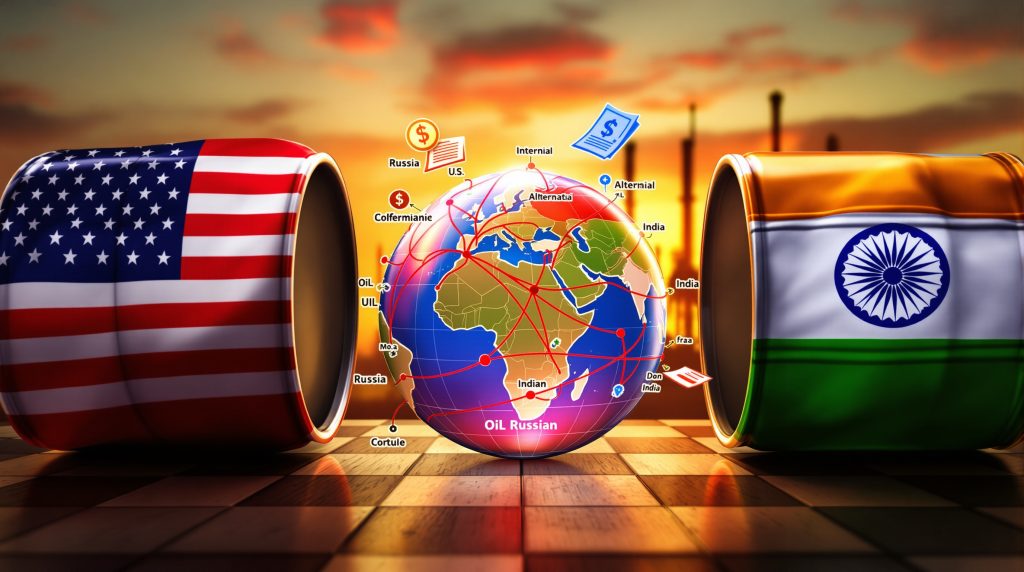
By K Raveendran New Delhi appears to be recalibrating its crude-oil sourcing strategy under mounting pressure from Washington, signalling what may be a strategic shift away from Moscow in favour of deeper ties with the United States. Over the past few months, Indian refiners, including the major private player Reliance Industries, have ceased or paused […]

The article India’s Energy Pivot Under Donald Trump’s Tariff Pressure appeared first on Latest India news, analysis and reports on Newspack by India Press Agency).

CHENGDU, CHINA – Media OutReach Newswire – 29 October 2025 – From October 24 to 27, Chengdu, China, hosted the “Invitation from the Hometown of Pandas–Chengdu Panda Week” series of events in Frankfurt, Germany; Vienna, Austria; Paris, France; and Brussels, Belgium. The events included overseas promotion of the giant panda IP, panda-themed vehicle parades, art exhibitions, and more. “Hometown of Pandas: Dreams and Life” Themed Art Exhibition […]

TOKYO, JAPAN – Media OutReach Newswire – 29 October 2025 – Creww Inc. (Japan Office: Shibuya-ku, Tokyo, Representative: Sorato Ijichi, hereinafter “Creww”), Japan’s leading open innovation platform provider, and Real Madrid Next are pleased to announce the selection of 6 startups for the “Real Madrid Next Accelerator for Asia” Batch 2. About “Real Madrid Next Accelerator for Asia” Batch 2 “Real Madrid Next Accelerator for Asia” Batch […]

Natura Bissé becomes the first and exclusive spa brand in the prestigious ranking of the world’s finest hotels BARCELONA, SPAIN – Comunicae – 29 October 2025 – The Spanish skincare brand takes a key step in its commitment to remaining a global leader in the world of high-end wellness experiences, becoming the first and exclusive “Official Spa Brand” of The World’s 50 Best Hotels, the global authority […]

The cryptocurrency exchange WazirX will resume trading from 24 October, offering zero-trading-fees for a 30-day window as it restarts operations in phases through 27 October, according to the company’s announcement. The move follows regulatory and judicial approval of its restructuring scheme, signalling a fresh push to restore market presence and user confidence.

The phased rollout is structured across four days beginning 24 October, with around 25 per cent of listed tokens becoming tradeable each day until full functionality is reached by 27 October. The USDT markets will be enabled first, followed by INR trading pairs as part of the gradual reactivation. Trading will commence on each live token at 10:00 a. m. IST, with order-matching set to begin at 5:00 p. m. IST. The company emphasises that the fee-free period will be assessed for extension depending on user engagement and stability of the restart.

The zero-fee offer is designed to attract traders back to the platform and rebuild liquidity, at a time when trust in crypto exchanges remains fragile. WazirX management states that this incentive, coupled with a careful phased launch, is intended to “restore liquidity safely, confirm technical stability, and ensure a gradual and reliable return to normal trading across all market pairs.”

The relaunch arrives after the Singapore High Court sanctioned the restructuring scheme of WazirX’s parent entity, clearing a major regulatory hurdle. The process involved creditor-votes and considerable restructuring oversight, reflecting the seriousness of the platform’s operational freeze. The court approval is expected to pave the way for potentially unlocking user funds that had remained frozen since the suspension.

The exchange’s suspension followed a major cybersecurity incident in July 2024, when approximately US$230 million was reportedly lost in one of the country’s largest crypto-hacks. The outage left the platform offline for over a year and a half, creating uncertainty for users and creditors. The company signals that its collaboration with a third-party custody provider is intended to strengthen asset security, responding to one of the principal criticisms that emerged from the hack.

Analysts say the relaunch is significant for India’s broader crypto ecosystem, which has witnessed growing regulatory scrutiny and pressure for tighter security and transparency standards. The move by WazirX could act as a bellwether for other exchanges, in terms of operational restoration and user-trust rebuilding efforts. However, the stakes remain high: many users still await clarity on withdrawals, disputing the timeline and adequacy of asset recovery efforts.

While the trading disruption is over, questions persist about how quickly WazirX can rebuild liquidity across its markets, re-list tokens that were delisted or migrated during the shutdown, and reassure the user-base that past vulnerabilities have been addressed. Some tokens have already been delisted or swapped in line with the exchange’s due-diligence review, further complicating the relaunch.

The US stock market continues to surge, its strength underpinned by robust earnings and an easing policy stance from the Federal Reserve. AI remains the defining force, lifting productivity expectations and propelling capital spending. Wall Street is still the engine of global growth, but attention is beginning to turn elsewhere. A growing number of market participants see the next major wave forming in Asia, led by China […]

BARCELONA, SPAIN – Media OutReach Newswire – 28 October 2025 – OPPO’s global launch of the Find X9 Series reinforces its continued commitment to the high-end segment. This move coincides with the brand’s global user base exceeding 740 million, reflecting its success in engaging new generations through user-centric innovation. “OPPO is advancing its brand and user experience with a clear focus on the new generation of global […]

President Paul Biya has been declared the victor of Cameroon’s presidential election with 53.66 per cent of the vote, according to the country’s Constitutional Council. The announcement deepens political tension after opposition leader Issa Tchiroma Bakary claimed he had won the vote and alleged gunfire targeting civilians outside his home in Garoua. At 92 years old, Biya is now positioned to serve another seven-year term, extending his […]

HONG KONG SAR – Media OutReach Newswire – 27 October 2025 – Shanghai Commercial Bank (the Bank) is pleased to celebrate its 75th anniversary with a series of events starting with a landmark exhibition, “From Shanghai to Hong Kong, Connecting the World”, which will be open to the public from 8 November to 5 December 2025. The exhibition chronicles the Bank’s storied journey from its origin in […]

VISHNU RAJA
RYO YAMADA
HITORI GOTOH
IKUYO KITA