News related to
Since

SHENZHEN, CHINA – Media OutReach Newswire – 31 March 2026 – On March 31, 2026, Linklogis Inc. (09959.HK, “Linklogis”) released its 2025 annual results. During the year, the total revenue and income amounted to RMB983 million. Revenue and income in the second half of the year increased significantly by 62% compared with the first half of the year, reaching RMB608 million. In 2025, the total volume of supply chain assets processed by its technology solutions reached RMB508.1 billion, representing a 27% year-on-year increase, while the number of anchor enterprises served increased to 3,145. As of the end of 2025, Linklogis had cumulatively served more than 430,000 SMEs with efficient and convenient digital inclusive fintech services. The company maintained a solid financial position, with cash reserves reaching RMB4.9 billion, while liquidity remained ample.

In addition, Linklogis has always placed shareholder interests at the core of its corporate governance, rewarding investors’ trust through sustained and tangible actions. In August 2025, the Board approved a new share repurchase program of no less than US$80 million to be implemented over a one-year period. Under this repurchase program, the company has cumulatively repurchased shares totaling HK$365 million (approximately US$47 million), demonstrating its confidence in its long-term value through concrete actions.

Focusing on Core Business, Accelerating Business Structure Optimization

In 2025, Linklogis remained focused on its core business and accelerated the optimization of its business structure. The total volume of supply chain assets processed by its technology solutions reached RMB508.1 billion, up 27% year-on-year. With a market share of 22%, the company ranked first in the industry for the sixth consecutive year. The number of anchor enterprises served increased to 3,145, including 54 of China’s Top 100 enterprises and 151 of China’s Top 500 enterprises, while the number of financial institution partners reached 428, further improving the efficiency of industry-finance collaboration.

Linklogis’ supply chain finance technology solutions include Anchor Cloud, which consists of Multi-tier Transfer Cloud, AMS Cloud and Treasury Cloud, as well as FI Cloud, which consists of ABS Cloud and eChain Cloud. In 2025, the total volume of supply chain assets processed by Anchor Cloud reached RMB369.6 billion, representing a year-on-year increase of 31%. The total volume of supply chain assets processed by Multi-tier Transfer Cloud reached RMB304.2 billion, surging 47% year-on-year, with its contribution to the group’s total asset volume rising from 52% in 2024 to 60% in 2025. The total volume of supply chain assets processed by AMS Cloud, however, was RMB65.4 billion, down 13% year-on-year due to the continued decline in issuance volume in the supply chain asset securitization market.

The total volume of supply chain assets processed by FI Cloud reached RMB128.9 billion, up 20% year-on-year. Both ABS Cloud and eChain Cloud recorded solid double-digit growth in transaction volume, contributing to a 25% year-on-year increase in FI Cloud revenue. In the ABS Cloud segment, the total volume of supply chain assets processed reached RMB69.1 billion, rising 28% year-on-year. In the eChain Cloud segment, the total volume of supply chain assets processed reached RMB59.7 billion, increasing 13% year-on-year.

Linklogis focused on six key industries, including infrastructure and construction, new energy and advanced manufacturing, and worked with its subsidiary Bytter Technology to deepen targeted cross-selling, achieving breakthroughs in high-quality customer acquisition. Leveraging its one-stop comprehensive industrial-finance solutions and innovative scenario-based applications, Linklogis worked with a number of central and state-owned enterprises and leading private enterprises, including Shougang Group, China Coal Mine Construction Group Corporation and JA Solar Technology, to launch integrated industrial-finance platform projects. At the same time, it provided targeted support to 17 high-quality enterprises, including Shanghai Construction Group, Yunnan Construction and Investment Holding Group and Luzhou Laojiao, covering scenarios such as order financing, bill collateral, and supply chain bill transfer, supporting coordinated growth in both scale and value creation.

Building the “Second Growth Curve”, Unlocking Global Trade Finance Potential

2025 marked a pivotal year for Linklogis’ international business as the company embarked on a new chapter and accelerated the development of its “second growth curve.” During the year, Linklogis officially launched a comprehensive rebranding of its international business, introducing “Unloq” as its new identity for the global market, reflecting its vision of unlocking the potential and efficiency of global trade finance. Guided by a core strategy centered on cross-border trade corridors, scenario-based finance and technology-driven risk management, Unloq is committed to building a globally connected digital supply chain finance platform with strong local execution capabilities.

In line with its core strategy, the company has leveraged its cloud-native technology to launch the innovative “SC+ Platform”, designed to connect global real-world trade with digital finance. The “SC+” signifies its core function of connecting smart contracts with compliant digital payment instruments, forming a technology-enabled solution for global trade finance. The platform is dedicated to building the next-generation digital infrastructure for global trade finance and addressing systemic challenges in cross-border trade, including credit verification, fund turnover, and clearing and settlement efficiency. Through the platform, funders can utilize various compliant payment methods to purchase trade receivables.

To date, Unloq has completed the deployment of the core architecture of the SC+ Platform. Working with multiple commercial partners, Unloq has advanced the rollout of innovative applications leveraging compliant digital payment methods. In 2025, Linklogis successfully secured the bid for a Web3.0-based supply chain finance platform project for a leading central state-owned enterprise, marking a new milestone in its technological capabilities and industry recognition in the field of digital trade infrastructure.

In its international business, Unloq accelerated the expansion of cross-border trade services. In addition to traditional B2B goods trade, cross-border e-commerce and online travel agencies, it also expanded into cross-border logistics, bringing the total number of platform customers to 1,550, representing a net year-on-year increase of 451. With the deeper penetration of the SC+ Platform in cross-border trade finance, the continued expansion of its global localized service network, and the accelerated integration of solutions supporting Chinese enterprises’ overseas expansion, Linklogis’ cross-border and international business is expected to enter a phase of exponential growth in both asset volume and revenue in 2026, embarking on a new chapter of high-quality and sustainable development.

Advancing the “AI-powered Industrial Finance” Strategy: From Internal Empowerment to Industry Value Co-Creation

Linklogis remains committed to its “AI-powered Industrial Finance” strategy and continues to promote the deep integration of AI with supply chain finance across the entire value chain. Built on years of technological expertise and scenario-based refinement, its AI capabilities have evolved from internal productivity tools into a sophisticated intelligence engine that empowers the entire industrial ecosystem. By deeply integrating leading domestic large language models with its proprietary supply chain finance scenario knowledge graph and multimodal business elements, the company has systematically advanced the ongoing iteration and capability enhancement of its self-developed vertical model, LDP-GPT. Building on this foundation, Linklogis has developed the “BeeLink AI Agent” product matrix, covering more than ten core scenarios including intelligent trade document checking, intelligent PBOC registration, intelligent KYC, and intelligent risk management.

In 2025, BeeLink AI Agent continued to deliver breakthroughs in market penetration and commercialization. The number of customers served rose to 42, including domestic and overseas financial institutions and industry leaders such as Standard Chartered Bank, Bank of Hangzhou, and China Electrical Equipment Finance. Processing efficiency improved by 20 times, while accuracy in key processes reached 99%. As AI continues to evolve toward an agent-based paradigm, Linklogis will take “AI Agent+” as a strategic lever to comprehensively upgrade BeeLink AI Agent from functional tools to intelligent collaboration. It will prioritize breakthroughs in advanced capabilities such as cross-system task coordination, natural-language interactive decision-making, and adaptive workflow optimization, enabling customers to move from point intelligence to enterprise-wide intelligence, and from business insights to intelligent decision-making, thereby delivering end-to-end value across the entire value chain.

Linklogis actively responded to China’s “dual carbon” strategy and high-quality development agenda by embedding ESG principles into product innovation and the entire service lifecycle, leveraging technology to advance green finance, inclusive finance, and sustainable development. In 2025, the volume of sustainable supply chain assets served by the company exceeded RMB66.8 billion, representing a year-on-year increase of 80%, with its share of total serviced assets rising from 9% in 2024 to 13% in 2025. During the year, SMEs that obtained financing through Linklogis Supply Chain Multi-tier AR Transfer Platform benefited from an average financing cost of only 2.85%. The company continued to deepen its presence in four key sectors—renewable energy, rural revitalization, environmental protection, and public health—while further expanding into sustainable sectors such as the new energy vehicle supply chain, green buildings, and the circular economy. Through these initiatives, it directed financial resources more precisely to key segments that generate both green and low-carbon benefits and strong social impact, gradually building a broader and more influential sustainable development ecosystem that integrates industry and finance.

Expanding Full-scenario Deployment, Enhancing the Smart Industrial Finance Treasury Product Matrix

Through the acquisition of Bytter Technology, Linklogis made a strategic entry into the corporate treasury management sector. By synergizing management teams and business operations, the company successfully established the Treasury Cloud product line, providing diverse customers with end-to-end treasury management services covering settlement operations, cash planning, financing management, risk monitoring, and intelligent decision-making. As a key component of Linklogis’ “Smart Industrial Finance Treasury” strategy, Treasury Cloud is anchored by a dual-engine approach powered by AI and data, and has established a comprehensive product matrix, including the F1 treasury management system and T6 cash management system for anchor enterprises, the bank treasury system for financial institutions, and the Yingzilian SaaS platform for SMEs.

Since September 11, 2025, Bytter Technology has been consolidated into the group’s financial statements. The integration of the Treasury Cloud business has been fully completed. Linklogis will continue to deepen resources integration and business collaboration between Treasury Cloud and the group’s other supply chain finance technology businesses in areas such as product R&D, channel expansion and customer service. The company will accelerate the development of an integrated, intelligent and scalable Smart Industrial Finance Treasury platform, providing customers with one-stop digital solutions covering treasury management and industrial-finance collaboration.

Charles Song, founder, Chairman and CEO of Linklogis, said: “The year 2026 marks the tenth anniversary of Linklogis. As we stand at the threshold of a new decade, we will remain firmly committed to a core strategy of being technology-driven and globally connected, while steadfastly advancing our dual-engine approach of deepening domestic industrial finance and expanding global digital trade. We will seize opportunities amid transformation and strengthen our competitive advantages through innovation. In the domestic market, we will continue to advance the “AI-powered Industrial Finance” strategy. Anchored by the comprehensive upgrade of BeeLink AI Agent, we will accelerate AI’s evolution from scenario-based enablement to ecosystem-level collaboration. At the same time, leveraging our full-stack capabilities in Smart Industrial Finance Treasury solutions, we will continue to refine our integrated one-stop solutions, consolidate our market leadership, and ensure the steady growth of our core business. In international markets, we will accelerate the expansion of global cross-border digital trade networks through Unloq and roll out the SC+ Platform along key global trade corridors. We aim to become a key builder and connector in the ongoing digital and intelligent transformation of global trade finance. The future is already unfolding. Only the adaptable can prevail, and only the persistent can go the distance. With technology as our oar and industry as our vessel, Linklogis will continue to join forces with our partners, embarking together on the magnificent journey toward a digital and intelligent future for global industrial finance.”

Hashtag: #Linklogis

The issuer is solely responsible for the content of this announcement.

Arabian Post Staff -Dubai Distance learning across the UAE will continue until 17 April for schools and universities, extending a policy first introduced earlier this month as authorities maintain a cautious approach to student safety and operational continuity. The Ministry of Education said the arrangement would remain under weekly review, leaving room for further changes depending on how conditions develop. The decision covers nurseries, kindergartens, public and […]

Apple has begun offering unusual stock awards worth as much as $400,000 to members of its iPhone product design team, moving to shore up one of its most prized groups as OpenAI and other artificial intelligence rivals intensify their push into consumer hardware. The bonuses, reported by Bloomberg, were granted outside Apple’s normal compensation cycle and are structured to vest over four years, tying the awards to […]

HONG KONG SAR – Media OutReach Newswire – 31 March 2026 – Sequencio Therapeutics Company Limited (“Sequencio”), a subsidiary of CK Life Sciences Int’l., (Holdings) Inc. (“CK Life Sciences”), today announced that five research abstracts will be presented at the American Association for Cancer Research (“AACR”) Annual Meeting 2026, taking place 17–22 April 2026 in San Diego, USA.

These presentations mark Sequencio’s first major scientific unveiling since its formation and showcase significant advancements in next‑generation cancer vaccine technologies based on Sequencio’s proprietary TrueHLA™ Epitope‑to‑Efficacy™ translational design framework, which enables rational, data‑driven vaccine development across circRNA, mRNA, peptide, and protein‑based platforms.

Collectively, Sequencio’s five AACR 2026 presentations highlight a consistent theme: rationally designed cancer vaccines that demonstrate robust immunogenicity and compelling anti‑tumour activity across multiple targets and modalities in preclinical models. These data underscore the strength of Sequencio’s approach to translating antigen selection into functional immune responses and tumour control. Building on this foundation, Sequencio is prioritizing its most promising programs for IND‑enabling studies, with the goal of accelerating select vaccine candidates into early‑stage clinical development through strategic partnerships and global collaboration.

Dr Melvin Toh, Vice President & Chief Scientific Officer of CK Life Sciences, expressed, “Sequencio’s cancer vaccine pipeline continues to advance with strong momentum. Our AACR 2026 presentations underscore both the scientific promise of our vaccines and the disciplined execution driving their progress. We look forward to building on this foundation as we advance next‑generation immunotherapies for patients.”

The AACR Annual Meeting is a gathering central to the global cancer research community, bringing together scientists, clinicians, other healthcare professionals, survivors, patients and advocates every year to share the latest breakthroughs and developments in cancer science and medicine. Last year, the 2025 Annual Meeting attracted 22,100 in-person participants from 85 countries.

Scientific Poster Presentations by Sequencio Therapeutics at AACR 2026

All five posters will be presented on 21 April 2026.

1. p53 Modified Shared Neoantigen Vaccine (Poster Number: 4361)

Title: Single amino acid residue substitution to improve immunogenicity of HLA peptides targeting p53 neoantigen

Authors: Chi Han Samson Li, Hong Wang, Kin Tak Chan, Genwei Zhang, Zhenghui Wang, Lipeng Lai, Melvin Toh

2. IGF1R Cancer Vaccine (Poster Number: 4368)

Title: Vaccine targeting IGF1R induces neutralizing antibody and robust anti‑tumor activity in a syngeneic mouse colon cancer model

Authors: Kenneth Nansheng Lin, Melvin Toh, Hong Wang

3. B7‑H3 Cancer Vaccine (Poster Number: 4369)

Title: B7-H3 vaccine induces robust humoral and cellular immunity and inhibits tumor growth in mice

Authors: Kenneth Nansheng Lin, Melvin Toh, Hong Wang

4. TROP2 circRNA + IL‑7 Combination Vaccine (Poster Number: 4370)

Title: TROP2‑circular RNA vaccine and IL7 synergistically inhibit TROP2+ tumor growth in mouse models

Authors: Zirong He, Yanan Li, Antong Li, Xiaoxuan Liu, Kenneth Nansheng Lin, Fan Yan Meng, Melvin Toh, Hong Wang

5. Claudin‑6 Cancer Vaccine (Poster Number: 4375)

Title: Claudin 6 vaccines effectively inhibit tumor growth in a syngeneic mouse colon cancer model

Authors: Na Wang, Lam Chow, Melvin Toh, Hong Wang

Hashtag: #CKLifeSciences #Sequencio #CancerVaccines #R&D #Pharmaceutical #AACR

The issuer is solely responsible for the content of this announcement.

CK Life Sciences Int’l., (Holdings) Inc.

CK Life Sciences Int’l., (Holdings) Inc. (stock code: 0775) is listed on the Stock Exchange of Hong Kong. With a mission of improving the quality of life, CK Life Sciences is engaged in healthcare research and development, with operating businesses that enable its R&D sustainability. Regarding pharmaceutical research and development, CK Life Sciences’ operations are focused on conducting research and development into cancer vaccines, RNA therapeutics and pain management solutions. CK Life Sciences is a member of the CK Hutchison Group. For additional information, please visit .

Australia has moved towards court action against Facebook, Instagram, Snapchat, TikTok and YouTube after officials said the platforms may have failed to keep children under 16 off their services, escalating a world-first test of how far governments can force technology groups to police the age of their users. The warning follows the first compliance review of the law, which took effect on 10 December 2025 and allows […]

AD Ports Group has used its 2025 Annual Report to make a broader point than a set of earnings figures: Abu Dhabi’s state-backed ports and logistics champion is seeking to prove that scale, corridor strategy and selective overseas expansion can keep lifting returns even as conflict, tariff friction and supply-chain disruption continue to unsettle global trade. The company said revenue for 2025 reached AED 20.77 billion and […]

Arabian Post Staff -Dubai Oil prices eased in Asian trading on Tuesday after giving up earlier gains, as traders weighed a report that U. S. President Donald Trump had told aides he was willing to end the war with Iran even if the Strait of Hormuz remained largely closed for now, softening some of the market’s immediate fear of a broader supply shock. Brent crude for May […]

Advertisements

Nasdaq is accelerating the route into its flagship Nasdaq-100 index for large newly listed companies, a rule change that could materially benefit future market debuts such as SpaceX by shortening what has often been a wait of many months. The exchange said the revised methodology will take effect on May 1, allowing certain newly public companies to be assessed by their seventh trading day and, if they […]

Japan’s investors are being pushed back towards overseas yield trades as the war involving Iran unsettles the country’s traditional refuge assets, weakens the yen and lifts the cost of imported energy. What had looked like a steadier domestic backdrop at the start of 2026 has been disrupted by a surge in oil prices, renewed pressure on the currency and a sharp reassessment of where Japanese savers and […]

By Dr. Gyan Pathak On the very onset of the Financial Year 2026-27, beginning from April 1, 2026, India faces a multi-layered set of risks, given its position as a major energy importer with strong trade, investment, and remittance linkages with the West Asia region, which has turned into a war zone since the United […]

The article India Faces Multi-Layered Set Of Risks At The Onset Of FY2026-27 appeared first on Latest India news, analysis and reports on Newspack by India Press Agency).

France is expanding its annual energy cheque scheme to an additional 700,000 households, widening a support measure that Prime Minister Sébastien Lecornu said would begin reaching 3.8 million households from this week as pressure on household budgets intensifies. The extra recipients are due to start receiving the aid from 1 May after the government used broader data matching to identify more eligible homes. Lecornu said the programme […]

Electronic interference that had scrambled vessel tracking across the Persian Gulf eased over the weekend, allowing ships stranded in the war-affected waterway to show positions closer to their true locations and giving operators a clearer picture of navigation risks in one of the world’s most important energy corridors. Maritime security guidance issued on 29 March said GNSS, GPS and AIS disruption had moderated over the previous 24 […]

South Korea is weighing whether to extend car-use restrictions beyond the public sector as oil prices climb sharply, a step that would amount to the country’s first nationwide driving curbs since the 1991 Gulf War if it is applied broadly to the public. Finance Minister Koo Yun-cheol said wider restrictions could come into play if crude prices rise into a $120-$130 a barrel range, up from about $100-$110 now, as Seoul tries to contain fuel demand and cushion the economic shock from turmoil in the Middle East.

The discussion marks an escalation from measures already in force. Public institutions are operating under a five-day vehicle rotation system, while large companies including Samsung Electronics and SK Group have begun urging staff to cut private car use, reduce parking demand and adopt other energy-saving practices. Officials have also left open the possibility of further fuel-tax relief to soften the burden on households and businesses, though no final decision has been announced on compulsory curbs for private motorists.

At the centre of Seoul’s concern is its exposure to imported energy. About 70% of South Korea’s oil imports come from the Middle East, leaving the country highly sensitive to any disruption in supplies or shipping routes. The government raised its crude oil supply disruption alert to Level 2 on March 18 as tensions mounted, signalling a more serious official assessment of the risks facing one of Asia’s largest energy importers.

The external shock has been severe. Reuters reported that Brent crude climbed to nearly $115 a barrel over the weekend and above $116 on Monday, putting it on course for its biggest monthly jump on record, while US crude also surged past $100. The rally has been driven by a widening conflict linked to Iran and growing anxiety over disruptions around the Strait of Hormuz, a vital artery for global oil flows. That backdrop has sharpened pressure on Asian economies that rely heavily on imported fuel, with South Korea among the most exposed.

For policymakers in Seoul, the issue is no longer only about fuel bills. Higher oil prices threaten to spill into inflation, transport costs, industrial input prices and consumer sentiment. A Reuters poll published on Monday projected that South Korea’s imports rose 18% in March, the fastest pace since September 2022, largely because of elevated oil prices, even as exports remained buoyant on strong semiconductor demand. That split picture captures the dilemma facing the government: trade performance is being helped by chips and artificial intelligence-linked demand, but the economy’s dependence on imported energy is pushing up costs and widening vulnerability.

President Lee Jae Myung has responded by urging a nationwide energy-saving drive, while Energy Minister Kim Sung-whan has pushed demand management and warned against panic behaviour. The government has promoted 12 power-saving practices, from shorter showers to shifting electricity use away from peak hours, and has also moved to restart several nuclear reactors, loosen coal plant restrictions and expand renewable energy to offset pressure on gas imports. The mix underlines how Seoul is trying to balance short-term crisis management with longer-term energy security, even as those goals can pull in different directions.

That tension is visible in the broader regional response. Across Asia, governments are looking again at emergency stock releases, fuel-saving directives and, in some cases, greater coal use to bridge supply gaps. Analysts say such measures may shield economies from the immediate shock, but they also expose how quickly climate and transition goals can be tested when energy security comes under strain. In South Korea’s case, the administration’s public emphasis on renewables sits alongside plans to lean harder on nuclear and coal generation if needed.

The market fallout has already been visible in financial assets. South Korean equities were hit as investors fled Asian markets on fears of a prolonged oil shock, though some analysts argue the sell-off has reflected panic rather than a collapse in fundamentals. Technology and industrial names remain central to the country’s earnings outlook, but energy-intensive sectors face a tougher operating environment if high crude prices persist or if physical shortages emerge.

Arabian Post Staff -Dubai European shares held their ground on Monday as investors waited for German and euro zone inflation readings that could show how sharply the Middle East war is feeding through into prices, after a surge in oil left the STOXX 600 heading for its worst month since the first pandemic shock of March 2020. The pan-European STOXX 600 was up about 0.2 per cent […]

Hong Kong Institute of Vocational Education (Shatin), St. Paul’s College, Tai Po Old Market Public School Crowned Champions with St. Paul’s Convent School Named Most Active Participant

HONG KONG SAR – Media OutReach Newswire – 30 March 2026 – Samsung ‘Solve for Tomorrow,’ a global inter-school technology competition operating in 68 countries, has been held in Hong Kong since 2013, empowering youth to address social and global challenges through innovation. This year, two core themes guided participants: Topic 1: Environmental Sustainability via Technology — Create sustainable solutions to protect our planet via AI, and Topic 2: Social Change through Sport & Tech: For Better Futures — Harness the power of AI technology and sports to open new opportunities. Both themes rigorously challenged students to innovate beyond traditional boundaries, leveraging AI and cutting-edge technologies to develop creative, practical solutions to complex societal issues and actively shape a better future.

Samsung Solve for Tomorrow 2025-26 concludes, as Samsung and the next generation unite to forge a brighter, tech-powered future.

Running from September 2025 to March 2026, the competition, co-organized by AiTLE and fully backed by the HKSAR Education Bureau’s ‘Business-School Partnership Programme’ and Hong Kong Education City, attracted over 250 teams from 100 tertiary, secondary and primary schools. Each team demonstrated unique technological approaches to tackle pressing social issues.

Yiyin Zhao, Managing Director, Samsung Electronics H.K. Company, Limited, aims for the competition to shape future technology leaders and drive new vitality and innovation in Hong Kong’s tech sectors.

Yiyin Zhao, Managing Director, Samsung Electronics H.K. Company, Limited, stated: ‘Samsung has always believed technology is not merely a tool for changing lives, but a vital force driving social progress. ‘Solve for Tomorrow’ empowers young people to leverage creative thinking and technology to address real-world needs and challenges. It’s more than a competition; it’s a journey of innovative exploration that nurtures and empowers the younger generation. The widespread adoption of AI, in particular, presents unprecedented opportunities for innovation. This year, we were delighted to see students actively using AI and diverse technological solutions across the community, environment, sports, and sustainability, submitting outstanding, inspiring, and practical work. This truly demonstrates the remarkable creativity, keen observation, and effective problem-solving skills of Hong Kong’s youth.”

Samsung Nurtures Tomorrow’s Tech & Innovation Leaders
She also hopes the competition will encourage more students to step out of their comfort zones: “Beyond stimulating creativity and developing innovative solutions, we aim to cultivate critical skills: problem-solving, critical thinking, teamwork, and communication. This equips students to navigate the challenges of our rapidly evolving intelligent era confidently. We believe this competition will discover and cultivate the next generation of innovation and technology talent, contributing significantly to both Hong Kong’s and global innovation.

Samsung Solve for Tomorrow extends beyond monetary rewards, actively aligning with the Education Bureau’s ‘Business-School Partnership Programme’ to provide invaluable hands-on experience. Tertiary champions secure corporate internships, while secondary champions and first runners-up gain critical work experience, preparing them for future careers. The competition ignites students’ passion for technology and STEM, building a robust foundation for their innovation journeys and continually inspiring alumni to pursue pioneering solutions.

Final Awards Reveal Extraordinary Creativity
After the initial judging round, 95 outstanding projects advanced. They then refined their innovative solutions in Design Thinking workshops and through expert guidance. The judging panel then selected the nine finalists—the top three teams from each category, who will present their detailed project concepts and results, vying for the ultimate recognition.

Tertiary Category Champion “AquaPulse” – Developed by the Hong Kong Institute of Vocational Education (Shatin), AquaPulse is an AI coastal protection system powered by continuous 24/7 tidal and solar energy with integrated storage. It reliably detects abnormalities such as falling into the sea, even at night or in adverse weather, using millimeter-wave radar and AI vision. Upon detection, it instantly notifies rescue teams via lamppost positioning, significantly shortening response times. AquaPulse also monitors environmental data, aiming to create safer, more sustainable waterfronts for Hong Kong.

Secondary Category Champion “Plastine” – Developed by St. Paul’s College, Plastine is a solar-powered microplastic removal system for freshwater environments. It utilizes advanced electrocoagulation with aluminum electrodes to aggregate microplastics for efficient filtration and collection. Combining IoT sensors and AI algorithms, Plastine intelligently identifies optimal deployment locations. Focused on Hong Kong’s microplastic-rich rivers, it purifies water, safeguards public health, and restores aquatic ecosystems.

Primary Category Champion “Yoga 24 Go!” Wellness Exercise App – Developed by Tai Po Old Market Public School, “Yoga 24 Go!” is an innovative wellness application. It intelligently integrates the health wisdom of Traditional Chinese Medicine’s 24 solar terms with the body’s 12 meridians. Guiding users through specific yoga poses for each solar term, the app promotes “seasonal wellness” by targeting health goals such as nourishing the liver in spring, the heart in summer, the lungs in autumn, and the kidneys in winter

Award List (for details, please refer to the appendix):

Tertiary Category Champion
  • Hong Kong Institute of Vocational Education (Shatin)
1st Runner-up
  • Hong Kong Institute of Vocational Education (Shatin)
2nd Runner-up
  • Youth College (Kowloon Bay)
Merit Award (3 teams)
  • The University of Hong Kong
  • Hong Kong Institute of Vocational Education (Shatin)
  • Hong Kong Baptist University
Secondary Category Champion
  • St. Paul’s College
1st Runner-up
  • St. Stephen’s Girls’ College
2nd Runner-up
  • ESF Island School
Merit Award (3 teams)
  • Fung Kai No.1 Secondary School
  • Christian Alliance SW Chan Memorial College
  • Diocesan Girls’ School
Primary Category Champion
  • Tai Po Old Market Public School
1st Runner-up
  • Ying Wa Primary School
2nd Runner-up
  • Cumberland Presbyterian Church Yao Dao Primary School
Merit Award (3 teams)
  • Yaumati Catholic Primary School (Hoi Wang Road)
  • Marymount Primary School
  • TWGHs Tsoi Wing Sing Primary School
The Most Active Participating School Award
  • St. Paul’s Convent School

Hashtag: #Samsung #SolveforTomorrow

The issuer is solely responsible for the content of this announcement.

About Samsung Solve for Tomorrow

Samsung Solve for Tomorrow is an annual competition that brings together the creativity and passion for new technologies of young people around the world to solve social problems in local communities. In 2013, Samsung introduced this meaningful event to Hong Kong, inspiring tens of thousands of students to develop innovative solutions to address social issues in the City. Samsung is promoting the new educational philosophy of STEM. Besides encouraging Hong Kong students to deepen their knowledge of STEM – Science, Technology, Engineering and Mathematics – Samsung hopes that they can develop empathy and a sense of responsibility and apply their STEM knowledge to contribute to society. Through the competition, Samsung hopes to cultivate tomorrow’s thought leaders, equipping them with both technological knowledge and a sense of responsibility as global citizens. To learn more about Samsung Solve for Tomorrow, please visit:

About Samsung Electronics Co., Ltd.

Samsung inspires the world and shapes the future with transformative ideas and technologies. The company is redefining the worlds of TVs, smartphones, wearable devices, tablets, home appliances, network systems, memory, system LSI, foundry and LED solutions, consistently elevating their performance and innovation to new heights. For the latest news, please visit the Samsung Newsroom at .

Omniyat Holdings has said it has enough liquidity to handle its debt obligations after Fitch placed the Dubai ultra-luxury developer on Rating Watch Negative, citing geopolitical risk linked to the Iran war and the potential for weaker buyer demand in Dubai and across the Gulf. The company said it held more than AED 5.3 billion in cash, cash equivalents and other financial assets at the end of […]

DeepSeek is investigating a prolonged disruption that knocked its chatbot offline for more than seven hours in China, in the most serious outage yet for the Hangzhou-based artificial intelligence company since its rise into the global mainstream. The company’s public status page showed web and app service problems began late on Sunday night, rolled into Monday morning, and were not fully marked resolved until 10:33 a. m. […]

HONG KONG SAR and SHANGHAI, CHINA – Media OutReach Newswire – 30 March 2026 – Hang Lung Properties Limited (“Hang Lung” or the “Company”; stock code: 00101) today announced that Westlake 66 in Hangzhou, the Company’s 11th mixed-use commercial development in Chinese Mainland, will commence its soft opening on April 28, 2026.

Westlake 66 in Hangzhou will commence its soft opening on April 28, 2026

Opening in stages with a planned ramp-up, following the phased launch of its office towers since late 2025, Westlake 66 marks a major milestone in the Hang Lung’s Mainland portfolio and represents the latest embodiment of its “Pulse of the City” positioning. It will set a new benchmark for regional mixed-use development and redefine sophisticated lifestyle experiences in a top-tier Chinese city, leading the experiential retail trend and establishing a curated destination where culture, commerce, and community converge.

Situated in the Wulin CBD of Hangzhou in Zhejiang Province — one of China’s wealthiest provinces by GDP and purchasing power — Westlake 66 spans a gross floor area of approximately 390,200 square meters, bringing together a world-class shopping mall, five Grade A office towers, and the 194-key Mandarin Oriental Hangzhou — the first Mandarin Oriental in Zhejiang — to serve the discerning tastes of Hangzhou’s affluent and growing population.
Hashtag: #HangLungProperties

The issuer is solely responsible for the content of this announcement.

About Hang Lung Properties

Hang Lung Properties Limited (SEHK stock code: 00101) creates compelling spaces that enrich lives. Headquartered in Hong Kong and Shanghai, the Company manages a portfolio of over 3.5 million square meters of retail, office, residential, and hotel properties across Hong Kong and Chinese Mainland.
The Company’s diverse portfolio in Hong Kong includes office towers and malls in prime districts, as well as luxury residential developments in prestigious areas. In Chinese Mainland, under the signature “66” brand, the Company’s mixed-use and retail developments are regarded as premium landmarks, strategically located in the hearts of key cities of Shanghai, Shenyang, Jinan, Wuxi, Tianjin, Dalian, Kunming, Wuhan, and Hangzhou.
The Company is recognized for pioneering sustainability in the real estate industry, with an MSCI ESG rating of AA and inclusion on CDP “A List” for Climate Change. The Company powers 90% of its operating properties in the Mainland with renewable energy, with a net zero commitment by 2050.
At Hang Lung Properties – We Do It Well.
For more information, please visit .

Arabian Post Staff -Dubai Donald Trump has triggered fresh controversy after using crude language about Saudi Crown Prince Mohammed bin Salman at the Future Investment Initiative Institute summit in Miami Beach, telling the audience the Saudi leader had not expected to “be kissing my a” and adding that “now he has to be nice to me.” The remarks, delivered on 27 March at the Saudi-backed forum, drew […]

India’s rupee surged on Monday after the Reserve Bank of India tightened banks’ foreign-exchange position limits, forcing lenders to cut dollar holdings and unwind arbitrage trades that had built up as the currency slid to a record low at the end of last week. The rupee rose as much as 1.4% in early trade and was quoted around 93.48 to 93.85 per US dollar, marking its sharpest one-day gain since February.

The immediate trigger was the RBI’s March 27 directive capping banks’ net open rupee positions in the onshore deliverable market at $100 million by the close of each business day from April 10. That replaced a looser framework under which banks’ boards could set limits up to 25% of total capital. Traders said the order prompted a burst of dollar selling as banks moved to reduce exposures that had become profitable while the rupee was weakening.

The rebound followed a bruising stretch for the currency. On Friday, the rupee hit a record low of about 94.84 to the dollar after heavy pressure from higher crude prices, risk aversion and foreign outflows. Reuters reported the rupee had fallen more than 4% in March, putting it on course for its worst monthly performance in more than seven years, while broader anxiety over the Middle East conflict and its implications for energy markets deepened concern over India’s import bill and external balance.

At the centre of the RBI’s move is the gap between the domestic market and the offshore non-deliverable forward, or NDF, market. Banks had been exploiting pricing differences between the two venues, building large arbitrage books that were profitable during the rupee’s slide. Estimates for those positions vary, but Reuters and other market reports put them broadly in the $25 billion to $50 billion range. By suddenly tightening the rules, the central bank appears to have targeted not only volatility in the spot market but also the speculative mechanics that were amplifying pressure on the currency.

That has given the rupee breathing room, but it has also shifted the strain onto banks. Lenders have warned that rapid compliance could force a disorderly unwinding of positions and crystallise losses in treasury books. Several banks have asked the RBI for three months to comply, arguing that a phased adjustment or permission to hold existing trades to maturity would reduce the risk of market disruption. Equity investors appeared to register that concern, with banking shares falling amid estimates that mark-to-market losses could run into thousands of crores if the unwind is abrupt.

The central bank’s intervention is being read in dealing rooms as one of its strongest attempts in years to reassert control over rupee pricing. Market participants said the RBI has already been active in local and offshore markets, using reserves and liquidity tools to keep the currency from sliding too quickly. The new cap adds a regulatory weapon to that defence. It also sends a signal that the central bank is prepared to curb trading strategies it sees as destabilising, even at the cost of squeezing bank profitability in the short term.

Whether the rupee can hold on to these gains will depend less on technical unwinding and more on the backdrop that pushed it down in the first place. Brent crude has climbed sharply, with Reuters reporting a move above $115 a barrel on Monday and a monthly gain of nearly 60%. For an economy that imports the bulk of its oil, that raises the risk of a wider current account deficit, imported inflation and renewed pressure on the currency. Bond yields also edged higher, indicating that traders remain alert to the wider macroeconomic fallout even as the rupee recovers ground.

TAIPEI, TAIWAN – Media OutReach Newswire – 30 March 2026 – More than half of Taiwan’s small businesses recorded growth in 2025, while confidence heading into 2026 climbed to its highest level since 2020, according to the Asia-Pacific Small Business Survey 2025–26 conducted by global professional accounting body CPA Australia.

SBS Infographic 2026 Taiwan Eng

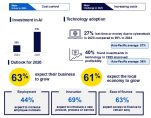
The survey found that 53 per cent of Taiwanese small businesses grew in 2025, slightly below the 57 per cent recorded in the previous survey. Looking ahead, business sentiment strengthened notably. In 2026, 63 per cent of respondents expect their business to grow, while confidence in the local economy also improved, with 61 per cent anticipating economic growth, the highest level recorded since Taiwan was first included in the survey in 2018.

Taiwan’s small and medium‑sized enterprises (SMEs) continue to play a vital role in creating new jobs. In 2025, 31 per cent of SMEs increasing staff numbers, while 44 per cent plan to hire additional employees in 2026.

With rising costs identified as the biggest challenge facing Taiwan’s SME in 2025, many businesses identified cost control as the most positive contributor to business performance last year.

Mr Elic Lam FCPA (Aust.), Honorary Taiwan Advisor at CPA Australia, said Taiwan’s economic fundamentals continue to support small business resilience, “Rising global demand for semiconductors and AI related chips continues to create opportunities for exporters and suppliers across Taiwan’s value chain,” Mr Lam said. “While geopolitical tensions and intensifying competition are adding uncertainty, government support measures for SMEs, including targeted subsidies and tax incentives, together with Taiwan’s resilient domestic demand, are helping to lift business confidence.”

Technology adoption, particularly artificial intelligence (AI), is becoming increasingly widespread among Taiwanese small businesses. The survey found that 33 per cent of small businesses identified AI as the technology they invested in most heavily invested in 2025, up from 29 per cent in the previous year.

Cyber risk among Taiwanese small businesses fell markedly. The share of small businesses reporting losses of time or money due to cyber incidents declined sharply from 59 per cent in 2024 to 27 per cent in 2025, reflecting stronger awareness and the uptake of basic protective measures across the sector.

However, the survey also indicates there is room to strengthen the returns from digital investment. Only 40 per cent of respondents reported that their technology investment in 2025 improved profitability, compared with the survey average of 56 per cent.

Mr Lam noted that Taiwan’s SME sector is undergoing a generational transition that is influencing technology adoption patterns, “Many SMEs in Taiwan are moving from first generation ownership to second or third generation leadership, and technology adoption remains cautious and practical,” he said. “The increase in AI investment reflects both external drivers, such as changing customer expectations and government policy support for digital transformation, as well as internal factors, including younger owners’ familiarity with AI tools and rising operating and staffing costs.”

“To improve profitability, SMEs should focus on applying digital solutions in areas with the greatest impact. For example, as rising costs were identified as the most negative factor affecting performance in 2025, investing in ready-to-use and AI enabled accounting or financial management tools can help reduce operating expenses and lift productivity.”

Access to finance is another notable finding. Financing conditions in Taiwan improved significantly in 2025, even as borrowing softened. Two-thirds of businesses (66 per cent) I said it was easy to access external finance, placing Taiwan among the top three surveyed markets and representing a sharp increase from 28 per cent in 2024. Looking ahead, financing conditions are expected to remain supportive, with 63 per cent anticipating easy access to finance in 2026.

Despite the marked improvement in financing conditions, demand for finance was more subdued. In 2025, 54 per cent of SMEs sought external finance, down from 72 per cent in 2024.

“The Taiwan government has expanded inclusive and guaranteed financing mechanisms to support SMEs, including higher guarantee ratios under the SME Credit Guarantee Fund and preferential loans offered through state affiliated banks,” Mr Lam said. “These measures have made bank financing more accessible for small businesses.”

“Even so, many SMEs remain cautious about taking on new debt. In a stable domestic environment, businesses can maintain steady growth, but external uncertainties drive them to take a prudent approach to borrowing. This aligns well with the government’s policy focus on gradual and resilient SME transformation rather than rapid, high risk expansion.”

Lam concluded, “To navigate international uncertainty and intensifying market competition, Taiwan’s small businesses should make better use of government policy support to upskill their workforce through AI adoption, foster innovation, and diversify export markets by strengthening online sales channels.”

The Asia Pacific Small Business Survey 2025–26 gathered views from 4,166 small businesses across 11 markets in the region, including Singapore, Chinese Mainland and Australia. The Taiwan survey sample comprised 311 small businesses.

Hashtag: #CPAAustralia

The issuer is solely responsible for the content of this announcement.

About CPA Australia

CPA Australia is Australia’s leading professional accounting body and one of the largest in the world. We have more than 176,000 members in over 100 countries and regions, including more than 22,500 members in Greater China. Our core services include education, training, technical support and advocacy. CPA Australia provides thought leadership on local, national and international issues affecting the accounting profession and public interest. We engage with governments, regulators and industries to advocate policies that stimulate sustainable economic growth and have positive business and public outcomes. A CPA is a Certified Practising Accountant. More at

Arabian Post Staff -Dubai   Motorists in the UAE are likely to pay more for petrol and diesel in April after the Iran war sent crude prices sharply higher and intensified disruption across the Gulf’s main energy and shipping routes, raising the cost base that feeds into the country’s monthly fuel-price adjustment. April rates were due to be announced on March 31, and local pricing remains tied […]

Digital Realty has begun providing colocation infrastructure to Samsung Electronics at its ICN10 facility in Seoul, a deal that highlights how large corporate users in South Korea are seeking more resilient, high-density digital infrastructure as artificial intelligence, cloud services and mission-critical enterprise workloads put heavier demands on power, cooling and connectivity. The announcement was made on March 25 by Digital Realty, which said the arrangement would support Samsung Electronics’ enterprise IT operations from its Seoul site.

The ICN10 facility, located in Sangam-dong in Mapo-gu, has been operating since 2022 and is described by the company as South Korea’s first carrier-neutral data centre. Digital Realty says the building has a maximum IT load of 12 megawatts and around 132,000 square feet of space, with high-density power architecture, network connectivity and the resilience needed for large-scale computing environments. Those specifications matter because enterprise clients are no longer looking only for secure rack space; they increasingly want facilities that can handle denser compute loads without compromising uptime.

For Samsung Electronics, the move points to a practical shift in how even large technology groups manage parts of their own internal infrastructure. Rather than relying exclusively on self-operated facilities, major companies are turning to specialist operators for colocation capacity that can be scaled more quickly and managed to global standards. Digital Realty framed the arrangement as support for a large-scale customer environment in Korea, while emphasising stable, high-performance infrastructure for global enterprises. That wording suggests the deal is less about consumer-facing products and more about the backbone systems that keep a multinational company running across data-intensive operations.

The timing is notable because Seoul’s data-centre market is expanding while facing mounting strain over where future capacity can be built and how it will be powered. Cushman & Wakefield said the Greater Seoul Area reached 533 megawatts of capacity in the first half of 2025, with a further 715 megawatts in the development pipeline, alongside land secured for another 250 megawatts. Its later market update said the second half of 2025 saw double-digit year-on-year growth, while AI demand and tighter power-related rules were reshaping development patterns. That combination of growth and constraint is pushing operators and customers alike to value operational certainty.

South Korea’s broader technology push adds another layer to that demand story. Reuters reported this week that Seoul approved a 250 billion won investment in AI chip startup Rebellions, part of a wider effort to strengthen domestic semiconductor and advanced computing capabilities. Reuters also reported that SK Hynix is pursuing a US listing partly to fund major chipmaking investments tied to rising AI demand. Those moves sit outside the colocation market itself, but they reinforce the same structural point: processing power, data movement and digital infrastructure are becoming more strategically important across the economy.

Digital Realty’s position in Seoul also reflects a larger contest among global and regional operators seeking to capture Asia’s enterprise and cloud demand. Market research and adviser reports point to South Korea as one of the faster-growing data-centre markets in the region, driven by digital-first consumers, cloud adoption and increased enterprise modernisation. JLL’s 2026 outlook said the global data-centre sector could nearly double between 2025 and 2030, while other market estimates show South Korea’s colocation and broader data-centre segments expanding strongly through the decade. Forecasts from commercial research firms should be treated cautiously, but taken together with operator activity and land acquisition trends, they show why Seoul has become a closely watched infrastructure market.

The Samsung agreement may not be transformative in size on its own, yet it carries signalling value. When one of the country’s largest technology groups places enterprise workloads with an external colocation provider, it gives weight to the argument that carrier-neutral, high-density facilities are becoming integral to mainstream corporate IT strategy rather than serving only cloud giants and telecom operators. It also strengthens Digital Realty’s credentials in a market where network diversity, reliability and location all matter.

Questions remain over how quickly South Korea can add capacity in and around Seoul without worsening power bottlenecks or pushing new builds further from the capital’s main concentration of corporate demand. Legal and advisory analyses have pointed to the mismatch between the location of generation capacity and the heavy concentration of data centres around metropolitan Seoul. That tension is likely to shape the next phase of expansion, forcing operators to balance geography, power access and customer proximity more carefully than before.

Erythritol, a low-calorie sweetener widely used in sugar-free drinks, protein bars, keto snacks and diabetic-friendly foods, is facing renewed scrutiny after new research found it can harm cells lining tiny blood vessels in the brain in ways that may favour clotting and reduce normal vessel relaxation. The study adds to a growing body of evidence that has raised questions over whether one of the food industry’s most […]

VISHNU RAJA
RYO YAMADA
HITORI GOTOH
IKUYO KITA