Elon Musk’s X is preparing to launch XChat as a standalone messaging app for iPhone and iPad on 17 April, turning what had been a feature inside the social platform into a separate product aimed at users seeking private, app-first communication. Apple’s App Store listing identifies X Corp. as the developer, describes the service as fully end-to-end encrypted, and says it is built as a focused space […]
SINGAPORE – Media OutReach Newswire – 10 April 2026 – Modern beauty has a new enemy, and it’s right in our hands: the mobile phone. Endless scrolling keeps us hooked, but it also keeps our heads down. With content so addictive, one ends up spending hours slouching. So, all that main character power and energy vanish—replaced by slumping and hunching. Over time, posture slips, presence shrinks, and bold beauty follows. “Text neck” isn’t just a physical issue; it’s quietly changing how we carry ourselves.
LUX, the iconic global beauty brand, knows true radiance is about how you show up. That effortless “it girl” energy starts with posture. That’s why the brand is launching LUX Chin Up—a digital tool designed to tackle “Text Neck” and help women keep their heads high and their bold beauty even higher. It’s the perfect modern solution for the modern beauty problem.
“LUX always inspires women to boost their presence and own their beauty power,” said Gaurav Datta, Global Brand VP. “Our phones are amazing for self-expression, but there’s a catch. While they elevate our digital selves, they often shrink our real-world presence. That constant downward scroll quietly chips away at posture, poise, and bold beauty. With ‘Chin Up,’ we’re offering a simple way for women to realign, lift up, and step back into their power.”
LUX has a brilliantly simple, tech-forward solution. Forget complicated downloads or wearable tech. LUX Chin Up is a smart web page that taps into your phone’s own motion sensors. When used with the split-screen option, it stays on screen as a small tab, reminding you of the right angle to be maintained while you doomscroll.
The Sweet Spot: The tool encourages you to keep your screen at an optimal 90-degree angle.
The Gentle Nudge: If you start to slouch and the angle drops (and with it your head), the sensor detects it and the screen blinks, prompting you to raise your phone and go chin up.
The Reset: Straighten up, bring your phone back up and carry on scrolling with boldness.
LUX believes this can be an essential modern-day beauty ritual that extends beyond the shower to solve a modern-day problem. By habituating women to hold the right posture, LUX is naturally lifting their chins, opening their posture, and instantly restoring that vibrant, room-commanding presence. It’s a small shift that brings Main Character Beauty to life, on screen and off.
Make LUX Chin Up a habit, try it for a week and improve your posture. Visit lux.com/chinup
Hashtag: #LUXChinUp #LUX
The issuer is solely responsible for the content of this announcement.
About LUX
LUX has been celebrating beauty and femininity since 1925. We uphold beauty that doesn’t blend in. It’s bold, sassy, maximalist. We will continue to support efforts that will help women best express their Main Character Beauty.
About VML
VML is a leading creative company that combines brand experience, customer experience, and commerce, to create connected brands that drive growth. The agency is a leading global marketing and systems integration partner, specializing in creating innovative solutions for business transformation. VML is celebrated for its award-winning work with blue chip client partners including AstraZeneca, Colgate-Palmolive, Dell, Ford, Intel, Microsoft, Nestlé, The Coca-Cola Company, and Wendy’s. The agency is recognized by the Forrester Wave™ Reports, which name WPP a “Leader” in Commerce Services, Global Digital Experience Services, Global Marketing Services and, most recently, Marketing Measurement & Optimization. VML’s global network is powered by 28,000 talented people across 60-plus markets, with principal offices in Kansas City, New York, Detroit, London, São Paulo, Shanghai, Singapore, and Sydney.
Japan will release an additional 20 days’ worth of oil reserves from May as Tokyo tries to shield domestic fuel supplies from continued disruption in the Middle East and reduce its exposure to shipments that pass through the Strait of Hormuz. Prime Minister Sanae Takaichi told a cabinet meeting on April 10 that the move would come from the public stockpile, adding to emergency releases already under way since mid-March.
The decision marks a further escalation in Japan’s energy contingency response at a time when the Strait of Hormuz remains under severe strain despite a two-week ceasefire between the United States and Iran. The waterway is one of the world’s most important oil chokepoints, and its disruption has hit Japan especially hard because the country depends on the Middle East for about 95% of its oil imports. Takaichi’s government has been racing to prevent shortages, stabilise prices and reassure refiners, transport operators and households that fuel will continue to flow.
Tokyo had already moved ahead on March 16 with the release of reserves equivalent to 50 days of consumption, combining privately held stocks with state reserves and supplies jointly held with producing nations. That initial step was announced before a formal coordinated action by the International Energy Agency, underscoring the urgency felt by Japanese officials as tanker traffic through Hormuz became severely constrained. The new plan adds another layer of insurance rather than replacing the earlier programme, signalling that authorities believe the market shock may last longer than first expected.
Officials say Japan still has considerable room to act. As of April 7, the country held reserves covering 228 days, including 143 days in the public stockpile. That buffer gives policymakers flexibility, but it also reflects the scale of the threat they see. Refiners have already been forced to adjust operations as crude availability tightens, and the government is attempting to manage not only total supply but also how fuel is distributed across the country. Concerns have centred on keeping essential sectors supplied first, particularly healthcare, transport, agriculture, fisheries and livestock production.
Japan’s strategy goes beyond drawing down reserves. Takaichi said the government expects that by May more than half of oil imports will be secured through routes that do not involve the Strait of Hormuz. That shift is central to Tokyo’s effort to avoid becoming hostage to a single maritime corridor while conflict risk remains elevated. Officials have not identified every supplier publicly, but the Ministry of Economy, Trade and Industry has indicated that Japan is seeking alternative barrels from a wide range of countries, including Malaysia, Azerbaijan, Brazil, Nigeria and Angola.
The United States is set to play a larger role in that reshaping of supply. A ministry document cited by Reuters said oil imports from the US in May would be four times higher than a year earlier. Japan imported about 189,000 barrels a day from the US in May last year, equal to roughly 8% of total crude purchases for that month. Tokyo is also drawing on Middle East supplies that can bypass Hormuz, including shipments from Saudi Arabia’s Red Sea outlet at Yanbu and from Fujairah in the United Arab Emirates. Those routes do not eliminate vulnerability, but they reduce reliance on the narrow strait at the centre of the crisis.
Domestic politics and inflation pressures are also shaping the response. Takaichi has paired the reserve releases with fuel price measures meant to keep retail gasoline around a nationwide average of ¥170 a litre, even if crude prices remain elevated. Officials have warned that a prolonged supply shock could otherwise push pump prices much higher and strain households as well as businesses already dealing with cost pressures. Finance Minister Satsuki Katayama has also flagged the fiscal burden of existing subsidy measures, suggesting that energy security is becoming not only a supply issue but a budgetary one.
Amazon has drawn a hard line under Amazon Luna’s experiment with digital game sales, ending the purchase of standalone titles on the cloud platform and stripping out third-party store access and subscriptions as it pushes the service towards a fully subscription-led model. The change took effect on April 10, with Amazon saying users will no longer be able to buy individual games through Luna or sign up […]
Two empty supertankers heading towards the Persian Gulf reversed course near the Strait of Hormuz on Sunday, underscoring how quickly shipping sentiment can turn when diplomacy falters in one of the world’s most sensitive energy corridors. The movements came as talks between Washington and Tehran in Islamabad ended without agreement, leaving a fragile ceasefire under strain and traders, shipowners and refiners facing renewed uncertainty over access to […]
Reserve Bank officials have sharpened their criticism of banks and foreign-exchange market makers after volatile rupee trading during the Middle East crisis, arguing that arbitrage activity between onshore and offshore markets worsened pressure on the currency and distorted price discovery at a delicate moment for the economy. The intervention marks a tougher regulatory message from Mumbai as policymakers try to contain imported inflation risks, calm hedging costs and restore order to a market jolted by oil shocks and shifting geopolitical headlines.
The backdrop is a bruising spell for the rupee. The currency sank to record lows in March as conflict-linked fears over energy supplies drove oil prices higher and triggered capital outflows from domestic assets. That slide left the central bank confronting a familiar dilemma: allow the exchange rate to absorb the shock or step in more forcefully to curb disorderly moves in a country heavily exposed to imported crude. Reuters reported that the rupee hit a record low around mid-March before the Reserve Bank stepped up support measures as traders fretted over the growth and inflation fallout from elevated oil prices.
Against that backdrop, the central bank moved on March 27 to tighten rules around banks’ foreign-exchange exposure. It imposed a $100 million cap on net open dollar-rupee positions in the onshore market and restricted banks’ ability to deal in non-deliverable forwards, measures aimed at curbing arbitrage between local and offshore markets that officials believed had become destabilising. Governor Sanjay Malhotra has since said the steps were temporary rather than a long-term retreat from market development or rupee internationalisation, but the regulatory intent was clear: volatility linked to rapidly expanding positions would no longer be tolerated.
Bloomberg reported on Sunday that a senior Reserve Bank official criticised market makers for aggravating the rupee’s weakness during the Middle East tensions, reinforcing the view that policymakers see some trading strategies not merely as opportunistic but as harmful to market functioning. Bloomberg had earlier quoted Deputy Governor T. Rabi Sankar as saying the arbitrage build-up led to an “artificial drying up” of dollar supply in the market, affecting prices. That language is notable because it suggests the regulator believes the issue went beyond normal speculative behaviour into a form of distortion that reduced liquidity when it was needed most.
Market participants have broadly accepted that the positions were sizeable. Reuters, citing industry estimates and clearing data, said consensus had settled around roughly $40 billion of arbitrage exposure, much of it built across the onshore and non-deliverable forward markets. By early April, banks had exited the bulk of those trades ahead of the Reserve Bank’s April 10 deadline. Clearing house data pointed to around $36 billion in NDF trades between April 1 and April 7, seen largely as part of the unwind. That process helped support the rupee at points, but it also created other distortions, including sharp moves in forward premiums and strained hedging conditions for importers.
For companies exposed to foreign-currency liabilities, the clean-up has been costly. Reuters said one-year dollar hedging costs jumped sharply, at one point posting the steepest rise since the global financial crisis, as importers rushed to lock in cover and market liquidity thinned. That matters because the regulatory cure, while aimed at curbing speculative pressure, can tighten financing and risk-management conditions for genuine commercial users. It is one reason some dealers have privately argued that while the central bank was justified in tackling excessive positioning, abrupt curbs can deepen dislocations in a market that depends on continuous two-way activity.
Still, the Reserve Bank appears willing to accept short-term disruption in exchange for regaining control of the policy signal. The rupee rallied through parts of early April as arbitrage positions were unwound and a temporary US-Iran ceasefire drove oil lower, with the currency at one stage strengthening into the 92-93 range against the dollar. Yet that recovery proved fragile. On April 9, the rupee slipped again as doubts over the truce resurfaced, Brent crude rebounded and wider risk sentiment weakened. For policymakers, that sequence underscored how quickly external shocks can overwhelm domestic market plumbing if positioning is allowed to build unchecked.
Broader lessons are now emerging for the financial system. One is that India’s increasingly connected currency market, spanning domestic forwards, exchange-traded futures and offshore NDFs, can improve price discovery in calm conditions but amplify stress when geopolitical shocks hit. Another is that the Reserve Bank remains prepared to intervene not only through spot-market support but also through conduct-based regulation when it thinks market behaviour is aggravating weakness. That stance may temper speculative excess, but it also raises questions about how much freedom banks will have to intermediate risk in future episodes of volatility.
Hackers posing as trusted messaging and communications services have mounted a sustained surveillance campaign across the Middle East and North Africa, using fake app pages, phishing domains and a custom Android spyware known as ProSpy to target journalists, activists and political figures, according to a joint body of research published this week by Lookout, Access Now and SMEX. The operation, active since at least 2022 and documented […]
Arabian Post Staff -Dubai Capital, liquidity and asset quality at the UAE’s largest banks remain robust, according to Dubai-based Al Ramz Capital, which says a ceasefire between Washington and Tehran has removed an immediate geopolitical overhang that had weighed on sentiment, valuations and foreign risk appetite. The firm said direct exposure to sectors most sensitive to conflict, including real estate, hospitality, aviation, transport and trade finance, […]
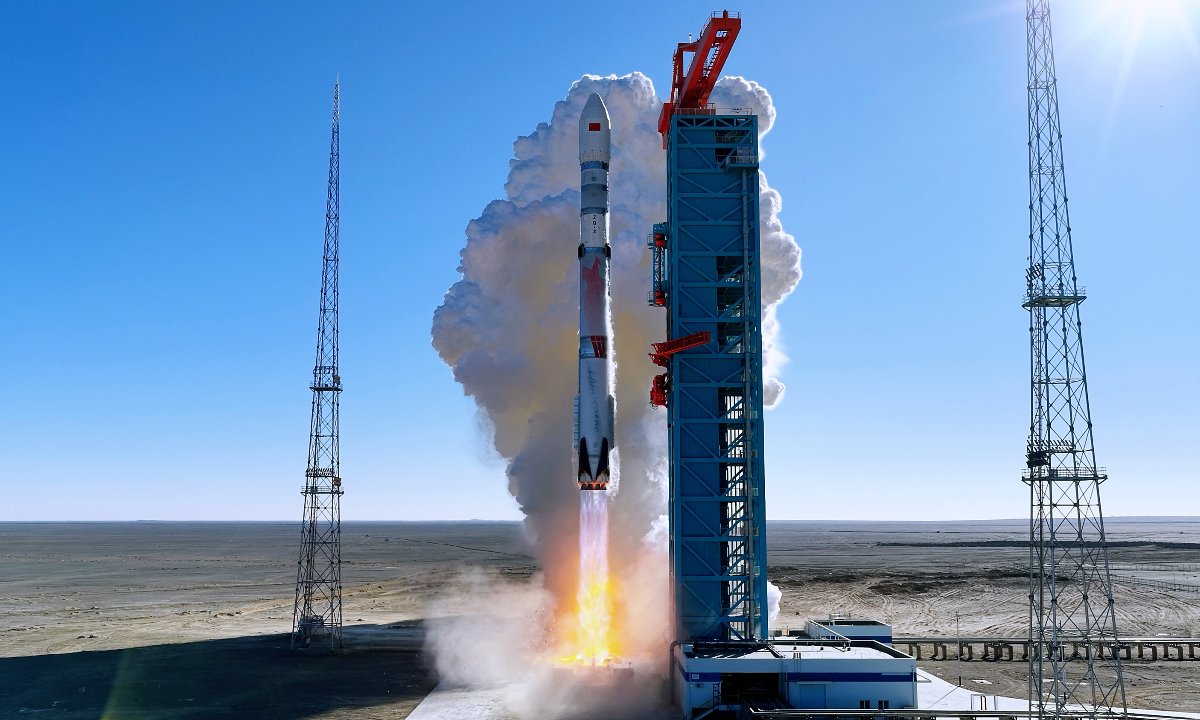
Beijing has pushed its reusable space programme a step further with the launch of an experimental spacecraft that state media described as a technology-verification mission, underlining how the country is trying to cut launch costs, raise flight tempo and broaden the range of missions it can carry out in orbit. The spacecraft was launched on 7 February aboard a Long March-2F rocket from the Jiuquan Satellite Launch Center in northwest China, in what was the fourth publicly disclosed mission of this type since 2020.
Chinese authorities released only a brief account of the flight, saying the spacecraft would verify reusable-spacecraft technologies and support the peaceful use of space. No official duration was given, and no details were provided on the systems being tested, the orbit reached or the vehicle’s configuration. That secrecy has become a hallmark of the programme and makes it difficult to judge exactly how far the technology has advanced, but the pattern of repeated flights suggests a sustained effort rather than a one-off demonstration.
Chronology matters here. China’s first disclosed flight in September 2020 lasted about two days. A second spacecraft launched in August 2022 stayed in orbit for 276 days before landing in May 2023. A third mission, launched in late 2023, returned in September 2024 after 268 days in orbit. Those longer flights point to growing confidence in long-duration autonomous operations, recovery procedures and mission endurance. Outside observers have often compared the craft with the United States’ X-37B-style approach to reusable uncrewed orbital vehicles, though Beijing has not publicly confirmed such comparisons.
This mission also fits into a much wider acceleration in Chinese space activity. On 7 April, China used a Long March-8 rocket from the Hainan commercial launch site to place 18 internet satellites into orbit for the Qianfan constellation. On 11 April, it carried out a sea launch using a Smart Dragon-3 rocket from waters off Guangdong, sending up a test satellite aimed at supporting satellite internet technology. Taken together, those launches show a programme expanding on several fronts at once: reusable vehicles, commercial launch infrastructure and large low-Earth-orbit communications networks.
Beyond low-Earth orbit, China is tying these advances to a broader national space agenda. Beijing is aiming for a crewed lunar landing by 2030 and is developing the Long March-10 rocket, the Mengzhou spacecraft and the Lanyue lunar lander for that effort. At the same time, the Chang’e-7 lunar probe is scheduled for launch in the second half of 2026. That means the reusable-spacecraft programme should be viewed less as an isolated experiment than as one part of an expanding architecture that spans launch systems, spacecraft design, lunar exploration and space-based connectivity.
Money and industrial policy are also shaping the picture. Reuters has reported that Beijing is funnelling more support towards private launch companies as it tries to build capacity for large satellite constellations and reduce reliance on state-owned providers alone. CAS Space has targeted fresh capital for reusable rocket research, while LandSpace and other firms are also turning to capital markets. Separate policy changes have given reusable-rocket developers a faster route to listing, provided they meet technical milestones, showing how closely commercial launch activity is now aligned with national strategic goals.
Yet the programme’s momentum should not be mistaken for mastery. China is advancing, but it is still chasing a lead established by SpaceX in frequent booster recovery and reflight. On 3 April, Space Pioneer said the maiden flight of its Tianlong-3 reusable rocket had failed, and Reuters reported that no Chinese firm had yet demonstrated the ability to recover and reuse a rocket’s main stage. LandSpace plans another recovery test for its Zhuque-3 rocket this year, while the Long March-12B reusable rocket completed a static firing test in January ahead of later flight missions. Progress is visible, but so are the engineering gaps.
Three ransomware operations — Qilin, Akira and DragonForce — were behind 40% of the 672 attacks logged worldwide in March, according to Check Point Research, highlighting how a criminal market that still looks fragmented on the surface is being pulled by a smaller group of high-output players. Check Point said Qilin accounted for 20% of published attacks, Akira 12% and DragonForce 8%, while 47 separate groups were […]
Google has begun rolling out a new Chrome security feature designed to blunt one of the most effective tools used by cybercriminals to hijack online accounts: stolen session cookies. The protection, called Device Bound Session Credentials, is entering public availability for Windows users in Chrome 146, with expansion to macOS slated for a later release. Google says the system is intended to make stolen authentication cookies far […]
Google has removed Doki Doki Literature Club from the Play Store, setting off a dispute over how major app platforms police games that deal with suicide, depression and psychological distress. The takedown affects the Android version of the cult visual novel, which had only reached mobile devices in December, and comes despite the game carrying a mature rating on Google Play and longstanding content warnings in its […]
Greenlogue/AP Climate litigation is exerting growing force over energy policy, with judges and international tribunals increasingly shaping how governments approve projects, regulate emissions and weigh the costs of climate harm. That legal shift is becoming especially significant for Africa, where policymakers and lawyers are pressing for a stronger voice in rulings that could affect development choices, energy access and the pace of transition across a continent that […]
S&P Global Ratings has lowered its growth expectations for both the UK and Egypt, saying the economic fallout from conflict-linked disruption across the Middle East is feeding through energy prices, trade routes and business confidence. For Egypt, S&P cut its forecast for real GDP growth in the 2025-2026 fiscal year to 4.7 per cent from 4.8 per cent, while also trimming the following year to 4.3 per […]
By Saifur Rahman The UAE will host the Annual Meetings of the International Monetary Fund (IMF) and World Bank Group in 2029 in Abu Dhabi, about 26 years after the country hosted the same in 2003 in Dubai. The news comes at a time when the UAE banking assets reached its highest value, to Dh5.4 trillion (US$1.47 trillion), and foreign reserves jumped 23.4 percent to Dh1.05 trillion […]
Jack Ma-backed Yunfeng Capital and Hillhouse Investment are among investors said to be planning to buy shares in Victory Giant Technology’s Hong Kong share sale, a deal that could raise about $2 billion and add fresh momentum to the city’s revival as a venue for large equity offerings. Bloomberg reported on Friday that the Guangdong-based company could begin taking investor orders as early as Monday, though the proposed allocations and timing were described as private and subject to change.
Victory Giant, formally known as Victory Giant Technology Co., Ltd., is already listed in Shenzhen and filed an application proof for a Hong Kong offering in February. The draft filing makes clear that the process was still incomplete at that stage and that no investment decision should be based on the draft document alone, a reminder that the final terms, investor line-up and valuation could still shift before launch. China’s securities regulator had already given the green light for the offering in early March, according to Bloomberg’s earlier reporting.
The company sits in a part of the technology supply chain that has drawn growing investor attention as spending on artificial intelligence infrastructure accelerates. Victory Giant makes printed circuit boards, including high-layer-count multilayer boards and high-build-up high-density interconnect boards used in AI accelerator cards, AI servers and high-speed networking equipment. In its Hong Kong filing, the company said such products are designed for high-frequency, high-speed and high-stability applications and are used in components including GPU accelerator modules, CPU motherboards and network interface cards for AI servers.
Its own figures point to a sharp improvement in financial performance as demand for those products strengthened. According to the application proof, revenue rose from RMB7.93 billion in 2023 to RMB10.73 billion in 2024. For the nine months to September 30, 2025, profit climbed to RMB3.24 billion from RMB764.6 million a year earlier, while the net profit margin rose to 23.0% from 9.9%. The filing attributes a large part of that jump to stronger demand for high-end HDI products used in AI-related applications, which command higher prices and fatter margins.
That performance helps explain why anchor demand matters. Cornerstone-style support from investors such as Yunfeng and Hillhouse would give the offering greater signalling power at a time when fund managers are trying to separate durable AI-linked manufacturers from companies benefiting only from short-lived enthusiasm. Neither investor had publicly confirmed participation at the time of Bloomberg’s report, so any description of their role remains conditional until final deal documents are published.
Victory Giant’s filing also underlines the industrial logic behind the listing. The company says it plans to use proceeds for capacity expansion, infrastructure enhancement and equipment purchases in Huizhou, Changsha and Yiyang, as well as investment in smart manufacturing. In Huizhou alone, it expects capacity additions for premium high-layer-count multilayer boards and high-build-up HDI products, reflecting management’s bet that demand tied to AI computing, data centres and advanced electronics will stay strong enough to justify further capital expenditure.
Industry data included in the filing suggest the company is positioning itself in one of the faster-growing corners of the electronics market. The application proof says the global PCB market grew to US$75.0 billion in 2024 and could reach US$93.7 billion by 2029. It estimates the PCB segment tied to AI and high-performance computing at US$6.0 billion in 2024, with that figure projected to rise to US$15.0 billion by 2029. The same filing says Victory Giant ranked first globally in the first half of 2025 for high-layer-count multilayer PCBs with 14 layers and above, and also first globally in high-build-up HDI PCB in that period. Those market-share claims are drawn from third-party industry research cited by the company and should be read in that context.
The backdrop in Hong Kong is supportive, though not uncomplicated. Reuters reported in late February that the city had its strongest start to a year since 2021, with IPOs and second listings raising about $5.5 billion in January. By March 18, LSEG data cited by Reuters showed Hong Kong’s IPO market had raised about $11.64 billion in the first quarter, up 385% from a year earlier. At the same time, Reuters also noted in March that worsening geopolitical tensions had begun to weigh on trading debuts, a sign that even a revived market remains vulnerable to shifts in sentiment.
By Nitya Chakraborty After getting political and diplomatic advantage from the latest US-Iran ceasefire, China has started its preparation for hosting the U.S. President Donald Trump in its crucial summit in Beijing on May 14 and 15 this year. Earlier the summit was scheduled for March 31 and April 1 but Trump postponed that after […]
Elon Musk’s artificial intelligence company xAI has sued Colorado in federal court, opening a fresh front in the widening US battle over how far states can go in policing the use of advanced algorithms in decisions affecting jobs, housing, education, healthcare and finance. The complaint, filed on April 9, seeks to block enforcement of Colorado’s Senate Bill 24-205 before it takes effect on June 30, arguing that […]
Bank of Korea left its benchmark interest rate unchanged at 2.50 per cent on Friday, extending its policy pause to a seventh straight meeting as policymakers confronted a harder mix of rising price pressures, a weak won and a growth outlook darkened by higher energy costs and disruption linked to conflict in the Middle East.
The seven-member Monetary Policy Board said uncertainty had intensified and judged it appropriate to hold the base rate while assessing how the conflict, financial-market volatility and foreign-exchange swings feed through to the domestic economy. The central bank’s statement made clear that the policy dilemma has sharpened: inflation risks are moving up even as growth is expected to slow more than earlier forecast.
Governor Rhee Chang-yong, speaking after what Reuters reported was his final press conference before his term ends on April 20, said supply-side shocks from the Middle East were especially damaging for Asian economies reliant on imported energy. That matters acutely for South Korea, where policymakers are trying to prevent a renewed inflation cycle without choking activity at a time when sentiment has softened and some industries are already facing production constraints.
The rate hold had been widely anticipated. Reuters said all 31 economists in its poll expected no move at this meeting, reflecting a market consensus that the central bank had little room to ease and few grounds to tighten immediately. Instead, the decision underscored how monetary authorities in export-driven Asian economies are being forced to navigate a narrow path between external shocks and domestic fragilities.
At the centre of the debate is inflation. Official data showed consumer prices in March rose 2.2 per cent from a year earlier, up from 2.0 per cent in February, while core inflation, which excludes food and energy, also stood at 2.2 per cent. The Bank of Korea said petroleum prices had risen sharply and noted that short-term inflation expectations among the public edged up to 2.7 per cent. It now expects consumer inflation this year to exceed its February projection of 2.2 per cent by a meaningful margin, with core inflation also likely to come in above the earlier 2.1 per cent forecast.
That shift is important because the central bank had been able for months to argue that price growth was gradually stabilising near target. The worsening external backdrop has disrupted that narrative. The board said inflation is likely to move into the mid- to upper-2 per cent range as global oil prices and supply constraints lift import costs, though government price-stabilisation measures may soften part of the blow. Reuters reported that Seoul’s fuel-price caps, introduced last month for the first time in decades, helped restrain March inflation but are unlikely to provide a lasting shield if energy costs stay elevated.
Growth, meanwhile, is losing momentum. The central bank said the economy had been supported by strong exports, firmer consumption and continued job gains, but warned that downside pressure had increased since the outbreak of the Middle East conflict. It expects expansion this year to come in below the 2.0 per cent forecast issued in February, as higher energy prices and supply bottlenecks offset support from semiconductor exports and a supplementary budget. That combination leaves the Bank of Korea confronting an uncomfortable form of policy tension: weaker activity alongside stronger inflation.
The won has added to the pressure. The central bank said the currency weakened into the 1,500-won range against the US dollar as investors moved into safer assets and foreign investors sold domestic equities, before recovering some ground after a temporary ceasefire between the United States and Iran. A softer currency raises the local-currency cost of imported fuel and raw materials, complicating the inflation picture and limiting the case for any near-term rate cuts.
Financial markets reflected that cautious tone. Reuters reported that South Korea’s policy-sensitive three-year treasury bond futures erased early gains during the governor’s press conference, suggesting investors interpreted the message as more alert to inflation risks than to immediate growth support. Analysts cited by Reuters said the rebound in energy prices and the won’s weakness have narrowed the central bank’s room for manoeuvre, even if domestic demand still needs close watching.
Gunzilla Games, the studio behind blockchain-linked shooter Off The Grid and the new owner of Game Informer, has been accused by current and former workers of failing to pay salaries for months, opening a fresh controversy around one of gaming’s more closely watched independent publishers. Multiple reports published on April 8 and April 9 said staff and contractors alleged they had gone unpaid since late 2025, while […]
South Korea is sending a special envoy to Iran as Seoul steps up efforts to secure passage for 26 South Korean-linked vessels stranded around the Strait of Hormuz, underscoring how a partial US-Iran ceasefire has done little to restore normal shipping through one of the world’s most critical energy chokepoints. Seoul’s foreign ministry has appointed former ambassador to Kuwait Chung Byung-ha for the mission, with the government […]
Binance has joined Abu Dhabi’s “One Nation. One People. Together, We Protect What We Love.” initiative in partnership with Design Commission Abu Dhabi, linking one of the world’s largest crypto platforms with a state-backed civic campaign built around social cohesion, shared responsibility and public participation across the UAE. The move adds a corporate technology name to an initiative launched in March under the chairwomanship of Shamsa bint […]
Atomic Stealer operators have opened a fresh lane into Apple computers by shifting a popular ClickFix scam away from Terminal and into Script Editor, a built-in macOS tool that many users would regard as less suspicious. The change matters because Apple moved in March to add stronger friction around Terminal-based copy-and-paste attacks in macOS Tahoe 26.4, and threat researchers now say attackers have adapted within weeks rather […]
U. S. authorities have dismantled the domestic arm of a cyber-espionage network that officials say was run by APT28, the Russian military intelligence hacking group also known as Fancy Bear and Forest Blizzard, after it hijacked vulnerable internet routers to redirect traffic, steal credentials and sift victims for higher-value targets. The Justice Department said the FBI used a court-authorised technical operation to identify compromised routers on U. […]