News related to
Success

HONG KONG SAR – Media OutReach Newswire – 20 March 2025 – China Mobile International (“CMI”) hosted the AI+ Era Global Development Forum in Hong Kong on March 19. Distinguished guests included Li Huidi, Executive Vice President of China Mobile; Mu Chenhong, Deputy Director of the Information Center, Liaison Office of the Central People’s Government in the Hong Kong SAR; Wong Chi Kwong, Tony, JP, the Commissioner […]

The TON Foundation, the entity overseeing the development of The Open Network blockchain, has successfully raised over $400 million through the sale of its native cryptocurrency, Toncoin. This substantial investment underscores the growing confidence in blockchain technologies and their potential applications.

Prominent venture capital firms participated in this funding round, including Sequoia Capital, Ribbit, Benchmark, and Kingsway. Additional investors such as Vy Capital, Draper Associates, Libertus Capital, CoinFund, Hypersphere, SkyBridge, and Karatage also contributed, reflecting a broad spectrum of interest from established financial entities.

A spokesperson for the TON Foundation clarified that these investments were made directly in Toncoin, rather than through traditional equity or cash transactions. This approach aligns with the foundation’s commitment to integrating investors into the TON ecosystem, promoting active participation and alignment with the network’s growth objectives.

The TON blockchain, initially conceptualized by Telegram, has experienced significant development and adoption. Over the past year, it has attracted more than 40 million active users, with the number of independent Toncoin holders reaching approximately 121 million. This rapid expansion highlights the platform’s scalability and its appeal to a diverse user base.

Toncoin serves multiple functions within the TON ecosystem, including transaction fees, staking, and governance. Validators and stakers receive Toncoin rewards for securing the network, and holders can participate in on-chain governance by submitting and voting on improvement proposals. This multifaceted utility enhances the token’s value proposition and encourages community engagement.

The involvement of high-profile investors such as Sequoia Capital and Benchmark not only provides substantial financial backing but also brings strategic expertise to the TON Foundation. These firms have a history of supporting innovative technology ventures, and their participation is expected to accelerate TON’s development and market penetration.

The decision to raise funds through a token sale rather than traditional equity financing reflects a broader trend in the blockchain industry. This method allows for immediate liquidity and aligns investor incentives with the network’s performance, fostering a more integrated and symbiotic relationship between the foundation and its backers.

The successful capital raise positions the TON Foundation to further enhance its infrastructure, expand its user base, and explore new applications for its blockchain technology. As the blockchain landscape continues to evolve, TON’s ability to attract significant investment underscores its potential to become a major player in the decentralized technology space.

This development also reflects a growing institutional interest in cryptocurrencies and blockchain projects. The participation of established venture capital firms signifies a maturation of the industry, with traditional investors recognizing the long-term potential of decentralized networks and digital assets.

The TON Foundation’s strategic approach to fundraising and its commitment to integrating investors into its ecosystem may serve as a model for other blockchain projects seeking sustainable growth and community engagement. By aligning the interests of investors, developers, and users, TON aims to foster a vibrant and resilient network capable of adapting to the rapidly changing technological landscape.

Over 10,000 racers are expected to take part in the two-day event happening on 28 and 29 June SINGAPORE – Media OutReach Newswire – 20 March 2025 – AIA Singapore, a leading health insurance provider, today announced its partnership as the Official Title Partner for the highly anticipated AIA HYROX Open Asian Championships 2025 in Singapore. This collaboration underscores AIA Singapore and HYROX Singapore’s shared dedication towards […]

By P. Sudhir As the year 2026 approaches, the issue of the delimitation of parliamentary and assembly constituencies is drawing public attention and controversy. This is the year when the freeze on the number of seats will end, and the next round of delimitation must be undertaken following the first census conducted after 2026. The […]

The Uniswap community has approved two governance proposals, allocating a total of $165.5 million to bolster the development of its ecosystem. This substantial funding is directed towards advancing the recently launched Unichain Layer 2 network and Uniswap v4 protocol, as well as initiating new liquidity incentive programs.

The first proposal earmarks $95.4 million for the Uniswap Foundation’s grants budget, accompanied by an additional $25.1 million designated for operational expenses over the next two years. These funds aim to enhance capital efficiency, activate revenue streams, and attract active contributors to the platform. The second proposal allocates $45 million to support liquidity incentives, a strategic move to attract new users and sustain ecosystem growth through developer-centric activities.

Gauntlet, a Web3 risk management protocol, has been entrusted with managing these liquidity incentives. They have deployed and configured an Aera vault on the mainnet for the Uniswap Foundation, injecting over 7.5 million UNI tokens, valued at approximately $52 million at current prices. This initiative is designed to draw in new users and maintain growth across both networks.

The approval of these proposals also lays the groundwork for the long-discussed ‘fee switch’ mechanism. This feature would redirect a portion of protocol fees, currently earned by liquidity providers, towards UNI token holders. The Uniswap Foundation has indicated that it will proceed with the necessary legal steps to activate this switch, aligning the interests of governance members with the protocol’s long-term success.

The community’s decision to allocate substantial funds to ecosystem development reflects a strong commitment to increasing the network’s scalability and creating new opportunities for growth. The foundation’s long-term goal is to transition Uniswap from a decentralized exchange into a platform that can also cater to developers, bringing significant value to the Uniswap community.

Uniswap v4, launched in mid-January 2025, introduced the concept of ‘hooks’—contracts that allow developers to customize interactions within pools, swaps, and fees. The launch of Unichain, built on the Optimism tech stack, further enhances Uniswap’s scalability by providing a Layer 2 network capable of supporting more transactions at lower fees.

The activation of the fee switch represents a significant step in Uniswap’s ongoing efforts to align the interests of its governance members with the protocol’s long-term success. Over $1 billion in annualized fees have been generated by the Uniswap protocol, and this shift would allow token holders to capture a portion of that revenue.

This development has had a positive impact on the market perception of Uniswap’s native token, UNI. Following the announcement, the price of UNI experienced a notable surge, reflecting growing optimism among investors regarding the platform’s future prospects.

World’s Lightest Ballistic Plate HPS-4 – Award Winning Design at IDEX Innovation Trail, Revolutionary Material Leads New Era in Security Sector HONG KONG SAR – Media OutReach Newswire – 20 March 2025 – GEAR Industries Limited — a Hong Kong-based company specializing in tailored defence solutions. With a strong focus on leveraging proprietary materials, GEAR is at the forefront of innovation, dedicated to raising security and safety […]

Ethereum’s decentralized finance ecosystem has experienced a substantial contraction, with total value locked plummeting by $29 billion over the past 30 days. This decline has raised concerns about Ethereum’s dominance in the DeFi landscape, especially as rival blockchains gain traction.

As of March 19, Ethereum’s TVL stands at $89 billion, down from $118 billion recorded on February 19, marking a 25% reduction in total deposits within its DeFi platforms. This downturn coincides with a surge in the Bitcoin to Ethereum ratio, which has reached an all-time high. Currently, with Bitcoin trading at $83,000 and Ethereum at $1,900, one BTC can now purchase over 44 ETH, reflecting a 30% increase from the 1:33 ratio observed on February 25.

Several factors have contributed to this sharp devaluation. The introduction of new trade tariff policies has unsettled global markets, prompting crypto investors to seek safety in Bitcoin over Ethereum. Additionally, Ethereum’s ongoing network scalability issues and unsuccessful updates have dampened investor confidence. Historical data indicates that Ethereum’s devaluation has accelerated post-Merge, with multiple failed network upgrades pushing ETH supply above pre-Merge levels.

The Ethereum Foundation attempted to regain control by reshuffling leadership in February, but investor sentiment remains bleak following the disappointing Pectra and Hoodi updates. This has led to a massive capital outflow from Ethereum’s DeFi ecosystem, with TVL dropping from $118 billion on February 19 to $89 billion on March 19, marking a $29 billion capital loss within a month—a 25% decline in total deposits across Ethereum DeFi.

The declining on-chain statistics align with lower demand for leveraged longs in ETH futures. The premium of these futures over spot markets has dropped below the 5% neutral level to only 3%—the lowest in over a year—indicating diminished trading confidence.

Ethereum’s decentralized exchange volumes have seen a significant decline, with volumes decreasing approximately 30% over the last week. Specific protocols within the Ethereum network have exhibited notable drops in activity, with the Maverick Protocol experiencing an 85% reduction and Dodo’s volume decreasing by 45%.

Despite these challenges, Ethereum maintains its leadership in total value locked, currently at $47.2 billion. However, a 9% weekly drop has significantly narrowed the gap with competitors. In contrast, BNB Chain’s deposits increased by 6% in the past week, while Ethereum’s key DeFi projects saw major losses, including an 11% drop in Stargate Finance’s TVL, a 9% decline in Maker’s deposits, and a 6% reduction in Spark Finance.

The $29 billion drop in Ethereum’s DeFi TVL, coupled with continued scalability struggles and external economic pressures, heightens bearish risks. As liquidity diminishes in the DeFi ecosystem, ETH coins previously locked in smart contracts are entering the short-term market supply. If capital outflows persist, ETH could face further downward pressure, potentially retesting the $1,500 support zone. Additionally, with Bitcoin’s dominance widening, ETH risks losing more market share in the near term, especially if upcoming economic policies do not meet market expectations.

The declining interest in Ethereum-based exchange-traded funds further exacerbates the situation. Over the past seven days, these digital assets have suffered cumulative outflows of $265.4 million, reflecting diminished institutional interest.

In response to these challenges, Ethereum’s developers are under increasing pressure to address scalability issues and restore investor confidence. The upcoming Hoodi update is anticipated to tackle some of these concerns, but its success remains uncertain. Meanwhile, competitors like Solana and BNB Chain are capitalizing on Ethereum’s setbacks, attracting users and liquidity with their own DeFi offerings.

Advertisements

Binance led global cryptocurrency exchange app downloads in February, achieving 4.83 million installs. OKX followed with 2.47 million downloads, while Bitget secured 1.57 million.

Binance’s dominance reflects its extensive user base and robust infrastructure. The platform offers a wide range of services catering to both novice and experienced traders, featuring a user-friendly interface and comprehensive security measures. This combination has contributed to its global popularity.

OKX has made significant strides, attracting a large number of traders with its advanced trading features and competitive fee structure. The platform’s commitment to providing a seamless trading experience has solidified its strong position in the industry.

Bitget has emerged as a formidable player, gaining traction due to its focus on copy trading and social trading features. These allow users to replicate the trades of successful traders, appealing to those looking to leverage the expertise of others.

The dominance of Binance, OKX, and Bitget in February’s download rankings reflects the growing demand for reliable and user-friendly cryptocurrency exchange platforms. As the cryptocurrency market continues to evolve, these platforms are well-positioned to capitalize on the increasing interest in digital assets. Their ability to adapt to market trends and provide innovative solutions will be crucial in maintaining their leadership positions.

Other notable platforms in the top ten include Coinbase with 1.38 million downloads, Bybit with 1.31 million, Crypto.com with 884,000, KuCoin with 609,000, MEXC with 543,000, Kraken with 343,000, and Gate with 320,000.

These figures highlight the competitive nature of the cryptocurrency exchange market, with platforms continually striving to enhance their offerings to attract and retain users.

In related developments, HTX reported a substantial surge in trading volume in February, accompanied by an 8.15% month-over-month rise in app logins, indicating heightened user engagement. The platform also secured a top-three position in EUR-stablecoin trading volume and was recognized by Forbes as one of the “Top 25 World’s Most Trustworthy Crypto Exchanges of 2025.”

The cryptocurrency exchange landscape is continually evolving, with platforms investing in user experience, security, and innovative features to differentiate themselves in a crowded market. As user preferences shift and new technologies emerge, exchanges that can adapt and meet the changing demands are likely to maintain or improve their standings in future download rankings.

The data underscores the importance of mobile accessibility in the cryptocurrency market, as users increasingly prefer managing their digital assets on-the-go. Exchanges that offer intuitive and secure mobile applications are better positioned to attract a broader user base.

The emphasis on features like copy trading and social trading, as seen with Bitget, indicates a trend towards community engagement and educational resources within trading platforms. These features not only empower novice traders but also foster a sense of community among users.

As regulatory landscapes shift and user expectations evolve, cryptocurrency exchanges face the ongoing challenge of balancing innovation with compliance and security. Platforms that can navigate these complexities while delivering value to their users are likely to see continued growth in both downloads and active user engagement.

Organisations should balance optimisation and workforce expectations HONG KONG SAR – Media OutReach Newswire – 19 March 2025 – KPMG China announced today the release of its ninth annual Hong Kong Employment Outlook survey, providing insights into the latest trends and challenges facing the region’s employment market. The report covers the headcount expectations of Hong Kong professionals, a salary outlook with an analysis of compensation and benefits […]

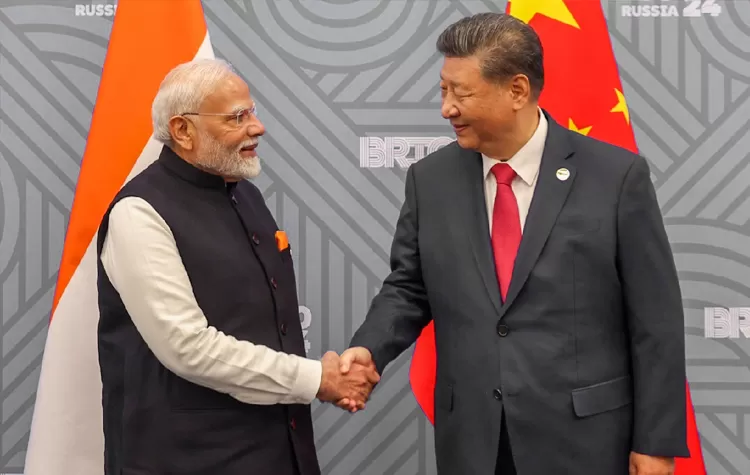
By Nitya Chakraborty Narendra Modi has been heading the Indian government as the Prime Minister since 2014. He has made so far many observations about the delicate India-China relations in the last nearly eleven years, but his observations on this issue made to the American journalist cum researcher Lex Fridman in his podcast released on […]

Raydium, a leading decentralized exchange and automated market maker on the Solana blockchain, has announced the launch of LaunchLab, a new token launchpad platform. This development positions Raydium in direct competition with Pump.fun, a prominent memecoin launchpad that has significantly influenced Raydium’s revenue streams.

LaunchLab is designed to emulate and enhance the functionalities of Pump.fun, offering token creators a platform to introduce new tokens with various bonding curves—linear, exponential, and logarithmic—that align token prices with market demand. Additionally, LaunchLab allows third-party user interfaces to set their own fees, providing greater flexibility for developers and users alike.

The introduction of LaunchLab comes on the heels of reports that Pump.fun is developing its own AMM, signaling a shift away from its reliance on Raydium’s infrastructure. This move by Pump.fun could potentially divert liquidity and trading volume from Raydium, prompting the DEX to innovate and retain its market position.

Pump.fun has been a significant contributor to Raydium’s revenue, with memecoins launched on Pump.fun accounting for approximately 41% of Raydium’s swap fee revenue over the past 30 days. The platform’s model involves depositing liquidity into Raydium’s trading pools once a token reaches a market capitalization of $69,000, thereby integrating with Raydium’s AMM.

The potential migration of tokens from Pump.fun to its own AMM has raised concerns about a possible decline in Raydium’s revenue. In February, Raydium’s native token, RAY, experienced a 25% decline, reflecting investor apprehension about future revenue streams. Despite this downturn, Raydium maintains a robust financial position, with approximately $168 million on its balance sheet, enabling it to invest in new initiatives like LaunchLab.

Raydium’s core contributor, known pseudonymously as Infra, stated that the development of LaunchLab began several months ago but was initially shelved to avoid direct competition with other platforms. However, the evolving landscape, particularly Pump.fun’s move towards establishing its own AMM, necessitated Raydium’s proactive response. Infra emphasized that LaunchLab is not intended to replace Pump.fun but to serve as an alternative for teams seeking to leverage Raydium’s AMM v4 for pool migrations.

The memecoin market has experienced fluctuations, with a notable decline in investor interest. Pump.fun’s graduation rate—the percentage of tokens successfully transitioning from incubation to full tradability on a Solana DEX—has fallen below 1% since mid-February. This decline reflects growing caution among investors regarding high-risk memecoin investments.

Despite these challenges, Raydium’s RAY token has shown resilience. Following the announcement of LaunchLab, RAY surged approximately 28%, rising from $1.60 to $2.00. This uptick indicates renewed investor confidence in Raydium’s strategic direction and its ability to adapt to market dynamics.

The launch of LaunchLab signifies a pivotal moment in the Solana ecosystem, potentially intensifying competition among token launchpads. As both Raydium and Pump.fun vie for prominence, the Solana community may witness accelerated innovation, offering users diverse options for token creation and trading. This competitive landscape could lead to more robust and user-centric platforms, benefiting the broader cryptocurrency market.

However, challenges persist. The declining interest in memecoins poses a risk to platforms heavily reliant on such tokens for revenue. Raydium’s strategic move to launch LaunchLab may mitigate potential revenue losses from Pump.fun’s shift towards its own AMM, but the platform must continue to innovate and adapt to maintain its market share.

Recent regulatory changes enhance credibility for corporate trustees but add to complexity and costs New eMPF Platform to reshape Hong Kong’s pension system and bring wave of change for pension trustees HONG KONG SAR – Media OutReach Newswire – 18 March 2025 – Access to Chinese Mainland clients, Asia’s growing private wealth sector and improving industry credibility are underpinning a positive outlook for Hong Kong’s trust industry, […]

LONDON, UNITED KINGDOM – Media OutReach Newswire – 17 March 2025 – Diginex Limited (“Diginex” or the “Company”)(Nasdaq: DGNX), an impact technology company specializing in environmental, social, and governance (“ESG”) issues, today announced the signing of two memorandum of understandings (“MOUs”) to pursue a broad strategic partnership to facilitate Diginex with its planned expansion in the United Arab Emirates (“UAE”) and the broader Gulf Cooperation Council region […]

CME Group, the world’s largest futures exchange, has introduced Solana futures contracts, providing institutional investors with an additional tool for trading the popular cryptocurrency. This move marks a significant step in the expansion of derivatives markets, particularly as digital assets like SOL continue to rise in prominence within the blockchain ecosystem.

The introduction of Solana futures comes at a time when demand for cryptocurrency-related products among institutional players is growing. By expanding beyond traditional spot trading and options, CME Group is responding to a clear market trend: the increasing appetite for advanced financial instruments in the digital asset space. With the launch of these futures contracts, CME Group further solidifies its position as a leader in cryptocurrency derivatives trading, following its successful rollouts of Bitcoin and Ethereum futures.

For institutional investors, Solana futures provide a method of hedging risk and gaining exposure to the cryptocurrency market without having to directly own or manage the underlying asset. Futures contracts are particularly useful for large-scale traders, offering opportunities to speculate on price movements and manage the volatility associated with crypto assets. The addition of SOL futures further diversifies the range of cryptocurrency products available on the CME Group’s platform, complementing its existing offerings.

SOL, the native cryptocurrency of the Solana blockchain, has seen impressive growth in recent months. It continues to strengthen its position as a leading layer 1 network, noted for its fast transaction speeds and low costs, which have made it a popular choice for developers. As the blockchain ecosystem continues to evolve, Solana’s robust performance in areas like decentralized finance , NFTs, and gaming has contributed to a growing number of use cases, driving interest among both retail and institutional investors.

The rise of Solana can be traced to its unique combination of scalability and decentralization, offering an alternative to slower and more expensive platforms like Ethereum. In particular, Solana’s ability to process thousands of transactions per second at a fraction of the cost of its competitors has made it an attractive option for developers seeking high-performance blockchain solutions. This technical advantage is reflected in the increasing adoption of the Solana network, further contributing to its growing market capitalization and network activity.

As the launch of Solana futures unfolds, the attention is on how the product will be received by institutional traders, many of whom have previously shown a preference for more established cryptocurrencies like Bitcoin and Ethereum. However, the entry of new institutional investors into the Solana market could be a game-changer. The volatility that characterises Solana’s price movements may appeal to institutional traders looking for more active trading opportunities and higher-risk, higher-reward positions. Moreover, the futures contracts offer a way to gain exposure to Solana’s price without being directly affected by the underlying volatility in the same way as spot holders.

In addition to its core functionality as a trading tool, the launch of Solana futures is also indicative of broader trends within the cryptocurrency market. The growing institutional interest in digital assets has led to a surge in derivative products, enabling sophisticated trading strategies that were once unavailable in the traditional financial markets. The success of Bitcoin and Ethereum futures, which have attracted billions in liquidity, serves as a precedent for the growing acceptance of cryptocurrencies in institutional investment portfolios.

The move to introduce Solana futures aligns with CME Group’s broader strategy of offering diverse cryptocurrency-related products to meet the needs of institutional investors. By expanding its product offering to include Solana, CME Group not only attracts more traders to its platform but also increases the legitimacy of the cryptocurrency market within traditional financial systems. This development is likely to encourage further innovation and investment in the sector.

Beyond Solana’s technical advantages, the timing of its futures contract launch also positions CME Group strategically within the broader cryptocurrency landscape. As the digital asset market continues to mature, institutional adoption is poised to grow, with more regulatory clarity and financial infrastructure emerging. As one of the first exchanges to offer a futures contract for Solana, CME Group places itself at the forefront of this market evolution.

Despite Solana’s recent successes, challenges remain for the network. The blockchain’s rapid growth has been accompanied by concerns over network stability, with occasional outages raising questions about the scalability and reliability of its technology. While these issues have not significantly hindered Solana’s progress to date, any technical difficulties could potentially affect investor confidence in the network. However, as Solana continues to innovate and improve its infrastructure, its position in the crypto space looks increasingly secure.

The introduction of Solana futures is expected to bring increased liquidity to the market, further boosting its visibility and legitimacy in the eyes of institutional investors. For CME Group, the move represents a strategic push to offer products that cater to the growing demand for cryptocurrency-based trading instruments, and it reflects the evolving nature of digital asset markets.


HONG KONG SAR – Media OutReach Newswire – 17 March 2025 – Mr Albert Wong, CEO of Hong Kong Science and Technology Parks Corporation (HKSTP), led a delegation on a highly successful European Innovation Mixer tour in March, engaging with over 1,000 students and innovation and technology (I&T) talents, encouraging them to pursue opportunities in Hong Kong. The delegation also secured over 1,000 business collaboration opportunities, further […]

By Nitya Chakraborty Sidelined by the Trump 2.0 administration and rebuffed by India, Bangladesh interim government is exploring all avenues to rejuvenate the country’s ailing economy by expanding its trade and investment relationship with Pakistan and China. The objective is to reduce the dependence on India in major areas where the outsourcing is possible from […]

Marrakech is set to become the epicentre of technological innovation as it hosts the third edition of GITEX Africa from 14 to 16 April 2025. Under the High Patronage of His Majesty King Mohammed VI, this event is organised by the Ministry of Digital Transition and Administration Reform in collaboration with the Digital Development Agency and KAOUN International. GITEX Africa has rapidly established itself as the continent’s […]

SINGAPORE – Media OutReach Newswire – 17 March 2025 – FBS, a leading global broker, has been recognized for excellence, winning three major titles at the FXDailyInfo Forex Brokers Award 2025: Best Value Forex Broker 2025 Best Forex Trading Support 2025 Best Global Affiliate Programs 2025 These accolades highlight FBS’s commitment to delivering top-tier trading conditions, outstanding client support, and highly rewarding partnership opportunities. FBS Secures Three […]

North Korea has emerged as the third-largest government holder of Bitcoin, amassing approximately 13,562 BTC, currently valued at around $1.12 billion. This significant accumulation is primarily attributed to the state-sponsored hacking collective known as the Lazarus Group, which orchestrated a series of high-profile cryptocurrency thefts, including the unprecedented $1.5 billion hack of the Dubai-based exchange, Bybit, in February 2025.

The Federal Bureau of Investigation has officially attributed the Bybit hack to North Korean cyber actors associated with the Lazarus Group, also referred to as “TraderTraitor.” The breach involved the theft of approximately 400,000 Ethereum tokens, marking it as the largest cryptocurrency exchange hack to date. The stolen assets were subsequently laundered through various blockchain networks and converted into Bitcoin, significantly bolstering North Korea’s cryptocurrency reserves.

The Lazarus Group, active since at least 2007, has been implicated in numerous cyberattacks targeting financial institutions and cryptocurrency platforms worldwide. Their operations have evolved in sophistication, employing advanced techniques such as phishing, malware deployment, and exploiting vulnerabilities in decentralized finance platforms. Notably, in March 2022, the group was responsible for stealing $620 million from the Ronin Network, a blockchain platform associated with the online game Axie Infinity.

In the Bybit incident, the hackers exploited a vulnerability in the exchange’s system, enabling them to transfer the substantial sum to addresses under their control. Despite efforts by international authorities and cybersecurity experts to trace and recover the stolen funds, the hackers have successfully laundered a significant portion, complicating recovery efforts. Bybit has acknowledged the breach and is cooperating with global law enforcement agencies to mitigate the impact and enhance security measures.

North Korea’s strategic focus on cryptocurrency theft serves multiple purposes. The regime utilizes these illicit gains to circumvent international sanctions, fund its nuclear and ballistic missile programs, and bolster its struggling economy. The decentralized and pseudonymous nature of cryptocurrencies presents challenges for traditional financial oversight, providing the regime with a means to acquire substantial resources without direct detection.

The international community has expressed growing concern over North Korea’s cyber capabilities and their implications for global financial security. The United Nations has reported that these cyber activities have become a crucial revenue stream for the regime, with estimates suggesting that North Korea has stolen over $2 billion through cyberattacks targeting financial institutions and cryptocurrency exchanges. In response, several countries have imposed sanctions aimed at curbing these illicit activities and are collaborating to enhance cybersecurity measures across critical financial infrastructures.

Abu Dhabi National Exhibitions Company Group has reported a record economic contribution of AED8.5 billion to the United Arab Emirates economy for the year 2024, surpassing the previous year’s figure of AED7.4 billion. This achievement underscores ADNEC’s pivotal role in advancing the nation’s strategic goal of fostering a diversified, knowledge-based economy. Humaid Matar Al Dhaheri, Managing Director and Group CEO of ADNEC Group, hailed 2024 as a […]

Thailand’s Most Trusted Developer Capitalizes On Surging Pattaya And Tourist Destination Demand PATTAYA, THAILAND – Media OutReach Newswire – 17 March 2025 – Sansiri Public Company Limited, Thailand’s leading developer with a 40-year track record widely regarded as Thailand’s most trusted fully integrated real estate developer among both Thai and international clients, announces surpassing all records with the successful real-time global online booking launch of ‘PTY Residence […]

RIYADH, SAUDI ARABIA – Media OutReach Newswire – 16 March 2025 – Sahm Capital is excited to announce its official membership in the Arab Federation of Capital Markets (AFCM), further solidifying its commitment to the growth and development of the Arab capital markets. Founded in 1978, AFCM aims to enhance the efficiency and transparency of capital markets across the Arab region, including the GCC, Levant, and Arab […]

ADNEC Group has achieved a historic milestone by contributing AED8.5 billion to the UAE economy in 2024, surpassing the AED7.4 billion recorded in 2023. This achievement underscores the group’s expanding influence in bolstering economic growth and aligns with the UAE’s strategic goal of fostering a diversified, knowledge-based economy. Humaid Matar Al Dhaheri, Managing Director and Group CEO of ADNEC Group, remarked that 2024 has been a landmark […]

HONG KONG SAR – Media OutReach Newswire – 14 March 2025 – Hong Kong Science and Technology Parks Corporation (HKSTP) is excited to announce the 9th edition of the Elevator Pitch International Competition (EPIC 2025), a global stage for visionary startups to secure investment, spur business opportunities, and scale in Asia’s innovation arena from 3-7 November, as finalists showcase their groundbreaking ideas with a 60-second pitch at […]

VISHNU RAJA
RYO YAMADA
HITORI GOTOH
IKUYO KITA