Seven hantavirus cases have been identified aboard the MV Hondius after a suspected outbreak on the expedition cruise ship left three people dead and triggered evacuation plans for about 150 passengers and crew held off Cape Verde. The World Health Organization said on Monday that two infections had been confirmed in laboratories and five other cases were suspected as of 4 May. One patient was critically ill, […]
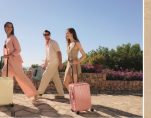
NEW YORK, US – Media OutReach Newswire – 29 April 2026 – Today, international travel, lifestyle, and accessories brand TUMI introduces “Mediterranean Escape,” its Spring 2026 seasonal campaign and collection inspired by the warmth, rhythm, and sensorial richness of the Mediterranean coast. Bringing expressive new colors, prints, and textures across TUMI’s most iconic silhouettes, the campaign captures a joyful, transportive vision where design meets destination.
Voyageur Just In Case Tote in Thyme and Pink Clay, 19 Degree Lite in Washed Yellow, Thyme and Pink Clay, Voyageur Celina Backpack in Pink Clay, Thyme and Washed Yellow
Directed by Piero Bressan and photographed by Dario Catellani, “Mediterranean Escape” transports viewers to Villa Fortaleza and Cala San Vicente in Mallorca, Spain. The campaign reflects a sense of ease — where travel becomes immersive, expressive, and grounded in the spirit of the destination.
At the heart of the collection is a bold new seasonal palette introduced across key TUMI collections, including the iconic 19 Degree Collection. Lush thyme greens, sun-washed terracotta, and radiant sunlit yellow reimagine sculpted silhouettes through destination-inspired hues. The palette also extends into the 19 Degree Aluminum family with the International Carry-On in Horizon Blue, a seasonal tone inspired by where the sky meets the sea that brings depth to the signature metallic silhouette.
Beyond 19 Degree, the seasonal story extends across travel essentials and lifestyle silhouettes, introducing new textures and material expressions designed to evoke Mediterranean ease. A raffia-inspired capsule brings woven warmth to the newly expanded Olas and Harrison Collections, balancing artisanal texture with modern construction. Accessories further bring the sensorial spirit of the Mediterranean to life. Olive, flower and lemon-inspired bag charms nod to open-air markets and the lemon groves and florals of the Amalfi Coast, while the Belden Sunglass Charm equips travelers for long days under the sun.
“The Mediterranean represents a slower, more intentional rhythm of travel,” said Victor Sanz, Global Creative Director at TUMI. “For Spring 2026, we embraced that sensibility, the idea of traveling while fully experiencing every moment through the senses. The sounds, smells, tastes, textures, and surroundings come together to create a lasting emotional connection long after the journey ends. We infused that sensorial richness into our most iconic collections, using color to tell a story of movement and discovery. At its core, the collection captures the emotion of escape, balanced by the precision and performance that define every TUMI piece.”
The campaign also debuts the new Mediterranean Print across pieces from Voyageur, Tegra-Lite™, Belden, and Nassau collections. Bold yet refined, the print reinforces the collection’s energy while maintaining TUMI’s focus on precision and performance.
“This campaign represents an evolution in how we tell our story, “said Jill Krizelman, Senior Vice President, Global Marketing & Ecommerce at TUMI. “The Mediterranean provided the perfect backdrop — celebrating rich color, the romance of travel, and cultural depth — while giving us the opportunity to reveal a more relaxed, playful side of TUMI, as if the brand itself were on vacation. From visual storytelling to immersive brand activations around the world, Mediterranean Escape invites our global community into the spirit of the season and celebrates travel as a form of self-expression.”
Mediterranean Escape will extend beyond the campaign through a series of immersive global experiences celebrating the spirit of the season.
The Mediterranean Escape collection is available now at TUMI.com and in TUMI stores worldwide. Follow @TUMITravel for exclusive behind-the-scenes content from the campaign. Hashtag: #TUMI
The issuer is solely responsible for the content of this announcement.
About TUMI
Since 1975, TUMI has been creating world-class business, travel, and performance luxury essentials, designed to upgrade, uncomplicate and beautify all aspects of life on the move. Blending flawless functionality with a spirit of ingenuity, we’re committed to empowering journeys as a lifelong partner to movers and makers in pursuit of their passions. For more about TUMI, visit TUMI.com and follow on Instagram, TikTok, Facebook, and YouTube.
Abu Dhabi Investment Authority has taken part in a capital raise by TeraHop, a Singapore- and Thailand-based supplier of high-speed optical transceivers used in data centres, strengthening its exposure to one of the most critical layers of artificial intelligence infrastructure. The investment was made through a wholly owned ADIA subsidiary. The value of the Abu Dhabi investor’s participation was not disclosed. TeraHop, a subsidiary of Zhongji Innolight, […]
A court in Saratov has fined a local news agency and one of its executives after the outlet published a review of the television series Heated Rivalry, in a case that underlines how far Russia’s campaign against LGBTQ+ expression now extends into ordinary cultural coverage. The Oktyabrsky District Court in Saratov imposed a 500,000-rouble penalty on SaratovBusinessConsulting, widely known as SarBC, over an article that discussed why […]
Scientists are advancing a new way to search for life beyond Earth by looking not for a single decisive signal on one planet, but for recurring patterns across many worlds. The idea, set out in a study published in The Astrophysical Journal, argues that life may reveal itself statistically if it spreads between planets or reshapes planetary environments in ways that leave linked traces across a wider […]
Scientists have identified 37 active subglacial lakes beneath glaciers in the Canadian Arctic, with 35 of them not previously documented, adding a significant new layer to understanding how one of the planet’s fastest-changing cryospheric regions behaves as temperatures climb. The findings, published on 23 March 2026 in The Cryosphere, are based on satellite-derived elevation data collected between 2011 and 2021 and point to a far more dynamic […]
SINGAPORE – Media OutReach Newswire – 10 April 2026 – Modern beauty has a new enemy, and it’s right in our hands: the mobile phone. Endless scrolling keeps us hooked, but it also keeps our heads down. With content so addictive, one ends up spending hours slouching. So, all that main character power and energy vanish—replaced by slumping and hunching. Over time, posture slips, presence shrinks, and bold beauty follows. “Text neck” isn’t just a physical issue; it’s quietly changing how we carry ourselves.
LUX, the iconic global beauty brand, knows true radiance is about how you show up. That effortless “it girl” energy starts with posture. That’s why the brand is launching LUX Chin Up—a digital tool designed to tackle “Text Neck” and help women keep their heads high and their bold beauty even higher. It’s the perfect modern solution for the modern beauty problem.
“LUX always inspires women to boost their presence and own their beauty power,” said Gaurav Datta, Global Brand VP. “Our phones are amazing for self-expression, but there’s a catch. While they elevate our digital selves, they often shrink our real-world presence. That constant downward scroll quietly chips away at posture, poise, and bold beauty. With ‘Chin Up,’ we’re offering a simple way for women to realign, lift up, and step back into their power.”
LUX has a brilliantly simple, tech-forward solution. Forget complicated downloads or wearable tech. LUX Chin Up is a smart web page that taps into your phone’s own motion sensors. When used with the split-screen option, it stays on screen as a small tab, reminding you of the right angle to be maintained while you doomscroll.
The Sweet Spot: The tool encourages you to keep your screen at an optimal 90-degree angle.
The Gentle Nudge: If you start to slouch and the angle drops (and with it your head), the sensor detects it and the screen blinks, prompting you to raise your phone and go chin up.
The Reset: Straighten up, bring your phone back up and carry on scrolling with boldness.
LUX believes this can be an essential modern-day beauty ritual that extends beyond the shower to solve a modern-day problem. By habituating women to hold the right posture, LUX is naturally lifting their chins, opening their posture, and instantly restoring that vibrant, room-commanding presence. It’s a small shift that brings Main Character Beauty to life, on screen and off.
Make LUX Chin Up a habit, try it for a week and improve your posture. Visit lux.com/chinup
Hashtag: #LUXChinUp #LUX
The issuer is solely responsible for the content of this announcement.
About LUX
LUX has been celebrating beauty and femininity since 1925. We uphold beauty that doesn’t blend in. It’s bold, sassy, maximalist. We will continue to support efforts that will help women best express their Main Character Beauty.
About VML
VML is a leading creative company that combines brand experience, customer experience, and commerce, to create connected brands that drive growth. The agency is a leading global marketing and systems integration partner, specializing in creating innovative solutions for business transformation. VML is celebrated for its award-winning work with blue chip client partners including AstraZeneca, Colgate-Palmolive, Dell, Ford, Intel, Microsoft, Nestlé, The Coca-Cola Company, and Wendy’s. The agency is recognized by the Forrester Wave™ Reports, which name WPP a “Leader” in Commerce Services, Global Digital Experience Services, Global Marketing Services and, most recently, Marketing Measurement & Optimization. VML’s global network is powered by 28,000 talented people across 60-plus markets, with principal offices in Kansas City, New York, Detroit, London, São Paulo, Shanghai, Singapore, and Sydney.
Amazon has drawn a hard line under Amazon Luna’s experiment with digital game sales, ending the purchase of standalone titles on the cloud platform and stripping out third-party store access and subscriptions as it pushes the service towards a fully subscription-led model. The change took effect on April 10, with Amazon saying users will no longer be able to buy individual games through Luna or sign up […]
Earth is becoming brighter after dark overall, but the shift is proving far less uniform than older global averages suggested, with fast-growing parts of Asia and Africa lighting up while sections of Europe and some older urban zones are dimming through efficiency drives, new lamp technologies and policies aimed at cutting waste and light pollution. The clearest picture yet, drawn from daily satellite observations between 2014 and […]
Moscow has opened a 33-kilometre tram corridor branded T2, a cross-city route that Mayor Sergei Sobyanin says is now the world’s longest urban tram diameter, linking Chertanovskaya metro station in the south with Novogireevo on Moscow Central Diameter line D4 in the east. The launch marks the second stage of the capital’s tram-diameter programme and extends a surface-rail strategy designed to ease pressure on the underground network […]
Palo Alto Networks has issued a high-priority security update for a flaw in its Cortex XSOAR and Cortex XSIAM platforms that could allow an unauthenticated attacker to access and alter protected resources through the Microsoft Teams integration, adding fresh pressure on security teams to review third-party connectors that sit inside core incident response systems. The vulnerability, tracked as CVE-2026-0234, was published on April 8 and affects Microsoft […]
Complementing an orchard-themed dreamy tea set by two master pâtissiers, a series of fascinating delicacies is presented by Galaxy Macau in April
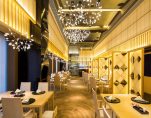
MACAU SAR – Media OutReach Newswire – 7 April 2026 -In celebration of its ascent to One Diamond status in China’s prestigious Black Pearl Restaurant Guide, Galaxy Macau’s Japanese fine‑dining destination Yamazato proudly unveils the Black Pearl Tasting Kaiseki — a refined and contemplative culinary expression that honours seasonality, precision and the quiet elegance intrinsic to Japanese haute cuisine. Framed by sweeping panoramic views across Galaxy Macau landscape, the experience captures the fleeting beauty of nature through an artful and disciplined gastronomic lens.
Yamazato celebrates its Black Pearl One Diamond distinction with a contemplative kaiseki by Executive Chef Hideaki Hayashi, where seasonal purity, meticulous craftsmanship, and serene vistas converge to distil the quiet poetry of Japanese haute cuisine.
At the helm, Executive Chef Hideaki Hayashi and his culinary team invite guests on a pristine gastronomic journey shaped by meticulous craftsmanship and profound reverence for ingredients. Each kaiseki course is composed with thoughtful intentions, drawing upon the season’s finest offerings, be it produce from the sky, the sea and the land. Every detail — subtle aroma, layered texture, nuanced flavours, and elegant presentation — is harmoniously orchestrated to awaken the senses and express the restrained poetry at the heart of Japanese culinary artistry.
The Black Pearl Tasting Kaiseki is priced at MOP 1,980+ per guest and is available Tuesday to Sunday, from 5:30 pm to 10:00 pm.
Floral Tea Set in the Orchard Setting of CHA BEI
This spring and summer, Galaxy Macau unveils an enchanting new afternoon tea experience at CHA BEI, co‑created by Executive Pastry Chef Yam Lok Hin and internationally revered Meilleur Ouvrier de France Pâtissier 2023 Pierre‑Henri Roullard. Inspired by a radiant garden in full bloom, the Orchard in Bloom afternoon tea invites guests on a refined journey through delicately balanced savoury and sweet creations, infused with flowers, fruits and tea leaves. Within the serene surroundings of CHA BEI, the brilliance of the spring and summer season is reimagined as a tranquil, storybook orchard, where flavour and artistry flourish in harmony.
Galaxy Macau’s Orchard in Bloom at CHA BEI is a poetic afternoon tea by Lok Hin Yam and Pierre‑Henri Roullard, where florals, fruits and tea leaves coalesce in refined seasonal harmony.
The experience opens with Lavender Breeze, a graceful floral welcome that sets the tone for a series of garden‑inspired delights, where seasonal ingredients are transformed into elegant edible jewels. Bright citrus notes, sun‑ripened fruits and fragrant botanicals come together across exquisite pastries and artfully crafted savouries, each reflecting meticulous craftsmanship and creative imagination. Available throughout spring and summer, this inspired collaboration blossoms as a celebration of colour, texture and taste — where two distinct pastry visions unite in a symphony of refined indulgence.
Priced at MOP598+ for two, “Orchard in Bloom” afternoon tea will be available between 2:30pm and 5:30pm every day, from now until August 31.
Alongside these sumptuous delicacies, Galaxy Macau has prepared a series of fascinating dining promotions this April and beyond:
• April 9
Blossom Palaces –
“Huaiyang Spring Feast: A Symphony of Two Masters” Four-hands Gala
The refined artistry of Huaiyang cuisine takes centre stage as Blossom Palaces Founder Bobby Lo and Macau Chef de Cuisine Ricky Wu unite for an elegant spring dinner. From tea‑infused starters to signature wood‑fired Peking duck, the evening is elevated by a live tea‑frying performance celebrating tradition, aroma and seasonal finesse.
Time: 6pm – 9pm
Price: MOP1,088/person
Huaiyang cuisine takes the spotlight as Blossom Palaces Founder Bobby Lo joins Macau Chef de Cuisine Ricky Wu for a refined spring dinner, featuring tea‑infused starters, signature wood‑fired Peking duck and a live tea‑frying performance celebrating tradition and seasonal grace.
• April 10 & 11
Saffron –
“A Royal Symphony of Thai Cuisine”
Saffron marks Songkran Festival with an elegant celebration of Thai New Year, featuring a rare collaboration between Executive Chef Jan Ruangnukulkit and Chef Chumpol Jangpra, the brain behind Bangkok’s two-Michelin-starred R‑HAAN. The immersive experience blends ceremonial rituals, cultural performances and a masterfully curated tasting menu honouring tradition, artistry and renewal.
Price: MOP1,688/person (additional MOP300 for wine pairing)
Saffron marks Songkran Festival with an elegant celebration that seamlessly blends ceremonial rituals, cultural performances and a masterfully curated tasting menu – honouring Thai tradition, culinary artistry and the spirit of renewal.
• April 18 & 19
8½ Otto e Mezzo BOMBANA –
The Grand Bombana Feast
In celebration of Italian cuisine’s recognition as UNESCO Intangible Cultural Heritage, Chef Umberto Bombana unites his protégés from Michelin‑starred kitchens across Asia for an unprecedented gastronomic gathering. Each chef presents a personal interpretation shaped by heritage and mentorship, creating an elegant dialogue between timeless Italian tradition and contemporary global expression—an exceptional feast and a living culinary legacy.
Date: April 18, 2026 (dinner)│ April 19, 2026 (lunch and dinner)
Price: Lunch Tasting Menu MOP1,680/person (additional MOP980 for wine pairing)
Dinner Tasting Menu MOP3,280/person (wine-pairing for an additional MOP1,880)
In celebration of Italian cuisine’s recognition as UNESCO Intangible Cultural Heritage, Chef Umberto Bombana unites his protégés from Michelin‑starred kitchens across Asia for an unprecedented gastronomic gathering at 8½ Otto e Mezzo BOMBANA at Galaxy Macau.
• April 25 & 26
Andaz Kitchen –
Chinese-Portuguese Master Chefs Four-Hands Dinner Series · Chapter 2
Andaz Macau’s Executive Chef André Lai joins hands with Chef Larry Liu of Shenzhen’s Black Pearl One-Diamond restaurant, CHINA LODGE, for a refined culinary exchange celebrating the dialogue between Chinese tradition and Portuguese heritage. Guided by the Cantonese principles of seasonality and purity of flavours, Chef Liu brings his thoughtful craftsmanship and contemporary interpretation of Cantonese cuisine – deeply rooted in respect for ingredients and culinary legacy – resulting in an inspired collaboration that bridges cultures through taste.
Price: MOP1,088/person (wine pairing included)
• Daily
Kyo Watami –
Triple Don Indulgence
Kyo Watami’s seafood don trio invites diners to savour three bowls of Japanese favourites, each layered with seasonal seafood over steamed rice. From luxurious sea urchin and tuna, to salmon roe with sashimi, and sweet soy‑glazed grilled eel with omelette, the set is completed with a light salad and comforting soup.
Price: MOP128/set
Date: Daily during lunch hours
A Month of Global Mixology Encounters at Galaxy Macau
International symphonies of mixology continue at Galaxy Macau’s three acclaimed venues – Pony & Plume, Long Bar and Ritz-Carlton Bar & Lounge.
On April 9, Capella at Galaxy Macau’s Pony & Plume will welcome star mixologist KT Lam for the second chapter of “The Finest Pour” series. Leader of the bars at Rosewood Bangkok and having led DarkSide at Rosewood Hong Kong to No. 9 on Asia’s 50 Best Bars in 2023, KT will present four cocktails at Macau’s newest must-visit bar—each a distillation of his decade-long journey in mixology, inspired by the cities that have shaped him, capturing their energy, harmony, and contrasts.
On April 9, Capella at Galaxy Macau’s Pony & Plume will welcome star mixologist KT Lam who will shine with the distillation of his decade-long journey in mixology.
On April 11, the Ritz-Carlton Bar and Lounge at The Ritz-Carlton, Macau anticipates guests to savour an evening of “The Alchemist Flair: A Global Mixology Experience with Chase White”, as founder of Bar Blanc in Shanghai, and botanical spirits label OFBT, mixologist Chase White instils his passion and adventurous spirit into his creations, which champion a philosophy of “restrained creativity” and celebrate balance, quality, and simplicity—without sacrificing intrigue.
Long Bar at Raffles at Galaxy Macau welcomes Jo Lo and Birstacla Wong, co‑owners of Hong Kong’s acclaimed cocktail bar Bar Mind, for the April edition of Adventures in the Cavern. The award‑winning mixology duo—both past recipients of Diageo World Class Hong Kong & Macau Bartender of the Year—will present an evening of innovative cocktails that blend heritage flavours with contemporary techniques. The guest shift takes place on April 25, offering guests an inspired journey into modern mixology.
The issuer is solely responsible for the content of this announcement.
ABOUT GALAXY MACAU INTEGRATED RESORT
Galaxy Macau, The World-class Luxury Integrated Resort delivers the “Most Spectacular Entertainment and Leisure Destination in the World”. Developed at an investment of HK$43 billion, the property covers 1.1 million-square-meter of unique entertainment and leisure attractions that are unlike anything else in Macau. Nine award-winning world-class luxury hotels provide close to 5,000 rooms, suites and villas. They include Banyan Tree Macau, Galaxy Hotel, Hotel Okura Macau, JW Marriott Hotel Macau, The Ritz-Carlton, Macau, Broadway Hotel, Raffles at Galaxy Macau, Andaz Macau, and Capella at Galaxy Macau. Unique to Galaxy Macau, the 75,000-square-meter Grand Resort Deck features the world’s longest Skytop Adventure Rapids at 575-meters, the largest Skytop Wave Pool with waves up to 1.5-meters high and 150-meters pristine white sand beach. Two five-star spas from Banyan Tree Spa Macau and The Ritz- Carlton Spa, Macau help guests relax and rejuvenate.
As the dining destination in Asia, Galaxy Macau offers a wide variety of gastronomic delights, exquisite experiences and ingredients of the finest quality with over 120 dining options from Michelin dining to authentic delicacies.
Embark on a delightful and rewarding journey at Galaxy Promenade, the one-stop shopping destination boasting some of the world’s most iconic luxury brands. Be the first to get the latest limited-edition items; explore fascinating pop-ups by coveted labels and revel in fabulous shopping rewards and privileges. Our VIPs are entitled to a highly-curated experience with dedicated personal shoppers at guests’ service, and be invited to exclusive luxury brand events. A different caliber of privileges and rewards also await. Discover the joys of fashion and stand at the forefront of style and sophistication—Galaxy Promenade has everything guests need to stay ahead of the style game.
Galaxy Cinemas takes immersive movie experiences to the next level with the latest audio-visual technology, ultra-luxurious facilities and bespoke services; CHINA ROUGE, one-of-a-kind cabaret lounge that evokes the glamor of Shanghai’s golden era with stylish entertainment and customizable surrounds; and Foot Hub, which presents the traditional art of reflexology for authentic relaxation and revitalization. For Authentic Macau Flavours and Vibrant Asian Experiences, Broadway Macau – just a 90-second walk via a bridge from Galaxy Macau, has over 35 Authentic Macau & Asian Flavours at Broadway Food Street. The 2,500-seat Broadway Theatre plays host to world-class entertainers and a diverse array of cultural events.
Meeting, incentive and banquet groups are also catered to with a portfolio of unique venues in Galaxy Macau and an expert service team. Galaxy International Convention Center (GICC) is the latest addition to the Group’s ever-expanding integrated resort precinct and will usher in a new era for the MICE industry in Macau. GICC is a world-class event venue featuring 40,000-square-meters of total flexible MICE, and the 16,000-seat Galaxy Arena – the largest indoor arena in Macau.
Scientists in Poland have built an ultrathin optical structure that traps infrared light inside a layer about 40 nanometres thick, a result that pushes light confinement far below the scale long regarded as practical for conventional photonic components. The work, led by researchers at the University of Warsaw with partners at Łódź University of Technology, Warsaw University of Technology and the Polish Academy of Sciences, uses patterned […]
Researchers at the Institute of Semiconductor Physics of the Siberian Branch of the Russian Academy of Sciences say they have developed and patented a wearable sensor designed to attach to the arm and track stress through compounds found in sweat, adding a new Russian entrant to a fast-moving global race to turn biochemical signals into consumer-friendly health data. According to the official account carried by Emirates News […]
North Korea is sharpening its nuclear posture after the military battering of Iran reinforced Kim Jong-un’s long-held argument that smaller states without an ultimate deterrent risk coercion, attack and political humiliation. In a speech to the Supreme People’s Assembly on March 23, Kim declared the country’s nuclear status “irreversible”, said Pyongyang would permanently strengthen its “self-defensive nuclear deterrent”, and framed the global order as one in which […]
Tiger Woods was arrested in Florida on Friday after a rollover crash near his Jupiter Island home, with authorities saying he showed signs of impairment after his Land Rover struck a truck trailer while attempting to pass on a two-lane residential road. Officers said a Breathalyzer test found no alcohol, but Woods refused a urine test, leading to an additional misdemeanour charge under Florida law. He was […]
Safe-haven demand pushed the US dollar towards its strongest monthly advance since July, as investors sought liquidity and relative shelter from a widening Middle East energy shock while also scaling back expectations for Federal Reserve easing this year. The dollar index was trading near 100.17 on March 27 and was up about 2.6 per cent for the month, a move that outpaced most major peers. Currency […]
Findings from a team of researchers based in the UAE have revealed a previously undetected class of solar waves deep within the Sun, offering fresh insight into the behaviour of magnetic fields that drive solar activity and influence space weather. The study, led by scientists affiliated with New York University Abu Dhabi, identifies wave patterns occurring far below the Sun’s visible surface, in regions long considered beyond […]
Quebec’s National Assembly has unanimously demanded the resignation of Air Canada chief executive Michael Rousseau, intensifying political pressure after his failure to speak French in a public message addressing a fatal aviation incident linked to LaGuardia Airport. The 92–0 vote, adopted across party lines, marks a rare show of unity in Quebec politics and underscores the sensitivity of language rights in the province. Lawmakers argued that the […]
Australia’s sweeping restriction on social media access for under-16s is reshaping online safety discussions, with early enforcement drawing both support and scrutiny as Canada and other countries weigh adopting similar measures. The law, passed in late 2024 and enforced in phases since early 2025, requires major platforms to prevent users under 16 from creating accounts without verified parental consent. The policy places the burden on companies to […]
Lexus has introduced the latest IS350 sports sedan across Middle East markets, presenting a refined version of its compact luxury performance model with updated design, enhanced safety technology and improved driving dynamics aimed at strengthening the brand’s presence in the region’s premium saloon segment. Showcasing a sharper visual identity and upgraded digital features, the updated IS350 continues the evolution of a model line that has defined Lexus’s […]
Arabian Post Staff -Dubai Capital from a subsidiary of Abu Dhabi Investment Authority has flowed into Hong Kong-based Dignari Capital Partners, strengthening investor interest in real estate-linked private credit across developed markets in the Asia-Pacific region. The commitment targets Dignari’s Asia Pacific Developed Markets Private Credit Strategy, a fund designed to finance property-related opportunities through structured lending and credit investments. The sovereign wealth fund’s wholly owned […]
Capital from a subsidiary of Abu Dhabi’s sovereign wealth fund has flowed into a Hong Kong-based private credit manager, signalling continued appetite among Gulf investors for property-linked lending opportunities across developed Asia-Pacific markets. Dignari Capital Partners said a wholly owned unit of the Abu Dhabi Investment Authority has committed capital to its Asia Pacific Developed Markets Private Credit Strategy, a fund designed to finance real-estate-related projects and […]
VIENNA, AUSTRIA – Media OutReach Newswire – 11 March 2026 – Easy to transport, featuring compact size and high-quality images, developed to revolutionise and facilitate the work of interventional radiologists all around the world. Esaote launched the new MyLab™ E85 GTS, the new cart-based ultrasound system that Esaote, a leading Italian company in medical imaging innovation, presented at the European Congress of Radiology (ECR), held in Vienna from 4th to 8th March.
The machine is based on two new technologies, combined for the first time: Virtual Navigator and Ablation Confirmation. The former enables real-time multimodality image fusion for accurate navigation, reinforcing the role of ultrasound as a valuable aid to computed tomography (CT)-guided interventional procedures. The second analyses and combines pre- and post-treatment CT and multiparametric MRI data with real-time ultrasound imaging automatically to assess the technical success of thermal ablation procedures. The combination of both technologies aims at providing interventional radiologists with accurate diagnosis, excellent needle visualisation and improved interventional procedures.
Equipped with a touch-sensitive keyboard that is easy to clean, MyLab™ E85 GTS represents a further evolution in the devices now available to specialists, offering their patients even greater precision in minimally invasive therapeutic and diagnostic procedures. The combination of Virtual Navigator and Ablation Confirmation guarantees extremely high performance in biopsies, aspirations and drainages. The visualization of the needle is excellent and contributes to the confidence of the physician and the precision of the operation performed.
“Interventional procedures can be done under CT guidance, but allying them with ultrasound systems, characterized by non-radiation procedures and real time-imaging, offers invaluable advantages: with a single click, the fusion between CT and US images is operational”, explained Marta Daniel, Guided Therapy Product and Clinical Solutions Manager at Esaote, on the sidelines of the launch of the new ultrasound scanner at the European Congress of Radiology in Vienna. “By maximising the workflow of focal ablation, MyLab™ E85 GTS offers the first “integrated” Ablation Confirmation Software in addition to fusion imaging. The software analyses pre- and post-ablation CT scans and provides feedback on the effectiveness of the procedure, maintaining real-time fused images to navigate the target area, both to confirm treatment and to further ablate any residual areas identified. This is a revolutionary breakthrough that ensures confidence and precision”, she concluded.
Esaote developed the new MyLab™ E85 GTS with today’s interventional radiology needs in mind. “Working with young physicians all around the world, we identified their challenges and understood their specific requests, pushing us to go beyond the conventional functions of an ultrasound system”, said Laurent Rapon, Global Business Development Manager GTS US. “The E85 GTS is our first response to this commitment, proposing a sealed keyboard design and integrating tailor-made software to further ease complex interventional procedures”.
Hashtag: #Esaote
The issuer is solely responsible for the content of this announcement.









 www.galaxymacau.com